
The visible edge of economic populism — the slogans, the soundbites — often conceals an intellectual iceberg beneath: ideas inherited from defunct economists, or sometimes living ones. One such idea with deep roots is limitarianism: the belief that there should be a cap on personal wealth.
Thomas Piketty defines it as “the idea that we should set a maximum on how much resources one individual can appropriate”. Its most articulate modern advocate is Ingrid Robeyns, whose recent book, Limitarianism: The Case Against Extreme Wealth, calls for a global wealth cap, which she suggests could be set around $10 million per person.
But limitarianism rests on an old intellectual error. An error common not only on the Left but even among some classical liberals too: the mistaken division between “production” and “distribution”. The assumption is that production happens through economic forces and that distribution is purely political, so policymakers can reshape who gets what without damaging how much is created.
This assumption leads to the view of the economy as a fixed pie. If one person has a large slice, others must go hungry. As Percy Shelley put it in Queen Mab (1813), “The rich have become rich by the toil of the poor … they increase in wealth by the misery of the workers”. While that may describe life under socialism, it misunderstands how wealth is generated in a capitalist system.
In capitalism, you can grow rich by making the pie bigger: creating products, companies, jobs and innovations that benefit not only yourself, but millions of others. This insight was first observed by French sociologist Gabriel Tarde, and later expanded by economists like Ludwig von Mises and Friedrich Hayek. Tarde noted how luxuries eventually become necessities. His example was forks and spoons, once the preserve of the wealthy, now found in every home.
For our generation, consider childbirth. Queen Anne had 17 pregnancies, yet none of her children survived to adulthood. Today, even the poorest families in developed countries can expect their children to live. This transformation wasn’t delivered by committees or redistribution. It was driven by the freedom of innovators to experiment, often starting with products only the wealthy could afford.
As Hayek wrote in The Constitution of Liberty:
What today may seem extravagance or even waste, because it is enjoyed by the few and undreamed of by the masses, is payment for the experimentation with a style of living that will eventually be available to many.
Mani Basharzad, “What Zohran Mamdani Doesn’t Understand about Wealth”, Foundation for Economic Education, 2025-09-30.
January 7, 2026
QotD: Refuting “Limitarianism”
January 5, 2026
QotD: Nitpicking the opening battle in Gladiator (2000)
The iconic opening battle, set in the Marcomannic Wars (166-180) during the reign of Marcus Aurelius (r. 161-180) dominates the pop-cultural reference points for the Roman army in battle and you can see its heavy influence in things like how the Total War series presents Roman armies (particularly in trailers and other promotional material). Students and enthusiasts alike will often cite this sequence as the thing which sparked their interest in the Roman army. It is hard to overstate how pervasive its influence is in the public imagination of what the Roman army, particularly of the imperial period, was like, especially as its style is imitated by later pop culture works.
Which is why it is so unfortunate that it is such a deceptive historical mess. This sequence in particular is a banner example of what I’ve termed elsewhere the “perils of historical verisimilitude“, the habit of historically based popular-culture works including what we might think of as fake signifiers of research, things that seem historically grounded rather than being historically grounded, as a way to cheaply cash in on the cachet that an actually grounded representation gets.
Gladiator actually provides a perfect metaphor for this: its main character’s name. Russell Crowe proudly informs us he is, “Maximus Decimus Meridius”, a name that certainly sounds suitably Roman, picking up the three-part name with that standard second declension -us ending. It sounds like it could be a real name – if you didn’t know Latin you would probably assume that it could be a real Roman name. But, as we’ve noted, it isn’t a Roman name and in fact gets nearly all of the Roman naming conventions wrong: Roman names are ordered as praenomen, nomen and cognomen, with the nomen indicating one’s gens (“clan” more or less) and the praenomen selected from just a couple dozen common personal names. Decimus is one of those two-dozen common praenomina (which also means it is never going to show up as the name of a gens), so it ought to go first as it is actually his personal name. Meanwhile Maximus (“the greatest”) is very much not one of those roughly two-dozen praenomina, instead being always cognomen (essentially a nickname). Finally Meridius isn’t a Latin word at all (so it can’t be a praenomen personal name nor a cognomen nickname),2 meaning it has to be the nomen (referencing a fictive gens Meridia). Every part of his name is wrong and it should read Decimus Meridius Maximus.
It sounds just right enough to fool your average viewer, while being entirely wrong. It is “truthy” rather than true – verisimilitudinous (like truth), rather than veristic (realistic, true).
In the case of Gladiator‘s opening battle scene, the attention is on creating verisimilitude (without fidelity, as we’ll see) in the visual elements of the sequence and only the visual elements. The visual representation of a Roman army – the equipment in particular – is heavily based on the Column of Trajan (including replicating the Column’s own deceptions) and since that is the one thing a viewer can easily check, that verisimilitude leads a lot of viewers to conclude that the entire sequence is much more historically grounded than it is. They take their cues from the one thing they can judge – “do these fellows wear that strange armor I saw on that picture of a Roman column?” – and assume everything is about as well researched, when in fact none of it is.
Instead, apart from the equipment – which has its own deep flaws – this is a sequence that bears almost no resemblance to the way Roman armies fought and expected to win their battles. The Roman army in this sequence has the wrong composition, is deployed incorrectly, uses the wrong tactics, has the wrong theory of victory and employs the wrong weapons and then employs them incorrectly. Perhaps most importantly the sequence suggests an oddly cavalry-and-archer focused Roman army which is simply not how the Romans in this period expected to win their battles.
Now I want to be clear here that this isn’t a review of the film Gladiator (2000) or my opinion in general on the film. To be honest, unlike the recent sequel, I enjoy Gladiator even though it is historical gibberish. So I am not telling you that you aren’t “allowed” to like Gladiator, but rather simply that, despite appearances, it is historical gibberish, particularly this opening scene, which I often find folks who are aware the rest of the film is historical gibberish nevertheless assume this opening scene is at least somewhat grounded. It is not.
Bret Devereaux, “Collections: Nitpicking Gladiator’s Iconic Opening Battle, Part I”, A Collection of Unmitigated Pedantry, 2025-06-06.
- I’d think its only real rival for prominence would be Spartacus (1960).
- If you are wondering, “but then were does our word “meridian” come from, the answer is from Latin meridies, meaning “midday”.
December 10, 2025
Let us stop lying to children about the world they’ll have to face
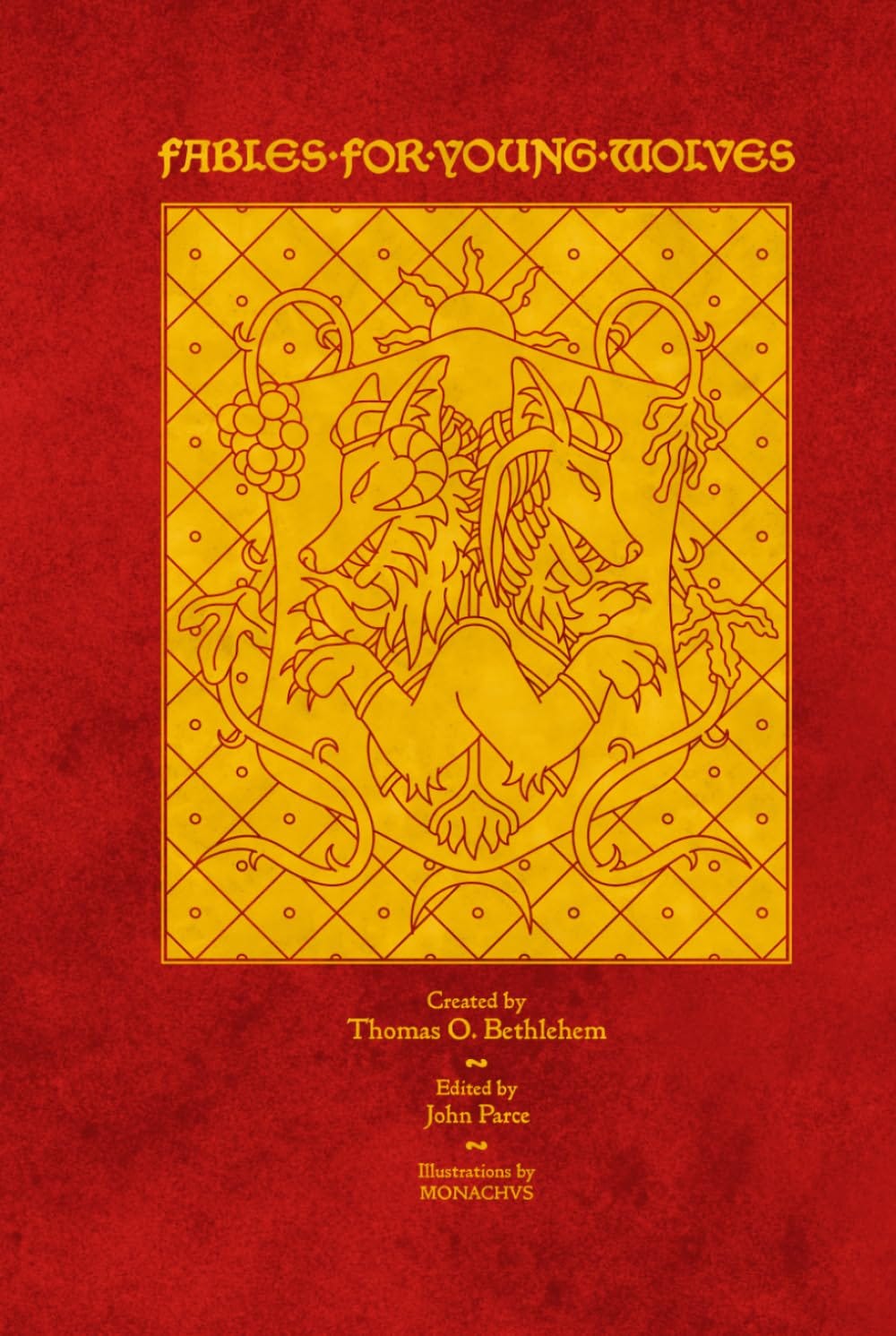
Recommendations for good books intended for young readers is pretty far from my usual bailiwick, so I’ll let John Carter step in with his suggestion that Fables for Young Wolves is worth your attention:
“You should move to a small town, somewhere the rule of law still exists. You will not survive here. You are not a wolf, and this is a land of wolves now.” – Sicario (2015)
Children’s literature has gotten soft. Disney turned every woodland creature into a cute little forest friend, and tacked a happy ending onto every dark fairy tale. The bloodstains were scrubbed out, death was swept under the rug, and the moral lessons became saccharine platitudes about being kind and sharing … a helpful aid to management of kindergarten classrooms, perhaps, but worse than useless for the moral instruction of the young, who will one day need to navigate a world where the shadows of the human soul conceal sharpened knives, and the truth is not always what well-meaning young women with associates degrees in early childhood education might wish. Children go along with it, but deep down they know that they’re being lied to, that the adult are keeping something from them when they pretend that every story has a happy ending, that everyone can be friends and get along if they’re just sufficiently nice to one another.
Contemporary children’s literature has gotten even worse under the pressure of politics, with bookshelves filling with stories about antiracist babies who grow up to become boys who become girls, and girls who save themselves from dragons and therefore don’t need help from the boys who foolishly refused to become girls. This is less moral instruction than moral inversion, literature meant to turn children against their own natures, stories that deliberately deceive developing minds in order to neuter them, soften them, make them malleable and unthreatening for a managerial culture in which the socially acceptable lie is always preferable to the uncomfortable truth.
Fables For Young Wolves is not that sort of book.
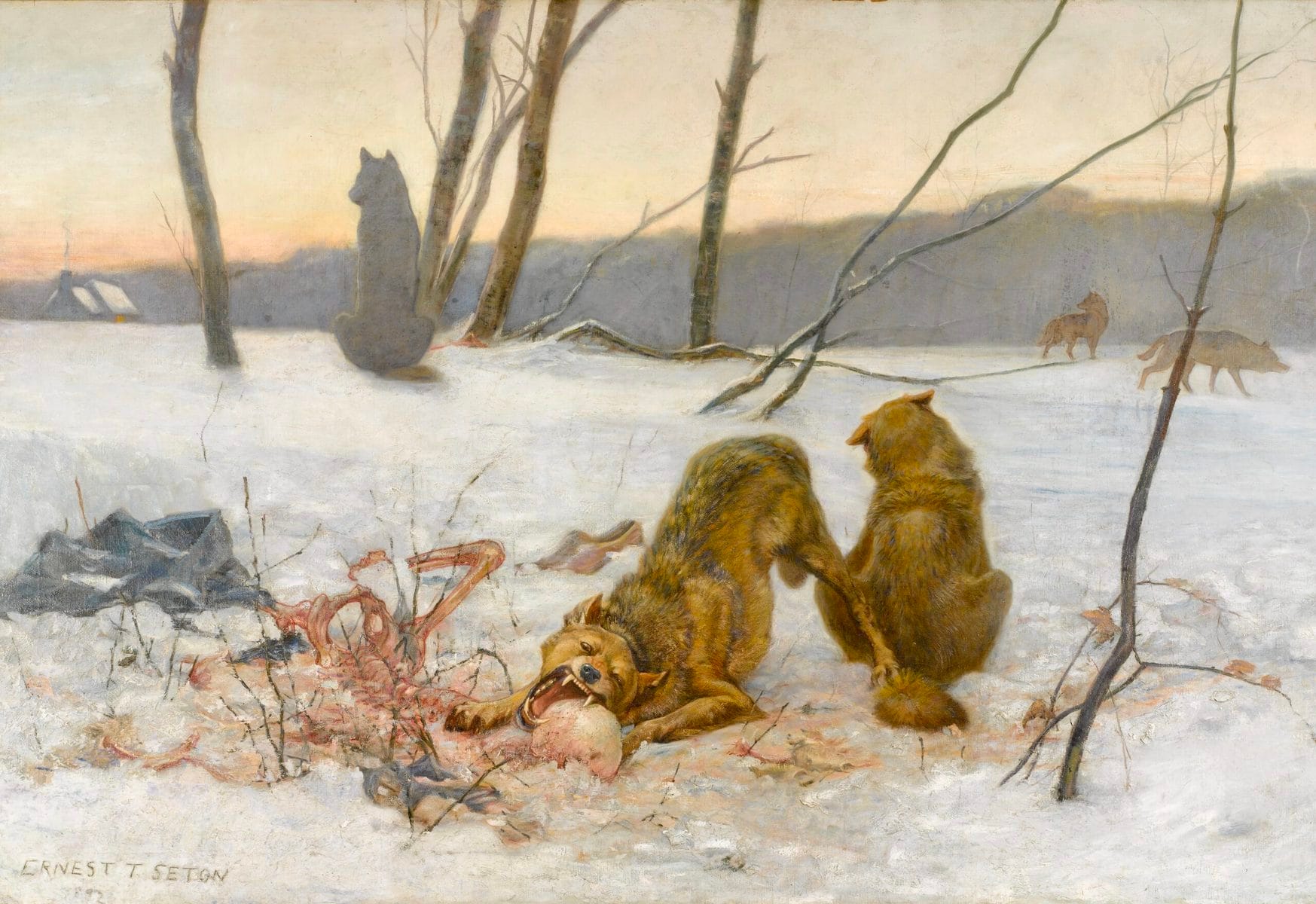
Triumph of the Wolves by Ernest Thompson Seton (1892)
The stories in Fables For Young Wolves are true fables in the Aesopian tradition: tales in which animals are used as symbols for particular facets of human character, or for particular kinds of humans. Foxes are wily, crows are wise but conniving, pigs are greedy and vulgar, asses are stupid, sheep are conformist and dull, dogs are loyal but credulous.
For after being brought up from childhood with these stories, and after being as it were nursed by them from babyhood, we acquire certain opinions of the several animals and think of some of them as royal animals, of others as silly, of others as witty, and others as innocent. – Apollonius, on Aesop (quoted in the foreword).
The titular wolves around whom the fables revolve are true wolves: noble, cruel, cunning, vicious enemies to their foes but faithful to a fault to their friends, playing roles of villain, victim, and hero as each tale requires. As the most psychologically complex of the animals, they stand for everything that is highest in the human soul, and so are also suited to plumb the depths. These are not Disneyfied vegan wolves that make friends with rabbits: these wolves are hunters and killers, and unashamed of it.
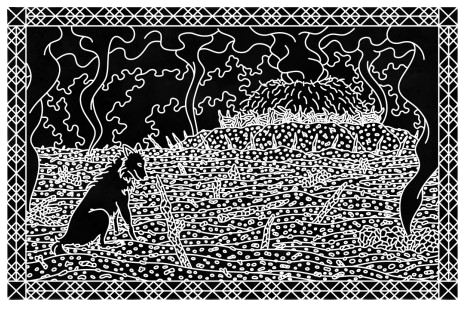
Illustration by Monachvs.
Thomas O. Bethlehem‘s fables are intended, as all fables should be, to impart lessons about human nature and about the world, not as we might wish it to be but as it is, with the intent that the young reader will be guided away from bad decisions and towards the good. Many of the stories are anecdotes of a couple of pages, which communicate simple ideas about controlling your base impulses, having your friend’s back, knowing who your real friends are, the consequences of helping those who cannot be helped, and so on. Interspersed between these are longer and more psychologically complex tales which build upon well-known folk-tales such as “The Boy Who Cried Wolf”, “The Three Little Pigs”, “The Wolf in Sheep’s Clothing”, and “Little Red Riding Hood”.
November 24, 2025
Fairy tales for Canadian boomers – “we have the best healthcare system in the world”
Older Canadians, especially the Baby Boom generation, have a huge blind spot when it comes to any discussion about healthcare … because they believe what they were told as children about Canada’s healthcare system being the “envy of the world” and other such comforting notions. (It’s not just Canada, as British belief in the quality of their National Health Service is very much at odds with the evidence.) This rose-coloured nostalgic faith makes it very difficult to address some of the very real problems that beset Canada’s hospitals and doctors. The media are understandably reluctant to publish anything that goes against this, as Peter Menzies explains:

Grok image from The Rewrite
About the same time as William Watson’s outstanding book Globalization and the Meaning of Canadian Life was being published in the late 1990s, the newspaper I worked for was sending a journalist to Europe to research a series of articles on how health care systems work in some of those countries.
I mention Bill’s book, which was runner-up for a public policy Donner Prize, because it exquisitely details many of the things Canadians believe about themselves that simply aren’t true. Which was the same reason why the Calgary Herald sent its health reporter (yes, there used to be such a thing), Robert Walker, to Europe — to expose its readers to the fact that there are more than two health care systems: our “defining” one and America’s, both of which are extremes. To the best of my knowledge, that remains the only time a Canadian news organization has taken on that task.
In every country examined in Walker’s reports, as is the case with almost every country in the world, public and private health care and insurance systems maintained a peaceful coexistence and the public’s needs were being met. Almost 30 years later, that remains the case. Also almost 30 years later, neither Bill’s book nor the Herald‘s reporting has had the slightest impact on the prevailing media narrative in Canada. It remains determined to perpetuate the fear that any move to increase the role of private health providers or even allow doctors to work in both systems (as was proposed this week by Alberta Premier Danielle Smith) is the first step on the slippery slope to “American-style” health care. This line has been successfully used for decades — often hyperbolically and occasionally hysterically — by public monopoly advocates for Canada’s increasingly expensive and difficult to access systems. We have known for 40 years that once Baby Boomers like your faithful servant turned bald and grey that the system would be unsustainable. But that single, terrifying “American-style” slur has halted reform at every turn.
The Tyee responded with a “Danielle Smith’s secret plan to Destroy Public Health Care” column while the Globe and Mail‘s Gary Mason, a Boomer, challenged my thesis here by suggesting it was time for open minds because “the reality is, the health care system in Canada is a mess”.
It is. And at least some of the blame — a lot, in my view — belongs at the door of Canadian news organizations that for decades have failed to fully inform readers by making them aware that there are a great many alternatives to just “ours” and “US-style”.
I was reminded of this in a recent Postmedia story concerning the perils of private health care provision. Referencing a study on MRIs, the story, right on cue, quotes the part of a study that states “It’s a quiet but rapid march toward U.S.-style health care”.
One would not want to suggest that those clinging to that parochial view should be denied a platform. But at the same time, readers have every right to demand that journalists push back and ask advocates for state monopolies simple questions such as “Why do you say that? Could it not be the first step towards UK-, German-, Dutch-, French-, Portugese- or Swedish-style health care?” and open the debate.
November 17, 2025
QotD: Turns out Judaism isn’t the peaceful exception among Abrahamic montheisms
Yevardia @haravayin_hogh
Thread w/excerpts of Israel Shahak’s Jewish History, Jewish Religion.
Shahak was an award-winning organic chemist & Classical Liberal. Born in Poland, his family moved to Israel as displaced persons in 1945.
For this book, he received death-threats for the rest of his life.Quoted thread is absolutely fascinating.
Like many American gentiles who grew up in the 1950s and 1960s, I have a fondness for Jewish culture as it manifested in this country. The food, the humor, the intellectual tradition. I read Mad Magazine as a kid and “The Joys of Yiddish” as a young man and cheerfully adopted some Yiddishisms into my idiolect.
It’s always been slightly difficult for me, though, to reconcile my fondness for the Jewish influence on American life with what I believe about monotheisms in general and Abrahamic monotheisms is in particular. Which is, basically, that they are pits of evil. Infectious insanities that bring mob violence, horror and death whenever they have actual power.
Judaism looked like an at least partial exception, a monotheism with a curious lack of horrific violence in its backstory. I thought this might be explained by its absence of coercive power ever since the destruction of the Second Temple — 2000 years of oppression by others teaching Judaism the virtue of tolerance the hard way.
Now comes Israel Shahak to tell me it wasn’t like that at all. That until historically recent times – basically, post-1800 — Judaism wasn’t tolerant and rational. Not even close. These are virtues of the secularized Jew, in reaction to traditional Jewish shtetl and ghetto communities that could best have been described as violently evil religious despotisms.
Shahak says gentiles — and many Jews — don’t know how terrible life was under pre-modern rabbis because Judaism has done a bang-up job of expurgating and sanitizing its own history.
Nobody talks about the fact that until the 19th century, rabbis routinely used the self-governance afforded them by a lack of state interest in universal secularized justice to abuse, torture, and often murder Jews they found to be in violation of religious law. I certainly had no idea of this, despite being quite well read in history and comparative religion.
Thought control, too. We think of Jews as readers and scholars, but it turns out the pre-modern rabbinate deliberately kept communal Jews ignorant of history, geography, science, and indeed all secular literature.
Shahak brings the receipts, with extensive quotation from primary sources. Even his critics — and there are many — can’t accuse him of making up these reports. They claim he misinterprets the evidence. But they can’t make the evidence go away.
In a way this comes as a relief to me. I no longer have to wonder why Judaism looks like an exception to the general evil of monotheisms. Because it isn’t one — like Christianity, it looks benign only to the extent that it’s been denatured by modernity and secularism.
On the other hand … I miss the Judaism I thought I knew. I’m disturbed that the evidence was so effectively suppressed, and that it took reading excerpts from Shahak to clue me in.
Damn shame copies of Shahak’s book are so rare that you can only find them for over a grand each. I’d like to read the whole thing, but everybody should read the excerpts in this thread.
ESR, The social media site formerly known as Twitter, 2025-08-15.
October 3, 2025
Women and credit card access … another “just so” story
Janice Fiamengo debunks a common “just so” story about women only gaining the right to hold a credit card in the 1970s:
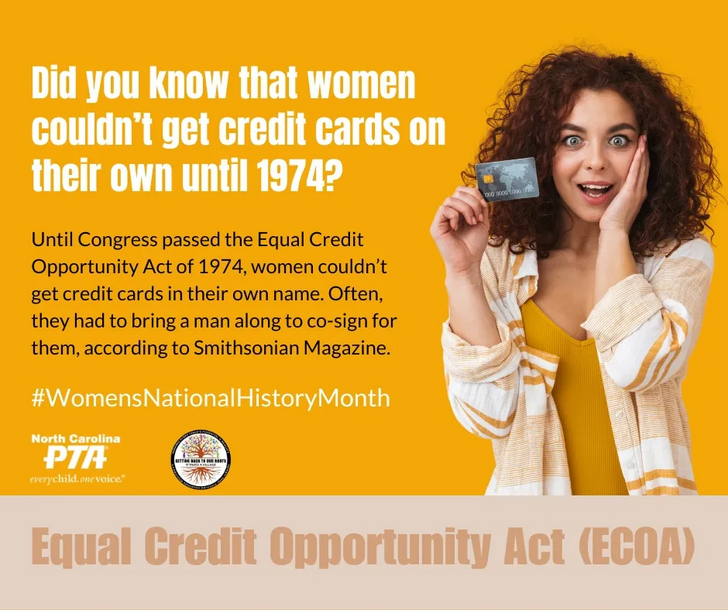
A few years ago, I started hearing that women, before feminism, couldn’t have their own credit cards. Or they couldn’t get one without a man’s signature. Or married women couldn’t have one in their own name. Divorced women, apparently, couldn’t get credit at all. Men conspired to keep women powerless and dependent.
THANK THE GODDESS FOR FEMINISM!
Just last June, on the podcast Diary of a CEO (in an episode viewed by nearly two million people), three feminists debating feminism agreed that, in the words of one of the panelists, “None of us could get a credit card a few decades ago … We couldn’t have anything …” (see 1:50:37).
Before correcting herself, in fact, the panelist had started to say, “None of us could get a credit card a couple of decades ago …”
The statement struck me with the full force of the ludicrous. I started school in 1970. My teachers were nearly all women, at least half of them unmarried. They certainly seemed to live full, normal lives in obeisance to no man. They were paid a salary; they had bank accounts; they owned cars; they bought things and went on vacations.
My mother had worked in an insurance office for years both before and after she married my father in 1956. She had purchased appliances and paid her own rent, helped my father buy his first commercial fishing boat, and handled all the household expenses when my dad was away fishing for months every summer.
My friends’ mothers were similarly active and self-determining. Were all these women actually hobbled by the patriarchy, cut off from the economy?
Received knowledge would have us believe so. Last year, The Globe and Mail published a paid advertisement for Women’s History Month titled “50 Years Ago: Women Got the Right to Have Credit Cards”. Written by a financial services company seeking to drum up business, the article repeated the popular story that women in North America could not get their own credit cards until 1974.
Credit cards were one of the growth areas for banks and other financial service companies in the 1960s and 70s … from something only relatively wealthy travellers and business executives used, they expanded to become widely used by ordinary consumers for all kinds of purchases. Consumers benefitted from access to useful financial tools, while banks enjoyed the profits from the widespread use of credit cards. So where did the idea that they were male-only come from?
The reality is that from the 1950s on, credit cards were a new invention being aggressively marketed to both men and women. Advertising from the era shows how keen credit card companies were to target female customers, how eager to tap into women’s spending power.
Originally introduced as a convenience for travelers on business, credit cards began to expand their purview in the late 1950s. Bank Americard (later Visa) became the first consumer credit card in 1958. A network of banks formed the Interbank Card Association, originally named Master Charge (later Mastercard), in 1966.
Yet we are somehow to believe that half the population was deliberately excluded from this new consumer venture for no other reason than that they were female?
“It wasn’t until 1974 that women were allowed to open a credit card under their own name,” the Globe article states emphatically. “Before 1974, if women wanted to open a credit card, they would be asked a bunch of intrusive questions, like if they were married or whether they planned to have children. If a woman was married, she could (hopefully) get a credit card with her husband. But single, divorced, or widowed women weren’t allowed to get a credit card of their own — they had to have a man cosign for the credit application.”
The explanation is dramatic and incoherent, undoing its own logic from the beginning. It backtracks to allege that women were in fact “allowed” to have a credit card so long as they answered “a bunch of intrusive questions” or found a co-signer. Even this lesser claim is false, but it is rather different from the prior assertion about women “not having the right” to a card.
At a time when many married women either did not work outside the home or worked only part-time and on a temporary basis, there would have been nothing unreasonable about a woman’s husband co-signing her credit card application. Many married women were happy to purchase what they wanted on the assurance that their husbands would pay the bill when it came in, and credit card issuers saw joint accounts as a way of ensuring payment.

Update, 4 October: Welcome, Instapundit readers! Please have a look around at some of my other posts you may find of interest. I send out a daily summary of posts here through my Substack – https://substack.com/@nicholasrusson that you can subscribe to if you’d like to be informed of new posts in the future.
October 2, 2025
The ritual humiliation of ordinary Canadians through “land acknowledgements”
On the social media site formerly known as Twitter, Tom Marazzo explains his objections to the ever-expanding use of “land acknowledgements”:

Let me break this down clearly so you can better understand why these mandated Land Acknowledgements are offensive to me.
They imply inherited guilt
A Land Acknowledgement usually frames the land I live and work on as “stolen”. Even if it does not say the words directly, the message is that I am benefiting from a theft. I served my country for 25 years, I have paid my taxes, raised my family responsibly, and built a life honestly. It cuts against my sense of fairness and justice to be told I must carry guilt for actions taken by people hundreds of years ago. I will not accept accountability for the past when I had no part in it.They ignore my contribution
I have invested decades of service in the military, in my education, in my community, and in my family. These acknowledgements do not recognize those sacrifices, nor those of my ancestors who also built and defended this country. Instead, they imply my very presence is illegitimate. That denies the legitimacy of my life’s work and my family’s role in helping build this nation.They make reconciliation into a ritual of shame
A healthy society should face the past with honesty. But what I see is not dialogue or shared responsibility. It is a scripted performance that demands I accept a label like “colonizer”, whether or not it reflects who I am. Rather than bringing people together, it divides by assigning one group permanent guilt and another permanent victimhood. That is not reconciliation. It is coerced shame.They erase complexity
History in Canada is complicated. Many settlers and Indigenous peoples lived, worked, and fought together. There were injustices, but also cooperation, intermarriage, and shared struggles. Long before Europeans arrived, Indigenous groups also fought among themselves, sometimes brutally, with violence and cruelty toward rival tribes. No group in history is free from wrongdoing. Yet the Land Acknowledgement format reduces this reality to a one-sided story of “oppressors vs. oppressed”, which is neither fair nor accurate.They are being mandated
Perhaps the strongest reason I find them offensive is that these acknowledgements are not voluntary. They are imposed in workplaces, schools, and public events as if they were civic duties or loyalty oaths. Refusing to participate often brings social or professional penalties. That strips away personal agency and turns what could have been a gesture of respect into a forced confession.So my reaction is not irrational. These acknowledgements conflict with my principles of fairness, personal responsibility, and earned legitimacy. They demand I accept guilt I do not bear, while ignoring the contributions my family and I have made. They also erase the truth that no people, Indigenous or otherwise, lived without conflict or wrongdoing in the past.
The first time I encountered a “land acknowledgement” in person was at my son’s university graduation ceremony. I assumed, as the university had a major First Nations study program, that this was something only done there … but now it’s hard to find any public gathering in Canada that doesn’t have the opening cultural cringe and ritual humiliation ceremony to start the event.
September 7, 2025
The BEF and the German Sichelschnitt of May, 1940
Dr. Robert Lyman rebuts the common-since-the-1950s adulation of the Wehrmacht‘s attacks of May-June, 1940 through the Low Countries that drove the British Expeditionary Force off the continent and destroyed the flower of the French army prior to the surrender of France in June:
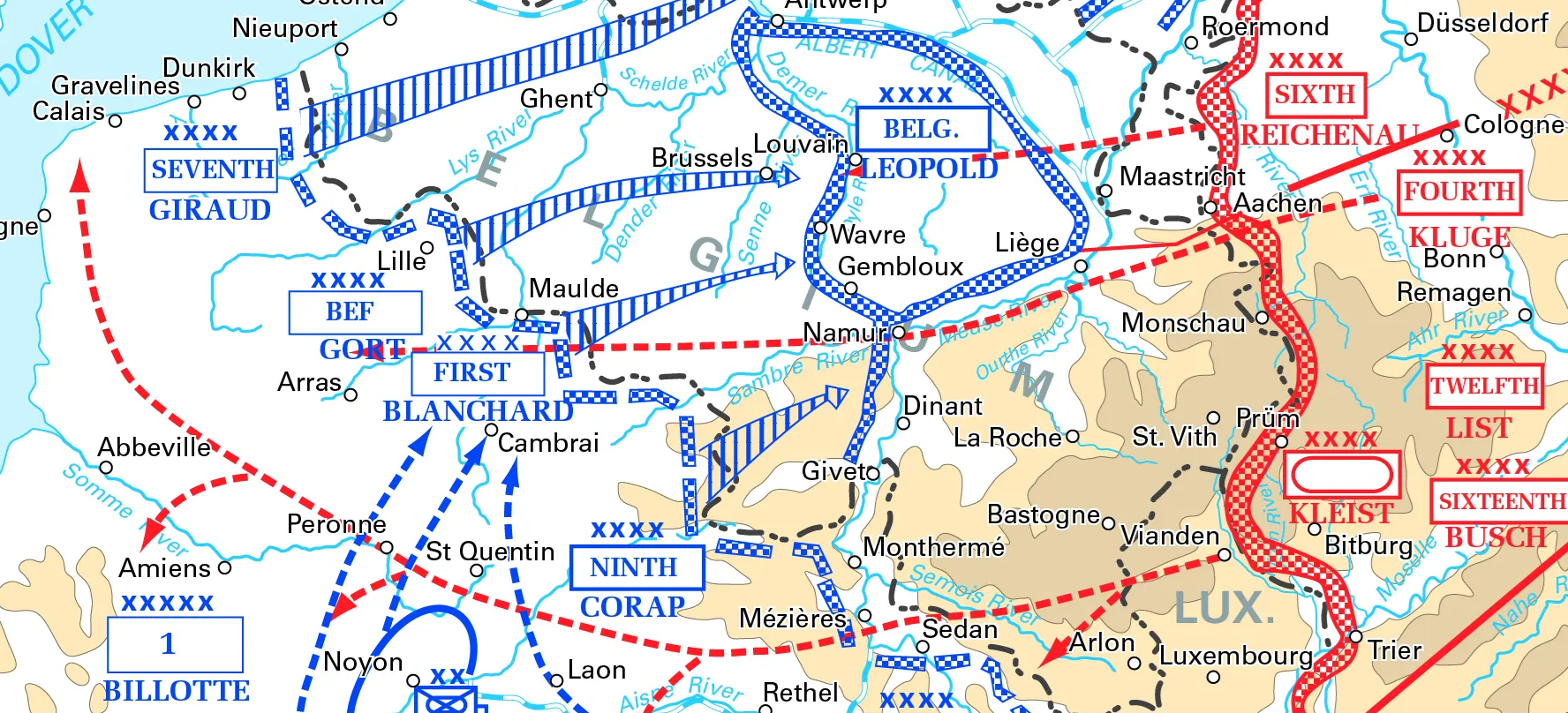
Detail from the West Point Military Atlas map of the “Campaign in the West, Disposition and Opposing Forces, 1940”
Full map.
The world has largely remembered Sichelschnitt as a brilliant German operation of war, but it was one that was fundamentally enabled by Allied ineptitude. Indeed, Blitzkrieg wasn’t particularly new, innovative or even a warfighting doctrine. It is best described, in the context of France 1940, as an event. It was simply the way that the Wehrmacht exerted its tactical and operational superiority over its more pedestrian enemies in 1940. In fact, it was the 1940 extension of what the German Army had first demonstrated in Flanders in March 1918, this time with tanks and Stukas. It was the Panzerwaffe (“tank force”) – combined with a tactical air force – which in 1940 would create the breakthrough that Ludendorff had been unable to achieve in 1918. Where it was applied, by Army Group A, it concentrated fast-moving armoured vanguards co-ordinated with tactical air power, such as 400 Ju 87 Stuka dive-bombers, to so overwhelm the enemy in both time and space that they were unable to respond quickly enough to the changing and challenging battlefield. In 1940 the panzer came into its own, the sound of clattering tracks on French cobblestones a new feature in the sound of battle and a key element in how France remembers its defeat in 1940.
It wasn’t the type of tank in the German inventory which mattered, but the way in which these tanks were employed. Only about 10 per cent of the army comprised tanks, the remainder relying on horse and wagons and the raw, painful feet of the marching infantry. Of the 2,539 tanks the Wehrmacht deployed in 1940, only 916, or 36 per cent were battleworthy, the remainder being clattering tin cans with machine guns (the obsolete Panzer Mark Is and Mark IIs). The only modern tanks were 683 Panzer Mark IIIs and Czech T38 tanks armed with a 37mm gun, and 278 of the larger Mark IVs with a short 75mm gun. But it was enough. The German operational strategy was to use this mass of armour not to fight a large confrontational tank battle, but to achieve breakthrough and breakout, bursting through the enemy’s linear defences. It was surprise and shock action that so discomforted the Allies, who had lazily and, given what we know of British failure to understand 1918, ignorantly assumed that the war would progress against a 1914 rather than a 1918 pattern. The armoured vanguard would surge through the outer skin of the enemy defences, concentrating heavy effort in one place, before driving hard into the heart of enemy territory. With an enemy intent on fighting a linear battle, the rear areas, behind this outer crust, would be weakly defended and full of rear-echelon, administrative and supply troops managing the lines of communication up to the front, not expecting to have to fight. It was by driving hard and fast behind the enemy front line, breaking the cycle of Allied battlefield decision-making, that Blitzkrieg was to achieve its psychological effect.
In contrast the Allies remained concerned about retaining the integrity of their defensive lines. The diaries of Major General Henry Pownall, for instance, are replete with concerns as the days spun past about the widening frontages on one defensive line or another. British concern was misplaced. It was to spread the ever-decreasing butter of the British infantry across ever-widening stretches of French and Belgian bread, without realising that the Germans were concerned not with rolling up a front line, but with driving hard to the rear. By so doing they would take risks with their flanks, but the discombobulatory effect on the enemy was considered to far outweigh any worry about the risk of counter- attack from an increasingly battered and disorganised enemy. Of course this operational concept was risky, but the risks taken were carefully calculated given what the German General Staff knew about British and French tactical doctrine, or the lack of it.
These German tactics were psychologically disconcerting for those not trained to expect them. As was demonstrated on the Meuse, artillery would batter a position in co-ordination with armoured columns bypassing fixed defences and attacking those it needed to clear from the flanks and the rear. The infantry accompanying the advancing armour – Panzergrenadiers (mechanised infantry) – arrived in tandem with the Stukas, which could drop their bombs from a screaming dive. Each Stuka seemed to those at the receiving end to be diving directly at them, personally. For untrained troops it was a terrifying experience. The panzers would sweep on while the truck-borne infantry would turn up to deal with survivors of this storm of fire and movement. By this time, of course, the disorientated French and British would now consider themselves cut off, behind their front line, with no prospect of being relieved. Surrender or a disorganised escape to the rear would seem to be a more sensible option than the forlorn hope of continued resistance when the surrounding fields were dotted with the grey-green uniforms and coal-scuttle helmets of their enemy. The psychological effect of Blitzkrieg was considerable. This wasn’t how their fathers had told them war was fought. How did the Germans manage to discomfort them on the battlefield so comprehensively? Were they inadequate soldiers, unable to meet the standards of campaigning set by the previous generation? Or was it that their tactics were simply not able to cope with the shock of a comprehensive assault by German infantry, armour and air power all descending on them at once? This was the battlefield that the British had entirely dominated, by virtue of their tactical innovations, in 1918. It was now Germany’s turn, a direct result of the failure of the British Army to develop its doctrine and approaches to warfighting at the end of the Great War. Brave men in 1940 did their duty, but against a battle-winning concept of their enemy, they were out-thought rather than out-fought. And critically, when an army thinks it is beaten, it is indeed beaten.
September 3, 2025
QotD: The distance between NHS PR and NHS reality
It wasn’t difficult to promote such historiography by using horror stories from the past, stories which were perfectly plausible because almost any conceivable system will give rise to such stories. If, per impossibile, a new system were to replace the NHS, it would not be difficult to justify it by reference to horror stories, whether or not the new system was better. A war of anecdotes, while always gratifying to the human mind, is not the way to decide important questions such as the superiority or inferiority of a system of health care. Only anecdotes that also illustrate statistical trends or truths are valuable in such a context.
The statistics are not favourable to the NHS, at least if one chooses reasonable standards of comparison, namely other European countries. The results are not disastrous, but they are not good either. The NHS has failed even in its egalitarian goal: the gap between the health of the richest and poorest in society has only grown under its dispensation. And yet the belief in its levelling effect persists.
The propaganda in favour of the NHS has been so successful that it now accords with the sentiments of the population, a triumph that no communist regime achieved despite herculean efforts at indoctrination. The triumph has been achieved without compulsion or violence and ought to be an interesting case for political scientists who study the successful inculcation of political mythology. Of course, the danger of such a study would be that it might induce doubt or cynicism about other political mythologies, and we all need such mythologies to live by.
Theodore Dalrymple, “Worshipping the NHS”, New English Review, 2020-05-07.
August 26, 2025
Plunder does not explain western prosperity
Lorenzo Warby digs deep into the “mountain range of bullshit” over the issue of plunder, as in the claims that the First World got that way by stealing everything they could from what became identified as the Third World:
I am using mainly European examples because it is the genetically (and archaeologically) best mapped continent. But these grim patterns are normal in the history of Homo sapiens. Consider, for example, the Bantu expansion across Africa that mirrors the march of Anatolian farmers across Europe.
The development of farming and animal herding led to the y-chromosome Neolithic bottleneck: a massive harrowing of male lineages that only about 1-in-17 male lineages survived. The development of farming and pastoralism created much higher populations plus plunderable assets. Folk developed much more coherent kin-groups. Teams of male warriors wiped each other out, taking the land, animals and women of the defeated as their spoils.
Plunder was thus endemic in farming and herding societies. The harrowing of male lineages came to an end via the development of chiefdoms and states. That is, the technology of exploitation — keep defeated males alive so they could breed more payers of tribute and taxes — overtook the technology of aggression (kin-groups).
States were both ordering and predatory. This process worked less well among pastoralists, as the need to defend the mobile assets of animal herds generated highly effective warriors who were harder to control or extract surplus from. Pastoralist states tended to be super-chiefdoms rather than full states and the harrowing of pastoralist male lineages continued, just at a lower level.
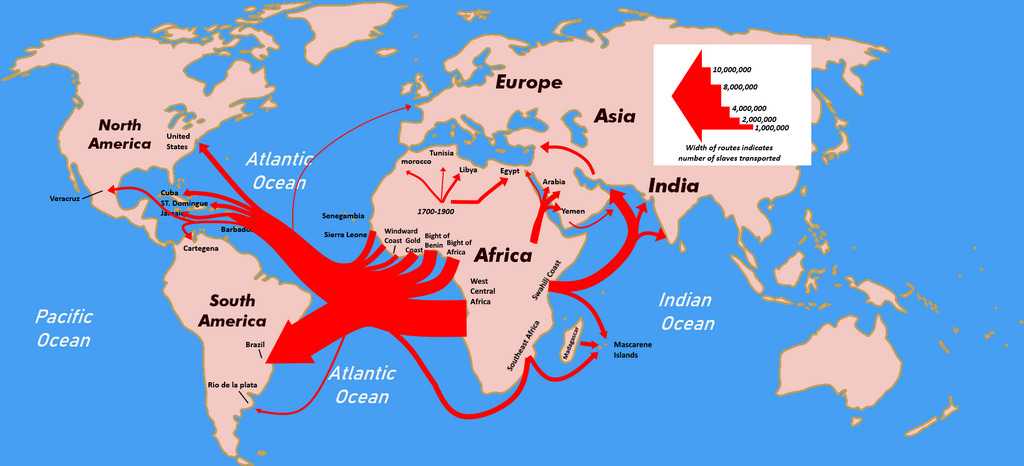
Africa was the continent of slavery because, being where Homo sapiens evolved, it was full of pathogens, parasites, predators and mega-herbivores that co-evolved with Homo sapiens, so could cope with them.1 This kept population density down. This meant that labour was more valuable than land. There was more potential wealth in grabbing able-bodied people than in grabbing land.
This made slavery endemic in Sub-Saharan Africa long before the Islamic, then the Atlantic, slave trades developed. Sub-Saharan African states were overwhelmingly slave states. Even those that were trade states traded in slaves.
The Atlantic slave trade looks like the most extreme pattern of Europeans plundering others — in this case, Sub-Saharan Africans. It was certainly true that the Atlantic slave trade was horrific and had multiple adverse effects on African society. But those adverse effects were to intensify patterns that already existed. Moreover, the original plundering of people by turning them into slaves was done by … Africans.
The life expectancy of a European who left the African coast was about a year: it was not practical for Europeans to do the original enslaving. They bought the slaves from Africans. This enabled the slave trade carried on by Catholics to conform to the Papal Bull Sublimis Dei (1537) which banned Catholics from enslaving the indigenous inhabitants of the Americas (and, by implication, elsewhere), but did not ban trading in, or owning, slaves.
Wikimedia Commons
Plunder was endemic across human societies: including turning fellow humans into plunder — aka slavery. It was sadly ordinary. It was not a European pattern, it was a Homo sapien pattern. The Islamic slave trade was on the same scale—given it operated for centuries longer — as the Atlantic slave trade, the Saharan passage was every bit as horrific as the Atlantic passage, and the Islamic slave trade had the extra horror of the castration of male slaves. Hence, there is not an ex-slave diaspora in Islam as there is in the Americas.
Just as plunder was endemic, so was poverty. Mass poverty was the norm across farming societies. While there were economic efflorescences across human history, and evidence of periods of sustained growth, the dramatic shifts to mass prosperity since the 1820s — since the application of steam power to railways and steamships — is utterly without precedent. Moreover, it started in precisely one society — Great Britain. None of the other Atlantic littoral societies of Europe showed any sign of such a take-off.
- The megafauna outside Africa — which did not co-evolve with Homo sapiens — almost all died out when Homo sapiens turned up.
August 8, 2025
Debunking the idea that Japan was about to surrender anyway
Dr. Robert Lyman on the common misunderstanding of Japan’s situation in July and August of 1945 — no, they weren’t “on the brink of surrender so atomic bombing was unjustified” … instead, they were intending to make the assault on the Home Islands the biggest bloodbath ever:
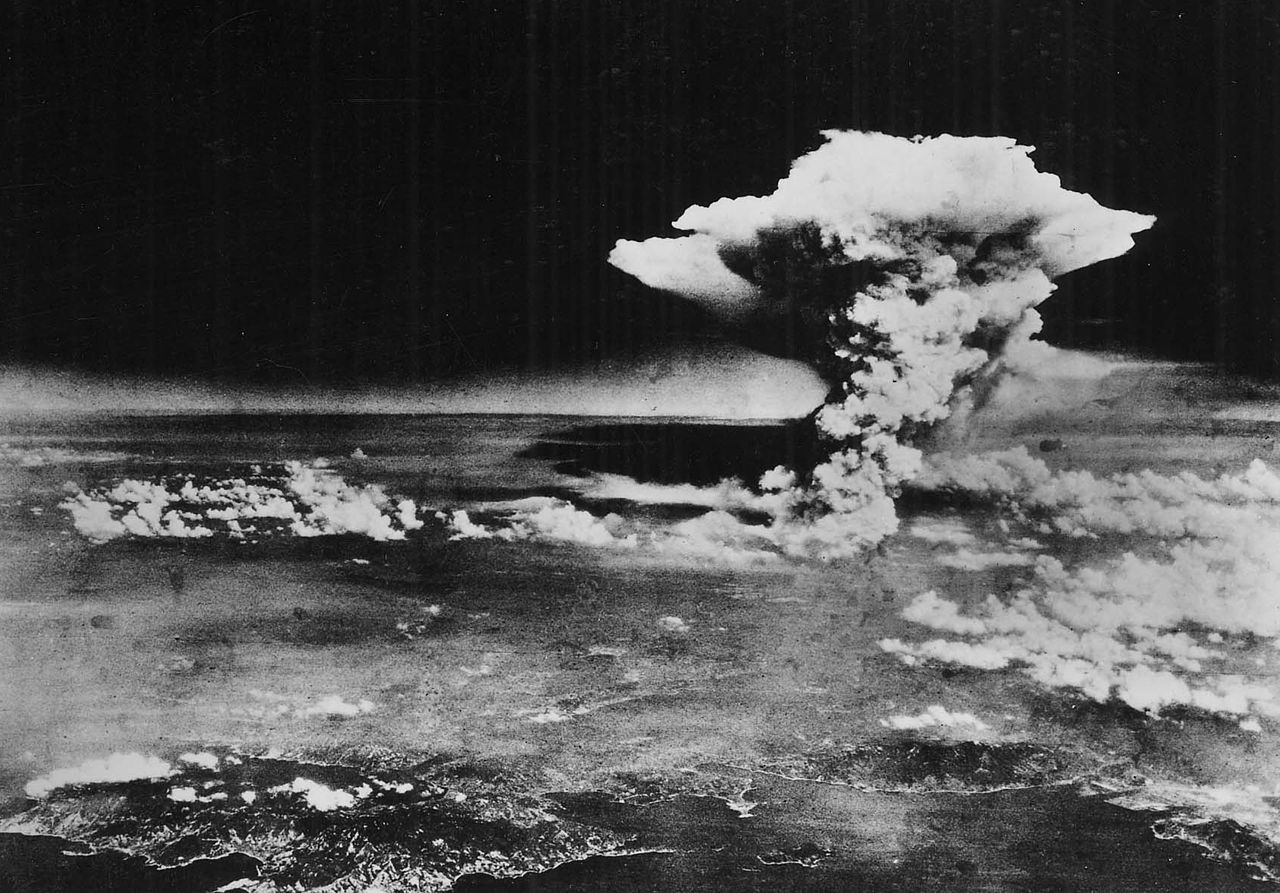
Atomic cloud over Hiroshima, taken from “Enola Gay” flying over Matsuyama, Shikoku, 6 August, 1945.
US Army Air Force photo via Wikimedia Commons.
It’s the anniversary of Hiroshima again today. I wasn’t going to write anything to mark the event (more coming next week on VJ Day), but I’ve been triggered already by nonsense on the radio which suggests that the atomic bombs on Hiroshima and Nagasaki were unnecessary, because Japan was about to surrender.
Nonsense. There is not a shred of real evidence to support this idea. In fact, the evidence that Japan wanted to keep on fighting is irrefutable. And yet this lie persists, despite the deluge of scholarly work demonstrating Japan’s commitment to the ritual suicide of its entire nation right until the end, when Hirohito pulled the plug. If you are in any doubt about the facts of the case, as opposed to the propaganda, read Toland’s Rising Sun (1970), Frank’s Downfall (2001), Spector’s In The Ruins of Empire (2007), Pike’s Hirohito’s War and, more recently, Stewart Binn’s Japan’s War (2025). All are excellent, clear, analytical and well researched. There are lots more, too.
Why does this canard keep on popping up? Is it because people don’t read? Or is it that they just don’t want to believe in the necessity of such a dramatic event to force Japan to surrender and thus bring about an end to the greatest man-made tragedy the world has ever suffered? The origins of this wishful myth in fact derives from hard right nationalist propaganda in post-war Japan (driven by Admiral Suzuki himself), quickly lapped up by the gullible and wishful thinkers in the West. Its one of the most enduring of the Hiroshima and Nagasaki myths, in part because it seems palatable to many, and because it is inherently anti-American.
What is the real story? In short, the Allies tried hard to persuade Japan to surrender. They demonstrated unequivocally to Japan that it was going to lose the war by defeating its armies and by beginning the long, slow and painful crawl towards the Japanese home islands. All the books I’ve mentioned note the extreme chaos of Japanese decision-making before and during the war. Who really was in charge? Who could one talk to, to secure a commitment to negotiate? In any case, the chaotic government under Koiso which replaced that of General Tojo following the fall to the Americans of Saipan in 1944, made not a single effort to engage with the Allies to seek terms. This government also collapsed on 5 April 1945. The replacement prime minister was Admiral Suzuki, and it was from this man that the myth seems to have arisen, after the war, that Japan was considering surrender and that the A-bombs were unnecessary. This is not true. During his entire time as Prime Minister he resolutely refused to do anything but continue to fight, unless the ending of the war could be secured on Japan’s terms. There were some initiatives to persuade the Suzuki government to surrender, but none of them amounted to much, because they didn’t engage directly with the government in Tokyo, and they didn’t derive from the Allied powers. The evidence that peace-feelers were being put out by various sources (such as the Vatican) in 1944 and 1945 is evidence only that the Japanese government ignored them. None were taken seriously in Tokyo.
Indeed, throughout the period of the Suzuki government, the war parties were dominant. In early June the military Supreme Command submitted a paper entitled The Fundamental Policy to be Followed Henceforth in the Conduct of the War, in which it demanded that the government confirmed that Japan would fight to the very last Japanese in an act of national suicide leading to the “honourable death of the hundred million”:
With a faith born of eternal loyalty as our inspiration, we shall – thanks to the advantages of our terrain and the unity of our nation, prosecute the war to the bitter end in order to uphold our national essence, protect the Imperial land and achieve our goals of conquest.
The proposition was passed, not unanimously, but overwhelmingly nonetheless.
There were some in the government – interestingly including Tojo himself – who saw that this was self-defeating, and that Japan must negotiate to secure acceptable peace terms. Naively, it was hoped that this would enable it to retain parts of its empire. Suzuki was part of this group who thought that Japan could negotiate favourable terms to end the war, in the form of a negotiated settlement such as that had brought about the end of the Russo-Japanese war in 1905, but when he suggested this in parliament on 13 June he was shouted down by the war mongers. Hirohito then endorsed an approach to the Soviets in late June. Bizarrely – though Moscow was neutral in the Far Eastern war at this point – Tokyo’s emissaries suggested that the USSR and Japan join forces to rule the world. It was yet more evidence of how Tokyo fundamentally misunderstood the world, and its enemies, and the way the war would have to end: complete and utter surrender by Japan.
Moscow, of course, scorned these “negotiations” as meaningless.
August 1, 2025
QotD: The self-serving mythology of Britain’s NHS
The interesting question of why the NHS should continue to hold the affection of the British people, when it is at best mediocre in its performance and frequently unpleasant to deal with, is one that should be of interest to all political scientists. The answer is not pleasing to those who believe in human rationality.
The affection represents the triumph of rhetoric over reality. This rhetoric contains an implicit historiography, in which the pre-NHS era is akin to that of jahiliyya, the era of ignorance before the advent of Muhammad, in Islamic historiography: in short, that there was no healthcare for most of the population before the NHS. This historiography has for decades been continuously and successfully insinuated into the minds of the population. It has been Britain’s pale imitation of totalitarian propaganda. Intentionally or not, Boris Johnson recently reinforced the mythological status of the NHS. And when, in the present crisis, retired doctors such as I were asked to return to work if they were able, it was to help the NHS. This was like asking a soldier to lay down his life for the sake of the Ministry of Defence. It says something about the credulity of the public that the response to slogans like “protect the NHS” was dull compliance, rather than outraged demands as to why it wasn’t protecting us.
I suspect also that the sheer unpleasantness of the NHS is reassuring to the British population. It evokes the Dunkirk spirit: we are all stranded on the beach of illness together. And if we cannot all live in luxury, we can at least all die in squalor. Justice is served.
Theodore Dalrymple, “Empire of conformists”, The Critic, 2020-04-29.
May 12, 2025
QotD: The Gracchi
But it is also generally the only reading students get and it is not the only valid reading of the evidence we have. So for this week, I want to complicate the Gracchi, presenting some of the details that often get left out of introductory surveys. In particular, we’re going to discuss the problems that Tiberius Gracchus’ key law, the Lex Sempronia Agraria was designed to solve and I am going to argue that Tiberius was attempting to solve a problem that didn’t exist (though he couldn’t have known it), a view which is now quite common in the scholarship but almost entirely absent in how we tend to teach the Gracchi.
But more to the point, I am going to argue that Tiberius and Gaius Gracchus’ behavior did, in fact, violate the norms of the Republic and that it was not entirely unreasonable for the senatorial elite to conclude these men, in their unrestrained and nakedly ambitious approach to politics, represented a real threat to the Roman political order and that they might be aiming for something approaching a “soft coup” in the context of a political order whose features – including the democratic ones – worked through an unwritten constitution of norms (what the Romans called the mos maiorum, “the customs of the ancestors”), which both brothers actively undermined. The claim that the Gracchi threatened to make themselves tyrants was not an empty claim and that is the dark reflection of their role as well intentioned reformers.
In short, then, if the only version of the Gracchi you have encountered is that of the near-saintly, then martyred proto-progressive reformers, that’s not quite the complete picture (and the left-coding of their ideas is decidedly anachronistic). Naturally, in trying to complicate this picture, I am essentially taking the position of prosecutor, so this “take” is going to be far more negative on the Gracchi than how I would, say, teach them in class or, indeed, how I regard them myself.
So the way we’re going to approach this problem is first to discuss the problem that Tiberius Gracchus thought he was addressing (and some of the issues there), before walking through the means he used to push forward the Lex Sempronia Agraria. Then I want to look at some of the wide-ranging laws proposed by Gaius Gracchus to assess the degree to which those laws cohere and ways we might understand his program and actions, potentially rather more negatively.
Bret Devereaux, “Collections: On the Gracchi, Part I: Tiberius Gracchus”, A Collection of Unmitigated Pedantry, 2025-01-17.
May 4, 2025
The Clean German Myth, Doomed B-17 Pilots, and Japan’s Rapid Victories – Out of the Foxholes Live
World War Two
Published 3 May, 20205Indy and Sparty tackle some more of your interesting questions in another live Out of the Foxholes. Today they look at loss rates of B-17 crews, the myth of the clean Wehrmacht, and ask why the West was apparently so unprepared for Japan’s attack.
(more…)
April 18, 2025
QotD: Literature in (and after) the late Western Roman Empire
Well, no.
Here I think the problem is the baseline we assess this period against. Most people are generally aware that the Greeks and Romans wrote a lot of things and that we have relatively few of them. Even if we confine ourselves only to very successful, famous Greek and Roman literature, we still only have perhaps a low single-digit percentage of it, possibly only a fraction of a percent of it. In our post-printing-press and now post-internet world, famous works of literature do not simply vanish, generally and it is intuitive to assume that all of these lost works must have been the result of some catastrophe or intentional sabotage.
I am regularly, for instance, asked how I feel about the burning of the Library of Alexandria. The answer is … not very much. The library burned more than once and by the time it did it was no longer the epicenter of learning in the Mediterranean world. Instead, the library slowly declined as it became less unique because other libraries amassed considerable collections. There was no great, tragic moment where countless works were all lost in an instant. That’s not how the chain of transmission breaks. Because a break in the chain of transmission requires no catastrophe – it merely requires neglect.
The literature of the Greeks and Romans (and the rest of the ancient iron age Mediterranean) were largely written on papyrus paper, arranged into scrolls. The problem here is that papyrus is quite vulnerable to moisture and decay; in the prevailing conditions in much of Europe papyrus might only last a few decades. Ancient papyri really only survive to the present in areas of hard desert (like Egypt, conveniently), but even in antiquity, books written on papyrus would have been constantly wearing out and needing to be replaced.
Consequently, it didn’t require anyone going out and destroying books to cause a break in the chain of transmission: all that needed to happen was for the copying to stop, even fairly briefly. Fortunately for everyone, Late Antiquity was bringing with it a new writing material, parchment, and a new way of putting it together, the codex or book. The transition from papyrus to parchment begins in the fourth century, but some books are still being produced in papyrus in the 7th century, particularly in the Eastern Mediterranean. Whereas papyrus is a paper made of papyrus stalks pressed together, parchment is essentially a form of leather, cleaned, soaked in calcium lye and scraped very thin. The good news is that as a result, parchment lasts – I have read without difficulty from 1200 year old books written on parchment (via microfilm) and paged through 600 year old books with my own hands. Because making it requires animal hide, parchment was extremely expensive (and still is) but its durability is a huge boon to us because it means that works that got copied onto parchment during the early middle ages often survive on that parchment down to the present.
But of course that means that the moment of technological transition from short-lived papyrus to long-lasting parchment was always going to be the moment of loss in transition: works that made it to parchment would largely survive to the present, while works that were not copied in that fairly narrow window (occupying Late Antiquity and the Early Middle Ages) would be permanently lost. And that copying was no simple thing: it was expensive and slow. The materials were expensive, but producing a book also required highly trained scribes (often these were monks) who would hand copy, letter by letter, the text for hundreds of pages. And, for reasons we’ll talk about later in this series, the resources available for this kind of copying would hit an all-time-low during the period from the fifth to the seventh centuries – this was expensive work for poor societies to engage in.
And here it is worth thus stopping to note how exceptional a moment of preservation this period is. The literary tradition of Mediterranean antiquity represents the oldest literary tradition to survive in an unbroken line of transmission to the present (alongside Chinese literature). The literary traditions of the Bronze Age (c. 3000-1200 BC and the period directly before antiquity broadly construed) were all lost and had to be rediscovered, with stone and clay tablets recovered archaeologically and written languages reconstructed. The Greeks and Romans certainly made little effort to preserve the literature of those who went before them!
In that context, what is actually historically remarkable here is not that the people of Late Antiquity and the Early Middle Ages lost some books – books had always been being lost, since writing began – but that they saved some books. Never before had a literary tradition been saved in this way. Of course these early copyists didn’t always copy what we might like. Unsurprisingly, Christian monks copying books tended to copy a lot more religious texts (both scriptures but also patristic texts). Moreover, works that were seen as important for teaching good Latin (Cicero, Vergil, etc.) tended to get copied more as well, though this is nothing new; the role of the Iliad and the Odyssey in teaching Greek is probably why their manuscript traditions are so incredibly robust. In any event, far from destroying the literature of classical antiquity, it was the medieval Church itself that was the single institution most engaged in the preservation of it.
At the same time, writers in the fifth, sixth and seventh centuries did not stop writing (or stop reading). Much of the literature of this period was religious in nature, but that is no reason to dismiss it (far more of the literature of the Classical world was religious in nature than you likely think, by the by). St. Augustine of Hippo was writing during the fifth century; indeed his The City of God, one of the foundational works of Christian literature, was written in response to the news of the sack of Rome in 410. Isidore of Seville (560-636) was famous for his Etymologies, an encyclopedia of sorts which would form the foundation for much of medieval learning and which in its summaries preserves for us quite a lot of classical bits and bobs which would have otherwise been lost; he also invented the period, comma and colon. Pope Gregory I (540-604) was also a prolific writer, writing hundreds of letters, a collection of four books of dialogues, a life of St. Benedict, a book on the role of bishops, a commentary on the Book of Job and so on. The Rule of St. Benedict, since we’ve brought the fellow up, written in 516 established the foundation for western monasticism.
And while we’ve mostly left the East off for this post, we should also note that writing hardly stopped there. Near to my heart, the emperor Maurice (r. 582-602) wrote the Strategikon, an important and quite informative manual of war which presents, among other things, a fairly sophisticated vision of combined arms warfare. Roman law also survived in tremendous quantities; the emperor Theodosius II (r. 402-450) commissioned the creation of a streamlined law code compiling all of the disparate Roman laws into the Codex Theodosianus, issued in 439. Interestingly, Alaric II (r. 457-507), king of the Visigoths in much of post-Roman Spain would reissue the code as past of the law for his own kingdom in 506 as part of the Breviary of Alaric. Meanwhile, back at Constantinople, Justinian I (r. 527-565) commissioned an even more massive collection of laws, the Corpus Iuris Civilis, issued from 529 to 534 in four parts; a colossal achievement in legal scholarship, it is almost impossible to overstate how important the Corpus Iuris Civilis is for our knowledge of Roman law.
And it is not hard again to see how these sorts of literary projects represented a continuing legacy of Roman culture too (particularly the Roman culture of the third and fourth century), concerned with Roman law, Roman learning and the Roman religion, Christianity. And so when it comes to culture and literature, it seems that the change-and-continuity knight holds the field – there is quite a lot of evidence for the survival of elements of Roman culture in post-Roman western Europe, from language, to religion, to artwork and literature. Now we haven’t talked about social and economic structures (that’s part III), so one might argue we haven’t quite covered all of “culture” just yet, and it is necessary to note that this continuity was sometimes uneven. Nevertheless, the fall of Rome can hardly be said to have been the end of Roman culture.
Bret Devereaux, “Collections: Rome: Decline and Fall? Part I: Words”, A Collection of Unmitigated Pedantry, 2022-01-14.


