Quotulatiousness

June 17, 2019

Britain’s Conservative Party – the Quisling Right

Filed under: Britain, Europe, Politics — Tags: , , , , , , — Nicholas @ 03:00

Sean Gabb outlines recent British history, with emphasis on “the project” — the gradual take-over of the educational and cultural power-centres of Britain by a self-styled new ruling class and the total melt-down of the Conservatives:
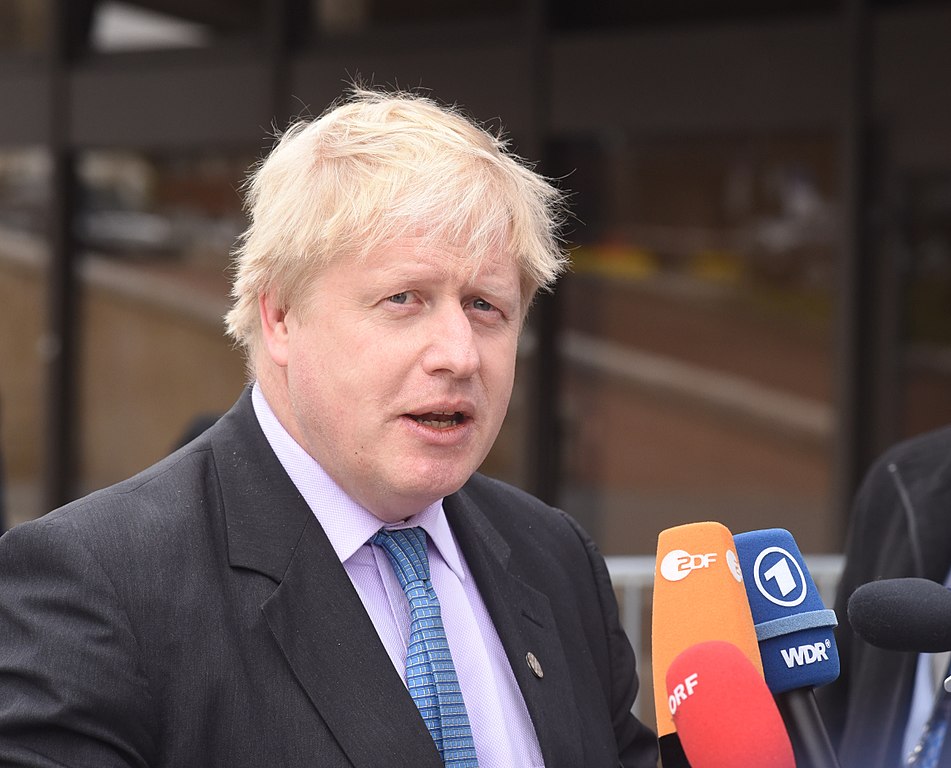
Boris Johnson, Secretary of State for Foreign and Commonwealth Affairs at an informal meeting of the Foreign Affairs Council on 15 February 2018.
Photo by Velislav Nikolov via Wikimedia Commons.

I will begin with what I believe has been a loose Project unfolding through my entire life. Since about the 1960s, we have seen the rise of a new ruling class, committed to the transformation of Britain into a new sort of country. Because I have discussed the Puritan Hypothesis at some length here and here, I will now give only a summary. In short, the new ruling class wants to reshape our thoughts into its own conception of The Good. This means a long-term project of securing cultural hegemony through control of education and the media, and a shorter-term project of compelling us to act as if we already believed in the new order of things. Though I will emphasise that it is in no meaningful sense either Marxist or socialist, the overall Project has been carried through by a careful use of what Louis Althusser called the ideological state apparatus and the repressive state apparatus.

One important element of this Project has been to maintain the appearance of political diversity. Because Britain — or at least England — is a rather conservative nation, this means ensuring a Conservative Party that makes conservative noises, but never does anything measurably conservative. I spent several years after 1997 grumbling about “the Quisling Right.” Though I have mostly fallen silent since then, here it is the idea of the Quisling Right briefly stated in a speech I gave in 2005 during a debate with Boris Johnson.

Though I will not call their predecessors real conservatives, the Conservative Party was taken over in 2005 by a small group headed by David Cameron. These people spent the next five years making vaguely conservative noises, without ever challenging the new order of things that had come fully into shape under the New Labour Governments. Because of this, they failed to win an election against Gordon Brown, but were able to form a coalition government with the Liberal Democrats, who were just as committed to the new order of things as Labour.

[…]

I think it a reasonable conclusion that the Conservative Party is the Quisling Right — and, or but, or both, that it is run by a clique of politicians unfit for any conceivable purpose. Theresa May will leave office with the label fixed to her of the worst Prime Minister in history. But the reason she was able to last so long is that she had no obvious replacement. As I write, her most likely replacement is Boris Johnson. He is lazy. He is unprincipled. He is a thug. He is an adulterer who paid for at least one of his mistresses to have an abortion. He was a ludicrous Mayor of London. He was the worst Foreign Secretary I can recall. This Conservative Government has landed us in a first-class national and international crisis. It has provoked the European Union into refusing to entertain any leaving terms short of the ruinous. It has made no good preparations for leaving without a deal. It has landed us in a position where the best exit involves throwing ourselves on the mercy of the Americans, and to hope that they will treat us no more ruthlessly than they did in 1940. The last person we should ask to navigate this crisis is Boris Johnson.

It seems the sheep in the Parliamentary Party have agreed he is their only hope of keeping their seats at the next election. Perhaps the Party membership will be taken in by his Churchillesque wind-baggery. But this will not do. He will be brushed aside by the Europeans. He will be taken for a ride by his fellow Americans. That is if, before then, he can avoid a general election in which he will by murdered by Jeremy Corbyn. I am told, in his defence, that only he who is without sin should cast the first stone. Well, I have never done what Boris Johnson so far has. So, if I am not the first to ask for one, hand me a stone, and make it a big one.

No conspiracy here. These people have failed us. But it was never their purpose to do otherwise. More importantly, they have failed the Project. For that, I suppose, we should feel minimal gratitude. Even so, their survival in office for so long raises a further question with no comforting answers. How could a clique of total incompetents have been allowed, without meaningful challenge, to take over and run into the ground one of our main parties of government? What does this say about us as a people?

June 11, 2019

Actually, this explains so much about the British Tory party

Filed under: Britain, Politics — Tags: , , , — Nicholas @ 03:00

Mark Steyn:

Image by Peter Reynolds
https://peter-reynolds.co.uk/2019/06/01/which-conservative-leadership-candidate-has-the-intelligence-and-courage-to-legalise-cannabis/

I look at the race to succeed Theresa May as Tory leader and I wonder, to modify our Sunday Poem, where are the squares of yesteryear? No Conservative seeking to maintain political viability wants to seem too disconnected from the debauchery of contemporary Britain. So it has become the habit to confess to “youthful indiscretions”, “youthful” being a term of art stretching easily into late middle age.

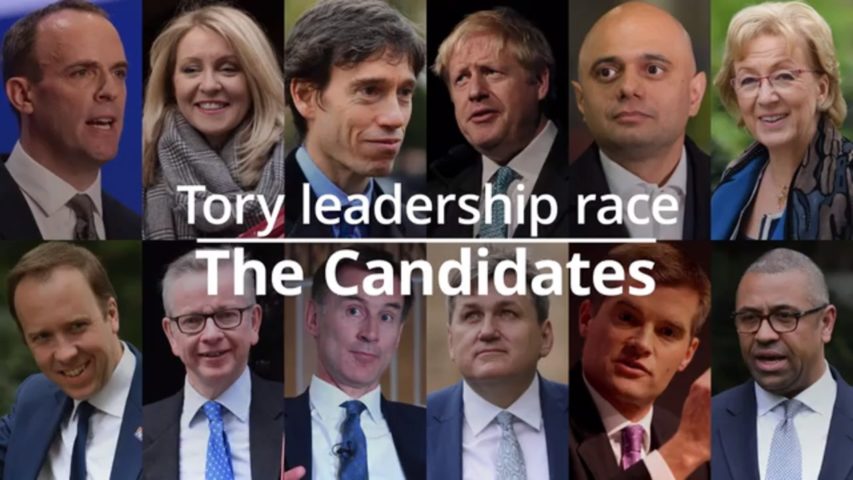
This time round the craze is for drug-fiend Tories. Of this week’s crop of alleged leadership contenders, Foreign Secretary Jeremy Hunt says he had a cannabis lassi while backpacking in India; International Development Secretary Rory Stewart admits he puffed on an opium pipe at an Iranian wedding; my old boss Boris Johnson claims to have snorted icing sugar at Oxford; former Brexit Secretary Dominic Raab discloses he’s tried cannabis but never any “Class A drugs”; and, just to put the hallucinogenic icing on the psychotropic trifle, the Environment Secretary Michael Gove reveals he only does “Class A drugs”.

Mr Gove purports to have taken cocaine as a “young journalist” twenty years ago – that’s to say, when he was in his thirties and working for The Times. He applied for a job round about that time at a publication for which I then wrote, and the chum of mine who took the interview reported back that Gove was one of the most boring men he’d ever had the misfortune to sit through lunch with. If he was snorting in the bog between the soup and fish, it evidently didn’t add any sparkle to his repartee. For American readers, the notion of Michael Gove as a cokehead is roughly analogous to discovering Mike Pence spends his weekends in a gay leather bar: It renders the very concept of transgression pointless. Given what he’s like on his face, the idea of Gove off his face is too surreal to contemplate.

May 29, 2019

The EU election was “the Tories’ worst result since 1678”

Filed under: Britain, Europe, Politics — Tags: , , , , , , — Nicholas @ 05:00

Mark Steyn on the results of last week’s EU parliamentary elections:

In any normal UK election, it would be inconceivable for either of the two main parties – Conservative and Labour – to attract just 23 per cent of the vote. The fact that that is all they could muster between them is hilarious, and greatly to be enjoyed. As I put it on the radio last week, the departing Theresa May has led the Tories to their worst result in two hundred years. But, really, that’s praising with faint damns. I saw Daniel Hannan on the telly extending Mrs May’s impressive feat back through the pre-Reform Act era and accounting it the Tories’ worst result since 1678. Which is kind of hard to spin. Her forced resignation last Friday morning (by which point her party had made it clear they wouldn’t stick with her past lunch) ensures that she and that election result will be yoked together for all time. And jolly well deserved it is.

When the party of government falls from favor, the beneficiary is usually the principal opposition. Instead, Jeremy Corbyn’s Labour Party saw its vote fall almost as precipitously as the Tories’. Against the Conservatives’ single-digit nine per cent, Labour could muster only fourteen per cent, its own worst result in a century – in fact, since 1910. Which would also be hard to spin, had Theresa May not done Corbyn the favor of pulling off an unbeatable record.

[…]

Instead, Mrs May in particular but also Parliament in general chose to double-down on the estrangement from the masses revealed by the referendum, and spent the next three years demonstrating that, whatever the Prime Minister had in mind when she first declared “Brexit means Brexit”, it obviously doesn’t mean leaving the European Union. Either through malice or stupidity or condescension, the political class opted to widen its breach with the people – and Nigel Farage, who is a very canny fellow, decided six weeks ago to create a party to fill the gap in a European election the UK shouldn’t have had to participate in.

Listening and/or watching to the BBC on Sunday for as long as I could stomach it, I detected a strange urge to suggest that the Brexit Party had somehow under-performed, as though it’s normal for a six-week-old party to win twenty-nine out of seventy-three seats, while the century-old Labour Party wins only ten, and the Tories four and the nearest Nigel gets to a run for his money is the second-placed Liberal Democrats with sixteen seats. Farage and the other officially pro-Brexit parties (Labour, Tory, Democratic Unionist) won 44 seats. The Lib Dems and the other officially Remainer parties (Green, Scottish Nationalists, Plaid Cymru, Sinn Féin, Alliance Party) got 29. Adding in the unelected UKIP and Ulster Unionists, the Leave share of the vote was 58 per cent.

Yes, yes, I know, that’s a bit of a simplification, in that the Tories are supposedly pro-Brexit but totally bollocksed it, and Labour is only pretending to be pro-Brexit as part of a difficult straddle between its Old Labour working-class base and the New Labour preening metropolitan Euro-luvvies. Many of the latter – including such hitherto loyal champagne socialists as actors Simon Callow and Michael Cashman and even Blair’s old Cabinet Secretary Gus O’Donnell. – flew Corbyn’s coop and voted for the Lib Dems. Even so, for those demanding a second referendum (or, as they cynically call it, a “people’s vote”), there’s not much evidence for a second-time-around sadder-but-wiser Remain majority. Among riven Tory families, Jacob Rees-Mogg’s sister stood for the new Brexit Party while Boris Johnson’s sister stood for the equally new “Change UK”, a militantly anti-Brexit party formed by a coterie of disaffected Remainer media self-promoters of the soft left and soft right. Annuziata Rees-Mogg was duly elected in the Farage surge, while Rachel Johnson flopped out because “Change UK” had barely any statistical support outside the more desperate bookers of telly current affairs shows.

May 25, 2019

History Summarized: Late Dynastic China

Filed under: Britain, China, Economics, History, Humour — Tags: , , , — Nicholas @ 06:00

Overly Sarcastic Productions
Published on 24 May 2019

Signup for your FREE trial to The Great Courses Plus here: http://ow.ly/diiG30oC0Lk

In a shocking twist of fate, China stays in one piece for a majority of this video. The unfortunate side-effect is that when it does collapse, it collapses HARD. Find out how in this tour through the Yuan, Ming, and Qing dynasties!

Further Reading: China, A History by John Keay

PATREON: https://www.Patreon.com/OSP

The Great Courses Plus is currently available to watch through a web browser to almost anyone in the world and optimized for the US, UK and Australian market. The Great Courses Plus is currently working to both optimize the product globally and accept credit card payments globally.

May 24, 2019

QotD: Politics and culture

Filed under: Media, Politics, Quotations, USA — Tags: , , , — Nicholas @ 01:00

… sometimes Mark Steyn seems like the only conservative you can discuss these issues with, because most Republicans think popular culture is beside the point, if not downright dangerous. Steyn, on the other hand, has performed “Kung Fu Fighting” before thousands of people in civic auditoria more accustomed to Mary Kay Cosmetics conventions, so he gets it.

“Social conservatives are always editing pop culture,” says Steyn, “and it’s completely pathetic. Conservatives play to the caricature. Mention a French movie and the crowd turns on you. It’s a reductive view of the world. There are ideological enforcers casting aside works of art because they contain bad words or uncomfortable associations. It’s one of the biggest abdications of the American right. Who gives a crap about who gets elected to the Congressional district in Ohio? — that’s not going to change the culture. It’s movies that move the culture. And if you abdicate that space, you lose. Jeb Bush spent a billion dollars to get 2.8 per cent of the vote in Iowa. Mitt Romney and people like him who have a billion dollars — don’t spend it on politics, buy a TV network! Theatre, movies, music, that’s where the battles are fought. They’ve abdicated that space in the schools. As a result, my kid had to sit through Al Gore’s lousy movie three times. All effective storytelling is inherently conservative — because your choices have consequences. For the Left, nothing has consequences. But the trends are all in the Left’s direction, because the Right got out of the game — they chose to make themselves culturally irrelevant. If you’re not in the same room, having the conversation, there’s not gonna be a solution.”

Mark Steyn, interviewed by John Bloom, “Mark Steyn, Cole Porter and Free Speech”, Quadrant, 2017-05-11.

April 24, 2019

The west is being haunted by the spectre of the “far right”

Filed under: Media, Politics — Tags: , , , , , , — Nicholas @ 05:00

Back in my younger days, I attended a seminar — I think it was Marshall Fritz presenting — that discussed the need to “define, or be defined” as a political tool. If you allow your critics or opponents to set the terms of the debate, you’ve already lost. Arthur Chrenkoff knows this well:

It was not Orwell’s original idea that those who control the language control the society and determine its nature. In any case, the left hardly ever needed inspiration from critics on how to achieve their agenda. They are instinctively good at manipulating speech and cultural expression. Watch out, therefore, for the current pattern of marginalising and delegitimising mainstream ideas they are hostile to by associating them with political fringes.

[…] we increasingly live in a world where, if you believe the media, everywhere you turn there’s the “far right”. Mainstream centre-right ideas and concerns are now being redefined as being somehow associated with and tainted by extremism. If you are worried about the violence against and the persecution of Christians you might be far right. If you value the cultural and philosophical heritage of the Western civilisation you might be far right. If you don’t believe in an open borders immigration policy you might be far right. If you prefer local democracy to transnational institutions you might be far right. If you are defending your country from an armed invasion by another country you might be far right too. If these are all to be the indicators of far right extremism, then what exactly is the “normal” right right now?

This effort to use language as a cudgel has several sinister implications. It delegitimises perfectly normal political ideas through guilt by association. It also creates the impression that the (genuine) far right is much bigger, more influential and more threatening and dangerous than it actually is. This in turn is used to downplay and minimise the dangers of Islamist and far-left extremism and terrorism. But perhaps the scariest aspect of it all is that the left, by manufacturing the far right monster, are actually genuinely contributing to the growth of far-right extremism. The relentless flood of identity politics, grievance and victimhood, and shaming and guilting entire sections of population based on their skin colour and culture is genuinely radicalising some misfits into fascism, like the Christchurch terrorist, for example. For every action there is eventually an equal and opposite reaction. The left might think it’s courageously defanging the fascist dragon but instead it’s just sowing its teeth.

February 20, 2019

QotD: Conservakids

Filed under: Media, Politics, Quotations, USA — Tags: — Nicholas @ 01:00

For some unfathomable reason, conservatives always seem to get excited when a moderately articulate post-puberty pundit comes along and parrots some simulacrum of conservative doctrine – except it almost always ends up like when my retriever-corgi mix tries to walk on her stubby back legs and we gasp in delight, “Look, Bitey thinks she’s people!”

This is not a criticism of young people; it’s a criticism of us grown-ups, and a recognition of reality that keeps biting us on the Jeb. We need to dispense with the cute kid conservative novelty acts and understand that our ideology – unlike liberalism – is not based on feelings and preferences but is instead drawn from a wisdom and understanding of human nature that comes only from hard-won life experience. That’s not to say young people should sit down and shut up – far from it. They have valuable insights we need to hear, especially from worlds they uniquely inhabit, like colleges or the company-level military. Sometimes they have done in-depth study and reporting on specific issues, including writing books. That’s earned expertise, not some mere knack for viral ranting, and that’s not what we are talking about here.

It’s our own fault for letting them represent us to the world – maybe we do it because they flatter us by offering a dim reflection of what we believe. But when they recite conservative chapter and verse for us, that’s all they’re doing – reciting. It’s not ingrained, it’s not seared into them through study and experience. It’s a stunt, a parlor trick. One of several reasons we conservatives need to stop putting them out there is because most conservatives have a youthful liberal phase and the kid who delights us today by mimicking our views will likely take a misguided off-ramp or two along the road to adulthood.

Kurt Schlicter, “Enough of the Precocious Conservakids!”, Townhall.com, 2017-03-23.

January 18, 2019

QotD: Political colours in the US and Canada

Filed under: Cancon, History, Politics, Quotations — Tags: , , , — Nicholas @ 01:00

We, Conservatives, were a coalition from the very beginning, in Canada. We were, of course, the Liberal-Conservative Party under Sir John A, reflecting the alliances formed between Ontario and Atlantic Canadian Tories and Louis Hippolyte Lafontaine’s moderate Parti bleu in Quebec. This was in contrast to the Liberals who were formed by the Clear Grits from Upper Canada and the Papineau’s radical Parti rouge in Quebec.

(So Quebec has always been central to both Conservative and Liberal political success in Canada and it was Quebec that gave us our modern Conservative blue and Liberal red icons ~ which are opposite to the Democratic blue and Republican red in the USA.)

Ted Campbell, “Our Conservative Roots”, Ted Campbell’s Point of View, 2017-03-05.

January 17, 2019

QotD: Frodo’s sacrifice

Filed under: Books, Quotations — Tags: , , — Nicholas @ 01:00

I read a lot of The Imaginative Conservative. Their own description of themselves is as follows, “The Imaginative Conservative engages readers in a reflection on the great ideas, the great books and the great persons that make up our Western Tradition.” Dead white men – I suppose – as Berkeley know-nothings say. One of the frequent visitors to the page of the online journal is J.R.R. Tolkien. That British writer who gave the world fantasy – and thereby single-handedly made his indelible mark in the community of civilization. Tolkien’s fantasy is beautiful, and it is profoundly conservative. At the end of the Lord of the Rings trilogy, Frodo and Sam return home to the Shire. The scene is called “The Scouring of the Shire”, and they find Frodo’s home, which he went to the fires of Mount Doom to save, defiled by Saruman. Frodo realizes, in shock and dismay, that even after defeating such a great evil as he has vanquished in Sauron, he must undertake one last fight to save his home which is being ‘destroyed’ by ‘progressive progress*’.

    I tried to save the Shire, and it has been saved, but not for me. It must often be so, Sam, when things are in danger: someone has to give them up, lose them, so that others may keep them. But you are my heir: all that I had and might have had I leave to you.

Tolkien was a true conservative – a romantic of the past – who understood that the value of our lives comes only if we understand the great ideas and epic struggles – those that the fires of time have purified – and learn from them, putting them to use in our own time, sprinkled with stardust product of nostalgia. But he was also of this world. The scene has always bothered me – the previous scene ends on such a high note that I’ve always felt that the story should end there. But Tolkien had one last lesson for us. The “Scouring of the Shire” it is said is taken from his experiences returning home from the Great War**; of how his Oxford countryside was changed forever by rapid industrialization, war-mobilization and a traumatized population. Of how things must change – and of how our fight to preserve that which is good in them is never-ending.

That there are no safe spaces anymore.

Joel D. Hirst, “Who the Hell is Milo?”, Joel D. Hirst’s Blog, 2017-02-23.

January 8, 2019

QotD: RINOs and other soft conservatives

Filed under: History, Politics, Quotations, USA — Tags: , , , , , — Nicholas @ 01:00

The RINOs you complain about are RINOs now but they weren’t always. I don’t know how many of you remember the seventies. The right here was kind of like the right in Europe. It assumed that in the end communism would not only win, but DESERVED to win, and what the right disagreed with was the way to get there. It is useful to remember this was a time when William Buckley’s dictum that conservatism was “Standing astride History yelling stop” found deep resonance. Unpack that phrase. It assumes history comes with an arrow, that it’s not going our way, and that at best we can get it to pause.

Those RINOs who, by the way, took immense flack back then were as conservative as anyone dared to be. Because everyone knew in the end the reds won.

Then the wall fell down and we knew what true horrors lurked on the other side.

Individuals process these things fast enough. Well, my generation, at any rate, awakened by Reagan and shown that the win of the dark side was not inevitable, was more pro-freedom than people ten years older than us.

But when we saw the wall fall down, it pushed many of us further into the liberty side of the isle. Not only wasn’t a communist win inevitable, but their vaunted “strengths” like superior planning and better minority integration didn’t exist unless you really wanted to plan for three million size thirty boots for the left foot only, and integration meant grinding the minorities very fine and spreading them in the soil.

However cultures aren’t individuals. Cultures re-orient and process startling events very slowly.

Yeah, those older Republicans are still with us, and they were over 45 when the wall fell, which means they couldn’t reorient anymore. (Studies have been done.)

Sarah Hoyt, “The Long March”, According to Hoyt, 2015-12-20.

October 24, 2018

Scheer’s campaign opening has about as much attraction as a cold bucket of sick

Filed under: Cancon, Politics — Tags: , , , — Nicholas @ 05:00

Some guy we’re supposed to believe is the leader of Her Majesty’s Loyal Opposition … Andrew Shear? Shea? No, that’s not it. Something like Scheer? Yeah, maybe it’s Scheer. He’s been in some kind of witness protection for the last year or so, I guess. Anyway, he’s finally emerged to announce the start of the Conservative Party’s year-long campaign to get Justin Trudeau re-elected and to protect our sacred Supply Management system.

No, wait. That’s not quite it. Oh, it’s to get Scheer elected? Okay, then. Got it.

In the National Post, Colby Cosh attempts to find reasons for Canadians to support the Tories next year:

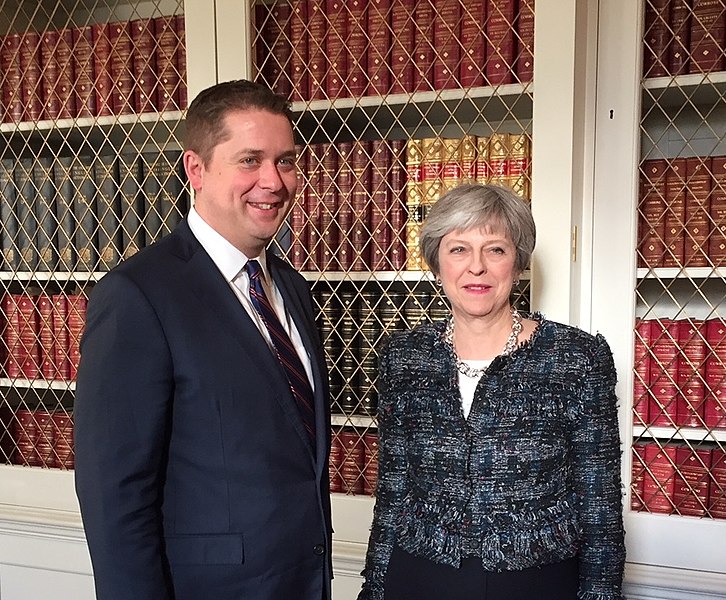
Andrew Scheer meets British Prime Minister Theresa May
Photo via Wikimedia Commons

Andrew Scheer published an “open letter to Canadians” in the Toronto Sun this Saturday. “Sunday marks exactly one year until the next federal election,” the federal Conservative leader observed, proceeding thereupon to a critique of Justin Trudeau’s government. As someone who is still trying to take stock of Scheer, I read the letter hoping for clues to his plan of attack for the 2019 election. I’m afraid it merely served to emphasize how much Scheer has remained on the defensive since winning the Tory leadership almost a year and a half ago.

That is part of the issue here: does it seem to you like a year and a half since Scheer became leader? Forgive me a very subjective observation, but I found myself hardly believing that we are much closer in time to the next election than we are to the choosing of an opposition leader who still seems like the enigmatic new guy. What are his signature issues? I am afraid the first answer that springs to mind is “dairy supply management” — which is a continuing controversy that has exposed Scheer to embarrassment, and has helped to split his party, albeit in what is likely to be an electorally insignificant way. (Maxime Bernier won’t be the next Prime Minister of Canada, but party morale is a thing in elections.)

The other major issues that have presented themselves to Scheer as opportunities haven’t proved much more helpful. When it comes to the federalization of carbon taxation, Scheer still has no good answers when he is called upon to reconcile his hypothetical support for emissions reductions with his opposition to the Trudeau plan. He doesn’t like carbon taxes, period, which will play well with climate skeptics who have three-SUV garages; I do not underestimate the impetus of that voting bloc, but the Conservatives own those voters already. Scheer also cornered himself into a lame position on the campus free-speech wars, and he is pulling sour faces about marijuana legalization, even though he is one of the few Canadian politicians who will admit to having smoked the stuff personally.

October 12, 2018

Stephen Harper, premature populist?

Filed under: Books, Cancon, Politics — Tags: , , , — Nicholas @ 03:00

Andrew Coyne reads the new book by former Prime Minister Stephen Harper, so you don’t have to:

Throughout his time as prime minister, theories abounded as to what philosophy of government, if any, could explain Stephen Harper’s apparently rudderless course. A few die-hards on the left persisted in describing his government as ideological or hard-right, even as it was borrowing billions, adding new regional development agencies and nationalizing the auto industry.

Others insisted he was a libertarian at heart who was either forced or tempted, by reality or expediency, to alter his approach once in power. A couple of loyalists essayed a reconstruction after the fact, in which the Harper government’s many disparate and contradictory policies were somehow made to fit into a single philosophical template called “ordered liberty.”

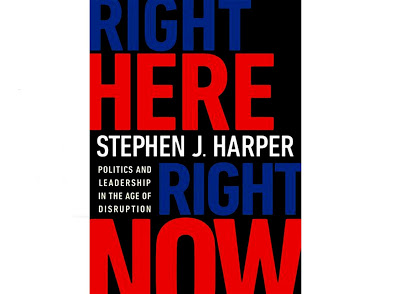
Well now we have it from the proverbial horse’s mouth. The young firebrand who famously deserted Preston Manning for being too populist and not enough of a conservative now claims the mantle of populism for himself: if not as a whole-hearted adherent, then as the statesman who understands where others only condemn. His new book Right Here, Right Now, is indeed in large part an attempt to portray his own government, not as the cynical power-seeking machine it appeared to be, but as populist before its time. In defending populism, he defends himself.

And yet the mind it reveals is not that of the subtle, sometimes rueful voice of experience he clearly wishes the reader to imagine. It is, rather, all too conventional, even banal. What are presented as iconoclastic insights, in which the rise of populism is explained in terms of the failings of conservatism — former Conservative prime minister breaks with decades of conservative orthodoxy! — are a mix of received wisdom and undergraduate shibboleths, many of them long debunked.

October 11, 2018

QotD: The radical, right wing US Supreme Court

Filed under: Law, Politics, Quotations, USA — Tags: , , , , — Nicholas @ 01:00

We don’t have a “radical right-wing Supreme Court,” despite lots of mewing on the left to the contrary. Here are some things that would be at the top of the list for a radical right-wing Court: (1) ban abortion nationwide as a violation of the right to life protected by the due process clause; (2) rule that publicly-provided (but not funded) education is unconstitutional because it inherently involves viewpoint discrimination by the government, or at least require vouchers for those who object to the public school curriculum; (3) overrule an 1898 precedent and completely abolish birthright citizenship; (4) Use the First Amendment as a sword to require “fairness” in the left-dominated media. Not only is the Supreme Court not about to do any of things, I don’t think any of these things would even get one vote on the current Court. Moreover, merely bringing the scope of Congress’s constitutional back to where it was, say, in 1935, which was already much broader than the original meaning of the Commerce power, probably wouldn’t get more than one or two votes. What you are looking at right now is a conservative Court that will only affect society on the margins, not a “radical right-wing” Court.

David Bernstein, “WE DON’T HAVE A ‘RADICAL RIGHT-WING SUPREME COURT'”, Instapundit, 2018-10-09.

October 8, 2018

Debunking state education rankings

Filed under: Bureaucracy, Education, Media, USA — Tags: , , , , — Nicholas @ 03:00

In the latest issue of Reason, Stan Liebowitz and Matthew L. Kelly explain why you should ignore those “authoritative” rankings published by U.S. News and World Report and others:

You probably think you know which states have the best and worst education systems in the country. If you regularly dip into rankings such as those published by U.S. News and World Report, you likely believe schools in the Northeast and Upper Midwest are thriving while schools in the Deep South lag. It’s an understandable conclusion to draw from those ubiquitous “Best Schools!” lists. It’s also wrong.

The general consensus on education, retold every few news cycles, is that fiscally conservative states are populated by cheapskates. In those necks of the woods, people are too ignorant to vote in favor of helping their illiterate and innumerate children. Intelligent people understand that high taxes and generous pensions for public school teachers are the recipe for an efficient and smoothly functioning education system. If skinflint voters would just lighten up, the story goes, they too could become erudite and sophisticated.

Paul Krugman rehashes this narrative regularly in his New York Times column, frequently bemoaning the country’s purportedly miserly education budgets. Increasingly, he perceives libertarian barbarians at the gates of state governments, brandishing axes for dreaded spending cuts. In April, he wrote that “we’re left with a nation in which teachers, the people we count on to prepare our children for the future, are starting to feel like members of the working poor.… One way to think about what’s currently happening in a number of states is that the anti-Obama backlash, combined with the growing tribalism of American politics, delivered a number of state governments into the hands of extreme right-wing ideologues. These ideologues really believed that they could usher in a low-tax, small-government, libertarian utopia.”

In Krugman’s view, which reflects the education establishment’s view as well, those attempting to keep the size of government in check are a danger to your child. To support this claim, education wonks and activists point to state rankings in U.S. News, Education Week, or WalletHub — outlets that grade states according to a few key measures, such as graduation rates, education spending, and test scores. When education is discussed in the news, these rankings are often cited to illustrate the havoc that restrained budget growth and right-to-work laws can wreak.

Indeed, such rankings do seem to show that the highest-quality state educational systems tend to be in big-spending states in the Northeast or Upper Midwest. These places apparently honor and respect teachers, while Southern states inexplicably abhor them. But the cheapskates in cheap states get their just deserts: Sophisticated northern jurisdictions grow ever smarter, while stingy conservative backwaters sink into ever-lower depths of ignorance. The solution is obvious: Pay up or your kids will suffer.

There’s just one problem with this narrative: Traditional rankings are riddled with methodological flaws.

September 16, 2018

Maxime Bernier and the People’s Party of Canada

Filed under: Cancon, Liberty, Politics — Tags: , , , — Nicholas @ 03:00

Andrew Coyne says there’s room in Canadian politics for Mad Max’s new party:

In principle, there is room for a new party in Canadian politics; arguably, there is a need for one.

That the established parties have tended to pander to narrow and particular interests, rather than the broader public interest, is well documented, as is the result: an ever-expanding state devoted almost wholly to redistributing income, not from rich to poor, but from taxpayers to well-organized and well-cultivated client groups (notably the state’s own employees). In the same way the state redistributes from consumers to producers, from west to east, young to old, and so on, in the service of neither efficiency nor justice nor even raw numbers but just whoever frightens politicians the most.

Which over time — people learn — has come to include everybody. We subsidize everything that moves in this country, and charge ourselves higher taxes to pay for it, then demand more subsidies to offset the burden of taxes. And the fruit of all this frantic attempt to redistribute from everybody to everybody? A nation brimming with grievance and resentment, every part of the country convinced the rest are making out at its expense.

A party that proposed to end the money-go-round — to wean the country’s business class, in particular, off the public teat, to shut down the “regional development” spigots and bust up the cartels that, behind our protectionist walls, are permitted to genteelly pick our pockets — would therefore be a signal addition to our politics. If it chose to frame this critique not as a fairly straightforward application of Economics 101 but as a radical determination to govern “for all Canadians,” so be it.

And if it made life difficult for the established parties, so much the better. The market for ideas thrives on competition and choice as much as any other. The cartelization of our economy is in part a reflection of the cartelization of our politics. A more robustly conservative party, in particular, less burdened by the Conservatives’ crippling self-doubt, would be a welcome addition, even if I don’t like all of its ideas: millions of Canadians do, and it is wrong that they should go unrepresented.

« Newer PostsOlder Posts »

Powered by WordPress