[The word “Trotskyist”] is used so loosely as to include Anarchists, democratic Socialists and even Liberals. I use it here to mean a doctrinaire Marxist whose main motive is hostility to the Stalin regime. Trotskyism can be better studied in obscure pamphlets or in papers like the Socialist Appeal than in the works of Trotsky himself, who was by no means a man of one idea. Although in some places, for instance in the United States, Trotskyism is able to attract a fairly large number of adherents and develop into an organised movement with a petty fuehrer of its own, its inspiration is essentially negative. The Trotskyist is against Stalin just as the Communist is for him, and, like the majority of Communists, he wants not so much to alter the external world as to feel that the battle for prestige is going in his own favour. In each case there is the same obsessive fixation on a single subject, the same inability to form a genuinely rational opinion based on probabilities. The fact that Trotskyists are everywhere a persecuted minority, and that the accusation usually made against them, i.e. of collaborating with the Fascists, is obviously false, creates an impression that Trotskyism is intellectually and morally superior to Communism; but it is doubtful whether there is much difference. The most typical Trotskyists, in any case, are ex-Communists, and no one arrives at Trotskyism except via one of the left-wing movements. No Communist, unless tethered to his party by years of habit, is secure against a sudden lapse into Trotskyism. The opposite process does not seem to happen equally often, though there is no clear reason why it should not.George Orwell, “Notes on Nationalism”, Polemic, 1945-05.
October 30, 2019
QotD: Trotskyism
October 18, 2019
QotD: England has become the Mother Hive
In 1908, Rudyard Kipling published a short story called “The Mother Hive”. In this, the bees in a hive decide to drop all outmoded ideas of hierarchy and to make everyone equal. This includes the right of workers to eat royal jelly and to mate with the drones. In the spreading chaos that results, traditionalist dissidents are first shunned and then murdered. Eventually, the bee keeper looks into the hive, and sees the empty honeycombs and the horribly deformed offspring of the workers. His response is to poison all the bees.
Now, something like this has happened in England. In the past few generations, the whole of national life has been taken over by the cultural Marxists. They run government and the administration, and the law, and education and the media, and business too. They have imposed on us a nasty hegemonic discourse. Cultural Marxism is ultimately to be traced to European thinkers like Antonio Gramsci and Louis Althusser and the Frankfurt School. But this has come to England in American clothing. It has prestige because it was taken up by the American universities.
In America, however, the progress of cultural Marxism has been resisted, or slowed, by a strong religious right and by a written constitution that it is taking a long time to subvert. Here, we have no religious right, nor an entrenched constitutional law. In the past, freedom and common sense were safeguarded by an hereditary land-owing aristocracy and gentry. These ran the country, and did much to determine its moral tone. During the twentieth century, they were marginalised and then eliminated from government. They remain as a class — still very rich — but the tacit deal since at least the 1940s has been that they will be left alone, so long as they keep out of politics. Government has been left to middle class lefties. The effect followed the cause only after several generations. But here it is.
It may be interesting for you, as foreigners, to learn an answer to the implied question in the title of this speech. But it is essential for the English to think about the question and its answers. You see, like both the Germans and the Russians, we have had a revolution. Unlike them, we have had no obviously revolutionary event. The Russians had the storming of the Winter Palace and the murder of their Royal Family. The Germans were utterly defeated in 1945. Their cities were bombed flat. Their country was occupied and divided. Every German knows either that German history came to an end in 1945, or at least that a new chapter in German history had begun.
We do not have that awareness, and it would be useful for us to understand, even so, that we are living in a state of revolution. England has become the Mother Hive.
Sean Gabb, “A Nation of Sheep: Understanding England and the English”, Libertarian Enterprise, 2017-09-23.
October 15, 2019
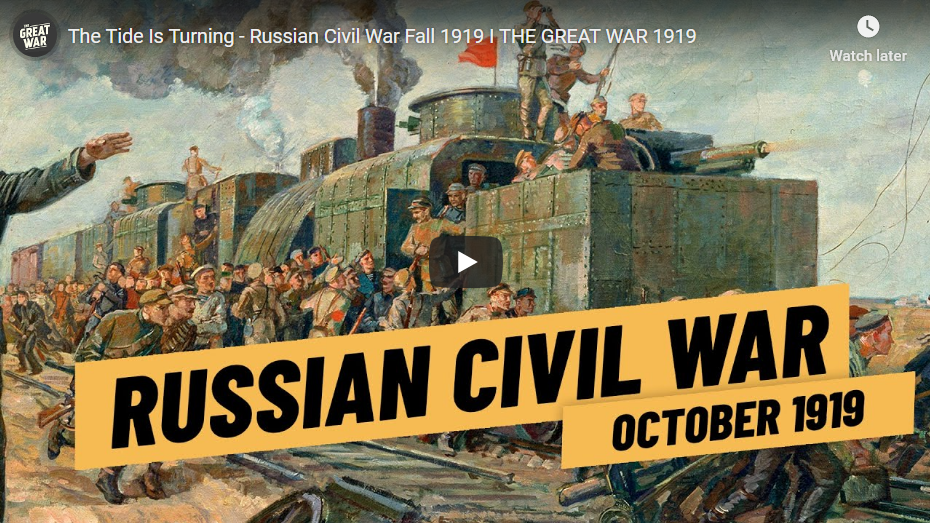
The Tide Is Turning – Russian Civil War Fall 1919 I THE GREAT WAR 1919
The Great War
Published 14 Oct 2019Support 16 Days in Berlin: https://realtimehistory.net/indiegogo
The White Russian advance on Moscow comes to a crashing end as the Red Army manages to turn the tide of the Russian Civil War in Fall 1919.
» SUPPORT THE CHANNEL
Patreon: https://www.patreon.com/thegreatwar
Merchandise: https://shop.spreadshirt.de/thegreatwar/» SOURCES
Figes, Orlando. A People’s Tragedy. The Russian Revolution (London: The Bodley Head, 2017 [1996]).
Mawdsley, Evan. The Russian Civil War (New York: Pegasus Books, 2005).
Smele, Jonathan. The “Russian” Civil Wars 1916-1926 (London: Hurst, 2015).
Sumpf, Alexandre. “Russian Civil War,” in 1914-1918 online. International Encyclopedia of the First World War. https://encyclopedia.1914-1918-online.
Engelstein, Laura. Russia in Flames (Oxford University Press, 2017).»CREDITS
Presented by: Jesse Alexander
Written by: Jesse Alexander
Director: Toni Steller & Florian Wittig
Director of Photography: Toni Steller
Sound: Toni Steller
Editing: Toni Steller
Mixing, Mastering & Sound Design: http://above-zero.com
Maps: Daniel Kogosov (https://www.patreon.com/Zalezsky)
Research by: Jesse Alexander
Fact checking: Florian WittigChannel Design: Alexander Clark
Original Logo: David van StepholdA Mediakraft Networks Original Channel
Contains licensed material by getty images
All rights reserved – Real Time History GmbH 2019
October 8, 2019
QotD: Russian life under Soviet rule
Yet until the last years of the 20th century the supply of useful idiots — western apologists for the Soviet Union — seemed limitless, and included such figures as Tony Benn. Anthony Powell’s novel Books Do Furnish a Room captures the enthusiasm for Soviet communism that pervaded post-1945 London socialist sitting rooms and literary gatherings.
No modern reader can set down the works of Solzhenitsyn, Robert Conquest, Robert Service or Anne Applebaum without a sense of awe at the cruelties committed in the name of “the people”, the cause of Russian communism; cruelties indulged almost to this day by their western defenders.
Max Hastings, “The centenary of the Russian revolution should be mourned, not celebrated”, The Spectator, 2016-12-10.
October 6, 2019
The cultural influence of George Orwell
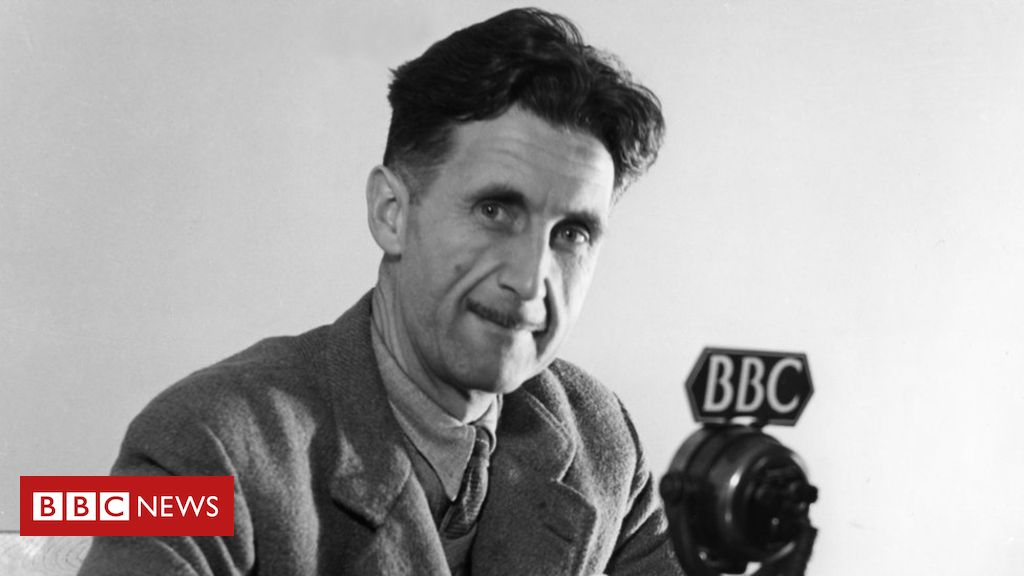
George Orwell, the chosen pen name of Eric Blair, is one of the best known writers of the 20th century and even people who have never read any of his writings are aware of his influence. John Rodden and John Rossi outline the immediate post-war period that saw Orwell publish his final and best-known work:
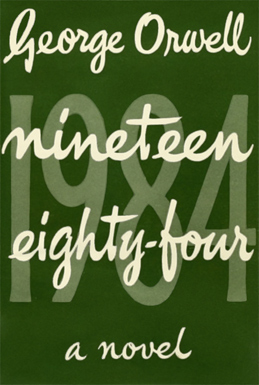
Seven decades ago on June 8, George Orwell’s Nineteen Eighty-Four exploded on the cultural front—fittingly enough, just two months before the Soviet Union’s first successful atomic test that August, which broke America’s nuclear monopoly. Orwell’s warning was urgent — and timely. Almost overnight, in the wake of the surrender of Germany and Japan that ended World War II in 1945, a new war—the so-called Cold War — had emerged. (Orwell is often credited with coining the term.)
The Cold War pitted the capitalist West against the communist East, above all the United States against the USSR (and soon China). Just three weeks before the publication of Nineteen Eighty-Four, the Soviet Union lifted the Berlin Blockade, thereby avoiding a potentially deadly showdown with the West that might have triggered World War III. Two weeks later, on May 23, the Federal Republic of Germany (West Germany) was officially established, effectively ending prospects in the near future of German reunification. On the very day of Nineteen Eighty-Four‘s publication, June 8, fears swept through liberal America of a growing Red Scare when a leaked document named numerous celebrities as Communist Party members (e.g., Helen Keller, Dorothy Parker, Fredric March, Danny Kaye, Edward G. Robinson). That same month, the communist armies of Mao Zedong captured Shanghai, and less than six months later on October 1, declared victory in the civil war against the American-backed Nationalists and the founding of the People’s Republic of China.
What educated person is not at least vaguely familiar with the language and vision of Orwell’s novel — even if he or she does not recognize the source? Indeed the very ignorance of the source represents an inadvertent tribute to the power of Orwell’s language and vision. Like Shakespeare’s poetry (“All the world’s a stage,” “To be or not to be,” “This above all: to thine own self be true”), so deeply have some of Orwell’s locutions become lodged in the cultural lexicon and political imagination that most people no longer recognize their author, let alone the source.
Today, as in the case of Shakespeare, hundreds of millions of people mouth Orwell’s coinages and catchphrases, such as “Big Brother” and “doublethink” — including his name as proper adjective, “Orwellian” (i.e., nightmarish, oppressive). And that’s just in English. Tens of millions more recognize and repeat them in foreign translations, as I [Rodden] discovered in our travels and teaching in the communist East Germany as well as in Asia. Rudimentary acquaintance with such locutions is regarded as a sine qua non of cultural literacy in English — even today, when prolefeed (mindless chatter) floods the print columns and dominates the airwaves.
Nineteen Eighty-Four represents Orwell’s Orwellian vision — in the form of a fictional anti-utopia (or “dystopia”) — of what a nightmarish, oppressive future might hold. It projects a world 35 years away — half the biblical lifespan of three score and ten. Having completed his novel by the end of 1948, Orwell flipped the last two digits to underscore his anti-utopian theme of a world turned upside down and inside out. Or so many scholars have reasonably claimed. The date resultant from the flipped digits also gave the novel its immediacy. Previous anti-utopias, such as Aldous Huxley’s Brave New World (1932), had cast their ominous scenarios far into the future, which lessened their dramatic impact and tended to render them entertaining thought experiments. (Huxley’s action is set in the 26th century.) By contrast, Orwell’s dire future is too close for comfort — and depicts the planet in the immediate aftermath of a global nuclear war that has nearly annihilated the human species. His vision thus projects a world in which middle-aged readers in 1949 might find themselves in old age — and certainly their children and grandchildren were likely to witness it. (If he had lived, Orwell himself would have still been just 80 years old on April 4, 1984, when the story opens.)
October 4, 2019
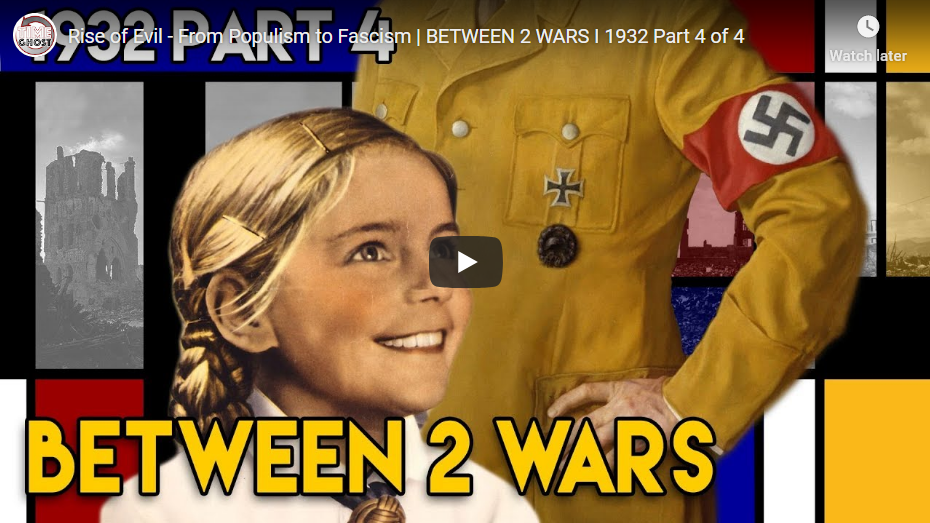
Rise of Evil – From Populism to Fascism | BETWEEN 2 WARS I 1932 Part 4 of 4
TimeGhost History
Published 3 Oct 2019Democracy finds itself in a crisis as the 1930s take off. On a global scale, Fascist or otherwise authoritarian and repressive movements and governments seek to destroy the pillars of liberal society.
Join us on Patreon: https://www.patreon.com/TimeGhostHistory
Subscribe to our World War Two series: https://www.youtube.com/c/worldwartwo…
Hosted by: Indy Neidell
Written by: Spartacus Olsson and Joram Appel
Directed by: Spartacus Olsson and Astrid Deinhard
Executive Producers: Bodo Rittenauer, Astrid Deinhard, Indy Neidell, Spartacus Olsson
Creative Producer: Joram Appel
Post-Production Director: Wieke Kapteijns
Research by: Joram Appel and Spartacus Olsson
Edited by: Wieke Kapteijns
Sound design: Marek KamińskiSources icons: Graphic Enginer, Luis Prado
Colorizations: Daniel Weiss, Cassowary Colorizations, KlimbimA TimeGhost chronological documentary produced by OnLion Entertainment GmbH.
From the comments:
TimeGhost History
1 hour ago (edited)
This episode might be a little more academic than our other episodes, but we wanted to cover the global Fascist surge AND that it’s just too simple to refer to all totalitarian states and authoritarian and repressive movements as “Fascist”. Fascism is a very complicated concept that is still today being debated by political scientists and historians, as well as politicians and journalists. We try to give some insight to what Fascism is, what it isn’t and what all those movements and countries were, if not Fascist. We appreciate that you might have a different opinion as to what Fascism was or is, and we’re interested to hear your opinion. Just keep it civil and try to stay away from modern political debates, as that is not what we’re here for. EDIT: As for comments claiming that Fascism was left-wing/socialist, watch the video again. Don’t bother commenting if you can’t bring a proper argument to the table.
Cheers,
Joram
October 2, 2019
QotD: Senator Joe McCarthy
Pretty early on in the reading, it has occurred to me that the collusion between Democrat politicians, government departments and agencies, and liberal press to cover up the official sins of commission and omission, derail McCarthy’s investigations thereof, blacken his name, and destroy him personally and politically runs according to a very familiar script. It’s essentially what the progressive political and cultural elites have done to any number of conservative politicians and activists seen as a threat to their power and reputation. Donald Trump is merely the latest in a long and distinguished line.
To paraphrase Shakespeare’s Marc Antony, I came here not to praise Donald but to see how the left is trying to bury him. Until reading Evans’s book, I have not quite realised how similar and similarly underhand, vicious and persistent the campaign against Joe McCarthy had been. The “Swamp” is real; it was real in the 1940s and 1950s, and it is just as real now and just as committed to destroying any outside threats to its continuing position and influence. This is not a conspiracy theory; this is simply how power structures work to protect and perpetuate themselves. The viciousness is a function not just of the unshakable self-belief in one’s intellectual and moral rightness and superiority but also of a certain form of snobbery directed by the members of the “in-crowd” – what once used to be known as the Liberal or the East Coast Establishment and now more broadly, among many other names and designations, as the “coastal elites” – against outsiders who don’t share their sophisticated social, educational or professional background. The Swamp managed in the end to defeat McCarthy and turn him in the historical and popular memory into one of the great villains of American history; the book is still open on Trump’s ultimate fate and legacy. None of this is to suggest that McCarthy or Trump are flawless human beings and faultless political figures; quite the contrary. But the campaigns of destruction they are subjected to ultimately have little to do with their specific failings and mistakes. It’s a total war.
Arthur Chrenkoff, “Before there was Trump, there was Joe McCarthy”, Daily Chrenk, 2019-09-30.
September 20, 2019
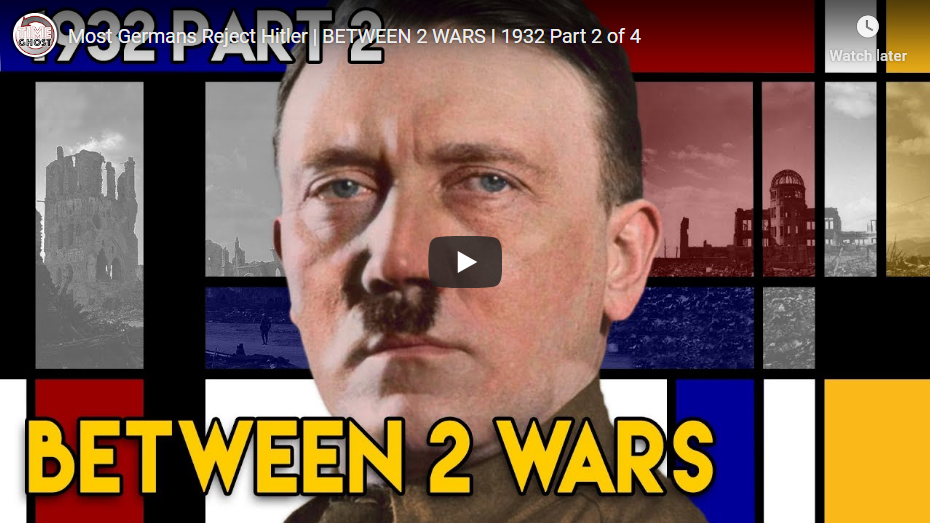
Most Germans Reject Hitler | BETWEEN 2 WARS I 1932 Part 2 of 4
TimeGhost History
Published on 19 Sep 2019After Chancellor Brüning has run Germany’s economy into the ground, the country is once again going to the polls. It’s a wild brawl between reason and madness, populism and stability, and democracy and tyranny focused on who will unite Germany if Germany even can be united again …
Join us on Patreon: https://www.patreon.com/TimeGhostHistory
Subscribe to our World War Two series: https://www.youtube.com/c/worldwartwo…
Hosted by: Indy Neidell
Written by: Spartacus Olsson
Directed by: Spartacus Olsson and Astrid Deinhard
Executive Producers: Bodo Rittenauer, Astrid Deinhard, Indy Neidell, Spartacus Olsson
Creative Producer: Joram Appel
Post-Production Director: Wieke Kapteijns
Research by: Spartacus Olsson
Edited by: Wieke Kapteijns
Sound design: Marek KamińskiSources: Icon german parliament: Gerald Wildmoser. Graphic German Reichstag: Liambaker98. Images: Bundesarchiv.
A TimeGhost chronological documentary produced by OnLion Entertainment GmbH.
From the comments:
TimeGhost History
3 hours ago
This year it will be 85 years ago that Germany elected the Nazis to power, or will it? Well … as most events in history it isn’t quite that simple. There is no majority for anything in Germany at this point. You see, in 1932 Germany is still a diverse, democratic state. But it’s been under attack for many years now by populist, partisan interests tearing it apart into fractious, sometimes destructive opposite forces. In essence, they can be grouped into three camps:1. the mainstream centrist parties on the left and right that want a parliamentary, socially tolerant democracy.
2. the far left that wants to overthrow the parliamentary democracy and start a revolution to create an authoritarian, socially ultra-liberal, rule by the working class
3. the far right that wants to overthrow the parliamentary democracy to create a totalitarian, socially reactionary, rule by a strong man.Now, that is the left to right landscape and as you shall see that is also how the election results play out in alliances. So try your best to get rid of your prejudices and preconceived notions — because for many of you things are not the way that you have been told. And if for no other reason than saving us the trouble of having to police these comments too much — please, please try to remember our rules. They are not there to quash freedom of speech — they are there so that we can keep the comment sections turned on. When we don’t police them it never takes long for videos like this to descend into a hatefest full of death threats and calls for mass murder. You might think that’s cool, but we don’t and we know that most of the world doesn’t so respect that — for the sake of democracy if nothing else.
September 14, 2019
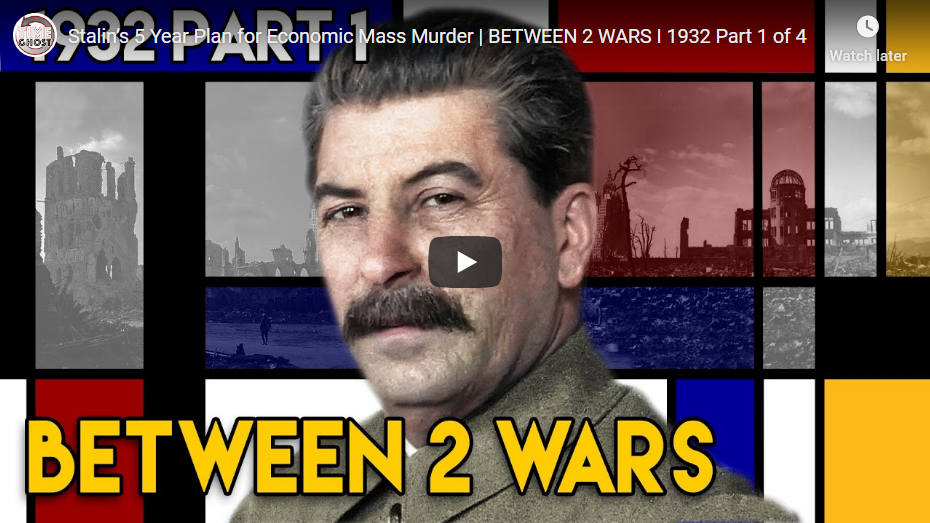
Stalin’s 5 Year Plan for Economic Mass Murder | BETWEEN 2 WARS I 1932 Part 1 of 4
TimeGhost History
Stalin has to deal with the consequences of forcibly changing the Soviet Union from an agrarian economy into a modern industrialized society as his first five-years plan reaches its final year.
Join us on Patreon: https://www.patreon.com/TimeGhostHistory
Hosted by: Indy Neidell
Written by: Spartacus Olsson and Naman Habtom
Directed by: Spartacus Olsson and Astrid Deinhard
Executive Producers: Bodo Rittenauer, Astrid Deinhard, Indy Neidell, Spartacus Olsson
Creative Producer: Joram Appel
Post-Production Director: Wieke Kapteijns
Research by: Naman Habtom
Edited by: Daniel Weiss en Wieke Kapteijns
Sound design: Marek KaminskiA TimeGhost chronological documentary produced by OnLion Entertainment GmbH.
From the comments:
TimeGhost History
1 hour ago (edited)
Debating the concepts, definition and framework of Marxism, Communism and Socialism is something that historians don’t seem to get enough of, much like applying these theories to historical and contemporary phenomena. The study of how these theories turned into ideology and what effect that had on nations, cultures, peoples and wars is a very interesting field of history, which can be debated to great lengths, which we ourselves also like to engage and participate in. However, we want to once again emphasise that we will only allow debate within the generally accepted rules of academic debate. Keep it civil, substantiated, name your sources whenever possible and stay away from pseudo-science and contemporary politics. We are fierce believers in the benefits of academic debate and don’t want to resort to turning off the comments, as other channels might do when talking about subjects like the 5-year plan or the Holodomor.Cheers, Joram
September 9, 2019
QotD: War
Pushbotton war has its place. There is another kind of conflict — crusade, jihad, holy war, call it what you choose. It has been loosed before, with attendant horror but indecisive results. In the past, there were never means enough to exterminate all the unholy, whether Christian, Moslem, Protestant, Papist, or Communist. If jihad is preached again, undoubtedly the modern age will do much better.
Americans, denying from moral grounds that war can ever be a part of politics, inevitably tend to think in terms of holy war — against militarism, against fascism, against bolshevism. In the postwar age, uneasy, disliking and fearing the unholiness of Communism, they have prepared for jihad. If their leaders blow the trumpet, or if their homeland is attacked, their millions are agreed to be better dead than Red.
Any kind of war short of jihad was, is, and will be unpopular with the people. Because such wars are fought with legions, and Americans, even when they are proud of them, do not like their legions. They do not like to serve in them, nor even to allow them to be what they must.
For legions have no ideological or spiritual home in the liberal society. The liberal society has no use or need for legions — as its prophets have long proclaimed.
Except that in this world are tigers.
T.R. Fehrenbach, This Kind of War: A Study in Unpreparedness, 1963.
August 31, 2019
QotD: Thinning out the book collection
James Lileks, Bleat, 2004-07-06.
August 30, 2019
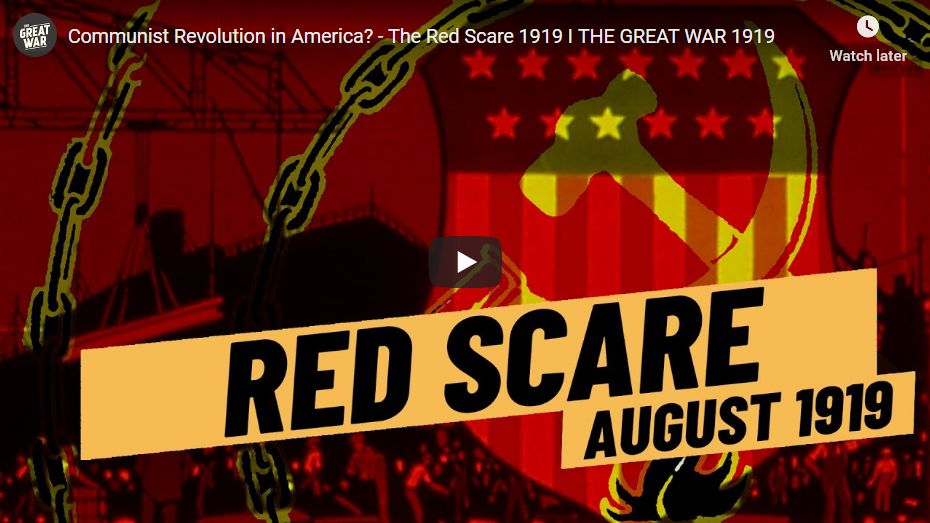
Communist Revolution in America? – The Red Scare 1919 I THE GREAT WAR 1919
The Great War
Published on 29 Aug 2019Get a free audiobook and 2 Audible Originals with a 30-day trial: http://audible.com/greatwar or text
greatwarto 500 500.The American intervention in the Russian Civil War, the economic hardships of workers and returning veterans and the strikes all over the US in 1919 created a hysteria that we know as Red Scare today. But how realistic was the idea of a Bolshevist revolution in America really?
» SUPPORT THE CHANNEL
Patreon: https://www.patreon.com/thegreatwar
Merchandise: https://shop.spreadshirt.de/thegreatwar/» SOURCES
US Congress. Senate. Bolshevik Propaganda: Hearings before a Subcommittee of the Committee on the Judiciary. 65th Cong., 3rd sess., February 11, 1919, to March 10, 1919
Brecher, Jeremy. Strike! Revised edition. South End Press, 1997.
Hanson, Ole. Americanism versus Bolshevism. New York and London: Doubleday, Page, & Co., 1920.
United States Department of Justice. Red Radicalism as Described by Its Own Leaders, Exhibits Collected by A. Mitchell Palmer, Including Various Communist Manifestos, Constitutions, Plans, and Purposes of the Proletariat Revolution, and Its Seditious Propaganda. Washington: Government Printing Office, 1920.
Cocks, Catherine, Peter C. Holloran, Alan Lessloff. The A to Z of the Progressive Era. Maryland: Scarecrow Press, Inc., 2009.
Dick, William M. Labor and Socialism in America. New York: Kennikat Press, 1972.
Gould, Lewis L. The Progressive Era. New York: Syracuse University Press, 1974.
Hagedorn, Ann. Hope and Fear in America: 1919. New York: Simon & Schuster, 2007.
Jaffe, Julian F. Crusade Against Radicalism: New York During the Red Scare, 1914-1924. New York: Kennikat Press, 1972.
Kornweibel, Jr., Theodore. “Seeing Red”: Federal Campaigns Against Black Militancy, 1919-1925. Indianapolis: Indiana Press University, 1998.
Hawley, Ellis W. The Great War and the Search for a Modern Order: A History of the American People and Their Institutions, 1917-1933. New York St Martin’s Press, 1979.
Murray, Robert K. Red Scare: A Study of National Hysteria, 1919-1920. New York: McGraw-Hill Book Company, 1964.
Powers, Richard Gid. Not Without Honor: The History of American Anticommunism. Yale University Press, 1998.»CREDITS
Presented by: Jesse Alexander
Written by: Jesse Alexander
Director: Toni Steller & Florian Wittig
Director of Photography: Toni Steller
Sound: Toni Steller
Editing: Toni Steller
Mixing, Mastering & Sound Design: http://above-zero.com
Motion Design: Christian Graef – GRAEFX
Maps: Daniel Kogosov (https://www.patreon.com/Zalezsky)
Research by: Jesse Alexander and Jonathan Dunning
Fact checking: Florian WittigChannel Design: Alexander Clark
Original Logo: David van StepholdA Mediakraft Networks Original Channel
Contains licensed material by getty images
All rights reserved – Real Time History GmbH 2019
August 17, 2019
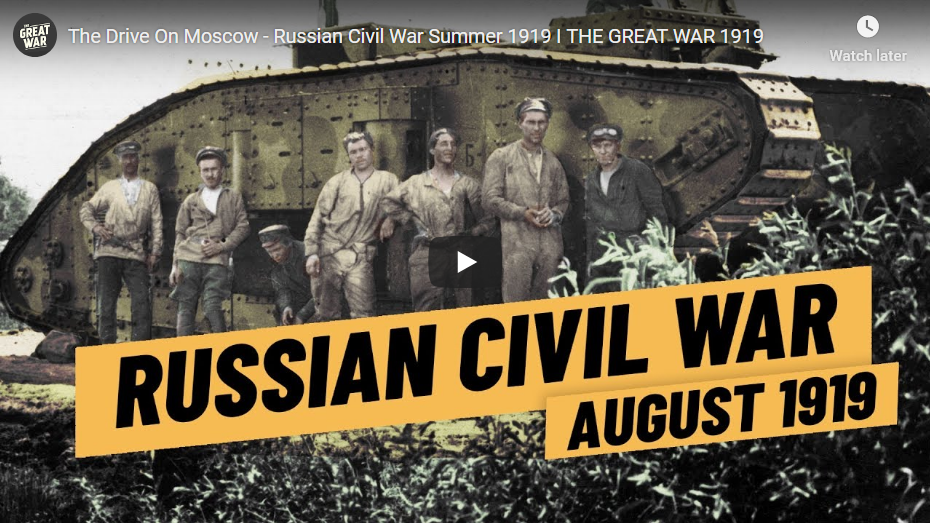
The Drive On Moscow – Russian Civil War Summer 1919 I THE GREAT WAR 1919
The Great War
Published on 16 Aug 2019Register for our free newsletter: https://realtimehistory.net/subscribe
The summer of 1919 was a pivotal moment in the Russian Civil War. Backed with Allied support the White movement went on the offensive in the East under Alexander Kolchak and in the South under Anton Denikin. However, the Bolsheviks were not wasting time either. They consolidated their power and got the Red Army into shape to crush the enemy once and for all.
» SUPPORT THE CHANNEL
Patreon: https://realtimehistory.net/patreon
Merchandise: https://realtimehistory.net/spreadshirt
Become a member: https://realtimehistory.net/join» BUY OUR SOURCES IN OUR AMAZON STORES
https://realtimehistory.net/amazon» SOURCES
Smele, Jonathan. The “Russian” Civil Wars 1916-1926 (London: Hurst, 2015).Makhno, Nestor. The Struggle Against the State and Other Essays. AK Press: Edinburgh & San Francisco, 1996.
Mawdsley, Evan. The Russian Civil War (New York: Pegasus Books, 2005).
Robert Gerwarth, The Vanquished. Why the First World War Failed to End, 1917-1923 (Penguin, 2017)
Sumpf, Alexandre. “Russian Civil War”, in 1914-1918 online. International Encyclopedia of the First World War. https://encyclopedia.1914-1918-online.
Mawdsley, Evan. “International Responses to the Russian Civil War”, in 1914-1918 online. International Encyclopedia of the First World War. https://encyclopedia.1914-1918-online…
Leonhard, Jörn. Der überforderte Frieden. Versailles und die Welt 1918-1923 (CH Beck, 2018).
Figes, Orlando. A People’s Tragedy. The Russian Revolution (London: The Bodley Head, 2017 [1996]).
Gilley, Christopher: “Makhno, Nestor Ivanovich”, in: 1914-1918-online. International Encyclopedia of the First World War, ed. by Ute Daniel, Peter Gatrell, Oliver Janz, Heather Jones, Jennifer Keene, Alan Kramer, and Bill Nasson, issued by Freie Universität Berlin, Berlin 2014-10-08 https://encyclopedia.1914-1918-online…
»CREDITS
Presented by: Jesse Alexander
Written by: Jesse Alexander
Director: Toni Steller & Florian Wittig
Director of Photography: Toni Steller
Sound: Toni Steller
Editing: Toni Steller
Mixing, Mastering & Sound Design: http://above-zero.com
Maps: Daniel Kogosov (https://www.patreon.com/Zalezsky)
Research by: Jesse Alexander
Fact checking: Florian WittigChannel Design: Alexander Clark
Original Logo: David van StepholdA Mediakraft Networks Original Channel
Contains licensed material by getty images
All rights reserved – Real Time History GmbH 2019
From the comments:
The Great War
7 hours ago
Register for our free newsletter and win $250 worth of our recommended history books: https://realtimehistory.net/win **Instead of paying Facebook, Twitter & Co. money for the possibility to reach you with our content, we’d rather get in touch with you directly and spend the money on history books and the production of the show.
August 2, 2019
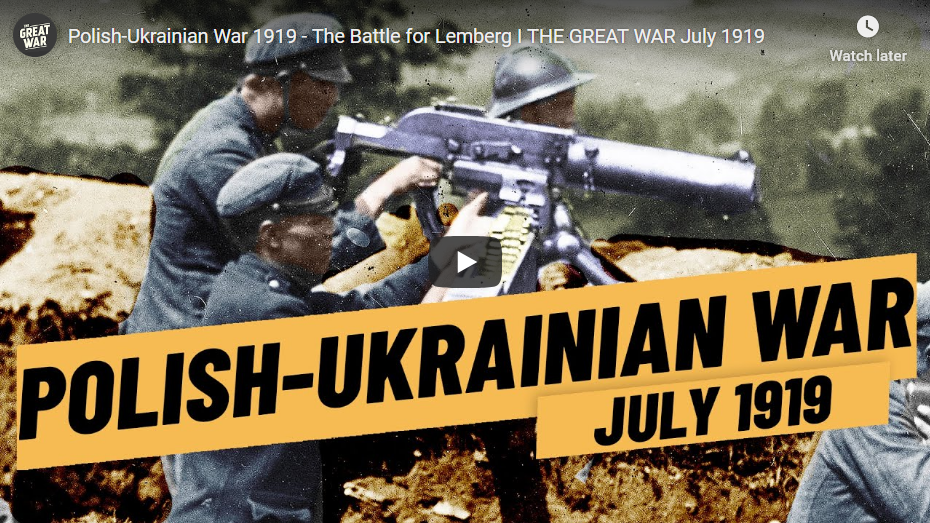
Polish-Ukrainian War 1919 – The Battle for Lemberg I The Great War July 1919
The Great War
Published on 1 Aug 2019Lviv or Lwów are two names for the same city that was known as Lemberg until 1919. The Poles considered it as one of their most important cultural and political centers, the Ukrainians too. And so, in the aftermath of the dissolution of the Austro-Hungarian Empire, the question of who would control this city led to conflict: The Polish-Ukrainian War.
» SUPPORT THE CHANNEL
Patreon: https://www.patreon.com/thegreatwar
Merchandise: https://shop.spreadshirt.de/thegreatwar/» SOURCES
Smele, Jonathan. The “Russian” Civil Wars 1916-1926 (London: Hurst, 2015).Mawdsley, Evan. The Russian Civil War (New York: Pegasus Books, 2005).
Leonhard, Jörn. Der überforderte Frieden. Versailles und die Welt 1918-1923 (CH Beck, 2018).
Macmillan, Margaret. The Peacemakers: Six Months That Changed the World (London: John Murray, 2001)
Dudko, Oksana: “Polish-Ukrainian Conflict over Eastern Galicia”, in: 1914-1918-online. International Encyclopedia of the First World War, ed. by Ute Daniel, Peter Gatrell, Oliver Janz, Heather Jones, Jennifer Keene, Alan Kramer, and Bill Nasson, issued by Freie Universität Berlin, Berlin 2014-10-08 https://encyclopedia.1914-1918-online…
Kutschabsky, W. Die Westukraine im Kampfe mit Polen und dem Bolschewismus in den Jahren 1918–1923 (Berlin, 1934)
Davies, Norman. White Eagle Red Star (Random House, 2003 (1972))
Sharp, Alan. The Versailles Settlement. Peacemaking and the First World War, 1919-1923 (Basingstoke: Palgrave Macmillan, 2008)
Judson, Pieter. The Habsburg Empire: A New History (Belknap Press, 2016)
Böhler, Jochen. Civil War in Central Europe, 1918-1921 (Oxford University Press, 2019)
Timothy Snyder. The Reconstruction of Nations. (New Haven: Yale University Press, 2003)
»CREDITS
Presented by: Jesse Alexander
Written by: Jesse Alexander
Director: Toni Steller & Florian Wittig
Director of Photography: Toni Steller
Sound: Toni Steller
Editing: Toni Steller
Mixing, Mastering & Sound Design: http://above-zero.com
Motion Design: Christian Graef – GRAEFX
Maps: Daniel Kogosov (https://www.patreon.com/Zalezsky)
Research by: Jesse Alexander
Fact checking: Florian WittigChannel Design: Alexander Clark
Original Logo: David van StepholdA Mediakraft Networks Original Channel
Contains licensed material by getty images
All rights reserved – Real Time History GmbH 2019
July 31, 2019
All Art Is Propaganda: Christopher Hitchens on George Orwell – George Packer Interview (2009)
The Film Archives
Published on 27 Jan 2014George Packer (born August 13, 1960) is an American journalist, novelist, and playwright.
He is perhaps best known for his writings for The New Yorker about U.S. foreign policy and for his related book The Assassins’ Gate: America in Iraq.
Packer was born in Santa Clara, California. Packer’s parents, Nancy (née Huddleston) and Herbert Packer, were both academics at Stanford University; his maternal grandfather was George Huddleston, a congressman from Alabama. His sister, Ann Packer, is also a writer. His father was Jewish and his mother was from a Christian background. Packer graduated from Yale College, where he lived in Calhoun College, in 1982, and served in the Peace Corps in Togo. His essays and articles have appeared in Boston Review, The Nation, World Affairs, Harper’s, The New York Times, and The New Yorker, among other publications. Packer was a columnist for Mother Jones and has been a staff writer for The New Yorker since May 2003.
Packer was a Holtzbrinck Fellow Class of Fall 2009 at the American Academy in Berlin.
His book The Assassins’ Gate: America in Iraq analyzes the events that led to the 2003 invasion of Iraq and reports on subsequent developments in that country, largely based on interviews with ordinary Iraqis. He was a supporter of the Iraq war. He was a finalist for the 2004 Michael Kelly Award.
He is married to Laura Secor and was previously married to Michele Millon.
Books
The Village of Waiting (1988). New York: Farrar, Straus and Giroux (1st Farrar edition, 2001). Pb. ISBN 0-374-52780-6
The Half Man (1991). Random House ISBN 0-394-58192-X
Central Square (1998). Graywolf Press ISBN 1-55597-277-2
Blood of the Liberals (2000). Farrar, Straus and Giroux ISBN 0-374-25142-8
The Fight is for Democracy: Winning the War of Ideas in America and the World (2003, as editor). Harper Perennial. Pb. ISBN 0-06-053249-1
The Assassins’ Gate: America in Iraq (2005) Farrar, Straus and Giroux 2005 ISBN 0-374-29963-3
Betrayed: A Play (2008) Faber & Faber
Interesting Times: Writings from a Turbulent Decade (2009). ISBN 978-0-374-17572-6
The Unwinding: An Inner History of the New America (2013). ISBN 978-0-374-10241-8Articles
Packer, George (28 September 2009). “A Reporter at Large: The Last Mission”. The New Yorker 85 (30): 38-55. [Richard Holbrooke’s plan to avoid the mistakes of Vietnam in Afghanistan].
Packer, George (15 March 2010). “A Reporter at Large: Obama’s Lost Year”. The New Yorker 86 (4): 40-51.
Packer, George (12 September 2011). “A Reporter at Large: Coming Apart”. The New Yorker. [An assessment of the post 9/11 decade]
Packer, George (27 May 2013). “A Reporter at Large: Change the World”. The New Yorker.