
TimeGhost History
Published 12 May 2025By early 1949, Chiang Kai Shek’s Kuomintang is falling apart. Hundreds of thousands of Nationalist troops surrender as city after city fall to Mao Zedong. Beijing falls without a fight and the Communists cross the Yangtze. Chiang’s final plan is escape and he moves tons of gold and his best troops to Taiwan. Meanwhile, Mao declares victory and the birth of the People’s Republic of China.
(more…)
May 13, 2025
Mao Wins the Civil War – Chinese Civil War Part 4 – W2W 28
Comments Off on Mao Wins the Civil War – Chinese Civil War Part 4 – W2W 28
May 2, 2025
HBO’s Rome – Ep 6 “Egeria” – History and Story
Adrian Goldsworthy. Historian and Novelist
Published 30 Oct 2024This time we come to Episode 6 of Season 1 of ROME. This one is very much based around the City of Rome itself and places Antony centre stage. In the video we look at the actual history and how well the show reflects this. For more detail on the history, have a look at the videos in the Conquered and the Proud playlist.
Comments Off on HBO’s Rome – Ep 6 “Egeria” – History and Story
May 1, 2025
QotD: The Eurovision Song Contest
It was all more harmonious in the old days. One recalls the 1990 Eurovision finals in Zagreb, when the charming hostess, Helga Vlahović, presented her own fair country as the perfect Eurometaphor: “Yugoslavia is very much like an orchestra,” she cooed. “The string section and the wood section all sit together”. Alas, barely were the words out of her mouth before the wood section was torching the string section’s dressing rooms, and the hills were alive only with the ancient siren songs of ethnic cleansing and genital severing. Lurching into its final movement, Yugoslavia was no longer the orchestra, only the pits. In an almost too poignant career trajectory, the lovely Miss Vlahović was moved from music programming to Croatian TV’s head of war information programming.
The Eurovision Song Contest has never quite recovered, but oh, you should have seen it in its glory days, when the rich national cultures that gave the world Bach, Mozart, Vivaldi, Purcell, Debussy, and Grieg bandied together to bring us “La-La-La” (winner, 1968), “Boom-Bang-A-Bang” (1969), “Ding-Dinge-Dong” (1975), “A Ba Ni Bi” (1978), “Diggy Loo Diggi Ley” (1984), and my personal favorite, “Lat Det Swinge,” the 1985 winner by the Norwegian group Bobbysocks. The above songs are nominally sung in Spanish, Dutch, Swedish, and even English, but in fact it’s the universal language of Eurogroovy: “Ja, ja, boogie, baby, mit der rock ‘n’ roll”.
Mark Steyn, “Waterloo”, Steyn Online, 2020-05-17.
Comments Off on QotD: The Eurovision Song Contest
April 28, 2025
Stalin and Tito fight over the Balkans: Greek Civil War part 2 – W2W 24 – 1948 Q4
TimeGhost History
Published 27 Apr 20251948 plunges Greece deeper into civil war as foreign aid fuels brutality on both sides. The Nationalist government launches ruthless crackdowns, establishing notorious prison camps, while the Communist Democratic Army desperately seeks aid from Yugoslavia and Stalin’s Soviet Union. But when Stalin rejects the rebellion, Yugoslavia’s Tito steps in — until a stunning feud erupts, leaving Greek communists stranded. Will this power struggle decide Greece’s fate?
(more…)
Comments Off on Stalin and Tito fight over the Balkans: Greek Civil War part 2 – W2W 24 – 1948 Q4
April 22, 2025
Rise of Japan: 1st Sino-Japanese War 1894-95
Real Time History
Published 18 Apr 2025In 1894, tensions are rising in East Asia. There’s trouble in the small but strategically-located Kingdom of Korea, as rival factions in the royal family fight for power and against popular uprisings. Shaken by a major revolt, Korea’s King Kojong calls on China for help – but Japan intervenes, setting off a war that will devastate Korea and upend the old order in Asia.
(more…)
Comments Off on Rise of Japan: 1st Sino-Japanese War 1894-95
April 21, 2025
The Battles That Broke the Chinese Nationalists – W2W 22 – 1948 Q2
TimeGhost History
Published 20 Apr 2025This episode, we see the Chinese Civil War turn decisively against Chiang Kai-Shek. Mao’s Communists score great victories on the battlefield while the Nationalists face economic collapse. How much longer can Chiang hold on?
(more…)
Comments Off on The Battles That Broke the Chinese Nationalists – W2W 22 – 1948 Q2
QotD: Thomas Hobbes’ view of the “state of nature” in Leviathan
The idea of “natural rights” was nothing new, of course. It goes back to at least Aristotle; Thomism and the whole medieval Scholastic schmear is incomprehensible without it. But Aristotle lived in a pre-Christian world, and Aquinas in a monolithically Catholic one. Both would find the idea of two sets of believers going to the hilt at each other over different versions of the same god incomprehensible. But that was the reality in Hobbes’s day, and it was real enough to reduce parts of Germany to cannibalism — the best modern estimates put casualties from the Thirty Years’ War at World War I levels proportional to population. That simply couldn’t go on, especially with the infidel Turk hammering at the gates.
Thus Hobbes decided to write God out of the picture. There’s lots of debate over Hobbes’s personal religious beliefs, if any; ranging from “he was a sincere, if somewhat unorthodox, Anglican” to “he was a raging atheist”. It doesn’t matter for our purposes. All we need to know is: because appeal to Scripture couldn’t end in anything but more bloodshed, perforce political legitimacy must be secularized, and the old concept of “natural rights” seemed to be the answer. Do we have rights just by virtue of being human, and if so, what are they?
Thus the “state of nature”. Hobbes was always quite clear that this was a thought experiment, not a statement about historical anthropology. His employer, the Cavendish family, the Earls (later Dukes) of Devonshire, were investors in the Virginia Company, and we believe Hobbes acted on their behalf in some capacity with the Company. So he knew better than anyone that the North American Indians weren’t in the state of nature (as he semi-jokingly suggested in Leviathan). Only semi-jokingly, though, because […] it was a real question back in the 1500s just what authority, if any, the conquistadores had to overthrow the native regimes in New Spain. Cortes and the boys might’ve laughed when the Requirimiento was read out, but they nonetheless felt compelled to do it, to legally cover their monarchs’ asses.
From the perspective of post-Hobbes political philosophy, it’s an easy answer. Montezuma was legitimately ruler of the Aztecs, as they, the Aztecs, had gotten out of the state of nature the way everyone else does: Via the “social contract” (recall that Hobbes himself doesn’t use this term). But since international relations remain in the state of nature, by definition, that’s all the justification the Spaniards would’ve needed. That Fernando and Isabella would’ve cheerfully burnt Hobbes at the stake is ironic, Alanis-level at least, but they were practical people; they’d be happy to use his arguments
Severian, “Range Finding III: Natural Law”, Founding Questions, 2021-11-23.
Comments Off on QotD: Thomas Hobbes’ view of the “state of nature” in Leviathan
April 15, 2025
Learning from history can be helpful … if you learn the correct lessons
Tim Worstall explains why Donald Trump and his advisors pointing to the historical experience of high tariffs after the US civil war fails to take into account all the technological changes that happened during that time:
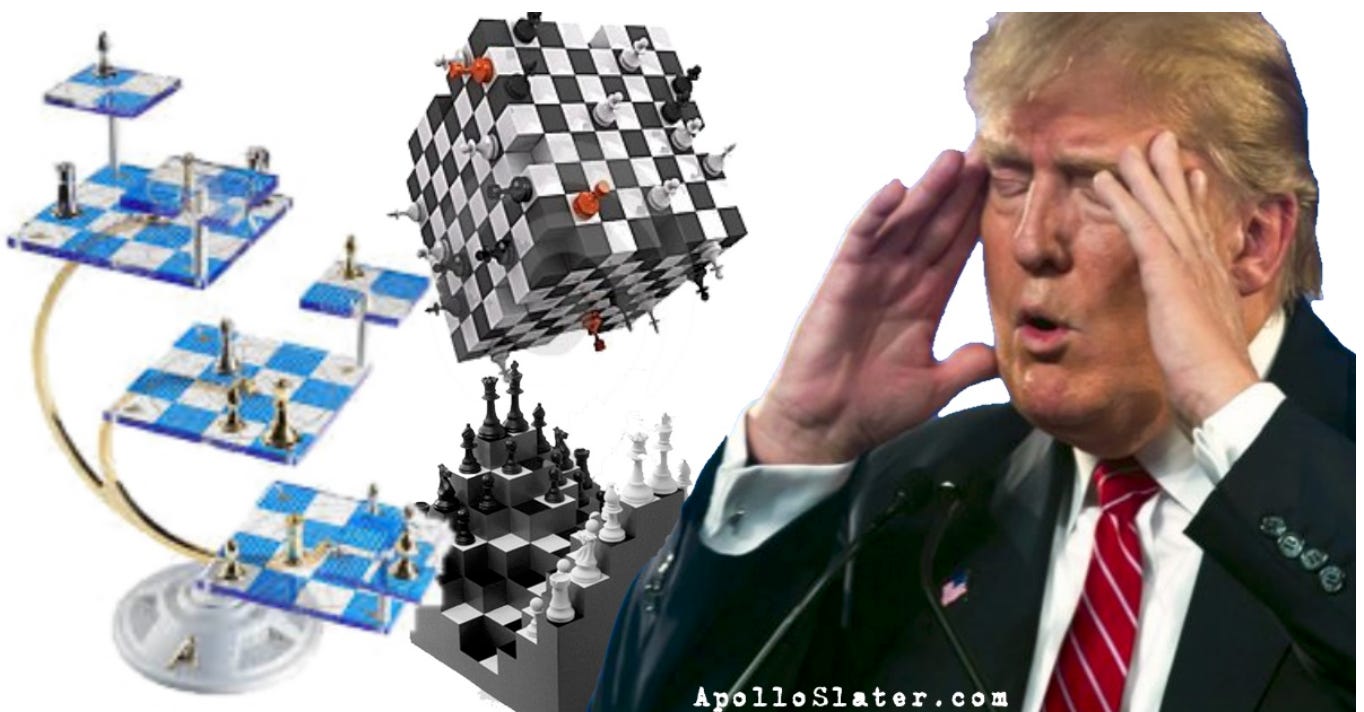
Trump and his economics team clearly believe that tariffs work (at least for certain values of “work”)
Post US Civil War tariffs rose strongly. Doubled and in some cases more than that. It’s also true that the US economy expanded remarkably in that period. Went from the exploitative frontier (and slave) economy to the world’s richest manufacturing one in fact. So, yay for tariffs, obviously.
Except US trade kept increasing over this period. So, tariffs were not reducing imports. Or rather, the total level of imports did not fall because tariffs even as tariffs obviously had an effect upon limiting imports — without tariffs there would have been more.
So, what happened here? The answer is the ocean going steamship.
Tariffs are only one barrier to trade, one cost of trade. Paperwork is another, local standards a third, the theft by rapacious dockside unions a fourth and, obviously enough, the cost of transport a fifth. And we can go on — the cost of information flow a sixth and soon enough we’ll be Richard Murphy shouting eleventhly.
The ocean going steamship reduced the total costs of trade by more than the tariffs raised it. Therefore trade carried on increasing.
Now forward a century, the 1970s and following. We’re told that there’s been some grand policy turn to free trade. That everyone decided to gut the rich world of real manly jobs and ship them off to sweating coolies who could be paid peanuts. The GATT, WTO, just proof of the contention and look, look, they lowered tariffs!
But the container ship (which did for those rapacious dockside unions in most places other than the US), the jet liner, the telephone and now the internet have lowered all those other costs of trade massively. The total costs of trade have dropped massively whatever we could have, should have, done about tariffs. Global trade was going to expand by multiples whatever GATT or WTO did that is.
Which is why these tariffs now have to be so large and bigly. Because to get back to that 1970s – let alone 1870s — it’s necessary to raise total costs of trade to where they were, not just tariffs.
Comments Off on Learning from history can be helpful … if you learn the correct lessons
April 12, 2025
QotD: The changed role of the Dictatorship in the late Roman Republic
Now, precisely because we are now talking about the irregular dictatorship, there really is no way to lay out its features except to go through its uses. Fortunately, there aren’t that many.
In the spring of 83 BC, Sulla, who had been notionally serving in a proconsular command in the East to fight Mithridates, landed in Italy with his army; Rome had effectively come under the control of a military junta initially led by Gaius Marius (cos.107, 104-100, 86) and after his death by L. Cornelius Cinna, Gn. Papirius Carbo and Gaius Marius the younger (son of the former). Sulla openly fought the consuls of 83 (Gaius Norbanus and L. Cornelius Scipio), pushing towards Rome. As the year shifted over into 82, Carbo and Marius the Younger had themselves elected consuls. Marius was killed in 82 during the siege of Praeneste; Carbo fled to Sicily after Sulla took Rome (where he’d eventually be captured and killed by Pompey in 81).
Now this posed a problem, constitutionally: there were always to be two consuls and consular elections had to be presided over by a consul … but one consul was dead and the other fled. The customary solution to this problem was the appointment of an interrex, a five-day-long office which essentially only had the authority to hold elections for new consuls in the absence of consuls or an already appointed dictator. Prior to 82, the last confirmed interrex we know of was in 216, but there may have been another in 208, in either case this also a long-unused office. All the interrex is supposed to do is hold an assembly of the comitia centuriata which can elect new consuls; they did not have any further authority.
Sulla, sweeping into Rome, convened the Senate and directed them to select an interrex; one wonders if this was the same meeting of the Senate Sulla convened within hearing distance of his soldiers in the process of butchering six thousand captured Romans who had sided against him, in case the Senate imagined they were being given a choice (Plut. Sulla 30.1-3). In any event, the Senate selected Lucius Valerius Flaccus (its oldest member, App. BCiv 1.98) on the assumption he would hold elections; instead, Sulla directed him (with the obvious threat of violence) to instead convene the comitia centuriata and instead of holding elections, propose a law (the lex Valeria) to make Sulla dictator with the remit of rei publicae constituendae causa, “for reforming the constitution of the Republic” – an entirely new causa never used before. Of course with Sulla’s army butchering literally thousands of his political opponents, the assembly knew how they were to vote.
This is, to be clear, a thing that customarily the interrex cannot do. This is also not, customarily, how dictators are selected. The appointment of a dictator had not been recommended by the Senate and in any case has also chosen the wrong voting assembly (the comitia centuriata instead of the comitia curiata) and also the interrex doesn’t have the authority to nominate a dictator or propose a law that nominates a dictator. You may begin to see why I see this as a new political innovation and not a clear extrapolation from previous practice. None of this is how the customary dictatorship had ever worked.
The law also gave Sulla a lot of powers, which was important because most of these powers were not things that customarily a dictator could do. He could legislate by fiat without an assembly, something dictators could not do before. He was given the ability to alter the number of senators as well as choose new senators and expel current senators; a dictator had once been named, Fabius Buteo in 216, to enroll new senators, but had (according to Livy) openly noted he did not consider himself to have the authority to remove senators enrolled by the previous Censors (Liv. 23.23). Sulla rendered his authority immune to the acts of the tribunes, whereas that office had previously been the only office to exist outside of the dictator’s authority. Finally, his appointment had no time limit set to it, whereas previously all dictators had six months and no more.
What Sulla has done here is used new legislation (remember, Rome has no written constitution which could invalidate any new law) to create what was is effectively an entirely new office, which shared neither an appointment procedure, term limit, or set of authorities and powers with the previous version.
Sulla then made a lot of very reactionary changes to the Roman Republic we need not get into here, got himself elected consul in 80, and then resigned his dictatorship (after rather a lot longer than six months, making Sulla, by the traditional criteria, the worst dictator Rome had up until that point, though I doubt he saw it that way), and after that retired from public life. Sulla seems to have imagined the office he created out of thin air in 82 would be a thing sui generis, a unique office to him only, to that moment only. Which was incredibly foolish because of course once you’ve created the precedent for that kind of office, you can’t then legislate away your own example.
And so Caesar utilized the same procedure. M. Aemilius Lepidus (later to be triumvir with Octavian and Antony), the praetor in 49, put forward the legislative measure – once again, proposed as a law rather than through the normal process – to make Caesar dictator for that year (Dio 41.36.1-3), with the same sweeping powers to legislate by fiat that Sulla had. One of the first things Caesar did was openly threaten the tribunes with violence if they interfered with him; as noted the tribune’s powers were not at the discretion of the dictator in the customary system and tribunes were held to be sacrosanct and thus legally immune to any kind of coercion by other magistrates, so this too represented a continuation of Sulla’s massive increase in the dictator’s absolute authority (App. BCiv 2.41, Plut. Caes. 35.6-11).
Caesar’s dictatorship, rather than initially being without time limit, was renewed, presumably every six months, from 49 through February 44, when Caesar had himself instead appointed dictator perpetuo rei publicae constieundae causa, “Dictator forever for the reformation of the Republic”, at this point (if not earlier) reusing Sulla’s made-up causa and now making explicit his intention to hold the office for life. He was assassinated a month later, on March 15, 44 BC, so perpetuo turned out to not be so perpetual.
As an aside, Julius Caesar is sometimes given a rosy glow in modern teaching materials, in part because he got such a glow from the ancient sources (one could hardly do otherwise writing under the reign of his grand-nephew, Augustus, who had him deified). That glow was often reinforced by (early) modern writers writing with one eye towards their monarch – Shakespeare, for instance. This may be a topic for another time, but I think a fair assessment of Caesar strips away most of this glow (especially his “man of the people” reputation), except for his reputation as a gifted general, which is beyond dispute. Julius Caesar’s career was a net negative for nearly everyone he encountered, with the lone exception of Augustus.
Bret Devereaux, “Collections: The Roman Dictatorship: How Did It Work? Did It Work?”, A Collection of Unmitigated Pedantry, 2022-03-18.
Comments Off on QotD: The changed role of the Dictatorship in the late Roman Republic
April 10, 2025
HBO’s Rome – Ep 5 “The Ram has touched the wall” – History and Story
Adrian Goldsworthy. Historian and Novelist
Published 18 Sept 2024Continuing series looking at the HBO/BBC co production drama series ROME. We will look at how they chose to tell the story, at what they changed and where they stuck closer to the history.
Comments Off on HBO’s Rome – Ep 5 “The Ram has touched the wall” – History and Story
April 9, 2025
QotD: Legitimacy and revolution
But though the English Civil War produced the first truly revolutionary regime, they were able to effectively co-opt most of the old regime’s symbols …
Let’s back up for a sec: As you recall, a revolution seeks to replace a people’s entire mode of living, whereas rebellions are just attempted changes of government. England had faced many rebellions before 1642, some of them successful, by which I mean they replaced one ruling faction with another. The usurpation of Richard II’s throne by Henry IV was extremely problematic, political theory-wise, but nobody was openly challenging the institution of monarchy as such. So too with the Wars of the Roses, the Peasants’ Revolt, the Pilgrimage of Grace, and so on: Those were all about the person of the king and his methods of rule, not about the legitimacy of his government.
The English Civil War was different. Charles I wasn’t the first English king executed by rebels (the aforementioned Richard II was starved to death; Henry VI died under extremely suspicious circumstances in the Wars of the Roses), but he was the first one found guilty of treason. To the kingdom he was king of. That’s a far different thing than “oopsie, I guess we forgot His Majesty’s lunch for two months running” or “we sent a whole bunch of goons with knives to the Tower, only to find His Majesty dead of melancholy”. A king who is guilty of treason is necessarily somehow inferior to his own kingdom, which forces us to confront the questions of 1) what, exactly, IS the kingdom? and 2) where does its legitimacy come from?
That’s why the rule of first the Council of State, then Lord Protector Cromwell, was a true revolution. In both cases, it was all too obvious where their legitimacy came from: out of the barrel of a gun, as Mao would so pithily put it 300 years later. And thanks to that power, they were free to remake the “lifeways” (as anthropologists say) of the people how they saw fit. Puritan England was as close to a totalitarianism as 17th century technology and information velocity would allow …
… but that wasn’t very close at all, as it turns out, and so most people in most places could get on with their lives pretty much as before. And even for those people directly under the State’s gaze, the Protectorate looked enough like the old monarchy that if you squinted and tilted your head sideways, you couldn’t really see the difference.
Severian, “Repost: National Symbols”, Founding Questions, 2021-10-27.
Comments Off on QotD: Legitimacy and revolution
April 1, 2025
Mao Murders One Million Landlords – W2W 17 – 1947 Q4
TimeGhost History
Published 31 Mar, 2025In 1947, Mao’s Communist forces launch massive counter-offensives, turning the tide of the Chinese Civil War. As Nationalist troops led by Chiang Kai-shek desperately hold their positions, the Communists gain ground through ruthless tactics — including brutal land reforms and psychological warfare. With battles raging from Manchuria to Central China, this conflict will decide the fate of millions. Is Chiang’s collapse now inevitable?
(more…)
Comments Off on Mao Murders One Million Landlords – W2W 17 – 1947 Q4
March 31, 2025
QotD: The problem of defending the late Roman Empire
In particular, Roman forces could no longer be entirely sure they would possess escalation dominance in any given theater. Indeed, during the Crisis, with legions being peeled to fight endless internal wars between rival claimants had meant that major frontier problems might go under-resourced or even entirely unaddressed for years. While the reign of Diocletian (284-311) marked a return to Roman unity, quite a bit of damage had already been done and by the end of the third century we see changes in patterns of fortification that reflect that.
The changes seem fairly clearly to have been evolutionary, in part because many older legionary forts remained in use. Some of the first things we see are traditional “playing-card” forts but now with the neat rectangular shape disrupted by having the towers project out from the walls. The value of a projecting tower […] is that soldiers on the tower, because it projects outward, can direct missiles (arrows, javelins, slings, etc) down the length of the wall, engaging enemies who might be trying to scale the wall or breach it. Of course a fortress that is now being designed to resist enemies scaling or breaching large stone walls is no longer worried about a raid but rather being designed to potentially withstand a serious assault or even a siege. Defensive ditches also multiply in this period and increase in width, often exceeding 25ft in width and flat-bottomed; the design consideration here is probably not to stop a quick raid anymore but to create an obstacle to an enemy moving rams or towers (think back to our Assyrians!) close to the walls.
Over time, forts also tended to abandon the “playing-card” proportions and instead favor circular or square shapes (minimizing perimeter-to-defend for a given internal area). And while even the original Roman marching camps had been designed with a concern to make it hard for an enemy to fire missiles into the camp – using the trench to keep them out of range and keeping an interval (literally the intervallum, the “inside the wall”) between the vallum and the buildings so that any arrows or javelins sent over the walls would land in this empty space – later Roman fortresses intensify these measures; we even see fortresses like the one at Visegrád incorporate its internal structures into the walls themselves, a measure to make the troops within less vulnerable to missile fire in a siege; this style becomes increasingly common in the mid-fourth century. Finally, by the fifth century we start to see the sites of Roman forts changing too, especially in the western part of the empire, with forts moving from low-land positions along major roadways (for rapid response) to hilltop sites that were less convenient for movement but easier to defend (in the East, a lot of the focus shifts to key heavily fortified cities – essentially fortress cities – like Nisibis (modern Nusaybin), Amida, Singara and Dara.
In short, Roman forts in this late period are being designed with the ability to resist either serious assaults or prolonged sieges. This in part reflects a lack of confidence that the Romans could always count on being able to immediately force a field battle they could win; while Roman armies retained the edge through most of this period, the main field armies were increasingly concentrated around the emperors and so might be many days, weeks or even months away when an incursion occurred; local forces had to respond elastically to delay the incursion much longer than before until that army could arrive.
Now of course the downside to a focus like this on single-site defense (“point defense” in its most basic form) is that the enemy army is given much more freedom to move around the countryside and wreck things, where they would have been engaged in the older observe-channel-respond defense system much more quickly (Luttwak terms this “preclusive” defense, but it isn’t quite that preclusive; the frontier is never a hard border). But of course the entire reason you are doing this is that the shifting security situation means you can no longer be confident in winning the decisive engagement that the observe-channel-respond defense system is designed for; you need to delay longer to concentrate forces more significantly to get a favorable outcome. Single-site defenses can do this for reasons we’ve actually already discussed: because the army in the fort remains an active threat, the enemy cannot generally just bypass them without compromising their own logistics, either their supply lines or foraging ability. Consequently, while some forts can by bypassed, they cannot all be bypassed (a lesson, in fact, that the emperor Julian would fail to learn, leading to disaster for his army and his own death).
And so the enemy, while they can damage the immediate environment, cannot proceed out of the frontier zone (and into the true interior) without taking some of these forts, which in turn will slow them down long enough for a major field army to arrive and in theory offer battle on favorable terms.
While it is easy to discount these shifts as just part of the failure of the Roman Empire (and we’ll come back to this idea, often presented in the form of a misquotation of George S. Patton that “fixed fortifications are monuments to the stupidity of man” though what he actually said was merely that the Maginot line was such), they contributed meaningfully to the Roman ability to hold on to a vast empire in an increasingly more challenging security environment. At pretty much all stages of its development, Roman fortification on the frontiers was designed to allow the Romans to maintain their territorial control with an economy of force precisely because the Roman Empire could not afford to maintain overwhelming force everywhere on its vast perimeter. Rome wasn’t alone in deploying that kind of defensive philosophy; at any given point the northern frontier of China was guarded on much the same principles: the need to hold a frontier line with an economy of force because no state can afford to have overwhelming force everywhere. In both cases, the need for defense was motivated in no small [part] by the impossibility of further offensive; in the Roman case, further extension of the limes would simply create more territory to defend without actually creating more revenue with which to defend it (this is why the Roman acquisition of Dacia and much of Britain were likely ill-conceived, but then both operations were politically motivated in no small part) while in the Chinese case, the logistics of the steppe largely prohibited further expansion.
This Roman system, combining local single-site defenses (which included a proliferation of walled towns as the population centers of the western empire frantically rebuilt their walls) with concentrated mobile field armies really only began to fail after the Battle of Adrianople (378), where to be clear the fortification system worked fine, the error came from the emperor Valens’ stupid decision to attack before his co-emperor Gratian could arrive with reinforcements (Valens was eager to get all of the credit and so he takes all of the blame).
Bret Devereaux, “Collections: Fortification, Part II: Romans Playing Cards”, A Collection of Unmitigated Pedantry, 2021-11-12.
Comments Off on QotD: The problem of defending the late Roman Empire
March 29, 2025
Why India and Pakistan Hate Each Other – W2W 015 – 1947 Q3
TimeGhost History
Published 23 Mar 2025In 1947, the British divide the Raj into two nations, India and Pakistan, triggering one of the deadliest mass migrations in history. Sectarian violence between Hindus, Sikhs, and Muslims leaves at least 200,000 dead and displaces millions more. Hastily drawn borders turn neighbours into enemies. The partition’s bloody legacy will lead to decades of tension, war, and bloodshed.
(more…)
Comments Off on Why India and Pakistan Hate Each Other – W2W 015 – 1947 Q3
March 17, 2025
My Big Fat Greek Civil War – W2W 12 – 1947 Q2
TimeGhost History
Published 16 Mar 2025As Europe emerges from WWII, Greece plunges into chaos. Political polarization, revenge killings, and failed diplomacy ignite a bitter civil war, turning former allies into deadly foes. From communist partisans regrouping in the mountains, to royalists asserting brutal dominance, the battle lines are drawn. Could Greece become the first major flashpoint in the Cold War, threatening peace across the Balkans and beyond?
(more…)
Comments Off on My Big Fat Greek Civil War – W2W 12 – 1947 Q2


