Nietzsche was a devastating critic of dogmatic Christianity — Christianity as it was instantiated in institutions. Although, he is a very paradoxical thinker. One of the things Nietzsche said was that he didn’t believe the scientific revolution would have ever got off the ground if it hadn’t been for Christianity and, more specifically, for Catholicism. He believed that, over the course of a thousand years, the European mind had to train itself to interpret everything that was known within a single coherent framework — coherent if you accept the initial axioms. Nietzsche believed that the Catholicization of the phenomena of life and history produced the kind of mind that was then capable of transcending its dogmatic foundations and concentrating on something else. In this particular case it happened to be the natural world.
Nietzsche believed that Christianity died of its own hand, and that it spent a very long time trying to attune people to the necessity of the truth, absent the corruption and all that — that’s always part of any human endeavour. The truth, the spirit of truth, that was developed by Christianity turned on the roots of Christianity. Everyone woke up and said, or thought, something like, how is it that we came to believe any of this? It’s like waking up one day and noting that you really don’t know why you put a Christmas tree up, but you’ve been doing it for a long time and that’s what people do. There are reasons Christmas trees came about. The ritual lasts long after the reasons have been forgotten.
Nietzsche was a critic of Christianity and also a champion of its disciplinary capacity. The other thing that Nietzsche believed was that it was not possible to be free unless you had been a slave. By that he meant that you don’t go from childhood to full-fledged adult individuality; you go from child to a state of discipline, which you might think is akin to self-imposed slavery. That would be the best scenario, where you have to discipline yourself to become something specific before you might be able to reattain the generality you had as a child. He believed that Christianity had played that role for Western civilization. But, in the late 1800s, he announced that God was dead. You often hear of that as something triumphant but for Nietzsche it wasn’t. He was too nuanced a thinker to be that simpleminded. Nietzsche understood — and this is something I’m going to try to make clear — that there’s a very large amount that we don’t know about the structure of experience, that we don’t know about reality, and we have our articulated representations of the world. Outside of that there are things we know absolutely nothing about. There’s a buffer between them, and those are things we sort of know something about. But we don’t know them in an articulated way.
Jordan B. Peterson, “Biblical Series I: Introduction to the Idea of God” {transcript], jordanbpeterson.com, 2018-03-12.
June 28, 2020
QotD: Nietzsche’s views on Christianity
June 18, 2020
Black Death and the Failure of Pandemic Lockdowns – Pandemic History 03
TimeGhost History
Published 17 Jun 2020Starting in 1347 and for three centuries, the second plague pandemic provides ample time to learn how to deal with the recurring outbreaks. And yet, fears of ruining the economy, political expediency, and refusal to accept reality leaves those trying to implement protection measure to fight an uphill battle. The result is even worse economic consequences, and unfathomable death.
Join us on Patreon: https://www.patreon.com/TimeGhostHistory
Hosted by: Indy Neidell and Spartacus Olsson
Written by: Indy Neidell and Spartacus Olsson
Directed by: Astrid Deinhard
Executive Producers: Astrid Deinhard, Indy Neidell, Spartacus Olsson, Bodo Rittenauer
Creative Producer: Joram Appel
Post-Production Director: Wieke Kapteijns
Research by: Spartacus Olsson, Indy Neidell, and James Currie
Edited by: Karolina Dołęga
Sound Engineer: Marek Kamiński
Graphic Design: Ryan WeatherbyVisual Sources:
Wellcome Images
Patrick Gray on Flickr: https://www.flickr.com/photos/1360415…
Paul K on Flickr: https://www.flickr.com/photos/bibliod…
Quinto Tiberio Angelerio and New Measures for Controlling Plague in 16th-Century Alghero, Sardinia digitalized by Google, original from Universidad Complutense de MadridIcons from The Noun Project by: Ben Mullins, parkjisun, Muhamad Ulum & Adrien Coquet
Music:
“A Far Cry” – Flouw
“Fire Building Ext 3” – SFX Producer
“Last Point of Safe Return” – Fabien Tell
“London” – Howard Harper-Barnes.mp3
“Please Hear Me Out” – Philip Ayers
“Scream Female 3” – SFX Producer
“Scream Male 6” – SFX Producer
“Superior” – Silver Maple
“Symphony of the Cold-Blooded” – Christian Andersen
“Barrel” – Christian AndersenArchive by Screenocean/Reuters https://www.screenocean.com.
Research Sources:
Quinto Tiberio Angelerio and New Measures for Controlling Plague in 16th-Century Alghero, Sardinia Raffaella Bianucci, Ole Jørgen Benedictow, Gino Fornaciari, and Valentina Giuffra
“The Path to Pistoia: Urban Hygiene Before the Black Death”, G. Geltner, Past & Present, Volume 246, Issue 1, February 2020, Pages 3–33
Encyclopedia of the Black Death, Joseph Patrick Byrne
“Epidemiological characteristics of an urban plague epidemic in Madagascar, August–November, 2017: an outbreak report”, The Lancet, Rindra Randremanana, PhD, *Voahangy Andrianaivoarimanana, PhD, Birgit Nikolay, PhD, Beza Ramasindrazana, PhD, Juliette Paireau, PhD, Quirine Astrid ten Bosch, PhD, et al
Yersinia pestis, the cause of plague, is a recently emerged clone of Yersinia pseudotuberculosis, Mark Achtman, Kerstin Zurth, Giovanna Morelli, Gabriela Torrea, Annie Guiyoule, and Elisabeth Carniel
Insights into the evolution of Yersinia pestis through whole-genome comparison with Yersinia pseudotuberculosis, P.S.G. Chain, E. Carniel, F.W. Larimer, J. Lamerdin, P.O. Stoutland, W.M. Regala, A.M. Georgescu, L.M. Vergez, M.L. Land, V.L. Motin, R.R. Brubaker, J. Fowler, J. Hinnebusch, M. Marceau, C. Medigue, M. Simonet, V. Chenal-Francisque, B. Souza, D. Dacheux, J.M. Elliott, A. Derbise, L.J. Hauser, and E. Garcia
Distinct Clones of Yersinia pestis Caused the Black Death, Stephanie Haensch, Raffaella Bianucci, Michel Signoli, Minoarisoa Rajerison, Michael Schultz, Sacha Kacki, Marco Vermunt, Darlene A. Weston, Derek Hurst, Mark Achtman, Elisabeth Carniel, and Barbara BramantiA TimeGhost chronological documentary produced by OnLion Entertainment GmbH.
From the comments:
TimeGhost History
2 days ago
As you have seen in this episode collective learning takes time. Some of you might infer one to one parallels between the situation during the second plague pandemic and our current pandemic in 2020. That would not be entirely correct and definitely not our intention. History doesn’t as much repeat itself as it echos into the present. While there are similarities between all pandemics, and we continue to struggle to find the correct response and countermeasures, our times are very different from the medieval and renaissance world. Science has developed further, society has evolved, and we have much more than one form of response to disease available. Moreover the pandemic that started in 1347 is in relative numbers (percentage of lethality) the worst pandemic to hit humanity in known history.In the end we are historians, not health professionals or epidemiologists. Our contribution can never be what to do about COVID 19, that is too complex an issue for us to digest. What we can contribute is a historical perspective on what went wrong back then, and how we developed from there. The main takeaway from the Black Death should from that long term historical perspective be positive. The response lay the foundation of modern health care in hospitals. It helped create the beginnings of professional, trained, and vetted doctors, it changed the view on sanitation, and it started to shift our collective view on disease from superstition and conspiracy myths to factual analysis and a scientific response.
And there in that very last point lies perhaps the one and only thing that we can say with certainty that we need to remember in 2020 — listen to the scientists, not the hacks and politicians on all sides that base their rhetoric on, self interest, political expediency, and populism.
Never forget!
Spartacus
PS apologies for the audio problems on my mic during the first half of the video — it was scratching against my jacket and no one noticed, sadly we can’t get it out in post.
The fall of olde timey “liberalism”
David Warren on the way “liberalism” was dissected, consumed, digested, and excreted by progressivism:
From different angles, from Tocqueville to Schumpeter to a thousand reporters on the ground, it has been observed that liberalism defeats itself. I mean by this real liberalism, not the poison candy version that is offered to children by our academic Left. The real thing celebrates liberty as the central political good, and equality of opportunity versus equality of result. It frees up economies and societies, by cancelling hidebound rules and regulations. When much younger and under the influence of my father and his war-veteran generation (his was World War II), I considered myself a “liberal,” for views that activist mobs would now consider to be deeply “conservative,” or as they say, “fascist.”
Opposition to totalitarianism was a key to that generation. They weren’t shy about using arms. A true liberal was an enthusiast for the War in Vietnam, and other global initiatives. Liberals were “open society” in an explicitly anti-communist, 1950s way. They loved “civil rights,” and opposed the Nanny State, although incoherently. They wished to accommodate the women’s movement. Their instinctive suspicion of social programmes, and revulsion for “ideology,” were slipping away; or had already slipped, to a longer historical view.
To be tediously economic, they were intoxicated by the view that, “now we are rich we can afford to have some fun.” They had long been bored with the absolute moral judgements that their ancestors (to whom neither divorce nor contraception were thinkable) took for granted — based on a Protestant Christianity that had been abandoned by sophisticated intellectuals a century before. “Church versus State” was no longer an issue, and because it wasn’t, morality became a statist “construct,” even without action from the Marxists.
When Ross Douthat writes a book on “decadence,” he is treating it as a temporal trend: something that comes and goes through the decades. His arguments are themselves decadent: something for the chattering classes to play, in the spirit of badminton. It is a topic for upmarket wit; no horror lurks beneath it. The old Gibbonesque “decline and fall” narrative has evaporated with classical culture, and been replaced by a dry happyface from which the wrinkles of serious history are botoxed. The “whig view of history” survives, but only by cliché.
What isn’t defended, is soon killed off, in nature but also in metaphysics. Leftism flourishes today, not because it has won any argument, but by eating everything on the liberal side. Even the word, “liberal,” went down with a soft burp. It now represents the denial, or reversal, of everything that liberals once stood for. Gentle reader may prove this to himself, by reading old magazines.
June 17, 2020
QotD: The theological role of suffering in Catholicism
[William F.] Buckley’s touching a nerve because he’s forcing attention on the Catholic Church’s belief in the redemptive power of suffering, something most people are aware of at a general level but don’t recognize as being absolutely central to Catholicism. I suspect I’m not the only one who was taught as a callow youth that literally any pain you endure — even down to jamming your toe — can be “offered up to God” as a good work of sorts. Just as mortification of the flesh has passed out of fashion in the West, it’s hard for secular Americans to respect the idea that it’s good for the Pope to be suffering like this, not because it shows his strength or tests his character but because suffering, in and of itself, is good.
Same thing with Lenten sacrifices, which get misinterpreted as a device to remind you that the life of the spirit is superior to the life of the body — both a cultural error and a theological one, since in fact your soul and glorified body will be reunited on the Last Day. Giving something up for Lent is solely about deprivation; that’s why you’re specifically advised not just to give up smoking or eating sweets or anything else you’d give up as a New Year’s resolution, but to give up something that you will miss and that isn’t harmful to you. (Harmful stuff like yanking it you’re supposed to have permanently given up anyway.)
Tim Cavanaugh, “Don’t Cry. It’s a Waste of Good Suffering”, Reason Hit and Run, 2005-02-15.
June 10, 2020
QotD: “God is Dead”
We have this articulated space that we can all discuss. Outside of that we have something that’s more akin to a dream that we’re embedded in. It’s an emotional dream that we’re embedded in, and that’s based, at least in part, on our actions. […] What’s outside of that is what we don’t know anything about at all. The dream is where the mystics and artists live. They’re the mediators between the absolutely unknown and the things we know for sure. What that means is that what we know is established on a form of knowledge that we don’t really understand. If those two things are out of sync — if our articulated knowledge is out of sync with our dream — then we become dissociated internally. We think things we don’t act out and we act out things we don’t dream. That produces a kind of sickness of the spirit. Its cure is something like an integrated system of belief and representation.
People turn to things like ideologies, which I regard as parasites on an underlying religious substructure, to try to organize their thinking. That’s a catastrophe and what Nietzsche foresaw. He knew that, when we knocked the slats out of the base of Western civilization by destroying this representation, this God ideal, we would destabilize and move back and forth violently between nihilism and the extremes of ideology. He was particularly concerned about radical left ideology and believed — and predicted this in the late 1800s, which is really an absolute intellectual tour de force of staggering magnitude — that in the 20th century hundreds of millions of people would die because of the replacement of these underlying dream-like structures with this rational, but deeply incorrect, representation of the world. We’ve been oscillating back and forth between left and right ever since, with some good sprinkling of nihilism and despair. In some sense, that’s the situation of the modern Western person, and increasingly of people in general.
Jordan B. Peterson, “Biblical Series I: Introduction to the Idea of God” {transcript], jordanbpeterson.com, 2018-03-12.
June 6, 2020
Pope Fights 3 — The Italian Wars: History Summarized
Overly Sarcastic Productions
Published 5 Jun 2020It’s time for a POPE FIIIIIIIIIIIIGHT!!!!! Gather ’round and listen to a tale of the utter nonsense that is the Renaissance Papacy. We’ll look at the Pontifical careers of Rodrigo Borgia, Julius II, Leo X, and Clement VII.
SOURCES & Further Reading: Rome: A History In Seven Sackings by Kneale, A History of Venice by Norwich.
This video was edited by Sophia Ricciardi AKA “Indigo”. https://www.sophiakricci.com/
Our content is intended for teenage audiences and up.PATREON: https://www.Patreon.com/OSP
MERCH LINKS: https://www.redbubble.com/people/OSPY…
OUR WEBSITE: https://www.OverlySarcasticProductions.com
Find us on Twitter https://www.Twitter.com/OSPYouTube
Find us on Reddit https://www.Reddit.com/r/OSP/
June 4, 2020
QotD: Islamofascism
The great silence by left-leaning Western feminists, and other large parts of the left, to human rights abuses carried out in the name of Islam is, to see it as its kindest, caused by an overdeveloped sense of tolerance or cultural relativism. But it is also part of the new anti-Americanism. Look at American Christian fundamentalism, they say.
Dislike of George Bush’s foreign policy has led to an automatic support of those perceived to be his enemies. Paradoxically, this leaves the left defending people who hold beliefs that condone what the left has long fought against: misogyny, homophobia, capital punishment, suppression of freedom of speech. The recent reaffirmation by Iran’s Ayatollah Khamenei of the fatwa against Salman Rushdie has been met by virtual silence; as has the torture and murder in Iraq of a man who would be presumed to be one of the left’s own — Hadi Salih, the international officer of the Iraqi Federation of Trade Unions. The hard left these days is soft on fascism, or at least Islamofascism.
The religious right in America would, if it could, wind back access to abortion and some other women’s rights. But as far as I am aware, no Christian fundamentalist in the US has suggested banning women from driving cars, or travelling without their husbands’ permission, or forcing them to cover their faces. Contrary to popular opinion, one is not the same as the other.
Pamela Bone, “The silence of the feminists”, The Age, 2005-02-04
May 23, 2020
Failed Assassinations — History Hijinks
Overly Sarcastic Productions
Published 22 May 2020If videogames have taught me anything, it’s that an assassin can solve a lot of problems. But sometimes plans fall apart, and sometimes it’s for the absolute DUMBEST reasons.
SOURCES & Further Reading: A History of Venice by Norwich, Rebellion by Ackroyd, The Poison King by Mayor.
This video was edited by Sophia Ricciardi AKA “Indigo”. https://www.sophiakricci.com/
Our content is intended for teenage audiences and up.PATREON: https://www.Patreon.com/OSP
DISCORD: https://discord.gg/h3AqJPe
MERCH LINKS: https://www.redbubble.com/people/OSPY…
OUR WEBSITE: https://www.OverlySarcasticProductions.com
Find us on Twitter https://www.Twitter.com/OSPYouTube
Find us on Reddit https://www.Reddit.com/r/OSP/
May 21, 2020
The Great Exhibition of 1851 also served (for some) as the 19th century equivalent of the “Missile Gap” controversy
In the latest edition of his Age of Invention newsletter, Anton Howes discusses the changing role of the British government and how the Great Exhibition was also useful as subtle domestic propaganda for a more active role for government in the British economy:

The Crystal Palace from the northeast during the Great Exhibition of 1851, image from the 1852 book Dickinsons’ comprehensive pictures of the Great Exhibition of 1851
Wikimedia Commons.
… a whole new opportunity for reform was provided by the Great Exhibition of 1851. As I explained in the previous newsletter, an international exhibition of industry functioned as an audit of the world’s industries. It, and its successors, the world’s fairs, gave some indication of how Britain stood relative to rival nations, especially France, Prussia, and the United States. And whereas some people saw the Great Exhibition as a clear mark of Britain’s superiority, for would-be reformers it was a chance to expose worrying weaknesses. Thus, Henry Cole and the other original organisers of the exhibition at the Society of Arts exacerbated fears of Britain’s impending decline, giving them an excuse to create the systems they desired.
They identified two areas of worry: science and design. Britain of course had many eminent scientists and artists — some of the best in the world — but other countries seemed to have become better at diffusing scientific training and superior taste throughout the workforce as a whole. Design skills were an issue because France appeared to be catching up with Britain when it came to the mechanisation of industry; if it caught up on machinery while maintaining its lead in fashion, then Britain would not be able to compete. And scientific training appeared more useful than ever, with the latest scientific advances “influencing production to an extent never before dreamt of”. Visitors to the Great Exhibition had marvelled at the recent inventions of artificial dyes, a method of processing beetroot sugar, and the latest improvements to photography and the electric telegraph. Thus, for Britain to maintain its lead, it would need to improve the education of its workers.
The reformers’ scare tactics worked. The aftermath of the Great Exhibition saw the creation of a government Department of Science and Art under the direction of Henry Cole, who in turn oversaw the agglomeration of various museums, design schools, and other cultural institutions to what is now the “Museum Mile” in South Kensington. (Curiously, the area was originally called Brompton, but when Cole opened a museum of design and industry there, he named it the South Kensington Museum. Kensington was a much more aristocratic area nearby, though it had no “south” at the time. The museum evolved, rather complicatedly, into what is now the Victoria & Albert Museum. But unlike so many top-down area re-brands, the name South Kensington stuck.)
And that was just the beginning. Cole and his allies then oversaw a dramatic expansion of the state into education, largely through the use of examinations. Although state-funding for education had initially centred on building new schools, getting any more involved was a highly contentious issue. Most schools were controlled and funded by religious organisations, but were split between the established Anglican church and dissenters. When the government first became involved in schools, it was thus bitterly opposed by many dissenters as they feared that their children might become indoctrinated to Anglicanism. And naturally, the government could not teach dissenting religions. Yet the proposed compromise of teaching no religion at all was unacceptable to both sides. Schools were crucial, the groups believed, to keeping religion alive.
So the utilitarians came up with a workaround. Rather than getting the state too involved directly in managing the schools themselves, it would instead influence the curriculum. By holding examinations, and then paying teachers based on the outcomes of the tests, they could incentivise the teaching of certain subjects and leave the schools free to teach whatever religious beliefs they pleased. Indeed, by diverting more and more time towards teaching particular subjects, the reformers saw it as a secularising blow “against parsonic influence”. The tactic was initially applied to adult education. The Society of Arts would first trial out examinations without payments, to test their viability. Then Cole would have his department take over the examinations, first for drawing, and later for science, using his budget to fund payment-by-results. The effects were dramatic. The Society’s relatively popular examinations in chemistry, for example, rarely had more than a hundred candidates a year. But when the department instituted its payments, it soon drew in thousands. By 1862, when the government wanted to improve the teaching of reading, writing, and arithmetic in schools, they adopted Cole’s suggestion that they also use payment-by-results.
May 19, 2020
QotD: Amour-propre
The French have this wonderful word, amour-propre, so much better than our English “self-love.” It comes, with its edge, from La Rochefoucauld, his urbane and scintillating Maxims in the seventeenth century. It is the arch-flatterer, “more artful than the most artful of mankind.” In parallel, it comes from Blaise Pascal, who observes that Christianity is the only cure. Then it comes again through Jean-Jacques Rousseau, in the “enlightened” eighteenth century, who thought the primitive savages incapable of amour-propre, because they lacked the gilt-framed mirrors of sophisticated society, in which their pride might be reflected. He imagines it the source of all corruption; and with some authority, for he was himself among the most corrupt of men — this Rousseau who taught us all to “blame society.”
Really there is nothing new under the sun, and the concept comes much earlier from Saint Augustine of Hippo who in his City of God calls it in Latin, amor sui, and puts it about the centre of his review of human tawdriness. That, in turn, is how it came to Pascal: via the French Augustinians, with whom Pascal was in thick, about the time he was writing his Lettres provinciales. One might add, contre Rousseau (and perhaps with Joseph de Maistre) that it goes back farther, to Adam and Eve.
Ye devill appeals to Eve’s amour-propre. She then appeals to Adam’s. That’s how this whole wretched mess got started. Note that this couple predeceased all Rousseau’s noble savages, and that the field anthropologists have since discovered that the primitive tribal types are a lot like us. Which is to say, bad, in many colourful ways, and quite invariably self-regarding.
David Warren, “Amour-propre”, Essays in Idleness, 2016-06-01.
May 6, 2020
QotD: The French philosophes and the “lower orders”
Apart from the different philosophical status they assigned to reason and virtue, the one issue where the contrast between the British and French Enlightenments was sharpest was in their attitudes to the lower orders. This is a distinction that has reverberated through politics ever since. The radical heirs of the Jacobin tradition have always insisted that it is they who speak for the wretched of the earth. In eighteenth-century France, they claimed to speak for the people and the general will. In the nineteenth century, they said they represented the working classes against their capitalist exploiters. In our own time, they have claimed to be on the side of blacks, women, gays, indigenes, refugees, and anyone else they define as the victims of discrimination and oppression. Himmelfarb’s study demonstrates what a façade these claims actually are.
The French philosophes thought the social classes were divided by the chasm not only of poverty but, more crucially, of superstition and ignorance. They despised the lower orders because they were in thrall to Christianity. The editor of the Encyclopédie, Denis Diderot, declared that the common people had no role in the Age of Reason: “The general mass of men are not so made that they can either promote or understand this forward march of the human spirit.” Indeed, “the common people are incredibly stupid,” he said, and were little more than animals: “too idiotic — bestial — too miserable, and too busy” to enlighten themselves. Voltaire agreed. The lower orders lacked the intellect required to reason and so must be left to wallow in superstition. They could be controlled and pacified only by the sanctions and strictures of religion which, Voltaire proclaimed, “must be destroyed among respectable people and left to the canaille large and small, for whom it was made.”
Keith Windschuttle, “Gertrude Himmelfarb and the Enlightenment”, New Criterion, 2020-02.
April 30, 2020
QotD: Nietzsche’s criticism of Christianity (and Judaism)
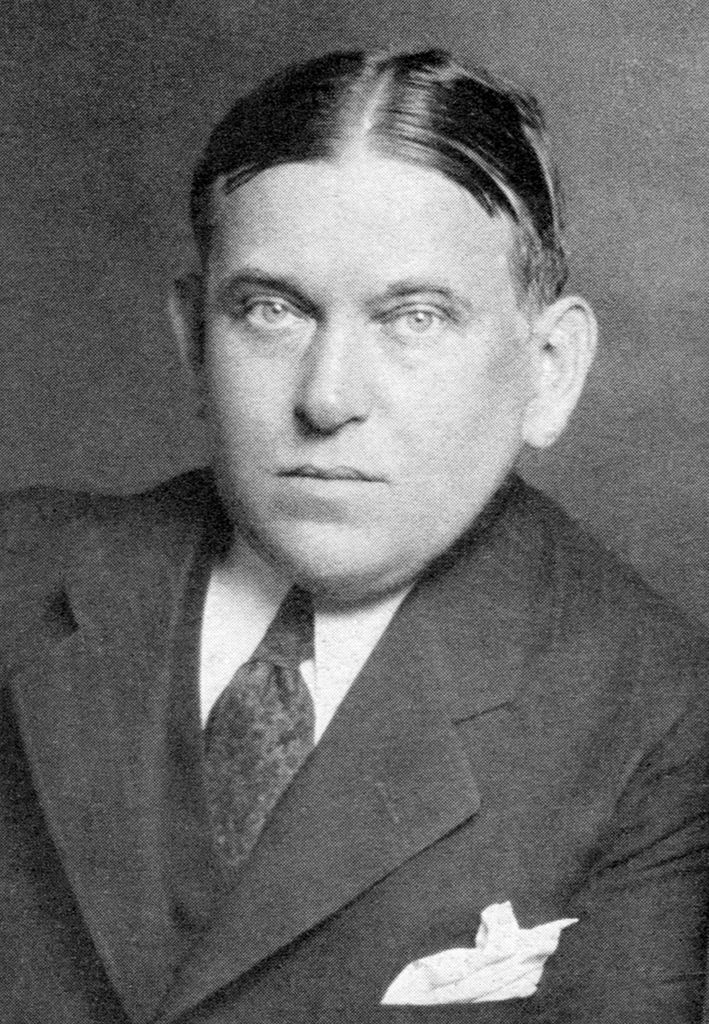
It is Nietzsche’s chief thesis that most of the so-called Christian morality of today is an inheritance from the Jews, and that it is quite as much out of harmony with the needs of our race and time as the Mosaic law which prohibits the eating of oysters, clams, swine, hares, swans, terrapin and snails, but allows the eating of locusts, beetles and grasshoppers (Leviticus, XI, 4-30). Christianity, true enough, did not take over the Mosaic code en bloc. It rejected all these dietary laws, and it also rejected all the laws regarding sacrifices and most of those dealing with family relations. But it absorbed unchanged the ethical theory that had grown up among the Jews during the period of their decline — the theory, to wit, of humility, of forbearance, of non-resistance. This theory, as Nietzsche shows, was the fruit of that decline. The Jews of David’s day were not gentle. On the contrary, they were pugnacious and strong, and the bold assertiveness that seemed their best protection against the relatively weak peoples surrounding them was visualized in a mighty and thunderous Jehovah, a god of wrath and destruction, a divine Kaiser. But as their strength decreased and their enemies grew in power they were gradually forced into a more conciliatory policy. What they couldn’t get by force they had to get by a show of complaisance and gentleness — and the result was the renunciatory morality of the century or two preceding the birth of Christ, the turn-the-other-cheek morality which Christ erected into a definite system, the “slave-morality” against which Nietzsche whooped and railed nearly two thousand years afterward.
H.L. Mencken, “Transvaluation of Morals”, The Smart Set, 1915-03.
April 29, 2020
Haile Selassie – The New Messiah – WW2 Biography Special
World War Two
Published 28 Apr 2020Haile Selassie was the Emperor of the Ethiopian Empire. He led the country against the Italians in the Second Italo-Ethiopian War after which he is exiled to Britain.
Join us on Patreon: https://www.patreon.com/TimeGhostHistory
Or join The TimeGhost Army directly at: https://timeghost.tvFollow WW2 day by day on Instagram @World_war_two_realtime https://www.instagram.com/world_war_t…
Between 2 Wars: https://www.youtube.com/playlist?list…
Source list: http://bit.ly/WW2sourcesHosted by: Indy Neidell
Written by: Isabel Wilson
Director: Astrid Deinhard
Producers: Astrid Deinhard and Spartacus Olsson
Executive Producers: Astrid Deinhard, Indy Neidell, Spartacus Olsson, Bodo Rittenauer
Creative Producer: Joram Appel
Post-Production Director: Wieke Kapteijns
Research by: Isabel Wilson
Edited by: Karolina Dołęga
Sound design: Marek KamińskiColorizations by:
Dememorabilia – https://www.instagram.com/dememorabilia/
Adrien Fillon – https://www.instagram.com/adrien.colo…
Klimbim – https://klimbim2014.wordpress.com/Sources:
National Museum of the U.S. NavyMusic:
“Other Sides of Glory” – Fabien Tell
“The Unexplored” – Philip Ayers
“March Of The Brave 10” – Rannar Sillard
“Deviation In Time” – Johannes Bornlof
“Epic Adventure Theme 3” – Håkan Eriksson
“Heroes On Horses” – Gunnar Johnsén
“Deviation In Time” – Johannes BornlofArchive by Screenocean/Reuters https://www.screenocean.com.
A TimeGhost chronological documentary produced by OnLion Entertainment GmbH.
Feudalism: A Brief Explanation
Thersites the Historian
Published 26 Oct 2017In this video, I try to bring order to the chaos that is feudalism and render it comprehensible.
April 27, 2020
Spoils of War for Britain and France – Redrawing the Map of the Middle East I THE GREAT WAR 1920
The Great War
Published 25 Apr 2020Sign up for Curiosity Stream and Nebula – and get 40% off annual plans right now: https://curiositystream.com/thegreatwar
100 years ago at the conference of San Remo, one thing became clear: Great Britain and France wanted control over the Middle East. Justified by the fighting in the previous years and painted as “liberators” of the Middle Eastern minorities, the new map of the Middle East emerged – under the cover of the League of Nations Mandate system.
» SUPPORT THE CHANNEL
Patreon: https://www.patreon.com/thegreatwar
Merchandise: https://shop.spreadshirt.de/thegreatwar/» SOURCES
Karsh, Efraim & Karsh, Inari, Empires of the Sand: The Struggle for Mastery in the Middle East 1789-1923, (Cambridge, MA : Harvard University Press, 1999)“Dans Le Levant” Le Temps, August 31, 1919 issue, https://gallica.bnf.fr/ark:/12148/bpt…
Lloyd George, David, Memoirs of the Peace Conference, (New Haven : Yale University Press, 1939) vol. 2
“Mounted Rifles Units” New Zealand History, https://nzhistory.govt.nz/war/aucklan…
Paris, Timothy J. Britain, The Hashemites and Arab Rule 1920-1925, (London : Frank Cass, 2003)
Provence, Michael, The Last Ottoman Generation and the Making of the Modern Middle East, (Cambridge : Cambridge University Press, 2017)
O’Neill, Robert, Official History of Australia in the War of 1914–1918, Volume VII – The Australian Imperial Force in Sinai and Palestine, 1914–1918, (Australian War Memorial, 1941)
“King-Crane Commission Digital Collection” Oberlin College Library. http://dcollections.oberlin.edu/cdm/s…
» SOCIAL MEDIA
Instagram: https://instagram.com/the_great_war
Twitter: https://twitter.com/WW1_Series
Reddit: https://reddit.com/r/TheGreatWarChannel»CREDITS
Presented by: Jesse Alexander
Written by: Jesse Alexander
Director: Toni Steller & Florian Wittig
Director of Photography: Toni Steller
Sound: Toni Steller
Editing: Toni Steller
Mixing, Mastering & Sound Design: http://above-zero.com
Maps: Daniel Kogosov (https://www.patreon.com/Zalezsky)
Research by: Jesse Alexander
Fact checking: Florian WittigChannel Design: Alexander Clark
Original Logo: David van StepholdA Mediakraft Networks Original Channel
Contains licensed material by getty images
All rights reserved – Real Time History GmbH 2020