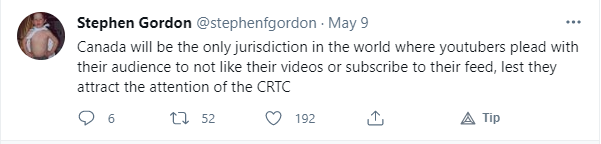
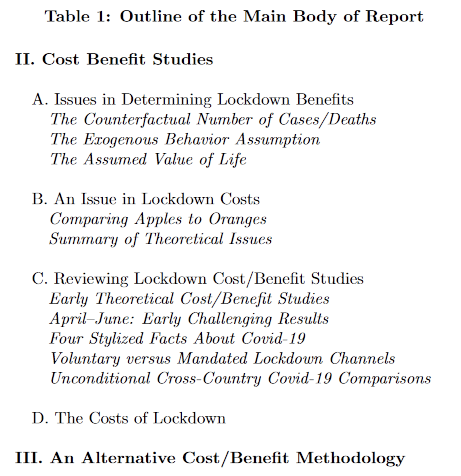
One of the phrases in the mouth of managers or bureaucrats that indicates almost unfailingly that they are about to commit an act of betrayal is, “We believe passionately in.”
The only thing that most managers or bureaucrats believe in passionately is their career, in the broad sense of that term: for they are quite willing to abandon or sacrifice a career completely in the narrow sense if it is in the interest of their career in a broader sense.
I learned this in the hospitals in which I worked. As soon as a hospital manager said “I believe passionately in the work that Department X has been doing,” I knew that Department X was about to be closed down by that very same manager.
Thus, when I read that a publisher claimed that “We believe passionately in freedom of speech,” I knew at once that the publisher was about to withdraw a book from publication that it had previously advertised for publication.
Theodore Dalrymple, “‘Passionate’ Belief in Freedom of Speech and Multiplying Orthodoxies”, New English Review, 2020-12-22.
April 16, 2021
QotD: “Declaring passionate belief in freedom of speech”
April 8, 2021
Andrew Doyle defends freedom of speech in his new book
In The Critic, Simon Evans reviews Free Speech And Why It Matters by Andrew Doyle (who is perhaps best known on this side of the pond for his ultrawoke Twitter persona “Titania McGrath”):
When I am weaker than you, I ask you for Freedom, because that is according to your principles; when I am Stronger than you, I take away your freedom because that is according to my principles.
Frank Herbert, Children of DuneIt is most peculiar. If the counter-culture had a dominant theme, it was the right to criticise the establishment and to question orthodoxy of all kinds. Back in the Sixties, it was central to its mission to Expand your Consciousness, man. And it worked. Walls came tumbling down. Yet now, everywhere you look, it seems the elements of society — students, academics, comedians — that one would most naturally associate with that freedom of expression, are introducing caveats and qualifiers to that principle faster than you can cry “Stop Little Pol-Pot, Stop!” They are turning, before our very eyes, into actual scolds.
It must be supposed that what was once the siege army, camped outside the moat like Occupy Wall Street, has captured the castle, for they are demanding that the walls be re-erected. That “hate” speech be distinguished from free speech and dealt with accordingly. That freedom of speech need not mean freedom from consequences. And a general suspicion is at large, among the young, that free speech is some sort of artefact of complacent boomer self-indulgence, like Steely Dan and second homes. No longer counter-culture, but decidedly counter-revolutionary.
I’m a comedian, and these have been strange times for our trade. Brexit saw comedians side with the mirthless neo-liberal consensus, against the humorous, sceptical grumble of the common rabble. The same thing happened in America, with bar-room stand-ups horrified by the vulgarity of Trump. And now the latest revision sees many of my fellow jesters and fools unsure whether people can really be trusted with free speech.One might have thought this issue had been settled long ago, in this country, and in liberty’s favour. But no, it seems we need to sharpen our tools once again, and Andrew Doyle’s new book is an excellent place to start.
Making the case for the defence, Doyle’s book is terse, restrained and as carefully argued as a QC’s summing-up in a top-drawer courtroom drama. Whether his command of the material comes from his doctorate in Renaissance literature or his experience of defending the comedy character Titania McGrath from infuriated wokerati, who knows? It is a beautifully balanced and comprehensive overview that will of course be read by no one who needs to hear it.
It is admirably historically literate. Doyle takes a quote from Milton’s Areopagitica as his epigram, with the old poet, declaiming over the din of the Civil War, as defiant as Satan himself, “Give me liberty to know, to utter, and to argue freely according to conscience, above all liberties.”
This sets the tone for the whole book, but Doyle also presents arguments intended to appeal to those who insist that we live in a society. With the compromises that entails. This was most famously recognised by notorious cis-hetero white man and free speech absolutist John Stuart Mill, who was surveying the world from the heights of Victorian Exceptionalism when he published the still unsurpassed On Liberty.
April 2, 2021
Victory at any Cost? – Allied Censorship – WW2 Special
World War Two
Published 1 Apr 2021Censorship was not just a practice in totalitarian regimes. During World War Two, democratic liberties in Allied countries often clashed with propaganda and restrictions of the press.
Join us on Patreon: https://www.patreon.com/TimeGhostHistory
Or join The TimeGhost Army directly at: https://timeghost.tvFollow WW2 day by day on Instagram @ww2_day_by_day – https://www.instagram.com/ww2_day_by_day
Between 2 Wars: https://www.youtube.com/playlist?list…
Source list: http://bit.ly/WW2sourcesHosted by: Spartacus Olsson
Written by: Joram Appel
Director: Astrid Deinhard
Producers: Astrid Deinhard and Spartacus Olsson
Executive Producers: Astrid Deinhard, Indy Neidell, Spartacus Olsson, Bodo Rittenauer
Creative Producer: Maria Kyhle
Post-Production Director: Wieke Kapteijns
Research by: Joram Appel
Edited by: Miki Cackowski
Sound design: Marek Kamiński
Map animations: Eastory (https://www.youtube.com/c/eastory)Colorizations by:
Adrien Fillon – https://www.instagram.com/adrien.colo…Sources:
Dutch National Archives
IWM D 20472
Bundesarchiv
from the Noun Project: Map by BaristaIcon, strategy by Fran Couto, weather by Yoyon Pujiyono, building by Made, Government by lathiif studio, documents by Geovani Almeid, Pen by Caesar Rizky Kurniawan
The True Cost of Petrol, courtesy of www.mirrorpix.comSoundtracks from the Epidemic Sound:
Johannes Bornlof – “The Inspector 4”
Fabien Tell – “Last Point of Safe Return”
Johan Hynynen – “Dark Beginning”
Reynard Seidel – “Deflection”
Phoenix Tail – “At the Front”
Johannes Bornlof – “Deviation In Time”
Max Anson – “Maze Heist”
Wendel Scherer – “Out the Window”Archive by Screenocean/Reuters https://www.screenocean.com.
A TimeGhost chronological documentary produced by OnLion Entertainment GmbH.
From the comments:
World War Two
2 days ago
Censorship is a phenomenon of all ages. Those in power sometimes don’t want certain voices to be heard for a variety of reasons. While this episode is about political and military censorship, we ourselves are still dealing with another kind of censorship today. Economic, political and PR reasons to demonetize or age-restrict our videos are being conflated with “safety” and “harm” of “certain audiences”. We adamantly object to the restriction of fact-based history for the sake of business and public image. This is why it’s so important that we’re able to remain independent. We have full editorial control of our content, and we won’t surrender our mission to publish factual, unbiased and unsanitized documentaries. Our TimeGhost Army is the main reason why we have been able to remain independent and unwavering. Join the TGA at www.patreon.com/timeghosthistory or https://timeghost.tvCheers,
Joram
February 10, 2021
Victor Davis Hanson on Animal Farm, America’s nightmare 2021 version
Victor Davis Hanson outlines the original George Orwell novel and then contrasts today’s situation with what progressives demanded back in the 1960s and 70s:
Yes, the downtrodden pigs, the exploited horses, and the victimized sheep finally did expel Farmer Jones from America’s Animal Farm.
But in his place, as Orwell predicted, revolutionary pigs began walking on two feet and absorbed all the levers of American cultural influence and power: the media, the bureaucracies, Wall Street, Silicon Valley, publishing, the academy, K-12 education, professional sports, and entertainment. And to them all, the revolutionaries added their past coarseness and 1960s-era by-any-means-necessary absolutism.
We are now finally witnessing the logical fruition of their radical utopia: Censorship, electronic surveillance, internal spying, monopolies, cartels, conspiracy theories, weaponization of the intelligence agencies, pouring billions of dollars into campaigns, changing voting laws by fiat, a woke revolutionary military, book banning, bleeding the First Amendment, canceling careers, blacklisting, separate-but-equal racial segregation and separatism.
Conspiracies? Now they brag of them in Time. Read their hubristic confessionals in “The Secret History of the Shadow Campaign That Saved the 2020 Election.” Once upon a Time, radicals used to talk of a “secret history” in terms of the Pentagon Papers, or a “shadow campaign” in detailing Hollywood blacklisting. They are exactly what they once despised, with one key qualifier: Sixties crudity and venom are central to their metamorphosis.
Our left-wing American revolutionary cycle from the barricades to the boardroom was pretty quick — in the manner that the ideology of the Battleship Potemkin soon led to Stalin’s show trials, or Mao’s “long march” logically resulted in the Cultural Revolution. The credo, again, is that the noble ends of forced “equity” require any means necessary to achieve them.
The Left censors books in our schools, whether To Kill a Mockingbird or Tom Sawyer. It is the Left who organizes efforts to shout down campus speakers or even allows them to be roughed up.
The Left demands not free-speech areas anymore, but no-speech “safe spaces” and “theme houses” — euphemisms for racially segregated, “separate-but-equal” zones. “Microaggressions” are tantamount to thought crimes. The mere way we look, smile, or blink can indict us as counterrevolutionaries. Stalin’s Trotskyization of all incorrect names, statues, and commemoratives is the Left’s ideal, as they seek to relabel Old America in one fell swoop. No one is spared from the new racists, not Honest Abe, not Tom Jefferson, not you, not me.
For “teach-ins,” we now have indoctrination sessions. But the handlers are no longer long-haired 1960’s dreamy, sloppy, and incoherent mentors. They are disciplined, no-nonsense brain-washers.
The Left’s Russia is our new old bogeyman. Putin is the new “We will bury you” Khrushchev.
February 2, 2021
The History of Hollywood
The Cynical Historian
Published 3 Sep 2020This episode is about the history of Hollywood, and it’s quite a long one. This is part 9 in a long running series about California history.
————————————————————
references:
Bernard F. Dick, Engulfed: The Death of Paramount Pictures and the Birth of Corporate Hollywood (Lexington: The University Press of Kentucky, 2001). https://amzn.to/3f2Yb0SHollywood’s America: United States History Through its Films, eds. Mintz, Steven and Randy Roberts (St. James, N.York: Brandywine Press, 1993). https://amzn.to/2tZIoJT
Richard Slotkin, Gunfighter Nation: The Myth of the Frontier in Twentieth-Century America (New York: Atheneum Books, 1992). https://amzn.to/2KX0jI2
Kevin Starr, Inventing the Dream: California through the Progressive Era, (Oxford, U.K.: Oxford University Press, 1985). https://amzn.to/2VPTbVX
————————————————————
Support the channel through PATREON: https://www.patreon.com/CynicalHistorian
or by purchasing MERCH: teespring.com/stores/the-cynical-hist…LET’S CONNECT:
Twitch: https://www.twitch.tv/cynicalhistorian
Discord: https://discord.gg/Ukthk4U
Twitter: https://twitter.com/Cynical_History
Subreddit: https://www.reddit.com/r/CynicalHistory/————————————————————
Wiki: By 1912, major motion-picture companies had set up production near or in Los Angeles. In the early 1900s, most motion picture patents were held by Thomas Edison’s Motion Picture Patents Company in New Jersey, and filmmakers were often sued to stop their productions. To escape this, filmmakers began moving out west to Los Angeles, where attempts to enforce Edison’s patents were easier to evade. Also, the weather was ideal and there was quick access to various settings. Los Angeles became the capital of the film industry in the United States. The mountains, plains and low land prices made Hollywood a good place to establish film studios.
Director D. W. Griffith was the first to make a motion picture in Hollywood. His 17-minute short film In Old California (1910) was filmed for the Biograph Company. Although Hollywood banned movie theaters — of which it had none — before annexation that year, Los Angeles had no such restriction. The first film by a Hollywood studio, Nestor Motion Picture Company, was shot on October 26, 1911. The H. J. Whitley home was used as its set, and the unnamed movie was filmed in the middle of their groves at the corner of Whitley Avenue and Hollywood Boulevard.
The first studio in Hollywood, the Nestor Company, was established by the New Jersey–based Centaur Company in a roadhouse at 6121 Sunset Boulevard (the corner of Gower), in October 1911. Four major film companies – Paramount, Warner Bros., RKO, and Columbia – had studios in Hollywood, as did several minor companies and rental studios. In the 1920s, Hollywood was the fifth-largest industry in the nation. By the 1930s, Hollywood studios became fully vertically integrated, as production, distribution and exhibition was controlled by these companies, enabling Hollywood to produce 600 films per year.
Hollywood became known as Tinseltown and the “dream factory” because of the glittering image of the movie industry. Hollywood has since become a major center for film study in the United States.
————————————————————
Hashtags: #history #Hollywood #California
January 20, 2021
“Canada Post … is not to act as the censor of mail or to determine the extent of freedom of expression in Canada”
Colby Cosh on a recent incident in Regina where a Canada Post employee took it upon himself to act as a local censor for people on his delivery route:
Today’s idiot of the day is not, perhaps surprisingly, the Regina postman who got suspended for refusing to deliver the Epoch Times, the oddball anti-communist newspaper that’s affiliated with China’s persecuted Falun Gong religious movement. Don’t get us wrong: Ramiro Sepulveda is clearly a bit of a nitwit. He seems to believe that a newspaper founded by commie-hating Chinese-Americans is designed to provoke hatred toward “Asian communities in North America.”
Sepulveda didn’t want to deliver free copies of the Times to non-soliciting customers because it “spits lies.” Perhaps regrettably, the strong reaction by Canada Post means that our junk mail, quite a lot of which consists of boastful missives from politicians, is not destined to be fact-checked and aggressively suppressed by the corporation’s rank and file.
Sepulveda was properly punished for not doing his job. And Canada Post used the opportunity to promote its content-neutrality as an agent of the state, although it did not quite dare to use the phrase “statutory monopoly.” In a statement to the broadcasters who reported on Sepulveda’s off-piste personal fact-checking, the agency said: “Canada Post is obligated to deliver any mail that is properly prepared and paid for, unless it is considered non-mailable matter. The courts have told Canada Post that its role is not to act as the censor of mail or to determine the extent of freedom of expression in Canada.”
They might have added that access to the mail has been denied to individuals for spreading hatred only a handful of times in the history of the country; this, too, is as it ought to be, and it is certainly not postal employees who ought to be improvising such bans. Ideally, all postmen would be doing their best not to create the suspicion that they are eyeballing what is sent to our homes with the intention of ringing up a reporter and causing a fuss. Say what you like about these poor toilers: most of them never give us any reason to doubt their discretion.
January 13, 2021
January 12, 2021
January 6, 2021
The Use and Abuse of the US Postal System (feat. Mr. Beat)
The Cynical Historian
Published 10 Oct 2020Thanks to Private Internet Access for sponsoring this video. Click here to get 77% off and 3-months free: http://www.privateinternetaccess.com/…
We’ve been seeing a lot of coverage about the post office here in the United States. A lot of folks talk about the history of it, but generally in a piecemeal fashion. The fact most of this commentary lacks is that the post office has always been a political tool, from its beginnings even before the US Constitution. Interestingly enough, what it has been used for over the years has changed substantially, but it is always a harbinger of the up and coming dominant ideology. The post office is a cornerstone of our democracy. The postal system in the United States is uniquely important.
Check out Mr. Beat’s video: https://www.youtube.com/watch?v=favVdKa6cRQ
————————————————————
Connected videos:
3:30 – 1776 | Based on a True Story: https://youtu.be/xY4Te8Qm07A
9:15 – What caused the Mexican-American thing? https://youtu.be/HTmSN4Exci0
9:15 – What Caused the Texas Revolution? https://youtu.be/lDWH-DC74Pk
9:25 – California Gold Rush: https://youtu.be/W1dmyx6LBKA
9:30 – History of California: https://www.youtube.com/playlist?list…
11:30 – The Sectional Crisis: https://youtu.be/Ff2AKILyi0o
14:05 – History of Voting by Mail: https://www.youtube.com/watch?v=favVd…
18:25 – Trains and Oil in California: https://youtu.be/0Ef0Ir-hbFc
18:30 – The History of Early Flight: https://youtu.be/sPgxuD0uYYE
20:35 – US Veterans History: https://youtu.be/ANUqaNykuRs
————————————————————
references:
The United States Postal Service: An American History (Washington, DC: United States Postal Service, 2020). https://about.usps.com/publications/p… [PDF]USPS’s website has a trove of information on their history: https://about.usps.com/who-we-are/pos…
The national postal museum is run by the Smithsonian and includes numerous research articles available to anyone on their website: https://postalmuseum.si.edu/research-…https://www.nationalgeographic.com/hi…
————————————————————
Support the channel through PATREON:
https://www.patreon.com/CynicalHistorian
or by purchasing MERCH: teespring.com/stores/the-cynical-hist…
LET’S CONNECT:
Discord: https://discord.gg/Ukthk4U
Twitter: https://twitter.com/Cynical_History
Subreddit: https://www.reddit.com/r/CynicalHistory/————————————————————
Wiki: The United States Postal Service (USPS; also known as the Post Office, U.S. Mail, or Postal Service) is an independent agency of the executive branch of the United States federal government responsible for providing postal service in the United States, including its insular areas and associated states. It is one of the few government agencies explicitly authorized by the United States Constitution.
The USPS traces its roots to 1775 during the Second Continental Congress, when Benjamin Franklin was appointed the first postmaster general. The Post Office Department was created in 1792 with the passage of the Postal Service Act. It was elevated to a cabinet-level department in 1872, and was transformed by the Postal Reorganization Act of 1970 into the United States Postal Service as an independent agency. Since the early 1980s, many direct tax subsidies to the USPS (with the exception of subsidies for costs associated with disabled and overseas voters) have been reduced or eliminated.
————————————————————
Hashtags: #history #USPS #USMail
January 4, 2021
QotD: Repressing the facts in genetic research
Now, in 2010, cleared-eyed observers are imagining a near-term future scenario that looks like this: (1) we will shortly have genomic-sequence information on hundreds of thousands of human beings from all over the planet, enough to build a detailed map of human genetic variation and a science of behavioral genetics. (2) We will confirm that variant alleles correlate strongly with significant measures of human ability and character, beginning with IQ and quite possibly continuing to distribution of time preference, sociability, docility, and other important traits. (3) We will discover that these same alleles correlate significantly with traditional indicia of race.
In fact, given the state of our present knowledge, I judge all three of these outcomes are near certain. I have previously written about some of the evidence in Racism and Group Differences. The truth is out there; well known to psychometricians, population geneticists and anyone who cares to look, but surrounded by layers of denial. The cant has become thick enough to, for example, create an entire secondary mythology about IQ (e.g., that it’s a meaningless number or the tests for it are racially/culturally biased). It also damages our politics; many people, for example, avert their eyes from the danger posed by Islamism because they fear being tagged as racists. All this repression has been firmly held in place by the justified fear of truly hideous evils – from the color bar through compulsory sterilization of the “inferior” clear up to the smoking chimneys at Treblinka and Dachau. But … if the repressed is about to inevitably return on us, how do we cope?
It’s not going to be easy. I saw this coming in the mid-1990s, and I’m expecting the readjustment to be among the most traumatic issues in 21st-century politics. The problem with repression, on both individual and cultural levels, is that when it breaks down it tends to produce explosions of poorly-controlled emotional energy; the release products are frequently ugly. It takes little imagination to visualize a future 15 or 20 years hence in which the results of behavioral genetics are seized on as effective propaganda by neo-Nazis and other racist demagogues, with the authority of science being bent towards truly appalling consequences.
Eric S. Raymond, “A Specter is Haunting Genetics”, Armed and Dangerous, 2010-06-19.
December 11, 2020
“Politically correct language … seemed like a nice, polite, and Canadian sort of thing to do”
Meaghie Champion discusses politically correct language in The Line:

Source: https://www.deviantart.com/blamethe1st/art/Statist-And-Anarchist-063-Political-Correctness-589944623
I grew up in the 1970s and ’80s. I have never lived in a world without what we now call “political correctness” — typically understood to mean using a kind of stilted and artificial language in order to atone for the disadvantages and slights suffered by marginalized groups and avoid inflicting new ones. Politically correct language required more effort to communicate, but it seemed like that effort was worth it to not offend people. It seemed like a nice, polite, and Canadian sort of thing to do.
I went along with political correctness out of a sincere desire to be accommodating to disadvantaged and dis-enfranchised groups. This became especially true after I learned about the “Sapir Whorf theory of psycho neurolinguistics.” The theory suggests that language shapes our perception of reality; that by altering the way we talk, we can shift the way we think — and, thus, collectively, we can shape reality itself. From this, it seemed logical to “de-gender” language or stop using stereotypes. It seemed like a small ask. Maybe I personally couldn’t solve big problems that concerned me as a good liberal … i.e. things like poverty or world hunger, but I could be nice in how I expressed myself and try to use language that everybody was using to be equitable and more fair.
What I didn’t understand, then, was that this precedent set a trap in which many good, well-intentioned liberals are finding themselves stuck. It’s no longer about ameliorating past sins: there is a project afoot to re-make the English language. The purpose of this project is to re-engineer how people think about certain subjects like gender, sex, and race, while skipping the necessary prerequisites of persuasion and logic. Conservative positions are declared off limits, even bigoted, simply by shaping the way we are allowed to talk about them.
Right now, even as I type this, there is a veritable army of academics hard at work on what they call “de-colonizing” and “de-gendering” language at many universities and colleges. There are tens of thousands of activists and academics in universities and online organizing and pushing for ever-changing rules to be enforced as it relates to the English language. It’s a multi-million-dollar industry in academia and woke corporatism. And it’s already starting to spill over into government regulations and enforcement.
I love the English language. I have been a voracious reader since childhood. I thrill at well-spoken and written prose and poetry. A finely turned witticism or fantastic mot juste can break my heart with its perfection. Further, I’m First Nations, and that love of the English language has also carried me into a love of the study of my tribal cradle tongue “Hul’qumi’num.” Shouldn’t I, as a First Nations person, be in favour of de-colonizing the English language? No. No, I do not think so. I have little patience or regard for any effort that makes language a less workable and functional tool of human endeavour. I identify strongly as a writer, and I take this assault upon the tool with which I conduct my craft very personally.
November 21, 2020
“Ah, and so it begins. The problematization of Substack”
Writing — appropriately — on Substack, Jen Gerson outlines her transition from full-time journalist to journalist-subsisting-on-the-crumbs-of-direct-reader-support at The Line:
True story: an ambitious young man with an idea for a startup gave me a ring on the phone. He wanted to start a new platform for writers and journalists; what would it take to encourage a writer like me to abandon the mainstream media and go fully independent? I explained the sort of site that might entice me — a clean and painless user interface, basic word processor, and something to take care of IT and payment back end. I then hung up the phone and thought to myself: “Nice guy. Too bad that idea isn’t going anywhere.”
After all, why would I abandon paying gigs in mainstream journalism for the uncertainty of direct reader support? It was a crazy idea.
Years passed.
Well, this gentleman went off to form a company called, uh, Substack, and after Andrew Sullivan left New York Magazine to reconstitute the Daily Dish under the aegis on this very platform, I was forced to dredge up this gentleman’s email and offer to eat my hat.
Because by then, mainstream media was in a state of financial and moral disarray and it was time for me to do what I would have done three years earlier if I had possessed the foresight — start The Line. In any case, the founder of Substack was very kind and even managed to schedule a call with me, at which point I said: “OK, you were right.”
This was one of the conversations that eventually led to my co-founding this fine newsletter that you are reading now, but in the course of this chat I had to ask another question: “You know they’re going to come after you, right? Are you ready for that?”
He said Substack is, indeed, committed to serving its community of writers — provided they aren’t spreading hate or disinformation, of course — but I suspect the company is only beginning to gain a glimpse of the test ahead.
When I read the Columbia Journalism Review‘s piece “The Substackerati“, released this week, my first response was: “Ah, and so it begins. The problematization of Substack.”
November 17, 2020
Private SNAFU “Censored” WW2 US Army cartoon
PeriscopeFilm
Published 11 Aug 2020Want to support this channel and help us preserve old films? Visit https://www.patreon.com/PeriscopeFilm
Visit our website www.PeriscopeFilm.com
Censored is one of 26 Private SNAFU (Situation Normal, All F*cked Up) cartoons made by the U.S. Army Signal Corps to educate and boost the morale of the troops. The SNAFU character was created by Theodore Geisel (Dr. Seuss) and Phil Eastman, and most were animated by Warner Brothers Animation Studios. They were voiced by actors including Mel Blanc and scored by Carl Stalling. This cartoon Censored, depicts the lengths to which Private SNAFU will go to sneak an uncensored letter in the mail — with terrifying results. Fortunately it all turns out to be a dream, but SNAFU is so shaken that he censors his own mail. The film was obviously inspired by the mass censorship of personal letters by the Army during the war, to reduce the chance that enemy spies would be able to gain intelligence by intercepting them.
Much of the military correspondence during the war took place via V-mail, short for Victory Mail. This was a hybrid mail process used as the primary and secure method to correspond with soldiers stationed abroad. To reduce the cost of transferring an original letter through the military postal system, a V-mail letter would be censored, copied to film, and printed back to paper upon arrival at its destination. The V-mail process is based on the earlier British Airgraph process
During World War II, both the Allies and Axis instituted postal censorship of civil and military mail. The largest organizations were those of the United States, though the United Kingdom employed about 10,000 censor staff while Ireland, a small neutral country, only employed about 160 censors. Both blacklists and whitelists were employed to observe suspicious mail or listed those whose mail was exempt from censorship. In the United States censorship was under the control of the Office of Censorship whose staff count rose to 14,462 by February 1943.
We encourage viewers to add comments and, especially, to provide additional information about our videos by adding a comment! See something interesting? Tell people what it is and what they can see by writing something for example: “01:00:12:00 — President Roosevelt is seen meeting with Winston Churchill at the Quebec Conference.”
This film is part of the Periscope Film LLC archive, one of the largest historic military, transportation, and aviation stock footage collections in the USA. Entirely film backed, this material is available for licensing in 24p HD, 2k and 4k. For more information visit http://www.PeriscopeFilm.com