World War Two
Published 7 Jun 2021We left off last time with several burning behemoths. Watch today to see the action that follows, not just on the high seas, but also in Alaska. We also turn to Washington DC and Tokyo and follow the reaction to the Battle of Midway there. The Japanese one may surprise you.
(more…)
June 8, 2021
Midway pt.2 – A New War? – WW2 – 145c – June 7, 1942
June 5, 2021
QotD: British wartime censorship
Unpopular ideas can be silenced, and inconvenient facts kept dark, without the need for any official ban. Anyone who has lived long in a foreign country will know of instances of sensational items of news — things which on their own merits would get the big headlines — being kept right out of the British press, not because the Government intervened but because of a general tacit agreement that “it wouldn’t do” to mention that particular fact. So far as the daily newspapers go, this is easy to understand. The British press is extremely centralised, and most of it is owned by wealthy men who have every motive to be dishonest on certain important topics. But the same kind of veiled censorship also operates in books and periodicals, as well as in plays, films and radio. At any given moment there is an orthodoxy, a body of ideas which it is assumed that all right-thinking people will accept without question. It is not exactly forbidden to say this, that or the other, but it is “not done” to say it, just as in mid-Victorian times it was “not done” to mention trousers in the presence of a lady. Anyone who challenges the prevailing orthodoxy finds himself silenced with surprising effectiveness. A genuinely unfashionable opinion is almost never given a fair hearing, either in the popular press or in the highbrow periodicals.
At this moment what is demanded by the prevailing orthodoxy is an uncritical admiration of Soviet Russia. Everyone knows this, nearly everyone acts on it. Any serious criticism of the Soviet régime, any disclosure of facts which the Soviet government would prefer to keep hidden, is next door to unprintable. And this nation-wide conspiracy to flatter our ally takes place, curiously enough, against a background of genuine intellectual tolerance. For though you are not allowed to criticise the Soviet government, at least you are reasonably free to criticise our own. Hardly anyone will print an attack on Stalin, but it is quite safe to attack Churchill, at any rate in books and periodicals. And throughout five years of war, during two or three of which we were fighting for national survival, countless books, pamphlets and articles advocating a compromise peace have been published without interference. More, they have been published without exciting much disapproval. So long as the prestige of the USSR is not involved, the principle of free speech has been reasonably well upheld. There are other forbidden topics, and I shall mention some of them presently, but the prevailing attitude towards the USSR is much the most serious symptom. It is, as it were, spontaneous, and is not due to the action of any pressure group.
George Orwell, Unpublished Preface to Animal Farm, 1945.
May 26, 2021
May 21, 2021
May 12, 2021
May 5, 2021
April 30, 2021
Bill C-10, despite frequent government denials, would regulate user-generated content on the internet
Michael Geist continues to sound the alarm about the federal government’s bill to vastly increase CRTC control over Canadians’ access to information and entertainment options online, including the Heritage minister’s mendacity when challenged about how the CRTC’s powers will increase to censor individual Canadians in what they post to online services like YouTube:
Canadian Heritage Minister Steven Guilbeault and the Liberal government’s response to mounting concern over its decision to remove a legal safeguard designed to ensure the CRTC would not regulate user generated content has been denial. The department’s own officials told MPs that all programming on sites like Youtube would be subject to regulation, yet Guilbeault insisted to the House of Commons that user generated content would be excluded from regulation as part of Bill C-10, his Broadcasting Act reform bill.
However, based on new documents I recently obtained, it has become clear that Guilbeault and the government have misled the Canadian public with their response. In fact, the government effectively acknowledges that it is regulating user generated content in a forthcoming, still-secret amendment to Bill C-10. Amendment G-13, submitted by Liberal MP Julie Dabrusin on April 7th and likely to come before the committee studying the bill over the next week, seeks to amend Section 10(1) of the Broadcasting Act which specifies the CRTC’s regulatory powers. It states:
(4) Regulations made under paragraph (1)(c) do not apply with respect to programs that are uploaded to an online undertaking that provides a social media service by a user of the service – if that user is not the provider of the service or the provider’s affiliate, or the agent or mandatary of either of them – for transmission over the Internet and reception by other users of the service.
The amendment is a clear acknowledgement that user generated content are programs subject to CRTC’s regulation making power. Liberal MPs may claim the bill doesn’t do this, but their colleagues are busy submitting amendments to address the reality.
But it is not just that the government knew that its changes would result in regulating user generated content. The forthcoming secret amendment only covers one of many regulations that the CRTC may impose. The specific regulation – Section 10(1)(c) of the Broadcasting Act – gives the CRTC the power to establish regulations “respecting standards of programs and the allocation of broadcasting time for the purpose of giving effect to the broadcasting policy set out in subsection 3(1).”
April 29, 2021
April 17, 2021
“Today’s Liberal government is […] the most anti-Internet government in Canadian history”
Michael Geist gives both barrels to Justin Trudeau’s government, then reloads and fires again:
As I watched Canadian Heritage Minister Steven Guilbeault yesterday close the Action Summit to Combat Online Hate, I was left with whiplash as I thought back to those early days. Today’s Liberal government is unrecognizable by comparison as it today stands the most anti-Internet government in Canadian history:
- As it moves to create the Great Canadian Internet Firewall, net neutrality is out and mandated Internet blocking is in.
- Freedom of expression and due process is out, quick takedowns without independent review and increased liability are in.
- Innovation and new business models are out, CRTC regulation is in.
- Privacy reform is out, Internet taxation is in.
- Prioritizing consumer Internet access and affordability is out, reduced competition through mergers are in.
- And perhaps most troublingly, consultation and transparency are out, secrecy is in.
This is not hyperbole. The Action Summit is a case in point. I was part of the planning committee and I am proud that the event produced two days of thoughtful discussion and debate, where the both the importance and complexity of addressing online hate brought a myriad of perspectives, including from the major Internet platforms. There was none of that nuance in Guilbeault’s words, who spoke the evil associated with the “web behemoths” and promised that his legislation would target content and Internet sites and services anywhere in the world provided it was accessible to Canadians. The obvious implications – much discussed in Internet circles in Ottawa – is that the government plans to introduce mandated content blocking to keep such content out of Canada as a so-called “last resort”. When combined with a copyright “consultation” launched this week that also raises Internet blocking, Guilbeault’s vision is to require Internet providers to install blocking capabilities, create new regulators and content adjudicators to issue blocking orders, dispense with net neutrality, and build a Canadian Internet firewall.
If that wasn’t enough, his forthcoming bill will also mandate content removals within 24 hours with significant penalties for failure to do so. The approach trades due process for speed, effectively reducing independent oversight and incentivizing content removal by Internet platforms. Just about everyone thinks this is a bad idea, but Guilbeault insists that “it is in the mandate letter.” In other words, consultations don’t matter, expertise doesn’t matter, the experience elsewhere doesn’t matter. Instead, a mandate letter trumps all. If this occurred under Stephen Harper’s watch, the criticism would be unrelenting.
In fact, one of the reasons that the government finds itself committed to dangerous policy is that it did not conduct a public consultation on its forthcoming online harms bill. Guilbeault was forced yesterday to admit that the public has not been consulted, which he tried to justify by claiming that it could participate in the committee review or in the development of implementation guidelines once the bill becomes law. This alone should be disqualifying as no government should introduce censorship legislation that mandates website blocking, eradicates net neutrality, harms freedom of expression, and dispenses with due process without having ever consulted Canadians on the issue.
April 16, 2021
QotD: “Declaring passionate belief in freedom of speech”
One of the phrases in the mouth of managers or bureaucrats that indicates almost unfailingly that they are about to commit an act of betrayal is, “We believe passionately in.”
The only thing that most managers or bureaucrats believe in passionately is their career, in the broad sense of that term: for they are quite willing to abandon or sacrifice a career completely in the narrow sense if it is in the interest of their career in a broader sense.
I learned this in the hospitals in which I worked. As soon as a hospital manager said “I believe passionately in the work that Department X has been doing,” I knew that Department X was about to be closed down by that very same manager.
Thus, when I read that a publisher claimed that “We believe passionately in freedom of speech,” I knew at once that the publisher was about to withdraw a book from publication that it had previously advertised for publication.
Theodore Dalrymple, “‘Passionate’ Belief in Freedom of Speech and Multiplying Orthodoxies”, New English Review, 2020-12-22.
April 8, 2021
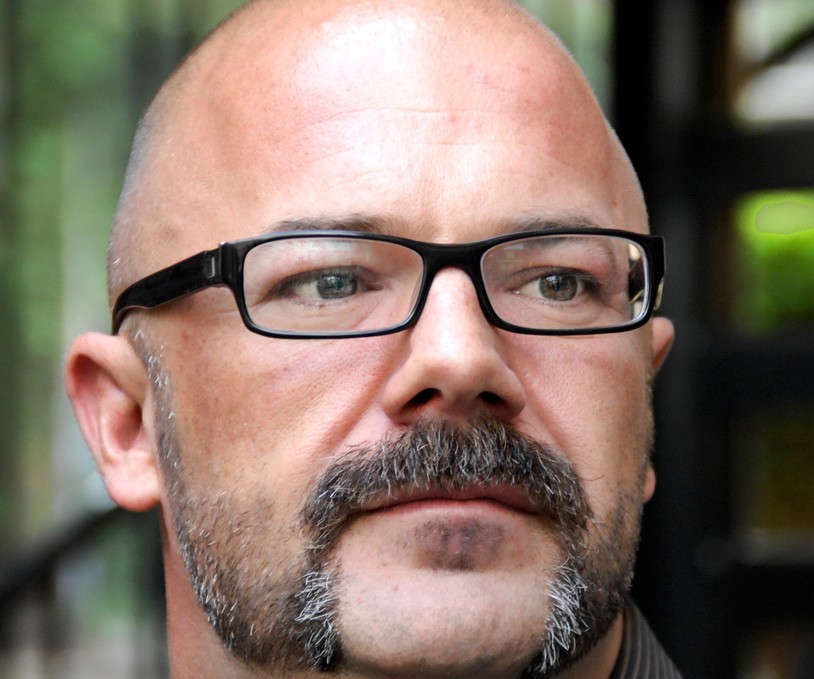
Andrew Doyle defends freedom of speech in his new book
In The Critic, Simon Evans reviews Free Speech And Why It Matters by Andrew Doyle (who is perhaps best known on this side of the pond for his ultrawoke Twitter persona “Titania McGrath”):
When I am weaker than you, I ask you for Freedom, because that is according to your principles; when I am Stronger than you, I take away your freedom because that is according to my principles.
Frank Herbert, Children of DuneIt is most peculiar. If the counter-culture had a dominant theme, it was the right to criticise the establishment and to question orthodoxy of all kinds. Back in the Sixties, it was central to its mission to Expand your Consciousness, man. And it worked. Walls came tumbling down. Yet now, everywhere you look, it seems the elements of society — students, academics, comedians — that one would most naturally associate with that freedom of expression, are introducing caveats and qualifiers to that principle faster than you can cry “Stop Little Pol-Pot, Stop!” They are turning, before our very eyes, into actual scolds.
It must be supposed that what was once the siege army, camped outside the moat like Occupy Wall Street, has captured the castle, for they are demanding that the walls be re-erected. That “hate” speech be distinguished from free speech and dealt with accordingly. That freedom of speech need not mean freedom from consequences. And a general suspicion is at large, among the young, that free speech is some sort of artefact of complacent boomer self-indulgence, like Steely Dan and second homes. No longer counter-culture, but decidedly counter-revolutionary.
I’m a comedian, and these have been strange times for our trade. Brexit saw comedians side with the mirthless neo-liberal consensus, against the humorous, sceptical grumble of the common rabble. The same thing happened in America, with bar-room stand-ups horrified by the vulgarity of Trump. And now the latest revision sees many of my fellow jesters and fools unsure whether people can really be trusted with free speech.One might have thought this issue had been settled long ago, in this country, and in liberty’s favour. But no, it seems we need to sharpen our tools once again, and Andrew Doyle’s new book is an excellent place to start.
Making the case for the defence, Doyle’s book is terse, restrained and as carefully argued as a QC’s summing-up in a top-drawer courtroom drama. Whether his command of the material comes from his doctorate in Renaissance literature or his experience of defending the comedy character Titania McGrath from infuriated wokerati, who knows? It is a beautifully balanced and comprehensive overview that will of course be read by no one who needs to hear it.
It is admirably historically literate. Doyle takes a quote from Milton’s Areopagitica as his epigram, with the old poet, declaiming over the din of the Civil War, as defiant as Satan himself, “Give me liberty to know, to utter, and to argue freely according to conscience, above all liberties.”
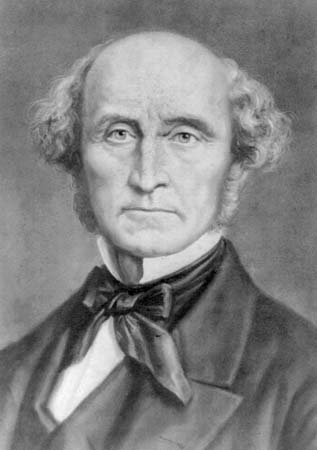
This sets the tone for the whole book, but Doyle also presents arguments intended to appeal to those who insist that we live in a society. With the compromises that entails. This was most famously recognised by notorious cis-hetero white man and free speech absolutist John Stuart Mill, who was surveying the world from the heights of Victorian Exceptionalism when he published the still unsurpassed On Liberty.
April 2, 2021
Victory at any Cost? – Allied Censorship – WW2 Special
World War Two
Published 1 Apr 2021Censorship was not just a practice in totalitarian regimes. During World War Two, democratic liberties in Allied countries often clashed with propaganda and restrictions of the press.
Join us on Patreon: https://www.patreon.com/TimeGhostHistory
Or join The TimeGhost Army directly at: https://timeghost.tvFollow WW2 day by day on Instagram @ww2_day_by_day – https://www.instagram.com/ww2_day_by_day
Between 2 Wars: https://www.youtube.com/playlist?list…
Source list: http://bit.ly/WW2sourcesHosted by: Spartacus Olsson
Written by: Joram Appel
Director: Astrid Deinhard
Producers: Astrid Deinhard and Spartacus Olsson
Executive Producers: Astrid Deinhard, Indy Neidell, Spartacus Olsson, Bodo Rittenauer
Creative Producer: Maria Kyhle
Post-Production Director: Wieke Kapteijns
Research by: Joram Appel
Edited by: Miki Cackowski
Sound design: Marek Kamiński
Map animations: Eastory (https://www.youtube.com/c/eastory)Colorizations by:
Adrien Fillon – https://www.instagram.com/adrien.colo…Sources:
Dutch National Archives
IWM D 20472
Bundesarchiv
from the Noun Project: Map by BaristaIcon, strategy by Fran Couto, weather by Yoyon Pujiyono, building by Made, Government by lathiif studio, documents by Geovani Almeid, Pen by Caesar Rizky Kurniawan
The True Cost of Petrol, courtesy of www.mirrorpix.comSoundtracks from the Epidemic Sound:
Johannes Bornlof – “The Inspector 4”
Fabien Tell – “Last Point of Safe Return”
Johan Hynynen – “Dark Beginning”
Reynard Seidel – “Deflection”
Phoenix Tail – “At the Front”
Johannes Bornlof – “Deviation In Time”
Max Anson – “Maze Heist”
Wendel Scherer – “Out the Window”Archive by Screenocean/Reuters https://www.screenocean.com.
A TimeGhost chronological documentary produced by OnLion Entertainment GmbH.
From the comments:
World War Two
2 days ago
Censorship is a phenomenon of all ages. Those in power sometimes don’t want certain voices to be heard for a variety of reasons. While this episode is about political and military censorship, we ourselves are still dealing with another kind of censorship today. Economic, political and PR reasons to demonetize or age-restrict our videos are being conflated with “safety” and “harm” of “certain audiences”. We adamantly object to the restriction of fact-based history for the sake of business and public image. This is why it’s so important that we’re able to remain independent. We have full editorial control of our content, and we won’t surrender our mission to publish factual, unbiased and unsanitized documentaries. Our TimeGhost Army is the main reason why we have been able to remain independent and unwavering. Join the TGA at www.patreon.com/timeghosthistory or https://timeghost.tvCheers,
Joram
February 10, 2021
Victor Davis Hanson on Animal Farm, America’s nightmare 2021 version
Victor Davis Hanson outlines the original George Orwell novel and then contrasts today’s situation with what progressives demanded back in the 1960s and 70s:
Yes, the downtrodden pigs, the exploited horses, and the victimized sheep finally did expel Farmer Jones from America’s Animal Farm.
But in his place, as Orwell predicted, revolutionary pigs began walking on two feet and absorbed all the levers of American cultural influence and power: the media, the bureaucracies, Wall Street, Silicon Valley, publishing, the academy, K-12 education, professional sports, and entertainment. And to them all, the revolutionaries added their past coarseness and 1960s-era by-any-means-necessary absolutism.
We are now finally witnessing the logical fruition of their radical utopia: Censorship, electronic surveillance, internal spying, monopolies, cartels, conspiracy theories, weaponization of the intelligence agencies, pouring billions of dollars into campaigns, changing voting laws by fiat, a woke revolutionary military, book banning, bleeding the First Amendment, canceling careers, blacklisting, separate-but-equal racial segregation and separatism.
Conspiracies? Now they brag of them in Time. Read their hubristic confessionals in “The Secret History of the Shadow Campaign That Saved the 2020 Election.” Once upon a Time, radicals used to talk of a “secret history” in terms of the Pentagon Papers, or a “shadow campaign” in detailing Hollywood blacklisting. They are exactly what they once despised, with one key qualifier: Sixties crudity and venom are central to their metamorphosis.
Our left-wing American revolutionary cycle from the barricades to the boardroom was pretty quick — in the manner that the ideology of the Battleship Potemkin soon led to Stalin’s show trials, or Mao’s “long march” logically resulted in the Cultural Revolution. The credo, again, is that the noble ends of forced “equity” require any means necessary to achieve them.
The Left censors books in our schools, whether To Kill a Mockingbird or Tom Sawyer. It is the Left who organizes efforts to shout down campus speakers or even allows them to be roughed up.
The Left demands not free-speech areas anymore, but no-speech “safe spaces” and “theme houses” — euphemisms for racially segregated, “separate-but-equal” zones. “Microaggressions” are tantamount to thought crimes. The mere way we look, smile, or blink can indict us as counterrevolutionaries. Stalin’s Trotskyization of all incorrect names, statues, and commemoratives is the Left’s ideal, as they seek to relabel Old America in one fell swoop. No one is spared from the new racists, not Honest Abe, not Tom Jefferson, not you, not me.
For “teach-ins,” we now have indoctrination sessions. But the handlers are no longer long-haired 1960’s dreamy, sloppy, and incoherent mentors. They are disciplined, no-nonsense brain-washers.
The Left’s Russia is our new old bogeyman. Putin is the new “We will bury you” Khrushchev.
February 2, 2021
The History of Hollywood
The Cynical Historian
Published 3 Sep 2020This episode is about the history of Hollywood, and it’s quite a long one. This is part 9 in a long running series about California history.
————————————————————
references:
Bernard F. Dick, Engulfed: The Death of Paramount Pictures and the Birth of Corporate Hollywood (Lexington: The University Press of Kentucky, 2001). https://amzn.to/3f2Yb0SHollywood’s America: United States History Through its Films, eds. Mintz, Steven and Randy Roberts (St. James, N.York: Brandywine Press, 1993). https://amzn.to/2tZIoJT
Richard Slotkin, Gunfighter Nation: The Myth of the Frontier in Twentieth-Century America (New York: Atheneum Books, 1992). https://amzn.to/2KX0jI2
Kevin Starr, Inventing the Dream: California through the Progressive Era, (Oxford, U.K.: Oxford University Press, 1985). https://amzn.to/2VPTbVX
————————————————————
Support the channel through PATREON: https://www.patreon.com/CynicalHistorian
or by purchasing MERCH: teespring.com/stores/the-cynical-hist…LET’S CONNECT:
Twitch: https://www.twitch.tv/cynicalhistorian
Discord: https://discord.gg/Ukthk4U
Twitter: https://twitter.com/Cynical_History
Subreddit: https://www.reddit.com/r/CynicalHistory/————————————————————
Wiki: By 1912, major motion-picture companies had set up production near or in Los Angeles. In the early 1900s, most motion picture patents were held by Thomas Edison’s Motion Picture Patents Company in New Jersey, and filmmakers were often sued to stop their productions. To escape this, filmmakers began moving out west to Los Angeles, where attempts to enforce Edison’s patents were easier to evade. Also, the weather was ideal and there was quick access to various settings. Los Angeles became the capital of the film industry in the United States. The mountains, plains and low land prices made Hollywood a good place to establish film studios.
Director D. W. Griffith was the first to make a motion picture in Hollywood. His 17-minute short film In Old California (1910) was filmed for the Biograph Company. Although Hollywood banned movie theaters — of which it had none — before annexation that year, Los Angeles had no such restriction. The first film by a Hollywood studio, Nestor Motion Picture Company, was shot on October 26, 1911. The H. J. Whitley home was used as its set, and the unnamed movie was filmed in the middle of their groves at the corner of Whitley Avenue and Hollywood Boulevard.
The first studio in Hollywood, the Nestor Company, was established by the New Jersey–based Centaur Company in a roadhouse at 6121 Sunset Boulevard (the corner of Gower), in October 1911. Four major film companies – Paramount, Warner Bros., RKO, and Columbia – had studios in Hollywood, as did several minor companies and rental studios. In the 1920s, Hollywood was the fifth-largest industry in the nation. By the 1930s, Hollywood studios became fully vertically integrated, as production, distribution and exhibition was controlled by these companies, enabling Hollywood to produce 600 films per year.
Hollywood became known as Tinseltown and the “dream factory” because of the glittering image of the movie industry. Hollywood has since become a major center for film study in the United States.
————————————————————
Hashtags: #history #Hollywood #California
January 20, 2021
“Canada Post … is not to act as the censor of mail or to determine the extent of freedom of expression in Canada”
Colby Cosh on a recent incident in Regina where a Canada Post employee took it upon himself to act as a local censor for people on his delivery route:
Today’s idiot of the day is not, perhaps surprisingly, the Regina postman who got suspended for refusing to deliver the Epoch Times, the oddball anti-communist newspaper that’s affiliated with China’s persecuted Falun Gong religious movement. Don’t get us wrong: Ramiro Sepulveda is clearly a bit of a nitwit. He seems to believe that a newspaper founded by commie-hating Chinese-Americans is designed to provoke hatred toward “Asian communities in North America.”
Sepulveda didn’t want to deliver free copies of the Times to non-soliciting customers because it “spits lies.” Perhaps regrettably, the strong reaction by Canada Post means that our junk mail, quite a lot of which consists of boastful missives from politicians, is not destined to be fact-checked and aggressively suppressed by the corporation’s rank and file.
Sepulveda was properly punished for not doing his job. And Canada Post used the opportunity to promote its content-neutrality as an agent of the state, although it did not quite dare to use the phrase “statutory monopoly.” In a statement to the broadcasters who reported on Sepulveda’s off-piste personal fact-checking, the agency said: “Canada Post is obligated to deliver any mail that is properly prepared and paid for, unless it is considered non-mailable matter. The courts have told Canada Post that its role is not to act as the censor of mail or to determine the extent of freedom of expression in Canada.”
They might have added that access to the mail has been denied to individuals for spreading hatred only a handful of times in the history of the country; this, too, is as it ought to be, and it is certainly not postal employees who ought to be improvising such bans. Ideally, all postmen would be doing their best not to create the suspicion that they are eyeballing what is sent to our homes with the intention of ringing up a reporter and causing a fuss. Say what you like about these poor toilers: most of them never give us any reason to doubt their discretion.