Quotulatiousness

May 19, 2018

“Don’t cry for Gaza. Gaza is a failed state and a failed society, marinated in hatred rather than aspiration”

Filed under: Media, Middle East, Military — Tags: , , , , , , — Nicholas @ 03:00

Barbara Kay on the impossible situation Israeli troops find themselves in, with the media acting as cheerleaders and active propagandists for the Palestinian terrorists:

Optics play a huge role in any asymmetric war Israel is involved in. The media tend to favour the “underdog,” and seize on every incident that casts Israel in an inhumane light. In one story about the death of a baby, allegedly at IDF hands, an image in the news showed a group of Palestinian women comforting a mother holding her shrouded infant. The message conveyed was that of a heartless machine that kills indiscriminately. A closer look at the story reveals that it was a combination of tear gas and a pre-existing heart condition that killed the baby, with no direct intention on the part of the IDF. Rather than reflexive condemnation of Israel, the takeaway from the story should be: who brings an infant to a battle site? Children are purposefully being used as human shields. This is a tactic routinely deployed by Hamas, but rarely called out for the despicable war crime it is.

Israel’s critics point to the mounting death toll of Gazans with indignation, failing to distinguish between actual civilians and Hamas terror foot soldiers. But even Hamas has stated that the overwhelming majority of fatalities were their own fighters. Israel is killing mostly bad actors, and even then, relatively few in number. No army in the world can do better than “mostly.” No other army in the world would act as prudently as the IDF. The IDF uses rubber bullets when it can, but they only work at short range. They are using tear gas when they can, but that’s no good when it’s windy. They have senior commanders stationed at every confrontation point. Every single hit is reportedly documented and investigated in Excel spreadsheets. The collateral damage of actual non-combatants is around 20 deaths or fewer. It doesn’t get more humane than that in war.

Some critics ask why they don’t just “arrest” the invaders. That’s not feasible. If soldiers came near the crowds, they would be swarmed and a bloodbath could ensue. They use live ammunition as a last resort, but use it they must, for they cannot allow hundreds or thousands of Gazans to infiltrate their territory and imperil adjoining Israeli communities.

May 6, 2018

Peace and Revolution I BETWEEN 2 WARS I 1919 Part 3 of 4

Filed under: Europe, History, Politics, USA — Tags: , , , , — Nicholas @ 06:00

TimeGhost History
Published on 5 May 2018

The Paris Peace Conference gets underway while the world continues to go up in flames. In 1919 it seems like every corner of the world is plagued by revolutions, strikes, protests, oppression, ethnic violence, massacres, or war.

Join the TimeGhost Army at https://timeghost.tv
or on Patreon: https://www.patreon.com/TimeGhostHistory

Hosted by: Indy Neidell
Written by Spartacus Olsson and Indy Neidell
Directed by: Spartacus Olsson
Produced by: Astrid Deinhard
Executive Producers: Bodo Rittenauer, Astrid Deinhard, Indy Neidell, Spartacus Olsson

A TimeGhost chronological documentary produced by OnLion Entertainment GmbH

April 6, 2018

QotD: Bordertown, USA

Filed under: Bureaucracy, Quotations, USA — Tags: , , , , — Nicholas @ 01:00

Welcome to Bordertown, USA. Population: 200 million. Expect occasional temporary population increases from travelers arriving from other countries. Your rights as a US citizen are indeterminate within 100 miles of US borders. They may be respected. They may be ignored. But courts have decided that the “right” to do national security stuff — as useless as most its efforts are — trumps the rights of US citizens.

Tim Cushing, Wall Street Journal Reporter Hassled At LA Airport; Successfully Prevents DHS From Searching Her Phones”, Techdirt, 2016-07-22.

March 18, 2018

Border privacy issue should (eventually) get to the US Supreme Court

Filed under: Law, Liberty, USA — Tags: , , , — Nicholas @ 03:00

In Reason, Damon Root reports on two duelling precedents about US citizens’ right to privacy and the government’s interest in what’s on your smartphone when you re-enter the United States:

In its 2014 decision in Riley v. California [PDF], the U.S. Supreme Court held that law enforcement officials violated the Fourth Amendment when they searched an arrestee’s cell phone without a warrant. “Modern cell phones are not just another technological convenience,” Chief Justice John Roberts wrote for the majority. “With all they contain and all they may reveal, they hold for many Americans ‘the privacies of life.’ The fact that technology now allows an individual to carry such information in his hand does not make the information any less worthy of the protection for which the Founders fought.”

But what about when an American citizen is returning home from abroad and U.S. border officials want to thoroughly search the contents of that person’s cell phone? Does the Fourth Amendment require the government to get a warrant before searching cell phones at the border? According to a decision issued this week by the U.S. Court of Appeals for the 11th Circuit, the answer to that question is no.

[…] a divided panel of the 11th Circuit took a different view. “The forensic searches of Vergara’s cell phones occurred at the border, not as searches incident to arrest,” declared the majority opinion of Judge William H. Pryor. “And border searches never require a warrant or probable cause.”

Writing in dissent, Judge Jill Pryor wrote that while she agrees “with the majority that the government’s interest in protecting the nation is at its peak at the border,” she disagrees “with the majority’s dismissal of the significant privacy interests implicated in cell phone searches.” In Riley, she noted, the Supreme Court recognized “the significant privacy interests that individuals hold in the contents of their cell phones.” And in her view, “the privacy interests implicated in forensic searches are even greater than those involved in the manual searches at issue in Riley.” If it were up to her, “a forensic search of a cell phone at the border [should require] a warrant supported by probable cause.”

One thing is clear: We have not heard the last of this debate. Either this case, or one very much like it, is almost certainly headed for the Supreme Court.

March 17, 2018

“Schedule 7 of [Britain’s] Terrorism Act … effectively treats speech as terror, ideas as violence”

Filed under: Britain, Law, Liberty, Religion — Tags: , , , , — Nicholas @ 05:00

Brendan O’Neill on the British government’s decision to refuse admission to Canadian videographer Lauren Southern:

In Britain in the 21st century you can be punished for mocking gods. You can be expelled from the kingdom, frozen out, if you dare to diss Allah. Perversely adopting medieval Islamic blasphemy laws, modern Britain has made it clear that it will tolerate no individual who says scurrilous or reviling things about the Islamic god or prophet. Witness the authorities’ refusal to grant entrance to the nation to the alt-right Christian YouTuber Lauren Southern. Her crime? She once distributed a leaflet in Luton with the words ‘Allah is gay, Allah is trans, Allah is lesbian…’, and according to the letter she received from the Home Office informing her of her ban from Britain, such behaviour poses a ‘threat to the fundamental interests of [British] society’.

This is a very serious matter and the lack of outrage about it in the mainstream press, not least among those who call themselves liberal, is deeply disturbing. For what we have here is the ringfencing of Britain from anti-Islam blasphemy. The purification of the kingdom against those who would take the mick out of the Muslim faith. In refusing leave to enter to Ms Southern because she handed out those leaflets, the UK authorities are making it clear that this is a nation in which certain things cannot be said about Allah. They are sending a message not only to Ms Southern but to Britons, too: trolling of Islam is a ‘threat’ to society and counter to ‘the public policy of the United Kingdom’. They haven’t only banned one woman; they have sought to chill an entire sphere of ‘blasphemy’.

Ms Southern was stopped at the border in Calais. She was reportedly questioned under Schedule 7 of the Terrorism Act. This is an extraordinarily broad and illiberal part of the law. It can be used to stop anyone at Britain’s borders, even if there is no suspicion that they are involved in terrorism. The individual can be detained and questioned for up to nine hours. There is no right to silence. There is no right to a publicly funded lawyer if the person is at a border. That such a repressive measure was allegedly deployed in the questioning of someone for distributing leaflets, for speech, should horrify anyone who cares about liberty. This effectively treats speech as terror, ideas as violence, mere words as things to be kept out of the nation, setting a terrible precedent for free speech in this country.

H/T to Perry de Havilland for the link.

March 2, 2018

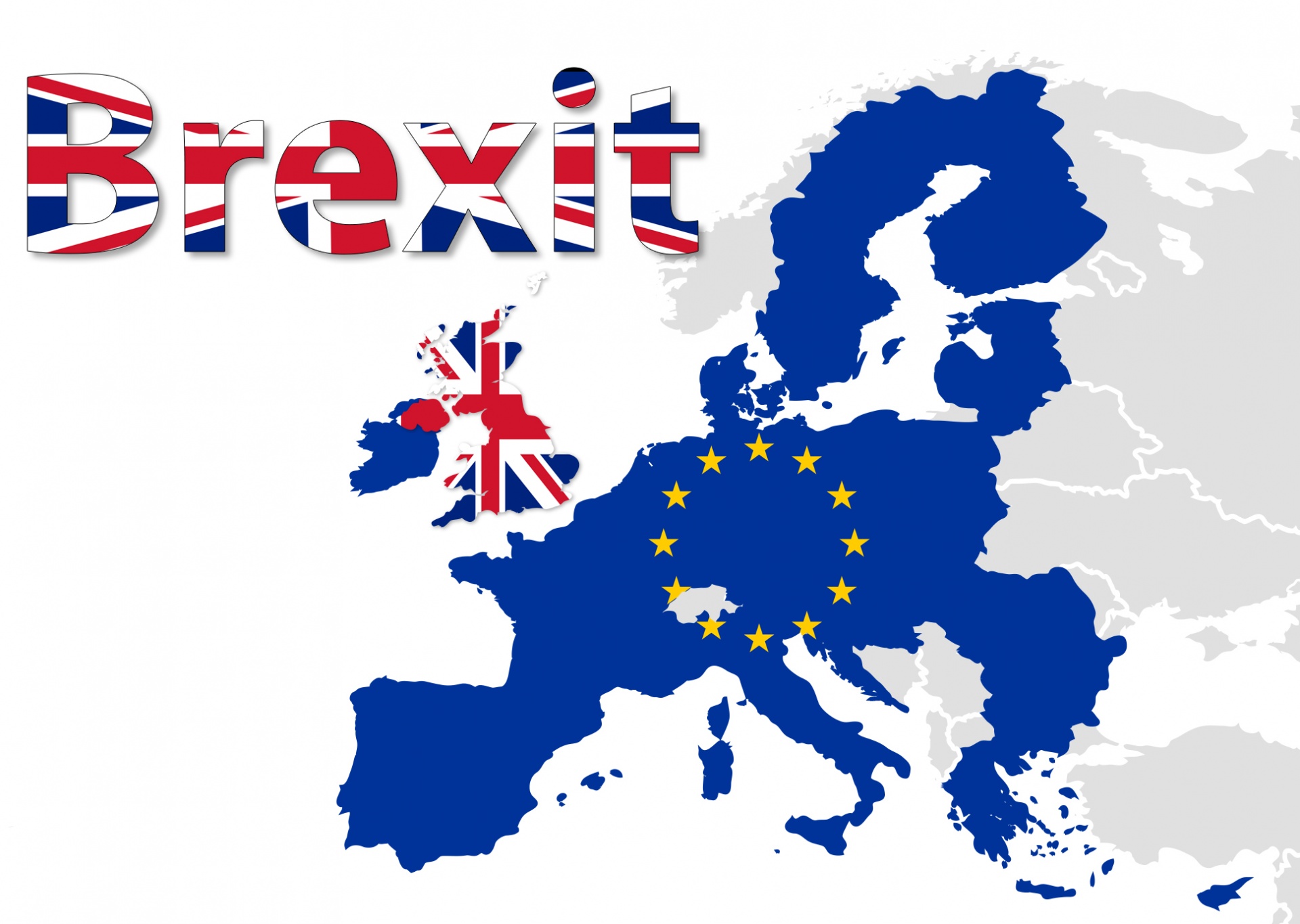
Sean Gabb on the ever-more-likely “hard Brexit” option

Filed under: Britain, Europe, Government, Politics — Tags: , , , , , , , — Nicholas @ 05:00

Sean Gabb hasn’t read the full text of the draft treaty of withdrawal from the European Union, but does offer some general points that do not depend on the details in that document:

I wish the Referendum had not been called. Nobody in or near power had so much as the vaguest idea of how to leave the European Union. Nearly two years on, nobody still knows what to do or how to do it. The politicians are all incompetent or dishonest, or both. The politicians in charge called an election, and were so sure of winning it that they effectively lost it. The politicians most likely to replace them are probably more incompetent, and certainly more dishonest. The other European powers and the European powers have now had time to recover from their initial shock, and are behaving like that spurned and vindictive wife. Though I repeat that I have not read it, I have no doubt their draft treaty is the modern equivalent of the Versailles Diktat. They are pushing this on us because they want to deter any other member state from trying to leave. I also suspect they are pushing it because, for the past three centuries, they have been repeatedly stuffed by us, and they now want to do some stuffing of their own.

If we accept the draft treaty, or anything like it, we shall have exchanged an equal membership of the European Union for satellite status. We shall have limited control over our internal regulations. We shall have limited control over our borders. We shall have consented to a unification of Ireland on the most humiliating terms. If, unable to negotiate better terms, our leaders tell us that we should stay in after all, that will involve still more humiliation. What little authority we ever had to negotiate opt-outs from inconvenient regulations will have evaporated. We shall be forced to join the Euro and the Schengen Agreement. Any future British “No!” will be met with pitying smiles and firm insistence. I will say nothing about the prospects for civil disorder in this country.

On the bright side, the draft treaty – if as bad as I am told it is – makes everything much simpler that it was. The Tory ultras strike me as no less corrupt and dishonest than everyone else. I think little of the people concerned. But their plan, such as it is, has become the only plan on offer.

Whether she is profoundly stupid is beside the point. Our main problem with Theresa May is that she appears to be unable to make up her mind. Well, I think it was Abba Eban who said that, when everything else has been tried and seen to fail, people will often do the right thing. Here for what they are worth, are my proposals for Mrs May:

  1. Reject the draft treaty without further discussion;
  2. Propose a free trade treaty to cover goods and services, and call for a joint committee to examine how all present and future European regulations can be imposed and verified in this country for those things alone that are exported into the European Union;
  3. Tell the Irish that they can avoid a hard border with Ulster by joining us outside the European Union;
  4. Put up whatever cash may be needed in the short term to keep Ulster from economic collapse;
  5. Tell the Americans that, if they want any kind of future alliance, they should give us their full backing, and be prepared to make an emergency free trade agreement;
  6. Tell everyone to plan for an economic shock next April, and make collective preparations for dealing with it.

By this point, it seems it’d be a major concession on the part of the EU negotiators to agree not to hold the formal signing of the agreement in that railway carriage at Compiègne.

December 27, 2017

India’s Geography Problem

Filed under: China, Economics, Education, History, India — Tags: , , — Nicholas @ 02:00

Wendover Productions
Published on 5 Dec 2017

October 2, 2017

The Collapse of the Carolingian Empire – Echoes of History – Extra History

Filed under: Europe, France, Germany, History — Tags: , — Nicholas @ 04:00

Extra Credits
Published on 30 Sep 2017

The empire built by Charlemagne would end up divided by his grandsons, all of whom wanted to rule their own piece of it. But the division worked poorly, and may have set a precedent that shaped wars in Western Europe for centuries to come.

September 14, 2017

The EU doesn’t want Britain to leave amicably – they want to punish Britain pour encourager les autres

Filed under: Britain, Europe, Politics — Tags: , , , , — Nicholas @ 04:00

Individual national politicians within the EU may clearly see there is no real benefit to be had in forcing a “hard Brexit”, but the permanent bureaucracy and the EUrocratic leadership seem determined to use the process to inflict as much harm as they can, for fear that other countries may decide to get out, too:

Last week’s headlines in the United Kingdom focused once again on the words of two men: the EU’s chief Brexit negotiator Michel Barnier and Brexit secretary for the UK government, David Davies.

In the ongoing negotiation between Her Majesty’s Government and the European Union, three main issues remain unresolved, notably the border between Northern Ireland and the Republic of Ireland, EU citizens’ rights who reside in the United Kingdom, and the infamous ‘Brexit divorce bill’. The latter has caused considerable outrage in the British public, as the French negotiator demands a full £90 million ($117 million) in payments in order to pay for the expenses caused by the British exit.

I believe the demanded payments are actually billions of pounds rather than millions. Mere millions would be a rounding error in the budget for the UK.

The measure is so unpopular that even a majority of British people who voted to remain in the European Union now oppose it.

A week ago, the UK government refused to cover this large sum and has since issued thorough explanations why it holds that position. This apparently left EU leaders flabbergasted, whose clear intent is to make an example out of the United Kingdom. With Brexit being the first time an EU-member state has chosen to get out of the union, the team around Michel Barnier and EU Commission president Jean-Claude Juncker has every interest in making the Brexit situation a deterrent for large eurosceptic movements in other European countries. In fact, Barnier has been crystal clear on this. As the BBC reports:

    Speaking at a conference in Italy on Saturday, Mr Barnier said he did not want to punish the UK for leaving but said: “I have a state of mind – not aggressive… but I’m not naïve.”

    “We intend to teach people… what leaving the single market means,” he told the Ambrosetti forum.

Asked by the German newspaper Bild am Sonntag if other member states would follow Britain’s example of quitting the union, Commission chief Juncker said: “No. Britain’s example will make everyone realize that it’s not worth leaving.”

How exactly is the EU expecting to bring other members off their eurosceptic tendencies remains unclear. With a considerable trade imbalance in favor of the Brits, which are still one of the most important economic players on the globe, it is hard to imagine that Angela Merkel will want angry Volkswagen producers before her decisive parliamentary elections and that Emmanuel Macron will want to deal with enraged Bordeaux wineries before the upcoming senate elections.

At the same time the Brexit negotiations rumble on, the EU is now making it ever more clear what their plans are for the future:

Jean-Claude Juncker has confirmed the EU will pursue a policy of ever-continuing expansion, create its own army, and force constituent countries to open their borders and join the beleaguered Euro in an speech which will only serve to confirm the decision of every Brexit voter. In his ‘State of the Union’ address to the European Parliament this morning, Juncker restated the EU’s commitment to an expansionist set of policies to further erode the sovereignty of member states; a platform which Remainers will find difficult to explain away.

He explicitly re-stated his ambition to see the European Union continue to expand:

    “We must maintain a credible enlargement perspective for the Western Balkans… the European Union will be greater than 27 in number.”

On immigration and free movement, Juncker said the Schengen passport-less area would be extended “immediately” to Bulgaria and Romania:

    “If we want to strengthen the protection of our external borders, then we need to open the Schengen area of free movement to Bulgaria and Romania immediately. We should also allow Croatia to become a full Schengen member once it meets all the criteria.”

He confirmed that the EU will create a ‘European Defence Union’ by 2025 – that is, an EU army:

    “And I want us to dedicate further efforts to defence matters. A new European Defence Fund is in the offing. As is a Permanent Structured Cooperation in the area of defence. By 2025 we need a fully-fledged European Defence Union. We need it. And NATO wants it.”

August 29, 2017

The benefits and costs of an “open borders” policy

Filed under: Economics, Government, Politics — Tags: , , — Nicholas @ 03:00

David Thompson linked to this Ben Sixsmith article on the pro and con arguments for open borders:

No one except a militant nativist would deny that some level of immigration is beneficial and should be accepted. After that, we face a question of scale. There are those, however, on the opposite end of the spectrum, who believe that no level of immigration should ever be denied. These are advocates of “open borders”; an idea as strange as that of the nativist — yet more dangerous for being considered respectable.

The liberal Economist magazine contains an essay promoting open borders. It imagines a world in which people are free to live and work wherever they please. It is an astonishingly biased and unreflective piece, which illuminates dangerous extremes of progressive utopianism:

Perhaps I sound inhuman. Who could dislike people living and working wherever they please? It can be a splendid thing, but if everybody did it think of what that would entail. The Economist reports that if borders were opened, 630 million people would be likely to migrate. Perhaps 138 million would go to the US, expanding its population by almost a half. About 42 million would join the British, expanding their numbers by more than a half. How many would go to Australia, a country with a population of 24 million, and with infrastructure already under strain? Such influxes would pose monumental demographic changes, soon made more dramatic by the higher birth rates. It will be exacerbated by the fact that local governments will not be able to keep up with the building of roads, hospitals, schools and transport systems that citizens — both old and new — will demand.

A commenter at David’s blog quips that “It’s amazing how quickly the Economist turned into the Guardian“, but The Economist began to go in that direction quite suddenly in the late 1990s … at least, that was the point I noticed and gave up my annual subscription. As The Economist generally does not use author bylines, it’s not clear whether the change was driven by editorial diktat or staff changes over time, but what used to be a pretty staunch free market newspaper (as they prefer to call themselves) turned into a British version of typical American “liberal” magazines.

As Sixsmith points out, the masses of would-be immigrants to the west are not an undifferentiated cultural mass with broadly similar cultural, educational, and demographic profiles:

But what of proposed merits of open borders? A consistent failure of the Economist’s article is a reluctance to distinguish between different migrants. If one finds the study, it turns out that 54% of the men and women who expressed a desire to migrate came from Africa and the Middle East — with another 20% being from Central America. Yet the most successful immigrants, in terms of launching businesses and earning wealth, have been found to hail from Asia and Europe. A UCL study found that European immigrants to Britain contribute more to the economy than they take from it while the opposite is true for non-European immigrants. It is senseless, then, to claim, as the author of The Economist article does, that immigrants are “more likely than the native-born to bring new ideas and start their own businesses”. Immigrants do not come from “Immigrantland”. Population differences related to entrepreneurial and earning potential are real, and significant, and difficult to bridge.

July 8, 2017

Context the Media lacks: Austrian Troops to Italian Border

Filed under: Europe, Italy, Military, Politics — Tags: , , , , — Nicholas @ 04:00

Published on 6 Jul 2017

This is a short commentary on a current situation/news that is related to Austrian Military History. On the 4th of July 2017, the Austrian government announced that it will ready troops to be sent to the Austro-Italian border in order to secure it, due to the large amount of migrants crossing into Austria. The Italian government wasn’t particularly pleased about this action. Additionally, at least the German media seems to be a bit upset as well.

Military History Visualized provides a series of short narrative and visual presentations like documentaries based on academic literature or sometimes primary sources. Videos are intended as introduction to military history, but also contain a lot of details for history buffs. Since the aim is to keep the episodes short and comprehensive some details are often cut.

For more information, here is a Daily Mail article discussing the situation.

Both Italy and Austria are members of the European Union’s Schengen open-border zone, but free movement has been jeopardised by the reimposition of controls at many crossings across the bloc since the surge in migrants seen in 2015 and 2016.

There was no immediate comment from Italy or EU officials, but Doskozil’s spokesman said there was no concrete timetable for the new controls.

The spokesman added: ‘We’ll see how the situation in Italy is becoming more acute and we have to be prepared to avoid a situation comparable to summer 2015.’

Italy has taken in more than 80,000 refugees and migrants so far this year, most of whom arrived by boat from Africa, making Italy the main point of entry to Europe.

Back in April, Defense Minister Hans Peter Doskozil visited the production plants of the armoured vehicles – Pandur crew transport tanks – that were sent to the border.

The tanks, with a production cost of €105million, were built at General Dynamics Land Systems-Steyr GmbH in Vienna-Simmering for the Austrian Armed Forces.

May 30, 2017

The unfriendly border

Filed under: Cancon, Government, USA — Tags: — Nicholas @ 04:00

I’ve generally had little trouble crossing the US/Canadian border, but I’ve perhaps been quite lucky. An old friend of mine recently was turned back from the border crossing at Port Huron and had an exceptionally unpleasant time dealing with US officials:

On Wednesday May 10, I was denied entry into the USA.
I was attempting to travel to the International Congress for Medieval Studies at Kalamazoo MI.
I have attended this conference, presenting at organized sessions, since (at least) 2012.
One of these sessions was to be a combination demonstration / hands on. I had undertaken similar sessions there in 2013 and 2015.
I had booked a vendor’s table, selling objects made in Ontario at my studio, either by myself as the Wareham Forge, or by my partner as Elfworks Studio. I have done this since 2014.

At ICMS 2017 I was intending to undertake the following:
– travel straight to and straight back from the event, a total of 5 days.
– setting up a vendor’s table to sell products made in Canada (all at my home studio), at a total combined value of $2450 US
– participate in an panel discussion session (#41)
– participate in a hands on workshop session (#224)

I can not remain dispassionate about this whole episode.

Through this entire event, I made a deliberate attempt to keep my body language calm and unassertive. My hands folded in front of me, on steering wheel or visible on the desk. I attempted to keep my voice casual, calm and relaxed.
I do appreciate that some questions, some actions, are part of standard operations policy. I did attempt to make allowances for all this, never refusing to answer or follow instructions – as they were given.
I consider it extremely important to remember that I have decades of experience communicating to the general public. My spoken language skills are excellent.

[…]

The Officer returns. I overhear a comment about ‘all his tools’. (12)
Over this conversation, I finally get asked ‘What all are you doing at this conference.’
I state that along with the vendor table, I will be participating in two academic sessions. One a panel discussion, one a workshop session where participants will be able to make cast pewter badges they can keep. I stress that I am not being paid for any of this.
Eventually, I get told that the goods will be released with no duties and allowed to pass importation.
But there is something else I can’t determine, so you will have to go to Immigration.’
Just what the potential problem may be is not given.

Another, heavily equipped (tactical) Officer arrives.
I don’t think I need to put you in handcuffs for this, but I am required to put you under restraint’
Please put you hands behind your back, fingers interlaced.

He holds my hands with one of his, pushing up and forward so my weight is off balance on my toes. He is supporting me with his other hand on my upper arm.
This officer is polite and professional. I get escorted in this manner across an open parking area, through a public area at the front of the separate Immigration building. (13)
The Commercial Officer is accompanying as well, with my original invoice document in hand. He still has my car keys.

Dealing with customs at the border tends to be a tense moment for many travellers, even if they’re not in violation of any rule or regulation. Darrell’s account shows that the tension can be more than matched on the other side of the booth. It’s certainly soured him on the idea of visiting the US again.

May 19, 2017

Marijuana use promotes incoherence … on the part of non-users

Filed under: Cancon, Law, Liberty, Science, USA — Tags: , , , , — Nicholas @ 03:00

Chris Selley rounds up some of the less-than-realistic concerns of the anti-legalization folks:

The move toward marijuana legalization is … still not as coherent as it could be, let’s say. The Liberal legislation, unveiled last month, would establish rules around THC-impaired driving that may well prove unconstitutional: science has yet to establish a solid link between a given level of THC concentration in a driver’s blood or saliva and his level of impairment. Frustratingly, there are still those who use this as an argument against legalization — as if it would create pot-impaired drivers where there are none today.

Last week on CTV’s Question Period, host Evan Solomon asked former U.S. ambassador Bruce Heyman what would happen if someone showed up to the border with his car or his clothes smelling of marijuana. It’s a variation of a question that’s been asked often: As it stands, Canadians who admit having smoked marijuana in the past are sometimes turned back. What would happen after legalization?

The de facto answer is, as always: Whatever the hell the U.S. border guard in question wants to happen. (It amazes me how many Canadians haven’t yet figured this out.) And furthermore: “Don’t rock up to the U.S. border reeking of pot, you utterly unsympathetic tool.”

The de jure answer: Well, who knows? Why would Canada’s decision to legalize marijuana have any bearing on the admissibility of foreign pot-smokers to the United States of America?

Heyman’s answers were more, er, nuanced than mine. Bafflingly, he started talking about sniffer dogs and their performance limitations: They won’t care that pot’s legal, so they’ll still detect marijuana, and that will bog down the border.

Now, marijuana legalization certainly might lead to a bogged-down border — if humans, not canines, decide to bog it down. For example, one can imagine Donald Trump thinking legalization necessitated much more aggressive screening of incoming motorists, and not caring too much about the trade implications. Whether that makes any sense is another question.

March 11, 2017

The EFF’s guide to digital privacy at US border crossings

Filed under: Government, Liberty, Technology, USA — Tags: , , — Nicholas @ 03:00

The Electronic Frontier Foundation (EFF) provides a quick overview of your rights when entering the United States:

February 23, 2017

An open letter to the DHS on social media identities

Filed under: Government, Liberty, Technology, USA — Tags: , , , — Nicholas @ 03:00

Cory Doctorow:

A huge coalition of human rights groups, trade groups, civil liberties groups, and individual legal, technical and security experts have signed an open letter to the Department of Homeland Security in reaction to Secretary John Kelly’s remarks to House Homeland Security Committee earlier this month, where he said the DHS might force visitors to America to divulge their social media logins as a condition of entry.

The letter points out that the years’ worth of private data — including commercially sensitive information; privileged communications with doctors, therapists and attorneys; and personal information of an intimate and private nature — that the DHS could access this way would not belong only to non-US persons (who are, of course, deserving of privacy!), but also US persons, whose lives the DHS would be able to peer into without warrant, oversight or limitation.

The letter also points out that once America starts demanding this of foreigners visiting its shores, other governments will definitely reciprocate — so American travelers would be forced to reveal everything from trade secrets to the most personal moments with their loved ones with governments hostile to US interests.

Trade disputes tend to devolve into tit-for-tat retaliation. Initiatives like this will work exactly the same way (except you can be certain that politicians will hold out for their own right to privacy while demanding that private citizens and foreigners give up theirs).

« Newer PostsOlder Posts »

Powered by WordPress