
“Deltas”, the “socio-sexual hierarchy” spergs inform us, are the good soldiers, the go-along-to-get-along types who know their place in an organization and — crucially — derive their sense of self worth from excelling in it.
Your ideal “delta” is something like a lifer noncom in a non-pozzed military. Back in the days, I’m told, new recruits and civilians used to call crusty old gunny sergeants “sir”, to which the gunny would reply “Don’t call me ‘sir’, I work for a living!” That’s the attitude. Those guys with all the stripes on their sleeves aren’t officers because they lack “command presence”; they’re not officers because they don’t want to be officers. They know themselves, and, crucially, they know where they best fit into the organization’s overall mission. “Get in where you fit in” is, in a very real sense, their identity.
Examples of that kind of guy are tougher to find in the historical literature, which is why we need to develop, and pump up, the archetype. […] the ideal is the centurion, the backbone of Marcus Aurelius’ army. A soldier, a Stoic, a leader … but one who knows, and values, his place in the organization above all things.
Severian, “Be a Centurion!”, Rotten Chestnuts, 2020-04-07.
January 26, 2023
QotD: Non-commissioned officers
January 18, 2023
The Roman Army, With Adrian Goldsworthy
Well That Aged Well
Published 12 May 2021In this episode we take a look at the Roman Army, and its comanders. What made the Roman Army so efficent? Was it the practice? The motivation? Their courrage? Or was it more to it? Find out in this week’s episode of “Well That Aged Well”, With Erlend Hedegart.
(more…)
January 7, 2023
QotD: The “camp followers” of a pre-modern army
We can start with sutlers, merchants buying or selling from the soldiers themselves (the Romans called these fellows lixae, but also called other non-soldiers in the camp lixae as well, see Roth (2012), 93-4; they also call them mercatores or negotiatores, merchants). Sutlers could be dealing in a wide array of goods. Even for armies where ration distribution was regular (e.g. the Roman army), sutlers might offer for sale tastier and fancier rations: meat, better alcohol and so on. They might also sell clothing and other goods to soldiers, even military equipment: finding “custom” weapons and armor in the archaeology of military forts and camps is not uncommon. For less regularly rationed armies, sutlers might act as a supplement to irregular systems of food and pay, providing credit to soldiers who purchased rations to make up for logistics shortfalls, to collect when those soldiers were paid. By way of example, the regulations of the Army of Flanders issued in 1596 allowed for three sutlers per 200-man company of troops (Parker, op. cit.), but the actual number was often much higher and of course those sutlers might also have their own assistants, porters, wagons and so on which moved with the army’s camp. Women who performed this role in the modern period are often referred to by the French vivandière.
For some armies there would have been an additional class of sutlers: slave dealers. Enslaved captives were a major component of loot in ancient warfare and Mediterranean military operations into and through the Middle Ages. Armies would abduct locals caught in hostile lands they moved through or enemies captured in battles or sieges; naturally generals did not want to have to manage these poor folks in the long term and so it was convenient if slave-dealer “wholesalers” were present with the army to quickly buy the large numbers of enslaved persons the army might generate (and then handle their transport – which is to say traffic them – to market). In Roman armies this was a regularized process, overseen by the quaestor (an elected treasury official who handled the army’s finances) assigned to each army, who conducted regular auctions in the camp. That of course means that these slave dealers are not only following the army, but are doing so with the necessary apparatus to transport hundreds or even thousands of captives (guards, wagons, porters, etc.).
And then there is the general category of “camp follower”, which covers a wide range of individuals (mostly women) who might move with the camp. The same 1596 regulations that provided for just three sutlers per 200-man Spanish company also provided that there could be three femmes publiques (prostitutes), another “maximum” which must often have been exceeded. But prostitutes were not the only women who might be with an army as it moved; indeed the very same regulations specify that, for propriety’s sake, the femmes publiques would have to work under the “disguise of being washerwomen or something similar” which of course implies a population of actual washerwomen and such who also moved with the army. Depending on training and social norms, soldiers may or may not have been expected to mend their own clothes or cook their own food. Soldiers might also have wives or girlfriends with them (who might in turn have those soldier’s children with them); this was more common with professional long-service armies where the army was home, but must have happened with all armies to one degree or another. Roman soldiers in the imperial period were formally, legally forbidden from marrying, but the evidence for “soldier’s families” in the permanent forts and camps of the Roman Empire is overwhelming.
The tasks women attached to these armies have have performed varied by gender norms and the organization of the logistics system. Early modern gunpowder armies represent some of the broadest range of activities and some of the armies that most relied on women in the camp to do the essential work of maintaining the camp; John Lynn (op. cit., 118-163) refers to the soldiers and their women (a mix of wives, girlfriends and unattached women) collectively as “the campaign community” and it is an apt label when thinking about the army on the march. As Lynn documents, women in the camp washed and mended clothes, nursed the sick and cooked meals, all tasks that were considered at the time inappropriate for men. Those same women might also be engaged in small crafts or in small-scale trade (that is, they might also be sutlers). Finally, as Lynn notes, women who were managing food and clothing seem often to have become logistics managers for their soldiers, guarding moveable property during battles and participating in pillaging in order to scrounge enough food and loot for they and their men to survive. I want to stress that for armies that had large numbers of women in the camp, it was because they were essential to the continued function of the army.
And finally, you have the general category of “servants”. The range of individuals captured by this label is vast. Officers and high status figures often brought either their hired servants or enslaved workers with them. Captains in the aforementioned Army of Flanders seem generally to have had at least four or five servants (called mozos) with them, for instance; higher officers more. But it wasn’t just officers who did this. Indeed, the average company in the Army of Flanders, Parker notes, would have had 20-30 individual soldiers who also had mozos with them; one force of 5,300 Spanish veterans leaving Flanders brought 2,000 such mozos as they left (Parker, op. cit. 151).
Looking at the ancient world, many – possibly most – Greek hoplites in citizen armies seem to have very often brought enslaved servants with them to carry their arms and armor; such enslaved servants are a regular feature of their armies in the sources. The Romans called these enslaved servants in their armies calones; it was a common trope of good generalship to sharply restrict their number, often with limited success. At Arausio we are told there were half as many servants (calonum et lixarum) as soldiers (Liv. Per. 67, on this note Roth (2013), 105), though excessive numbers of calones et lixae was a standard marker of bad general and the Romans did lose badly at Arausio so we ought to take those figures with a grain of salt, as Livy (and his sources) may just be communicating that the generals there were bad. That said, the notion that a very badly led army might have as many non-combatants following it as soldiers is a common one in the ancient sources. And while Roman armies were considered notable in the ancient world for how few camp servants they relied on and thus how much labor and portage was instead done by the soldiers, getting Roman aristocrats to leave their vast enslaved household staff at home was notoriously difficult (e.g. Ps.Caes. BAfr. 54; Dio Cass. 50.11.6). Much like the early modern “campaign community”, our sources frequently treat these calones as part of the army they belonged to, even though they were not soldiers.
Bret Devereaux, “Collections: Logistics, How Did They Do It, Part I: The Problem”, A Collection of Unmitigated Pedantry, 2022-07-15.
December 14, 2022
The Polish Armed Forces in Exile
World War Two
Published 13 Dec 2022The Polish state was the first to fall in this war, yet across the globe Polish soldiers are fighting on land, air, and sea as part of the United Nations alliance. The story of the tens of thousands of men and women fighting for Polish liberation is equal parts hope and hardship as they battle the enemy and even sometimes their own allies.
(more…)
QotD: The “tooth-to-tail ratio” in armies
The Roman legion, for instance, was essentially all tooth. While there was a designation for support troops, the immunes, so named because they were immune from having to do certain duties in camp, these fellows were still in the battle line when the legion fought. The immunes included engineers, catapult-operators, musicians, craftsmen, and other specialists. Of course legions were also followed around by civilian non-combatants – camp-followers, sutlers, etc. – but in the actual ranks, the “tail” was minimal.
You can see much the same in the organization of medieval “lances” – units formed around a single knight. The Burgundian “lance” of the late 1400s was composed of nine men, eight of which were combatants (the knight, a second horsemen, the coustillier, and then six support soldiers, three mounted and three on foot) and one, the page, was fully a non-combatant. A tooth-to-tail ratio of 8:1. That sort of “tooth-heavy” setup is common in pre-industrial armies.
The industrial revolution changes a lot, as warfare begins to revolve as much around mobilizing firepower, typically in the form of mass artillery firepower as in mobilizing men. We rarely in our fiction focus on artillery, but modern warfare – that is warfare since around 1900 – is dominated by artillery and other forms of [indirect] fires. Artillery, not tanks or machine guns, after all was the leading cause of combat death in both World Wars. Suddenly, instead of having each soldier carry perhaps 30-40kg of equipment and eat perhaps 1.5kg of food per day, the logistics concern is moving a 9-ton heavy field gun that might throw something like 14,000kg of shell per day during a barrage, for multiple days on end. Suddenly, you need a lot more personnel moving shells than you need firing artillery.
As armies motorized after WWI and especially after WWII, this got even worse, as a unit of motorized or mechanized infantry needed a small army of mechanics and logistics personnel handling spare parts in order to stay motorized. Consequently, tooth-to-tail ratios plummeted, inverted and then kept going. In the US Army in WWI, the ratio was 1:2.6 (note that we’ve flipped the pre-industrial ratio, that’s 2.6 non-combat troops for every front line combat solider), by WWII it was 1:4.3 and by 2005 it was 1:8.1. Now I should note there’s also a lot of variance here too, particularly during the Cold War, but the general trend has been for this figure to continue increasing as more complex, expensive and high-tech weaponry is added to warfare, because all of that new kit demands technicians and mechanics to maintain and supply it.
[NR: Early in WW2, British Prime Minister Winston Churchill frequently harassed his various North African generals for the disparity between the “ration strength” of their commands and the much-smaller number of combat troops deployed. If General Wavell had 250,000 drawing rations, Churchill (who last commanded troops in the field in mid-WW1) assumed that this meant close to 200,000 combat troops available to fight the Italians and (later) the Germans. This almost certainly contributed to the high wastage rate of British generals in the Western Desert.]
Bret Devereaux, “Fireside Friday, April 22, 2022”, A Collection of Unmitigated Pedantry, 2022-04-22.
December 10, 2022
United States Empire – The Spanish-American War
The Great War
Published 9 Dec 2022The Spanish-American War (fought in Cuba and the Philippines) kickstarted US global ambitions and expanded their influence far beyond the borders of the United States. At the same time the war marked the endpoint of the decline of Spain as a global power.
(more…)
December 4, 2022
L39A1: British Service Target Rifle Before the L42A1
Forgotten Weapons
Published 5 Aug 2022The story of the conversion of the Lee Enfield to 7.62mm NATO would not be complete without the L39A1. This is essentially the civilian competition version of what would become the L42A1. It was actually in British service as a target rifle — not intended for combat. It followed the L8 (the first British military attempts at a 7.62mm precision version of the Enfield) and the L42A1. It was basically a copy of the conversions done by civilian competition shooters in the British NRA.
Sights were made by several different companies, as the rifles were not issued with sights — they were obtained by the unit they went to, whatever particular model that unit preferred. This example has Parker Hale diopter sights. The L39A1 also used a .303 caliber magazine, as they were intended for slow-fire, single-loaded competition but the magazine was used as a loading tray. The .303 magazine will not reliably hold 7.62mm cartridges, but 7.62mm conversion magazines can be put in the L39A1 and will then work just fine. They also sometimes are fitted with .303 extractors. The stock here has a semi-pistol grip a bit less substantial than the L8 .22 rifle, although most had standard No4 stocks.
The original sights were removed, and remarked as L39A1. They were made in 1969, 1970, and 1972, with a single serial number range used for the L39A1, the pretrial trials examples of the L39, and the “7.62 Conv” rifles. A total of 1,213 L39A1 rifles were made, with the other types accounting for about 28 additional rifles.
(more…)
December 3, 2022
QotD: Mantetsu and the Kwantung Army
Thus the South Manchuria Railway Corporation, originally contracted to develop a defunct line in a disputed territory, soon developed into a full-spectrum enterprise. Pretty much all heavy industry in the Japanese areas of Manchuria were divisions of Mantetsu. But since all the heavy industry depended on mines, and transportation, and food and housing for workers, and banks, and schools for the workers’ children, etc., pretty soon Mantetsu ran all of that, too. By the late 1920s, you could argue that Mantetsu was almost its own country.
It even had its own army, and that’s where things get really interesting.
The Kwantung Army was the security force assigned to the South Manchuria Railway Zone. The Japanese weren’t stupid; they knew the perils of independent commands far from home, and they rotated units through with some regularity. Nonetheless, the command staff remained fairly stable over the years … and so did Mantetsu’s.
The Japanese weren’t stupid, but they were people, and people being people, soon enough the lines between the Kwantung Army and Mantetsu began to blur. And since the lines between Mantetsu, the Imperial Army, and the government were already pretty blurry, pretty soon the concerns of one became the concern of all. (Nor was the Navy left out, though I’m not discussing them in order to keep it simple. They were up to their eyeballs in Mantetsu, too, because warships need lots of steel and steel comes from Manchuria).
A small but highly committed and totally ideologized faction developed inside the Kwantung Army. Several, in fact, and one of them (the Imperial Way faction) attempted an actual coup d’etat in 1936. It was put down, and the Imperial Way faction dissolved (in theory), but the problem of an intensely ideologized officer corps remained. Long story short, you had a small group of highly ideologized officers garrisoning a remote province pulling the entire Empire into big, unwinnable wars.
One could make the case that World War II in the Pacific was ultimately caused by about fifteen or twenty guys in the Kwantung Army.
That’s overly reductionist, but it highlights the huge problem with organizations slipping the leash. In theory, there was a clear chain of command, and even the head of the Kwantung Army was a down it a ways — he was subordinate to the Army Council, which was subordinate to the War Minister, who was subordinate to the Parliament, who were subordinate to the Emperor. In theory, lots of people could’ve sacked Gen. Araki, or his mini-me Ishiwara Kanji (a lieutenant colonel through most of it). Equally in theory, Mantetsu had no say in any of it — the Kwantung Army was a formation of the Imperial Japanese Army, not Mantetsu’s private security force.
But in reality, Mantetsu was so wired in to the Japanese government that in a lot of cases, it was the government. But not always, because the same could be said about the Army, and the Navy, both of which were also wired into Mantetsu up to the very top (or vice versa, your choice). And Mantetsu had their Media arm, of course, as did the Army and Navy …
What all this boiled down to, then, was a power vacuum. I know, that seems weird, but a skilled bureaucratic infighter like Ishiwara never lacked for groups to play against each other. The Army and Navy would oppose on principle any move that seemed to aggrandize the other, neither could go against Mantetsu (and neither could control it), and all had to pay at least lip service to the civilian government. Because of this, real power fell to whomever had the balls to grab it …
… which was the officer corps of the Kwantung Army. They assassinated at least two Manchurian warlords, staged a number of false flag attacks on their own positions, and generally got up to however you say “standard issue Juggalo fuckery” in Japanese, up to and including a full-scale war with China.
Severian, “Slipping the Leash”, Founding Questions, 2022-08-27.
December 2, 2022
QotD: Rome’s legions settle down to permanent fortresses
What absolutely does begin happening during the reign of Augustus and subsequently is that the Roman legions, which had spent the previous three centuries on the move outside of Italy, begin to settle down more permanently on Rome’s new frontiers, particularly along the Rhine/Danube frontier facing Central and Eastern Europe and the Syrian frontier facing the Parthian Empire. That in turn meant that Roman legions (and their supporting auxiliary cohorts) now settled into permanent forts.
The forts themselves, at least in the first two centuries, provide a fairly remarkably example of institutional inertia. While legionary forts of this early period typically replaced the earthwork-and-stakes wall (the agger and vallum) with stone walls and towers and the tents of the camp with permanent barracks, the basic form of the fort: its playing-card shape, encircling defensive ditches (now very often two or three ditches in sequence) remain. Of particular note, these early imperial legionary forts generally still feature towers which do not project outward from the wall, a stone version of the observation towers of the old Roman marching camp. Precisely because these fortifications are in stone they are often very archaeologically visible and so we have a fairly good sense of Roman forts in this period. In short then, put in permanent positions, Roman armies first constructed permanent versions of their temporary marching camps.
And that broadly seems to fit with how the Romans expected to fight their wars on these frontiers. The general superiority of Roman arms in pitched battle (the fancy term here is “escalation dominance” – that escalating to large scale warfare favored the heavier Roman armies) meant that the Romans typically planned to meet enemy armies in battle, not sit back to withstand sieges (this was less true on Rome’s eastern frontier since the Parthians were peer competitors who could rumble with the Romans on more-or-less even terms; it is striking that the major centers in the East like Jerusalem or Antioch did not get rid of their city walls, whereas by contrast the breakdown of Roman order in the third century AD and subsequently leads to a flurry of wall-building in the west where it is clear many cities had neglected their defensive walls for quite a long time). Consequently, the legionary forts are more bases than fortresses and so their fortifications are still designed to resist sudden raids, not large-scale sieges.
They were also now designed to support much larger fortification systems, which now gives us a chance to talk about a different kind of fortification network: border walls. The most famous of these Roman walls of course is Hadrian’s Wall, a mostly (but not entirely) stone wall which cuts across northern England, built starting in 122. Hadrian’s Wall is unusual in being substantially made out of stone, but it was of-a-piece with various Roman frontier fortification systems. Crucially, the purpose of this wall (and this is a trait it shares with China’s Great Wall) was never to actually prevent movement over the border or to block large-scale assaults. Taking Hadrian’s wall, it was generally manned by something around three legions (notionally; often at least one of the legions in Britain was deployed further south); even with auxiliary troops nowhere near enough to actually manage a thick defense along the entire wall. Instead, the wall’s purpose is slowing down hostile groups and channeling non-hostile groups (merchants, migrants, traders, travelers) towards controlled points of entry (valuable especially because import/export taxes were a key source of state revenue), while also allowing the soldiers on the wall good observation positions to see these moving groups. You can tell the defense here wasn’t prohibitive in part because the main legionary fortresses aren’t generally on the wall, but rather further south, often substantially further south, which makes a lot of sense if the plan is to have enemies slowed (but not stopped) by the wall, while news of their approach outraces them to those legionary forts so that the legions can form up and meet those incursions in an open battle after they have breached the wall itself. Remember: the Romans expect (and get) a very, very high success rate in open battles, so it makes sense to try to force that kind of confrontation.
This emphasis on controlling and channeling, rather than prohibiting, entry is even more visible in the Roman frontier defenses in North Africa and on the Rhine/Danube frontier. In North Africa, the frontier defense system was structured around watch-posts and the fossatum Africae, a network of ditches (fossa) separating the province of Africa (mostly modern day Tunisia) from non-Roman territory to its south. It isn’t a single ditch, but rather a system of at least four major segments (and possibly more), with watch-towers and smaller forts in a line-of-sight network (so they can communicate); the ditch itself varies in width and depth but typically not much more than 6m wide and 3m deep. Such an obstruction is obviously not an prohibitive defense but the difficulty of crossing is going to tend to channel travelers and raids to the intentional crossings or alternately slow them down as they have to navigate the trench (a real problem here where raiders are likely to be mounted and so need to get their horses and/or camels across).
On the Rhine and the Danube, the defense of the limes, the Roman frontier, included a border wall (earthwork and wood, rather than stone like Hadrian’s wall), similarly supported by legions stationed to the rear, with road networks positioned; once again, the focus is on observing threats, slowing them down and channeling them so that the legions can engage them in the field. This is a system based around observe-channel-respond, rather than an effort to block advances completely.
Bret Devereaux, “Collections: Fortification, Part II: Romans Playing Cards”, A Collection of Unmitigated Pedantry, 2021-11-12.
November 29, 2022
Near Peer: Russia
Army University Press
Published 25 Nov 2022AUP’s Near Peer film series continues with a timely discussion of Russia and its military. Subject matter experts discuss Russian history, current affairs, and military doctrine. Putin’s declarations, advances in military technology, and Russia’s remembrance of the Great Patriotic War are also addressed. “Near Peer: Russia” is the second film in a four-part series exploring America’s global competitors.
November 28, 2022
Near Peer: China (Understanding the Chinese Military)
Army University Press
Published 29 Jul 2022This film examines the Chinese military. Subject matter experts discuss Chinese history, current affairs, and military doctrine. Topics range from Mao, to the PLA, to current advances in military technologies. “Near Peer: China” is the first film in a four-part series exploring America’s global competitors.
(more…)
QotD: The Carolingian army
But below that in the Carolingian system, you have the select levy, relatively undistinguished (read: not noble, but often reasonably well-to-do) men recruited from the smaller farmers and townsfolk. This system itself seems to have derived from an earlier social understanding that all free men (or all free property owning men) held an obligation for military service; Halsall notes in the eighth century the term arimannus (Med. Lat.: army-man) or exercitalis (same meaning) as a term used to denote the class of free landowners on whom the obligation of military service fell in Lombard and later Frankish Northern Italy (the Roman Republic of some ten centuries prior had the same concept, the term for it was assidui). This was, on the continent at least, a part of the system that was in decline by the time of Charlemagne and especially after as the mounted retinues of the great magnates became progressively more important.
We get an interesting picture of this system in Charlemagne’s efforts in the first decades of the 800s to standardize it. Under Charlemagne’s system, productive land was assessed in units of value called mansi and (to simplify a complicated system) every four mansi ought to furnish one soldier for the army (the law makes provisions for holders of even half a mansus, to give a sense of how large a unit it was – evidently some families lived on fractions of a mansus). Families with smaller holdings than four mansi – which must have been most of them – were brigaded together to create a group large enough to be able to equip and furnish one man for the army. These fellows were expected to equip themselves quite well – shield, spear, sword, a helmet and some armor – but not to bring a horse. We should probably also imagine that villages and towns choosing who to send were likely to try to send young men in good shape for the purpose (or at least they were supposed to). Thus this was a draw-up of some fairly high quality infantry with good equipment. That gives it its modern-usage name, the select levy, because it was selected out of the larger free populace.
And I should note what makes these fellows different from the infantry who might often be found in the retinues of later medieval aristocrats is just that – these fellows don’t seem to have been in the retinues of the Carolingian aristocracy. Or at least, Charlemagne doesn’t seem to have imagined them as such. While he expected his local aristocrats to organize this process, he also sent out his royal officials, the missi to oversee the process. This worked poorly, as it turned out – the system never quite ran right (in part, it seems, because no one could decide who was in charge of it, the missi or the local aristocrats) and the decades that followed would see Carolingian and post-Carolingian rulers more and more dependent on their lords and their retinues, while putting fewer and fewer resources into any kind of levy. But Charlemagne’s last-gaps effort is interesting for our purpose because it illustrates how the system was supposed to run, and thus how it might have run (in a very general sense) in the more distant past. In particular, he seems to have imagined the select levy as a force belonging to the king, to be administered by royal officials (as the nation-in-arms infantry armies of the centuries before had been), rather than as an infantry force splintered into various retinues. In practice, the fragmentation of Charlemagne’s empire under his heirs was fatal for any hopes of a centralized army, infantry or otherwise, and probably hastened the demise of the system.
Beneath the select levy there was also the expectation that, should danger reach a given region, all free men would be called upon to defend the local redoubts and fortified settlements. This group is sometimes called the general levy. As you might imagine, the general levy would be of lower average quality and cohesion. It might include the very young and very old – folks who ought not to be picked out for the select levy for that reason – and have a much lower standard of equipment. After all, unlike select levymen, who were being equipped at the expense, potentially, of many households, general levymen were individual farmers, grabbing whatever they could. In practice, the general levy might be expected to defend walls and little else – it was not a field force, but an emergency local defense militia, which might either enhance the select levy (and the retinues of the magnates) or at least hold out until that field army could arrive.
Bret Devereaux, “Collections: The Battle oF Helm’s Deep, Part IV: Men of Rohan”, A Collection of Unmitigated Pedantry, 2020-05-22.
November 26, 2022
Why so Deadly? – Battle of Okinawa 1945
Real Time History
Published 25 Nov 2022The American invasion of Okinawa was the last big island operation on the Pacific Front. It took the US Marines and Army troops several months to defeat the last Japanese resistance on the island in one of the costliest American victories of the 2nd World War — but in the end not even Japanese Kamikaze attacks and using the civilian population could avert the outcome.
(more…)
November 11, 2022
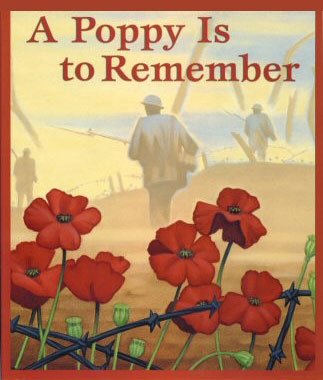
In memoriam
A simple recognition of some of our family members who served in the First and Second World Wars:
The Great War
 Private William Penman, Scots Guards, died 16 May, 1915 at Le Touret, age 25
(Elizabeth’s great uncle)- Private Archibald Turner Mulholland, Argyll & Sutherland Highlanders, mortally wounded 25 September, 1915 at Loos, age 27
(Elizabeth’s great uncle) - Private David Buller, Highland Light Infantry, died 21 October, 1915 at Loos, age 35
(Elizabeth’s great grandfather) - Private Harold Edgar Brand, East Yorkshire Regiment. died 4 June, 1917 at Tournai.
(My first cousin, three times removed) - Private Walter Porteous, Durham Light Infantry, died 4 October, 1917 at Passchendaele, age 18
(my great uncle) - Corporal John Mulholland, Argyll & Sutherland Highlanders, wounded 2 September, 1914 (shortly before the First Battle of the Aisne), wounded again 29 June, 1918, lived through the war.
(Elizabeth’s great uncle)
The Second World War
- Flying Officer Richard Porteous, Royal Air Force, survived the defeat in Malaya, was evacuated to India and lived through the war
(my great uncle) - Able Seaman John Penman, Royal Navy, served in the Defensively Equipped Merchant fleet on the Atlantic convoys, the Murmansk Run (he may have been on a ship in convoy PQ-17, as we know he spent a winter in Russia) and other convoy routes, was involved in firefighting and rescue efforts during the Bombay Docks explosion in 1944, lived through the war
(Elizabeth’s father) - Private Archie Black (commissioned after the war and retired as a Major), Gordon Highlanders, captured during the fall of Singapore (aged 15) and survived a Japanese POW camp (he had begun to write an autobiography shortly before he died)
(Elizabeth’s uncle) - Elizabeth Buller, “Lumberjill” in the Women’s Timber Corps, an offshoot of the Women’s Land Army in Scotland through the war.
(Elizabeth’s mother) - Trooper Leslie Taplan Russon, 3rd Royal Tank Regiment, died at Tobruk, 19 December, 1942 (aged 23).
Leslie was my father’s first cousin, once removed (and therefore my first cousin, twice removed).
My maternal grandfather, Matthew Kendrew Thornton, was in a reserved occupation during the war as a plater working at Smith’s Docks in Middlesbrough. The original design for the famous Flower-class corvettes came from Smith’s Docks and 16 (including four intended for the French Marine National) of the 196 built in the UK during the war (more were built in Canada).
For the curious, the Commonwealth War Graves Commission the Royal British Legion, and the Library and Archives Canada WW1 and WW2 records site provide search engines you can use to look up your family name. The RBL’s Every One Remembered site shows you everyone who died in the Great War in British or Empire service (Canadians, Australians, New Zealanders, South Africans and other Imperial countries). The CWGC site also includes those who died in the Second World War. Library and Archives Canada allows searches of the Canadian Expeditionary Force and the Royal Newfoundland Regiment for all who served during WW1, and including those who volunteered for the CEF but were not accepted.
In Flanders fields the poppies blow
Between the crosses row on row,
That mark our place; and in the sky
The larks, still bravely singing, fly
Scarce heard amid the guns below.We are the Dead. Short days ago
We lived, felt dawn, saw sunset glow,
Loved and were loved, and now we lie
In Flanders fields.Take up our quarrel with the foe:
To you from failing hands we throw
The torch; be yours to hold it high.
If ye break faith with us who die
We shall not sleep, though poppies grow
In Flanders fields.Lieutenant Colonel John McCrae, MD Canadian Army Medical Corps (1872-1918)
November 1, 2022
QotD: Spartan strategy during the Persian wars
The hammer Sparta has, of course, is hoplite battle. Sparta seeks to solve almost all of its issues by applying a hoplite phalanx to the problem, regardless of if the problem can be solved by a hoplite phalanx. Spartan strategic thinking is thus marred by both a failure to consider military solutions that did not consist of traditional hoplite battles, as well as an inability to consider or execute non-military solutions at all.
We can see the former weakness in Spartan planning in the Persian Wars. Spartan planning is both direct and unrealistic: find a choke-point, fortify it and hold it indefinately with a hoplite army. Attempted at Thermopylae this plan fails; the Battle of Thermopylae is often represented in popular culture as an intentional delaying action, but it was nothing of the sort – Herodotus is clear that this was supposed to be the decisive land engagement (Hdt. 7.175; Cf. Diodorus 11.4.1-5). The Spartans then attempt to recreate this plan at the Isthmus of Corinth and have to be rescued from their strategic stupidity by the Athenians, who threaten to leave the alliance if the plan isn’t abandoned (Hdt. 8.49-62). A blockade at the Isthmus would be easy for the Persian army to bypass – assuming it didn’t simply defeat it with generally superior Persian siegecraft – and worse yet was a diplomatic disaster given that it meant essentially writing Athens off as a loss, when the Athenian navy provided the bulk of the ships protecting the Isthmus.
Bret Devereaux, “Collections: This. Isn’t. Sparta. Part VII: Spartan Ends”, A Collection of Unmitigated Pedantry, 2019-09-27.


