Quotulatiousness

March 18, 2020

How Does It Work: Roller Delayed Blowback

Filed under: Germany, Weapons, WW2 — Tags: , , — Nicholas @ 06:00

Forgotten Weapons
Published 17 Mar 2020

http://www.patreon.com/ForgottenWeapons

https://www.floatplane.com/channel/Fo…

Cool Forgotten Weapons merch! http://shop.bbtv.com/collections/forg…

Roller delayed blowback originated in the Mauser company R&D department when engineers were attempting to design a roller-locked version of the G43 rifle. They found that when the bolt bounced in automatic fire, the system would sometimes work without being fully locked. With some refinement, this became the roller delayed system, and would have been used in the StG-45 rifle if the war had gone longer. After the war, the system was applied to prototype French arms, then to the Spanish CETME program which eventually became the German G3 rifle. The system would see use primarily as the basis of a whole family of arms from Heckler & Koch, although it has been used in a few other places.

Mechanically, the system uses an angled “locking” wedge to put a mechanical disadvantage on a pair of rollers that must retract into the bolt head before it can move rearward. The combination of the wedge angle and the mass of the bolt carrier assembly are carefully calculated to delay the action from opening until pressure is reduced to a safe level. These systems do typically open faster than locked actions, though, and generally require the use of chamber fluting to ensure reliable extraction.

Contact:
Forgotten Weapons
6281 N. Oracle #36270
Tucson, AZ 85740

When You Run Out of Stuff to Hoard – Rationing 1940 – On the Homefront 001

Filed under: Britain, China, Europe, Food, Germany, History, India, Japan, WW2 — Tags: , , — Nicholas @ 04:00

World War Two
Published 17 Mar 2020

In this first episode of On the Homefront, Anna tells you about division of labour, food production and rationing in the early years of the war.

Join us on Patreon: https://www.patreon.com/TimeGhostHistory
Or join The TimeGhost Army directly at: https://timeghost.tv

Follow WW2 day by day on Instagram @World_war_two_realtime https://www.instagram.com/world_war_t…
Between 2 Wars: https://www.youtube.com/playlist?list…
Source list: http://bit.ly/WW2sources

Hosted by: Anna Deinhard
Written by: Spartacus Olsson
Produced and Directed by: Spartacus Olsson and Astrid Deinhard
Executive Producers: Bodo Rittenauer, Astrid Deinhard, Indy Neidell, Spartacus Olsson
Creative Producer: Joram Appel
Post-Production Director: Wieke Kapteijns
Research by: Spartacus Olsson
Edited by: Mikołaj Cackowski
Map animations: Eastory (https://www.youtube.com/c/eastory)

Sources:
IWM A 1699, A 7812, A 19891, D 6773, A 11856, A 11857, D 10565, D 9366, D 15530, D 10465, D 20087, D 20079, D 7958, D 2373, D 14667, D 7966
Taking blood pressure (SC 191775), National Museum of Health and Medicine https://www.flickr.com/photos/medical…
Picture of Elsie Widdowson and Robert McCance with their staff, courtesy of British Nutrition Foundation
Pie Chart by Ates Evren Aydinel from the Noun Project
Pie Diagram Half by Trevor Dsouza from the Noun Project
Farm by Symbolon from the Noun Project
Meat by chiccabubble from the Noun Project
Fish by Vectors Market from the Noun Project
butter by Nick Bluth from the Noun Project
potatoes by Vectors Point from the Noun Project
Vegetable by Eucalyp from the Noun Project
Poop by Jordan Díaz Andrés from the Noun Project
shelf by Zach Bogart from the Noun Project
Tea box by Tomas Knopp from the Noun Project
Jam by Vichanon Chaimsuk from the Noun Project
Biscuits by John Burraco from the Noun Project
Cheese by Erin Agnoli from the Noun Project
eggs by Oleksandr Panasovskyi from the Noun Project
butter by Imogen Oh from the Noun Project
can by Anniken & Andreas from the Noun Project

Soundtracks from the Epidemic Sound:
Gavin Luke – “Seasons of Change”
Johan Hynynen – “Dark Beginning”
Anthony Earls – “The Songs We Sing”
Fabien Tell – “Last Point of Safe Return”
Reynard Seidel – “Deflection”
Farell Wooten – “Blunt Object”
Johannes Bornlof – “The Inspector 4”
Howard Harper-Barnes – “Prescient”
Howard Harper-Barnes – “London”
Philip Ayers – “Under the Dome”

Archive by Screenocean/Reuters https://www.screenocean.com.

A TimeGhost chronological documentary produced by OnLion Entertainment GmbH.
From the comments:

World War Two
57 minutes ago (edited)
This is the first episode of On the Homefront. For those of you who haven’t watched our trailer or have seen the Between Two Wars episode on the Home Revolution, let me introduce you to Anna. She will be telling us all about the homefronts and the people on them in these monthly sub-series. Now, we know that this episode might seem to be playing on the Corona related hoarding that is going on, but this was already produced before any of that made the news. In any case, as many of you are sitting in your own homefronts, I hope this episode offers some relief and perspective. If you like it, do make sure to Join the TimeGhost Army to keep us running! You can do so at https://timeghost.tv or patreon.com/timeghosthistory
Cheers, Joram

SMLE Rifle Grenade Launcher

Filed under: Britain, History, Military, Weapons, WW1, WW2 — Tags: , , — Nicholas @ 02:00

Forgotten Weapons
Published 2 Feb 2017

While rifle-launched grenades date back hundreds of years, they first came into widespread use during World War One, on all sides of the conflict. The first years of the war saw the use of rod grenades, but their downsides (mediocre accuracy, bulkiness, and a propensity to damage rifle bores) led to the British adopting a 2.5” cup grenade discharger in late 1917. This new launcher used slightly modified Mills bomb hand grenades, and could launch them with significant accuracy from 80 to 200 yards. They would become a staple of WWI combined arms infantry tactics, and be used clear through WW2 until replaced by the 22mm NATO style spigot grenades.

http://www.patreon.com/ForgottenWeapons

Cool Forgotten Weapons merch! http://shop.bbtv.com/collections/forg…

If you enjoy Forgotten Weapons, check out its sister channel, InRangeTV! http://www.youtube.com/InRangeTVShow

March 15, 2020

Nigerians Chasing Italians Like Cheetahs Hunt a Bull – WW2 – 081 – March 14, 1941

Filed under: Africa, Europe, Germany, Greece, History, Italy, Military, USA, WW2 — Tags: , , , , — Nicholas @ 06:00

World War Two
Published 14 Mar 2020

An Italian offensive into Greece is prepared, just as the Germans are preparing to also attack Greece via Bulgaria. Meanwhile, a daring and spectacular dash is made by the Nigerian army.

Join us on Patreon: https://www.patreon.com/TimeGhostHistory
Or join The TimeGhost Army directly at: https://timeghost.tv

Follow WW2 day by day on Instagram @World_war_two_realtime https://www.instagram.com/world_war_t…
Between 2 Wars: https://www.youtube.com/playlist?list…
Source list: http://bit.ly/WW2sources

Written and Hosted by: Indy Neidell
Produced and Directed by: Spartacus Olsson and Astrid Deinhard
Executive Producers: Bodo Rittenauer, Astrid Deinhard, Indy Neidell, Spartacus Olsson
Creative Producer: Joram Appel
Post-Production Director: Wieke Kapteijns
Research by: Indy Neidell
Edited by: Iryna Dulka
Map animations: Eastory (https://www.youtube.com/c/eastory)

Colorizations by:
– Julius Jääskeläinen – https://www.facebook.com/JJcolorization/
– Daniel Weiss
– History Colorizer M.B – https://www.facebook.com/mohamedbayou…

Sources:
– Bundesarchiv
– boat sound by bockelsound from freesound.org

Archive by Screenocean/Reuters https://www.screenocean.com.

A TimeGhost chronological documentary produced by OnLion Entertainment GmbH.

March 13, 2020

Fallschirmjäger – Germany’s Finest – WW2 Special Episode

Filed under: Germany, History, Military, WW2 — Tags: , , , , — Nicholas @ 06:00

World War Two
Published 12 Mar 2020

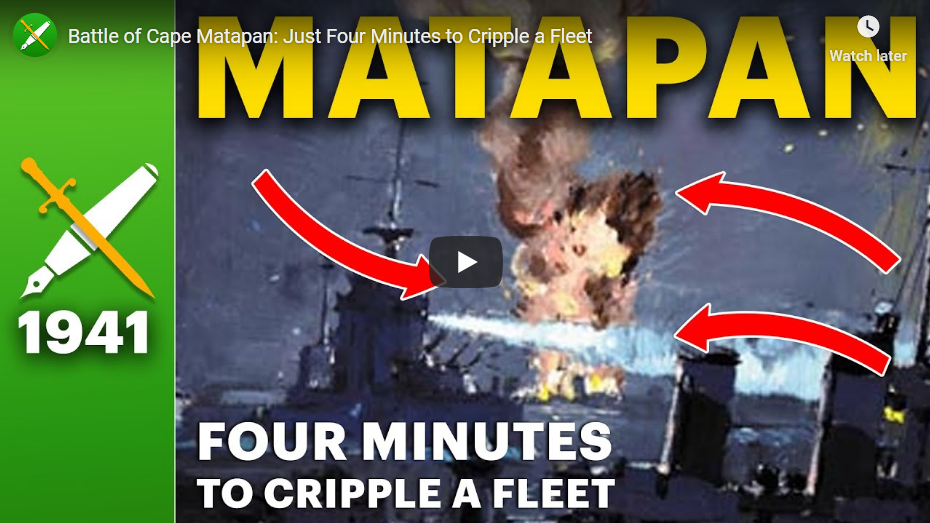
The Fallschirmjäger were Germany’s own paratrooper branch, designed to deal a swift and fatal blow behind the enemy’s lines. They were deployed with great success in Scandinavia and the Benelux, but they come too close to the sun when they attempt to invade Crete.

Join us on Patreon: https://www.patreon.com/TimeGhostHistory
Or join The TimeGhost Army directly at: https://timeghost.tv

Follow WW2 day by day on Instagram @World_war_two_realtime https://www.instagram.com/world_war_t…
Between 2 Wars: https://www.youtube.com/playlist?list…
Source list: http://bit.ly/WW2sources

Hosted by: Indy Neidell
Written by: Joram Appel and Izzy Wilson
Produced and Directed by: Spartacus Olsson and Astrid Deinhard
Executive Producers: Bodo Rittenauer, Astrid Deinhard, Indy Neidell, Spartacus Olsson
Creative Producer: Joram Appel
Post-Production Director: Wieke Kapteijns
Research by: Joram Appel and Izzy Wilson
Edited by: Mikołaj Cackowski
Map animations: Eastory (https://www.youtube.com/c/eastory)
Sound design by: Marek Kaminski

Colorizations by:
Julius Jääskeläinen – https://www.facebook.com/JJcolorization/
Ruffneck88 – https://commons.wikimedia.org/wiki/Fi…

Sources:
IWM E 3066E

Soundtracks from the Epidemic Sound:
Rannar Sillard – “March Of The Brave 4”
Reynard Seidel – “Deflection”
Rannar Sillard – “Easy Target”
Gunnar Johnsen – “Not Safe Yet”
Johannes Bornlof – “Last Man Standing 3”
Fabien Tell – “Last Point of Safe Return”

Archive by Screenocean/Reuters https://www.screenocean.com.

A TimeGhost chronological documentary produced by OnLion Entertainment GmbH.
From the comments:

World War Two
1 day ago
This is the first of many proper specials that we want to do to add on the weekly World War Two episodes, the War Against Humanity series, the Biographies, our Out of the Foxholes Q&A series and our upcoming On the Homefront sub-series. In these specials, we’ll cover any additional topics in depth — think about hardware, tactics, special forces, bills or decryption systems. We’re interested to hear your suggestions! What do you want to see covered in an upcoming special epsiode?

QotD: Rommel’s generalship

Filed under: Africa, Germany, History, Military, Quotations, WW2 — Tags: , , , , — Nicholas @ 01:00

Yes, the reader might respond, but surely we are on firmer ground with regard to [Rommel’s] military skill! After all, no less a figure than British Prime Minister Winston Churchill called him “a great general” on the floor of the House of Commons. Even here, it is possible to make a counterargument. Rommel’s daring exploits at the head of the Afrika Korps (later enlarged and renamed Panzerarmee Afrika) were exciting, to be sure, but many officers in his own army reckoned them as an ultimately valueless sideshow. His disinterest in the dreary science of logistics, his “bias for action,” his tendency to fly off wherever the fighting was hottest are qualities that may make for an exciting movie, but they are problematic in an army commander under modern conditions, and they all contributed materially to the disaster that ultimately befell him and his army in the desert.

[…]

When Rommel arrived in Africa, he brought with him a fully realized art of war. He’d won a Pour le Mérite (the famed “Blue Max“) for a series of nail-biting mountain exploits in the 1917 Caporetto campaign; he had been a very popular tactical instructor at the Dresden Infantry School between the wars; he had commanded one of the army’s precious Panzer divisions (the 7th) during the 1940 campaign in the West. In France, Rommel had behaved more like an 18th century hussar cut loose on a raiding mission than a divisional commander. He led from the front, braved enemy fire on numerous occasions, and turned off his radio from time to time rather than risk receiving orders to rein himself in. He drove forward so rapidly that the 7th Panzer became known as the “ghost division” for its tendency to drop off the situation maps and reappear where least expected. There were many in the German high command, including the chief of the General Staff Franz Halder, who didn’t much appreciate Rommel running amok, but as one analyst put it, “it was impossible to court martial such a successful general, so Rommel instead got the Ritterkreuz” [the Knight’s Cross of the Iron Cross].

Robert Citino, “Drive to Nowhere: The Myth of the Afrika Korps, 1941-43″, The National WWII Museum, 2012. (Originally published in MHQ, Summer 2012).

March 12, 2020

WW2 On The Homefront Starts next week!

Filed under: Asia, Europe, History, Pacific, USA, WW2 — Tags: — Nicholas @ 06:00

World War Two
Published 11 Mar 2020

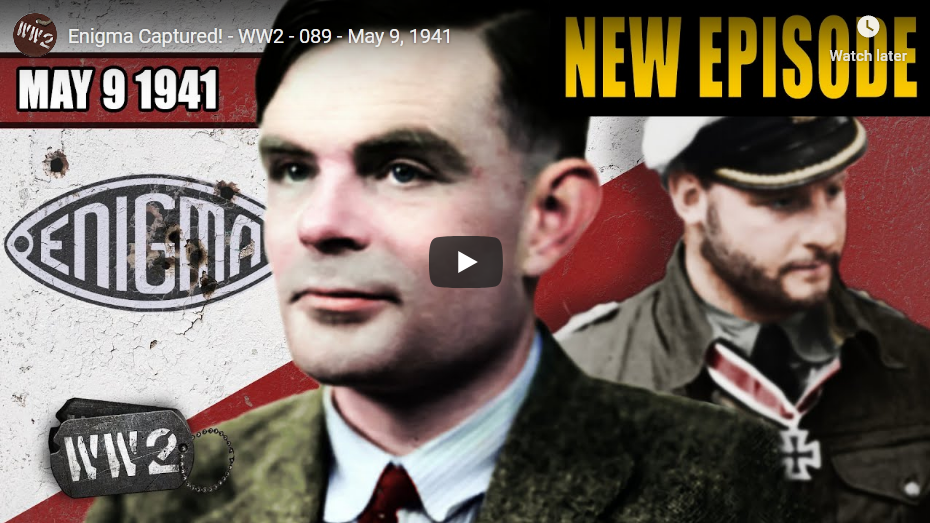
Next week our monthly new sub series On The Homefront premieres hosted by Anna Deinhard. This is why…

Join us on Patreon: https://www.patreon.com/TimeGhostHistory
Or join The TimeGhost Army directly at: https://timeghost.tv

Follow WW2 day by day on Instagram @World_war_two_realtime https://www.instagram.com/world_war_t…
Between 2 Wars: https://www.youtube.com/playlist?list…
Source list: http://bit.ly/WW2sources

Hosted by: Anna Deinhard
Produced and Directed by: Spartacus Olsson and Astrid Deinhard
Executive Producers: Bodo Rittenauer, Astrid Deinhard, Indy Neidell, Spartacus Olsson
Edited by: Anna Deinhard and Spartacus Olsson

Archive by Screenocean/Reuters https://www.screenocean.com.

A TimeGhost chronological documentary produced by OnLion Entertainment GmbH.
March 11, 2020

Carton de Wiart – A Man For All Seasons – WW2 Biography Special

Filed under: Africa, Britain, Europe, History, Italy, Military, WW1, WW2 — Tags: , , , , , — Nicholas @ 06:00

World War Two
Published 10 Mar 2020

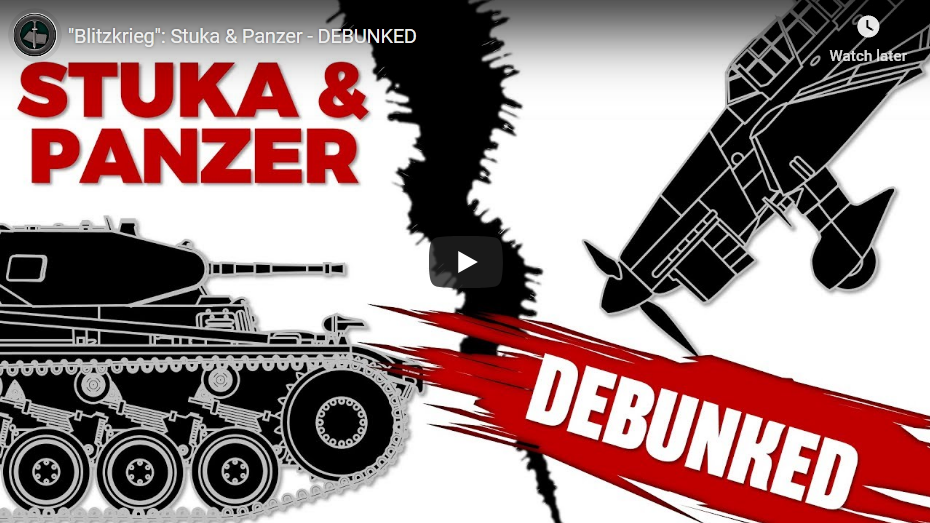
Carton de Wiart was a remarkable figure in World War One, but his story continues in World War Two, where he rolls from one adventure into the next.

Join us on Patreon: https://www.patreon.com/TimeGhostHistory
Or join The TimeGhost Army directly at: https://timeghost.tv

Follow WW2 day by day on Instagram @World_war_two_realtime https://www.instagram.com/world_war_t…
Between 2 Wars: https://www.youtube.com/playlist?list…
Source list: http://bit.ly/WW2sources

Hosted by: Indy Neidell
Written by: Francis van Berkel
Produced and Directed by: Spartacus Olsson and Astrid Deinhard
Executive Producers: Bodo Rittenauer, Astrid Deinhard, Indy Neidell, Spartacus Olsson
Creative Producer: Joram Appel
Post-Production Director: Wieke Kapteijns
Research by: Keith Kevelson
Edited by: Mikołaj Cackowski

Colorizations by:
Julius Jääskeläinen – https://www.facebook.com/JJcolorization/

Sources:
IWM Q 101768, Q 82958, Q 15472, Q 53680, Q 92257, Q 4511, Q 11429, Q 92207, Q 92214, N 228, N 110, N 68, H 7393, HU 128168, E(MOS) 1315, SE 3547, A 31225, A 20588, Q 92218
Skull by Mahmure Alp from the Noun Project
foot bone by Maxicons from the Noun Project
Ear by Vectors Market from the Noun Project
Hip Bones by ProSymbols from the Noun Project
Collection of Auckland Museum Tamaki Paenga Hira, 2001.25.480 Brent Mackrell Collection
Narodowe Archiwum Cyfrowe
Picture of Combe, Carton de Wiart, Todhunter and Gambier-Parry in Vincigliata Castle Prison, courtesy Michael Todhunter

Soundtracks from the Epidemic Sound:
Hakan Eriksson – “Epic Adventure Theme 3”
Jo Wandrini – “Dawn of Civilization”
Rannar Sillard – “March of the Brave 4”
Johannes Bornlof – “Death And Glory 3”
Farrell Wooten – “Blunt Object”
Philip Ayers – “Trapped in a Maze”
Phoenix Tail – “At the Front”

Archive by Screenocean/Reuters https://www.screenocean.com.

A TimeGhost chronological documentary produced by OnLion Entertainment GmbH.
From the comments:

World War Two
40 minutes ago (edited)
This episode was made thanks to our research volunteer Keith Kevelson. It is also the first of its kind, being the first proper Biography Special of our World War Two series. We will do one of these every other week, so be prepared to get to know the main protagonists of the Second World War up close and personal. Please support us on Patreon so we can continue making these. Sign up at www.patreon.com/timeghosthistory or https://timeghost.tv.

Cheers,
Joram

A Bridge Too Far | Military History Book Review

Filed under: Books, Britain, Germany, History, Military, USA, WW2 — Tags: , , , — Nicholas @ 02:00

TIK
Published 22 Feb 2016

The classic history book looking at the battle of Arnhem and Operation Market Garden. Cornelius Ryan’s A Bridge Too Far.

Have you seen my popular Operation Market Garden Documentary?
https://youtu.be/vTUC79o4Kmc

Also, if you haven’t done already, follow me on Twitter!
https://twitter.com/TIKhistory

March 10, 2020

Budapest 44: The Siege of Buda (December 44 – February 45)

Filed under: Europe, Germany, History, Military, Russia, WW2 — Tags: , , — Nicholas @ 04:00

Historigraph
Published 7 Mar 2020

Buy Siege of Budapest Poster here: https://teespring.com/en-GB/siege-of-…
Support the channel on Patreon: https://www.patreon.com/historigraph
Follow me on Twitch: https://www.twitch.tv/historigraph

#SiegeOfBudapest #SiegeOfBuda #Historigraph

►Twitter: https://twitter.com/historigraph
►Instagram: https://www.instagram.com/historigraph
►Patreon: https://www.patreon.com/historigraph

The Siege of Budapest and the battles that led to it have had precious little written about them (in English!), so the bulk of this video comes from one book:

Krisztián Ungváry, Battle for Budapest: 100 Days in World War 2

This is by far the most detailed account of the battle that I could find.

Music:

“Crypto”, Incompetech https://incompetech.com

“Rynos Theme”, Incompetech

“Stormfront”, Incompetech

March 9, 2020

British Submachine Gun Overview: Lanchester, Sten, Sterling, and More!

Filed under: Britain, History, Military, Weapons, WW2 — Tags: , , , — Nicholas @ 02:00

Forgotten Weapons
Published 12 Mar 2017

Armament Research Services (ARES) is a specialist technical intelligence consultancy, offering expertise and analysis to a range of government and non-government entities in the arms and munitions field. For detailed photos of the guns in this video, don’t miss the ARES companion blog post:

http://armamentresearch.com/british-sub-machine-gun-development-an-overview/

Great Britain was one of the few countries that went into World War Two with virtually no submachine gun development. Not every country had an issued SMG by 1939, but virtually everyone had at least been working on experimental concepts — except the British. It was only with the outbreak of hostilities that the need for such a weapon suddenly became apparent and its acquisition became a military priority.

This was solved by acquiring and copying the German MP28/II, which was quickly followed by a simplification program that would lead to the MkI, MkI*, and ultimately MkII and MkIII Sten guns. The Stens were truly exceptional studies in simplification, getting down to a mere 5.5 man-hours of production time. Only after the threat of immediate German land invasion had subsided was the Sten allowed to become a little bit user-friendly, in the MkV guise.

At the end of WW2, the British were finally able to scrap the Sten (known to be a compromise gun all along) and replace it with something with more finesse. Tests were run on the MCEM series, on BSA guns, on interesting prototypes like the double-stack-magazine Vesely V42 — but it was George Patchett’s much improved Sten which would be chosen and come to be known as the Sterling SMG (named after its manufacturer).

A couple of corrections to the video:

— The MP28 was designed by Schmeisser, not Bergmann.

— The MCEM-2 was designed by Polish engineer Lt. Jerzy Podsendkowski. The -2 version of the MCEM was completed during WW2; it was the -4 and -6 versions that were post-war.

— George Lanchester was chief engineer at Sterling and ran the Lanchester project, but was not actually the lead designer himself.

http://www.patreon.com/ForgottenWeapons

Cool Forgotten Weapons merch! http://shop.bbtv.com/collections/forg…

If you enjoy Forgotten Weapons, check out its sister channel, InRangeTV! http://www.youtube.com/InRangeTVShow

QotD: The wrong lessons learned from World War II

Filed under: History, Military, Quotations, USA, WW2 — Tags: , , , , — Nicholas @ 01:00

Americans learned several misleading lessons from World War II. The first and greatest error was overestimating the effectiveness of military force. World War II — the last conflict in which the world’s great powers went toe-to-toe against each other, with no holds barred — created a new understanding of how wars are fought and won. But wars since then have not fit this paradigm, and many of our subsequent military mistakes came as a result of misapplying World War II’s lessons.

Lyndon Johnson led the country into a massive military commitment in South Vietnam in part because of misplaced faith in what the United States could accomplish by force of arms. The Johnson administration convinced itself that fighting modern wars was a branch of management science, akin to running a large corporation like General Motors, and that America’s military was a versatile instrument that could be dialed up or down to deliver precisely calibrated levels of violence, tailored to meet any foreign policy challenge. World War II also led many Americans to conclude that liberal democracy could be imposed on foreign peoples through the application of what George W. Bush’s administration would later call “shock and awe.”

It turns out that, even in the age of precision weapons, military power is a blunt instrument, ill-suited to nation-building, except in rare circumstances and at great cost. Germany and Japan — our preferred examples — are highly idiosyncratic. Liberal democracy flourished in each only after the deaths of millions of citizens and the reduction of their societies to rubble. Americans haven’t shown much stomach for projects of this scope after 1945.

E. M. Oblomov, “The Greatest Generation and the Greatest Illusion: Success in World War II led Americans to put too much faith in government—and we still do.”, City Journal, 2017-12-28.

March 8, 2020

Bulgaria Joins the Fascist Alliance – WW2 – 080 – March 7, 1941

World War Two
Published 7 March 2020

German troops pour into Bulgaria as they join the Axis alliance, while British troops enter Greece in anticipation of a German attack. Meanwhile, the British celebrate victories in East-Africa and on the Atlantic.

Join us on Patreon: https://www.patreon.com/TimeGhostHistory
Or join The TimeGhost Army directly at: https://timeghost.tv

Follow WW2 day by day on Instagram @World_war_two_realtime https://www.instagram.com/world_war_t…
Between 2 Wars: https://www.youtube.com/playlist?list…
Source list: http://bit.ly/WW2sources

Written and Hosted by: Indy Neidell
Produced and Directed by: Spartacus Olsson and Astrid Deinhard
Executive Producers: Bodo Rittenauer, Astrid Deinhard, Indy Neidell, Spartacus Olsson
Creative Producer: Joram Appel
Post-Production Director: Wieke Kapteijns
Research by: Indy Neidell
Edited by: Iryna Dulka
Map animations: Eastory (https://www.youtube.com/c/eastory)

Colorizations by:
– Royal Bulgaria In Colour
– Daniel Weiss
– Dememorabilia – https://www.instagram.com/dememorabilia/
– Julius Jääskeläinen – https://www.facebook.com/JJcolorization/
– Norman Stewart – https://oldtimesincolor.blogspot.com/

Sources:
– Bundesarchiv
– Narodowe Archiwum Cyfrowe
– IWM: TR 1762, CM 187, MH 27178, E 2370, E 2380, K 284, E 2376, E 1384, E 2383, E 3245, E 2001, E 2393
– Moscow icon by Graphic Tigers, film icon by Fernando Vasconcelos, oil barrel icon by Musmellow, from the Noun Project
– Slide projector sound by hpebley3 from Freesound.org

Archive by Screenocean/Reuters https://www.screenocean.com.

A TimeGhost chronological documentary produced by OnLion Entertainment GmbH.

March 6, 2020

August von Mackensen in WW2, Stolen Wine, and America – WW2 – Out of the Foxholes 007

Filed under: France, Germany, History, Japan, Military, USA, Wine, WW2 — Tags: , , , , — Nicholas @ 06:00

World War Two
Published 5 Mar 2020

In this episode of Out of the Foxholes, we answer some community questions on what August von Mackensen did in World War Two, if there was a shortage on French wines and what the Axis’ perception of the Monroe Doctrine was.

Ask your own question for Out of the Foxholes here: https://community.timeghost.tv/c/Out-…

Join us on Patreon: https://www.patreon.com/TimeGhostHistory
Or join The TimeGhost Army directly at: https://timeghost.tv

Follow WW2 day by day on Instagram @World_war_two_realtime https://www.instagram.com/world_war_t…
Join our Discord Server: https://discord.gg/D6D2aYN.
Source list: http://bit.ly/WW2sources

Hosted by: Indy Neidell
Written by: Rune Væver Hartvig
Produced and Directed by: Spartacus Olsson and Astrid Deinhard
Executive Producers: Bodo Rittenauer, Astrid Deinhard, Indy Neidell, Spartacus Olsson
Creative Producer: Joram Appel
Post-Production Director: Wieke Kapteijns
Research by: Rune Væver Hartvig
Edited by: Mikołaj Cackowski
Map animations: Eastory (https://www.youtube.com/c/eastory)

Colorizations by:
Julius Jääskeläinen – https://www.facebook.com/JJcolorization/
Ruffneck88 – https://commons.wikimedia.org/wiki/Fi…

Sources:
Narodowe Archiwum Cyfrowe
IWM F 3551
Library of Congress
Wine Bottles by Ivan from the Noun Project
Spider by Sneha from the Noun Project
Spider Web by Valerie Lamm from the Noun Project

Soundtracks from the Epidemic Sound:
Trabant 33 – “When in Bavaria”
Philip Ayers – “Trapped in Maze”
Johannes Bornlof – “The Inspector”

Archive by Screenocean/Reuters https://www.screenocean.com.

A TimeGhost chronological documentary produced by OnLion Entertainment GmbH.
March 4, 2020

Resistance in China – Myth or Reality? – WW2 – War Against Humanity 009

World War Two
Published 3 Mar 2020

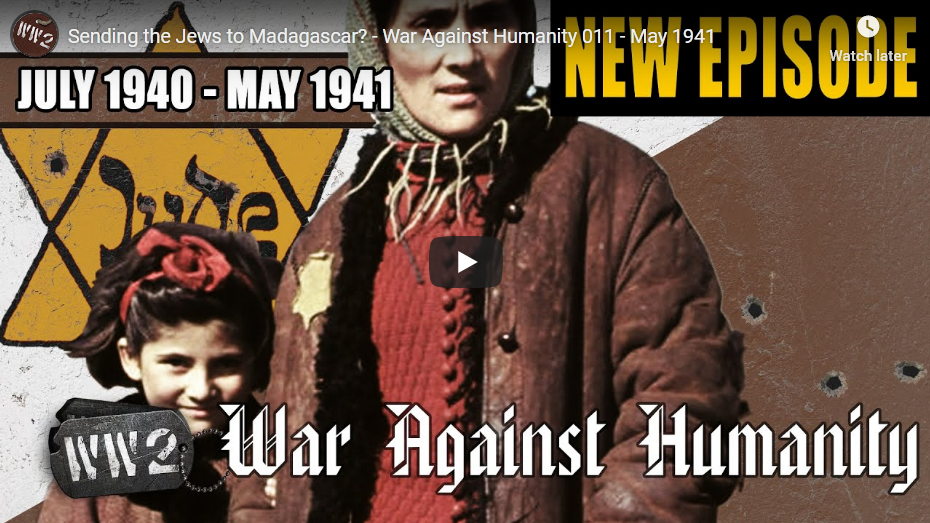
The war in China already started in 1931 when Japan invaded Manchuria. Early resistance was small and was met by heavy Japanese retaliations. But throughout the 30’s, the movement started to grow.

Join us on Patreon: https://www.patreon.com/TimeGhostHistory
Or join The TimeGhost Army directly at: https://timeghost.tv

Follow WW2 day by day on Instagram @World_war_two_realtime https://www.instagram.com/world_war_t…
Join our Discord Server: https://discord.gg/D6D2aYN.
Between 2 Wars: https://www.youtube.com/playlist?list…
Source list: http://bit.ly/WW2sources

Hosted by: Spartacus Olsson
Written by: Francis van Berkel
Produced and Directed by: Spartacus Olsson and Astrid Deinhard
Executive Producers: Bodo Rittenauer, Astrid Deinhard, Indy Neidell, Spartacus Olsson
Creative Producer: Joram Appel
Post-Production Director: Wieke Kapteijns
Research by: Francis van Berkel
Edited by: Mikołaj Cackowski
Map animations: Eastory (https://www.youtube.com/c/eastory)

Colorizations by:
Norman Stewart – https://oldtimesincolor.blogspot.com/

Sources:
Library of Congress
Narodowe Archiwum Cyfrowe
Chinese anti-Japanese posters, courtesy of pictoright
SHANGHAI, CHINA-1921

Soundtracks from the Epidemic Sound:
Johan Hynynen – “Dark Beginning”
Yi Nantiro – “Watchmen”
Yi Nantiro – “A Single Grain of Rice”
Reynard Seidel – “Deflection”
Fabien Tell – “Last Point of Safe Return”
Andreas Jamsheree – “Guilty Shadows 4”
Rannar Sillard – “Split Decision”

Archive by Screenocean/Reuters https://www.screenocean.com.

A TimeGhost chronological documentary produced by OnLion Entertainment GmbH.
« Newer PostsOlder Posts »

Powered by WordPress