TIK
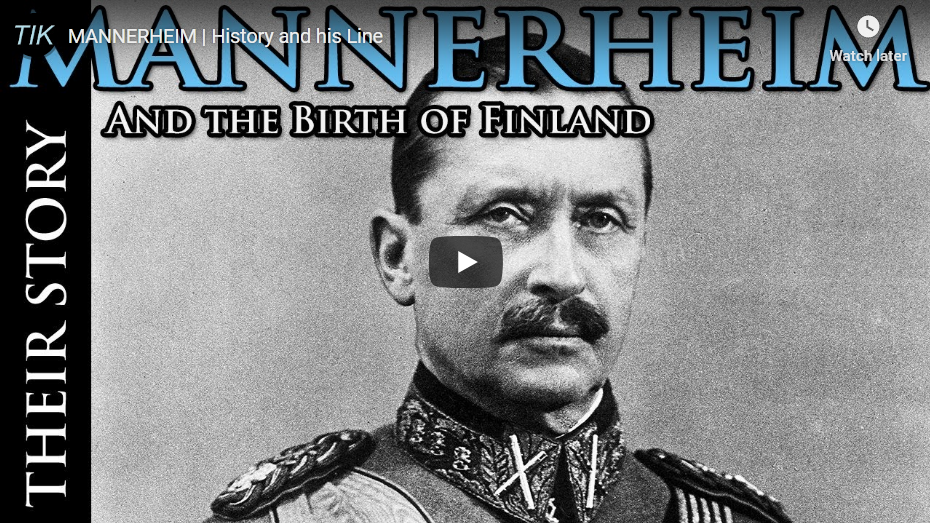
Published 22 Jun 2017Carl Gustav Emil Mannerheim towers over all other characters of the Winter War, and of Finnish history in general. This video is a brief introduction to one of the great leaders of the 20th Century (and according to a TV poll in 2004, the greatest Finn of all time). Full script is available as captions/subtitles, and the source I used for this video is –
Trotter, W. The Winter War: The Russo-Finnish War of 1939-40. Aurum Press Ltd, 2003.
If you’d like to help me make these videos, consider supporting me on Patreon https://www.patreon.com/TIKhistory
January 13, 2020
MANNERHEIM | History and his Line
January 8, 2020
Chauchat: Shooting, History, and Tactics
Forgotten Weapons
Published on 14 Sep 2015http://www.patreon.com/ForgottenWeapons
Hammer price: $13,500The M1915 CSRG, commonly called the Chauchat after its primary designer, has a reputation as the worst gun ever put into military service. That reputation, however, is not deserved. It was not a great weapon, but it was a very serviceable gun for its day. The French needed a light automatic rifle *right now*, and needed it in large numbers. The Chauchat answered that call, and was used to great effect by many French soldiers.
The Chauchat’s poor reputation comes from a couple places, some justified and some not. First off, many US troops trained on M1918 Chauchats built in .30-06, which were poorly made and pretty darn bad guns. They were replaced by 8mm Lebel guns before going into combat, but the bad experiences of training stuck with many Americans. The biggest mechanical flaw in the Chauchat was its magazine. All automatic weapons are heavily dependent on good magazines, and the Chauchat used a magazine that was made of thin metal, easily damaged, and open on the sides for dirt and mud to enter. If the magazines were not treated well, the gun would become hopelessly useless.
In addition, many of the Chauchat guns in the United States today were deactivated at one time, and often badly reactivated. This has nothing to do with their original reliability, but it does a lot to perpetuate their reputation. This particular example is an original gun that does not appear to have ever been deactivated, and it ran flawlessly for me. It will be an excellent example for someone who can appreciate it!
December 21, 2019
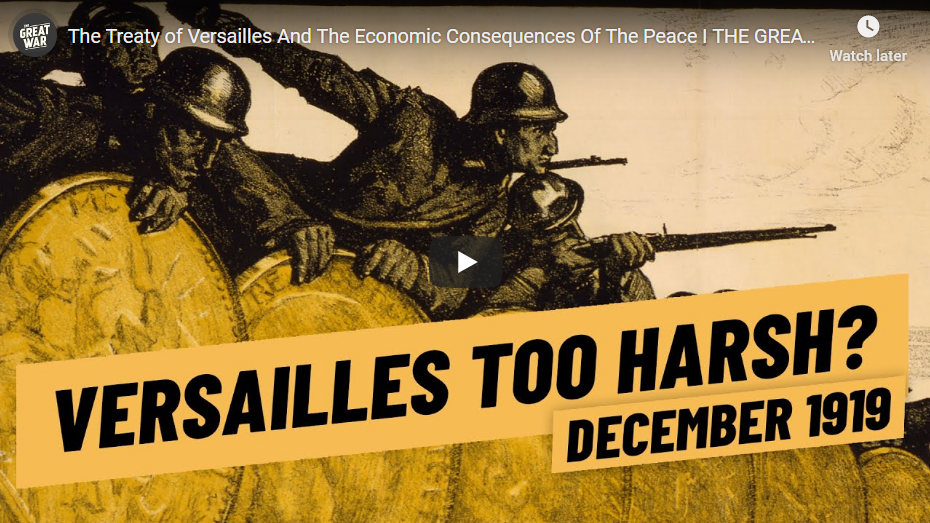
The Treaty of Versailles And The Economic Consequences Of The Peace I THE GREAT WAR 1919
The Great War
Published 19 Dec 2019Help The Great War and keep it free for everyone: https://patreon.com/thegreatwar
John Maynard Keynes was an economist and part of the Paris Peace Conference in 1919. He had high hopes for a new post-war order but when he realized what Georges Clemenceau, David Lloyd-George and Woodrow Wilson were planning, he resigned from the conference. And then wrote a book about it: The Economic Consequences of the Peace became a bestseller and is one of the best known critiques of the Versailles Treaty.
» SUPPORT THE CHANNEL
Patreon: https://www.patreon.com/thegreatwar
Merchandise: https://shop.spreadshirt.de/thegreatwar/» SOURCES
Demps, Lorenz and Materna, Ingo (eds.). Geschichte Berlins von den Anfängen bis 1945. Berlin, 1987.
Eichengreen, Barry. Golden Fetters. The Gold Standard and the Great Depression 1919-1939. New York 1995.
Horn. Britain, France and the Financing of the First World War, 2002.
Hudson, Michael. Trade, Development, and Foreign Debt: Volume 2. Pluto Press, London, 1992.
Hudson, Michael. Superimperialism: The Origins and Fundamentals of U.S. World Dominance. Pluto Press, London 2003.
Keynes, John Maynard. The Economic Consequences of the Peace. Harcourt, Brace and Howe, New York, 1919.
Kinzer, Stephen. The True Flag: Theodore Roosevelt, Mark Twain, and the Birth of American Empire. St. Martin’s Griffin, 2018
Shirer, The Rise and Fall of the Third Reich. 1960.
Skidelsky, Robert. John Maynard Keynes, 1883-1946: Economist, Philosopher, Statesman. Penguin Books, New York, New York, 2003.
Skidelsky, Robert. John Maynard Keynes Volume I — Hopes Betrayed. Penguin Books, New York, 1983.»CREDITS
Presented by: Jesse Alexander
Written by: Mark Newton
Director: Toni Steller & Florian Wittig
Director of Photography: Toni Steller
Sound: Toni Steller
Editing: Toni Steller
Mixing, Mastering & Sound Design: http://above-zero.com
Maps: Daniel Kogosov (https://www.patreon.com/Zalezsky)
Research by: Jesse Alexander
Fact checking: Florian WittigChannel Design: Alexander Clark
Original Logo: David van StepholdA Mediakraft Networks Original Channel
Contains licensed material by getty images
All rights reserved – Real Time History GmbH 2019

December 20, 2019
“Seven Pillars of Wisdom” – T. E. Lawrence of Arabia – Sabaton History 046 [Official]
Sabaton History
Published 19 Dec 2019The British T.E. Lawrence played a major role in bringing together a coalition of Arab factions to rise up against the Ottoman Empire. Their efforts helped the British war effort in the Middle East, but the British-Arab coalition was not as stable as it might have seemed.
Support Sabaton History on Patreon: https://www.patreon.com/sabatonhistory
Listen to The Great War (Where “Seven Pillars of Wisdom” is featured):
CD: http://nblast.de/SabatonTheGreatWar
Spotify: https://sabat.one/TheGreatWarSpotify
Apple Music: https://sabat.one/TheGreatWarAppleMusic
iTunes: https://sabat.one/TheGreatWarItunes
Amazon: https://sabat.one/TheGreatWarAmazon
Google Play: https://sabat.one/TheGreatWarGooglePlayListen to Sabaton on Spotify: http://smarturl.it/SabatonSpotify
Official Sabaton Merchandise Shop: http://bit.ly/SabatonOfficialShopHosted by: Indy Neidell
Written by: Markus Linke and Indy Neidell
Directed by: Astrid Deinhard and Wieke Kapteijns
Produced by: Pär Sundström, Astrid Deinhard and Spartacus Olsson
Creative Producer: Joram Appel
Executive Producers: Pär Sundström, Joakim Broden, Tomas Sunmo, Indy Neidell, Astrid Deinhard, and Spartacus Olsson
Post-Production Director: Wieke Kapteijns
Production Intern: Rune Væver Hartvig
Edited by: Iryna Dulka
Sound Editing by: Marek Kaminski
Maps by: Eastory – https://www.youtube.com/c/eastoryArchive by: Reuters/Screenocean https://www.screenocean.com
Music by Sabaton.Sources:
– National Portrait Gallery
– Boston Public Library
– IWM: Q 59294, Q 73536, Q 115096, Q 73535, Q 60212, Q 103747, Q 67234, Q 59703A, Q 59576, Q 58858A, Q 58861, Q 58863, Q 59193, Q 58823, Q 58938, Q 59078, Q 59190, Q 58841, Q 58704, Q 59422, Q 58891, Q 60035, Q 59073, Q 60102, Q 60096, HU 123936, Q 12629, Q 58752, Q 59314, Q 59314A, Q 58830, Q 58845, Q 12364, ART 3198, ART 2510, Q 105583, Q 103750, Q 59324, Q 59312, Q 12363, Q 103770, Q 86295, Q 59061, Q 72565, Q 12332An OnLion Entertainment GmbH and Raging Beaver Publishing AB co-Production.
© Raging Beaver Publishing AB, 2019 – all rights reserved.
From the comments:
Sabaton History
2 days ago (edited)
Thats right, it’s Indy of Arabia! Even though “Seven Pillars of Wisdom” is a crew-favourite, we have waited with this episode until we could show off some exclusive material from the “Seven Pillars of Wisdom” music video. With none other than Indy Neidell in the role of Lawrence (or Peter O’Toole?). This episode sure is among our favourite episodes to this date — we hope you enjoy it as well. If you do (and you weren’t already convinced by Joakim’s awesome Call To Action (17:20), please consider supporting this project on Patreon. It is thanks to those who are already there that we’re able to keep making these episodes! -> https://www.patreon.com/sabatonhistoryCheers,
The Sabaton History Team
J.R.R. Tolkien: Author of Worlds
Biographics
Published 12 Apr 2018Known as “the father of modern fantasy” his epic tales of legend and lore have been enjoyed by millions of people all over the world — devoured in popular books and adapted for Hollywood blockbuster films. Unbelievably bright, he was a distinguished university professor, poet, historian, and expert linguist. As a child, he even made up his own languages for pure fun.
Visit our companion website for more: http://biographics.org
Credits:
Host – Simon Whistler
Author – Crystal Sullivan
Producer – Samuel Avila
Executive Producer – Shell HarrisBusiness inquiries to biographics.email@gmail.com
Biographies by the book, get J.R.R. Tolkien’s biography from Amazon: http://amzn.to/2ChRfIV
QotD: Ontario pubs
Bread, of course, led to variations like cake — which was good — and the kaiser bun, that tasteless, doughy piece of stodge named as revenge upon the Germans for WWI and served in many pubs to this day to diminish the pleasure of an honest hamburger. (The kaiser bun is mandatory in Ontario bars as a pivotal part of the legislation aimed at curtailing pleasure among the citizenry. Citizens who became accustomed to pleasure might start to see it as their due, which would be inconvenient for the authorities.)
Nicholas Pashley, Notes on a Beermat: Drinking and Why It’s Necessary, 2001.
December 18, 2019
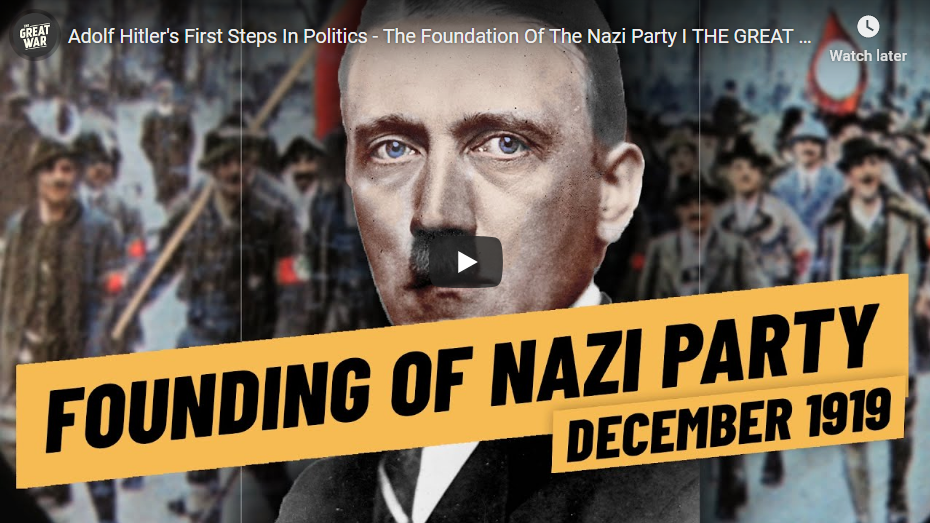
Adolf Hitler’s First Steps In Politics – The Foundation Of The Nazi Party I THE GREAT WAR 1919
The Great War
Published 17 Dec 2019Get a free audiobook and 2 Audible Originals with a 30-day trial: http://audible.com/greatwar or text
greatwarto 500 500.Like many former soldiers, lance corporal Adolf Hitler was disillusioned with the new German Republic after the Armistice in 1918. Like man of his country men he was also in dire need of a job. The Bavarian Army provided an opportunity and soon young Adolf Hitler found himself in the ranks of an obscure political party in Munich: The German Workers’ Party.
» SUPPORT THE CHANNEL
Patreon: https://www.patreon.com/thegreatwar
Merchandise: https://shop.spreadshirt.de/thegreatwar/» SOURCES
Dietrich Eckart, Bolshevism from Moses to Lenin.
Gottfried Feder, Brechung der Zinsknechtschaft 1919.
Fest, Joachim C.: Hitler. Eine Biographie, 1973.
Heiden, Konrad: Adolf Hitler: Das Zeitalter der Verantwortungslosigkeit. Ein Mann gegen Europa, 2016.
Ulrich, Volker: Adolf Hitler. Band 1: Die Jahre des Aufstiegs 1889-1939. 2013.
Fest, Joachim C: The face of the Third Reich: Portraits of the Nazi Leadership. 1999
Program of the German Workers’ Party, 1920 (http://germanhistorydocs.ghi-dc.org/s…)
Jeremy Noakes and Geoffrey Pridham, eds., Nazism 1919-1945, Vol. 1, The Rise to Power 1919-1934. Exeter: University of Exeter Press, 1998, pp. 12-14.»CREDITS
Presented by: Jesse Alexander
Written by: Jesse Alexander
Director: Toni Steller & Florian Wittig
Director of Photography: Toni Steller
Sound: Toni Steller
Editing: Toni Steller
Motion Design: Phillip Appelt
Mixing, Mastering & Sound Design: http://above-zero.com
Maps: Daniel Kogosov (https://www.patreon.com/Zalezsky)
Research by: Markus Linke
Fact checking: Florian WittigChannel Design: Alexander Clark
Original Logo: David van StepholdA Mediakraft Networks Original Channel
Contains licensed material by getty images
All rights reserved – Real Time History GmbH 2019
December 16, 2019
Captain Fraser’s Webley-Fosbery: WWI in Microcosm
Forgotten Weapons
Published 23 Dec 2017http://www.patreon.com/ForgottenWeapons
Cool Forgotten Weapons merchandise! http://shop.bbtv.com/collections/forg…
Captain Percy Fraser, DSO was born on January 22, 1879 and died in Ypres on the night of February 23, 1915 while attempting to aid men wounded outside their trench. His unit of the Queen’s Own Cameron Highlanders would suffer horrendous casualties at Ypres, and today we will look at his Webley-Fosbery automatic revolver and his service in the British Army.
Thanks to Mike Carrick of Arms Heritage magazine for sharing Captain Fraser’s story and revolver. See his regular column here: https://armsheritagemagazine.com
If you enjoy Forgotten Weapons, check out its sister channel, InRangeTV! http://www.youtube.com/InRangeTVShow
December 14, 2019
Huot Automatic Rifle: The Ross Goes Full Auto
Forgotten Weapons
Published 13 Dec 2019http://www.patreon.com/ForgottenWeapons
Cool Forgotten Weapons merch! http://shop.bbtv.com/collections/forg…
During World War One, Joseph Alphonse Huot, a Canadian machinist and blacksmith living in Quebec, designed a conversion of the Ross MkIII rifle to become an automatic rifle. The Ross was the standard issue Canadian rifle at the beginning of the war, and Huot wanted to find a way to economically provide Canadian forces with an automatic weapon. His conversion functioned by mounting a gas piston onto the side of the Ross barrel, adding a large action cover and 25-round drum magazine, and a Lewis-style cooling shroud over the barrel.
In initial testing with the Canadian army, the Huot performed well. It was seriously considered for adoption, but had to undergo British testing and approval before that could happen. In British testing (by now near the end of the war), it was found to run well enough and have some positive attributes, but not sufficient to justify replacement of the Lewis Gun. It was rejected, and the Canadian Corps finished the war with the Lewis instead. Huot had spent several years privately developing the weapon and two more working on salary for the Canadian military, and had gone into considerable personal debt for the project. He had secured a deal to receive royalties on production, but that of course came to naught when the design was rejected. Ultimately, he was compensated $25,000 in 1936 (of the $36,000 he claimed to have spent).
Only five of the guns were made in total, with four known to still exist. Two of them are in Ottawa at the Canadian War Museum and one in the Seaforth Highlanders Museum in Vancouver and one in the Army Museum in Halifax.
Thanks to the Canadian War Museum for providing me access to film this Huot for you!
Contact:
Forgotten Weapons
6281 N. Oracle #36270
Tucson, AZ 85704
December 13, 2019
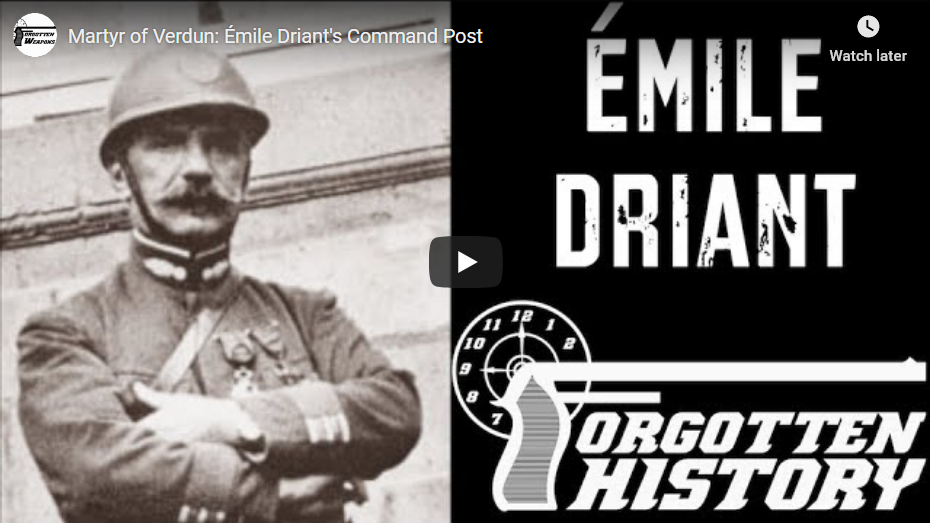
Martyr of Verdun: Émile Driant’s Command Post
Forgotten Weapons
Published 22 Oct 2019http://www.patreon.com/ForgottenWeapons
Cool Forgotten Weapons merch! http://shop.bbtv.com/collections/forg…
Émile Driant was a French army officer who served originally as an aide to General Boulanger (and married his daughter). This connection would tarnish his career when politics forced Boulanger to resign (and shortly afterward commit suicide). It became clear that he would never rise much in rank, and in 1905 he resigned his commission. In 1910 he was elected to the French National Assembly, where he was still serving when war erupted in 1914. Driant was focused on French military readiness his entire life, and wrote extensively about potential future wars.
In 1914, he was recalled to military service, although he retained his Assembly position. He was given command of a reserve unit of Chausseurs (infantry) in the quiet backwater Verdun sector, where he couldn’t cause too much trouble to the military establishment. Through 1915 he watched Joffre remove men and guns from the forts around Verdun to reinforce more active areas of the front. He was intensely concerned that this was leaving Verdun a weak point ripe for German attack. As an officer, there was not much he could do about this except complain to his own commander — but as an active member of the National Assembly, he was able to bypass the military chain of command and take his concerns directly to the civilian government. This did nothing to endear him to Joffre, but the attention he brought did result in more defensive preparations being made in and around Verdun.
On February 21st, 1916 Driant’s warnings were proven true when the Germans launched the Battle of Verdun, which would become one of the most significant operations of the war for France. Driant and his 1200 Chausseurs were stationed in the Bois de Caures forest, right in the middle of the German offensive. His men fought valiantly to hold back the attack in their sector, but were reduced to less than 200 men combat-effective by the 22nd. Driant ordered a withdrawal that morning, and was killed by a gunshot while aiding a wounded trooper.
He was buried with military honors by the Germans, but later re-interred by the French where he had fallen. Today his command post remains just a few hundred yards from his gravesite, and a memorial marks the spot. Driant quickly became recognized as one of the heroes of Verdun, for his efforts before the battle and his front-line leadership during the initial attack.
Contact:
Forgotten Weapons
6281 N. Oracle #36270
Tucson, AZ 85704
December 5, 2019
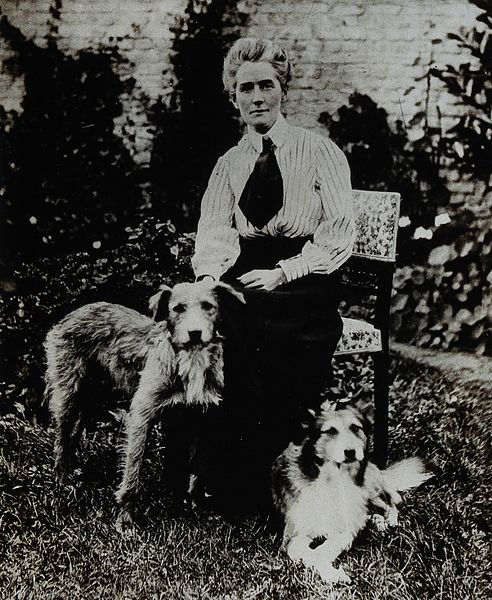
Edith Cavell, before her execution, “patriotism is not enough. I must have no hatred or bitterness toward anyone”
At the Foundation for Economic Education, Lawrence W. Reed relates the story of British nurse Edith Cavell:
Nazi Germany forced France to surrender on June 22, 1940. A day later, Adolf Hitler himself toured the conquered capital of Paris, where he personally ordered the destruction of two memorials to heroes from the First World War. Today — December 4, 2019 — is the 154th anniversary of the birth of one of them, a remarkable woman named Edith Cavell.
Her story is an example of the age-old tragedy that repeats itself every single minute somewhere in the world: a genuinely good individual whose life is snuffed out by some lousy government for a pointless purpose.
Born in 1865 in Swardeston, England, Edith Cavell was 30 when she chose nursing as a professional career. The inspiration had come to her while caring for her father during a serious illness, from which he recovered. During her training, she worked at several hospitals and later traveled around southeastern England treating patients in their homes for diseases from appendicitis to cancer. She earned a sterling reputation for her attention to detail, a congenial bedside manner and, says one biographer, a “ferocious sense of duty.”
At the insistence of a surgeon in Brussels, she went to Belgium in 1907 and became instrumental in the founding of Belgium’s first school of nursing. According to Kathy Warnes of the website Windows to World History, Cavell was soon training aspiring nurses for three hospitals, 24 schools, and 13 kindergartens in Belgium. She became the first matron of the Berkendael Institute in Brussels.
[…]
When Germany occupied Belgium in the fall of 1914, the Kaiser’s troops allowed Cavell, a citizen of an enemy country (England), to stay in charge of her Institute but they kept their eyes on her as she treated combatants from both sides in the hospital and training school. […] German suspicions led to Cavell’s arrest on August 3, 1915. Accused of treason, she was court-martialed, found guilty, and sentenced to death by firing squad.
Among the notes she wrote while incarcerated was a September 14 letter to a group of nurses, thanking them for flowers they had sent to the jail. She ended it with these words:
In everything one can learn new lessons of life, and if you were in my place you would realize how precious liberty is and would certainly undertake never to abuse it. To be a good nurse one must have lots of patience; here, one learns to have that quality, I assure you.
At her subsequent trial, the prosecution posed only a dozen questions. From the first, she answered truthfully and boldly. Yes, she had helped hundreds to escape and she was proud of it. When asked if she realized what she was doing was “to the disadvantage of Germany,” she bravely replied that her preoccupation was “to help the men who applied to me to reach the frontier; once across, they were free.”
November 30, 2019
WW1 Villar Perosa SMG at the Range
Forgotten Weapons
Published 28 Sep 2019Courtesy of the Morphy Auction Company, I am out at the range today with a very rare Italian Villar Perosa machine gun from World War One. These are pretty unorthodox machine guns, as they were initially designed as aircraft armament and later repurposed as ground guns. The basic design is a pair of actions and barrel with a single rear trigger housing. The actions are (slightly) delayed blowback, feeding from 25-round magazines and firing at about 1500 rpm each. The grip has two separate thumb triggers, which fire the two barrels independently.
For an aircraft application, this allowed a very high volume of fire for a very short time; exactly what aerial combat called for. As an infantry gun, the design was much less practical. The bipod held the gun up, but did not have any firm stop that could be pushed into. Coupled with the lack of a buttstock, the gun was very difficult to keep on pattern with anything but the shortest burst. The small aperture sight certainly doesn’t help things either.
http://www.patreon.com/ForgottenWeapons
Cool Forgotten Weapons merch! http://shop.bbtv.com/collections/forg…
Contact:
Forgotten Weapons
6281 N. Oracle #36270
Tucson, AZ 85704
November 23, 2019
Quick Look at a 37mm Maxim “Pompom” Automatic Cannon
Forgotten Weapons
Published 21 Sep 2019http://www.patreon.com/ForgottenWeapons
Cool Forgotten Weapons merch! http://shop.bbtv.com/collections/forg…
This Vickers, Sons & Maxim 37mm MkIII “Pompom” is on display at the Canadian War Museum in Ottawa. The MkIII pattern is quite scarce, with less than one hundred ever made. It is built around the 37 x 124mm cartridge, firing a 1.25 pound explosive or armor piercing projectile. This one (or one of the same model) was mounted on the CGS Canada, a coastal patrol vessel built by VSM in 1904 for the Canadian Fisheries service. Firing fully automatically at 300 rounds/minute, the “pompom” (so named for the sound of its firing) was capable of tremendous firepower, although few ever saw much use in combat. Only the Boers made much use of them as land artillery, and by WW1 most were relegated to antiaircraft use.
Contact:
Forgotten Weapons
6281 N. Oracle #36270
Tucson, AZ 85704
November 20, 2019
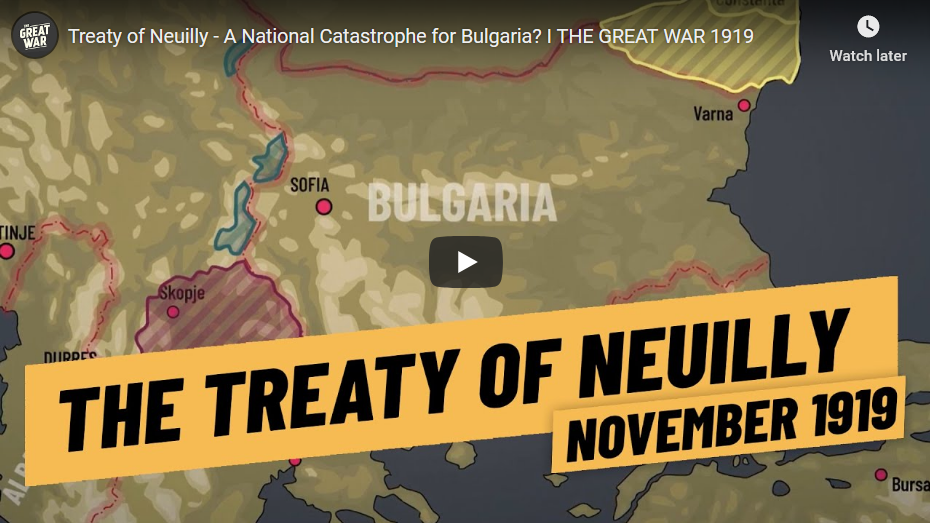
Treaty of Neuilly – A National Catastrophe for Bulgaria? I THE GREAT WAR 1919
The Great War
Published 19 Nov 2019SPONSORED: Install Raid for Free ✅ IOS: http://bit.ly/334B7Yl ✅ ANDROID: http://bit.ly/341srDB
Start with💰50K silver and get a Free Epic Champion 💥 on day 7 of “New Player Rewards” program**Ads like this support the production of our channel and keep it free to watch for everyone
» SUPPORT THE CHANNEL
Patreon: https://www.patreon.com/thegreatwar
Merchandise: https://shop.spreadshirt.de/thegreatwar/» SOURCES
Borodziej, Wlodzimierz and Maciej Gorny. Der Vergessene Weltkrieg. Europas Osten 1912-1923. Band II – Nationen 1917-1923 (wbg Theiss, 2018).
Ganev, P. “The relations between Bulgaria and the FYR of Macedonia in the context of EU integration,” Master Thesis, 2014.
Gerwarth, Robert. The Vanquished. Why the First World War Failed to End, 1917-1923 (Penguin, 2017).
Khristov, Khristo. “Bulgaria, the Balkans, and the Peace of 1919,” in Pastor, Peter, ed. Revolutions and Interventions in Hungary and its Neighbor States, 1918-1919 (New York: Columbia University Press, 1988).
Lampe, John. “Stamboliiski’s Bulgaria and Revolutionary Change, 1918-1923,” in Pastor, Peter, ed. Revolutions and Interventions in Hungary and its Neighbor States, 1918-1919 (New York: Columbia University Press, 1988).
Leonhard, Jörn. Der überforderte Frieden. Versailles und die Welt 1918-1923 (CH Beck, 2018).
Macmillan, Margaret. The Peacemakers: Six Months that Changed the World (London: John Murray, 2001).
Mihaylovski, Stoyan. “On the Treaty of Neuilly,” in Напред (Forward). Originally published November 4th, 1919. Republished on November 27th, 2018. Retrieved via Dir.bg.
Minkov, Stefan Marinov: “Neuilly-sur-Seine, Treaty of”, in: 1914-1918-online. International Encyclopedia of the First World War, ed. by Ute Daniel, Peter Gatrell, Oliver Janz, Heather Jones, Jennifer Keene, Alan Kramer, and Bill Nasson, issued by Freie Universität Berlin, Berlin 2017-02-20.
Pantev, Andrei. “The Border Line Between Sympathy and Support: the United States and the Bulgarian Territorial Question at the Paris Peace Conference in 1919,” in Southeastern Europe, 8, pts 1-2 (1981): 171-197.
Ristović, Milan: “Occupation during and after the War (South East Europe)”, in: 1914-1918-online. International Encyclopedia of the First World War, ed. by Ute Daniel, Peter Gatrell, Oliver Janz, Heather Jones, Jennifer Keene, Alan Kramer, and Bill Nasson, issued by Freie Universität Berlin, Berlin 2014-10-08.
Toshev, Stefan. Pobedeni bez da badem biti (Beaten without being defeated), 1924.
Vazov, Vladimir. Zhivotopisni belejki (Lifetime notes). Re-published by Bulgarian History “BI 93 OOD”, 2018.
Yotov, Petko et al. Bulgaria in the First World War (1915-1918), a short encyclopedia (2014).
Documentary film: Българският политик Теодор Теодоров – държавник от първа величина, ISTORIYA.BG, 03.12.2018
Съюз на македонските емигрантски организации в България – “Memoir presented to the governments of the United States of America, of Great Britain and Ireland, of France, of Italy and of Japan”, София, 1919 година (http://strumski.com/biblioteka/?id=1830)»CREDITS
Presented by: Jesse Alexander
Written by: Jesse Alexander
Director: Toni Steller & Florian Wittig
Director of Photography: Toni Steller
Sound: Toni Steller
Editing: Toni Steller
Mixing, Mastering & Sound Design: http://above-zero.com
Maps: Daniel Kogosov (https://www.patreon.com/Zalezsky)
Research by: Jesse Alexander
Fact checking: Florian WittigChannel Design: Alexander Clark
Original Logo: David van StepholdA Mediakraft Networks Original Channel
Contains licensed material by getty images
All rights reserved – Real Time History GmbH 2019

November 13, 2019
QotD: Western culture’s mortal wound
Just about every king tried to do it [explain “where we come from” and “what are we here for”], and there was a serious rewrite of history associated with events like Henry VIII’s break from Rome.
None of those attempts were as total or as successful as the 20th century ones, due to several things. The first was that nations hadn’t had their spirits broken as thoroughly as WWI broke them, so people weren’t willing to lend credence to things spouted from on high with that much eagerness, and things leaked through. HOWEVER the most important thing that the twentieth century had in hand to try to remake culture was this: public education, mass media, mass news reporting.
Did it succeed? No. The only result of trying to mold human beings into the utopian version of the man who would live happily under communism was 100 million graves, and a Europe that is dying of senescence and lack of reproduction.
However it succeeded brilliantly in not only separating, now, I suppose two or three generations from their roots, but also convincing them that they are superior to their actual learned ancestors, and somehow, yet, the product of the worst civilization of human history.
Western culture is dying of WWI partly because the “cure” imposed by state education apparatus, corrupted by Soviet agitprop and continued by “intellectuals” who know nothing except that they’re superior to everyone else, more enlightened, kinder, and that they should design society and the world to “improve” it.
Sarah Hoyt, “A Generation With No Past”, According to Hoyt, 2017-10-19.