Quotulatiousness

April 10, 2020

Char 2C – The World’s Biggest Operational Tank

Filed under: France, History, Military, Weapons, WW1, WW2 — Tags: , , — Nicholas @ 02:00

Mark Felton Productions
Published 15 Nov 2019

Find out the unbelievable story of the biggest operational tanks in history – the French Char 2C, and their peculiar fate.

Help support my channel:
https://www.paypal.me/markfeltonprodu…
https://www.patreon.com/markfeltonpro…

Disclaimer: All opinions and comments expressed in the ‘Comments’ section do not reflect the opinions of Mark Felton Productions. All opinions and comments should contribute to the dialogue. Mark Felton Productions does not condone written attacks, insults, racism, sexism, extremism, violence or otherwise questionable comments or material in the ‘Comments’ section, and reserves the right to delete any comment violating this rule or to block any poster from the channel.

Credits: YouTube Creative Commons; WikiCommons; Google Commons; Mark Felton Productions
Music: “Pursuit” and “Dogma” licenced to iMovie by Apple, Inc.

H/T to @AnonymousFred514 for the link.

April 9, 2020

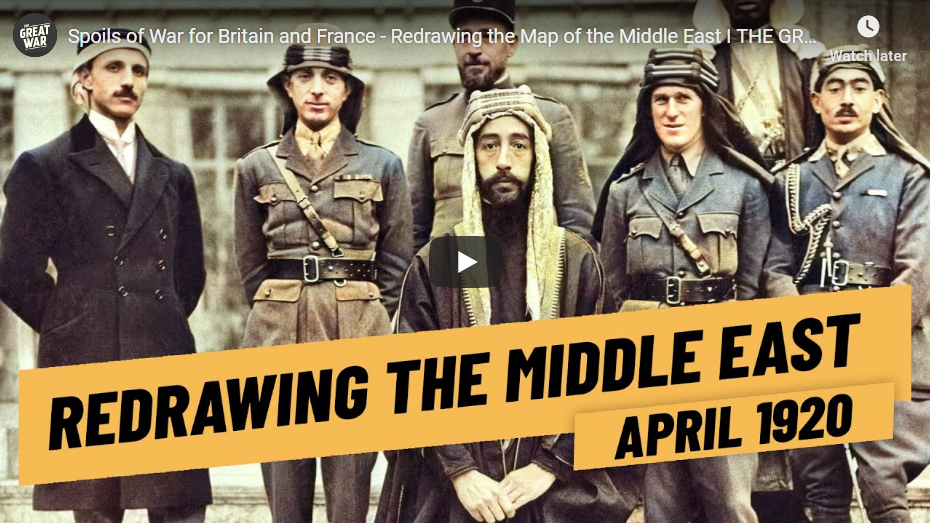
Lawrence of Arabia | Based on a True Story

Filed under: Britain, History, Media, Middle East, Military, WW1 — Tags: , , , , , — Nicholas @ 02:00

The Cynical Historian
Published 6 Nov 2015

The classic film Lawrence of Arabia, is one of the most beautiful movies of all time, but it has its flaws.
————————————————————
references:
https://en.wikipedia.org/wiki/Lawrenc…

http://www.wordandfilm.com/2013/08/wh…

http://www.pri.org/stories/2013-12-16…

most beautiful movies list:
https://www.youtube.com/watch?v=kj73a…
————————————————————

LET’S CONNECT:
https://twitter.com/Cynical_History
————————————————————
wiki:
Lawrence of Arabia is a 1962 epic historical drama film based on the life of T. E. Lawrence. It was directed by David Lean and produced by Sam Spiegel through his British company Horizon Pictures, with the screenplay by Robert Bolt and Michael Wilson. The film stars Peter O’Toole in the title role. It is widely considered one of the greatest and most influential films in the history of cinema. The dramatic score by Maurice Jarre and the Super Panavision 70 cinematography by Freddie Young are also highly acclaimed.
The film was nominated for ten Oscars at the 35th Academy Awards in 1963; it won seven in total: Best Picture, Best Director, Best Original Score, Best Cinematography (Color), Best Art Direction (Color), Best Film Editing and Best Sound Mixing. It also won the Golden Globe Award for Best Motion Picture – Drama and the BAFTA Awards for Best Film and Outstanding British Film.

The film depicts Lawrence’s experiences in the Arabian Peninsula during World War I, in particular his attacks on Aqaba and Damascus and his involvement in the Arab National Council. Its themes include Lawrence’s emotional struggles with the personal violence inherent in war, his own identity, and his divided allegiance between his native Britain and its army and his new-found comrades within the Arabian desert tribes. As well as O’Toole, the film stars Alec Guinness, Jack Hawkins, Anthony Quinn, Omar Sharif, Anthony Quayle, Claude Rains and Arthur Kennedy.
————————————————————
Hashtags: #History #LawrenceOfArabia #WWI #Review #BasedOnATrueStory

April 8, 2020

Belgian Model 1915/27 Improved Chauchat

Filed under: Europe, France, History, Military, Weapons, WW1 — Tags: , , , , — Nicholas @ 02:00

Forgotten Weapons
Published 9 Dec 2019

http://www.patreon.com/ForgottenWeapons

Cool Forgotten Weapons merch! http://shop.bbtv.com/collections/forg…

The Belgian Army was the second to adopt the Chauchat automatic rifle, after the French. Almost all of Belgium was under German occupation during World War One, leaving Belgium significantly dependent on French aid for arms during the war. The initial Belgian purchases were standard 8mm Lebel CSRGs, but by 1917 Belgian engineers were working on a solution to convert the guns to the Belgian standard 7.65mm Mauser cartridge. This was completed by the end of the war, and the Chauchat remained a standard arm of the Belgian military after the war.

Work to improve the design continued, and an upgrades version was formally adopted in 1927. This included the 7.65mm conversion, with the best magazines made for any model of the Chauchat, as well as a series of dust covers to close off every hole in the gun (magazine well, ejection port, charging handle slot, and barrel shroud vents). The Belgians also replaced the original bipod with a much better type (similar to what they would use on the FN BAR), simplified the feed system, and added a tension latch to ensure reliable operation.

This new pattern of CSRG would be standard Belgian front-line armament until the FN BAR was adopted in 1930. The Chauchats were still in service with some units at the beginning of World War Two though, and saw service at that time.

Thanks to the Liege Arms Museum for access to film this for you! If you are in Belgium, definitely plan to stop into the museum, part of the Grand Curtius. They have a very good selection of interesting and unusual arms on display.

https://www.grandcurtius.be

Contact:
Forgotten Weapons
6281 N. Oracle #36270
Tucson, AZ 85704

April 1, 2020

Curator’s Tank Museum Tour: Tank Story Hall – WW1 | The Tank Museum

Filed under: Britain, Europe, France, Germany, History, Military, WW1 — Tags: , , , , , — Nicholas @ 05:00

The Tank Museum
Published 31 Mar 2020

Join Curator David Willey as he takes you on a tour of The Tank Museum’s Tank Story Hall, which houses over 30 key vehicles from Little Willie to Challenger 2. In this section he looks at the First World War vehicles and gives you a potted history of WW1.

Support the work of The Tank Museum on Patreon: ► https://www.patreon.com/tankmuseum
Visit The Tank Museum SHOP & become a Friend: ► https://tankmuseumshop.org/

Twitter: ► https://twitter.com/TankMuseum
Instagram: ► https://www.instagram.com/tankmuseum/
Tiger Tank Blog: ► http://blog.tiger-tank.com/
Tank 100 First World War Centenary Blog: ► http://tank100.com/
#tankmuseum #tanks

Woodrow Wilson (pt.2) | Historians Who Changed History

The Cynical Historian
Published 8 Feb 2018

This is the second part of a 2 part episode. The first covered Woodrow Wilson from his early years to the 1912 election. This episode is covering his presidency. I highly recommend you go see the previous one, because I’m going to refer to stuff in it a lot here.

They only allow 5 cards, so here are all the previous episodes referenced:
Wilson Part 1: https://youtu.be/Hm0Gzz53YJo
Birth of a Nation: https://youtu.be/zzsvOBjRXew
Philippine Insurrection: https://youtu.be/mmYk0xxjDDA
WWI causes: https://youtu.be/NTrk7XktTrc
WWI effects: https://youtu.be/G3vKUgoTghg
Border Wars: https://youtu.be/qs4Lp39Y8W8
Russian Intervention: https://youtu.be/1mC1bmzbgxY
1919 Red Scare: https://youtu.be/S4Pi2nYcYNw
————————————————————
[Full references in the YouTube description]

Support the channel through Patreon:
https://www.patreon.com/CynicalHistorian
or pick up some merchandise at SpreadShirt:
https://shop.spreadshirt.com/cynicalh…

LET’S CONNECT:
https://twitter.com/Cynical_History
————————————————————
Wiki:
The presidency of Woodrow Wilson began on March 4, 1913 at noon when Woodrow Wilson was inaugurated as President of the United States, and ended on March 4, 1921. Wilson, a Democrat, took office as the 28th United States president after winning the 1912 presidential election, gaining a large majority in the Electoral College and a 42 percent plurality of the popular vote in a four–candidate field. Four years later, in 1916, Wilson defeated Republican Charles Evans Hughes by nearly 600,000 votes in the popular vote and secured a narrow majority in the Electoral College by winning several swing states with razor-thin margins. He was the first Southerner elected as president since Zachary Taylor in 1848, and the first Democratic president to win re-election since Andrew Jackson in 1832.
————————————————————
Hashtags: #History #WoodrowWilson #PresidentWilson #KKK #BirthOfANation #Segregation #JimCrow #Wilsonianism #Interventionism #EspionageAct #SeditionAct

March 18, 2020

SMLE Rifle Grenade Launcher

Filed under: Britain, History, Military, Weapons, WW1, WW2 — Tags: , , — Nicholas @ 02:00

Forgotten Weapons
Published 2 Feb 2017

While rifle-launched grenades date back hundreds of years, they first came into widespread use during World War One, on all sides of the conflict. The first years of the war saw the use of rod grenades, but their downsides (mediocre accuracy, bulkiness, and a propensity to damage rifle bores) led to the British adopting a 2.5” cup grenade discharger in late 1917. This new launcher used slightly modified Mills bomb hand grenades, and could launch them with significant accuracy from 80 to 200 yards. They would become a staple of WWI combined arms infantry tactics, and be used clear through WW2 until replaced by the 22mm NATO style spigot grenades.

http://www.patreon.com/ForgottenWeapons

Cool Forgotten Weapons merch! http://shop.bbtv.com/collections/forg…

If you enjoy Forgotten Weapons, check out its sister channel, InRangeTV! http://www.youtube.com/InRangeTVShow

March 15, 2020

M1918 BAR: America’s Walking Fire Assault Rifle

Filed under: History, Military, USA, Weapons, WW1 — Tags: , , , — Nicholas @ 02:00

Forgotten Weapons
Published 14 Oct 2017

Sold for $34,500 (transferrable).

John Browning developed the Browning Automatic Rifle for use by American troops in World War One, taking inspiration from the other light automatic weapons in service including the Chauchat, Lewis, and MG08/15. Rather than being used as a light machine gun as we would understand it today, the BAR was an “automatic rifle”, intended to be used in much the same way as the Germans would use the Sturmgewehr in WWII. It would be fired in semiautomatic mode from the shoulder or hip while advancing on the enemy, using steady fire to keep them pinned down. Once troops broke into close contact, the gun could be switched to fully automatic to provide overwhelming firepower for the final assault on a position. While the walking fire from the hip was not particularly realistic in practice, the fully automatic firepower was a huge boon to the infantry. While it filled the game role as the Chauchat, the BAR was a much more refined weapon and much easier to use effectively.

The BAR was showed to the US Ordnance Department in 1917, and the first order for them was placed with Colt in July of 1917. In short order further contracts would be placed with Winchester and Marlin-Rockwell, although it would take many months to fabricate the production tooling and perfect the design for mass production. A few hand-fitted guns were ready in February 1918 for a public demonstration, but significant quantities were not being built until July of 1918.

These guns would be shipped to France for use by the AEF, but not actually put into combat service until the Meuse-Argonne offensive in late September of 1918, due to General Pershing’s desire to keep them secret from the Germans until a large number could be used at once. As a result, the guns saw only very limited use before the war ended on November 11th. In total 102,173 BARs would be built, about half of them being finished into 1919, after the armistice. They would go on to be changed and updated for use in World War Two, but that is a discussion for another day. This particular gun is an excellent example of an M1918 BAR in correct World War One configuration, which is a rare find today.

http://www.patreon.com/ForgottenWeapons

Cool Forgotten Weapons merch! http://shop.bbtv.com/collections/forg…

If you enjoy Forgotten Weapons, check out its sister channel, InRangeTV! http://www.youtube.com/InRangeTVShow

March 13, 2020

“The Price of a Mile” – The Battle of Passchendaele – Sabaton History 058 [Official]

Filed under: Britain, Germany, History, Media, Military, WW1 — Tags: , , , , — Nicholas @ 04:00

Sabaton History
Published 12 Mar 2020

So tell me what’s the price of a mile? The Battle of Passchendaele in 1917 is often remembered as a dismal and dreadful campaign. Fighting over endless mud, waterlogged shell-holes and unrecognizable, bombed out ground, the battle became a slog where everybody was just miserable. Hundreds of thousands of men became casualties for the advance of a handful of miles.

The Art of War online: https://sites.ualberta.ca/~enoch/Read… [PDF]

Support Sabaton History on Patreon: https://www.patreon.com/sabatonhistory

Listen to “Price of a Mile” on the album The Art of War:
CD: http://bit.ly/TheArtOfWarStore
Spotify: http://bit.ly/TheArtOfWarSpotify
Apple Music: http://bit.ly/TheArtOfWarAppleMusic
iTunes: http://bit.ly/TheArtOfWariTunes
Amazon: http://bit.ly/TheArtOfWarAmz
Google Play: http://bit.ly/TheArtOfWarGooglePlay

Check out the trailer for Sabaton’s new album The Great War right here: https://www.youtube.com/watch?v=HCZP1…

Listen to Sabaton on Spotify: http://smarturl.it/SabatonSpotify
Official Sabaton Merchandise Shop: http://bit.ly/SabatonOfficialShop

Hosted by: Indy Neidell
Written by: Markus Linke and Indy Neidell
Directed by: Astrid Deinhard and Wieke Kapteijns
Produced by: Pär Sundström, Astrid Deinhard and Spartacus Olsson
Creative Producer: Joram Appel
Executive Producers: Pär Sundström, Joakim Broden, Tomas Sunmo, Indy Neidell, Astrid Deinhard, and Spartacus Olsson
Post-Production Director: Wieke Kapteijns
Edited by: Karolina Kosmowska
Sound Editing by: Marek Kaminski
Maps by: Eastory – https://www.youtube.com/c/eastory

Archive by: Reuters/Screenocean https://www.screenocean.com
Music by Sabaton.

Sources:
– Imperial War Museum: Q 20705;Q 45462;Q 5989;6Q 2890;Q 3117 Q 3008;Q 2712;Q 23779;Q 7806;Q 5937;Q 5726;Q 2902;Q 2713;Q 57299;Q 57247;Q 45390;Q 51569;Q 1426;Q 540;Q 17868;Q 50237;Q 47725;Q 45382;Q 2639;Q 29088;Q 42251;Q 5714;Q 2868;Q 5938;Q_005935;Q 2625;Q 5723;Q 2627;Q 29090;Q 52862;Q 88098;Q 88017;Q 2706;Q 5936;Q 5904;Q 5940;Q 5941;Q 5902;Q 47741;Q 3001;Q 5947;Q 6458;Q 3252;Q 29088;Q 5767;Q 45461;Q 42251;Q 2682;Q 20705;Q 6346;Q 6223;Q 11688;Q 2708.;Q 47719;Q 3103;Q 2679;;Q 2640;Q 2858;Q 2735;Q 2707;Q 2757;Q 5901;Q 3006.;Q 5904;Q 5928;Q 3104;Q5903;Q 29089;Q 5865;Q 11668;Q 3002;Q 2978;Q 3121;Q5706;Q 47741;Q 2755;Q 55558;Q 3012;Q 5874;Q 5888;Q 7806;Q 6327;Q 54408;Q 2866;Q 56567;Q 6047;Q 6049;Q 3252; 3140;Q 2868;Q 61034;Q 42250;Q 3025;Q 7814.;Q 2893;Q 2737;E00777;Q 3029;Q 2763;Q 5773;Q 2756;Q 47741;Q 45369;Q 2707;Q 6327;Q 5902.;Q 3006;Q 5871;Q 5733; CO 1757;CO 2241;CO 1757;CO 2252;CO 2241;CO 1757;CO 2246;CO 2252;CO 1763;CO 2241; E(AUS) 941;(E(AUS) 719);E(AUS) 1233.;(E(AUS) 719),
– Art IWM: ART 1921; ART 1150,
– The Australian War Memorial: E00693; E04678; E01912; E00874; E00807; E00874; E01229; A02653; E00927
– National Army Museum: 1952-01-33-55-391; 1985-04-48-412; 2001-02-256-96;1997-12-75-81; 2010-01-56-40; 1994-12-31-1; 1978-11-157-24-36;
1965-10-209-27; 1972-08-67-1-40; 1917-07-31,
– Canadian War Museum: CWM 19930013-511;CWM 19890222-001;CWM 19930013-464;CWM 19930013-511;CWM 19710261-0093.;
165-BO-1503,
– Library and Archives Canada: 040139

An OnLion Entertainment GmbH and Raging Beaver Publishing AB co-Production.

© Raging Beaver Publishing AB, 2019 – all rights reserved.

March 12, 2020

Canadian Ross MkIII Sniper Rifle with Warney & Swasey Scope

Filed under: Cancon, History, Military, USA, Weapons, WW1 — Tags: , , , , — Nicholas @ 04:00

Forgotten Weapons
Published 11 Mar 2020

http://www.patreon.com/ForgottenWeapons

https://www.floatplane.com/channel/Fo…

Cool Forgotten Weapons merch! http://shop.bbtv.com/collections/forg…

The Canadian infantry that went to Europe in the early years of World War One were equipped primarily with the Ross MkIII rifle. The Ross would become quite the scandal, and was replaced in service with the SMLE in 1916 — but as a sniper rifle the Ross excelled. Its problems in service were largely based on poor quality ammunition, and this was not an issue for the sniper corps. In addition, Great Britain was having enough trouble equipping its own snipers to have any extra scoped rifles to hand over to the dominions.

And so, the Canadians modified 500 Ross rifles into a sniper configuration using American-sourced Warner & Swasey M1913 “Musket Sight” scopes. These were 5x magnification prismatic scopes, also used by American forces on the M1903 sniper rifle and the M1909 Benet-Mercie machine guns. The scope was not very good, suffering from fogging and other issues, but it was available. The Canadian rifles were made in two batches of 250 each, one in 1915 and one in 1917. This was actually more rifles than needed, and many of them (including the two in this video) remained in Canada for training (and were used at least until 1942).

Canadian Warner & Swasey scopes can be identified by three elements. They have elevation dials marked out to 2400 yards, serial numbers between 1 and 500, and no data plate on top. Canadian scope cases are marked with the serial numbers of the scope and the rifle they were issued with.

Contact:
Forgotten Weapons
6281 N. Oracle #36270
Tucson, AZ 85740

March 11, 2020

Carton de Wiart – A Man For All Seasons – WW2 Biography Special

Filed under: Africa, Britain, Europe, History, Italy, Military, WW1, WW2 — Tags: , , , , , — Nicholas @ 06:00

World War Two
Published 10 Mar 2020

Carton de Wiart was a remarkable figure in World War One, but his story continues in World War Two, where he rolls from one adventure into the next.

Join us on Patreon: https://www.patreon.com/TimeGhostHistory
Or join The TimeGhost Army directly at: https://timeghost.tv

Follow WW2 day by day on Instagram @World_war_two_realtime https://www.instagram.com/world_war_t…
Between 2 Wars: https://www.youtube.com/playlist?list…
Source list: http://bit.ly/WW2sources

Hosted by: Indy Neidell
Written by: Francis van Berkel
Produced and Directed by: Spartacus Olsson and Astrid Deinhard
Executive Producers: Bodo Rittenauer, Astrid Deinhard, Indy Neidell, Spartacus Olsson
Creative Producer: Joram Appel
Post-Production Director: Wieke Kapteijns
Research by: Keith Kevelson
Edited by: Mikołaj Cackowski

Colorizations by:
Julius Jääskeläinen – https://www.facebook.com/JJcolorization/

Sources:
IWM Q 101768, Q 82958, Q 15472, Q 53680, Q 92257, Q 4511, Q 11429, Q 92207, Q 92214, N 228, N 110, N 68, H 7393, HU 128168, E(MOS) 1315, SE 3547, A 31225, A 20588, Q 92218
Skull by Mahmure Alp from the Noun Project
foot bone by Maxicons from the Noun Project
Ear by Vectors Market from the Noun Project
Hip Bones by ProSymbols from the Noun Project
Collection of Auckland Museum Tamaki Paenga Hira, 2001.25.480 Brent Mackrell Collection
Narodowe Archiwum Cyfrowe
Picture of Combe, Carton de Wiart, Todhunter and Gambier-Parry in Vincigliata Castle Prison, courtesy Michael Todhunter

Soundtracks from the Epidemic Sound:
Hakan Eriksson – “Epic Adventure Theme 3”
Jo Wandrini – “Dawn of Civilization”
Rannar Sillard – “March of the Brave 4”
Johannes Bornlof – “Death And Glory 3”
Farrell Wooten – “Blunt Object”
Philip Ayers – “Trapped in a Maze”
Phoenix Tail – “At the Front”

Archive by Screenocean/Reuters https://www.screenocean.com.

A TimeGhost chronological documentary produced by OnLion Entertainment GmbH.

From the comments:

World War Two
40 minutes ago (edited)
This episode was made thanks to our research volunteer Keith Kevelson. It is also the first of its kind, being the first proper Biography Special of our World War Two series. We will do one of these every other week, so be prepared to get to know the main protagonists of the Second World War up close and personal. Please support us on Patreon so we can continue making these. Sign up at www.patreon.com/timeghosthistory or https://timeghost.tv.

Cheers,
Joram

March 7, 2020

History Buffs: Lawrence of Arabia

Filed under: Britain, History, Media, Middle East, Military, WW1 — Tags: , , , , , , — Nicholas @ 02:00

History Buffs
Published 17 Apr 2016

BIG THANK YOU TO THE GREAT WAR CHANNEL FOR COLLABORATING WITH ME AND MAKING AWESOME VIDEOS!

Check out their T.E. Lawrence video here –
https://www.youtube.com/watch?v=iqvcjL6ObH0

And the rest of their awesome channel here 🙂
https://www.youtube.com/user/TheGreatWar

And thank you History Buffs so very much for being patient whilst I was in Ireland working on the Vikings podcasts for the History Channel and moving house at the same time. I sincerely hope you guys enjoy this review!

● Follow us on Twitter: https://twitter.com/HistoryBuffsNH

________________________________________­­_________________________________

Lawrence of Arabia is a 1962 epic historical drama film based on the life of T. E. Lawrence. It was directed by David Lean and produced by Sam Spiegel through his British company Horizon Pictures, with the screenplay by Robert Bolt and Michael Wilson. The film stars Peter O’Toole in the title role. It is widely considered one of the greatest and most influential films in the history of cinema. The dramatic score by Maurice Jarre and the Super Panavision 70 cinematography by Freddie Young are also highly acclaimed. The film was nominated for ten Academy Awards and won seven in total including Best Director, Best Sound Editing, Best Film Editing, and Best Picture.

The film depicts Lawrence’s experiences in the Arabian peninsula during World War I, in particular his attacks on Aqaba and Damascus and his involvement in the Arab National Council. Its themes include Lawrence’s emotional struggles with the personal violence inherent in war, his own identity, and his divided allegiance between his native Britain and its army and his new-found comrades within the Arabian desert tribes.

In 1991, Lawrence of Arabia was deemed “culturally, historically, or aesthetically significant” and selected for preservation in the United States Library of Congress National Film Registry.

February 29, 2020

Forced-Air Cooling in an Experimental Ross Machine Gun

Filed under: Cancon, History, Military, Weapons, WW1 — Tags: , , , , , — Nicholas @ 04:00

Forgotten Weapons
Published 28 Feb 2020

http://www.patreon.com/ForgottenWeapons

https://www.floatplane.com/channel/Fo…

Cool Forgotten Weapons merch! http://shop.bbtv.com/collections/forg…

In addition to building three main patterns of straight-pull bolt action rifle for the Canadian military and the commercial market, Sir Charles Ross also experimented with self-loading rifles. Starting with a standard Ross Mk III, this experimental rifle has a gas piston and trigger to allow automatic fire and a very neat forced-air cooling system. A one-way ratchet mechanism (now broken, unfortunately) spins the fan when the bolt cycles, pushing air into a barrel shroud similar to that of a Lewis gun. This rifle was most likely made in 1915 or 1916 with an eye to a military light machine gun or automatic rifle contract — which never happened.

Thanks to the Canadian War Museum for providing me access to film this Ross for you!

https://www.warmuseum.ca

Contact:
Forgotten Weapons
6281 N. Oracle #36270
Tucson, AZ 85740

February 28, 2020

“The Future of Warfare” – British Tanks of the Great War – Sabaton History 056 [Official]

Filed under: Britain, Germany, History, Media, Military, WW1 — Tags: , , , , , — Nicholas @ 04:00

Sabaton History
Published 27 Feb 2020

Tanks! What a terrible and frightening sight they must have been for the Germans, the first time they had appeared on the battlefield at the Somme in 1916. The tanks were the product of many different ideas and prototypes, that all sought to overcome the perils of the modern battlefield — the machine gun, the bombed out ground and the barbed wire. The British Mark I tank would crush those obstacles through its sheer weight and begin a new age of mechanized warfare!

Support Sabaton History on Patreon: https://www.patreon.com/sabatonhistory

Listen to “The Future of Warfare” on the album The Great War:
CD: http://nblast.de/SabatonTheGreatWar
Spotify: https://sabat.one/TheGreatWarSpotify
Apple Music: https://sabat.one/TheGreatWarAppleMusic
iTunes: https://sabat.one/TheGreatWarItunes
Amazon: https://sabat.one/TheGreatWarAmazon
Google Play: https://sabat.one/TheGreatWarGooglePlay

Watch the official lyric video of “The Future of Warfare” here:
https://www.youtube.com/watch?v=t8qJi…

Check out the trailer for Sabaton’s new album The Great War right here: https://www.youtube.com/watch?v=HCZP1…

Listen to Sabaton on Spotify: http://smarturl.it/SabatonSpotify
Official Sabaton Merchandise Shop: http://bit.ly/SabatonOfficialShop

Hosted by: Indy Neidell
Written by: Markus Linke and Indy Neidell
Directed by: Astrid Deinhard and Wieke Kapteijns
Produced by: Pär Sundström, Astrid Deinhard and Spartacus Olsson
Creative Producer: Joram Appel
Executive Producers: Pär Sundström, Joakim Broden, Tomas Sunmo, Indy Neidell, Astrid Deinhard, and Spartacus Olsson
Post-Production Director: Wieke Kapteijns
Edited by: Iryna Dulka
Sound Editing by: Marek Kaminski
Maps by: Eastory – https://www.youtube.com/c/eastory

Archive by: Reuters/Screenocean https://www.screenocean.com
Music by Sabaton.

Sources:
– Bundesarchiv
– Bibliothèque nationale de France
– Library and Archives Canada
– National Library of Scotland
– Australian War Museum
– National Army Museum
– IWM: Q 53204, Q 115391, Q 1419, Q 78121, Q 72864, HU 55578, Q 14496, Q 14495, Q 2487, Q 2486, Q 5574, Q 52, Q 43463, Q 3565, Q 3542, Q 5578, Q 80026, Q 68975
– IWM ART: REPRO 000684 7
– Sound of tracktor engine by viertelnachvier, tank sound by nicstage, from freesound.org

An OnLion Entertainment GmbH and Raging Beaver Publishing AB co-Production.

© Raging Beaver Publishing AB, 2019 – all rights reserved.
February 22, 2020

How Switzerland Managed to Remain Neutral with WWI and WWII Raging Around Them

Filed under: Europe, History, Military, WW1, WW2 — Tags: , , , , , — Nicholas @ 06:00

Today I Found Out
Published 30 Apr 2018

Signup for your FREE trial to The Great Courses Plus here: http://ow.ly/dCMa30hIugB

If you happen to like our videos and have a few bucks to spare to support our efforts, check out our Patreon page where we’ve got a variety of perks for our Patrons, including Simon’s voice on your GPS and the ever requested Simon Whistler whistling package: https://www.patreon.com/TodayIFoundOut

The Great Courses Plus is currently available to watch through a web browser to almost anyone in the world and optimized for the US, UK, and Australian markets. The Great Courses Plus is currently working to both optimize the product globally and accept credit card payments globally.

Never run out of things to say at the water cooler with TodayIFoundOut! Brand new videos 7 days a week!

In this video:

The tiny mountainous country of Switzerland has been in a state of “perpetual neutrality” since the major European powers of the time declared it as such during the Congress of Vienna after the end of the Napoleonic wars in 1815.

Want the text version?: http://www.todayifoundout.com/index.p…

February 18, 2020

FN Grand Browning: The European 1911 that Never Happened

Filed under: Europe, History, Military, Weapons, WW1 — Tags: , , , , — Nicholas @ 04:00

Forgotten Weapons
Published 17 Feb 2020

http://www.patreon.com/ForgottenWeapons

https://www.floatplane.com/channel/Fo…

Cool Forgotten Weapons merch! http://shop.bbtv.com/collections/forg…

When John Browning licensed his handgun patents, the North American rights were granted to Colt, and the Western European rights to FN in Belgium. Browning provided the patents and patent model guns to the companies, and they were then free to interpret the design however they thought best. In the case of the shrouded-hammer blowback system, the Colt interpretation (the Pocket Hammerless) was a civilian concealed pistol in .32ACP, while the FN interpretation (Model 1903) was a substantially larger gun in 9×20 Browning Long intended for military service.

The locked-breech patent was the same. Colt developed it into the Model 1911 adopted by the US military, and FN built a slightly smaller version in 9.65x23mm intended for European military service. However, while the Colt pistol became tremendously popular, FN’s development was disrupted by World War One, and never completed in its aftermath. Only a couple dozen examples of the Grand Browning, as it was called, were made before the war, and just a few survive today. We will never know how European militaries would have responded to a Browning locked-breech pistol at the time…

Contact:
Forgotten Weapons
6281 N. Oracle #36270
Tucson, AZ 85704

« Newer PostsOlder Posts »

Powered by WordPress