Quotulatiousness

February 13, 2020

The Animated History of Italy | Part 2

Filed under: Europe, History, Italy, Military, WW1, WW2 — Tags: , , , , — Nicholas @ 02:00

Suibhne
Published 23 Apr 2018

The Armchair Historian Collab: https://youtu.be/vGM54x0LsII

Beginning part two, Italy has been recaptured by the Byzantines thanks to the tenacious ambitions of Emperor Justinian. But throughout the Middle Ages, the land became a battleground for more powerful empires. The 19th Century Italian revolution would see the peninsula swept up in the waves of nationalism that was taking the continent by storm.

February 11, 2020

Maxim Pom-Pom 37mm Machine Gun

Filed under: History, Military, USA, Weapons, WW1 — Tags: , , , , , , — Nicholas @ 02:00

Forgotten Weapons
Published 13 Sep 2016

Failed to sell at auction.

“Pom-Pom” was the name given to the 37mm Maxim gun by the Boers of South Africa, based on the gun’s sound. It was a Maxim machine gun scaled up to the quite impressive 37mm caliber, intended primarily for naval use defending large vessels against small torpedo boats. This particular example is serial number 2024, made in 1889 and then sold three times before being ultimately purchased by the United States Coast Guard and installed on the USS Manning (along with a second gun, number 2026). The Manning was promptly put into military service by the Navy and steamed down to Cuba, where it participated in the first bombardment of Cuba during the Spanish-American War.

These 37mm guns could fire a wide variety of projectiles, including solid rounds which could pierce an inch (25mm) of iron armor at 100 yards and hollow rounds filled with black powder and fused to explode on impact. During World War One, they would be pushed into anti-aircraft service, with the explosive rounds being extremely effective on early aircraft (when you could get a hit, anyway).

Related:
Bethlehem Steel 37mm Gun: https://www.youtube.com/watch?v=abEq7…
Vickers 2.95″ Mountain Gun: https://www.youtube.com/watch?v=-b53i…
Maxim lMG08/15: https://www.youtube.com/watch?v=Gbt1_…

February 5, 2020

Submarine Warfare WW1 vs WW2 – Differences & Commonalities

Filed under: Britain, Germany, History, Military, WW1, WW2 — Tags: , , , — Nicholas @ 04:00

Military History Visualized
Published 15 Nov 2016

A comprehensive view that compares submarine warfare in the First and Second World Wars. Due to the lack of a submarine warfare in the Pacific in World War 1, the Pacific isn’t covered at all, but there will be an episode on it in the future.

Military History Visualized provides a series of short narrative and visual presentations like documentaries based on academic literature or sometimes primary sources. Videos are intended as introduction to military history, but also contain a lot of details for history buffs. Since the aim is to keep the episodes short and comprehensive some details are often cut.

» HOW YOU CAN SUPPORT MILITARY HISTORY VISUALIZED «
(A) You can support my channel on Patreon: https://www.patreon.com/join/mhv

(B) Alternatively, you can also buy “Spoils of War” (merchandise) in my online shop: https://www.redbubble.com/people/mhvi…

» SOURCES & LINKS «

Milner, Marc: “The Atlantic War, 1939-1945”; in: Cambridge History of the Second World War, Volume 1

Blair, Clay: Hitler’s U-Boat War – The Hunters 1939-1942

Owen, David: Anti-Submarine Warfare – An Illustrated History

Germany & The Second World War – Volume VI

Germany & The Second World War – Volume II

Breemer, Jan S.: “Defeating the U-boat. Inventing Antisubmarine Warfare”. Naval War College Newport Papers 36
https://www.usnwc.edu/getattachment/e…

Das Deutsche Reich und der Zweite Weltkrieg – Band VI.

Das Deutsche Reich und der Zweite Weltkrieg – Band II.

Rahn, Werner: “Die Deutsche Seekriegsfürung 1943 bis 1945”; in: Das Deutsche Reich & der Zweite Weltkrieg, Band X/1, S. 3-276

Erster Weltkrieg – Zweiter Weltkrieg: Ein Vergleich.

U-boat losses by cause
https://web.archive.org/web/201006112…

Differences German U-Boat Design WW1 vs. WW2
https://www.reddit.com/r/AskHistorian…

» CREDITS & SPECIAL THX «
Song: Ethan Meixsell – “Demilitarized Zone”

February 1, 2020

The Greco-Turkish War & The Turkish War Of Independence I THE GREAT WAR 1920

The Great War
Published 31 Jan 2020

Sign up for Curiosity Stream and Nebula: https://curiositystream.com/thegreatwar

The Ottoman Empire was among the losing powers of World War 1 and left a power vacuum after the armistice of Mudros. The Great Powers had already made plans for the territory beforehand and now Greece had ambitions to take over the parts of Turkey where Greeks lived.

» SUPPORT THE CHANNEL
Patreon: https://www.patreon.com/thegreatwar
Merchandise: https://shop.spreadshirt.de/thegreatwar/

» SOURCES
Criss, Nur Bilge: “Occupation during and after the War (Ottoman Empire)”, in: 1914-1918-online. International Encyclopedia of the First World War, ed. by Ute Daniel, Peter Gatrell, Oliver Janz, Heather Jones, Jennifer Keene, Alan Kramer, and Bill Nasson, issued by Freie Universität Berlin, Berlin 2015-08-05 https://encyclopedia.1914-1918-online…

Leonhard, Jörn. Der überforderte Frieden. Versailles und die Welt 1918-1923 (CH Beck, 2018).

Macmillan, Margaret. The Peacemakers: Six Months that Changed the World (London: John Murray, 2001).

Karsh, Efraim and Inari Karsh. Empires of the Sand (London: Harvard UP, 1999).

Llewllyn Smith, Michael. Ionian Vision: Greece in Asia Minor (London: Hurst, 2016 (1973))

Gerwarth, Robert. The Vanquished. Why the First World War Failed to End, 1917-1923 (Penguin, 2017).

Fromkin, David. A Peace to End All Peace (New York: Avon, 1989)

McMeekin, Sean. The Ottoman Endgame (Penguin, 2015)

» SOCIAL MEDIA
Instagram: https://instagram.com/the_great_war
Twitter: https://twitter.com/WW1_Series
Reddit: https://reddit.com/r/TheGreatWarChannel

»CREDITS
Presented by: Jesse Alexander
Written by: Jesse Alexander
Director: Toni Steller & Florian Wittig
Director of Photography: Toni Steller
Sound: Toni Steller Editing: Toni Steller
Mixing, Mastering & Sound Design: http://above-zero.com
Maps: Daniel Kogosov (https://www.patreon.com/Zalezsky)
Research by: Jesse Alexander
Fact checking: Florian Wittig Channel

Design: Alexander Clark

Original Logo: David van Stephold

A Mediakraft Networks Original Channel

Contains licensed material by getty images
All rights reserved – Real Time History GmbH 2019

January 24, 2020

“The Attack of the Dead Men” – Gas Warfare on the Eastern Front – Sabaton History 051 [Official]

Filed under: Germany, History, Media, Military, Russia, WW1 — Tags: , , , — Nicholas @ 04:00

Sabaton History
Published 23 Jan 2020

This episode is about the “Attack of the Dead Men”. During the third battle for Osowiec Fortress in July 1915 during the Great War, German artillery was bombarding the defending Russian soldiers with a new deadly weapon: Poison Gas. The fatal mixture of chlorine and bromine descended like a green fog over the Russian trenches. Without adequate gas-masks to protect themselves, the defenders were believed to all have died in agony. However, as the German infantry advanced, they did not only march right into a Russian counterattack but also encountered the dead, seemingly rising from their graves.

Support Sabaton History on Patreon: https://www.patreon.com/sabatonhistory

Listen to The Great War (where “The Attack of the Dead Men” is featured):
CD: http://nblast.de/SabatonTheGreatWar
Spotify: https://sabat.one/TheGreatWarSpotify
Apple Music: https://sabat.one/TheGreatWarAppleMusic
iTunes: https://sabat.one/TheGreatWarItunes
Amazon: https://sabat.one/TheGreatWarAmazon
Google Play: https://sabat.one/TheGreatWarGooglePlay

Check out the trailer for Sabaton’s new album The Great War right here: https://www.youtube.com/watch?v=HCZP1…

Listen to Sabaton on Spotify: http://smarturl.it/SabatonSpotify
Official Sabaton Merchandise Shop: http://bit.ly/SabatonOfficialShop

Hosted by: Indy Neidell
Written by: Markus Linke and Indy Neidell
Directed by: Astrid Deinhard and Wieke Kapteijns
Produced by: Pär Sundström, Astrid Deinhard and Spartacus Olsson
Creative Producer: Joram Appel
Executive Producers: Pär Sundström, Joakim Broden, Tomas Sunmo, Indy Neidell, Astrid Deinhard, and Spartacus Olsson
Post-Production Director: Wieke Kapteijns
Edited by: Iryna Dulka
Sound Editing by: Marek Kaminski
Maps by: Eastory – https://www.youtube.com/c/eastory

Archive by: Reuters/Screenocean https://www.screenocean.com
Music by Sabaton.

Sources:
– IWM: Q 78100, Q 86635
– The New York Public Library
– Narodowe Archiwum Cyfrowe

An OnLion Entertainment GmbH and Raging Beaver Publishing AB co-Production.

© Raging Beaver Publishing AB, 2019 – all rights reserved.

January 23, 2020

Book Review – The Lee Enfield, by Ian Skennerton

Filed under: Britain, History, Military, Weapons, WW1, WW2 — Tags: , , — Nicholas @ 02:00

Forgotten Weapons
Published 21 May 2017

Available from Amazon: http://amzn.to/2qBntgB

Ian Skennerton is a leading authority on British rifles, having written extensively on Sniders, Martinis, Enfields, and more. This specific book, The Lee Enfield is the most recent iteration of his compendium of Lee-Enfield information, printed in 2007 (previous versions were The Lee Enfield Story of the 1980s and The British Service Lee of the 90s). It is an absolute wealth of information, including a large amount of original British military documents. Skennerton covers a huge array of developmental and experimental versions of the Enfield as well as the standard production models (including American, Canadian, Australian, and Indian production).

Strange WW1 modifications and accessories, grenade launchers, snipers, lightweight guns, carbines, long rifles, semiautomatic conversions, you name it — it’s all here. Unfortunately, the organization and editing leaves a lot to be desired, in my opinion. It is a book that looks magnificent when idly flipped through, but can be frustrating to use to understand the history of a gun or guns. The text often jumps from one subject to another, forcing the reader to piece together elements from different sections to figure out a coherent story.

That said, it remains an indispensable book for the Enfield enthusiast, as it has a ton of information not found elsewhere. I hope that if a new revision or edition is ever produced, Mr. Skennerton will employ the services of a ruthless editor to help him form the raw information into a more navigable history.

Cool Forgotten Weapons merchandise! http://shop.bbtv.com/collections/forg…

http://www.patreon.com/ForgottenWeapons

If you enjoy Forgotten Weapons, check out its sister channel, InRangeTV! http://www.youtube.com/InRangeTVShow

January 22, 2020

Introduction to Military Flamethrowers with Charlie Hobson

Filed under: History, Military, Weapons, WW1, WW2 — Tags: , , — Nicholas @ 04:00

Forgotten Weapons
Published 5 May 2016

http://www.flamethrowerexpert.com

You can find Charlie Hobson’s book, US Portable Flamethrowers here:
http://amzn.to/1SP9yc5

Flamethrowers are a significant piece of military weapons history which are very widely misunderstood, as flamethrowers have never been the subject of nearly as much collector interest as other types of small arms. The US military removed its flamethrowers from inventory in 1985, and all other major national militaries have done the same. In the US, the lack of general interest led to most of the surplussed weapons being destroyed as scrap, and few survive in private collections. At the same time (and for the same reason) a great deal of the information on these weapons was also discarded and lost.

One of the people who has done a tremendous amount of work to recover practical information on historical military flamethrowers as well as restore, service, and operate them is Charlie Hobson. He has worked extensively with the US military museum system as well as the entertainment industry (if you have seen a movie of TV show using a real flamethrower, it was almost certainly done under his supervision).

Today I am discussing the basic of flamethrowers with Charlie. The goal is to provide a good baseline foundation so we can go on to look at a couple specific historical flamethrowers and understand them in context. So sit back, relax, and enjoy a chat with a man who is truly passionate about this underappreciated aspect of military history!

January 13, 2020

MANNERHEIM | History and his Line

Filed under: Europe, History, Military, Russia, WW1, WW2 — Tags: , , , , — Nicholas @ 04:00

TIK
Published 22 Jun 2017

Carl Gustav Emil Mannerheim towers over all other characters of the Winter War, and of Finnish history in general. This video is a brief introduction to one of the great leaders of the 20th Century (and according to a TV poll in 2004, the greatest Finn of all time). Full script is available as captions/subtitles, and the source I used for this video is –

Trotter, W. The Winter War: The Russo-Finnish War of 1939-40. Aurum Press Ltd, 2003.

If you’d like to help me make these videos, consider supporting me on Patreon https://www.patreon.com/TIKhistory

January 8, 2020

Chauchat: Shooting, History, and Tactics

Filed under: France, History, Military, USA, Weapons, WW1 — Tags: , , — Nicholas @ 02:00

Forgotten Weapons
Published on 14 Sep 2015

http://www.patreon.com/ForgottenWeapons
Hammer price: $13,500

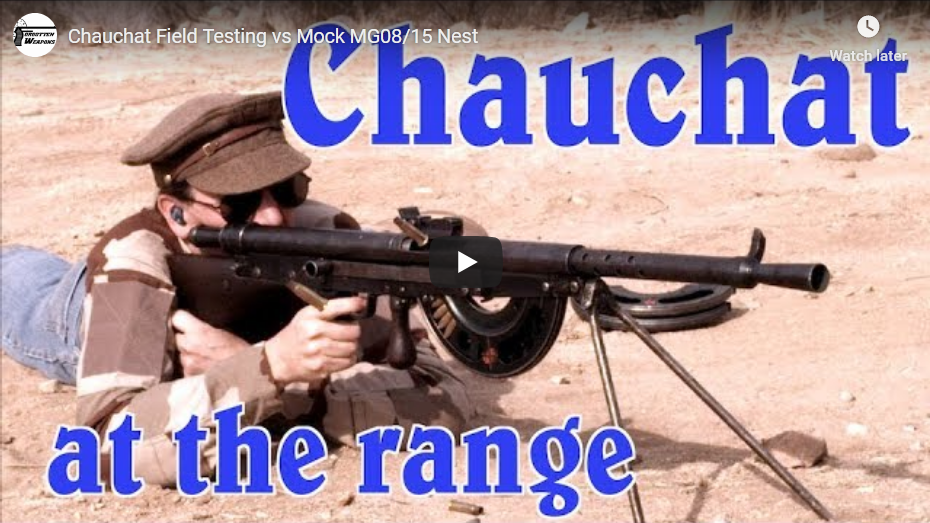
The M1915 CSRG, commonly called the Chauchat after its primary designer, has a reputation as the worst gun ever put into military service. That reputation, however, is not deserved. It was not a great weapon, but it was a very serviceable gun for its day. The French needed a light automatic rifle *right now*, and needed it in large numbers. The Chauchat answered that call, and was used to great effect by many French soldiers.

The Chauchat’s poor reputation comes from a couple places, some justified and some not. First off, many US troops trained on M1918 Chauchats built in .30-06, which were poorly made and pretty darn bad guns. They were replaced by 8mm Lebel guns before going into combat, but the bad experiences of training stuck with many Americans. The biggest mechanical flaw in the Chauchat was its magazine. All automatic weapons are heavily dependent on good magazines, and the Chauchat used a magazine that was made of thin metal, easily damaged, and open on the sides for dirt and mud to enter. If the magazines were not treated well, the gun would become hopelessly useless.

In addition, many of the Chauchat guns in the United States today were deactivated at one time, and often badly reactivated. This has nothing to do with their original reliability, but it does a lot to perpetuate their reputation. This particular example is an original gun that does not appear to have ever been deactivated, and it ran flawlessly for me. It will be an excellent example for someone who can appreciate it!

December 21, 2019

The Treaty of Versailles And The Economic Consequences Of The Peace I THE GREAT WAR 1919

Filed under: Books, Economics, Germany, History, USA, WW1 — Tags: , , , , , , — Nicholas @ 06:00

The Great War
Published 19 Dec 2019

Help The Great War and keep it free for everyone: https://patreon.com/thegreatwar

John Maynard Keynes was an economist and part of the Paris Peace Conference in 1919. He had high hopes for a new post-war order but when he realized what Georges Clemenceau, David Lloyd-George and Woodrow Wilson were planning, he resigned from the conference. And then wrote a book about it: The Economic Consequences of the Peace became a bestseller and is one of the best known critiques of the Versailles Treaty.

» SUPPORT THE CHANNEL
Patreon: https://www.patreon.com/thegreatwar
Merchandise: https://shop.spreadshirt.de/thegreatwar/

» SOURCES
Demps, Lorenz and Materna, Ingo (eds.). Geschichte Berlins von den Anfängen bis 1945. Berlin, 1987.
Eichengreen, Barry. Golden Fetters. The Gold Standard and the Great Depression 1919-1939. New York 1995.
Horn. Britain, France and the Financing of the First World War, 2002.
Hudson, Michael. Trade, Development, and Foreign Debt: Volume 2. Pluto Press, London, 1992.
Hudson, Michael. Superimperialism: The Origins and Fundamentals of U.S. World Dominance. Pluto Press, London 2003.
Keynes, John Maynard. The Economic Consequences of the Peace. Harcourt, Brace and Howe, New York, 1919.
Kinzer, Stephen. The True Flag: Theodore Roosevelt, Mark Twain, and the Birth of American Empire. St. Martin’s Griffin, 2018
Shirer, The Rise and Fall of the Third Reich. 1960.
Skidelsky, Robert. John Maynard Keynes, 1883-1946: Economist, Philosopher, Statesman. Penguin Books, New York, New York, 2003.
Skidelsky, Robert. John Maynard Keynes Volume I — Hopes Betrayed. Penguin Books, New York, 1983.

»CREDITS
Presented by: Jesse Alexander
Written by: Mark Newton
Director: Toni Steller & Florian Wittig
Director of Photography: Toni Steller
Sound: Toni Steller
Editing: Toni Steller
Mixing, Mastering & Sound Design: http://above-zero.com
Maps: Daniel Kogosov (https://www.patreon.com/Zalezsky)
Research by: Jesse Alexander
Fact checking: Florian Wittig

Channel Design: Alexander Clark
Original Logo: David van Stephold

A Mediakraft Networks Original Channel

Contains licensed material by getty images
All rights reserved – Real Time History GmbH 2019

December 20, 2019

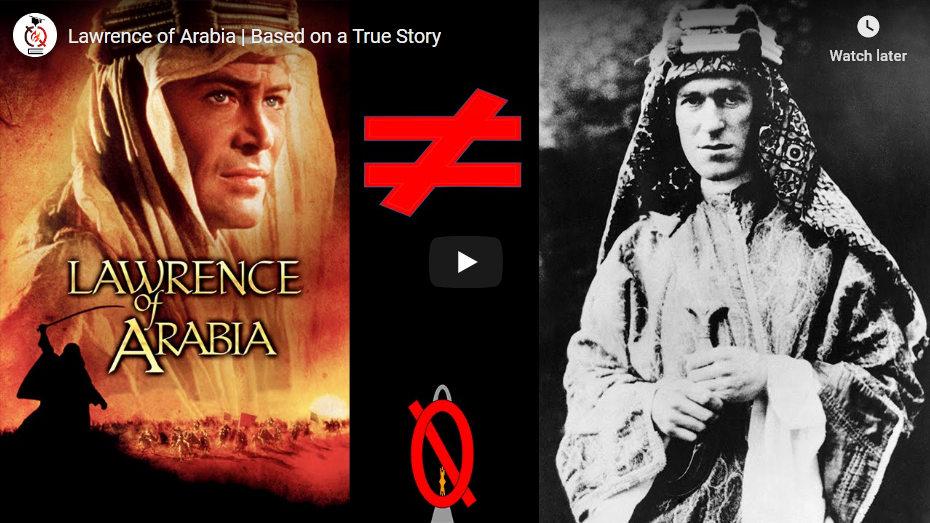
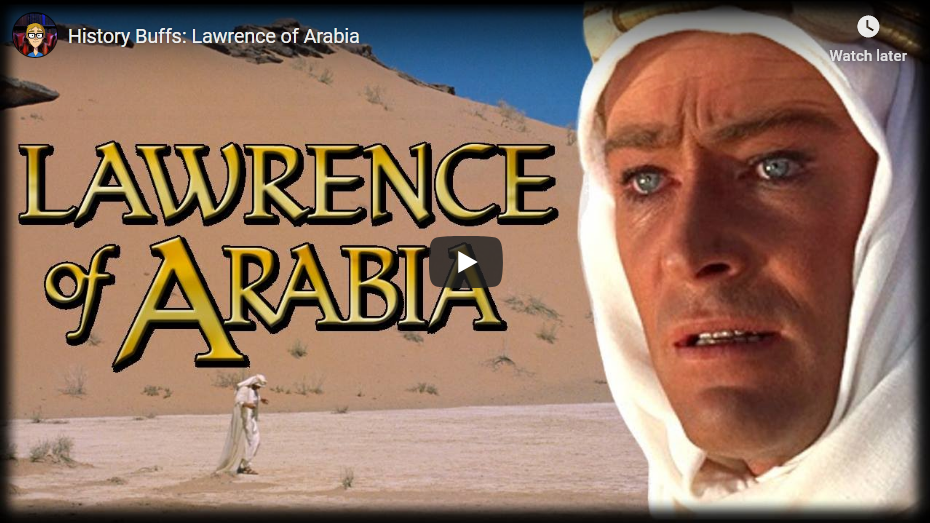
“Seven Pillars of Wisdom” – T. E. Lawrence of Arabia – Sabaton History 046 [Official]

Filed under: Britain, History, Media, Middle East, WW1 — Tags: , , , , — Nicholas @ 06:00

Sabaton History
Published 19 Dec 2019

The British T.E. Lawrence played a major role in bringing together a coalition of Arab factions to rise up against the Ottoman Empire. Their efforts helped the British war effort in the Middle East, but the British-Arab coalition was not as stable as it might have seemed.

Support Sabaton History on Patreon: https://www.patreon.com/sabatonhistory

Listen to The Great War (Where “Seven Pillars of Wisdom” is featured):
CD: http://nblast.de/SabatonTheGreatWar
Spotify: https://sabat.one/TheGreatWarSpotify
Apple Music: https://sabat.one/TheGreatWarAppleMusic
iTunes: https://sabat.one/TheGreatWarItunes
Amazon: https://sabat.one/TheGreatWarAmazon
Google Play: https://sabat.one/TheGreatWarGooglePlay

Listen to Sabaton on Spotify: http://smarturl.it/SabatonSpotify
Official Sabaton Merchandise Shop: http://bit.ly/SabatonOfficialShop

Hosted by: Indy Neidell
Written by: Markus Linke and Indy Neidell
Directed by: Astrid Deinhard and Wieke Kapteijns
Produced by: Pär Sundström, Astrid Deinhard and Spartacus Olsson
Creative Producer: Joram Appel
Executive Producers: Pär Sundström, Joakim Broden, Tomas Sunmo, Indy Neidell, Astrid Deinhard, and Spartacus Olsson
Post-Production Director: Wieke Kapteijns
Production Intern: Rune Væver Hartvig
Edited by: Iryna Dulka
Sound Editing by: Marek Kaminski
Maps by: Eastory – https://www.youtube.com/c/eastory

Archive by: Reuters/Screenocean https://www.screenocean.com
Music by Sabaton.

Sources:
– National Portrait Gallery
– Boston Public Library
– IWM: Q 59294, Q 73536, Q 115096, Q 73535, Q 60212, Q 103747, Q 67234, Q 59703A, Q 59576, Q 58858A, Q 58861, Q 58863, Q 59193, Q 58823, Q 58938, Q 59078, Q 59190, Q 58841, Q 58704, Q 59422, Q 58891, Q 60035, Q 59073, Q 60102, Q 60096, HU 123936, Q 12629, Q 58752, Q 59314, Q 59314A, Q 58830, Q 58845, Q 12364, ART 3198, ART 2510, Q 105583, Q 103750, Q 59324, Q 59312, Q 12363, Q 103770, Q 86295, Q 59061, Q 72565, Q 12332

An OnLion Entertainment GmbH and Raging Beaver Publishing AB co-Production.

© Raging Beaver Publishing AB, 2019 – all rights reserved.

From the comments:

Sabaton History
2 days ago (edited)
Thats right, it’s Indy of Arabia! Even though “Seven Pillars of Wisdom” is a crew-favourite, we have waited with this episode until we could show off some exclusive material from the “Seven Pillars of Wisdom” music video. With none other than Indy Neidell in the role of Lawrence (or Peter O’Toole?). This episode sure is among our favourite episodes to this date — we hope you enjoy it as well. If you do (and you weren’t already convinced by Joakim’s awesome Call To Action (17:20), please consider supporting this project on Patreon. It is thanks to those who are already there that we’re able to keep making these episodes! -> https://www.patreon.com/sabatonhistory

Cheers,
The Sabaton History Team

J.R.R. Tolkien: Author of Worlds

Filed under: Books, Britain, History, WW1 — Tags: , , , , — Nicholas @ 02:00

Biographics
Published 12 Apr 2018

Known as “the father of modern fantasy” his epic tales of legend and lore have been enjoyed by millions of people all over the world — devoured in popular books and adapted for Hollywood blockbuster films. Unbelievably bright, he was a distinguished university professor, poet, historian, and expert linguist. As a child, he even made up his own languages for pure fun.

Visit our companion website for more: http://biographics.org

Credits:
Host – Simon Whistler
Author – Crystal Sullivan
Producer – Samuel Avila
Executive Producer – Shell Harris

Business inquiries to biographics.email@gmail.com

Biographies by the book, get J.R.R. Tolkien’s biography from Amazon: http://amzn.to/2ChRfIV

QotD: Ontario pubs

Filed under: Cancon, Food, Humour, Quotations, WW1 — Tags: , , , — Nicholas @ 01:00

Bread, of course, led to variations like cake — which was good — and the kaiser bun, that tasteless, doughy piece of stodge named as revenge upon the Germans for WWI and served in many pubs to this day to diminish the pleasure of an honest hamburger. (The kaiser bun is mandatory in Ontario bars as a pivotal part of the legislation aimed at curtailing pleasure among the citizenry. Citizens who became accustomed to pleasure might start to see it as their due, which would be inconvenient for the authorities.)

Nicholas Pashley, Notes on a Beermat: Drinking and Why It’s Necessary, 2001.

December 18, 2019

Adolf Hitler’s First Steps In Politics – The Foundation Of The Nazi Party I THE GREAT WAR 1919

Filed under: Germany, History, Politics, WW1 — Tags: , , , , — Nicholas @ 06:00

The Great War
Published 17 Dec 2019

Get a free audiobook and 2 Audible Originals with a 30-day trial: http://audible.com/greatwar or text greatwar to 500 500.

Like many former soldiers, lance corporal Adolf Hitler was disillusioned with the new German Republic after the Armistice in 1918. Like man of his country men he was also in dire need of a job. The Bavarian Army provided an opportunity and soon young Adolf Hitler found himself in the ranks of an obscure political party in Munich: The German Workers’ Party.

» SUPPORT THE CHANNEL
Patreon: https://www.patreon.com/thegreatwar
Merchandise: https://shop.spreadshirt.de/thegreatwar/

» SOURCES
Dietrich Eckart, Bolshevism from Moses to Lenin.
Gottfried Feder, Brechung der Zinsknechtschaft 1919.
Fest, Joachim C.: Hitler. Eine Biographie, 1973.
Heiden, Konrad: Adolf Hitler: Das Zeitalter der Verantwortungslosigkeit. Ein Mann gegen Europa, 2016.
Ulrich, Volker: Adolf Hitler. Band 1: Die Jahre des Aufstiegs 1889-1939. 2013.
Fest, Joachim C: The face of the Third Reich: Portraits of the Nazi Leadership. 1999
Program of the German Workers’ Party, 1920 (http://germanhistorydocs.ghi-dc.org/s…)
Jeremy Noakes and Geoffrey Pridham, eds., Nazism 1919-1945, Vol. 1, The Rise to Power 1919-1934. Exeter: University of Exeter Press, 1998, pp. 12-14.

»CREDITS
Presented by: Jesse Alexander
Written by: Jesse Alexander
Director: Toni Steller & Florian Wittig
Director of Photography: Toni Steller
Sound: Toni Steller
Editing: Toni Steller
Motion Design: Phillip Appelt
Mixing, Mastering & Sound Design: http://above-zero.com
Maps: Daniel Kogosov (https://www.patreon.com/Zalezsky)
Research by: Markus Linke
Fact checking: Florian Wittig

Channel Design: Alexander Clark
Original Logo: David van Stephold

A Mediakraft Networks Original Channel

Contains licensed material by getty images
All rights reserved – Real Time History GmbH 2019

December 16, 2019

Captain Fraser’s Webley-Fosbery: WWI in Microcosm

Filed under: Britain, History, Military, Weapons, WW1 — Tags: , , , — Nicholas @ 02:00

Forgotten Weapons
Published 23 Dec 2017

http://www.patreon.com/ForgottenWeapons

Cool Forgotten Weapons merchandise! http://shop.bbtv.com/collections/forg…

Captain Percy Fraser, DSO was born on January 22, 1879 and died in Ypres on the night of February 23, 1915 while attempting to aid men wounded outside their trench. His unit of the Queen’s Own Cameron Highlanders would suffer horrendous casualties at Ypres, and today we will look at his Webley-Fosbery automatic revolver and his service in the British Army.

Thanks to Mike Carrick of Arms Heritage magazine for sharing Captain Fraser’s story and revolver. See his regular column here: https://armsheritagemagazine.com

If you enjoy Forgotten Weapons, check out its sister channel, InRangeTV! http://www.youtube.com/InRangeTVShow

« Newer PostsOlder Posts »

Powered by WordPress