The Tank Museum
Published 3 April 2025Operation Market Garden failed because the tanks of XXX Corps did not reach the Paras in Arnhem in time. Many historians have argued that the British armoured column “let the side down”. But is this actually true?
We reckon there are six reasons why the operation was a total disaster. It was a poor plan from the get-go, relying on a rate of advance that would outmatch the German invasion of France in 1940. Bad weather prevented the deployment of badly-needed reinforcements, and the terrain Guards Armoured were expected to traverse – a single road with impassable conditions on either side – significantly hampered the efforts of the tank crews.
Poor intelligence also meant that the British column was not prepared for resistance from a retreating and desperate German Army. It was a combination of all these factors that caused Market Garden to unravel completely.
Despite the complications, many acts of valour were carried out by both the airborne and armoured divisions, including the legendary assault across the Waal by the US 82nd Airborne.
So, join us as we explore these six reasons why Operation Market Garden failed and decide for yourself whether XXX Corps could have done anymore.
00:00 | Introduction
02:23 | #1 – A Bad Plan
06:22 | #2 – Poor Intelligence
07:51 | #3 – Difficult Terrain
11:27 | #4 – Determined Resistance
13:45 | #5 – Bad Weather
14:38 | #6 – Loss of Surprise
19:45 | What Went Wrong?
(more…)
August 21, 2025
Six Reasons Operation Market Garden FAILED
August 20, 2025
The Korean War Week 61: The South Koreans Strike as Ceasefire Talks Stall – August 19, 1951
The Korean War by Indy Neidell
Published 19 Aug 2025After two months of inactivity, 8th Army begins new offensive operations this week, and it is the South Korean forces doing the fighting. Meanwhile, the Kaesong peace talks are ever more threatened by continuing neutral zone violations.
Chapters
00:00 Hook
00:48 Recap
01:13 Neutral Zone Violations
02:17 The UN Defense System
06:59 The ROK Attacks
10:38 Summer Diseases
12:48 Summary
13:33 Conclusion
15:20 Call to Action
(more…)
California’s ever-receding High Speed Rail dream
Chris Bray provides an on-the-ground update of California’s ultra-expensive high speed rail project which still has yet to deliver a single passenger from one station to another after nearly 20 years of funding:

Start with a description: “In 2008, California voters approved $9.95 billion of state bond funding as seed money to build an 800-mile high-speed rail (HSR) network connecting Los Angeles and San Francisco, and the Central Valley to coastal cities, at speeds of up to 220 miles per hour, with an expected completion date of 2020.”
Construction started in 2015. Pause for a moment and really notice the date.
Ten years later, the project has consumed $18 billion, and an effort to connect Los Angeles and San Francisco has turned into a much more modest “Phase One” plan to connect the cities of the Central Valley, well east of the coast. The modest declared cost of the proposed LA-to-SF bullet train now looks like this for the much shorter line: “a cost range of $89 billion to $128 billion.” The Trump administration has declined to provide more federal funding for the project, but California is suing to try to keep the federal spigot open.
[…]
Famously, the California High-Speed Rail Authority has been posting pictures of its huge construction successes on social media:
See, that’s … almost a whole rail line for a bullet train. Obviously!
So!
If you ever find yourself in Fresno, and I sincerely hope you don’t, the structures that have been built for “high-speed rail” are surprisingly easy to access. There are several places where those structures aren’t fenced in or guarded. At all. […] So when you see this:
…it’s not that hard to just head up onto the thing. It’s also very dangerous, legally dubious, and something you definitely shouldn’t do. Since it’s an elevated construction site, there are a lot of places without guardrails where you can just fall off the thing, and it’s a long way down.
Everyone see this part: Don’t go up there. It’s dangerous. You can fall and die. […] But if you were to climb up onto the thing, which you absolutely should never do, you would see a whole bunch of this:
That’s a section at the northern end of Fresno, looking south.



Of course, California isn’t the only jurisdiction struggling to complete big infrastructure projects: Toronto’s long-awaited Crosstown LRT project got started in 2007 and still has no confirmed completion date, although a faint possibility exists that a portion of the line may open later in 2025.
August 19, 2025
Operation Jubilee: Canada’s Devastating WWII Loss
WarsofTheWorld
Published 17 Jun 2023By 1942, the war was no longer another great European conflict. It was now a firmly global affair enveloping all of the world’s great powers as the Allies squared off against the tyranny and aggression of the Axis nations. Against such colossal forces, no one country could stand alone and events that affected one combatant would ultimately have consequences for the other further down the road.
To that end, while the western Allies and the Soviet Union were effectively fighting separate wars against the same enemy, there needed to be cooperation between the two fronts in order to squeeze the life out of Nazi Germany and insure victory against Fascism. However, the relationship was often a strained one as both Allied power blocks were suspicious of the other’s intentions once the war was over.
Thus, we come to the subject of today’s episode and a story of the war that is still the subject of much debate today. It was an operation with no specific military objective other than to experiment with conducting division-sized amphibious landings against a fortified beach and as a gesture to the Soviet Union who were starting to feel abandoned by their Allies. It is an operation that has become seared into the hearts and minds of the Canadian people for the sacrifice they were asked to make for it.
0:00 Introduction
3:26 A Red Request
7:50 Planning and Preparation
13:32 Operation Rutter – A False Start
18:10 Reviving Rutter
24:02 Operation Jubilee
35:52 A Necessary Lesson?
(more…)
August 18, 2025
Confederate Morse Carbine: Centerfire Cartridges Ahead of Their Time
Forgotten Weapons
Published 23 Oct 2017George Morse of Baton Rouge patented a design for a remarkably modern centerfire cartridge and breechloading rifle action in 1856 and 1858, using a standard percussion cap as a primer. This was coupled with a gutta percha washer for sealing and a rolled brass cartridge body that was strong and robust — easily reloaded, if somewhat complex to manufacture.
After positive trials by the Army and Navy, Morse received a contract to make first complete guns and then a royalty contract for the conversion of existing muskets to his system. Work began at the Harper’s Ferry Arsenal, but money ran out with only 60 conversion completed. When the Civil War broke out, Morse chose to side with the Confederacy, and the tooling for his conversions was taken from the captured Armory to be put to use. He initially set up in Nashville, but the city fell to the Union in 1862, and he was forced to relocate to Atlanta and the Greenville South Carolina. It was in Greenville that Morse was finally able to manufacture guns in quantity, and he built approximately a thousand brass-framed single shot cartridge carbines for the South Carolina state militia.
Unfortunately for the Confederacy, the infrastructure to supply a modern type of cartridge ammunition really did not exist in the South, and this crippled any chance of Morse’s carbines becoming a significant factor in the war. The best technology in the world is still of no use if ammunition cannot be provided!
This Morse carbine is of the third type, using a sliding latch on the breechblock to hold the action closed when firing. Two previous versions used different and less secure systems, but this third type was introduced around serial number 350 and would comprise the remaining 2/3rds of the production run.
Cool Forgotten Weapons merch! http://shop.bbtv.com/collections/forg…
August 16, 2025
This is just crazy enough to work …
Disclaimer: I’m not an American and I don’t know the details of the US immigration system, but from what I’ve read elsewhere, Copernican‘s suggestion has a lot of merit:
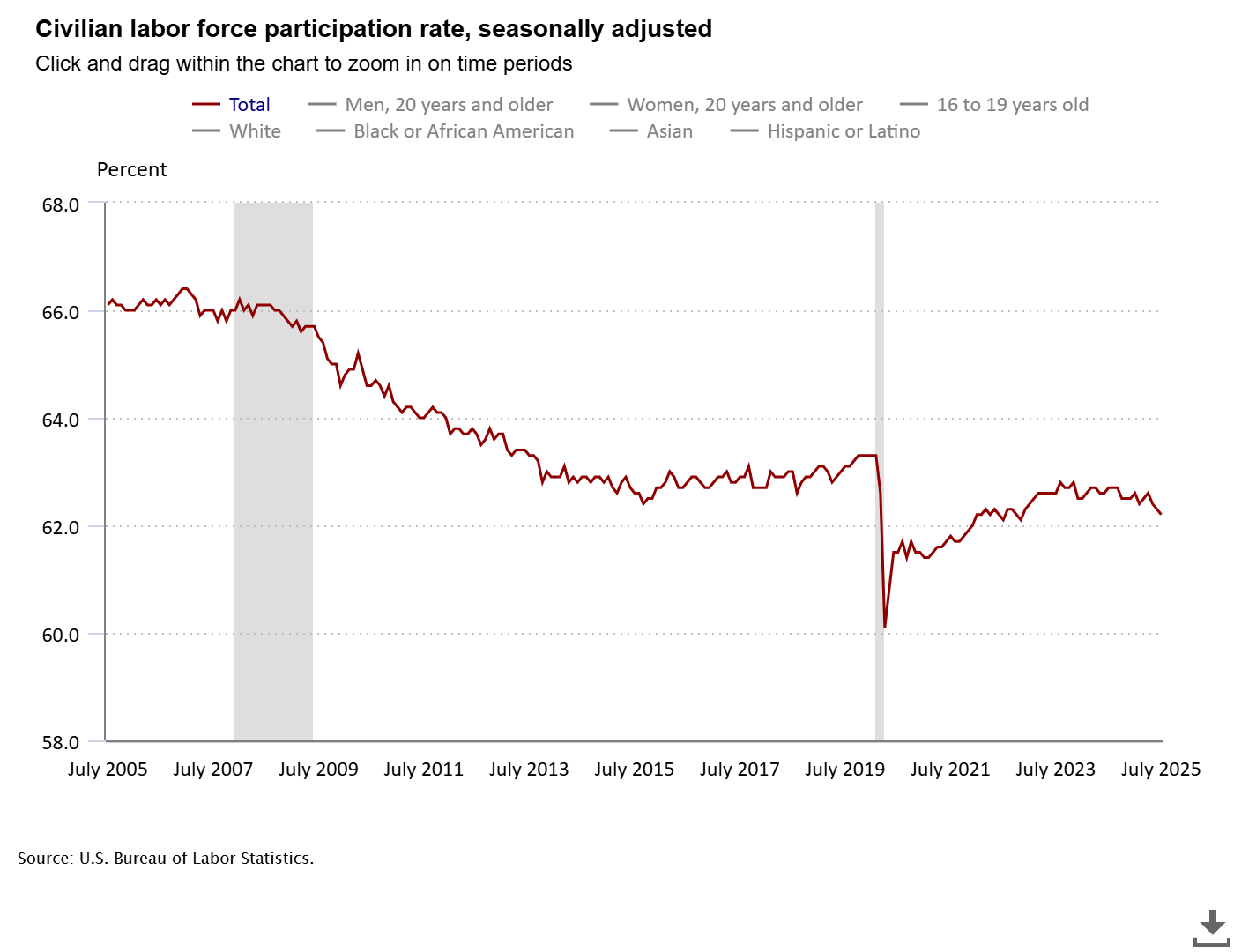
I can’t be the only one sick of H1Bs destroying the western labor market, particularly in tech, but across the board. Out-of-work tech workers further compress the labor market in other areas. This problem is not unique to the United States, but I understand the laws of the US better, so I’ll be arguing from that perspective.
I know it. Walt Bismarck has a whole organization dedicated to trying to find reasonable employment by job-stacking. A few new and interesting resources have appeared, dedicated to screwing with these companies that open the floodgates to a horde of foreign software engineers. Seven-eleven clerks, and SAAR YOU MUST REDEEMs, that can crash our software, our ships, and our interstate semi-trucks for us.
Fortunately, there’s something we can do to fight back.
[…]
Well, while the government doesn’t seem intent on doing anything about it, the Millennials and Zoomers that have been fucked-over appear to finally have enough cultural weight to start pushing back. Here’s the thing about hiring H1B workers: doing so requires that the company demonstrate that no American Citizens can fulfill the role. That demonstration usually takes the form of a listing in a newspaper with 500 readers, the back-end of a website with black text on a black background, or something similar. They don’t want Americans to apply for these jobs; they want to successfully demonstrate that no Americans even applied.
So they make the application process nearly impossible.
Usually, the way this is done is that when an H1B is hired, they are permitted to remain in the country for up to 6 years (2 renewals of 2 years). Once that’s completed, either the H1B worker is forced to return to where they came from, or the job must be re-posted for 2 weeks for a potential American worker. If no American worker applies (because they didn’t see it because it was posted in a hidden corern of the website or a newspaper with no readers), then the H1B may be sponsored for perminent US residency.
What was clearly once a method for gaining the Best and Brightest as potential employees in the United States has become a system of exploitation. H1Bs are underpaid, undervalued, and often booted from the country, so there’s no impetus for them to assimilate. It’s a mess all the way around, and the only ones who benefit are stockholders for billion-dollar tech companies.
For the most part, we all know the story.
But … what if during that 2-week posting, a qualified American candidate does apply for the job? Well, then everything goes to shit. The company is legally not allowed to deny an American Candidate that job without opening themselves up to a massive lawsuit and fines, and penalties. If only one American candidate has applied, then the company has to hire that individual … and if they don’t hire the American candidate and then apply for another H1B to fill that slot, the company is in deep shit in a legal sense.
August 15, 2025
Ted Gioia on Hunter S. Thompson
I must admit that I got hooked on Hunter S. Thompson’s writing very early. I read Fear and Loathing in Las Vegas in my mid-teens and it blew my mind. I couldn’t actually believe everything he wrote, but I couldn’t completely discount it either. I certainly haven’t read everything he wrote … especially his later sports commentary, but I have read most of the best-known books. On his Substack, Ted Gioia is running a three-part series on the writer and his work:

That’s Hunter Thompson. There’s always someone in control behind the wheel — even when he seems most out of control.
This hidden discipline showed up in other ways. Years later, when he ran for sheriff in Aspen or showed up in Washington, D.C. to cover an election for Rolling Stone, savvy observers soon grasped that Thompson had better instincts and organizational skills than some of the most high-powered political operatives. People rallied around him — he was always the ringleader, even going back to his rowdy childhood. And hidden behind the stoned Gonzo exterior was an ambitious strategist who could play a long term game even as he wagered extravagantly on each spin of the roulette wheel that was his life.
“I don’t think you have any idea who Hunter S. Thompson is when he drops the role of court jester,” he wrote to Kraig Juenger, a 34-year-old married woman with whom he had an affair at age 18. “First, I do not live from orgy to orgy, as I might have made you believe. I drink much less than most people think, and I think much more than most people believe.”
That wasn’t just posturing. It had to be true, merely judging by how well-read and au courant Thompson became long before his rise to fame. “His bedroom was lined with books,” later recalled his friend Ralston Steenrod, who went on to major in English at Princeton. “Where I would go home and go to sleep, Hunter would go home and read.” Another friend who went to Yale admitted that Thompson “was probably better read than any of us”.
Did he really come home from drinking binges, and open up a book? It’s hard to believe, but somehow he gave himself a world class education even while living on the bleeding edge. And in later years, Thompson proved it. When it came to literary matters, he simply knew more than most of his editors, who could boast of illustrious degrees Thompson lacked. And when covering some new subject he didn’t know, he learned fast and without slowing down a beat.
But Thompson had another unusual source of inspiration he used in creating his unique prose style. It came from writing letters, which he did constantly and crazily — sending them to friends, lovers, famous people, and total strangers. Almost from the start, he knew this was the engine room for his career; that’s why he always kept copies, even in the early days when that required messy carbon paper in the typewriter. Here in the epistolary medium he found his true authorial voice, as well as his favorite and only subject: himself.
But putting so much sound and fury into his letters came at a cost. For years, Thompson submitted articles that got rejected by newspapers and magazines — and the unhinged, brutally honest cover letters that accompanied them didn’t help. He would insult the editor, and even himself, pointing out the flaws in his own writing and character as part of his pitch.
What was he thinking? You can’t get writing gigs, or any gigs, with that kind of attitude. Except if those cover letters are so brilliant that the editor can’t put them down. And over time, his articles started resembling those feverish cover letters — a process unique in the history of literature, as far as I can tell.
When Thompson finally got his breakout job as Latin American correspondent for the National Observer (a sister publication to the Wall Street Journal in those days), he would always submit articles to editor Clifford Ridley along with a profane and unexpurgated cover letter that was often more entertaining than the story. In an extraordinary move, the newspaper actually published extracts from these cover letters as a newspaper feature.
If you’re looking for a turning point, this is it. Thompson now had the recipe, and it involved three conceptual breakthroughs:
- The story behind the story is the real story.
- The writer is now the hero of each episode.
- All this gets written in the style of a personal communication to the reader of the real, dirty inside stuff — straight, with no holds barred.
Why can’t you write journalism like this? In fact, a whole generation learned to do just that, mostly by imitating Hunter S. Thompson …
QotD: American Puritanism
The American, in other words, thinks that the sinner has no rights that any one is bound to respect, and he is prone to mistake an unsupported charge of sinning, provided it be made violently enough, for actual proof and confession.
H.L. Mencken, “Puritanism As a Literary Force”, A Book of Prefaces, 1917.
August 14, 2025
D-Day’s Flat Pack Ports OR Lord HT Gets Cross with The Fat Electrician
HardThrasher
Published 13 Aug 2025In which we use the @the_fat_electrician as an excuse to talk about the Mulberry Harbours, make a specific threat to a building in the United States and get to oogle at giant bits of floating concrete.
Primary Source – Codename Mulberry – Guy Hartcup, Pen & Sword Military. Kindle Edition 2014 (org. 1977)
(more…)
“Just war” theory and nuclear weapons practice
On Substack, Nigel Biggar discusses the postwar argument about whether the use of nuclear weapons against Japan was justified or not:

Atomic cloud over Hiroshima, taken from “Enola Gay” flying over Matsuyama, Shikoku, 6 August, 1945.
US Army Air Force photo via Wikimedia Commons.
For pacifists, Christian or otherwise, the answer is clear: since any deliberate killing is wrong, the dropping of atomic bombs on Hiroshima and Nagasaki on 6 and 9 August 1945 was wrong about two hundred thousand times over.
But that clear answer generates further questions whose answers aren’t so obvious. If killing is always wrong, then the United States should never have gone to war against Imperial Japan and therefore its ally, Hitler’s Germany. What, then, would have stopped the triumph of brutally racist Japanese imperialism in Asia and massively murderous Nazism in Europe? The noble witness of innocent non-violence?
Unfortunately, the historical evidence is that the kind of people who ran the slave-labour camps in Burma, and the likes of Dachau in Germany and Auschwitz in Poland, were not at all shamed by the face of vulnerable innocence; on the contrary, it excited their lust for domination and they fed upon it.
On the other hand, those who think that war can sometimes be justified, might judge that the mass killing of civilians by the atomic bombs was, simply by its massive extent, indiscriminate and therefore unjust. But there are two problems here. The first is that the vast majority of people, certainly in the UK and the USA, regard the war against Hitler and his allies as morally justified, notwithstanding the fact that that cost between 60 and 80 million deaths, well over half of them civilian.
Image credit – Wikipedia
And the second problem is that the ethical tradition of “just war” thinking doesn’t say that we may not kill civilians, even on a massive scale; it only says that we may not kill them intentionally. If a military objective can’t be achieved except by risking the possible or probable deaths of civilians, then it may still be attempted, provided that the objective is sufficiently important, militarily, and that all reasonable measures are taken to avoid or minimise the side-effect of civilian casualties. The reason for this permissiveness is that in most circumstances just war would be impossible to prosecute otherwise.
So, for the “just war” proponent, if the intention in dropping the atomic bombs on Japan was to destroy vital military or military-related targets, and if there was no more discriminate way of achieving that end, then the bombing was morally justified. It was deeply, deeply tragic—but nevertheless just.

QotD: It’s not hypocrisy when progressives do it …
Severian, “Fade to Black”, Founding Questions, 2022-01-23.
August 13, 2025
The Korean War Week 60: Neutral Zone Violations and the 38th Parallel Standoff – August 12, 1951
The Korean War by Indy Neidell
Published 12 Aug 2025UN Commander Matt Ridgway is extremely frustrated by the Communist delegation’s unyielding stance on the 38th Parallel at the Kaesong peace talks. Chinese violations of the neutral zone highlight the fact that the war still goes on, though, as do the preparations for a UN offensive soon to be launched, to really reignite the active war in a big way.
Chapters
00:00 Hook
00:50 Recap
01:15 Ridgway’s Frustration
05:01 Neutral Zone Violations
08:57 Van Fleet’s Plans
12:28 Conclusion
13:50 Call to Action
(more…)
QotD: The New York Times and their 1619 project
It’s a good point, isn’t it? If you don’t believe in a liberal view of the world, if you hold the doctrines of critical race theory, and believe that “all of the systems in the country” whatever they may be, are defined by a belief in the sub-humanity of black Americans, why isn’t every issue covered that way? Baquet had no answer to this contradiction, except to say that the 1619 Project was a good start: “One reason we all signed off on the 1619 Project and made it so ambitious and expansive was to teach our readers to think a little bit more like that”. In other words, the objective was to get liberal readers to think a little bit more like neo-Marxists.
The New York Times, by its executive editor’s own admission, is increasingly engaged in a project of reporting everything through the prism of white supremacy and critical race theory, in order to “teach” its readers to think in these crudely reductionist and racial terms. That’s why this issue wasn’t called, say, “special issue”, but a “project”. It’s as much activism as journalism. And that’s the reason I’m dwelling on this a few weeks later. I’m constantly told that critical race theory is secluded on college campuses, and has no impact outside of them … and yet the newspaper of record, in a dizzyingly short space of time, is now captive to it. Its magazine covers the legacy of slavery not with a variety of scholars, or a diversity of views, but with critical race theory, espoused almost exclusively by black writers, as its sole interpretative mechanism.
Don’t get me wrong. I think that view deserves to be heard. The idea that the core truth of human society is that it is composed of invisible systems of oppression based on race (sex, gender, etc.), and that liberal democracy is merely a mask to conceal this core truth, and that a liberal society must therefore be dismantled in order to secure racial/social justice is a legitimate worldview. (That view that “systems” determine human history and that the individual is a mere cog in those systems is what makes it neo-Marxist and anti-liberal.) But I sure don’t think it deserves to be incarnated as the only way to understand our collective history, let alone be presented as the authoritative truth, in a newspaper people rely on for some gesture toward objectivity.
Andrew Sullivan, “The New York Times Has Abandoned Liberalism for Activism”, New York, 2019-09-13.
August 12, 2025
AOL to shut down its last dial-up access: dozens to be inconvenienced
James Lileks on the end-of-era announcement from AOL — and I can’t recall the last time I thought of that company — that they’ll be eliminating the last of their dial-up internet access accounts:

New tech: shiny today, tarnished tomorrow. Everything that was once bright and brilliant now stamps its walker towards the exit door. The headlines wave goodbye: Last telegram office in the US shut down.
Last phone booth in New York is decommissioned. The latest: AOL to shut off its landline customers.
You’d think this would be news on the level of “homing pigeon trainer employment hits record lows”.
Who uses dialup? Yahoo, which now owns the AOL brand, says that the user base is in the “low thousands”, which suggests that some people forgot to turn off autopay in 2005. What does AOL do today? The usual basket of dross and chum. A website that offers “trending videos” — gosh, don’t know where else you’d find those — and a lot of news stories, supplied by Yahoo, and its … numberless army of journalists, I guess.
It’s a legacy brand for people who want to slide into the internet like comfy slippers they left under the desk. And that’s fine. Facebook serves the same function. It’s a place to start, a home base. A familiar window out which we gaze daily We all have them. But let us not get nostalgic for AOL and the early days of the internet. Some people, of course, love to talk about the pioneer days, and how it required some technical know-how:
Well, we didn’t have those fancy little pre-made modems like you got in the 90s, so we had to get a little matchbox and fill it up with a certain kind of specially-bred insect that sang a note at a particular pitch when exposed to electrical current. So you’d crank up the generator and put the little alligator clips on the box and hold the box up to the phone while you entered your user name in Morse code by pushing on the hang-up buttons, and then you had to shake the box so the insect singing would modulate. Took about an hour, but then you’d be “On the Line”, as we said, and you could go to a Usenet group and call people Nazis. Kids today, they can call someone a Nazi without lifting a finger.
August 11, 2025
The problem with the theory that local government is more responsive is … people
Poor Chris Bray is having a moment of deep cognitive dissonance over the vast chasm between his prior belief that local government is more sensible, more grounded, more responsive to the electorate than huge, distant, impersonal big government:
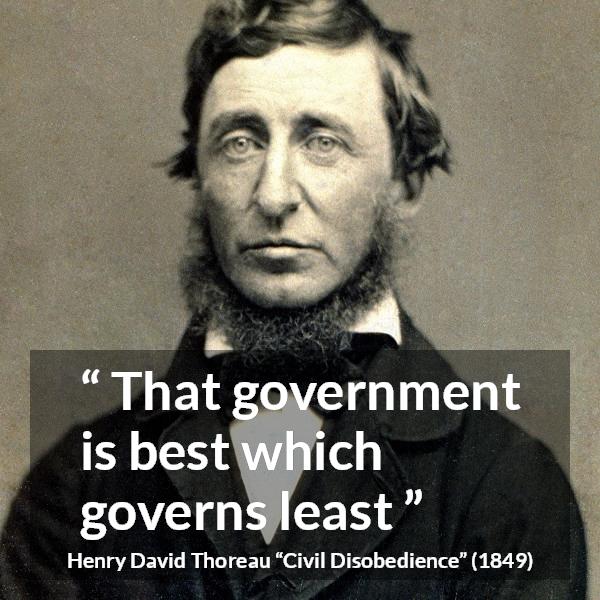
The more you deal with government, the more you are likely to agree with Thoreau
The problem of underlying principles and structural assumptions in a moment of profound cultural decay.
Like my old friend James Madison, the core of my understanding of political power is that authority becomes more rational and balanced as it gets closer to the people who are governed. Starting from home in my list of ideological priors, centralized power is usually going to be a steamroller, managed on top-down premises by people you’ve never met; local government, government by neighbors, is usually going to be more adept at listening and adapting. Your mayor is down the block, mowing his lawn. You can wave to him. When I worked at small town newspapers, I’d have breakfast with the city manager and the police chief — mostly so they could threaten to call my editor and have me fired, but still. They were here, right in front of me. I could talk to them. In the town where I’ve lived for a few years, now, I’ve waited at Trader Joe’s for a city councilman in cargo shorts and an old t-shirt to move over so I could get to the ground beef. They aren’t distant autocrats.
Sadly, though, a good few of them turn out to be proximate autocrats, and almost miraculously stupid. The problem with the theory of relatively well-balanced local authority is that some of the biggest goobers I’ve ever met have served on small town city councils and school boards, and your HOA board of literal neighbors makes Mussolini look like a hippie.
[Deleted a video here of an HOA officer being arrested, because it was staged.]
I wrote a quite carefully reported newspaper story about wasted money at a suburban school district, decades ago, that was critical but fair and elaborately sourced. The subsequent conversations I had with the members of the school board made me wonder if they had actual brain damage. No one on earth is more susceptible to psychotic conspiracy theories than small town elected officials, who respond to mild criticism by demanding to know WHO PUT YOU UP TO THIS, WHO ARE YOU REALLY WORKING FOR!?!?!?! WHAT’S YOUR TRUE AGENDA!?!?!?! WHO SENT YOU!?!?!?!? If you ask me for a list of the top ten people I’ve known personally and can’t stand at all, roughly eight of them were elected to local government positions in towns with low-five-figure populations, and I start grinding my teeth at the sound of their names. Wait, no: nine.
This topic is back on my mind this week because of Lina Hidalgo, though a county of five million people may be a bad example of real localism and neighborhood authority. Hidalgo is the county judge — in Texas, the chief executive officer — of Harris County. And she’s mad as a hatter. Click on the link to watch the video, but a tax increase is “not about politics, it’s about kids.” Never heard that one before.
[…]
Making appalling decisions at the head of broken institutions, they respond to criticism by hiring men with guns as a shield against ordinary human contact. Like I said, the mayor is down the block, mowing his lawn, so you can wave to hi—STOP RIGHT THERE, GET ON THE GROUND.
The spirit of the NSBA letter lives on in a thousand local offices, where the problem with running schools is that parents exist, and the problem with running cities is that they have people in them.