
World War Two
Published 5 Mar 2022The Japanese again fail to reinforce New Guinea, losing many transport ships, and their forces there are ever more isolated. In Tunisia the Axis lose a bunch of new Tiger tanks, but in the Soviet Union it is the Axis forces that are on the offensive as Erich von Manstein’s offensive continues.
(more…)
March 6, 2022
Another Naval Disaster for Japan – WW2 – 184 – March 5, 1943
Comments Off on Another Naval Disaster for Japan – WW2 – 184 – March 5, 1943
NATO’s “responsibility” for Russia’s invasion of Ukraine
In The Line‘s weekly round-up for freeloading cheapskates like me (we only get a diet version of the full post), Boris and Natasha explain why it’s all the fault of NATO and the west, and that Russia is completely innocent of any wrongdoing:
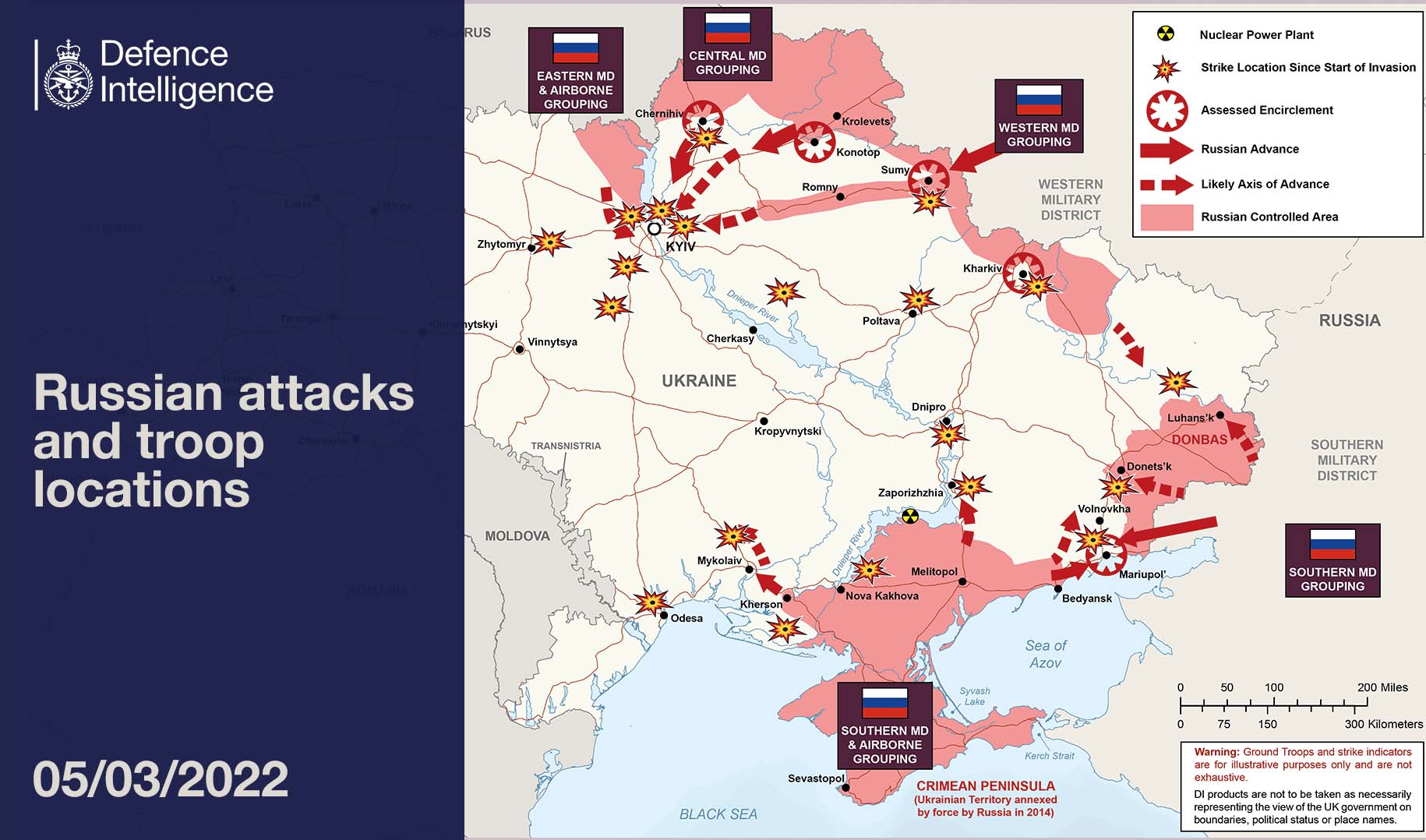
As the world continues to watch the horrors unfolding in Europe, we in our cozy Western enclaves are left to re-discover uncomfortable realities about the geopolitical circumstances around us. Namely, the world is not as safe as once we had thought, and America is not the only great power capable of inflicting atrocities on a smaller, sovereign nation for its own benefit. In fact, watching the situation in Europe play out, we’re reminded that America is not a uniquely evil entity at all — and that many of the moral errors it has committed were made precisely because the neighbourhoods in which it presumed to operate are neither peaceful, easy, nor kind.
These are old lessons of history and history — unlike ideology — is messy and complicated. And as we once again draw out those long-forgotten lessons, we find ourselves confronting old arguments as well.
Namely, we see a lot of thoughtful individuals offering the contrarian argument that NATO and the West are ultimately to blame for the invasion in Ukraine because of our military alliance’s expansion into Russia’s traditional sphere of influence. This undermined the old Russian empire’s dignity, the argument goes, and fomented Cold War paranoia that was bound to break out into an aggressive military response.
We at The Line expect this decades-old position will be debated for decades more to come, but in light of the events of the last week, we find it less compelling than ever. We offer the following three problems with this line of argument.
The first is that it falls into the trap of assuming that NATO — and, by implication, America — is the Main Character of global history.
In the minds of the NATO blamers, neither Russia’s domestic political intrigues, Vladimir Putin’s personal ideological commitments and sanity, nor the histories and cultures of the actual regions in question are given greater weight than NATO’s scheming or Joe Biden’s speaking skills. The solipsism and self-regard that this argument implies is, in truth, both stunning and entirely in keeping with the United States’ national character (and the West in a broader sense). By this metric, it’s America/the West, and only America/the West, that is the true global protagonist. The rest of humanity are just bit-players in a grand Western narrative.
As Canadians, we find these assumptions particularly offensive. Ours is a country that exists between America and Russia, and while we may disagree with specific American military engagements and tactics — and will say so! — we are not hapless serfs of American imperialism. Let’s lay out our choices plainly: a middle power like Canada can ally itself with Russia, China, NATO, or find some form of interdependence with a patchwork of one-on-one military alliances. Even if we were to take our economic interdependence with America out of the equation, NATO is our best option by far. We mean … Jesus. Duh.
We will pick NATO 999 times out of 1,000 and so will most free people living in democratic societies. Because the other options are clearly, obviously much, much worse: NATO is the certified preferred military alliance of the free peoples on this planet.
We welcome historical self-reflection and improvement, but America cannot allow itself to wallow so deeply in its own self-flagellating narcissism that it forgets this fact. America is not the Main Character of our shared history, but it is a leader within the global community, and must rise to that role and NATO with it.
In the Daily Sceptic, Noah Carl notes that “the West’s response [to the Russian invasion] seems to have been slapped together on the fly amidst a storm of social media outrage”:
The West has responded to Russia’s invasion of Ukraine in three main ways: pouring arms into Ukraine to buttress the country’s defence; imposing heavy sanctions on Russia to cripple its economy; and essentially “cancelling” Russia by shutting down its foreign media, censoring its cultural exports, and banning its athletes from international competitions.
The hope seems to be that either one of three things will happen: the Russians will be defeated or forced to withdraw; Putin will be overthrown in a palace coup or popular uprising; or he’ll be brought to the negotiating table and made to accept terms highly unfavourable to Russia. While this strategy may work, I’ve yet to read a cogent defence of it.
In fact, the strategy could have a number of negative second-order effects – i.e., unintended consequences – that haven’t been properly thought through.
As several people have observed, the West’s response seems to have been slapped together on the fly amidst a storm of social media outrage, as opposed to being carefully devised after consideration of all possible eventualities. One Substack commenter noted:
Just as COVID-19 is the first pandemic in the Age of Twitter, so the Ukraine invasion is, in some sense, the first war in the Age of Twitter. As it unfolds, we are seeing many disturbing parallels to the events of early 2020. People are rapidly normalising once-fringe ideas like a NATO-enforced no-fly zone, direct U.S. conflict with Russia, regime change in Moscow, and even, incredibly, the use of nuclear weapons. Just as with Covid, we’re seeing the rapid abandonment of longstanding Western policies. The overnight flips on German defence spending and SWIFT are like the overturning of conventional public health policies on masking, lockdowns, and so on.
Let’s deal with each aspect of the Western response in turn. Pouring arms into Ukraine may precipitate a Russian defeat. But it could just as easily prolong the conflict, leading to many more Ukrainian deaths. The Syrian civil war has dragged on for more than ten years and claimed more than 400,000 lives, in part thanks to external arming of rebel groups.
If there’s a good chance the Ukrainians can win, supplying them with arms makes sense. But if they’re unlikely to prevail, why would we want to prolong the conflict?
One possible answer is to deter the next autocratic ruler from launching a similar invasion. But how much deterrence does supplying arms really achieve, especially if Russia ends up winning? Now, entering the war on Ukraine’s side – that would achieve deterrence, but it’s something the West isn’t willing to do (for obvious reasons).
Brendan O’Neill is hoping that the conflict in Ukraine can also help end the “Age of Fragility” in the west:
It is not the most pressing question to emerge from Russia’s onslaught on Ukraine, but I have nonetheless found myself wondering – what will happen with the word “erasure” following this terrible war? Ukraine’s heroic president Volodymyr Zelensky used the e-word the other day. Russia, he said, is out to “erase our history”. The Putin regime and its marauding forces want to “erase our country, erase us all”, Zelensky cried, aptly, given the vigour and bigotry with which Vladimir Putin has mocked and violently undermined Ukrainian sovereignty. Putin clearly sees Ukraine as a joke nation that can be casually scrubbed from the map and collapsed back into Russia.
Zelensky’s impassioned, existential words got me thinking: which woke warrior here in the mercifully war-free West will dare to misuse the word “erasure” now? “Erasure” is a key buzzword in the PC lexicon. There’s trans erasure, LGBT erasure, the erasure of black women with “kinky hair”. Only erasure here doesn’t mean “the removal of all traces of something”. It certainly doesn’t mean a foreign power using brute force to extinguish your most basic rights. No, it means a gender-critical feminist turning up to your campus and saying “If you have a penis, you are a man”. It means EastEnders not having enough bisexual characters. It means being asked “Can I touch your hair?”. It means attending a museum or some other public institution and seeing that its Pride flag doesn’t include the shade that represents your femme-boy demisexual identity. All of this is very seriously described as “erasure”, as the “violent” exclusion of me and my identity. Even as bombs fall on Kharkiv and Kyiv, threatening to erase people and infrastructure, designed to erase a nation’s identity, still time-rich, experience-poor activists in the West seriously believe they are being erased by tweets and questions and opinions that differ from their own.
It remains to be seen which woke midwit will be the first to say out loud that having to walk past a statue of a long-dead Brit with iffy beliefs feels “erasing” at the same time as statues and buildings and people in Ukraine are being erased by Russian bombs. But what we know for sure, already, is that the war in Ukraine has raised burning questions not only about the Putin regime’s criminal behaviour and Ukraine’s right to self-determination, but also about us, about the West, about what we might say and do, if anything, in relation to this war in Europe. The war in Ukraine is an incredibly confronting moment for our continent. It reminds us that history is not in fact over, that unresolved questions of power and territory lurk just beneath the surface of politics, and that war is not the faraway phenomenon we thought it was. More fundamentally, it implicitly issues a challenge to the unseriousness, the smallness, of what passes for public life in 21st-century Western Europe. It asks us if we are ready for the violent return of history. The answer, right now, sadly, is No.
Over the past week, the contrast between the frivolousness of the woke West and the seriousness of threatened Ukraine, between the narcissistic obsessions of secure Westerners and the fight for survival being waged by youthful Ukrainians, could not have been more stark. On the very day Russia launched its invasion, the UK Ministry of Defence’s LGBT Network (why?) announced on Twitter that it was having a coffee morning to discuss pansexuality and asexuality. Yes, as Ukrainians hid from Russian tanks and planes, a part of the actual MoD was sipping lattes and chatting about folks who feel a “romantic, emotional and / or sexual attraction to people regardless of their gender”. Not to be outdone, the head of MI6, Richard Moore (he / him), used the occasion of Russia’s bombardment of Ukraine to issue a “series of tweets” on LGBTHM2022 – that’s LGBT History Month 2022 for those of you not abreast with the alphabet soup. “We want your help!”, Ukrainians cried. “Here’s some information about the vast spectrum of human sexual attraction”, the British security services replied.
As everyday Ukrainians pull together and arm themselves with guns and petrol bombs, the military top brass of Britain have rather different concerns. Such as why you should avoid using words like “manpower”, “strong” and “grip”. They “reinforce dominant cultural patterns”, according to a recent internal report authored by UK national security adviser Sir Stephen Lovegrove. Does that mean I’m not allowed to tell military bosses to get a grip? Apparently you should also check your white privilege and use gender-neutral language wherever possible. And let’s not forget the campaign for “vegan uniforms” in the British army. This week, as Ukraine burns, it was reported that the Ministry of Defence Vegan and Vegetarian Network (again, why?) is agitating for animal-friendly clothing and boots, excluding things like leather. Well, you wouldn’t want to be wearing the skin of a dead animal as you kill a human being, would you?
Comments Off on NATO’s “responsibility” for Russia’s invasion of Ukraine
QotD: The academic rat-race
It’s surprising how little people actually know about what goes on in the ivory tower, given that our culture expects you’ll put yourself (or your parents!) a midsize mortgage in the hole to attend the six-year SJW sleepaway camp we call “college”. The crap you see spotlighted in The New Real Peer Review isn’t excessive; it’s the norm in academia. We’ve been over the reasons for this before, but here’s a quick recap:
Since only “scholars” who publish get tenure, and since journals only publish original “research”, the only way to publish consistently is to make shit up. Given that Shakespeare ain’t writing no more sonnets, the only way to get tenure in, say, English Literature is to argue that, properly “deconstructed”, the list of contents on a packet of beef jerky is just as valuable — indeed, more valuable — as a “cultural artifact” than anything the Bard, curse his CisHetPat White soul, ever wrote. Hence, the road to tenure takes only left turns.
Severian, “I Learned A New Word”, Rotten Chestnuts, 2019-01-23.
Comments Off on QotD: The academic rat-race
March 5, 2022
Battle of Quebec | Animated History
The Armchair Historian
Published 10 Feb 2019Sources:
1775: A Good Year for Revolution, Kevin Phillips100 Decisive Battles: From Ancient Times to the Present, Paul K. Davis
Warfare In The Ninteenth Century, David Gates
Battles of The Revolutionary War 1775-1781, W.J. Wood
A Guide to the Battles of the American Revolution, Theodore P. Savas & J. David Dameron
Cracking the AP U. S. History Exam, 2018 Edition, Princeton Review
Music:
“Epic Battle Speech” by Wayne Jones
“Elegy” by Wayne Jones
“All This – Scoring Action” by Kevin MacLeod is licensed under a Creative Commons Attribution license (https://creativecommons.org/licenses/…)
Source: http://incompetech.com/music/royalty-…
Artist: http://incompetech.com/“Hero’s Theme” by Twin Musicom is licensed under a Creative Commons Attribution license (https://creativecommons.org/licenses/…)
Source: http://www.twinmusicom.org/song/280/h…
Artist: http://www.twinmusicom.org“And Awaken – Stings” by Kevin MacLeod is licensed under a Creative Commons Attribution license (https://creativecommons.org/licenses/…)
Source: http://incompetech.com/music/royalty-…
Artist: http://incompetech.com/“Big Horns Intro 2” by Audionautix is licensed under a Creative Commons Attribution license (https://creativecommons.org/licenses/…)
Artist: http://audionautix.com/“Faceoff” by Kevin MacLeod is licensed under a Creative Commons Attribution license (https://creativecommons.org/licenses/…)
Source: http://incompetech.com/music/royalty-…
Artist: http://incompetech.com/“Long Note Two” by Kevin MacLeod is licensed under a Creative Commons Attribution license (https://creativecommons.org/licenses/…)
Source: http://incompetech.com/music/royalty-…
Artist: http://incompetech.com/“Cortosis – Scoring Action” by Kevin MacLeod is licensed under a Creative Commons Attribution license (https://creativecommons.org/licenses/…)
Source: http://incompetech.com/music/royalty-…
Artist: http://incompetech.com/“Long Note Three” by Kevin MacLeod is licensed under a Creative Commons Attribution license (https://creativecommons.org/licenses/…)
Source: http://incompetech.com/music/royalty-…
Artist: http://incompetech.com/Victoria II. Copyright © 2018 Paradox Interactive AB. www.paradoxplaza.com
Antonio Salieri, “Twenty six variations on La Folia de Spagna”
London Mozart Players
Matthias Bamert, as conductor

Comments Off on Battle of Quebec | Animated History
March 4, 2022
Checkpoint Charlie – Berlin’s Cold War Frontier
Mark Felton Productions
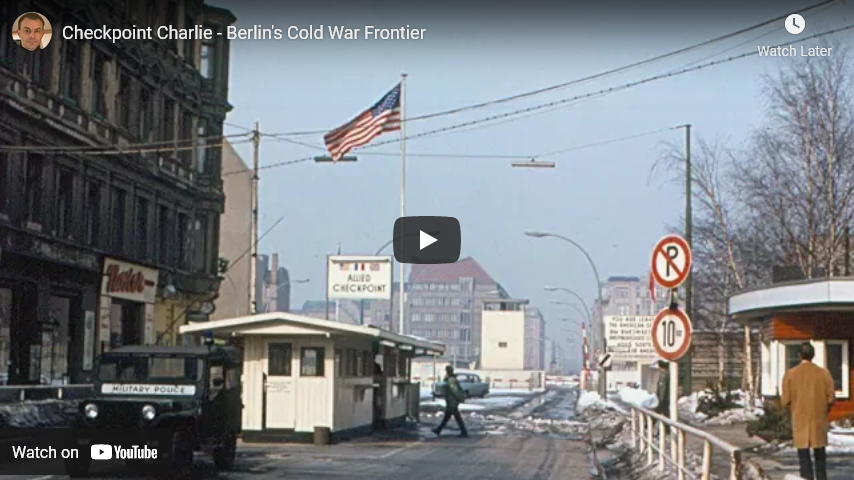
Published 4 Dec 2018The history of Checkpoint Charlie, the most famous of Berlin’s East-West crossing points and the focus of a serious standoff between the US and Soviet Union in 1961 that could have led to World War III.
Support Mark at Patreon for $1 a Month!
https://www.patreon.com/markfeltonpro…
Comments Off on Checkpoint Charlie – Berlin’s Cold War Frontier
QotD: “Avoid New York City”
Kim du Toit, “Don’t Do That”, Splendid Isolation, 2019-01-28.
March 3, 2022
The amazing luck of Canada’s own cockwomble
Larry Correia in his monthly round-up post:

C. Okay, the big one. WW3. Last time I did an update post about this I said I’m not an expert on global geopolitics, and unlike most of the internet I’m not going to pretend to be one. And the only thing I know about military issues is how the contracts work and how to fix the DOD’s terrible spreadsheets. So, just personal opinion, while recognizing my strategic limitations so all the self anointed Von Clauswitzes don’t come yell at me AGAIN, real brief version … fuck Vladmir Putin. I’m rooting for the little guy and I hope the clock is ticking towards when some oligarchs get pissed off enough Putin “commits suicide” by thirty rounds of 5.45 to the back or drinks a polonium milkshake.
C2. By root for, I mean I think we should have a 4 for $10 Javelin missile blow out sale. We’ve got ATGMS! We’ve got Stingers! We’ve got bombs and more bombs! You’ve got Russians? NOT ANYMORE! Because at Crazy Lockeheeds, everything must go!
C3. By root for, what I don’t mean is that I’m going to be a hypocritical scumbag like Stephen King, and expect my countrymen to kill and die so I can proclaim my virtue because I Care So Hard. If you feel that strongly there’s a Ukranian Foreign Legion and they’re taking volunteers … Oh wait … No. He didn’t mean like that. He meant your sons need to “take those punches” (i.e. get shot or burned to death). Not him.
[…]
E. On propaganda and the fog of war. Duh. Of course it exists. Its always existed. Every side does it. The internet just makes it faster.
However all those “legends” the deboonkers are so smugly debunking … You kind of miss the point. That emotional manipulation exists for a reason, and it’s important. You just need to try and recognized when it is aimed at swaying YOU, rather than to motivate the people doing the fighting.
[…]
O. Justin Trudeau is really super lucky WW3 rolled around to push his stupid doughy face out of the news cycle. Justin Trudeau makes Mitt Romney look like a vertebrate. What a scummy little wannabe tyrant.
P. But for Americans, the real lesson there is the tactics that dirt bag used against the people who stood up to him. In the old days they’d just kill you to shut you up. Now they freeze your bank accounts and make it so you can’t work or feed your family, until you comply. They take away your voice and your legal ability to push back, taking options off the table until only the worst apocalyptical options are left … and if you use those, then they’ve got an excuse to kill you.
P1. All of these effeminate little sneering leftists are one bad day away from being Pol Pot. All of them. Never forget that. Once they reveal who they are they need to be driven from office and never let anywhere near any sort of authority ever again. They will happily destroy you and everyone you love.
Comments Off on The amazing luck of Canada’s own cockwomble
March 2, 2022
Duck Tape – WW2 Secret Weapon – WW2 Special
World War Two
Published 1 Mar 2022This war has seen a huge amount of scientific and technological innovation. New ways of taking lives, and new ways of saving lives abound. But what about the more ordinary, everyday, products of the war? Would you be surprised to hear that people in the 21st century will still be using WWII inventions in daily life.
(more…)
Comments Off on Duck Tape – WW2 Secret Weapon – WW2 Special
The Passenger Train, 1954
travelfilmarchive
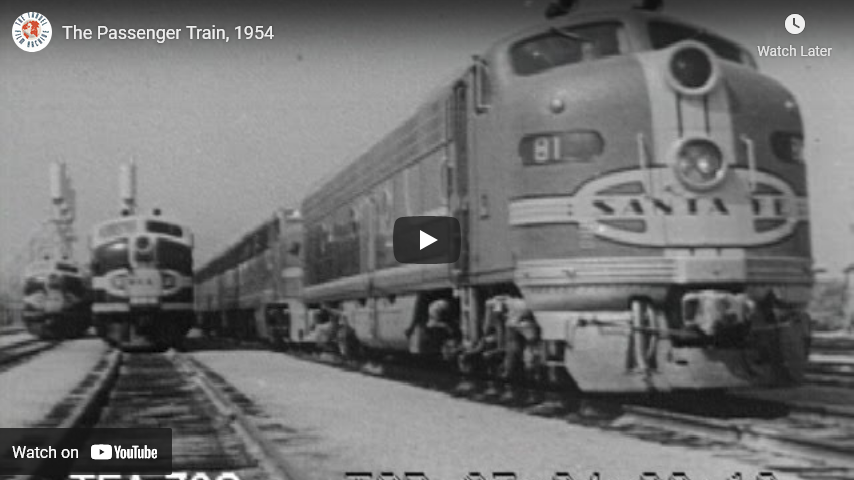
Published 12 Nov 2008An educational film about train travel in the 1950s. To purchase a clean DVD or digital download of this film for personal home use or educational use contact us at questions@archivefarms.com. To license footage from this film for commercial use visit: www.travelfilmarchive.com
Comments Off on The Passenger Train, 1954
March 1, 2022
Words of the day — “tribalism, jingoism and emotionalism”
Glenn Greenwald on the war propaganda being pushed by both sides in the Russian-Ukrainian conflict, and how after two full years of “war on Wuhan Coronavirus propaganda”, we’re seeing a smooth transition to more traditional war propaganda from our governments and media:
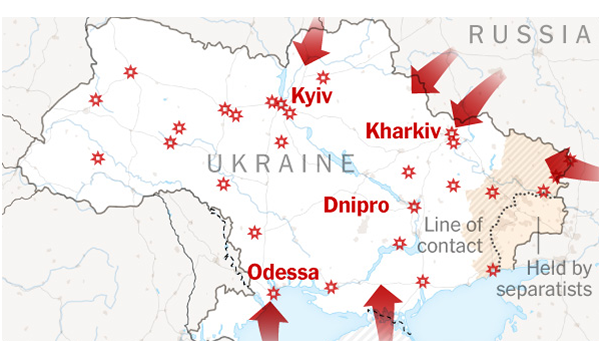
In the weeks leading up to the Russian invasion of Ukraine, those warning of the possible dangers of U.S. involvement were assured that such concerns were baseless. The prevailing line insisted that nobody in Washington is even considering let alone advocating that the U.S. become militarily involved in a conflict with Russia. That the concern was based not on the belief that the U.S. would actively seek such a war, but rather on the oft-unintended consequences of being swamped with war propaganda and the high levels of tribalism, jingoism and emotionalism that accompany it, was ignored. It did not matter how many wars one could point to in history that began unintentionally, with unchecked, dangerous tensions spiraling out of control. Anyone warning of this obviously dangerous possibility was met with the “straw man” cliché: you are arguing against a position that literally nobody in D.C. is defending.
Less than a week into this war, that can no longer be said. One of the media’s most beloved members of Congress, Rep. Adam Kinzinger (R-IL), on Friday explicitly and emphatically urged that the U.S. military be deployed to Ukraine to establish a “no-fly zone” — i.e., American soldiers would order Russia not to enter Ukrainian airspace and would directly attack any Russian jets or other military units which disobeyed. That would, by definition and design, immediately ensure that the two countries with by far the planet’s largest nuclear stockpiles would be fighting one another, all over Ukraine.
Kinzinger’s fantasy that Russia would instantly obey U.S. orders due to rational calculations is directly at odds with all the prevailing narratives about Putin having now become an irrational madman who has taken leave of his senses — not just metaphorically but medically — and is prepared to risk everything for conquest and legacy. This was not the first time such a deranged proposal has been raised; days before Kinzinger unveiled his plan, a reporter asked Pentagon spokesman John Kirby why Biden has thus far refused this confrontational posture. The Brookings Institution’s Ben Wittes on Sunday demanded: “Regime change: Russia”. The President of the Council on Foreign Relations, Richard Haass, celebrated that “now the conversation has shifted to include the possibility of desired regime change in Russia.”
Having the U.S. risk global nuclear annihilation over Ukraine is an indescribably insane view, as one realizes upon a few seconds of sober reflection. We had a reminder of that Sunday morning when “Putin ordered his nuclear forces on high alert, reminding the world he has the power to use weapons of mass destruction, after complaining about the West’s response to his invasion of Ukraine” — but it is completely unsurprising that it is already being suggested.
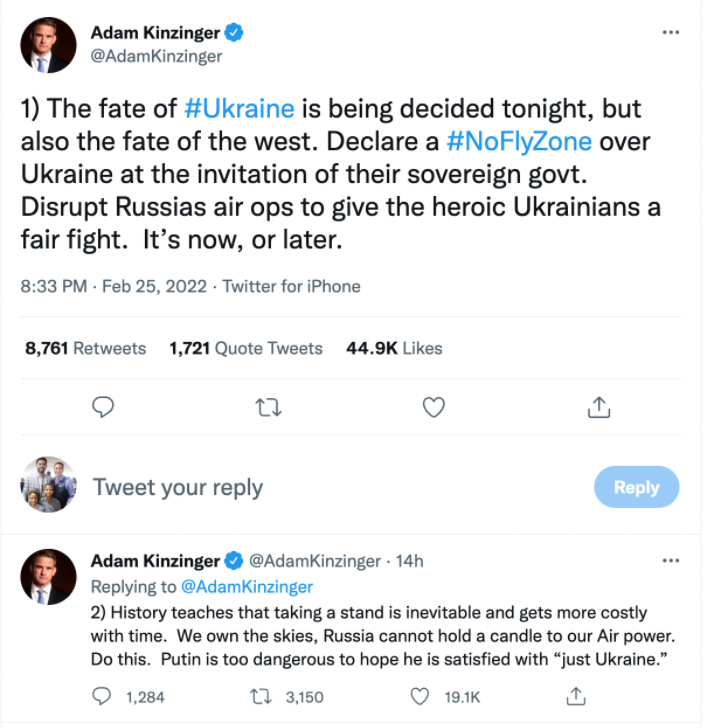
In the reporting and opining on the conflict in Ukraine, Mark Steyn says the frequent rhetorical invocation of Neville Chamberlain in 1938 are unfair:
Which brings us to this last day of February 2022. Which is beginning to feel like late February 2020, don’t you think? That is, in the stampede to impose the suffocating blanket of “the narrative” to the exclusion of all else. There is certainly a real country called Ukraine, where real people are being killed by real missiles hitting their apartment houses. Just as there was a real virus called Covid-19, which emerged from a real lab in a real city in China and began killing real people all over the world. Yet “the narrative”, then as now, seems designed to obscure any serious consideration of the underlying causes.
Nevertheless, certain things should be capable of being grasped even by viewers of CNN and readers of The New York Times. Just as Covid revealed that China is now the planet’s dominant economic power, so Ukraine confirms that America’s post-Cold War unipolar moment is dead: over the weekend, the talk shifted (again very Corona-like) from fifteen days to flatten the Tsar to an acceptance that this is a long-term thing — that, for a while at least, “a gas station masquerading as a country” (in John McCain’s characteristically stupid sneer) has succeeded in rolling back the great European liberations of three decades ago.
These days Neville Chamberlain is too invoked and the comparison is unfair. In 1938, when Germany invaded Czechoslovakia, the Prime Minister went on the radio and described it as “a quarrel in a far-away country between people of whom we know nothing”. For America, Russia’s invasion of Ukraine is the precise opposite: a quarrel in a far-away country of which their leaders know everything. Because they’ve been up to their neck in it for years.
Ukraine is a beautiful place, its people are intelligent and agreeable, and its women are stunners. But it is a very poor country and, notwithstanding its many fine qualities, the most corrupt nation in Europe, and, per Ernst & Young, the ninth most corrupt in the world. As I pointed out regularly three years ago on Tucker and Rush, at a time when Hunter Biden was getting fifty grand a month plus seven-figure bonuses from Burisma, the average wage in Ukraine was $200 a month: The Biden family’s heist was “not a victimless crime”.
A far-away country of which we know nothing? Has there been any Washington scandal that has not involved Ukraine in recent years?
The Trump impeachments? Ooh, he telephoned … Ukraine!The “Russia investigation”? Putin wanted Trump to win why exactly? Oh, no problem: because he’ll roll back sanctions imposed for Moscow’s actions against … Ukraine!
Do we have any witnesses to any of this? Yeah, sure, the really good guy’s some Colonel Vindman. He’s an immigrant from … Ukraine!
On the other hand, Obama made Biden his point-man in … Ukraine!
Biden told the Ukrainians they had to clean up all the corruption. They took the hint and put Hunter on the board, and Joe, Jim and the rest of the mob family suddenly acquired extensive “business interests” in Ukraine.
Oh, and the biggest source of foreign donations to the Clinton Foundation is … Ukraine.
Comments Off on Words of the day — “tribalism, jingoism and emotionalism”
February 28, 2022
The History of Pecan Pie
Tasting History with Max Miller
Published 16 Nov 2021Support the Channel with Patreon ► https://www.patreon.com/tastinghistory
Merch ► crowdmade.com/collections/tastinghistory
Instagram ► https://www.instagram.com/tastinghist…
Twitter ► https://twitter.com/TastingHistory1
Tiktok ► TastingHistory
Reddit ► r/TastingHistory
Discord ► https://discord.gg/d7nbEpy
Amazon Wish List ► https://amzn.to/3i0mwGtSend mail to:
Tasting History
PO Box 766
Burbank, CA 91503SOURCES**
The Pecan: A History of America’s Native Nut by James McWilliams: https://amzn.to/3mQ2JxJ
Antoine of Oak Alley by Katy Morlas Shannon: https://amzn.to/3kf6sTG**Some of the links and other products that appear on this video are from companies which Tasting History will earn an affiliate commission or referral bonus. Each purchase made from these links will help to support this channel with no additional cost to you. The content in this video is accurate as of the posting date. Some of the offers mentioned may no longer be available.
Subtitles: Jose Mendoza | IG @ worldagainstjose | @Ketchup with Max and Jose
PHOTO CREDITS
Dickey’s BBQ Pecan Pie: Willis Lam, CC BY-SA 2.0 https://creativecommons.org/licenses/…, via Wikimedia Commons
Pecan Tree: By Bruce Marlin – Own work: http://www.cirrusimage.com/tree_pecan…, CC BY 3.0, https://commons.wikimedia.org/w/index…
Oak Alley Plantation: Michael McCarthy via flickr, https://creativecommons.org/licenses/…#tastinghistory #pecanpie #thanksgiving

Comments Off on The History of Pecan Pie
QotD: Passengers versus freight in railway efficiency terms
Now consider a freight train. The typical car weighs 25-30 tons empty and can carry between 70 and 120 tons of cargo. This means that 70-80% of the fuel in a freight train is being used to move the cargo.
Now you have to take me on faith on one statement — it is really hard, in fact close to impossible, to optimize a rail system for both passengers and freight. In the extreme of high speed rail, passenger trains required separate dedicated tracks. Most rail systems, even when they serve both sorts of traffic, generally prioritize one or the other. So, if you wanted to save energy and had to pick, which would you choose — focusing on freight or focusing on passengers? Oh and by the way, if you want to make it more personal, throw in a consideration of which you would rather have next to you on crowded roads, another car or another freight truck?
This is why the supposedly-green folks’ denigrating of US rail is so crazy to me. The US rails system makes at least as much sense as the European system, even before you consider that it was mostly privately funded and runs without the subsidies that are necessary to keep European rail running. Yes, as an American tourist travelling in Europe, the European rails system is great. Agreed. I use it every time I go there. I have to assume that this elite tourist experience must be part of why folks ignore the basic science here.
Warren Meyer, “A Reminder: Why the US Rail System Is At Least as Good As the European System if You Care About Energy Use”, Coyote Blog, 2018-05-25.
Comments Off on QotD: Passengers versus freight in railway efficiency terms
February 27, 2022
“Putin finally called our bluff. The question to me is when and if Xi will decide to do the same”
Andrew Sullivan on what Winston Churchill referred to as “the historic life-interests of Russia”, the inability (and unwillingness) of the western nations to do more than send hopes and prayers to Ukraine, and the parallels between the Russia-Ukraine situation and the China-Taiwan potential conflict:
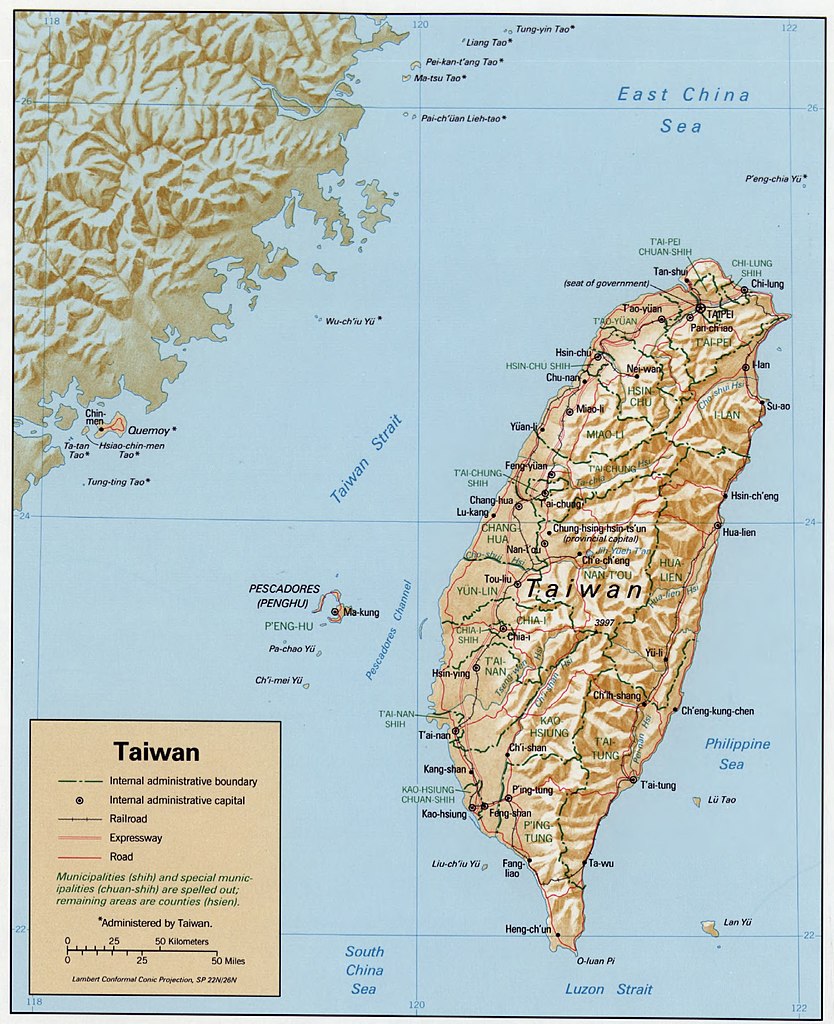
Taiwan relief map.
Library of Congress Geography & Map Division via Wikimedia Commons.
… in one crucial sense, Putin has already won a victory. A nuclear-armed great power has invaded and occupied a neighboring country in Europe, and there is nothing anyone else has been able to do to stop it. Many in the West assumed Putin wouldn’t go that far — surmising that international law, universal condemnation, economic sanctions, and the lack of any serious threat from Ukraine to Russia would restrain him. But he has called our bluff. He has even hinted at Russia’s nuclear capacity to intimidate other states from intervening. And so we have a precedent. Ukraine is a Russian possession. A fact on the ground. All we have been able to do is watch.
All of which brings us to what seems to me to be the larger dimension of this clash: how it will resonate in Beijing and Taiwan. With apologies to Mitt Romney, China is easily the greater geostrategic challenge. And the parallels with Russia are as striking as they are unnerving. China sees Taiwan as part of its national identity in a similar way to how Russia sees Ukraine as part of its. And we are committed to the defense of Taiwan the way we have committed to the defense of Ukraine: kinda, but not really. In the face of this underlying Western ambiguity, the fall of Kiev is news that Xi will be watching closely.
The parallels are not exact, but nonetheless striking. Taiwan is next door to and deeply entangled with China in its history and culture, just as Ukraine is uniquely entangled with Russia. Seeing Taiwan and China (like Ukraine and Russia) as simply random sovereign states with a right to self-determination under international law is correct, so far as it goes. It’s also moral — as majorities of both Ukrainians and especially Taiwanese want independence and have constructed nascent democracies in the wake of autocracy.
But the nationalist passion Russia feels about Ukraine and China feels about Taiwan is real, visceral, and hard for outsiders to understand intuitively. The sense of a rogue region that somehow got away from the homeland is vivid among Russian and Chinese nationalists. This kind of understanding — claiming a “sphere of influence” — is now deemed reactionary by the West’s foreign policy elites, as, perhaps, it should be. But that doesn’t mean that everyone, especially China and Russia, have actually moved past it. Even Americans have very different emotional responses to perceived threats in our own hemisphere compared with the rest of the world. So this is also a culture clash of sorts — globalism and the nation state vs nationalism and spheres of influence.
I’m not saying that this belief in a sphere of influence is a universal view in Russia or China — or that it is justifiable. I’m just saying it is real. And I’m not excusing Putin or Xi from taking a particularly zealous view of this irredentist nationalism, which they both do, for their own personal and political advantage. I’m just noting how national pride deeply informs them, that resentment of the West consumes them, that a sense of historical grievance spurs them on — and that they are not outliers among their compatriots. It is crazy to underestimate the power of this kind of revanchist nationalism — among rulers and ruled. And I fear we underestimated it in the case of Putin.
This means, as Barack Obama once insisted, that Russia will always care much more about Ukraine than we do; and China will always care much more about Taiwan than we do. In those cases, the last thing we should do is promise support that we do not seriously — truly seriously — intend to provide. The vague pledge by the Western powers not to rule out future NATO membership for Ukraine was the worst of all worlds: poking the bear, with no serious intention of fighting it.
The fall of Afghanistan was a margin call … and Ukraine is the point where airy western “guarantees” will have to be backed up with actual force. But western leaders have grown very comfortable in a world where gestures were taken seriously and few if any such gestures actually had to be followed-through with meaningful action. And now, the geopolitical pantomime is over and we’re back in a world where gestures are seen as signs of weakness and do nothing to deter adventurism.
Comments Off on “Putin finally called our bluff. The question to me is when and if Xi will decide to do the same”
The Blitzkrieg is Back – WW2 – 183 – February 26 1943
World War Two
Published 26 Feb 2022Erich von Manstein’s Axis counterattack on the Eastern Front begins this week and right away smashes through the Red Army lines, threatening all the recent Soviet gains. The Allies — the Americans — also suffer a big defeat in Tunisia at the Kasserine Pass, though in the Pacific it is the Americans who occupy the Russell Islands.
(more…)
Comments Off on The Blitzkrieg is Back – WW2 – 183 – February 26 1943
Who is Springfield Armory? A Tale of Two Entities
Forgotten Weapons
Published 20 Feb 2018Today we will take a look at the history of Springfield Armory – both the American national arsenal founded in the 1770s and the commercial entity founded in the 1970s.
http://www.patreon.com/ForgottenWeapons
Cool Forgotten Weapons merch! http://shop.bbtv.com/collections/forg…
If you enjoy Forgotten Weapons, check out its sister channel, InRangeTV! http://www.youtube.com/InRangeTVShow

Comments Off on Who is Springfield Armory? A Tale of Two Entities


