The road to tenure takes only left turns, you’ll recall, because only “original” “research” gets published, and since Shakespeare ain’t writing no more sonnets, the only way to be “original” is through radical politics. As above, so below — since nobody’s going to upvote or retweet a sentiment like “Things are pretty much ok the way they are,” social media becomes little more than competitive #wokeness.
[…]
Here again, academia provides the answer. But first, let’s talk about David Brooks, the “conservative” infamously aroused by Obama’s perfectly creased pants. There are few sillier people than David Brooks, but “take wisdom where you find it” is my motto (well, that and “mihi dare vinum“), and he really knocked it out of the park with Bobos in Paradise. No, seriously. […] A Bobo, in other words, is a Gen Xer who could compete with the Boomers on their turf … but since he also took the Boomers at their word when they went on (and on and on and on and on) about Sticking It to the Man (an all too common generational failing), the Bobo sees the Boomer’s luxury car / vacation home / trophy wife conspicuous consumption as unbearably gauche. So instead, the Bobo spends $500 on a can opener because it’s good for the environment or is handcrafted by paraplegic Brazilian Eskimos or something, anything, so long as it a) obviously costs a shitload, and b) has some kind of Save-the-World rationale attached to it.
Academia reinforces this. Lots of Gen Xers went into the ivory tower for precisely that reason. Y’all know that the average professor hauls in nearly $200 large, right? The median income for an American worker in 2019 was approximately $46,800. I was in History, not math, but even I can see that the eggheads take home over four times what the average Joe makes. Which sets up another lifestyle contest. When you’re a) richer than sin, b) surrounded by a caste on slave wages, and c) ideologically committed to seeing yourself as The People’s Champion, the only way out is to live Bobo-style. Sure, sure, I have a $500 can opener … but Maricela the cook is really empowered by using it, because it was made by transgendered aborigines Of Color.
And since those Bobos are middle aged now, they’ve indoctrinated two generations of students with this garbage. And those two generations also came up with social media, so now you’ve got the heady combination of lifestyle and persona striving. That’s why the DC crew do what they do. Competitive #wokeness is the only way to go … and since they’ve got their $400-manicured mitts on the levers of power, we all get to be the bit players and stagehands in the big Broadway show that is their special unique wonderfulness.
Severian, “Why So #Woke?”, Rotten Chestnuts, 2020-01-07.
January 2, 2023
January 1, 2023
The days when just graduating high school was a significant life achievement
At Founding Questions, Severian responds to a reader comment about educational achivement before WW2 (when the US economy was almost the last one standing among major industrialized nations, and high school graduates finally passed 50% of the population):

Proposed coat of arms for Founding Questions by “urbando”.
The Latin motto translates to “We are so irrevocably fucked”.
In the “Friday Questions” post yesterday, toastedposts asks:
I’ve been reading some more old random things (bits of philosophy and history in no particular order with no particular program.) I’m again struck by the impression that people from around 1700 to 1920 or so were noticeably smarter than people before or since. It’s something that seems obtrusive when I read the sort of things they write. Compared to the sullen stupidity and fanatacism of the communists and fellow pseudo-intellectual travellers, compared to the childish level of the propaganda with which people were manipulated post 50s and pre modern, it is striking …
I wonder why the idiocracy? Did all these supergeniuses get killed preferentially in world wars and communist enslavement afterwards? Did something about our culture change disastrously, and can it be reversed? What was in their water, and can I have some?
I’ve seen this myself. You go look at any random letter collection from the 18th or 19th century, and even their “How’s it going? The weather is nice here”-type letters are just smarter …
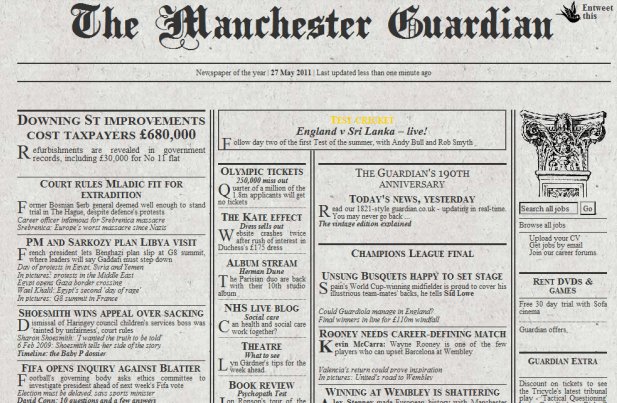
Or maybe not. I hate to sound like one of those “Education Theory” numbnuts here, but it’s hard to separate what you might call “native intelligence” from “rigorous schooling”. Since we’ve all been on the Internet within the last 30 years, we’ve seen that “This was a fifth grade math test in 1905” thing. Here’s an example published in The Guardian, the paper that all the very Smartest people these days read. I’ll just stick with math and history:
Arithmetic
1. Multiply 642035 by 24506
2. Subtract 3.25741 from 3.3; multiply 28.436 by 8.245; divide 0.86655 by 26.5
3. Simplify 183/4 minus 22/3 divided by 11/5 minus 31/2 multiplied by 4/7
English history
1. What kings of England began to reign in the years 871, 1135, 1216, 1377, 1422, 1509, 1625, 1685, 1727, 1830?
2. Give some account of Egbert, William II, Richard III, Robert Blake, Lord Nelson.
3. State what you know of Henry II’s quarrel with Becket, the taking of Calais by Edward III, the attempt to make Lady Jane Grey queen, the trial of the Seven bishops, the Gordon riots.
I’d have trouble with some of those. Isn’t Robert Blake an actor?
That said, those questions aren’t particularly hard. Muti-digit multiplication is more time-consuming than anything else; it’d look like a Christmas tree, spread across the page. The fact that I can’t do them now (without a refresher course) doesn’t mean I couldn’t do them then. I was taught the process; I’m just rusty. Same thing with English history. The Lady Jane Grey thing … ummm, something something Reformation? But if I’d recently taken a course on it, I’d be much more up on it.
But then again, I was able to grok the process in the first place. “Universal” education is very new, and on balance I’d have to say it’s a negative. A high school diploma was a real achievement almost within living memory. This here table says that high school graduation rates didn’t top 50% until 1940, and didn’t clear 60% until 1950. It used to be a trope in the “rags to riches” story that “So-and-So only had a fifth-grade education”, but in that world, 5th grade was plenty. Even now, 5th graders kinda sorta have the Three Rs. (Adding the fourth R, of course — that would be “Rainbow”, or maybe “rump rangering” — but still).
So the entrance exam for “King Edward’s School” — the example in the Graun article — in 1898 would be the equivalent of a very tough college entrance exam today (and note that the referenced school is very pricey and very, very elite, even now).
This is not to say that people back then weren’t smarter. They sure seem to be, and I’ve written many times that the not-elite but certainly very respectable school that awarded me a PhD in the early 21st century wouldn’t have admitted me as an undergrad as late as 1960, if not 1970. I’m just noting some context — in 1898, 5th graders were already something of an intellectual elite, and their day-to-day education reflected that.
Canadians Take Little Stalingrad – WW2 – 227 – December 31, 1943
World War Two
Published 31 Dec 20221943 reaches its end with no end in sight for the war. In Italy, the Canadians take Ortona after bloody close fighting, the US Marines advance on New Britain, and a new Soviet offensive makes huge gains in the USSR. This isn’t enough for the Allies, though, who have a big shake up in their European Command to help prepare for future attacks.
(more…)
Public Domain Day for 2023
Duke University School of Law’s Center for the Study of the Public Domain highlights just some of the creative works that have entered into the public domain (in the United States: other countries’ laws may vary substantially) today:
Here are just a few of the works that will be in the US public domain in 2023. They were supposed to go into the public domain in 2003, after being copyrighted for 75 years. But before this could happen, Congress hit a 20-year pause button and extended their copyright term to 95 years. Now the wait is over. (To find more material from 1927, you can visit the Catalogue of Copyright Entries.)
Books:
- Virginia Woolf, To the Lighthouse
- Arthur Conan Doyle, The Case-Book of Sherlock Holmes
- Willa Cather, Death Comes for the Archbishop
- Countee Cullen, Copper Sun
- A. A. Milne, Now We Are Six, illustrated by E. H. Shepard
- Thornton Wilder, The Bridge of San Luis Rey
- Ernest Hemingway, Men Without Women (collection of short stories)
- William Faulkner, Mosquitoes
- Agatha Christie, The Big Four
- Edith Wharton, Twilight Sleep
- Herbert Asbury, The Gangs of New York (the original 1927 publication)
- Franklin W. Dixon (pseudonym), The Tower Treasure (the first Hardy Boys book)
- Hermann Hesse, Der Steppenwolf (in the original German)
- Franz Kafka, Amerika (in the original German)
- Marcel Proust, Le Temps retrouvé (the final installment of In Search of Lost Time, in the original French)
[…]
Movies Entering the Public Domain
- Metropolis (directed by Fritz Lang)
- The Jazz Singer (the first feature-length film with synchronized dialogue; directed by Alan Crosland)
- Wings (winner of the first Academy Award for outstanding picture; directed by William A. Wellman)
- Sunrise (directed by F.W. Murnau)
- The Lodger: A Story of the London Fog (Alfred Hitchcock’s first thriller)
- The King of Kings (directed by Cecil B. DeMille)
- London After Midnight (now a lost film; directed by Tod Browning)
- The Way of All Flesh (now a lost film; directed by Victor Fleming)
- 7th Heaven (inspired the ending of the 2016 film La La Land; directed by Frank Borzage)
- The Kid Brother (starring Harold Lloyd; directed by Ted Wilde)
- The Battle of the Century (starring the comedy duo Laurel and Hardy; directed by Clyde Bruckman)
- Upstream (directed by John Ford)
1927 marked the beginning of the end of the silent film era, with the release of the first full-length feature with synchronized dialogue and sound. Here are the first words spoken in a feature film from The Jazz Singer: “Wait a minute, wait a minute, you ain’t heard nothing yet.” Read about the transition from the silent film to the “talkie” era, and the quest to preserve some of the remarkable silent films on this list, here. Please note that while the original footage from these films will be in the public domain, newly added material such as musical accompaniment might still be copyrighted. If a film has been restored or reconstructed, only original and creative additions are eligible for copyright; if a restoration faithfully mimics the preexisting film, it does not contain newly copyrightable material. (Putting skill, labor, and money into a project is not enough to qualify it for copyright. The Supreme Court has made clear that “the sine qua non of copyright is originality.”) In the list above, while some of the titles were not registered for copyright until 1928 or 1929, the original version of the film was published with a 1927 copyright notice, so the copyright expires over that version in 2023.
Update: Michael Geist explains why there’s no equivalent Public Domain day for Canada:
Full Cabin Build – 4K Full Length – Townsends Wilderness Homestead
Townsends
Published 29 Aug 20220:00 – Laying the Foundation
4:39 – The Walls Begin
8:22 – Prepping the Fireplace
9:52 – Finishing the Walls
15:58 – The Roof Design
17:04 – Adding the Purlins
20:29 – The Doorframe
21:32 – The Final Purlins
24:00 – Roofing Materials
25:47 – Adding the Bark Shingles
27:37 – Roof Wrap-Up
29:03 – Door Jams
29:47 – Opening the Fireplace
30:58 – Building the Fireplace
36:06 – Adding the Door
37:54 – The First Fire
39:02 – A Winter Safe Haven
(more…)
December 31, 2022
If Hell is “other people”, then the deepest level of Hell must be “other high school students”
Tom Knighton on a recent post from FEE about the awfulness of the school experience for a lot of students:

“Leaside High School entrance Toronto Ontario Canada” by ammiiirrrr is licensed under CC BY-NC-SA 2.0 .
I was never a big fan of school. While I always thought education was important, I never liked school itself.
Part of that was because I was the kid most likely to get picked on, but even when that wasn’t happening, I still didn’t like it. Learning boring stuff while not getting to delve deeper into interesting topics just made it a chore to be endured.
Couple with the fact that cruelty is such a part of the “educational experience”, it’s no wonder that I didn’t like it.
Hell, even when everyone was being chill, the fact that I didn’t fit in did a number on me, including a time when I genuinely wanted to end my own life. I don’t talk about that kind of thing much, but it was a stark reality of that time.
[…]
Granted, I always chalked my difficulties at the time — and I’m much better now, I should note — with a number of things besides the structure of school itself. Mostly the fact that it was a small school, I was the weird kid, and while I had friends, I never felt like I really fit in.
Yet I can’t rule out that the structured nature of education at the time contributed greatly to the problem.
As noted in the original piece, the patterns for suicidal behavior in teens don’t match up with adults. That tells us that there’s something at play other than just the weather, the temperature, or whatever.
Regardless, it raises serious questions about our schools as an environment. Teachers and administrators would tell you that they strive to create a nurturing environment for students of all ages. I’m pretty sure most of them mean it, too.
Yet these studies suggest that they’re failing. Miserably.
But let’s not ignore the possibility that much of this may well be because, frankly, kids can be little sociopaths. They’re mean. They’re cruel. Someone will seek out those they perceive as weak and victimize them while others get to enjoy the show, even while being glad they’re not the target.
Then there’s the fact that it’s impossible to hide from any deficiencies you might have, including social deficiencies just as good fortune with finding romantic partners of your preferred sex and that’s going to play a role as well.
QotD: Casual (aka slobby) clothing at the airport
I’m back to my old gripe about people who dress like slobs. Theodore Dalrymple takes up the cause:
Indeed, if there is one thing that unites mankind today it is casual slobbery in dress. This is rather odd, considering that so many people seem to spend a lot of their spare time shopping for clothes. The fact is, though, that however much time they spend on shopping, they will always look just as much a mess as ever. They choose, but they do not discriminate. Our unwillingness, and increasing inability, to dress elegantly represents the triumph of self-esteem over self-respect. We dress to please ourselves, not others, and not looking like a slob takes effort, especially keeping it up through the day. Convenience is all, and it is easier to throw on a few casual clothes than to dress well.
What sparked Dalrymple’s ire was his experience at a couple of airports:
Sitting in two airports last week, in Paris and Riga, it suddenly occurred to me that I had not seen a single person who was smartly, let alone elegantly, dressed.
Now I seldom disagree with Teddy about much, but I do on this occasion. Imagine this scenario:
You get dressed to go to an important business meeting, so you do it properly: ironed shirt, tie, decent navy-blue suit, leather belt and shiny black lace-up Oxfords. You check yourself in a mirror and damn, you look good.
But did I mention that the important business meeting was out of town, and you’d need to catch a flight there?
Now go back and reflect how difficult it’s going to be when you’re confronted by the surly TSA apparatchiks at the airport. Belt? Take it off. Shoes? Unlace them, and take ’em off. Jacket? Run it through the X-ray. And that gold tie-clip? We’re going to pat you down and run you through our Magical Cancer-Generating Full-Body Scanner, bub.
All of a sudden, a tee shirt, sweatpants and slip-on moccasins make a lot more sense, don’t they? And the net result is that you look like a slob, because it’s a big enough chore to dress properly in the first place without having to do it all over again at the airport in front of hundreds of people.
Kim du Toit, “Slobbery”, Splendid Isolation, 2018-09-06.
December 30, 2022
Barnes & Noble used to be like an even more boring Indigo … but they’ve been turned around
Back when my job required more travel, one of the things I used to look forward to was visiting US bookstores, as they always had a wider and more interesting stock than our staid Canadian equivalents. Over time, the interesting local bookstores got harder and harder to find as the big box stores like Borders and Barnes & Noble took over much of their customer base. Of the two, I much preferred going into a Borders store, as they had better stock than B&N and the staff seemed friendlier and (generally) more helpful to clueless foreigners like me. Borders went under around the same time my business travels to the US tapered off and it looked like it was only a matter of time for B&N to follow it into bankruptcy. Even if it struggled on, surely the pandemic killed off what Amazon left behind? Ted Gioia says not so fast:

“Barnes & Noble Book Store” by JeepersMedia is licensed under CC BY 2.0 .
But Barnes & Noble is flourishing. After a long decline, the company is profitable and growing again — and last week announced plans to open 30 new stores. In some instances, they are taking over locations where Amazon tried (and failed) to operate bookstores.
Amazon seems invincible. So the idea that Barnes & Noble can succeed where its much larger competitor failed is hard to believe. But the turnaround at B&N is real. In many instances they have already re-opened in locations where they previously shut down.
Barnes & Noble tried exactly the same sort of “re-imagining” of their stores that Canada’s Indigo chain is currently floundering with: cutting back on the floorspace devoted to books in favour of throw cushions, candles, decorations, bath salts, scarfs and towels. It worked just as badly for B&N as it is working for Indigo: it chases out the primary customer base (book-buyers) in favour of bored people looking to waste away an hour or two just browsing tchotchkes. (And if you can find an Indigo staff member to ask about a particular book, they almost always assure you that you can find it on their website, which I’m sure helps bring more people into the store …) In desperation, B&N looked to expand into a very different market:
… in a bizarre strategic move, the company decided to launch freestanding restaurants under the name Barnes & Noble Kitchen — no books, just meals. But this was another disaster.
The company chairman Leonard Riggio eventually admitted, in September 2018, that running a restaurant is “a lot harder than you think it is … The bottom line is awful.”
Given the incredibly short and profitless life of most start-up restaurants, that really does qualify as a “No shit, Sherlock” moment. So how did Barnes & Noble turn things around?
It’s amazing how much difference a new boss can make.
I’ve seen that firsthand so many times. I now have a rule of thumb: “There is no substitute for good decisions at the top — and no remedy for stupid ones.”
It’s really that simple. When the CEO makes foolish blunders, all the wisdom and hard work of everyone else in the company is insufficient to compensate. You only fix these problems by starting at the top.
In the case of Barnes & Noble, the new boss was named James Daunt. And he had already turned around Waterstones, a struggling book retailing chain in Britain.
Bringing in fresh blood can be a life-saver for a business, but we also have that expression about deck chairs on the Titanic in common business parlance, so just being “new” isn’t enough … new leaders must also bring new approaches and fresh ideas:
But the most amazing thing Daunt did at Waterstones was this: He refused to take any promotional money from publishers.
This seemed stark raving mad. But Daunt had a reason. Publishers give you promotional money in exchange for purchase commitments and prominent placement — but once you take the cash, you’ve made your deal with the devil. You now must put stacks of the promoted books in the most visible parts of the store, and sell them like they’re the holy script of some new cure-all creed.
Those promoted books are the first things you see when you walk by the window. They welcome you when you step inside the front door. They wink at you again next to the checkout counter.
Leaked emails show ridiculous deals. Publishers give discounts and thousands of dollars in marketing support, but the store must buy a boatload of copies — even if the book sucks and demand is weak — and push them as aggressively as possible.
Publishers do this in order to force-feed a book on to the bestseller list, using the brute force of marketing money to drive sales. If you flog that bad boy ruthlessly enough, it might compensate for the inferiority of the book itself. Booksellers, for their part, sweep up the promo cash, and maybe even get a discount that allows them to under-price Amazon.
Everybody wins. Except maybe the reader.
Daunt refused to play this game. He wanted to put the best books in the window. He wanted to display the most exciting books by the front door. Even more amazing, he let the people working in the stores make these decisions.
This is James Daunt’s super power: He loves books.
“Staff are now in control of their own shops”, he explained. “Hopefully they’re enjoying their work more. They’re creating something very different in each store.”
This crazy strategy proved so successful at Waterstones, that returns fell almost to zero — 97% of the books placed on the shelves were purchased by customers. That’s an amazing figure in the book business.
On the basis of this success, Daunt was put in charge of Barnes & Noble in August 2019. But could he really bring that dinosaur, on the brink of extinction, back to life?
Stalin Deports An Entire Ethnicity – War Against Humanity 093
World War Two
Published 29 Dec 2022The last week of 1943 is a busy one. Stalin deports the Kalmyk minority from Kalmykia, the escapees from Fort IX get away, and the US President moves to found the post-war UN.
(more…)
QotD: If AT&T had used the Google model
I’ve written elsewhere of how much we would have suffered if AT&T had run the phone network with a Google strategy. You wouldn’t be able to talk on the phone until you heard a bunch of advertisements first. The restaurant you call for a dinner reservation would have to kickback a share of your meal tab to the phone company. Everything you did on your phone would be more cumbersome and less efficient.
Guess what? That still may happen. The only reason Apple hasn’t already started force-feeding ads on your iPhone is a fear that competitors may not do the same — and they might lose a few market share points. But all it takes is one backroom meeting of dubious legality between smartphone providers, and you will soon start hearing a pitch from the GEICO gecko before you even say hello.
Ted Gioia, “YouTube May Force You to Watch 10 (or More) Unskippable Ads in a Row”, The Honest Broker, 2022-09-19.
December 29, 2022
Selection bias in polling
At Astral Codex Ten, Scott Alexander points out that it’s impossible to do any kind of poll without some selection bias, so you can’t automatically dismiss any given poll on that basis. The kind of selection bias, however, may indicate whether the results will have any relationship to reality:
The real studies by professional scientists usually use Psych 101 students at the professional scientists’ university. Or sometimes they will put up a flyer on a bulletin board in town, saying “Earn $10 By Participating In A Study!” in which case their population will be selected for people who want $10 (poor people, bored people, etc). Sometimes the scientists will get really into cross-cultural research, and retest their hypothesis on various primitive tribes — in which case their population will be selected for the primitive tribes that don’t murder scientists who try to study them. As far as I know, nobody in history has ever done a psychology study on a truly representative sample of the world population.
This is fine. Why?
Selection bias is disastrous if you’re trying to do something like a poll or census. That is, if you want to know “What percent of Americans own smartphones?” then any selection at all limits your result. The percent of Psych 101 undergrads who own smartphones is different from the percent of poor people who want $10 who own smartphones, and both are different from the percent of Americans who own smartphones. The same is potentially true about “how many people oppose abortion?” or “what percent of people are color blind?” or anything else trying to find out how common something is in the population. The only good ways to do this are a) use a giant government dataset that literally includes everyone, b) hire a polling company like Gallup which has tried really hard to get a panel that includes the exact right number of Hispanic people and elderly people and homeless people and every other demographic, c) do a lot of statistical adjustments and pray.
Selection bias is fine-ish if you’re trying to do something like test a correlation. Does eating bananas make people smarter because something something potassium? Get a bunch of Psych 101 undergrads, test their IQs, and ask them how many bananas they eat per day (obviously there are many other problems with this study, like establishing causation — let’s ignore those for now). If you find that people who eat more bananas have higher IQ, then fine, that’s a finding. If you’re right about the mechanism (something something potassium), then probably it should generalize to groups other than Psych 101 undergrads. It might not! But it’s okay to publish a paper saying “Study Finds Eating Bananas Raises IQ” with a little asterisk at the bottom saying “like every study ever done, we only tested this in a specific population rather than everyone in the world, and for all we know maybe it isn’t true in other populations, whatever.” If there’s some reason why Psych 101 undergrads are a particularly bad population to test this in, and any other population is better, then you should use a different population. Otherwise, choose your poison.
QotD: That foolish optimism of the early days of the internet
Thirty years ago, at the dawn of what we think of as the internet, no one imagined that this amazing new frontier in human interaction would become a tool of oppression wielded by massive corporations. In fact, it was assumed that the internet would break the grip of corporations, special interests, and even governments. People would be free of the gatekeepers who controlled public discourse.
Those we call the left were sure that the internet would help democratize American society by opening the floor to marginalized voices. The people we call the right were sure this new medium would follow the pattern of talk radio. Free of progressive control, normal people could challenge the opinions of the liberal media. The internet was going to be an open debating society that worked on democratic principles.
Thirty years on and people old enough to remember the before times think that maybe the internet was a mistake. Giving a platform to millions of talking meat sticks, banging away at their phones, has just made life noisy. Worse yet, the range of allowable opinion has become much narrower. We now live in an age of censorship that was unimaginable before the internet.
The Z Man, “Coercion and Consensus”, Taki’s Magazine, 2022-09-25.
December 28, 2022
December 25, 2022
Stalin’s Christmas Surprise – Major Offensives to Come – WW2 – 226 – December 24, 1943
World War Two
Published 24 Dec 2022Twas the night before Christmas and the war was grinding on. The Moro River Campaign continues in Italy with Canadian infantry pushing past the Gully and into “Little Stalingrad”. Generally, the Allied advance to Rome is turning into a stalemate though, but Winston Churchill still believes an amphibious landing is the way to break this. Joseph Stalin also has some pretty big plans to bring the USSR back to its pre-Barbarossa borders. In the Pacific, there is attrition over Rabaul and stalemate on Bougainville.
(more…)