Quotulatiousness

November 27, 2023

The slackening pace of technological innovation

Filed under: Business, Economics, Media, Technology, USA — Tags: , , , , — Nicholas @ 04:00

Freddie deBoer thinks we’re living off the diminishing fumes of a much more innovative and dynamic era:

I gave a talk to a class at Northeastern University earlier this month, concerning technology, journalism, and the cultural professions. The students were bright and inquisitive, though they also reflected the current dynamic in higher ed overall – three quarters of the students who showed up were women, and the men who were there almost all sat moodily in the back and didn’t engage at all while their female peers took notes and asked questions. I know there’s a lot of criticism of the “crisis for boys” narrative, but it’s often hard not to believe in it.

At one point, I was giving my little spiel about how we’re actually living in a period of serious technological stagnation – that despite our vague assumption that we’re entitled to constant remarkable scientific progress, humanity has been living with real and valuable but decidedly small-scale technological growth for the past 50 or 60 or 70 years, after a hundred or so years of incredible growth from 1860ish to 1960ish, give or take a decade or two on either side. You’ve heard this from me before, and as before I will recommend Robert J. Gordon’s The Rise & Fall of American Growth for an exhaustive academic (and primarily economic) argument to this effect. Gordon persuasively demonstrates that from the mid-19th to mid-20th century, humanity leveraged several unique advancements that had remarkably outsized consequences for how we live and changed our basic existence in a way that never happened before and hasn’t since. Principal among these advances were the process of refining fossil fuels and using them to power all manner of devices and vehicles, the ability to harness electricity and use it to safely provide energy to homes (which practically speaking required the first development), and a revolution in medicine that came from the confluence of long-overdue acceptance of germ theory and basic hygienic principles, the discovery and refinement of antibiotics, and the modernization of vaccines.

Of course definitional issues are paramount here, and we can always debate what constitutes major or revolutionary change. Certainly the improvements in medical care in the past half-century feel very important to me as someone living now, and one saved life has immensely emotional and practical importance for many people. What’s more, advances in communication sciences and computer technology genuinely have been revolutionary; going from the Apple II to the iPhone in 30 years is remarkable. The complication that Gordon and other internet-skeptical researchers like Ha-Joon Chang have introduced is to question just how meaningful those digital technologies have been for a) economic growth and b) the daily experience of human life. It can be hard for people who stare at their phones all day to consider the possibility that digital technology just isn’t that important. But ask yourself: if you were forced to live either without your iPhone or without indoor plumbing, could you really choose the latter? I think a few weeks of pooping in the backyard and having no running water to wash your hands or take a shower would probably change your tune. And as impressive as some new development in medicine has been, there’s no question that in simple terms of reducing preventable deaths, the advances seen from 1900 to 1950 dwarf those seen since. To a remarkable extent, continued improvements in worldwide mortality in the past 75 years have been a matter of spreading existing treatments and practices to the developing world, rather than the result of new science.

ANYWAY. You’re probably bored of this line from me by now. But I was talking about this to these college kids, none of whom were alive in a world without widespread internet usage. We were talking about how companies market the future, particularly to people of their age group. I was making fun of the new iPhone and Apple’s marketing fixation on the fact that it’s TITANIUM. A few of the students pushed back; their old iPhones kept developing cracks in their casings, which TITANIUM would presumably fix. And, you know, if it works, that’s progress. (Only time and wear and tear will tell; the number of top-of-the-line phones I’ve gone through with fragile power ports leaves me rather cynical about such things.) Still, I tried to get the students to put that in context with the sense of promise and excitement of the recent past. I’m of a generation that was able to access the primitive internet in childhood but otherwise experienced the transition from the pre-internet world to now. I suspect this is all rather underwhelming for us. When you got your first smartphone, and you thought about what the future would hold, were your first thoughts about more durable casing? I doubt it. I know mine weren’t.

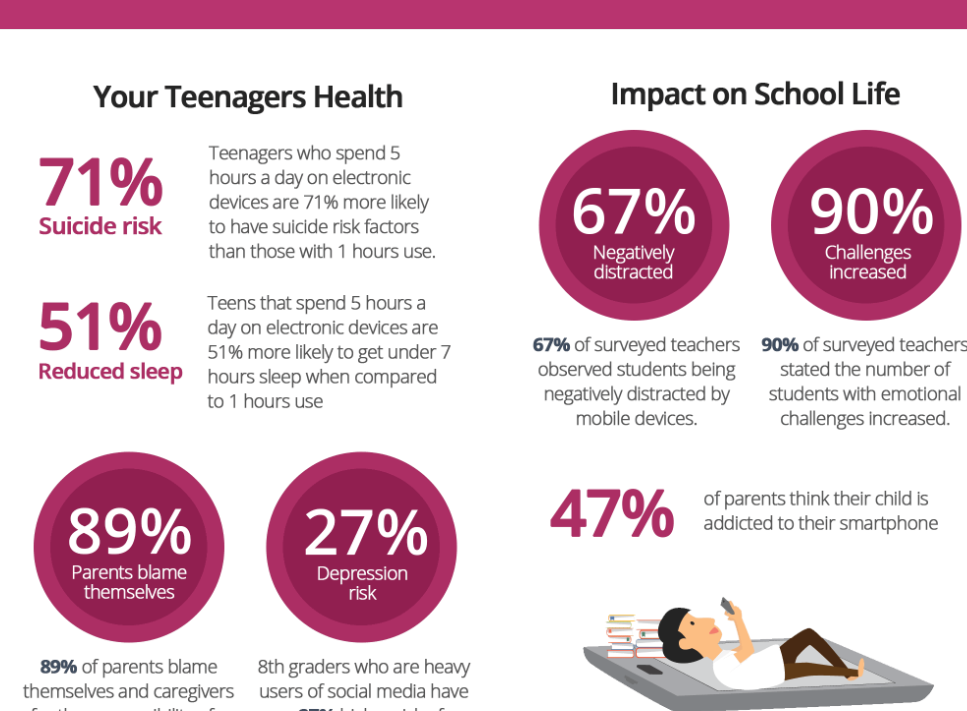
Why is Apple going so hard on TITANIUM? Well, where else does smartphone development have to go? In the early days there was this boundless optimism about what these things might someday do. The cameras, obviously, were a big point of emphasis, and they have developed to a remarkable degree, with even midrange phones now featuring very high-resolution sensors, often with multiple lenses. The addition of the ability to take video that was anything like high-quality, which became widespread a couple years into the smartphone era, was a big advantage. (There’s also all manner of “smart” filtering and adjustments now, which are of more subjective value.) The question is, who in 2023 ever says to themselves “smartphone cameras just aren’t good enough”? I’m sure the cameras will continue to get refined, forever. And maybe that marginal value will mean something, anything at all, in five or ten or twenty years. Maybe it won’t. But no one even pretends that it’s going to be a really big deal. Screens are going to get even more high-resolution, I guess, but again – is there a single person in the world who buys the latest flagship Samsung or iPhone and says, “Christ, I need a higher resolution screen”? They’ll get a little brighter. They’ll get a little more vivid. But so what? So what. Phones have gotten smaller and they’ve gotten bigger. Some gimmicks like built-in projectors were attempted and failed. Some advances like wireless charging have become mainstays. And the value of some things, like foldable screens, remains to be seen. But even the biggest partisans for that technology won’t try to convince you that it’s life-altering.

This Cold War bomber was perfect. Why was it cancelled? | TSR2

Filed under: Britain, History, Military, Technology, Weapons — Tags: , , , , , — Nicholas @ 02:00

Imperial War Museums
Published 9 Aug 2023

In 1951, Britain introduced the English Electric Canberra. It would go onto become the RAF’s longest serving aircraft, designed to operate at high level. It was an incredibly efficient aircraft, but by the late 1950s everything changed. The Soviet Union brought into service brand new surface-to-air missiles and suddenly overnight the Canberra was vulnerable.

Now the British government needed a new aircraft, one that could beat this threat and fly under the radar. It was a huge ask for the technology of the time, but had it been successful the aircraft itself would have been a world beater. In this epsiode of Duxford in Depth, Liam Shaw takes a details look at the aircraft that never was, the BAC TSR-2.
(more…)

November 25, 2023

Crystal Palace Station is Needlessly Magnificent

Jago Hazzard
Published 9 Aug 2023

Crystal Palace and the station built for it. Well, one of them.
(more…)

November 23, 2023

Clown world is what you get when children run things in the real world

Filed under: Media, Politics, Technology, USA — Tags: , , , , , — Nicholas @ 05:00

Theophilus Chilton on the overgrown children who populate what used to be the adult world in the West:

If you’ve been around dissident Right circles for any length of time, you’re probably seen the term “clown world” used to describe the modern Western world. If you’ve paid any attention at all to the state of the world around us, you know just how apt of a description that term really is. Modernity as it is expressed today transcends the types of degeneracy and corruption that have been seen in previous decadent periods and has plumbed to nadirs of human depravity that previous generations would have literally found unspeakable because they would not have had the vocabulary to even describe them. To any rational adult observer of any previous age, no matter how dissolute, today’s western social, political, and moral situation would seem completely clownish and unserious.

That this would be the case is practically inevitable given the type of people involved within the plethora of left-wing causes and intersectionality factions. As a general rule, the political and cultural Left are very childish, not just in their behaviour, but also in their worldview, demeanor, and mindset. Any normal person who has ever dealt with them on social media (or the real world, if you’ve had the misfortune) can abundantly testify to this. Now, I’m not really talking about the “boss lefties”, the people who really run the show concerning left-wing activism. Rather, I’m describing the rank-and-file lefties who fill out the echelons of “ground level” activism – ranging from the antifa street drek to the college students whining about microaggressions to the HR representatives in multinational corporations.

I sincerely believe that to understand the psychology of those on the Left, one must approach the issue from the standpoint of juvenile behaviourism. Observing how and why children – as in actual children – act as they do will shed light on why those on the Left are the way they are. I want to emphasise that what I’m saying here isn’t meant to be the usual derogation that people on opposite sides of the political divide routinely throw at each other. I am literally saying that, for whatever reason, the stunting of the emotional and rational growth of the minds of those who are drawn to the hard core of the Left results in similarities in psyche and behaviour between the two groups.

The first and most obvious similarity revolves around the acceptance of wishful thinking as a credible alternative to verifiable reality. This manifests itself in two related ways – the willingness to believe fantasies that have no credible claims to being truth, and the concurrent unwillingness to accept legitimate evidences which disagree with those fantasies.

Anyone who has kids knows that when a small child wants to believe something, they’re going to believe it, no matter what you say or show them to the contrary. Children do this because they do not have a firm grasp on the nature of reality, since they’re still essentially learning from the world around them what reality even is. They haven’t quite learned yet “how the world works”, so to speak, hence they’re still open to “other possibilities”, and assume that if they want these possibilities to be, then they can be.

Sadly, left-wing activists and SJWs operate on essentially the same set of basic premises. Despite all evidences to the contrary, they will believe that homosexuality is normal, people can actually change their sexes, adult-child sexual relationships are healthy, large-scale third world immigration is enriching, computer simulations that predict extremes of global warming are credible reflections of actual climatological science, and so forth. Instead of accepting that arguments to the contrary can even exist, much less penetrate their self-contained fact space, leftists will attempt to mold reality to their preferences by dismissing contrary arguments with one of more “signaling phrases” (i.e. racist, sexist, transphobic, etc.). In this way, they believe they have negated the very existence of those contrary arguments, thus preserving their preferred perceptions.

Another area of similarity is seen in the social dynamics of cliquishness, which both children and leftists display in social settings. We should understand that cliquishness involves much more than the mere existence of in-groups and out-groups. Everybody has groups to which they belong and do not belong, and that is a fundamental factor in human sociability. What makes cliquishness different is that it involves the purposeful engineering of social dynamics for the objective of establishing the power of and loyalty to one or a small group of actors within a set which normally would act as a broad in-group. In other words, it functions as a way of destructively dividing a body of people who you would typically find bound together by more commonalities than differences. For children, this could be classmates within a school setting. For adults, it could mean anything from an office or church environment all the way up to the national level. Ostensibly, children at a school are all there for the same purpose. In the corporation, workers are, in theory, all supporting the company’s stated goals. Within a nation, a sense of asabiyya, of social solidarity, is supposed to obtain.

The whole purpose of left-wing activism is to destroy social solidarity, and to do so in an ever-changing and unpredictable manner. Within cliques, the accepted in-group is ever-shifting and individual members can be subject to sudden changes in status among the group based on anything from personal whim to the requirements of a newly imposed ideological orthodoxy. This is seen regularly on the Left and serves to demonstrate the fragility of the Left’s intersectionality alliance.

November 21, 2023

“Self-checkouts are not quite Skynet T-800 death dealers. Sarah Connor can rest easy – for now”

Filed under: Britain, Business, Technology — Tags: , , — Nicholas @ 05:00

I realize the problem is me, in that I hate self-checkout kiosks with a fiery passion and have been known to abandon any plans to purchase from a store if there is no human assigned to the checkout desk. I decline (with thanks) all offers to use the self-checkout — several of which are often unused — while lined up three or four deep at the one human’s work station. It must be my Luddite side showing. But, as Christopher Gage shows here, I’m not completely alone:

Self-checkout using NCR Fastlane machines at a Sainsbury’s store in the UK.
Photo by Magnus Manske via Wikimedia Commons.

“He’s got a problem with potatoes,” said the condemned, guarding the self-checkout machines. Potatoes plague them. Carrier bags flummox them. ‘Surprising item on the scale,’ it squeaked as if I were weighing up a kilo of black-tar heroin.

The retirement refusenik tapped a code on the screen for the third occasion before returning to his post. ‘Unexpected item in the bagging area.’ Embarrassed, I marshalled my friend — the Hobbity, amenable man with the silver slugs for eyebrows — for the fourth time. He recanted a well-worn sop dispensed to young dotards like me: “Don’t take it personally,” he said. “He just doesn’t like you.”

Self-checkouts are not quite Skynet T-800 death dealers. Sarah Connor can rest easy — for now.

After a little while, the machine let me go. The ordeal, fractious and infinitely slower than employing the helpful man to man a till, was over. Then, the devil-device sucker-punched square in the testes.

“Lovely to see you bye for now,” read the screen. Sinister, like a Jehovah’s Witness grinning. No comma after the introductory clause?! The insolent swine. I fought the primal urge to drown the machine in Coca-Cola and watch it crackle. The clean-up would be Harold’s job. He had enough on his plate.


Mercifully, one supermarket has sacked these silly machines.

Booths, a posh retailer up north, has retired self-checkouts in all but two of their stores. The good burghers of Booths reckon humans talking to other humans is a groundbreaking idea that will catch on in future.

“We have based this not only on what we feel is the right thing to do but also from having received feedback from our customers,” they said.

“Delighting customers with our warm northern welcome is part of our DNA.”

Wearily, Booths did what British northerners must do lest they spontaneously combust — they peacocked their northernness. Apparently, to be born on a particular patch of this floating rock bestows northerners an umbilical, friendly mien.

Northerners cannot help themselves. POV: You encounter a northerner in a pub: “A malignant tumour, you say? You wanna get yourself a northern tumour. Northern tumours are far less aggressive than those bloody southern tumours. It’s a fact! Northern tumours still have a sense of community, you see. Not like southern tumours …

I must forgive them. Booth’s “northern welcome” is a good thing. Entities imbued with DNA are a good thing. Even one fewer self-service checkout is a good thing.

From where Booth’s tread, others may follow. The numbers don’t tell fibs.

Self-checkouts mutate even the most cherubic of citizens into a degenerate thief. Stores with self-service checkouts suffer double the shrinkage (4%) — industry-speak for pilfering and thieving.

Researchers say the temptation can prove too much, provoking our inner tea leaf into a spot of half-inching. Self-checkouts goad miscreants into slapping a “Reduced to £1” sticker on a litre of Jameson.

Booths have bucked a trend. A fatuous, anti-human trend.

Update: Fixed broken URL.

QotD: Collabortage

Filed under: Business, Quotations, Technology — Tags: , , , — Nicholas @ 01:00

Yes, that’s a new word in the blog title: collabortage. It’s a tech-industry phenomenon that needed a name and never had one before. Collabortage is what happens when a promising product or technology is compromised, slowed down, and ultimately ruined by a strategic alliance between corporations that was formed (at least ostensibly) to develop it and bring it to market.

Collabortage always looks accidental, like a result of exhaustion or management failure. Contributing factors tend to include: poor communication between project teams on opposite sides of an intercorporate barrier, never-resolved conflicts between partners about project objectives, understaffing by both partners because each expects the other to do the heavy lifting, and (very often) loss of internal resource-contention battles to efforts fully owned by one player.

Occasionally the suspicion develops that collabortage was deliberate, the underhanded tactic of one partner (usually the larger one) intended to derail a partner whose innovations might otherwise have disrupted a business plan.

Eric S. Raymond, “Collabortage”, Armed and Dangerous, 2011-02-16.

November 17, 2023

Prometheus

Filed under: Books, Greece, History, Technology — Tags: , , , — Nicholas @ 04:00

Virginia Postrel tries to correct the common misinterpretation of the story of the Titan Prometheus:

“The Torture of Prometheus” by Salvator Rosa (1615-1673)
Oil painting in the Galleria Nazionale d’Arte Antica di Palazzo Corsini via Wikimedia Commons.

Listening to Marc Andreessen discuss his Techno-Optimist Manifesto on the Foundation for American Innovation’s Dynamist podcast, I was struck by his repetition of something that is in the manifesto and is completely wrong. “The myth of Prometheus – in various updated forms like Frankenstein, Oppenheimer, and Terminator – haunts our nightmares,” he writes.1 On the podcast, he elaborated by saying that, although fire has many benefits, the Prometheus myth focuses on its use as a weapon. He said something similar in a June post called “Why AI Will Save the World“:

    The fear that technology of our own creation will rise up and destroy us is deeply coded into our culture. The Greeks expressed this fear in the Prometheus Myth – Prometheus brought the destructive power of fire, and more generally technology (“techne”), to man, for which Prometheus was condemned to perpetual torture by the gods.

No. No. No. No.

Prometheus is punished for loving humankind. He stole fire to thwart Zeus’ plans to eliminate humanity and create a new subordinate species. He is a benefactor who sacrifices himself for our good. His punishment is an indicator not of the dangers of fire but of the tyranny of Zeus.

Prometheus is cunning and wise. His name means foresight. He knows what he is doing and what the likely consequences will be.

Eventually his tortures end when he is rescued by the hero Herakles (aka Hercules), who shoots the eagle charged with eating Prometheus’ liver every day, only for it to grow back to be eaten again.

The Greeks honored Prometheus. They celebrated technē. They appreciated the gifts of civilization.

The ancient myth of Prometheus is not a cautionary tale. It is a reminder that technē raises human beings above brutes. It is a myth founded in gratitude.


    1. Frankenstein isn’t The Terminator either. Frankenstein is a creator who won’t take responsibility for his creation, a father who rejects and abandons his child. The Creature is frightening and dangerous but he is also the book’s moral center, a tragic, sympathetic character who is feared and rejected by human beings because of his appearance. Only then does he turn deadly. Frankenstein arouses pity and terror because we empathize with its central figure and understand his rage.

    The novel’s most reasonable political reading is not as a story of the dangers of science but as a parable of slavery and rebellion. “By the eighteen-fifties, Frankenstein’s monster regularly appeared in American political cartoons as a nearly naked black man, signifying slavery itself, seeking his vengeance upon the nation that created him,” writes historian Jill LePore, who calls the “Frankenstein-is-Oppenheimer model … a weak reading of the novel.” I agree.

    The Romantics tended to identify with Prometheus and Mary Shelley’s husband, Percy Bysshe Shelley, wrote a play called Prometheus Unbound, further undermining the reading of Frankenstein as an anti-Promethean fable.

November 15, 2023

“If you cannot make your own pig iron, you are just LARP’n as a real power”

Filed under: Britain, History, Technology — Tags: , , , , — Nicholas @ 04:00

CDR Salamander talks about the importance of an old industry to a modern industrial economy:

We probably need to start this out by explaining exactly what a blast furnace is and why it is important if you want to be a sovereign nation.

First of all, what it does;

    The purpose of blast furnace is to chemically reduce and physically convert iron oxide into liquid iron called “hot metal” The blast furnace is a huge, steel stack lined with refractory brick where iron ore, coke and limestone are charged into the top and preheated air is blown into the bottom. The raw materials require 6 to 8 hours to descend to the bottom of the furnace where they become the final product of liquid slag and liquid iron. These liquid products are drained from the furnace at regular intervals. The hot air that was blown into the bottom of the surface ascends to the top in 6 to 8 seconds after going through numerous chemical reactions. Once the blast furnace is started it continuously runs for four to ten years with only short stops to perform planned maintenance.

Why are blast furnaces so important? Remember the middle part of Billy Joel’s “Iron, coke, chromium steel?”

“Coke” is in essence purified coal, almost pure carbon. It is about the only thing that can at scale make “new” or raw iron, aka “pig iron”. Only coke in a blast furnace can make enough heat to turn iron ore in to iron. You can’t get that heat with an electric furnace.

Pig iron is the foundation of everything that follows that makes an industrial power. If you cannot make your own pig iron, you are just LARP’n as a real power.

It takes a semester at least to understand this, but here is all you really need to know;

    Primary differences

    While the end product from each of these is comparable, there are clearly differences between their capabilities and process. Comparing each type of furnace, the major distinctions are:

    Material source – blast furnaces can melt raw iron ore as well as recycled metal, while electric arc furnaces only melt recycled or scrap metal.

    Power supply – blast furnaces primarily use coke to supply the energy needed to heat up the metal, while EAFs use electricity to accomplish this.

    Environmental impact – because of the fuels used for each, EAFs can produce up to 85% less carbon dioxide than blast furnaces.

    Cost – EAFs cost less than blast furnaces and take up less space in a factory.

    Efficiency – EAFs also reach higher temperatures much faster and can melt and produce products more quickly, as well as having more precise control over the temperature compared to blast furnaces.

We’ll get to that environmental impact later, but the “Material source” section is your money quote.

Without a blast furnace, all you can do is recycle scrap iron.

You cannot fight wars at scale if all you have is scrap iron. You cannot be an industrial hub off of just scrap iron. If you are a nation of any size, you then become economically and security vulnerable at an existential level. I don’t care how much science fiction you get nakid and roll in; wars are won by steel, ungodly amounts of steel.

Where do you get the steel to build your warships? Your tanks? Your factories? Your buildings? Your factories?

If you can only use scrap, then you are simply a scavenger living off the hard work of previous generations. Eventually you run out. You will wind up like the cypress mills of old Florida where, once they ran out of cypress trees, they simply sold off the cypress lumber their mills were constructed of … and then went bankrupt.

November 12, 2023

The most dangerous man in the world?

Filed under: Books, Health, Media, Politics, Technology — Tags: , , , , — Nicholas @ 05:00

Elizabeth Nickson on Daniel Jupp’s new biography of Bill Gates, Gates of Hell: Why Bill Gates is the Most Dangerous Man in the World:

A new book, Gates of Hell: Why Bill Gates Is the Most Dangerous Man in the World by Daniel Jupp, manages to dissect all of Gates’s activities since September 2011 and has he ever been a busy psychopath. Jupp is one of the several gifted polemicists called forth by the gnarly times we live in. He soared to recognition with witty, but somehow soothing Facebook blasts that combined PJ O’Rourke with Jonathan Swift with Steve Bannon. Everyone passed around his posts exulting. Jupp, if that is his real name, hails from working class England, Essex to be precise-ish, and edits or writes for Country Squire Magazine. Whatever, he is of the time and do we ever need him.

Jupp in Gates of Hell is careful. He does not risk libel, not even a whiff of it. And in contrast to his usual oxygen-rich posts, he is measured, calm, working with a surgeon’s focus, as he peels back the PR, the methodology, the results, the hiding of the malign results, the cantering on to the next heady task as the ultimate white Saviour. Unfortunately, as Jupp describes, Gates is not quite as simple as that. He also changes law, dictates policy in far too many countries where he does not belong, buys all the media, and every politician he can. When he calls, the Great and the Good come to sit in his Presence and be lectured to in that stickily sentimental tone about his noble purpose. When he makes a mistake, and almost everything he does is a mistake, he spends several hundred million dollars buying desperate legacy media and every functional PR firm to cover it up.

Gates’s life changed when his practice of turning competitors to scorched earth, thereby crippling innovation in the digital world, resulted in an embarrassing court case. The sullen, nit-picking slug on trial, radiating contempt is, I suspect, the real Gates, or his shadow self, very much like Gollum in LOTR defending his Precious. Jupp skates by the many charges of sexual abuse, but points out that he formally left Microsoft after one of them became too big to ignore.

Gates then constructed his new self. He married, not a babe, but a substantive character, and had three children in quick succession. He hired the most expensive fixers and PR, and built himself an avuncular sweater-clad persona. He was going to give away his massive fortune, give back to the people from his incredible privilege.

In the ensuing years, that fortune doubled and then doubled again.

That’s because he met Jeffrey Epstein. While Epstein’s sexual activities have received 90% of the attention, his activities during the last years of the Clinton administration are the more significant. First of all, Epstein was running an entrapment scheme for various covert agencies, which made his insinuation into government easy. At the same time, he taught high-level government officials, cabinet ministers, heads of agencies, and the great larcenous dame herself, Hillary Clinton, how to steal. It was a pincer movement. Having second thoughts? Here’s a video of your encounter with a fourteen year old.

I’ll make it super simple: he taught these people, and they weren’t all Democrats, how to stand up a policy meant to benefit the least advantaged, like for instance access to the housing ladder, and then profit off it. Since then every government initiative has carved out for its progenitor, a fortune. His first, of course, was Freddie Mac and Fannie Mae and James Johnson who ran these agencies into deep bankruptcy, collapsed the ’08 economy, nevertheless walked away with $100 million from a government job. Wall Street Journal reporter, Gretchen Morgenson’s Reckless Endangerment covers the waterfront here.

Who Destroyed The Library of Alexandria? | The Rest is History

The Rest is History
Published 21 Jul 2023

Step back in time with renowned historians Dominic Sandbrook and Tom Holland as they embark on an enthralling journey to explore the enigmatic tale of the Library of Alexandria’s destruction. Join them as they uncover the who, what, and why behind one of history’s greatest losses.

#LibraryOfAlexandria #DominicSandbrook #TomHolland

November 10, 2023

Canadian media’s self-immolation an object lesson for British media

Marc Edge discusses how Canada’s legacy media joined together in a virtual suicide-pact to force Google and Facebook to give them millions in unearned revenue:

The best-laid plans of Canada’s biggest media owners went badly awry this summer, when Meta began blocking news across the country on its social media networks Facebook and Instagram in response to the Online News Act passed in June. Newspaper publishers lobbied the federal government relentlessly to force Google and Meta to compensate them for supposedly “stealing” their news stories by carrying links to them. But instead of bringing them hundreds of millions of dollars a year from the digital giants, as a similar law has in Australia, their campaign backfired badly in what has been described as “a massive policy blunder“, and “the most spectacular legislative failure in Canada’s living political memory“.

Not only will publishers not be getting any money from Meta, they likely won’t get any from Google either, as they have threatened to similarly block news in Canada when the law comes into effect in December. Ironically, publishers will instead lose millions instead, as the agreements they already have with at least Meta will be cancelled, and probably those with Google as well. The knock-on effect makes it a triple-whammy when you also consider the traffic that news media will lose to their websites from the platforms. Worst affected will be online-only publications which have depended on that traffic to build an audience. Most did not want the Online News Act and many spoke out against it, but they were drowned out by the newspaper lobby led by industry association News Media Canada. It is dominated by the country’s two largest chains, which are now owned by a private equity firm and US hedge funds.

The Online News Act is the second in a series of bills designed to regulate the Internet, which, when taken together, include many of the same elements as the UK’s omnibus Digital Markets, Competition and Consumers Bill now before Parliament. An Online Streaming Act passed in April will tax and regulate digital video services in Canada, which are mostly owned by U.S. companies such as Netflix, Disney, and Amazon. A so-called Online Harms Act designed to combat hate speech and online bullying was introduced in 2021 but died on the order paper with an election call. It was criticised by civil libertarians for potentially prohibiting otherwise lawful speech and was thus being revised, but so far it has not been re-introduced. Legislation aimed at increasing online privacy and consumer rights is also planned.

One of these things, on closer scrutiny, is not quite like the other ones, and a realisation is growing in Canada that the government may have been co-opted in its enthusiasm to regulate the Internet to participate in what has been called a “shakedown” of the digital giants. Canada’s news media have literally been on the dole for the past five years since they lobbied the government for a five-year $595-million bailout that expires next spring. This has prompted publishers to adopt Rupert Murdoch’s successful strategy in Australia of persuading the government to force the digital giants to share their advertising revenues with newspapers.

Canadian publishers lobbied for the Online News Act in part by running blank front pages for a day and also spiked several opinion articles by academics that had been accepted for publication by editors. Canada has long had one of the free world’s highest levels of media ownership concentration, along with Australia. It went to another level in 2000 with the “convergence” of newspaper and television ownership, against which Canada had no regulatory safeguards, unlike most other countries. The multimedia business model collapsed with the 2008-09 recession, when advertising revenues dropped sharply, and Canada’s news media have been lurching from bad to worse ever since. The country’s largest newspaper chain, Postmedia Network, was acquired out of bankruptcy in 2010 by a consortium of US hedge funds which had bought much of its previous owner’s high-interest debt on the bond market for pennies on the dollar. They have since taken more than $500 million out of the company in debt payments. The country’s second-largest chain, Torstar, was bought from its owning families at the outset of the pandemic in 2020 by private equity firm NordStar Capital, which has been similarly stripping the company with closures, redundancies, and asset sales.

Only a government could waste this much money on the ArriveCAN boondoggle

Filed under: Bureaucracy, Business, Cancon, Government, Technology — Tags: , , , — Nicholas @ 03:00

Chris Selley is in two minds about the ArriveCAN scandal, in that thus far no minister has been implicated but we all may naively assume that the civil service was better than this sort of sleaze:

It’s tempting to want to forget that ArriveCAN, the federal government’s pandemic travel app that collected dead-simple information from arriving travellers and forwarded it to relevant officials for scrutiny, and that somehow cost $54.5 million — a figure no one has come within 100 miles of justifying, and don’t let anyone tell you differently. No one wants to remember the circumstances that supposedly made ArriveCAN necessary.

One could also certainly argue there are aspects of Canada’s pandemic response more desperately needing scrutiny. So, so many aspects.

But whenever the House of Commons operations committee sits down to investigate ArriveCAN, there are fireworks. And you start to think, maybe this godforsaken app is more key to understanding Canada’s pandemic nightmare than you first thought.

The latest blasts came on Tuesday, when Cameron MacDonald, director-general of the Canada Border Services Agency (CBSA) when the pandemic hit, alleged Minh Doan, then MacDonald’s superior and since promoted to chief technological officer of the entire federal government — pause for thought — had lied to the committee on Oct. 24 with respect to who picked GCStrategies to oversee the ArriveCAN project.

Doan told the committee he hadn’t been “personally involved” in the decision. MacDonald, who says he had recommended Deloitte build the app, says that’s garbage. “It was a lie that was told to this committee. Everyone knows it,” he said. “Everyone knew it was his decision to make. It wasn’t mine.” MacDonald said Doan had threatened in a telephone conversation to finger him as the culprit, and that he had felt “incredibly threatened”.

Crikey.

For those who’ve blissfully forgotten, GCStrategies consists of two people who subcontract IT work to teams of experts and takes a cut off the top — in this case a cut of roughly $11 million, for an app that should have cost a fraction of that, if it was to exist at all. Needless to say, that wasn’t the only fat contract GCStrategies — which, again, is two men and an address book — had received from the government over the years. Each GCStrategist made more money off ArriveCAN than I’ll likely make in my life. It makes me want to strap on a bass drum and sing “The Internationale” in public.

November 2, 2023

Keeping Clean in Rome

Filed under: Architecture, Europe, Health, History, Technology — Tags: , , , , , — Nicholas @ 02:00

seangabb
Published 2 Jul 2023

A lecture, given in June 2023, about bathing and keeping clean in the Roman World — plus an overview of depilation and going to the toilet.
(more…)

October 29, 2023

Arguments for not buying military kit “off the shelf”

Filed under: Britain, Bureaucracy, Cancon, Military, Technology, USA, Weapons — Tags: — Nicholas @ 05:00

Sir Humphrey provides some of the reasons why it’s not a simple economic case for a nation’s military procurement to buy “off the shelf” equipment even from a close ally:

Not all kit needs to be or can be domestically sourced. The British army uses Apache attack helicopters which are licensed from the original US manufacturer.
Westland Apache WAH-64D Longbow helicopter (UK Army registration ZJ206) displays at Kemble Air Day 2008, Kemble Airport, Gloucestershire, England in June 2008.
Public domain photograph by Adrian Pingstone.

The arguments for buying American are on the face of it reasonable. The US produces good quality equipment able to meet many UK defence needs. There is a strong supply chain in place, ensuring that there are plenty of spare parts in the system to draw on when needed, and at cheaper cost due to bulk buying. The equipment is usually designed to be interoperable with NATO partners, so it can be integrated to work alongside allies and with existing equipment. It can be delivered quickly, it works and lots of other people use it, so why shouldn’t the UK? There are in fact many good reasons why the UK should not exclusively buy American.

Earlier this month, we looked at the Canadian Surface Combatant (CSC) program and why the Canadian Armed Forces never seemed to get the same “bang for the buck” that our American or British allies seem to manage. Here, Sir Humphrey points out that even the British military has to make procurement decisions that weigh cost and convenience with some very significant national security concerns:

To start with, US kit is designed by US companies to meet US requirements, not British ones. This may sound obvious but there is a dangerous view some put forward that “off the shelf” means the UK could just buy something and use it. There is no such thing as “off the shelf” unless you want it as it comes in its US version, with no modifications, changes or installation of British equipment. The moment you do this, you’ve created a UK variant with its own bespoke requirements and supply needs, for which you are dependent on the US defence industry to support – and there is no guarantee that this can or will happen. From the outset you have lost operational sovereignty and control over your military equipment.

Buying from the US means the UK would need to request a Foreign Military Sale (FMS) case through the US government, seeking legislative approval to purchase the equipment. If, for example, the UK wanted to buy a new tank, it would be reliant on US government approval to do so, not just for the initial purchase, but for all spares buy thereafter. The way that FMS works is that it sets out approval not just for purchase, but sets a schedule for spare parts purchases, services, and upgrades, all of which are done at the time and schedule set by US government and industry, and not the British government. This means that the UK would lose control over when to purchase spares or upgrades and would be forced to buy to a foreign governments timetable. This is why FMS is so successful for the US – it offers cheap entry prices but makes a killing in the long-term spares and support market. To buy from the US means to accept that you are handing over control of your spares and logistics chain to a foreign power who determines the timing of when and what you buy. This is fine in small doses but if you buy exclusively from the US, suddenly means you’ve got no control over how you want to support your armed forces.

The next challenge is the integration work needed to make things work for the UK. One of the risks of buying a foreign design is that you lack operational sovereignty over the design and its internal contents. Equipment supplied by the US will often come with a variety of sealed, tamper proof boxes containing US government-controlled technology that cannot be accessed by the purchasing nation. As the operator, you do not have full control over your military equipment, you don’t know what is necessarily in the boxes, and you are reliant on the US to fix issues with them. By contrast any equipment designed and built in the UK means that the MOD has full control and sovereignty over it to open it up, modify, adapt or change it to meet British needs. To buy US means accepting we cannot change a design without a foreign nations’ approval, which in turn means exposing our own sensitive military technology and equipment to the US, to conduct trials to ensure it can work with the US provided equipment. This represents an astounding loss of sovereign control on advanced weapon systems and means potentially giving the US defence industry insight into UK capabilities that manufacturers may want to keep commercially sensitive.

October 27, 2023

QotD: It’s the #BelieveScience fans who are most likely to fall for pseudoscientific scams

Filed under: Health, Media, Politics, Quotations, Science, Technology — Tags: , , — Nicholas @ 01:00

But what this whole developing scandal really reminded us of was, ironically, another scientific paper that was published in the midst of the pandemic. This one in the Journal of Experimental Social Psychology was released in September 2021 and titled: “Misplaced trust: When trust in science fosters belief in pseudoscience and the benefits of critical evaluation”.

The paper consisted of the results of four pre-registered experiments of decent sample size, albeit administered online. They introduced false claims about a fictional virus created as a bioweapon, and about the carcinogenic nature of GMO foods.

The results were so, so very telling.

    “Participants who trust science are more likely to believe and disseminate false claims that contain scientific references than false claims that do not,” and “We conclude that trust in science, although desirable in many ways, makes people vulnerable to pseudoscience.”

Let that sink in. The people who #BelieveScience are more vulnerable to falling for pseudoscientific claims, especially when those claims are presented with the comforting ephemera of science — the lab coats, the credentials, the technical studies filled with jargon. That’s because “Believing Science” isn’t the same thing as actually doing science. “Believing Science” is a statement of tribal affiliation. All this claim demonstrates is that a person wants to be seen as the sort of individual who believes experts and takes advice from trusted and credentialed officials. For the most part, this is a good instinct! But if those experts and trusted officials are wrong, malicious, or simply full of shit, the “Believe Science” crowd will reliably fall in line. Because of its ideological affiliation, this crowd is, ironically, far less capable of spotting bad science.

Actually doing science as opposed to merely believing in it requires that we all evaluate claims critically regardless of their origins; we look for inconsistencies, we examine the quality of the evidence presented, and we question the credibility of the people making the claims.

“Dispatch from the Front Line: Comms aren’t the government’s problem”, The Line, 2023-07-23.

« Newer PostsOlder Posts »

Powered by WordPress