
Food Unwrapped
Published 26 Feb 2022Jimmy heads to Thailand to see how MSG is made and get some expert opinions on if MSG is safe to eat.
(more…)
November 1, 2022
What is actually inside MSG and is it Safe? | Food Unwrapped
Comments Off on What is actually inside MSG and is it Safe? | Food Unwrapped
October 29, 2022
The Absinthe Murder
Tasting History with Max Miller
Published 28 Jun 2022
(more…)
Comments Off on The Absinthe Murder
October 27, 2022
QotD: Life expectancy before the modern age
Locke held the same assumptions about life, because life was almost inconceivably cheap in his day. Locke was born in 1632. A person born then would have a decent shot at making it to age 50 if he survived until age 5 … but only about half did. And “a decent shot” needs to be understood blackjack-style. Conventional wisdom says to hit if the dealer shows 16 and you’re holding 16 yourself — even though you’ve got a 62% chance of going bust, you’re all but certain to lose money if you stand. Living to what we Postmoderns call “middle age” was, in Locke’s world, hitting on a 16. We Postmoderns hear of a guy who dies at 50 and we assume he did it to himself — he was a grossly obese smoker with a drug problem or a race car driver or something. In Locke’s world, they’d wonder what his secret was to have made it so long.
Severian, “Overturning Locke: Life”, Rotten Chestnuts, 2019-09-11.
Comments Off on QotD: Life expectancy before the modern age
October 25, 2022
A Multi-Trillion Dollar Pipe Dream
PragerU
Published 16 Jun 2022Are we heading toward an all-renewable energy future, spearheaded by wind and solar? Or are those energy sources wholly inadequate for the task? Mark Mills, Senior Fellow at the Manhattan Institute and author of The Cloud Revolution, compares the energy dream to the energy reality.
(more…)
Comments Off on A Multi-Trillion Dollar Pipe Dream
QotD: How con-men and charlatans use the Forer Effect
- You have a great need for other people to like and admire you.
- You have a tendency to be critical of yourself.
- You have a great deal of unused capacity which you have not turned to your advantage.
- While you have some personality weaknesses, you are generally able to compensate for them.
- Your sexual adjustment has presented problems for you.
- Disciplined and self-controlled outside, you tend to be worrisome and insecure inside.
- At times you have serious doubts as to whether you have made the right decision or done the right thing.
- You prefer a certain amount of change and variety and become dissatisfied when hemmed in by restrictions and limitations.
- You pride yourself as an independent thinker and do not accept others’ statements without satisfactory proof.
- You have found it unwise to be too frank in revealing yourself to others.
- At times you are extroverted, affable, sociable, while at other times you are introverted, wary, reserved.
- Some of your aspirations tend to be pretty unrealistic.
- Security is one of your major goals in life.
… most people will agree that the statements accurately describe them. In fact, most people will feel like they’re unusually accurate descriptions, which is how astrologers get you.
What statements show a Forer effect? Wikipedia just says they should be vague and somewhat positive. Can we do better?
A lot of Forer statements above are about the contrast between internal experience and outward behavior — for example “disciplined and self-controlled outside, you tend to be worrisome and insecure inside”. All of this is implicitly comparative — since there’s no objective measure for how disciplined you should be, “disciplined” implicitly means “more disciplined than other people”. Take this into account, and you can rephrase many of these statements as “Although everyone else is really X, you are Y pretending to be X”.
Now the trick is obvious. You can access your internal experience, and you know what kind of things you’re pretending. But you can only access everyone else’s external presentation, which (absent specific evidence otherwise) you mostly believe. So whenever everyone is Y pretending to be X, it will feel like “although everyone else is really X, I am Y pretending to be X”.
Consider the fifth statement above: “Your sexual adjustment has presented problems for you”. Everyone has to go through their own sexual adjustment. But usually they hide it from everyone else except maybe some unlucky early sexual partners. Sexual adjustment is terrible, and so without any opportunity to calibrate, most people assume it can’t possibly be quite that bad for other people. So if an astrologer reads a star-chart and predicts “I bet you had an unusually tough sexual adjustment”, most people will agree the astrologer is right.
Scott Alexander, “Forer Statements as Updates And Affirmations”, Astral Codex Ten, 2022-07-27.
Comments Off on QotD: How con-men and charlatans use the Forer Effect
October 24, 2022
The rise of “Queer Theory”
In City Journal, Christopher F. Rufo provides the background that has lead to the widespread phenomenon of “Drag Queen Story Hour”:

Start with queer theory, the academic discipline born in 1984 with the publication of Gayle S. Rubin’s essay “Thinking Sex: Notes for a Radical Theory of the Politics of Sexuality”. Beginning in the late 1970s, Rubin, a lesbian writer and activist, had immersed herself in the subcultures of leather, bondage, orgies, fisting, and sado-masochism in San Francisco, migrating through an ephemeral network of BDSM (bondage, domination, sadomasochism) clubs, literary societies, and New Age spiritualist gatherings. In “Thinking Sex”, Rubin sought to reconcile her experiences in the sexual underworld with the broader forces of American society. Following the work of the French theorist Michel Foucault, Rubin sought to expose the power dynamics that shaped and repressed human sexual experience.
“Modern Western societies appraise sex acts according to a hierarchical system of sexual value,” Rubin wrote. “Marital, reproductive heterosexuals are alone at the top erotic pyramid. Clamouring below are unmarried monogamous heterosexuals in couples, followed by most other heterosexuals. … Stable, long-term lesbian and gay male couples are verging on respectability, but bar dykes and promiscuous gay men are hovering just above the groups at the very bottom of the pyramid. The most despised sexual castes currently include transsexuals, transvestites, fetishists, sadomasochists, sex workers such as prostitutes and porn models, and the lowliest of all, those whose eroticism transgresses generational boundaries.”
Rubin’s project — and, by extension, that of queer theory — was to interrogate, deconstruct, and subvert this sexual hierarchy and usher in a world beyond limits, much like the one she had experienced in San Francisco. The key mechanism for achieving this turn was the thesis of social construction. “The new scholarship on sexual behaviour has given sex a history and created a constructivist alternative to” the view that sex is a natural and pre-political phenomenon, Rubin wrote. “Underlying this body of work is an assumption that sexuality is constituted in society and history, not biologically ordained. This does not mean the biological capacities are not prerequisites for human sexuality. It does mean that human sexuality is not comprehensible in purely biological terms.” In other words, traditional conceptions of sex, regarding it as a natural behavior that reflects an unchanging order, are pure mythology, designed to rationalize and justify systems of oppression. For Rubin and later queer theorists, sex and gender were infinitely malleable. There was nothing permanent about human sexuality, which was, after all, “political”. Through a revolution of values, they believed, the sexual hierarchy could be torn down and rebuilt in their image.
There was some reason to believe that Rubin might be right. The sexual revolution had been conquering territory for two decades: the birth-control pill, the liberalization of laws surrounding marriage and abortion, the intellectual movements of feminism and sex liberation, the culture that had emerged around Playboy magazine. By 1984, as Rubin acknowledged, stable homosexual couples had achieved a certain amount of respectability in society. But Rubin, the queer theorists, and the fetishists of the BDSM subculture wanted more. They believed that they were on the cusp of fundamentally transforming sexual norms. “There [are] historical periods in which sexuality is more sharply contested and more overtly politicized,” Rubin wrote. “In such periods, the domain of erotic life is, in effect, renegotiated.” And, following the practice of any good negotiator, they laid out their theory of the case and their maximum demands. As Rubin explained: “A radical theory of sex must identify, describe, explain, and denounce erotic injustice and sexual oppression. Such a theory needs refined conceptual tools which can grasp the subject and hold it in view. It must build rich descriptions of sexuality as it exists in society and history. It requires a convincing critical language that can convey the barbarity of sexual persecution.” Once the ground is softened and the conventions are demystified, the sexual revolutionaries could do the work of rehabilitating the figures at the bottom of the hierarchy — “transsexuals, transvestites, fetishists, sadomasochists, sex workers”.
Where does this process end? At its logical conclusion: the abolition of restrictions on the behavior at the bottom end of the moral spectrum — pedophilia. Though she uses euphemisms such as “boylovers” and “men who love underaged youth”, Rubin makes her case clearly and emphatically. In long passages throughout “Thinking Sex”, Rubin denounces fears of child sex abuse as “erotic hysteria”, rails against anti–child pornography laws, and argues for legalizing and normalizing the behavior of “those whose eroticism transgresses generational boundaries”. These men are not deviants, but victims, in Rubin’s telling. “Like communists and homosexuals in the 1950s, boylovers are so stigmatized that it is difficult to find defenders for their civil liberties, let alone for their erotic orientation,” she explains. “Consequently, the police have feasted on them. Local police, the FBI, and watchdog postal inspectors have joined to build a huge apparatus whose sole aim is to wipe out the community of men who love underaged youth. In twenty years or so, when some of the smoke has cleared, it will be much easier to show that these men have been the victims of a savage and undeserved witch hunt.” Rubin wrote fondly of those primitive hunter-gatherer tribes in New Guinea in which “boy-love” was practiced freely.
Such positions are hardly idiosyncratic within the discipline of queer theory. The father figure of the ideology, Foucault, whom Rubin relies upon for her philosophical grounding, was a notorious sadomasochist who once joined scores of other prominent intellectuals to sign a petition to legalize adult–child sexual relationships in France. Like Rubin, Foucault haunted the underground sex scene in the Western capitals and reveled in transgressive sexuality. “It could be that the child, with his own sexuality, may have desired that adult, he may even have consented, he may even have made the first moves,” Foucault once told an interviewer on the question of sex between adults and minors. “And to assume that a child is incapable of explaining what happened and was incapable of giving his consent are two abuses that are intolerable, quite unacceptable.”
Rubin’s American compatriots made the same argument even more explicitly. Longtime Rubin collaborator Pat Califia, who would later become a transgender man, claimed that American society had turned pedophiles into “the new communists, the new niggers, the new witches”. For Califia, age-of-consent laws, religious sexual mores, and families who police the sexuality of their children represented a thousand-pound bulwark against sexual freedom. “You can’t liberate children and adolescents without disrupting the entire hierarchy of adult power and coercion and challenging the hegemony of antisex fundamentalist religious values,” she lamented. All of it — the family, the law, the religion, the culture — was a vector of oppression, and all of it had to go.
Comments Off on The rise of “Queer Theory”
October 22, 2022
Taking Out the Trash: What We Get Wrong About Recycling
Kite & Key Media
Published 24 May 2022Recycling is essential to protecting the environment, right? Well … it’s complicated. Many of our recycling practices are largely ineffective. And many of the materials it would be most beneficial to reuse barely get recycled at all.
In the 1980s, the recycling movement really took off thanks to the viral story about a trash barge called the Mobro.
In 1987, the Mobro floundered at sea for six months trying to find a port that would accept its load of garbage. The Mobro was rejected by port after port because of unsubstantiated rumors that it was carrying hazardous medical waste.
The Mobro‘s journey put the issue of waste management in the forefront of Americans’ minds. We were told recycling would solve our waste management woes — reducing trash in landfills and facilitating the reuse of plastics. Turns out, recycling isn’t the panacea we imagined it would be.
For starters, we’re not running out of landfill space. If you took just the land in the country that’s available for grazing — and then used just one-tenth of one percent of it — it could hold all the waste Americans will produce over the next 1,000 years.
As for recycling … well, it’s complicated. Take plastic, for instance. Making new plastic is actually cheaper than recycling old plastic. And the newest, high-tech methods of recycling plastic generate carbon emissions 55 times higher than just putting it in a landfill.
Many localities that used to profit from their recycling programs are losing money. Prince George’s County, Maryland, made $750,000 on its recyclables in 2017. A year later, they lost $2.7 million. Recycling has become so expensive that hundreds of local governments have stopped doing it.
Fortunately, there is one area of recycling that has potential: electronic waste. In recent years, only about 30% of e-waste — the remains of discarded computers, cell phones, TVs, etc. — has been recycled, which doesn’t make much sense. It’s packed with valuable metals and rare earths that we rely on for everything from consumer electronics to military technology.
Adding e-waste to the mix could save recycling as we know it. It could make the practice profitable again. And it could be better for the environment.
(more…)
Comments Off on Taking Out the Trash: What We Get Wrong About Recycling
October 21, 2022
QotD: The real reason for Upton Sinclair writing The Jungle
As a result, the Federal Meat Inspection Act passed Congress, and consumers were saved from ghastly diseases. The lesson is that government is essential to stop enterprise from poisoning us with its food.
To some extent, this mythology accounts for the wide support for government’s involvement in stopping disease spread today, including Covid and the catastrophic response.
Not only that, but the story is also the basis for the US Department of Agriculture’s food inspection efforts, the Food and Drug Administration’s regulation of medical drugs, the central plan that governs food production, the Centers for Disease Control and Prevention, and the legions of bureaucrats who inspect and badger us every step of the way. It is the founding template for why government is involved in our food and health at all.
It’s all premised on the implausible idea that people who make and sell us food have no concern as to whether it makes us sick. It only takes a quick second, though, to realize that this idea just isn’t true. So long as there is a functioning, consumer-driven marketplace, customer focus, which presumably includes not killing you, is the best regulator. Producer reputation has been a huge feature of profitability, too. And hygiene was a huge feature of reputation — long before Yelp.
Sinclair’s book was not intended as a factual account. It was a fantasy rendered as an ideological screed. It did drum up support for regulation, but the real reason for the act’s passage was that the large Chicago meat packers realized that regulation would hurt their smaller competitors more than themselves. Meat inspections imposed costs that cartelized the industry.
That’s why the largest players were the law’s biggest promoters. Such laws almost have more to do with benefiting elites than protecting the public. It was not really about safety, the best scholarship shows, but exclusionary regulation to raise competitors’ costs of doing business.
Jeffrey A. Tucker, “Poke and Sniff: A Lesson from 1906”, Brownstone Institute, 2022-06-29.
Comments Off on QotD: The real reason for Upton Sinclair writing The Jungle
October 20, 2022
QotD: “Medical gaslighting”
Of course, sometimes doctors will be wrong, because in my experience most of them are not great diagnosticians. And it will usually involve women because women visit doctors with complaints much more often than men. But “medical gaslighting” imports a notion of bad faith instead of error. It’s the medical version of “believe all women”, and you know how well that turned out …
Glenn Reynolds, Instapundit, 2022-07-17.
Comments Off on QotD: “Medical gaslighting”
October 19, 2022
Jonathan Kay reviews 18 Months by Shannon Thrace
At Quillette, a review of a new book on the breakdown of a once-happy marriage when one partner decides that mere transvestism isn’t enough any more and becomes transgendered:
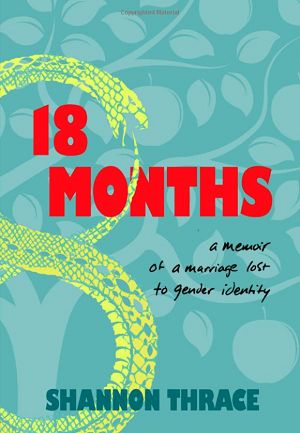
The trans community is diverse, especially when it comes to attitudes toward sex. As writer Angus Fox noted in a seven-part Quillette series, When Sons Become Daughters, some biologically male trans-identified teenagers live a sexless existence; and are drawn to puberty blockers and androgynous aesthetics precisely because they seem to offer safe harbour from male sexual development. In the case of middle-aged men who abruptly adopt a trans identity later in life, on the other hand, it can be the opposite: the presentation is often hyper-sexualized.
(more…)
Comments Off on Jonathan Kay reviews 18 Months by Shannon Thrace
October 18, 2022
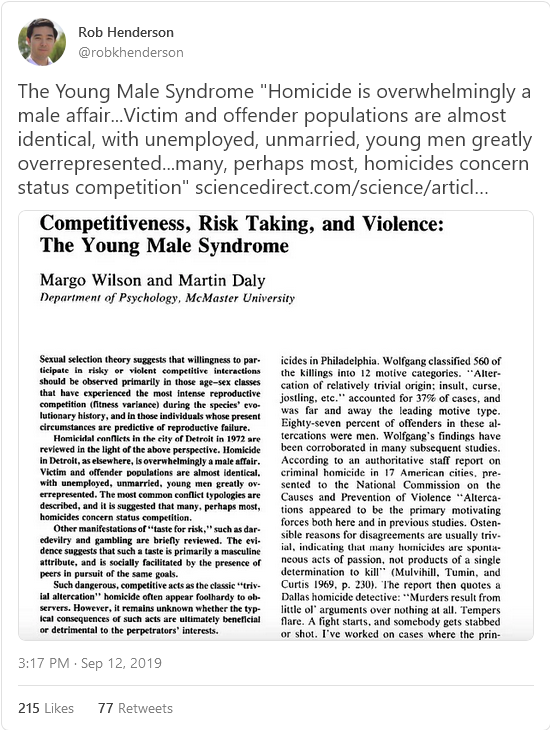
“On average, a twenty-five year old man has the same level of impulse control as a 10 year old girl”
Rob Henderson considers how early humans managed to overcome violent tendencies as human communities got larger, and specifically considers the social role of young men, then and now:
One challenge to overcome involves the behavioral tendencies of young males.
[Oxford evolutionary psychologist Robin] Dunbar writes:
When males (and younger males, in particular) are deprived of social, economic, and mating opportunities, they are prone to behaving in ways that both stress other group members (especially reproductive females) and threaten the stability and cohesion of the group. This is as true of the more social primates as it is of humans, and is often associated with high mortality rates. Under these circumstances, males are also likely to indulge in raiding neighbouring groups, which can result in poor inter-community relations as well as retaliation. Managing male behaviour may, thus, be critical to maintaining an environment conducive to successful reproduction.
Young males are (unknowingly) experts at disrupting social cohesion. To be fair, they are also required to maintain and defend it. They’re a mixed bag.
Disputes that spill over into violence and homicide have been an ever-present risk in both contemporary and pre-modern small scale societies. Young men make up the overwhelming majority of such conflicts, both as perpetrators and as victims.
[…]
The vast majority of violence is carried out by young men.
Psychologically, a key reason for this is that women are more sensitive than men to penalties. Men are more inclined to take risks, oblivious to the punishments they may receive. Men also have lower levels of empathy and a higher tolerance for pain.
The psychologist Simon Baron-Cohen has posited the hypothesis of the “extreme male brain”, suggesting that males are at higher risk for a clinical diagnosis of autism because of the constellation of traits men tend to score higher on (e.g., systematizing over empathizing, favoring things over people, etc). It also implies that most males may be a little bit autistic. Of course, some women score highly on these traits, and there are girls and women who are diagnosed with autism. Just at much lower rates than males.
I have wondered if, in addition to autism, the idea of the “extreme male brain”, could just as easily apply to psychopathy.
For both psychopathy and autism, the ratio of males to females is about three to 1.
Men (especially young men) are more pronounced than women on just about every trait that characterizes psychopathy.
Relatively low impulse control, low empathy, low fear, high sensation seeking, relatively shallow emotions, need for stimulation, proneness to boredom, violent fantasies, desire for revenge, and increased likelihood of criminality. Of course, some women score highly on these traits, and there are women who are psychopaths. But far fewer than males.
The psychologist John Barry has pointed out that when he was a student, he learned he couldn’t use standard adult psychopathy tests to administer to teenage boys. The reason? Because adult tests might give teen males a false positive.
Just as (relative to women) most men might be a little bit autistic, most (young) men might be a little bit psychopathic.
On average, a twenty-five year old man has the same level of impulse control as a 10 year old girl.
Comments Off on “On average, a twenty-five year old man has the same level of impulse control as a 10 year old girl”
October 15, 2022
From perpetual motion machines to “Philosopher’s Stoves” (no, that’s not a misprint)
In the latest Age of Invention newsletter, Anton Howes digs deeper into the question of why it took so long for the steam engine to be invented:
As I hinted in Part II, there were still more wonders to issue from [Cornelis] Drebbel’s workshop — many of them building on the same principles as his perpetual motion machine.
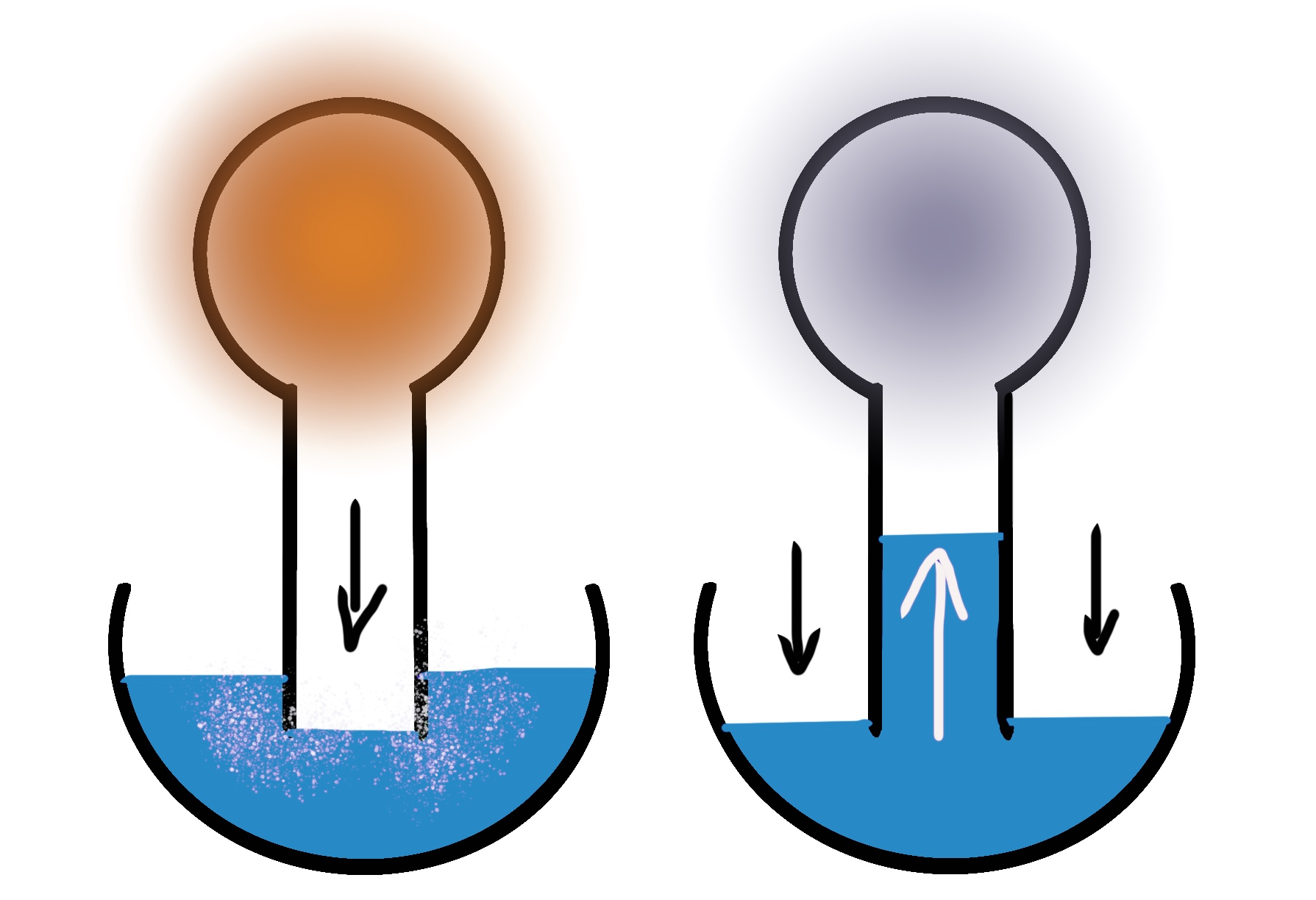
So it’s worth a very brief recap of how that device worked. Drebbel had improved upon an ancient experiment involving an inverted flask in water: that is, to heat the base of a long-necked glass flask and place it mouth-first into a bucket of water. The heated air trapped inside the flask would bubble out, and as the remaining air cooled, the water of the bucket would rise up into the flask.
The inverted flask experiment. The air bubbles out on the left. As the remaining trapped air cools, on the right, the water rises up the flask (in fact pushed up by the pressure of the atmosphere).Drebbel’s big breakthrough was to notice that once the water was already sucked into the flask, it would continue to rise and fall even when it wasn’t being heated or cooled on purpose — movements that were the result of natural changes to atmospheric pressure and temperature.
From this continued movement — to his mind, a harnessing of the perpetual movement of the universe itself — Drebbel then constructed a machine that seemed to show the ebb and flow of the tides, as the liquid inside it rose and fell between the cold of night and the heat of day. He also exploited that same rise and fall of the liquid in order to rewind clockwork that continually showed the time, day, months, and years, along with the cycle of the zodiac and the phases of the moon.
Few have now heard of Drebbel’s perpetual motion machine, but noticing that same rise and fall of the liquid in response to changes in the weather would also serve as the basis for the invention of the thermometer and barometer. Or, more accurately, to the reinterpretation of the ancient inverted flask experiment as a device capable of measuring both temperature and atmospheric pressure. (The two different applications were not disentangled and isolated until later, as we’ll see below, and so in modern terminology the initial device is often referred to as an air thermoscope.)
[…]
For alchemists like Drebbel, being able to control the temperature of furnaces and ovens was a valuable prize, because so much of their skill in manipulating metals and minerals depended upon it. The alchemist’s art — the intangible, tacit skill built up over years of experience — was one of sensitivity to heat, being able to judge, by feel and by look, the varying intensities of flame, and then to manipulate it so as to keep it at a constant level. The art was known as pyronomia, or as regimen ignis — the governing of fire.
At some point before 1624, Drebbel worked out that he could exploit the inverted flask experiment to radically improve furnaces. He did this in two ways. One was simply to affix a mercury thermometer to the furnace, to indicate its heat (mercury, with a higher boiling point, would be less liable than water to simply evaporate away). But the other, and more ingenious way, was to create a feedback mechanism to control the oven’s heat automatically. Drebbel placed a cork to float atop the mercury in yet another thermometer, which as it rose or fell would then cover or uncover the furnace’s air supply. He could thus choose a desired heat, and then let the oven do the rest. If it grew too hot, the air supply would be restricted. If it grew too cold, it would be increased. Drebbel had invented the thermostat, and perhaps one of the first widely-applied practical feedback control mechanisms.
Drebbelian self-regulating ovens, or Philosopher’s Stoves, spread beyond England, to be adopted in France, the Netherlands, Germany, and even across the ocean in New England — they were a major source of business for the husbands of Drebbel’s daughters, the brothers Abraham and Johannes Sibertus Kuffler, to whom he passed many of his secrets. Drebbel even applied its thermostatic principles to artificially incubating eggs, for which maintaining a constant temperature was essential. To give an idea of how big a deal this was, Francis Bacon filled his techno-utopian vision of a New Atlantis with “furnaces of great diversities, and that keep great diversity of heats; fierce and quick; strong and constant; soft and mild; blown, quiet; dry, moist; and the like”, some of which, like the incubator, were able to provide even the gentle heat of animal bodies. Drebbel, in Bacon’s lifetime, was thus producing the stuff of science fiction. He was, as one admirer termed him, a true Mysteriarch.
And the Mysteriarch did not stop there. Just before his death in 1633 he was working on improving the stoves, making them more efficient, reducing the need for people to attend the fire, and reducing their smoke. They could thus be applied to drying hops, malt, fruit, spices, and gunpowder, heating rooms in houses, and distilling fresh water from sea water. His heirs, the Kufflers, even made the stoves portable enough to be used for baking the bread for armies — they were allegedly used by Frederick Henry, Prince of Orange, in his various successful campaigns against Spain. Both the portable ovens and the seawater distilling machines were apparently used in the 1650s aboard ships headed for the Indian Ocean.
By the 1620s, then, many of the key elements for a steam engine were already coming into fairly widespread use. Scientists across Europe, inspired by Drebbel’s perpetual motion and Santorio’s thermometer, were eagerly pursuing the possibilities from expanding and contracting gases. And Drebbel had invented a widely-used thermostatic feedback system — a general concept that would later prove extremely useful in making steam engines practicable. Feedback systems and safety valves would come to regulate the movements of engines and reduce the risks of them overheating and exploding.
Comments Off on From perpetual motion machines to “Philosopher’s Stoves” (no, that’s not a misprint)
October 14, 2022
When Potatoes were Illegal
Tasting History with Max Miller
Published 7 Jun 2022
(more…)
Comments Off on When Potatoes were Illegal
QotD: High school
You didn’t understand this back then, of course, but your parents did, and — crucially — your teachers did. If you wanted to be a Metalhead this semester, they’d treat you like a Metalhead, complete with the “Why are you wasting your potential (and ruining your ears) with that godawful noise?” They’d make a show of having a Very Serious Conversation with you about the dangers of drugs and satanism … knowing full well that you weren’t on drugs, weren’t sacrificing virgins to Moloch (if for no other reason than you didn’t actually know any girls), and would, in fact, come back as a clean-scrubbed Preppie after summer break your junior year.
The key word in “adolescent rebellion”, after all, is adolescent. All of that stuff was just practice. If it proceeded in the normal way, what going through all the permutations of high school identity taught you was:
- you’re a fairly normal person; and
- that’s ok.
In other words, you are not a collection of externals — clothes, music, hairstyles. You’re you. The externals can change, fairly radically — remember that one summer you broke your nose trying to be a skater? — but there’s a core in there that’s you. Which is great, because it means that you are just a person who takes customer service calls in a cubicle farm to pay the bills; they’re not going to put “Here lies Bill, a Customer Service Representative” on your tombstone.
Severian, “The Basic College Girl”, Rotten Chestnuts, 2019-07-24.
Comments Off on QotD: High school
October 12, 2022
Medically assisted suicide in Canada
In Common Sense, Rupa Subramanya discusses how quickly MAID (Medical Assistance in Death) became a commonality in Canada:

Toronto General Hospital in 2005.
Photo via Wikimedia Commons.
When we think of assisted suicide or euthanasia, we imagine a limited number of elderly people with late-stage cancer or advanced ALS in severe pain. The argument for helping them die is clear: Death is imminent. Why should they be forced to suffer?
In 2015, Canada’s Supreme Court ruled that assisted suicide was constitutional. In June 2016, Parliament passed Bill C-14, otherwise known as the Medical Assistance in Dying Act. MAiD was now the law of the land. Anyone who could show that their death was “reasonably foreseeable” was eligible. In this respect, Canada was hardly alone: The Netherlands, Switzerland, Belgium, Spain, Australia, and New Zealand, among others, allow assisted suicide. So do ten states in the U.S.
In 2017, the first full year in which MAiD, which is administered by provincial governments, was in operation, 2,838 people opted for assisted suicide, according to a government report. By 2021, that figure had jumped to 10,064 — accounting for more than 3 percent of all deaths in Canada that year.
There have been a total of 31,664 MAiD deaths and the large majority of those people were 65 to 80 when they died. In 2017, only 34 MAiD deaths were in the 18- to 45-year-old category. In 2018, that figure rose to at least 49. In 2019, it was 103; in 2020, 118; and in 2021, 139.
Today, thousands of people who could live for many years are applying — successfully — to kill themselves.
Indeed, in some Canadian provinces nearly 5 percent of deaths are MAiD deaths. In 2021, the province of Quebec reported that 4.7 percent of deaths in the province were due to MAiD; in British Columbia, the number was 4.8 percent. Progressive Vancouver Island is unofficially known as the “assisted-death capital of the world”, doctors told me.
Why the dramatic increase? Over the past few years, doctors have taken an increasingly liberal view when it comes to defining “reasonably foreseeable” death. Then, last year, the government amended the original legislation, stating that one could apply for MAiD even if one’s death were not reasonably foreseeable. This second track of applicants simply had to show that they had a condition that was “intolerable to them” and could not “be relieved under conditions that they consider acceptable”. This included applicants like Margaret Marsilla’s son, Kiano.
In 2023, those numbers are almost certain to rise.
Next March, the government is scheduled to expand the pool of eligible suicide-seekers to include the mentally ill and “mature minors”. According to Canada’s Department of Justice, parents are generally “entitled to make treatment decisions on their children’s behalf. The mature minor doctrine, however, allows children deemed sufficiently mature to make their own treatment decisions.” (The federal government does not define “mature”, nor does it specify who determines whether one is mature. On top of that, the doctrine varies from one province to another.)
Dr. Dawn Davies, a palliative care physician who supported MAiD when it was first conceived, said she had “tons of worries” about where this might lead. She could imagine kids with personality disorders or other mental health issues saying they wanted to die. “Some of them will mean it, some of them won’t,” she said. “And we won’t necessarily be able to discern who is who.”
Hugh Scher, an attorney advising Margaret Marsilla, told me: “While other countries have explored extending assisted suicide to minors, those governments have insisted on substantial safeguards, including parental notification and consent. Canada is poised to become the most permissive euthanasia regime in the world, including for minors and people with only psychiatric illness, having already removed the foreseeability of death or terminal illness as an essential condition to access euthanasia or assisted suicide.”
Comments Off on Medically assisted suicide in Canada


