Quotulatiousness

June 11, 2022

The steam engine — one of the keys to the industrial revolution — was actually pretty late to be invented

Filed under: Europe, History, Science, Technology — Tags: , , — Nicholas @ 05:00

In the latest Age of Invention newsletter, Anton Howes gives the first part of what promises to be a fascinating deep dive into steam engine development pre-dating the commonly accepted chronology of its invention:

What did I discover that so shocked me? When researching my last post on the inventors surrounding Prince Henry in the 1610s, and because I’ve been looking into the history of energy at the urging of Apoorv Sinha and others at Carbon Upcycling, I had a read through the published work of one of the inventors, Salomon de Caus.

De Caus often features in histories of the steam engine, as someone who in 1615 wrote about and depicted the expansive force of steam — heat up water in a copper vessel with a narrow tube coming out the top, and see how water or steam can be made to rise! He was even briefly known as the “true”, French inventor of the steam engine, because of a nineteenth-century hoax.

To historians of science and technology today, however, de Caus’s illustration is pretty unremarkable. He usually just gets a brief name-check, more or less copy-pasted from older histories. This is because the expansive force of steam would turn out not to be all that important in the development of the steam engine, as we’ll see, and because it was ancient.

3D animation of an aeolipile or Hero’s engine.
Animation by Michael Frey via Wikimedia Commons.

Hero of Alexandria, writing sometime in the first century, had already exploited the fact that when you boil the water in a metal vessel with a long, narrowing spout, the steam will come out with quite some force. This aeolipile, as it was sometimes called, was known and used throughout the middle ages and well into the seventeenth century. Sometimes it was shaped a bit like an alchemist’s retort, and known as the “philosophical bellows”. Other times, it was shaped as a human face, the steam issuing from its mouth — like the Greek god Aeolus, blowing the wind.

This was no mere toy, but found plenty of practical use. The spout of the philosophical bellows was often directed at a lamp’s flame, to have a sort of blow-torch effect. It was used, for example, to do finer tasks like bending glass pipes, or in fine metalwork — there are loads of accounts of this throughout the fifteenth, sixteenth, and seventeenth centuries, with some authors even talking about its merits relative to other instruments, suggesting real-life use. Its heat could, apparently, also be used to get fires going in wet weather, or from damp wood (provided you had some dry wood on hand to get the aeolipile itself going).

It could also be put to more sophisticated uses. Hero explained how the principle of thermal expansion — of either water or air — could be exploited to spout steam or even wine onto an altar’s fire to make it flare, to make water issue from a fountain, to make miniature dancers rotate and jump up and down, and to push air through bird-shaped automata to make them sing. A 1630s English version claimed to make the figure of a dragon hiss.

It could even be used to do some light mechanical work. Hero described a version that might make a hollow ball spin, by having the steam issue from bent nozzles. He even described a version where water could be forced by steam from one container into another, which would pull on a weight to open some doors. Taking his idea and running with it, engineers from at least the fifteenth century onwards wrote about directing the aeolipile’s narrow spout at miniature turbines to turn a roasting spits above a fire — suggested in Italy in Leonardo da Vinci’s notebooks, and in a 1551 Ottoman manuscript by Taqi ad-Din — or to do light industrial work like stamping ores and minerals into powders.

The principle of using heat to expand air or steam was even tried for much heavier-duty tasks. In 1605, the French inventor Marin Bourgeois developed an air-powered gun — known as the “wind-gun” — which used air that was pumped and compressed into the barrel. Within just a couple of years, having heard of the demonstration before the French court, and after paying a visit to Bourgeois, the mathematician David Rivault began experimenting on how the same effect might be achieved by heating water in a cannon. In the same decade, the Spanish military engineer Jerónimo de Ayanz y Beaumont also tried to use the expansionary force of steam to drive water up and out of mines — essentially, an industrial version of what Hero had done with fountains.

June 10, 2022

The common male delusion that they “age like fine wine”, unlike women who “hit the wall”

Filed under: Health, Media, USA — Tags: , , , , — Nicholas @ 03:00

Ed West considers the brutal truth that while beauty may indeed be fleeting, ugliness is life-long:

George Clooney at the White House, 12 September, 2016.
Official White House photo by Pete Souza via Wikimedia Commons.

The male psyche is filled with delusions, forming a sort of psychological protection against real life. Just as men tend to overestimate how competent they are at any given task, they are programmed to wildly overestimate their value in the mating market. The brutal truth of dating apps has shown that around 80% of men are basically unattractive and, in many societies, a significant chunk would fail to find a mate at all, forced to set out on a longship in the hope of winning glory and a girlfriend. We don’t contemplate this, because reality would be just too much to take for most of us.

Among the many delusions males have is the idea that, unlike women, they don’t become less attractive with age; in the minds of many men, female attractiveness peaks early and, while most men don’t improve with age, looks are less important for us so female preference doesn’t really change.

That explains the popularity of a certain genre of feature piece, usually in the Daily Mail, in which women in their 30s lament that there aren’t any available men left, and they can’t get a date despite being beautiful and wealthy and having their own career. Many quite embittered men take pleasure in these pieces, gleeful that the shoe is now on the other foot, and that the women who spurned them have hit “The Wall”.

The Wall is the name given to the drop in female attractiveness that comes with age, the decline beginning quite early, around 20 or 21, as judged by searches on dating sites and the number of approaches a woman receives. There are even cruder measurements, such as the average hourly earnings of strippers, lap dancers or prostitutes, and which again show a decline from the early 20s which becomes steep after 30. If you think that’s a depressing measurement, there are even bleaker ones highlighted by Louise Perry in her new book, on rape victims, which show a very similar pattern.

These are all quite horrible measurements, but then science is an empty moral void and the data only has deeper meaning if you choose to give it any. It doesn’t measure attractiveness as most of us feel it; people become more interesting as they get older, and as men mature their interests change, too. What’s strange about our species is that men’s prefrontal cortex — the part of the brain concerned with judgement — doesn’t fully mature until around 25. As women enter their peak for male attention, their male contemporaries have not even finished maturing yet, and are at the pinnacle of stupid behaviour (as measured by things like car accidents).

Some men take pleasure in female contemporaries hitting the Wall, because while those contemporaries became very desirable in their late teens, they struggled to find a date, and so convinced themselves that they were playing a long game. But it just isn’t true — men hit the Wall, too, and it’s not even that much later.

Many men seem blissfully unaware that, while the dating game may seem brutal and unfair in adolescence, it’s going to remain brutal and unfair later, just in different ways. They’re not going to mature into a debonair George Clooney-type who has the women gushing over his overgrown ear hair. They’re just going to become increasingly repulsive as they age.

June 2, 2022

“Like many problems in American history, recycling began as a moral panic”

Filed under: Economics, Environment, Government, Media, USA — Tags: , , , , — Nicholas @ 03:00

Jon Miltimore recounts the seminal event that kicked off the recycling pseudo-religion in North America:

The frenzy began in the spring of 1987 when a massive barge carrying more than 3,000 tons of garbage — the Mobro 4000 — was turned away from a North Carolina port because rumor had it the barge was carrying toxic waste. (It wasn’t.)

“Thus began one of the biggest garbage sagas in modern history,” Vice News reported in a feature published a quarter-century later, “a picaresque journey of a small boat overflowing with stuff no one wanted, a flotilla of waste, a trashier version of the Flying Dutchman, that ghost ship doomed to never make port.”

The Mobro was simply seeking a landfill to dump the garbage, but everywhere the barge went it was turned away. After North Carolina, the captain tried Louisiana. Nope. Then the Mobro tried Belize, then Mexico, then the Bahamas. No dice.

“The Mobro ended up spending six months at sea trying to find a place that would take its trash,” Kite & Key Media notes.

America became obsessed with the story. In 1987 there was no Netflix, smartphones, or Twitter, so apparently everyone just decided to watch this barge carrying tons of trash for entertainment. The Mobro became, in the words of Vice, “the most watched load of garbage in the memory of man.”

The Mobro also became perhaps the most consequential load of garbage in history.

“The Mobro had two big and related effects,” Kite & Key Media explains. “First, the media reporting around it convinced Americans that we were running out of landfill space to dispose of our trash. Second, it convinced them the solution was recycling.”

Neither claim, however, was true.

The idea that the US was running out of landfill space is a myth. The urban legend likely stems from the consolidation of landfills in the 1980s, which saw many waste depots retired because they were small and inefficient, not because of a national shortage. In fact, researchers estimate that if you take just the land the US uses for grazing in the Great Plains region, and use one-tenth of one percent of it, you’d have enough space for America’s garbage for the next thousand years. (This is not to say that regional problems do not exist, Slate points out.

The widespread imposition of recycling mandates across North America was probably an inevitable reaction to the voyage of the Mobro. For many people, this was the end of the story, as things that were previously just buried in landfill sites would now be safely and efficiently put back into the economy as re-used, re-purposed, or actual recycled products. Win-win, right?

Sadly, the economic case for recycling many items is weak to non-existant. The demand for recycled materials was lower than predicted and often only maintained through subsidies and hidden incentives that couldn’t last forever. Once the incentives went away, so did much of the created demand. Worse, the way a lot of the stream of recyclable materials was handled was by shipping it off to China or certain developing nations — in effect, paying them to take the problem off the hands of western governments. This resulted in even more problems:

Americans who’ve spent the last few decades recycling might think their hands are clean. Alas, they are not. As the Sierra Club noted in 2019, for decades Americans’ recycling bins have held “a dirty secret”.

“Half the plastic and much of the paper you put into it did not go to your local recycling center. Instead, it was stuffed onto giant container ships and sold to China,” journalist Edward Humes wrote. “There, the dirty bales of mixed paper and plastic were processed under the laxest of environmental controls. Much of it was simply dumped, washing down rivers to feed the crisis of ocean plastic pollution.”

It’s almost too hard to believe. We paid China to take our recycled trash. China used some and dumped the rest. All that washing, rinsing, and packaging of recyclables Americans were doing for decades — and much of it was simply being thrown into the water instead of into the ground.

The gig was up in 2017 when China announced they were done taking the world’s garbage through its oddly-named program, Operation National Sword. This made recycling much more expensive, which is why hundreds of cities began to scrap and scale back operations.

May 30, 2022

Technocratic meddling in developing countries at the local level

One of the readers of Scott Alexander’s Astral Codex Ten has contributed a review of James Ferguson’s The Anti-Politics Machine. The reviewer looked at a few development economics stories that illustrate some of the more common problems western technocrats encounter when they provide their “expert advice” to people in developing countries. This is one of perhaps a dozen or so anonymous reviews that Scott publishes every year with the readers voting for the best review and the names of the contributors withheld until after the voting is finished:

    But even if the project was in some sense a “failure” as an agricultural development project, it is indisputable that many of its “side effects” had a powerful and far-reaching impact on the Thaba-Tseka region. […] Indeed, it may be that in a place like Mashai, the most visible of all the project’s effects was the indirect one of increased Government military presence in the region

As the program continued to unfold, the development officials became more and more disillusioned — not with their own choices, but with the people of Thaba-Tseka, who they perceived as petty, apathetic, and outright self-destructive. A project meant to provide firewood failed because locals kept breaking into the woodlots and uprooting the saplings. An experiment in pony-breeding fell apart when “unknown parties” drove the entire herd of ponies off of cliffs to their deaths. Why, Ferguson’s official contacts bemoaned, weren’t the people of Thaba-Tseka committed to their own “development”?

Who could possibly be opposed to trees and horses? Perhaps, the practitioners theorized, the people of Thaba-Tseka were just lazy. Perhaps they “didn’t want to be better”. Perhaps they weren’t in their right mind or had made a mistake. Perhaps poverty makes a person do strange things.

Or, as Ferguson points out, perhaps their anger had something to do with the fact that the best plots of land in the village had been forcibly confiscated to make room for wood and pony lots, without any sort of compensation. The central government was all too happy to help find land for the projects, which they took from political enemies and put in the control of party elites, especially when it could use a legitimate anti-poverty program as cover. In Ferguson’s words, the development project was functioning as an “anti-politics machine” the government could use to pretend political power moves were just “objective” solutions to technical problems.

A local student’s term paper captured the general discontent:

    In spite of the superb aim of helping the people to become self-reliant, the first thing the project did was to take their very good arable land. When the people protested about their fields being taken, the project promised them employment. […] It employed them for two months, found them unfit for the work, and dismissed them. Without their fields and without employment they may turn up to be very self-reliant. It is rather hard to know.

Two things stand out to me from this story. First, the “development discourse” lens served to focus the practitioners’ attention on a handful of technical variables (quantity of wood, quality of pony), and kept them from thinking about any repercussions they hadn’t thought to measure.

This is a serious problem, because “negative effects on things that aren’t your primary outcome” are pretty common in the development literature. High-paying medical NGOs can pull talent away from government jobs. Foreign aid can worsen ongoing conflicts. Unconditional cash transfers can hurt neighbors who didn’t receive the cash. And the literature we have is implicitly conditioned on “only examining the variables academics have thought to look at” — surely our tools have rendered other effects completely invisible!

Second, the project organizers somewhat naively ignored the political goals of the government they’d partnered with, and therefore the extent to which these goals were shaping the project.

Lesotho’s recent political history had been tumultuous. The Basotho Nationalist Party (BNP), having gained power upon independence in 1965, refused to give up power after losing the 1970 elections to the Basotho Congress Party (BCP). Blaming the election results on “communists”, BNP Prime Minister Leabua Jonathan declared a state of emergency and began a campaign of terror, raiding the homes of opposition figures and funding paramilitary groups to intimidate, arrest, and potentially kill anyone who spoke up against BNP rule.

This had significant effects in Thaba-Tseka, where “villages […] were sharply divided over politics, but it was not a thing which was discussed openly” due to a fully justified fear of violence. The BNP, correctly sensing the presence of a substantial underground opposition, placed “development committees” in each village, which served primarily as local wings of the national party. These committees spied on potential supporters of the now-outlawed BCP and had deep connections to paramilitary “police” units.

When the Thaba-Tseka Development Project started, its international backers partnered directly with the BNP leadership, reasoning that sustainable development and public goods provision could only happen through a government whose role they primarily viewed as bureaucratic. As a result, nearly every decision had to make its way through the village development committees, who used the project to pursue their own goals: jobs and project funds found their way primarily to BNP supporters, while the “necessary costs of development” always seemed to be paid by opposition figures.

The funding coalition ended up paying for a number of projects that reinforced BNP power, from establishing a new “district capital” (which conveniently also served as a military base) to constructing new and better roads linking Thaba-Tseka to the district and national capitals (primarily helping the central government tax and police an opposition stronghold). Anything that could be remotely linked to “economic development” became part of the project as funders and practitioners failed to ask whether government power might have alternate, more concerning effects.

As we saw earlier, the population being “served” saw this much more clearly than the “servants”, and started to rebel against a project whose “help” seemed to be aimed more at consolidating BNP control than meeting their own needs. When they ultimately resorted to killing ponies and uprooting trees, project officials infatuated with “development” were left with “no idea why people would do such a thing”, completely oblivious to the real and lasting harm their “purely technical decisions” had inflicted.

May 28, 2022

Scott Alexander on the “Hearing Voices Movement”

Filed under: Health, Media, USA — Tags: , , — Nicholas @ 05:00

I’d never heard of the Hearing Voices Movement, but I don’t read the [spit] New York Times [spit]. Scott Alexander almost certainly also avoids reading the NYT, but he responds to a recent article there on the phenomenon that some of his psychiatric patients have reported:

The New York Times has an article out on the Hearing Voices Movement — ie people with hallucinations and delusions who want this to be treated as normal and okay rather than medicalized. Freddie deBoer has a pretty passionate response here. Other people have differently passionate responses:

I’ve met some Hearing Voices members. My impression is that everyone on every side of this discussion is a good person trying to make the best of a bad situation (except of course New York Times journalists, who are evil people destroying America). Some specific thoughts:

2:

Plenty of people hear voices. Some of these people are your typical homeless schizophrenic, but many aren’t. One of my patients was a successful computer programmer who had near-daily auditory hallucinations. He realized they weren’t real, did his best to ignore them, and got on with his successful life — just like he had been doing for the past twenty years. He was seeing me for unrelated depression.

This guy kept his condition secret from his friends and co-workers. I don’t blame him for this choice at all. But when everybody who can hide it does, we only hear about the people who can’t keep it hidden, who are usually worst-case scenarios. Also (as a bunch of 1980s gay people can tell you) keeping a basic fact about yourself hidden from everyone you know sucks.

I recommended Hearing Voices Movement to this guy. I can’t remember whether he took me up on it or not. But I thought it would be helpful for him to have people he could talk to about his situation who wouldn’t think he was crazy, or try to get him locked up.

3:

People hate admitting that some cases are mild, and others are severe. Especially the kind of people who work at the New York Times

I talked about this a while back in the context of the autism rights movement. Many autistic people live great lives, enjoy the beneficial parts of their condition, and find it annoying or oppressive when psychiatrists keep trying to medicate them. Many other autistic people can’t live outside of institutions and constantly try to chew off their own body parts. A reasonable conclusion might be “the first group seem mild and should be left alone, the second group seem severe and probably need intensive treatment”, but it’s surprisingly hard to convince people of this.

Calling some cases “mild” sounds trivializing. Calling other cases “severe” sounds stigmatizing. Whatever your criteria for a mild case are, there will be someone who fits those criteria, but says the condition ruined their life and you are dismissing their pain. Whatever your criteria for a severe case are, there will be someone who fits those criteria but is thriving and living their best life and accuses you of wanting to imprison them in a hospital 24-7.

And that’s just the activists! We psychiatrists have the same problem from a different direction: we have seen some crazy @#!$. No matter how mild your case is, we’ve seen some case that looked like that at first glance, then slowly descended into a horror movie premise. Our instinct is naturally to round off the person who uses Xanax once a month to the lifetime drug abuser, the mildly depressed housewife to the gory suicide victim, and the occasional voice-hearer to the guy who needs to be in a straitjacket.

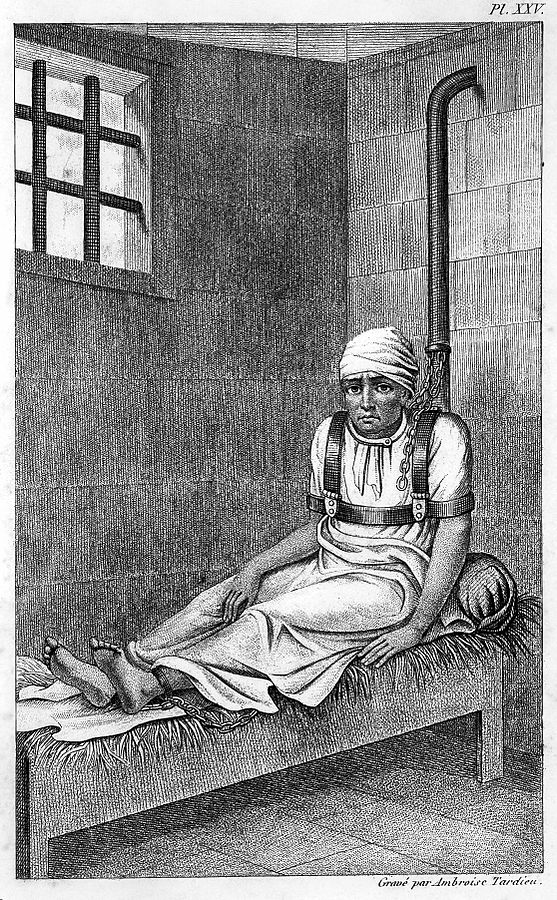
Still, some cases are mild and others are severe. People with mild psychosis — like my patient the programmer — probably don’t need to be on really strong medications with severe side effects. They probably just need support. In a perfect world, expert psychiatrists would have a major role in providing that support. In the real world, a lot of these patients expect their psychiatrist to freak out, overmedicate them, and maybe even commit them to a hospital. This being the real world, many of those patients are right. So they look elsewhere.

May 27, 2022

The cognitive dissonance of the elites

Chris Bray on yet another example of our kakistocrats congratulating themselves after presiding over failure:

[Los Angeles County Public Health Director Barbara] Ferrer is a relentless and enthusiastic interventionist, one of the highest-profile lockdowners and mask fetishists in the country, and here she is still wearing a mask — in the third year of a pandemic that hasn’t been ended by the widespread mask-wearing that has prevailed, and still largely prevails, in Los Angeles. Do X to cause Y, she says, doing X for a third straight year but still rather obviously not causing Y. Again, here’s Ferrer’s chart showing the effect of her bold public health interventions:

You can really see how that infections trendline came right down as Barbara Ferrer boldly threw herself in front of the virus.

But here’s the part that I find most telling: After Ferrer offers a long presentation on mitigations showing clearly that they haven’t worked as advertised, and after she says repeatedly and explicitly that the available Covid-19 vaccines “don’t work so great at preventing infection”, and that vaccinated people will be infected, Ferrer sits down for a discussion with several members of an expert panel. One of the panelists is Michele Kipke, a psychology PhD who serves as a clinical professor at USC and the vice-chair of research at Children’s Hospital Los Angeles (and as a school board member in my own small town in the suburbs). Having heard repeated statements about the unmistakably limited effectiveness of the available Covid-19 vaccines, Kipke offers this as a question:

“So, first of all, I just need to say, it is such an honor to be on the same stage with you. Barbara, you are my hero, and I am so glad that you have been our leader through these extremely difficult two years. So thank you.” And then there’s a long round of applause from the panel and the audience. You can just feel the scholarly skepticism and clinical rigor in that auditorium. This, ladies and gentlemen, is obviously the room where the tough questions are asked.

And then she goes on: “And so, as I think about this, I’ve really been asking the questions, what are, just picking up on the, I think, the discussion here, what are those lessons learned? There are, you know, sort of obviously a very difficult couple of years, but we’ve seen some really phenomenal successes that have come out of the last couple years. As Dr. Hu mentioned earlier, I had the good fortune of being a part of leading Vaccinate L.A., where we brought fourteen schools and programmatic units within USC together, and all harmonized our efforts, to get out there and support our communities, and to think about how to support vaccinations. And we engaged local artists. We — it was a community driven initiative, we wanted to listen and learn from the community, and then partner with them …”

And so on, but you get the point. “But through that work we’ve achieved so much,” she eventually says. The video is cued to the start of her “question”, if you want to see it all, but her question, in short, is, Why, in your view, did we do such an amazing job? Pivoting from Ferrer’s extremely open and direct discussion about the obvious limits of the vaccines — again, that actual direct quote is, “Vaccinated people are very likely to get infected” — Kipke asks about the success of the vaccination program.

May 26, 2022

The hierarchy of scientific journals

Filed under: Books, Media, Science — Tags: , — Nicholas @ 05:00

One of the readers of Scott Alexander’s Astral Codex Ten has contributed a review of Melinda Baldwin’s Making Nature: The History of a Scientific Journal. This is one of perhaps a dozen or so anonymous reviews that Scott publishes every year with the readers voting for the best review and the names of the contributors withheld until after the voting is finished:

The world of scientific publishing is organized as a hierarchy of status, much like the hierarchy of angels in the Abrahamic religions. At the bottom are the non-peer-reviewed blog posts and Twitter threads. Slightly above are the preprint servers like arXiv, and then big peer-reviewed journals like PLOS One. Above those are all the field-specific journals, some with higher reputation than others. And at the top, near the divine presence, are the CNS journals: Cell, Nature, and Science.

Full title: The Assumption of the Virgin..Artist: Francesco Botticini..Date made: probably about 1475-6..

For an actual hierarchy of journals based on citation data, see this paper, which puts Nature and Science at the top. Might be worth mentioning that it comes from a journal in the Nature Publishing Group family.

Leaving aside Cell, a more specialized biology journal that seems to have gotten into the CNS acronym the same way Netflix got into the FAANG acronym, Nature and Science are very similar. They both publish articles in all scientific fields. They both date from the 19th century. They’re published weekly. They jointly won a fancy prize for services to humanity in 2007. And having your paper in either is one of the best things that can happen to a scientist’s career, thanks to their immense prestige.

But how, exactly, did Nature and Science become so prestigious? This is the question I hoped Making Nature: The History of a Scientific Journal, a 2015 book by historian of science Melinda Baldwin, might answer. It focuses on Nature, but much of its lessons can likely be extrapolated to Science considering their similarity.

I grew curious about this when I realized that most researchers treat journal prestige as a given. Everyone knows that Nature and Science matter enormously, yet few would be able to say why exactly. But this is important! Prestigious institutions, from universities to media companies to major sports competitions, have a huge impact on the world. It’s useful to understand how they came to be, beyond “being famous for being famous”.

One reason this is more difficult than it sounds is that we often settle for superficial answers. Selectivity, for instance, is a common explanation: prestige simply comes from obtaining what is hard to obtain, such as a Harvard degree, an Olympic medal or a Nobel Prize. Nature is indeed highly selective, accepting less than 10% of submitted articles (and the vast majority of papers are not even deemed worthy of a submission to Nature by their authors). Yet harsh selectivity alone cannot explain prestige, or it would be trivial to launch a prestigious journal or university just by setting an artificially low acceptance rate.

Another facile explanation is longevity. It’s true that prestigious institutions are often old, and indeed Nature has been around for more than 150 years since its birth in 1869. Science is only slightly younger, having been founded in 1880. But there are many older scientific journals: the oldest one, the Philosophical Transactions of the Royal Society, was created two hundred years before Nature, in 1665. Then there are more recent publications that are prestigious: Cell, for instance, was founded in 1974. The correlation between prestige and longevity is real, but imperfect. It also says nothing of causation: does longevity cause prestige, or does prestige cause longevity?

What matters is not the span of time per se, but the specific events that happened — in other words, the history. Making Nature, while not specifically about prestige, gives us exactly that.

May 20, 2022

High and low “state capacity” illustrated

In Law & Liberty, Helen Dale recounts a miserable experience getting out of a major US airport and says this is an example of America’s low state capacity:

“TSA Checkpoint” by phidauex is licensed under CC BY-NC-SA 2.0

At the other end, I found a stretch limo waiting for me. Getting ferried about in a limo after The Trip from Hell is something I’ve experienced before, in Damascus, before the Syrian civil war. Classic third world. Like Syrians, American hosts send limousines to the airport to pick you up because they know you flew in from JFK and will need to be appeased.

My experience is illustrative of something not confined to airports, however. Indeed, if it were only confined to airports, then the phrase I’m about to use (about the US) would be unfair (to the US). America’s dysfunctional airports are instances of widespread low state capacity. And this is bigger than airports. Low state capacity can only be used to describe a country when it is true of multiple big-ticket items, not just one.

State capacity is a term drawn from economic history and development economics. It refers to a government’s ability to achieve policy goals in reference to specific aims, collect taxes, uphold law and order, and provide public goods. Its absence at the extremes is terrifying, and often used to illustrate things like “fragile states” or “failed states”. However, denoting calamitous governance in the developing world is not its only value. State capacity allows one to draw distinctions at varying levels of granularity between developed countries, and is especially salient when it comes to healthcare, policing, and immigration. It has a knock-on effect in the private sector, too, as business responds to government in administrative kind.

Think, for example, of Covid-19. The most reliable metric — if you wish to compare different countries’ responses to the pandemic — is excess deaths per 100,000 people over the relevant period. That is, count how many extra people died beyond the pre-pandemic mortality rate on a country-by-country basis. For the sake of argument, drop the five countries leading this grim pack. Four of them are developing countries, and the fifth is Russia, which while developed, is both an autocracy and suffers from chronic low state capacity.

At the other end of the scale, ignore China, too. It may be lying about its success or, more plausibly, may have achieved it by dint of being an authoritarian state with high state capacity (notably, the latest round of draconian lockdowns in Shanghai commenced after the WHO collated that data).

The US has the worst excess death rate in the developed world (140 per 100,000). Australia has the best: 28 per 100,000. Yes, you read that right. Australia increased its life expectancy and general population health during the pandemic. So did Japan, albeit less dramatically. The rest of the developed world falls in between those two extremes: Italy and Germany are on 133 and 116 per 100,000 respectively, with the UK (109 per 100,000) doing a bit better. France and Sweden knocked it out of the park (63 and 56 per 100,000 excess deaths).

Recall, too, that not only did different countries adopt different approaches to pandemic management; sometimes there were large differences within countries. Like the US, Australia is a federal system, and as in the US, different states did things differently. Melbourne, capital of the state of Victoria, had the longest lockdown of any major city in the developed world. Other Australian states, meanwhile, locked down sparingly or not at all. In a European context, Sweden rejected most over-the-top Covid responses, the UK was somewhere in the middle, and Italy was thoroughly draconian, even barring unvaccinated people from supermarkets and groceries.

May 15, 2022

The young man who might have been King Henry IX of England

Filed under: Britain, History, Science — Tags: , , , — Nicholas @ 03:00

In the latest Age of Invention newsletter, Anton Howes considers what might have been had the eldest son of King James I and VI lived to take the thrones of England and Scotland:

Portrait of Prince Henry Frederick (1594-1612), Prince of Wales by Isaac Oliver
National Trust, Dunster Castle; http://www.artuk.org/artworks/prince-henry-frederick-15941612-prince-of-wales-99804 via Wikimedia Commons.

Henry Frederick, Prince of Wales, was the eldest son and heir of James I of England. He would presumably have become Henry IX had he managed to outlive his father. But he died in 1612 aged just 18. The kingdom instead ended up with his younger brother Charles I and civil war. I’m not sure how far Prince Henry was influenced, but it seems that many of the major innovators of the period were purposefully cultivating him as a kind of inventor-scientist king.

It reminds me of a very similar and successful scheme, which I noticed when researching my first book on the history of the Society for the Encouragement of Arts, Manufactures and Commerce. This was the scheme to cultivate George III — famed for his madness and losing the Thirteen Colonies, but also for his collection of scientific instruments and interest in agricultural innovation. Those interests were no accident: his upbringing had included lessons in botany from the inventor Stephen Hales, in art and architecture from William Chambers, and in mathematics from George Lewis Scott. These were not just experts, but active innovator-organisers. Hales was a key founder of the Society of Arts; Chambers helped organise the artists who split off from it to form the Royal Academy of Arts; and Scott was involved in updating Ephraim Chambers’s Cyclopaedia, or Universal Dictionary of Arts and Sciences — an early encyclopaedia focused on technical knowledge. And their efforts bore fruit. Unlike his predecessor and grandfather George II — whose interests mainly fell under the headings of Handel, Hanover, hunting, and heavy women — George III became an active patron of science, invention, and the arts.

Given how successfully the inventors cultivated George III, it makes me wonder how things might have looked had Prince Henry lived to be king. His younger brother Charles I had an education heavily geared towards languages, theology, and overcoming various health issues through sports. But Henry — naturally athletic and charismatic — had an upbringing tightly controlled by Sir Thomas Chaloner, who had a major financial stake in innovation.

Chaloner housed and supported his alchemist cousin (also, confusingly, called Thomas Chaloner). This cousin had published an early treatise on the medical applications of saltpetre, or nitre (what we now call potassium nitrate), and had tried to produce alum on the isle of Lambay, off the coast of Ireland. Alum was a valuable substance used to fix cloth dyes, which had hitherto been monopolised by the Pope, who owned Europe’s only alum mine. Opening a competing, English-controlled, Protestant supply of alum was not just about starting a new industry. It was a matter of Europe-wide religious and strategic urgency.

[…]

Henry’s circle also included the Dutch polymath Cornelis Drebbel, who would become famous all over Europe for travelling in a submarine under the Thames, for his improvements to microscopes, and for inventing a perpetual motion machine (which isn’t as silly as it sounds — it was effectively a kind of barometer, exploiting changes in temperature and air pressure to move).

And that’s just the tip of the iceberg. The more I look into the circle of inventors around Prince Henry, the more familiar names crop up. There even seems to be some connection to Simon Sturtevant, one of the original patentees of a method to make iron by using coal instead of wood — Chaloner was seemingly responsible for evaluating Sturtevant’s inventiveness, to see if he merited a patent. I found it very striking that when Sturtevant’s iron-making business was about to get going, Prince Henry was to have a share.

Given such innovative company, we can only imagine what kind of a king Prince Henry might have been. If George III grew up to be “Farmer George”, might a Henry IX have become associated with navigation or hydraulic engines? We’ll never know. But even during his brief lifetime, there was plenty of patronage to be had for inventors at the court of their would-be Inventor-King.

May 14, 2022

QotD: The farming cycle in pre-modern Mediterranean cultures

As you might imagine, time in agriculture is governed by the seasons. Crops must be planted at particular times, harvested at particular times. In most ancient societies, the keeping of the calendar was a religious obligation, a job for educated priests (either a professional priestly class as in the Near East, or local notables serving as amateurs, as in Greece and Rome).

The seasonal patterns vary a bit depending on the conditions and the sort of wheat being sown. In much of the Mediterranean, where the main concern was preserving a full year’s moisture for the crop, planting was done in autumn (November or October) and the crop was harvested in early summer (typically July or August). In contrast, the Han agricultural calendar for wheat planted in the spring, weeded over the summer and harvested in fall. The Romans generally kept to the autumn-planting schedule, except our sources note that on land which was rich enough (and wet enough) to be continuously cropped year after year (without a fallow), the crop was sown in spring; this might also be done in desperation if the autumn crop had failed. In Egypt, sowing was done as the Nile’s flood waters subsided at the beginning of Peret (in January), with the harvest taking place in Shemu (summer or early fall).

(As an aside on the seasons: we think in terms of four seasons, but many Mediterranean peoples thought in terms of three, presumably because Mediterranean winters are so mild. Thus the Greeks have three goddesses of the seasons initially, the Horae (spring, summer and fall) and Demeter’s grief divides the year into thirds not fourths in the Homeric Hymn to Demeter. In ancient Egypt, there were three seasons: Akhet (Flood); Peret (Emergence [of fertile lands as the waters recede]) and Shemu (Low Water). The perception of the seasons depended on local climate and local cycles of agriculture.)

Bret Devereaux, “Collections: Bread, How Did They Make It? Part I: Farmers!”, A collection of Unmitigated Pedantry, 2020-07-24.

May 9, 2022

Canada has no abortion law on the books: this is extremely convenient for the federal Liberals

Filed under: Cancon, Government, Health, Law, Media, Politics, USA — Tags: , , , — Nicholas @ 05:00

In the free-to-cheapskate-freeloading readers portion of The Line‘s weekly dispatch, the editors explain why we should expect exactly zero change to Canadian law on the abortion issue regardless of what happens in the United States in the wake of a leaked US Supreme Court draft decision that has agitated and carbonated the debate there all over again:

Parliament Hill in Ottawa.
Photo by S Nameirakpam via Wikimedia Commons.

… given the extent to which Canadian media and politics has become thoroughly Americanized in the past few years, it was inevitable that the draft ruling immediately took over the front pages of our national papers and became the dominant topic of debate in the House of Commons. And while we are loath to contribute to what we see as a very unhelpful trend, there are some Canada-relevant aspects of this that at least one of your editors thinks are worth discussing.

The first is the obvious glee with which the Liberal party greeted the leak. Of course they all acted appalled, with a parade of cabinet ministers taking to Twitter to talk about the “concerning” news out of the U.S. and to make it clear that they would never allow anything like this to happen in Canada.

But for all their bluster, the Liberals long ago perfected a curious little two-step here. On the one hand, they never tire of asserting that the debate over abortion is “settled”, and that the pro-choice position is and will always be the law of the land. Yet on the other hand, Liberals are constantly acting as if we’re just one private member’s bill away from Canada becoming the Republic of Gilead. But as Chris Selley pointed out in a recent column, if abortion rights are so fragile and tenuous, why haven’t the Liberals done anything about it? Perhaps the imminent overthrow of Roe v. Wade in the U.S. might provide the government with the perfect occasion to finally put abortion rights on Canada on a proper legislative footing. Or, at the very least, define and defend the status quo.

That will never happen, for two reasons.

The first reason the Liberals won’t move to do something has to do with a philosophical equivocation at the heart of Canada’s pro-choice movement. In some guises, the pro-choice position is framed as a harm reduction policy, not completely dissimilar to needle exchange programs or safe injection sites for drug users. That is, while we may legitimately debate and disagree over the moral worth of the activity itself, there is no question that it is something that is going to happen regardless. Given that, the best thing for the state to do is make sure that the circumstances under which it takes place are as safe and accessible as possible, while withholding moral judgment.

But there’s another position, which holds that abortion is akin to a victimless crime: the fetus simply deserves no moral standing, so getting an abortion is no more morally controversial than getting your appendix removed.

The advantage to the status quo is that it allows the government, as well as pro-choice supporters, to remain formally agnostic on this question. There is no law, so the law needs to take no position. But any attempt to put a legal framework around abortion would probably require that the fetus be given some status at some point in development. And that opens a huge can of worms, not least for someone like Justin Trudeau who, at times, has claimed to be personally opposed to abortion but a pro-choice practicing Catholic. Why would he be against abortion personally, unless he believed that it was, at some level, wrong?

This brings us to our second point. In his column, Selley called on Trudeau to “grow up” and defend the status quo on its principles. But why would he do that? The Liberals benefit enormously from the status quo, including the lack of clarity around it. Abortion is legal (in the sense that there is nothing in the criminal code forbidding it), and reasonably accessible, depending on which part of the country you live in. But it’s also tenuous, which means the Liberals get to spend a good part of every election campaign wedging the ever-loving crap out of the Conservatives, whose benches are chock full of people who are anti-abortion, or at least, anti-the-status-quo on abortion.

Given how successful this strategy has been, there is no reason for the Liberals to change it, since for them the tenuous status of abortion is a feature of the current regime, not a bug.

May 8, 2022

“… a majority of ‘pro-lifers’ are women, not men. So [Kamala] Harris is effectively saying: how dare women be allowed a voice in this debate?”

Filed under: Health, Law, Media, Politics, USA — Tags: , , , , — Nicholas @ 05:00

Andrew Sullivan comments on the leak of a draft US Supreme Court decision that would strike down Roe vs. Wade and the over-the-top reactions on social media from progressives:

Panorama of the west facade of United States Supreme Court Building at dusk in Washington, D.C., 10 October, 2011.
Photo by Joe Ravi via Wikimedia Commons.

To say that a leaked draft of a Supreme Court ruling prompted an elite meltdown would be a gross understatement. This was a culture war 9/11. “I have typed and deleted a great many comments,” Roxane Gay tweeted. “What do you say when nine people can dictate what happens to your body? It’s ridiculous and hateful.” The Atlantic‘s Adam Serwer, always the subtle one, announced that the court had abolished the entire 20th century. Yep: no more suffrage for women! Jim Crow now!

Taking the arguments of abortion opponents seriously was never an option: “Stripping women of their humanity and rights isn’t a consequence of the ‘pro-life’ agenda, it’s the entire point,” declared Jessica Valenti. Rebecca Traister confessed: “My teeth have been chattering uncontrollably for an hour. Bodies/minds are so weird. Like, not euphemistically — actually chattering. Audibly. And full shaking body. Though otherwise wholly, rationally, well and truly expecting it.”

Going further, freshly-minted critical gender theorist, Jennifer Rubin, argued that any restriction on abortion rights is a violation of secularism: “The right-wing justices and their supporters appear ready to reject one of the Founders’ core principles: that religion shall not be imposed by government edict.” Kurt Andersen went old school and worried about a papist cabal: “It really is kind of remarkable that only one in five Americans call themselves Catholic, but of the Supreme Court majority apparently about to permit abortion to be outlawed, all but one are Catholic and that one was raised Catholic.” Then there’s Vox‘s Ian Millhiser: “Seriously, shout out to whoever the hero was within the Supreme Court who said ‘fuck it! Let’s burn this place down.'” Fuck it! I’ll do it live!

Kamala Harris also found her voice:

    Those Republican leaders who are trying to weaponize the use of the law against women. Well we say, “How dare they?” How dare they tell a woman what she can do and cannot do with her own body? How dare they? How dare they try to stop her from determining her own future? How dare they try to deny women their rights and their freedoms?

The premise here is that all women support abortion rights. But there is no serious gender gap on this question. In fact, a majority of “pro-lifers” are women, not men. So Harris is effectively saying: how dare women be allowed a voice in this debate?

Within minutes of the SCOTUS leak, moreover, we were told it means that before long, interracial marriages will be banned … in a country where 94 percent support them! Imagine Clarence Thomas divorcing himself by jurisprudence. Here’s Traister again: “Voting rights were gutted in 2013. Marriage equality. Griswold. Loving. Don’t ever listen to anyone who tells you such fears are silly or overblown.” Actually, listen to them — if you can hear them over Traister’s permanent rage-tantrum.

What strikes me about all of this is not the emotive hyperbole — that’s par for the course in a country where every discourse is now dialed to eleven. What strikes me most in these takes is the underlying contempt for and suspicion of the democratic process — from many of the same people who insist they want to save it. How dare voters have a say on abortion rights! The issue — which divides the country today as much as it has for decades — is one that apparently cannot ever be put up for a vote. On this question, Democrats really do seem to believe that seven men alone should make that decision — once, in 1973. Women today, including one on SCOTUS? Not so much.

May 7, 2022

Death MAID easy, Canadian style

Filed under: Cancon, Health — Tags: , , — Nicholas @ 05:00

It’s quite surprising how quickly Canada moved from societal rejection of the idea of euthanasia to today’s situation where people are requesting euthanasia to escape dismal economic circumstances:

Front view of Toronto General Hospital in 2005. The new wing, as shown in the photograph, was completed in 2002.
Photo via Wikimedia Commons.

Canada refers to “euthanasia” and “assisted suicide” by the friendlier-sounding term of “medical assistance in dying” (MAID). The MAID programme was first introduced to end the suffering of terminally ill people, but its mission creep is now undeniable.

Denise (not her real name), a 31-year-old Toronto woman who uses a wheelchair, is nearing final approval for a medically assisted death. She only applied after her many attempts to move from her apartment, which she says worsens her severe sensitivities to household chemicals, all failed. She told Canada’s CTV News earlier this week that she was “relieved and elated” by the likelihood of the approval. “I was scared that they weren’t going to say yes.”

To get approval for her assisted death, Denise has consulted with a psychiatrist, who deemed her competent to make the decision, and a doctor who reviewed her medical history. Another doctor asked her to finalise her documents, including a power of attorney and a do-not-resuscitate order, and to make funeral arrangements. Denise has also asked doctors to waive the usual 90-day waiting period for those who are on “Track 2” of the assisted-dying programme – meaning that they are not imminently dying. She is likely to get her wish.

Hers is far from an isolated case. Sophia (also not her real name), a 51-year-old Ontario woman, who suffered from the same severe sensitivities to chemicals as Denise, was euthanised back in February, after she could not find affordable housing free of cigarette smoke and chemical cleaners. Four doctors wrote to federal government officials on her behalf, urging them to offer alternative accommodation. “The government sees me as expendable trash, a complainer, useless and a pain in the ass”, Sophia said in a video filmed eight days before her death.

In British Columbia, police are investigating the case of 61-year-old Donna Duncan, who was euthanised despite her daughters’ objections that she lacked the mental capacity to make such a decision. This was following months of physical and mental decline that began with a concussion caused by a car crash. Her family says her condition was made worse because she was unable to access proper treatment, due to months-long waiting lists. “It’s unacceptable – it took a year to get treatment but it could only take four days to die”, her daughter said.

Shockingly, many Canadians are now requesting a medically assisted death for economic rather than medical reasons. As one woman put it: “An increase [in income support] is the only thing that could save my life. I have no other reason to want to apply for assisted suicide, other than I simply cannot afford to keep on living.”

May 4, 2022

Allies on Amphetamines – WW2 Special

Filed under: Britain, Health, History, Military, USA, WW2 — Tags: , , , , — Nicholas @ 04:00

World War Two
Published 3 May 2022

We’ve heard how German forces are fuelled by stimulants like Pervitin. But are the Allies doing the same thing? Of course! Their drug of choice is Benzedrine. It’s in use as the RAF bomb German cities, as Monty’s tanks push Rommel back, and as US Marines take the fight to the Japanese.
(more…)

QotD: Masking a young child

Filed under: Government, Health, Quotations, USA — Tags: , , , — Nicholas @ 01:00

I am not usually one for issuing trigger warnings, but this video of an unhappy two year old child is genuinely disturbing:

New York, where two-year-olds are forced to wear masks all day in nursery.

I have a single memory – a three second “video clip” of my brother’s fourth birthday – that I can confidently date as having happened before I was three. Humans do not seem to lay down recoverable memories of most of what happens to them before the age of four or so. Yet a child’s experiences in those early years have a profound effect on their later personality. That little boy will probably never remember that he tried again and again to push away the damp thing that made it hard to breathe but that his carers, with pitiless good cheer, always forced it back on. But he will have learned the lesson of the powerless. You are weak, they are strong. Crying and protesting do not help.

I am told that in Muslim societies where women must go fully veiled it is difficult to get the little girls into their coverings at first. But even they wait until the girls are at least five.

Natalie Solent, “The carers”, Samizdata, 2021-09-19.

« Newer PostsOlder Posts »

Powered by WordPress