I bring this up because we seem to have entered one of those moments, not infrequent in American history, when the keepers of our culture have decided sex should be taboo. The word itself is now indecent and unmentionable: We’re supposed to say “gender”. But gender pertains to linguistics, not biology. In Spanish, for example, the moon is feminine in gender: la luna. The sun is masculine: el sol. This sets up all kinds of interesting possibilities during sunrise and sunset, but that’s not the point here. The point is that some moralistic souls think you can somehow detach the sex act from sexuality. But why?
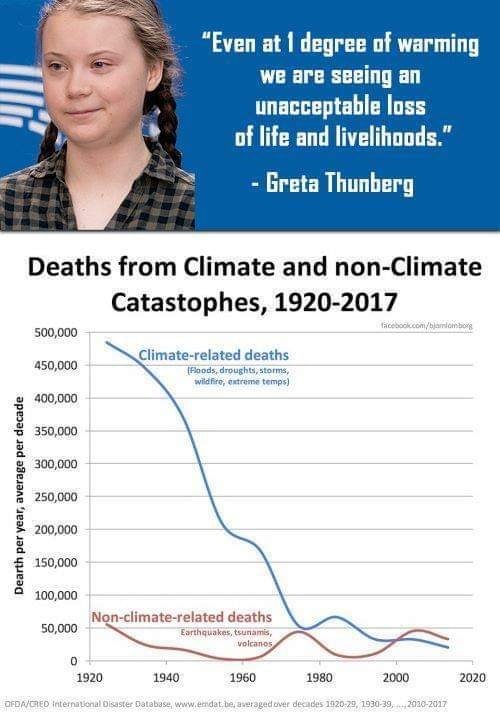
Apparently, many in the zoomer generation find sex scary. I get that. When I was 13 and contemplated the mechanics of the thing, I pretty much became reconciled to a life of despondent celibacy. But at what point was our culture handed over to clueless 13-year-old kids? The zoomers mate later, less and with fewer reproductive consequences than their parents and grandparents. They get triggered by 50 Shades of Grey and suffer a permanent headache from climate change. I mean, can anyone conjure up a romantic vision of Greta Thunberg?
There’s also the idea that sex is fluid — that one can be born into a biological “gender” then pick among dozens of other flavors, like scoops at the gelato store. But weren’t we told, not so long ago, that being gay was a matter of genetic destiny? Evidently, everyone else is free to choose. You can be transgender, of course, and cisgender, which I think is what I am. But there are 70 more buckets to pick from, such as abimegender, aerogender, cassgender — even cloudgender, which means one’s gender “cannot be comprehended or understood due to depersonalization and derealization disorder”.
If you believe there are 72 sexes, you’re overthinking. You’re also likely to be online 22 hours a day and paddling toward a digitally reinforced narcissism. “You may say you’re cassgender. Fine. Big deal. But I am cloudgender and can’t be fully comprehended or understood!” That’s the stuff of social media. It feels like millions are listening to your magnificently baroque sexual identity, even if you’re only talking to yourself.
Martin Gurri, “Get the Kids Out of the Room — We’re Going To Talk About Sex”, Discourse, 2022-04-25.
July 27, 2022
July 23, 2022
Some of the events that lead to the Dutch farmers’ revolt
In UnHerd, Senay Boztas provides a useful chronology of how the Netherlands government managed to piss off so many Dutch farmers, leading to the protests we are still seeing (even if the legacy media is doing their best to ignore it):
“For many farmers it’s the end of their business and they will fight until the last. Sometimes these farms go back generations, they were built by hand, and people feel farmers heart and soul. This is all being taken away.”
Jan Brok, vice chairman of the BoerBurgerBeweging (BBB) party, understands why Netherlands farmers have spent the past month blockading food distribution centres, roads and ministers’ driveways. They are horrified by a new environmental policy that will mean a likely 30% reduction in livestock.
The Netherlands is a country of four million cattle, 13 million pigs, 104 million chickens, and just over 17 million people. It is Europe’s biggest meat exporter with a total area of just over 41,000 square kilometres, and a fifth of this is water. It is one of the world’s most densely populated countries, with the EU’s highest density of livestock.
But there is a significant cost to this abundance: the local environmental impact. Such intensive agriculture, and livestock farming in particular, creates harmful pollution. Manure and urine mix to produce ammonia, and together with run-off from nitrogen-rich fertiliser on fields ends up in lakes and streams, where it can promote excessive algae that smothers other life. Manure here is not a vital fertiliser but a problem waste product.
For decades, this success in trade and agriculture has been accompanied by high emissions of harmful nitrogen compounds, including nitrogen oxides emitted by industry and transport. Levels were dropping, and in 2015, the Dutch introduced a “trading scheme” known as the Programmatische Aanpak Stikstof (PAS) to try to reduce the pollution.
But a Council of State court ruling in 2019 — on a case brought by two local environmental organisations against various farms — ruled that this offsetting scheme was invalid. Permission could not be granted for polluting projects or farm expansion in exchange for promised nitrogen-related reductions in the future: the reductions needed to come first.
The government panicked: national shutdowns were put in place, building projects were put on hold and traffic speeds reduced to 100 kph in the daytime on major roads; it was also obvious that farming was a problem — something needed to be done about all ammonia, nitrogen oxide and nitrous oxide emissions.
Then, in January, the conservative-liberal-Christian coalition pledged to halve nitrogen production by 2030, with a €25 billion budget to back it up. That money was the loud part. The quiet part included the possibility of expropriation, of the government forcibly purchasing farmland. Plans drawn up by civil servants include slashing livestock numbers by 30%. More than €500 million is being brought forward for regional government to buy out farmers this year and next.
Leading the charge among the coalition partners are the Democrats 66 (D66) party. They insisted on “real action for the climate” in their last manifesto. Tjeerd de Groot, the D66 nature and farming spokesman, pointed out that the Netherlands is Europe’s biggest nitrogen emitter, followed by Belgium and Germany. He told a current affairs programme last week: “It is absolutely essential — but also painful — that the plans go through.”
In June, the government published two documents. One: a map showing the areas that need to reduce emissions by between 12% and 95%. The second was a statement that aimed to help farmers — which De Groot admits failed spectacularly. Farmers saw ruin, not a pair of documents. They looked at the percentage reduction figures next to their farms, and began interpreting how many cattle they would need to cull. It was an enormous blow. Many of them had made huge, expensive investments in new equipment to reduce the environmental impact of their herds.
Hence the massive uprising.
July 22, 2022
Sexual liberation to sexual revolution to … today’s sexual desert
Chris Bray thinks that the sexual revolution “missed a turn, somewhere out in the desert”:
The discussion of what we didn’t mean to do is becoming an interesting one:
After decades of sexual liberation — Mattachine, Stonewall, Loving v. Virginia, Griswold v. Connecticut, Second Wave feminism and the Sexual Revolution, Lawrence v. Texas, Obergefell v. Hodges, and whatever else I’m missing in there (and I’m not sure Roe belongs on the list, but maybe) — we somehow arrive at a moment in which we merge a sexualized display of childhood and a relentless media-driven commodification of sexuality with the very clear reality that nobody’s having any sex:
One of the most comprehensive sex studies to date — the National Survey of Sexual Health and Behavior — found evidence of declines in all types of partnered sexual activity in the U.S. Over the course of the study from 2009 to 2018, those surveyed reported declines in penile-vaginal intercourse, anal sex and partnered masturbation …
Over the last 22 years, Herbenick has co-authored several studies about our sexual activity. Her most recent research finds that all of us, regardless of age, are having less sex, with the most dramatic decline among teenagers.
At the start of the study in 2009, 79% of those ages 14 to 17, revealed they were not having sex. By 2018, that number rose to 89%.
Liberation stabbed pleasure in the heart; we emptied sex. Hypersexualization turns out to be desexualization. The unrelenting joylessness and death odor of contemporary sexual culture emerges from seventy years of growing openness and freedom. How?
There’s no way to fully cover a question of that scope in a single post — but I refer, as a start, to the earlier posts I wrote about the sexualization of childhood and the way Jim Jones used sex as a weapon. Breaking barriers and repressive anchors broke connections and reference points: Yes, some people were trapped in oppressive societal norms, and it’s not at all my view that all the sexual liberation in our past wasn’t really liberating. But we broke marriage to set people free, and whoops. Some people experienced bourgeois heteronormativity as a prison, and so set out to release everybody from their cages, which seem to have not been cages for a whole lot of people. Congratulations, we’ve freed you from being part of a family.
July 21, 2022
Farmers’ protests against insane environment mandates continue in the Netherlands
For some unknown reason, the huge protests by Dutch farmers against ridiculous environment-protection rules seems to be getting almost no media coverage. As Rex Murphy pointed out in the National Post, if this was happening in Canada, the government would already have imposed the Emergencies Act and be actively depriving people of their civil rights across the board. Somehow, this protest is uninteresting to most of the legacy media, but as Brendan O’Neill explains, it is a huge deal:
This strange, sunny week has provided the best proof yet that the West’s elites have taken leave of their senses. That they have fully retreated from reason, and from reality itself. As farmers and workers across the world continue to rise up against the tyrannical consequences of climate-change alarmism, what are the elites doing? Engaging in yet more climate-change alarmism. Wringing their hands over the hot weather and its forewarning, as they see it, of the manmade heat-death of the planet that is apparently just around the corner. They continue to peddle the very politics of eco-dread that is whacking farmers and the working class and storing up problems for us all.
The contrast could not have been more stark. On one side we have farmers everywhere from Ireland to the Netherlands to, of course, Sri Lanka making it as plain as they can that the warped ideology of Net Zero will make it harder for them to produce the food that humanity needs. And on the other side we have the Net Zero fanatics of the upper middle classes continuing to push their dire, destructive green ideology. The heatwave proves we must cut emissions even faster and more severely, they tweet in their breaks from sunning themselves in their spacious gardens, even as farmers tell them that the zealous obsession with cutting emissions will make it harder to grow crops. So this is where we’re at – with a ruling class more invested in fact-lite narratives of apocalypse than in the basic responsibility of a society to make food.
This politics is best understood as luxury apocalypticism. It is clearer than it has been for a very long time that the fantasy of the end of the world, of marauding, industrious mankind polluting itself into oblivion, is something only the well-off and time-rich can afford to indulge. The dream of eco-doom is a simultaneously self-hating and self-serving political narrative. It expresses the elite’s turn against the very modernity they helped to create while also flattering their belief that only they can save us. That only their plans to slash emissions, to cut back on global travel and generally to shrink the “human footprint” can hold Armageddon at bay. The great benefit of the global revolt of farmers and workers is that it is injecting a truth and a realism into public discussion that might just help to push back the luxurious and ruinous ideologies of the new elites.
Everywhere, farmers are saying “Enough”. In the Netherlands farmers have been revolting for weeks against their government’s perverse demands that they slash their use of nitrogen compounds. The Dutch government, under pressure from the EU, has committed itself to cutting its nitrogen emissions in half by 2030. This would entail farmers getting rid of vast numbers of their livestock, crushing their ability to make a living and to produce what needs to be produced. So we have the truly surreal situation where Dutch farmers are protesting in their thousands for the right to feed the people of the Netherlands while the elites of the Netherlands demonise them, harass them and even shoot at them. I can think of no better illustration of the loss of logic and humanity within the modern elites than this strange spectacle.
July 20, 2022
Climate change is nothing new, and it was warmer in England for a few hundred years in the Middle Ages
If you’ve been reading the blog for a while, you’ll have noticed that I’m not a fan of trying to panic people about climate change … catastrophism just isn’t my thing. I certainly don’t deny that climate change happens and I agree that it is happening now, but I’m highly skeptical that human action has more than a minor influence compared to the ups and downs of long-term climate shifts driven by natural forces. Ed West has a thumbnail sketch of just how much the European (and especially English) climate change impacted ordinary people during the Middle Ages:

Chart from the Journal of Quaternary Science Reviews showing Greenland ice core data over the last 10,000 years. At the end of the Minoan Warming came the Bronze Age Collapse, after the Roman Warming came the fall of the western Roman Empire.
The climate is changing, with all that entails, something we’ve known about for several decades now. Among the early proponents of the theory of climate change was mid-century climatologist Hubert Lamb, who spent most of his career at the Met Office and during the course of his studies made a curious historical discovery.
It was once widely believed that climate remained relatively stable over recorded history, civilisational lifespans being too brief to see such grand changes. But while looking into medieval chroniclers, Lamb was struck by the numerous references to vineyards in England, some as far as the midlands. As long as anyone had ever remembered, the country had been too cold to grow wine, except in tiny pockets of Sussex which occasionally produced almost-drinkable white.
William of Malmesbury, living in the 12th century, observed of his native Wiltshire that “in this region the vines are thicker, the grapes more plentiful and their flavour more delightful than in any other part of England. Those who drink this wine do not have to contort their lips because of the sharp and unpleasant taste, indeed it is little inferior to French wine in sweetness.” How could that have been?
Lamb concluded that Europe must have been considerably warmer during the Middle Ages, and in 1965 produced his great study outlining the theory of the Medieval Warm Period; this posited that Europe was at its hottest in the High Middle Ages (1000-1300) and then became unusually cool between 1500 and 1700.
Since then, Lamb’s thesis has been reinforced by analysis of pollen in peat bogs, as well as the radioactive isotope Carbon-14 found in tree rings (the less sun, the more Carbon-14). In Medieval Europe, every summer was a hot girl summer — and tiny changes could make earth-shattering differences.
The people of Europe enjoyed that extended period of warmer weather for about 300 years, then things suddenly got far worse:
Across Europe, people must have noticed a change. Farmers in the Saastal Valley in Switzerland were probably the first to observe what was happening, back in the 1250s, when the Allalin Glacier began to flow down the mountain. Surviving plant material from Iceland suggests an abrupt decrease in the temperature from 1275 — and, as Rosen points out, a reduction of one degree made a harvest failure seven times more likely. From 1308 England saw four cold winters in succession; the Thames froze, chroniclers recalling dogs chasing rabbits across the icy surface for the first time.
As with many things, change was gradual, until it was dramatic, for then came the disastrous year of 1315. The Chronicle of Guillaume de Nangis, written by a monk at the Abbey of Saint-Denis outside Paris, recorded that in April the rains came down hard — and didn’t stop until August.
Drenched and starved of sunlight, the crops failed across Europe. The price of food doubled and then quadrupled. By May 1316, crop production in England was down by up to 85 percent and there was “most savage, atrocious death”, as a chronicler put it. Hopeless townsfolk walked into the countryside, searching for any bits of food; men wandered across the country to work, only to return and find their wives and children dead from starvation. At one point, on the road near St Albans, no food could be found even for the king. Emaciated bodies could be seen floating face down in flooded fields.
The Great Famine killed anywhere between 5-12% of the European population, although some areas, such as Flanders, suffered far worse death rates, losing up to a quarter of their population to hunger.
Apparently “Crisis-Pregnancy Centers” prey exclusively on young people who menstruate!
Chris Bray reveals some of the shocking information a new investigation has turned up about so-called “Crisis-Pregnancy Centers” in the United States:
A quick illustration of the Red-Blue Chasm, the immensity of which can now only be estimated using theories borrowed from astrophysics.
An email message this morning from The Chronicle of Higher Education offers a deep investigative dive into an obscure topic — in a message that barely fit on my screen, so the screenshot is cut off a bit at the top:
Figured that out, did they? Coming soon: “Pizza shops orbit college campuses. Scholars have determined that they offer a bread-like disc strewn with red liquid and white-colored molten coverings”.
The investigation of pregnancy centers proceeds on the kind of dark foreboding that a television show conveys with poor lighting and a low vibration on the soundtrack. Since the reporter didn’t manage to get a single pregnancy center advocate or volunteer on the record, despite sending some email messages, the whole investigation takes all criticism entirely at face value, uncontested and unexamined. That leads to framing like this:
Some centers target college students. Andrea Swartzendruber, an epidemiologist at the University of Georgia, analyzed the centers’ locations in Georgia and found that they were disproportionately clustered around the state’s colleges and high schools when compared with other health clinics. Swartzendruber and her colleague Danielle Lambert have mapped the locations of more than 2,500 crisis-pregnancy centers across the United States.
Yes, friends, I’m afraid this is the actual dark truth: Pregnancy centers target young women. They don’t target eight year-old boys or the elderly at all! nOw Do YoU SeE tHe hIddEn aGenDa!?!?!?!? THERE’S NOT A SINGLE CRISIS-PREGNANCY CENTER INSIDE A SINGLE RETIREMENT COMMUNITY!!!!!
Anyway, scholars were able to determine this, using sophisticated geospatial analysis.
The story also includes shock-quotes from an actual college student, Hana, who went to a crisis pregnancy center, like this one: “She kept referring to my pregnancy as a baby.”
And then, presumably, they invaded Poland.
July 19, 2022
How dating apps have changed the dating world
Rob Henderson on the changes dating sites have accelerated in the dating community:
“In the United States, 35 percent of Tinder users are college students ages 18 to 24 … ‘I’ve heard a joke on campus that goes something like this: ‘First base is hooking up, second base is talking, third base is going on a date and fourth base is dating’.“ (source).
I am just old enough to remember what the dating scene was like before the rise of Tinder and other dating/hook-up apps. It has changed a lot.
2012 was another world in many ways.
The situation has changed for everyone on the dating market. Even those who don’t use these apps. This is because even for the people who don’t use the apps, they still live in an environment where others use them. Over time, those who don’t use apps must adapt to the preferences and behavior of those who use them. Not the other way around.
One example of how the scene has changed. I have a friend from college. A good-looking guy. He showed me how many women he has matched with: More than 21,000. Twenty-one thousand. Tinder actually identified him as a valuable user early on, and gave him free perks and upgrades. They lifted his radius restrictions. This allowed him to match with even more women. I have another friend. Doesn’t have the best pictures on his profile. But not a bad looking guy. Over roughly the same period of time as my other friend, he has matched with seven women.
Some findings on dating apps:
- 18 to 25 percent of Tinder users are in a committed relationship.
- Women aged 23 to 27 are twice as likely to swipe right (“liked”) on a man with a master’s degree compared with a bachelor’s degree.
- Men swipe right (“liked”) on 62 percent of the women’s profiles they see; women swipe right (“liked”) on only 4.5 percent of the men’s profiles they see.
- Half of men who use dating apps while in a committed relationship reported having sex with another person they met on a dating app. All women who used dating apps while in a committed relationship reported having sex with another person they met on a dating app.
- 30 percent of men who use Tinder are married.
- In terms of attractiveness, the bottom 80% of men are competing for the bottom 22% of women and the top 78% of women are competing for the top 20% of men.
One way dating apps might be changing the dating scene. People used to have to go out to meet people. And it was costly to lose a relationship partner, in part because of the process involved in meeting someone new. Today, people know that a new partner is a few swipes away. Partners might be more replaceable. If things start deteriorating with their current partner, some can pull out a goldmine in their pocket.
There may be some sexual stratification going on as well. My two friends are examples of the above finding that being slightly more attractive as a man leads to far more matches.
July 18, 2022
John von Neumann, The Man From The Future
One of the readers of Scott Alexander’s Astral Codex Ten has contributed a review of The Man From The Future: The Visionary Life of John von Neumann by Ananyo Bhattacharya. This is one of perhaps a dozen or so anonymous reviews that Scott publishes every year with the readers voting for the best review and the names of the contributors withheld until after the voting is finished:
John von Neumann invented the digital computer. The fields of game theory and cellular automata. Important pieces of modern economics, set theory, and particle physics. A substantial part of the technology behind the atom and hydrogen bombs. Several whole fields of mathematics I hadn’t previously heard of, like “operator algebras”, “continuous geometry”, and “ergodic theory”.
The Man From The Future, by Ananyo Bhattacharya, touches on all these things. But you don’t read a von Neumann biography to learn more about the invention of ergodic theory. You read it to gawk at an extreme human specimen, maybe the smartest man who ever lived.
By age 6, he could multiply eight-digit numbers in his head. At the same age, he spoke conversational ancient Greek; later, he would add Latin, French, German, English, and Yiddish (sometimes joked about also speaking Spanish, but he would just put “el” before English words and add -o to the end). Rumor had it he memorized everything he ever read. A fellow mathematician once tried to test this by asking him to recite Tale Of Two Cities, and reported that “he immediately began to recite the first chapter and continued until asked to stop after about ten or fifteen minutes”.
A group of scientists encountered a problem that the computers of the day couldn’t handle, and asked von Neumann for advice on designing a new generation of computers that was up to the task. But:
When the presentation was completed, he scribbled on a pad, stared so blankly that a RAND scientist later said he looked as if “his mind had slipped his face out of gear”, then said “Gentlemen, you do not need the computer. I have the answer.” While the scientists sat in stunned silence, Von Neumann reeled off the various steps which would provide the solution to the problem.
Do these sound a little too much like urban legends? The Tale Of Two Cities story comes straight from the mathematician involved — von Neumann’s friend Herman Goldstine, writing about his experience in The Computer From Pascal to von Neumann. The computer anecdote is of less certain provenance, quoted without attribution in a 1957 obituary in Life. But this is part of the fun of reading von Neumann biographies: figuring out what one can or can’t believe about a figure of such mythic proportions.
This is not really what Bhattacharya is here for. He does not entirely resist gawking. But he is at least as interested in giving us a tour of early 20th century mathematics, framed by the life of its most brilliant practitioner. The book devotes more pages to set theory than to von Neumann’s childhood, and spends more time on von Neumann’s formalization of quantum mechanics than on his first marriage (to be fair, so did von Neumann — hence the divorce).
Still, for those of us who never made their high school math tutors cry with joy at ever having met them (another von Neumann story, this one well-attested), the man himself is more of a draw than his ergodic theory. And there’s enough in The Man From The Future — and in some of the few hundred references it cites — to start to get a coherent picture.
July 17, 2022
Science by press release
Christopher Snowden on a media-genic “study” from a few years ago that supported the priors of the anti-alcohol campaigners and thus was given full uncritical media coverage, despite obvious flaws in data selection and methodology:
In 2018, the Lancet published a study from the “Global Burden of Disease Alcohol Collaborators” which claimed that there was no safe level of alcohol consumption. This was widely reported and was naturally welcomed by anti-alcohol campaigners. The BBC reported it under the headline “No alcohol safe to drink, global study confirms”. (Note the cheeky use of the word confirms, despite the finding going against fifty years of evidence.)
The study wasn’t based on any new epidemiology. Instead it took crude, aggregate data from almost every country in the world, mashed it together and attempted to come up with a global risk curve.
The study contains no new evidence and uses an unusual modelling approach based on population-wide data from various online sources. If you look at this massive appendix you can see the kind of data they were using. The figures are extremely crude.
The authors don’t dispute the benefits of moderate drinking for heart disease but they claim that the benefits are matched by risks from other diseases at low levels of consumption and are outweighed by the risks at higher levels of consumption. Some diseases which have been associated with benefits of drinking, such as dementia, are excluded from the analysis entirely. They also ignore overall mortality, which you might think was kind of important.
A typical risk curve for alcohol consumption and mortality is J-shaped. It looks like this …
But the GBD’s risk curve for “all attributable causes” looked like this…
You will notice that there appears to be no protective effect at moderate rates of consumption in the GBD’s curve. One important reason for this is that they associate alcohol consumption at any level with tuberculosis. Tuberculosis remains a serious health problem in much of the world, but not in Britain. So what relevance does a global risk curve have to us? None.
Moreover, TB is not really an alcohol-related disease and is only viewed as such in this study because (a) drinking might weaken the immune system and (b) people who go to bars and clubs are more likely to catch an infectious disease. I kid you not.
Earlier almost-steam-engine developments
In the latest Age of Invention newsletter, Anton Howes picks up the story of the development of the steam engine (part one was linked here):
As I explained in Part I, the spark for my investigation was noticing that one Salomon de Caus, as early as 1615, had very probably made what amounts to a solar-powered version of Savery’s engine. By concentrating the sun’s rays on trapped air above the water in copper vessels, the resulting expansion of the trapped air and steam drove the water up a pipe to make a fountain flow. Most crucially of all, however, when the vessels cooled again they sucked water up and into them from a cistern below — a principle that de Caus also applied to having statues make music when the sun shone, and which he hinted may be useful for other things too.
Noticing this machine was a big shock to me, but de Caus’s invention was not even that original. It was actually an improvement of another, almost entirely ignored device described by Hero of Alexandria as early as the 1st Century, and which Hero in turn derived from one Philo of Byzantium who wrote in the 3rd Century BC.
Philo’s original device was very simple: a hollow leaden sphere with a bent tube rising out of it and into some water at the bottom of a jug. As the sun heated the sphere, the expanding air was pushed up the tube and into the jug’s water, escaping by bubbling out of the water. And crucially, when the sphere was removed from the sun and allowed to cool, the water was then drawn up the tube and into the sphere — Philo, about 1,900 years before Savery, had already encapsulated in a simple model the power of condensation to raise water.
Philo’s device was simple, but the principles it illustrated do appear to have been applied. Hero’s work, for example, includes a libas, or “dripper” fountain. In this alternative version of Philo’s apparatus, Hero connected the jug and sphere by two other pipes to a cistern underneath, as well as starting with some water already in the sphere. The jug now acted more like a funnel, into which the original bent tube now dripped its water like a fountain when the sun shone on the sphere. When cooled, however, the sphere replenished itself from the cistern underneath. It was almost exactly like de Caus’s version, which merely improved the strength of the fountain when it was heated, seemingly by replacing the lead with more heat-conductive copper and by using glass convex lenses to concentrate the sun’s rays.
Hero’s solar-powered dripping fountain doesn’t sound all that impressive, but both Philo and Hero appreciated the wider potential of its underlying principles.
Philo, for example, noted that it might make use of alternative heat sources: he described how his apparatus would work whether pouring hot water over the sphere, or by heating it over a fire. Once it cooled, it would always draw the water up.
Hero even suggested a mechanical use for the effect. By setting a fire on a hollow, airtight altar, the heated air within would flow down a tube into a sphere full of water, which in turn would be pushed up another tube into a hanging bucket. The bucket, when sufficiently heavy with water, would then pull on a rope to open some temple doors. Crucially, when the fire was extinguished, Hero noted that the cooling of the air in the altar would draw the water back into the sphere again, lighten the bucket, and so allow the doors to be closed by a counterweight. Although the condensing phase was really just for resetting the device, the fundamental ideas behind a Savery engine were already there: it raised water, used a fuel, and exploited condensation. It even did some light mechanical work.
July 16, 2022
Declarations of faith in the Church of Scientism
Chris Bray points out the hard-to-miss similarities between traditional religious beliefs and the modern beliefs of the congregations of the Church of Scientism:
Christian churches tend the bust out the HE IS RISEN banner on Easter Sunday, and here’s a version of the central declaration of faith from another religion, the Church of Scientism:
“We stand by science, so we stand by the vaccine.” These hang from every lamppost on the sizeable campus of a major research hospital in Los Angeles, an identical recitation of faith that appears before the eyes of the medical pilgrim every thirty steps or so. You can chant it in a rhythm, if you’re so inclined, as ye performest thine Stations of the Vaccine. The true penitent will park on Robertson, to walk past the maximum number of signs, but mark ye the parking restrictions, for the ways of Los Angeles parking enforcement are cruel, and many are they who suffer the penalties.
If this isn’t a declaration of a faith, then what is it? The call and response, the this-therefore-this:
Priest: Because of science, we save lives every day.
Congregation: We stand by science, so we stand by the vaccines.
You can hear the chanting in your head, can’t you? The repetition, the delivery of a mantra in a form that allows you to perceive it, and perceive it, and perceive it, and perceive it yet again before ye makest thine turn onto San Vicente. When you say it often and identically, it wears grooves; it patterns the dailiness of life with the avenues of belief. It’s Benedictine Scientism.
Or, you know, not. My bet is that most people never notice these signs, or never notice them twice, but the choice to make them and to display them is compellingly bizarre and creepy. I wish I could have witnessed the meeting of medical administrators that led to that choice, because I’m fairly confident that it played like a Paddy Chayefsky movie IRL.
I’ve been reminded over and over this week how important Substack has become. This absolute must read post from el gato malo discusses the complete implosion of popular trust in the mRNA injections, from the sharp decline in booster uptake to the “that parrot is dead” numbers regarding mRNA uptake in children under the age of five. Flatly, people aren’t taking this shit anymore, and they’re for damn sure not having it injected into their children.
QotD: No, your baby isn’t racist
Look, it’s not even racial, but it is tribal. Because human beings are tribal. By evolution and inclination, humans associate most with people they’re used to, and they feel safe amid a small number of people they know well.
The insanity of all the “your baby is racist” studies is thinking that babies prefer people who look like THEM. This is not the case. They prefer people who look like those they identify as parents. Take a Chinese baby, at birth, and have him raised by Maori and they’ll react badly to people who look Chinese. Think of it in terms of the band of human (or pre-humans.) If a baby found himself amid a group that didn’t look like its caretakers chances were it was dead and/or lunch. Sending up a distress signal in the form of wailing is its only hope its caretakers will come and rescue it. (“It” because I’m including pre-humans. This applies — with bells on — to baby chimps, btw, who are just human-adjacent.)
Sarah Hoyt, “They’re Out To Get You”, According to Hoyt, 2019-04-09.
July 13, 2022
Creating an American Homo Sovieticus
Chris Bray has had to visit a large urban hospital frequently in the last little while and he’s noticed just how readily some people have adapted to the pandemic world situation:
Observers of the Soviet Union noted the presence of Homo Sovieticus, the species adapted to the culture: “a double-thinking, suspicious and fearful conformist with no morality”. It seems fairly clear that the Blue Zones are birthing a version of this creature, well accustomed to a life centered on compliance rituals and the production of the Required Documents™.
But Soviet subjects usually found a layered response to the compliance culture, with backdoor deals and systems of baksheesh. Factories and offices evolved a set of people who learned the skills of a fixer, greasing supply chains and easing problems with a little something for your family. I just happen to have a couple of extra cartons of cigarettes, friend, and about that delayed shipment of ball bearings …
So one of the things that’s interesting about Large Urban Hospital, where the rules are the rules and I’m sorry, sir, that’s our policy, is that the rules aren’t entirely the rules, and the luck of the personnel draw sets your course. I already know the helpful front desk check-in staff — Hi, welcome back! — and I already know which one scowls at the computer, and asks if you’re sure you cleared your visit in advance, and says she’s going to need to make a few phone calls to check on your paperwork, and I need to see those test results again (she says, pulling on her scowling at documents glasses). Checking in at the lobby desk can take thirty seconds, or it can take ten minutes; it can be miserable and hostile, or it can be relatively pleasant and human. But in both cases, the person behind the computer, and the people who put them there and provide them with the systems that govern their work, believe that the work is standardized, and everyone at the check-in desk is enforcing the rules.
We have literally insane systems of ritual behavior, but within those systems we have people who are still people, and people who have very much embraced the compliance behaviors. There are dehumanizing institutions, and holy shit are there people who like it.
July 12, 2022
“Misrepresentation, exaggeration, cherry picking or outright lying … in support of the theory of imminent catastrophic global warming”
Y’know, the folks at The Daily Sceptic really need to tell us what they think instead of cloaking their opinions in euphemisms:
Two top-level American atmospheric scientists have dismissed the peer review system of current climate science literature as “a joke”. According to Emeritus Professors William Happer and Richard Lindzen, “it is pal review, not peer review”. The two men have had long distinguished careers in physics and atmospheric science. “Climate science is awash with manipulated data, which provides no reliable scientific evidence,” they state.
No reliable scientific evidence can be provided either by the Intergovernmental Panel on Climate Change (IPCC), they say, which is “government-controlled and only issues government dictated findings”. The two academics draw attention to an IPCC rule that states all summaries for policymakers are approved by governments. In their opinion, these summaries are “merely government opinions”. They refer to the recent comments on climate models by the atmospheric science professor John Christy from the University of Alabama, who says that, in his view, recent climate model predictions “fail miserably to predict reality”, making them “inappropriate” to use in predicting future climate changes.
The “miserable failure” is graphically displayed below. Since the observations cut-off, global temperatures have again paused.
Particular scorn is poured on global surface temperature datasets. Happer and Lindzen draw attention to a 2017 paper by Dr. James Wallace and others that elaborated on how over the last several decades, “NASA and NOAA have been fabricating temperature data to argue that rising CO2 levels have led to the hottest year on record”. The false and manipulated data are said to be an “egregious violation of scientific method”. The Wallace authors also looked at the Met Office HadCRUT database and found all three surface datasets made large historical adjustments and removed cyclical temperature patterns. This was “totally inconsistent” with other temperature data, including satellites and meteorological balloons, they said. Readers will recall that the Daily Sceptic has reported extensively on these issues of late and has attracted a number of somewhat footling “fact checks”.
Happer and Lindzen summarise: “Misrepresentation, exaggeration, cherry picking or outright lying pretty much covers all the so-called evidence marshalled in support of the theory of imminent catastrophic global warming caused by fossil fuels and CO2.”
July 6, 2022
The ongoing protests by Dutch farmers demand your attention
Protests in many countries in the western world can get violent and even be claimed (by the targets of the protest) to be “insurrections”, but protests in the Netherlands always have more of an edge to them than elsewhere, because when the Dutch really get angry they have, in the past, gone so far as to kill AND EAT their prime minister. The current protests haven’t gone that far yet, but politicians should keep in mind that Dutch farmers can react primally to being treated in the way the Soviets treated the kulaks:
This is really important – you know, on the level of “pay attention or your food supply is next”.
We reported last week that Dutch farmers were attacking government vehicles, blocking roads, and dumping manure on government buildings in response to a new “climate” policy that shut down numerous family farms because their cows were farting too much.
These farmers are now banned from working their own land to feed their families.
Let me explain what’s happening and why it is of the utmost importance as I randomly drop in videos of what the Dutch farmers are doing to keep your attention.
Unelected elites at the World Economic Forum, World Bank, United Nations, and BlackRock think us little people are rodents that are polluting the Earth, and that it’s their job to cull us and tame us so we can follow their smartypants amazingness into what is obviously a glorious future.
These elites get corporations to fall in line by promoting “Environmental-Social-Governance” metrics (a scorecard, if you will) that shows how many woke policies a company is adopting. Do they have a climate pledge? Are they hiring based on skin color, gender, and sexual fetish? Do they fly a rainbow flag over their headquarters? Do they have at least a few dozen “equity” executives to make sure everyone is a good little Marxist?
Companies lose customers by joining this radical, perverse cult, but they get access to the trillions of dollars represented by the elites and the corrupt organizations, from the WEF to the WHO to the mega-investment firms. They don’t care if you boycott them because they are expecting to simply outlast you.
The elites then get governments to fall in line by lobbying, pushing big money into local elections, and taking over school boards and classrooms to ensure good little disciples are being churned out to vote for the right people. They get young people riled up, telling them the planet is burning and that unarmed black men are yelling “Hands up, don’t shoot!” while being gunned down by racist white cops in the streets. Good people watch as their cities burn and politicians bail out the rioters.