Quotulatiousness

September 22, 2023

Political psychosis and the never-ending “narrative”

Chris Bray points out several instances of the legacy media continuing to push “the narrative” despite any inconvenient facts that cast doubt on the official story:

Every day is opposite day. Every day is a bucket of fake. The narrative is the narrative; once it’s established, nothing penetrates it. It rattles on down the road, impervious to inputs, convinced of its own truth without regard to events outside the shell. Psychologists have a term for this.

So Politico warns this week that faith in vaccines is falling, and anti-vaxxer narratives are “on the rise.” Sample paragraph, this one describing Health Secretary Xavier Becerra:

The summer of 2023, a claim made in June and credulously repeated in the bottom half of September: If you take Covid vaccines, you can’t get sick, but if you don’t take Covid vaccines, you die. Government leaders who don’t push the 7th and 8th doses of the mRNA injections “choose not to take care of their people”.

[…]

But the narrative rolls on, unperturbed. If you’re dying of Covid, it’s because you hesitated to get your 7,369th dose, anti-vaxxer! Maybe you should have stopped being such a Nazi! In the news media, it’s 2021 forever, and the virtuous science-lovers are rolling up their sleeves to rebuke the science-hating morons, who will not survive the … okay, well, who will not survive the next … okay, well, YOU’LL PROBABLY DIE AT SOME POINT because you didn’t get it. You’re facing a winter of severe illness and death by 2054, at the latest. No amount of evidence will force the storytellers to stop telling this story. It’s the story, so they tell it. The Politico thing ends by quoting Peter Hotez, by the way, as you knew it would.

Similarly, The Atlantic warns now that Donald Trump was a time bomb who kept nearly going off for four years, and only the courage of General Mark Milley kept him under control. Look at the premise at the top of the piece: Disobeying, resisting, and undermining the President of the United States, a military officer protected the Constitution.

How well does the story parse the constitutional issues at stake? This well:

The military decided to have an abortion travel policy, and to fund it. A senator is now interfering in military policy and the unilateral executive appropriations of the Department of Defense, a sign of the ongoing constitutional crisis that began with Trump. Typically, you see, in our constitutional order, the military does whatever it wants, and spends money on its own authority however it feels like spending it, but Tuberville is engaging in the “unprecedented” act of suggesting that Congress should decide how to appropriate federal funds and regulate the armed forces, which means that he hates the Constitution. Article I, Section 8 would like a word, in this obviously extremist description of the authority of Congress:

    To raise and support Armies, but no Appropriation of Money to that Use shall be for a longer Term than two Years;

    To provide and maintain a Navy;

    To make Rules for the Government and Regulation of the land and naval Forces;

And so on. Why is Tommy Tuberville being such a Nazi?

September 17, 2023

QotD: One of the most successful propaganda campaigns in history

[In the 1960s and 70s, mob-controlled cigarette smuggling seriously cut into tobacco taxes.] What the PTB should’ve done at that point, of course, was simply repealed the taxes, learned to live within their means, and stopped trying to nag their citizens into good behavior …

Ok, ok, is everyone done laughing yet? Go ahead, get it all out of your system; I’ll wait. Everyone back? Ok, moving on:

What the PTB actually did, of course, was a multi-level propaganda campaign. It was brilliant. It took a few years, of course, but the evidence is all around you. Quick: When’s the last time you saw anyone smoking in a mainstream movie? Even period films about the Forties, say — the ones where they take infinite pains to get just the right period-appropriate shade of Formica on the diner’s countertops — ignore the obvious historical reality of people puffing away like chimneys.

Indeed, it’s all but universal now, and has been for a long time, that characters who smoke are the bad guys.

Here again, look at college kids. I hate to keep beating this dead horse, but it’s really the best example I know of the phenomenon. Any time I taught the Early Modern period, I had to mention the massive economic and cultural effects of tobacco. So I encouraged kids to try it for themselves — everyone here is over 18, I said, so it’s perfectly legal. Want to know what all the hype was about? Just run down to the gas station, buy a pack, and light one up!

Around the turn of the century, I always had a few smokers in class, so I could say “bum one off So-and-So”. Even that would get me a few uneasy chuckles. A few years later, and not only were there no smokers in my classes, but the kids would be actively uncomfortable with the suggestion. By the end of my teaching career, when I couldn’t care less anymore, I was openly taunting them about it. You people have no problem with potheads, I’d say. I bet well over half of you are on Ritalin, Prozac, Xanax, Klonopin, shit that’s bad for you, in ways we don’t even understand yet, but you’re balking at one cigarette? It’s unsafe? Oh, come on, some of you are going to leave here and go light up a completely unfiltered ditch weed, and as for the rest of you, you know all about crazy sex fetishes I’ve never even heard of. You get blackout drunk at the football games every weekend, but oh no, you can’t have one cigarette, it’s so unhealthy.

Such is the power of propaganda, and it’s the only repression that works for the PTB when they’ve truly set their faces against a behavior …

Severian, “The Mob, Faux-tism, and the Ever-Rising Costs of Compliance”, Founding Questions, 2021-02-02.

September 16, 2023

Public health officials don’t seem to realize just how badly they’ve damaged their credibility

Filed under: Bureaucracy, Cancon, Government, Health, Media, Politics — Tags: , , — Nicholas @ 03:00

Chris Selley on the apparantly huge gap between how ordinary Canadians view their public health officials and how those officials think they’re viewed:

Throughout the pandemic, polls have shown a decline in confidence in public health: Researchers at McMaster University and Vox Pop Labs found that in March 2020, 59 per cent of Canadians had “a great deal of trust” in public health officials. Two years later that had plummeted to 37 per cent.

We have recently enjoyed months of being able to ignore COVID-19. Even the relentlessly, uniquely pessimistic Canadian media seemed to have exhausted themselves. So I found it a bit jarring to see Dr. Theresa Tam, Canada’s chief public health officer, suddenly back on the TV this week admonishing us to “get your mask ready” for fall and book yourself in for a booster. Dr. Kieran Moore, Tam’s counterpart at Queen’s Park, is due in the coming days to give Ontarians what will likely be a similar update.

If this year’s flu/RSV/COVID season is as bad as last, it will be fascinating to see how Canadians react. Perfervid opposition to masking and vaccination are minority positions: In the midst of last year’s autumn surge in childhood hospitalizations, a Nanos Research poll found 69 per cent of Canadians would support a return of mask mandates “if authorities deem(ed) it necessary”.

But are people ready to hear it, again, from the same public-health officials who have all-but destroyed their entire field in the last three years — seemingly without realizing it? It will be intriguing to see.

Tam’s original sins remain totally unexplained — at an official inquiry, for example, hint hint — never mind expiated. For days and weeks in early 2020, while our peer countries were closing borders and preparing for a pandemic, Tam assured us “the risk to Canada is low”. She lied that World Health Organization rules prohibited us from closing borders. She told us masks were worse than useless, and the only excuse anyone can offer is that she was fibbing to prevent Canadians from hoarding PPE. (I think she actually believed it. Either explanation is a firing offence.)

Remember the utterly incoherent advice the Public Health Agency of Canada provided to incoming travellers in the early days? Remember the built-to-fail, purely political quarantine hotels that Tam said weren’t necessary until they suddenly were — just as she said 14-day quarantine at home wasn’t necessary until it suddenly was? We were weeks if not months behind most of our peer countries. Regardless of your position on any given restriction, none of it made any sense.

September 15, 2023

The old “war of the sexes” has been won decisively by women … and the aftermath won’t be pretty for any of us

Filed under: Education, Health, Media, USA — Tags: , , , , , — Nicholas @ 04:00

I saw an article earlier today in The Free Press on the plight of young men in the dating scene these days (discussed earlier this month here and in July here). In short, men who don’t meet certain arbitrary minimums will have almost no chance with modern women in their age cohort. If you’re not at least six feet tall (males average 5’9″ worldwide), earn at least six figures (US men average under $60K per year), and have a penis at least six inches long (official estimates say American men average 5.1″ to 5.5″), you might as well give up on the dating scene.

Tom Knighton links all that from the Free Press article with some advice for young men on the off-chance they ever do have a date:

First, let’s look at this from Fox News, where a mother laments some of the issues at college with regard to Title IX and rape accusations.

    If my two sons were starting college this Fall I would tell them this: be doubly sure you get consent — for her sake and yours. Maybe even record that consent (how romantic!). Your education and future may depend on it.

    Under Biden’s proposed Title IX rules, if a college student is accused of sexual assault or harassment, he will no longer have the right to a live hearing, to cross-examine his accuser and witnesses, or to be represented by an attorney. Instead, a school administrator can decide to forgo a hearing and weigh the “credibility” of each party on his own, acting as investigator, judge, and jury in the case.

    The standard for determining guilt will also be weakened from “clear and convincing” to a “preponderance of the evidence” — in other words, that there’s a 50.1 percent or greater chance an assault occurred. Not great odds in what are often “he said, she said” cases.

    College students — mainly young men — should be worried. Biden’s Title IX changes are a reversal of rules implemented by the Trump administration in 2020, and a return to the “believe all women” attitude laid out in the Obama administration’s 2011 “Dear Colleague” letter.

This suggests a fraught landscape for young men, many of whom might just decide not to risk it.

As it is, our educational system actually favors women in many ways.

The primary, middle, and high school classrooms are constructed in a way that actually favors the way girls typically learn as opposed to how boys do. As a result, girls tend to get better grades and a leg up on getting into college.

Further, as a protected class, even before the recent Supreme Court ruling, women had a bit of an edge at being accepted to college under affirmative action guidelines, though race did tend to play a larger factor.

Now you’re favoring women’s position in a “he said/she said” environment of sexual assault allegation, even when there’s no other evidence. I say this because I’ve covered these stories off and on for years now. That’s how it happens in a surprising number of cases.

It’s a situation where young men are disfavored and operating at a disadvantage from day one, then it gets worse from there.

Schools often have all kinds of support services for female students on top of the support services open to all students. Guys, however, get no such help.

With all that in mind, it’s not surprising that women graduate college at a much higher rate than men.

The relationship between graduating university and earning a higher salary isn’t as robust as it used to be, but it’s still financially advantageous to have a degree in most careers. More and more women do and fewer and fewer men do. That means more higher-income women are competing for fewer high-status men. That tiny proportion of men benefit disproportionally from their increasing rarity in the dating pool.

Men aren’t graduating college at a similar rate to women? Well, who cares? At least women aren’t being kept out of education.

Men can’t find romantic partners and instead, turn to online porn? Well, who cares? At least women are empowered enough to be picky.

I’m not saying we should dictate anything to do with people’s personal choices, but we could at least start to realize that young men are in crisis mode and that we might want to do something about that before we have real problems.

Then we have the potential decrease in the population as fewer and fewer families are starting and I just don’t see good things happening going forward.

Large numbers of angry young men with no chance at forming relationships with women and generally under- or unemployed? This is not a scenario for a happy or stable future.

September 11, 2023

QotD: The nature of human memory

Filed under: Health, Media, Quotations — Tags: , , — Nicholas @ 01:00

Perhaps the best newspaper columnist is the one whose columns are the least predictable? That may be going too far: too much novelty is exhausting, and we need an anchor for our expectations. But I well recall a friend saying that her favourite newspaper pandered to her preconceptions so much she didn’t really need to bother reading it; she could just think hard about everything she already held true. We scribblers should hope to do better.

One would not want a life of endless novelty, if only because that would mean a procession of superficial impressions and comparisons. Static, surprisingly, is impossible to compress without losing information, because its randomness makes prediction or interpolation impossible. Yet static is also meaningless. Too many random novelties, too fast, produces a lived experience not unlike static.

One of the virtues of experience is that it can attune us to subtle details and deep connections: “a world in a grain of sand, and a heaven in a wild flower”. (It may also allow us to draw out meaning from a brief allusion to a larger body of work.) But if repeated experience becomes humdrum, and we do not look for the depths, our days will be thin and forgettable.

So if you want a full life, rich with memories, keep searching for new experiences. That is far easier for the young than the old, but it should be possible for anyone. Surprising conversations are always there for the having and, while a holiday on the other side of the world is a costly (if reliable) source of vivid experiences, novelty is affordable for almost anyone in the form of new music, books, even walking an unfamiliar path through your own home town. It is always worth seeking out whatever is excellent — but for vivid memories, the same old excellence is not quite enough. Freshness matters, too.

Tim Harford, “Why going on holiday gives us more memories”, Financial Times, 2019-04-26.

September 9, 2023

7 Ways to Suck at Badminton

Filed under: Health, Humour, Sports — Tags: , — Nicholas @ 02:00

Swift Badminton
Published 27 Sept 2019

This video will give you 7 tips and tricks to become a worse badminton player.
(more…)

September 6, 2023

QotD: Functional delusions

Filed under: Health, Humour, Quotations — Tags: , , — Nicholas @ 01:00

Many of us go to our graves thinking that if only we had had enough time we should have triumphed in some way or another. A few of my patients claimed that, had it not been for some trifling injury to them that was somebody else’s fault, their career would have taken off, as in fact it was just about to do before the injury was done them. This was absurd, for — objectively considered — there was no indication that they would ever have amounted to very much. On the whole, overweight 38-year-olds do not become world-famous athletes, nor do people become concert pianists who take up the piano at the age of 50. But my patients would claim compensation as if their new careers were established fact rather than mere fantasy.

Did they really believe what they were claiming? The human mind, as I am sure many people will by now have observed, is a complex instrument, and works at several levels at the same time. Hence one can be sincere and fraudulent at the same time. It isn’t necessary to be a psychoanalyst to believe in the reality and prevalence of self-deception; indeed, it is necessary to be a kind of Candide not to believe in them, and to be utterly impervious to self-examination into the bargain.

Theodore Dalrymple, “The Grand Illusion”, Taki’s Magazine, 2017-08-19.

September 5, 2023

“… the misogyny myth persists because both sexes want to believe it”

Filed under: Health, Media, USA — Tags: , , , , , — Nicholas @ 04:00

In City Journal, John Tierney disassembles the “misogyny myth” of modern culture:

Misogyny is supposedly rampant in modern society, but where, exactly, does it lurk? For decades, researchers have hunted for evidence of overt discrimination against women as well as subtler varieties, like “systemic sexism” or “implicit bias”. But instead of detecting misogyny, they keep spotting something else.

[…]

If you haven’t heard of this evidence, it’s because of the well-documented misandrist bias in the public discussion of gender issues. Scholars, journalists, politicians, and activists will lavish attention on a small, badly flawed study if it purports to find bias against women, but they’ll ignore — or work to suppress — the wealth of solid research showing the opposite. Three decades ago, psychologists identified the “women-are-wonderful effect”, based on research showing that both sexes tended to rate women more positively than men. This effect has been confirmed repeatedly — women get higher ratings than men for intelligence as well as competence — and it’s obvious in popular culture.

“Toxic masculinity” and “testosterone poisoning” are widely blamed for many problems, but you don’t hear much about “toxic femininity” or “estrogen poisoning”. Who criticizes “femsplaining” or pretends to “believe all men”? If the patriarchy really did rule our society, the stock father character in television sitcoms would not be a “doofus dad” like Homer Simpson, and commercials wouldn’t keep showing wives outsmarting their husbands. (When’s the last time you saw a TV husband get something right?) Smug misandry has been box-office gold for Barbie, which delights in writing off men as hapless romantic partners, leering jerks, violent buffoons, and dimwitted tyrants who ought to let women run the world.

Numerous studies have shown that both sexes care more about harms to women than to men. Men get punished more severely than women for the same crime, and crimes against women are punished more severely than crimes against men. Institutions openly discriminate against men in hiring and promotion policies — and a majority of men as well as women favor affirmative-action programs for women.

The education establishment has obsessed for decades about the shortage of women in some science and tech disciplines, but few worry about males badly trailing by just about every other academic measure from kindergarten through graduate school. By the time boys finish high school (if they do), they’re so far behind that many colleges lower admissions standards for males — a rare instance of pro-male discrimination, though it’s not motivated by a desire to help men. Admissions directors do it because many women are loath to attend a college if the gender ratio is too skewed.

Gender disparities generally matter only if they work against women. In computing its Global Gender Gap, the much-quoted annual report, the World Economic Forum has explicitly ignored male disadvantages: if men fare worse on a particular dimension, a country still gets a perfect score for equality on that measure. Prodded by the federal Title IX law banning sexual discrimination in schools, educators have concentrated on eliminating disparities in athletics but not in other extracurricular programs, which mostly skew female. The fact that there are now three female college students for every two males is of no concern to the White House Gender Policy Council. Its “National Strategy on Gender Equity and Equality” doesn’t even mention boys’ struggles in school, instead focusing exclusively on new ways to help female students get further ahead.

September 4, 2023

“… the ‘Teachers should tell parents’ people outnumber the ‘Teachers must not tell parents’ folks by something like four-to-one”

Filed under: Cancon, Education, Health, Media, Politics — Tags: , , , , , , , — Nicholas @ 03:00

In the free-to-cheapskates segment of The Line‘s weekly round-up post, they discuss the suddenly “brave” Conservative provincial premiers jumping onto a hot culture war topic on the side of the vast majority of Canadians:

New Brunswick now has Policy 713, that requires teachers or school officials to notify parents and obtain consent if a child younger than 16 wishes to change his or her name or pronouns. Saskatchewan has announced a similar proposal; Ontario is considering one, too.

The Line looks upon these proposals with extreme skepticism. To be frank, we wish the provinces weren’t doing this. We think it’s strategically misguided: every moment a Conservative spends defending “parental rights” is a moment in which they are not talking about highly salient economic issues that affect far more people. Further, we don’t trust their motives. Either they’ve decided to pick this fight because they thought parental consent was going to be a winner for them, or they simply felt pushed into it by the more excitable elements of their respective bases. (We assign a probability assessment of absolute zero to the notion that the leaders might be doing this out of moral conviction.)

So yeah, it’s cynical and exploitive policy, but gosh, is it ever popular policy, too. Polling shows it’s like 80-per-cent approval popular.

Because of course it is.

Again, we stress that we don’t support the imposition of sweeping legislation. Absent evidence of abuse or mismanagement, we think parental notification of social transition should be handled on a case-by-case basis. In the midst of a moral panic on trans issues, we’d prefer to keep politicians as far away from this third rail as possible, with long pointy sticks and cages if necessary.

However, we also recognize that cynicism cuts both ways. We have also borne witness this week to some hysterical rhetoric from those who seem to seriously believe that schools should be forbidden from sharing this information, if the minor in question so chooses.

These people are in the minority, as we suggested above. The polling shows that the “Teachers should tell parents” people outnumber the “Teachers must not tell parents” folks by something like four-to-one. This is the kind of lopsided result you almost never see on contentious policy issues — the numbers are what we would expect if we asked Canadians “Is ice cream tasty?” or “Do you enjoy cuddling a puppy?” And of course this is so. Parents are, generally speaking, not going to have a whole lot of time for the suggestion that children will be better off if the state, at any level, adopts a policy of withholding information from them.

We don’t support what the conservative premiers are doing, because we think they’re doing it for cynical reasons, but we would absolutely oppose any policy that goes in the opposite direction. And the majority of the country — a massive supermajority — is onside with us on this one.

There are no easy answers here, because we do not dismiss the concerns raised by the minority. We absolutely agree and accept that there are going to be families and parents that may react badly, even dangerously, to their child changing their name or pronoun. But the answer isn’t to involve teachers and schools in a coverup; it’s to have policies in place that give any child that may fear for their safety all the help they need, including, if necessary, intervention. To this end, we would note that teachers are mandatory reporters — they must report a variety of issues (or concerns) because society has learned through tragedy and horror what happens when parents and other guardians are excluded from knowing details of their child’s life. If teachers have reasonable grounds to suspect abuse, mental health issues and more, they are legally required to inform authorities and families. Limiting their ability to inform parents would cut against this necessary and overdue progress. Further, we have already passed laws banning “conversion therapy.”

Your Line editors support the right of trans people to live lives of legal equality, safety and dignity, and we honestly believe that most Canadians would agree with us on that. We also note that the rising tide of trans activism has raised complicated concerns that exist at the edges of reasonable accommodation, and must necessarily raise thorny concerns about how we manage competing rights between disadvantaged people. Can minors consent to puberty blockers and cross-sex hormones? Is it fair to allow trans women who enjoy the permanent physical advantages bestowed by male puberty into female athletics? When should trans men be permitted in women’s prisons and shelters, if ever? These questions demand a thoughtful and nuanced response. They don’t disappear the moment someone screams “trans women are women!” and threatens to kill that bigoted TERF J.K. Rowling. They aren’t resolved by hysterics and warnings of suicide.

By staking out maximalist positions on the most difficult topics, and granting no ground for concession and compromise, trans-rights activists have polarized their own cause. Shouting down critics worked for a while, but the pendulum is now rapidly swinging back to the plumb line. Labelling every concerned parent a transphobe is tired and played out. It’s failing as a strategy of persuasion. Which brings us to the current moment; the place of four-to-one support for cynical policies proposed by conservative premiers. Keep it up, and we suspect it’ll be nine-to-one in short order.

Backlashes are rarely measured, sane, or logical, and we fear this one is already teasing out some very dark and long-repressed demons, even among people who once counted themselves allies of LGBTQ people and causes. We are seeing this backlash in a rise in hate crimes, growing counter-protests, and in a decline in support for LGBTQ people generally. And, yes, we are seeing it in in heavy-handed and misguided legislation both here and in the U.S. We aren’t arguing that any of this is justifiable; rather, we are merely noting that it has long been inevitable and predictable. We were warned.

One of the only real questions we have is how self-styled progressive parties and leaders are going to navigate trans issues when the population is very much not on their side. We talk a lot about how the conservatives are beholden to the most vocal minorities within their parties; but we fear that the progressives suffer the same fundamental problem.

We’d like to think that the Liberals and the NDP will handle trans issues maturely, responsibly and well. But we know better. They’ll go all in, setting everyone up for a very nasty confrontation that we think they’ll lose, and badly. Brace yourselves, friends.

September 3, 2023

Online dating apps

Filed under: Health, Media, Technology, USA — Tags: , , , , , , — Nicholas @ 05:00

The modern dating scene is evidently catastrophic for the majority of men:

After all, dating apps digitally castrate 85 percent of men.

On Bumble, sixty percent of women say they’re looking for a six-foot-tall or taller man. Just 30 percent will drop their requirements one inch lower. Just 15 percent of women would consider a man just one inch shorter than the average 5’9 man. Shorter than that? Your chances fall with each descending inch. Understandably, 80 percent of men lie about their height. Why? Dating apps are merciless, Latin American economies. Most women on dating apps like Tinder and Bumble seek the top 20 percent of men, leaving the rest to compete for a small portion of the dating pool. Reader, I’m not bearing a tall grudge from a short height, I’m six-foot-two.

When I was younger, we used to meet people in person. This antiquated exercise was meritocracy in action.

For the genetically ungifted, that is, the ordinary 80 percent of men, this was the great leveller.

No matter how short or aesthetically unblessed, meeting in person gave all a fair hearing. As the great Christopher Hitchens once wrote, there’s a good reason why men employ humour and why women tend to value a man’s mastery of humour.

Dating apps are anti-merit. Essentially, they provoke a biological feudalism that determines your prospects before you escape the womb.

The 5’9 guy with good humour, high intelligence, seasoned wit, and good manners? Nope.

Social media mutates the ideal into the ordinary. Every man is six-foot-plus. Every woman resembles a Reality TV star: big lips, ballooning bum, bouncing boobs.

In this strange, digital landscape, some porn-addled men use dick pics as a greeting. Three-quarters of women have endured such “greetings”.

Dating apps are a primitive world in which some men say “hello” by showing you their rather ugly organs.

Offline, leery weirdoes masturbating vigorously (Is there any other way?) on the night Tube often end up in jail or in the newspaper. Endearingly, the Daily Telegraph still calls this “performing a sexual act” as if on a stage before a ticket-waving audience and a shrivel of critics.

Reader, I’m no reactionary prude — I’m spiritually French — the only people on earth a majority of whom think adultery is an invigorating hobby rather than a grave sin.

The business of life works better without a screen and an algorithm.

Unsurprisingly, presenting oneself as a product on the “dating marketplace” degrades self-esteem, afflicts mental health, and corrodes our sense of reality. I’m no philosopher, but maybe our burgeoning mental health crisis has something to do with our living as if products on a shelf to be thumbed over by complete strangers.

As Rob Henderson reported last year, the world of dating apps is a hellscape for everyone but the tiny minority of men who get a “swipe right” from vast numbers of women:

Some findings on dating apps:

  • 18 to 25 percent of Tinder users are in a committed relationship.
  • Women aged 23 to 27 are twice as likely to swipe right (“liked”) on a man with a master’s degree compared with a bachelor’s degree.
  • Men swipe right (“liked”) on 62 percent of the women’s profiles they see; women swipe right (“liked”) on only 4.5 percent of the men’s profiles they see.
  • Half of men who use dating apps while in a committed relationship reported having sex with another person they met on a dating app. All women who used dating apps while in a committed relationship reported having sex with another person they met on a dating app.
  • 30 percent of men who use Tinder are married.
  • In terms of attractiveness, the bottom 80% of men are competing for the bottom 22% of women and the top 78% of women are competing for the top 20% of men.

QotD: The obesity epidemic – a possible explanation

Filed under: Europe, Food, Health, History, Quotations — Tags: , , — Nicholas @ 01:00

Around 1970, the provision of food began to change and mightily. Boomers on their European tours — the first where a multitude could afford to travel — brought back cuisine to the New World and the abundance of food skyrocketed. Lower down on the socioeconomic scale fast food joints flooded neighborhoods and cities, and more and more cheap abundant food became available on every corner. Food corps gamed taste, making combinations irresistible to unsophisticated palates. The sugar manufacturers lobbied the FDA to make fat evil and carbs the food of choice. This has all been carefully documented by the New York Times, Harpers, [and] The Atlantic.

When I was growing up as a white supremacist, embedded in a neighborhood of white privilege, before all our communities were broken by forced immigration and vulture capitalism, we all, despite our relative wealth, ate the dullest food you can imagine. Simple, basic, and not a lot of it: fish sticks, hamburgers, a hunk of roast beef or lamb once in a while, canned vegetables, ice cream once a week, no pop, like ever. Mac and cheese. Spaghetti and meatballs. Roast chicken. That’s it. No Japanese, Chinese, French, Italian, fusion, Korean, Mexican. Out for dinner once a month. Maybe. Abstemious.

Add to this, the entire culture was Stoic. Suck it up buttercup was pretty much the solution to everything. Life was not fair. Your duty was to make it more fair. That’s was it. That is the entire ethic of white supremacy. You didn’t eat a lot because that was not good for a) you or b) your tribe on whom your survival was based. It meant you were cheating, taking more of scarce common resources. That was not OK. This wasn’t stated or even conscious, but it was hard-wired.

My ever so privileged tribe left the Levant around 30,000 years ago, hived off to the Mongol Steppes, then migrated north to Scandinavia, thence to northern Scotland, and then to Ireland. Pretty much starved all the way. For 30,000 years. Constant famines. Dying by the side of the trail, absorbed into the peat moss. Etc. Like that. Around 500 BC they moved to the Midlands and bred out those who were lactose intolerant. To this day I can live on milk and cheese and meat. Wild greens. Salt. Bread. Their diet.

Then, after 1500 years of breeding and starving in the Midlands, a strike of lightning: the Industrial Revolution leading inevitably to industrial food and abundance. For 300 years afterwards there wasn’t famine for us, but there was pioneering and starving to the point of having to eat squirrel and tree bark, wars and rationing. Then, for the first time, EVER, the massive cohort of boomers got into the job market, started to make money, fall in love, date and party, food got spectacular.

And everyone got fat. Genes taught to horde any excess bloomed into layers and layers of fat around every torso and butt. This is not a moral issue. This is genetic. For every “race” or ethnic grouping.

That’s it. The end. Period. Every one of us has this history embedded in our genetic structure, one way or another. It is a bitch. It means a constant war against your appetite and genetic history which is shrieking EAT EAT! It’s only the left that makes it into a crime. We are hardwired to see fat as dangerous to collective survival, and deep down, we know it’s just not healthy. Near everyone is fat and everyone worries about it.

My white privileged clan developed stoicism as the primary survival tool because it worked. For 30,000 years, it made it possible to survive anything. Today, white culture or rather, the dominant culture filled with people of every race and color still uses stoicism to succeed in every profession or activity. There is no escaping it. Indulge the weakest part of you and you are doomed to failure.

It’s only the left that has made emotional blackmail the determinant survival tool.

Elizabeth Nickson, “The Woke Marxist Agenda to Destabilize Kids’ Health”, Welcome to Absurdistan, 2023-06-01.

August 30, 2023

Extreme maskaholism alert!

Filed under: Health, Media, Politics — Tags: , , , , , — Nicholas @ 05:00

In City Journal, John Tierney says we can safely ignore the mask-lovers latest attempt to move us back into the misery of the Wuhan Coronavirus pandemic years:

“Covid 19 Masks” by baldeaglebluff is licensed under CC BY-SA 2.0

Unfazed by data, scientific research, or common sense, the maskaholics are back. In response to an uptick in Covid cases, they’ve begun reinstating mask mandates. So far, it’s just a few places — a college in Atlanta, a Hollywood studio, two hospitals in Syracuse — but the mainstream media and their favorite “experts” are working hard to scare the rest of us into masking up yet again.

Never mind that at least 97 percent of Americans have Covid antibodies in their blood as a result of infection, vaccination, or both. Never mind that actual experts — the ones who studied the scientific literature before 2020 and drew up plans for a pandemic — advised against masking the public. Never mind that their advice has been further bolstered during the pandemic by randomized clinical trials and rigorous observational studies failing to find an effect of masks and mask mandates. Scientific evidence cannot overcome the maskaholics’ faith.

It’s tempting to compare them with the villagers in Cambodia who erected scarecrows in front of their huts to ward off the coronavirus — but that’s not fair to the villagers. Their Ting Mong, as the magic scarecrows are called, at least didn’t hurt any of their neighbors. The mask mandates imposed harms on the public that were well known before Covid, which was why occupational-safety regulations limited workers’ mask usage. Dozens of studies had demonstrated “Mask-Induced Exhaustion Syndrome“, whose symptoms include an increase of carbon dioxide in the blood, difficulty breathing, dizziness, drowsiness, headache, and diminished ability to concentrate and think. It was no surprise during the pandemic when adverse effects of masks were reported in a study of health-care workers in New York City. More than 70 percent of the workers said that prolonged mask-wearing gave them headaches, and nearly a quarter blamed it for “impaired cognition”.

A possibly toxic effect of prolonged mask-wearing, particularly for pregnant women, children, and adolescents, was identified in a review of the scientific literature published this year by German researchers. They warn that mask-wearers are rebreathing carbon dioxide at levels linked with adverse effects on the body’s cardiovascular, respiratory, cognitive, and reproductive systems. Writing for City Journal, Jeffrey Anderson summarized their conclusions: “While eight times the normal level of carbon dioxide is toxic, research suggests that mask-wearers (specifically those who wear masks for more than 5 minutes at a time) are breathing in 35 to 80 times normal levels.”

Because of research linking elevated carbon dioxide levels with stillbirths, the German researchers note, the U.S. Navy began limiting the level on its submarines when female crews began serving. The researchers warn that this level of carbon dioxide is often exceeded when wearing a mask, especially an N95 mask, and they point to “circumstantial evidence” that mask usage may be related to the increase in stillbirths worldwide (including in the U.S.) during the pandemic. They also observe that no such increase occurred in Sweden, where the vast majority of citizens followed the government’s recommendation not to wear masks.

No drug with all these potential side effects would be recommended, much less mandated, for the entire population — and a drug that flunked its clinical trials wouldn’t even be submitted for approval. Yet the Centers for Disease Control, disdaining any cost-benefit analysis, continues to recommend masking for all Americans on indoor public transportation, and for everyone living in areas with high rates of Covid transmission. At the start of the pandemic, even Anthony Fauci advised against masks because there was no evidence of their efficacy. But then, in response to media hysteria, he and the CDC went on to recommend masks anyway, and justified themselves by citing cherry-picked data and consistently flawed studies.

August 26, 2023

QotD: The psychological value of “making”

Filed under: Economics, Health, Quotations — Tags: , , , , — Nicholas @ 01:00

The Domestic Revolution is a fascinating tour of the ways relatively minor changes snowball, changing the way people interact with the material world and with one another, but it’s also a tremendous pleasure for its lucid, practical explanations of how these things actually work. Goodman is deeply familiar with her tools and materials in a way that’s quite unusual today. Of course anyone who really makes things will have this familiarity — ask a software engineer about programming languages or his favourite text editor — but in most walks of life actually making things has become increasingly optional. Of the objects I interact with on a daily basis, the only ones I can really be said to have made (my kids don’t count) are the things I cook and the chairs I refinished and upholstered.1 Beyond that there’s the garden I planted with seeds and perennials I bought at a nursery, the furniture I assembled out of pieces some nice Swedish man machined for me, and the various bits of plumbing I’ve swapped out, but none of that is really “making” so much as it is “assembling things other people have made”. It’s mostly the productive equivalent of last mile delivery — nothing to sneeze at, but a far cry from the sort of deep involvement with the material world that was common only a few centuries ago.

This makes perfect sense, of course: I don’t have a deep and intimate knowledge of these things because I don’t need one. Still, though, it’s important to have a certain very basic familiarity with how the things around you work — enough, say, to know what to Google when something breaks and how to put the results into practice, or to turn fifteen feet of arching blackberry cane into an actual bush — because it gives you power over your world. The particular powers don’t really matter (it’s easy enough to pay someone else to fix your plumbing or grow your berries); the key is the patterns of thought they engender. There are, for example, apparently some enormous number of people who don’t change the batteries in their beeping smoke detectors. I have no idea whether it’s drug-induced apathy, ignorance of how things work (in the same way that drilling a hole in your wall to hang something seems scary if you don’t know that your wall is a lie just painted drywall in front of empty space between the studs), or simply a pathological lack of personal agency, but it’s hard to believe you can change anything dissatisfactory about your life if you can’t change a 9V battery.

Making and doing things, even when you don’t have to, is practice in believing that you can change your own world. It’s weightlifting for agency. You can outsource the making of your physical world, but social worlds — the arrangement of your family life, your personal relationships, the organizations and institutions you’re involved in — must be created by the participants themselves. A good society would be one where the default “builder-grade” scripts lead to human flourishing, but unfortunately that isn’t ours, so you have to be able to decide on your own changes. Start practicing now: find one little thing about your physical environment that annoys you and fix it. Put the new toilet paper roll actually on the holder. Replace the burned-out lightbulb. Hang the artwork that’s listing drunkenly against the wall. Pull some weeds. And then, once you’ve warmed up a little bit, go and make something new.

Jane Psmith, “REVIEW: The Domestic Revolution by Ruth Goodman”, Mr. and Mrs. Psmith’s Bookshelf, 2023-05-22.


    1. They’re oak dining chairs, probably (judging by the construction) about a hundred years old, and they looked a lot better on Facebook Marketplace than in real life. When I showed up to buy them, the sellers turned out to be an elderly couple moving to assisted living in six hours; they admired my baby and showed me pictures of their grandchildren and explained they had inherited the chairs from the wife’s mother, who in turn had gotten them from her friend’s mother, and by this point I couldn’t really say “yeah I can tell” and leave, so home they came. When I took apart the seats to recover them I discovered the original horsehair padding and some extremely questionable techniques applied over the years, but anyway now my chairs have eight-way hand-tied springs and I have some new calluses.

August 25, 2023

Only an extreme right-wing bigot would say that “BDSM is not for four-year-olds”

Filed under: Books, Education, Health, Media, Politics, USA — Tags: , , , — Nicholas @ 05:00

Noted extreme right-wing arch-conservative Brendan O’Neill somehow seems to think that the full panoply of LGBT sexual identities are not appropriate for the pre-school set:

This may not be an accurate portrayal of the book in question, by way of Blazing Cat Fur.

BDSM is not for four-year-olds. Apparently, that’s a controversial statement these days. Only a bigot would want to protect little kids from images of old blokes in fetish gear snogging the faces off each other in public. If you think under-fives should be reading books about hungry caterpillars or tigers coming for tea, not books featuring pictures of ageing men in dog collars and studded leather underwear, you’re a queerphobe and you need to pipe down.

Truly we have reached the seventh circle of woke lunacy. This week it was reported that a mum and dad in Hull in the north of England pulled their four-year-old daughter from a pre-school after she was shown a book called Grandad’s Pride which contains illustrations of “men who are partially naked in leather bondage gear”. The pre-school’s response? According to the mum and dad, it branded them “bigots”. Yes, who else but a hateful phobe would want to stop a toddler from seeing a tattooed, half-naked, grey-bearded homosexual kissing his boyfriend?

Grandad’s Pride is written by Harry Woodgate, an award-winning children’s author who uses they / them pronouns. Of course he does. Or of course they do. Whatever. It tells the story of a girl called Milly, who is playing in her gramps’ attic one day when she happens upon an old Pride flag. She asks what it is and grandad suggests they organise their own Pride march in the village. As you do. Then come the iffy illustrations: old men in fetish gear; a “trans man” (ie, woman) with mastectomy scars under her nipples; an activist in a spiked dog collar waving a placard that says: “Break the cis-tem”. And you thought Where the Wild Things Are was scary.

You don’t have to be a prude to think this is ridiculous bordering on sinister. My view is that consenting adults should do whatever they want. Wear chafing leather trousers, pierce your cock, whip your friends in dim-lit dungeons. It’s not my cup of tea, but knock yourselves out. But it’s not for kids! No four-year-old should be looking at illustrations of a mutilated woman who now identifies as a “man” or of pensioners in leather suspenders. And it doesn’t make you Mary Whitehouse to say so. When you read to little kids, you want them to ask questions like, “Can we have a tiger over for tea?”, not: “Why does that man have stitches on his chest?”

One of the most frustrating things for freedom-lovers like me is that when we raise questions about age-inappropriate woke crap in schools, we get lumped with the religious right or PC fanatics who previously waged war on classic texts like Judy Blume’s Are You There God? It’s Me, Margaret (too much talk about menstruation, apparently) and John Steinbeck’s Of Mice and Men (too many utterances of the n-word). Nonsense. Of course schoolkids should read Blume and Steinbeck. Teens in particular should be expected to engage with challenging texts, even ones that contain racial epithets or girls eagerly awaiting their first period. Schools should err on the side of being open with literature, though let’s hope they don’t start stocking American Psycho or The 120 Days of Sodom.

August 24, 2023

Speaking of Just-so stories, here’s “a simple story of fetish formation”

Filed under: Health, Technology — Tags: , , , , , — Nicholas @ 03:00

Scott Alexander ventures far from shore in this extended discussion of the notion that fetish research can help us understand more about artificial intelligence:

“Cologne BDSM 07” by CSD2006 is licensed under CC BY-SA 3.0 .

We try to explain AI alignment by analogy to human alignment. Evolution “created” humans. Its “goal” is for humans to spread their genes by (approximately) having as many children as possible. It couldn’t directly communicate that goal to humans – partly because it’s an abstract concept that can’t talk, and partly because for most of biological history it was working with lemurs and ape-men who couldn’t understand words anyway. Instead, it tried to give us instincts that align us with that goal. The most relevant instinct is sex: most humans want to have sex, an action that potentially results in pregnancy, childbearing, and genes being spread to the next generation. This alignment strategy succeeded well enough that humans populations remain high as of 2023.

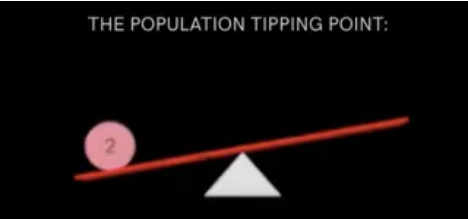
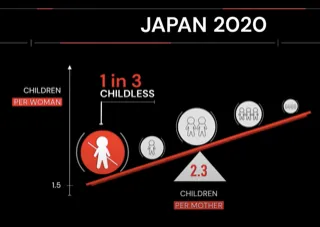
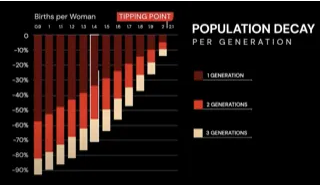
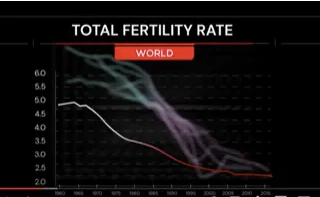
We’ve talked before about a major failure: humans can invent contraception. Evolution’s main alignment strategy was totally unprepared for this. It made us interested in a certain type of genital friction, which was a good proxy for its goal in the ancestral environment. But once we became smarter, we got new out-of-training-distribution options available, and one of those was inventing contraception so that we could get the genital friction without the kids. This is a big part of why average-children-per-couple is declining from 8+ in eg pioneer times to ~1.5 in rich countries today, even though modern rich people have more child-rearing resources available than the pioneers.

Another major alignment failure is porn. Giving evolution a little more credit, it didn’t just make people want genital friction – if that had been the sole imperative, we would have died out as soon as someone inventing the dildo/fleshlight. People want genital friction associated with attractive people and certain emotions relating to complex relationships. But now we can take pictures of attractive people and write stories that evoke the complex emotions, while using a dildo/fleshlight/hand to provide the genital friction, and that does substitute for sex pretty well. There’s still debate over whether porn makes people less likely to go out and form real relationships, but it’s at least plausibly another factor in the rich-country fertility decline. At the very least it doesn’t scream “well-thought-out alignment strategy robust to training-vs-deployment differences”.

But these are boring examples. These are like 2015-level alignment concerns, from back when we thought the big problem was AIs seizing control of their reward centers or something. I think we might genuinely be able to avoid problems shaped like these. Unlike evolution, which had to work with lemurs, even weak GPT-level modern AIs are able to understand language and complicated concepts; we can tell them to want children instead of using genital friction as a proxy. 2023 alignment concerns are more about failed generalization – that is, about fetishes.


Evolution’s alignment problem isn’t just that humans have learned to satiate their libido in ways other than procreative sex. It’s that some humans’ libidos are fundamentally confused. For example, some men, instead of wanting to have sex with women, mostly want to spank them, or be whipped by them, or kiss their feet, or dress up in their clothes. None of these things are going to result in babies! You can’t trivially blame this on the shift from training to deployment (ie the environment of evolutionary adaptedness to the modern world) – women had feet in the ancestral environment too. This is a different kind of failure.

Here’s a simple story of fetish formation: evolution gave us genes that somehow unfold into a “sex drive” in the brain. But the genome doesn’t inherently contain concepts like “man”, “woman”, “penis”, or “vagina”. I’m not trying to make a woke point here: the genome is just a bunch of the nucleotides A, T, C, and G in various patterns, but concepts like “man” and “woman” are learned during childhood as patterns of neural connections. We assume that the nucleotides are a program telling the body to do useful things, but that has to be implemented through deterministic pathways of proteins and the brain’s neural connections are too complex to trivially influence that way (see here for more). The genome probably contains some nucleotides that are supposed to refer to the concepts “man” and “woman” once the brain gets them, but there’s are a lot of fallible proteins in between those two levels.

So the simple story of fetish formation is that the genome contains some message written in nucleotides saying “have procreative sex with adults of the opposite sex as you”, some galaxy-brained Rube Goldberg plan for translating that message into neural connections during childhood or adolescence, and sometimes the plan fails. Here are some zero-evidence just-so-story speculations for how various fetishes might form, more to give you an idea what I’m talking about than because I claim to have useful knowledge on this topic:

  • Foot fetish: On the somatosensory cortex, the area representing the feet is right next to the area representing the genitalia. If the genome includes an “address” for the genitalia, plus the instructions “have sexual urges towards this”, then getting the address slightly wrong will land you in the feet.
  • A reasonable next question would be “what’s on the other side of the genitalia, and do people also have fetishes about that one?” The answer is “the somatosensory cortex is a line with the genitalia at the far end, because God is merciful and didn’t want there to be a second thing like foot fetishes.”
    (source for cortex image)

  • Spanking: From the male point of view, penetrative PIV sex involves applying force to the bottom half of a woman, at rhythmic intervals, in a way that causes her very intense emotions and makes her make moan and scream. Spanking is exactly like this, and most kids encounter spanking at a very early age and sex only after they’re much older. If the evolutionary message is something like “find the concept that looks vaguely like this, then be into it”, spanking is the first concept like that most people will find; by the time they learn about actual sex, spanking might be a trapped prior.
  • Sadomasochism: Sex is painful for virgins, can be mildly painful even for some non-virgins, and when it’s pleasurable, it still looks a lot like pain (screams, intense emotions). Imagine you are a little boy/girl who stumbles in on your parents having sex. Your father is impaling the most sensitive part of your mother’s body, and your mother is moaning and squealing. A natural generalization might be “sex is the thing where a man causes a woman pain”.
  • Latex/rubber: Plausibly the evolutionary specification includes details about attractiveness. Attractive people (ie those you should be most interested in having babies with) should be young and healthy (characteristics associated with better pregnancy outcomes, especially in the high-risk ancestral environment). The simplest sign of youth and good health is smooth skin, so the evolutionary message might say something about preferring sex with smooth-skinned people. Latex is a superstimulus for smooth skin, and maybe if you see it at the right time, in the right situation, it can totally overwhelm the rest of the message.
  • Urine/scat: Procreative sex involves a sticky substance that comes out of the genitals, it doesn’t take much misgeneralization to get to other sticky substances that come out of the genitals or nearby regions.
  • Bondage/domination/submission: Okay, I admit I don’t have a good just-so explanation for this one. Maybe it’s more psychological – people who have been told that sex is shameful can only fully appreciate it if they feel like a victim who’s been forced into it (and so carries no guilt). And people who have been told they’re undesirable and nobody could ever really love them can only fully appreciate it if their partner is a victim who has no choice in the matter.
  • Furries: This has to be because of all the cute cartoon animals, right? But why do some people sexually imprint on them? I found this article on worshippers of the 1990s cartoon mouse Gadget helpful here. Gadget obviously has many desirable characteristics — she’s a very cute nerdy woman who sometimes ends up in damsel-in-distress situations. Maybe she is the most sexualized being that some six-year-old boys have encountered. When I watched Rescue Rangers as a six-year old, I could feel my brain trying to figure out whether to have a crush on her before deciding that no, it was too deep in latency stage. I assume most people who get their first crushes on Gadget or some other desirable cartoon character end up with their brains later generalize properly to “I like cute nerdy women in damsel-in-distress situations”, but a small minority misgeneralize to “nope, I’m only attracted to mice now, that’s where I’m going to go with this.”

Combine this with equivalent animal “fetishes” — things like beetles species where the females have red dots on their backs, and the males try to mate with anything that has a red dot — and you get a picture where evolution tries to communicate a lot of contingent features of sex in the hopes that one of them will stick, then tells you to be attracted to whatever is most associated with those features. At least for men, I think the features communicated in the genomic message are simple things like curves and thrusting and genitals and smooth skin, plus something that somehow picks out the concept of “woman” (except in 3% of the male population, where it picks out the concept of “men” instead, plus another 3% where it doesn’t pick out a sex at all).

Real procreative sex usually matches enough of features of the genomic message to be attractive to most people, but if the original triggers were associated with some contingent characteristics, the brain might misinterpret that as part of the target — for example, if it was a cartoon animal, the brain might think the target includes cartoon animals.

Other times, something that isn’t procreative sex matches the genomic message closely enough to be misinterpreted as the center of the target (eg getting whipped); usually procreative sex is somewhere in the target space, but maybe not the exact center, and a few people have such strong fetishes that procreative sex doesn’t register as erotic at all.

The process of forming the category “sexually attractive things” is just a special case of the process of forming categories at all. I discuss the formation of categories like “happiness” and “morality” in The Tails Coming Apart As Metaphor For Life. Society feeds us some labeled data about what is good or bad — for example, we might see someone commit murder on TV, and our parents tell us “No! That’s bad! Don’t do that!” (and the other TV characters hate and punish that character). Then we try to extrapolate such incidents to a broader moral system. If we’re philosophers, we might go further and try to formally describe that moral system, eg Kantianism, utilitarianism, divine command theory, natural law, etc. All of these correctly predict the training data (eg “murder is bad”) while having different opinions on out-of-distribution environments. Which one you choose is just a function of some kind of mysterious intellectual preference for how to generalize inherently ungeneralizeable things — what I previously described as “extrapolating a three-dimensional shape from its two-dimensional reinforcement-learning shadow”.

Fetishes are the same way. Here the evolutionary message provides semi-labeled data, giving people weird feelings when they see certain kinds of curvy, smooth-skinned people. Then people try to generalize that into an idea of what’s sexy. Usually their category is centered (in the sense that the category “bird” is centered around “sparrow” and not “ostrich”) around something close to procreative heterosexual sex. Other times they generalize in some very unexpected way, and are only attracted to cartoon mice. I think if we understood the laws of generalization, this would make sense. It would seem like a reasonable mistake that someone using Occam’s Razor and all the rest of the information-theoretic toolkit for generalization could make. But we don’t really understand those laws beyond faint outlines, so instead we’re reduced to YKINMKBYKIOK.

« Newer PostsOlder Posts »

Powered by WordPress