Quotulatiousness

December 9, 2020

The late steam-era boxcar and (a brief) flourish of colour

Filed under: Business, History, Railways, USA — Tags: , — Nicholas @ 03:00

In his Trains blog, George Hamlin discusses the changing colours of the ordinary railway boxcar in the brief era between post-war prosperity and the economic disasters of the 1960s and 70s:

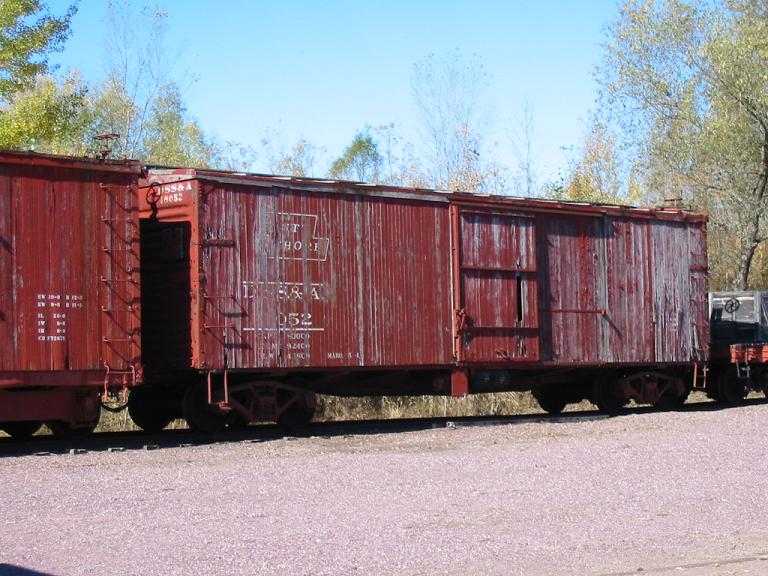
Pre-war Duluth, South Shore & Atlantic boxcar number 18052 at the Mid-Continent Railway Museum.
Photo by Sean Lamb via Wikimedia Commons.

The advent of streamlining in the 1930s started to blow historic convention with regard to car colors away on the passenger side of railroading, but had little impact on freight operations prior to World War II. Following that conflict, however, some of the industry began to consider livening up the equipment that produced much of the revenue (and most of the profits) from which they derived their economic existence.

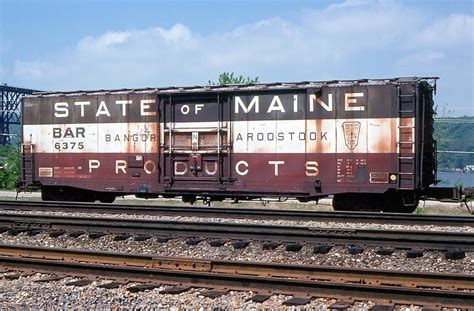
Some railroads also adopted more colorful boxcar paint schemes to promote special aspects of their freight service: the B&O had special schemes for both their “Sentinel” and “Timesaver” services; another example was the Missouri Pacific’s blue and gray (the road’s modern-day passenger colors) for their Eagle Merchandise Service. The Bangor & Aroostook had boxcars with red, white and blue horizontal stripes advertising products emanating from their home state, Maine.

Bangor and Aroostook boxcar 6375 in “State of Maine” paint scheme.
Image originally from Panoramio, but no user information provided.

Another example was the large fleet of New York Central’s “Pacemaker” boxcars, adorned in a combination of bright red and gray. Early on, the NYC even ran solid trains of this equipment in an expedited service which was designed to re-capture LCL (less than carload lot) traffic from the increasingly competitive motor trucking industry. (Interestingly, the NYC also had a color they called “Pacemaker Green” that was used for the pre-World War II all-coach New York-Chicago service, as well as on the road’s initial orders of non-stainless steel streamlined coaches.)

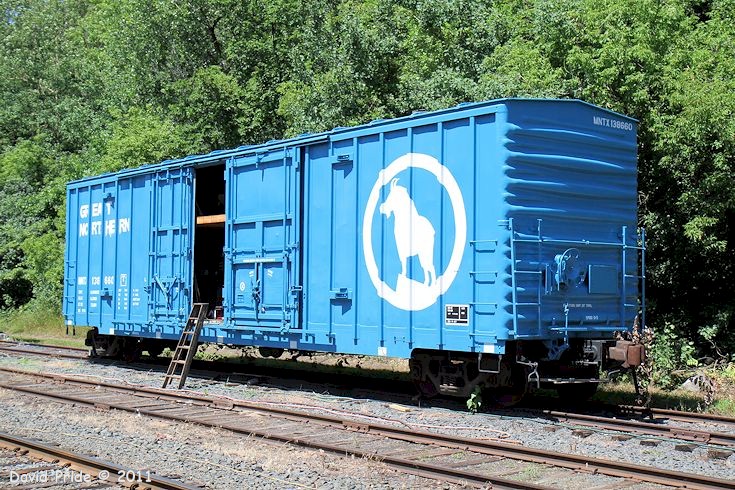
In the late 1950s, the Central introduced a more radical change, and began painting its boxcars in a Jade Green color (“Century Green”, according to the railroad) that was quite a dramatic change from boxcar red. The Great Northern also adopted a similar shade. CB&Q boxcars still had the same basic hue, but now they came in a brighter version dubbed “Chinese Red”.

By the 1960s, a number of roads had livened up their freight car liveries; the modestly-sized Reading utilized bright green and beige/yellow for both freight cars and locomotives. Late in its career as an independent railroad, the Great Northern adopted the striking bright “Big Sky Blue” for both passenger and freight cars. At its formation in 1976, Conrail adopted “traditional red oxide” as its choice for freight cars, however, sticking with tradition (and reversing the NYC’s earlier efforts).

Great Northern boxcar 138660 in the “Big Sky Blue” paint scheme, delivered September 1967.
Photo by David Pride http://www.davidpride.com/USA/Minnesota/Osceola_11_007.htm

November 21, 2020

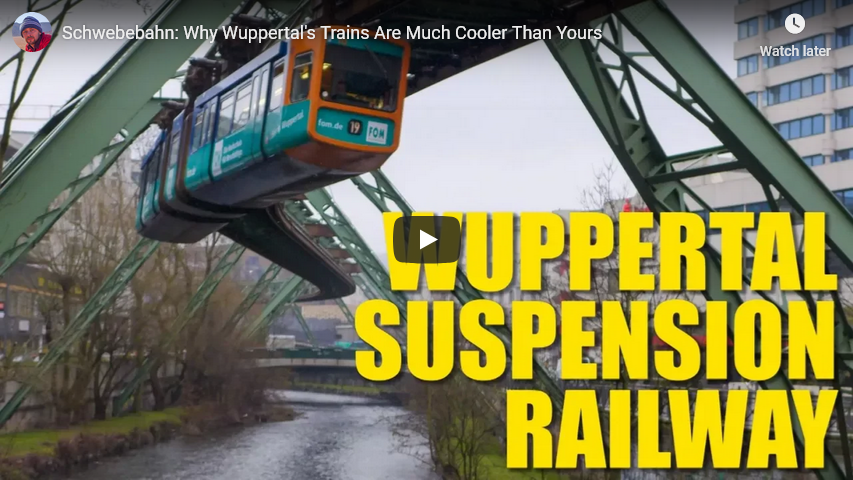
Schwebebahn: Why Wuppertal’s Trains Are Much Cooler Than Yours

Filed under: Economics, Germany, History, Railways — Tags: , , — Nicholas @ 02:00

The Tim Traveller
Published 12 Apr 2018

Wuppertal has possibly the world’s most badass public transport: a 120-year-old swingin’ suspension railway. But the question is: why? When everyone else was busy building trams and undergrounds, what made Wuppertal say “NOPE”, and build this instead?

***
Tom Scott Video:
https://www.youtube.com/watch?v=F4KZL…

Kaiserwagen photo:
By Own work – JuergenG, CC BY-SA 3.0, https://commons.wikimedia.org/w/index…

From the comments:

The Tim Traveller
10 months ago
Hi all – just a quick note on this video: I think a few people are mishearing me at 0:43 where I say this is “the world’s oldest suspension railway… it’s also one of the world’s only suspension railways”. I did not call it “the world’s only suspension railway” — there are others, including one not too far away from here at Düsseldorf Airport, another in Memphis, US, and some more in Japan. TLDR: it’s the oldest one but not the only one. Thank you for your attention 🙂

November 5, 2020

Fallen Flag — the New York, Ontario and Western Railway

Filed under: Business, History, Railways, USA — Tags: , , , — Nicholas @ 03:00

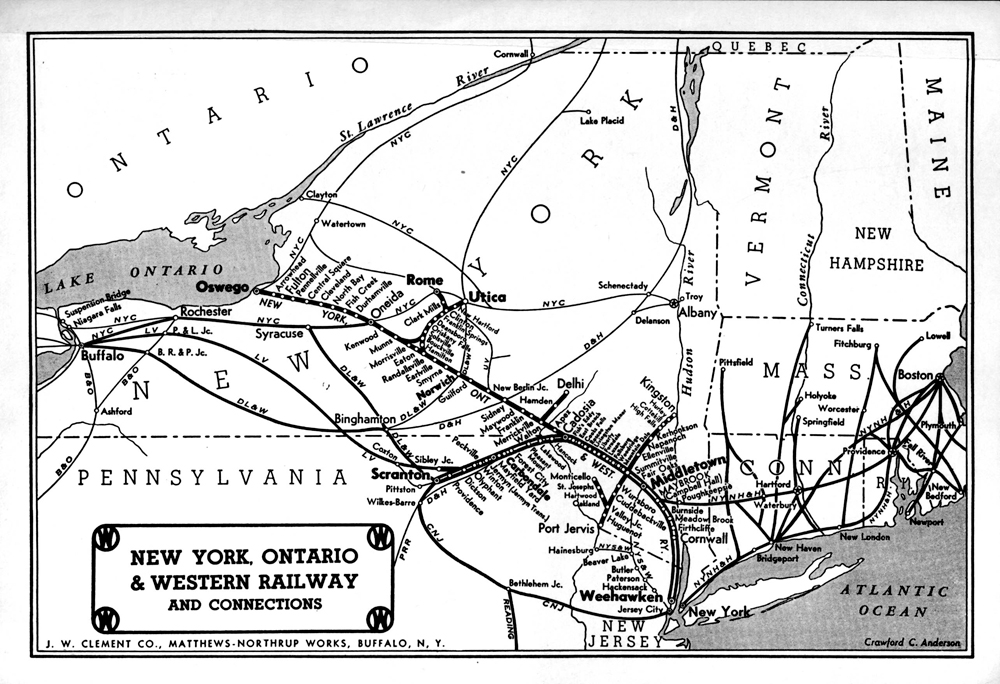
This month’s Classic Trains featured fallen flag is the New York, Ontario and Western, which ran from Oswego on the south shore of Lake Ontario down into the New York City megalopolis. Sadly, the line is best remembered as the only Class 1 US railway to be completely abandoned. John R. Taibi outlines the history of the NYO&W from formation to abandonment in 1957:

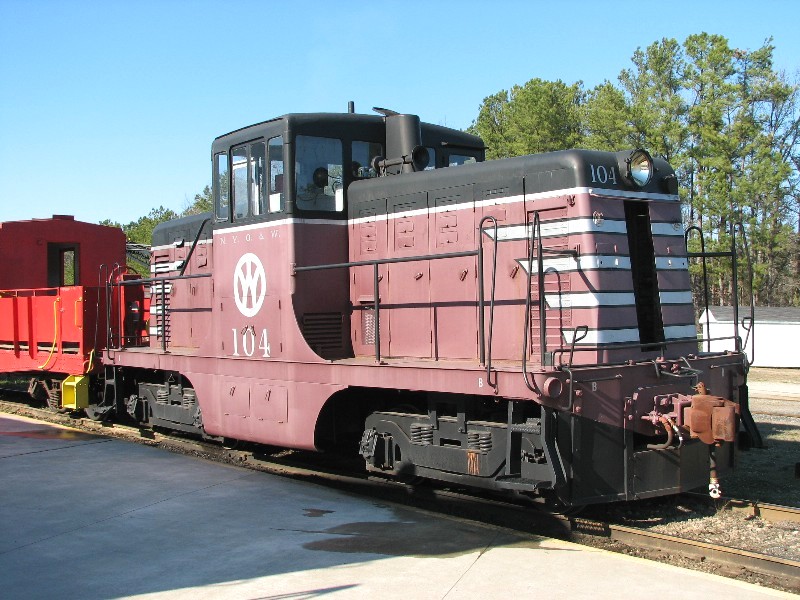
Preserved NYO&W General Electric 44-ton switcher number 104 preserved at the Southeastern Railway Museum in Duluth, GA.
Photo by Harvey Henkelmann via Wikimedia Commons.

The New York, Ontario & Western Railway struggled to find its place among the many transportation systems serving New York City, but in the end it was able only to secure a place in history as the first Class I railroad to be abandoned in entirety. Despite this unenviable status, “the O&W,” as it was known, did endear itself to the communities along its line. After all, it was the carrier that had brought boxcars full of prosperity to every community along the line during its 76-year life.

Begun on January 21, 1880, the O&W set a goal of improving the Oswego–New York corridor, as well as the branches to New Berlin, Delhi, and Ellenville, N.Y., it had inherited from the New York & Oswego Midland. The O&W developed a new entrance to Gotham from Middletown, N.Y., that ran to Cornwall on the Hudson River, thence to Weehawken, N.J., by rights on the New York, West Shore & Buffalo Railway (later New York Central).

[…]

As it improved its physical characteristics, the O&W also acquired modern motive power to haul its numerous coal, milk, passenger, and general freight trains. Where previously Camelback 4-4-0s, 2-6-0s, and 2-8-0s were as common as the road’s wooden coaches and country depots, a corps of end-cab locomotives helped usher in the new era. E-class Ten-Wheelers (1911), W-class Consolidations (1910-11), X-class 2-10-2 “Bull Mooses” (1915), and Y-class Mountains (1922 and ’29) provided the power for passenger trains to the Catskills, milk trains to Gotham, and coal trains to Oswego, Cornwall, and Weehawken. Still, many Camelbacks worked into the mid-1940s.

This familiar, widely circulated O&W map was created by cartographer Crawford C. Anderson.
Classic Trains.

[…]

Dieselization was hoped to be a savior, and under [O&W bankruptcy trustee, Frederick E.] Lyford’s direction a handful of GE 44-ton switchers arrived in 1941. Nine two-unit EMD FTs came in 1945 and were put into fast merchandise service between Scranton and Maybrook, and Scranton and Norwich. Lyford’s successors in 1948 acquired additional F3 and NW2 diesels, enough to banish steam locomotives from service by that summer.

By that time, though, O&W’s accumulated losses amounted to $38 million. It was beyond the ability of trustees, the reorganization court, and diesel locomotives to extricate the carrier from financial ruin. Nevertheless, passenger trains from Weehawken to Walton (then only to Roscoe) kept running until mail contracts gave out in 1950; the service was suspended in September 1953. Although milk and coal trains were a memory, gray-yellow-and-orange diesel locomotives soldiered on, leading a dwindling number of ever-shorter freight trains.

By the mid-1950s, the reorganization court — which had been searching for a buyer for the road now truly earning another of its nicknames, the “Old & Weary” — was advocating total abandonment. Additionally, the U.S. government was suing for taxes and retirement payments that were in arrears, and New York state began planning on how best to use the O&W right of way for highway improvements.

October 8, 2020

Fallen Flag — The Pacific Electric Railway

Filed under: Business, History, Railways, USA — Tags: , , , — Nicholas @ 03:00

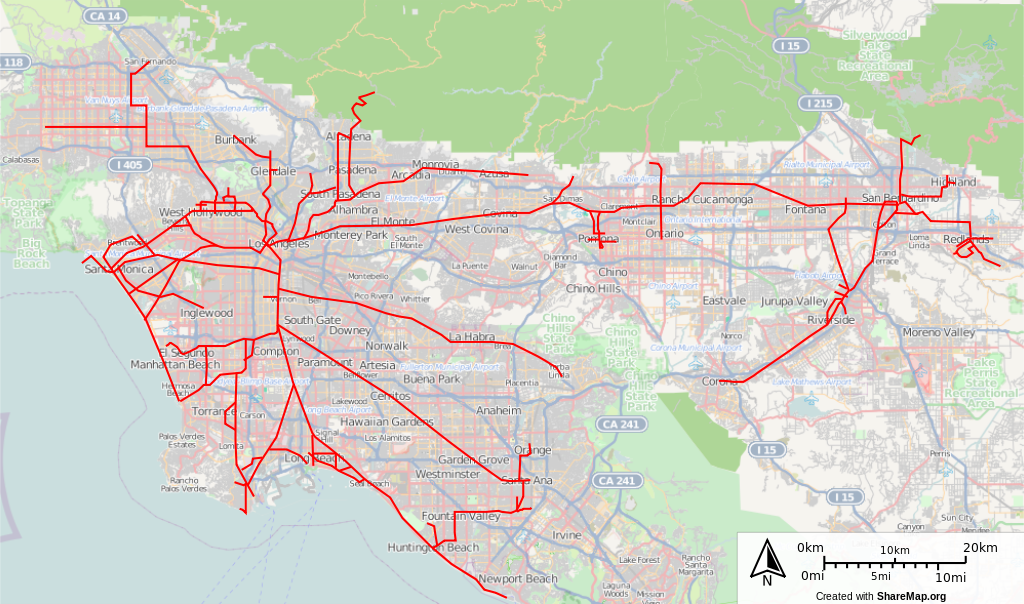
This month’s Classic Trains featured fallen flag is southern California’s iconic Pacific Electric Railway Company, whose streetcars, interurbans, and buses served the vast area in and around Los Angeles and San Bernardino from 1901 until the passenger services were sold off in 1953. The electric service was converted to bus and the last electric rail line was discontinued in 1961. At its peak in the 1920s the “Red Cars” service was said to be the largest electric railway system in the entire world.

G. Mac Sebree covers the origins of the line in the late nineteenth century:

The story begins in 1895, when a line was completed from Los Angeles to Pasadena; a mere 10 years later, the system was virtually complete. To a great degree, PE was the brainchild of Henry Huntington, nephew of one of the Central Pacific’s “Big Four,” Collis P. Huntington. An active real-estate promoter, Henry needed the Big Red Cars and the transportation they provided to help sell lots and homes in the hinterlands.

His uncle’s Southern Pacific took control of the PE in 1911 in a deal that left the Los Angeles Railway, the narrow-gauge intracity system, in the nephew’s hands. The PE was built to standard gauge, and SP saw a brilliant future in freight for the interurban.

Pacific Electric route map.
Original data from http://sharemap.org/public/Los_Angeles_Pacific_Electric_Railways_(Red_Cars) via Wikimedia Commons.

Interurbans were not considered Class I railroads (or any other class — they were not “steam railroads”), but from the very start, PE was big business. The California Railroad Commission said the property was worth $100 million in Depression dollars. Atypically for an interurban, the system served as a gathering network for carload freight shipments from citrus groves, manufacturing plants, oil refineries, warehouses, and the harbor at San Pedro. The three line-haul railroads serving southern California — Santa Fe, Union Pacific, and especially SP — depended on the Pacific Electric to some degree.

Yet in its heyday, PE carried huge numbers of passengers. As late as 1953, 50 percent of its revenue came from riders — but absolutely none of its profit. An all-time list shows that PE operated 143 distinct passenger routes. Despite the so-called “Great Merger of 1911,” in which local and interurban services were supposedly separated, the heaviest PE passenger lines largely served the L.A. urban area. An example was the street-running L.A.–Hollywood–Beverly Hills line, in which two-car trains rumbled down Hollywood Boulevard at 10-minute intervals.

At one time or another, PE single-truck Birney cars plied local lines in Pasadena, Long Beach, Santa Monica, Redlands, Santa Ana, and San Pedro, although the 1920s were not far along before management sought to sell off or abandon these albatrosses.

After World War 2, the writing was on the wall for the Red Cars, as urban expansion and greatly increased car ownership cut at the economic basis for rail passenger service in southern California, especially as the new freeways were built.

After the war, though, things went downhill rapidly. As soon as buses were available, Pacific Electric began wholesale rail passenger-service abandonments. The new freeways were regarded as the rapid transit of the future. PE President Oscar Smith saw one possibility for saving rail service — if the state would pay. Just before the war, a short section of freeway between Hollywood and the San Fernando Valley had been built, with the PE tracks relocated to the center of the new highway.

Why not replicate this all over the basin? The PE would cooperate, but public officials turned a deaf ear, and that was that. Freight service, meanwhile, prospered, but by the mid-1950s, PE began replacing its electric locomotives and box motors with diesels (a few steam locomotives also had been used during the war). Over the years, PE rostered about 100 electric locomotives and at least 75 box motors — big business, indeed.

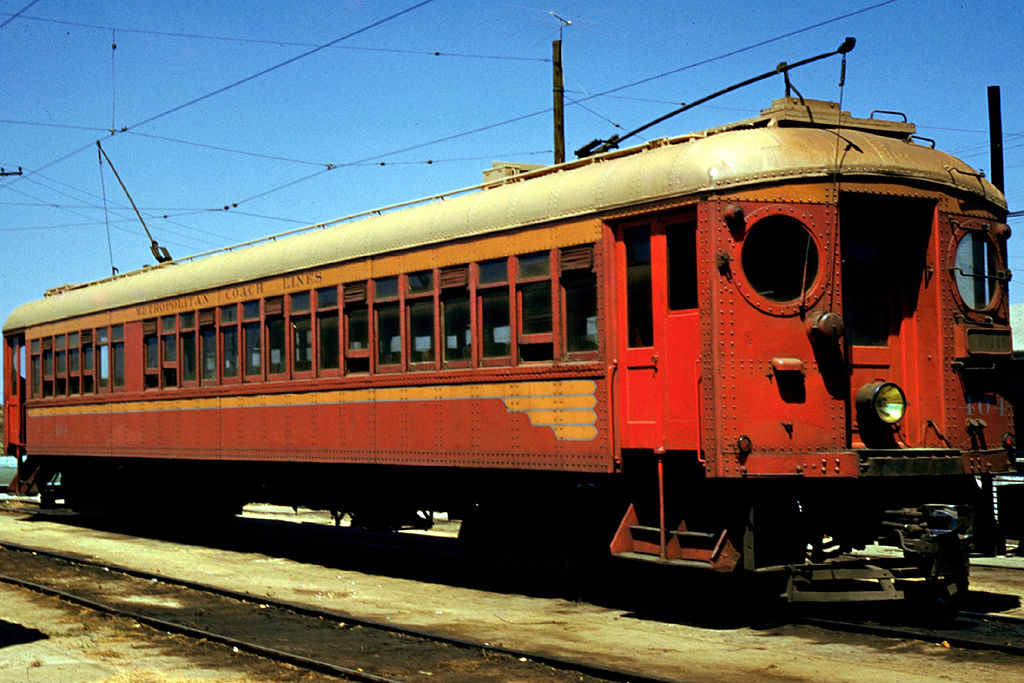
In 1953, PE sold its passenger service (four rail lines out of the 6th and Main station, two out of Subway Terminal, and many bus lines) to Metropolitan Coach Lines. The Metropolitan Transit Authority, first formed in 1951, bought MCL on March 3, 1958, and the end for electric passenger service came in 1961. SP continued the freight work with diesels, and merged PE away on August 13, 1965. Today under the Union Pacific shield, a good bit of the old PE freight lines remain in service, unique survivors, busier than ever.

A veteran Pacific Electric “Big Red Car” already lettered for successor Metropolitan Coach Lines in the 1950s.
Photo by Voogd075 via Wikimedia Commons.

September 16, 2020

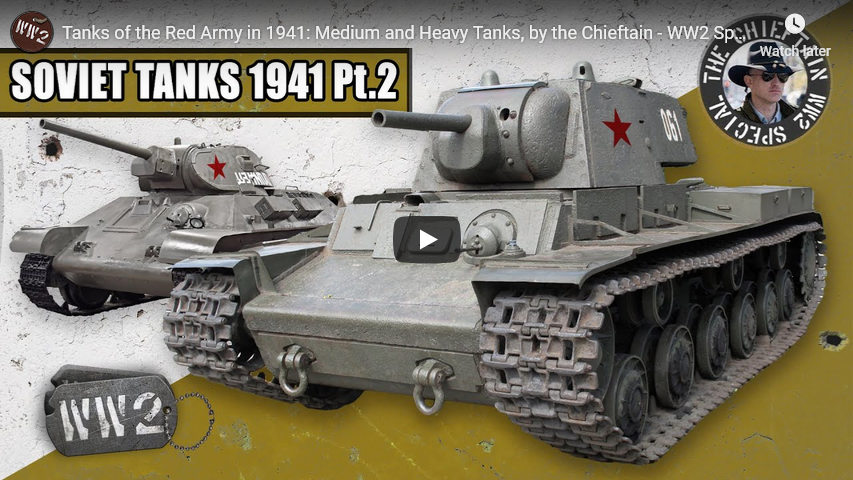
Tanks of the Red Army in 1941: Medium and Heavy Tanks, by the Chieftain – WW2 Special

Filed under: History, Military, Railways, Russia, Weapons, WW2 — Tags: , , , — Nicholas @ 06:00

World War Two
Published 15 Sep 2020

Chieftain’s channel: https://www.youtube.com/user/TheChief…

Chieftain returns to the World War Two channel this week for Part 2 of his deep-dive into the Soviet armour in the first months of war on the Eastern Front. This week, the focus is on medium and heavy tanks.

You can see Part 1 which covers armoured cars and light tanks here: https://www.youtube.com/watch?v=a2FkF…

Chieftain’s previous video on Soviet doctrine: https://youtu.be/s7nr83CYQ9Q
For Indy’s introduction to armour on both sides: https://youtu.be/gh7mt2OS770

Join us on Patreon: https://www.patreon.com/TimeGhostHistory
Or join The TimeGhost Army directly at: https://timeghost.tv

Follow WW2 day by day on Instagram @ww2_day_by_day – https://www.instagram.com/ww2_day_by_day
Between 2 Wars: https://www.youtube.com/playlist?list…
Source list: http://bit.ly/WW2sources

Written and Hosted by: The Chieftain
Director: Astrid Deinhard
Producers: Astrid Deinhard and Spartacus Olsson
Executive Producers: Astrid Deinhard, Indy Neidell, Spartacus Olsson, Bodo Rittenauer
Creative Producer: Joram Appel
Post-Production Director: Wieke Kapteijns
Research by: The Chieftain
Edited by: Miki Cackowski
Sound design: Marek Kamiński
Map animations: Eastory (https://www.youtube.com/c/eastory)

Sources:
Bundesarchiv
RIA Novosti archive, image #613694
Narodowe Archiwum Cyfrowe
Picture of K2, courtesy Ein persoon from Wikimedia Commons https://commons.wikimedia.org/wiki/Fi…
Picture of MBV-2 at Patriot Museum, Kubinka, courtesy Alan Wilson https://flic.kr/p/ZhtG6k
From the Noun Project: Shield by Nikita Kozin, Weight by Vadim Solomakhin, company soldiers by Andrei Yushchenko

Soundtracks from the Epidemic Sound:
Rannar Sillard – “March Of The Brave 4”
Johannes Bornlof – “The Inspector 4”
Fabien Tell – “Last Point of Safe Return”
Reynard Seidel – “Deflection”
Johannes Bornlof – “Deviation In Time”
Phoenix Tail – “At the Front”
Max Anson – “Ancient Saga”
Fabien Tell – “Other Sides of Glory”

Archive by Screenocean/Reuters https://www.screenocean.com.

A TimeGhost chronological documentary produced by OnLion Entertainment GmbH.

September 3, 2020

Fallen Flag — The Great Northern Railway

This month’s Classic Trains featured fallen flag is an American railway that definitely deserved to call itself “great”, James J. Hill’s Great Northern Railway. Hill was noteworthy as the only “Robber Baron” of that era who was scrupulous in avoiding government entanglements (including grants, loans, subsidies, and other forms of money-with-political-strings-attached), building his entire railway system using private funds and rational profit-oriented economic decision-making (the other transcontinental lines often over-built to claim higher subsidies or added money-losing branch lines to please powerful politicians). The result was that when economic hard times hit the railway business, his was the only transcontinental that never needed to declare bankruptcy.

In an earlier post, Dane Stuhlsatz summarized the GN’s engineering:

Hill’s line […] was methodically surveyed and built, on the shortest routes possible, with the least gradient possible, and using the best steel and other materials on the market at the time. Rather than political largess, Hill made his decisions based on profit and loss. But, for all the efficiency that Hill built into his line — he was able to transport across the country faster, cheaper, and with less maintenance costs than could the UP and CP — arguably the most important aspect for the viability of his business was the freedom to conduct business untethered by the strings that accompanied government subsidies.

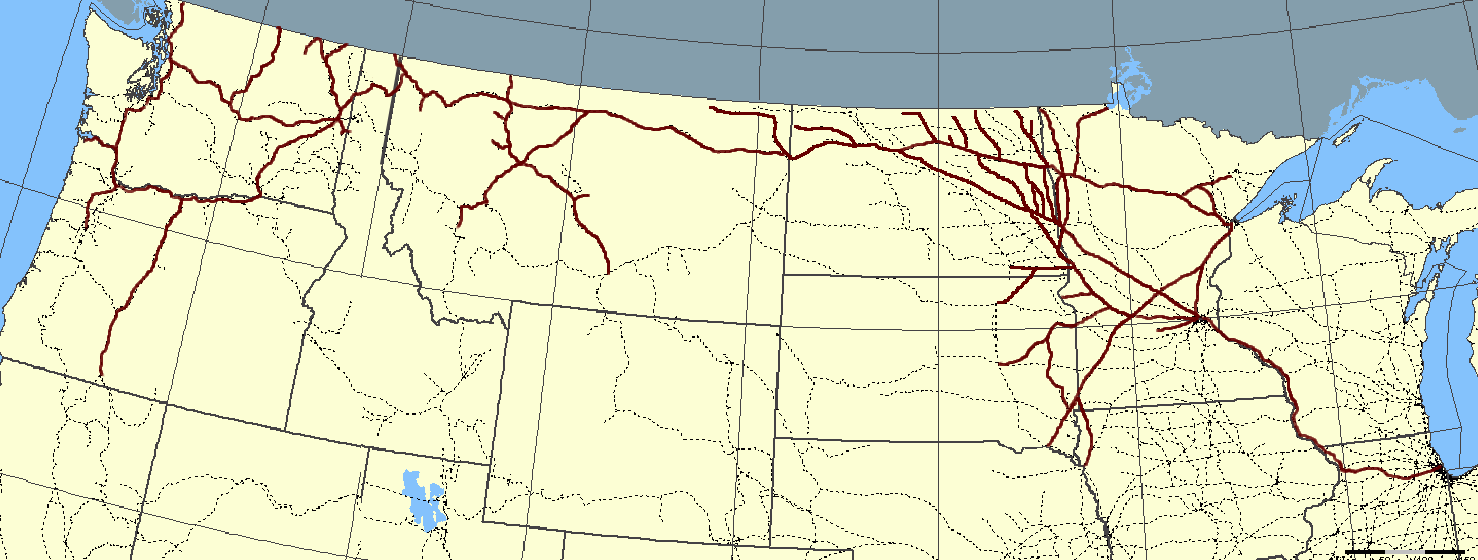
Route map of the Great Northern Railway, circa 1920. Red lines are Great Northern trackage; dotted lines are other railroads.
Map by Elkman via Wikimedia Commons.

George Drury outlines the origins of the railway:

In 1857, the Minnesota & Pacific Railroad was chartered to build a line from Stillwater, Minnesota, on the St. Croix River, through St. Paul and St. Cloud to St. Vincent, in the northwest corner of the state. The company defaulted after completing a roadbed between St. Paul and St. Cloud, Minnesota, and its charter was taken over by the St. Paul & Pacific Railroad, which ran its first train between St. Paul and St. Anthony (now Minneapolis) in 1862.

For financial reasons the railroads were reorganized as the First Division of the St. Paul & Pacific. Both StP&P companies were soon in receivership, and Northern Pacific, with which the StP&P was allied, went bankrupt in the Panic of 1873.

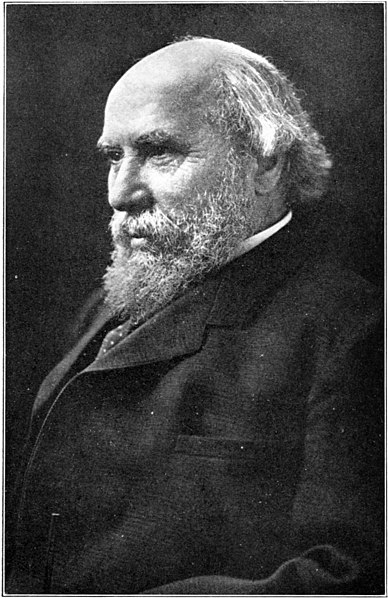
Canadian-born “Robber Baron” James J. Hill (1838-1916) in 1914.

In 1878 James J. Hill and an associate, George Stephen, acquired the two St. Paul & Pacific companies and reorganized them as the St. Paul, Minneapolis & Manitoba Railway (“the Manitoba”). By 1885 the company had 1,470 miles of railroad and extended west to Devils Lake, North Dakota. In 1886 Hill organized the Montana Central Railway to build from Great Falls, Montana, through Helena to Butte, and in 1888 the line was opened, creating in conjunction with the StPM&M a railroad from St. Paul to Butte.

In 1881 Hill took over the 1856 charter of the Minneapolis & St. Cloud Railroad. He first used its franchises to build the Eastern Railway of Minnesota from Hinckley, Minnesota, to Superior, Wisconsin, and Duluth. Its charter was liberal enough that he chose it as the vehicle for his line to the Pacific. He renamed the road the Great Northern Railway; it then leased the Manitoba and assumed its operation.

[…]

Even before completion of the route from St. Paul, the Great Northern opened a line along the shore of Puget Sound between Seattle and Vancouver, British Columbia, in 1891. In the years that followed, Hill pushed a number of lines north across the international boundary into the mining area of southern British Columbia in a running battle with Canadian Pacific. In 1912 GN traded its line along the Fraser River east of Vancouver to Canadian Northern for trackage rights into Winnipeg.

Great Northern gradually withdrew from British Columbia after Hill’s death. In 1909 the Manitoba Great Northern Railway purchased most of the property of the Midland Railway of Manitoba (lines from the U.S. border to Portage la Prairie and to Morden), leaving the Midland, which was jointly controlled by GN and NP, with terminal properties in Winnipeg. The Manitoba Great Northern disposed of its rail lines in 1927. They were later abandoned.

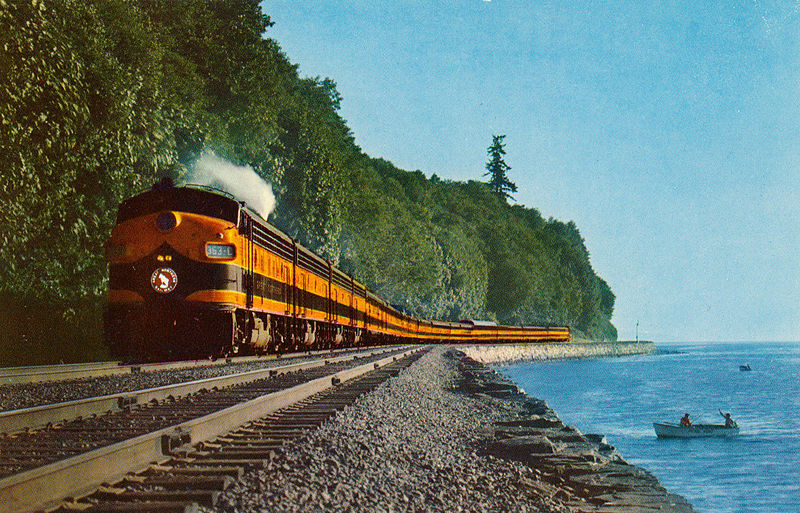
Postcard photo of the Great Northern Railway’s “Empire Builder” streamliner between Everett and Seattle, Washington, circa 1963.
Great Northern Railway postcard via Wikimedia Commons.

The Great Northern and Northern Pacific lines agreed to a merger in 1901 (both lines were controlled by Hill) but the plan was vetoed by the Interstate Commerce Commission. A second attempt in the 1920s after Hill’s death was again turned down by the regulator unless the combined company divested ownership of the Chicago, Burlington & Quincy which was both railways’ connection from Minneapolis to Chicago. It was only on the final attempt in 1970 that the deal gained the government’s grudging approval and the Great Northern, Northern Pacific, and CB&Q merged to form the Burlington Northern.

August 29, 2020

Recreating British Railways?

Adrian Quine looks at the long-term results of the partial privatization of British Railways, and the current British government’s options to address some of the problems:

Wikimedia caption – “This is the Bring Back British Rail, a reverse image of the old BR logo, (now used by the TOC’s) to show we are heading the wrong way with Rail in the UK”

If there is one thing free marketeers and large state socialists agree on, it would be the terrible state/private hybrid ownership structure of our railways currently supported by the government. While large state socialists won’t be happy until the private sector is squeezed out of the system, market liberals view the Conservative government’s actions as creeping renationalisation.

The private-sector entrepreneurs that built many of Britain’s railways in the 19th century had – through a process of market discovery – settled on vertical integration, with the same firm owning the track and operating the trains. But, when railways were returned to private sector in the late 1990s, the government created one national infrastructure company (Railtrack), 25 train-operating companies (TOCs), 3 freight operating companies, 3 rolling-stock leasing companies, 13 infrastructure service companies and other support organisations. The Office of Passenger Rail Franchising was tasked with selling franchises to the TOCs, while the Office of the Rail Regulator (ORR) regulated the infrastructure. This artificial and fragmented structure was designed to give the impression of competition.

Despite these constraints, in the early days of John Major’s flawed privatisation some of the more enterprising private train operators managed to bring innovation to the sector, including improved marketing and very low-cost “yield managed” advance fares. Where allowed, competition between different operators brought improved customer service, additional direct trains and lower ticket prices. However, the flaws in the initial privatisation soon became apparent with failed franchises leading to increased government intervention and renationalisation by subsequent governments.

While attempts were made to downplay the significance of July’s decision by the Office of National Statistics to put train operators on the public balance sheet, it is in fact only the latest in a worrying string of signals about the direction in which the railway and Boris Johnson’s government are headed. In June, the transport secretary Grant Shapps announced to a parliamentary select committee plans to introduce concessions across the rail network. Private operators will simply be paid a set fee to provide a basic service – another nail in the coffin for commercial investment or innovation.

Attention is now turning to what the government will do when the current “Emergency Measures Agreements” – hastily put in place to ensure trains kept running when passenger numbers nosedived by 95% as lockdown began – comes to an end in September.

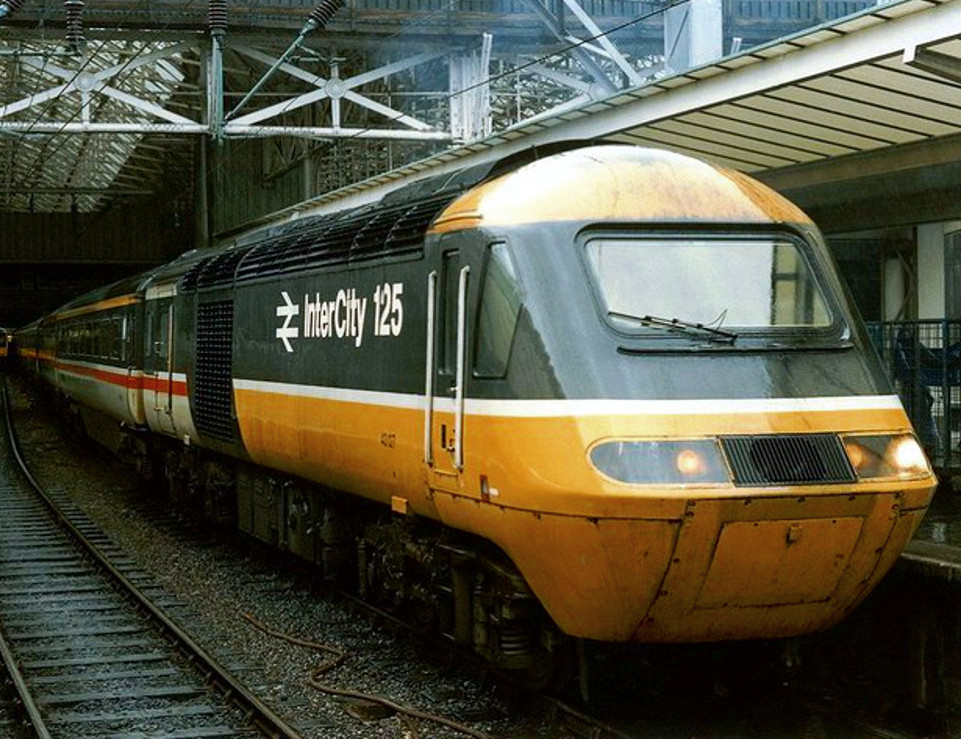
An InterCity 125 power car in British Rail livery at Manchester Piccadilly in October 1976.
Photo by Dave Hitchborne via Wikimedia Commons.

August 28, 2020

George Stephenson: The Father of the Railways

Filed under: Britain, History, Railways — Tags: , , , , — Nicholas @ 06:00

Biographics
Published 6 Feb 2020

Check out Squarespace: http://squarespace.com/biographics for 10% off on your first purchase.

This video is #sponsored by Squarespace.

TopTenz Properties
Our companion website for more: http://biographics.org

Credits:
Host – Simon Whistler
Author – Radu Alexander
Producer – Jennifer Da Silva
Executive Producer – Shell Harris

Business inquiries to biographics.email@gmail.com

August 6, 2020

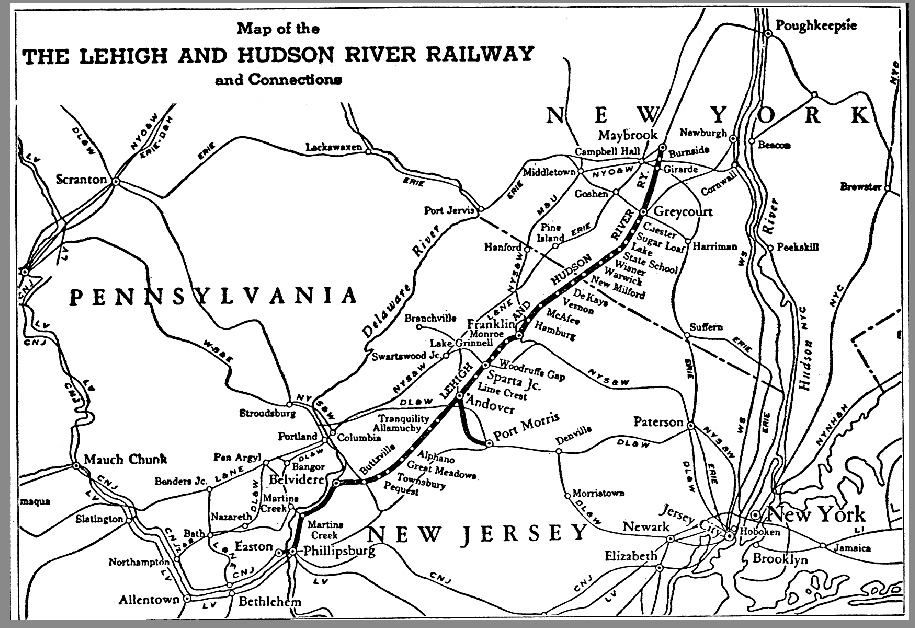
Fallen flag — The Lehigh and Hudson River Railway

Filed under: History, Railways, USA — Tags: , , — Nicholas @ 03:00

This month’s Classic Trains featured fallen flag is a northeastern railway I didn’t know much about, the Lehigh and Hudson River. If you asked me to complete the phrase “Lehigh and …”, I’d most likely have said “New England”, which was a larger operation but is perhaps only remembered now as the second major American railway to file for abandonment after the New York, Ontario & Western. The L&HR earned its keep primarily as a bridge line, with additional revenues from online anthracite coal mines. From the original founding in 1881, it operated until it was incorporated into Conrail in 1976.

L&HR’s origins date to 1860, when arrival of the New York & Erie Railroad, at Greycourt, New York, 10 miles north of Warwick, prompted construction of the Warwick Valley Railroad under the leadership of Grinnell Burt. The Warwick Valley operated as a 6-foot-gauge feeder to the same-gauge NY&E, using the big road’s equipment for two decades. Around 1880, WV assumed its own operations, was standard-gauged, and built the 11-mile Wawayanda Railroad, which tapped agricultural and mineral sources at McAfee, New Jersey. Further extension southward soon followed.

Two projected competitive lines were combined as the Lehigh & Hudson River Railroad, extending from a Pennsylvania Railroad connection at Belvidere, New Jersey, on the Delaware River, to Hamburg, New Jersey, where three miles of isolated Sussex Railroad track linked it to the Warwick Valley. In 1882 the extensions were folded into the 61-mile Lehigh & Hudson River Railway.

In addition to the New York & Erie’s mainline business at Greycourt, its Newburgh Branch provided access to Hudson River carferries crossing to the New York & New England’s Fishkill Landing. Anthracite coal, particularly from mines of affiliate Lehigh Coal & Navigation, was a major eastbound commodity. Anticipating completion of the Poughkeepsie Bridge a few miles upstream, the Orange County Railroad built north of Greycourt to connect with the New York, Ontario & Western at Burnside in 1890. Via trackage rights, this provided a first connection with the Central New England & Western at Campbell Hall, New York. Within a year, the Orange County was extended from Burnside to CNE’s new Maybrook yard.

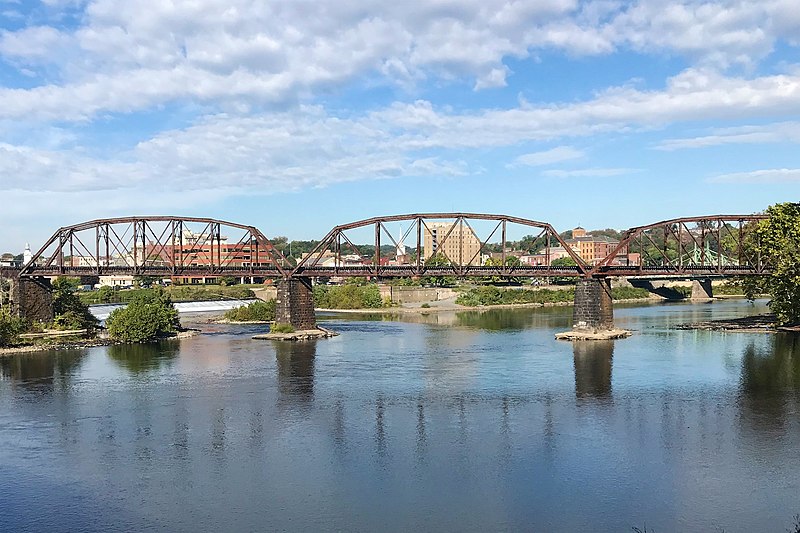
Simultaneously, trackage rights were obtained from the Pennsy over 13 miles of its Belvidere-Delaware Division (“Bel-Del”) to Phillipsburg, New Jersey. There, disconnected subsidiaries undertook bridging the Delaware to access Easton, Pennsylvania, and the Jersey Central and Lehigh Valley. The bridge also opened in 1890, creating a three-state route of about 85 miles. The L&HR thus fulfilled the prescient vision of the line’s 1861 directors, who reported, “It was well understood by those … promoting the construction of the Warwick Valley Railroad, that in all probability it would be but a link in a great chain destined to be one of the most important thoroughfares, and to effect an important influence upon the commerce and manufacturers of an extensive section of our country …” Additional links soon extended the chain of this “important thoroughfare.”

The Lehigh and Hudson River Railway bridge over the Delaware River between Easton, Pennsylvania and Phillipsburg, New Jersey. Easton, the Lehigh River Dam feeding the Delaware Canal, and the Northampton Street Bridge are in the background.
Photo by Zeete via Wikimedia Commons.

August 5, 2020

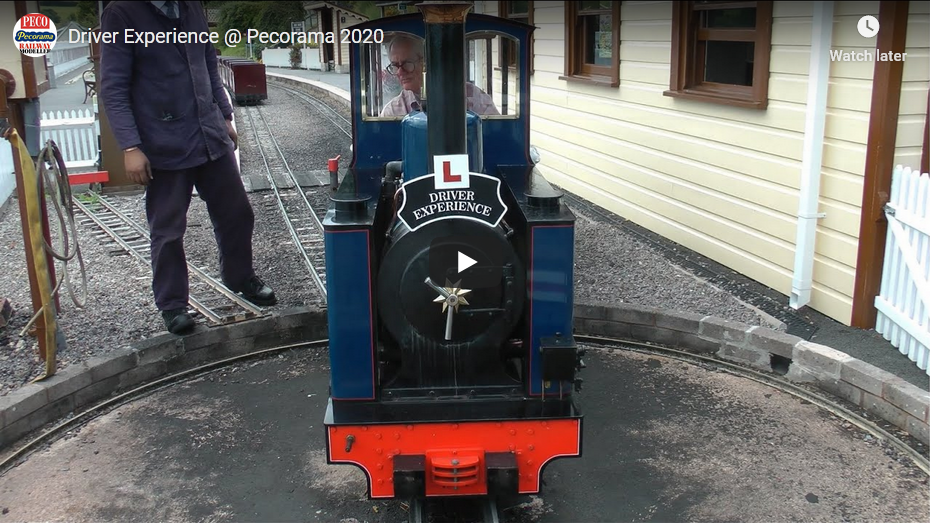
Driver Experience @ Pecorama 2020

Filed under: Britain, Railways — Tags: — Nicholas @ 06:00

PECO
Published 4 Aug 2020

A look at the new driver experience courses on the Beer Heights Light Railway at Pecorama — summer 2020

July 29, 2020

How Freight Trains Connect the World

Filed under: Economics, Railways — Tags: , , — Nicholas @ 06:00

Wendover Productions
Published 5 Mar 2019

Support Wendover Productions on Patreon: https://www.patreon.com/wendoverprodu…

Instagram: http://Instagram.com/sam.from.wendover
Twitter: http://www.Twitter.com/WendoverPro
Email: sam@wendover.productions
Reddit: http://Reddit.com/r/WendoverProductions

Animation by Josh Sherrington
Sound by Graham Haerther (http://www.Haerther.net)
Thumbnail by Simon Buckmaster

Special thanks to Patreon supporters Alec M Watson, Andrew J Thom, Arkadiy Kulev, Chris Allen, Chris Barker, Connor J Smith, Daddy Donald, Etienne Dechamps, Eyal Matsliah, Hank Green, Harrison Wiener, James Hughes, James McIntosh, John & Becki Johnston, Keith Bopp, Kelly J Knight, Ken Lee, Kyle, KyQuan Phong, Manoj Kasyap Govindaraju, MyNameIsKir, Plinio Correa, Qui Le, Sheldon Zhao, Simen Nerleir, and Tim Robinson

Music by http://epidemicsound.com
Select footage courtesy the AP Archive
Select footage courtesy Bigstock: http://bit.ly/bigstock-videofreetrial

BNSF train clip courtesy Scott Hiddelston

July 2, 2020

Fallen flag — the Toronto, Hamilton & Buffalo Railway

Filed under: Cancon, History, Railways — Tags: , , , , , — Nicholas @ 03:00

This month’s Classic Trains featured fallen flag is my favourite Canadian railway … I founded the TH&B Railway Historical Society many years ago (you can download a PDF of the first newsletter I did here … I didn’t have access to any TH&B photo I could use in the publication at that point, so it’s pretty much all text and tables). I put together as much information as I had about the railway at that time and printed up a few hundred copies to distribute at a regional railfan event (the CN Lines event in Oakville during October 1997), hoping to find fellow fans of the TH&B (back in those long-distant days when you couldn’t just run a quick search from your web browser, and most people didn’t yet have email addresses). The gamble worked and we had a formal historical society up and running for the following issue. I published the newsletter for five years before finally burning out and handing it over to more capable hands.

The society is still in operation, and the newsletter (now called The Ontarian) is mailed out four times per year. Membership information available at the society website.

Greg McDonnell begins the article with a quick look at the TH&B’s early history:

Detail from a map published in The Commercial and Financial Chronicle in 1908. TH&B trackage has been marked in red (not on the original image).
Wikimedia Commons.

Canada, thanks to its two transcontinental giants after 1923, had few small “regional” railroads. One, though, was the 111-mile Toronto, Hamilton & Buffalo Railway, which vanished in 1987.

Little TH&B had a larger-than-life presence that belied the reality of its being merely the southern Ontario stepchild that linked parents New York Central and Canadian Pacific. TH&B never realized its dream of being an independent road linking its three namesake cities, but in its heyday, it did haul sleeping cars from Toronto for New York, Boston, Cleveland, Pittsburgh, and Philadelphia. In 1911, it became the first North American railroad to install Absolute Permissive Block signaling; it erected a splendid art deco station and office tower in Hamilton, Ontario; and it had Canada’s only 2-8-4 steam locomotives, not to mention two ex-NYC Hudsons.

In 1890, even before a rail was laid, TH&B deviated from its chartered intentions, dropping Buffalo from its plans in favor of an eastern terminus and connection with the Canada Southern, a subsidiary of NYC’s Michigan Central, at Welland, Ontario. In 1892, TH&B acquired its first operating trackage, the faltering 18-mile Brantford, Waterloo & Lake Erie, a Brantford–Waterford line that was extending itself to Hamilton.

The original Hunter Street station in Hamilton, replaced in 1929 with the current Art Deco station now operated by GO Transit.
Local History & Archives, Hamilton Public Library via Wikimedia Commons.

As crews spiked TH&B rails from Hamilton to Welland, the line’s strategic importance attracted suitors. And not just anyone, for on July 9, 1895, the still-incomplete railway was sold to a consortium headed by two of the most powerful men in North American railroading: NYC’s Cornelius Vanderbilt and CPR’s William Van Horne.

NYC, dividing its holdings with subsidiaries MC and CASO, took a 73% stake in the fledgling bridge line; CP held the remaining 27%, an arrangement that would endure for 80-plus years. TH&B was afforded a considerable measure of autonomy, but parental influence from New York and Montreal gave TH&B its unique international character.

The TH&B Society picks up the history in somewhat more detail (the original draft was mine, but several others have made additions and changes since then):

The next phase of construction was to be the line from Hamilton to Toronto. The surveyed route to Toronto closely paralleled the existing Grand Trunk Railway mainline. In order to avoid construction of a parallel line (and the potential loss of traffic to the competing line), the GTR granted running rights to the Canadian Pacific Railway between Toronto and Hamilton in 1896. That same year the TH&B constructed what became known as the Hamilton Connection between its line and the GTR at Hamilton Junction. The Hamilton Connection was subsequently leased to the CPR and became their physical connection to the TH&B.

In 1897, the TH&B obtained running rights over the Hamilton & Dundas Railway for the provision of freight service into the Town of Dundas. The H&D Railway, a local interurban line, ceased operations in 1923 and the TH&B acquired the former H&D right of way into Dundas to continue freight operations. The line into Dundas was known as the H&D Branch.

In order to tap into Hamilton’s expanding industrial sector, construction began on the Hamilton Belt Line in 1900. The Belt Line expanded with the construction of two additional branch lines in 1911 to allow access to all industrial sectors of the city, many of which were previously serviced exclusively by the GTR. Although the Belt Line was only six miles in length, it contained over 40 miles of yard and industrial sidings and would provide much financial sustenance to the TH&B over the years.

In 1914, the 14-mile Dunnville Subdivision was constructed southward from Smithville to the Town of Dunnville and extended five miles further to the shores of Lake Erie at Port Maitland in 1916. Access to Lake Erie allowed the creation of the TH&B Navigation Co. that operated between Port Maitland and Ashtabula, Ohio, from 1916 until discontinuance in 1932.

The TH&B’s final expansion occurred in 1927 when running rights were awarded over the Canadian National Railways to gain access to the industrial City of Port Colborne.

1935 saw the first abandonment of trackage when the Ridgeville Spur, a small four-mile branch extending off the Welland Subdivision just outside of Welland, was abandoned and the rails were removed in 1936.

The St. Lawrence Seaway Authority completed the construction of the present-day Welland Canal in 1972 resulting in the relocation of several rail lines in the area. The Welland Subdivision was realigned between Fenwick and Welland where a new yard was constructed and operated in conjunction with New York Central’s corporate successor, Penn Central. The new shared facility allowed the closure and removal of the original and independent TH&B and Penn Central operations located within the city. Welland Yard continues to operate today as a Canadian Pacific’s marshalling facility for the Niagara Region.

In 1976, the United States Government amalgamated six bankrupt railroads, including the New York Central’s corporate successor, Penn Central, into a new entity called Conrail. In an effort to reduce debt, Conrail began shedding foreign investments including their controlling interest in the TH&B. In 1977, CP Rail acquired Conrail’s 73% interest giving CP 100% control of the railway.

In 1985, CP Rail and Canadian National jointly acquired the assets of Conrail’s Canada Division, the former Canada Southern Railway. CP Rail acquired exclusive ownership of the eastern end of the line between the TH&B connection at Welland and the international border crossings at Niagara Falls and Fort Erie, Ontario. While CP equipment was used to operate this portion of the line, known as CP CASO, the TH&B provided the managerial and administrative functions on CP Rail’s behalf.

The TH&B would continue to operate as a separate entity until 1987 when it was amalgamated into the Eastern Region of the London Division of CP Rail.

CP Rail abandoned the H&D Branch in 1988 with the Waterford Subdivision following in 1989. Also in that year, CP discontinued operations into Port Colborne, opting not to renew the running rights agreement over the CNR.

Today, the surviving portions of the TH&B, including the Hamilton Belt Line, the former Welland Subdivision and a portion of the Dunnville Subdivision operate as part of Canadian Pacific’s Hamilton Subdivision in CPR’s Southern Ontario Service Area.

TH&B GP7 number 72 arriving at Port Colborne with a caboose hop. This is the only paint scheme used for all diesel locomotives on the railway from delivery until the CPR merger.
Daryl Sherlock photo via the TH&B Railway Historical Society.

July 1, 2020

British Railways: Goodbye To Steam aka Railway Modernisation (1958) | British Pathé

Filed under: Britain, Economics, History, Railways, Technology — Tags: , , , , — Nicholas @ 06:00

British Pathé
Published 13 Apr 2014

This archive footage from 1958 depicts British Railways’ journey to modernisation and the transition away from steam-powered trains.

For Archive Licensing Enquiries Visit: https://goo.gl/W4hZBv

#BritishPathé #History #Railway #Trains #BritishRailways

(FILM ID:1549.07)
Full title reads: “Goodbye To Steam”

Intertitle reads: “British Railways meet the challenge of the age of abundant power”

Angle shot, railway engine going past camera. GV Outside one of the large London Railway stations showing railway lines and train coming out of station. CU Man in signal box, pan to show him pulling levers. CU Signal going up. GV Train coming towards camera. GV Steam train. GV Aerial shots steam train. CU Man filming from plane. CU man in plane fitting equipment and then giving thumb’s up sign. GV Aerial shot, railway lines. CU Man filming from plane. Steam train going along line. SV Draughtsmen in office. CU Men looking through magnifier at a plan. CU Magnified picture of plan, zoom to show Railway chiefs seated round table with plan, among them is Sir Philip Warter. SV Elevated, railway chiefs looking at plan. CU One of the railway executives. SV Man with model of section of railway line which he places on the table and the railway executives study it. CU Sign reading “Kent Coast Electrification Widening to Provide Four Tracks”, pan to show railway line with only two tracks. GV Kent Coast line with men on bridge. SV Bridge with surveyor. CU Surveyor looking through theodolite. GV Tracking shot of men working. GV Men working at side of railway line with clouds of smoke coming from wood. CU New diesel engine. CU Sir Brian Robertson talking to train driver. CU People watching. CU Sir Brian Robertson blowing whistle. CU Int. diesel engine with driver operating controls. SV Diesel train moving out of station. CU Driver of diesel train. CU. Sir Brian Robertson sitting in carriage. LV Through window of diesel cab as train enters tunnel. SV Three engines on lines. CU Front of one of the engines with plate reading “Cornish Riviera Express”. CU Driver. SV Cornish Riviera Express in station. SV Woman taking in washing because smoke is billowing up from railway lines beside her garden. GV Cornish Riviera Express coming towards camera.

CU Front of steam train “The Bristolian”. SV along top of engine as blows off steam. CU Hand pulling chain. CU valve. GV Platform. CU shovelling coal. GV As train goes along. CU Driver of train. CU Driver. CU Fireman. CU Fire with coal being shovelled. SV Looking over coal tender. SV From driver’s cab of train going under bridge and out the other side. CU Driver. GV From driver’s cab of railway lines with another steam train. SV Int. class for instruction of diesel engine drivers. CU Lecturer talks about metal object. CU Men looking at machinery. SV Royal Scot in station. CU Driver of Royal Scot. GV Activities on platform in which Royal Scot is standing. GV Royal Scot leaving station. GV Building with sign, “English Electric Co. Ltd. Preston”. GV Int. of workshop showing men working on armatures. GV Ext. of building with “Vulcan Locomotives” painted on wall. GV Int. of workshop showing men working on railway engines. CU Man working inside railway engine. GV Workshop. SV Diesel train in station. CU Driver of diesel. GV railway lines in front of train as it moves along. SV Int. dining car in diesel train with attendant pouring coffee. GV Looking through cab window of railway lines in front of train as it goes under bridge and straight past station. CU Glass panel in door with “York Signal Box, Strictly Private”, door opens. SV Man sitting at control panel of box, he reaches over to controls. CU Man’s hands working controls. CU Plan on wall showing different lines and points. CU Hand pushing buttons. CU Signals. CU Point on lines. GV Steam train along lines. CU Train in museum. CU Compartment of old train. SV Ancient train “Locomotion 1828”. SV Diesel Locomotive. CU “Deltic” written on side. GV Deltic. GV Train in station. Various shots in Deltic carriage. SV Coal trucks. SV Railway worker attaching pipe to train. GV Calder Hall Nuclear / Atomic Power station. GV Electrical pylons and cables. GV Diesel train “Sir Brian Robertson” in platform with crowds. GV Crowds. SV “Sir Brian Robertson” unveiled by Mr Grand, General Manager of the Western Region of British Railways. SV Crowd. SV Sir Brian Robertson by train. CU Sign “Sir Brian Robertson”. GV The “Sir Brian Robertson” leaving Paddington Station. SV Steam train letting out smoke. CU Signals. GV Steam train. CU Train over the points. GV steam train leaving clouds of smoke.

BRITISH PATHÉ’S STORY
Before television, people came to movie theatres to watch the news. British Pathé was at the forefront of cinematic journalism, blending information with entertainment.

June 29, 2020

The End of the Line

Filed under: Cancon, History, Railways, Technology — Tags: , , , — Nicholas @ 06:00

NFB
Published 2 Sep 2015

This documentary short offers a nostalgic look at the steam locomotive as it passes from reality to history. In its heyday, the big smoke-belching steam engine seemed immortal. Now, powerful and efficient diesels are pushing the old coal-burning locomotives to the sidelines, and the lonely echo of their whistles may soon be a thing of the past.

Directed by Terence Macartney-Filgate – 1959.

June 4, 2020

Fallen flag — the Texas & Pacific Railway

Filed under: Business, History, Railways, USA — Tags: , , , , — Nicholas @ 05:00

This month’s fallen flag article for Classic Trains is the story of the Texas & Pacific Railway by J. Parker Lamb:

Decorative ticket cover for a Texas & Pacific passenger train. T&P passenger trains were called “Eagles”, as in the Texas Eagle.
Image via Wikimedia Commons.

What grew to become the 20th century’s Texas & Pacific Railway sprouted from some of Texas’s earliest railroads. The Lone Star State’s pre-Civil War network included 11 operating companies. One of the earliest was the Texas Western Railroad, chartered in 1850 and soon renamed Vicksburg & El Paso. In 1856 its name changed again, to Southern Pacific Railroad Company. Of course, this SP had no relation to the Southern Pacific incorporated in 1865 in California, although the convoluted histories of their successors later would intersect.

Backers of this railroad envisioned it as part of a southern transcontinental route from the Mississippi River to San Diego. By 1860, construction of 27 miles was completed between Waskom, on the Louisiana border, and Marshall. The eastern connection was planned as the Vicksburg, Shreveport & Pacific, which already stretched from Waskom across Louisiana to the west bank of the Mississippi at Vicksburg (later part of Illinois Central, it is now part of Kansas City Southern’s “Meridian Speedway”).

The Memphis, El Paso & Pacific, chartered in 1856, planned to start at the Red River near Texarkana and build to a connection with the SP near Dallas, thereby bringing Midwestern traffic into the transcontinental route. Little progress was made before the Civil War, however, with only 5 miles of track built, near Jefferson.

Within a decade after the war, these two lines would be fused into one company. In 1870 the Memphis road was renamed Southern Transcontinental Railroad, and in 1872 Congress issued a charter for the Texas & Pacific Railway, which soon acquired both the ST and SP. The new charter approved a route from Marshall to El Paso and San Diego, and required 100 consecutive miles of construction by 1882. Backers hired Gen. Grenville Dodge, who had been chief engineer of Union Pacific’s recently completed transcontinental line to Utah.

The route of the Texas & Pacific from the back of a ticket.
Image via Wikimedia Commons.

In 1880, the infamous “Robber Baron” Jay Gould joined the board and quickly became the president, and the T&P became a key part of his corporate empire (he already controlled the Union Pacific after 1873 and the Missouri Pacific from 1879):

“Jay Gould’s Private Bowling Alley.” Financier and stock speculator Jay Gould is depicted on Wall Street, using bowling balls titled “trickery,” “false reports,” “private press” and “general unscrupulousness” to knock down bowling pins labeled as “operator,” “broker,” “banker,” “inexperienced investor,” etc. A slate shows Gould’s controlling holdings in various corporations, including Western Union, Missouri Pacific Railroad, and the Wabash Railroad.
From the cover of Puck magazine Vol. XI, No 264 via Wikimedia Commons.

Meantime, Gould directed Chief Engineer Dodge to begin an all-out effort to lay rails through the vast and nearly uninhabited desert of west Texas. Construction crews reached Big Spring, 267 miles, in April 1881 and Sierra Blanca (522) on December 16, 1881. However, it was at Sierra Blanca where Gould’s dream of a transcontinental railroad evaporated. He had been bested by Collis P. Huntington, another determined and ruthless railroad tycoon. Huntington’s eastward construction crews had passed through Sierra Blanca three weeks earlier, on November 25, en route to their own “last spike” ceremony of the Sunset Route at the Pecos River (west of Del Rio) in January 1883.

Under the banner of the Galveston, Harrisburg & San Antonio, controlled by Huntington and T. W. Pierce, construction crews had left El Paso in June 1881. When it was clear that Huntington was winning the race for a transcontinental line, a series of court battles ensued, followed by nefarious delaying tactics (including sabotage) by each construction crew, and finally by personal negotiation between the two principals. Gould’s legal case was based on T&P’s 1870 charter to build to San Diego, whereas Huntington’s Southern Pacific charter allowed him to meet the T&P at the Colorado River (between California and Arizona).

Wikipedia provides this sketch of Gould’s railway activities after his involvement in the Erie War:

After being forced out of the Erie Railroad, Gould started to build up a system of railroads in the midwest and west. He took control of the Union Pacific in 1873 when its stock was depressed by the Panic of 1873, and he built a viable railroad that depended on shipments from farmers and ranchers. He immersed himself in every operational and financial detail of the Union Pacific system, building an encyclopedic knowledge and acting decisively to shape its destiny. Biographer Maury Klein states that “he revised its financial structure, waged its competitive struggles, captained its political battles, revamped its administration, formulated its rate policies, and promoted the development of resources along its lines.”

By 1879, Gould gained control of three more important western railroads, including the Missouri Pacific Railroad. He controlled 10,000 miles (16,000 km) of railway, about one-ninth of the rail in the United States at that time, and he had controlling interest in 15 percent of the country’s railway tracks by 1882. The railroads were making profits and set their own rates, and his wealth increased dramatically. He withdrew from management of the Union Pacific in 1883 amid political controversy over its debts to the federal government, but he realized a large profit for himself. He obtained a controlling interest in the Western Union telegraph company and in the elevated railways in New York City after 1881. In 1889, he organized the Terminal Railroad Association of St. Louis which acquired a bottleneck in east–west railroad traffic at St. Louis, but the government brought an antitrust suit to eliminate the bottleneck control after Gould died.

« Newer PostsOlder Posts »

Powered by WordPress