Quotulatiousness

June 16, 2020

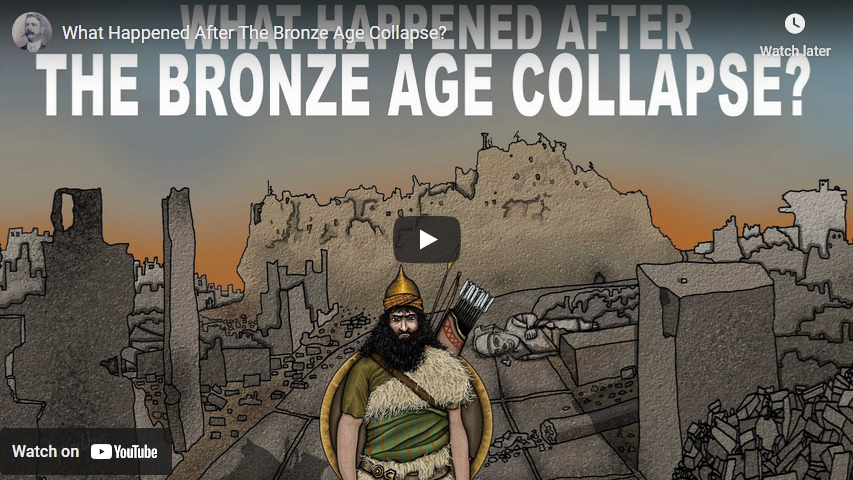
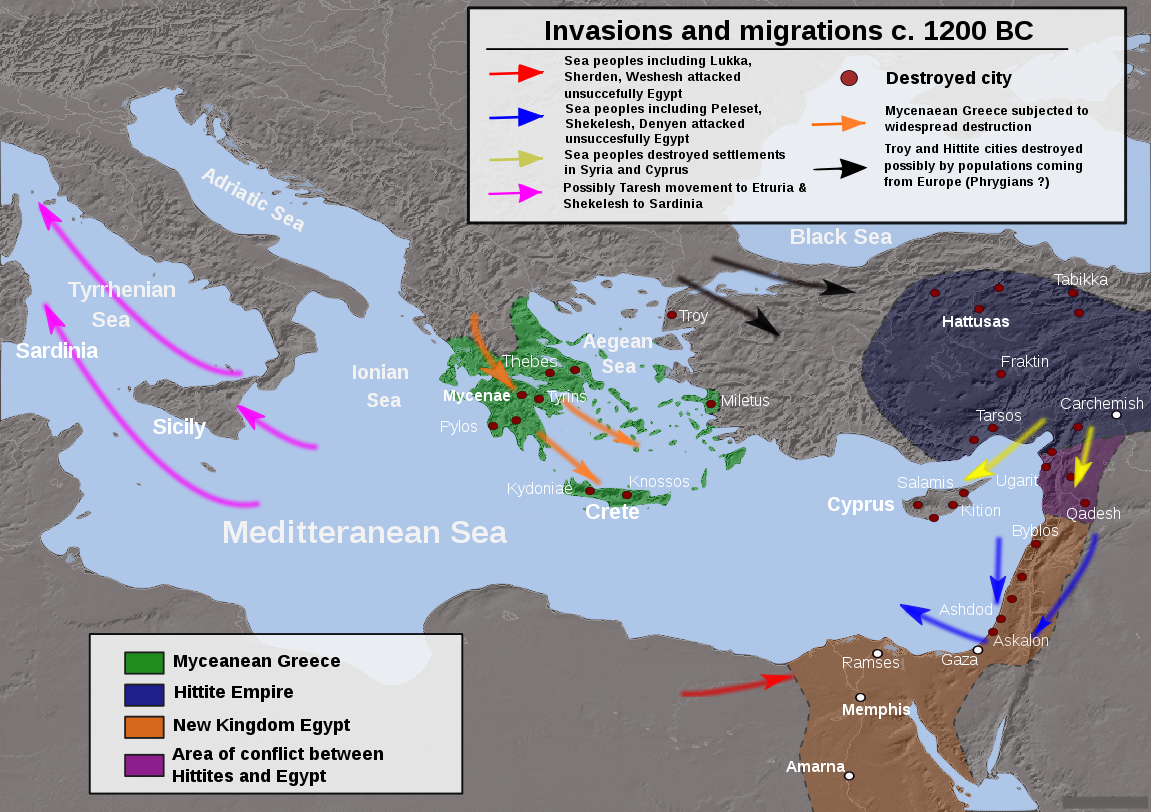
Plague and the Bronze Age Collapse ~ Dr. Louise Hitchcock

The Study of Antiquity and the Middle Ages
Published 16 May 2020

Ladies and Gentlemen, welcome to the series NAUE II SWORDS, GERMS, & IRON brought to us by none other than Dr. Louise Hitchcock and this episode is going to be about plague and the Bronze Age collapse. This episode will also be drawing on modern parallels such as “What Covid-19 Can Tell Us About the Bronze Age (12th cent) Collapse?”

It will dive into the Bronze Age and discuss was plague a contributing factor in decline of the Bronze Age and the birth of the Iron Age? How familiar were the ancient peoples with plague and epidemics and what do the ancient literary sources tell us? From discussing plague in ancient Mesopotamia to the Philistine Plague to a Hittite King who falls prey to a deadly disease we explore new thoughts, theories and research involving a period that we all love and a subject that could not be more relevant and that is plague.

Check out the awesome work of Dr. Hitchcock at these links below!

Academia profile where you can access her work that is free to the public. https://unimelb.academia.edu/LouiseHi…

Get her books here!

Aegean Art and Architecture: https://global.oup.com/ukhe/product/a…
Minoan Architecture: A Contextual Analysis: http://www.astromeditions.com/books/b…
Theory for Classics: https://www.routledge.com/Theory-for-…
DAIS: The Aegean Feast https://www.peeters-leuven.be/detail….
Tell It In Gath: Studies in the History and Archaeology of Israel. Essays in Honor of Aren M. Maeir on the Occasion of his Sixtieth Birthday https://www.zaphon.de/epages/83179382…

Follow her on Twitter: https://twitter.com/ashlarblocks

To support the channel, become a patron and make history matter!

Patreon: https://www.patreon.com/the_study_of_…

Donate directly to paypal: https://paypal.me/nickbarksdale

Enjoy history merchandise? Check out our affiliate link to spqr emporium! http://spqr-emporium.com?aff=3
*disclaimer, the link above is an affiliate link which means we will earn a generous commission from your magnificent purchase, just another way to help out the channel! join our community!

twitter: https://twitter.com/nickbarksdale
instagram: https://www.instagram.com/study_of_an…

Image credits: Manna Nader, Gabana Studios Cairo

Hittite 3D City and intro footage credits: 3D reconstruction of Imperial Hittite Karkemish by Giampaolo Luglio, Turco-Italian Archaeological Expedition to Karkemish directed by Nicolò Marchetti (University of Boologna)

KARKEMISH (Carchemish) 1300 BC (3D) – The Southern Capital of the Empire Hittite https://youtu.be/RsTdoY__F4U

Music Attribution: Herknungr – Megaliths | Dark Neolithic Meditive Shamanic Ambient Music https://youtu.be/oc8FQwNjPu0

Footage of Ugarit Credit goes to Ruptly. Video Title : Syria: Ancient city of Ugarit freed from Islamic State control https://youtu.be/XKzbk0PFvg0

June 7, 2020

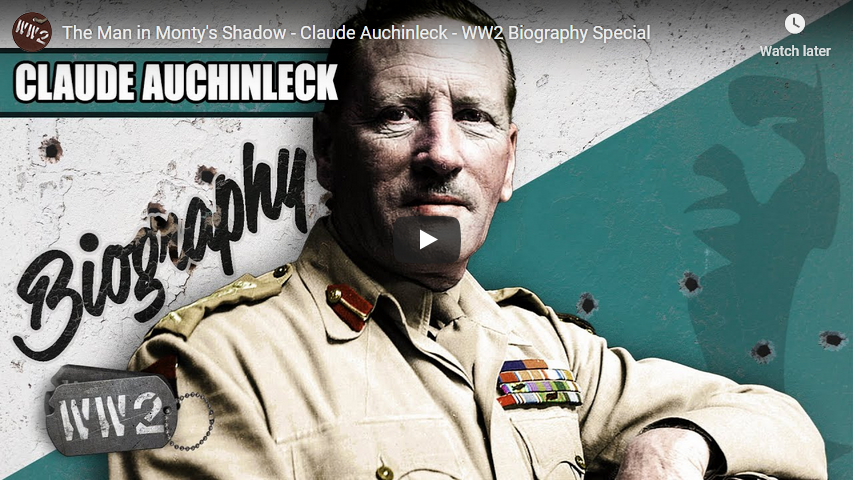
British Officers Abandon Their Men to the Nazis – WW2 – 093 – June 6 1941

Filed under: Britain, Europe, Germany, History, Middle East, Military, WW2 — Tags: , , , , , — Nicholas @ 04:00

World War Two
Published 6 Jun 2020

The British morale reaches new depths after losses at Crete and the loss of HMS Hood. New plans are made for North Africa and Syria to restore the public and the soldier’s faith.

Join us on Patreon: https://www.patreon.com/TimeGhostHistory
Or join The TimeGhost Army directly at: https://timeghost.tv

Follow WW2 day by day on Instagram @World_war_two_realtime https://www.instagram.com/world_war_t…
Between 2 Wars: https://www.youtube.com/playlist?list…
Source list: http://bit.ly/WW2sources

Written and Hosted by: Indy Neidell
Director: Astrid Deinhard
Producers: Astrid Deinhard and Spartacus Olsson
Executive Producers: Astrid Deinhard, Indy Neidell, Spartacus Olsson, Bodo Rittenauer
Creative Producer: Joram Appel
Post-Production Director: Wieke Kapteijns
Edited by: Iryna Dulka
Sound design: Marek Kamiński
Map animations: Eastory (https://www.youtube.com/c/eastory)

Colorizations by:
– Dememorabilia – https://www.instagram.com/dememorabilia/
– Julius Jääskeläinen – https://www.facebook.com/JJcolorization/
– Olga Shirnina, a.k.a. Klimbim – https://klimbim2014.wordpress.com/
– Carlos Ortega Pereira, BlauColorizations, https://www.instagram.com/blaucolorizations/
– Jaris Almazani (Artistic Man), https://instagram.com/artistic.man?ig…

Sources:
– Hawker Hurricane shape by Martin Čížek, Junkers Ju 87B-2 shape by Kaboldy, Ju 52 shape by TSRL; from Wikimedia
– Imperial War Museum: E 443, E 3661, TR 1487, E 3284
– National Portrait Gallery
– Bundesarchiv, CC-BY-SA 3.0: Bild_146-1981-159-22, Bild_146-1979-128-35, Bild_101I-559-1076-29

Archive by Screenocean/Reuters https://www.screenocean.com.

A TimeGhost chronological documentary produced by OnLion Entertainment GmbH.

June 4, 2020

QotD: Islamofascism

Filed under: Middle East, Politics, Quotations, USA — Tags: , , , , — Nicholas @ 01:00

The great silence by left-leaning Western feminists, and other large parts of the left, to human rights abuses carried out in the name of Islam is, to see it as its kindest, caused by an overdeveloped sense of tolerance or cultural relativism. But it is also part of the new anti-Americanism. Look at American Christian fundamentalism, they say.

Dislike of George Bush’s foreign policy has led to an automatic support of those perceived to be his enemies. Paradoxically, this leaves the left defending people who hold beliefs that condone what the left has long fought against: misogyny, homophobia, capital punishment, suppression of freedom of speech. The recent reaffirmation by Iran’s Ayatollah Khamenei of the fatwa against Salman Rushdie has been met by virtual silence; as has the torture and murder in Iraq of a man who would be presumed to be one of the left’s own — Hadi Salih, the international officer of the Iraqi Federation of Trade Unions. The hard left these days is soft on fascism, or at least Islamofascism.

The religious right in America would, if it could, wind back access to abortion and some other women’s rights. But as far as I am aware, no Christian fundamentalist in the US has suggested banning women from driving cars, or travelling without their husbands’ permission, or forcing them to cover their faces. Contrary to popular opinion, one is not the same as the other.

Pamela Bone, “The silence of the feminists”, The Age, 2005-02-04

June 2, 2020

Who were the Hittites? The history of the Hittite Empire explained in 10 minutes

Filed under: History, Middle East — Tags: , , , , , , , — Nicholas @ 06:00

Epimetheus
Published 30 Nov 2018

Who were the Hittites? (The Hittite Empire explained in 10 minutes) Animated history

Support new videos from Epimetheus on Patreon! 😀
https://www.patreon.com/Epimetheus1776

The Fall Of The Roman Empire With Tom Holland | History Hit LIVE on Timeline

Filed under: Europe, History, Middle East — Tags: , , , , — Nicholas @ 04:00

Timeline – World History Documentaries
Published 29 May 2020

The Roman Empire remains one of the most enduring and prolific civilisations of written history. Yet it, like all great civilisations, would eventually come to an end. Join Dan Snow as he speaks to historian Tom Holland about the many contributing factors that would bring this seismic and seemingly invincible empire to its knees.

#StayHome #WithMe #FallOfRome

May 23, 2020

Failed Assassinations — History Hijinks

Overly Sarcastic Productions
Published 22 May 2020

If videogames have taught me anything, it’s that an assassin can solve a lot of problems. But sometimes plans fall apart, and sometimes it’s for the absolute DUMBEST reasons.

SOURCES & Further Reading: A History of Venice by Norwich, Rebellion by Ackroyd, The Poison King by Mayor.

This video was edited by Sophia Ricciardi AKA “Indigo”. https://www.sophiakricci.com/
Our content is intended for teenage audiences and up.

PATREON: https://www.Patreon.com/OSP

DISCORD: https://discord.gg/h3AqJPe

MERCH LINKS: https://www.redbubble.com/people/OSPY…

OUR WEBSITE: https://www.OverlySarcasticProductions.com
Find us on Twitter https://www.Twitter.com/OSPYouTube
Find us on Reddit https://www.Reddit.com/r/OSP/

May 7, 2020

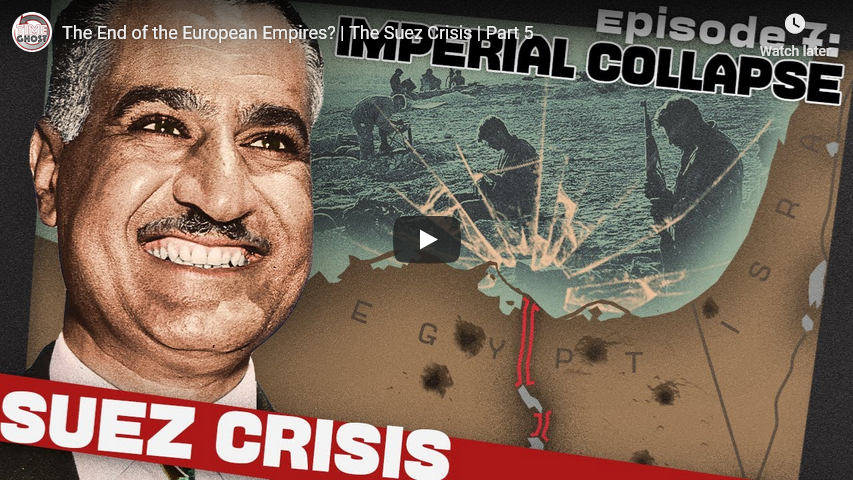
Interesting change in shipping patterns … to avoid the Suez canal

Filed under: Business, Economics, Middle East — Tags: , , , , — Nicholas @ 05:00

Colby Cosh linked to this story at gcaptain.com which would have been an unbelievable one in the pre-epidemic world:

A column of ships along the Suez Canal on 3 December, 2011.
Photo by https://web.archive.org/web/20161022104657/http://www.panoramio.com/user/2433337?with_photo_id=64163879 via Wikimedia Commons.

The Suez Canal Authority (SCA) is set to lose over $10m in revenue from container lines routing vessels via the Cape of Good Hope rather than its waterway.

According to new Alphaliner research, “the number of containerships that have opted to use the Cape route and bypass the Suez Canal has risen to a historic peace-time high,” including at least 20 sailings on the Asia-Europe, Europe-Asia and North America east coast-Asia trades.

“A unique combination of a container tonnage surplus and rock-bottom bunker prices has increasingly prompted ocean carriers to avoid the canal – and thus its fees,” the analyst noted today.

“Rather unusually, even three westbound Asia-Europe headhaul sailings have opted for the Cape route, all operated by CMA CGM.

“Carriers very rarely choose this longer route for the time-sensitive headhaul, but the low bunker price and lack of demand in European markets, hit by the Covid-19 lockdowns, have suddenly made such moves viable,” it added.

May 4, 2020

Fourth Crusade | 3 Minute History

Filed under: Europe, History, Middle East, Military, Religion — Tags: , , , — Nicholas @ 02:00

Jabzy
Published 24 Sep 2016

https://www.patreon.com/Jabzy
Thanks to Xios, Alan Haskayne, Lachlan Lindenmayer, Victor Yau, William Crabb, Derpvic, Seth Reeves and all my other Patrons.

https://twitter.com/JabzyJoe

May 3, 2020

Balkans in Nazi Hands – A Greek Tragedy – WW2 – 088 – May 02, 1941

World War Two
Published 2 May 2020

Greece falls as Axis troops push through the last Allied defences. New plans are made for a German invasion of Crete, and a new war breaks out between Great Britain and Iraq.

Join us on Patreon: https://www.patreon.com/TimeGhostHistory
Or join The TimeGhost Army directly at: https://timeghost.tv

Follow WW2 day by day on Instagram @World_war_two_realtime https://www.instagram.com/world_war_t…
Between 2 Wars: https://www.youtube.com/playlist?list…
Source list: http://bit.ly/WW2sources

Written and Hosted by: Indy Neidell
Director: Astrid Deinhard
Producers: Astrid Deinhard and Spartacus Olsson
Executive Producers: Astrid Deinhard, Indy Neidell, Spartacus Olsson, Bodo Rittenauer
Creative Producer: Joram Appel
Post-Production Director: Wieke Kapteijns
Edited by: Iryna Dulka
Sound design: Marek Kamiński
Map animations: Eastory (https://www.youtube.com/c/eastory)

Colorizations by:
– Olga Shirnina, a.k.a. Klimbim – https://klimbim2014.wordpress.com/
– Julius Jääskeläinen – https://www.facebook.com/JJcolorization/
– Dememorabilia – https://www.instagram.com/dememorabilia/
– Carlos Ortega Pereira, BlauColorizations, https://www.instagram.com/blaucoloriz…

Sources:
– Bundesarchiv, CC-BY-SA 3.0, Bild_146-1977-163-05A, Bild 146-1977-122-16, Bild_141-0816, Bild 101I-757-0023-32
– National Portrait Gallery
– Imperial War Museum: Q 69840, HU 52264

Archive by Screenocean/Reuters https://www.screenocean.com.

A TimeGhost chronological documentary produced by OnLion Entertainment GmbH.

From the comments:

World War Two
2 days ago (edited)
Now, we have decided to leave out any Call to Action (the bit where Indy tells you to subscribe and support us on Patreon) to give room to the dramatic speech on Radio Athens. So allow me to write it right here: If you want to learn more about how Kurt Student’s Fallschirmjäger were developed and used earlier in the war, you can check out our Special Episode about that right here: https://youtu.be/RNr3E3Hr0bo. I don’t want to deny anyone the chance to get a random name shoutout in the video by writing it here, but it is thanks our supporters that we can continue to make content like this. You can join the TimeGhost Army on www.patreon.com/timeghosthistory or https://timeghost.tv. Don’t forget to subscribe, ring the notification bell and see you next time!
Cheers, Joram

QotD: Tragic cultural misunderstandings

Filed under: Africa, History, Middle East, Quotations — Tags: , , , , — Nicholas @ 01:00

… the problem is how cultures “read” things and people can be completely different/opposite. Part of our issue with Islamic culture is just that: cultural. They’d never get in the pissing contest they are pushing, if they could read us accurately. And arguably our liberals would never be pushing for peace and appeasement if they could read THEM accurately.

It’s one of those cultural traps which I have read about and which are tragic.

I think I’ve spoken before of the tragic encounter between Zulu and Boers in South Africa. Zulus were doing what they did that had won them Africa (they came from central Africa shortly before the whites arrived): Commit incredibly scary atrocities so the enemy runs/avoids combat/submits. The whites were in their head just another tribe. They could not understand the idea of a “tribe” that was starting to span the globe and which would self-identify as “tribe” in the face of a savage. So their savagery made the Europeans MORE determined to wipe them out.

We’re seeing something like that, again. Islamic CULTURES are big on bragging, exaggeration of force and intimidation of the enemy. This is functional in a desert where there’s always a lot of low-level “war.” Some atrocities, scare “the enemy” and you keep your patch, and you go on. They have a fine tuned ear for this. When the other tribe isn’t committing atrocities against YOU and particularly when they’re being appeasing/accommodating, you have them over a barrel. If you strike with showy force you can take their stuff and enslave them. NOTE most of the attacks are designed to be showy.

TWO things they don’t get: Our elites are appeasing because the elites think they’re SO powerful they can’t be touched and are oikophobes who hate their own people. AND our PEOPLE is pissed, really pissed.

You know the old joke? There are no Muslims in Star Trek because it’s set in the future.

This is unfortunately the likely outcome of the cultures meeting. At some point (already happening) the elites will have to fight or be replaced. And when we go to war, our power is incalculable compared to them. They think we exaggerate our strength, while, culturally, we underplay it. They don’t understand we’re holding back.

The result will be a horrific destruction of guilty and innocent alike and even people like me who look Arab/Mediterranean in a bad light will be at risk.

And they will be the victims of genocide.

Sarah Hoyt, “Cross-Culture”, According to Hoyt, 2017-03-23.

April 30, 2020

Palestine, 1948 – the origins of the still-ongoing refugee issue

In Quillette, Benjamin Kerstein reviews a new book by Adi Schwartz and Einat Wilf, which covers the origins of the Palestinian refugee problem that still hinders any kind of lasting peace between Israel and neighbouring Arab countries:

Arab attacks in May and June 1948.
United States Military Academy Atlas, Link.

Wilf and Schwartz’s comprehensive history of the refugee issue begins with the UN’s adoption in November 1947 of a plan to partition British Mandatory Palestine into an Arab state and a slightly smaller Jewish state. Violence erupted shortly after, and once the British left the territory, hostilities escalated into a full-scale war, during which fighting between the Zionist movement’s Haganah defense force and various Palestinian Arab militias was followed by an invasion by the surrounding Arab countries. Israel prevailed with truncated borders, but the Arab world remained steadfastly committed to the new state’s elimination. Refugees are a byproduct of every military conflict, but the exodus of the Palestinian Arabs would have uniquely consequential ramifications that continue to haunt the conflict and thwart its resolution to this day.

It is now fashionable for historians sympathetic to the Palestinian narrative to downplay the threat that the Jewish community in Mandatory Palestine — the Yishuv — faced in the 1948 conflict. Wilf and Schwartz show conclusively that such attempts, be they sincere or dishonest, are simply untrue. The secretary-general of the Arab League, they note, openly stated that the war was intended to be genocidal, saying, “This will be a war of extermination and momentous massacre, which will be spoken of like the Mongolian massacre and the Crusades.” Meanwhile, the Palestinian Arabs’ most influential leader, the Nazi collaborator Mufti Hajj Amin al-Husseini, said the Arabs would “continue to fight until the Zionists are eliminated, and the whole of Palestine is a purely Arab state.”

Correctly believing that their individual and collective existence were threatened, the Zionist militias, which eventually coalesced into the nascent Israel Defense Forces, sometimes destroyed villages and expelled their inhabitants, and there was a mass flight of Arabs from cities like Haifa and Jaffa. By the end of the war, what emerged was a Jewish state with a comfortable Jewish majority along with a substantial though not overwhelming Arab minority. The refugees, for the most part, were settled in camps in the surrounding Arab nations of Syria, Lebanon, and Jordan, as well as in the West Bank and Gaza, which were occupied by Jordan and Egypt, respectively. Jordan alone granted the refugees citizenship and absorbed them into the general population. Elsewhere, however, refugees remained stateless, left to the tender mercies of the international community.

From the beginning, pressure was brought to bear on Israel to allow the refugees to return, and from the beginning Israel steadfastly refused to do so, believing that it would destroy Israel’s Jewish character and precipitate another, perhaps even more brutal war. Wilf and Schwartz reveal that this was in fact precisely the Arabs’ intention. The Arab media spoke openly of establishing a “fifth column” within Israel by repatriating the refugees, and the authors record Palestinian historian Rashid Khalidi’s view that the Arab mood at the time made it clear that the right of return “was clearly premised” on “the dissolution of Israel.” In addition, the Palestinian leadership was initially unenthusiastic about the return of refugees, which they believed would imply a recognition of Israel’s existence to which they remained implacably opposed. For a society deeply rooted in concepts of honor, dignity, and humiliation, such an acknowledgement of defeat was simply unthinkable.

Contrary to the claims of Israel’s opponents, Wilf and Schwartz persuasively argue that the new state was under no moral or legal obligation to allow the refugees to return. During the late 1940s and early 1950s, the concept of population exchange between belligerent national groups in conflict over territory was considered lamentable but inevitable. Consequently, the laws pertaining to refugees often forbade the opposite: States could not force refugees to return to places when to do so might cause further conflict or instability. Emphasis was therefore on resettlement in host countries, usually with a corresponding ethnic or religious majority. This held true for the mass expulsions of ethnic Germans from Poland after World War II, and the almost contemporaneous exodus of both Muslims and Hindus to Pakistan and India, respectively. Importantly, it also applied to the hundreds of thousands of Jewish refugees expelled from Arab and Muslim countries following the 1948 war, who were resettled in the new State of Israel.

Once the Arab and Palestinian position on return shifted from a fear of recognizing Israel to the idea of building a fifth column within the state to wage an indefinite war against Zionism, Wilf and Schwartz write, “The state of Israel … was being asked by the Arabs to perform an extraordinary act: it was called on to admit to its sovereign territory hundreds of thousands of Arabs, against international norms of the time, without a peace treaty, and while the Palestinians and the Arab world continued to threaten it with another war — even calling the refugees a pioneer force toward this end.”

Although anti-Zionists today insist that Israel’s refusal to accept a return of the refugees was a uniquely heinous violation of human rights and international law, it was entirely consistent with the moral and legal norms of the time.

QotD: Nietzsche’s criticism of Christianity (and Judaism)

Filed under: History, Middle East, Quotations, Religion — Tags: , , , , — Nicholas @ 01:00

It is Nietzsche’s chief thesis that most of the so-called Christian morality of today is an inheritance from the Jews, and that it is quite as much out of harmony with the needs of our race and time as the Mosaic law which prohibits the eating of oysters, clams, swine, hares, swans, terrapin and snails, but allows the eating of locusts, beetles and grasshoppers (Leviticus, XI, 4-30). Christianity, true enough, did not take over the Mosaic code en bloc. It rejected all these dietary laws, and it also rejected all the laws regarding sacrifices and most of those dealing with family relations. But it absorbed unchanged the ethical theory that had grown up among the Jews during the period of their decline — the theory, to wit, of humility, of forbearance, of non-resistance. This theory, as Nietzsche shows, was the fruit of that decline. The Jews of David’s day were not gentle. On the contrary, they were pugnacious and strong, and the bold assertiveness that seemed their best protection against the relatively weak peoples surrounding them was visualized in a mighty and thunderous Jehovah, a god of wrath and destruction, a divine Kaiser. But as their strength decreased and their enemies grew in power they were gradually forced into a more conciliatory policy. What they couldn’t get by force they had to get by a show of complaisance and gentleness — and the result was the renunciatory morality of the century or two preceding the birth of Christ, the turn-the-other-cheek morality which Christ erected into a definite system, the “slave-morality” against which Nietzsche whooped and railed nearly two thousand years afterward.

H.L. Mencken, “Transvaluation of Morals”, The Smart Set, 1915-03.

April 27, 2020

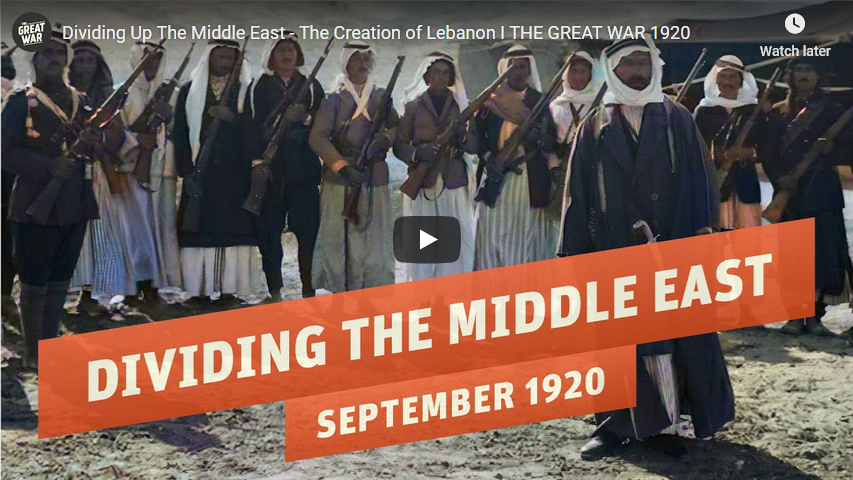
Spoils of War for Britain and France – Redrawing the Map of the Middle East I THE GREAT WAR 1920

The Great War
Published 25 Apr 2020

Sign up for Curiosity Stream and Nebula – and get 40% off annual plans right now: https://curiositystream.com/thegreatwar

100 years ago at the conference of San Remo, one thing became clear: Great Britain and France wanted control over the Middle East. Justified by the fighting in the previous years and painted as “liberators” of the Middle Eastern minorities, the new map of the Middle East emerged – under the cover of the League of Nations Mandate system.

» SUPPORT THE CHANNEL
Patreon: https://www.patreon.com/thegreatwar
Merchandise: https://shop.spreadshirt.de/thegreatwar/

» SOURCES
Karsh, Efraim & Karsh, Inari, Empires of the Sand: The Struggle for Mastery in the Middle East 1789-1923, (Cambridge, MA : Harvard University Press, 1999)

“Dans Le Levant” Le Temps, August 31, 1919 issue, https://gallica.bnf.fr/ark:/12148/bpt…

Lloyd George, David, Memoirs of the Peace Conference, (New Haven : Yale University Press, 1939) vol. 2

“Mounted Rifles Units” New Zealand History, https://nzhistory.govt.nz/war/aucklan…

Paris, Timothy J. Britain, The Hashemites and Arab Rule 1920-1925, (London : Frank Cass, 2003)

Provence, Michael, The Last Ottoman Generation and the Making of the Modern Middle East, (Cambridge : Cambridge University Press, 2017)

O’Neill, Robert, Official History of Australia in the War of 1914–1918, Volume VII – The Australian Imperial Force in Sinai and Palestine, 1914–1918, (Australian War Memorial, 1941)

“King-Crane Commission Digital Collection” Oberlin College Library. http://dcollections.oberlin.edu/cdm/s…

» SOCIAL MEDIA
Instagram: https://instagram.com/the_great_war
Twitter: https://twitter.com/WW1_Series
Reddit: https://reddit.com/r/TheGreatWarChannel

»CREDITS
Presented by: Jesse Alexander
Written by: Jesse Alexander
Director: Toni Steller & Florian Wittig
Director of Photography: Toni Steller
Sound: Toni Steller
Editing: Toni Steller
Mixing, Mastering & Sound Design: http://above-zero.com
Maps: Daniel Kogosov (https://www.patreon.com/Zalezsky)
Research by: Jesse Alexander
Fact checking: Florian Wittig

Channel Design: Alexander Clark
Original Logo: David van Stephold

A Mediakraft Networks Original Channel

Contains licensed material by getty images
All rights reserved – Real Time History GmbH 2020

April 9, 2020

Lawrence of Arabia | Based on a True Story

Filed under: Britain, History, Media, Middle East, Military, WW1 — Tags: , , , , , — Nicholas @ 02:00

The Cynical Historian
Published 6 Nov 2015

The classic film Lawrence of Arabia, is one of the most beautiful movies of all time, but it has its flaws.
————————————————————
references:
https://en.wikipedia.org/wiki/Lawrenc…

http://www.wordandfilm.com/2013/08/wh…

http://www.pri.org/stories/2013-12-16…

most beautiful movies list:
https://www.youtube.com/watch?v=kj73a…
————————————————————

LET’S CONNECT:
https://twitter.com/Cynical_History
————————————————————
wiki:
Lawrence of Arabia is a 1962 epic historical drama film based on the life of T. E. Lawrence. It was directed by David Lean and produced by Sam Spiegel through his British company Horizon Pictures, with the screenplay by Robert Bolt and Michael Wilson. The film stars Peter O’Toole in the title role. It is widely considered one of the greatest and most influential films in the history of cinema. The dramatic score by Maurice Jarre and the Super Panavision 70 cinematography by Freddie Young are also highly acclaimed.
The film was nominated for ten Oscars at the 35th Academy Awards in 1963; it won seven in total: Best Picture, Best Director, Best Original Score, Best Cinematography (Color), Best Art Direction (Color), Best Film Editing and Best Sound Mixing. It also won the Golden Globe Award for Best Motion Picture – Drama and the BAFTA Awards for Best Film and Outstanding British Film.

The film depicts Lawrence’s experiences in the Arabian Peninsula during World War I, in particular his attacks on Aqaba and Damascus and his involvement in the Arab National Council. Its themes include Lawrence’s emotional struggles with the personal violence inherent in war, his own identity, and his divided allegiance between his native Britain and its army and his new-found comrades within the Arabian desert tribes. As well as O’Toole, the film stars Alec Guinness, Jack Hawkins, Anthony Quinn, Omar Sharif, Anthony Quayle, Claude Rains and Arthur Kennedy.
————————————————————
Hashtags: #History #LawrenceOfArabia #WWI #Review #BasedOnATrueStory

April 8, 2020

QotD: Iliad, Odyssey, and Anabasis

Filed under: Books, Europe, Greece, History, Middle East, Quotations — Tags: , , , , , , — Nicholas @ 01:00

I read the trio in the order listed above and the reading got better with each title.

The Iliad is epically epic, rendered in a stiff dactylic hexameter with many, many, many repeating phrases. Between “rosy-fingered dawn” and “the wine-dark sea,” Homer’s epithets lull the reader into a trance, which I suppose was the point in oral storytelling. As a result, the myriad battles and names start blending together.

But, man, those battles are brutal. The semi-divine soldiers are walking Cuisinarts, leading to lovely vignettes like this:

    Next Erymas was doom’d his fate to feel,
    His open’d mouth received the Cretan steel:
    Beneath the brain the point a passage tore,
    Crash’d the thin bones, and drown’d the teeth in gore:
    His mouth, his eyes, his nostrils, pour a flood;
    He sobs his soul out in the gush of blood.

Spoiler alert: Erymas didn’t make it. As you can see, I read the older translations of these works; the above is Alexander Pope’s translation. I wanted the feel of the original, so I didn’t hunt down the modern versions. All three books are decidedly un-“woke.”

For The Odyssey, I chose the Harvard Classics version translated by Samuel Butler. This epic was far more interesting (and fun!) than the grim, brain-splattered Iliad. Ulysses slides into a Mediterranean port, feasts on great food, charms exotic women, grabs a pile of loot, and is off to the next isle.

Granted, the fellow gets in a few scrapes along the way, even being forced into love slavery by an eternally gorgeous nymph (poor guy), but returns home after 20 years to wreak vengeance on the cads trying to bed his wife. (Monogamy was pretty much a one-way street in ancient Hellas.)

After reading both of Homer’s works, I think The Iliad is geared toward young men, especially those of a military mindset. It’s all heroism, glory, and honor. I really should have tackled this in my Navy days.

The Odyssey is an even better adventure, but its themes of home, wisdom, fatherhood, and marriage are aimed squarely at those of us with more mileage on the drivetrain. The heroes still kill their share of monsters and men, but Ulysses always chooses brains before brawn.

The real revelation for me was Anabasis by Xenophon. How Hollywood hasn’t released a trilogy of this epic is beyond me. (No, The Warriors doesn’t count.) Here are the Cliffs Notes for this real-life tale:

Cyrus the Younger wants to topple his brother Artaxerxes II from the Persian throne, so he recruits 10,000 Greek mercenaries (including Xenophon) to help. They march 1,500 miles from the east coast of modern-day Turkey to the middle of modern-day Iraq and, in the first big battle, Cyrus is killed.

Uh oh.

Now, the entire Persian army opposes the Greeks. The pro-Cyrus Persians say, “No actually, we were for Artaxerxes the whole time!” and turn against the Greeks. The Hellenic generals ask the King for safe passage … and he murders them.

Xenophon is more a philosopher than soldier, but he gives an inspiring speech, the troops elect him leader, and they all hightail it due north while anyone, everyone, and everything tries to kill them.

They cross deserts and rivers and mountains through searing heat, waist-deep snow, and constant attacks from ahead and behind by an ever-hostile collection of bronze-age barbarians. Upon hitting Turkey’s north shore, they finally enter a Greek colony. Happy ending, right? Well, that’s when the soldiers start turning on each other.

Granted, Anabasis is an amazing war story, but it also serves as a history, an ancient travel guide, and a primer in leadership, group dynamics, and human nature.

If you haven’t read any of these three books, you should make up that deficit.

Jon Gabriel, “My Month in Ancient Greece”, Ricochet, 2018-01-23.

« Newer PostsOlder Posts »

Powered by WordPress