Quotulatiousness

November 22, 2019

“Inmate 4859” – Witold Pilecki – Sabaton History 042 [Official]

Filed under: Europe, Germany, History, Media, Military, Russia, WW2 — Tags: , , , , — Nicholas @ 04:00

Sabaton History
Published 21 Nov 2019

Join Indy and Joakim as they dive into the out-of-life story of Witold Pilecki during the Second World War, that has made for this awesome song.

Support Sabaton History on Patreon: https://www.patreon.com/sabatonhistory

Listen to Heroes (where Inmate 4859 is featured):
CD: http://bit.ly/HeroesStore
Spotify: http://bit.ly/HeroesSpotify
Apple Music: http://bit.ly/HeroesAppleMusic
iTunes: http://bit.ly/HeroesiTunes
Amazon: http://bit.ly/HeroesAmz
Google Play: http://bit.ly/HeroesGoogleP

Listen to Sabaton on Spotify: http://smarturl.it/SabatonSpotify
Official Sabaton Merchandise Shop: http://bit.ly/SabatonOfficialShop

Hosted by: Indy Neidell
Written by: Markus Linke and Indy Neidell
Directed by: Astrid Deinhard and Wieke Kapteijns
Produced by: Pär Sundström, Astrid Deinhard and Spartacus Olsson
Creative Producer: Joram Appel
Executive Producers: Pär Sundström, Joakim Broden, Tomas Sunmo, Indy Neidell, Astrid Deinhard, and Spartacus Olsson
Post-Production Director: Wieke Kapteijns
Edited by: Iryna Dulka
Sound Editing by: Marek Kaminski

Eastory YouTube Channel: https://www.youtube.com/channel/UCEly…
Archive by: Reuters/Screenocean https://www.screenocean.com
Music by Sabaton.

An OnLion Entertainment GmbH and Raging Beaver Publishing AB co-Production.

© Raging Beaver Publishing AB, 2019 – all rights reserved.

From the comments:

Sabaton History
23 hours ago (edited)
Witold Pilecki is one of those larger-than-life characters, and listen to Joakim and Indy talk about this amazing song as well as the historical background behind it. Now thanks to all of you we have ben able to film the history part of this in a new studio which is both bigger and better. This is 100% thanks to the Patrons whose generous contributions made this possible. Do you want to be a part of this as well? Make sure to support us on Patreon: https://www.patreon.com/sabatonhistory
Cheers, The Sabaton History Team

QotD: Politicians, like scorpions, cannot change their nature

Filed under: Media, Politics, Quotations — Tags: , , — Nicholas @ 01:00

Whatever you think of current immigration policy (too lax, too tight, just right) and whatever you think of current policies controlling Americans’ access to guns (too lax, too tight, just right), surely you must be amused – if only wistfully – by those who complain, whenever some tragedy occurs, that politicians “politicize” that tragedy. Feigning surprise about politicians politicizing tragedies makes no more sense than feigning surprise that dogs bark at mailmen: it’s in the nature of the beasts. (I don’t mean by this comparison to insult man’s best friend. Dogs’ instinct to bark is typically beneficial to humanity; politicians’ instinct to politicize anything that moves is typically harmful to humanity.)

Don Boudreaux, “Dogs Bark!”, Café Hayek, 2017-11-02.

November 21, 2019

“Gosh I miss the good old days” … when the CIA and the FBI were the bad guys, according to all good progressives

Filed under: Government, Media, Politics, USA — Tags: , , , — Nicholas @ 05:00

Severian on the amazing change in popularity of the bad old US cloak-and-dagger set among Democrats, Democratic Socialists, Progressives, and other well-intentioned folks:

For anyone who grew up during the Cold War, reading the news these days is like your first time getting stoned. Everything’s fine, nothing’s happening, and then … what the hell? Wait wait wait … the cloak-and-dagger goons are the good guys now?

For the benefit of younger readers: Back when the USSR was a going concern, the Left spent a great deal of time excusing Commies’ behavior Scooby Doo-style — they would’ve gotten away with it, were it not for those meddling kids! The Reds’ hearts were in the right place, of course, but gosh darn it, the CIA insisted on interfering with spontaneous sovereign people’s movements, and that’s why the Marxist guerrillas invariably had to massacre all those peasants. It was pretty much an entrance exam for NGOs back in the days — if you couldn’t find a way to blame the excesses of, say, Kim Il Sung’s torturers on Ronald Reagan, you couldn’t get a job at Amnesty International.

Naturally, then, all correct-thinking people hated the CIA and their domestic Mini-Me, the FBI. Those two organizations used to show up at college job fairs, and a good way to meet easy girls was to drop in on the inevitable protests. Slap on a Che t-shirt (available at the campus bookstore, natch), do a Ricardo Montalban impression while saying “Sandinista,” and let the magic happen. Don’t forget to stop by the Emma Goldman clinic for some free rubbers on your way back to her dorm room!

Gosh I miss the good old days, but whatever, the point is, watching groovy antiques like Nancy, Bernie, and Hillary telling me to trust the black helicopter guys is like watching Bruce Jenner in drag — you’re embarrassed for him, and scared of his enablers. Listening to them screech about Russia like the most paranoid Reaganaut is so weird, I can’t even come up with an analogy. Yo, guys, THIS was your idea, wasn’t it? Just like it was you guys calling the FBI the American Gestapo all those years? Hello? COINTELPRO? Remember that? Hello? Is this thing even on?

November 20, 2019

Activist court watch – Federal Court of Canada judge creates new website blocking rules

Filed under: Cancon, Law, Media — Tags: , , , , — Nicholas @ 03:00

Michael Geist on the precedent-setting decision from the Federal Court of Canada:

A Federal Court of Canada judge issued a major website blocking decision late Friday, granting a request from Bell, Rogers, and Groupe TVA to block access to a series of GoldTV streaming websites. The order covers most of the Canada’s large ISPs: Bell, Eastlink, Cogeco, Distributel, Fido, Rogers, Sasktel, TekSavvy, Telus, and Videotron. The case is an important one, representing the first extensive website blocking order in Canada. It is also deeply flawed from both a policy and legal perspective, substituting the views of one judge over Parliament’s judgment and relying on a foreign copyright case that was rendered under markedly different legal rules than those found in Canada.

Perhaps most troubling is that the judge has created a substantive new policy framework for site blocking, an issue that given the many complex policy issues (including copyright enforcement, freedom of expression, net neutrality, and telecom competition) is best left to Parliament. Indeed, the activist judicial approach explicitly engages in an analysis that considers many of the policy issues but arrives at its own conclusion about how best to balance competing interests. These are issues that are best left to elected officials. The Standing Committee on Industry, Science and Economic Development, which completed the comprehensive copyright review earlier this year, heard extensive submissions from groups calling for reforms to the law to include site blocking. It instead recommended:

    Following the review of the Telecommunications Act, that the Government of Canada consider evaluating tools to provide injunctive relief in a court of law for deliberate online copyright infringement and that paramount importance be given to net neutrality in dealing with impacts on the form and function of Internet in the application of copyright law.

In other words, the committee recommended holding off on a site blocking rule until further study is conducted. Moreover, it concluded that “paramount importance be given to net neutrality.” The judge in GoldTV acknowledged that there were net neutrality concerns (rejecting claims that “net neutrality is of no application where a site blocking order is sought.”), but concluded that the net neutrality issues did not tip the balance against granting the injunction. Not only is that inconsistent with the copyright review emphasis of paramountcy for net neutrality, but it represents the judge making a policy choice best left to elected officials.

The CRTC, which rejected a proposal for an administrative site blocking system in the FairPlay case, also thought the issue was best left to the government. Its ruling specifically cited the copyright review and the review of the Broadcasting and Telecommunications Act as avenues to address the issue. In other words, the appropriate venue to consider site blocking was government, not an administrative agency.

November 19, 2019

The “Carbuncle Cup” is good, but we need mandatory demolition because name-and-shame hasn’t worked

Filed under: Architecture, Britain, History, Media — Tags: , , — Nicholas @ 03:00

I like the cut of Peter Franklin‘s jib:

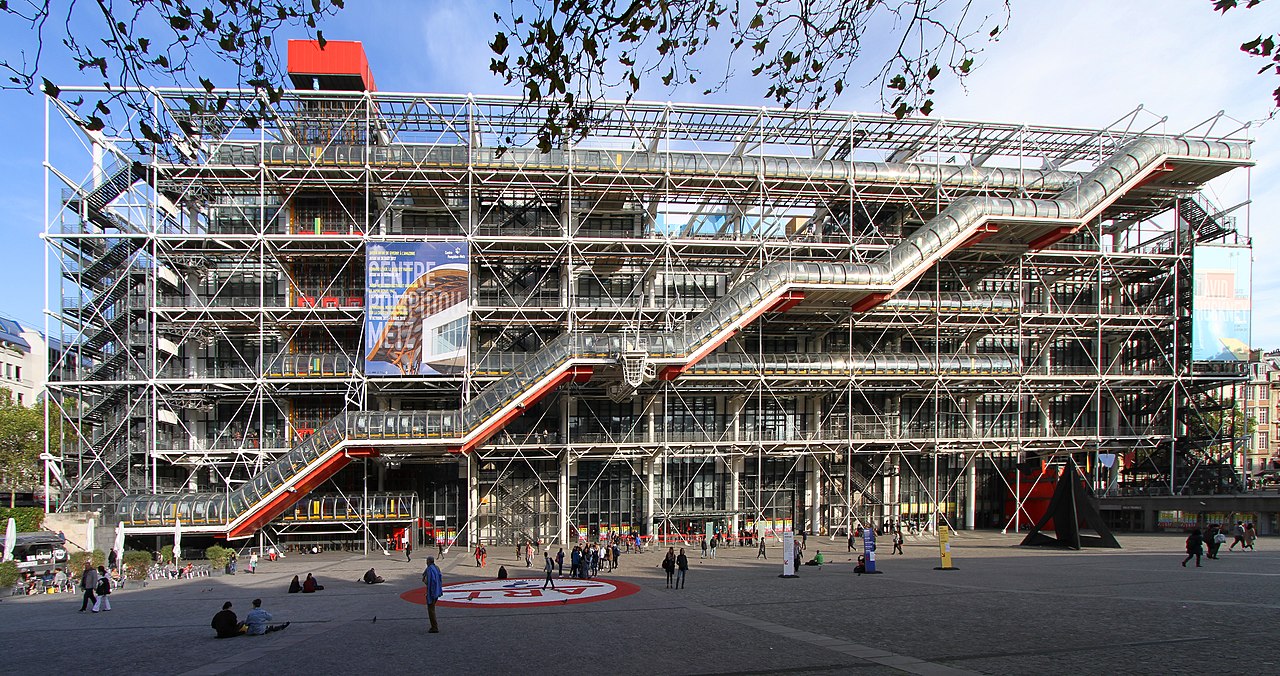
Centre Georges-Pompidou (no, this isn’t an under construction image … it’s from 2017)
Gerd Eichmann photo via Wikimedia Commons.

The Nobels, the Oscars, Pipe Smoker of the Year: glittering prizes all, but I prefer the Carbuncle Cup, which is awarded annually to the “the ugliest building in the United Kingdom completed in the last 12 months”.

Organised by the magazine Building Design, it has (in my aesthetic judgement) produced a worthy shortlist and a worthy winner every year since its inception in 2006.

But there’s a big problem with the prize — not its subjectivity, but the fact that the winning buildings still exist. Indeed, buildings like them are still being built. Name-and-shame is not working.

There’s an argument to be made that things are getting worse. We’ve swapped the horrendous, but interesting, brutalism of the post-war period for the offensively bland spreadsheet architecture of the 21st century. In an age in which Jane Jacobs has won the intellectual battle against Robert Moses, we really ought to know better. Yet we continue to fill up our towns and cities with inhumane, alienating architecture.

Philharmonie at the Parc de la Villette, Paris.
Photo by Zairon via Wikimedia Commons.

It might seem paradoxical, but to end the cycle of destruction, we need to accelerate it. Every year, there should be a public vote to choose the worst new building in the land. The winner wouldn’t get a cup, but a wrecking ball. Yes, that’s right, it would be physically demolished — immediately and without compensation. Indeed, the owner would be required to foot the bill for the building’s de-construction (though they would have the option of suing the architect and the planning authority).

This would concentrate minds wonderfully. Instead of competing among themselves to épater les bourgeois, starchitects would need to design with due regard to the common good. Meanwhile, developers whose sole objective is to squeeze as much profitable square footage into any site they can get their hands on, would have to contend with the possibility of financial (as well as literal) ruin. The planners would come under immense pressure to do a better job too. At the cost of sacrificing one new building, development across the land would be greatly improved.

Cumbernauld Shopping Centre, voted as Britain’s most hated building.
Photo by Ed Webster via Wikimedia Commons.

H/T to Colby Cosh for the link.

November 17, 2019

Mark Steyn on the post-Basil-Fawlty John Cleese

Filed under: Britain, Humour, Media, Politics — Tags: , , , , — Nicholas @ 05:00

He’s trying fairly hard not to turn into one or another of the stock characters he’s played over the years:

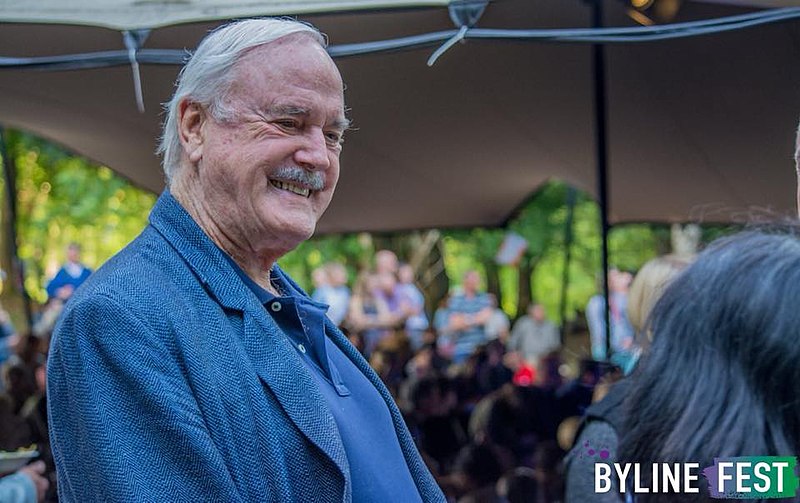
John Cleese at the Byline Festival, 2017.
Photo by Raphael Moran via Wikimedia Commons.

“John was a boy that kept to himself,” recalled Mrs Hicks, Reg and Muriel Cleese’s next-door neighbor in Totnes in Devon, deploying the formulation traditionally reserved for the landladies of suburban serial killers. “I suppose he was all right with his Cambridge people, but us being country folk he wouldn’t say very much. At one time I looked after John for a couple of days and did his bedroom when his parents were away. He was writing something on his desk at the time. Course I didn’t look at it, but it was sarcastic sort of stuff about Churchill. I do often wonder what happened to him.”

Listening to Mrs Hicks, you appreciate the particular challenge of comedy writing – for who could ever improve on that? Nonetheless, she’s not the only one to wonder what’s happened to John Cleese. He turned eighty a couple of weeks back, and the jubilations were more muted than one might once have expected. My local PBS station still shows Fawlty Towers as part of its Britcom lineup, but Sadiq Khan, Mayor of London, bemoans that Cleese has now turned into Basil Fawlty lui-même. Younger “comics” regret that the a great comedic talent is now the pub bore he played in his youth.

And why would that be? Well, after supporting Brexit, he moved to Nevis in the British West Indies and announced that the imperial metropolis was “not really an English city anymore”. Mayor Khan replied that “Londoners know that our diversity is our greatest strength” – although, strong as it is, it doesn’t seem much use during a knife attack. During the ensuing Twitterstorm, an opposing Tweeter declared that “I can’t stand Englishness”, and Cleese wistfully responded:

    I suspect I should apologise for my affection for the Englishness of my upbringing. But in some ways I found it calmer, more polite, more humorous, less tabloid, and less money-oriented than the one that is replacing it.

The Two-Minutes Tweet-Hate rampaged on, and Cleese retreated to the charms of his post-colonial backwater:

    Nevis has excellent race relations, a very well educated population, no sign of political correctness… conscientious lawyers, a relaxed and humorous life style, a deep love of cricket, and a complete lack of knife crime …and the icing on the cake is that Nevis is not the world centre for Russian dirty money laundering…

    I think it’s legitimate to prefer one culture to another. For example, I prefer cultures that do not tolerate female genital mutilation. Will this be considered racist by all those who hover, eagerly hoping that someone will offend them?

Is this the room for an argument? Not anymore. There are just things you’re not meant to bring up, lest the hoverers pounce.

As it happens, I agree with almost all of the above. But then I always have. It’s odder to hear it from Cleese. In essence, he misses the England of Mrs Hicks, of couples called Reg and Muriel, of saloon-bar majors, bowler-hatted civil servants, Church of England vicars, socially insecure lower-middle-class hoteliers and all the other stock types of a now vanished Albion he mocked at the height of his celebrity. The counterculture triumphed so totally that there is no longer a culture to counter, and the void of “diversity” makes London feel, even overlooking the stabbings and clitoridectomies, just like a large version of every other cookie-cutter multiculti western city.

“I know they were very disappointed with John,” Mrs Hicks told Cleese’s biographer Jonathan Margolis. “Muriel was so excited when she came in here and said John had passed his exams at Cambridge. They thought he was going to be a solicitor, and then he fell in with David Frost and that was it.”

November 16, 2019

QotD: Millennials as barbarians invading our civilization

Filed under: Greece, History, Humour, Media, Quotations — Tags: , — Nicholas @ 01:00

Hannah Arendt is said to have remarked that civilization is always being invaded by barbarians we call “children.” I don’t like to put a dangerously hard-to-trace quotation in the newspaper, but I first heard this half-jest decades ago and its depth has only impressed me more every year. Whoever said it first was obviously pretty learned and subtle, even if it wasn’t Arendt. “Barbarians” is a Greek word for incomprehensible, gibberish-spewing foreigners, but one of the great discoveries of the Greeks is that of the barbarians’ point of view, and the additional idea that this point of view deserved equal esteem.

Every nation believes its own customs and habits are the best, Herodotus said, and you would have to be nuts to dismiss those prejudices as though they were somehow objectively wrong. (I grant that this is a free translation, but he said it, and it is one of the intellectual breakthroughs with which we associate the Greeks.) As with nations, so it is with generations. The formative experiences, inherited expectations, and learned fears of somebody born in 1985 are hardly less different from mine than a foreigner’s would be.

If I say that my attitude toward millennials is that they are barbarians, I am asking for trouble, but I must insist on being understood: it is only that they are persons whose habits, prejudices, and values are foreign, formed by a different set of events and influences — not that they are inferior. In the right mood I can even be persuaded that their actual knowledge is simply of a qualitatively different character, rather than simply being more meagre because they have lived less long.

Colby Cosh, “‘Millennial’ gets used as an insult. But millennials aren’t actually inferior”, National Post, 2017-10-25.

November 15, 2019

“Sparta” – The Battle of Thermopylae – Sabaton History 041 [Official]

Filed under: Europe, Greece, History, Media, Military — Tags: , , , , — Nicholas @ 04:00

Sabaton History
Published 14 Nov 2019

The Battle of Thermopylae of 480 BCE may be one of the most famous battles in Ancient History. King Leonidas and his 300 Spartans were certainly not as alone in their last stand against the Persians, but are nevertheless remembered as being an underdog who would rather die than lose their freedom.

Support Sabaton History on Patreon: https://www.patreon.com/sabatonhistory

Listen to The Last Stand (where “Sparta” is featured):
CD: http://bit.ly/TheLastStandStore
Spotify: http://bit.ly/TheLastStandSpotify
Apple Music: http://bit.ly/TheLastStandItunes
iTunes: http://bit.ly/TheLastStandItunes
Amazon: http://bit.ly/TheLastStandAmz
Google Play: http://bit.ly/TheLastStandGooglePlay

Watch the official lyric video of “Sparta” here: https://www.youtube.com/watch?v=hm-PT…

Listen to Sabaton on Spotify: http://smarturl.it/SabatonSpotify
Official Sabaton Merchandise Shop: http://bit.ly/SabatonOfficialShop

Hosted by: Indy Neidell
Written by: Markus Linke and Indy Neidell
Directed by: Astrid Deinhard and Wieke Kapteijns
Produced by: Pär Sundström, Astrid Deinhard and Spartacus Olsson
Creative Producer: Joram Appel
Executive Producers: Pär Sundström, Joakim Broden, Tomas Sunmo, Indy Neidell, Astrid Deinhard, and Spartacus Olsson
Post-Production Director: Wieke Kapteijns
Maps by: Eastory
Edited by: Iryna Dulka
Sound Editing by: Marek Kaminski

Eastory YouTube Channel: https://www.youtube.com/channel/UCEly…
Archive by: Reuters/Screenocean https://www.screenocean.com
Music by Sabaton.

Sources:
– Photo of Persian warriors relief by Jakub Hałun from Wikimedia Commons
– Xerxes I by Mbmrock from Wikimedia Commons
– Bayerische State Painting Collections
– Rijksmuseum

An OnLion Entertainment GmbH and Raging Beaver Publishing AB co-Production.

© Raging Beaver Publishing AB, 2019 – all rights reserved.

Shakespeare Summarized: Romeo And Juliet

Filed under: Europe, Humour, Italy, Media — Tags: , , , — Nicholas @ 02:00

Overly Sarcastic Productions
27 April 2014

Yeah, sorry. I don’t like this play very much. I know it’s a classic, I know it inspired countless other love stories… I… I can’t help it. It’s just too funny. I’m sorry if you actually thought this play was tragic, because I did not respect your opinion here at ALL.

November 9, 2019

“1648” – The Thirty Years War – Sabaton History 040 [Official]

Filed under: Europe, History, Media, Military — Tags: , , , , — Nicholas @ 04:00

Sabaton History
Published 7 Nov 2019

Europe had grown weary of war by the summer of 1648 and after much deliberation, peace talks in Westphalia had reached their final stages. Warlords across the entire continent were preparing for peace but not all of them agreed. The exceptionally ruthless German-Swedish General Königsmarck advanced into Bohemia to lay siege to Prague.

Support Sabaton History on Patreon: https://www.patreon.com/sabatonhistory

Listen to Carolus Rex (Where “1648” is featured):
CD: http://bit.ly/CarolusRexStore
Spotify: http://bit.ly/CarolusRexSpotify
Apple Music: http://bit.ly/CarolusRexAppleMusic
iTunes: http://bit.ly/CarolusRexiTunes
Amazon: http://bit.ly/CarolusRexAmz
Google Play: http://bit.ly/CarolusRexGooglePlay

Listen to Sabaton on Spotify: http://smarturl.it/SabatonSpotify
Official Sabaton Merchandise Shop: http://bit.ly/SabatonOfficialShop

Hosted by: Indy Neidell
Written by: Markus Linke and Indy Neidell
Directed by: Astrid Deinhard and Wieke Kapteijns
Produced by: Pär Sundström, Astrid Deinhard and Spartacus Olsson
Creative Producer: Joram Appel
Executive Producers: Pär Sundström, Joakim Broden, Tomas Sunmo, Indy Neidell, Astrid Deinhard, and Spartacus Olsson
Maps by: Eastory
Edited by: Iryna Dulka
Sound Editing by: Marek Kaminski

Eastory YouTube Channel: https://www.youtube.com/channel/UCEly…
Archive by: Reuters/Screenocean https://www.screenocean.com
Music by Sabaton.

Sources:
– Thumbnail image: Petri Krohn, CC BY-SA 3.0.
Les misères et les malheurs de la guerre – The British Museum
– “Germania: dos mil años de historia alemana” series from Fondo Antiguo de la Biblioteca de la Universidad de Sevilla
– The peace of Munster painting courtesy of Amsterdam Museum
– RijksMuseum

An OnLion Entertainment GmbH and Raging Beaver Publishing AB co-Production.

© Raging Beaver Publishing AB, 2019 – all rights reserved.

From the comments:

Sabaton History
2 days ago
This episode about “1648” is about peace and about a devastating and deadly siege to Prague. We enjoy doing these episodes as we usually only make episodes about more modern topics. Now, we have to do without film and photo material, and be creative with paintings and sketches. Kudos to the editor Iryna who makes that work brilliantly! If you agree and want to support our work, you can do so by going to our Patreon page: https://www.patreon.com/sabatonhistory

Cheers, the Sabaton History team.

The Milk Dud and “sin”

Filed under: Cancon, Media, Politics, Religion — Tags: , , , — Nicholas @ 03:00

Chris Selley believes that introducing the notion of “sin” as an appropriate thing to discuss with a politician will be a very bad idea for Canadian politics:

Andrew Scheer, paid tool of Big Dairy, chugs some milk during a Press Gallery speech in 2017. I’ve called him the “Milk Dud” ever since.
Screencapture from a CTV video uploaded to YouTube.

At a Wednesday press conference in Ottawa, a Globe and Mail reporter asked Andrew Scheer if he believes homosexuality is a “sin.” He didn’t answer, as has become his trademark on this file; instead he pledged, for the umpteenth time, simply to stand up for gay rights in all their forms.

It has been maddening to watch: Despite literally dozens of opportunities, he could never bring himself to explicitly support equal marriage. Bringing “sin” into the question is a novelty, though, and it’s one of which we need to be exceedingly leery.

[…]

The question of “sin” takes us into new and dangerous territory, however. There is what politicians do, and then there is what they think, and then — buried way down under many layers of irrelevance — there is their personal relationship, if any, with higher powers and their associated scriptures; there is the question of what they think that higher power would make of other people’s behaviour; there is what they believe will happen to those people’s immortal souls.

These are not topics the secular media should be concerning themselves with, and nor should the average voter. No one would approve of someone they like being put through such an inquisition. Liberals would be aghast if their avowedly Catholic leader were asked if his faith played a role in his government not eliminating restrictions on gay and bisexual men donating blood, for example. Liberals often speak glowingly of the days when politicians set aside religion and pursued the greater good — politicians like Pierre Trudeau, a devout Catholic who famously said “what goes on in private between two consulting adults is their own private business,” but who somewhat less famously spoke of “separating the idea of sin and the idea of crime.”

Trudeau Sr. was absolutely right that the state should have no dominion over sin, in any sense of the word. That should go for politics, too. Politicians of known faiths and devoutness have advanced many of progressive Canadians’ most cherished causes — public health care, most notably — and politicians of unknown faiths and devoutness have taken us down dark alleys. And vice versa. There is nothing we can do with information about a politician’s personal metaphysical views except raise new barriers to entry into a politics that needs fewer.

November 8, 2019

Shakespeare Summarized: Macbeth

Filed under: Britain, Humour, Media — Tags: , , , , , — Nicholas @ 02:00

Overly Sarcastic Productions
Published 12 April 2014

Here it is! The Scottish Play. The bloodiest of the bloody. An epic tale of magic, madness and stabbing. It’s so gory, even Tarantino thinks it’s over the top.

Making it funny was pretty tough. 😀

November 7, 2019

QotD: Evolved sexual differences

Filed under: Health, Humour, Media, Quotations — Tags: , , , — Nicholas @ 01:00

Because male sexuality is all about the visuals, men’s magazines are filled with pictures of naked women with freakishly large breasts and women’s magazines are filled with pictures of beauty products and ass-cantilevering $2,000 stilettos. Men evolved to go for signs of reproductively hot prospects — an hourglass figure, youth, clear skin, symmetrical faces and bodies, and long shiny hair: all indicators that a woman is a healthy, fertile candidate to pass on a man’s genes.

Women co-evolved to try to make themselves look reproductively hot, though that’s not how we think of it. […] Because men are turned on by disembodied photos of boobs, butts, and coochies, they’re quick to pull down their pants, click their cameraphone, and text some woman they just met a close-up of their zipperwurst. Really bad idea.

Men who’ve done this should pick up a Harlequin romance, which is basically porn for women (from the ravishing by some hot gazillionaire to the final commitment-gasm).

See any photo spreads of male crotch shots tucked in there anywhere, boys?

This is not an error of omission. Women aren’t fantasizing about seeing your willy; they’re fantasizing that somebody in the royal family will pluck them out of suburbia and marry them in Westminster Abbey.

Amy Alkon, Good Manners for Nice People Who Sometimes Say F*ck, 2014.

November 6, 2019

QotD: “Fake news” is nothing new

Filed under: Books, History, Media, Politics, Quotations — Tags: , , , , , — Nicholas @ 01:00

… the basic ideas of “alternative facts” and “fake news” — our updated, revved-up forms of disinformation — were not foreign to Orwell. Working at the BBC as a news producer — a fancy term for war propagandist — he heard some of the Axis powers’ propaganda as well as that of his own side (even if he kept his own hands fairly clean). He justifiably feared that the very concept of objective truth was fading from the modern world. Winston Smith’s job at the Ministry of Truth is to rewrite or “rectify” history, so that it follows the current party line, whatever it may be at that moment.

Orwell himself saw all this happen when he read Catalan newspapers as well as British ones during the Spanish Civil War, several years before joining the BBC. Condemning press distortions, above all how several English newspapers reported the war, he wrote: “I saw great battles where there had been no fighting and complete silence where hundreds of men had been killed … I saw, in fact, history being written not in terms of what happened but what ought to have happened according to various ‘party lines.'” Given the gridlock in American politics, and the never-ending verbal warfare between news outlets on the Right such as Fox News and on the Left such as MSNBC, Orwell appears all too accurate in his “predictions.”

One of the features of the world of Oceania reflecting Orwell’s prescience is its official language, Newspeak, an argot resembling a kind of Morse code that satirizes advertising norms, political jargon, and government bureaucratese. The purpose of Newspeak is to limit thought, on the view that “you can’t think what you lack the words for.” Ultimately, this impoverished language seeks to narrow and control human thought. (Does Twitter represent a step in that direction?) Purged of all nuance and subtlety, denuded of variety, and reduced to a few hundred simple words, Newspeak ultimately promises to render all independent thought (or “thoughtcrime”) impossible. If it cannot be expressed in language, it cannot be thought. And anything can fill the vacuum, such as 2 + 2 = 5. That is the equation — a perfect example of “doublethink” — which O’Brien indoctrinates Winston to accept in Room 101 and which marks the final step of the latter’s brainwashing. As the Party defines it, “doublethink” consists in holding “two contradictory beliefs in one’s mind simultaneously, and accepting both of them.” In 2018, Trump’s lead lawyer, former New York mayor Rudy Giuliani, declared in a TV interview: “Truth isn’t truth.” A few months later, a talking head defended a critical news report on the grounds that, just because it is “not accurate doesn’t mean it’s not true.”

It testifies both to the brilliance of Orwell’s vision and to the bane of our times that Nineteen Eighty-Four retains so much relevance.

John Rodden and John Rossi, “George Orwell Warned Us, But Was Anyone Listening?”, The American Conservative, 2019-10-02.

November 2, 2019

When entertainment morphs into propaganda

Filed under: History, Media, Politics, USA — Tags: , , , , — Nicholas @ 05:00

One of the key elements aiding Hitler and the NSDAP to take power and stay in power in Germany in the 1930s was the constant, ongoing propaganda campaign orchestrated by Joseph Goebbels. Hitler and the Nazi party were lauded as the perfect Germanic solution to every problem and Jews, socialists, homosexuals, and other undesireable elements were belittled and used as targets of hate. A big part of Goebbels’ propaganda revolved around one idea, the “Big Lie”:
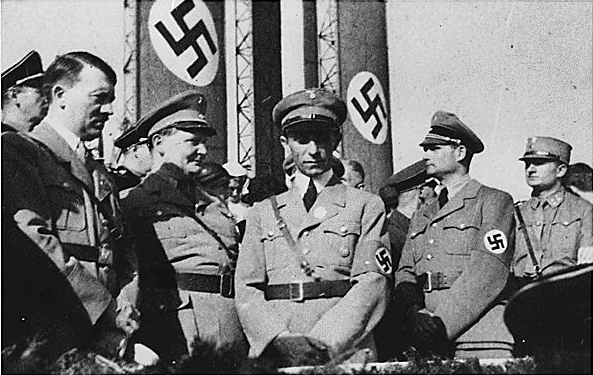
Hitler, Göring, Goebbels and Hess.
Photo via Wikimedia Commons.

If you tell a lie big enough and keep repeating it, people will eventually come to believe it. The lie can be maintained only for such time as the State can shield the people from the political, economic and/or military consequences of the lie. It thus becomes vitally important for the State to use all of its powers to repress dissent, for the truth is the mortal enemy of the lie, and thus by extension, the truth is the greatest enemy of the State.

By suppressing competing voices and having all the methods of reaching the people repeating the same story, the Nazis solidified their control on power in Germany that lasted until 1945, and was only demolished by massive military effort by the United States, the Soviet Union, and the British Commonwealth. Propaganda is a very powerful tool that works distressingly well to implant and nurture evil ideas in a subject population.

Modern propagandists in the west generally don’t have the power of the state aiding them, but if they get enough of the channels of communication — especially the entertainment channels — to co-ordinate the message, the effects can be very strong:

… I perfectly understand the legitimacy of feminist concerns regarding the portrayal of women in the media as consistently demure, retiring, and subservient to men. I grant that, in most of the action/adventure movies that I saw growing up, women would typically twist an ankle or get captured and then require rescuing by the swashbuckling male hero — and I realize how galling this must have been to generations of women. And therefore, a certain correction was undoubtedly in order. But what is problematic now is the Nietzschean quality of the reaction, by which I mean, the insistence that female power has to be asserted over and against males, that there is an either/or, zero-sum conflict between men and women. It is not enough, in a word, to show women as intelligent, savvy, and good; you have to portray men as stupid, witless, and irresponsible. That this savage contrast is having an effect especially on younger men is becoming increasingly apparent.

In the midst of a “you-go-girl” feminist culture, many boys and young men feel adrift, afraid that any expression of their own good qualities will be construed as aggressive or insensitive. If you want concrete proof of this, take a look at the statistics contrasting female and male success at the university level. And you can see the phenomenon in films such as Fight Club and The Intern. In the former, the Brad Pitt character turns to his friend and laments, “we’re thirty year old boys;” and in the latter, Robert De Niro’s classic male type tries to whip into shape a number of twenty-something male colleagues who are rumpled, unsure of themselves, without ambition — and of course under the dominance of an all conquering female.

It might be the case that, in regard to money, power, and honor, a zero-sum dynamic obtains, but it decidedly does not obtain in regard to real virtue. The truly courageous person is not threatened by another person’s courage; the truly temperate man is not intimidated by the temperance of someone else; the truly just person is not put off by the justice of a countryman; and authentic love positively rejoices in the love shown by another. And therefore, it should be altogether possible to hold up the virtue of a woman without denying virtue to a man. In point of fact, if we consult the “all conquering female” characters in films and TV, we see that they often exemplify the very worst of the traditional male qualities: aggression, suspicion, hyper-sensitivity, cruelty, etc. This is what happens when a Nietzschean framework has replaced a classical one.

My point is that it is altogether possible — and eminently desirable — to say “you go boy” with as much vigor as “you go girl.” And both the boys and the girls will be better for it.


« Newer PostsOlder Posts »

Powered by WordPress