
The Party told you to reject the evidence of your eyes and ears. It was their final, most essential command. His heart sank as he thought of the enormous power arrayed against him, the ease with which any Party intellectual would overthrow him in debate, the subtle arguments which he would not be able to understand, much less answer. And yet he was in the right! They were wrong and he was right. The obvious, the silly, and the true had got to be defended. Truisms are true, hold on to that! The solid world exists, its laws do not change. Stones are hard, water is wet, objects unsupported fall towards the earth’s centre. With the feeling that he was speaking to O’Brien, and also that he was setting forth an important axiom, he wrote:
Freedom is the freedom to say that two plus two make four. If that is granted, all else follows.
George Orwell, Nineteen Eighty-Four, 1949.
February 22, 2019
QotD: The basic intellectual freedom
February 21, 2019
“Excessive fines can be used … to retaliate against or chill the speech of political enemies”
The US Supreme Court delivered a unanimous body blow to excessive use of asset forfeiture by state and local police:
Timbs challenged that seizure, arguing that taking his vehicle amounted to an additional fine on top of the sentence he had already received. The Indiana Supreme Court rejected that argument, solely because the U.S. Supreme Court had never explicitly stated that the Eighth Amendment applied to the states.
On Wednesday, the high court did exactly that.
“For good reason, the protection against excessive fines has been a constant shield throughout Anglo-American history,” wrote Justice Ruth Bader Ginsburg in the opinion. “Excessive fines can be used, for example, to retaliate against or chill the speech of political enemies,” she wrote, or can become sources of revenue disconnected from the criminal justice system.
Indeed, some local governments do use fines and fees as a means to raise revenue, and that has created a perverse incentive to target residents. After the 2014 shooting of Michael Brown in Ferguson, Missouri, a federal investigation into the city government found that 20 percent of its general fund came from criminal fines. And Ferguson is not alone in relying heavily on revenue from fines. Making clear that the Eighth Amendment applies to the states will make it far easier to challenge unreasonable fines and fees — including not just asset forfeiture cases, but also situations where local governments hit homeowners with massive civil penalties for offenses such as unapproved paint jobs or Halloween decorations.
Some of those cases are already getting teed up. As C.J. Ciaramella wrote in this month’s issue of Reason, a federal class action civil rights lawsuit challenging the aggressive asset forfeiture program in Wayne County, Michigan, that was filed in December argues that the county’s seizure of a 2015 Kia Soul after the owner was caught with $10 of marijuana should be deemed an excessive fine.
February 20, 2019
February 4, 2019
A thumbnail sketch of Mad Max and the PPC
Anthony Daoud, in an article examining the political loyalty implications of party defections, floor crossings, and resignations, provides a quick outline of Maxime Bernier and his new-but-growing party:
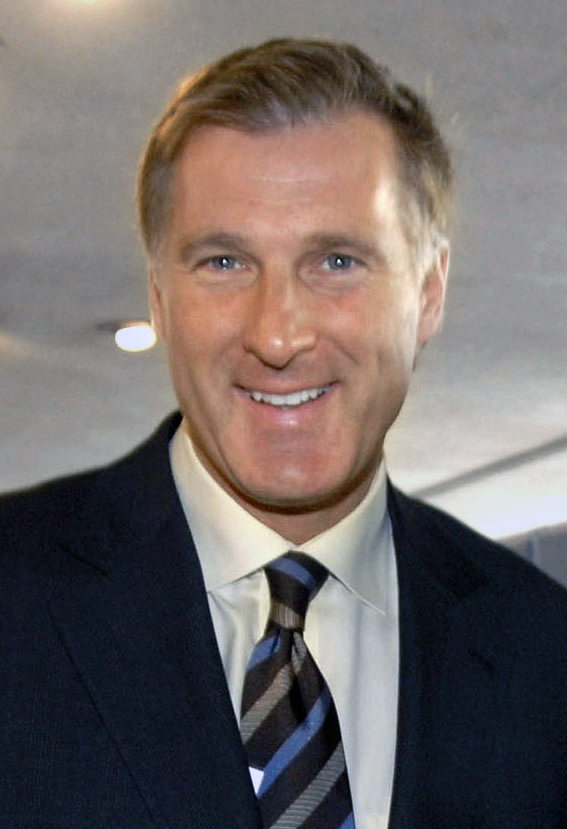
Does Bernier even need an introduction? It seems like everybody in Canada knows about him, and his popularity will undoubtedly grow after appearing on the Rubin Report, a libertarian Youtube show.
He left the Conservative Party and created the People’s Party of Canada, which advocates for smaller government, lower levels of immigration, and more free-markets (including abolishing supply management) according to the party’s website.
In a email to supporters, the PPC proudly proclaimed that it reached its first million dollars in total donations since the party’s founding in September.
Whether Bernier’s party will win any electoral district other than Beauce (his own) is incredibly unlikely, but he can definitely do some damage to the Conservatives’ prospect of victory, since he is already polling at nearly 3%.
What may be the most intense conflict in politics right now is not even taking place in parliament but between the CBC’s Wendy Mesley and the PPC leader. In an interview, she miserably failed at her attempt to link Bernier to a Koch brothers’ conspiracy.
Even more recently, the Quebec politician took the “beef” up a notch when he called for Mesley to be fired after she said Christians in Canada are attempting to sway political landscape, as if they were some sort of foreign interference in our democracy.
Truthfully, the PPC may never come establish themselves as a long-standing party, but more than anything, it could mean that politicians will begin to feel like they can simply leave the party they were elected to represent and literally “do their own thing” once in parliament.
February 3, 2019
January 23, 2019
The value of boredom
I must have missed this Quillette essay by Caroline ffiske when it was published earlier this month:
In their book The Coddling of the American Mind Jonathan Haidt and Greg Lukianoff wonder where it all went wrong. How did we get to a situation where so many of our kids see themselves as fragile victims, but at the same time throw their weight around, telling the rest of us what we are allowed to think and say and do? Haidt and Lukianoff have set up a website devoted to exploring the issue and finding solutions.
I have a suggestion. It hit me like a hammer blow when I read Joseph Brodsky’s essay “In Praise of Boredom.” This was delivered as a commencement address at Dartmouth College in July 1989. Here is the opening sentence: “A substantial part of what lies ahead of you is going to be claimed by boredom.” That’s right. Joseph Brodsky, winner of the Nobel Prize for literature in 1987, assumed that these Ivy League graduates, in common with the rest of humanity since the dawn of time would face hours of the psychological Sahara of boredom that “starts right in your bedroom and spurns the horizon.”
How could Brodsky have guessed that the young people he addressed in July 1989 would be the last Western generation to live alongside boredom: in their bedrooms, on the bus, at the end of the day, and in the morning? That now, when the tiniest tips of our little fingers feel the first twinges of tedium, while the elevator travels between ground and first, we reach for our screens to become masters of fate, captains of souls, kings of new continents.
Even the vocabulary of boredom is disappearing. Brodsky lists these: “anguish, ennui, tedium, doldrums, humdrum, the blahs, apathy, listlessness, stolidity, lethargy, languor, accidie, etc.” Most of those can be excised from the Dictionary. Tell me honestly when you last used any of them?
[…]
Why? Because boredom represents your window onto infinity. And that is to say, onto your own insignificance. “For boredom speaks the language of time, and it is to teach you the most valuable lesson in your life … the lesson of your utter insignificance.” Boredom puts your existence into perspective “the net result of which is precision and humility.” The more you learn about your own size “the more humble and compassionate you become to your likes.”
Is boredom the ingredient our “snowflake” generation is missing?
January 22, 2019
“I grew up in pre-history, or rather in Portugal (in some ways, same thing) in the 60s”
Sarah Hoyt on “toxic masculinity” and the rise of angry feminism:
… it’s such a just-so story it spreads and hides. It hides so well that people don’t realize they’re infected. But its distorting effects twist society’s processes to the point that something vital stops working.
Yes, the entire myth of “toxic masculinity” is one of these. It was born of the disappointment of feminists. Look, in the days when women were actually held back, those that made it were exceptional people.
Since I grew up in pre-history, or rather in Portugal (in some ways, same thing) in the 60s, where sexism was matter of fact and every day, I can tell you that, yes, to have the same grades as a boy you needed to work twice as hard, be brighter, more nimble, and more consistently good. Any boy started out with a good 20% on me in any teacher’s head, because “boys are smarter” wasn’t disputed, or even questioned.
So I understand that in the early twentieth century, women that made it to positions of prominence, where they became known for professional excellence, had to be GOOD at it. Amazing, in fact.
And even then, they might hit a glass ceiling, because they were the nail that stuck up. Everything conspired to bring them down.
Female liberation was played against this. People looked at these women, knew what they’d achieved against what obstacles, and dreamed that “if only women were allowed to be on an even footing with men, they’d be the best at everything. Every woman would be a leader.”
This is a form of insanity, because women are still human, and most humans are … average. That’s why they call it “average.”
But you can see how what they saw would deceive them.
Except that the obstacles were removed and women … were people. Sure. There are exceptional women, just as there are exceptional men, but in many ways, even with contraceptives, we women are still running with our legs in a biological sack. Oh, men too. They’re just different sacks. And men’s impairments, in a way, apply better to business, to creating, to competition.
Look, it’s become “sexist” to refer to PMS and women’s hormonal cycle as being at all different than men’s hormonal gearing up. Yeah. Any ideology that requires me to ignore my lying eyes in favor of their theory is bad-crazy which can destroy society, so these are my middle fingers. Reality is what it is.
January 16, 2019
Justin Trudeau is against using refugees as political props … at least when others do it
Politicians traffic in hypocrisy, example seven million and three:
There were no good reasons to make a big show of [Rahaf Mohammed] Alqunun’s arrival, in other words, and plenty of good reasons not to. Furthermore, Justin Trudeau has been very clear about what he thinks of using refugees as political props. He was at his most thespian back in 2015 when it was alleged Stephen Harper’s office had been sifting through applications from Syrian asylum-seekers in search of potential photo ops.
“That’s DIS-GUST-ING,” Trudeau hissed at a campaign stop in Richmond, B.C. “That’s not the Canada we want; that’s not the Canada we need to build.”
In the end, though, there was Foreign Affairs Minister Chrystia Freeland with her arm draped around Alqunun, announcing that this “brave new Canadian” would not be taking questions. Luckily, Freeland herself had arrived equipped with some crimson talking points.
“I believe in lighting a single candle,” she said. “Where we can save a single person, where we can save a single woman, that is a good thing to do. … And I’d like to also emphasize, this is part of a broader Canadian policy of supporting women and girls in Canada and around the world.”
“Canada is a country that understands how important it is to stand up for human rights, to stand up for women’s rights around the world,” Trudeau chimed in.
It would be well-nigh impossible to argue against hearing, at the very least, Alqunun’s claim for asylum. But at this point, she is certainly also a political prop — a living symbol of the Liberal view of Canada’s place in the world, and an always-welcome opportunity for self-congratulation.
January 14, 2019
Lysander Spooner and the US postal system
Naomi Mathew recounts the battle between anarchist Lysander Spooner and the United States Post Office:
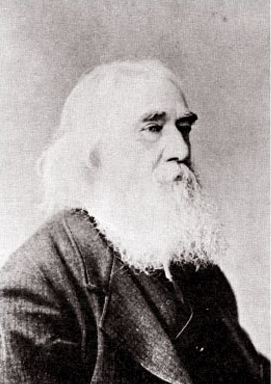
This is a story about a philosopher, entrepreneur, lawyer, economist, abolitionist, anarchist — the list goes on. As his obituary summarizes, “To destroy tyranny, root and branch, was the great object of his life.” Although he is rarely included in mainstream history, Lysander Spooner was an anarchist who didn’t merely preach about his ideas: He lived them. No example illustrates this better than Spooner’s legal battle against the US postal monopoly.
Born in 1808 in Athol, Massachusetts, Lysander Spooner was raised on his parent’s farm and later moved to Worcester to practice law. Eventually, he found himself in New York City, where business was booming — but not for the Post Office.
The Postal System of the 1840s
In Spooner’s day, government subsidized the cost of building infrastructure used for mail routes. Postage rates paid for these subsidies, which in turn made the rates expensive. For example, in 1840 it cost 18.75 cents, over a quarter of a day’s wages, to send a letter from Baltimore to New York.
Corruption was another issue facing the post office. Positions appeared to change after each election cycle, indicating political cronyism. Congress was also under pressure from the coach contractor lobby, and favorable postage routes were often given to contractors with political connections. Thanks to a legal monopoly it had enjoyed since the Confederation, the Post Office remained the sole legal mail business despite its skyrocketing costs and corruption.
In his book Uncle Sam, The Monopoly Man, William Wooldridge describes how high postal costs led some to defy postal laws: Traveling individuals doubled as temporary, private postmen. By the 1840s, these illicit services were chipping into government revenues. Eventually, a court ruled it legal for individuals (but not companies) to carry mail. As a result, underground mail enterprises sprung up. Agents covertly used the existing rails, coaches, and steamboats to transport letters. It is estimated that in 1845, a third of all letters were transported by private mail firms.
January 11, 2019
“It is profoundly stupid, so most people assume it can’t be. But that’s what the law is now”
Apparently the federal government believes that drinking and driving is such a huge, intractable problem that they’ve decided it’s worth sacrificing your right to privacy in order to combat this scourge:
It may sound unbelievable, but Canada’s revised laws on impaired driving could see police demand breath samples from people in bars, restaurants, or even at home. And if you say no, you could be arrested, face a criminal record, ordered to pay a fine, and subjected to a driving suspension.
You could be in violation of the impaired driving laws even two hours after you’ve been driving. Now, the onus is on drivers to prove they weren’t impaired when they were on the road.
This isn’t a simple change of rules, it’s a wholesale abandonment of common sense.
“If you start to drink after you get home, the police show up at your door, they can arrest you, detain you, take you back to the (police station) and you can be convicted because your blood alcohol concentration was over 80 milligrams (per 100 millilitres of blood) in the two hours after you drove.”
Changes to Section 253 of the Criminal Code of Canada took effect in December giving police greater powers to seek breath samples from drivers who might be driving while impaired.
Under the new law, police officers no longer need to have a “reasonable suspicion” the driver had consumed alcohol. Now, an officer can demand a sample from drivers for any reason at any time.
But there’s no possible way this could be abused, right?
“It’s a serious erosion of civil liberties,” said Toronto criminal defence lawyer Michael Engel, whose practice focuses almost exclusively on impaired driving cases.
Engel said someone could be unjustly prosecuted. If a disgruntled business associate or spouse called police with a complaint and an officer went to investigate at the persons’ home or place of business, police could demand a breath sample.
“Husbands or wives in the course of separations would drop the dime on their partner,” Engel said, describing the potential for the law’s abuse by those calling police out of spite, for example.
QotD: Libertarian “co-ordination”
… advocates of liberty are about as good at coordinated action as a bunch of cats. I pretty much laughed myself (physically) sick when I read that the Sad Puppies “strictly enforced slate voting.” Not only did the numbers completely deny this (the only lockstep voting was no award) but the idea of anyone on our side doing anything “lockstep” just about… Giggle, snort.
If you told most people on our side “you have to do it this way, it’s the only way” you’d get “Who’s gonna make me, you and whose army?” And if you said “you have to do it this way or we’ll kill you,” you’re still likely to get “You’re not the boss of me.” We should have “Stupidly individualistic” stamped on our foreheads.
So long, coordinated marches like what the left (they of the collectivist will) executed are really impossible for us.
On the other hand… On the other hand, we seem to do pretty well in our long uncoordinated march of building under and building around and building over.
We might all be marching in different directions and to the tune of a different kettle of fish, but the other side is so profoundly incompetent, that even so we can still replace the moribund institutions they took over.
It’s just going to take a little while. Not a hundred years, but probably twenty. Not three generations, but one and a half.
In the end we win, they lose, but you can’t stop when your ankles first start hurting.
The last mile of the long march is always the hardest one, but the goal is almost in sight.
Sarah Hoyt, “The Long March”, According to Hoyt, 2015-12-20.
January 10, 2019
A timely reminder about the dangers of expanding government power
At Coyote Blog, Warren Meyer points out to the Republicans that if it was bad during the last presidency, it’s just as bad during this one:
Dear Republicans:
The last thing we need now is even more expansion of executive power. I remember when, gosh it was like only two or three years ago, you Republicans were (rightly) bemoaning Obama’s executive actions as unconstitutional expansions of Presidential power. You argued, again rightly, that just because Congress did not pass the President’s cherished agenda items, that did not give the President some sort of right to do an end-around Congress.
But now, I hear many Republicans making exactly the same arguments on the wall that Obama made during his Presidency, with the added distasteful element of a proposed declaration of emergency to allow the army to go build the wall.
[…]
I can pretty much guarantee you that if Trump uses this emergency declaration dodge (and maybe even if he doesn’t now that Republicans have helped to normalize the idea), the next Democratic President is going to use the same dodge. I can just see President Warren declaring a state of emergency to have the army build windmills or worse. In fact, if Trump declares a state of emergency on a hot-button Republican issue, Democratic partisans are going to DEMAND that their President do the same, if for no reason other than tribal tit for tat.
Patreon’s changing role
At Quillette, Uri Harris outlines how Patreon has changed over the last year or so and what those changes mean for both content creators and financial supporters:
On December 6, crowdfunding service Patreon removed the account of popular YouTuber Carl Benjamin, who is better known by his YouTube moniker Sargon of Akkad. In a statement, Patreon explained that Benjamin was removed for exposing hate speech under its community guidelines, which prohibit: “serious attacks, or even negative generalizations, of people based on their race [and] sexual orientation.” The incident in question was an appearance on another YouTube channel where Benjamin used racial and homosexual slurs during an emotional outburst. (The outburst was transcribed and included for reference as part of Patreon’s statement.)
Patreon’s reaction sparked immediate accusations of political bias from many centrists and conservatives, as Benjamin—who identifies as a classical liberal—is a frequent and outspoken critic of contemporary progressivism, receiving hundreds of thousands of views on many of his videos. The fact that Benjamin was removed from Patreon for an outburst on another YouTube channel almost a year ago, when he produces hours of content every week on his own channels and appears regularly on many others, suggested that this was a targeted attempt to remove him due to his politics, either by Patreon employees themselves or as a response to outside pressure.
This belief was bolstered by the fact that Patreon’s CEO Jack Conte had appeared on popular YouTube talk show “The Rubin Report” last year to explain the removal of conservative YouTube personality Lauren Southern, where he seemed to suggest that Patreon’s content policy had three sections and that hate speech was in the first section, meaning that it only applied to content uploaded to Patreon’s own platform. (Southern was removed for off-platform activity because she had “crossed the line between speech and action,” Conte maintained, which he implied was covered by the more severe second and third sections of their content policy.)
There’s nothing unusual about a company revising its content policy, of course, but it seemed suspicious that Benjamin was being removed for a different set of rules than those Patreon’s CEO had previously articulated. In fact, several people pointed out the prevalence of similar slurs on Patreon’s own platform as further indication that Benjamin was specifically targeted for his political views.
January 6, 2019
“Carding” is an infringement of rights that does nothing to reduce crime
Chris Selley wonders why the blatantly unconstitutional practice of “carding” people without even a hint of suspicion that they’ve done anything wrong was instituted in the first place:
… it’s far easier to make a case that carding has no effect at all on serious crime than that it has a huge one. But even if previous carding practice had “worked,” even if the new regulation had stopped it from working, it barely even amounts to a defence. As [Justice Michael] Tulloch notes, “the regulation simply gives effect to the existing law that people do not have to provide their identification when there are no reasonable grounds to believe the person has committed an offence.”
If carding “worked,” in other words, it relied on citizens not knowing or caring about their already-existing right to be left alone whilst minding their own business, or being too intimidated to exercise that right — as well they might be. Politely refusing an armed man or woman’s request to identify yourself is no small thing, all the more so if you have “nothing to hide.”
The problems inherent in such a situation are myriad. There are quantifiable harms: People were denied jobs and security clearances, and in at least one case menaced by child services, thanks to information stored in police databases that implicated them in nothing other than being included in a police database. And there are more existential harms. Imagine growing up with a squeaky-clean nose yet constantly feeling like a person of police interest. It’s profoundly alienating, especially when targets quite logically conclude, based on well-documented statistics if not their own intuition, that they’re being harassed because of their race, skin colour or some other innate characteristic. It’s no less insidious if the bias is unconscious; it might even be more so.
Nothing good can come from it, and plenty bad. It hinders police in solving crimes, for one thing: “When a segment of society believes that it has been unfairly targeted by the police,” Tulloch writes, “it will delegitimize the police in their eyes.” All those desperate calls for witnesses to come forward will be met more skeptically. Tulloch cites research showing “inappropriate interaction with police” can even “desensitize young people from guilt regarding potential acts of crime.”
January 1, 2019
QotD: The hallmark of civilization
The true mark of the civilized society is not that it defends the rights of people who are loved by the bulk of the population, for those people need no defense. No one, after all, will arrest a popular person for saying or doing popular things. The true mark of the civilized society is that it defends the rights even of those who are universally reviled.
Indeed, in a truly civilized society, there would be no question but that you would defend the rights of people who disgust you provided they do no violence to others.
Our society is not civilized.
Perry Metzger, “On Civilization”, Samizdata, 2017-03-30.


