
Everyone raised in the Unites States over the last fifty years has been required to memorize the official dogma regarding Jim Crow laws. These were state and local laws that enforced racial segregation in the Southern United States. The official version preached to this day is that they were draconian restrictions on blacks preventing them from having a normal life. Modern blacks are told that their condition is the direct result of white discrimination against blacks via these laws.
Now, there is a debate as to the intent and the effect of these laws, mostly because the Left has re-imagined that period in American history. The official version of the Civil Rights era is a fantasy with little connection to reality. What is not under dispute is that these laws existed and they had a negative impact on blacks. Black institutions did not receive public support. Blacks were denied access to the legal system, which often denied them justice when the victims of white malfeasance.
The best argument against these sorts of laws is that they created a second class of citizens, as a legal construct. You cannot have democracy if you have second class citizens, as democracy assumes all men being equal before the law. If the effect of Jim Crow was separate and equal, then maybe they would fit into democracy. In reality, they were separate and unequal, even accounting for the differences in the races. Therefore, as a legal construct, they violated the ideal of equality before the law.
The Z Man, “The Jim Snow Laws”, The Z Blog, 2019-12-01.
March 7, 2020
QotD: “Jim Crow” laws
March 6, 2020
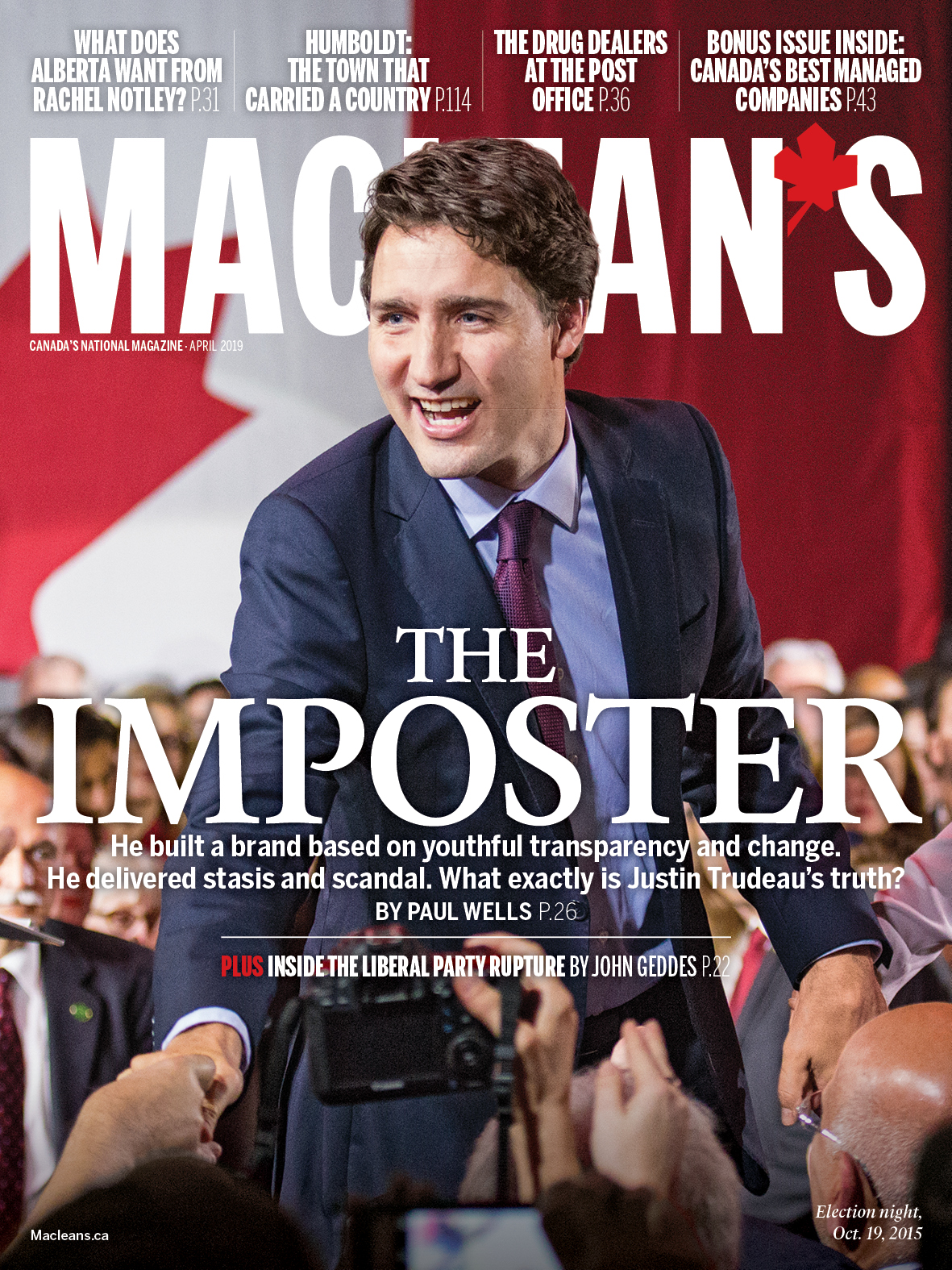
“[A] decision of such absolutely mind-boggling stupidity and irresponsibility that it could only have come from Justin Trudeau, himself”
Ted Campbell on the Trudeau government’s apparent abject surrender to the Wet’suwet’en hereditary chiefs (“apparent” because we still don’t have any details of the “deal”):
The Wet’suwet’en hereditary chiefs’ agenda seems simple enough to me. They don’t like the notion that the Wet’suwet’en people can elect band councils that might act for the good of the people and < quelle horreur > the people might even disagree with the hereditary chiefs. Some (male) hereditary chiefs seem to have managed to strip some other (female) chiefs of their titles because they, the female chiefs, sided with the elected councils. This is, in 21st century British Columbia, something of a replay of 17th century Europe and the end of the divine right of kings, except that the Wet’suwet’en hereditary chiefs might succeed where Charles I and Louis XVI failed because they have the dimwits in the Trudeau cabinet on their side.
To make matters worse, as John Morris of the Canadian Press points out in an article published in the Globe and Mail, the government negotiated with the hereditary chiefs, only ~ with the people who broke the law; and they ignored the elected leaders ~ the people who played by the rules.
How typically Trudeau: he surrenders, cravenly, to the reactionary, anti-democratic lawbreakers and, simultaneously, shuts out the elected representatives of the Wet’suwet’en peoples. Is that the Canada in which we all want to live? Is that the sort of “leadership” for which millions of Canadians voted in 2019? I think not. Justin Trudeau is both a fool and a coward and his party, the Liberal Party of Canada, has a duty to Canada: throw the bum out!
But, not to worry, the Trudeau regime’s
propagandistspress agents will tell us that it’s all good, we “won,” something or other … didn’t we? And who cares if we lost something nebulous like honour and responsibility? It’s all about reconciliation, isn’t it? What do trivialities like democracy and the national interest matter when really important things, like preserving the power of hereditary chiefs over elected councils, are at stake? But that reactionary system seems to have been strengthened, and so “It was a famous victory.”
February 29, 2020
“And then, somewhat astonishingly, the Ontario Provincial Police actually upheld the law”
Chris Selley calls for some answers in the still-not-fully resolved railway disruptions by First Nations and climate activists and the calling-it-spineless-is-a-compliment reactions of various levels of government to widespread contempt for the law:
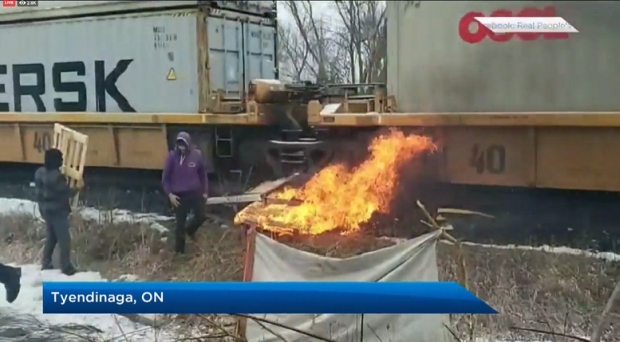
Screencap from a TV report on Mohawk Warriors attempting to set a freight car on fire along the Canadian National mainline through Tyendinaga near Belleville, Ontario.
When Canada’s ongoing spate of rail blockades finally peters out, this country has some work to do. A parliamentary committee might be up to the job, but even a full-on independent inquiry might not be excessive. A small group of Mohawks in Tyendinaga, Ont., in solidarity with an even smaller group of hereditary Wet’suwet’en chiefs, managed to blockade the Canadian National Railway for two weeks, not just holding hostage a chunk of the country’s economy, productivity and mobility, but demanding as ransom the cancellation of a liquefied natural gas pipelines that all First Nations affected by it, and it seems a comfortable majority of their residents, support.
It’s not a national disaster or anything. But as Prime Minister Justin Trudeau belatedly realized, it’s simply not an acceptable outcome in a democracy operating under the rule of law. And there is every reason to believe it could happen again — especially because we don’t really know how or why it ended when it did.
Operating at peak obnoxiousness, Trudeau had scolded those who demanded enforcement of a court order against the Tyendinaga blockade as boors, violence-mongers and idiots: “We are not the kind of country where politicians get to tell the police what to do,” he huffed. And then, frustrated by a lack of Sunny Ways among the federal government’s negotiating partners, he suddenly told the police what to do — or at the very least what he thought should happen.
[…]
The relatively undramatic end to the Tyendinaga blockade, after two weeks of dire warnings about Oka and Ipperwash reruns, raises another key question: Is there any reason we should believe it was safer to enforce the injunction on Day 14, as opposed to Day One or Two or Six?
Attempting negotiations was a perfectly sensible approach, even though it was very difficult to discern any room for compromise when one of the blockaders’ demands was so simple, blunt and inconceivable: shutting down the Coastal GasLink pipeline project. But the government is likely to face similarly unbending demands from future blockaders: Shutting down the Trans Mountain pipeline project, for example. Surely we can’t establish “two weeks of futility and then enforcement” as a policy moving forward. (Some might argue it was already established by a 13-day blockade of CN tracks near Sarnia, Ont., in 2013 — but that wasn’t nearly as crippling a blow to the railway’s operations.)
Police in Quebec were perfectly happy to enforce an injunction against a blockade on Montreal’s South Shore, which ended swiftly and without incident. Another on Mohawk territory in Kahnawake remains in place, and Premier François Legault has been excoriated for suggesting police face a heavily armed populace there — but at least it’s an attempt at an explanation. When it comes to the OPP’s inaction, we have none. For that matter, we probably deserve some insight into how protesters were able to set a roaring bonfire next to a moving train in Tyendinaga, wholly unmolested, just a couple of days after the blockade came down.
February 24, 2020
Bidding farewell to the rule of law in Canada?
John Carpay on the importance of the rule of law in civil society and why we’re at risk of losing it here in Canada:
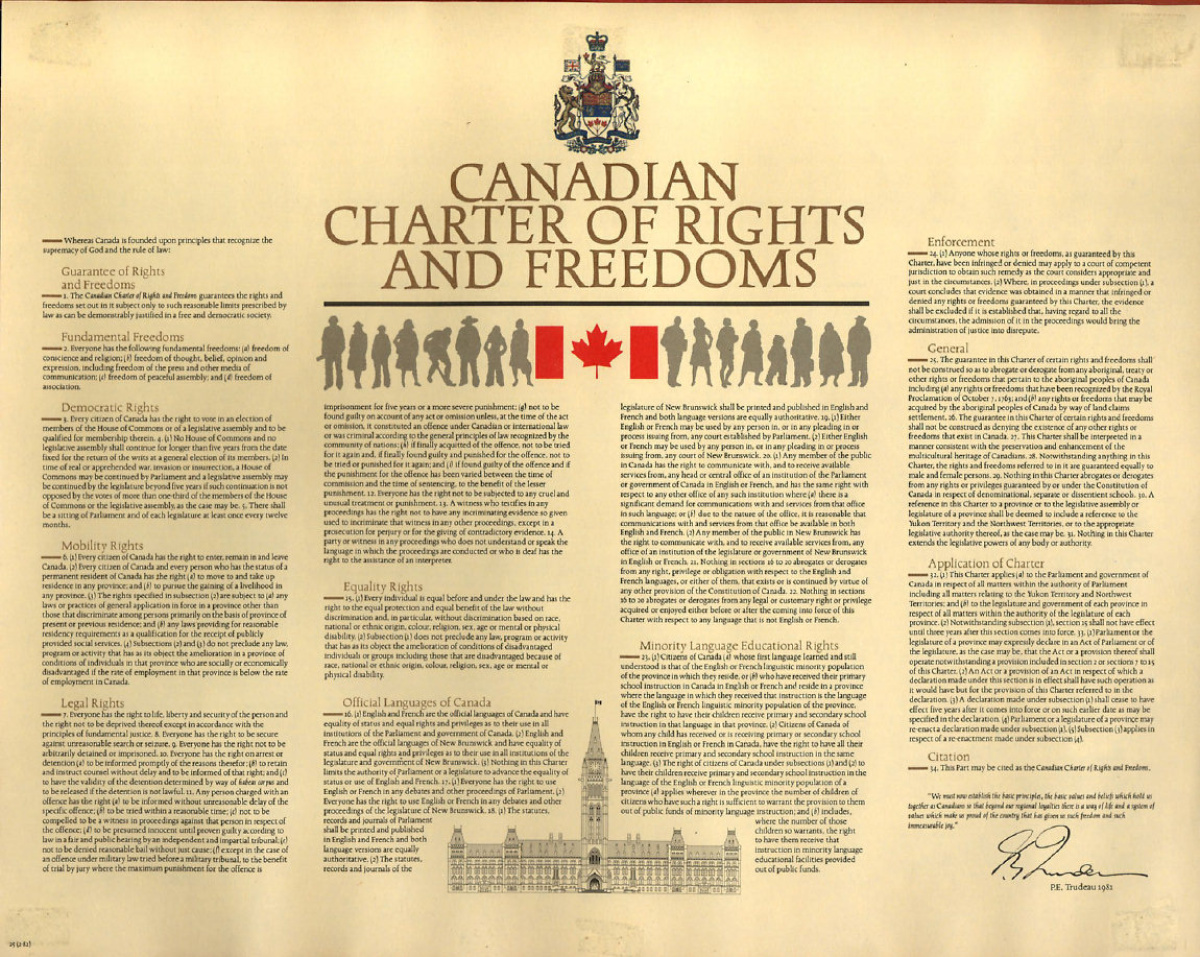
The rule of law is one of the most important legal principles on which Canada is based. Along with the supremacy of God, it is mentioned in the very first words of the Canadian Charter of Rights and Freedoms: “Whereas Canada is founded upon principles that recognize the supremacy of God and the rule of law.”
The rule of law means that we are ruled by laws, not by the whims of a King, or the clamouring of a mob. The rule of law also means that the law applies to everyone, even the King; there can be no exemptions for the King or his favourites.
Countries which practice and uphold the rule of law tend to thrive economically, socially, politically and culturally. Countries which uphold the rule of law become wealthy because people can work, buy, sell and trade in the knowledge that their property and their person are protected by law. Economies thrive when people know that the law will be enforced, and that the law will be applied to everyone, even to the King and his favourites. The rule of law provides investors, foreign and domestic, with confidence to invest their money in business projects.
Conversely, when a country condones law-breaking, investors will put their money elsewhere, and quickly. The world’s poorest and most violent countries are those where politicians are above the law, and the law is not applied equally to all.
The decisions of Canada’s politicians and police to condone – for three weeks or longer – the blockading of railway lines by aggrieved protesters violate the rule of law in at least two ways.
First, our politicians are effectively stating that individuals with strongly held political opinions are entitled to engage in illegal activities, in this case shutting down railway lines. Second, law-breaking is permitted because Prime Minister Justin Trudeau and other politicians sympathize with the protesters’ ideology and demands: the law does not apply to the King’s favourites.
February 21, 2020
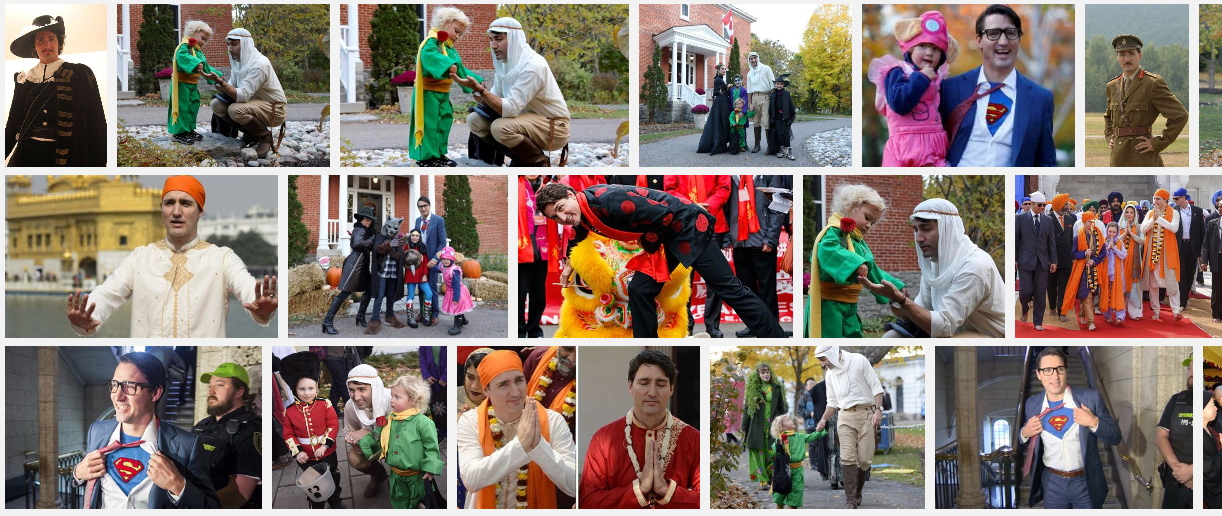
Justin Trudeau, Prime Empathizer of Canada
The Prime Minstrel channels his inner Bill Clinton, although he just manages to avoid saying that he “feels our pain”:
A strange thing happened Tuesday morning. That strange thing was … an important and interesting exchange on the floor of the House of Commons. It happened during routine proceedings, and not in the Punch-and-Judy exchange of question period. The leaders of the various parties in the House stood and outlined positions on the rail blockades being conducted around the country in support of Wet’suwet’en opponents of B.C.’s Coastal GasLink pipeline.
First came the prime minister. “People are troubled by what they have been witnessing this past week,” he said. Our empathizer-in-chief, the emotional mascot of Confederation, was about to go to work. “Young, old, Indigenous and newcomers are asking themselves what is happening in the country … On all sides, people are upset and frustrated.”
The next three words out of his mouth were: “I get it.” Huh. Is that the sort of thing you say when you’ve actually gotten it? If a friend called you up in a shattered emotional state because he had just lost his job, as people are starting to lose jobs to the Wet’suwet’en solidarity protests, would you say “I get it”?
Beyond this tin-eared reassurance, Trudeau did not have much specific to say, and what there was seemed to contradict itself. “Our government’s priority is to resolve this situation peacefully, but also to protect the rule of law in our country,” he promised. “That is a principle we will always stand up for.” One would have thought the role of a prime minister was to apply the law rather than to “stand up for” it. He gave his usual spiel about the myriad of ways in which the federal government has failed First Nations, again speaking as though someone else were in charge. Certainly very little of it is his own fault: the government he leads has “invested more than any other … to right historic wrongs.”
Trudeau worried aloud that Canada might become “a country where people think they can tamper with rail lines and endanger lives,” but he seemingly renounced the use of force (it’s not “helpful”) against protesters who openly discuss sabotage. What the prime minister means when he talks of the “rule” of something called “law” has been left imperfectly clear.
Chris Selley suggests the government’s fecklessness will continue to prevent any solutions being implemented:
The stupefying weightlessness of Justin Trudeau’s government has never been more evident than in recent days, as it tries to arrange an end to the Mohawk blockade of CN’s main line near Belleville, Ont. At times it seems as if it might just float away, like an improperly tethered bouncy castle in a thunderstorm.
This week has been particularly windy.
[…]
The situation is ludicrous: Because Ontario’s independent provincial police won’t enforce a court injunction, the federal public safety minister seems to be in discussions with B.C.’s solicitor general about whether B.C.’s independent provincial police might back off enforcing a different injunction.
And the worst part of this absurdist theatre festival is how difficult it is to imagine a better alternative. Conservatives continue to call on Trudeau to somehow fix the problem, but the way Canada is set up, it’s really not a federal issue. The RCMP might have some jurisdiction over the railway as federally regulated infrastructure, said University of Toronto law professor Kent Roach, but that hasn’t happened in past cases. It wouldn’t even be up to Trudeau to send in troops: under the Emergencies Act, Roach said, a provincial solicitor-general has to request it.
These are structural issues that any PM will face. Indeed, the biggest difference between the Liberals’ approach to this blockade and the Conservatives’ approach to the 2013 Idle No More protests, which included a 13-day blockade of a CN line in southwestern Ontario, has been one of rhetoric and engagement. The Conservatives talked tougher, but Aboriginal Affairs rebuffed CN’s request to intervene. (Those protesters eventually obeyed a court injunction and left.) The Liberals needlessly tie themselves in knots and insult our intelligence — they know no other way — but they clearly believe it’s their job to broker some kind of resolution.
It’s tough to say which approach is likelier to work. At this point odds seem to favour “neither.” If you have a better, workable idea to get the trains moving, for God’s sake get on the horn to Ottawa.
February 17, 2020
“The rails to hell are laid with good intentions”
In the National Post, Jonathan Kay explains how Canadian governments find themselves in the situation where the basic laws of the land can be flouted at will by a small extremist faction and the police are unwilling to do more than bare peacekeeping duties:
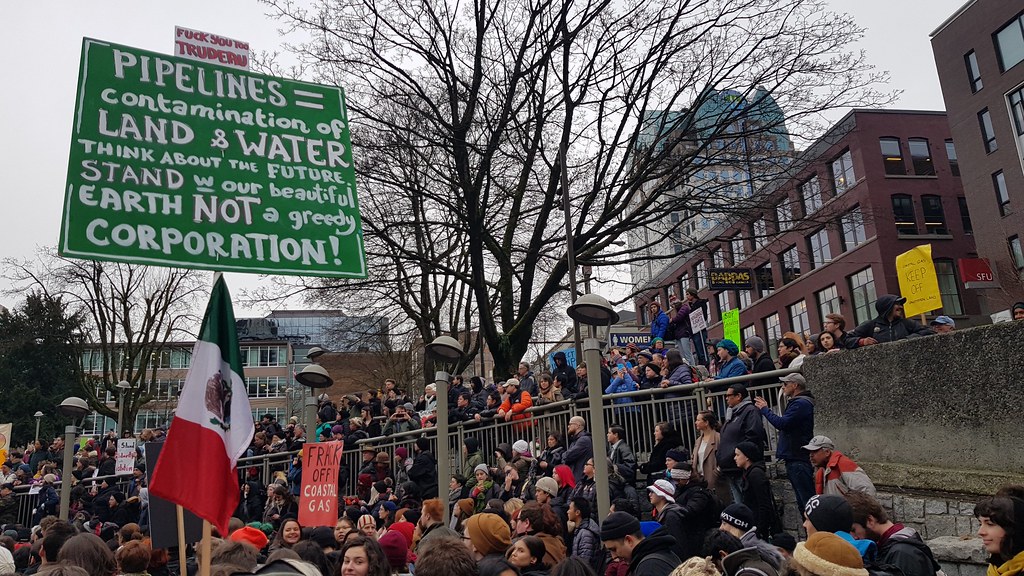
“Vancouver Solidarity with Wet’suwet’en” by jencastrotakespictures is licensed under CC BY-NC-SA 2.0


If you find yourself astounded by the current situation in Canada, whereby protesters have been allowed to shut down a rail network that remains a backbone of passenger travel and industrial transport (and whose coast-to-coast completion in 1885 became a symbol of national unity), it’s useful to revisit the accumulation of symbolic gestures that have steadily destroyed the moral authority of our governments to push back at any assertion of Indigenous rights and grievances. For years, our leaders offered reflexive acquiescence to increasingly expansive claims that Canada remains a white supremacist dystopia, culminating in last year’s campaign to convince us not only that modern Canada is a “genocide” state, but that even the act of expressing disagreement with this description makes you a sort of metaphorical train conductor on the rails to Canadian Dachau. Having publicly tattooed their guilty settler souls with every imaginable hashtag, our leaders now apparently find themselves stopped from restoring the rule of law.
The rails to hell are laid with good intentions. And there is nothing that now signals goodness in Canadian public life more than the land acknowledgment. Certainly, no one can argue with the historical truth that Indigenous peoples populated Canada for thousands of years before the arrival of Europeans. But words have meaning. And the well-understood meaning of these acknowledgments is that Indigenous peoples exercise a sort of broad, vaguely defined moral sovereignty over lands “owned” by Canadian governments, corporations and private citizens — including the lands on which we have constructed roads, rails, ports and legislatures. And since this sovereignty apparently now may be asserted at any time, for pretty much any reason, we have effectively lost the ability to enforce the systematic organization of property rights on which every functional society, Indigenous or non-Indigenous, depends.
The push to recognize Indigenous sovereignty over ancestral lands stretches back generations, an effort rooted in very real constitutional and treaty rights. But what I am describing here is not this formally bounded legal campaign, but rather the more general insistence that the entire country remains stained by original sin, and so must be purified by an open-ended, quasi-spiritual process of “decolonization.” This project began in earnest in 2017 as a counter-reaction to the perceived jingoism of the Canada 150 celebrations. Within the rarified corners of the literary and arts milieus (in which I found myself embedded at the time), decolonization quickly became a sort of state religion, complete with decolonization-themed sensitivity training and confession rituals.
[…]
The people doing the protesting are led by dissidents within one of the affected Indigenous communities, amplified by a critical mass of white environmentalists who are perfectly happy to cherry-pick Indigenous causes based on how well they line up with their own Anti-Racism/Critical Studies term-project requirements. Indeed, there is a certain type of very self-satisfied white Canadian leftist who sees himself as a real-life Lorax. Drawing on antiquated noble-savage stereotypes from the past, these decolonization super-allies cast Indigenous people as their little bar-ba-loot bears. And it just ruins their day when Indigenous leaders refuse to grab their tummies, moan for the CBC cameras, or read their bar-ba-loot scripts.
There is a larger hypocrisy at play here, too. Justin Trudeau and his entourage — currently on world tour, hoping to convince African and Caribbean leaders to hand him the shiny trophy of a UN Security Council seat — don’t take the train much. They fly. So, too, do the provincial politicians passing the buck in equal measure, not to mention the national broadcast journalists offering maudlin profiles of the demonstrators. Forcing ordinary travellers to bear the burden of upholding officially sanctioned upper-middle-class social-justice pieties isn’t “progressive.” It’s reactionary, snobbish elitism with a progressive façade.
February 15, 2020
Theodore Dalrymple on the death penalty
From the New English Review:
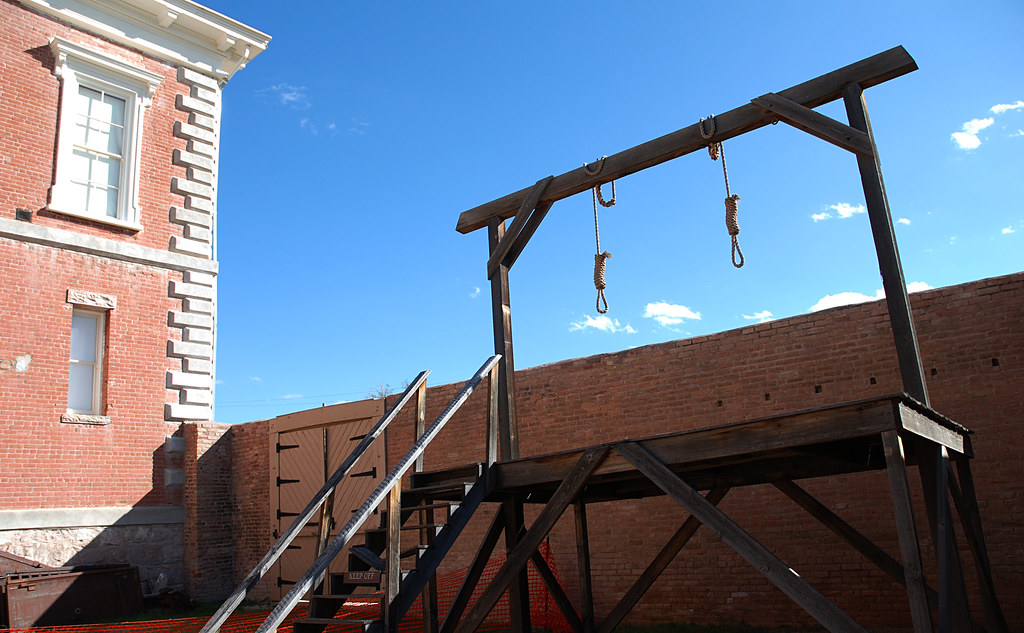
“Tombstone Courthouse State Historic Park” by August Rode is licensed under CC BY-NC-SA 2.0
I happened to read a book published in 1965, the year Britain legislated to end the death penalty, titled Murder Followed by Suicide, by the distinguished criminologist, D.J. West. For forty years up to that date, about a third of homicides had been followed by the suicide of those who committed them.
Most people who committed homicide followed by suicide were highly disturbed psychologically, if not outright mad. For example, in killing their families they imagined that they were saving them from a worse fate. They were not the kind of people who would be deterred by anything, including the death penalty.
Here was a natural experiment. I hypothesized that if the death penalty acted as a deterrent, the homicide rate would increase but the proportion of homicide followed by suicide, which in absolute numbers would remain more or less the same, would decrease. My friend, the criminologist David Fraser, looked at the actual figures and found that this was indeed the case. Some sane people who might otherwise be inclined to kill managed to control themselves knowing that they might be executed if they did.
For the death penalty to deter, it was not necessary for it to be applied in every case. Although the death penalty for murder was mandatory in Britain, it was commuted in nine cases out of ten. All that was necessary for it to deter was that execution was a real possibility. We shall never know whether the death penalty would have deterred even more if it had been applied more rigorously.
Does its deterrent effect, then, establish the case for the death penalty, at least in Britain? No, for two reasons. First, effectiveness of a punishment is not a sufficient justification for it. For example, it might well be that the death penalty would deter people from parking in the wrong place, but we would not therefore advocate it. Second, the fact is that in all jurisdictions, no matter how scrupulously fair they try to be, errors are sometime made, and innocent people have been put to death. This seems to me the strongest, and perhaps decisive, argument against the death penalty.
Against this might be urged the undoubted fact that some convicted murderers who have been spared death have gone on to kill again, and this will continue to be so. Victims of those who murder a second time are probably more numerous than those executed in error. Therefore, utilitarians might argue, even if mistakes are sometimes made, that the death penalty overall would save lives. (Let us disregard the fact that those murderers who go on to murder a second time would not necessarily have been executed after their first murder, for nowhere are all murderers executed.)
The argument holds only if utilitarianism is accepted as a true ground of ethics. But few of us would accept that it is. It might be that hanging the wrong person after the commission of a terrible crime would have a better social outcome than hanging no one at all, provided only that it was never publicly known that the wrong person had been hanged: but we would still be horrified at the prospect. Moreover, in practice, the execution of the innocent, once it is known, serves disproportionately to undermine faith in the justice system. And surely it is true that for the state to kill an innocent man is peculiarly horrific.
February 8, 2020
The Trial of Charles I (1649)
Historia Civilis
Published 6 Feb 2020Join the Mailing List here: https://www.historiacivilis.com/
Patreon | http://patreon.com/HistoriaCivilis
Donate | http://www.paypal.com/cgi-bin/webscr?…
Merch | http://teespring.com/stores/historiac…
Twitter | http://twitter.com/HistoriaCivilis
Website | http://historiacivilis.comSources:
T. B. Howell “A Complete Collection of State Trials and Proceedings for High Treason and Other Crimes and Misdemeanors from the Earliest Period to the Year 1783,” Volume IV | https://bit.ly/2Q9tPOS
“The Sentence of the High Court of Justice upon the King,” January 27th, 1649 | https://bit.ly/2rooZVC
—
Diane Purkiss, The English Civil War: A People’s History | https://amzn.to/36YHkrb
Leanda de Lisle, White King: Traitor, Murderer, Martyr | https://amzn.to/2Qen9ir
Esmé Wingfield-Stratford, King Charles the Martyr: 1643-1649 | https://amzn.to/36XFvLg
Allan Massie, The Royal Stuarts: A History of the Family That Shaped Britain | https://amzn.to/2SonMZz
Michael B. Young, Charles I | https://amzn.to/35Jm9t7
John MacLeod, Dynasty: The Stuarts 1560-1807 | https://amzn.to/2MiJGt2
C. V. Wedgwood, The Trial of Charles I | https://amzn.to/372MDWy
Maurice Ashley, The House of Stuart | https://amzn.to/2PMvU42
Trevor Royle, Civil War: The Wars of the Three Kingdoms, 1638-1660 | https://amzn.to/2tKZNJP
Robert Ashton, The English Civil War: Conservatism and Revolution 1603-1649 | https://amzn.to/36WWOMz
J. P. Kenyon, The Civil Wars of England | https://amzn.to/2EIAJW3
Mark Kishlansky, A Monarchy Transformed: Britain 1603-1714 | https://amzn.to/371CSs0
Sean Kelsey, Politics and Procedure in the Trial of Charles I | https://www.jstor.org/stable/4141664
Clive Holmes, The Trial and Execution of Charles I | https://www.jstor.org/stable/40865689Music:
“Heliograph,” by Chris Zabriskie
“John Stockton Slow Drag,” by Chris Zabriskie
“Your Mother’s Daughter,” by Chris Zabriskie
“Hallon,” by Christian BjoerklundWe are a participant in the Amazon Services LLC Associates Program, an affiliate advertising program designed to provide a means for us to earn fees by linking to Amazon.com and affiliated sites.

January 28, 2020
QotD: Drinking and driving
According to BTLPTP, “Drinking drivers are responsible for one-quarter of all people killed on Ontario roads.” In other words, only 75 percent of Ontario traffic fatalities are the work of sober people. Either we have more drunks in Ontario or our sober drivers are better drivers than Britain’s. [Where “one in seven of all deaths on the road involve drivers who are over the legal limit.”]
Now, despite the damning evidence in these brochures that sober people are causing carnage on our roads, the people who know what’s good for us are busy trying to lower the legal blood alcohol limit. Early in 2001 the Quebec government announced that it was lowering the limit from eighty milligrams to fifty, throwing in a complete drinking ban for professional drivers — cabbies, bus drivers, and the like. This last measure was a reaction to — well, nothing at all. Were drunk ambulance drivers creating havoc on the roads of Quebec? No. But it gave the government of Quebec the appearance of having taken a strong stand on something. Predictably, the Ontario government immediately made noises about following suit.
Nicholas Pashley, Notes on a Beermat: Drinking and Why It’s Necessary, 2001.
January 26, 2020
Trudeau’s illogical gun ban will do nothing to reduce violent crime
It will, on the other hand, infringe the rights of law-abiding Canadians and encourage otherwise law-abiding people to disobey the law. It won’t take a single lethal weapon out of the hands of criminals — because they’re already violating the laws that are in force today and won’t be deterred by yet another token rule they won’t obey. At the Post Millennial, D.J. Sumanik explains why the proposed ban is wrong:
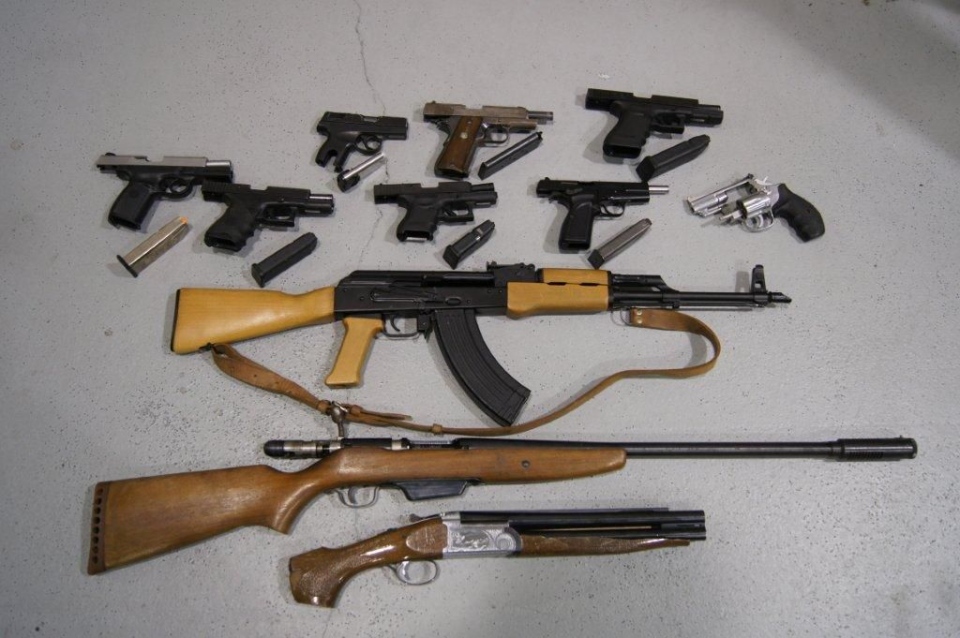
Restricted and prohibited weapons seized by Toronto police in a 2012 operation. None of the people from whom these weapons were taken was legally allowed to possess them.
Screen capture from a CTV News report.
I chose the AR-15 for that video because it is the singular most demonized firearm on the planet. The rifle is used to scare uninformed citizens daily. Yet the same rifle has never been used for murder by a legal gun owner in Canada.
In fact, it’s only been used for murder one time in our country over the last 50 years by a gang. A far cry from the narrative that “assault weapons” are lurking in every corner of Canadian society waiting to murder our children.
Justin Trudeau is claiming this firearm and others like it are so deadly, so dangerous, and so extreme that they must be confiscated from every licensed Canadian gun owner across the country. But with only one murder in 50 years, and the gun almost certainly still being the murderer’s hand regardless if there was a ban, the numbers simply don’t add up. In fact they barely register. Semi-auto rifles are extremely rare for use in Canadian gun homicide […] handguns are the firearm of choice for most shootings. Semi-autos only make up a small percentage of rifles and shotguns in our country. So how does this add up to a federal ban costing $600 million in taxpayer money?
Short answer: It doesn’t.
Canada has roughly 2.2 million licensed gun owners who are monitored DAILY by RCMP for red flags. Most people don’t know that. It’s called continuous eligibility screening. If you step out of the line with the law, the cops show up and take your guns.
Some further thoughts.
If only 5 percent of Canadian gun owners were out there shooting up the streets, we’d have 110,000 deaths on our hands annually. According to StatsCan, 2018 left Canada with 249 tragic gun murders. The vast majority were by gangs fighting over drugs in urban centers. Even if you were to incorrectly assume every one of those shootings was a legal gun owner and not a gang member (yeah right) it means 99.9998868% of us pose no threat to society. Can you think of another demographic with that kind of track record? I certainly can’t.
Now, the lives lost in those incidents are valuable. 249 Canadian families are feeling daily pain. Something needs to change. Gang warfare can’t go unchecked. But to punish millions of innocent Canadians who hold such an excellent track record will not help. There’s a very simple truth in all of this: Taking my firearms away in the Yukon will not prevent gang homicide in Toronto.
Furthermore, we as Canadians don’t discriminate against entire groups of people based on the actions of a few bad eggs. For instance, we don’t blame all Muslims in Canada for the actions of 9/11. How is it acceptable for Justin Trudeau to punish gun owners across Canada for gang violence?
January 25, 2020
Petition against the Trudeau government’s proposed “military-style assault rifle” ban goes over 100,000 signatures
There may be little point in protesting, as the Trudeau government has a track record of ignoring what Canadians want to do what it intends regardless, but you can still sign the petition here (if you do sign, remember to click the confirmation link in the email you’ll receive after signing the petition). In the Post Millennial, Sam McGriskin reports that the petition has enough confirmed signatures to be the second-largest in Canadian history:

E-petitions can be open for 30, 60, 90 or 120 days for signature based on what the petitioner prefers. The petitions get a government response within 45 days of their opening. Public Safety Minister Bill Blair is overseeing the “buyback program” which Blair estimates could cost anywhere from $400 to $600 million.
Blair’s office did not respond to request for comment from The Post Millennial. His office was asked what the minister’s response is to over 100,000 Canadians calling on the government to drop what many experts see as a completely ineffectual action to curb gun violence. Blair was also asked about fellow Liberal MP Marcus Powlowsk’s letter addressed to him that opposed the gun ban (Powlowsk has since retracted the letter) and Winnipeg Police constable calling the ban “nonsense”.
“When we seize handguns, the handguns are always almost 100% in the possession of people who have no legal right to possess them. They’re almost always stolen or illegally obtained,” said Const. Rob Carver. “I simply don’t see how as a 27-year-old veteran, how adding another layer of law will make any difference, anywhere in this country.”
In Powlowski’s letter to Blair he wrote, “Over the course of the past three months, I have heard a wide variety of views on this proposed ban. I believe it is my role to ensure that these views are brought to your attention for consideration.”
“Given that there is currently no legal definition for a ‘military-style assault rifle’ in Canada, some community members I have spoken with are skeptical that a ban based on this term would make sense as a coherent firearm policy,” the letter continued.
In a CBC interview in the summer of 2018, Blair said that most of the gun crime is committed by illegal handguns smuggled in from the U.S. and he was skeptical of a gun ban being effective in combating gun crime. His position changed drastically once he was appointed by Prime Minister Justin Trudeau as the public safety minister.

Variants of the AK-47
The Liberal voters in downtown Toronto and other major cities want the government to “do something” about gun crimes, but nothing the government can do is going to make much of a difference for people who are already violating multiple laws, so all they can do is make things worse for those who are already obeying the laws as they stand. In the real world, this makes no sense, but in the fantasy world of electoral politics, the government needs to be seen to be “doing something” … and this, stupid as it may be, counts as “something”.
Cursus honorum – Praetors
Historia Civilis
Published 19 Feb 2015Patreon: https://www.patreon.com/HistoriaCivilis
Website: https://www.historiacivilis.com
Twitter: https://twitter.com/HistoriaCivilisMusic is “Sea” by Jahzzar (http://betterwithmusic.com)
January 21, 2020
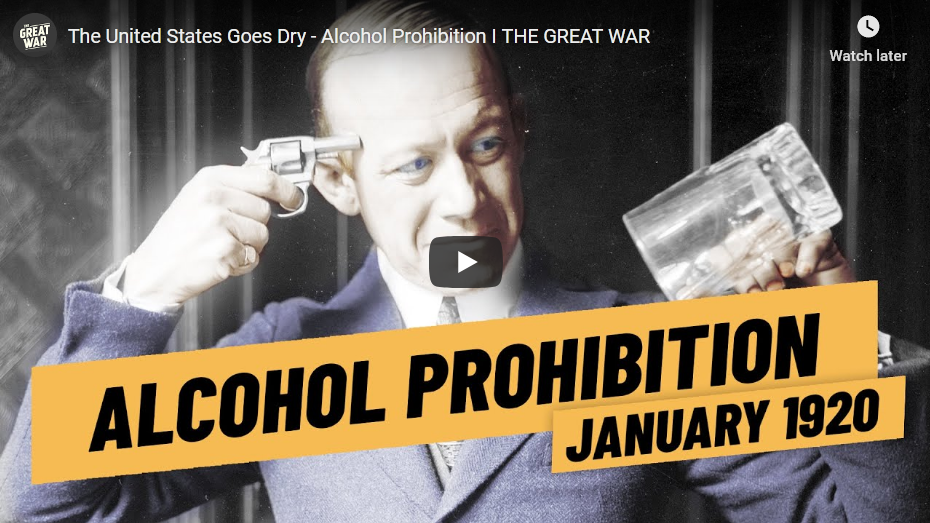
The United States Goes Dry – Alcohol Prohibition I THE GREAT WAR
The Great War
Published 20 Jan 2020In January 1920, after one year of preparation, the 18th Amendment to the US Constitution went into effect. From now on alcohol prohibition was the law.
» SUPPORT THE CHANNEL
Patreon: https://www.patreon.com/thegreatwar
Merchandise: https://shop.spreadshirt.de/thegreatwar/» SOURCES
Ehmer, K. and Hindermann, B. (2015). The School of Sophisticated Drinking. New York: Greystone Books.
Miron and Zwiebel, “Alcohol Consumption During Prohibition”. In the American Economic Review, Vol. 81, No. 2, pp. 242-247, (May 1991).
Darrow, Clarence, and John Haynes Holmes. Debate On Prohibition. Haldeman-Julius Co., 1924.
Iorizzo, Luciano J. Al Capone. Greenwood Press, 2003.
Nemtsov, Aleksandr. A Contemporary History of Alcohol in Russia. Stockholm, 2011.
Sullivan, Edward D. Rattling the Cup on Chicago Crime. New York: The Vangaurd Press, 1929.
United States Government, “Codification of Internal Revenue Laws, … Published Pursuant to Section 1203(c) Revenue Act of 1926”.
18th Amendment to the Constitution of the United States. https://www.loc.gov/rr/program/bib/ou…
United States Department of Agriculture. “Crop Production Historical Track Records, 2018”. https://www.nass.usda.gov/Publication…
Kamieński, Łukasz: “Drugs”, in: 1914-1918-online. International Encyclopedia of the First World War, ed. by Ute Daniel, Peter Gatrell, Oliver Janz, Heather Jones, Jennifer Keene, Alan Kramer, and Bill Nasson, issued by Freie Universität Berlin, Berlin 2019-03-07
Blocker, Jack S Jr. “Did prohibition really work? Alcohol prohibition as a public health innovation.” American Journal of Public Health vol. 96,2 (2006): 233-43.» SOCIAL MEDIA
Instagram: https://instagram.com/the_great_war
Twitter: https://twitter.com/WW1_Series
Reddit: https://reddit.com/r/TheGreatWarChannel»CREDITS
Presented by: Jesse Alexander
Written by: Mark Newton
Director: Toni Steller & Florian Wittig
Director of Photography: Toni Steller
Sound: Toni Steller
Editing: Toni Steller
Mixing, Mastering & Sound Design: http://above-zero.com
Maps: Daniel Kogosov (https://www.patreon.com/Zalezsky)
Research by: Jesse Alexander
Fact checking: Florian WittigChannel Design: Alexander Clark
Original Logo: David van StepholdA Mediakraft Networks Original Channel
Contains licensed material by getty images
All rights reserved – Real Time History GmbH 2020
January 19, 2020
“… if the Constitution is a threat to killer whales, why, then, to hell with the Constitution”
Colby Cosh reviews the sad tale of the British Columbian government’s defeat before the Supreme Court of Canada over pipelines:
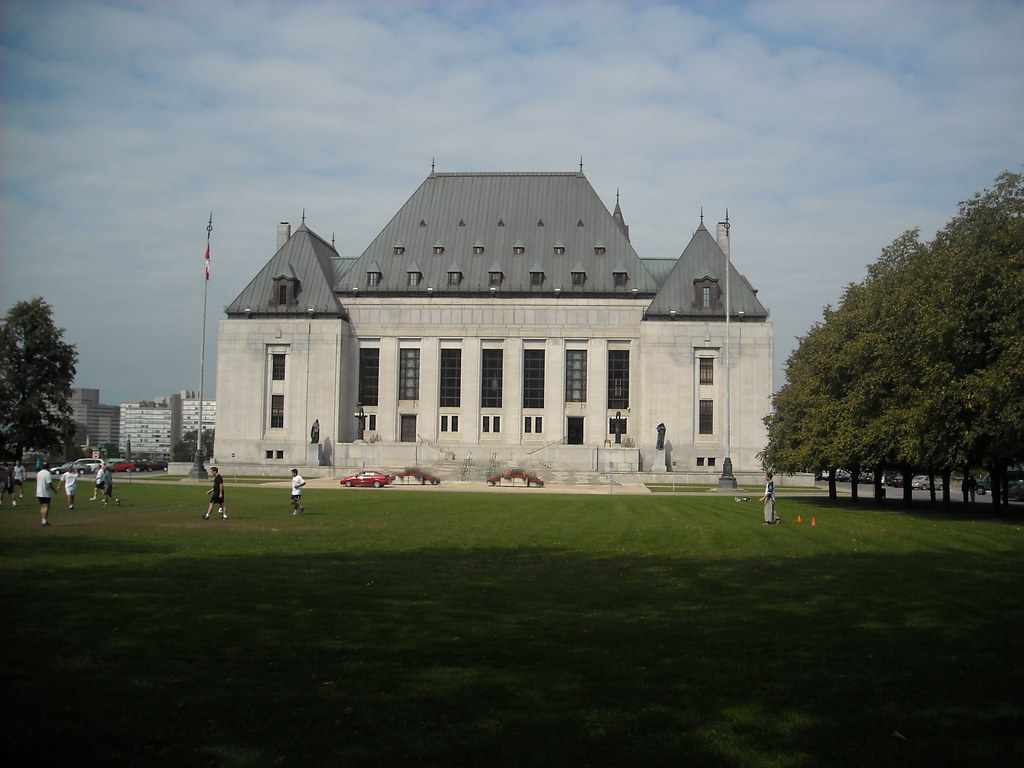
“Supreme Court of Canada, Ottawa” by daniel0685 is licensed under CC BY 2.0
So … yeah, that didn’t go real well. On Thursday the province of British Columbia sent its chosen representative, lawyer Joseph Arvay, to the Supreme Court to plead the oral case for B.C.’s law regulating bitumen in pipelines. John Horgan’s government had attempted to establish its own permit regime for pipeline contents, which are, under accepted constitutional doctrine, a federal responsibility. The B.C. Court of Appeal had wiped out the provincial law unanimously last summer.
Arvay’s task was widely recognized as a Hail Mary pass. But things got even more awkward as the hearing commenced and the justices of the Supreme Court interrogated him on his province’s logical, environmental, and even economic premises. An appellate court’s disposition is sometimes hard to ferret out in its hearings, but this one was so rough that Arvay was reduced to grumbling “If I’m not going to win the appeal, then I don’t want to lose badly.” Alas, the judges did not even see the need to deliberate over their reasons: they at once, and as one, ruled against B.C.
Which is not to suggest that Mr. Arvay didn’t do the best possible job. If we’re sticking with the football metaphor, the problem all along was the game plan. Given the clear federal responsibility for interprovincial pipelines, as “Works and Undertakings connecting … Provinces,” the B.C. government had no choice but to downplay the conflict between the purpose of its proposed environmental permits and the purpose of the ones the federal government hands out. Arvay had to try to convince the ermine gang that a law applying exclusively to the contents of a pipeline wasn’t a regulation of the pipeline.
“The only concern the premier, the attorney general and the members of the government have had is the harm of bitumen,” Arvay protested. “It’s not about pipelines. They’re not anti-pipelines, they’re not anti-Alberta, they’re not anti-oilsands, they’re not anti-oil.”
It’s enough to almost make one sympathetic to the more radical strategy of argument pursued at the hearing by Harry Wruck, a lawyer for Ecojustice Canada who appeared as an intervener supporting B.C. Wruck put before the Supreme Court the same idea he had presented to the BCCA: if the Constitution is a threat to killer whales, why, then, to hell with the Constitution.
January 4, 2020
Australia, the firebug country
Arthur Chrenkoff rounds up the surprisingly numerous reports of arson over the last few months in Australia:
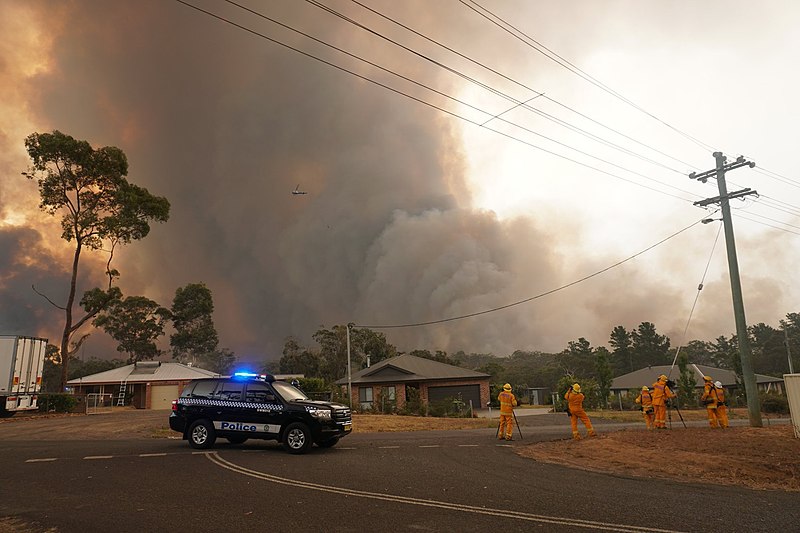
The Green Wattle Creek bushfire moves towards the Southern Highlands township of Yanderra as police evacuate residents from Yanderra Road, 21 December, 2019.
Photo by Helitak430 via Wikimedia Commons
According to my calculations and estimates, the number of individuals around Australia whose arson has contributed to the current bushfire crisis has now passed 200.
This figure is not presented as a counter-argument to those who blame the fires on climate change. Most people (I hope) understand that trees tend not to spontaneously combust, no matter what the air temperature is; when we talk about bushfires starting naturally, we are talking about lightning strikes igniting tinder. The climate change argument posits that the more extreme weather conditions – higher temperatures, drought, etc. – make fires, however started, much more destructive and much more difficult to control and extinguish. These are debates to be had between climatologists, forestry experts and fire fighters. What is painfully clear, however, that Australia has a firebug crisis. It will no doubt be up to future royal commissions and inquiries to calculate exactly what proportion of the current loss and destruction can be attributed to human action, but I suspect it will be a significant one. Man might be making climate change, but man is most definitely making fires start.
Below, a sample of news reports from around the country for the past several months.
[…]
There are no conspiracies here. Though arson has been tried and called for before as a tool of terror, the Australian fires seem to result from the actions of unconnected individuals who are either disturbed or reckless. This is nothing new; as ecological criminologist Paul Read wrote back in November:
A 2015 satellite analysis of 113,000 fires from 1997-2009 confirmed what we had known for some time — 40 per cent of fires are deliberately lit, another 47 per cent accidental. This generally matches previous data published a decade earlier that about half of all fires were suspected or deliberate arson, and 37 per cent accidental. Combined, they reach the same conclusion: 87 per cent are man-made …
If I had to guess, I’d say about 10,000 arsonists lurk from the top of Queensland to the southern-most tip of Victoria, but not all are active and some light fires during winter. The most dangerous light fires on the hottest days, generally closer to communities and during other blazes, suggesting more malicious motives. Only a tiny minority will gaze with wonder at the destruction they have wrought, deeply fascinated and empowered. Others get caught up with the excitement of chaos and behave like impulsive idiots.
As for children, they are not always malicious. Children and youths follow the age-crime curve where delinquency peaks in their late teens. Fire is just one of many misbehaviours. The great majority grow out of it. Four overlapping subgroups include: accidental fire-play getting out of control; victims of child abuse — including sexual abuse — and neglect; children with autism and developmental disorders; and conduct disorder from a younger age, which can be genuinely dangerous.
The more fires, proportionally the more arsonists. And the recent mega-fires are really bringing out all the fire bugs out of the woodwork (or into the woodwork to be more accurate). It is disturbing, but sadly not surprising or unexpected. As some have suggested already, the current crisis, with its large sample of arsonists, provides a good opportunity for more research into the psychology, motivation and behaviour of fire-starters. This might help in the future, but clearly arsonists will always be with us. The task is to make their work more difficult, for example through better management of our forests to make them less combustible. But as much as bushfires are an environmental and land management problem, as we search for solution we can’t forget that they are also a criminal one.


