Quotulatiousness

August 22, 2012

QotD: Orwell on the Dieppe raid

Filed under: Cancon, France, Germany, History, Military, Quotations, WW2 — Tags: , , — Nicholas @ 09:12

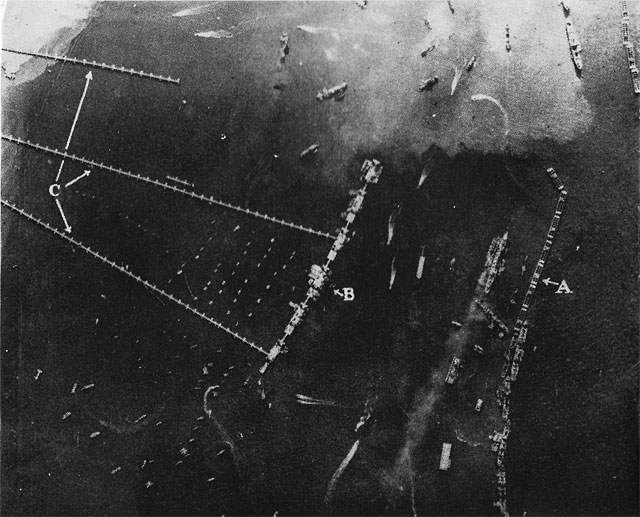
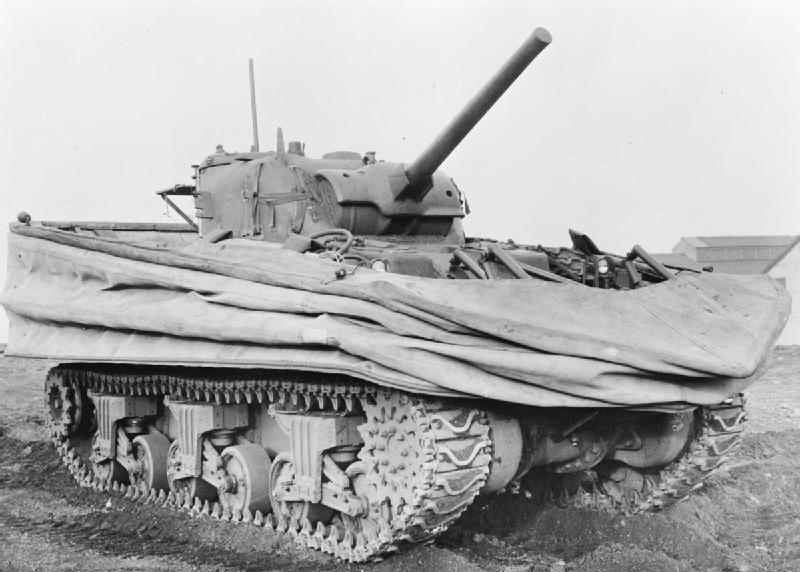
D[avid] A[stor] very damping about the Dieppe raid, which he saw at more or less close quarters and which he says was an almost complete failure except for the very heavy destruction of German fighter planes, which was not part of the plan. He says that the affair was definitely misrepresented in the press and is now being misrepresented in the reports to the P.M., and that the main facts were: – Something over 5000 men were engaged, of whom at least 2000 were killed or prisoners. It was not intended to stay longer on shore than was actually done (ie. till about 4pm), but the idea was to destroy all the defences of Dieppe, and the attempt to do this was an utter failure. In fact only comparatively trivial damage was done, a few batteries of guns knocked out etc., and only one of the three main parties really made its objective. The others did not get far and many were massacred on the beach by artillery fire. The defences were formidable and would have been difficult to deal with even if there had been artillery support, as the guns were sunk in the face of the cliffs or under enormous concrete coverings. More tank-landing craft were sunk then got ashore. About 20 or 30 tanks were landed but none got off again. The newspaper photos which showed tanks apparently being brought back to England were intentionally misleading. The general impression was that the Germans knew of the raid beforehand. Almost as soon as it was begun they had a man broadcasting a spurious “eye-witness” account from somewhere further up the coast, and another man broadcasting false orders in English. On the other hand the Germans were evidently surprised by the strength of the air support. Whereas normally they have kept their fighters on the ground so as to conserve their strength, they sent them into the air as soon as they heard that tanks were landing, and lost a number of planes variously estimated, but considered by some RAF officers to be as high as 270. Owing to the British strength in the air the destroyers were able to lie outside Dieppe all day. One was sunk, by this was by a shore battery. When a request came to attack some objective on shore, the destroyers formed in line and raced inshore firing their guns while the fighter planes supported them overhead.

George Orwell, diary entry for August 22, 1942.

August 12, 2012

The (long awaited) growth in Indian manufacturing

Filed under: Business, Germany, History, India, Technology — Tags: , , , , , — Nicholas @ 08:59

The Economist on the relatively slow development of India’s manufacturing sector:

If India is to become “the next China” — a manufacturing powerhouse — it is taking its time about it. “We have to industrialise India, and as rapidly as possible,” said the country’s first prime minister, Jawaharlal Nehru, in 1951. Politicians have tried everything since, including Soviet-style planning. But India seems to prefer growing crops and selling services to making things you can drop on your foot.

Manufacturing is still just 15% of output (see chart), far below Asian norms. India needs a big manufacturing base. No major country has grown rich without one and nothing else is likely to absorb the labour of the 250m youngsters set to reach working age in the next 15 years. But it can seem a remote prospect. In July power cuts plunged an area in which over 600m people live into darkness, reminding investors that India’s infrastructure is not wholly reliable. And workers boiled over at a car factory run by Maruti Suzuki. Almost 100 people were injured and the plant was torched. The charred body of a human-resources chief was found in the ashes.

Yet not all is farce and tragedy. Take Pune in west India, a booming industrial hub that has won the steely hearts of Germany’s car firms. Inside a $700m Volkswagen plant on the city’s outskirts, laser-wielding robots test car frames’ dimensions and a giant conveyor belt slips by, with sprung-wood surfaces to protect workers’ knees. It is “probably the cheapest factory we have worldwide”, says John Chacko, VW’s boss in India. In time it could become an export hub. Nearby, in the distance it takes a Polo to get to 60mph, is a plant owned by Mercedes-Benz.

The initial demand for a domestic manufacturing base was more political than economic: it would serve to reinforce the newly won independence of India by showing that India could make its own goods rather than importing from the UK or other major manufacturing nations. It was also economic, in that it would provide relatively high-paying jobs for India’s rapidly urbanizing population.

Ironically, now that the manufacturing sector seems to be on the upswing, the one thing it isn’t going to do for India is provide lots and lots of jobs: as with the rest of the world, manufacturing “things” is being done with fewer workers every year (even when the total output increases, fewer workers are needed to produce that output).

August 6, 2012

Admiral Fisher: an excitable sort of man

Filed under: Britain, Germany, History, Humour, WW1 — Tags: , , , — Nicholas @ 10:41

Admiral “Jackie” Fisher was a major historical figure in the Royal Navy, advocate of the modern dreadnought battleship and a tad high-strung (“…and on one occasion, the king asked him to stop shaking his fist in his face”). His relationship with Winston Churchill at the Admiralty must have been something to observe, as two of the most influential men in London worked together (for a while). After leaving the Admiralty for the last time, he still kept in touch with Churchill. Here is an example of his communication style:

This is believed to be the first documented use of the now familiar “OMG”.

H/T to Shaun Usher.

August 5, 2012

Raoul Wallenberg remembered

Filed under: Europe, Germany, History, Russia, WW2 — Tags: , , , , — Nicholas @ 11:05

Yesterday was what would have been Raoul Wallenberg’s 100th birthday. It was observed in Sweden:

Sweden on Saturday commemorated the life of a diplomat credited with saving thousands of Hungarian Jews from the Nazis in World War II, but whose fate remains one of the country’s greatest war-time mysteries.

Crowds gathered in the town of Sigtuna, 50 kilometers (30 miles) north of Stockholm to celebrate the centennial of the birth of Raoul Wallenberg, whose defiance of the Nazis has been commemorated worldwide in statues, streets names, and on postage stamps.

Wallenberg served as Sweden’s envoy in Budapest from July 1944 — where he saved the lives of at least 20,000 Jews by giving them Swedish travel documents, the so-called “shutzpass,” or moving them to safe houses. He is also credited with dissuading German officers from massacring the 70,000 inhabitants of the city’s ghetto.

But, in January 1945, the young Swede was arrested by the Soviet Red Army on leaving Budapest to go to the eastern part of the country, and suddenly disappeared.

The Soviets initially denied they had detained him, but later said he had died of a heart attack in prison on July 17, 1947.

July 26, 2012

Wreck of WWII U-boat may be 100km up the Churchill River

Filed under: Cancon, Germany, History, Military, WW2 — Tags: , , — Nicholas @ 09:57

CBC News on the possible discovery of remains of a German WW2 submarine in Labrador:

The German government says it is possible, but added that it would be “sensational and unusual,” that a submarine could have ended up so far inland.

“We do know that German U-boats did operate in that region,” said Georg Juergens, the deputy head of mission for the German Embassy in Ottawa.

He notes that a Second World War-era, battery-operated weather station was found decades after being left in Labrador by a U-boat. It is now on display at the Canadian War Museum in Ottawa.

“We must brace ourselves for surprises,” Juergens told CBC News, while stressing that the submarine has yet to be positively identified.

More than a dozen U-boats may still be unaccounted for, he said.

If the mystery find is proven to be a submarine wreck, the German government does not favour bringing it to the surface.

“That would be against our tradition and our naval customs,” Juergens said. “This site then would be declared a war grave at sea.”

He said Canadian policy dovetails with German policy on such matters.

According to Juergens, the Newfoundland and Labrador government is now involved in efforts to authenticate the possible wreck.

June 27, 2012

John Kay on the evils of rent-seeking

Filed under: Economics, Germany, Government, Politics — Tags: , , , , — Nicholas @ 08:08

Broadly speaking, wealth can be accumulated in two distinctly different ways. It can be earned through hard work, innovation, and competition, or it can be extracted from the public by use of coercive methods, corruption, and misappropriation:

Whatever the true extent of the Mubarak family fortune, it stands in stark contrast to the lot of most Egyptians. Gross domestic product per capita in Egypt is a mere $2,500. In western Europe and North America GDP per capita is about $40,000, yet the capacities of Egypt’s intellectual and entrepreneurial elite are the rival of any state in the world.

The real damage imposed by men such as Mr Mubarak is not the money they might have stolen. The tragedy is that the system that enables them to steal it destroys opportunities for others to generate wealth — not only for themselves but for the whole population.

The price of requiring a potential Mark Zuckerberg or Mr Gates to pay a $100 bribe to each of 10 officials before he can establish his new business is not the $1,000 creamed off by corrupt bureaucrats. It is the far greater one of lost businesses that never came into being because the licensing process that makes such corruption possible was not navigated. In the meantime, people who might be successful entrepreneurs choose instead to seek political power. If business is endlessly frustrating and politics endlessly rewarding, the career choice for able and enterprising people is obvious.

Institutions are the key influence on economic prosperity — West Germany did not outperform East Germany because of its excellent monetary policies. And, as Daron Acemoglou and James Robinson point out in their book, Why Nations Fail, a critical feature of successful economic institutions is that they limit the scope for what these authors call “extractive activity” — others have described it as predation or rent-seeking — which appropriates the wealth created by other people.

June 26, 2012

Poland’s uneasy WW2 history

Filed under: Books, Europe, Germany, History, Media, WW2 — Tags: , , — Nicholas @ 09:39

Poles are being told unwelcome things about the country’s experiences under Nazi rule. The most recent upheavals have been triggered by the publication of a new book by Jan T. Gross:

Its title, Golden Harvest, stems from a cover photograph that purportedly shows Polish peasants who have been digging through remains of victims killed at Treblinka, where 800,000 Jews were gassed and cremated, to find gold or valuable stones neglected by the Nazis.

From there, Mr. Gross narrates events beyond the barbed wire of Nazi death camps. He describes Poles hunting Jews down, extorting money from them, massacring them, and profiting by taking over their jobs and property. Some 3.3 million Jews lived in Poland before the war began, and about 90 percent had perished by its end.

“There was a sense of satisfaction that was quite widespread that they are being eliminated from Polish economic and social life,” Mr. Gross says in a phone interview from Kraków, where he is teaching a summer course for Princeton students. “When given the opportunity, a large number of Poles participated in victimization of Jews.”

[. . .]

The white-haired, New York-based writer, 64, enjoys a level of notoriety in his native country that lacks any analogue among American historians. When word gets out that he is publishing a new book, anxiety spreads about what dirty laundry he will expose this time. His writing gets discussed on prime-time TV.

Mr. Gross “polarizes public opinion probably more than anyone else outside of the political world,” says Jan Grabowski, a Holocaust historian who splits his time between the University of Ottawa and Poland.

His books have struck such a nerve because they cut against the national narrative that Poland is exclusively a victim of history, not a victimizer.

June 6, 2012

Colour footage of the D-Day landings

Filed under: Britain, Cancon, France, Germany, History, Military, USA, WW2 — Tags: , , — Nicholas @ 00:02

Reposted from last year.

Update: Jonathan Kay on the forgotten casualties of the Slapton Sands exercise:

In the dead of night, just over 68 years ago, 30,000 Allied soldiers stationed in British ports filed onto amphibious landing craft, and put out to sea. The flotilla sailed toward its objective, and all went according to plan — until a German naval squadron patrolling the English Channel spotted the Allied force and opened fire. The defenseless landing craft began burning and sinking, sending more than 600 men to their deaths.

The surviving ships sailed on to their assigned landing zone, disgorging the soldiers onto the beach. There, the killing continued: More than 300 troops died in the sand, blasted to bits by incoming shells. All told, 946 men from among the original 30,000 died that day — a fatality rate of about 3%.

That figure was hardly unusual for major Second World War offensive operations. And yet, amazingly, the tragedy described in the paragraphs above wasn’t actually an offensive operation at all. It was Exercise Tiger, an American training mission that took place in April, 1944 — a full five weeks before D-Day.

The beach that the men landed on wasn’t in Nazi-occupied Europe, but Slapton Sands on the Devon coast. And the shells that rained down on the dunes were fired not from German artillery positions, but by guns on the British cruiser HMS Hawkins. As British historian Giles Milton notes, “the Supreme Allied Commander, General Eisenhower, had ordered that real ammunition be used, so that men would experience actual battlefield conditions. It was a disastrous decision.”

May 23, 2012

Review of Savage Continent: Europe in the Aftermath of World War II

Filed under: Europe, Germany, History, Military, Russia, WW2 — Tags: , , — Nicholas @ 10:41

Roger Moorhouse reviews the new book by Keith Lowe for History Today:

It examines Europe in the years immediately after the end of the Second World War, when the guns stopped firing. Yet, as Lowe clearly demonstrates, the absence of war is not the same as an outbreak of peace.

Savage Continent is a grim catalogue of humanity at its lowest ebb. Necessarily pointillist, given its broad scope, it ranges across much of the European continent, portraying a world where civil society and the rule of law were yet to be re-established and where revenge, antisemitism, ethnic cleansing and heightened political sensibilities gave rise to a renewed wave of inter-communal and political violence.

According to Lowe’s account, those immediate postwar years had a thoroughly unedifying air. From the Yugoslav partisans cutting off the noses of their erstwhile opponents, to antisemitic pogroms in Poland, to the massacres of Sudeten Germans in Czechoslovakia, he shows a dystopian continent in which the all-pervasive dehumanisation of the war proved difficult to reverse, provoking a hangover of violence that would last, in some places, into the 1950s.

Alongside the now rather well-documented episodes of brutality from the period, such as the Communist takeover of Eastern Europe, or the expulsion of the German populations from the same region, Lowe does well to uncover some lesser-known examples of man’s postwar inhumanity to his fellow man. The story of the Lithuanian ‘Forest Brothers’, for instance, and their brave, futile resistance to the imposition of Soviet rule, is one that deserves to be much wider known and is outlined well. Similarly the ethnic cleansing of Ukrainians in postwar Poland is rightly placed alongside better-known events, such as the Kielce pogrom and the Vertreibung (expulsion) of the Germans.

I just started reading Postwar: A History of Europe Since 1945 by Tony Judt, and he covers much of the same period of history as Lowe in the first part of his book. I’m moderately well-read on World War II, but the amount of violence and human misery in Europe for more than a decade after the war was “over” is indeed an under-covered and misunderstood aspect of that turbulent period.

Western European countries (France, Belgium, the Netherlands, Norway, and even western Germany) recovered faster in all senses because the Nazi occupiers did much less damage to the social structures in those countries. It’s rather eye-opening to find how few Nazi officials were needed to oversee the local governments in those countries: 800 in Norway, and only 1,500 in France (plus 6,000 military and civil police auxiliaries). Local governments continued to operate pretty much as they had before the war, under the control of a tiny group of German overseers. Economic demands meant the local industries were harnessed to the Nazi war effort (but largely kept under the control of their original owners).

Central and eastern European countries suffered far more disruption as the Nazi racial “logic” did not allow local governments the same relative lack of interference the western local governments got. Local industry was more frequently nationalized and run by German managers directly, not working through the original owners, and local labour was more readily drafted to work in Germany. And unlike in the west, the experiences of newly “liberated” countries in the east often started with a fresh purge of local governments, business owners, and middle class professionals.

What we’d now call “ethnic cleansing” was a frequent second act after the Soviet armies moved in: ethnic Germans were expelled, ethnic Slavs were moved into the cleared areas. Jews, Gypsies, and other groups that suffered terribly under the Nazis did not necessarily see much improvement under the Soviets. Former resistance fighters were hunted down and eliminated (except for those belonging to identified Communist movements … and not even that was guaranteed protection).

Under the circumstances, it may well be nothing short of a secular miracle that Europe recovered economically and socially so soon after the war and the post-war convulsions.

May 22, 2012

Bombing campaigns against Nazi Germany were remarkably inaccurate

Filed under: Britain, Europe, Germany, History, Military, WW2 — Tags: , — Nicholas @ 10:54

An article in History Today recaps the huge gap between what the RAF was thought to be accomplishing in the first half of World War 2 and what they actually achieved in the bombing campaign against Germany:

By 1941, after the winter Blitz in which the Luftwaffe had relentlessly bombed the cities of Britain, the British people wanted to know that the RAF were ‘giving it back’ to the Germans. Later that year, as [Michael] Paris describes, Harry Watt directed his film Target for Tonight for the Crown Film Unit. Made with actual RAF personnel performing a script written by Watt, Target follows the story of a single raid on an imaginary railway yard and oil depot somewhere near a bend in the Rhine. The film sought to celebrate the quiet heroics of the RAF, which is shown to have the ability to mount a precision raid with great success. Audiences no doubt cheered to see the (models of the) target ablaze and to know — or, rather, believe — that the RAF was creating havoc in the enemy’s heartland.

[. . .]

According to a secret Cabinet report, which analysed aerial photographs in the summer of 1941, the RAF failed to get even one third of its bombs within five miles of its targets. The Strategic Air Offensive was published much to the chagrin of wartime RAF leaders such as Sir Arthur ‘Bomber’ Harris and generated intense and widespread controversy.

By the 1980s it was largely accepted that, before new navigational aids were introduced in 1942, the RAF offensive had been a complete failure. Although the moral debate about the rights and wrongs of ‘area’ or ‘indiscriminate’ bombing has continued ever since, there are no serious historians today who challenge the accuracy of the Webster-Frankland account. And so, in 1990, Paris was able to point out the gulf between what the RAF pretended had been happening and what, in reality, was going on.

Before the war started, the air force always claimed that the “bomber would always get through”. What they didn’t say was that it couldn’t be predicted where the bomber would get through to.

However, it must be remembered that even the US Air Force, which carried out daylight air raids against German targets in the latter half of the war, had an accuracy issue too:

Gladwell began with the story of Carl Norden — a Swiss engineer, born in 1880, domineering and narcissistic, “who had very strong feelings about alternating current” and much else. Norden became obsessed with finding a more precise ways to deliver bombs from aircraft — and invented the Norden Mark 15 Bomb Sights. Its promise: that a bomb could be dropped into a pickle barrel from 20,000 feet.

The US military was excited; in fact, Washington spent $1.5 billion in 1940 dollars rolling out the devices, buying 90,000 of them and training 50,000 bombardiers to use them. Yet when America was brought into world war two, “it turns out they were not the holy grail”. They could only hit a pickle barrel under perfect conditions — and life is rarely perfect, it proved. They were hard to use, broke down, could not function in cloud without direct line of sight of the target, and were inaccurate. Plus, Norden had hired German engineers — who gave Berlin the complete blueprint by 1938.

April 14, 2012

John Moore thinks that Canada is stupid to consider Vimy Ridge a “defining moment”

Filed under: Cancon, Europe, France, Germany, History, Military, WW1 — Tags: , — Nicholas @ 11:27

Writing in the Pacifist Times National Post, John Moore expresses the opinion that Canada should derive its sense of national pride from “compassion, hard work and character” rather than remembering anything positive from the bravery and sacrifice of Canadian soldiers in the war against Imperial Germany:

The tropes are well known to Vimy devotes. Over four days in April in 1917, Canadian soldiers accomplished through planning, guts and guile what 150,000 dead French and British soldiers had failed to achieve: The capture of seven kilometres of land rising up to a ridge held by the Germans. It was the first time all four divisions of the Canadian Corps had fought together — 3,598 Canadians lay dead; 7,000 were wounded.

But is Vimy really the best of Canada? Does our modern identity and national purpose hinge on the harrowing slaughter of our citizens on a foreign field of mud in a pointless war?

Canada went to war in 1914 at the same moment that Britain did. Britain went to war because they had guaranteed the independence of Belgium, but Germany needed to violate that independence in order to push the massive right wing of their armies past the French frontier forces in an attempt to outflank and destroy the French army. If Canada entering the war was “pointless”, then we should never have taken part in World War 2 (which Moore paints as being “one of the most unambiguously moral wars in history” either.

If anything, modern Canada should reflect on Vimy and our total First World War sacrifice as a national tragedy. Sixty-thousand Canadian men died in a war in which we had no real casus belli and which was largely administered by damnable incompetents. A generation of teachers, milkmen, farm hands, labourers, students and artists died on the field of battle, so hollowing out the population that many of the women they left behind would never marry. One hundred and seventythree thousand returned home suffering from burns, chemical poisoning, amputations and traumatic stress disorder that would leave them depressed and spastic for the remainder of their lives.

So why, 95 years later, do we venerate Vimy? Perhaps because it’s far easier to stir emotions where military matters are concerned. You can’t erect a heroic statue to the civility for which Canada is renowned. Social justice has never been able to muster an inspiring flypast. The national understanding that in Canada we look after each other doesn’t have a solemn bugle call to draw a tear.

So Moore thinks that Canada is defined by social justice and civility? I guess that’s at least a bit better than the even more common notion on the left that Canada is defined only by socialized medicine.

March 27, 2012

The first “home run” from the Colditz POW camp

Filed under: Britain, Europe, Germany, History, WW2 — Tags: — Nicholas @ 09:45

BBC News has an interesting bit of history about the first successful escape from the “escape-proof” prisoner-of-war camp at Colditz:

Forged papers used by a British escapee from Colditz to make one of the first “home runs” back to the UK from the notorious German prisoner-of-war camp are being sold along with his medals. The tale of his ingenuity and success has become the stuff of World War II legend.

Perched high on a rocky outcrop overlooking the River Mulde near Leipzig, eastern Germany, Colditz castle was considered by German authorities in WWII the ideal site for a high-security prison for allied officers with a history of trying to escape.

But despite its “escape proof” label, the Gothic building witnessed 174 attempts by its troublesome, spirited inmates.

Nevertheless, just 32 men were ever successful — and only half of these managed the feat from within the castle.

March 24, 2012

The less-than-glamorous reality of Cold War spy work

Filed under: Books, Britain, Europe, Germany, History, Military, Russia — Tags: , , , , — Nicholas @ 00:08

A review of Steve Gibson’s Live and Let Spy: BRIXMIS – The Last Cold War Mission by Bill Durodié at spiked!:

Called the British Commander-in-Chief’s Mission to the Group Soviet Forces of Occupation in Germany, or BRIXMIS for short, it was part of an officially sanctioned exchange of observers between the Red Army and the British Army established by the victorious Allied powers and the USSR through the Robertson-Malinin agreement in 1946. Its ostensible purpose was to improve communication and relations between them.

In addition to BRIXMIS — and their French and American counterparts in the East — the Red Army also conducted similar operations through a unit in West Germany. But, diplomatic liaison and translation duties aside, the real purpose of these units soon became clear: to find out what each other was up to by heading out into those areas where they had been specifically told not to go.

[. . .]

For anyone who imagines that spying is glamorous, or somehow akin to being in a Bond movie, they will be disabused by Gibson’s chapter on document-gathering from dumps (literally). It had been recognised for some time that, when they went on manoeuvres in East Germany, the Soviet forces were not supplied with any toilet paper. They would use whatever came to hand — a copy of Pravda, a letter from a loved one, or even their mission papers. And after they were done, it was then that Her Majesty’s specially trained and equipped Cold War warriors really came into their own…

The book is republished with an expanded final chapter reflecting on what happened in the time following the fall of the Iron Curtain:

As a professor of political science at the University of Warwick, Robert Aldrich, notes in the new foreword, Gibson is now clearly of the mind that ‘much of what [he] was led to believe [during the Cold War], and some of what he was told, was simply wrong!’

[. . .]

Gibson’s resolute clearsightedness is to be admired. So despite having been caught up in the exhilaration of it all as a young man, despite devoting the prime of his life to the East-West conflict, he refuses to lie to himself. ‘The Cold War’, he notes, ‘was a giant historical cul-de-sac where all enlightened efforts at producing a good society were suspended’.

Aldrich astutely summarises a key argument of Live and Let Spy: ‘while Cold War warriors fought a tyrannical and ruthless version of Communism abroad, they remained ignorant of — and lost — an ideological battle at home’. He then adds accusingly: ‘Western politicians now offer a watered-down version of the interfering, intolerant, controlling and authoritarian government that they were initially set against rather than anything freer.’

March 12, 2012

The hidden dangers of driving an antique BMW Isetta

Filed under: Europe, Germany, History, Media, Technology — Tags: , , — Nicholas @ 00:04

March 11, 2012

Music control freaks? The Nazis got there well before you

Filed under: Europe, Germany, History, Liberty, Media — Tags: , , , , — Nicholas @ 10:27

J.J. Gould in The Atlantic a couple of months ago, but brought to my attention by the folks at BoingBoing:

Skvorecky left no shortage of legacies to remember him by, but one of the more notable themes in his nonfiction writing is an emphasis on, as Welch puts it, “the oftentime minute similarities between applied fascism and communism.” And some of Skvorecky’s more notable variations on that theme in turn are found in his recollections and insights on the common totalitarian hatred of, among all things, jazz.

[. . .]

Anyone who finds this proposition fascinating won’t, I promise, be disappointed to read the rest of this book, or for that matter all of Talkin’ Moscow Blues: Essays About Literature, Politics, Movies, and Jazz. But maybe the single most remarkable example of 20th-century totalitarian invective against jazz that Skvorecky ever relayed was here in the intro to The Bass Saxophone, where he recalls — faithfully, he assures us (“they had engraved themselves deeply on my mind”) — a set of regulations, issued by a Gauleiter — a regional official for the Reich — as binding on all local dance orchestras during the Nazi occupation of Czechoslovakia. Get this:

  1. Pieces in foxtrot rhythm (so-called swing) are not to exceed 20% of the repertoires of light orchestras and dance bands;
  2. in this so-called jazz type repertoire, preference is to be given to compositions in a major key and to lyrics expressing joy in life rather than Jewishly gloomy lyrics;
  3. As to tempo, preference is also to be given to brisk compositions over slow ones so-called blues); however, the pace must not exceed a certain degree of allegro, commensurate with the Aryan sense of discipline and moderation. On no account will Negroid excesses in tempo (so-called hot jazz) or in solo performances (so-called breaks) be tolerated;
  4. so-called jazz compositions may contain at most 10% syncopation; the remainder must consist of a natural legato movement devoid of the hysterical rhythmic reverses characteristic of the barbarian races and conductive to dark instincts alien to the German people (so-called riffs);
  5. strictly prohibited is the use of instruments alien to the German spirit (so-called cowbells, flexatone, brushes, etc.) as well as all mutes which turn the noble sound of wind and brass instruments into a Jewish-Freemasonic yowl (so-called wa-wa, hat, etc.);
  6. also prohibited are so-called drum breaks longer than half a bar in four-quarter beat (except in stylized military marches);
  7. the double bass must be played solely with the bow in so-called jazz compositions;
  8. plucking of the strings is prohibited, since it is damaging to the instrument and detrimental to Aryan musicality; if a so-called pizzicato effect is absolutely desirable for the character of the composition, strict care must be taken lest the string be allowed to patter on the sordine, which is henceforth forbidden;
  9. musicians are likewise forbidden to make vocal improvisations (so-called scat);
  10. all light orchestras and dance bands are advised to restrict the use of saxophones of all keys and to substitute for them the violin-cello, the viola or possibly a suitable folk instrument.
« Newer PostsOlder Posts »

Powered by WordPress