
World War Two
Published 13 Nov 2021Operation Torch goes off this week, the Allied invasion of French Northwest Africa, but this prompts the Germans to invade Vichy France. This is the Allies’ first combined major offensive in the Western Hemisphere. The Germans launch another offensive of their own this week, though — Operation Hubertus in Stalingrad. And in the South Pacific, a major naval battle begins off Guadalcanal.
(more…)
November 14, 2021
Axis and Allies Both Invade France – WW2 – 168 – November 13, 1942
Comments Off on Axis and Allies Both Invade France – WW2 – 168 – November 13, 1942
November 13, 2021
Here’s Looking at You, Bill – The Secret Preparations for Operation Torch – WW2 – Spies & Ties 10
World War Two
Published 12 Nov 2021To smooth the way for the Allied invasion of French North Africa, Operation Torch, a massive spy operation is set up in 1941 and 42.
(more…)
Comments Off on Here’s Looking at You, Bill – The Secret Preparations for Operation Torch – WW2 – Spies & Ties 10
November 12, 2021
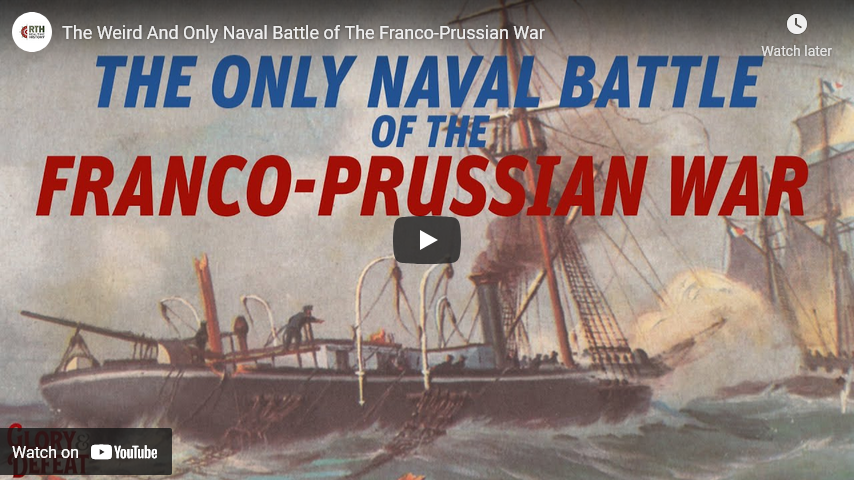
The Weird And Only Naval Battle of The Franco-Prussian War
Real Time History
Published 11 Nov 2021Support Glory & Defeat on Patreon: https://patreon.com/realtimehistory
While the fighting on land continued during the Franco-Prussian War in November 1870, the bizarre and only naval battle of the war took place off the coast of Cuba when the German Meteor and the French Bouvet met in the port of Havana.
» THANK YOU TO OUR CO-PRODUCERS
John Ozment
James Darcangelo
Jacob Carter Landt
Thomas Brendan
James Giliberto
Kurt Gillies
Albert B. Knapp MD
Tobias Wildenblanck
Richard L Benkin
Scott Deederly
John Belland
Adam Smith
Taylor Allen
Jim F Barlow
Rustem Sharipov» OUR PODCAST
https://realtimehistory.net/podcast – interviews with historians and background info for the show.» LITERATURE
Arand, Tobias: 1870/71. Die Geschichte des Deutsch-Französischen Krieges erzählt in Einzelschicksalen. Hamburg 2018Arand, Tobias: “Rogerowski oder Rasumofsky? Überlegungen zur nationalen ‘Meistererzählung’ in Fontanes Kriegsgefangen”, in: Fontane-Blätter 105 (2018), p. 61-86
Bauer, Gerhard u.a. (Hrsg.): Krieg – Macht – Nation. Wie das deutsche Kaiserreich entstand. Ausstellungskatalog Dresden Militärhistorisches Museum der Bundeswehr. Dresden 2020
Bigelow, John: France and the Confederate Navy 1862-1868. New York, 1888
Farret, “Étude sur les combats livrés sur mer de 1860 à 1880”, Revue Maritime et Coloniale, t. 70, no d’édition, 1881, p. 519-522
Gouttman, Alain: La grande défaite 1870-1871. Paris 2015
Pölking, Hermann and Linn Sackarnd: Der Bruderkrieg. Deutsche und Franzosen 1870/71. Freiburg 2020
Radecke, Gabriele/Rauh, Robert: Fontanes Kriegsgefangenschaft. Wie der Dichter in Frankreich dem Tod entging. Berlin 2020
Tümmler, Holger: Großer Atlas des Deutsch-Französischen Krieges 1870/71. Wolfenbüttel 2010
» SOURCES
Fontane, Theodor: Kriegsgefangen. Erlebtes 1870. Neuausgabe Berlin 2020Kriegsgeschichtliche Abtheilung des Großen Generalstabs (Hrsg.): Der deutsch-französische Krieg 1870-71. II.1. Berlin 1878
Kürschner, Joseph (Hrsg.). Der große Krieg in Zeitberichten. Leipzig 1895
Meisner, Heinrich Otto (Hrsg.): Kaiser Friedrich III. Das Kriegstagebuch von 1870/71. Berlin, Leipzig 1926
Roux, Georges: La Guerre de 1870. Paris 1966
Stenzel, Alfred: “Flotte und Küste”, in: Krieg und Sieg 1870-71. Ein Gedenkbuch, hrsg. v. Julius von Plugk-Harttung. Berlin 1895. S. 584-611
“The Naval Duel Near Havana,” Otago Witness, Issue 996, 31 December 1870, p. 11.
» OUR STORE
Website: https://realtimehistory.net»CREDITS
Presented by: Jesse Alexander
Written by: Cathérine Pfauth, Prof. Dr. Tobias Arand, Jesse Alexander
Director: Toni Steller & Florian Wittig
Director of Photography: Toni Steller
Sound: Above Zero
Editing: Toni Steller
Motion Design: Philipp Appelt
Mixing, Mastering & Sound Design: http://above-zero.com
Maps: Battlefield Design
Research by: Cathérine Pfauth, Prof. Dr. Tobias Arand
Fact checking: Cathérine Pfauth, Prof. Dr. Tobias ArandChannel Design: Battlefield Design
Contains licensed material by getty images
All rights reserved – Real Time History GmbH 2021
Comments Off on The Weird And Only Naval Battle of The Franco-Prussian War
November 11, 2021
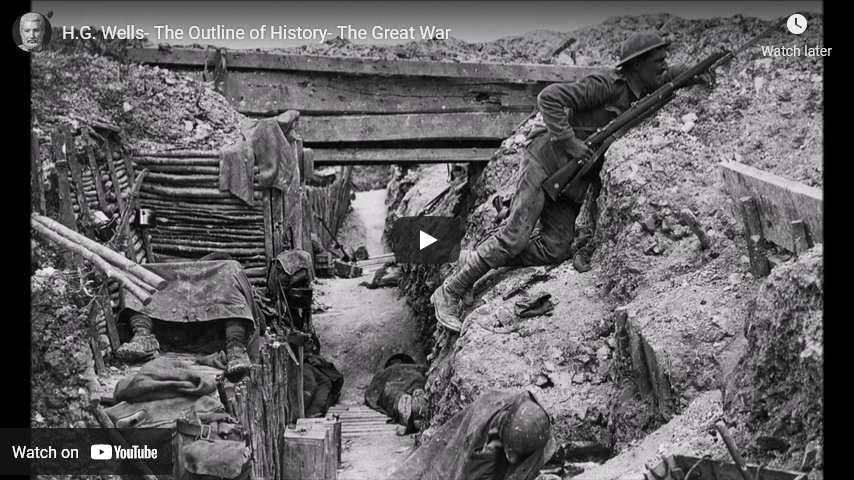
H.G. Wells – The Outline of History – The Great War
Thersites the Historian
Published 5 Mar 2021In this video, we look at H.G. Wells’ coverage of World War I, from the war’s outbreak to the Armistice. Here, we see Wells at his most passionate and he makes a few controversial claims as well as sharing a couple of his personal experiences as a Londoner dealing with German air raids and celebrating the Armistice.
Patreon link: https://www.patreon.com/thersites
PayPal link: paypal.me/thersites
Discord: https://discord.gg/QCaXXFr
Brave Browser: https://brave.com/noa557
Twitter link: https://twitter.com/ThersitesAthens
Minds.com link: https://www.minds.com/ThersitestheHis…
Steemit/dtube link: https://steemit.com/@thersites/feed
BitChute: https://www.bitchute.com/channel/jbyg…
Comments Off on H.G. Wells – The Outline of History – The Great War
November 9, 2021
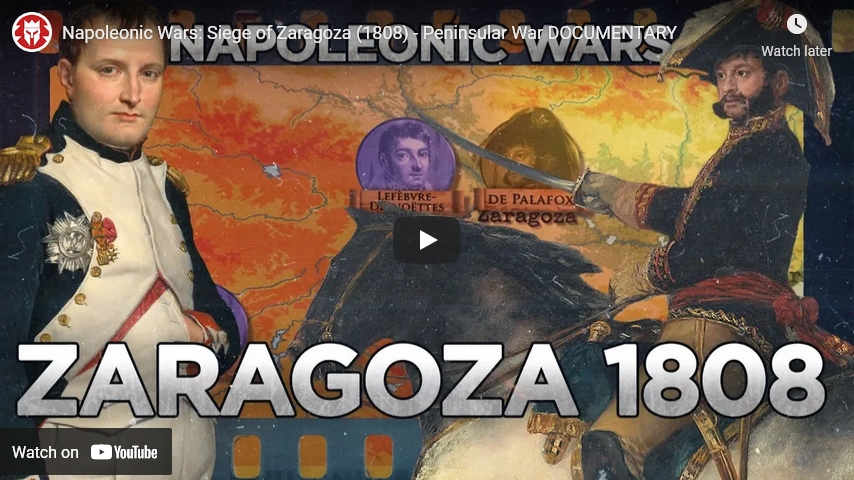
Napoleonic Wars: Siege of Zaragoza (1808) – Peninsular War
Kings and Generals
Published 30 Sep 2018
Our animated historical documentary series on the Napoleonic Wars are back with another episode covering the Peninsular War. The armies of Napoleon face more rebellions this time in Spain. And if the battle of Vimiero was crucial for the resistance in Portugal, the Siege of Zaragoza of 1808 played the similar role for the northern part of Spain. The battle of Bailen is just around the corner, and the Peninsular campaign will only get more interesting from here.This script was researched and written by Everett Rummage. Check out his brilliant Age of Napoleon podcast – http://bit.ly/2vC3cIE In our opinion, it is the best podcast on the Napoleonic era.
Support us on Patreon: http://www.patreon.com/KingsandGenerals or Paypal: http://paypal.me/kingsandgenerals
We are grateful to our patrons and sponsors, who made this video possible: https://drive.google.com/open?id=1KEV…
This video was narrated by Officially Devin (https://www.youtube.com/user/OfficiallyDevin)
Machinimas were made on NTW3 mod for Napoleon Total War by Malay Archer (https://www.youtube.com/user/Mathemed…)
✔ Merch store ► teespring.com/stores/kingsandgenerals
✔ Twitch ► https://www.twitch.tv/nurrrik_phoenix
✔ Twitter ► https://twitter.com/KingsGenerals
✔ Instagram ► http://www.instagram.com/Kings_GeneralsProduction Music courtesy of Epidemic Sound: http://www.epidemicsound.com
Napoleon Total War OST – “HMS Victory”
Napoleon Total War OST – “The Battle At Arcole”
Jon Björk – “Downfall 1”
Johannes Bornlöf – “Imperious 2”
Johannes Bornlöf – “Rise of the Phoenix 2”
Johannes Bornlöf – “Solemn”
Andreas Jamsheree – “Sunstorm 1”#Documentary #Kingsandgenerals #Napoleon
Comments Off on Napoleonic Wars: Siege of Zaragoza (1808) – Peninsular War
November 7, 2021
The Allies Break Through! – WW2 – 167 – November 6, 1942
World War Two
Published 6 Nov 2021After all these months of fighting, the British 8th Army breaks through Erwin Rommel’s Axis positions in North Africa, but the Allies have even bigger plans for that theater of war — a huge invasion of Vichy French North Africa to take place next week. The Soviets also have a plan for a huge invasion to take place very soon near Stalingrad, though the fighting in the city itself sees a lull the second half of this week.
(more…)
Comments Off on The Allies Break Through! – WW2 – 167 – November 6, 1942
November 5, 2021
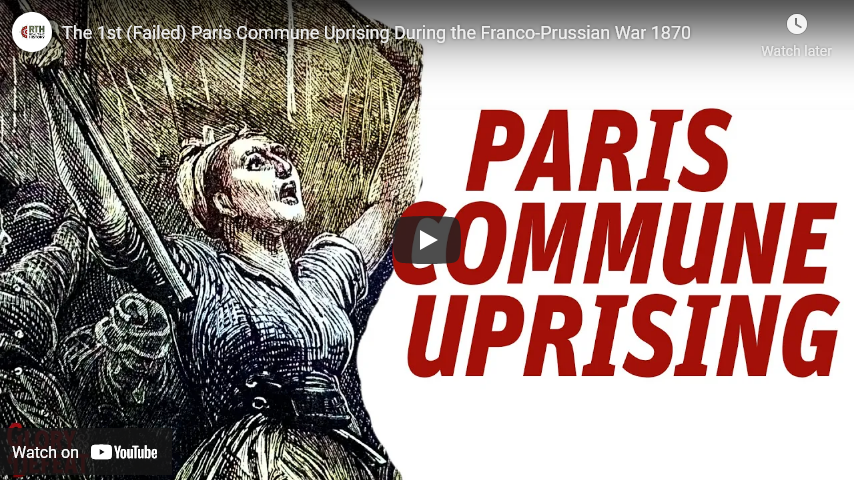
The 1st (Failed) Paris Commune Uprising During the Franco-Prussian War 1870
Real Time History
Published 4 Nov 2021Sign up for Curiosity Stream and get Nebula bundled in and SAVE 26%: https://curiositystream.com/realtimeh…
The Siege of Paris during the Franco-Prussian War 1870 and the downfall of the French Empire after the Battle of Sedan created a volatile social situation in the French capital. And in November 1870 this situation erupted in an attempt to topple the provisional government and create a self-ruling Paris Commune.
» THANK YOU TO OUR CO-PRODUCERS
John Ozment
James Darcangelo
Jacob Carter Landt
Thomas Brendan
James Giliberto
Kurt Gillies
Albert B. Knapp MD
Tobias Wildenblanck
Richard L Benkin
Scott Deederly
John Belland
Adam Smith
Taylor Allen
Jim F Barlow
Rustem Sharipov» OUR PODCAST
https://realtimehistory.net/podcast – interviews with historians and background info for the show.» LITERATURE
Arand, Tobias: 1870/71. Die Geschichte des Deutsch-Französischen Krieges erzählt in Einzelschicksalen. Hamburg 2018Gouttman, Alain: La grande défaite. Paris 2015
Spiekermann, Uwe: “Die wahre Geschichte der Erbswurst”, unter: https://uwe-spiekermann.com/2018/05/1… (zuletzt besucht am 21.9.2021)
» SOURCES
Chuquet, Arthur: La Guerre 1870-71. Paris 1895Fontane, Theodor: Der Krieg gegen Frankreich. Bd. 3. Berlin 1878
Goncourt, Edmond de: Journal des Goncourts. II.1. 1870-1871. Paris 1890
Hérisson, Maurice d’: Journal d’un officier d’ordonnance. Paris 1885
Heylli, Georges d’ (ed.): M. Thiers à Versailles: l’armistice. Paris 1871
Kürschner, Joseph (Hrsg.): Der große Krieg 1870-71 in Zeitberichten. Leipzig o.J. (1895)
Meisner, Heinrich Otto (Hrsg.): Kaiser Friedrich III. Das Kriegstagebuch von 1870/71. Leipzig 1926
N.N.: Bismarcks Briefe an seine Gattin aus dem Kriege 1870/71. Stuttgart, Berlin 1903
Schikorsky, Isa (Hrsg.): “Wenn doch dies Elend ein Ende hätte”. Ein Briefwechsel aus dem Deutsch-Französischen Krieg 1870/71. Köln, Weimar, Wien 1999
» OUR STORE
Website: https://realtimehistory.net»CREDITS
Presented by: Jesse Alexander
Written by: Cathérine Pfauth, Prof. Dr. Tobias Arand, Jesse Alexander
Director: Toni Steller & Florian Wittig
Director of Photography: Toni Steller
Sound: Above Zero
Editing: Toni Steller
Motion Design: Philipp Appelt
Mixing, Mastering & Sound Design: http://above-zero.com
Maps: Battlefield Design
Research by: Cathérine Pfauth, Prof. Dr. Tobias Arand
Fact checking: Cathérine Pfauth, Prof. Dr. Tobias ArandChannel Design: Battlefield Design
Contains licensed material by getty images
All rights reserved – Real Time History GmbH 2021
Comments Off on The 1st (Failed) Paris Commune Uprising During the Franco-Prussian War 1870
A United Front Against Nazi Atrocities – WAH 045 – October 1942, Pt. 2
World War Two
Published 4 Nov 2021As the war intensifies on all fronts, the occupied world is aflame with resistance and reprisals. From Paris to Papua New Guinea, Humanity is under attack — but it is also fighting back.
(more…)
Comments Off on A United Front Against Nazi Atrocities – WAH 045 – October 1942, Pt. 2
November 4, 2021
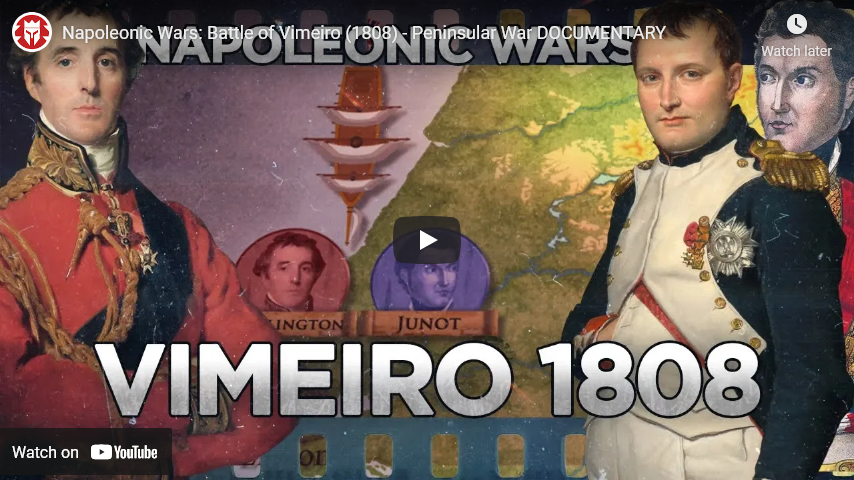
Napoleonic Wars: Battle of Vimeiro (1808) – Peninsular War
Kings and Generals
Published 12 Aug 2018Napoleonic Wars are back! It is 1807, and we find the Emperor of the French Napoleon Bonaparte at the height of his power, as he controls most of Europe after the War of the Fourth Coalition and the treaties of Tilsit. Napoleon decided to strangle his remaining enemy the United Kingdom economically by enacting Europe-wide Colonial Blockade, yet as Portugal defied him, he invaded it and then Spain. This was the beginning of the Peninsular War. Soon Spain and Portugal were in open rebellion. The first phase of the war ended when the British forces under Wellington landed in Portugal and fought the French General Junot at Vimeiro.
This script was researched and written by Everett Rummage. Check out his brilliant Age of Napoleon podcast – http://bit.ly/2vC3cIE In our opinion, it is the best podcast on the Napoleonic era.
Support us on Patreon: http://www.patreon.com/KingsandGenerals or Paypal: http://paypal.me/kingsandgenerals
We are grateful to our patrons and sponsors, who made this video possible: https://drive.google.com/open?id=1jjh…
This video was narrated by Officially Devin (https://www.youtube.com/user/OfficiallyDevin)
Machinimas were made on NTW3 mod for Napoleon Total War by Malay Archer (https://www.youtube.com/user/Mathemed…)
✔ Merch store ► teespring.com/stores/kingsandgenerals
✔ Twitch ► https://www.twitch.tv/nurrrik_phoenix
✔ Twitter ► https://twitter.com/KingsGenerals
✔ Instagram ► http://www.instagram.com/Kings_GeneralsProduction Music courtesy of Epidemic Sound: http://www.epidemicsound.com
#Documentary #Kingsandgenerals #Napoleon
Comments Off on Napoleonic Wars: Battle of Vimeiro (1808) – Peninsular War
November 3, 2021
Casablanca had a small but significant historical error
And it’s not Captain Renault’s throwaway line about the Americans marching into Berlin (which, of course, did not happen in 1918). The error that Michael Curtis points out is very easy to miss:
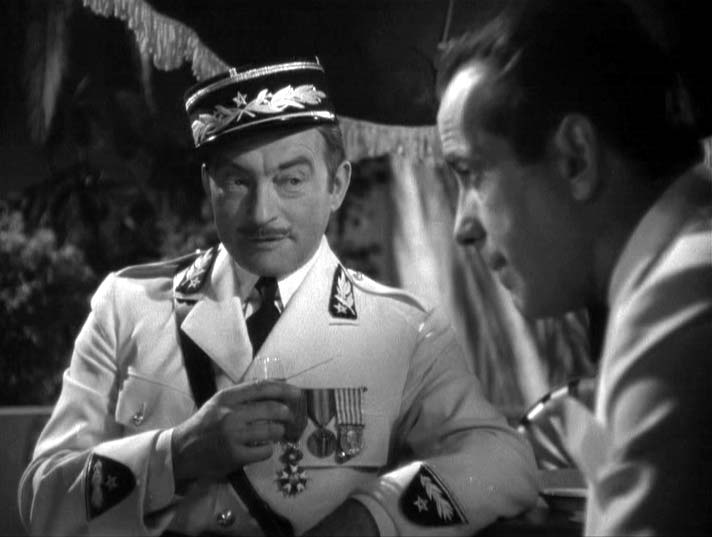
Still from Casablanca (1942), with Captain Renault (Claude Rains) asking Rick Blaine (Humphrey Bogart) why he came to Casablanca.
As time goes by, there is a consensus that Casablanca, the story of the cynical hard drinking American expatriate night club owner choosing between his love for a woman or helping her and her husband, a resistance hero escape from the town of Casablanca, a complex town controlled by the Vichy state under Nazi occupation, is one of the greatest films of all time. Its characters, dialogue, theme song, have become iconic. We’ll always have Casablanca. It is a film of moral ambiguity, that can be seen either as a theme of love and sacrifice, or as a political allegory about resistance against Nazism.
However, this brilliant film has a flaw. In one scene the camera focuses on the prefecture of the corrupt chief of police on the wall of which is the motto of the French Third Republic, “liberty, equality, fraternity”, inherited from the 1789 French revolution. But the Third Republic had been ended in May 1940, and its motto had been officially replaced by the slogan, “work, family, homeland”, of the new French State, popularly known as Vichy. The differences between the two mottos are still pertinent in French politics and culture today.
Some political and cultural problems are easy to solve, even if costly. Scotland recently spent seven months of research and $162,000 to create a new slogan that would increase tourism. It finally came up with a banal slogan, “Welcome to Scotland”. There is no easy solution for France which has been and remains a sharply divided society still confronting its history of the World War II years, the defeat of the French army by the Germans in June 1940, the end of the Third Republic and its replacement by the French State headed by 84 year old Marshall Philippe Petain, regarded as a hero of Verdun in World War I, located in Vichy, a spa in the Auvergne.
The Vichy régime participated in persecution and discrimination of the Jewish population, by aryanisation of property, propaganda, antisemitic ideology, anti-Jewish legislation, roundups, deportation to death and concentration camps. In view of this antisemitic attitude, it is a paradox that after the War, 75% of the Jewish population in France remained alive, the result of complex religious, cultural, and international factors. This can be compared to extermination of 80% of Jews in the Netherlands, and 45% in Belgium.
Nevertheless, 75,721 Jews were deported from France, and fewer than 2,000 survived. Persecution was extensive. Jews were banned from professions, civil service, journalism, business, entertainment, refugee Jews were held in concentration camps under French control, antisemitic legislation affected all Jews, and the tragedy of Vel d’Hiv occurred. French police carried out the first mass arrests of Jews in Paris in May 1941, and the first French deportation train left on March 12, 1942. The most infamous event, the roundup by French gendarmes, using batons and hoses, of 13,000 Jews took place on July 16-17, 1942 when the victims were taken to the Vel d’Hiv indoor bi-cycling stadium in Paris before being deported to Nazi camps. They included 7916 women, 1129 men and 4115 children.
By the so-called National Revolution, France would be rescued from the decadent Third Republic, and returned to purer values. The controversy continues. Was France guilty of contributing to the Holocaust, and who was responsible? First, were collaborators and sympathizers with the Nazis only a minority of the population and was Petain the “shield”, protecting France and the French people as much as it could within the country, while General de Gaulle abroad was the “sword”. A second defense was that Vichy could do little while the Germans occupiers were responsible. A third point is that Vichy tried to protect French national Jews by collaborating in the persecution, the deportation and ultimately extermination of foreign Jews in France.
Comments Off on Casablanca had a small but significant historical error
November 1, 2021
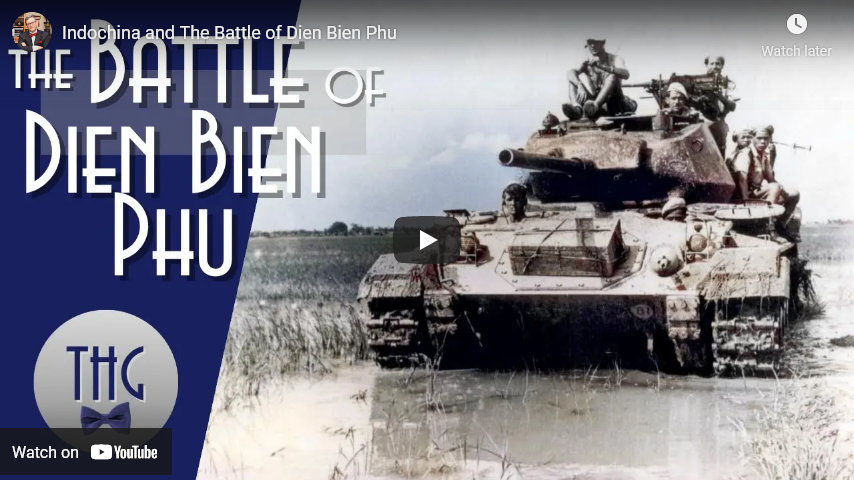
Indochina and The Battle of Dien Bien Phu
The History Guy: History Deserves to Be Remembered
Published 29 Sep 2017The History Guy remembers how decolonization led to proxy war and the Battle of Dien Bien Phu in what is now known as Vietnam.
The episode discusses and presents historical photographs and film footage depicting events during a period of war, which some viewers may find disturbing. All events are described for educational purposes and are presented in historical context.
The History Guy uses images that are in the Public Domain. As photographs of actual events are often not available, I will sometimes use photographs of similar events or objects for illustration.
Patreon: https://www.patreon.com/TheHistoryGuy
The History Guy: Five Minutes of History is the place to find short snippets of forgotten history from five to fifteen minutes long. If you like history too, this is the channel for you.
Awesome The History Guy merchandise is available at:
https://teespring.com/stores/the-hist…The episode is intended for educational purposes. All events are presented in historical context.
#DienBienPhu #militaryhistory #thehistoryguy
Comments Off on Indochina and The Battle of Dien Bien Phu
October 30, 2021
QotD: Britain as a nation
I have spoken all the while of “the nation”, “England”, “Britain”, as though 45 million souls could somehow be treated as a unit. But is not England notoriously two nations, the rich and the poor? Dare one pretend that there is anything in common between people with £100,000 a year and people with £1 a week? And even Welsh and Scottish readers are likely to have been offended because I have used the word “England” oftener than “Britain”, as though the whole population dwelt in London and the Home Counties and neither north nor west possessed a culture of its own.
One gets a better view of this question if one considers the minor point first. It is quite true that the so-called races of Britain feel themselves to be very different from one another. A Scotsman, for instance, does not thank you if you call him an Englishman. You can see the hesitation we feel on this point by the fact that we call our islands by no less than six different names, England, Britain, Great Britain, the British Isles, the United Kingdom and, in very exalted moments, Albion. Even the differences between north and south England loom large in our own eyes. But somehow these differences fade away the moment that any two Britons are confronted by a European. It is very rare to meet a foreigner, other than an American, who can distinguish between English and Scots or even English and Irish. To a Frenchman, the Breton and the Auvergnat seem very different beings, and the accent of Marseilles is a stock joke in Paris. Yet we speak of “France” and “the French”, recognizing France as an entity, a single civilization, which in fact it is. So also with ourselves. Looked at from the outside, even the cockney and the Yorkshireman have a strong family resemblance.
George Orwell, “The Lion And The Unicorn: Socialism and the English Genius”, 1941-02-19.
Comments Off on QotD: Britain as a nation
October 29, 2021
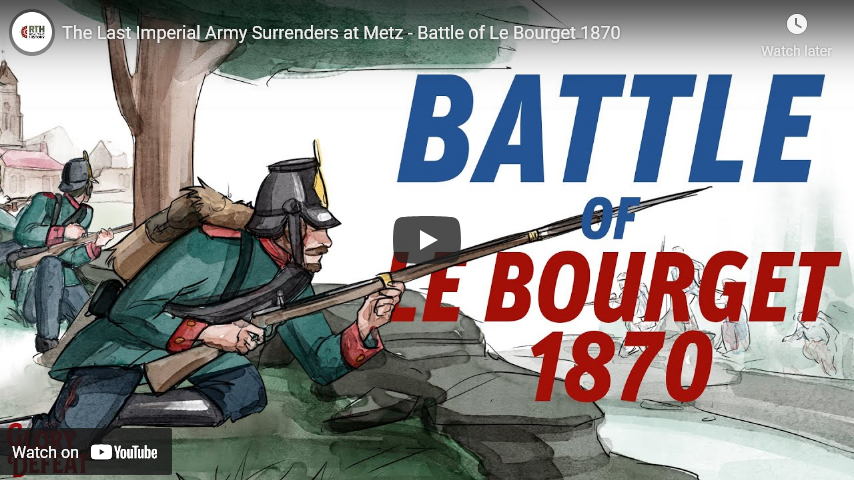
The Last Imperial Army Surrenders at Metz – Battle of Le Bourget 1870
Real Time History
Published 28 Oct 2021Much of the remaining French hope to stem the tide against the German armies comes from the more than 200,000 professional troops trapped in Metz since August. French Marshal Bazaine tries to negotiate with the Germans and even offers to march against the French republic. But to no avail.
» THANK YOU TO OUR CO-PRODUCERS
John Ozment
James Darcangelo
Jacob Carter Landt
Thomas Brendan
James Giliberto
Kurt Gillies
Albert B. Knapp MD
Tobias Wildenblanck
Richard L Benkin
Scott Deederly
John Belland
Adam Smith
Taylor Allen
Jim F Barlow
Rustem Sharipov» OUR PODCAST
https://realtimehistory.net/podcast – interviews with historians and background info for the show.» LITERATURE
Arand, Tobias: 1870/71. Die Geschichte des Deutsch-Französischen Krieges erzählt in Einzelschicksalen. Hamburg 2018Gouttman, Alain: La grande défaite de 1870-1871. Paris 2015
Milza, Pierre: L’année terrible. Paris 2009
» SOURCES
Braun, Lily (Hrsg.): Kriegsbriefe aus den Jahren 1870/71 von Hans v. Kretschman. Berlin 1911Crombrugghe, Ida de: Journal d’une infirmière. Paris 1871
Engels, Friedrich: Der Deutsch-Französische Krieg. Sechzig Artikel aus der “Pall Mall Gazette”. Berlin (Ost) 1957
Fontane, Theodor: Der Krieg gegen Frankreich. Bd. 3. Berlin 1873–1876
Großer Generalstab (Hrsg.): Der Deutsch-Französische Krieg, 1870–71. Bd. 1–3. Berlin 1874 ff.
Historischer Verein der Höhen von Spicheren des 67. Kaiserlichen Linienregiments der Infaterie (Hrsg.): Das Kriegstagebuch von Clovis Hardy. Soldat im 63. Linienregiment. Deutsch-Französischer Krieg 1870/71. Vom Lager in Châlons bis nach Ansbach in Bayern. O.O. [Esvres] O.J. [2011]
Kürschner, Joseph (Hrsg.): Der große Krieg 1870–71 in Zeitberichten. Leipzig o. J. (1895)
Meisner, Heinrich Otto (Hrsg.): Kaiser Friedrich III. Das Kriegstagebuch von 1870/71. Berlin, Leipzig 1926
Sternegg, Johann Khoss von: Schlachtenatlas des XIX. Jahrhunderts. Leipzig 1886
Steenackers, François-Frédéric: Histoire du gouvernement de la défense nationale en province, 4 septembre 1870-8 février 1871. Band 2. Paris o.J. (1884-1885)
» OUR STORE
Website: https://realtimehistory.net»CREDITS
Presented by: Jesse Alexander
Written by: Cathérine Pfauth, Prof. Dr. Tobias Arand, Jesse Alexander
Director: Toni Steller & Florian Wittig
Director of Photography: Toni Steller
Sound: Above Zero
Editing: Toni Steller
Motion Design: Philipp Appelt
Mixing, Mastering & Sound Design: http://above-zero.com
Maps: Battlefield Design
Research by: Cathérine Pfauth, Prof. Dr. Tobias Arand
Fact checking: Cathérine Pfauth, Prof. Dr. Tobias ArandChannel Design: Battlefield Design
Contains licensed material by getty images
All rights reserved – Real Time History GmbH 2021
Comments Off on The Last Imperial Army Surrenders at Metz – Battle of Le Bourget 1870
October 23, 2021
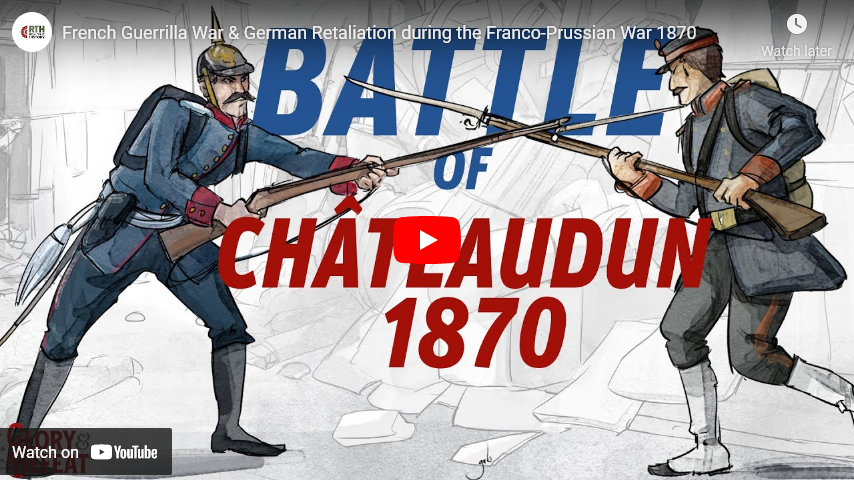
French Guerrilla War & German Retaliation during the Franco-Prussian War 1870
Real Time History
Published 21 Oct 2021Sign up for Curiosity Stream and get Nebula bundled in and SAVE 26%: https://curiositystream.com/realtimeh…
The French increasing reliance on franc-tireurs, guerrilla style fighters, is causing brutal German retaliation and a spiral of violence in the fall phase of the Franco-Prussian War.
Special thanks goes out to Quentin Censier from Sur le Champ. Check out his Channel: https://www.youtube.com/surlechamp
» THANK YOU TO OUR CO-PRODUCERS
John Ozment
James Darcangelo
Jacob Carter Landt
Thomas Brendan
James Giliberto
Kurt Gillies
Albert B. Knapp MD
Tobias Wildenblanck
Richard L Benkin
Scott Deederly
John Belland
Adam Smith
Taylor Allen
Jim F Barlow
Rustem Sharipov» OUR PODCAST
https://realtimehistory.net/podcast – interviews with historians and background info for the show.» LITERATURE
Arand, Tobias: 1870/71. Die Geschichte des Deutsch-Französischen Krieges erzählt in Einzelschicksalen. Hamburg 2018Keegan, John: Die Kultur des Krieges. Berlin 1995
Neitzel, Sönke/Hohrath, Daniel (Hrsg.): Kriegsgreuel. Die Entgrenzung der Gewalt in kriegerischen Konflikten vom Mittelalter bis ins 20. Jahrhundert. Paderborn, München 2008
Roth, François: La Guerre de 1870. Paris 1990
» SOURCES
Busch, Moritz: Graf Bismarck und seine Leute während des Krieges mit Frankreich. Bd. I. Berlin 1878Chuquet, Arthur: La Guerre 1870-71. Paris 1895
Engels, Friedrich: Der Deutsch-Französische Krieg. Sechzig Artikel aus der “Pall Mall Gazette”. Berlin (Ost) 1957
Fontane, Theodor: Kriegsgefangen. Erlebtes 1870. Briefe 1870/71. Berlin (Ost) 1984
Kriegsgeschichtliche Abteilung des Großen Generalstabs (Hrsg.): Der deutsch-französische Krieg 1870-71. II.1 Berlin 1878
Kürschner, Joseph (Hrsg.): Der große Krieg 1870–71 in Zeitberichten. Leipzig o. J. (1895)
Meisner, Heinrich Otto (Hrsg.): Kaiser Friedrich III. Das Kriegstagebuch von 1870/71. Berlin, Leipzig 1926
Roux, Georges: La Guerre de 1870. Paris 1966
Sarrepont, Major H. de (i.e. Eugène Hennebert): Histoire de la défense de Paris en 1870-1871. Paris 1872
Zeitz, Karl: Kriegserinnerungen eines Feldzugsfreiwilligen aus den Jahren 1870 und 1871. Altenburg 1905
» OUR STORE
Website: https://realtimehistory.net»CREDITS
Presented by: Jesse Alexander
Written by: Cathérine Pfauth, Prof. Dr. Tobias Arand, Jesse Alexander
Director: Toni Steller & Florian Wittig
Director of Photography: Toni Steller
Sound: Above Zero
Editing: Toni Steller
Motion Design: Philipp Appelt
Mixing, Mastering & Sound Design: http://above-zero.com
Maps: Battlefield Design
Research by: Cathérine Pfauth, Prof. Dr. Tobias Arand
Fact checking: Cathérine Pfauth, Prof. Dr. Tobias ArandChannel Design: Battlefield Design
Contains licensed material by getty images
All rights reserved – Real Time History GmbH 2021
Comments Off on French Guerrilla War & German Retaliation during the Franco-Prussian War 1870
October 19, 2021
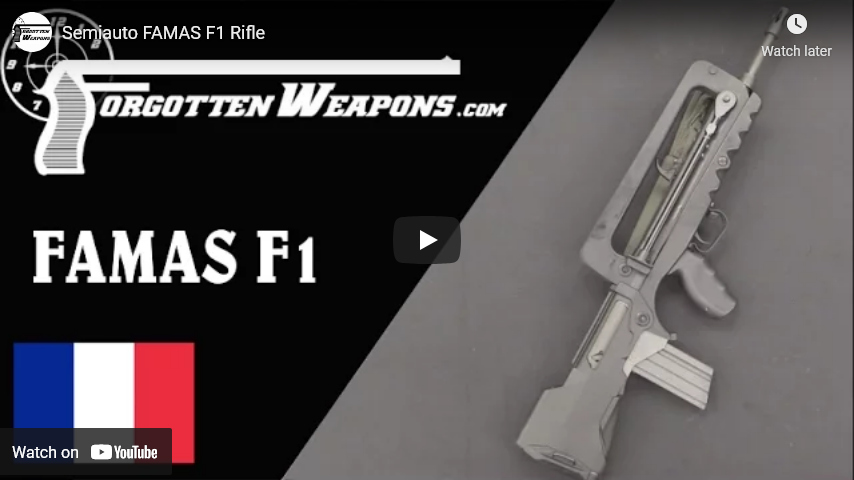
Semiauto FAMAS F1 Rifle
Forgotten Weapons
Published 9 Aug 2016http://www.patreon.com/ForgottenWeapons
The French FAMAS was one of the first bullpup rifles to be adopted and built in large numbers by a military power. It was adopted by France in 1978 at right about the same time as the Steyr AUG was being adopted by the Austrian military. Bullpup rifles offered a short overall length without sacrificing barrel length, an advantage that seemed quite valuable for troops who were to spend significant amounts of time in vehicles, where space is at a premium. In French service, the FAMAS was also made the formal replacement for both the MAS-49/56 rifle and the MAT-49 submachine gun, thanks to its compact nature.
The FAMAS is interesting mechanically, as it is one of very few production delayed-blowback rifle designs (the other common one being the CETME/HK series). The FAMAS uses a lever-delaying system, which allows a very simple bolt and action mechanism. The F1 model (adopted by the French Army and still in use today, making up the bulk of FAMAS production) has a 1:12″ twist to its rifling, effectively limiting it to 55 grain projectiles — and it also requires steel-cased ammunition to run reliably. The G2 variant (adopted in 1995 by the French Navy) changed to a 1:9″ twist, introduced a full-hand trigger guard, and also uses NATO standard AR15 magazines instead of the proprietary 25-round magazine of the F1.
In the late 1980s a small number of semiauto FAMAS rifles were made by St Etienne and imported into the US by Century. Most people say 100-125 rifles, although serial number suggest this may have actually been 225-250 rifles. Regardless, they are quite scarce and expensive today.
Comments Off on Semiauto FAMAS F1 Rifle


