Forgotten Weapons
Published 23 Dec 2017http://www.patreon.com/ForgottenWeapons
Cool Forgotten Weapons merchandise! http://shop.bbtv.com/collections/forg…
Captain Percy Fraser, DSO was born on January 22, 1879 and died in Ypres on the night of February 23, 1915 while attempting to aid men wounded outside their trench. His unit of the Queen’s Own Cameron Highlanders would suffer horrendous casualties at Ypres, and today we will look at his Webley-Fosbery automatic revolver and his service in the British Army.
Thanks to Mike Carrick of Arms Heritage magazine for sharing Captain Fraser’s story and revolver. See his regular column here: https://armsheritagemagazine.com
If you enjoy Forgotten Weapons, check out its sister channel, InRangeTV! http://www.youtube.com/InRangeTVShow
December 16, 2019
Captain Fraser’s Webley-Fosbery: WWI in Microcosm
QotD: The Great Pestilence of 1348
Long I have been curious about the Great Pestilence that trimmed the population of Britain and Europe by a third or more, in the fourteenth century. I make too much of it; the plague was a recurring event for centuries before and after. I notice from the tabloids that it is returning, through Africa this time. I know there will be pestilence to come, when we will all think it terribly important. It rivetted attention, I’m sure, in the autumn of 1348, and through the summer of 1349. And yet within a generation it is hardly mentioned.
England, below the Ribble and Tees, is special, thanks to the Domesday Book of the invading, tax-loving Normans, and their general propensity to good record-keeping. The towns and villages ennumerated in 1086 can be traced to the present day; nineteen in twenty are still there. Having figures to start, and through the parish books later, we can track an economic and demographic history with an accuracy possible in no other country. We can know, for instance, of the population boom through the twelfth and thirteenth centuries, which had slackened well before the “Black Death.” And with that boom, impressive advances in farming, technology, and building, as today. Nothing conduces to technical improvement, as a bit of crowding.
This proportion I cited — the nineteen-in-twenty (or more) — which I have from reading in economic history mostly years ago, fascinates my attention. We know large tracts were depopulated, we find the archaeological evidence easily enough. They were planting rye within the walls of Winchester, and many other towns. Everywhere, they had elbow-room again. Our deep ecologists would have been pleased — those who think life on this planet would be better had a few billion souls not been born. As Christianity, and environmentalism, are mortally opposed, and the fourteenth century was overwhelmingly Christian, I expect complaints of overpopulation were differently expressed at the time. Mostly it would have been moaning from younger brothers about the distribution of inherited land.
Always, there have been younger brothers. Always, there have been survivors. What delighted me was the speed with which all the vacant places were filled. As we’ve seen, too, after ghastly wars, demography abhors a vacuum.
David Warren, “Death the real illusion”, Essays in Idleness, 2017-11-04.
December 15, 2019
Policing London – The Bow Street Runners – Extra History – #3
Extra Credits
Published 14 Dec 2019Henry Fielding was a dangerous man … with a pen. He had a razor-sharp wit and created the page-turner novel, but that’s not what we want to focus on here. Because Henry Fielding is also responsible for assembling London’s first organized police force. The Bow Street Runners were inspired by Wilde’s operation just … not corrupt. But Fielding quickly found that in London’s justice system, corruption was the assumed default, not the exception. He certainly had his work cut out for him!
Henry Fielding – Everything Wilde did but you know… without the whole… being morally bankrupt bit.
Join us on Patreon! http://bit.ly/EHPatreon
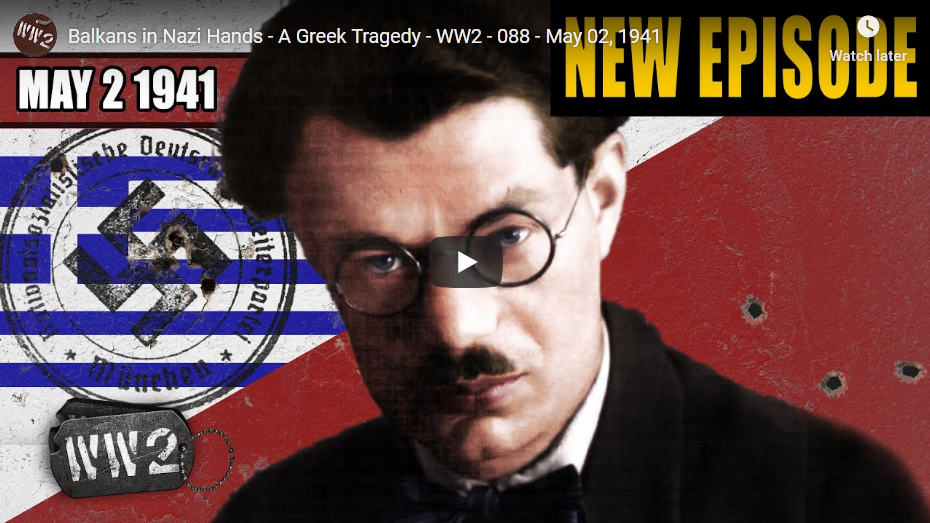
The Empire Strikes Back – Britain’s Operation Compass – WW2 – 068 – December 14, 1940
World War Two
Published 14 Dec 2019The First British offensive of the War begins in North Africa. Meanwhile, the German Knickebein system is designed for bombers to accurately bomb British targets at night. This is what the Brits do to stop them.
Join us on Patreon: https://www.patreon.com/TimeGhostHistory
Or join The TimeGhost Army directly at: https://timeghost.tvFollow WW2 day by day on Instagram @World_war_two_realtime https://www.instagram.com/world_war_t…
Join our Discord Server: https://discord.gg/D6D2aYN.
Between 2 Wars: https://www.youtube.com/playlist?list…
Source list: http://bit.ly/WW2sourcesWritten and Hosted by: Indy Neidell
Produced and Directed by: Spartacus Olsson and Astrid Deinhard
Executive Producers: Bodo Rittenauer, Astrid Deinhard, Indy Neidell, Spartacus Olsson
Creative Producer: Joram Appel
Post-Production Director: Wieke Kapteijns
Research by: Indy Neidell
Edited by: Iryna Dulka
Map animations: Eastory (https://www.youtube.com/c/eastory)Thumbnail Colorization (Archie Wavell) by:
– Julius Jääskeläinen – https://www.facebook.com/JJcolorization/Colorizations by:
– Dememorabilia – https://www.instagram.com/dememorabilia/
– Adrien Fillon – https://www.instagram.com/adrien.colo…Sources:
– IWM: F 4539, B 10600, CM 355, E 6600, E 3720E, E 1416, E 1378, E 4792
– Tropenmuseum, part of the National Museum of World Cultures– Prison icon by FORMGUT. from the Noun Project; Compass by RULI from the Noun Project.
Archive by Screenocean/Reuters https://www.screenocean.com.
A TimeGhost chronological documentary produced by OnLion Entertainment GmbH.
Every time the “wrong” side wins an election…
… we get all the media talking about how the winner needs to tack to the left:

Prime Minister Boris Johnson at his first Cabinet meeting in Downing Street, 25 July 2019.
Official photograph via Wikimedia Commons.
Every single time. Whenever the left is slapped by voters like a bony Antifa moll at a street riot, “expert” analysts rush to the scene of democracy, cordon it off with police tape and announce through a bullhorn that there’s nothing to see here. Move along. They then propose that the winner is morally obliged to sideline the constituency that just elected him and heed the boutique preoccupations of the vanquished instead. Successful right-of-centre candidates must govern for All of Us. Successful leftists, on the other hand, are encouraged to give leftism to the enemy good and hard for the next few-to-several years. Possibly the first man to pull out his ‘horn following Boris Johnson’s emphatic victory is Philip Williams.
The sullen acceptance that Brexit will happen but will unleash crises that – alas – must be solved by a buffoon: check. Schools and hospitals: check. The problem of “an economy excised from Europe”: check. Williams’ piece is the Tate of tropes. But no: Johnson won’t faulter by being true to the shy nationalists who elected him but he might antagonise them by pivoting left to usher Hugh Grant’s coterie into a broader Boris marquee. Given his track record, that is very likely. Let’s not get carried away: Johnson did his Conservative duty regarding Brexit, nothing more. The question is whether or not he has the panache to hold on to his base while trying to expand it. The media will be a huge asset. They are certain to make daily sport of Johnson’s “gaffes,” eccentricities and less than squared away private life. This will endear him to everyman even more.
On the other hand, when the “correct” side wins an election, we’re assured that “elections have consequences”, the’ve been “keeping score”, and that the losers must strap in tight and hold on for dear life because we’re going further left than we ever were promised during the campaign.
Update: Related.
Every US pundit today: pic.twitter.com/smSJRTBQW9
— Luke Savage (@LukewSavage) December 13, 2019
December 14, 2019
Huot Automatic Rifle: The Ross Goes Full Auto
Forgotten Weapons
Published 13 Dec 2019http://www.patreon.com/ForgottenWeapons
Cool Forgotten Weapons merch! http://shop.bbtv.com/collections/forg…
During World War One, Joseph Alphonse Huot, a Canadian machinist and blacksmith living in Quebec, designed a conversion of the Ross MkIII rifle to become an automatic rifle. The Ross was the standard issue Canadian rifle at the beginning of the war, and Huot wanted to find a way to economically provide Canadian forces with an automatic weapon. His conversion functioned by mounting a gas piston onto the side of the Ross barrel, adding a large action cover and 25-round drum magazine, and a Lewis-style cooling shroud over the barrel.
In initial testing with the Canadian army, the Huot performed well. It was seriously considered for adoption, but had to undergo British testing and approval before that could happen. In British testing (by now near the end of the war), it was found to run well enough and have some positive attributes, but not sufficient to justify replacement of the Lewis Gun. It was rejected, and the Canadian Corps finished the war with the Lewis instead. Huot had spent several years privately developing the weapon and two more working on salary for the Canadian military, and had gone into considerable personal debt for the project. He had secured a deal to receive royalties on production, but that of course came to naught when the design was rejected. Ultimately, he was compensated $25,000 in 1936 (of the $36,000 he claimed to have spent).
Only five of the guns were made in total, with four known to still exist. Two of them are in Ottawa at the Canadian War Museum and one in the Seaforth Highlanders Museum in Vancouver and one in the Army Museum in Halifax.
Thanks to the Canadian War Museum for providing me access to film this Huot for you!
Contact:
Forgotten Weapons
6281 N. Oracle #36270
Tucson, AZ 85704
Livingstone announced Labour’s defeat was at least partially down to “the Jewish vote”
Barbara Kay on the British general election results:

“Palace of Westminster” by michaelhenley is licensed under CC BY-NC-SA 2.0
Boris Johnson’s Conservatives racked up a stunning victory in the U.K. elections, with numbers so decisive — 365 of 650 seats — we will hear no more rumblings about a “second referendum” on Brexit. You can love Boris or hate him, or struggle with mixed feelings (as I confess I do), but he now has a mandate to get Brexit done.
But I have no mixed feelings about the Labour Party’s humiliating loss, at 203 seats their lowest ebb since pre-World War Two. If ever a party leader deserved a definitive smackdown, it was Jeremy Corbyn, and a victory lap is in order for democracy doing what it does best.
On seeing the results, I said to myself, “Yay!” The second thing I said to myself was, “Who will be the first to pull a Jacques Parizeau and how long will it take?” As it turned out, not long at all, and it was former London mayor Ken Livingstone who reprised Parizeau’s infamous “money and the ethnic vote” blame-shift after the Yes side’s narrow loss in the 1995 Quebec sovereignty referendum.
As soon as it was clear the U.K. Conservatives had crossed the threshold majority number of 326 seats, Livingstone announced Labour’s defeat was at least partially down to “the Jewish vote.” In fact, a Jewish population of 260,000 could not by itself have greatly influenced the result, but it is a mark of the anti-Semitic mindset to constantly exaggerate Jewish power.
Livingstone, who has called allegations of anti-Semitism within the Labour Party “lies and smears,” was himself suspended from Labour in 2016 over an assertion that Hitler supported Zionism. It was by no means Livingstone’s only egregiously insensitive remark. In April, he reportedly told the group Labour Against the Witchhunt that “It is not anti-Semitic to hate the Jews of Israel.”
Disappointed progressives, of course, are handling the Labour defeat with calm resignation, patience, and a spot of rioting.
The English Civil War Explained
Royal Armouries
Published 20 Dec 2017The Royal Armouries’ English Civil War collection boasts an array of infantry and cavalry arms and armour from the 1640s. Delve into this turbulent historical period with our resident Royalist, David.
Where to find us:
⚔Website: https://royalarmouries.org/home
⚔Blog: https://blog.royalarmouries.org/
⚔Twitter: https://twitter.com/Royal_ArmouriesThe Royal Armouries is the United Kingdom’s national collection of arms and armour. On this channel, discover what goes on behind the scenes at the museum and to see our collection come to life. From combat demonstrations to jousting coverage to behind the scenes tours with our curators, we’ve got it covered.
Have a question about arms and armour? Feel free to leave us a comment and we’ll do our best to answer it.
December 12, 2019
Explaining the decline in library usage
At the Continental Telegraph, Tim Worstall refutes the claims that it’s the evil right wingers (in this specific case, British Tories) that are driving the library out of business:

“Nottingham central library” by JuliaC2006 is licensed under CC BY 2.0
Despite spending more money, library use, measured in terms of at least one visit per year, fell from 48.2% of adults to 39.7% of adults. I make that as roughly 1/5th of the adults that were using them not doing so in 5 years. 17% sounds slightly on the conservative side.
And if this was about “austerity”, you’d expect visits to be rising, rather than falling from 39.7% to 32.9% since the Conservatives/Lib Dems took over. Because the thing with libraries is that they suit the time rich and cash poor. If you’ve not got much else to do, you can spend time walking to a library, getting a book, walking home and easily finding time in the fortnight to read it. And 9-5 hours don’t bother you. There’s areas of the country, like Weston-Super-Mare, stuffed full of retired people and libraries are popular.
If you’re working all week you have to get to a library in your day, park your car, pay for parking, same on return, and make sure to set aside the time to do the reading, you might decide libraries aren’t that convenient.
The decline of libraries is a success story for us. We created them because books were very expensive once. Owning a giant library was the mark of a rich man. Paper was expensive, printing was expensive, binding was expensive. Over the decades, we figured out how to do this cheaper. Then we figured out how to do retailing cheaper. And then we got e-books which take production costs to near zero. Books are cheap. Cheap enough that most of us don’t want the faff of libraries. So, close some of them.
The Truth About Legendary Highwayman Dick Turpin
Today I Found Out
Published 8 Feb 2018If you happen to like our videos and have a few bucks to spare to support our efforts, check out our Patreon page where we’ve got a variety of perks for our Patrons, including Simon’s voice on your GPS and the ever requested Simon Whistler whistling package: https://www.patreon.com/TodayIFoundOut
Never run out of things to say at the water cooler with TodayIFoundOut! Brand new videos 7 days a week!
In this video:
Richard Turpin, better known by his nickname, Dick, was a legendary highwayman who stalked the English countryside. A century or so after his death by hanging in 1739, Turpin was idealised as a dashing rogue or gentleman thief type in a multitude of supposedly factual stories purportedly based on his life.
Want the text version?: http://www.todayifoundout.com/index.p…
December 11, 2019
QotD: Charles I and the Civil War
With the ascension of Charles I to the throne we come at last to the Central Period of English History (not to be confused with the Middle Ages, of course), consisting in the utterly memorable Struggle between the Cavaliers (Wrong but Wromantic) and the Roundheads (Right and Repulsive).
Charles I was a Cavalier King and therefore had a small pointed beard, long flowing curls, a large, flat, flowing hat, and gay attire. The Roundheads, on the other hand, were clean-shaven and wore tall, conical hats, white ties, and sombre garments. Under these circumstances a Civil War was inevitable.
The Roundheads, of course, were so called because Cromwell had all their heads made perfectly round, in order that they should present a uniform appearance when drawn up in line.
Besides this, if any man lost his head in action, it could be used as a cannon-ball by the artillery (which was done at the Siege of Worcester).
For a long time before the Civil War, however, Charles had been quarrelling with the Roundheads about what was right. Charles explained that there was a doctrine called the Divine Right of Kings, which said that:
(a) He was King, and that was right.
(b) Kings were divine, and that was right.
(c) Kings were right, and that was right.
(d) Everything was all right.
But so determined were the Roundheads that all this was all wrong that they drew up a Petition called the Petition of Right to show in more detail which things were wrong. This Petition said:
(a) That it was wrong for anyone to be put to death more than once for the same offence.
(b) Habeas Corpus, which meant that it was wrong if people were put in prison except for some reason, and that people who had been mutilated by the King, such as Prynne, who had often had his ears cut off, should always be allowed to keep their bodies.
(c) That Charles’s memorable methods of getting money, such as Rummage and Scroungeage, were wrong. But the most important cause of the Civil War was Ship Money
Charles I said that any money which was Ship Money belonged to him; but while the Roundheads declared that Ship Money could be found only in the Cinq Ports, Charles maintained that no one but the King could guess right which was Ship Money and which wasn’t. This was, of course, part of his Divine Right. The climax came when a villager called Hampden (memorable for his dauntless breast) advised the King to divine again. This so upset Charles that he went back to Westminster, and after cinquing several ports burst into the House of Commons and asked in a very royal way for some birds which he said were in there. The Parliament, who were mostly Puritans, were so shocked that they began making solemn Leagues and Countenances. Charles therefore became very angry and complaining that the birds had flown raised his standard at Nottingham and declared war against Hampden and the Roundheads.
The War
At first the King was successful owing to Prince Rupert of Hentzau, his famous cavalry leader, who was very dashing in all directions. After this, many indecisive battles were fought at such places as Newbury, Edgehill, Newbury, Chalgrove Field, Newbury, etc., in all of which the Cavaliers were rather victorious.
The Roundheads therefore made a new plan in order to win the war after all. This was called the SelfDenying Ordnance and said that everyone had to deny everything he had done up to that date, and that nobody was allowed to admit who he was: thus the war could be started again from the beginning. When the Roundheads had done this they were called the New Moral Army and were dressed up as Ironclads and put under the command of Oliver Cromwell, whose Christian name was Oliver and who was therefore affectionately known as `Old Nick’. Cromwell was not only moral and completely round in the head but had a large (round) wart on the nose. He was consequently victorious in all the remaining battles such as Newbury, Marston Moor, Edgehill (change for Chalgrove), Naseby, Newbury, etc.
Blood and Ironclads
When Charles I had been defeated he was brought to trial by the Rump Parliament so-called because it had been sitting for such a long time and was found guilty of being defeated in a war against himself, which was, of course, a form of High Treason. He was therefore ordered by Cromwell to go and have his head cut off (it was, the Roundheads pointed out, the wrong shape, anyway). So romantic was Charles, however, that this made little difference to him and it is very memorable that he walked and talked Half an hour after his Head was cut off.
On seeing this, Cromwell was so angry that he picked up the mace (the new and terrible Instrument of Government which he had invented) and, pointing it at the Head, shouted: “Take away that Marble,” and announced that his policy in future would be just Blood and Ironclads.
W.C. Sellar & R.J. Yeatman, 1066 And All That, 1930.
December 10, 2019
“NATO [reminds] me of the pre-reformation medieval church. Their stated objectives sound Godly and noble but their true purpose is to keep a bloated priesthood in luxury”
NATO still exists, decades after the threat it was designed to counter dissolved. Tom Paine wonders why this is so:
The dismal science teaches us to distinguish between peoples’ stated preferences (often virtue-signalling lies) and their revealed preferences (how they spend their money). All NATO members say they believe in the alliance. Only four — the USA, the UK, Poland and Greece — meet their obligation to contribute more than 2% of their GDP. If you’re wondering, Greece has only accidentally met that target because of the catastrophic fall in its GDP.
Opinion polls and my own experience of the bitter, sneering anti-Americanism of my otherwise delightful continental chums suggest that as usual the revealed preference is the truth. The Germans and French would not go to war in defence of America or Britain if we were attacked. Britain was attacked, when the Falklands were invaded, and our “allies” and “friends” sold arms to our enemies and gave them all kinds of moral support. Remember the Welsh Guards (my grandfather’s old regiment) massacred by Exocets fired from Mirages? The USA has often gone to war since the alliance was formed and mostly only British warriors fought, died or were injured alongside theirs.
Germany, France and their freeloading friends have quite simply been taking the piss from the outset. They take the Americans (and us Inselaffen and rosbifs) for mugs. They plot to form an EU Army and regret that Brexit means they won’t be able to continue to rely on English-speakers as their cannon-fodder.
The continued existence of NATO has fuelled the epic paranoia of Russia’s military/intelligence apparatus. Desperate not to be decommissioned the generals and chekists have claimed that “the West” they grew up opposing is intrinsically hostile — rather than, in truth, insultingly indifferent — to Mother Russia. Their only “proof” of this nonsense was NATO.
[…]
NATO is yet another of many examples of the truism that, once a bureaucracy acquires a competence, it will never disband. It continues because it can. The political and economic ills that drove the creation of what is now called the EU have long since faded into history. But the plump parasites of its apparatus have repeatedly repurposed it. Britain is a paradise of social, ethnic and sexual equality compared to the days when the precursors of the Equalities Commission were formed but its staff will find imaginary evils by the thousand before they’ll return to productive labour. Marx would gasp at the generosity of Britain’s welfare state and marvel at the lifestyle of even the poorest Brit and yet trivial micro aggressions are enough to sustain the revolutionary fervour of Marxist academics desperate to live as idly and unproductively as the man himself.
QotD: British breakfast – “Not a snack but a serious meal”
First of all, then, breakfast. Ideally for nearly all British people, and in practice for most of them even now, this is not a snack but a serious meal. The hour at which people have their breakfast is of course governed by the time at which they go to work, but if they were free to choose, most people would like to have breakfast at nine o’clock. In principle the meal consists of three courses, one of which is a meat course. Traditionally it starts with porridge, which is made of coarse oatmeal, sodden and then boiled into a spongy mess: it is eaten always hot, with cold milk (better still, cream) poured over it, and sugar. Breakfast cereals, which are ready-cooked preparations of wheat or rice, taken cold with milk and sugar, are often eaten instead of porridge. After this comes either fish, usually salt fish, or meat in some form, or eggs in some form. The best and most characteristically British form of salt fish is the kipper, which is a herring split open and cured in wood-smoke until it is deep brown colour. Kippers are either grilled or fried. The usual breakfast meat dishes are either fried bacon, with or without fried eggs, grilled kidneys, fried pork sausages, or cold ham. British people favour a lean, mild type of bacon or ham, cured with sugar and nitre rather than with salt. At normal time it is not unusual to eat grilled beef steaks or mutton chops at breakfast, and there are still old-fashioned people who like to start the day with cold roast beef. In some parts of the country, for instance in East Anglia, it is usual to eat cheese at breakfast.
After the meat course comes bread, or more often toast, with butter and orange marmalade. It must be orange marmalade, though honey is a possible substitute. Other kinds of jam are seldom eaten at breakfast, and marmalade does not often appear at other times of [the] day. For the great bulk of British people, the invariable breakfast drink is tea. Coffee in Britain is almost always nasty, either in restaurants or in private houses; the majority of people, though they drink it fairly freely, are uninterested in it and do not know good coffee from bad. Of tea, on the other hand, they are extremely critical, and everyone has his favourite brand and his pet theory as to how it should be made. Tea is always drunk with milk, and it is usual to brew it very strong, about one spoonful of dry tea leaves being allowed for each cup. Most people prefer Indian to Chinese tea, and they like to put sugar in it. Here, however, one comes upon a class distinction, or more exactly a cultural distinction. Virtually all British working-people put sugar in their tea, and indeed will not drink tea without it. Unsweetened tea is an upper-class or middle-class habit, and even in those classes it tends to be associated with a Europeanised palate. If one made a list of the people in Britain who prefer wine to beer, one would probably find that it included most of the people who prefer tea without sugar.
After this solid breakfast – and even now, in a time of rationing, it is usual to eat a fairly large bulk of food, chiefly bread, at breakfast – it is natural that the midday meal should be somewhat lighter than it is in many other countries.
George Orwell, “British Cookery”, 1946. (Originally commissioned by the British Council, but refused by them and later published in abbreviated form.)
December 9, 2019
Policing London – The Fall of Jonathan Wild – Extra History – #2
Extra Credits
Published 7 Dec 2019Jonathan Wild had the whole crime system figured out. A man of justice by day, and leader of a criminal empire by night. But that is when Jack Sheppard came into his life. Jack Sheppard was a talented thief but an even more talented escape artist. And one of the last criminals in London who refused to bend the knee to Jonathan Wild. This was unacceptable. Jonathan Wild became obsessed. But obsessions can be dangerous. Every prison escape causes Sheppard’s popularity amongst the people, sick and tired of corruption, to grow. And the consequences may be deadly.
Join us on Patreon! http://bit.ly/EHPatreon
December 7, 2019
Bryan Donkin, 19th century inventor, amateur public relations whiz and independent lobbyist
In the latest installment of Anton Howes’ Age of Invention newsletter, he recounts the story of Bryan Donkin and his efforts to save innovators from excessive government interference:
One of the major arguments of the book I’m writing is that inventors’ talent for public relations and lobbying was one of the main reasons that Britain — rather unexpectedly — was the place that experienced an unprecedented acceleration of innovation.
The greatest of these lobbyist-inventors has to be Bryan Donkin, a nineteenth-century mechanical engineer. As an inventor, Donkin improved threshing machines, dredging machinery, and a variety of other tools. He invented the steel pen, dabbled in chemistry, as well as phrenology, and was one of the key people responsible for mechanising the production of paper. He became best known for improving and commercialising tin cans for food. Mechanised paper-making and canned food, having both been invented in France, were perfected in Britain by Donkin. He was the archetypal tinkerer.
But it’s as a lobbyist that I think Donkin was truly exceptional. His experience has important lessons for all would-be supporters of invention today.
In April 1817, Donkin read in his newspaper that there had been a disaster in Norwich: the boiler aboard the steamboat Telegraph had exploded. Of the boat’s twenty-two passengers, eight had died immediately in the blast, and another six had eventually succumbed to their wounds. It was a shocking tragedy. And for Donkin, doubly so: in addition to the human death toll, the explosion threatened to kill off one of the era’s newest and most exciting inventions.
Although some of the first trials of steamboats had taken place in the 1780s, it wasn’t until the turn of the century that they began to be practical. By 1817, the first commercially successful steamboat service in Britain, Henry Bell’s Comet, had been chugging its way up the River Clyde between Glasgow and Greenock for only five years. And Londoners like Donkin had only just seen their first steamboat, Margery, when she puffed her way into the Thames in 1815 (the following year, after becoming the first steamboat to cross the Channel, she reinvented herself in Paris as Elise). Thus, by the time of Telegraph‘s explosion, the passenger steamboat had only just been born. There was a very real risk that it would be banned.
Fortunately, however, the steamboat had Donkin in its corner. His immediate reaction upon reading about the explosion was to gather some of his engineer friends — Timothy Bramah and John Collinge — and set off for Norwich to view the explosion site for themselves. As the first expert engineers on the scene, they then took control of the narrative about the explosion. Donkin and his friends went straight to Norwich’s MP to ask him to set up a parliamentary select committee to look into the disaster. And while they waited for the politicians to be assembled for the committee, they held a series of public meetings about the disaster at the Crown & Anchor Tavern — a favourite haunt of London’s engineers. There, they had a chance to rally the rest of the profession and get their story straight about what must have caused the explosion.