
World War Two
Published 19 Jun 2022As the people of Bengal and Iran continue to be tormented by hunger, so are the people of Germany and Yugoslavia by bombs. In Eastern Europe, the Germans continue to kill anyone they deem an enemy.
(more…)
June 20, 2022
Japan – Liberators of India? – WAH 065 – June 19, 1943
Comments Off on Japan – Liberators of India? – WAH 065 – June 19, 1943
June 19, 2022
Kursk: Soviets Dig-In for Blitzkrieg – WW2 – 199 – June 18, 1943
World War Two
Published 18 Jun 2022The Soviets have put civilians to work by the hundreds of thousands, building line after line of defenses in the Kursk salient, where they are sure the Germans are soon to attack. Meanwhile the Allies are making moves in preparations for two big upcoming offensives of their own — in Sicily and the Central Solomon Islands.
(more…)
Comments Off on Kursk: Soviets Dig-In for Blitzkrieg – WW2 – 199 – June 18, 1943
June 13, 2022
Nazis in a Balkan Mess – WAH 064 – June 12, 1943
World War Two
Published 12 Jun 2022In the Balkans, the Axis powers fail to rout Yugoslav and Greek Partisans. In Bengal, British India starvation is spreading, and in the Netherlands, the Nazis send 1,296 children and infants from the Vught Camp to the gas chambers at Sobibor.
(more…)
Comments Off on Nazis in a Balkan Mess – WAH 064 – June 12, 1943
June 12, 2022
Eisenhower Lays Out His Plans for Sicily – WW2 – 198 – June 11, 1943
World War Two
Published 11 Jun 2022The Allies bomb Mediterranean islands in preparation for their invasion of Sicily next month; they also prepare a lot of deceptions to mislead the enemy as to where they will attack. The German plans for the summer offensive against the Kursk salient are ever more concrete, and in the field this week, the Chinese stop the Japanese offensive cold.
(more…)
Comments Off on Eisenhower Lays Out His Plans for Sicily – WW2 – 198 – June 11, 1943
June 5, 2022
Banzai Charges in Alaska – WW2 – 197 – June 4, 1943
World War Two
Published 4 Jun 2022The Chinese defeat the Japanese at Shipai Fortress and the Americans maul the Japanese in the Aleutians. The Japanese are also worried about the possibility of the USSR joining the war against them. Meanwhile the Allies still plan to invade Sicily, but have no idea what they’ll do after that.
(more…)
Comments Off on Banzai Charges in Alaska – WW2 – 197 – June 4, 1943
June 2, 2022
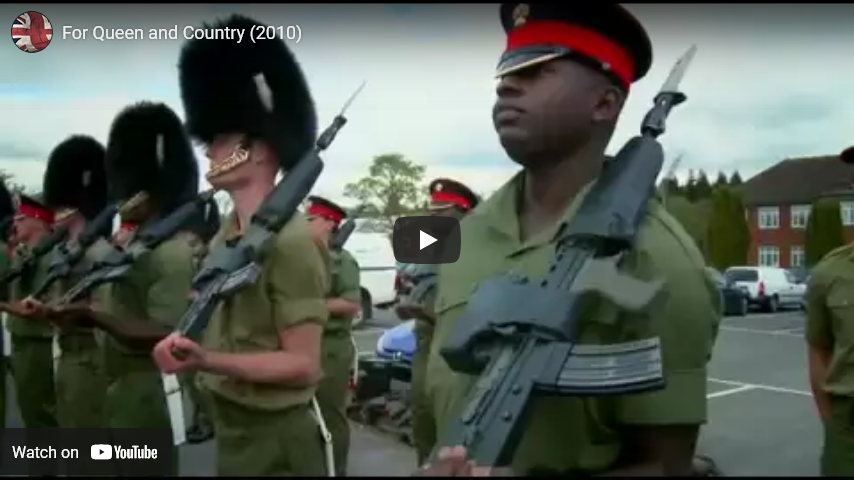
For Queen and Country (2010)
emptyangel
Published 14 Jun 2011“Documentary following the Grenadier Guards as they prepare to lead the 2010 Trooping the Colour. But these men have had precious little time to prepare; as fighting soldiers, they have just spent six months on the front line in Afghanistan’s Helmand Province. This is the story of how one and a half thousand men and women join together to create one of the greatest military ceremonies on earth. It is a ceremony with just one standard: Excellence.”
Comments Off on For Queen and Country (2010)
May 31, 2022
A new history of the evil empire. No, not that one. Not that one either. The other evil empire!
In The Critic, Barnaby Crowcroft reviews Caroline Elkins’ new history of the British empire, Legacy of Violence:
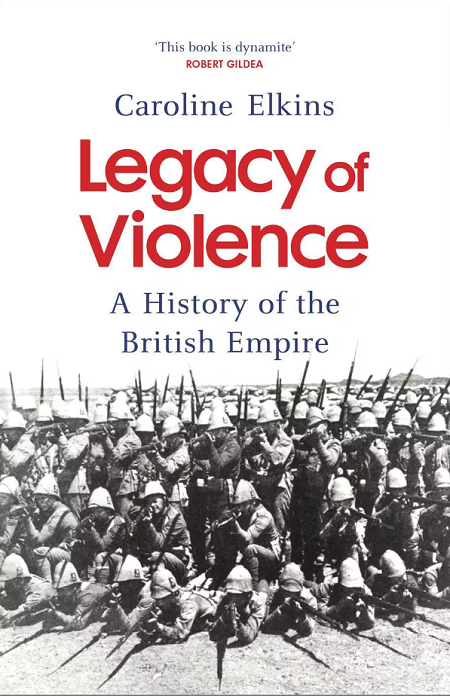
Elkins is correct that British decolonisation after the end of the war — if not “white-washed” — has got off lightly among historians, often via a contrast with the dreadful behaviour of the French. We remain far too influenced by the impression that Britain willingly and amicably handed over power (as Harold Macmillan put it) to Asian and African representatives of “agreeable, educated, Liberal, North Oxford society”.
There is a single map in this book which should definitively dispose of such ideas, showing all the colonial conflicts and states of emergency Britain was engaged in around the world after 1945. There are the well-known counterinsurgencies in Palestine, Malaya, Kenya, Cyprus and Aden. Alongside other, less well-known ones, however — British Guiana, Malaysia, Belize, Oman and the New Hebrides — bring us pretty much into the 1980s without a single year of global colonial peace.
In Kenya and Malaya, the British carried out massive coercive interventions in the 1950s, including the forcible resettlement of over a million people into closely monitored “new villages”, which, if they cannot be likened to concentration camps, certainly resemble the kinds of things the French were doing in Algeria. Difficult though it is to believe today, until very recently the British were a “warlike” and patriotic people, and their agents could be ruthless in the pursuit of imperial interest overseas.
Unfortunately, it is not possible to take seriously the more grandiose claims of Legacy of Violence, including Elkins’ presumption to have uncovered the Key to All Mythologies of British imperial wickedness in the form of Liberalism and Racism. The prose is part of the problem. Her introductory statement of the book’s bombastic aims reads more like something written by a professional satirist, than a professional historian.
“To study the British empire,” she writes, “is to unlock memory’s gate using the key of historical enquiry. But once inside, history’s fortress is bewildering … Unlike mythical fire-breathing monsters, however, the creatures inhabiting the annals of Britain’s imperial past are not illusions [but] monstrosities [which] inflicted untold suffering …”
Much of the book is given over to a plodding chronicle of nineteenth- and twentieth-century British history, in which events are construed — and often misconstrued — to give the meanest possible interpretation. British “arch-imperialists” resemble cartoon villains, who wear “Hitleresque moustaches” and “racist coattails” and are awarded MBEs and OBEs according to how much harm they inflict upon colonial subjects. There is even an imaginative reconstruction of British pilots all but laughing as they machine-gun “defenceless women and children”; readers are invited to listen to their “screams of pain”.
To determine whether Britain’s empire was uniquely violent invites the question: compared to what? Niall Ferguson earned opprobrium for suggesting in 2003 that alongside the rival empires which arose to challenge it in the middle of the twentieth century, Britain’s looked pretty attractive.
To her credit, Elkins does not disagree with this. Her treatment of Malaya’s communist insurgency suggests that she is not particularly exercised by violence when it is committed by ideological confrères. The only thing we get in the way of any broader comparison, however, is the notably wishy-washy one implied between the “East and the West”, which she describes as the contrast between “humanity and inhumanity”.
Comments Off on A new history of the evil empire. No, not that one. Not that one either. The other evil empire!
May 30, 2022
The Deadliest Job in World War Two – WAH 062 – May 29, 1943
World War Two
Published 29 May 2022Arthur Harris and the RAF set another record in bombing Germany, and the outnumbered Yugoslav Partisans show the Axis that numbers mean little when you’re clever.
(more…)
Comments Off on The Deadliest Job in World War Two – WAH 062 – May 29, 1943
May 29, 2022
Black May, Nazi Subs Defeated – WW2 – 196 – May 28, 1943
World War Two
Published 28 May 2021German Grand Admiral Karl Dönitz orders the U-Boats to leave the Atlantic this week; the losses lately have just been too great for their patrols to continue there. There is active fighting in China, the Aleutians, and the Kuban, and there are special weapons tests in the skies over Germany.
(more…)
Comments Off on Black May, Nazi Subs Defeated – WW2 – 196 – May 28, 1943
QotD: Was Biden’s Afghan evacuation driven by Twitter “optics”?
Take the Afghanistan bugout. As Z Man pointed out in his column today, it was gonna happen. And it was going to be a cock up; that’s just the nature of these things. A halfway competent Apparat would’ve let Bad Orange Man own it. They could’ve milked it for years. Hell, decades — it was 2012 before we were finally allowed to stop talking about who did or didn’t do what in Vietnam.
But the Apparat didn’t do that, and the reason was: Twitter.
All the Blue Checkmarks on Twatter agreed that “letting” Bad Orange Man pull out of Afghanistan would be “handing him a win”. After all, he said he was going to do it! And if he somehow got out before the 20th anniversary, that’d be an even bigger win. Obviously, then, they had to “let” Biden do it, because that’s a “win”. And of course he had to do it in August, so that he could “spike the football” on 9/11/2021.
So the withdrawal had to be pushed into 2021, and it had to be slapdash. Indeed, it had to be the exact opposite of whatever Bad Orange Man was planning to do, so that there was no possible way Bad Orange Man could claim a “win”. It had to be all Biden …
… and so it was. With results that anyone smarter than a concussed goldfish — which of course excludes everyone with a Blue Checkmark — could’ve predicted.
If the Blue Checkmark Borg on Twatter, then, decides that Brandon needs to look tough by nuking Moscow, then it’s go time. And since the social dynamic on Twitter is ever-spiraling lunacy — the only way to “win” Twitter is by being more screechingly insane about everything than everyone else — then whoever gets there fustest with the mostest is going to drive the “decision”.
Severian, “Ukraine”, Founding Questions, 2022-02-24.
Comments Off on QotD: Was Biden’s Afghan evacuation driven by Twitter “optics”?
May 25, 2022
The Spy Game That Killed Yamamoto – WW2 – Spies & Ties 17
World War Two
Published 24 May 2022We’ve already seen the power of signals intelligence. Churchill loves being fed information from MI6’s Ultra. Now it brings a vengeance for his American allies. They manage to bag the scourge of Pearl Harbor, C-in-C of the Imperial Japanese Navy, Admiral Isoroku Yamamoto.
(more…)
Comments Off on The Spy Game That Killed Yamamoto – WW2 – Spies & Ties 17
May 23, 2022
Drowning Germans, Burning Jews – WAH 061 – May 22, 1943
World War Two
Published 22 May 2022When Air Marshal Arthur Harris and Reichspropagandaminister Joseph Goebbels agree that a lot of death and destruction is not enough death and destruction, the world is in trouble.
(more…)
Comments Off on Drowning Germans, Burning Jews – WAH 061 – May 22, 1943
May 16, 2022
Heaviest Air Raid in Human History – WAH 060 – May 15, 1943
World War Two
Published 15 May 2022As the Warsaw Ghetto Uprising is being quashed, there are renewed Japanese atrocities in China, and the RAF sets a world record by bombing German civilians.
(more…)
Comments Off on Heaviest Air Raid in Human History – WAH 060 – May 15, 1943
QotD: The difference between surface meaning and actual intent
Tim Worstall, “That Chinese ‘BreedReady’ Database – Check The Translation”, Continental Telegraph, 2019-03-11.
Comments Off on QotD: The difference between surface meaning and actual intent
May 15, 2022
The End of the War in Africa – WW2 – 194 – May 14, 1943
World War Two
Published 14 May 2022With the end of the Tunisian Campaign, the Allies have won the war for the African Continent. What next? They meet at the Trident Conference in Washington DC to try and figure that out. Meanwhile, the fight in the field continues — in Burma, the Aleutians, China, and the Kuban.
(more…)
Comments Off on The End of the War in Africa – WW2 – 194 – May 14, 1943


