Quotulatiousness

August 12, 2023

Churchill and India

Andreas Koureas posted an extremely long thread on Twitter, outlining the complex situation he and his government faced during the Bengal Famine of 1943, along with more biographical details of Churchill’s views of India as a whole (edits and reformats as needed):

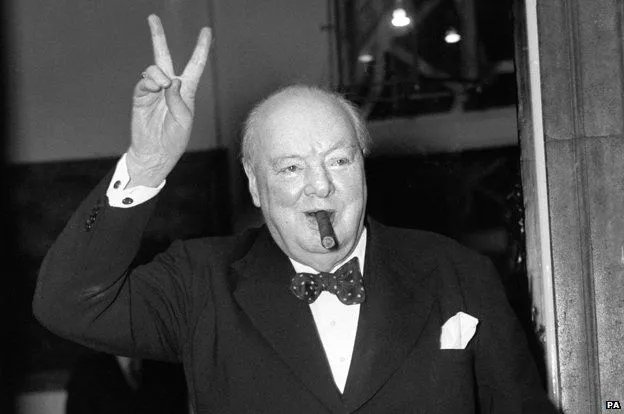
The most misunderstood part of Sir Winston Churchill’s life is his relationship with India. He neither hated Indians nor did he cause/contribute to the Bengal Famine. After reading through thousands of pages of primary sources, here’s what really happened.

A thread ๐Ÿงต

I’ve covered this topic before, but in a recent poll my followers wanted a more in-depth thread. Sources are cited at the end. I’m also currently co-authoring a paper for a peer reviewed journal on the subject of the Bengal Famine, which should hopefully be out later this year.

I’ll first address the Bengal Famine (as that is the most serious accusation) and then Churchill’s general views on India. It goes without saying that there will be political activists who will completely ignore what I have to say, as well as the primary sources I’ll cite. I have no doubt, that just like in the past, there will be those who accuse me of only using “British sources”.

This is not true. I have primary sources written by Indians as well as papers by Indian academics.

Moreover, I have no doubt that such activists will, choose to “cite” the ahistorical journalistic articles from The Guardian or conspiratorial books like Churchill’s Secret War by Mukerjee — a debunked book that ignores most of what I’m about to write about, and is really what sparked the conspiracy of Churchill and the Bengal Famine. For everyone else, I hope you find this thread useful.
(more…)

August 9, 2023

America Plans to Incinerate Japan – War Against Humanity 107

Filed under: China, History, India, Japan, Military, Pacific, USA, Weapons, WW2 — Tags: , , , — Nicholas @ 04:00

World War Two
Published 8 Aug 2023

The Allied Strategic bombing campaign has claimed hundreds of thousands of civilian lives across Europe and has made little real impact on the Axis war machine. Even so, the United States is determined to extend the campaign to Japan. Until now, the vast distances of the Asia-Pacific theatre have protected the imperial enemy. That all changes when the USAAF unleashes the Superfortress.
(more…)

August 6, 2023

The Warsaw Uprising Begins! – WW2 – Week 258 – August 5, 1944

World War Two
Published 5 Aug 2023

As the Red Army closes in on Warsaw, the Polish Home Army in the city rises up against the German forces. Up in the north the Red Army takes Kaunas. The Allies take Florence in Italy this week, well, half of it, and in France break out of Normandy and into Brittany. The Allies also finally take Myitkyina in Burma after many weeks of siege, and in the Marianas take Tinian and nearly finish taking Guam. And in Finland the President resigns, which could have serious implications for Finland remaining in the war.
(more…)

August 5, 2023

Tempting Armageddon: Soviet vs. NATO Nuclear Strategy

Real Time History
Published 4 Aug 2023

Since the inception of the nuclear bomb, military strategists have tried to figure out how to use them best. During the Cold War, this led to two very different doctrines but on both sides of the Iron Curtain the military wasn’t sure if you could actually win Nuclear War.
(more…)

August 3, 2023

Behind Japanese lines in Burma – SOE and Karen tribal guerillas in 1944/45

Filed under: Asia, Britain, History, India, Japan, Military, WW2 — Tags: , , , — Nicholas @ 04:00

Bill Lyman outlines one of the significant factors assisting General Slim’s XIVth Army to recapture Burma from the Japanese during late 1944 and early 1945:

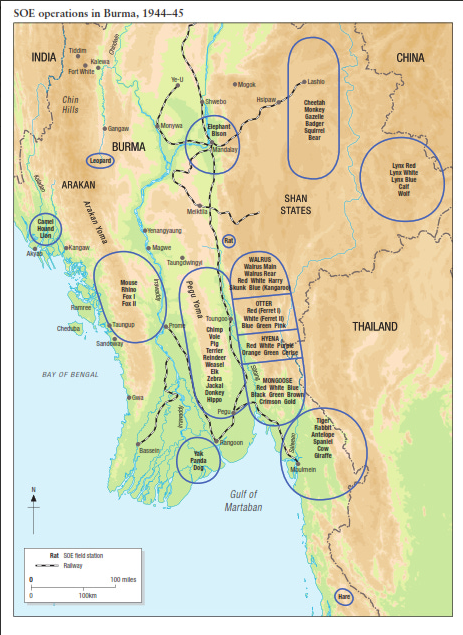
If Lieutenant General Sir Bill Slim (he had been knighted by General Archibald Wavell, the Viceroy, the previous October, at Imphal) had been asked in January 1945 to describe the situation in Burma at the onset of the next monsoon period in May, I do not believe that in his wildest imaginings he could have conceived that the whole of Burma would be about to fall into his hands. After all, his army wasn’t yet fully across the Chindwin. Nearly 800 miles of tough country with few roads lay before him, not least the entire Burma Area Army under a new commander, General Kimura. The Arakanese coastline needed to be captured too, to allow aircraft to use the vital airfields at Akyab as a stepping stone to Rangoon. Likewise, I’m not sure that he would have imagined that a primary reason for the success of his Army was the work of 12,000 native levies from the Karen Hills, under the leadership of SOE, whose guerrilla activities prevented the Japanese from reaching, reinforcing and defending the key town of Toungoo on the Sittang river. It was the loss of this town, more than any other, which handed Burma to Slim on a plate, and it was SOE and their native Karen guerrillas which made it all possible.

In January 1945 Slim was given operational responsibility for Force 136 (i.e. Special Operations Executive, or SOE). It had operated in front of 20 Indian Division along the Chindwin between 1943 and early 1944 and did sterling work reporting on Japanese activity facing 4 Corps. Persuaded that similar groups working among the Karens in Burma’s eastern hills โ€“ an area known as the Karenni States โ€“ could achieve significant support for a land offensive in Burma, Slim authorised an operation to the Karens. Its task was not merely to undertake intelligence missions watching the road and railways between Mandalay and Rangoon, but to determine whether they would fight. If the Karens were prepared to do so, SOE would be responsible for training and organising them as armed groups able to deliver battlefield intelligence directly in support of the advancing 14 Army. In fact, the resulting operation โ€“ Character โ€“ was so spectacularly successful that it far outweighed what had been achieved by Operation Thursday the previous year in terms of its impact on the course of military operations in pursuit of the strategy to defeat the Japanese in the whole of Burma. It has been strangely forgotten, or ignored, by most historians ever since, drowned out perhaps by the noise made by the drama and heroism of Thursday, the second Chindit expedition. Over the course of Slim’s advance in 1945 some 2,000 British, Indian and Burmese officers and soldiers, along with 1,430 tons of supplies, were dropped into Burma for the purposes of providing intelligence about the Japanese that would be useful for the fighting formations of 14 Army, as well as undertaking limited guerrilla operations. As Richard Duckett has observed, this found SOE operating not merely as intelligence gatherers in the traditional sense, but as Special Forces with a defined military mission as part of conventional operations linked directly to a military strategic outcome. For Operation Character specifically, about 110 British officers and NCOs and over 100 men of all Burmese ethnicities, dominated interestingly by Burmans mobilised as many as 12,000 Karens over an area of 7,000 square miles to the anti-Japanese cause. Some 3,000 weapons were dropped into the Karenni States. Operating in five distinct groups (“Walrus”, “Ferret”, “Otter”, “Mongoose” and “Hyena”) the Karen irregulars trained and led by Force 136, waited the moment when 14 Army instructed them to attack.

Between 30 March and 10 April 1945 14 Army drove hard for Rangoon after its victories at Mandalay and Meiktila, with Lt General Frank Messervy’s 4 Indian Corps in the van. Pyawbe saw the first battle of 14 Army’s drive to Rangoon, and it proved as decisive in 1945 as the Japanese attack on Prome had been in 1942. Otherwise strong Japanese defensive positions around the town with limited capability for counter attack meant that the Japanese were sitting targets for Allied tanks, artillery and airpower. Messervy’s plan was simple: to bypass the defended points that lay before Pyawbe, allowing them to be dealt with by subsequent attack from the air, and surround Pyawbe from all points of the compass by 17 Indian Division before squeezing it like a lemon with his tanks and artillery. With nowhere to go, and with no effective means to counter-attack, the Japanese were exterminated bunker by bunker by the Shermans of 255 Tank Brigade, now slick with the experience of battle gained at Meiktila. Infantry, armour and aircraft cleared General Honda’s primary blocking point before Toungoo with coordinated precision. This single battle, which killed over 1,000 Japanese, entirely removed Honda’s ability to prevent 4 Corps from exploiting the road to Toungoo. Messervy grasped the opportunity, leapfrogging 5 Indian Division (the vanguard of the advance comprising an armoured regiment and armoured reconnaissance group from 255 Tank Brigade) southwards, capturing Shwemyo on 16 April, Pyinmana on 19 April and Lewe on 21 April. Toungoo was the immediate target, attractive because it boasted three airfields, from where No 224 Group could provide air support to Operation Dracula, the planned amphibious attack against Rangoon. Messervy drove his armour on, reaching Toungoo, much to the surprise of the Japanese, the following day. After three days of fighting, supported by heavy attack from the air by B24 Liberators, the town and its airfields fell to Messervy. On the very day of its capture, 100 C47s and C46 Commando transports landed the air transportable elements of 17 Indian Division to join their armoured comrades. They now took the lead from 5 Indian Division, accompanied by 255 Tank Brigade, for whom rations in their supporting vehicles had had been substituted for petrol, pressing on via Pegu to Rangoon.

July 30, 2023

Bradley Unleashes His Cobra – WW2 – Week 257 – July 29, 1944

World War Two
Published 29 Jul 2023

Operation Cobra is the drop that finally opens the floodgates and the Allies make a breakthrough in Normandy; up in the Baltics the Soviets take Shaulyai, Dvinsk, and finally Narva, though their big prize this week is Lvov further south. This happens during the Poles’ Lvov Uprising, which ends badly for the Poles. Things also go badly for the Japanese on Guam, though, as their assault this week devastates their own troops.
(more…)

July 28, 2023

Progressive objections to Oppenheimer

Filed under: History, Japan, Media, Military, USA, WW2 — Tags: , , , , , , — Nicholas @ 03:00

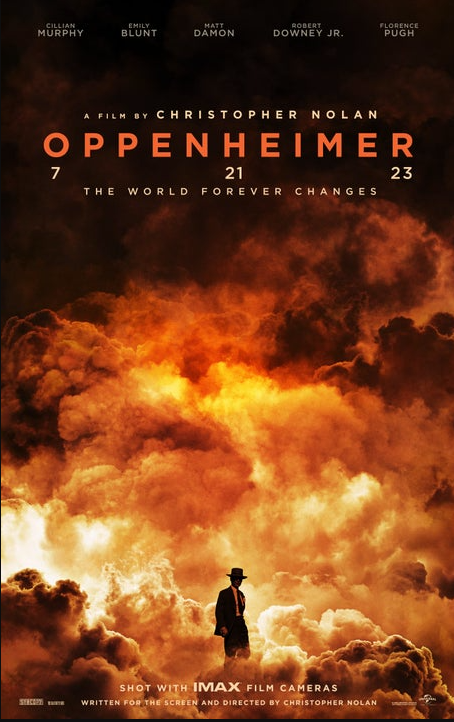
Disclaimer: I haven’t seen the movie, and have no immediate plans to do so. That said, there’s a lot of discussion about the movie, its successes and its failures and how it relates to today’s issues. Over at Founding Questions, Severian felt the need to do a proper fisking of one particularly irritating take:

This is one of two Oppenheimer stories that popped up this morning. I don’t watch tv and haven’t seen a movie in the theater in decades; I doubt I’ve seen more than a handful of “new” movies in the last ten years. So I really am not the target audience for this kind of thing, but … I don’t get it. Why is this movie such a big deal? Have they decided to simply create The One Pop Culture Thing out of whole cloth?

Anyway, let’s see what they have to say:

    There’s a cabal online, and even in some professional circles, arguing that Nolan has made the bombing of Hiroshima and Nagasaki a sideshow: that Oppenheimer looks away from the devastating effects of what happened on August 6 and 9 1945.

I guess this is where the Historian in me will forever override the pop culture critic. Obviously Robert Oppenheimer knew he was developing a weapon. The difference between a nuclear bomb and a regular bomb is one of degree, not kind. American firebombing had already done to dozens of Japanese cities what Oppenheimer’s nuke did to Hiroshima. Curtis LeMay knew it, too โ€” after the war, he said that he’d have been rightfully tried for war crimes had the outcome gone the other way. I simply cannot see how this man is uniquely culpable for anything … or if he is, then Rosie the Riveter should be held accountable for every bomber that rolled off the assembly line.

    Anti-nuclear groups have been similarly disappointed, with Carol Turner from the Campaign for Nuclear Disarmament telling The Guardian that “the effect of the [Hiroshima and Nagasaki] blasts was to remove the skin in a much more gory and horrible way โ€“ in [Oppenheimer] it was tastefully, artfully presented.”

That‘s your objection? That people weren’t shown getting killed in a realistic-enough manner? Jesus Christ, do you people ever listen to yourselves? That’s fucking sick. You are a loathsome excuse for a human being, Carol Turner.

    Although it says much about the morals and mechanics of war, Oppenheimer isn’t a war film: it’s ultimately about the internal conflict and persecution of one individual. To painstakingly focus on the Japanese victims would have made it an entirely different film, and one at odds with the rest of Nolan’s vision. (His fellow director James Cameron, meanwhile, is said to be planning a film on the victims of Hiroshima and Nagasaki.)

“Victims”. You keep using that word.

    There is currently a trend for great cultural works, such as Oppenheimer, to be denigrated if they don’t tick certain boxes, and such complaints often come from the Left. A lack of focus on victims has been a frequent criticism: it’s an argument that gets wheeled out, for example, whenever a drama is being made about serial killers. Yet I don’t think artists are obliged to do this if it doesn’t fit into their own authorial vision.

I have to admit, I’m getting that old College Town feeling right now. The one where it feels like someone dropped some low-grade acid in my coffee, and I’m hallucinating. I know what all those words mean, but put together like that they don’t make any sense at all. On the most basic level, the objection here seems to be that movies require plots. A “drama about a serial killer”, for example (“drama” … what an odd word choice), requires murders. You know, mechanically speaking. But what does “focusing” on them add? Is it any more or less awful, learning that the dead guy killed at random by a lunatic was really into soccer and had a dog and liked classic rock?

And all this is before you consider that the most vocal critics of Oppenheimer are Leftists … the very same Leftists who are determined to fight to the very last drop of Ukrainian blood, and who seem to think that giving Zelensky tactical nukes is a super idea. Reading the Left’s pronouncements on Vladimir Putin, you’d be forgiven for thinking they’d like to nuke him twice, just to be sure.

Your concern for the “victims” of Hiroshima and Nagasaki rings a little hollow, gang, when you’ve been howling for blood 24/7 on Twitter for a year and a half.

July 23, 2023

Sayonara Tojo – WW2 – Week 256 – July 22, 1944

World War Two
Published 22 Jul 2023

This week, Adolf Hitler is blown up and Hideki Tojo steps down. In the Pacific, the Americans land on Guam and prepare for hard fighting. In France, the Americans take Saint-Lรด and British and German armored forces clash around Caen. In the East, the Red Army enters Latvia, tears a gap in Army Group North, and reaches the gates of Lvov.
(more…)

July 22, 2023

Did Japan Start WW2 in 1937?

Filed under: China, History, Japan, Military — Tags: , , , , , — Nicholas @ 04:00

Real Time History
Published 21 Jul 2023

In 1937 Japan invaded the Republic of China after already annexing Manchuria in 1931. With the international settlements in Shanghai, the military support through Nazi Germany and the Soviet Union and the general escalation of the war, many argue that 1937 marked the start of the Second World War in Asia.
(more…)

Look at Life – Ticket to Tokyo (1959)

Filed under: Britain, History, India, Japan — Tags: , , , , , — Nicholas @ 02:00

PauliosVids
Published 24 Nov 2018

Travelling with Britannia Airline from London via Bombay to Tokyo to discover Japan and back via Hong Kong.

(more…)

July 18, 2023

Seaplanes? How 1940s. No, we’re seeking to “leverage emerging technologies” instead

Filed under: China, India, Japan, Military, Pacific, Technology, USA — Tags: , , , — Nicholas @ 04:00

CDR Salamander wonders about a modern need for military sea rescue capability that the US Navy filled with flying boats and seaplanes during the Second World War, then supplemented with helicopters during Korea and Vietnam. For ocean search-and-rescue in a combat environment in the present or near future, what are the USN’s plans?

I will be the first person to admit that good, well-meaning, and informed people can disagree with seaplanes in general or the US-2 specifically, but they have to engage the conversation. Directly argue the requirement or offer realistic alternatives.

This does neither. If anything is demonstrates the narrowness of thought and fragility of substance used in opposition.

What an patronizingly toxic stew that answer is. I highly doubt Lung typed out that answer himself, so my commentary below is not directed at him personally, but … and it is what comes after the “but” that counts — but at the three-digit J or N code that extruded that from the random acquisitions professional statement subroutine from ChatGPT.

Let’s give that answer a full Fisking;

  • “The Indo-Pacific operational environment has evolved significantly since World War II”:
  • Let me check my WWII Pacific chart, my Vietnam War era globe, and GoogleEarth … and … no. The geography has not changed. The distances have not changed. The requirement of thousands of years to take and hold territory or eliminate your enemy from access to it has not changed. All the little islands, regardless of what Al Gore and John Kerry say, are still there. As we are seeing in the Russo-Ukrainian War, a million PPT slides saying so does not change the fundamentals of war.

    Sentence one is invalid.

  • “The employment of seaplanes today would not meet the operational demands and current threat scenario.”

    Is there an operational demand for us to rescue downed airmen and to be able to reach remote islands without airfields? Yes. Does your “current threat scenario” run from Northern Japan through to Darwin, Australia? Yes.

    Sentence two is invalid.

  • “However, we support the continuous development of new and innovative solutions that may provide solutions to logistical challenges.”
  • So, you define “new” as something that only exists on PPT slides? By “continuous development” you mean never matures as a design that goes into production. By “innovative” you mean high on technology risk. Undefined program risk. Unknown design risk. No known production line or remote estimate to IOC, much less FOC when we know that the next decade is the time of most danger of the next Great Pacific War.

    Sentence three is irresponsible and professionally embarrassing given the history of transformational wunderwaffe this century.

  • “As an example, DARPA’s Liberty Lifter X-Plane seeks to leverage emerging technologies that may demonstrate seaborn strategic and tactical lift capabilities.”
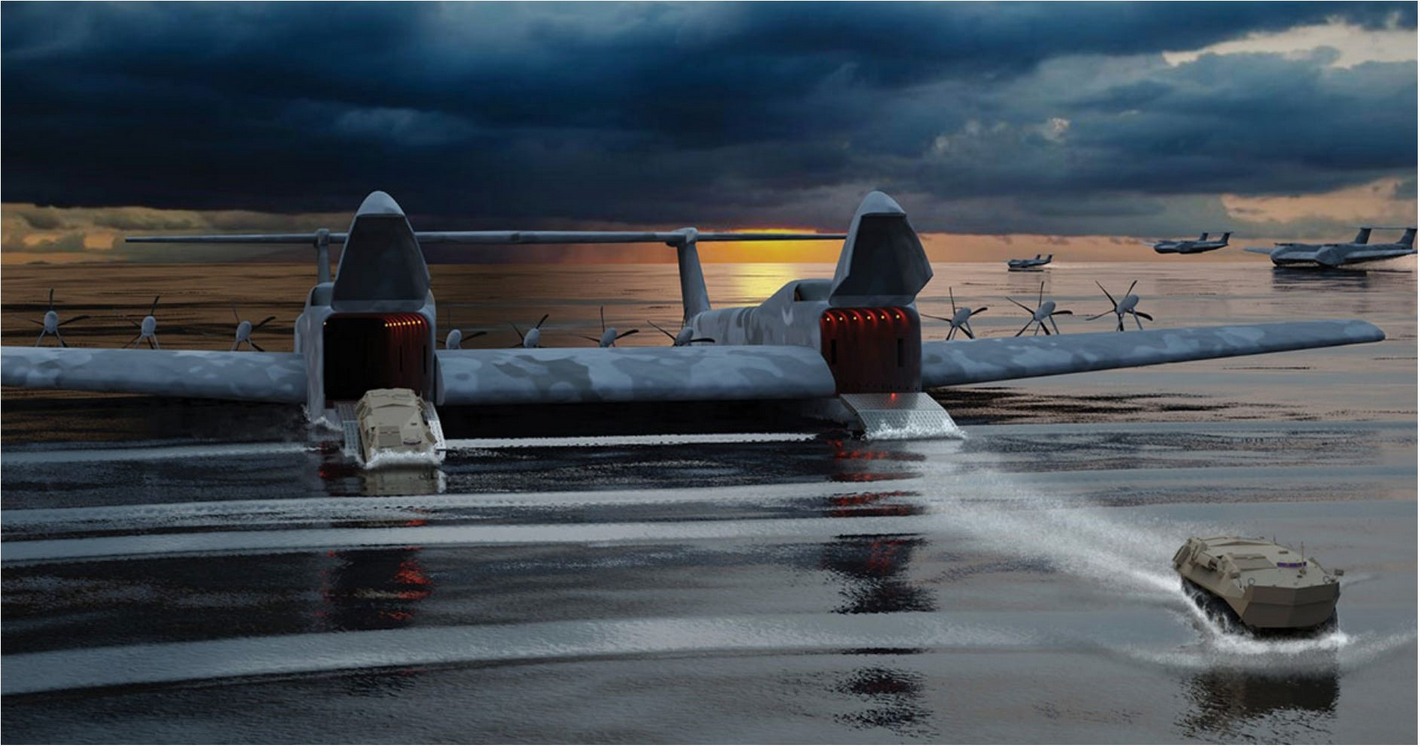
  • Well, goodness, we will have to micro-Fisk this gaslighting horror show of a sentence. To start with, they are talking about either this from General Atomics;

    … that could only be used on a very few select beaches under ideal weather in a completely permissive environment and could only be used for one specific mission and nowhere any possible hostile aircraft or ground forces. Also looks like we’d need a whole new engine and a small town’s worth of engine mechanics to maintain the maintenance schedule on those engines.

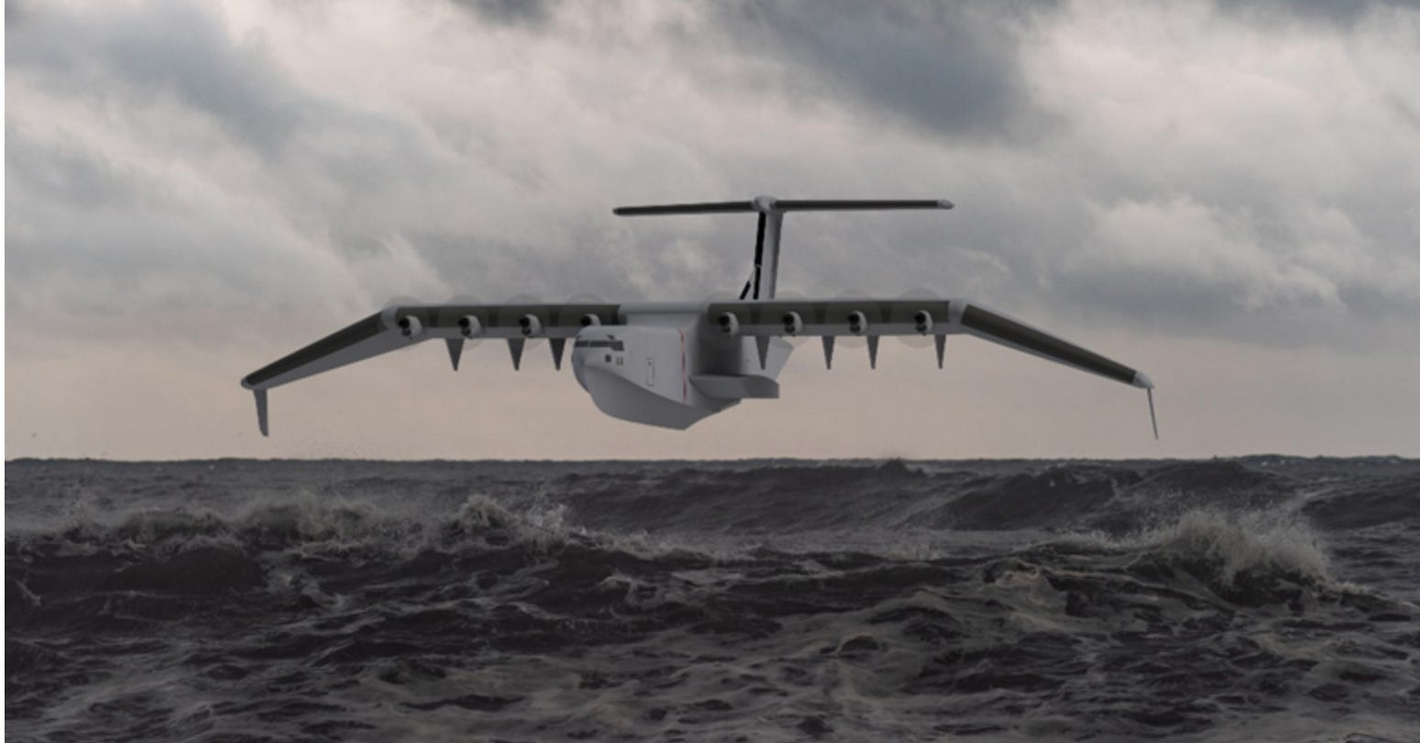
    Then we have this offspring of an accidental mating of the Spruce Goose with the Caspian Sea Monster idea from Aurora Flight Sciences;

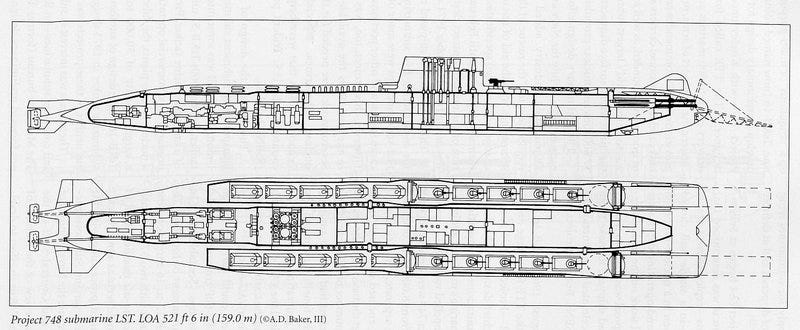
    I give the odds of either one of those taking to the air prior to 2035, if ever, on par with a return of the submarine LST of Cold War fame (deck gun not included).

    Let’s get back to the wording of that dog’s breakfast of a final sentence. Feel slimy reading it? You should;

  • “seeks to leverage” — that is just a way of saying, “hope in magic beans.” Gobbledegook.
  • “emerging technologies” — oh, you mean something that hasn’t left the computer, white board, or PPT slide.
  • “that may demonstrate” — so, even if our magic beans managed to fuse unobtainium with Amrita, we’re not really sure if the strip mining of strange blue creatures’s holy sites and drilling holes in the soft pallet of whale-like thing will result in something of use.
  • “strategic and tactical lift capabilities” — I’m sorry, an eight or ten-engined aircraft that any goober with a 1960s-era iron-sighted RPG-7 could target at maximum range is going do anything “tactical” — especially at the expected price of those things and the resulting precious few that wind up displacing water. Oh, and you admit that it will only be used for cargo, so it can’t do the full range of possible missions the US-2 can … just cargo. On just a few beaches that are fully surveyed ahead of time. At the right tide. In the right weather. In a 100% safe and permissive environment.
  • The final sentence is a caricature.

Rep. Austin Scott (R-GA) should feel at least mildly insulted by this reply. It was a serious question given a canned answer that, slightly modified, could have been provided at any time in the last quarter century by the lethargically complacent maintainers of the suboptimal habits of the mistakingly entitled acquisitions nomenklatura

July 16, 2023

Mass Suicide on Saipan – WW2 – Week 255 – July 15, 1944

Filed under: Britain, Cancon, France, Germany, History, Japan, Military, Pacific, Russia, USA, WW2 — Tags: , , , , , , — Nicholas @ 04:00

World War Two
Published 15 Jul 2023

Japanese troops and civilians commit mass suicide rather than surrender to the Americans in the Marianas; in Normandy, Caen has finally fallen to the Allies though the fight for St. Lo is not over; the Soviet offensives in the north take Vilnius and the fighting continues up in Finland, but the big eastern front news is the mighty new Soviet offensive in Western Ukraine. (more…)

July 13, 2023

Bill Slim’s plan for the Battle of Meiktila in March 1945

Filed under: Asia, Books, Britain, History, India, Japan, Military, WW2 — Tags: , — Nicholas @ 05:00

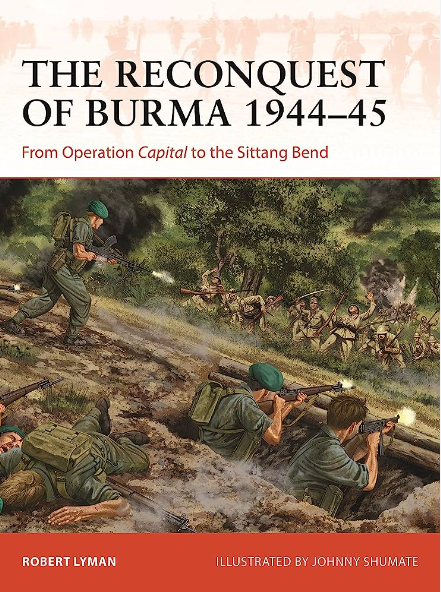
Dr. Robert Lyman on the subject of his most recent book, The Reconquest of Burma 1944-45: From Operation Capital to the Sittang Bend:

When I was writing my latest book with General Lord Dannatt he said to me, “Rob, if I’ve got one criticism of A War of Empires it’s that you don’t emphasise enough the role of Bill Slim in coming up with the plan for victory in 1945, and executing it perfectly.” Fair. As Slim’s military biographer, I told Richard that I didn’t want to be accused of rewriting that book again. I was conscious of this problem as I was writing A War of Empires.

But it is fair criticism. It may be that I underplayed Slim’s role when I was considering all the other critical features in this great campaign. The idea behind the dramatic victory by 14th Army in Burma in 1945 was Slim’s and Slim’s alone. He pursued his own plan through to its remarkable conclusion.

[…]

Slim’s original plan was to fight the main strength of the Japanese army on the Shwebo Plain, a dry, flat plain between the loops of the Chindwin and Irrawaddy. Not only would the terrain be well suited to the deployment of armour, for which the Japanese had little effective reply, but the Japanese would be trapped with the river-line at their back. Slim had assumed that the Japanese would be unprepared to make a voluntary withdrawal. The scene was set for Slim to be able to deploy his superior mobility and firepower to destroy the main Japanese army in Burma.

By the end of the year, however, it became apparent that the Japanese were not going to conform to Slim’s plan for the battle, and General Kimura had seen the trap which his forces would be caught in if they attempted to stand and fight in the Shwebo Plain. Showing unusual flexibility and moral courage Kimura promptly withdrew his reconstituted 15th Army behind the Irrawaddy. Kimura hoped, not without reason, to be able to smash Slim’s army as it attempted to cross the river, which in itself presented an immense obstacle to the British. He would then counter-attack and destroy Slim as the British withdrew during the monsoon to the Chindwin.

Kimura’s move behind the Irrawaddy destroyed at a stroke Slim’s plan. Undaunted, and recognising the supreme importance of destroying Kimura’s army rather than taking ground for its own sake, Slim came up with another plan. In basic outline, his new plan (Operation Extended Capital) entailed crossing the Irrawaddy and fighting the decisive battle in February in the plain around Mandalay and the low hills around Meiktila, the key enemy air and supply base in Central Burma. Both the road and rail links between Mandalay and Rangoon ran through Meiktila. If Meiktila fell, the whole structure of the Japanese defence of Central Burma would collapse.

July 9, 2023

The Destruction of Army Group Center – Week 254 – July 8, 1944

World War Two
Published 8 Jul 2023

Operation Bagration continues, smashing the armies of German Army Group Center and taking ever more territory including the prize of Minsk; on Saipan the Americans have taken most of the island when the Japanese resort to a huge suicidal banzai charge to try and turn the tide; and in Normandy new attacks begin try to finally take Caen and St. Lo.
(more…)

July 2, 2023

Allies Liberate Cherbourg – WW2 – Week 253 – July 1, 1944

Filed under: Britain, China, France, Germany, History, India, Japan, Military, Pacific, Russia, USA, WW2 — Tags: , , , , , — Nicholas @ 04:00

World War Two
Published 1 Jul 2023

Several weeks after the invasion of Normandy began, the Allies finally take a port city there, though the actual harbor has been destroyed. On Saipan the Americans have the advantage, in Finland, the Soviets do, but the big news is the Soviet destruction of huge chunks of German Army Group Center, demolishing entire Army Corps, and surrounding tens of thousands of the enemy.
(more…)

« Newer PostsOlder Posts »

Powered by WordPress