Quotulatiousness

June 29, 2019

Determining who the “original” inhabitants were

Filed under: Africa, Americas, Australia, Europe, History, Pacific, Science — Tags: , , , — Nicholas @ 03:00

It’s become quite common in some countries to pay formal lip service to the “original” peoples who inhabited the land before being dispossessed of that territory by various Europeans. Actually determining who were the first human inhabitants, however, is much more fraught … you can’t exactly expiate some residual guilt of your culture by acknowledging the previous culture if the previous culture in their turn dispossessed an even earlier group, can you? How far down the rabbit hole do you need to go? Tim Worstall explains:

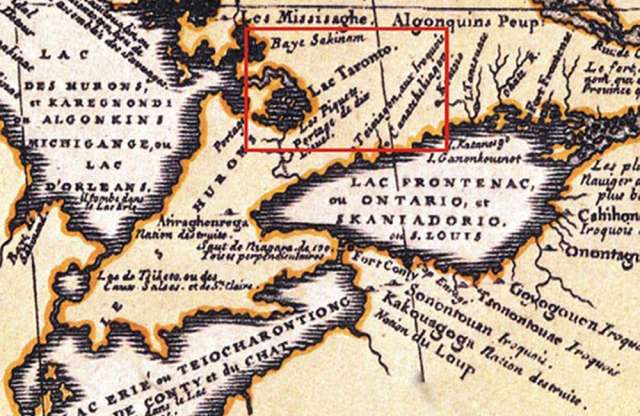
Detail from a 1688 map of western New France by Vincenzo Coronelli that locates “Lac Taronto” at Lake Simcoe.
City of Toronto Culture Division/Library and Archives Canada via the National Post

… within all that the accurate answer to “Whose land are we on?” is the land of the latest bunch of murderous bastards who killed all the previous inhabitants. Perhaps moderated to say the peeps who killed all the previous men then dated the remaining womenfolk. Because once we’ve got past that nullius stage that’s the way it has been. The Moriori are in short supply these days on the Chatham Islands given that the Maori decided to eat them.

The original inhabitants of the British Isles, the Beaker Folk, were entirely replaced by the next lot, the Iron Age Celts and similar. The Angles displaced to the west the Romano Celts in their turn, detailed DNA studies showing rather more of the female side of the R-C’s bred into the new population than the male. The Franks weren’t indigenous to France, the Allemani to Germany, the Turks to Turkey.

In fact, we’ve between little and no proof that the varied Amerinds were the original inhabitants of the lands where the White Europeans found then from 1492 onwards. In the case of both the Incas and Aztecs as political powers, proof they weren’t. And horses and Plains Indians simply weren’t a thing until the Eurasian horse was introduced post 1492.

Basically, this is indeed true. Anywhere is the possession of simply the last group of people to have slaughtered, or outbred, the previous group.

An interesting observation – if we apply the oft stated Americas example elsewhere, that Whitey stole it all and should give it back, then the Bantu should be back in Nigeria and Central Africa returned to the Pygmies, Southern to the Khoi San. We don’t say that and for the life of me I can’t work out why.

June 28, 2019

The “V-word” in political discussions

Filed under: Americas, Economics, Politics — Tags: , , , — Nicholas @ 05:00

Kristian Niemietz explains why “Venezuela” isn’t a sensible or satisfactory answer to claims in favour of socialism:

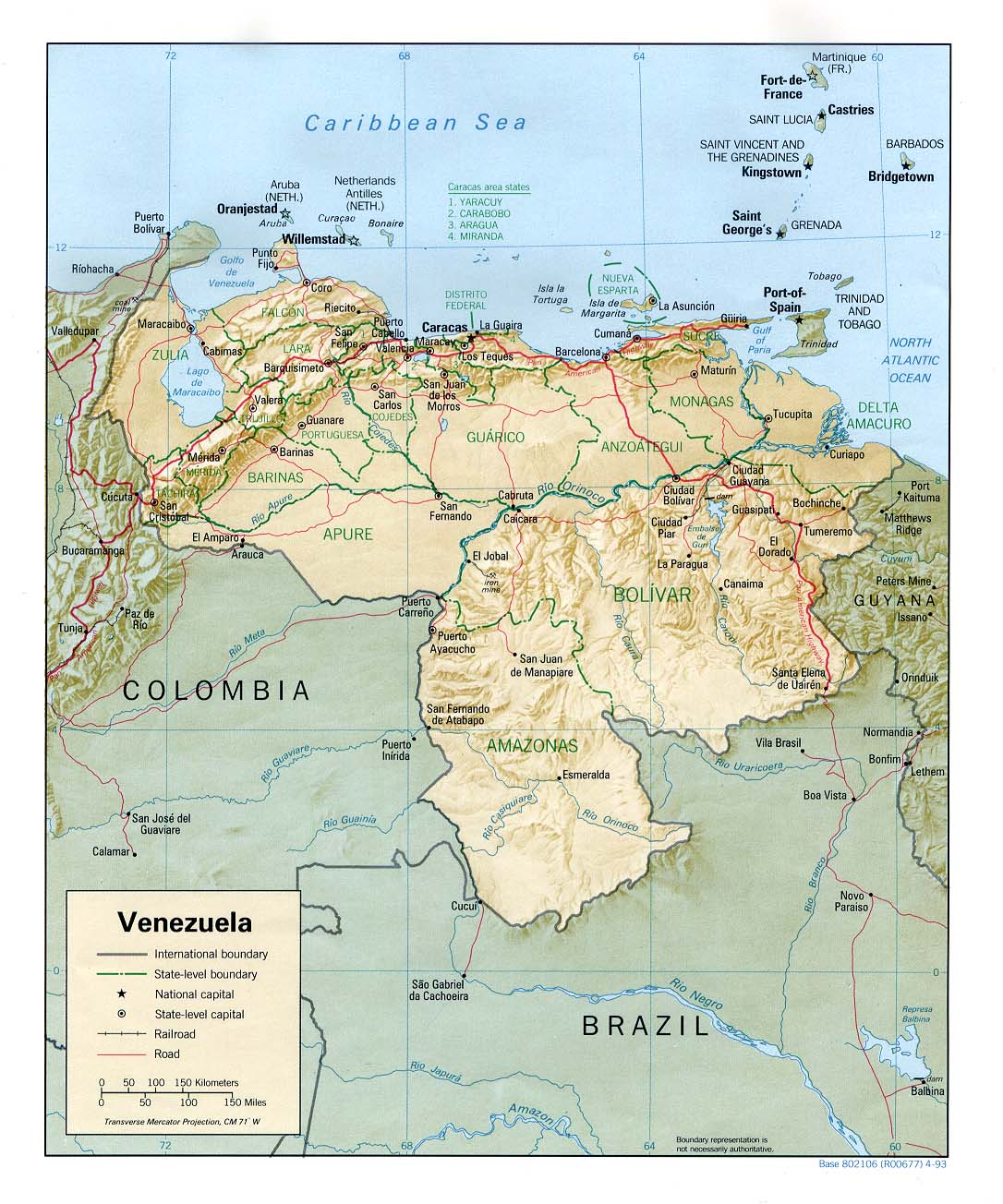
Shaded relief map of Venezuela, 1993 (via Wikimedia)

The main point to note is that Venezuela is an actual country, not a shorthand for “everything I don’t like about the Left”. It is a country that is in trouble for specific, identifiable reasons, not for being, somehow, generically, “too left-wing”. This sounds obvious when you put it like that, but deviations from this point are the main cause of V-word inflation.

So when somebody on the Left proposes to, for example, raise income tax, wealth taxes, or corporation tax, people on the pro-market side should not respond by shouting “Venezuela!”. Because that’s not what happened in Venezuela. Venezuela is not a high-tax economy, or at least, their tax burden is not what ruined them.

In the same way, if somebody on the Left proposes to hike the minimum wage, to abolish university tuition fees, or to ban zero-hour contracts, shouting “Venezuela!” is not the answer either. Those are bad ideas, sure. But those are not the ideas that destroyed Venezuela.

In short, we shouldn’t bring up Venezuela in a discussion of run-of-the-mill left-wing policies, which bear little relationship to anything that Chávez and/or Maduro did.

Furthermore, when somebody points out a genuine social problem in Britain, “Yeah but Venezuela!” is not much of a reply. Socialists are sometimes good at identifying problems, even if they are terrible at developing solutions. It is true that we have some of the highest housing costs in the world. It is true that our productivity performance, and as a result, wage growth, are poor, and have been poor for far too long. It is true that our welfare system is riddled with flaws, and often fails to support people who have fallen on hard times.

“It’s much worse in Venezuela, which is the system you lot want!” is not good enough. “It’s much better in capitalist countries X and Y – which is the system we should learn from” is more like it. So in such cases, it’s best to leave Venezuela out of it. Let “Venezuela” be a country, not a rhetorical all-purpose put-down.

That said – don’t declare that moratorium just yet. When prominent British socialists call for mass nationalisations, when they call for price controls and capital controls, when they deride the rule of law as a mere “bourgeois” construct that only serves “the elites” – then yes, it is absolutely fair to point out that this is exactly what happened in Venezuela. Here, we’re not talking about some allegorical “Venezuela”, but about the actual country, and about specific things that happened there. These are the very policies, and this is the very mindset, which turned what was once South America’s richest country into a basket case. This argument may not “resonate with people” – but it’s true.

Further to that: when socialists claim that “their” version of socialism will be completely different from any of its previous incarnations, that it will be genuinely democratic, empowering, grassroots-based and non-hierarchical – then it is fair to point that this is exactly what the Chavistas also used to say.

Some Western socialists are currently trying to convince themselves that Chávez and Maduro just never really aspired to a different kind of socialism, that authoritarian populism is all they ever wanted. This is fundamentally untrue, and Western socialists used to know this very well. The project of Venezuelan socialism started with the aspiration that this time would be different, that this time, “socialism” would not mean an all-powerful state controlling everything. It started with the aspiration that there could be completely different forms of collective ownership, which had nothing to do with the top-down nationalised industries of the past.

The appeal of Millennial Socialism rests on the delusion that the democratic, bottom-up socialism Millennial Socialists aspire to is a fundamentally novel aspiration, and that nobody in history has ever tried to build anything like this before.

But it is not a new aspiration. This was precisely what Chávez’s and Maduro’s “21st Century Socialism” was also about, which is why it used to be so popular in the West. A moratorium on the V-word would just play into the hands of those who now want to pretend that none of this ever happened, and that “Millennial Socialism” is novel, untried and untested.

June 22, 2019

Cuban socialism still gets good press from western progressives

Filed under: Americas, History, Politics, USA — Tags: , , , — Nicholas @ 03:00

Unlike most other socialist states that have fallen out of the good graces of western progressives, Cuba is still frequently treated as a kind of “true socialist state” by those who want western culture to move further in a socialist direction. Why has Cuba maintained its lustre? Kristian Niemietz discusses Cuba’s progressive halo for the IEA:

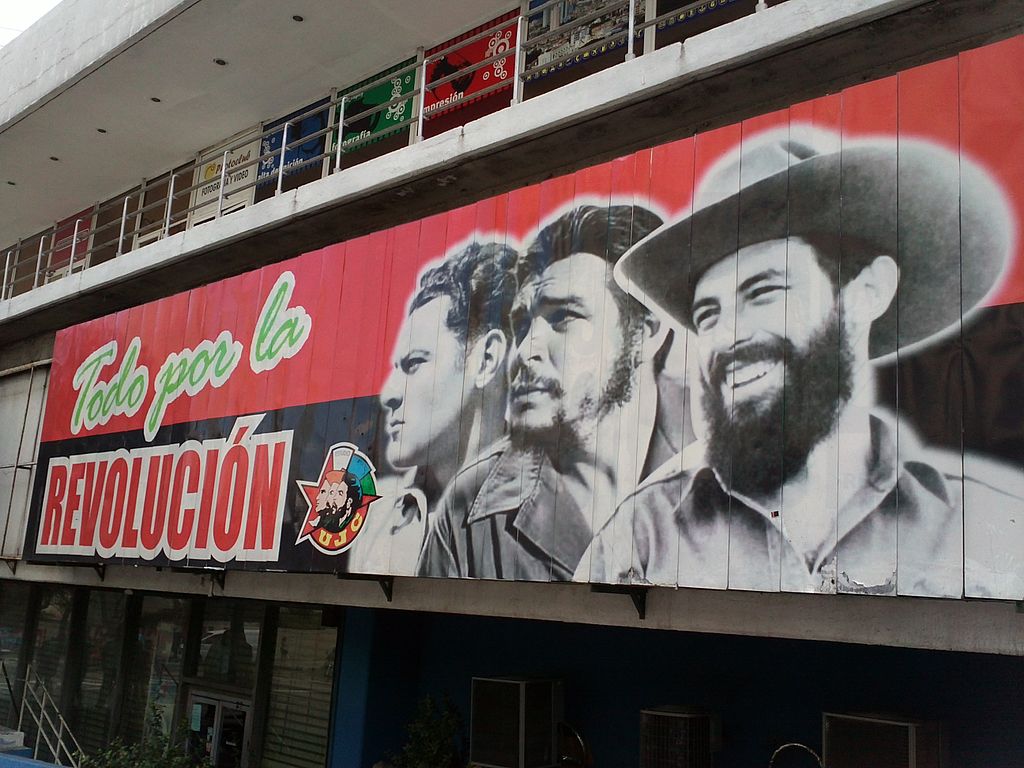
A billboard in Havana, showing Camilo Cienfuegos, Ernesto “Che” Guevara, and Fidel Castro, 4 November 2014.
Photo by Tumpatumcla~commonswiki via Wikimedia Commons.

Last week, Shadow Chancellor John McDonnell gave a speech at the Rail and Maritime Transport (RMT) Union’s “Garden Party for Cuba” event, attended, among other luminaries, by the Cuban ambassador. McDonnell made the following pledge:

    “We’re here in solidarity with the Cuban revolution […] I want to say this to our Cuban comrades. When […] a Labour government is elected, not if, we will be your staunchest allies to support the Cuban revolution. And that means the support, the political support of course, but it means also the support, financial and on trade […] We stand with you comrades.”

This was greeted with chants of “Viva Cuba” and “Viva socialismo“. Just two weeks earlier, when asked about the poor track record of socialism in Cuba, Venezuela and the former Soviet Union, McDonnell had declared that “it was never socialism”.

So which one is it? Is Cuba socialist now, or not? Did it suddenly become socialist in the last two weeks, after 60 years of faux-socialism? Is it an on-and-off kind of socialism, which alternates between the real thing, and the fake version? Is it a Schrödinger’s socialism?

May 15, 2019

Jade of the Maya

Filed under: Americas, History — Tags: , , , , , , — Nicholas @ 02:00

Lindybeige
Published on 10 Apr 2019

Guatemala – another video from my trip there, this time looking at the jade in the local museum, plus obsidian, idols, and 1970s fashion tips.

Support me on Patreon: https://www.patreon.com/Lindybeige
Camera: Jeremy Lawrence (https://www.futtfuttfutt.com)

Lindybeige: a channel of archaeology, ancient and medieval warfare, rants, swing dance, travelogues, evolution, and whatever else occurs to me to make.

▼ Follow me…

Twitter: https://twitter.com/Lindybeige I may have some drivel to contribute to the Twittersphere, plus you get notice of uploads.

website: http://www.LloydianAspects.co.uk

May 14, 2019

Hotchkiss Revolving Cannon from San Juan Hill

Filed under: Americas, France, History, Military, Technology, USA, Weapons — Tags: , , , , — Nicholas @ 02:00

Forgotten Weapons
Published on 9 Apr 2019

This Hotchkiss cannon and its accessories are lot #1116 in the upcoming April 2019 Morphy auction:

https://www.forgottenweapons.com/hotc…

Benjamin Hotchkiss was an American artillery designer who moved to Paris in 1867 in hopes of building a business for his improvements in artillery shells. He experienced the Franco-Prussian War in 1870, and understood the failure of the French Mitrailleuse multi-barrel volley guns. In his opinion, an effective rapid-fire weapon needed to fire explosive projectiles to have a real effect at extended range (unlike the Mitrailleuse which fired simple rifle bullets). So being the inventive sort, he went ahead and designed just such a gun. His revolving cannon was sized for 1-pound (450g) 37mm explosive shells (although he would also produce armor-piercing and canister ammunition). The gun looks like a Gatling gun at first glance, but its mechanical operation is quite different.

The Hotchkiss cannon would become quite popular, with major purchases by the French and American navies as well as many other nations. They would serve into World War One, including some use repurposed as antiaircraft weapons. This particular example was captured by American forces in Cuba during the Spanish-American War, most likely from San Juan Hill. It is a magnificent example of the type, and with a fantastic historical provenance to match.

http://www.patreon.com/ForgottenWeapons

Cool Forgotten Weapons merch! http://shop.bbtv.com/collections/forg…

Contact:
Forgotten Weapons
PO Box 87647
Tucson, AZ 85754

May 13, 2019

U.S. Civil War – Surprising Soldiers – Extra History

Filed under: Americas, History, Military, USA — Tags: , , , , — Nicholas @ 04:00

Extra Credits
Published on 11 May 2019

Historians have been learning that the US Civil War armies were a lot more diverse than previously accounted for — partly because many soldiers who hailed from other countries and nations used adopted names. Chinese, Hawaiian, Hispanic, and Cherokee soldiers all participated on both sides of the US civil war — suffering even more conflict in some cases.

Researchers are beginning to learn that the makeup of the Union and Confederate armies in the US Civil War was a lot more nuanced and diverse than we had previously known. Here is an episode on the accounts of some of those surprising soldiers!

Join us on Patreon! http://bit.ly/EHPatreon

April 30, 2019

James May explains the time he nearly killed Jeremy Clarkson

Filed under: Americas, Humour, Media — Tags: , , , , — Nicholas @ 02:00

DRIVETRIBE
Published on 31 Mar 2019

With the Grand Tour trio having been on camera together for over 16 years now, you can forgive them for getting annoyed at each other every once in a while. James May tells us the story of a night in Argentina that put his friendship with Jeremy Clarkson to the test. One piece of advice for everyone out there – don’t let the fire go out.

April 9, 2019

Miscellaneous Myths: The Five Suns

Filed under: Americas, History — Tags: , , , — Nicholas @ 06:00

Overly Sarcastic Productions
Published on 5 Apr 2019

Everybody loves a good creation myth. The Aztecs loved it so much they did it five whole times! I’d call it “overkill”, but compared to all the other stuff the aztecs believed, four mythical extinction events is actually remarkably tame.

PATREON: https://www.patreon.com/user?u=4664797

March 29, 2019

Smoking Snakes – Brazilian Expeditionary Force – Sabaton History 008

Filed under: Americas, Europe, History, Italy, Media, Military, WW2 — Tags: , , — Nicholas @ 06:00

Sabaton History
Published on 28 Mar 2019

You don’t generally think about Brazil when talking about World War Two. Still, they joined the Allied powers in 1942, after which the Brazilian Expeditionary Force played a role in the battle for Italy. The Sabaton song “Smoking Snakes” (from the Heroes album) is about the Brazilian effort during World War Two and especially about three Brazilian soldiers who wouldn’t surrender.

Support Sabaton History on Patreon: https://www.patreon.com/sabatonhistory

Watch more videos on the Sabaton YouTube channel: https://www.youtube.com/user/Sabaton?…
Listen to Sabaton on Spotify: http://smarturl.it/SabatonSpotify
Official Sabaton Merchandise Shop: http://bit.ly/SabatonOfficialShop

Hosted by: Indy Neidell
Written by: Markus Linke and Indy Neidell
Directed by: Astrid Deinhard and Wieke Kapteijns
Produced by: Pär Sundström, Astrid Deinhard and Spartacus Olsson
Creative Producer: Joram Appel
Executive Producers: Pär Sundström, Joakim Broden, Tomas Sunmo, Indy Neidell, Astrid Deinhard, and Spartacus Olsson
Maps by: Eastory
Edited by: Iryna Dulka
Sound Editing by: Marek Kaminski

Eastory YouTube Channel: https://www.youtube.com/channel/UCEly…
Archive by: Reuters/Screenocean https://www.screenocean.com
Music by Sabaton.
Research contribution: Leitura ObrigaHISTÓRIA – Check out their channel: https://www.youtube.com/obrigahistoria
The Mariners’ Museum and Park
Brazilian casualty chugs milk
https://catalogs.marinersmuseum.org/o…
P0003/01-#W-14256

An OnLion Entertainment GmbH and Raging Beaver Publishing AB co-Production.

© Raging Beaver Publishing AB, 2019 – all rights reserved.

March 5, 2019

Mythology Matters – Wendigo Origins – Extra Mythology – #2

Filed under: Americas, History — Tags: , , — Nicholas @ 06:00

Extra Credits
Published on 4 Mar 2019

Did you know that the Wendigo myth can be thought of as a warning against overconsumption of the natural world? We talk about this and other fun facts that we didn’t really get to cover in our animated Wendigo episode!

February 28, 2019

Native American Myth – The Wendigo – The Omushkego Tribe – Extra Mythology

Filed under: Americas, History — Tags: , — Nicholas @ 04:00

Extra Credits
Published on 25 Feb 2019

Join the Patreon community! http://bit.ly/EMPatreon

Anwe the Killer was a man skilled in death — and he approached the People in their hour of need, to put to death the cannibals — the Wendigo — who had been torturing them.

February 13, 2019

Native American Myth – Nlaka’pamux: The Adventures of Coyote – Extra Mythology

Filed under: Americas, History, Religion — Tags: , — Nicholas @ 04:00

Extra Credits
Published on 11 Feb 2019

Join the Patreon community! http://bit.ly/EMPatreon

Coyote is not just a wild animal in North America, but also a heroic, trickster protagonist whose mythological adventures reflect lessons learned from the natural world. Let’s examine the Nlaka’pamux tribe’s interpretation of Coyote.

February 12, 2019

History Summarized: Iroquois Native Americans

Overly Sarcastic Productions
Published on 7 Aug 2017

There’s a fascinating history from just northwest of American history that is too often ignored. But that’s a damn shame, because it’s a damn cool history, and I’m going to talk about it dammit!

No, I didn’t accidentally misspell the title of this video when I sleepily uploaded this after I woke up. That’s absurd.

EXTRA CREDITS: HIAWATHA: https://youtu.be/79RApCgwZFw

This video was produced with assistance from the Boston University Undergraduate Research Opportunities Program.

PATREON: http://www.patreon.com/OSP

February 8, 2019

History Summarized: The Portuguese Empire

Filed under: Americas, Europe, History, Humour, India — Tags: , , , , — Nicholas @ 02:00

Overly Sarcastic Productions
Published on 9 Nov 2018

Play World of Warships for free: http://bit.ly/2zyT191. New players will receive 1 MILLION free credits, the historical premium ship HMS Campbeltown and more by using my code PLAYWARSHIPS2018

What happens when you spend a few decades casually getting really good at seafaring, only to find that there’s suddenly a whole new world that’s only accessible to societies with exceptional sailing prowess? — You get fabulously rich, that’s what. Watch along and learn all about the surprising success of Portugal!

PATREON: http://www.patreon.com/OSP

From the comments:

BenficaHaze 1904
1 month ago
Portugal didn’t follow Spain. Portugal started the discoveries 60-70 years before Spain

Pietro SF
1 month ago
The video already starts badly by suggesting Portugal only entered the Discoveries as a response to the Spaniards, when in reality the Portuguese pioneered the Age of Discovery, starting it half a century before Columbus’ Voyage.

Daniel Ghan
1 month ago
Nice video, but 2 significant errors:
1) Columbus didn’t motivate Portugal’s exploration as the video implies; rather, it was the other way around. The Portuguese began searching for a way to India around Africa after the fall of Constantinople in 1453. Columbus, who was Italian, asked the Portuguese king to finance his expedition but was refused, and only then went to Spain.
2) Magellan (Magalhães) was Portuguese but his expedition was sponsored by Spain and he had a Spanish crew. So the expedition would not have returned to Lisbon.

Metriximor
1 month ago
Alright, Portuguese here, just wanna say overall you did a great job but I wanna clear a few misconceptions.

Portugal didn’t just spring up into action because of Columbus, in fact, he even asked the Portuguese Crown for funding before he asked the Spanish Crown. Portuguese discoveries began in 1418 with Madeira, 1427 we found Açores, then in 1434 Gil Eanes goes around Cape Bojador, 1472 we found Newfoundland, but most importantly, in 1487 Bartolomeu Dias goes around the Cape of Storms, and looking out at the huge possibilities of his accomplishment he declares it to be the Cape of Good Hope.

This was all before Columbus even thought of sailing the Atlantic(1488) or contacting the Spanish(1489), so saying Portugal just began exploring because of him is downplaying it a lot.

Otherwise, fantastic work, love your channel and content keep it up 😀
PORTUGAL CARALHO

December 11, 2018

Viking Expansion – Lies – Extra History

Filed under: Americas, Europe, History, Middle East, Russia — Tags: , , , , , , , — Nicholas @ 04:00

Extra Credits
Published on 8 Dec 2018

Writer Rob Rath talks about all the cool stories and facts we didn’t get to cover in the already expansive Viking Expansion series.

Join us on Patreon! http://bit.ly/EHPatreon

7:08 – Rob learns he has a linguistic tic about being able to correctly distinguish “ancestor” and “descendant”
17:10 – Olga of Kiev scared Matt to death… really though…
25:23 – Walpole Connection
28:05 – what’s next on Extra History

Some other works to check out: The Sea Wolves: A History of the Vikings, by Lars Brownworth / The Vikings, by Else Roesdahl / Podcast: Norse by Northwest

« Newer PostsOlder Posts »

Powered by WordPress