Overly Sarcastic Productions
Published on 30 Aug 2019Check out the Armchair Historian channel for more on French Vietnam and the battle of Dien Bien Phu: https://youtu.be/IJ051WyUsW8
Dubious morality, drawn out timescales, intricate royal politics, worldwide stages — Colonialism be like that sometimes. And by “Like That” I mean impenetrably complicated. I did my best, I’ll say that, but oh man is history a mess in the 15-1900s. This stuff is the reason I had so much trouble with history for so long. It’s just so DENSE.
ANYWAY, join Blue and Griffin the Armchair Historian for a look into the history of the multiple successive French Empires. Listen carefully as Blue makes imperceptibly subtle commentary about his extremely non-biased opinions on this chapter in history, and laugh together as we analyze the historical significance of Napoleon Bonaparte’s anime hair.
NOTE on 6:14 — I say Napoleon became Emperor in 1802. That’s a mistake. In 1802, the constitution of France was amended to make the position of Consul permanent, but Napoleon did not become the Emperor until 1804, when he declared the French Empire. That’s my bad.
NOTE on 11:25 — French Guiana, on the northeast coast of South America, remained part of France following the decolonization of Africa. That’s a mapping mix-up.
DISCORD: https://discord.gg/sS5K4R3
PATREON: https://www.Patreon.com/OSP
August 31, 2019
History Summarized: French Empire (Ft. Armchair Historian!)
August 26, 2019
The Inca Empire – Out of Thin Air – Extra History – #1
Extra Credits
Published on 24 Aug 2019Join us on Patreon! http://bit.ly/EHPatreon
There’s a lot that we don’t know for sure about the Inca Empire, because we have conflicting accounts among Spanish colonizers, as well as the fact that Inca history itself is told non-linearly. But we do know that they used Andean accomplishments, from architecture to knotted quipu, to create a city that ruled the largest indigenous empire in the Americas, starting with Manco Capac and the successive Sapa Inca rulers.
August 20, 2019
The Founding of Mexico – Aztec Myths – Extra Mythology
Extra Credits
Published on 19 Aug 2019Join the Patreon community! http://bit.ly/EMPatreon
Huitzilopochtli, god of bloody victory, had promised the Mexica people a city. Before they would eventually settle down at Tenochtitlan, they wandered from place to place, inadvertently causing destruction on the orders of the violent god.
From the comments:
Extra Credits
2 days ago
A procession leads a woman up the steps of a great pyramid. The woman is to be the queen of the Mexica, a new tribe of migrants that have come from a faraway place. However, no wedding will take place. The Mexica’s patron god, Huitzilopochtli, has other intentions.
August 15, 2019
Slavery in the American colonies
Tim Worstall outlines the history of slavery in the area under British rule that eventually became the United States:
This is so well known, what did in fact happen, that even Wikipedia has it unencumbered by wokeness.
Auction at Richmond. (1834)
“Five hundred thousand strokes for freedom; a series of anti-slavery tracts, of which half a million are now first issued by the friends of the Negro.” by Armistead, Wilson, 1819?-1868 and “Picture of slavery in the United States of America” by Bourne, George, 1780-1845
New York Public Library via Wikimedia Commons.

The first 19 or so Africans to reach the English colonies arrived in Jamestown, Virginia, in 1619, brought by English privateers who had seized them from a captured Portuguese slave ship. Slaves were usually baptized in Africa before embarking. As English custom then considered baptized Christians exempt from slavery, colonists treated these Africans as indentured servants, and they joined about 1,000 English indentured servants already in the colony. The Africans were freed after a prescribed period and given the use of land and supplies by their former masters. The historian Ira Berlin noted that what he called the “charter generation” in the colonies was sometimes made up of mixed-race men (Atlantic Creoles) who were indentured servants, and whose ancestry was African and Iberian. They were descendants of African women and Portuguese or Spanish men who worked in African ports as traders or facilitators in the slave trade. For example, Anthony Johnson arrived in Virginia in 1621 from Angola as an indentured servant; he became free and a property owner, eventually buying and owning slaves himself. The transformation of the social status of Africans, from indentured servitude to slaves in a racial caste which they could not leave or escape, happened gradually.
There were no laws regarding slavery early in Virginia’s history. But, in 1640, a Virginia court sentenced John Punch, an African, to slavery after he attempted to flee his service. The two whites with whom he fled were sentenced only to an additional year of their indenture, and three years’ service to the colony. This marked the first legal sanctioning of slavery in the English colonies and was one of the first legal distinctions made between Europeans and Africans.
That’s the 1640 start, if you prefer that. When the distinction was made between black and white runaways from that indenture.
Worth noting that there was nothing unusual about indenture. Very similar indeed to the idea and practice of apprenticeship at the time. In effect, a time limited ownership of the labor – not the person – in return for certain benefits such as transport, sustenance, training and so on. This was actually the manner in which anyone at all entered the skilled working class. Sure, it all sounds a bit feudal but then that’s because it was rather the overhang of that feudal system. And it really did apply to people irrespective of skin colour or racial – even national – background.
England hadn’t had chattel slavery since the Anglo Saxons – Scotland and certain miners being evidence that all of Britain wasn’t so lucky – and it was rather more the Moors, Ottomans, Arabs, various places below the Olive Line, who still had full on slavery.
This then full changed in the colonies. And Anthony Johnson, that arrival from Angola in 1621, who makes the history here:
When Anthony Johnson was released from servitude, he was legally recognized as a “free Negro.” He became a successful farmer. In 1651 he owned 250 acres (100 ha), and the services of five indentured servants (four white and one black). In 1653, John Casor, a black indentured servant whose contract Johnson appeared to have bought in the early 1640s, approached Captain Goldsmith, claiming his indenture had expired seven years earlier and that he was being held illegally by Johnson. A neighbor, Robert Parker, intervened and persuaded Johnson to free Casor.
Parker offered Casor work, and he signed a term of indenture to the planter. Johnson sued Parker in the Northampton Court in 1654 for the return of Casor. The court initially found in favor of Parker, but Johnson appealed. In 1655, the court reversed its ruling. Finding that Anthony Johnson still “owned” John Casor, the court ordered that he be returned with the court dues paid by Robert Parker.
This was the first instance of a judicial determination in the Thirteen Colonies holding that a person who had committed no crime could be held in servitude for life. Though Casor was the first person declared a slave in a civil case, there were both black and white indentured servants sentenced to lifetime servitude before him.
That first instance of that full on chattel slavery in the colonies that became the US was firstly in 1655 – we even know the date, March 8 – and it was of a black owning a black. Oh, and free blacks owning slaves themselves was something that never did entirely disappear from American life, not until slavery itself did in the 1860s.
This all is more than mere pendantry too. Because slavery was not simply the invention of white Europeans to oppress black Africans. A few places in NW Europe – see England above – didn’t have slavery for several hundred years before the Atlantic trade. The rest of the world carried on, quite gaily, having it. To the point that the very word “Slav” is cognate with slave. The Mamluks who ruled Egypt were a caste of mercenaries composed of slaves. The Ottoman Sultan took as his tribute from the Balkans and elsewhere male children who were then sent to Egypt to enlist. Their own children could not join that ruling caste and army. It was a non-hereditary ruling army of slaves, weird as it may seem. Africa itself was awash with slavery and the Arab slave trade up into North Africa and the Mediterranean was a trade in something already happening.
August 12, 2019
Hogs in History – Creator and Destroyer – Extra History
Extra Credits
Published on 10 Aug 2019Download the World of Tanks game for free https://tanks.ly/2yj0usN and use the invite code
EXTRATANKS1to claim your $15 starter pack.In 1494, among the colonization forces from Spain, eight pigs arrived in Cuba. With multiple uses in culinary and craft trades, as well as their general top-tier hardiness, pigs would naturally propagate themselves throughout the Caribbean, and then to Central, South, and North America — but they were also incredibly destructive.
Visit TierZoo to learn about how OP pigs are: https://www.youtube.com/watch?v=6xbQ2…
Join us on Patreon! http://bit.ly/EHPatreon
August 6, 2019
The Fifth Sun – Aztec Myths – Extra Mythology
Extra Credits
Published on 5 Aug 2019Join the Patreon community! http://bit.ly/EMPatreon
Just as the gods Tezcatlipoca, Quetzalcoatl, and Nanahautzin sacrificed themselves so the sun could move across the sky, so too did the Aztecs believe people must follow their example, and spill blood to thank the gods for their life, their maize, and the sun.
July 5, 2019
Miscellaneous Myths: Rainbow Crow
Overly Sarcastic Productions
Published on 31 May 2019This is one of the shortest videos I’ve ever made, and I’d feel bad about that if this month hadn’t been very long and tiring already. Enjoy this bite-sized myth, everybody!
SOME ADDITIONAL RESOURCES FROM THE LENAPE: If you’d like some further reading, try http://www.nanticoke-lenape.info/history.htm, or the official Nanticoke-Lenape online museum at http://nanticokelenapemuseum.org/. The official Lenape tribe website is at http://www.lenapeindiantribeofdelaware.com/, and the Delaware Tribes overall have a site at http://delawaretribe.org/.
And guess what I actually remembered to do before I archived my project file? I actually remembered to note down the SONGS I USED! In order, they are:
•Rondo Alla Turca (Mozart)
•Starfall (Two Steps From Hell)
•Morning Mood (Grieg)
•Fire And Ice (City of the Fallen)
•Flight of the Silverbird (Two Steps From Hell)
•The End Of The Battle (Shadow of the Colossus OST)PATREON: https://www.Patreon.com/OSP
June 29, 2019
Determining who the “original” inhabitants were
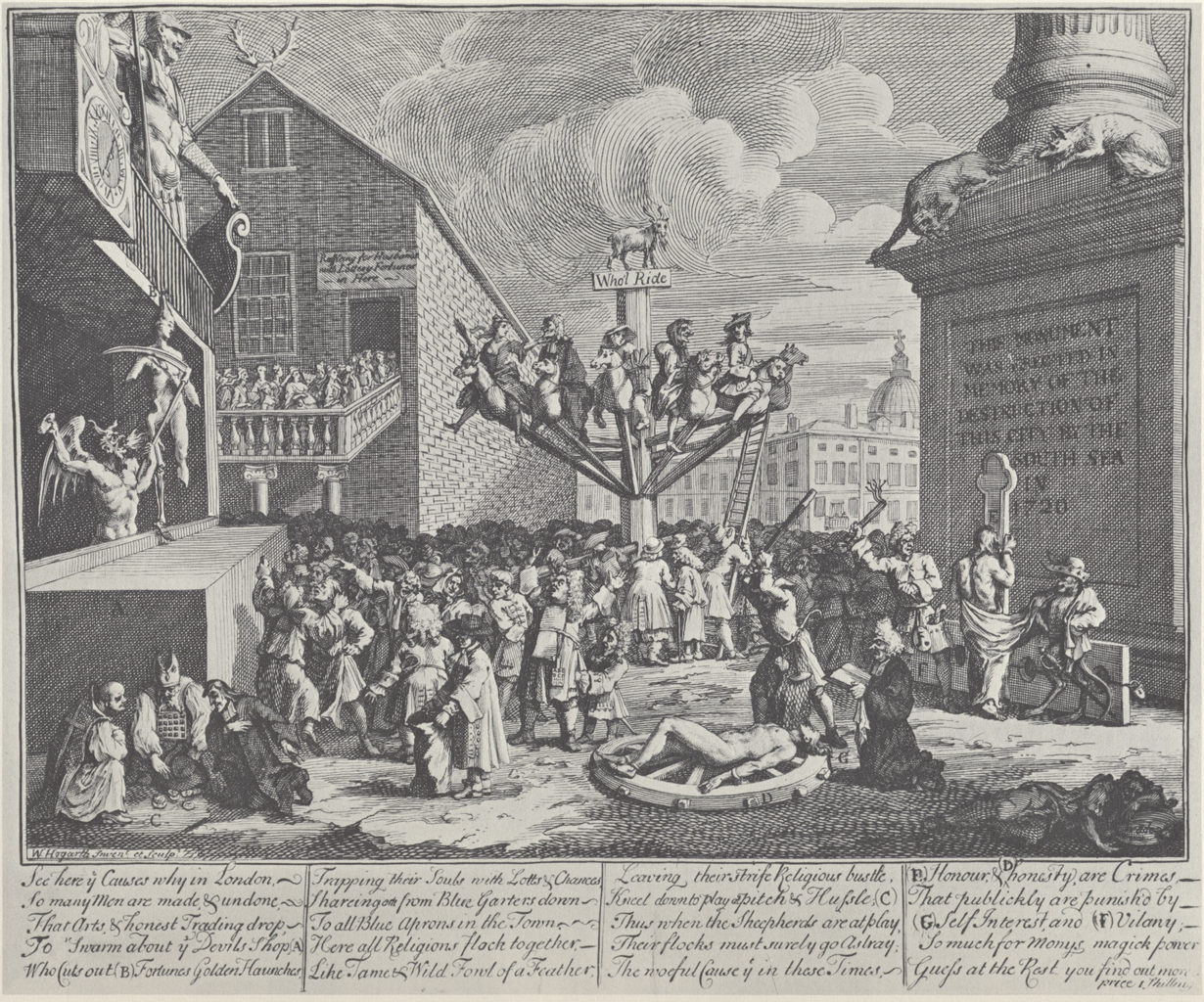
It’s become quite common in some countries to pay formal lip service to the “original” peoples who inhabited the land before being dispossessed of that territory by various Europeans. Actually determining who were the first human inhabitants, however, is much more fraught … you can’t exactly expiate some residual guilt of your culture by acknowledging the previous culture if the previous culture in their turn dispossessed an even earlier group, can you? How far down the rabbit hole do you need to go? Tim Worstall explains:

Detail from a 1688 map of western New France by Vincenzo Coronelli that locates “Lac Taronto” at Lake Simcoe.
City of Toronto Culture Division/Library and Archives Canada via the National Post
… within all that the accurate answer to “Whose land are we on?” is the land of the latest bunch of murderous bastards who killed all the previous inhabitants. Perhaps moderated to say the peeps who killed all the previous men then dated the remaining womenfolk. Because once we’ve got past that nullius stage that’s the way it has been. The Moriori are in short supply these days on the Chatham Islands given that the Maori decided to eat them.
The original inhabitants of the British Isles, the Beaker Folk, were entirely replaced by the next lot, the Iron Age Celts and similar. The Angles displaced to the west the Romano Celts in their turn, detailed DNA studies showing rather more of the female side of the R-C’s bred into the new population than the male. The Franks weren’t indigenous to France, the Allemani to Germany, the Turks to Turkey.
In fact, we’ve between little and no proof that the varied Amerinds were the original inhabitants of the lands where the White Europeans found then from 1492 onwards. In the case of both the Incas and Aztecs as political powers, proof they weren’t. And horses and Plains Indians simply weren’t a thing until the Eurasian horse was introduced post 1492.
Basically, this is indeed true. Anywhere is the possession of simply the last group of people to have slaughtered, or outbred, the previous group.
An interesting observation – if we apply the oft stated Americas example elsewhere, that Whitey stole it all and should give it back, then the Bantu should be back in Nigeria and Central Africa returned to the Pygmies, Southern to the Khoi San. We don’t say that and for the life of me I can’t work out why.
June 28, 2019
June 22, 2019
May 15, 2019
Jade of the Maya
Lindybeige
Published on 10 Apr 2019Guatemala – another video from my trip there, this time looking at the jade in the local museum, plus obsidian, idols, and 1970s fashion tips.
Support me on Patreon: https://www.patreon.com/Lindybeige
Camera: Jeremy Lawrence (https://www.futtfuttfutt.com)Lindybeige: a channel of archaeology, ancient and medieval warfare, rants, swing dance, travelogues, evolution, and whatever else occurs to me to make.
▼ Follow me…
Twitter: https://twitter.com/Lindybeige I may have some drivel to contribute to the Twittersphere, plus you get notice of uploads.
website: http://www.LloydianAspects.co.uk
May 14, 2019
Hotchkiss Revolving Cannon from San Juan Hill
Forgotten Weapons
Published on 9 Apr 2019This Hotchkiss cannon and its accessories are lot #1116 in the upcoming April 2019 Morphy auction:
https://www.forgottenweapons.com/hotc…
Benjamin Hotchkiss was an American artillery designer who moved to Paris in 1867 in hopes of building a business for his improvements in artillery shells. He experienced the Franco-Prussian War in 1870, and understood the failure of the French Mitrailleuse multi-barrel volley guns. In his opinion, an effective rapid-fire weapon needed to fire explosive projectiles to have a real effect at extended range (unlike the Mitrailleuse which fired simple rifle bullets). So being the inventive sort, he went ahead and designed just such a gun. His revolving cannon was sized for 1-pound (450g) 37mm explosive shells (although he would also produce armor-piercing and canister ammunition). The gun looks like a Gatling gun at first glance, but its mechanical operation is quite different.
The Hotchkiss cannon would become quite popular, with major purchases by the French and American navies as well as many other nations. They would serve into World War One, including some use repurposed as antiaircraft weapons. This particular example was captured by American forces in Cuba during the Spanish-American War, most likely from San Juan Hill. It is a magnificent example of the type, and with a fantastic historical provenance to match.
http://www.patreon.com/ForgottenWeapons
Cool Forgotten Weapons merch! http://shop.bbtv.com/collections/forg…
Contact:
Forgotten Weapons
PO Box 87647
Tucson, AZ 85754
May 13, 2019
U.S. Civil War – Surprising Soldiers – Extra History
Extra Credits
Published on 11 May 2019Historians have been learning that the US Civil War armies were a lot more diverse than previously accounted for — partly because many soldiers who hailed from other countries and nations used adopted names. Chinese, Hawaiian, Hispanic, and Cherokee soldiers all participated on both sides of the US civil war — suffering even more conflict in some cases.
Researchers are beginning to learn that the makeup of the Union and Confederate armies in the US Civil War was a lot more nuanced and diverse than we had previously known. Here is an episode on the accounts of some of those surprising soldiers!
Join us on Patreon! http://bit.ly/EHPatreon
April 30, 2019
James May explains the time he nearly killed Jeremy Clarkson
DRIVETRIBE
Published on 31 Mar 2019With the Grand Tour trio having been on camera together for over 16 years now, you can forgive them for getting annoyed at each other every once in a while. James May tells us the story of a night in Argentina that put his friendship with Jeremy Clarkson to the test. One piece of advice for everyone out there – don’t let the fire go out.
April 9, 2019
Miscellaneous Myths: The Five Suns
Overly Sarcastic Productions
Published on 5 Apr 2019Everybody loves a good creation myth. The Aztecs loved it so much they did it five whole times! I’d call it “overkill”, but compared to all the other stuff the aztecs believed, four mythical extinction events is actually remarkably tame.