Quotulatiousness

September 14, 2022

“Americans, particularly the kind of Very Serious people who make up our intelligentsia, are desperate for a good war”

Filed under: History, Middle East, Military, Russia, USA — Tags: , , , , , , — Nicholas @ 03:00

Freddie deBoer thinks he’s sussed out the reason so many Americans are so very, very pro-Ukraine in the ongoing fighting between the Russian invaders and the Ukrainian defenders (beyond the normal desire to “root for the underdog”):

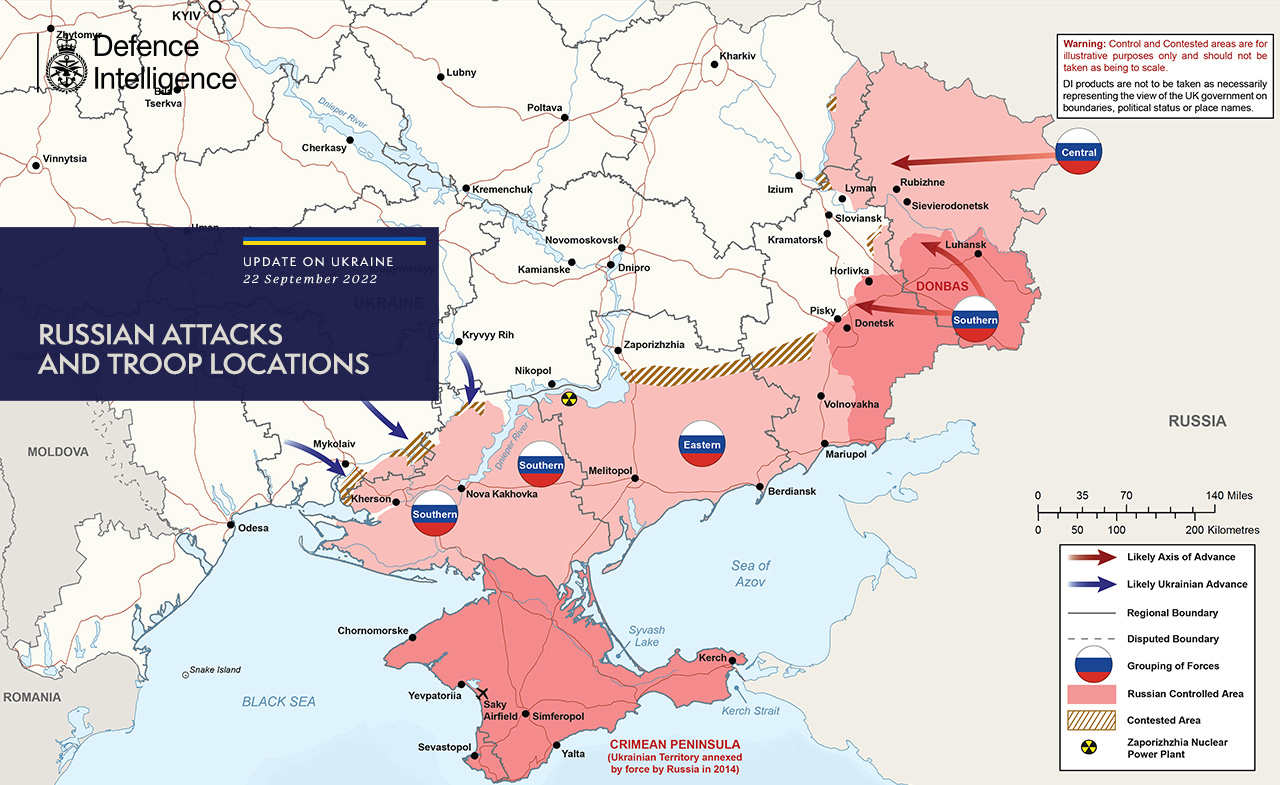
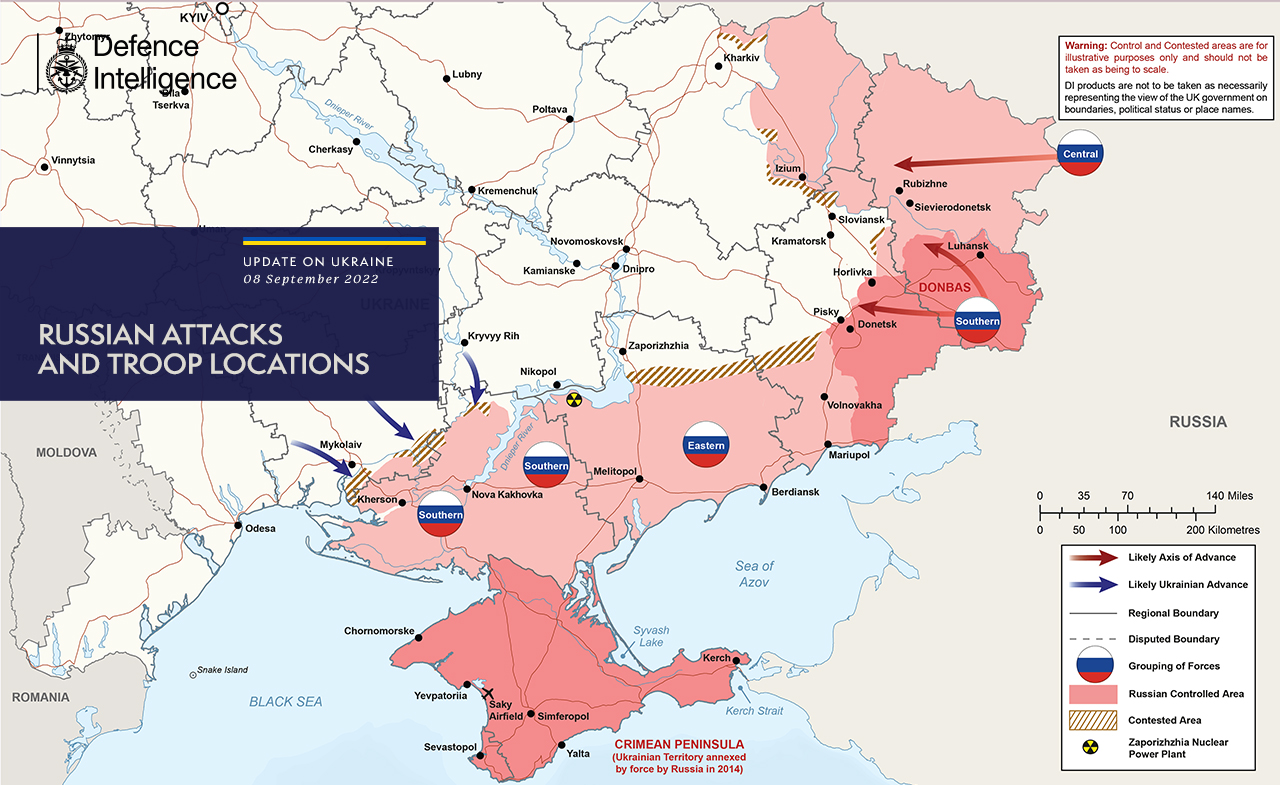
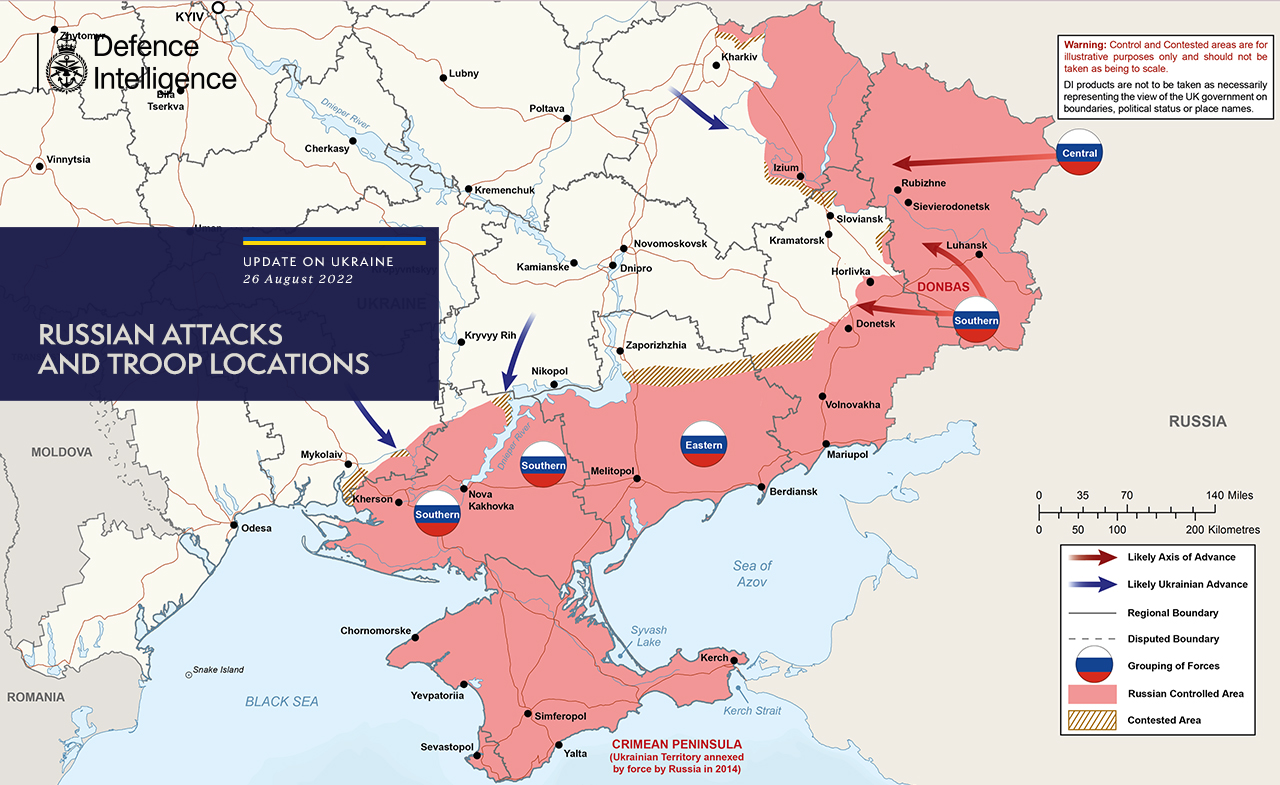
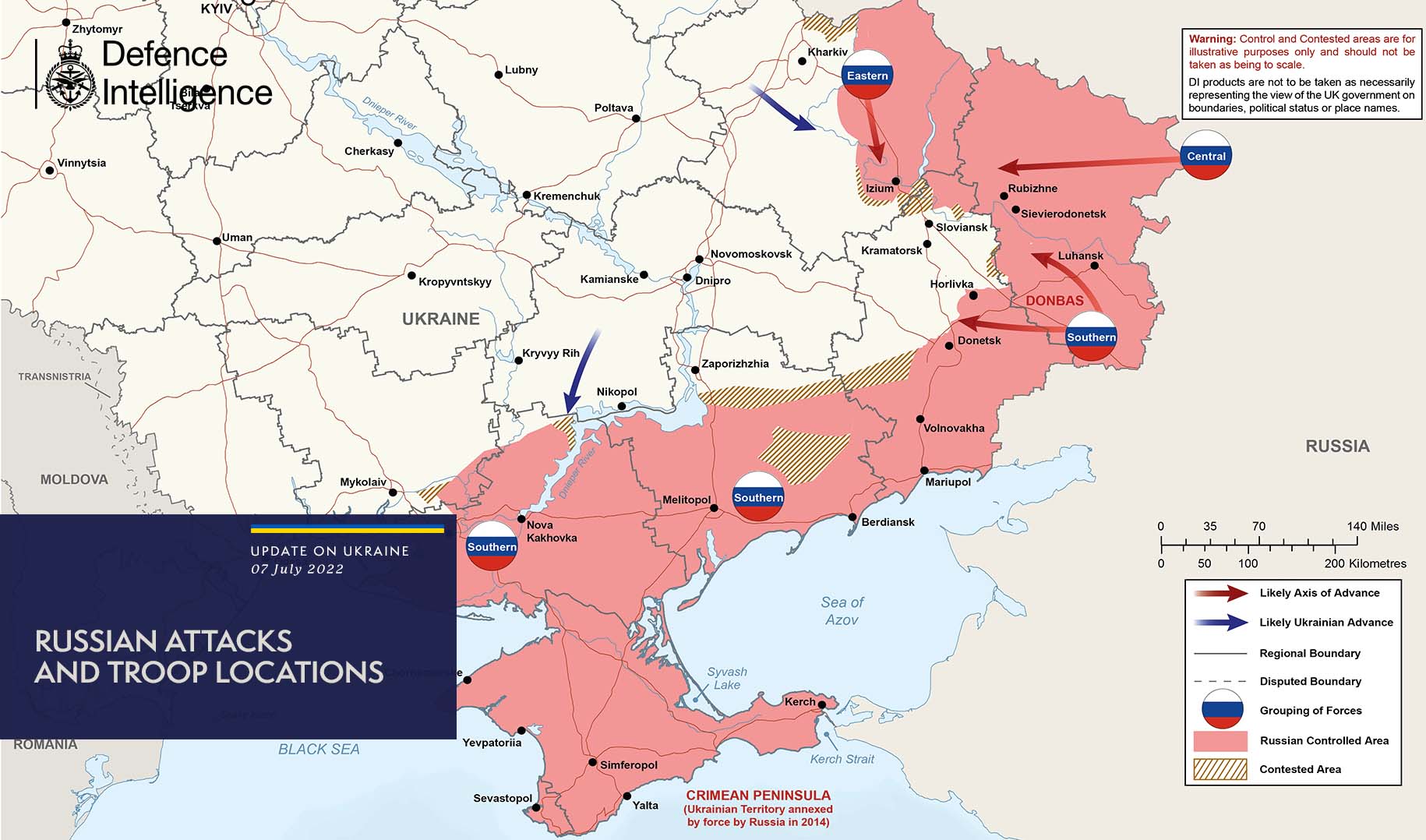
Approximate front-line positions just before the Ukrainian counter-attack east of Kharkiv in early September 2022.

It was not until I was an adult that I realized that the absurd fervor for Desert Storm was in fact about Vietnam. Fifteen years earlier, American helicopters had fled in humiliation from Saigon, and nothing had happened to take the sour taste out of the mouth of Americans since. There was plenty of power projection in that decade and a half, but no great good wars for the United States to win in grand and glorious fashion, unless you worked really hard to talk yourself into Grenada. America had been badly stung by losing a war to a vastly poorer and less technologically-advanced force. Americans had been nursing their wounds all those years. So when Saddam Hussein invaded Kuwait, and the “international community” rose to expel him, the country was ready. We were ready for another righteous combat of the Goodies vs. the Baddies. We were ready for the good guys to be the winners again.

This dynamic, I’m certain, is the source of American bloodlust over Ukraine.

We have now spent twenty years without good, noble wars against the Baddies ourselves. Afghanistan was a war effort undertaken in rage and terror, and was accordingly never intelligently conceptualized at the most basic level. The war aim of finding and capturing bin Laden and destroying Al Qaeda gave way to a war on the Taliban that ensured an endless occupation. The Potemkin government we installed was never popular with the people of the country, entailed comical levels of corruption, and showed no ability to train a loyal and effective Afghan army. After 20 years our country tired of spending hundreds of billions on that failure, we left, the government collapsed almost without resistance, and the Taliban are in power again. In Iraq, the basic arguments for the war (WMDs and a Hussein-al Qaeda connection) were swiftly revealed to be bullshit. Saddam’s army fell quickly and he was dispatched after a show trial, but a persistent insurgency inflicted thousands of American casualties. The chaos enabled the rise of ISIS and its various horrors. The new Iraqi government we’ve installed is impossibly corrupt and scores a 31/100 on Freedom House’s ratings of a country’s dedication to political rights and civil liberties. That’s what the United States has gotten for $8 trillion spent on warmaking since 9/11.

America loves a winner, and will not tolerate a loser. So I once heard. Americans, particularly the kind of Very Serious people who make up our intelligentsia, are desperate for a good war. A just war. A war where we win. They’re sick of wars that feel morally complicated, sick of wars that they have to feel queasy about, sick of wars that aren’t just Goodies and Baddies. They are very, very hungry for good war. I think Ukraine is the Desert Storm a lot of people have been waiting for: a war with (they insist) perfectly simplistic moral stakes, an impossibly noble (they assume) set of Goodies, a marauding and senseless (they demand) set of Baddies. All they’re waiting on is victory. And it’s for this reason, this view of war as one big cope, that the pro-Ukraine position is the single most rigidly enforced consensus in our country since 9/11. There is no other issue on which the majority has more vociferously demanded total consensus or more viciously attacked any who dissent or even ask questions. Because America needs a win. People need to believe in a Goodies and Baddies world again.

There are, of course, all manner of hard questions that we could ask, even if we were supportive of Ukraine in this war. That this is a conflict that has constantly inspired left-leaning people to literally say “well, yes, there’s Nazis, but …” might be seen as a matter of some concern. Perhaps, we might just say, isn’t that a little disturbing? But not in this discursive environment. Or we might consider that a total loss for Russia could be one of the most dangerous outcomes for the world even if you support Ukraine. What do you think happens, with a wounded and isolated Russia? Let’s say people get what they want and Putin is deposed. What do you think happens next? We finally get that shining city on a hill in Moscow that we were promised with the collapse of the Soviet Union? That we’ll get the world leader we expected Bagdhad to be in 2003, that a foreign country with foreign people and foreign concerns will suddenly become a docile member of the liberal-capitalist order? Maybe the best post-Putin outcome would be for a similar corrupt autocrat to take his place; at least then there might be stability. A far more likely and more frightening outcome is that leadership is splintered, you have in effect a set of rival warlords squabbling over the spoils, and the world’s largest nuclear arsenal is exposed in a terrifying way. Seems like something to worry about.

But, no. To a degree that genuinely shocks me, hard questions have been forbidden. Complications have been denied. Comparisons to previous conflicts have been forsaken. And this from Democrat and Republican, liberal and leftist, neocon and Never Trumper. It’s constant, everpresent, and relentless, the denial of any complication in the case of Ukraine and Russia. The glee and the gloating and the urge to ridicule anyone who takes even a single step outside of the consensus is remarkable, unlike anything I’ve ever really encountered before. And I find that I can’t even get people to have a conversation about that, a meta-conversation about why the debate on Ukraine is not a debate, about why there are many people who will consider any political position except one that troubles the moral question of Russia’s invasion, about why so many people who learned to speak with care and equivocation during Iraq now insist that there is no complication at hand with this issue at all. I can’t even get a conversation about the conversation going. People get too mad.

September 11, 2022

The Allies’ Latest Victory – WW2 – 211 – September 10, 1943

Filed under: Australia, Britain, Germany, History, Italy, Japan, Military, Pacific, Russia, USA, WW2 — Tags: , , , , — Nicholas @ 04:00

World War Two
Published 10 Sep 2022

Dwight Eisenhower publicly announces the secret armistice signed last week, and Italy is now officially out of the war. The Italian fleet sails for Malta and Allied captivity. The Allies have landed in force in Southern Italy and they do face some heavy opposition from German forces — who have no intention of giving up Italy. In the USSR, though, the Soviets continue liberating territory all over Ukraine as they force the Germans back to the Dnieper River.
(more…)

September 4, 2022

The War is Four Years Old this week – WW2 – 210 – September 2, 1943

World War Two
Published 3 Sep 2022

Four years of war and no real end in sight, but as the week ends the Allies land their first troops on Italy, actively committing themselves to a front in Western Europe. In the USSR the Soviets are taking heavy casualties but still pushing back the enemy with big partisan help and in Pacific plans are made for offensive against yet more Japanese held islands.
(more…)

August 30, 2022

A cynical (or realistic) view of the fighting in Ukraine

Filed under: Military, Russia, USA — Tags: , , , , , — Nicholas @ 06:00

Severian put up a guest post at Founding Questions from “Pickle Rick” analyzing a recent article in the Marine Corps Gazette on the Russo-Ukrainian War so far:

Marinus divides Russian operations, and operational goals, thus tactics, into three discrete geographic parts. Northern Raiding and feints realized through mobile warfare, Southern Occupation through clear and hold, and Central Attrition operations through artillery firepower.

1. Northern operation. Marinus’s central thesis is that the Northern operation was a giant raid, intended to fix Ukrainian commanders’ attention on the threat to Kiev, and prevent them from reinforcing their defenses in the south. In this, mobile warfare, using the battalion tactical group, was the main strategy used. Marinus posits that taking and holding Kiev was never a goal in this operation. Left unsaid in his assessment were two key points that go beyond his narrower operational focus.

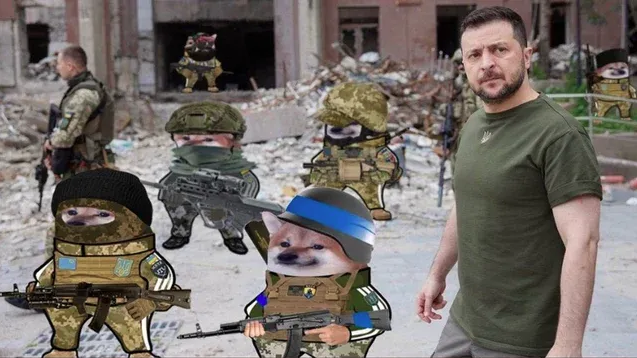
First, I’m sure that the Ukrainian Army’s top command was likely not in complete control of defensive strategy or deployment. Zelensky, the Ukrainian Auto Parts King — (“I make politics for the Ukrainian working man, because that’s who I am, and that’s who I care about!”), and his American “advisors” were. Note that we have no idea who Ukrainian General Marshall is, who his Supreme Commander Eisenhower is, or his battlefield Patton is, even if one existed. I mean, we got fawning coverage of President Comedian, looking tough in his cammies on TV, a lot — by which I mean every fucking day, a mythical fighter ace, the “Ghost of Keeeeeev”, but nobody wanted to manufacture a real hero Uke general, steadfastly leading his troops with steely eyed resolve from the front?

C’mon, that’s Propaganda 101. Shit, even Big Red let Marshal Zhukov ride a white horse at the Victory Parade.

I don’t think that is inadvertent. The goons at State and the Clown Intelligence Agency, having engineered one coup, sure as fuck don’t want an actual no shit popular hero, ethnically Ukrainian general to be a viable political alternative to the UAPK they handpicked and installed after this clown folds the Big Top. (Francisco Franco, Kemal Ataturk, or Wladislaw Sikorski say hi from history!). To hear it from the Ministry of Propaganda, Zelensky is commanding the troops himself, and that’s for once likely not far from the truth. It’s Zelensky being “advised” by whatever retards from [Washington DC] who are actually commanding the Ukes, which brings me neatly into my next point — Putin and his generals initiated this feint to Kiev precisely because they correctly predicted that Zelensky and his American masters would expect it and react to it as they did, regardless of anything the Ukrainian generals said.

Why is that, you might ask? Because that is the only strategy that AINO’s Very Clever Boys, Girls and Trannies can conceive of, and the only way they conduct war. Send in the Air Force to blow up everything in an enemy capital, launch a blitzkrieg style invasion aimed at cutting off the enemy army, encircling it, forcing the unmotivated piss poor enemy conscripts to surrender in place or die trying to pull back, and driving on to the capital to pull down the statues of the recently deceased or deposed Dear Leader who was The Next Hitler, declare victory, then institute Regime Change and Operation Endless Occupation. Putin and the rest of his generals are just stupid vodka fueled gopnik Ivans, and couldn’t possibly be headfaking us and outsmarting us. We went to West Point and Harvard, and are automatically the Best and Brightest. Remember when the MoP and the Fistagon were squeeing like little girls at those incompetent Ivans floundering about within artillery range of Keeeev, and the 100 mile long convoy that everyone saw “stuck” on the road to the Sacred Capital, that was so visible and obvious you could see the fucker from space, that just sort of disappeared, along with the great and decisive Battle of Keeeeev that was going to be a bloody defeat for the evil Russians?

You’ll never hear anyone ever admit it, but they just got posterized because their hubris and arrogance was exactly the thing [Putin] used against them.

маскировка (Maskirovka), you stupid fucks, is a Russian MILITARY CONCEPT, and you forgot it. Check yo self before you wreck yo self, as von Clausewitz wrote. Master P didn’t fight your war, he fought a modern Kabinettskreige and that is fought for an entirely different set of objectives, as we will see below.

2.Southern operation. This is the forgotten stepchild of the war so far, but quietly could be the one front with the longest lasting strategic effects. Marinus disposes of this front relatively quickly, noting that it really is operationally the bread and butter of traditional warfare, take ground and hold ground, move on to the next objective. Strategically, this is different from ground taken in the northern front or even parts in the central, however.

The object here is permanent occupation and Russification to deny the rump state of Ukraine any coastline and landlock it. This, unlike territory in the north or even in the Donbass, is not a bargaining chip on the table at the peace talks. Denying this to the Ukrainians after the war prevents them from ever “inviting” any US Navy ships into the Black Sea to base themselves at a Ukrainian port and serve as a potential casus belli, hamstrings Ukraine from seaborne economic activity with Turkey across the Black Sea, thus making sure whatever left of Ukraine is unable to function without massive land route economic as well as military aid, making it a drain, not an asset, to Globohomo and AINO.

[…]

3. Central operation. Marinus here details the real decisive front in the war, calling it “Stalingrad in the East” (Clunky, since Stalingrad was a very different kind of battle, but it has name recognition as a byword for the Eastern Front and the Russian way of war). Honestly, it is far more like a giant Battle of Verdun, but only for one side.

Here is where I’m going to proclaim how happy my artilleryman’s heart is […] because Marinus says that in the Russian way of winning wars, you can’t spell PARTY without ARTY. Not Special Operations Operating Operationally, not drone warfare “fought” by fatass pimply nerds in some air conditioned room half a world out of danger, not bombs away from 30,000 feet, or armored divisions imitating Rommel. Fucking old school howitzers, chucking metric tons of high explosive on infantry, dropping regimental sized TOT and Shake and Bake when they get in the open. I predicted that here in the beginning of the war and a lot of you can look that shit up if you don’t believe me. Guess we ain’t obsolete anymore, assholes.

Everything the Russians are doing in the Donbass and Central front, operationally and tactically, hinges around artillery as the decisive arm, the fulcrum that the other arms orbit around, which is very, very different than the American way of war. Again, as in the north, the Americans “advising” the Ukes had never, literally never in living memory, faced an enemy with air superiority and firepower superiority, much less both combined. They have absolutely no answer for it.

August 13, 2022

QotD: Erich von Manstein

Filed under: Books, Germany, History, Military, Quotations, WW2 — Tags: , , , , , — Nicholas @ 01:00

One parallel between the Russian invasion of Ukraine and the conduct of the Second World War that has hitherto escaped notice concerns the relationship between the dictator and his generals. Just as the German General Staff obeyed Hitler’s orders, even when they knew him to be leading them not only to defeat but to depravity, so the Russian high command has capitulated to Putin despite realising that his war was not only a mistake but a crime.

In the Britain of the Sixties, a certain mystique still attached to the generals of the Third Reich. In their stylish uniforms and their gleaming jackboots, they had swaggered. Only two, Keitel and Jodl, were executed at Nuremberg; the rest got away with murder.

Even some of those who were convicted of war crimes had friends in high places. One of the most prominent was Erich von Manstein, the architect of many German victories both in the Battle of France and on the Eastern front. He was also complicit in the genocide of more than a million Jews and others by the Nazi Einsatzgruppen in Ukraine.

Yet Churchill was among those who successfully campaigned to have Manstein’s 18-year sentence reduced to 12, of which he served only four.

Manstein’s memoir Verlorene Siege (translated as Lost Victories) appeared in 1958, a key text in the mythology that depicted the Wehrmacht as “clean” and laid the blame for war crimes on Hitler. Konrad Adenauer, the first chancellor of the postwar Federal Republic, also played his part in the rehabilitation of Manstein, on the grounds that West German rearmament required a sharp distinction between the Nazis and an untainted military tradition as the basis for the new Bundeswehr.

Daniel Johnson, “The moral blindness of Putin’s generals”, The Critic, 2022-05-10.

July 21, 2022

Prime Minister Look-At-My-Socks shocked to discover that betraying an ally has consequences

Filed under: Cancon, Germany, Government, Russia — Tags: , , , — Nicholas @ 05:00

In The Line, Andrew Potter outlines why the Ukrainian government is unhappy with Prime Minister Photo-Op’s decision to break the sanctions on Russia as a favour to Germany:

Well, one thing is for certain: There isn’t going to be a “Justin Trudeau Lane” anywhere in Ukraine any time soon.

In case you missed the drama last week, Trudeau found himself on Ukraine president Volodymyr Zelenskyy’s shit list after Canada announced, on July 9, that it would allow Siemens to return to Germany up to six gas turbines for the Nord Stream 1 pipeline that were being repaired in Montreal. Russia was threatening to shut down the pipeline and cut off the flow of gas to Germany, which is facing a very serious energy crisis.

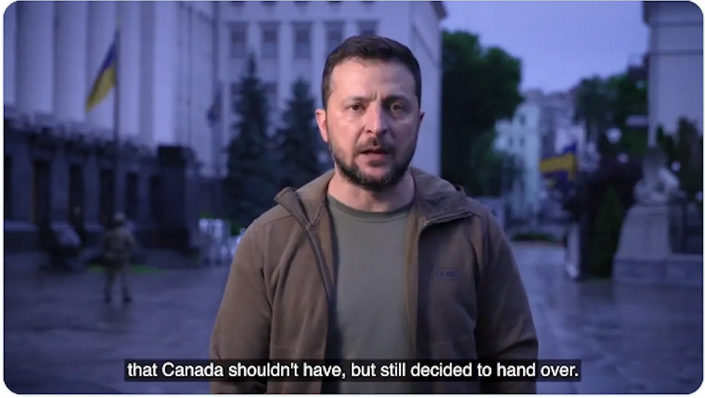
In response, a furious Zelenskyy summoned Canada’s ambassador to Ukraine for what one presumes was a solid chewing out, after which the Ukrainian president posted a video in which he lit into Trudeau for “an absolutely unacceptable exception to the sanctions regime against Russia”. As Zelenskyy put it, the problem isn’t just that Canada handed some turbines back to Russia, via Germany. It is that it was a direct response to blackmail by Russia. And if Canada is willing to bend when its sanctions become politically uncomfortable, what is to stop other countries from carving out their own exceptions to their own sanctions, when it suits? Furthermore, Zelenskyy added, it isn’t like this is going to stop Russia from shutting down the supply of gas to Europe — the turbines were always just a pretext, an opportunity to cause strife and stir dissension amongst the countries allied with Ukraine against Russia.

Trudeau — who spent the weekend flipping pancakes at the Calgary Stampede — must have woken up on the Monday wondering what had gotten into his old buddy in Kyiv. After all, hadn’t Trudeau, along with other members of his cabinet, made it clear through their many, many tweets on the subject that Canada stood by Ukraine? Hadn’t Canada sent enough money, arms and humanitarian aid to Ukraine? Hadn’t Trudeau himself paid a visit to Kyiv in May, to re-open our embassy and to underscore just how seriously Zelenskyy should understand Canada’s commitment?

[…]

Ultimately, the problem here is a serious failure by Canada to manage Ukrainian expectations, brought about by the profound mismatch between the level of our rhetoric and the clear limits of our commitment. For Ukrainians, there is a moral clarity to the Russian invasion of Ukraine that, from a Western perspective, has not been present in any other conflict since the Second World War. Zelenskyy assumed that Canadians saw that. He assumed that if Ukrainians were going to be slaughtered, the least we could do would be to stick to our principles, even if it meant asking the population to suffer economic harms and the government to manage genuine political discomfort.

He assumed wrong.

Five months into their war for survival against the genocidal Russian regime, the Ukrainians have learned something important about Canadians: When it comes to our foreign affairs, we don’t mean what we say. When we say we stand with a country, that we fully support them, that we will help defend them or hold their enemies to account, there’s always a “but” or an “until” or an “unless”. We will stand with you, unless it’s politically difficult. We will help you, but not if it means genuine sacrifice. We will support you, until the costs get too high. Then, all bets are off.

The bigger point is this: Canada doesn’t do moral clarity anymore. Whether it is our business dealings with China, our arms sales to Saudi Arabia, or sending a diplomat to a garden party at the Russian embassy in Ottawa, we are always and everywhere hedging our bets, fudging our principles, letting down our allies.

July 18, 2022

General Patton Orders War Crimes – WAH 069 – July 17, 1943

World War Two
Published 17 Jul 2022

This week, we see a contrast in the way different civilians behave within occupied Ukraine, Patton orders war crimes, and Jewish resistance give up one of their own fighters.
(more…)

July 8, 2022

The Russian way of war

Filed under: Europe, Military, Russia — Tags: , , — Nicholas @ 03:00

In First Things, George Weigel identifies what we’ve learned about the Russian “way of war” from the ongoing conflict with Ukraine:

Four and a half months after Russia invaded Ukraine on the Orwellian pretext of displacing a “Nazi” regime — a regime that enjoys a democratic legitimacy absent from Russia for two decades — what have we learned about, and from, the Russian way of war?

We have learned that the Russian way of war is inept strategically, tactically, and logistically: an army using inferior equipment, bereft of competent non-commissioned officers, and replete with ill-trained draftees; an army that relies on brute force to bludgeon its way toward its objectives. We have learned that the Russian way of war willfully obliterates cities and deliberately destroys economic infrastructure. We have learned that the Russian way of war targets hospitals and schools, cultural and educational institutions, churches, synagogues, and mosques in an attempt to eradicate a culture and a nation that Russian president Vladimir Putin insists has no right to exist, save as a Russian vassal. Thus the twenty-first-century Russian way of war breathes the spirit of eighteenth-century imperialism, with President Putin comparing himself to that quintessential Russian imperialist, Peter the Great, and telling schoolchildren asked to name Russia’s borders in a geography bee that “the borders of Russia never end”.

We have learned that the Russian way of war is insensible to casualty rates, its own army’s and Ukraine’s. We have learned that the Russian way of war includes abandoning the Russian dead or disposing of their remains in mobile cremation units, so that body bags don’t flood the home front and raise questions about the wisdom of Putin and his generals. We have learned that the Russian way of war includes the humiliation, torture, and probable execution of prisoners of war. We have learned that the Geneva Conventions on the humane treatment of POWs mean no more to the Russian military and its political masters than does the Fifth Commandment.

We have learned that the Russian way of war includes the use of cluster munitions and unguided missiles specifically forbidden by international law. Thus the Russian way of war systematically violates the two in bello (war-fighting) principles of the just war tradition: proportionality of means (no more force than necessary to achieve a legitimate military objective) and discrimination (non-combatant immunity). We have learned that the Russian way of war features widespread rape, gross theft, and the summary execution of civilians, as well as kidnapping civilians in Russian-occupied territories, relocating them, and attempting to coerce them into renouncing their Ukrainian allegiance.

We have learned that the Russian way of war includes illegal blockades of Ukrainian ports to prevent grain shipments, thus threatening starvation in Third World countries. We have learned that the Russian way of war includes energy blackmail, threats of nuclear-weapons use, and blatant bullying of other countries, including Lithuania and Kazakhstan.

July 5, 2022

Dijon mustard … made from Canadian and Ukrainian mustard seeds

Filed under: Cancon, Economics, Food, France — Tags: , , , — Nicholas @ 03:00

In the New English Review, Theodore Dalrymple explains why Europeans have been experiencing higher shelf prices and shortages for Dijon mustard recently, over and above the ordinary supply chain disruptions of the pandemic years we’ve all had to get used to:

Among myriad smaller consequences of that war is an acute mustard shortage in France. Mustard has all but disappeared from supermarket shelves, having first increased in price dramatically. This has surprised everyone who lazily assumed that Dijon mustard came from Dijon. Why should a war waged in Ukraine lead to the disappearance of mustard throughout France? After all, the famous brands, familiar to everyone, proudly announce on their labels that they are Dijon mustard. Can there be anything more French than Dijon mustard?

Perhaps the mustard is elaborated in Dijon, but the mustard seed, it turns out to everyone’s surprise, is imported from Canada and Ukraine. Apparently, Canada has seen a disastrous harvest of mustard seed, while there is no need to explain the shortage in Ukraine. Dijon mustard is about as local to Dijon as a modern soccer team is local to the city in which it has its stadium.

What is striking about this mustard crisis, unimportant except to those trying to make a proper vinaigrette or lapin à la moutarde, is its revelation of a perennial aspect of social psychology: namely, a resort to conspiracy theory. For some say that there is not really any mustard shortage at all — that mustard has disappeared from supermarket shelves because the supermarket chains are hoarding it, that they have a plentiful supply in their warehouses and will release it little by little, thereby profiteering by the resultant high prices. The war in Ukraine is only a pretext.

This is an old, indeed medieval, trope in times of shortage. There may well have been times, of course, when people really did hoard for the purposes of profiteering, but people rarely hoard something that is in abundant supply.

Yet many people require no evidence or proof to believe in the hoarding story. Does it not, after all, stand to reason? Do not merchants try to maximize their profits, and is hoarding not an easy way to do so? Practically all the mustard in France is sold in supermarkets — themselves a cartel that could easily agree to remove the product from the shelves. Surely no further evidence is needed.

June 8, 2022

The Climate Wars are dead, merely collateral damage from the Russia-Ukraine War

Filed under: Europe, Russia — Tags: , , , , — Nicholas @ 05:00

JoNova links to this Foreign Policy article by Ted Nordhous, signfiying the end of a “lame Cold War substitute” as the conflict in Ukraine pushes it decisively off the agenda for most western nations:

Four days after Russian tanks rolled into Ukraine, the U.N. Intergovernmental Panel on Climate Change released its latest assessment of the impacts of global warming. Leading media outlets did their best to pick out the most dire scenarios and findings from the report. But the outbreak of the first major European war since 1945 kept the report off the front page or, at the very least, below the fold. “Climate Change Is Harming the Planet Faster Than We Can Adapt” simply couldn’t compete with “Putin Is Brandishing the Nuclear Option”.

Meanwhile, the headlong rush across Western Europe to replace Russian oil, gas, and coal with alternative sources of these fuels has made a mockery of the net-zero emissions pledges made by the major European economies just three months before the invasion at the U.N. climate summit in Glasgow, Scotland. Instead, questions of energy security have returned with a vengeance as countries already struggling with energy shortages and price spikes now face a fossil fuel superpower gone rogue in Eastern Europe.

In the decades following the end of the Cold War, global stability and easy access to energy led many of us to forget the degree to which abundant energy is existential for modern societies. Growing concern about climate change and the push for renewable fuels also led many to underestimate just how dependent societies still are on fossil fuels. But access to oil, gas, and coal still determines the fate of nations. Two decades of worrying about carbon-fueled catastrophes — and trillions of dollars spent globally on transitioning to renewable power — haven’t changed that basic existential fact.

Virtually overnight, the war in Ukraine has brought the post-Cold War era to a close, not just by ending Europe’s long era of peace, but by bringing basic questions of energy access back to the fore. A new era, marked by geopolitically driven energy insecurity and resource competition, is moving climate concerns down on the list of priorities. If there is a silver lining in any of this, it’s that a shift of focus back to energy security imperatives might not be the worst thing for the climate. Given the scant effect international climate efforts have had on emissions over the past three decades, a turn back toward energy realpolitik — and away from the utopian schemes that have come to define climate advocacy and policymaking worldwide — could actually accelerate the shift to a lower-carbon global economy in the coming decades.

The issue of climate change burst into the global debate just as the Cold War was coming to an end. As one existential threat seemingly receded, another came into view. For much of the international community, particularly the United Nations and its agencies, climate change also became much more than an environmental issue, offering an opportunity to reshape the post-Cold War order to be more equitable, multilateral, and politically integrated.

Nonetheless, when the framework for climate action emerged in the early 1990s, it built on the experience of the Cold War era. U.S.-Soviet arms control agreements became the model for global cooperation on climate change. Just as the superpowers had signed treaties to gradually draw down their nuclear weapons stocks, nations would commit to draw down their emissions. Yet the first major agreement to propose legally binding limits on emissions — the 1997 Kyoto Protocol — was dead from the moment the U.S. Senate unanimously rejected its terms, even before the negotiations had been finalized. Combine U.S. opposition with the understandable reluctance of energy-hungry, fast-developing nations such as China and India to even consider limiting emissions, and the inefficacy of international climate action was set.

June 7, 2022

100 days of fighting in Ukraine

Filed under: Europe, Military, Russia — Tags: , — Nicholas @ 03:00

In The Line, Andrew Potter rounds up the latest open source data on the Russo-Ukrainian war of 2022, and notes that the briefly enthusiastic western nations — having all posted Ukraine flags on their social media accounts and boycotted Russian vodka — are now noticeably suffering from battle (cheerleading) fatigue and are all rather obviously hoping Ukraine will sue for peace with the Russian aggressor:

We are now just past the one hundred day mark of Vladimir Putin’s insane invasion of Ukraine. But even as the Ukrainian forces are fighting ferociously for Severodonetsk, with president Volodymyr Zelensky making an amazing visit to troops right on the edge of the front lines of the eastern salient, a few Western leaders marked the occasion by suggesting that it’s getting on time for them to think about giving up.

According to Zelensky, Russian forces currently control around one fifth of Ukrainian territory, mostly in the east and the south. As he pointed out last Thursday in an address to the Luxembourg parliament, this is an area that is much larger than the entire Benelux region.

For Russia, this has come at a considerable cost. Reliable open source intelligence estimates put Russian losses at over 31,000 soldiers killed, 3,300 armoured vehicles and another 2,500 trucks destroyed, 200 lost aircraft, 175 helicopters, and 13 ships or boats. All of this for a “special operation” that was supposed to take no more than a long weekend including the victory parade, with the invaders welcomed as liberators.

Dear as this has been for Russia, for Ukrainians the price has been much, much higher. Reliable estimates of Ukrainian military losses are hard to come by, but something around half of the Russian figures is probably in the ballpark, though they could easily be much higher. Zelensky has not been totally shy in talking about losses; the other day he said the Ukrainian forces were losing 60-100 fighters a day, with another 500+ wounded, in fighting in the east.

These are staggering losses (recall that Canada lost 158 soldiers over the course of more than a decade in Afghanistan), but they don’t even begin to compare with what has happened to Ukraine’s civilians and to its cities. This war has been going on for so long, reports of Russian outrages and war crimes now so numerous, that history-making acts of outright barbarism have come and gone from the news pages in a matter of days: Bucha, Kramatorsk, Mariupol … the list goes on and grows. When all this is done, how many dead, deported and disappeared Ukrainians will there be? If it is 50,000 dead in Mariupol alone, a million or more is not out of the question.

For a few days and even weeks, the narrative was that Putin had gravely miscalculated. He clearly expected the Ukrainians to roll over and for the neighbours to just shrug and look the other way. Instead, the Ukrainians fought back and NATO and the West were galvanized into support and action. If Putin was worried about Ukraine bringing NATO and the EU to his doorstep, well, his worst nightmare had come true, with Sweden and Finland applying for expedited admission to the alliance.

But as degraded his army, as inept his generals, as degenerate his kleptocracy might be, Putin has always had a couple of aces up his sleeve: The abiding and reliable perfidy of the Germans and the French, and the increasing inability of the American-led anglosphere to maintain its focus. As Putin sees it, as this war stretches on the Americans and the Brits will lose interest, and the burning desire of Emmanuel Macron and Olaf Scholz to help Putin “save face” — i.e. give Russia some Ukrainian territory — will grow increasingly appealing.

June 1, 2022

Vintage Russian T62 tanks reported in Ukraine

Filed under: Europe, History, Military, Russia, Weapons — Tags: , , , — Nicholas @ 05:00

As with all discussions of the ongoing fighting between Russian and Ukrainian troops, it’s very difficult to be sure that what is being reported is in any way accurate — both sides pulled out all the stops on the PR/propaganda/disinformation machinery months ago. At Thin Pinstriped Line, Sir Humphrey seems to be convinced that the reports that the Russians have been dis-interring mothballed Soviet-era T62 tanks to send into combat in Ukrane are believable enough:

“Soviet T-62M MBT Standard Battle Tank” by Gary Lee Todd, Ph.D. is marked with CC0 1.0. To view the terms, visit https://creativecommons.org/publicdomain/zero/1.0/?ref=openverse.

The Russian Army has taken such significant losses of materiel that it has been forced to pull vintage T62 tanks from reserve, and commit them to front line operations. This statement makes plain just how costly the Russian advances have been in the Donbas area, and raises questions about what, if any, value, there is from retaining a war reserve of vehicles and equipment.

It is difficult to get an accurate picture on just how disastrous the Russian losses have been so far in the war, but most estimates suggest that at least 700 tanks have been destroyed, with many more damaged or captured. Each loss represents not only a small reduction in combat capability to Russia, but usually a far more valuable, and irreplaceable crew.

Russia is not a nation that likes to throw military equipment away, far from it. Their equipment is designed to be simple, reliable and last a very long time. As the outstandingly good website WW2 after WW2, which keeps track of what happened to military equipment after the war, lovingly documents, Soviet era equipment from WW2 just kept going (note, do not click on the link unless you wish to be sucked into a very big time sink!).

With huge reserves of people, no constraints on space or spending, and a mentality of “stores are for storing, not scrapping”, Russia has long kept ancient and utterly obsolete equipment in storage depots long past the point of being of any meaningful value. It is almost certain that there are still Russian Army depots out there with WW2 era equipment waiting for a recall to the colours if required.

The challenge facing Russia though is that due to the rampant corruption, the inability to hold units to account and ensure that readiness is tested, and just the sheer scale of the stockpile, most of the vehicles in their arsenal are probably not combat ready, and have probably been cannibalized beyond repair. Despite having thousands of T72 and T80 in service and storage, it seems that they are not deployable.

This poses a real challenge for Russia on two fronts – firstly, to bring the T62 out of retirement and into front line service as attrition reserves poses a significant support challenge. The vehicle is not compatible with later models of Russian tanks, so will require bespoke logistics support – placing further pressure on the already creaking supply chain.

Additionally, although simple to operate, it still requires crew to use it – with four, instead of three crew needed, this poses an additional headache for the Russian Army, which will have to find 25% uplift in tank crews to operate them properly. At a time when the Russians are low on people, and have churned through a significant proportion of their main army, it will require extraordinary efforts to find bodies to crew these tanks.

Bodies is perhaps the operative word here, for this is likely to be the fate of the crew in these vehicles. The T62 is utterly outclassed and completely obsolete for the environment in which it is operating. It may be good for gunning down demonstrators or strangling democratic protests in third world nations (the joy of socialist dictatorships), but against a highly experienced army, fighting with advanced equipment to defend its homeland, it is utterly hopeless. While it can still have some effect, the T62 units going into action are certain to be outclassed, outgunned and out of time when they face the Ukrainian Armed Forces.

Update: After I scheduled this post for publication, I saw that Berhard Kast (Military History Visualized) had posted a video analyzing the evidence, which you can check out here.

Update, 1 June: Apparently it helps when you include the link to the original post. Who knew?

May 21, 2022

Ukraine & T-72: The death of the tank? | The Tank Museum

Filed under: Europe, History, Military, Russia, Technology, Weapons — Tags: , , , — Nicholas @ 04:00

The Tank Museum
Published 20 May 2022

Tank Museum Curator David Willey explores the current conflict in Ukraine and the performance of the T-72 tank; putting it into historical context and exploring other times during the last hundred years when the death of the tank has been predicted.

Consider becoming a Patreon Supporter today: https://www.patreon.com/tankmuseum

00:00 | Intro
00:40 | Wider context
11:01 | Tanks in History
(more…)

May 18, 2022

For the Canadian government, announcing new programs is far more important than implementing them

Filed under: Cancon, Europe, Government, Media, Politics — Tags: , , , — Nicholas @ 03:00

It often appears that the Liberal government in Ottawa operates almost exclusively on an “appearance only” basis: whatever the situation, it’s the “optics” that matter the most and actual delivery on announcements barely counts at all. It doesn’t help at all that the media generally has the same set of priorities, because they need things to talk about on news shows and the headlines don’t write themselves in the newspapers — and legacy media’s social media concerns are even more about flash and clickbait than their primary product.

Canada has been quick to announce new initiatives to help Ukrainian refugees, but true to form, very slow to actually make any of these initiatives happen, as Joti Heir discusses in The Line:

Justin Trudeau has always had a strong affinity for the symbolic gesture, especially when the media are around to record it.

It’s almost as though the Canadian federal government is working buttocks-backward when it comes to the Ukrainian refugee file. After Russia invaded Ukraine on February 24, helping Ukrainian refugees get to a safe place fast was the biggest concern. However, now, close to three months later, the bigger concern is how to help the refugees that are in Canada or making their way here.

“We are seeing an increasing amount of frustration within our community about the pace with which programs and announcements are being implemented,” says Orest Zakydalsky, senior policy analyst with the Ukrainian Canadian Congress (UCC).

“For example, a month ago, the prime minister announced income support when he co-hosted the [StandWithUkraine] telethon with the European Council president, he announced there would be income support for people coming to Canada. A month later, they’re not available.”

The announcement on April 9 indicated that Ukrainian refugees would be able to access $500 per week for a period of up to six weeks. At the same time, it was also announced that housing support in the form of two-week hotel stays would be provided. Both programs do not appear to have been implemented.

“We appreciate this is a very difficult situation for governments, this is a crisis that emerged very suddenly,” says Zakydalsky.

“On the other side, the other problem is that the people that are in Europe, that have left Ukraine, that are looking to come to Canada, see these announcements and quite reasonably think that when a program is announced it is available.”

April 20, 2022

Khrushchev – Stalin’s Loyal Enforcer?

Filed under: History, Military, Russia, WW2 — Tags: , , , , , — Nicholas @ 04:00

World War Two
Published 19 Apr 2022

Nikita Khrushchev has served Joseph Stalin faithfully for the past decade. He’s a career commissar and party man. So, when war breaks out, are commissars like Khrushchev little more than Stalinist enforcers? Or is there more to the institution than that?
(more…)

« Newer PostsOlder Posts »

Powered by WordPress