
I went last week to a production of Rigoletto, the revival of a production first staged in 2001. A criticism that I read in advance informed me that the initial orgy scene had been toned down somewhat by comparison with what had gone seventeen years before. Was this progress or regression? The critic did not venture an opinion on this vital question; he merely recorded the change as a fact.
It seems that all opera productions these days need an orgy scene, just as doctoral theses in the Soviet Union used to need at least one quotation from Lenin. There was a time when an orgy would have been censored, but now it is obligatory — no opera without one. There was a brief orgy scene in the last Flying Dutchman that I saw, and it was a bit of a relief when they got it over with because I knew that it must be coming and tension mounted until it did. It was a bit like childhood diseases in the old days: The sooner you had them, the quicker you got over them.
The problem with orgies is that once you’ve see one, you’ve seen them all, and these days they are staged literally rather than suggestively, as if the aging audience has to be reminded of what sex actually is. Moreover, they are staged like a tableau of Krafft-Ebing’s Psychopathia Sexualis, the fin de siècle compendium of what used to be called, in those far-off judgmental days, perversions. The implicit, however, is more powerful than the explicit, or it used to be. The explicit, in fact, is the enemy of the voluptuous.
Theodore Dalrymple, “Adding Injury to Insult”, Taki’s Magazine, 2018-01-20
November 22, 2022
QotD: The obligatory orgy scene
November 18, 2022
QotD: Therapism
Theodore Dalrymple, “Bad counsel”, The New Criterion, 2005-06-23.
November 13, 2022
QotD: Your “true self”
Unfortunately, the search for the true self has a tendency to go on for years or even for decades. I used to ask my patients who said that they were in search of themselves how they would know when they had found it. The true self, after all, is not like a mislaid pair of cuff links. They said that their unhappiness would fall away when they found it, presumably like the outer mold of a casting. But they had no real idea of what a better life than the one they were leading would be like. Mostly they thought of the better life as one of luxury and more consumption, bathing in ass’ milk rather than in mere water. When I suggested that they needed to lose rather than to find themselves, they asked how one lost oneself.
“By being interested in something outside of and other than oneself,” I said.
“How do you do that?” I asked.
Here the weakness of my advice became apparent to me. I have been interested in many different things in my life, usually in succession, and my library is a testimony to my tendency to serial monomania; but I have never been interested in nothing, and therefore have no idea how people develop the capacity to be interested in something (that is to say, in anything) ex nihilo, so to speak, nor do I have any recollection of how I did so myself. I suspect (though I cannot prove) that modern education, which lays emphasis on the relevance of what is taught to children’s present lives rather than, as it should be, on its irrelevance, is partly to blame for the very large numbers of people who cannot lose themselves, and therefore are left to the vagaries of entertainment provided for them under our current regime of bread and circuses. The unassuageable thirst for entertainment is both a manifestation and a symptom of a profound boredom with the world. Indeed, entertainment is also one of the greatest causes of boredom in the world, inasmuch as everyday reality can now rarely compete in raw sensation with entertainment. But since dealing with everyday reality remains a necessity for most people, it results in boredom because it is compared with entertainment. Only a deeper engagement with the world can avoid or overcome this problem.
Theodore Dalrymple, “Lose Yourself”, Taki’s Magazine, 2018-11-10.
November 7, 2022
QotD: The rise of architectural modernism
Many ingenious lovely things are gone
That seemed sheer miracle to the multitude.Professor Curl’s book is particularly strong on the historiographical lies peddled by the apologists for modernism, and on the intellectual weakness of the arguments for the necessity of modernism. For example, architectural historians and theoreticians such as Sigfried Giedion, Arthur Korn, and Nikolaus Pevsner claimed to see in modernism the logical continuation of the European architectural tradition, and Pevsner even recruited such figures as William Morris and C.F.A. Voysey as progenitors of the movement. Pevsner was so enamored of Gropius and the Modernists that he wanted to claim a noble descent for them, as humble but ambitious people were once inclined to find a distant aristocratic forebear. Yet Voysey could hardly have been more hostile to the movement that co-opted him. The Modern Movement, he said,
was pitifully full of such faults as proportions that were vulgarly aggressive, mountebank eccentricities in detail, and windows built lying down on their sides. … This was false originality, the true originality having been for all time the spiritual something given to the development of traditional forms by the individual artist.
Pevsner (to whom, incidentally, Curl pays tribute for his past generosity to young scholars, including himself), with all the academic and moral prestige and authority that attached to his name, was able to incorporate Voysey — unable to speak for himself or protest after his death — into the direct ancestry of modernism, even though the merest glance at his work, or at that of William Morris, should have been sufficient to warn anyone that Pevsner’s historiography made a bed of Procrustes seem positively made to measure.
Theodore Dalrymple, “Crimes in Concrete”, First Things, 2019-06.
October 27, 2022
Rishi Sunak becoming PM apparently – wait for it – proves that systemic racism is still a thing in Britain
You’d think the first non-white British PM would help dispel the constant claims that British society is still deeply racist, but as Theodore Dalrymple shows, that underestimates the political need to use “racism” as a rhetorical stick to beat the electorate with:
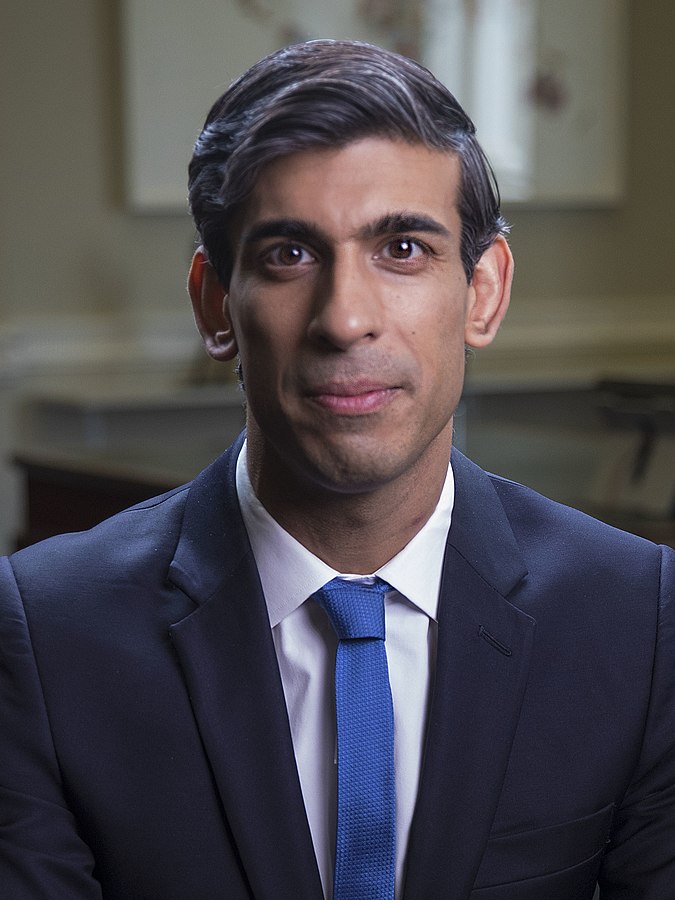
Rishi Sunak shortly after becoming Chancellor of the Exchequer in 2020.
The new British Prime Minister, Rishi Sunak, is the son of Punjabi immigrants from East Africa. You might have thought that this would satisfy, or at least please, the anti-racism lobby, by demonstrating that British society is an open one, not completely sclerosed by racist prejudice: but you would be wrong.
An opposition member of parliament called Nadia Whittome, herself of Indian origin, tweeted that Sunak’s appointment to the highest political position was not a victory for Asian representation.
This follows the assertion not long ago by Rupa Huq, another Member of Parliament of Indian subcontinental origin, that Kwasi Kwarteng, former Prime Minister Liz Truss’s short-lived Chancellor of the Exchequer, was only “superficially black” because he spoke what in England is called the King’s English. She said that, listening to him on the radio, one would not even know that he was black. Instead, he spoke like the highly educated person he was, which in Huq’s opinion was incompatible with being black. Whites are not the only racists.
The remarks by these two female politicians, all the more significant because they were spontaneous rather than deeply considered, reveal something about the nature of modern identity politics: that the function of minorities (whether racial, sexual, or other) is to act as vote-fodder for political entrepreneurs of a certain stripe. It’s therefore the duty of minorities to remain the victims of prejudice against them and not to rise in the social scale by their own efforts: To do so is to betray the cause and above all their supposed leaders.
The reason that Whittome considers that Sunak’s appointment isn’t a victory for Asian representation is that, although of Asian origin, his parents (his father was a doctor) had him expensively educated and Sunak is now a multimillionaire, unlike most people of Asian origin — to say nothing of most whites.
There are, of course, other ways in which he isn’t representative of the Asian, or any other, population, the most important of which is that he’s of far above-average intelligence. (I must here point out also that while a certain level of intelligence is a necessary condition for a successful political career, it’s far from being a sufficient one.)
Representative government doesn’t mean that the representatives in the legislature or government must reflect the population demographically, such that — for example — 5 percent of them must have IQ’s of less than 70, though increasingly it may appear that they do. Nor are a person’s political or social views straightforwardly a reflection of his or her own economic position: If they were, Engels (who was a factory owner and rode to hounds) would never have been Marx’s collaborator, and Marx himself would not have written Capital, for he was no more proletarian than is King Charles.
October 17, 2022
QotD: Julius Nyerere
One day, the not very difficult thought occurred to me that Nyerere’s stated aim was not the real aim, that the aim of his policies was not the economic development of the country or anything like it, but rather the maintenance of himself and his cronies in power. Once I made this simple assumption, I could see what should have been obvious to me from the first: that far from being a miserable failure, Nyerere was a brilliant and outstanding success. Not only had he maintained himself in power for more than twenty years with very little challenge, apart from an early attempt at a coup by the army, but he had successfully managed to present himself to the world as a man of outstanding principle: indeed, there are even now moves afoot by the Catholic Church, to which he was more attached even than he was to Kim Il Sung, to canonise him, notwithstanding his imprisonment of political opponents and his forced removal of the peasantry from where it was living into collectivised villages. One of his miracles was to have extracted huge sums of aid money from the willing dupes of Scandinavia and elsewhere, which disappeared in Tanzania as water through sand but was so essential to him in the maintenance of his power.
If the aim of politicians is the attainment of power, Nyerere was one of the most successful politicians of the twentieth century, and very far from the fool or incompetent that I had thought him.
Theodore Dalrymple, “Brexit Doesn’t Mean Brexit”, Law & Liberty, 2019-04-15.
September 3, 2022
Theodore Dalrymple on snobbery
In the New English Review, Theodore Dalrymple considers the various forms of snobbery:
“Snob” by Oldmaison is licensed under CC BY-SA 2.0 

 .
.
Snobbery is the feeling of social superiority on the grounds of some quality over which the person believed to be inferior has little or no personal control, such as birthplace or parenthood. If this feeling is conspicuously displayed rather than merely felt, it is likely to provoke furious resentment, far more so than actual injustice. Disdain causes the rawest of wounds, which seldom heal. That is why people who triumph over snobbery in practice nevertheless often retain within themselves a strong core of resentment toward those of the type (not necessarily the actual individuals) who formerly disdained them. And this resentment often impels them to do seemingly self-destructive things.
In human affairs, it is seldom that there are clear-cut boundaries, so that it is not surprising that snobbery can shade into justified disdain or condemnation, at least for certain kinds of behavior if not for the human beings who display it. Those kinds of behavior are not equally distributed in all social groups, so that it is easy to transfer the disdain from the behavior to the social group itself, and assume that a member of that group will, ex officio, behave in the reprehended fashion.
It is probable that intellectual and aesthetic snobbery are now more prevalent than the more traditional forms that attach to place of birth and parentage. Many of us are appalled by the tastes and interests of others and secretly, and not so secretly, congratulate ourselves on our superiority to them. I am far from immune myself from such feelings. I have to control myself not so much in my outer behavior—that is a relatively easy thing to do — but in my inner feeling, that is to say to limit my own feelings of superiority to the people whose tastes I despise. After all, there is more to people than their tastes or enthusiasms, and I have never talked to anybody who struck me as anything other than an individual. Just as we are enjoined to hate the sin but not the sinner, so we have to try to dislike the bad taste but not the person who displays it. This requires the overriding of emotion by conscious thought and self-control.
The fear of appearing snobbish also has its deformations, as does inverted snobbery. The latter is harmful because it undermines aspiration to anything better or higher than that which the inverted snob already knows or likes. Inverted snobs sneer at what they sense instinctively to be above them, calling it pretentious and elitist. Incidentally, the word elitist is often misused or elided with social exclusivity. Not even the most anti-elitist of persons objects to the elitist selection of sports teams on the basis of superior performance and ability of players, nor does anyone object to being operated on by the best surgeon available, so that only if sport, and to a lesser extent surgery, is of such importance that it is an exception to the necessary suppression of elitism can this exception be justified.
Fear of appearing snobbish is harmful because it threatens the willingness to make judgments between the better and worse; and since the worse is always easier to produce, it contributes to a general decline in the quality of whatever is produced. This fear of appearing snobbish and therefore undemocratic is now very strong and pervades even universities (so I am told), in which one might have supposed that elitism, in the sense of a striving for the best that has been said and thought, would be de rigueur.
One of the forms that snobbery now commonly takes is disdain of simple, repetitive, and unskilled jobs (which are generally ill-paid as well). The educated can imagine no worse fate than to be employed in such a job, no matter how necessary or socially useful it might be — the person at the supermarket checkout (increasingly redundant, of course) being the emblematic example. With a singular lack of imagination and sense of reality about their fellow creatures, they simply put themselves in the place of these people and imagine thereby that they are being empathic. But of course there are people for whom such jobs are not unpleasant and are even rewarding. Not everyone wants to be, or is capable of being, a master of the universe.
August 27, 2022
The hallmark of modern government is the institutionalization of corruption
In the New English Review, Theodore Dalrymple identifies one of the unifying trends of governments throughout the western world:

One of the most remarkable developments of recent years has been the legalization — dare I say, the institutionalization? — of corruption. This is not a matter of money passing under the table, or of bribery, though this no doubt goes on as it always has. It is far, far worse than that. Where corruption is illegal, there is at least some hope of controlling or limiting it, though of course there is no final victory over it; not, at least, until human nature changes.
The corruption of which I speak has a financial aspect, but only indirectly. It is principally moral and intellectual in nature. It is the means by which an apparatchik class and its nomenklatura of mediocrities achieve prominence and even control in society. I confess that I do not see a ready means of reversing the trend.
I happened to read the other day an article in the Times Higher Educational Supplement titled “Can army of new managers help HE [Higher Education] tackle big social challenges?” The article is subtitled “Spate of new senior roles created as universities seek answers on addressing sustainability, diversity and social responsibility.” One’s heart sinks: The old Pravda must have made for better reading than this.
As the article makes clear, though perhaps without intending to, the key to success in this brave new world of commissars, whose job is to draw a fat salary while enforcing a fatuous ideology, is mastery of a certain kind of verbiage couched in generalities that it would be too generous to call abstractions. This language nevertheless manages to convey menace. It is difficult, of course, to dissent from what is so imprecisely asserted, but one knows instinctively that any expressed reservations will be treated as a manifestation of something much worse than mere disease, something in fact akin to membership in the Ku Klux Klan.
It is obvious that the desiderata of the new class are not faith, hope, and charity, but power, salary, and pension; and of these, the greatest is the last. It is not unprecedented, of course, that the desire for personal advancement should be hidden behind a smoke screen of supposed public benefit, but rarely has it been so brazen. The human mind, however, is a complex instrument, and sometimes smoke screens remain hidden even from those who raise them. People who have been fed a mental diet of psychology, sociology, and so forth are peculiarly inapt for self-examination, and hence are especially liable to self-deception. It must be admitted, therefore, that it is perfectly possible that the apparatchik-commissar-nomenklatura class genuinely believes itself to be doing, if not God’s work exactly, at least that of progress, in the sense employed in self-congratulatory fashion by those who call themselves progressives. For it, however, there is certainly one sense in which the direction of progress has a tangible meaning: up the career ladder.
August 16, 2022
QotD: The first casualty of political campaigns
Walking in Paris just before the French election, I was handed some leaflets and stickers by partisans of Jean-Luc Mélenchon, the demagogic left-wing candidate. “The rich pollute,” said one of them, “the people pay.”
Am I one of the rich, I wonder? Or one of the people? What about the customers chatting over lunch in the nearby café? Are they rich or are they of the people? Mélanchon’s slogan is founded on the old lie, as Wilfred Owen calls Dulce et decorum, etc., that society is divided neatly into two distinct categories with interests diametrically opposed.
No lie appeals more to the dissatisfied than this, offering as it does the illusory hope of a confiscatory solution to life’s little problems. The best that can be said of it is that it permits the dissatisfied an access of hatred and moral outrage, which is always enjoyable and gratifying to experience.
Theodore Dalrymple, “Election bumf”, The Critic, 2022-04-29.
August 10, 2022
Raising a generation to emulate Pavel Morozov
Theodore Dalrymple on the dangers of a culture that welcomes and supports denunciation as a political mechanism:

Believed to be the only photograph of Pavel “Pavlik” Morozov (centre, wearing cap), circa 1930.
… a culture of denunciation is an important step in the direction of totalitarianism. Is there anyone whose life is such that the discreditable things done or said by him or her could not be woven into a reason for public execration or worse? The habit of denunciation was a powerful weapon in the hands of every totalitarian dictator.
In the Soviet Union, for example, the story of Pavel Morozov — little Pavlik — was used to inculcate the habit of denunciation as a social duty into Soviet children. Little Pavlik denounced his own parents and grandparents as kulaks, that is to say as rich and exploitative peasants, to the Soviet authorities, and was thereafter “martyred” for his truthfulness. Soviet children were encouraged to emulate lovely little Pavlik by snitching on all around them. There were posters in school of heroic children denouncing their fellows for something that they had done wrong. This was the Soviet version of truth-telling.
We should not complacently suppose that it couldn’t happen here — wherever here is. In Britain recently, which is suffering from a shortage of water because of unusually hot weather, residents of some areas have been prohibited from using hosepipes to water their garden — and have been encouraged to denounce neighbors or others to the authorities who flout the prohibition.
One can just hear the arguments in favor of such denunciations. It’s only fair and right, for example, that everyone should share the hardship caused by the shortage of water. It’s almost psychopathic of some not to obey the rules while most do so: Who do they think they are, that they are not obliged to obey? Moreover, we live in such times that, if you approach such a person directly, he’s likely to become furious and violent. It’s safer to call the authorities and let them deal with him.
This overlooks how easily the culture of denunciation can establish itself, and lead to a society in which everyone fears everyone else. Such is the way in which people are constituted that for many, at least, it’s a pleasure to bring harm to others in the name of doing good for society. That was the justification of denunciation in Nazi Germany, Soviet Russia, and Maoist China, as well as in a host of other totalitarian fiefdoms. And Maugham — he who actively solicits denunciations of Nick Cohen — even admits, perhaps without really meaning to, the pleasure he would derive from passing on any denunciations he receives in a kind of meta-denunciation, as it were.
This is authentically disgusting, but it has the merit of reminding us that totalitarianism did not land on earth like an asteroid but had its origins in the human heart, and that no society can be immune from the temptations of totalitarianism once and for all. Totalitarianism has its pleasures, chief of which is doing harm to others, albeit that today’s denouncer tends to become tomorrow’s denounced.
July 7, 2022
Coping with the excesses of ideologists
In New English Review, Theodore Dalrymple considers how best to cope with fanatics bearing ideology and demanding your compliance and self-abasement:
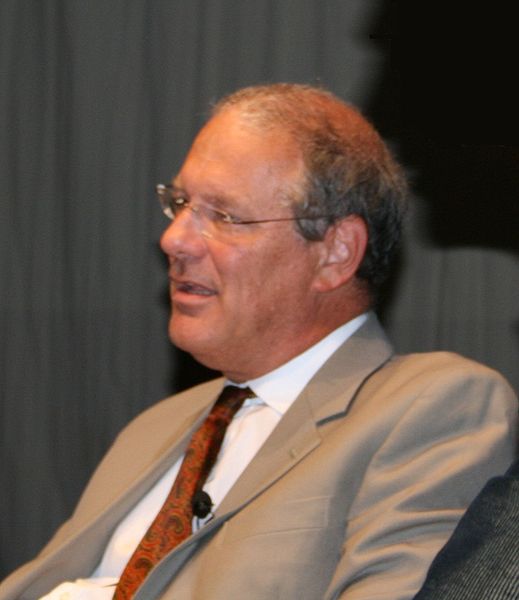
Theodore Dalrymple on 24 September 2007.
Photo by jaapstronks at Flickr via Wikimedia Commons.
Ideologists are inherently totalitarian, especially when a still small voice tells them that their opinions are vulnerable to criticism. Shrillness then becomes the mental white noise with which they drown out their own doubts. They can’t allow any corner of the world to escape their attention. Uniformity will both demonstrate their correctness and, if it lasts long enough, make criticism unthinkable. Just as the white noise of shrillness once did, so will perpetual silence eventually allay their doubts.
Surrender is wrought by cowardice and, slightly less dishonorably, by boredom. What intelligent person wants to spend his life disputing evident absurdity? […]
There are one of two possible responses (other than outright opposition) to the Augean stable of ideological folly.
The easiest thing to do in both cases is to give in to the monomaniacs; but the first response is to go into what Germans in the time of Hitler called “inner emigration”, that is to say, to try to find a niche in which to get on with one’s life undisturbed by the surrounding idiocy and viciousness, for example by laying low and taking up an interest that flies below the ideological radar.
This method can’t be a hundred percent successful, because the ideological monomaniacs demand not merely the absence of dissent from their ideology, but also some proof of positive adherence to it: for example, by signing up to policies on equality, inclusion, and diversity.
By signing up to such self-contradictory nonsense, of course, the person who seeks inner emigration feels soiled; he has undermined his own probity. But at least, or so he hopes, he will then be free of interference. This hope is usually dashed because, to quote another poem:
… that is called paying the Dane-geld;
But we’ve proved it again and again,
That if once you have paid him the Dane-geld
You never get rid of the Dane.In other words, the ideologist always comes back for more self-abasement: Today it’s transgenderism, tomorrow it will be — what? The glories of incest, the social necessity and benefit of infanticide? It doesn’t matter: The aim is not improvement, it’s the exertion of power, for one of the cultural or psychological characteristics of the age, at least among the educated, is the belief that, in human relations, everything is a matter of power and therefore that only power counts or is to be trusted.
Another way of dealing with the ideologists is to obey the old slogan that if you can’t beat them, join them. People therefore join up to what is, in effect, a new secular religion, and since most people who do so are not out-and-out villains or opportunists, they have to persuade themselves that they actually do believe the tenets of the new religion; and, as is often the way with converts, they become fanatics, not merely to persuade themselves, but to expunge their wicked past in which they were not believers and were quite possibly mockers.
July 5, 2022
Dijon mustard … made from Canadian and Ukrainian mustard seeds
In the New English Review, Theodore Dalrymple explains why Europeans have been experiencing higher shelf prices and shortages for Dijon mustard recently, over and above the ordinary supply chain disruptions of the pandemic years we’ve all had to get used to:

Among myriad smaller consequences of that war is an acute mustard shortage in France. Mustard has all but disappeared from supermarket shelves, having first increased in price dramatically. This has surprised everyone who lazily assumed that Dijon mustard came from Dijon. Why should a war waged in Ukraine lead to the disappearance of mustard throughout France? After all, the famous brands, familiar to everyone, proudly announce on their labels that they are Dijon mustard. Can there be anything more French than Dijon mustard?
Perhaps the mustard is elaborated in Dijon, but the mustard seed, it turns out to everyone’s surprise, is imported from Canada and Ukraine. Apparently, Canada has seen a disastrous harvest of mustard seed, while there is no need to explain the shortage in Ukraine. Dijon mustard is about as local to Dijon as a modern soccer team is local to the city in which it has its stadium.
What is striking about this mustard crisis, unimportant except to those trying to make a proper vinaigrette or lapin à la moutarde, is its revelation of a perennial aspect of social psychology: namely, a resort to conspiracy theory. For some say that there is not really any mustard shortage at all — that mustard has disappeared from supermarket shelves because the supermarket chains are hoarding it, that they have a plentiful supply in their warehouses and will release it little by little, thereby profiteering by the resultant high prices. The war in Ukraine is only a pretext.
This is an old, indeed medieval, trope in times of shortage. There may well have been times, of course, when people really did hoard for the purposes of profiteering, but people rarely hoard something that is in abundant supply.
Yet many people require no evidence or proof to believe in the hoarding story. Does it not, after all, stand to reason? Do not merchants try to maximize their profits, and is hoarding not an easy way to do so? Practically all the mustard in France is sold in supermarkets — themselves a cartel that could easily agree to remove the product from the shelves. Surely no further evidence is needed.
June 17, 2022
Oikophobia run rampant
In the New English Review, Theodore Dalrymple considers the prevalence of oikophobia in western culture:
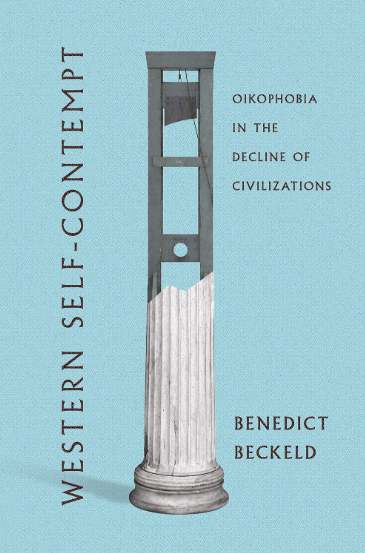
In an article for the American Mind, Daniel Mahoney draws our attention to a recent book on the phenomenon of oikophobia, the dislike or even hatred of one’s own country or culture, which now seems so prevalent in western academic and intellectual circles as to be almost an orthodoxy or requirement for acceptance into the intellectual class. Of course, no social trend or phenomenon is entirely new or has an indisputable starting point: for example, George Orwell drew attention to English self-hatred many years ago. But the spread of oikophobia has been of epidemic proportion in late years.
It seems to me that Mr. Mahoney’s analysis can be extended. The first question to ask is why oikophobia should now be so prevalent. To this, I should tentatively reply that it is because of the mass intellectualization of society consequent upon the spread of tertiary education. Intellectuals have an inherent tendency to be oppositional to all received opinion or feeling, for there is no point in going to the trouble of being an intellectual if one ends up thinking and feeling what the great mass of the people around one think and feel. Love of country and inherited custom is so commonplace as to appear almost normal or natural, and much of it, of course, is unreflecting.
But intellectuals are supposed to reflect. That is their function, and they are inclined to reject received opinion, not because it is wrong but because it is received. It goes without saying that received opinion can be wrong and even wicked or evil, in which case the strictures of intellectuals are necessary and salutary; but intellectuals themselves may promote wrong or even wicked opinions, partly from the a priori need to distinguish themselves from the run of mankind.
The phobia in oikophobia is the fear of being taken for one of the common run of mankind.
The second question about oikophobia is the old one of cui bono? Again, one must not confuse the psychological or social origin or function of an opinion with its justification or correctness in the abstract, but once one has decided that an opinion is mistaken or deleterious in its effect, it is natural to ask where it comes from and what interests it serves.
In my opinion, oikophobia is generally bogus, that is to say insincere, as is its cognate, multiculturalism. The oikophobe and the multiculturalist are not really interested in other cultures, except as instruments with which to beat their fellow citizens. The reason for their lack of real interest in other countries is not difficult to find and is of very common application. The fact is that it is very difficult genuinely to enter into a culture, or subculture, other than one’s own, even when that culture or subculture is close to or adjacent to one’s own.
June 8, 2022
QotD: Before the (politically correct) Current Era
These new initials stand for Before the Common Era and the Common Era: but common to what, and common to whom? Nobody bothers to explain. By strange but happy coincidence, 300 BC turns out to be the same year as 300 BCE, and AD 400 as CE 400, or 400 CE. Why the change, then?
Do those who have promoted it and obeyed its dictates really think that all those sensitive Zoroastrians, who are supposedly so offended by the old style of dating, are also so stupid that they have failed to notice the coincidence and will therefore fail to be offended by it?
The academics, intellectuals and sub-editors of university presses who use the new style evidently believe that the world is populated by people of extreme psychological fragility, and whose self-esteem, which can be shattered by the mere usage of BC and AD, it is their duty to protect.
Thus does condescension and sentimentality unite with megalomania to produce absurd circumlocutions.
Theodore Dalrymple, “Before the current era”, The Critic, 2022-02-09.
May 3, 2022
England’s class system, as documented by George Orwell and Theodore Dalrymple
I occasionally run into articles online that are clearly written to interest someone like me, and this one in Quillette by Laurie Wastell had my full attention from the title onward:

Ever since Marx, the concept of class has been foundational to sociology — as well as to almost everything else. This would not have surprised the German economist, for class, as he saw it, determines all: one’s motivations, one’s social position, even one’s consciousness. Britain, where Marx’s Capital was written, has long been known for its intricate class system, and as such is the source of much writing on the subject. Two of the most acerbic English social critics of the past century, George Orwell and Theodore Dalrymple, take class as a central subject. Drawing on firsthand experience (Orwell as a journalist, Dalrymple as a prison doctor and psychiatrist), both document in detail the suffering and privations of the class below them. Both also contend that a central cause of this poverty is the indifference of the middle and upper classes, a conclusion Marx would surely have agreed with. Yet, despite this, their work stands in flat contradiction to Marx’s central dogma that the material conditions of a society determine everything about it, including class. In their literary journalism, the authors’ social commentaries and insights into the human condition far surpass Marx’s “scientific” analysis.
[…]
That class is a function more of outlook than income was clear to Orwell, as he explains in his 1937 book The Road to Wigan Pier, which depicts both the privations of working-class life and the British class system as a whole. Orwell describes how the “lower-upper-middle-class” (Orwell’s own), generally professionals in the “Army, Navy, Church, Medicine [or] Law”, understood and aspired to all the many customs of the upper classes (hunting, servants, how to order dinner correctly) despite never being able to afford them. Thus, “To belong to this class when you were [only] at the £400 a year level was a queer business, for it meant that your gentility was almost purely theoretical.” This same dynamic applies today (though the bourgeois values aspired to now are quite different): a poor librarian is far less likely than a wealthy plumber to have voted for causes like Brexit or Trump, which are both populist and, thus, lower-class.
Themselves men of letters, both Orwell and Dalrymple understand that this class distinction is frequently signalled through language. “As for the technical jargon of the Communists,” writes Orwell, “it is as far removed from the common speech as the language of a mathematical textbook.” Such contorted academic prose means little to the ordinary worker, for whom, Orwell argues, Socialism simply means “justice and common decency”. Indeed, Orwell laments that “the worst advertisement for Socialism is its adherents” because of their distance from everyday concerns and inability to speak plainly. Summarising the problem, he quips: “The ordinary man may not flinch from a dictatorship of the proletariat, if you offer it tactfully; offer him a dictatorship of the prigs, and he gets ready to fight”.
A lifelong socialist, Orwell was repeatedly frustrated by the symptoms of this intellectual snobbery — why do the revolutionaries have such disdain for the ordinary punter? Dalrymple, meanwhile, in his essay “How — and How Not — to Love Mankind”, takes aim at its roots. Here, Dalrymple compares the life and work of Marx to his now lesser-known contemporary, Russian novelist and playwright Ivan Turgenev. Though their lives closely resembled one another’s, Dalrymple argues, “They nevertheless came to view human life and suffering in very different, indeed irreconcilable, ways — through different ends of the telescope, as it were. Turgenev saw human beings as individuals always endowed with consciousness, character, feelings, and moral strengths and weaknesses. Marx saw them always as snowflakes in an avalanche, as instances of general forces, as not yet fully human because utterly conditioned by their circumstances.”
[…]
Both writers criticise intellectuals’ pretentious jargon, but it is worth pausing over how each relates his own social position to their subject matter. In a telling passage of Wigan Pier, Orwell describes the working man who has made it into the middle class, perhaps as a Labour MP or trade union official, as “one of the most desolating spectacles the world contains. He has been picked out to fight for his mates, and all it means to him is a soft job and a chance of ‘bettering’ himself. Not merely while but by fighting the bourgeoisie he becomes bourgeois himself.” The scare quotes reflect Orwell’s mixed feelings about social class: does Orwell not believe that a middle-class career — such as his own — is an improvement over the harsh, backbreaking labour of the miners he so vividly documents? He has hit on a deep dilemma, born of a compassionate humanism that points in contradictory directions.
Ostensibly, Orwell chronicles poverty in order to change it, to shock the comfortable hearts of his readers into action. Yet, at the same time, (romanticising the poor against his own advice), he presents the dirt as liberating: squalor and poverty are in some sense more authentic, more real than bourgeois comforts. Thus, as literary critic John Carey argues, Orwell’s “phobia about lower-class dirt collides head-on with his determination to invest dirt with political value, as the price of liberty.”


