Quotulatiousness

April 12, 2020

Self-interest in the clothing of idealism

Filed under: Economics, Media, Politics, USA — Tags: , , — Nicholas @ 03:00

Last week, Esteban wrote at the Continental Telegraph:

Much has been made over the past year of the fact that young people in America approve of Socialism in rather large numbers, and quite a lot more than their elders. Some explain that this is because they are more idealistic than the older crowd, who have become corrupted and “sold out” now that they have a mortgage and expensive lifestyle. Others argue that this supposed idealism is actually naivete.

It seems fair to point out that if you are 24 with negative net worth, a modest paying job and no reasonable expectation on the horizon to make serious cash, it isn’t idealistic to support redistribution, it’s self-interest. And you don’t change this fact by saying “Well, if I made that much money, I’d be happy to pay a lot in taxes”. If you ever get to that point we’ll see, until then this statement doesn’t fly.

Likewise, if you’re 55 with a couple of million dollars in your 401(k), a big home and an income well into six figures your view may be biased against “sharing the wealth” based on your wallet, not principles.

March 29, 2020

For dedicated progressives, the answer to every question is always “more government”

Arthur Chrenkoff on the constant demand from the left for expanding the role of government in, basically, everything:

But even in more developed and democratic countries of Europe, while not leading to the overthrow of the political and economic system, World War One had contributed to a significant increase in the size and the power of the state. Even more so World War Two, where the war experience translated into post-war Keynesian-inspired social democratic welfare states, ironically nowhere more so than in the United Kingdom where the Tories won the war but the Labour won the peace. In some ways, the mobilisation of the state to fight a total war was merely the continuation of the mobilisation to fight the Great Depression, an economic upheaval like none before, which helped bring national socialism to power in Germany and realigned the American politics for the next half a century around a New Deal consensus. The GFC did not leave as extensive a legacy, except perhaps in the right’s surrender on government spending, budget deficits and public debt. If you are no longer restricted by the existing revenue, there is really no limit how big the government can grow.

Over the last two decades the left has been trying to use climate change as another crisis not be wasted. If the problem was CO2, bigger state and smaller market were always the answers if you listened to Bernie Sanders and AOC with their Green New Deal or to Extinction Rebellion, or Greta Thunberg or any number of other high profile individuals and groups. By and large, this has not worked because the threat of a hotter planet and a more extreme weather has never been immediate enough, despite all the 10 and 12 year deadlines until a “point of no return” and all the overheated, panic-mongering rhetoric about the end of the world.

Enter stage left Coronavirus. What opportunities have been missed or simply impossible to seize as a result of the GFC (because the economic crisis wasn’t in the end deep enough) or the “climate emergency” (because the threat was never urgent enough) are here to be seized during the pandemic, even more so if the pandemic (or the responses to) leads to a genuine global economic depression, perhaps worse than the one 90 years ago. No sane person wishes deadly pandemics on the world, but since it’s already here might as well act. The pretty sober and comfortably elite Economist calls what has already occurred around the world “the most dramatic extension of state power since the second world war.”

It has been noticeable to me, as I’m sure it has been to many others, how large sections of the left seem to be salivating at the prospect of complete and prolonged lock-downs and martial law-type situations. Such measures might possibly be in the end necessary to finally halt and contain the spread of the contagion (or, then again, they might not be), but the sheer rush towards them and enthusiasm by people, many of whom have spent the last five years decrying Donald Trumps of the world as dictators-in-waiting, leads me to believe that for many progressive and radical people authoritarianism is like rape: the public fear of it often masks the secret fantasies about it. It’s not a question of what, and not even of who’s in charge, even though they would prefer to be the ones at the helm, as long as it actually happens, because the state, being the left’s domain, will be the ultimate beneficiary and in time so will they. The left loves power, no matter how much they protest it’s all for the greater good. That’s why everyone wants to be a commissar and no one actually wants to be the proletarian.

But never mind COVID martial law; even if it were to last a few months, people need to be let out of their houses eventually and life has to return to some semblance of normality. What the left is more interested and more passionate about are the long lasting consequences, the fruit of power shifts in the world upended by a bat virus. The current crisis presents an almost unparalleled opportunity to expand the scope of governments at the expense of the private sector and the peoples and institute far-reaching changes to just about every aspect of life.

March 27, 2020

QotD: “Jesus was a socialist”

Filed under: Government, Politics, Quotations, Religion — Tags: , , , , — Nicholas @ 01:00

Christ taught giving. Giving means taking ones own property and passing it on to someone in need. Nowhere did he advocate taking from others by force and “redistributing” it. He certainly did not advocate taking from others, using what’s taken to fund a huge government bureaucracy, and pass out a pittance of the remainder to the poor (have to justify that bureaucracy somehow).

Nowhere in the Bible is there a passage similar to this:

    And I say unto you, take up your sword and shew it to the rich man and say unto him “give to me your wealth that it might care for the poor, lest I smite you to the Earth.”

    And when the wealthy man has given up his wealth, take it and pay for a multitude of scribes and pharisees and learned doctors of the law and say unto them, “use this wealth to provide for your hire, but only this, save a pittance thereof and give it unto the poor so that we may noise about this good work and stand in the marketplace speaking loudly of these alms we give.”

    And when this is done, say unto the people “Behold, we have cared for the poor. Now give us more of your wealth that we may continue to do so and to do other things.”

    And if any dare to resist you, lay your hands upon him and chain him and cast him into a dungeon.

    And in all this way shall you show unto the people your mercy and kindness.

When people advocate socialism enforced by government, they are advocating using force to take from some to give to others. Nowhere in his teachings did Christ advocate that. Nowhere.

This is where some people say “but Christ said Render unto Caesar.” Yes. He did. In response to a question intended to trap him. Context matters. Christ had rising popularity among the masses which concerned the Jewish leadership greatly. So they planted the question of whether they should give tribute to Caesar. If Christ had simply said “yes” he would have lost his popular audience and his ministry would have died right there. If he had said “no”, he would likely have been arrested (“we caught him forbidding tribute to Caesar” was one of the charges the Sanhedrin laid against him when handing him over to the Romans for execution). And his ministry would have died right there. Instead, he asked for an example of the tribute money, asked whose picture was on it, and gave his famous answer. And if people followed him in that, the Roman reprisal, destruction of Jerusalem, and diaspora would have occurred before much of Christ’s mission was fairly begun. If you accept his divinity, you have to accept that he knew this and gave the answer that allowed him to complete his mission.

But did “render unto Caesar” mean an endorsement of everything that tax funds were used for? Did he endorse gladiatorial games? Wars of conquest? The capture and importation of slaves? The use of government troops to put down slave revolts? Let’s not be absurd. Just because the Roman government did something with tax monies, or modern governments do something with it, “Render unto Caesar” is not an endorsement of that use.

Government is force, pure and simple. That’s essentially a definition of government: the legitimizing of the use of force. Socialism imposed by government has nothing to do with Christian charity. It is, in fact, very nearly the exact opposite, wearing a mask to confuse the unwary.

David L. Burkhead, “The “Christian Left”, The Writer in Black, 2018-01-08.

March 26, 2020

QotD: “Gammon”

Filed under: Britain, Politics, Quotations — Tags: , , , , , — Nicholas @ 01:00

I think it’s important to look beyond personalities and current political issues. Yes, Jeremy Corbyn was a repulsive figure, and that played a significant role in Labor’s defeat; yes, Brexit upended British politics. But if we look at the demographics of who voted Labor, it is not difficult to discern larger and longer-term forces in play.

Who voted Labor? Recent immigrants. University students. Urban professionals. The wealthy and the near wealthy. People who make their living by slinging words and images, not wrenches or hammers. Other than recent immigrants, the Labor voting base is now predominantly elite.

This is the Great Inversion – in Great Britain, Marxist-derived Left politics has become the signature of the overclass even as the working class has abandoned it. Indeed, an increasingly important feature of Left politics in Britain is a visceral and loudly expressed loathing of the working class.

To today’s British leftist, the worst thing you can be is a “gammon”. The word literally means “ham”, but is metaphorically an older white male with a choleric complexion. A working-class white male, vulgar and uneducated – the term is never used to refer to men in upper socio-economic strata. And, of course, all gammons are presumed to be reactionary bigots; that’s the payload of the insult.

Catch any Labor talking head on video in the first days after the election and what you’d see is either tearful, disbelieving shock or a venomous rant about gammons and how racist, sexist, homophobic, and fascist they are. They haven’t recovered yet as I write, eleven days later.

Observe what has occurred: the working class are now reactionaries. New Labor is entirely composed of what an old Leninist would have called “the revolutionary vanguard” and their immigrant clients. Is it any wonder that some Laborites now speak openly of demographic replacement, of swamping the gammons with brown immigrants?

It would be entertaining to talk about the obvious parallels in American politics – British “gammons” map straight to American “deplorables”, of course, and I’m not even close to first in noticing how alike Donald Trump and Boris Johnson are – but I think it is more interesting to take a longer-term view and examine the causes of the Great Inversion in both countries.

Eric S. Raymond, “The Great Inversion”, Armed and Dangerous, 2019-12-23.

March 12, 2020

Comrade Sanders

Filed under: Media, Politics, USA — Tags: , , , , — Nicholas @ 03:00

Arthur Chrenkoff points out the amazing double-standard that has helped Bernie Sanders become a major candidate for the Democratic nomination:

Imagine a credible candidate for a significant elected office – never mind the Presidency of the United States of America, the elected office in the world – who has spent his career cheering on Mussolini, Franco and assorted Latin America authoritarian strongmen, who admires Nazi Germany’s record in job creation and public infrastructure, and who, while eschewing excesses of the past, proclaims himself a proud national socialist, but to reassure all he says he is a democratic national socialist.

Now think of Bernie Sanders and you can once again understand the pervasive double standard in our politics. The hypothetical candidate from the previous paragraph – and he or she are very much hypothetical – would be considered a political and social pariah. Bernie, on the other hand, is lionised by millions and until very recently, prior to the miraculous, Dr Frankenstein-like reanimation of Joe Biden, has been considered a probable presidential candidate by a major political party (coincidentally, of which he has never been a member in his entire career).

To the best of my knowledge, Sanders has never expressed any regret, misgivings or second thoughts about a lifetime of cheerleading for virtually every socialist/communist government around the world, from the Soviet Union to Vietnam and from Cuba to, most recently, Venezuela. It is not like the true nature of these regimes has been a secret until now. Anyone with any modicum of knowledge and common sense could see all long these were all totalitarian dictatorships and mass abusers of human rights, which nationalised poverty and whatever their meager economic or social progress it has been achieved at an unacceptable cost.

[…]

That an old Chomskyite like Sanders came so close to being the Democrat presidential candidate tells of a sickness at the heart of a major political party. Democrats still staunchly believe that Donald Trump is a Russian asset but almost ended up with an actual communist sympathser in charge. History didn’t end in 1989; it repeats itself like vomit rising in your throat.

On a lighter note, Larry Correia is amused at the current top two Democratic contenders:

That is about the most pathetic match up of losers to ever occur in any political contest in the history of ever.

Sanders is a Marxist doofus. His plans are gibberish. His philosophy is bullshit, designed to appeal to wishful thinkers who can’t do math, and greedy ass mooches. But don’t worry, he’s a total squish without an ounce of fight in him, so the DNC’s just gonna roll him over to make from for their chosen one …

Joe Biden! Who is either suffering from dementia, or is just really really dumb. (insert porque no los dos? meme girl here)

They can’t let Joe speak for more than five minutes because they know he’ll go off script and start babbling incoherently. And I’m not talking Trumpian style stream of consciousness yammering, but weird ass, dog faced pony soldiers, corn pop, hairy legs, girl sniffing, finger biting, he’ll slap you, fight me IRL, you wanna step outside?

I’ve known people who worked with Joe Biden years ago, and they all said the same thing. With him, what you see is what you get. There is no act. That’s how Joe Biden is. And he was a weird scoundrel back then, but I’m pretty sure his mind is going now.

On the plus side, Jill Biden moves faster than the Secret Service, and that lady will throw hands. Respect.

All the DNC needed to do was find somebody decent and dignified to run against Trump, but oh no, they went batshit crazy instead, and their anointed one is a doddering, senile, fool, who is so corrupt his son, Crackhead McStripperbang makes millions of dollars for imaginary jobs not at all related to his dad’s position, and they don’t even try and hide it. But don’t worry, Biden’s gonna come from behind, because nothing wins swing states like threatening to slap construction workers who are suspicious that Beto O’Dork actually does want to take their AR-14s.

As somebody who would rather reach into his own chest and pluck out his heart than vote democrat, I will admit that I find it terribly amusing all the liberals I know who are weeping, wailing, and gnashing their teeth about Old Rich White Guys There Are No Women Or People Of Color Running … While Tulsi Gabbard is over there, like WTF?

Sorry, progs. She said hurtful things about Hillary, so the media and Google basically Thanos-snapped her into dust. Meanwhile, the right are eagerly betting on whether Nikki Haley is going to run in 2024 or not … So who are the real misogynist bigots?

February 28, 2020

Is the world ready for Trump versus Bernie?

Filed under: Politics, USA — Tags: , , , , — Nicholas @ 05:00

At Rotten Chestnuts, Severian considers the strong possibility that Bernie Sanders will capture the Democratic presidential nomination and face Donald Trump in the general election:

Before we get into it, can we all just pause for a second to savor the delicious irony of the Democrats suddenly discovering, after all these many many many years, that Socialism is bad? I almost feel sorry for poor ol’ Bernie. For going on four decades now, the Dems have treated him like the little kid at the grown-ups’ table. Who hasn’t been there on Thanksgiving? “Mommy, Uncle Henry’s breath smells really bad.” We’re all thinking it, kiddo, but you can’t say it. They’ve been silently agreeing with him about the need to turn America into the USSA all these years, and now they’re gonna take him behind the woodshed for it? Really?

This is point #1 in the argument, increasingly common out here in the political badlands, that Bernie Sanders is Bizarro World Donald Trump. Back in 2016, the weirdest thing for those of us not wedded to Team Republican — for that vanishingly rare breed, that is, who regard politics as politics, not sportsball in neckties — was how normal Trump sounded. This guy is supposed to be the ultimate anti-Establishment candidate, right? So why is he saying stuff that has been GOP orthodoxy since the 1970s? And why are they hammering him for it?

[…]

This is where he’s most dangerous. Like Trump was in 2016, Bernie 2020 can be seen as a pure protest candidate, a giant “fuck you” to The System. Hell, in my increasingly frequent black-pill moments, I contemplate voting for the guy — we’re not voting our way out of what’s coming, as Z Man always says, so we might as well get started. A few years of life under the Septuagenarian Stalin will give us some valuable prep for when things get really interesting under La Presidenta por Vida Alexandria Ocasio-Cortez.

Moreover, there can be great power in being the only guy in the room who’s willing to state the obvious. In this case, it has been obvious for a long time that the Democratic Party are a bunch of godless commies. Literally commies, or at least Bolshie-curious. Obvious, but always verboten to say … until now. Sanders has a rabid base that, even if you assume the “official” numbers are all lies, can’t be much less than 20% of the entire Party. Those hardcore Bernie Bros can’t possibly have any illusions about who he is and what he wants. That’s what they want, too, and again: twenty percent. The Media paints anyone to the Right of Rachel Maddow as a “white supremacist,” but can you imagine how different American politics would be if 20% of the GOP were open, avowed Klansmen?

Those are the “positives,” for lack of a better term, of Bernie being the Democratic nominee. If this is what The People really, really want — and it’s crystal clear that a lot of them do — then we should at least have a good, long, hard “national conversation” about giving it to them. Cuba, as Bernie keeps informing us, does after all have 100% literacy and free health care, and the Chinese are great at lifting people out of poverty. Let’s talk about that, live on national television, and see where it takes us.

February 19, 2020

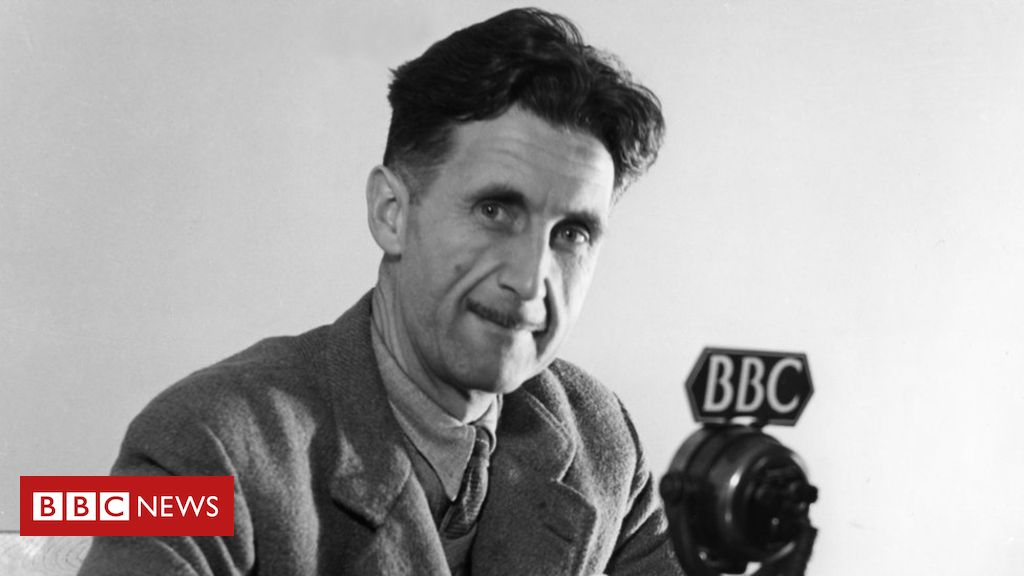
Christopher Hitchens – Why Orwell Matters

Filed under: Books, Britain, History, Liberty, Politics — Tags: , , , , — Nicholas @ 04:00

TheHitchensArchive
Published 24 Apr 2013

October 21, 2002. Christopher Hitchens giving a speech based on his book about George Orwell at The Commonwealth Club.

January 24, 2020

How Left/Right Partisanship Starts a Civil War in Spain | BETWEEN 2 WARS I 1936 Part 2 of 4

Filed under: Europe, History, Military, Religion — Tags: , , , , , , , — Nicholas @ 06:00

TimeGhost History
Published 23 Jan 2020

Spain in the early 1930’s was practically Europe in Microcosm, with numerous political and ideological movements clashing in debate and open battles on the streets of Spain. All of this worsened in 1936 as Spain slowly descends into Civil War.

Join us on Patreon: https://www.patreon.com/TimeGhostHistory

Hosted by: Indy Neidell
Written by: Francis van Berkel
Directed by: Spartacus Olsson and Astrid Deinhard
Executive Producers: Bodo Rittenauer, Astrid Deinhard, Indy Neidell, Spartacus Olsson
Creative Producer: Joram Appel
Post-Production Director: Wieke Kapteijns
Research by: Francis van Berkel and Naman Habtom
Edited by: Daniel Weiss
Sound design: Marek Kaminski

Colorizations by:
– Dememorabilia – https://www.instagram.com/dememorabilia/
– Daniel Weiss

Sources:
– CNT_Emblem Source Heralder
– Kutxa Photograph Library
– photo from Gipuzkoako Foru Aldundiko Kultura eta Euskara Departamentua

Soundtracks from Epidemic Sound:
– “The Inspector 4” – Johannes Bornlöf
– “Dawn Of Civilization” – Jo Wandrini
– “Not Safe Yet” – Gunnar Johnsen
– “Easy Target” – Rannar Sillard
– “First Responders” – Skrya
– “Deflection” – Reynard Seidel
– “Death And Glory 2” – Johannes Bornlöf
– “The Charleston 3” – Håkan Eriksson

A TimeGhost chronological documentary produced by OnLion Entertainment GmbH.

From the comments:

TimeGhost History
1 day ago (edited)
Vote on what we’re doing after B2W! -> https://www.patreon.com/posts/33300161

We originally planned to just do one episode on the Spanish Civil War, but the more I researched it the more I realized how complicated everything was even before the real fighting even breaks out. To understand the battle-lines of the conflict you have to understand how they were drawn in the turbulent years of the Second Spanish Republic. In the space of just 5 years it sees numerous insurrections, revolutions, and a coup. In an era of political radicalism across the world, Spain really stands out as the most defined by it, and by 1936 is already in a state of quasi-civil war. This episode gives you a detailed insight into that. We’ll be covering the course of the war itself in a later episode.
Cheers, Francis.

January 23, 2020

QotD: The “great” modern architects

The widely accepted narrative of modernism à la Gropius is that it was some kind of logical or ineluctable development from the Arts and Crafts movement. This seems to me utterly fantastic: it is like saying that Mickey Spillane is a logical or ineluctable outgrowth of Montesquieu. It is true that in the work of certain artists, for example Mondrian, one can see a gradual change which might be considered logical, starting from figurative landscapes and ending, via ever greater abstraction, to purely geometric shapes. But even where there is such a development, it is ultimately beside the point: it does not prove that what came later was better. Each artistic product has to be assessed aesthetically on its own merits (which in architecture includes its harmony with an existing townscape), and only someone who sees with an ideology rather than with eyes could conclude anything other than that modernism has been overwhelmingly a disaster.

Moreover, claiming respectable ancestors is somewhat at variance with equal claims to be starting from zero (as Gropius put it), but such a contradiction is hardly noticed by the grand narrative history of modernism that Professor Curl attacks and destroys.

He is not unable or unwilling to praise where it is due, though it is due rarely enough; and he is particularly effective in tracing the opportunistic ideological divagations of the modernists, whose one constant predilection was for absolute power over others. Mies, for example, was attracted to socialist totalitarianism, and his only objection to Nazism was that the Nazis eventually rejected his desire to have everything built according to his prescriptions. He left Nazi Germany because he feared his previous pro-leftism made him permanently suspect in its eyes, not because he was appalled by its brutality. If only they’d let him build! But contrary to apologists for Mies, and to a legend constantly repeated, it was not the Nazis who closed the Bauhaus but Mies himself, and he left Germany only four years after their assumption of power.

Finding refuge in America, Mies quickly perceived that the power of patronage of megalomaniac building lay with giant corporations rather than with fascists or communists and persuaded many of them to build his preternaturally inhuman and uninspired monstrosities. By a strange quirk of history, and because of mankind’s perpetual propensity to make logical errors, Mies was able to pose dishonestly as anti-totalitarian and even as a friend of freedom precisely because he had fled Nazi Germany where they hadn’t patronised him. He was fortunate that soon afterwards the United States had another totalitarian enemy, the Soviet Union. Mies and his allies were thus able to claim that his totalitarian modernism was actually a manifestation of western freedom. There are many such ironies pointed up in this book that would be delicious had they not had such appalling consequences.

Corbusier was a fascist in the most literal sense of the word, and early during the Occupation advocated the removal by force of the majority of Paris’ population because it had no business to be living there. Can one wonder that a man with thoughts like that built monstrosities?

Theodore Dalrymple, “Architectural Dystopia: A Book Review”, New English Review, 2018-10-04.

January 17, 2020

Labour’s underlying problem

Filed under: Britain, History, Politics — Tags: , , , — Nicholas @ 05:00

In UnHerd, James Bloodworth explains why the Labour Party will have to change to get back into power in Britain:

Jeremy Corbyn speaking at a Rally in Hayfield, Peak District, UK on 25th July 2018.
Photo by Sophie Brown via Wikimedia Commons.

George Orwell was famously contemptuous of much of the left intelligentsia. “England is perhaps the only great country where intellectuals are ashamed of their own nationality,” he wrote in his 1941 essay “England, Your England“. “In left-wing circles it is always felt that there is something slightly disgraceful in being an Englishman and that it is a duty to snigger at every English institution.”

Plus ça change, plus c’est la même chose.

There has always been a healthy suspicion of jingoism and flag-waving on the Left. However it wasn’t this that Orwell was referring to. Few wrote more damning screeds about the British empire than the former colonial policeman, who was always willing to give the “blimps” who ran Britain a good kicking. Rather, Orwell was referring to a more generalised contempt many on the Left felt towards Britain and — by extension — their fellow countrymen.

Socialism to Orwell meant bread and butter issues of higher wages and more freedom — freedom itself depending to a large extent on how much money one has. Yet the movement attracted its fair share of cranks. It was this penumbra of crankishness that prevented socialism from developing a mass following. A major hallmark of it was its anti-Britishness.

Jeremy Corbyn has been compared plenty of times over the past five years to the “vegetarian, fruit-juice drinking, Nature Cure quack, pacifist” oddballs Orwell wrote about in The Road to Wigan Pier. In Orwell’s time these types seemed to gravitate towards the socialist movement “like bluebottles to a dead cat”, as he put it. Since Corbyn became leader in 2015 something similar has occurred: the Labour Party has been flooded with conspiracy theorists, antisemites and various other subliterate fools. Uniting almost all of them is a profound contempt for Britain and in particular British foreign policy.

This is arguably a major reason Labour lost the recent election. “Such was the demonisation of Jeremy Corbyn,” wrote the Labour MP Liam Byrne, “that hundreds of voters I met thought Labour’s leader was a ­communist terrorist sympathiser who wouldn’t push the nuclear button or sing the national anthem.”

This isn’t so much the “demonisation of Jeremy Corbyn” as an accurate summation of the Labour leader’s views. Seumas Milne and Andrew Murray, two of Corbyn’s first appointments as advisers, are communists. Corbyn called members of Hamas and Hezbollah “honoured friends”. He fraternised with the IRA and argued for the abolition of Nato. He has obfuscated shamefully over acts of aggression directed against Britain, such as during the Skripal poisoning in Salisbury. It is not demonising someone to accurately list the things they have said and done.

December 12, 2019

“Socialism” and “Capitalism” in the United States

Filed under: Economics, Government, Politics, USA — Tags: , , , , , , — Nicholas @ 05:00

Antony Davies and James R. Harrigan look at the supposed conflict between sharing, caring socialism and raw, heartless capitalism in the context of the American political theatre:

These terms were once very clearly defined. Socialism is state control of the means of production. The intent is that these means are to be used for the public good. By contrast, capitalism is simply private ownership of the means of production. The intent is that these means are to be used to advance the interests of those who own them, which will in turn create conditions of general prosperity that can be enjoyed by all.

When polled, Americans express relatively well-defined views on both. And while nowhere near a majority of the American electorate favors a completely socialist system, a recent Gallup poll indicates that more than four in ten Americans think “some form of socialism” is a good thing. But what is “some form of socialism?” A society is either socialist or it isn’t. The state either owns the means of production or it doesn’t. There is no middle ground. Even our openly socialist politicians rarely advocate anything near as drastic as government control of the means of production.

[…]

And just as transferism is not actually socialism, the system against which transferists rail isn’t capitalism, either. When they think of “capitalism,” transferists imagine a monied class that defrauds customers, pollutes the environment, and maintains monopoly power, all because the monied class is in bed with government. But capitalism is simply the private ownership of the means of production. What people are actually describing is something more appropriately called “cronyism,” which can manifest in a socialist system as easily as in a capitalist one. Cronyism isn’t a byproduct of the economic system at all; it is a byproduct of politics.

For current examples, one need look no further than North Korea, Cuba, and Venezuela. Socialists say these aren’t examples of “real socialism,” and they’re not. There was a time when these countries were indeed socialist, just as there was a time when the United States was capitalist. But cronyism has overtaken these countries’ economic systems, just as it did in humanity’s grandest socialist experiment: the Soviet Union. Life was simply different for inner-party members than it was for workers. This is the real danger that all countries face, regardless of the animating principles of their economic and political structures.

[…]

We need to answer the core question: how much transferism do we want?

In order to figure this out, we need to come to terms with the fact that any transfer is a confiscation of wealth from the people who created it. That confiscation will decrease wealth creation in the long term by decreasing an important incentive to take the risks necessary for creating wealth. Second, we have to recognize that transferism is addictive. No matter how much we transfer, people will always want more. The United States’ $23 trillion debt, the largest debt the world has ever seen, has come about because of American voters’ voracious appetite for transfers combined with politicians’ obvious incentive to provide them.

The solution politicians have found is to pass off the cost of the transfers to taxpayers who haven’t yet been born by borrowing the money, thereby leaving to the next generation the problem of repaying the debt or enduring unending interest payments. It’s a house of cards to be sure, but from their perspective, it will be someone else’s house of cards.

In the end, we have polluted our political discourse with two words that no longer have much meaning: socialism and capitalism. In the process, we don’t call the animating principle of modern American politics what it actually is: transferism. The only winners have been the politicians who manage to gather votes by keeping the electorate in a near-constant state of friction. And they keep winning if people keep thinking in categories that ceased to have any real meaning years ago.

November 26, 2019

Communal farming nearly killed off the Plymouth Colony

Filed under: Britain, History, USA — Tags: , , , , — Nicholas @ 05:00

What saved them was abandoning the “common property” communalism and adopting private ownership of the farms:

The Plymouth Colony 1620-1691.
Map by Hoodinski via Wikimedia Commons.

The first few years of the settlement were fraught with hardship and hunger. Four centuries later, they also provide us with one of history’s most decisive verdicts on the critical importance of private property. We should never forget that the Plymouth colony was headed straight for oblivion under a communal, socialist plan but saved itself when it embraced something very different.

In the diary of the colony’s first governor, William Bradford, we can read about the settlers’ initial arrangement: Land was held in common. Crops were brought to a common storehouse and distributed equally. For two years, every person had to work for everybody else (the community), not for themselves as individuals or families. Did they live happily ever after in this socialist utopia?

Hardly. The “common property” approach killed off about half the settlers. Governor Bradford recorded in his diary that everybody was happy to claim their equal share of production, but production only shrank. Slackers showed up late for work in the fields, and the hard workers resented it. It’s called “human nature.”

The disincentives of the socialist scheme bred impoverishment and conflict until, facing starvation and extinction, Bradford altered the system. He divided common property into private plots, and the new owners could produce what they wanted and then keep or trade it freely.

Communal socialist failure was transformed into private property/capitalist success, something that’s happened so often historically it’s almost monotonous. The “people over profits” mentality produced fewer people until profit — earned as a result of one’s care for his own property and his desire for improvement — saved the people.

Over the centuries, socialism has crash-landed into lamentable bits and pieces too many times to keep count — no matter what shade of it you pick: central planning, welfare statism, or government ownership of the means of production. Then some measure of free markets and private property turned the wreckage into progress. I know of no instance in history when the reverse was true — that is, when free markets and private property produced a disaster that was cured by socialism. None.

A few of the many examples that echo the Pilgrims’ experience include Germany after World War II, Hong Kong after Japanese occupation, New Zealand in the 1980s, Scandinavia in recent decades, and even Lenin’s New Economic Policy of the 1920s.

November 17, 2019

QotD: Socialist beliefs about “capitalism”

Filed under: Business, Economics, Government, Politics, Quotations — Tags: , , , , — Nicholas @ 01:00

The poor understanding of economic and political institution that Marx did so much to promote remains widespread today. “Progressive” and hard-left opponents of markets hold mistaken – or, at the very least, questionable – presumptions about reality, which include:

  • Wealth is either fixed in amount, or, while it might be destroyed or diminished by certain human activities (such as war), if wealth grows this growth occurs largely independently of human ideas, choices, actions, and institutions;
  • trade and commerce, therefore, are largely zero-sum – that is, each exchange situation pits a party who will win against one who will lose;
  • trade and commerce, in turn, involve activities are thus, at best, suspect; trade and commerce too often reward greediness and duplicity while penalizing generosity and honesty;
  • the “distribution” of wealth – whether conceived as financial flows or assets, or as access to real goods and services – is determined largely by power;
  • prices set on markets are largely arbitrary; prices seldom play any role beyond determining how much one party “wins” from trade and how much the other party “loses.”
  • each of a handful of large groups of people, mostly as conceptualized by intellectuals with no understanding of economics, has its own “interests” – interests that are shared by all members of the group and that are at odds with the interests of other groups; for example, “labor” has interests that are are shared by all workers and that are at odds with the interests of “employers”;
  • while the state can be captured by ill-intentioned people, the state – especially under unlimited majoritarian rule – is also the only possible savior of the powerless against the predations and frauds of the powerful;
  • absent vigorous state intervention, ordinary people – people whose main asset is the value of their own labor – lack both the power to get their fair share of society’s wealth and the intelligence or self-discipline to use wisely whatever share of wealth they do manage to secure;
  • social progress is achieved by the powerless grabbing power under the leadership of men and women of singular vision, intelligence, and courage; “the People” will be led to the Promised Land – can be led to the Promised Land – only if they faithfully follow their caring messiahs;
  • those who argue in favor of free markets are either soulless mercenary cronies for the powerful propertied class or they are ideologically blinded dupes for this class; no intelligent and decent person could possibly deny the enormous benefits available to “the People” when the state is empowered to work on their behalf against the propertied few.

Don Boudreaux, “Some Links”, Café Hayek, 2017-10-08.

November 13, 2019

George Orwell: A Life in Pictures

Filed under: Books, Britain, History, Politics — Tags: , , , , — Nicholas @ 09:45

Albion Noise
Published 27 Dec 2015

George Orwell: A Life in Pictures is a 2003 BBC Television docudrama telling the life story of the British author George Orwell. Chris Langham plays the part of Orwell. No surviving sound recordings or video of the real George Orwell have been found.

Awards:
International Emmy 2004 for Best Arts Programme
Grierson Award 2004 for Best Documentary on the Arts

October 26, 2019

The Frankfurt School and you

Filed under: History, Politics — Tags: , , , — Nicholas @ 05:00

At Rotten Chestnuts, Severian suggests we consider the origins of a large part of modern progressive thoughts:

Notable members of the Frankfurt School in Heidelberg, April 1964 at the Max Weber-Soziologentag. Max Horkheimer is front left, Theodor W. Adorno front right, and Jürgen Habermas is in the background, right, running his hand through his hair. Siegfried Landshut is in the background left.
Photograph by Jeremy J. Shapiro via Wikimedia Commons.

It occurs to me that Our Thing ought to take a long, hard look at the Frankfurt School.

Those were the guys, of course, who pioneered the notion that their political opponents must be mentally ill. Given that

  • all sane people are good; and
  • good people only want good things; and
  • Socialism is a good thing;

then

  • anyone who doesn’t want Socialism wants a bad thing;
  • therefore is a bad person;
  • therefore is insane.

Anyone with the common sense God gave little catfish recognizes this as begging the question. And not particularly subtle question-begging, either, which is why it took over 1,000 pages (!) of ponderous Teutonic prose to disguise it. It’s science, comrades. Only Socialism, or a .38 to the back of the neck, will cure us …

… assuming, of course, that we want to be cured.

The Frankfurt Schoolers assumed this, of course, as did all those freelance critical theorists running the NKVD’s torture chambers. But that was then. The Frankfurt Schoolers were shockingly bourgeois on so many things. They thought homosexuality was a mental illness, if you can believe it, and I doubt even Herbert Marcuse would’ve signed off on “drag queen story hour,” let alone the state-mandated chemical castration of 6 year old boys. Only the peerless enlightenment of the Current Year recognizes this, comrades.

« Newer PostsOlder Posts »

Powered by WordPress