Quotulatiousness

April 5, 2019

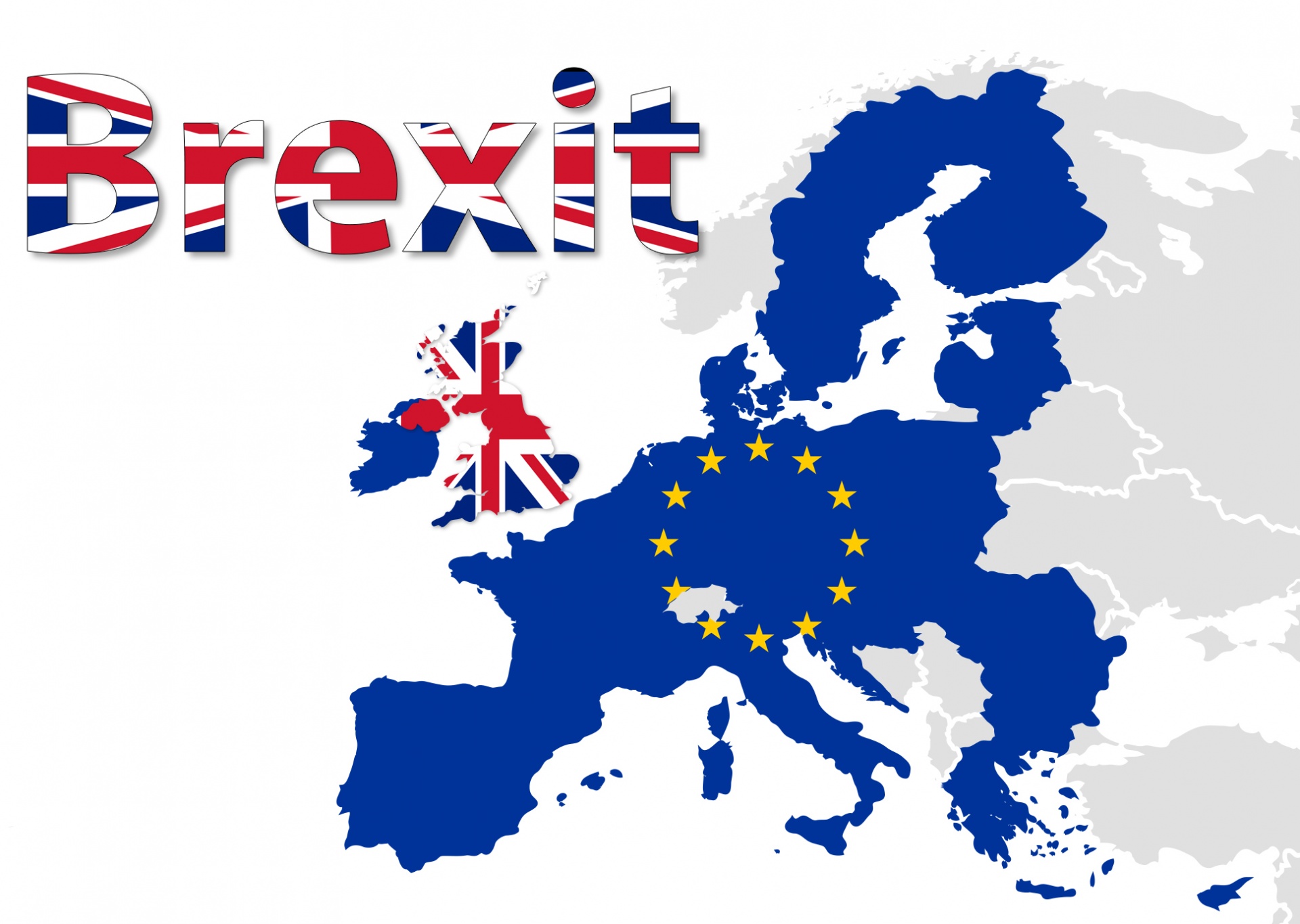
The Brexit trainwreck is “revealing to the British public the extent of its political class’s incompetence”

Theodore Dalrymple in City Journal on the scale of political tomfoolery going on in the Brexit clusterfutz:

The imbroglio over Brexit has at least had the merit of revealing to the British public the extent of its political class’s incompetence. If it is accepted that people get the leadership that they deserve, however, thoughts unflattering to self-esteem ought to occur to the British population.

Theresa May did not emerge from a social vacuum. She is typical of the class that has gradually attained power in Britain, from the lowest levels of the administration to the highest: unoriginal, vacillating, humorless, prey to the latest bad ideas, intellectually mediocre, believing in nothing very much, mistaking obstinacy for strength, timid but nevertheless avid for power. Thousands of minor Mays populate our institutions, as thousands of minor Blairs did before them.

Avidity for power is not the same as leadership, and Brexit required leadership. There was none to be had, however, from the political class. From the very first, it overwhelmingly opposed Brexit — for some, the eventual prospect of a tax-free, expense-jewelled job in Brussels was deeply alluring — but found itself in a dilemma, since it could not openly deny the majority’s expressed wish. Many Members of Parliament sat for constituencies in which a solid majority had voted for Brexit. They feared that they would not win their next election.

The opposition Labour Party was as divided as the Conservatives. Irrespective of what its MPs actually believed about Brexit—its leader was, until recently, ardent for leaving the European Union, which he believed to be a capitalists’ club, changing his mind for reasons that he has so far not condescended to disclose — its main concern was to force an election that it believed it could win, a victory that would soon make Brexit seem like a minor episode on the road to ruin. The majority of the Labour MPs wanted first to bring about the downfall of a Conservative government and second to prevent Britain leaving the European Union without an agreement — what might be called the leaving-the-Union-without-leaving option. But they wanted the first more than they wanted the second, so under no circumstances could they accede to anything that Prime Minister May negotiated. Because of her tiny majority in Parliament, the hard-line Brexit members on her own side who want Britain to leave without a deal, and the refusal of her coalition partner, the Democratic Unionist Party, to back her, May needs the support of a considerable proportion of Labour MPs — which, so far, she has not received.

But the House of Commons as a whole, including the Conservatives, deprived May of leverage with which to renegotiate, because it voted that it would not accept leaving the Union without a deal. This deprived the European Union of any reason to renegotiate anything: it was a preemptive surrender to the demands of the E.U. that makes Neville Chamberlain look like a hard-bitten poker champion.

April 1, 2019

Sean Gabb on the Brexit crisis

Filed under: Britain, Europe, Government, Politics — Tags: , , , , — Nicholas @ 03:00

In his latest email newsletter, Sean Gabb discusses the Brexit situation:

The consensus in the media appears to be that Parliament is out of control, and is attempting to stop our exit from the European Union – even if this means tearing up every settled constitutional norm. I disagree. No doubt, the House of Commons is filled with some very trashy people, and I have little doubt most of them would like to stay in the European Union. Even so, they are acting collectively with strict constitutional propriety. For the first time in my life, they are earning their inflated salaries and expenses and bribe allowances.

Three years ago, we vote to leave the European Union. The margin was respectable, though not substantial. The Government was therefore given one reasonably difficult job. This was to detach us from the institutions of the European Union, while respecting the wish of a large majority for continued good relations with the European Union. This was difficult, but hardly in the same class as trying to win a war against the greatest military power in the world, or dismantle an Empire, or even reform the structures and financing of local government. The most obvious compromise was to rejoin EFTA and remain in the Single Market, while negotiating a longer term set of arrangements. Most people, I think, would have accepted such a compromise. I would, and I may have written about it at the time.

Instead of doing this, however, Theresa May loaded us with endless vague promises, while negotiating in secret with the European Commission. At the end of two years and six months, she presented us with a draft Withdrawal Agreement that was universally unacceptable. I will not rehearse why it was unacceptable. Everyone has read it for himself, or read a fair summary and critique. When this was presented to the House of Commons, it was overwhelmingly rejected. Why the Labour Party and the various open Remainers voted against it is less important than that they did vote against it. This is why we have a Parliament. It is there to stop the Executive from acting against the public good. It is there to make the voice of the people heard.

Our present set of crises blew up when it emerged that Theresa May had allowed no one to think about any alternative to her Agreement. Her only solution to losing the first vote was to arrange for another, and then for another. Each time, her Agreement was rejected – and rejected, I repeat, for good reasons. But, thanks to her wickedness or stupidity, there were only three options available to Parliament. One was to swallow her Agreement. Another was to leave without any deal. The other was to give up on leaving – to cancel the Referendum result.

[…]

It may be that the plan was to unveil a fraudulent leaving agreement, and to whip this through Parliament, leaving the rest of us to grumble about it for the next generation, though unable to do anything about it. If so, the plan has failed. The problem is not that our ruling class does not want to be bound by the will of the people – this is hardly a novel discovery. The problem is the crude inflexibility of our rulers. The EFTA compromise I and most other people would have accepted three years ago would have allowed any number of quiet understandings in London that let things as they matter to our rulers go on much as before. Instead, they wanted complete victory on their terms, and they planned for no other outcome. No competent strategist or negotiation behaves like this. The Tory ultras did not behave like this in 1832 or 1911. Labour did not behave like this after 1983. On the whole, we are lucky that we have asked these people only to arrange a departure in good order from a customs
union. They might instead have messed up something really important.

These crises have been a useful learning experience. Theresa May and the interests she has been chosen to front are both wicked and stupid. Speaking for myself, I think our Members of Parliament – wretched creatures if these may be in themselves – for doing their job and lifting the stone to show the pale and stinking bugs in full light of day. Sooner or later, we shall leave the European Union. This will be a messier and more acrimonious departure than it needed to be. But I suspect that the debate between Leavers and Remainers is turning to a shared demand for our will to be obeyed by the Executive. This is a much wider matter than our membership of the European Union. Leaving is now a symbol of who has the final say in this country. The longer our decadent rulers try to hold firm, the more radical the demands will grow for a reconstruction of the system.

I have no idea what will happen in the next few weeks. But I am glad we have the Parliament that we have.

Alex Noble feels the situation is going pretty much exactly how the EU wanted it to go from the start:

For a few months now I have written about how the EU’s plan is increasingly transparent, and it is becoming possible to anticipate their every move.

I believe we are now so close to the outcome they wargamed a year ago, that the final week is now almost completely predictable.

For what it’s worth, here we go.

[…]

So this coming week, the EU will water down or remove the backstop they never cared about, and the British people will be betrayed into vassalage by their Vichy Parliament.

That’s right – another “breakthrough” is imminent, although I suspect the EU will once again trot out the gap-toothed Belgian bumpkin Verhofstadt to pretend to find the whole affair insulting, so we remember to be properly grateful to his paymasters.

All other options now are just scare tactics – No Brexit, No Deal, long extensions, a general election, a loss of drinking water, or pet food, or medicine – these are all just the Bad Cop act designed to get us to gratefully turn to the Good Cop.

Namely the EU’s Withdrawal Agreement, which as I’ve pointed out is like the Withdrawal Technique in that despite the promises made, it usually involves no actual withdrawal.

We have been herded for nearly a year like scared children towards the EU’s treaty, which imprisons us forever in the EU – it is what they wanted all along, and they have used our government, our MPs (with a few dozen honourable souls still resisting as I write), our media, and the craven statists embedded in our institutions to convince us that the EU’s Withdrawal Agreement represents freedom.

In this coming week, all but a few dozen stalwarts will crumble, and then the only question is whether enough Labour europhiles will cross the House to pass this grotesque betrayal and inflict it on the British people.

At that stage, I wonder whether our cries of fury and anguish will fade into silence, or swell into carnage?

March 23, 2019

“[T]he Withdrawal Agreement … resembles the surrender terms that might be offered to a vanquished enemy”

Filed under: Britain, Europe, Government — Tags: , , — Nicholas @ 05:00

Alex Noble isn’t a fan of the surrender document Withdrawal Agreement:

Let’s be clear – The Withdrawal Agreement is poorly-named.

It does not involve withdrawing from the EU in any meaningful sense, but instead commits us to Remaining within the EU and strips the UK of any future self-determination. It removes from the UK control of any future departure from the EU, and places it in the hands of those who reside in the building in Brussels with the statute of Europa outside – a woman riding a bull, keen students of the Book of Revelation may notice.

To this extent, the Withdrawal Agreement is actually a treaty for staying in the EU – it resembles quite closely the surrender terms that might be offered to a vanquished enemy, or the document that might be initially given to a small country wishing to join the EU.

Like say, Scotland.

One wonders if the EU wrote it in the run-up to the independence vote of 2014, threw it on a shelf when the Scots voted to stay in the UK, and then Angela Merkel simply tossed it across the desk at her puppet Theresa May at their meeting the day before it was announced at Chequers?

If the EU was a lending institution, this would not be a lengthy mortgage offered at a very low fixed rate, to a woman of considerable status, means and integrity (as might be expected of a deal offered to the fifth-largest economy in the world, the second-largest in Europe and the EU’s biggest customer), but is instead deeply punitive, almost insulting, perhaps comparable to a payday loan.

The Withdrawal Agreement is actually The Wonga Agreement.

And this is to be expected of course, because while Britain leaving the EU would be a disaster, Britain leaving the EU and thriving would mean the end of the generational attempt at reviving communism at the heart of Europe – many other countries (and the richer ones at that) would all suddenly be demanding the same terms and the EUSSR would fracture irreparably.

And at that point, all the ex-communists currently gorging at the trough in Brussels would have to accept the death of their dream.

If Britain left and thrived.

So the EUSSR can only survive Britain’s departure if it is made into a disaster for the UK.

Which meant they simply could not offer us a good deal, even if they had wanted to.

17 Million F*ck Offs – A Song About Brexit

Filed under: Britain, Europe, Humour, Media, Politics — Tags: , , , , , — Nicholas @ 04:00

Dominic Frisby
Published on Mar 5, 2019

Please help take this song to number one by buying a copy of the single at iTunes/Amazon etc
Amazon – https://www.amazon.co.uk/17-Million-F… ITunes (ignore Apple Music and go to the iTunes store) – https://itunes.apple.com/gb/album/17-…

I’ll put in other links as and when they come in.

Written and performed by Dominic Frisby
Music composed and played by Martin Wheatley (based on a traditional Devon folk song)
Video directed by anon
Audio mixed and recorded by Wayne McIntyre
Assistant director Mark “Yeti” Cribbs

Lyrics

On the 23rd of June, 2016
The people of the United Kingdom – and Gibraltar – went to vote
On an issue that for some had been burning for years
The question in full – and unaltered – was – I quote

Should the United Kingdom remain a member of the European Union
or leave the European Union?

It was the greatest democratic turnout in British history, I do not scoff
And when the time came to speak the British said f*ck off.
F*ck off.

Campaigning had gone on for many a month
With debate and discussion on many a front
They’d argued they’d fought they’d smeared and pulled stunts
There was David Cameron. Theresa May. George Osborne.
Tony Blair. John Major. The BBC.
The British told them to f*ck off. The British told them to f*ck off.

If you vote to leave, you’ll lose your job
Vote to leave, you’ll lose your home.
The ensuing recession will last for years
Said David Cameron. Theresa May. George Osborne.
And the Treasury. Tony Blair. John Major. The BBC.
The Bank of England. Mark Carney. The EU. The IMF. The US president. Saint Obama. Back of the queue. Loads of celebrities. Gary Lineker. JK Rowling. Benedict Cumbertwat. Lord Adonis. Who the fuck’s he anyway?
The British told them to f*ck off. Seventeen million f*ck offs.

They wheeled in the experts to tell us what’s right
They gave us the benefit of their foresight
To leave is calamitous, that’s definite.
Food shortages. No medicine. Planes grounded. House price crash. ½ a million jobs lost. Cost of £4,300 to every home. Stock market collapse. Riots. No sandwiches.
There’d be an outbreak of super gonorrhea. They seriously said that. Donald Tusk at the EU said it would be the end of Western civilization as we know it. I’m not joking. And one more thing. If you vote to leave, that makes you racist.
The British told them to f*ck off. Seventeen million f*ck offs.

The vote is final, there’s no going back
Although now they want to go back and re-vote
I think we know what the answer will be
To Gary Lineker. Alastair Campbell. Dominic Grieve. Chuka Umana. Keir Starma. Vince Cable. Anna Soubry (not a Nazi). Rory Bremner. Armando Ianucci. Delia Smith. Steve Coogan. David Lammy. Lord Adonis. Who the fuck’s he anyway?
The British will tell them f*ck off. 17 million f*cks offs.

ISRC#: TCAED1904492

March 17, 2019

Brexit delayed is Brexit denied

Filed under: Britain, Europe, Politics — Tags: , , , , — Nicholas @ 03:00

At Spiked, Mick Hume looks at the likely outcome of yet another Brexit betrayal by parliamentary remainers:

The vote to delay / bugger Brexit is a betrayal of the major parties’ promises, but not of their principles. This, after all, is what the overwhelming Remainer majority of MPs wanted all along. Behind all the divisions and parties-within-parties revealed by this week’s parliamentary shenanigans, there remains a clear anti-Brexit majority among MPs, aided and abetted by conniving Speaker John Bercow, and bugger whether their constituents backed it or not.

The final resolution remains uncertain. All options are still technically on the table; the UK remains legally committed to leaving on 29 March unless and until the law is changed. However, things look grim for a meaningful exit; some Tory Brexiteers and the DUP are making vague noises about using Article 62 of the Vienna Convention (oh yes, that old chestnut!) as an excuse for backing May’s deal next week, while Labour’s arch-Remainer buzzards are circling.

But however its planned betrayal of Brexit pans out, the political class cannot delay its own day of reckoning forever. The naked contempt politicians have displayed for voters and popular democracy will not go unrewarded. The Leave revolt has let the democratic genie out of the bottle, and it will not easily be shoved back in.

If Remainers get their long extension, for a start, it should mean that the UK has to hold Euro elections in May. See Brendan O’Neill’s podcast interview with Nigel Farage for a hint at the fun the latter’s newly registered Brexit Party could have with those.

The chaos surrounding this week’s vote to delay and betray Brexit is a microcosm of the dire state of official UK politics. It confirms that both major zombie parties are deeply divided, and that May’s government does not have authority within its own cabinet room, never mind in the country at large. The old political order is falling apart under the pressures of trying to contain the democratic revolt for Brexit.

Amid all this rancour and uncertainty, one thing remains clear: how right Leave voters were to vote to take back control from the demos-loathing EU elites and their allies in the UK’s ‘Bugger Brexit’ alliance.

March 16, 2019

So “Brexit means Brexit” actually means “no Brexit, no matter how many people voted for it”

Filed under: Britain, Europe, Politics — Tags: , , , , — Nicholas @ 03:00

Mark Steyn on the British Parliament’s decision to overturn the referendum result:

As I write, I happen to be next door to the Canadian House of Commons – which is far from my favorite place. But, at its lowest and most contemptible, Ottawa’s House has never screwed over the Commoners the way that of its imperial mother just has in London.

Last night, sixteen days before Britain supposedly leaves the European Union in accord with the people’s vote of three years ago, their elected representatives voted by 312 to 308 to rule out a “no-deal” Brexit – ie, a straightforward walkaway – ever.

So the EU now has no incentive ever to reach a deal with Britain. The appalling “deal” Theresa May “negotiated” was for a wretched and humiliating vassal status with Brussels. Because for the Eurocrats, what matters is to teach the lesson the ingrate voters that you can check “Out” any time you like but you can never leave. Mrs May’s deal was meant to be a message to antsy Continentals that the citizenry’s impertinence must never happen again.

When that flopped, Brussels moved to the next stage – not that Brexit must never happen again, but that Brexit must never happen, period. And, to their shame, the people’s representatives at Westminster have colluded in their subversion of the people’s will.

So last night the elites rose up and overthrew the masses. Of course, they have also destroyed their own reputation, and that of England as the Mother of Parliaments. But in a sense that also makes the larger point – that the world is too complex to be left to self-government by the people’s representatives, so best to leave it to Brussels.Sorry, you grunting morons don’t realize how difficult it all is, so you can vote for it all you want, but it can’t be done.

March 5, 2019

If Brexit doesn’t happen, will there be a meaningful reaction?

Filed under: Britain, Europe, Government, Politics — Tags: , , , , — Nicholas @ 05:00

The British government under Prime Minister Theresa May believes — or appears to believe — that with sufficient delay, muddle, and obfuscation, the voters will mutter and grumble but in the end do nothing. David Betz and MLR Smith believe differently:
What do you get when you have a Conservative party that doesn’t conserve, a Labour party that doesn’t represent the interests of the working class, and a Liberal Democrat Party that is neither liberal nor democratic?

The answer is, a pretty accurate description of the current British political landscape. Here are different kinds of political ice cream for sale, but when licked they all turn out to have roughly the same unpalatable taste: a bland, socially progressive, anti-traditionalist, globalist, corporatist flavour. And, you the people, don’t ask for anything else! We know how to make ice cream. You don’t.

Of course, it is Brexit and the reactions of the political classes to it, that most clearly reveals the startling democratic deficit in the United Kingdom. Brexit is, though, not the cause of political strife. It is merely the symptom that has brought these latent anti-democratic inclinations to the surface. Arguably, they have always been there in one form or another since ancient times.

In November 2016, Nigel Farage told the BBC’s Andrew Marr: ‘Believe you me, if the people in the country think they’re going to be cheated, they’re going to be betrayed, then we will see political anger the likes of which none of us in our lifetimes have ever witnessed in this country’. It was an obvious point and true. Yet the striking thing about such a warning has been the degree to which national politicians and media have tried to ignore it.

How, we might wonder, has it all come to this and, just as vitally, what are the possible long-term consequences?

The government is gambling that reaction will be fierce, but localized and short-lived, and that the establishment can ride out the storm with little or no real problem. They may be seriously underestimating the anger and resentment of a voting public who are being explicitly denied the outcome they chose. But will there be serious outbreaks of violence?

Cumulatively, over the past three decades, then, the empirically demonstrable lesson is that violence and threats work. Crudely, there is simply no arguing with the fact that violence is the deus ex machina for changing the way people think and act. Physical force is a method of political communication, and when it is sustained it invariably succeeds in changing minds and changing policies.

Under the threat of violence, it is often easier for governments to knuckle under for the sake of maintaining a semblance of peace, to wax piously about societal cohesion and resilience, and to climb onwards as though the status quo ante were not crumbling beneath them. The progressive factions of academia, culture, and media cheer them for it. So, if the populace don’t really react in the face of such threats and actual violence, and merely light candles and hug teddy bears, then the bet of the political classes is sustained. They have gambled correctly.

But do enough people feel that violence is their only resort when the government refuses to do what the voters want? Might things go beyond mere loud, angry protests and transition towards rioting? Worse?

Thus, we come to the ultimate gamble of the political class, one that appears strongly to be operative in the minds of many in Parliament, namely, that Britons do not rebel and, therefore, faced with a fait accompli they will lump it even if they do not like it. Unlike the French, Italians, or Germans each of which nation is prone in its own way to violent mass spasms of political passion, the British are a phlegmatic people given to the sensible path. So the cliché goes.

It is true to an extent that revolution is a continental phenomenon that does not travel well across the English Channel — British governments have been better at responding to incipient uprisings, sometimes deflecting them, betimes co-opting their leaders, but mostly muddling through by accommodating their demands within the parameters of the status quo. This is a system that has succeeded precisely because parliamentary democracy, for over 300 years now, is able to internalise the will of the people, even when faced with threats of violent revolt, be it in the demands of Chartists, Irish nationalists or suffragettes.

Should we be so sanguine to believe that the British political system, for so long a beacon of stability, is immune from the turbulence that has afflicted other societies? As Remainers are so keen to remind us, we are not an island whose fortunes and follies are separate from those of our near-neighbours. If people, goods, and ideas flow freely across the borders of Europe why should not the concept of the Yellow Jackets too? White Van Man voted strongly for Brexit, after all. Why should there be an Alternative for Germany movement but not an alternative for Britain, even though the people were asked to choose one and did?

December 28, 2018

QotD: Celtic nationalism

Filed under: Britain, History, Politics, Quotations — Tags: , , , , — Nicholas @ 01:00

Welsh, Irish and Scottish nationalism have points of difference but are alike in their anti-English orientation. Members of all three movements have opposed the war while continuing to describe themselves as pro-Russian, and the lunatic fringe has even contrived to be simultaneously pro-Russian and pro-Nazi. But Celtic nationalism is not the same thing as anglophobia. Its motive force is a belief in the past and future greatness of the Celtic peoples, and it has a strong tinge of racialism. The Celt is supposed to be spiritually superior to the Saxon — simpler, more creative, less vulgar, less snobbish, etc. — but the usual power hunger is there under the surface. One symptom of it is the delusion that Eire, Scotland or even Wales could preserve its independence unaided and owes nothing to British protection.

George Orwell, “Notes on Nationalism”, Polemic, 1945-05.

December 8, 2018

Will the West want in again this time?

Filed under: Cancon, Government, Politics — Tags: , , , — Nicholas @ 03:00

The last time Albertan sensibilities were being regularly assaulted by federal politicians, the response was the Reform Party with their slogan “The West Wants In”. This time, Lawrence Solomon suggests, the Albertan response might not be so congenial:

Canadians don’t value our fossil fuel economy, which explains why so many are OK to trash pipelines and see Alberta tank. Only 19 per cent think it more important to pursue oil and gas development than to go green and regulate oil, according to EKOS polling. That 19 per cent figure shrinks to eight per cent for Canadians who consider themselves Liberals, six per cent for NDPers and two per cent for those who vote Green, meaning that politicians of most stripes have no interest in alienating their supporters to help Alberta’s energy economy recover.

Those figures also explain why Alberta’s sense of alienation is on the rise. According to Ipsos, fully 62 per cent believe Alberta “does not get its fair share from Confederation” (up from 45 per cent two decades ago), 46 per cent feel more attached to their province than to their country (up from 39 per cent) and 34 per cent “feel less committed to Canada than I did a few years ago” (up from 22 per cent). Just 18 per cent of Albertans believe “the views of western Canadians are adequately represented in Ottawa.”

One-quarter of Albertans now believe Alberta “would be better off if it separated from Canada,” a number that may well rise if the provincial economy founders, and would certainly rise if Albertans realized that they need Canada a lot less than Canada needs them. Without Alberta’s wealth and foreign-exchange earnings, the living standard of Canadians outside Alberta would drop and the Canadian dollar would plummet, likely leading to inflation as the cost of imports rose. Albertans, in contrast, would see their affluence rise and, because oil sales are denominated in U.S. dollars, Alberta would be largely insulated from the inflation to its east and west.

Those pooh-poohing independence claim Alberta, being land-locked, would be held hostage if it were an independent state. Those scoffers have it backwards. Alberta is today held hostage, its pipelines east and west kiboshed by its fellow Canadians. If Alberta were independent, its newfound bargaining power would certainly cause the Rest of Canada to capitulate, and speed to completion any and all pipelines Alberta needed to either ocean.

An independent Alberta would control access to its land mass as well as the skies above it, requiring Canada’s federal government to negotiate rights for, say, Vancouver-to-Toronto flights over Alberta airspace. Canada would also need Alberta’s agreement to have trains and trucks cross its now-international borders. Threats of tolls and tariffs could abound as needed to chasten those perceived to be wronging Alberta, whether Quebec, which exports dairy to B.C., grain interests that now commandeer rail to the detriment of Alberta’s oil shippers, or the B.C. ports that depend on commodities going to and from points east. Anyone thinking that Alberta would be unable to police its borders needs to be reminded that, for the past 70 years, Alberta’s patrols have made it the continent’s only rat-free jurisdiction.

October 23, 2018

California (secessionist) dreaming

Filed under: Economics, Politics, USA — Tags: , , — Nicholas @ 03:00

In the latest Libertarian Enterprise, L. Neil Smith suggests that the kindest thing to do to California is to allow it to secede from the Union:

… some Californians bleat that they want to secede from a United States that threatens to make them straighten up and fly right. Superficially, that might be a workable idea: on paper, California has one of the largest, most powerful economies in the world — bigger than that of many independent nations. It has a long, wonderful coastline and a couple of really good natural ports. Its agricultural sector is second to none. There is oil and gas within easy reach. It has no real military defenses, but I’m sure they’d be more than willing to leech off America’s defenses, our Navy, our Air Force, and our nuclear umbrella, like the deadbeat pajama boys they resemble, living in their mothers’ basements.

But wait. On the reasonable assumption that the California secession movement is limited to people in the counties that voted for Hillary Clinton, and that people in the counties who voted for Donald Trump do not want to secede, I consulted a California county-by-county election map for 2016. Blue counties dominate all but a tiny spot on the northern coast, which is too bad; most of the interior — the most productive part of the state — is bright red.

So here’s my brilliant idea. Instead of fighting another bloody, stupid, senseless War of Secession like the one we had in 1865, let’s grandly and magnanimously permit the state of California to secede — even insist on it — one county at a time. Those counties that vote to secede may do so and create the People’s Republic of Californistan, or whatever.

In exchange for defending this dog’s breakfast of a polity, we will keep all of our military bases and installations, somewhat like Guantanamo Bay Naval Air Station in Cuba. I believe the legal term is “adverse possession”. Those counties that do not vote to secede — we wouldn’t want them to become like the captive peoples and nations of Europe during the Cold War — may remain in the Union, joining the adjacent state (mostly Nevada) or forming their own. To paraphrase the Borg, “We will add their productiveness to our own.”

However the trouble (for California, anyway), if you look at the map, is that county-by-county secession leaves the people’s Republic without visible means of support, a vagrant state, as it were, full of pencil-neck politicos and other worthless parasites, guilty of loitering on our Left Coast. They’re already bankrupt, after decades of Leninist-Stalinist policies. Now they will never recover with their productive counties gone — and we get their avocados!

Let them eat software.

October 4, 2018

QotD: Gandhi in World War One

Filed under: Britain, History, India, Military, Quotations, Religion, WW1 — Tags: , , — Nicholas @ 01:00

We are therefore presented with the seeming anomaly of a Gandhi who, in Britain when war broke out in August 1914, instantly contacted the War Office, swore that he would stand by England in its hour of need, and created the Indian Volunteer Corps, which he might have commanded if he hadn’t fallen ill with pleurisy. In 1915, back in India, he made a memorable speech in Madras in which he proclaimed, “I discovered that the British empire had certain ideals with which I have fallen in love …” In early 1918, as the war in Europe entered its final crisis, he wrote to the Viceroy of India, “I have an idea that if I become your recruiting agent-in-chief, I might rain men upon you,” and he proclaimed in a speech in Kheda that the British “love justice; they have shielded men against oppression.” Again, he wrote to the Viceroy, “I would make India offer all her able-bodied sons as a sacrifice to the empire at this critical moment …” To some of his pacifist friends, who were horrified, Gandhi replied by appealing to the Bhagavad Gita and to the endless wars recounted in the Hindu epics, the Ramayana and the Mahabharata, adding further to the pacifists’ horror by declaring that Indians “have always been warlike, and the finest hymn composed by Tulsidas in praise of Rama gives the first place to his ability to strike down the enemy.”

This was in contradiction to the interpretation of sacred Hindu scriptures Gandhi had offered on earlier occasions (and would offer later), which was that they did not recount military struggles but spiritual struggles; but, unusual for him, he strove to find some kind of synthesis. “I do not say, ‘Let us go and kill the Germans,’” Gandhi explained. “I say, ‘Let us go and die for the sake of India and the empire.’” And yet within two years, the time having come for swaraj (home rule), Gandhi’s inner voice spoke again, and, the leader having found his cause, Gandhi proclaimed resoundingly: “The British empire today represents Satanism, and they who love God can afford to have no love for Satan.”

The idea of swaraj, originated by others, crept into Gandhi’s mind gradually. With a fair amount of winding about, Gandhi, roughly, passed through three phases. First, he was entirely pro-British, and merely wanted for Indians the rights of Englishmen (as he understood them). Second, he was still pro-British, but with the belief that, having proved their loyalty to the empire, Indians would be granted some degree of swaraj. Third, as the home-rule movement gathered momentum, it was the swaraj, the whole swaraj, and nothing but the swaraj, and he turned relentlessly against the crown. The movie to the contrary, he caused the British no end of trouble in their struggles during World War II.

Richard Grenier, “The Gandhi Nobody Knows”, Commentary, 1983-03-01.

October 3, 2018

Quebec election results – Coalition Avenir Québec (CAQ) majority

Filed under: Cancon, Politics — Tags: , , , , — Nicholas @ 05:00

Global News rounds up the final poll results from Monday’s Quebec election:

After a 39-day election campaign, voters in Quebec headed to the polls Monday and elected the Coalition Avenir Québec (CAQ) to power.

The CAQ, headed by François Legault, won a majority of seats delivering a crushing blow to the Quebec Liberal Party, who had held power for 13 of the last 15 years.

The CAQ was elected in 74 of the province’s 125 ridings, compared to 32 for the Liberals.

The Parti Québécois (PQ) suffered a double blow going from 28 seats to 9 and is once again without a leader, after Jean-François Lisée announced he was stepping down after losing his riding of Rosemont.

I really haven’t been following Quebec politics at all, so I didn’t know much about the CAQ’s stance on the issues. Here, cribbed from the Wikipedia page are some of their issues gleaned from the party platform (selective emphasis mine):

  • CAQ Leader François Legault has promised to reduce the tax burden of Quebecers. A CAQ government, he says, will further harmonize school taxes across the province, a tax cut valued at $700 million.
  • A long-standing party proposal is to create a Quebec version of Silicon Valley, which they’ve dubbed “The Saint-Laurent Project”. It envisions turning the Saint-Lawrence Valley into a hub of innovation and entrepreneurship, with the collaboration of universities.
  • Hoping to eliminate tens of thousands of jobs from the province’s civil service.
  • As premier, Legault says he would temporarily reduce the number of immigrants Quebec accepts annually from 50,000 to 40,000.
  • To qualify for a Quebec selection certificate, the CAQ wants immigrants to pass a values and language test. Immigrants would also have to prove they have been looking for employment. Some experts have questioned the legality of the plan.
  • The party favours decentralizing health-care administration, while maintaining a universal free public health care system, Legault was quoted saying “The important thing is the universality of care. … I do not want more private. Our public [health care] is a jewel of Quebec.”
  • Like the PQ, the CAQ also vowed to renegotiate with the Quebec’s medical specialists in order to cut their compensation by an average of $80,000 per year. Legault believes the specialists will be open to striking a new deal.
  • Would overhaul the province’s longterm care system (CHSLDs) with a new network of smaller, more “humane” homes at an initial cost of $1 billion.
  • Wants to abolish school boards and replace them with service centres that would provide administrative support to schools. The party believes this would give schools greater autonomy and make the education system cheaper to run.
  • Wants to increase the mandatory age of staying in school to 18, to reduce the drop out rate.
  • Wants added homework help, extracurricular activities (sport and culture), additional funding for career guidance and tutors assigned to more vulnerable students.
  • The CAQ is also proposing to do away with progressive daycare pricing, though over a period of four years. All Quebec parents would be charged the same daily rate, regardless of their annual income.
  • Opposes the wearing of religious symbols, including the hijab, by police officers and others who wield coercive state power. The party would also ban school teachers from wearing religious symbols.
  • Would pass a “Secularism Charter” to reduce the scope of religious accommodations available to civil servants.
  • Calls itself nationalist. It wants more power for Quebec, but within Canada. Legault, a former PQ cabinet minister, has promised a CAQ government will never hold a referendum on Quebec sovereignty.
  • Legault wants to seek additional powers for Quebec, including control over immigration, increased fiscal capacity and a say in the nomination of Supreme Court justices. Some of these measures would require re-opening the Constitution.
  • Supports international greenhouse gas reduction targets and would promote “technological innovations to ensure their achievement”.

October 1, 2018

The rebirth of Quebec separatism?

Filed under: Cancon, Politics — Tags: , , , , , — Nicholas @ 05:00

Conrad Black wants to provoke clinical depression in anyone who was around for the last round of Quebec separatism, and warns that we’ve been ignoring the issue while it’s been reviving in La Belle Province:

Canada is very late and very laconically beginning to consider the implications of the Quebec election on Oct. 1. If, on Monday night, as polls indicate, 40 per cent of Quebecers have voted for overtly separatist parties (Québec solidaire and the Parti Québécois) and 30 per cent for a party that declines to say separation is undesirable, only that it will not hold a referendum (Coalition Avenir Québec, or CAQ), no one should imagine that this is not a threat to this country. I have written here before that Canada would regret the refusal of Stephen Harper and Justin Trudeau to discuss methods of reintegrating Quebec into the Constitution, which would not have solved the problem permanently, but would have greatly strengthened federalism.

The issue of separatism appeared to die, but that is the nature of Quebec nationalism: it never dies, it just becomes comatose for a time. And though almost no one yet describes this Quebec election in these terms, the governing Liberals of Premier Philippe Couillard seem to be about even at 30 per cent with François Legault’s moderate left, constitutionally ambiguous CAQ. Legault was long an explicit separatist, and has not renounced that view (and his wife, Isabelle Brais, thinks English Canada has no culture and should have no status in Quebec). The Quebec Liberal party, like the British Columbia Liberal party, is really a Liberal-Conservative coalition. It governed very efficiently these past four years, but became an ecologically obsessed and eccentric regime. While it retains the support of most of the non-French, it is now pulling only a very unfeasible 17 per cent of the French Quebec vote.

Though the CAQ has been slipping, it has been losing ground to Québec solidaire, a rabidly separatist party that proposes immediate, unconditional secession. It is led by a declared Marxist who opposes the right of the State of Israel to exist, and, astonishingly, it may hold the balance of power in the National Assembly. It threatens to pass the original separatist PQ of former premiers René Lévesque, Jacques Parizeau and Lucien Bouchard, which hasn’t changed its tune but is whistling it more softly. The independence of Quebec has not been much raised in the campaign, but the implications of the emerging voting patterns assure that it will re-emerge.

And no discussion of the separatism question is complete without at least a nod in the direction of the Charlatan Accord:

The Charlottetown agreement on a substantial decentralization, put to a countrywide referendum in 1992, was defeated by 54 per cent of Canadians, though it had been approved by the federal parliament and all the provincial legislatures. Bouchard, Mulroney’s most prominent Quebec MP, deserted the government, founded the separatist Bloc Québécois, and led the 1995 referendum campaign in Quebec after Parizeau was elected premier. It was a slightly more explicit separatist question than Lévesque had posed 15 years before. Chrétien was over-confident, mishandled the campaign, and gave a slightly panic-stricken appeal to Quebec voters on referendum-eve. It was 50.6 to 49.4 per cent for the federalists, a clear separatist victory for the French Quebecers, and the turnout was 93.4 per cent.

Chrétien somewhat redeemed himself with the Clarity Act of 1999, based on the results of a Supreme Court referral, which held that any secession had to be on the basis of a substantial majority supporting a clear referendum question to secede. (I was one of those who urged that the Act also provide that any county in a seceding province that had voted not to secede and was contiguous to another province, should secede from the province and remain in Canada. My precedents, though I never got to cite them, were West Virginia and Ulster.) Lucien Bouchard lost interest in the idea of independence, and the Liberal party has governed in Quebec for 13 of the past 15 years. The present premier, Couillard, is the most unambiguously federalist Quebec premier since Jean-Jacques Bertrand in 1970, and it will not be long before he is missed by those in Ottawa who declined to discuss these issues with him. If he is out on Monday night, Couillard’s successors will blow a cold wind on Ottawa and across Canada just as the Trudeau government appears to be set to break up the relationship with the United States, and our automobile industry prepares to repatriate to the U.S. Justin might do better as the next leader of the Quebec Liberals.

September 18, 2018

A case to keep Theresa May in power … at least until March, 2019

Filed under: Britain, Europe, Politics — Tags: , , , , , , — Nicholas @ 03:00

Sean Gabb offers about the only possible justification for the British Tories to keep Theresa May on as Prime Minister:

Let us imagine that there is a vote of no-confidence in Mrs May as Leader of the Conservative Party. Let us imagine what is not certain — that someone more committed to leaving then becomes the Prime Minister. We can suppose that Anna Soubry and Damian Green will resign the Conservative whip — they and perhaps several dozen others of their kind. They are held from doing this at the moment because the ghostly electoral mandate Mrs May has gives them no excuse for splitting. A new Prime Minister without any mandate would give them their excuse. This would leave the Government with no majority. But there is worse.

Between a third and half the Parliamentary Labour Party would like an excuse to peel away and form a new party. So far, they have not found this excuse. A Conservative split would be their excuse. I can imagine a “centrist” block of 150 Members in the House of Commons. Add the Scottish Nationalists and the Liberal Democrats — that would be enough to form a new coalition government. Whether this new government then called a second referendum or found some less honest method, there would be no departure of any kind from the European Union. And, thanks to the Fixed Term Parliaments Act, they would keep their seats until 2022. After that, they could look forward to a shower of corporate sinecures.

Bearing this in mind, I call on the Conservative leavers not to allow a vote of no-confidence in Mrs May. Instead, let them focus on making it impossible for the Government we have to offer new concessions to the European negotiators. I call on the relevant Jewish organisations to keep up their pressure on the Labour leadership — but not to try for any killing blow. They can have Mr Corbyn’s head on a plate after next March. In short, I pray for no change in any direction in British politics until after we have left the European Union. Then, we can have blood on the moon — the more, the better. Until then, let the May Government continue shuffling towards departure on whatever terms they can get or want to get.

September 14, 2018

A sensible post-Brexit farming policy

Filed under: Britain, Bureaucracy, Business, Economics, Europe, Government — Tags: , , , — Nicholas @ 05:00

Tim Worstall linked to his 2016 post at the Adam Smith Institute that nicely summarizes the best post-Brexit farm policy for Britain:

We have an alternative policy framework to suggest. Let’s just not have a policy. No subsidies, no payments, no department, no Minister, nothing, nowt, zippedy dooh dah. The New Zealand option. You’ve had it good for a century or more now there’s yer bike and have a nice ride.

We would not swear that this is true but we have heard that it is so — British farming has long passed Parkinson’s Event Horizon. There are now more bureaucrats “managing” farming than there are farmers farming. Let’s not pay the farmers anything and thus we don’t need the bureaucrats paying it — a double saving. Instead of £2 to £3 billion a year in taxes going to the farmers, plus whatever the amount again to pay it to them, we could just keep that what, £5 billion? And go and buy food from whomever.

Sounds like a plan really and we recommend it to all. Let’s use Brexit to right some of the wrongs of our current system. One of those wrongs being the incessant whining and demands for bribery from the farming sector.

The correct design of the new domestic agriculture policy is that there isn’t one. And nor is there any funding for either it or its absence. In short Meurig, go away.

« Newer PostsOlder Posts »

Powered by WordPress