Steve Weintz on an experimental Canadian submarine detection device that was simple, effective, and too difficult to train with:
Desperate planners sought ways of making Soviet subs easier to hunt. Any technology that could speed up an undersea search was worth considering. “A submarine’s best defense is of course stealth, remaining quiet and undetected in the ocean deep,” Ballantyne notes. “Something that could rob the Soviets of that cloak of silence must have seemed irresistible and, at least initially, a stroke of genius.”
A Canadian scientist figured some kind of sticky undersea noisemaker would make a Soviet sub more detectable. He designed a simple hinged cluster of magnets that could attach to a submarine’s metal hull.
Movement would cause the flopping magnets to bang against the hull like a loose screen door, giving away the sub’s location to anyone listening. The simple devices would take time and effort to remove, thus also impairing the Soviet undersea fleet’s readiness.
At least that was the idea.
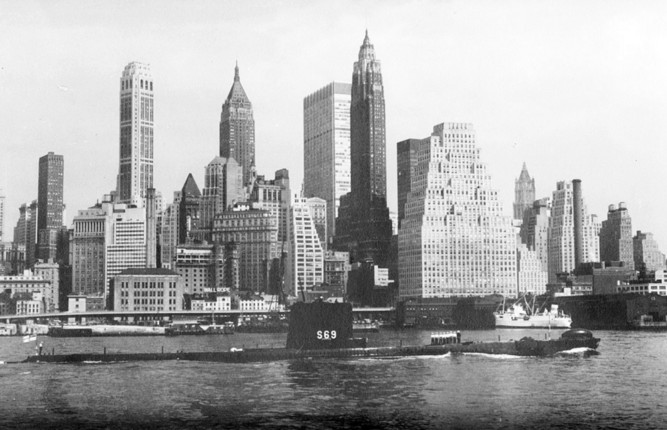
HMS Auriga against the New York City skyline in 1963. U.S. Navy photo.
In late 1962, the British Admiralty dispatched the A-class diesel submarine HMS Auriga to Nova Scotia for joint anti-submarine training with the Canadian navy. The British were helping Canada establish a submarine force, so Royal Navy subs routinely exercised with Canadian vessels.
Auriga had just returned to the submarine base at Faslane, Scotland after a combat patrol as part of the Cuban Missile Crisis. Other subs of the joint Canadian-British Submarine Squadron Six at Halifax had seen action during the crisis.
Did the device work? All too well:
As Auriga surfaced at the end of the exercise, the magnets made their way into holes and slots in the sub’s outer hull designed to let water flow. “They basically slid down the hull,” Ballantyne says of the magnets, “and remained firmly fixed inside the casing, on top of the ballast tanks, in various nooks and crannies.”
The floppy-magnets couldn’t be removed at sea. In fact, they couldn’t be removed at all until the submarine dry-docked back in Halifax weeks later.
In the meantime, one of Her Majesty’s submarines was about as stealthy as a mariachi band. No fighting, no training, no nothing until all those floppy little magnets were dug out of her skin at a cost of time, money and frustration.
The magnets worked on the Soviets with the same maddening results. The crews of several Foxtrots were driven bonkers by the noise and returned to port rather than complete their cruises.
 Unlike all the other issues that might have moved the Canadian government to finally address the weaknesses of the Canadian Armed Forces (including the immediate aftermath of 9/11, the high-tempo troop deployments to Afghanistan, escalating tensions in Ukraine and eastern Europe, and the rather embarrassing ongoing rusting-out of the RCN’s ships), Donald Trump appears to have been the trigger … and the first visible result (after Chrystia Freeland’s rather …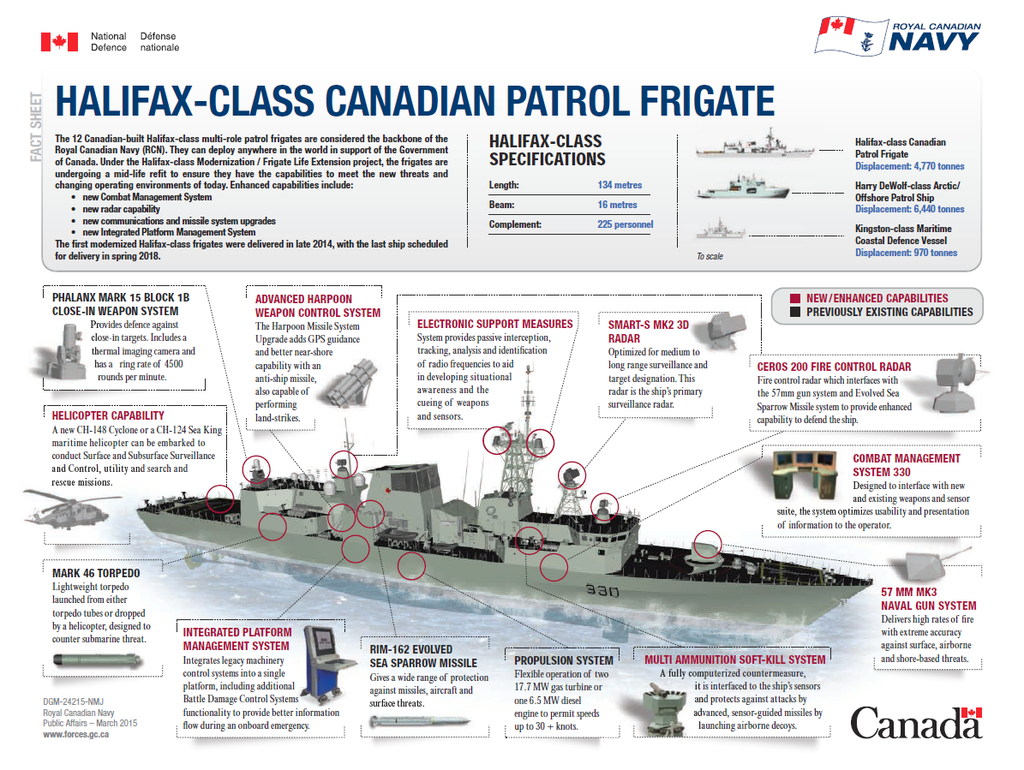
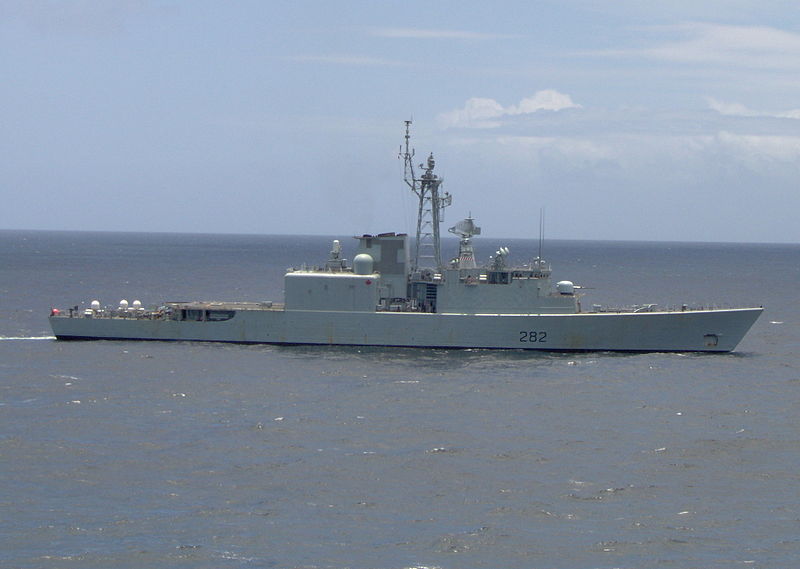
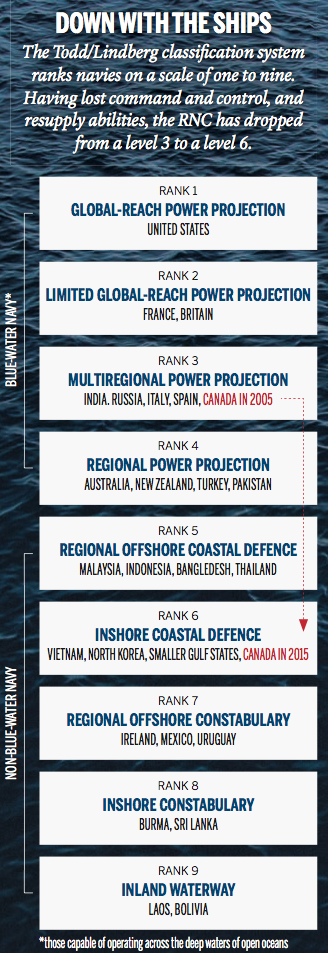 This October, NATO is launching Trident Juncture, its largest and most ambitious military exercise in a decade. The massive land, sea and air exercise will be held in the Mediterranean and will include 36,000 troops from 30 nations. Its goal will be to help the fictitious country of Sorotan, “a non-NATO member torn by internal strife and facing an armed threat from an opportunistic neighbour.” Not surprisingly, this is widely seen as an explicit response to Moscow’s increasingly belligerent pressure on the alliances’ eastern borders. The Canadian government, an outspoken critic of Russian President Vladimir Putin and the invasion of Ukraine, had planned to send its flagship destroyer, HMCS Athabaskan, as “a strong signal to the Russians,” whose ships and aircraft have also been bumping up against Canada’s territorial claims in the Arctic.