
Do you have any examples of BCGs recuperating?
Sadly, very few. Part of this is just in the nature of the biz — I don’t see too many former students out and about, since they all leave College Town for the big wide world — but I do know this: Scratch a Karen, find a BCG. In fact, you could go so far to say that “Karen” simply IS the BCG after she hits The Wall. The faster the impact, the bigger the Karen (this is a testable hypothesis — given that our gal Taylor Swift is currently impacting The Wall at about Mach 3, if I’m right, she’ll soon unleash the kraken of Karens on an unsuspecting world).
I also strongly suspect that BCGs can’t recover. As any shrink will tell you, Narcissistic and Borderline Personality Disorders are almost impossible to treat. For one thing, treatment requires believing that you have a problem, and believing you don’t have a problem is pretty much diagnostic of those two syndromes. And while I’m not sure the BCG is clinically diagnosable with either of those, what they actually are is close enough that I’m betting whatever therapies “work” on actual clinical cases would “work” on them … but see above.
Finally, I guess I can’t really blame the BCG for not realizing she’s got a problem, because she obviously doesn’t have a problem. Look around — society rewards this shit. AOC, for example, is going to be La Presidenta por Vida de los Estados Unidos here in a decade or so; if that’s a problem, I can’t really blame them for not fixing it. Eventually, of course, reality will intrude, and your BCG will be screaming for a real man to come save her … but, thanks to her BCG antics, there won’t be any real men around. Or, you know, we’ll all be in the OPFOR, so good luck with that, beeyatch.
Severian, “Friday Mailbag /Grab Bag”, Rotten Chestnuts, 2021-06-25.
July 21, 2024
QotD: There’s no recovery mode from being a Basic College Girl
July 13, 2024
Did you blink and miss Gender Empathy Gap Day?
Don’t worry, unlike so, so many other formal days (or months, or seasons …) in the calendar devoted to this or that or the other real and imagined causes, celebrations, or acknowledgements, Gender Empathy Gap Day isn’t observed anywhere:
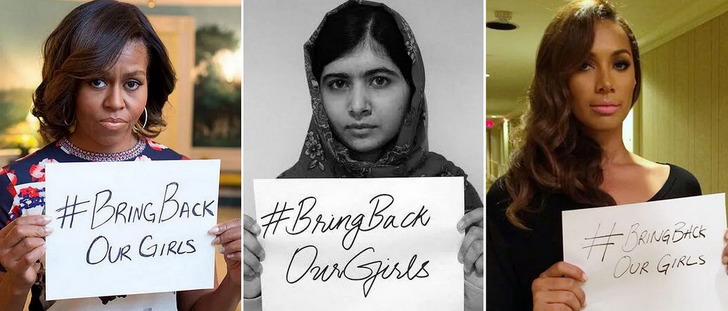
Remember these examples of virtue signalling? Can you imagine them doing the same for boys or young men?
Image from The Fiamengo File.
Few people have heard of Gender Empathy Gap Day, a day inaugurated in Germany in 2018 to raise awareness about our societies’ remarkable indifference to the suffering of men and boys. Not surprisingly, it has no official status in any country.
Most people, if asked, will insist that it is women and girls who suffer. We expect men and boys to apologize for their advantages and educate themselves about issues affecting women and girls. Animus against men is socially acceptable, even approved. “I bathe in male tears” is a popular feminist slogan, and university professors write mainstream opinion pieces with unironic titles like “Why Can’t We Hate Men?”
The Gender Empathy Gap Day doesn’t advocate a contest over which sex has it worse. It does advocate recognition of our collective inability or unwillingness to see the full humanity of men.
Academic researchers Alice Eagly and Antonio Mladinic have compiled data showing that both females and males tend to have more positive associations with women than with men. Researchers have also confirmed a much higher in-group bias amongst women, meaning that women feel more empathy towards other women than towards men, while men also feel more empathy for women.
Whether it’s homelessness (61% male), homicide (78% male victims), suicide (79% male), workplace fatalities (93% male), prison incarceration (93% male), or a host of other issues, men and boys do suffer. Yet according to the research of Dr. Tania Reynolds, we tend to associate agency with maleness and the capacity for victimhood with femaleness, seeing men and boys as active doers rather than as sufferers deserving concern.
As a result, we are tolerant of harsh punishments for male criminal offenders, but not for women. In 2012, Sonja Starr, a professor of Law, published the results of her study of discrepancies in criminal sentencing that showed a very large gender gap in the punishment of women for the same crimes committed by men. Starr’s extensive study found an average 63% sentencing gap that harshly disadvantaged men. She also discovered that “Female arrestees are […] significantly likelier to avoid charges and convictions entirely, and twice as likely to avoid incarceration if convicted”.
The gap in punishment results because we all — including prosecutors, judges, and juries — incline to the belief that women who commit crimes were led into their law-breaking by others, usually men, and had limited choices because of poverty, childhood abuse, mental illness, or addiction. We hesitate to deprive young children of the care of their mothers, while we are content to see fathers behind bars. As Starr points out, however, male offenders have also “suffered serious hardships, have mental health or addiction issues, have minor children, and/or have ‘followed’ others onto a criminal path”.
Author Glen Poole has noted that such indifference to male difficulties is built right into the stories our society tells about itself. He points out that when a large number of men are killed — whether in war, accident, or natural disaster — mainstream news sources report on people killed, making the sex of the victims invisible. It is not news when men and boys die.
When women or girls are killed or harmed, they are rarely if ever referred to as people. Their suffering is news.
QotD: The need for social status
Human beings become more preoccupied with social status once our physical needs are met. In fact, research reveals that sociometric status (respect and admiration from peers) is more important for well-being than socioeconomic status. Furthermore, studies have shown that negative social judgment is associated with a spike in cortisol (hormone linked to stress) that is three times higher than non-social stressful situations. We feel pressure to build and maintain social status, and fear losing it.
It seems reasonable to think that the downtrodden might be most interested in obtaining status and money. But this is not the case. Inhabitants of prestigious institutions are even more interested than others in prestige and wealth. For many of them, that drive is how they reached their lofty positions in the first place. Fueling this interest, they’re surrounded by people just like them — their peers and competitors are also intelligent status-seekers. They persistently look for new ways to move upward and avoid moving downward. The French sociologist Émile Durkheim understood this when he wrote, “The more one has, the more one wants, since satisfactions received only stimulate instead of filling needs.” And indeed, a recent piece of research supports this: it is the upper class who are the most preoccupied with gaining wealth and status. In their paper, the researchers conclude, “relative to lower-class individuals, upper-class individuals have a greater desire for wealth and status … it is those who have more to start with (i.e., upper-class individuals) who also strive to acquire more wealth and status”. Plainly, high-status people desire status more than anyone else.
Furthermore, other research has found that absolute income does not have much effect on general life satisfaction. An increase in relative income, on the other hand, has a positive effect. Put differently, making more money isn’t important. What’s important is making more than others.
Rob Henderson, “Thorstein Veblen’s Theory of the Leisure Class — A Status Update”, Quillette, 2019-11-16.
July 10, 2024
QotD: Persuasion
Of course, like most people, I do assume that those people are wrong and I am right. (And in sober truth — can I confide in you as a friend? — I am right.)
Deirdre McCloskey, “The Rhetoric of Economics”, 1998.
Hat tip to Grant “I can take a hint” McCracken.
July 4, 2024
“Over twenty years ago now, we declared war on terror; a generation later, we are ruled by terror”
At Postcards From Barsoom, John Carter discusses the prevalence of fear in modern western culture:
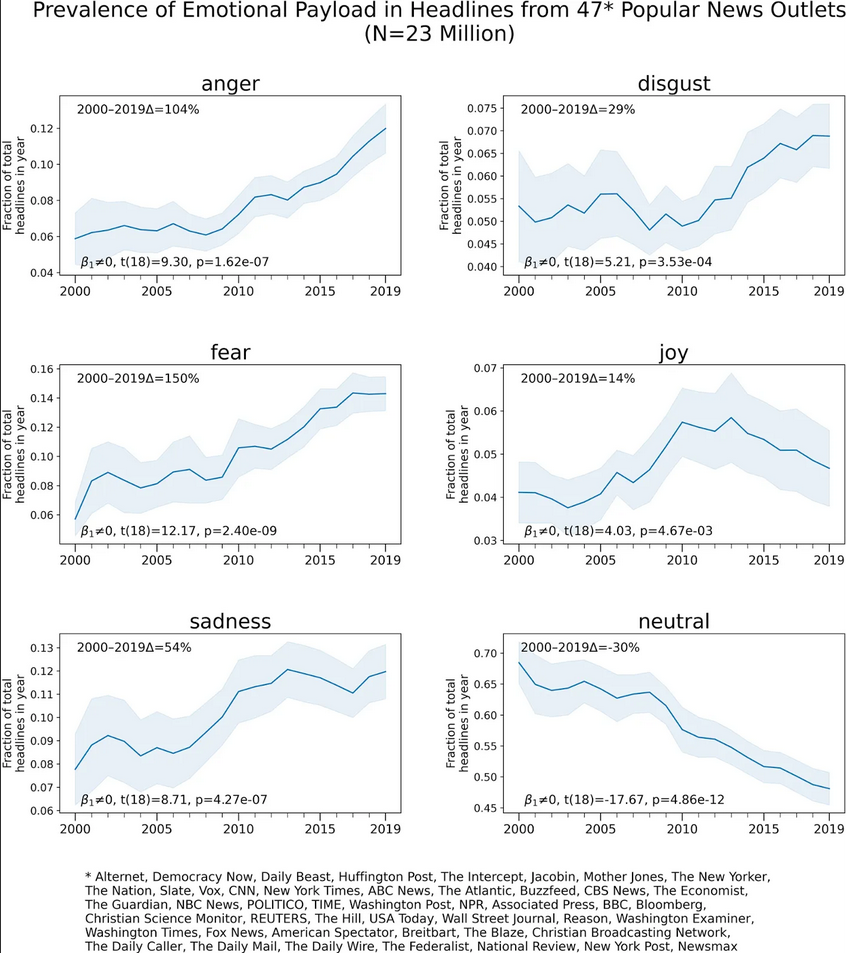
Over twenty years ago now, we declared war on terror; a generation later, we are ruled by terror. The public discourse revolves around peoples’ fears, most of them imagined. Many spend their lives petrified at the prospect of normal social interaction. Women are scared that men will rape them, and men are scared that women will rape them in the courts. Both leftists and rightists are terrified that the other, if given free rein, will drag the world into a dark age, though only one of them is right. All of our great public efforts are either to mitigate this future catastrophe or that dire present threat, or they are about furiously not acknowledging some insoluble and therefore inevitable future disaster, while studiously ignoring some entirely soluble ongoing emergency which those who could solve delude themselves they can profit from.
It shouldn’t be surprising that the war on terror ended up making us chronically terrified. That’s the track record for these things. Even back in the 1990s we knew that. The war on poverty generated an obscenely inflated welfare underclass while systematically slowing economic growth, thereby generating poverty twice over. The war on drugs led to a society of drug addicts, in which every fifth person is on at least one kind of pill, and most of the rest are self-medicating in other ways. Instead of weed (legal now, in any case), we have fentanyl and meth. Victory!
When Washington declares war on something, it invariably produces more of it. This seems perverse until you realize that wars on abstractions are simply how managerial bureaucracies extend their bases of power. A war that can never be won is a war with job security. A war that gets worse the longer and harder you fight it is even better, because this generates growth.
Washington’s current wars seem to be on racism, baseline human sexual normalcy, men, and multipolarity; the latter is really just a fancy word for the growing tendency for other countries to not do what Washington tells them to because, in general, they prefer being racist to being erased, they think the butt stuff is weird, they don’t want to be castrated, and since they are not castrated, they are still capable of not liking to be told what to do. Sure enough, all of these wars, whether cultural or geopolitical, are steadily generating the very things that they’re trying to stamp out. Racism stocks have reached prices they haven’t seen in generations, thanks to sustained decade of all-out full sector push by the media, corporate, educational, and public sectors, all doing their part to push that line up, up, up. Meanwhile, the war on multipolarity seems in general to be doing a fantastic job of generating more multipolarity.
The longer Washington wages its cowardly war against Russia, China, Iran, and I guess now North Korea, the more Washington’s standing in the world is reduced. I say “cowardly” of course because the war is not waged openly: formally, no war has been declared by Washington or any of its core NATO allies against any of the obvious belligerents. It’s all done through proxies which Washington pays to train and arm and die on its behalf, funding it all with a money printer whose brrrring has gotten defeaning. Or it’s done through sabotage; let’s not forget Nordstream, which kicked the legs out from under Germany’s, and therefore Europe’s economy, in perhaps the most breathtakingly cynical act of strategic sabotage against a supposed ally that one might imagine. Washington doomed Europe in order to ensure that Europe would stay attached to Washington. The whole world sees what Washington is doing of course, and is frightened lest it happen to them, but also disgusted that it happens at all; the latter emotion is becoming increasingly dominant, however, because Washington is becoming less frightening every day.
Washington could not even coordinate an orderly retreat from Afghanistan; its wunderwaffen have made little impact on the Ukrainian battlefront; even combined with its vassals, it cannot match levels of armament production that come effortlessly to its adversaries; its pier in Gaza fell apart uselessly; its mighty navy has so far been utterly powerless to stop a blockade imposed by some obscure tribe of desert Arabs. Then there’s the big fail, Washington’s attempt to nuke the Russian economy by locking it out of the SWIFT system. The Russian economy is doing fine, in fact better than fine, but SWIFT on the other hand is swiftly becoming irrelevant. The dollar’s global reserve status is on borrowed time, and everyone knows it.
I don’t think anyone’s more terrified right now than Western elites. They know they’ve fumbled the ball, that they’ve lost their footing, and they’re flailing around weightlessly as they try to catch it without faceplanting. None of their plans are really working. None of their usual levers of control are as effective as they used to be; some, such as the media, have almost stopped responding altogether. Their people are turning against them for a dozen different reasons, all of them excellent. Their great economic machine is sluggish, its components grinding together and seizing up. Their enemies abroad are on the march, or mobilizing. It’s all coming for them at once, and they don’t appear to have any idea what to do. You’re seeing that deer in the headlights look a lot now from prime ministers and presidents, and it isn’t always because of dementia. They’re in over their heads. Children, playing a game that became all too real when they weren’t paying attention.
June 28, 2024
QotD: “The personal is political”
Today, this has moved from simply not buying stuff from a business owned by a bad thinker to committing one’s life to destroying the bad thinker and anyone foolish enough to not share the same hatred. The whole woke movement is a blood lust, an effort to cause real harm to people by denying them the ability to live. Climate activism, as expressed in that essay, is about destruction. Everything the writer sees as keeping him from reaching personal fulfillment must be destroyed.
It is not a politics of self-interest, as the so-called conservative would imagine. The modern leftist is like a bear protecting her cubs. Any perceived threat is met with overwhelming aggression. You see it in the language. They conflate ideas and statements with actions. Holding a contrary opinion makes them feel unsafe, as that opinion is viewed as violence. They need safe spaces, by which they mean the removal of anything and anyone that contradicts their sense of self.
This is the real cause of what is behind the social media purges. From the perspective of a radical, everything in their space is theirs and an extension of their self. When a contrary opinion, or even an oblique reference to one, shows up in their twitter timeline, it feels like a home invasion to them. Those women posting about how they are literally shaking or sobbing because their favorite cable show had a bad person as a guest are not exaggerating. They were physically effected by the experience.
It’s an important thing the alt-right got wrong about their on-line activities. They still assume the reason they get thrown off these platforms is because their ideas are so powerful. In reality, their ideas are meaningless. The reason they are removed from the platforms is the same reason one would kill a snake. It’s not that the snake poses a threat to the ecosystem. It is that the snake is a personal threat. The person kills the snake because they can’t feel safe until they know it is dead.
The Z Man, “It’s Personal”, The Z Blog, 2019-11-12.
June 24, 2024
Little humans, from “humorless little poop machines” to creatures with a sense of humour
Ted Gioia cross-posted an article from Daniel Parris that answers the eternal question “when do humans develop a sense of humour?”
… a large body of academic research examines the intersection of humor, aging, and cultural mores. So today, we’ll explore how our sense of humor forms and transforms with age, and the physiological factors driving our comedic sensibilities.
How Does Our Sense of Humor Change Over Time?
We are born humorless little poop machines. We can’t make funny voices, we can’t do bits, and we can’t engage in wordplay — we simply eat, sleep, poop, cry, and poop again. And then, amidst this onslaught of poop, a sense of humor begins to emerge.
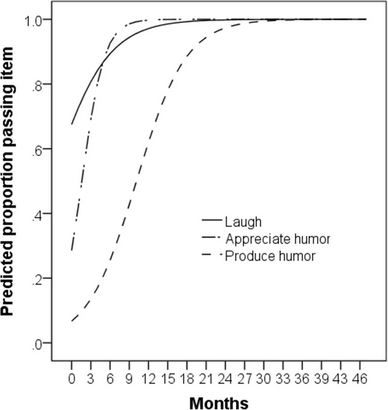
The Early Humor Survey (EHS) is a standardized questionnaire designed to assess a child’s humor-processing abilities in the first four years of life. EHS survey data (which is collected from parents) reveals that our sense of humor begins emerging in infancy, typically around the four-month mark. During this period, babies respond to simple stimuli with laughter and begin producing humor.
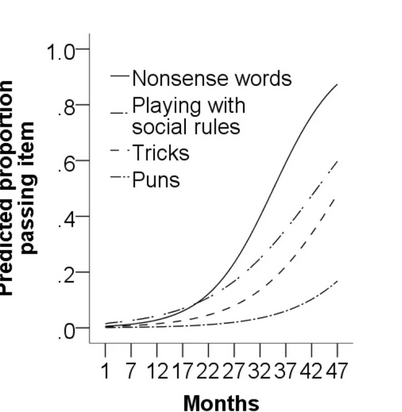
Even more striking is how humor development differs by task, as comprehension and appreciation of nonsense, puns, and trickery are all learned at varying rates.
Once we exit adolescence, comedic interactions begin to wane, and we laugh less often.
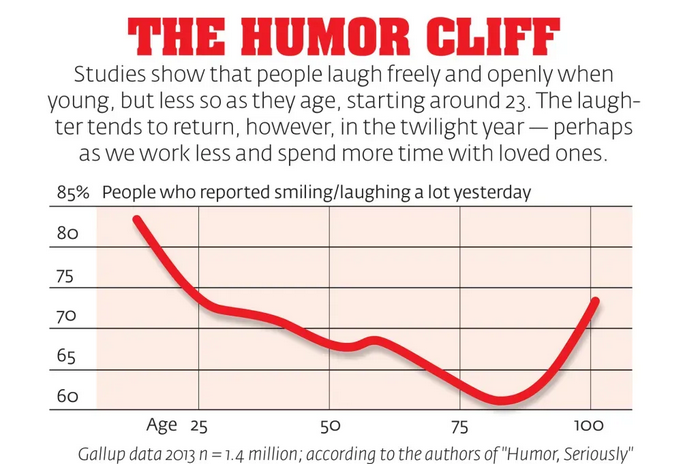
A 2013 Gallup survey documenting the frequency of humorous interactions suggests the existence of a “humor cliff” as we age — each year, we laugh a little less than the previous one. Humor fades until we’re 80, at which point we chuckle a bit more (what a relief).
While captivating, this visualization is also misleading. Popular interpretations of this data suggest that as people mature, their appreciation for humor declines, as if this trait were a single stock trending up or down. Instead, a person’s comedic sensibilities are defined by an assortment of preferences that remain fluid throughout our lives.
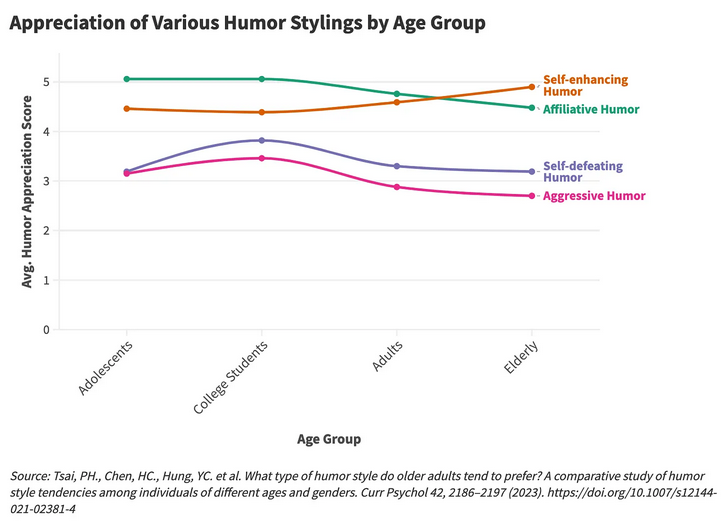
A substantial body of research examines how comedic taste varies with age, exploring our reactions to different humor styles at various life stages. One such study published in Current Psychology presented respondents with a series of humorous statements and then assessed each subject’s affinity for four distinct joke types:
- Self-enhancing Humor: finding comedy in everyday situations, often by humorously targeting oneself in a good-natured way.
- Affiliative Humor: using humor to strengthen social bonds and enhance relationships by sharing jokes and amusing stories that make others laugh while avoiding negativity.
- Self-defeating Humor: Involves individuals making jokes at their own expense to gain approval or avoid conflict, sometimes undermining their self-esteem.
- Aggressive Humor: Making jokes or remarks that ridicule, belittle, or demean others, often intended to assert dominance or express hostility.
Ultimately, the study found that with age, people appreciate self-enhancing humor more, and they value affiliative, self-defeating, and aggressive stylings less.
A similar study of 4,200 German participants found that we increasingly prefer incongruity resolution as we age, an approach marked by unexpected or contradictory elements that lead to a comedic surprise. In joke format, this genre includes a setup pointing toward one outcome, with a punchline that delivers a surprising twist, such as “I just flew in today, and boy, are my arms tired!”
June 21, 2024
QotD: Identity fetishism
Fussell is almost embarrassingly frank about why he got into bodybuilding: He was terrified. A scrawny, desperately insecure guy, he just couldn’t handle the social pressures of life in New York. He saw muscles as armor. If he made his exterior so intimidating that no one would want to get close to him he’d never have to get close to anyone. The whole thing is a sustained exercise in fremdschämen — Fussell is a hard guy to like before his transformation, and frankly repulsive afterwards. It’s a short read, and fascinating, but it’s not an easy one.
Do slog through it, though, and I think you’ll see what I mean. The thing that prevents so many of us from really getting into the Left’s headspace, I think, is sheer exhaustion. Forget hardcore SJWs for a sec; just think of what it must take to be, say, a hipster. I mean, seriously, just look at this fucking hipster. The time, the money, the sheer goddamn effort it must take! I’m bushed just writing about it, and that’s nothing compared to what Fussell did.
If you’re a weightlifter, you know. If you’re not, trust me, you don’t want to know. Same deal with endurance athletes, of course, and so on — I’m sure “runner’s high” is real, and it’s great, but son, I really don’t want to experience it. I have experienced “the pump”, famously described by Arnold himself as “like cumming”, but trust me, drugs are a lot better if you just want to get high, because getting to “the pump” fucking hurts. A lot. See Fussell for details.1
Much easier, then, to invest all that time and energy and money into an outward show that, though it no doubt costs as much — perhaps more! — isn’t nearly as painful (I’m sure getting elaborate tats hurts, but if the choice was between that or legs day, I’d be The Illustrated Man). Best of all, of course, is one that doesn’t take anything but time — you know, like, say, Twitter …
All that no doubt seems like a long ride for a short payoff, but unlike my infamously lax attitude towards “the Classics”, I’m going to insist that if you want to get the point of this one — and I consider it important enough to have invested all these words in it — you’re really going to have to go read the book. Fussell is self-aware enough to see himself for what he is, and the Twitterati are of course oblivious, but the psychology is the same. It’s a fetishized identity, and it’s terrifying, because those are our rulers.
Severian, “Identity Fetishism”, Rotten Chestnuts, 2021-05-24.
1. Worst of all, you don’t get it during “legs day”, the most excruciating part of weightlifting, which is why so many guys skip it. It’s nothing but pain. I was never more than a moderately serious weightlifter back in my youth, but that’s the sole criterion of seriousness — do you skip legs day? If yes, then get back to Planet Fitness, you poseur.
June 13, 2024
QotD: Gun safety is for always
The entire point of Rule One is that when you are handling a firearm, you need to be mindful. You need to be constantly aware of the fact that what you have in your hand is not a banana or a can of soup but an object that can, under the right circumstances, discharge a projectile with lethal consequences.
Chuck Haggard says that one shouldn’t have separate habits of handling for “loaded” and “unloaded” guns because when one is tired or distracted, one can inadvertently default to the wrong one. (“How do you dry-fire, Tam?” As though I’m expecting a loud noise at any moment. And I sure don’t have that gun pointed at anything I’m not prepared to pay for if I’m wrong about the gun’s status.)
[…]
What you see there with the chief in the video and with the guy in the picture above is bad gun-handling habits at work. This is why, whether I’m handling an actual firearm or a SIRT or a blue gun or an airsoft or whatever, I am very conscious of where the muzzle is pointing and do not point or wave it around casually. I want the default, habitual behavior for when there is a gun-shaped object in my hand to be caution and awareness. I always want the action of aiming a gun at something to be a conscious and deliberate choice.
And I don’t ever want to have to utter the words “Oh my God, I’m sorry! I thought it was unloaded!”
Tamara Keel, “Safety Is For Always”, View From The Porch, 2016-06-06.
June 10, 2024
The FDA has a jaundiced view of psychotherapy involving the use of MDMA (aka “Ecstasy”)
Colby Cosh indulges in a minor “I told you so” after the FDA’s expert panel recommended against the agency permitting any medical use of MDMA, despite some experiments indicating it does have therapeutic value:

Ball-and-stick model of the 3,4-methylenedioxy-methamphetamine molecule, also known as MDMA, or ecstasy, a well-known psychoactive drug. Based on the crystal structure of MDMA hydrochloride, as determined by X-ray diffraction.
Color code: Carbon, C: black, Hydrogen, H: white, Oxygen, O: red, Nitrogen, N: blue.
Image by Jynto via Wikimedia Commons.
Hopes for research into therapeutic uses of psychedelic drugs received a setback last week, one that your correspondent saw tripping (geddit?) up the road in advance. An expert panel published its official advice to the United States Food and Drug Administration (FDA) on permitting medical use of MDMA, the synthetic nightclub enhancer that we’re afraid the kids probably still aren’t calling “ecstasy” or “molly”.
There is long-recognized potential for MDMA to be combined with classical psychotherapy in treating emotional disorders, notably post-traumatic stress (PTSD), and now there are some small, limited studies showing evidence of positive effects.
But the FDA’s scientists weren’t very impressed with this evidence, and they voted almost unanimously against creating a therapeutic exception to the illegality of ecstasy, which the U.S. Controlled Substances Act classifies as a “Schedule 1” drug, right next to heroin. The panel’s advice isn’t binding on the agency, which is crawling in somewhat good faith toward recognizing the understudied medical potential of psychedelics. But the vote emphasizes the inherent problems that drugs face, once they are defined in law as “recreational”, in winning over skeptical scientists.
Reason magazine’s great drug-war correspondent Jacob Sullum has a thorough discussion of the issues. The existing research, despite some impressive headline results, has garden-variety issues with dropout rates, follow-ups and occasional researcher shenanigans. But the big problem, which defies easy technical solution, is with scientific blinding of the research subjects.
Scientific trials of the modern kind are predicated upon separating illusory placebo effects from genuine treatment effects. Researchers expect that a high-quality study will have a control group that receives sham treatment or none at all, and good practice requires that experimenters and their guinea pigs are both blind to who is in what group.
News flash: most people can tell whether they’ve been really given a psychedelic drug. Indeed, most doctors can tell whether they’ve given a patient a genuine psychedelic drug, and how much of it. Many placebo-controlled trials on psychoactive drugs, perhaps most of them, thus suffer from an alleged problem of broken blinding. (Have a glance, for example, at Table 2 in this review of blinding procedures in psychedelic studies.)
June 4, 2024
J.K. Rowling’s most convincing and true-to-life villain in the Harry Potter stories
I’m with Jon Miltimore on this — J.K. Rowling’s most disturbing and best-written villain isn’t “He Who Must Not Be Named” or any of the other (frankly cardboard-y) magical villains … it’s Dolores Umbridge, a career bureaucrat who could have been drawn from any western civil service senior management position:
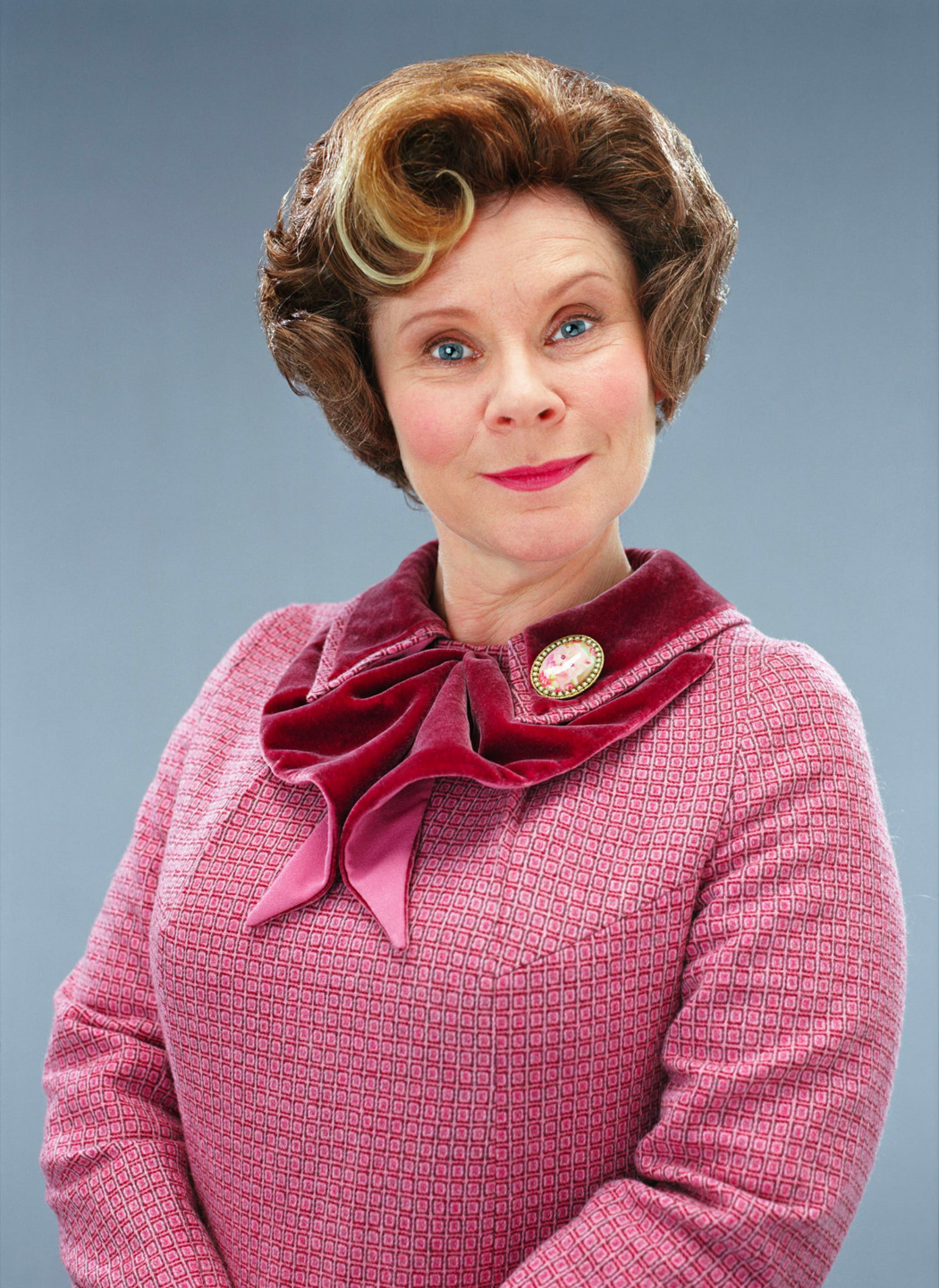
Umbridge, portrayed in the films by English actress Imelda Staunton, isn’t some apparition of the underworld or a creature of the Dark Forest. She’s the Senior Undersecretary to the Minister of Magic, the man who runs the government (the Ministry of Magic) in Rowling’s fictional world.
Umbridge wears pink, preaches about “decorum” in a saccharine voice, smiles constantly, and resembles a sweet but stern grandmother. Her intense, unblinking eyes, however, suggest something malevolent lurks beneath. And boy, does it.
“The gently smiling Dolores Umbridge, with her girlish voice, toadlike face, and clutching, stubby fingers, is the greatest make-believe villain to come along since Hannibal Lecter,” horror author Stephen King wrote in a review of Harry Potter and the Order of the Phoenix, the book in which Umbridge is introduced.
Umbridge’s “Desire to Control, to Punish”
What makes Umbridge so evil that King would compare her to Hannibal Lecter, the man widely considered the greatest villain of all time?
I asked myself this question, and I believe the answer lies in the fact that Dolores Umbridge is so real — and in more ways than one.
First, it’s noteworthy that Rowling based Umbridge on an actual person from her past, a teacher she once had “whom I disliked intensely on sight”.
In a blog post written years ago, Rowling explained that her dislike of the woman was almost irrational (and apparently mutual). Though the woman had a “pronounced taste for twee accessories” — including “a tiny little plastic bow slide” and a fondness for “pale lemon” colors which Rowling said was more “appropriate to a girl of three” — Rowling said “a lack of real warmth or charity” lurked below her sugary exterior.
The description reminded me of another detestable literary villain: Nurse Ratched, the despicable antagonist of Randle Murphy in Ken Kesey’s magnificent 1962 novel One Flew Over the Cuckoo’s Nest.
Kesey’s description of Nurse Ratched conjures to mind a character much like Umbridge.
“Her face is smooth, calculated, and precision-made, like an expensive baby doll, skin like flesh-colored enamel, blend of white and cream and baby-blue eyes, small nose, pink little nostrils — everything working together except the color on her lips and fingernails …”
While there are similarities in the appearances of Dolores Umbridge and Nurse Ratched, their true commonality is what’s underneath their saccharine exteriors.
May 30, 2024
QotD: Is a “Pickup Artist” just an amateur method actor performing “fake it until you make it” drills?
Which forces us to consider a second question: How much of Game’s “success” is just practice? I’d wager very long money that no one, in the history of seduction, has ever said “I hit on fifteen girls a day, but I never seem to get anywhere”. And that of course is the very first thing the Game gurus have you do — just approach girls, dozens of them every day. Practice any skill for an hour a day and you’re bound to get a lot better pretty quickly. If you stink at golf, for instance, go hit a bucket of balls every day after work; in a month you’ll be dramatically better than you were, even if — make that especially if — you were terrible to start with.
Then throw in the marketing-style success rate. A 5% sales increase might not seem that big, but it’s millions of dollars. So, too, “scoring with 5% of your approaches” is a stunning success rate compared to 0%, especially since, you know, it’s sex, which our culture has taught us is the only meaningful standard.
Finally, though I will cheerfully admit to never having been a PUA, or anything close to it, I’ve read a fair amount of their stuff, and it seems to me that what they’re teaching is “how to fake self-confidence”, which is to say, they’re teaching Method acting. The theory is that you “fake it ’til you make it” — that is, by acting self-confident at all times, eventually you’ll really be self-confident. That virtue is as virtue does, and vice versa, goes back at least to Aristotle, so I’m certainly not going to argue with it. I’m simply going to point out that self-confidence, though of course very real, is more than just a set of behaviors, though our culture makes it very difficult to distinguish the two … and, worse, makes both of them very difficult to distinguish from “just being an asshole”.
Severian, “Mental Middlemen II: Sex and the City and Self-Confidence”, Rotten Chestnuts, 2021-05-06.
May 28, 2024
QotD: Women’s voting interests
“I have to vote Conservative, for his sake,” she reasonably explained.
She had compounded his characteristic error in 1968, however, and felt she owed an explanation to her son. This began by reminding me of her fragile, female sex.
“One thinks of the party leader on the analogy of going for a date.”
And true enough, the Tory leader, Mr Robert Stanfield, was the sort of man you could present to your father. He could be relied on, to get you home safely, and on time.
“But there are times when a woman does not want to get home on time,” mama added.
She, a registered nurse acquainted with the eccentricities of mental patients, called my attention to a phenomenon I had not previously noticed. Whenever a truly monstrous (male) psychopath is strapped away in gaol, the prison receives adoring letters for him, from women. These correspondents have never met him, and know him only from accounts in the yellow press. He may have been found guilty of heinously murdering a succession of wives and lovers. But they promise to be waiting for him on the steps of the penitentiary; and as the police will confirm, they are still there.
My mother had never comprehended how a woman could be so crazy. But when she realized that she had herself just voted for “Pierre” [that’s Trudeau the elder, to clarify], she suddenly understood.
David Warren, “The women’s vote”, Essays in Idleness, 2024-02-22.
May 22, 2024
Scott Alexander reviews The Others Within Us
At Astral Codex Ten, Scott Alexander discusses teh new hawtness in psychotherapy as expounded in Robert Falconer’s new book The Others Within Us:

Internal Family Systems, the hot new1 psychotherapy, has a secret.
“Hot new psychotherapy” might sound dismissive. It’s not. There’s always got to be one. The therapy that’s getting all the buzz, curing all the incurable patients, rocking those first few small studies. The therapy that was invented by a grizzled veteran therapist working with Patients Like You, not the out-of-touch elites behind all the other therapies. The therapy that Really Gets To The Root Of The Problem. There’s always got to be one, and now it’s IFS.
Sufficiently new and popular therapies are hard to get. Therapist training starts slow – the founder has to train the second generation of therapists, the second generation has to train the third generation, and so on. IFS says they have a 10,000 person wait list for their training program. So lots of people have heard great things about IFS, maybe read a manual or two, but never tried it or met anyone who has.
What I gather from the manuals: IFS is about working with “parts”. You treat your mind as containing a Self — a sort of perfect angelic intellect without any flaws or mental illnesses — and various Parts — little sub-minds with their own agendas who can sometimes occlude or overwhelm the Self. During therapy, you talk to the Parts, learn their motives, and bargain with them.
For example, you might identify a Part of you that wants to sabotage your relationships. You will visualize and name it — maybe you call her Sabby, and she looks like a snake. You talk to Sabby, and learn that after your first break-up, when you decided you never wanted to feel that level of pain again, you unconsciously created her and ordered her to make sure you never got close enough to anyone else to get hurt. Then you and the therapist come up with some plan to satisfy Sabby — maybe you convince her that you’re older now, and better able to deal with pain, and you won’t blame her if you get close to someone and have to break up again. Then you see a vision of Sabby stepping aside, maybe turning off the Windmill Of Relationship Sabotage or something like that, and then you never sabotage your relationships again. It’s more complicated than that, but that’s the core.
All of this is the classic version everyone learns from the manual. Before we get to the secret, let’s examine two big assumptions in more detail.
First, this isn’t supposed to be just the therapist walking you through guided imagery, or you making up a story you tell yourself. The therapist asks you “Look inside until you find the part that’s sabotaging your relationship”, and you are supposed to discover — not invent, discover — that your unconscious gives it the form of a snake called Sabby. And you are supposed to hear as in a trance — again, not invent — Sabby telling you that she’s been protecting you from heartbreak since your last breakup. When you bargain with Sabby, it’s a two-way negotiation. You learn — not decide — whether or not Sabby agrees to any given bargain. According to Internal Family Systems (which descends from normal family systems, ie family therapy where the whole family is there at once and has to compromise with each other), all this stuff really is in your mind, waiting for an IFS therapist to discover it. When Carl Jung talked about interacting with the archetypes or whatever, he wasn’t being metaphorical. He literally meant “go into a trance that gives you a sort of waking lucid dream where you meet all this internal stuff”.
(After reading the IFS manuals, I tried most of their tricks for initiating this sort of trance and meeting Sabby or whoever. I got nothing. I notice most of the patients with great results are severely traumatized borderlines, ie the same people who often get multiple personality disorder after the slightest hint from a therapist that this might happen. We’ll get back to this analogy later.)
The second assumption is that everything inside your mind is part of you, and everything inside your mind is good. You might think of Sabby as some kind of hostile interloper, ruining your relationships with people you love. But actually she’s a part of your unconscious, which you have in some sense willed into existence, looking out for your best interests. You neither can nor should fight her. If you try to excise her, you will psychically wound yourself. Instead, you should bargain with her the same way you would with any other friend or loved one, until either she convinces you that relationships are bad, or you and the therapist together convince her that they aren’t. This is one of the pillars of classical IFS.
The secret is: no, actually some of these things are literal demons.
1. Some people object to me calling it “new” – it was developed in the 1980s, and has been popular since the early 2010s. Still, the therapy landscape shifts slowly, and even an exponentially-growing therapy takes a long time to get anywhere.
May 11, 2024
Apple crushes it
You might not believe me, but I haven’t seen the Apple ad that everyone is hating on. I actively avoid ads of all kinds and refuse to open websites that are little more than shills for whoever is paying for the advertising. That aside, the description of the current ad — that Apple has already apologized for, I’m told — would certainly make me less likely to deal with the company that produced it:

Not since Kendall Jenner slipped away from a modeling shoot to defuse the tensions around a Black Lives Matter protest by handing a can of Pepsi to a riot cop has a mainstream ad campaign generated as much hostility as the just-released spot from Apple pitching the arrival of the thinnest iPad ever.
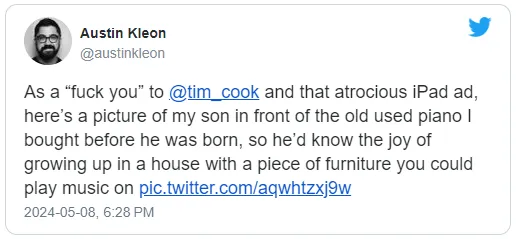
The ad was shared on Twitter by Apple CEO Tim Cook, who implored potential customers to “Just imagine all the things it’ll be used to create.” The clip shows a huge hydraulic press slowly crushing a bunch of old analog-era creative tools and treats, including a trumpet, an acoustic guitar and a piano, a record player, a camera, an old stand up arcade game, some rubber squeeze toys, and a bunch of paint cans. Then it pulls up to reveal the new, ultra thin iPad Pro, which has assimilated all of these things like some flatland Borg.
You can see what Apple was going for here – all these old, bulky, single purpose tools and playthings are now available at your fingertips, in a package no bigger than a magazine. It’s an upgraded version of that old meme that used to go around about everything that used to be literally on your desktop – phone, typewriter, file folders, fax machine, and so on – is now digitally sitting there on your computer desktop.
People got it all right. The response to the spot was immediate, visceral, and vicious. They hate it.
How did Apple go so wrong?
The most salient feature of the western mind’s relationship with technology is the ambivalence we have felt ever since Prometheus stole fire from the gods. On the one hand, we can now cook our food and keep ourselves warm. On the other hand, who knows where this will lead? Have we unleashed forces that will lead us to our destruction, or at least, lead us away from our true, authentic, selves? We love technology but we fear it, and the pendulum tends to swing from one extreme to the other depending on a host of factors, the most important of which is probably the rate of change and innovation. The faster things move, the less time we have to adapt, and we fear what is being lost more than we appreciate what is being gained.
We are living through a period of what is for most of us unprecedented technological change, where the threats – to both humanity, and to our humanity – seem more urgent than they have in decades, certainly since the advent of the nuclear bomb. Whether it is the sudden fears over AI or the rising moral panic over smartphones or the leery way we look at self-driving cars, there is a firm sense that things are just happening too fast, that the old is being replaced by the new in ways we are barely able to process, let alone control.
Update, 17 May: Samsung picks up something from the wreckage:
The publicity error was compounded by a frenzy of critical mainstream media coverage accompanied by celebrities expressing their outrage at the ad. But Samsung was not ready to let it lie.
The South Korean consumer technology mega-corp posted a short video on Twitter — which now calls itself X — accompanied by the hashtag “UnCrush”.
It shows a young woman walking into what appears to be the wreckage left behind by the Apple ad. Picking up a badly damaged guitar, with strings missing and holes in the body’s soundboard, she nonetheless sits down to play, reading music from a Samsung tablet.
“We would never crush creativity,” Samsung says in the social media post.
It might be a cheap shot, but it is one that is bound to sting for Apple.


