Quotulatiousness

March 7, 2020

KidLit is woke, woke, woke

Filed under: Books, Media, Politics — Tags: , , , — Nicholas @ 03:00

Ed West on the amazing amount of propaganda that has been pumped into books for children:

When my daughters were around six and seven, they started French classes at a children’s library in our borough; I had been to our local library countless times but had mainly confined myself to the infant section, and older children’s books were something of a revelation. The entire front desk area was made up of hagiographies of Barack Obama and Nelson Mandela.

And hagiography is the most accurate term: these books were just like the ones I used to read in church. Here Blessed Nelson forgave his jailors, here St Barack healed America of its racial sins – and these are just a couple of examples.

It was a bit of a surprise — learning just how much the tone of kids’ books had changed since I was young and we wore onions on our belts. Nowadays, progressive politics is ever-present in children’s books. Which is fine, if you’re a believer; but if you’re a conservative, you’re faced with raising your children in a culture which is filled with messages you disagree with — sometimes misleading, sometimes anecdotally true but not representative, often just anti-wisdom, giving children the worst possible advice in life. And it’s becoming worse: since about 2016, children’s books have grown way more explicitly political.

Last month, a friend went to Tate Modern and took a picture of the young children’s section. Among the books on display are biographies of Greta Thunberg, something called Queer Heroes, another work called The Rainbow Flag, books about refugees, the bestselling Good Night Book for Rebel Girls — and its countless imitators. Whether you support it or not, this is propaganda; the aim is to raise a generation of progressives just as those Lives of the Saints were designed to bring forth young Christians.

And it works. Conservative ideas are very much in retreat, the subject of a brilliant new book I recently read (which, admittedly, I also wrote).

From a very young age, children are read books and shown films that teach them the core progressive messages: that we are all basically good and only behave badly because of circumstances; that borders and barriers are bad, stereotypes are wrong and girls ought to adopt traditional male gender roles if they want to be respected.

Stereotype inaccuracy is a popular idea — and a false one; in so many kids’ stories the unusual stranger or alien or wild animal who turns up in the neighbourhood will defy the small-minded pessimist who expects the worst. When it comes to gender politics, no self-respecting children’s book in the 21st century has girls aspiring towards being a princess and living happily ever after; to the post-ironic upper-middle-class parents who are the publishers’ main audience, that would just be lame.

March 4, 2020

Sir Philip Rutnam, former civil servant and new hero of the resistance

Filed under: Britain, Bureaucracy, Government, Politics — Tags: , , , — Nicholas @ 03:00

Brendan O’Neill on the unlikely new hero of the British bien pensant classes:

The liberal-left and even some on the supposedly radical left have a new hero: Sir Philip Rutnam. Yes, they’re now worshipping functionaries. They’re now falling at the feet of starched, bureaucratic civil servants. Worse, they seem to have completely forgotten about the Windrush scandal and the hostile environment policy – both of which were overseen by Sir Philip in his role as permanent secretary at the Home Office – in the rush to make him the hero of the hour. Why? Because Rutnam has crossed swords with Priti Patel, and the EU-pining, Boris-hating, populism-fearing left loathes nobody more than Priti Patel. Genghis Khan could have a pop at Priti and they’d be calling him a legend, such is the depth of their dislike for that “nasty woman”.

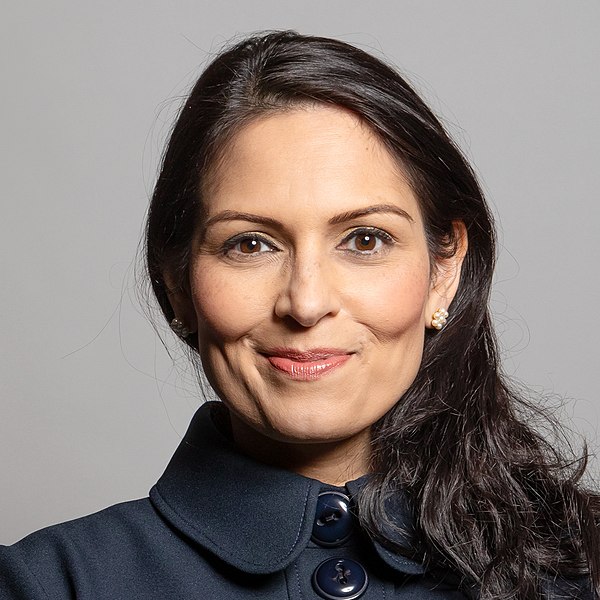
Official portrait of the Right Honourable Priti Patel, MP.
Photo by Richard Townshend.

The speed and obsequiousness with which leftish people canonised Rutnam following his resignation on Saturday was alarming. Most of them probably hadn’t heard of him prior to his flounce, but suddenly he was a cross between Mother Teresa and Winston Churchill, the bestest civil servant of our time, the steady, wise, clever counter to the rabid ideologism of the Boris mob. A breathless Guardian editorial likened Boris Johnson’s government to the Jacobin terror, with its use of “studied recklessness” to “disrupt [and] demoralise” representatives of “the ancien regime“, like Sir Philip, the People’s Civil Servant, the Bureaucrat of our Hearts. Steady on, Guardianistas: Rutnam has only lost his job, not his head.

The rash, highly political beatification of Sir Philip hasn’t only airbrushed out of view the various screw-ups he has overseen, from fairly mundane screw-ups (while he was in transport) to truly immoral ones (like the Windrush scandal while he was at the Home Office). No, it also turns a blind eye to the unusualness and the cynicism of his extravagant resignation. Civil servants have been falling out with governments for as long as both have existed. But normally the civil servant in question would take it on the chin, slink off into obscurity (or maybe the Lords), and live out a plush retirement. Not Rutnam. He made his resignation into a political weapon. He seems to be out to undermine the elected government. That is more scandalous than Priti Patel allegedly asking civil servants why they are all so “fucking useless”.

The Patel / Rutnam clash is more than a personality problem. It’s about politics, and democracy. According to reports – and we must wait to see how true all this is – Rutnam “obstructed” Patel. He reportedly thought she wasn’t up to the job of home secretary and allegedly tried to hinder some of her priorities. If this is true, it looks like the unelected wing of government – the machinery of the civil service – seeking to block the wishes and programme of the elected wing of government. And now Rutnam is threatening to sue the government for constructive dismissal, which would further weaken Patel’s position, potentially hamper her Home Office work, and posit the bureaucracy against elected ministers.

February 24, 2020

QotD: Not the village, not the family … the individual

Filed under: Liberty, Quotations — Tags: , , , — Nicholas @ 01:00

Liberals say, “It takes a village” to make a society great and strong.

The conservatives reply, “No, it does not take a village; it takes a family.”

Both sides are wrong. It takes an individual. It takes an individual to accomplish even modest goals. It takes a special kind of individual to accomplish great things. More often than not, individuals accomplish what they do in spite of the family, or in spite of the village.

It takes an individual to think, conceptualize, plan, and create. It takes an individual to rise above mediocrity, fear, and toward new discoveries.

“Families” do not work, study, and make a living. Individuals do. “Villages” do not discover electricity, or cure terrible diseases. Individuals do. Families and villages are not mystical entities. The are comprised of individuals. It is the brightest, and most creative, of those individuals upon whom the family and village depend.

Michael J. Hurd, “It Takes An Individual”, Capitalism Magazine, 2005-08-11.

February 19, 2020

QotD: Myths the Greatest Generation believed

Filed under: Government, History, Quotations, USA, WW2 — Tags: , , , — Nicholas @ 01:00

In addition to inflating our confidence in overseas interventions, the war era fueled belief that government could be a major force for good at home, capable of solving every domestic problem. Franklin Roosevelt’s superb wartime management boosted the popular opinion of government and encouraged Americans to adopt war as a metaphor for government action in general. The war seemed to fulfill Teddy Roosevelt’s and Woodrow Wilson’s earlier progressive dreams that big government, acting in concert with big business and big labor, could solve any problem that it chose to tackle. Just as warfare was re-envisioned to fit the total-war model of World War II, governing became understood as a matter of trained professionals applying management methods to public policy.

This belief in the military-like efficiency of government inspired the ambitious welfare-state policies of the postwar era, especially Johnson’s War on Poverty. When, in 1972, Richard Nixon declared a War on Drugs, and when, in 1977, Jimmy Carter described the energy crisis as the “moral equivalent of war,” the model they had in mind was, again, World War II. Today, newspapers and scientific journals still proclaim the need for ambitious government action to fix enormously complex problems — for example, calling repeatedly for a “new Manhattan Project” to solve the problem of climate change.

War, as conservatives figured out early on, is a poor metaphor for government doing socially useful things. We can’t fight and win a “war” on poverty, or drugs, or cancer, because these things are nothing like war. The last heroic big-government project run along World War II lines was the Apollo program, which put Americans on the moon. This was a tremendous achievement, but here a military mindset was directly relevant: like the design of war machines a quarter-century earlier, the Saturn rockets were a discrete engineering challenge, one whose basic parameters were well understood.

E. M. Oblomov, “The Greatest Generation and the Greatest Illusion: Success in World War II led Americans to put too much faith in government — and we still do.”, City Journal, 2017-12-28.

February 13, 2020

Here’s a deceptive factoid … time for you to get angry to suit someone’s political agenda

Filed under: Economics, Politics, USA — Tags: , , , , , — Nicholas @ 03:00

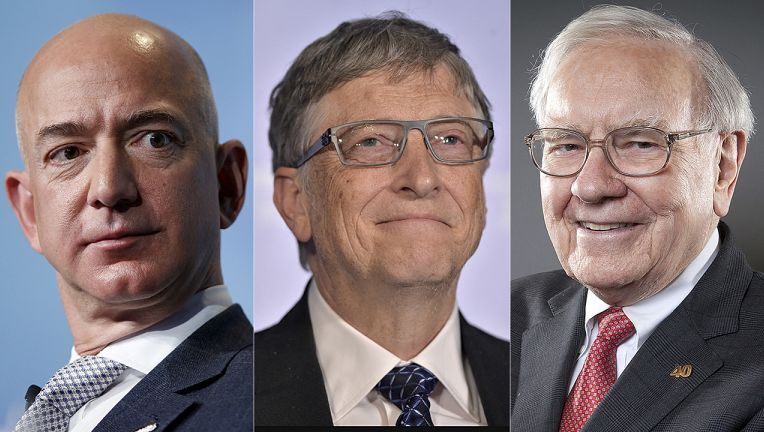
Did you know that “Three Billionaires Have More Wealth Than Half of America”!!!???!!! Are you angry now? You’re supposed to be, because this factoid was concocted specifically to make people irrationally angry. Daniel C. Jensen explains how this sound bite was created:

Amazon’s Jeff Bezos, Microsoft’s Bill Gates, and Berkshire Hathaway’s Warren Buffet.
Fox Business.

People between 0 and 24 years of age account for about 32 percent of the United States population of 320 million. Almost all of them are going to be in the bottom half of the wealth distribution for reasons including diaper rash and puberty. That means they account for about 63 percent of the “bottom half of the wealth distribution.” Should it surprise us that some kid fresh out of college does not “hold any stocks or bonds”? Or a kid fresh out of the womb?

Then we must consider people with mental and physical disabilities. They will also tend to be in the bottom half of the wealth distribution because they face greater challenges to building wealth. “About 56.7 million people — 19 percent of the population — had a disability” at last count, according to the United States Census Bureau. But there is overlap between the disabled 19 percent and the young 32 percent of the population. If we assume disabilities are evenly distributed in the population, then young people and non-young disabled people account for 45 percent of the population. So we have now accounted for 90 percent of the “160 million Americans in the bottom half of the wealth distribution.”

Next, we must think about other groups who have had limited wealth-building opportunities. What about the 2.2 million people in jail and prison? What about people in their late twenties who pursued PhDs, law degrees, medical residencies, etc., and are just beginning their careers? Now we are close to accounting for 100 percent of the “bottom half of the wealth distribution.” But this wealth distribution is not what any sensible person would expect it to be.

Maybe the factoid is true. Maybe Jeff Bezos, Bill Gates, and Warren Buffet have more wealth than all of the infants, children, students, handicapped, prisoners, and postgrads combined. But you don’t need a PhD to figure out that’s not useful knowledge. Even if the factoid is true, it’s deceitful. Whoever created it was obviously trying to manipulate people. And we uncovered this deception with nothing but some simple knowledge of the US population.

Next time you encounter an economic factoid, remember that it might be pitting a bunch of newborns against Jeff Bezos, and that hardly seems fair. Thankfully, you can save those babies from certain defeat simply by knowing some basic statistics about your country.

February 11, 2020

“… loveable Nickelodeon show Paw Patrol is an insidious tool of capitalism”

Filed under: Media, Politics, USA — Tags: , , , , , — Nicholas @ 05:00

I’ve only heard of the show because my grand-niece is a huge fan, so I can’t say anything one way or another about these heresy allegations:

Six adorable, daring puppies and their whiz kid leader, ten-year-old Ryder, rescue people in the community of Adventure Bay. You would have to be a fool to not love Paw Patrol. And that’s where the Canadian state broadcaster CBC comes in!

A new article by Rebecca Zandbergen explores the groundbreaking new theory by Canadian university professor Liam Kennedy that loveable Nickelodeon show Paw Patrol is an insidious tool of capitalism. Kennedy, from King’s University College, has penned a vital new piece of research called “Whenever there’s trouble. Just yelp for help”: Crime, Conservation and Corporatization in Paw Patrol” in the peer-reviewed journal Crime Media Culture. His child isn’t allowed to watch the show, but Kennedy spent countless hours watching it in his office.

In the show, Ryder is the ring-leader of the pups, each of whom has a job to do as part of their team. There’s Chase, the police dog, Marshall, the fire chief dog who can never quite get control of his hose, Rubble, the builder, Skye, who flies a plane for some reason and is the girl pup, Everest, the extreme outdoor adventuring pup, Rocky, the rescue dog, and Zuma, the pup who drives a boat.

Together, they are the Paw Patrol, and they even have a headquarters, because all kids love a home base. Inexplicably, the grown-ups in town depend on Ryder and the pups to help them when they’re in a jam. Probably because it’s a show for kids, so it’s kid-centric. Kids like that.

Kennedy posits that “Paw Patrol, as a private corporation, is used to help provide basic social services in the Adventure Bay community. That’s problematic in that the Paw Patrol creators are sending this message that we can’t depend on the state to provide these services.”

Kennedy was angry that elected officials are not portrayed as heroes: “Mayor Humdinger and Mayor Goodway — kind of the representatives of the state or the government — are portrayed negatively,” Kennedy argued.

Kennedy also pointed out that, at the age of ten, Ryder should be in school, not saving the world. CBC did not bother to ask Kennedy how he feels about real-life school-skipper and saviour Greta Thunberg. We guess some do-gooders are more equal than others.

Animal “rights”

Filed under: Food, Media, Politics, USA — Tags: , , , , — Nicholas @ 03:00

In the latest Libertarian Enterprise, L. Neil Smith republished a short essay he wrote for the March 1996 edition which is still fully relevant today:

An olive ridley sea turtle, a species of the sea turtle superfamily.
NASA image via Wikimedia Commons.

Last Friday I watched an episode of X-Files in which innocent zoo animals were being abducted — apparently by benign, superior UFOsies (the ones who mutilate cattle and stick needles in women’s bellies) — to save them from a despicable mankind responsible for the erasure of thousands of species every year.

Or every week, I forget which.

I was reminded of a debate I’d found myself involved in about sea turtles; I’d suggested that laws prohibiting international trade in certain animal products be repealed so the turtles might be privately farmed and thereby kept from extinction. After all, who ever heard of chickens being an endangered species? From the hysteria I provoked — by breathing the sacred phrase “animal rights” and the vile epithet “profit” in one sentence — you’d have thought I’d demanded that the Virgin be depicted henceforth in mesh stockings and a merry widow like Frank N. Furter in The Rocky Horror Picture Show.

That debate convinced me of two things. First: I wasn’t dealing with politics, here, or even philosophy, but with a religion, one that would irrationally sacrifice its highest value — the survival of a species — if the only way to assure it was to let the moneylenders back into the temple. Its adherents abominate free enterprise more than they adore sea turtles.

Second (on evidence indirect but undeniable): those who cynically constructed this religion have no interest in the true believers at its gullible grassroots, but see it simply as a new way to pursue the same old sinister objective. A friend of mine used to refer to “watermelons” — green on the outside, red on the inside — who use environmental advocacy to abuse individualism and capitalism. Even the impenetrable Rush Limbaugh understands that animal rights and related issues are just another way socialism pursues its obsolete, discredited agenda.

In my experience, those who profess to believe in animal rights usually don’t believe in human rights. That’s the point, after all.

February 5, 2020

Free speech and social media

In Spiked, Brendan O’Neill says that even people who say racist things should not be censored on social media:

Katie Hopkins is a racist. Anyone who hadn’t already gleaned that from her dalliances with the vile race-baiters of Generation Identity types or her use of the word “cockroaches” in a column about immigrants will surely see it now following the speech she made at a phoney awards ceremony in Prague. Internet pranksters invited Hopkins to accept the Campaign to Unite the Nation Trophy (CUNT), during which Hopkins made a speech filled with racist epithets. She mocked Pakistani speech patterns. She compared Asians to epileptics. She described Muslims as retards who rape their mothers. She said that if you shout “Mohammed” in a British playground, thousands of “fucking” kids will come running, and “you don’t want any of them”. Vile, hateful stuff.

And yet Hopkins should not be banned. She should not be thrown off social media. Censorship is not the right solution to any problem, including prejudicial or hateful commentary. Last week, Hopkins, to the delight of the illiberal liberals who make up the commentariat and cultural elite in the UK, had her Twitter account suspended. Reportedly at the behest of Countdown host and campaigner against anti-Semitism Rachel Riley, and the chief exec of the Centre for Countering Digital Hate, Imran Ahmed, Twitter erased all of Hopkins’ tweets and prevented her from accessing her account. People are celebrating this as a victory of decency over hatred; in truth, it is a victory of corporate power over freedom of speech.

[…]

That’s the thing: once you empower Twitter and other capitalist-founded platforms to decree who may speak and who may not, you are green-lighting a sweeping, global system of censorship. Both right-wing libertarians and left-wing radicals, ironically, say the same thing in response to this concern. They say, “Well, Twitter and the rest are private companies, so surely they have the right to say who can and cannot use their services”. It is predictable that the myopic libertarian right would so cavalierly elevate powerful corporations’ property rights over the free-speech rights of individuals – but to hear leftists do that is alarming. Clearly, their woke intolerance, their urge to censor everyone they disagree with, has now gone so far that they will happily empower unaccountable capitalists over ordinary people and give a nod of approval to the corporate control of public discussion.

And then there is the more difficult part of this discussion. Even if Hopkins had said genuinely racist things on Twitter – as she did in her Prague speech and has also done elsewhere – still she should not be censored. One of the many great things about freedom of speech is that it allows us to see what people really think. And that is empowering. It means that the rest of us – the potential audience to an individual’s speech – can use our intelligence and our principle to counter that speech, to criticise it, to ridicule it, to prove it wrong. Freedom of speech doesn’t only empower the speaker. It also empowers the audience. It allows us to exercise our moral judgement. Censorship, in contrast – whether it’s state censorship or corporate censorship – is fundamentally infantilising. It insults us and demeans us by blocking words and images on our behalf, as if we were children. It weakens our moral muscles and intellectual savvy by discouraging us from ever thinking for ourselves. Well, why should we, when wise people in government or Silicon Valley will think for us?

Katie Hopkins should be reinstated on Twitter. Not because she has anything of value to say, but for these three reasons. 1) Everyone, even objectionable people, must have the right to express themselves. That is the entire nature of freedom of speech. If we limit free speech, for any reason whatsoever, then it isn’t free speech at all. It is licensed speech, something gifted to us by officialdom or capitalism so long as we say things they find acceptable. 2) We, the audience, must have the right to hear all ideas and to decide for ourselves if they are good or bad. Anything else is just pure, foul paternalism that turns us from thinking citizens into overgrown children who must be protected from difficult ideas. 3) Corporate censorship is as bad as state censorship. Calling on powerful people or rich people to police the parameters of acceptable thought, and to expel anyone who says something bad, is a catastrophically erroneous thing to do. Trust people, not power; prefer freedom over control.

February 1, 2020

QotD: Justifying tyranny

Filed under: Government, Liberty, Quotations — Tags: , , , — Nicholas @ 01:00

In [Adam] Smith’s time, and now again in the regulatory state, few believed that a masterless society would be possible. The haunting fear by governing elites supported by worried citizens stirred up by an antitrade clerisy was then, and still is, that ordinary people will do bad things if left alone. Unless overawed by the threat of state violence in police or planning or regulation, ordinary people, especially the lower classes, will spurn priests, stop paying their rents and taxes, not save enough for old age, kill each other, not buy enough insurance, speak against the government, appear with hair uncovered, refuse military service, drink to excess, commit unnatural acts, use naughty words, chew gum, smoke marihuana – committing in sum, as Bill Murray put it in Ghostbusters, “human sacrifice, dogs and cats living together, mass hysteria.” A progressive or a conservative program of heavy regulation is a first-night-in-Ferguson-Missouri notion of keeping order. It is the justification of all tyranny, hard or soft.

Deirdre McCloskey, Bourgeois Equality, 2016.

January 21, 2020

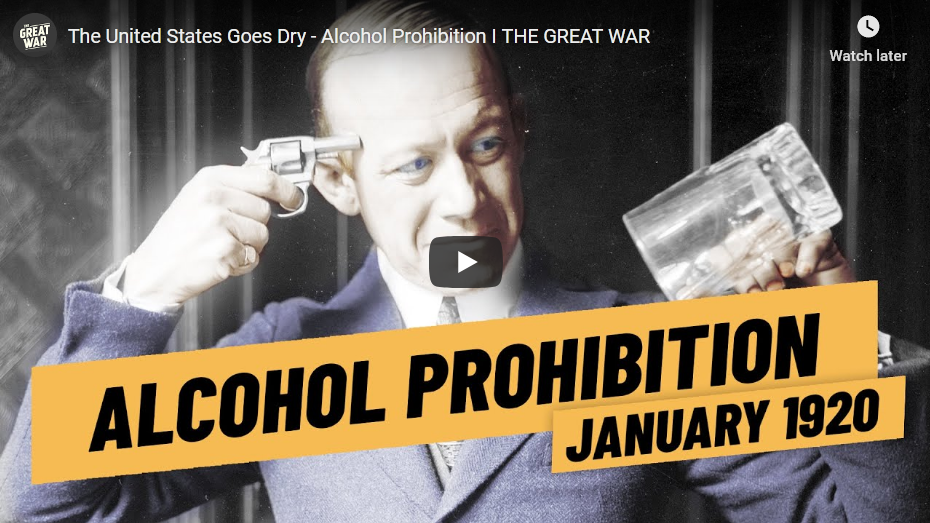
The United States Goes Dry – Alcohol Prohibition I THE GREAT WAR

Filed under: Britain, Health, History, Law, Liberty, Russia, USA — Tags: , , , , , — Nicholas @ 04:00

The Great War
Published 20 Jan 2020

In January 1920, after one year of preparation, the 18th Amendment to the US Constitution went into effect. From now on alcohol prohibition was the law.

» SUPPORT THE CHANNEL
Patreon: https://www.patreon.com/thegreatwar
Merchandise: https://shop.spreadshirt.de/thegreatwar/

» SOURCES
Ehmer, K. and Hindermann, B. (2015). The School of Sophisticated Drinking. New York: Greystone Books.
Miron and Zwiebel, “Alcohol Consumption During Prohibition”. In the American Economic Review, Vol. 81, No. 2, pp. 242-247, (May 1991).
Darrow, Clarence, and John Haynes Holmes. Debate On Prohibition. Haldeman-Julius Co., 1924.
Iorizzo, Luciano J. Al Capone. Greenwood Press, 2003.
Nemtsov, Aleksandr. A Contemporary History of Alcohol in Russia. Stockholm, 2011.
Sullivan, Edward D. Rattling the Cup on Chicago Crime. New York: The Vangaurd Press, 1929.
United States Government, “Codification of Internal Revenue Laws, … Published Pursuant to Section 1203(c) Revenue Act of 1926”.
18th Amendment to the Constitution of the United States. https://www.loc.gov/rr/program/bib/ou…
United States Department of Agriculture. “Crop Production Historical Track Records, 2018”. https://www.nass.usda.gov/Publication…
Kamieński, Łukasz: “Drugs”, in: 1914-1918-online. International Encyclopedia of the First World War, ed. by Ute Daniel, Peter Gatrell, Oliver Janz, Heather Jones, Jennifer Keene, Alan Kramer, and Bill Nasson, issued by Freie Universität Berlin, Berlin 2019-03-07
Blocker, Jack S Jr. “Did prohibition really work? Alcohol prohibition as a public health innovation.” American Journal of Public Health vol. 96,2 (2006): 233-43.

» SOCIAL MEDIA
Instagram: https://instagram.com/the_great_war
Twitter: https://twitter.com/WW1_Series
Reddit: https://reddit.com/r/TheGreatWarChannel

»CREDITS
Presented by: Jesse Alexander
Written by: Mark Newton
Director: Toni Steller & Florian Wittig
Director of Photography: Toni Steller
Sound: Toni Steller
Editing: Toni Steller
Mixing, Mastering & Sound Design: http://above-zero.com
Maps: Daniel Kogosov (https://www.patreon.com/Zalezsky)
Research by: Jesse Alexander
Fact checking: Florian Wittig

Channel Design: Alexander Clark
Original Logo: David van Stephold

A Mediakraft Networks Original Channel

Contains licensed material by getty images
All rights reserved – Real Time History GmbH 2020

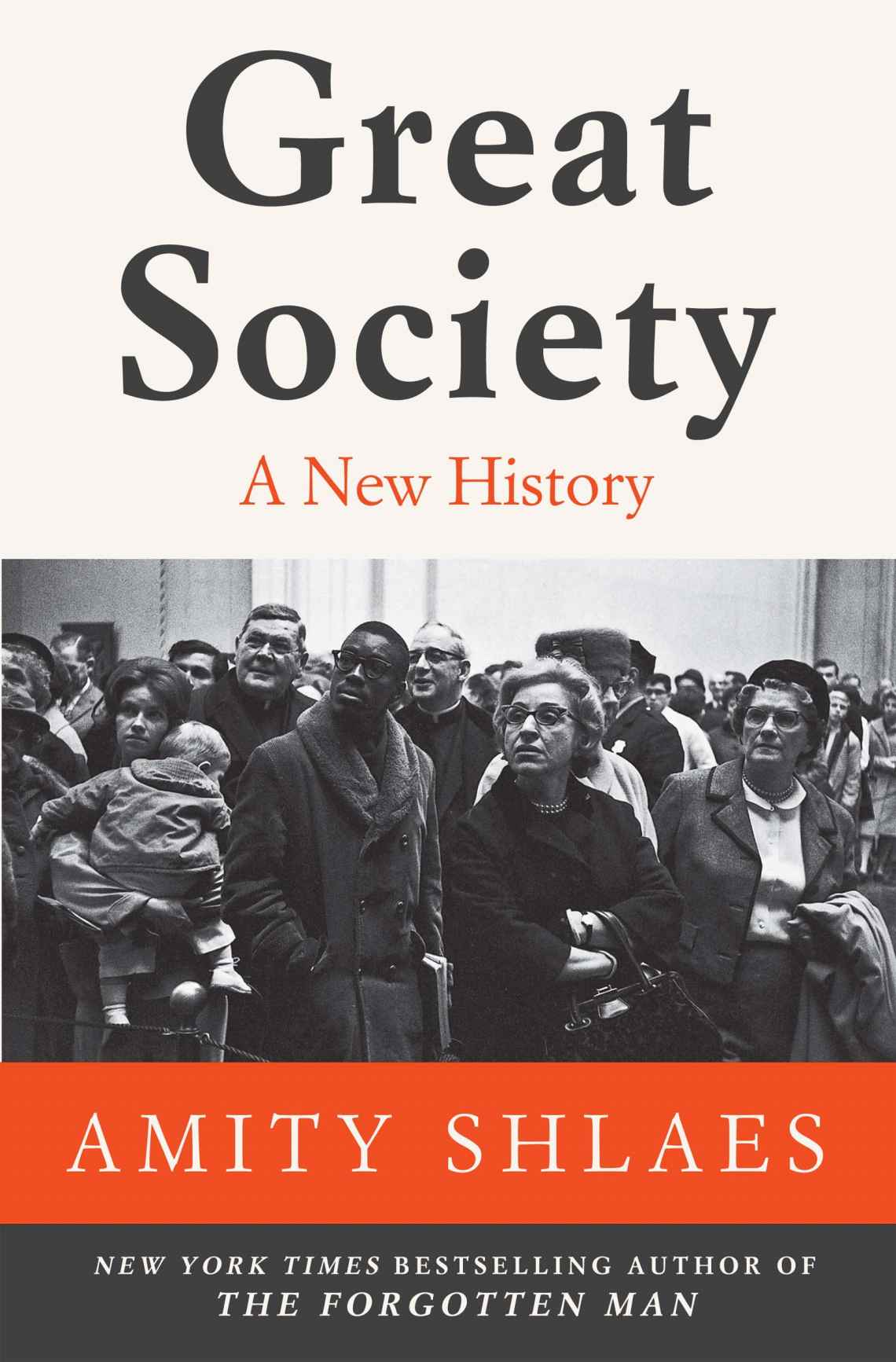
Amity Shlaes’ Great Society: A New History

Filed under: Books, Economics, Government, History, USA — Tags: , , , , , — Nicholas @ 03:00

In City Journal, Edward Short reviews the latest American economic history book by Amity Shlaes:

In Great Society: A New History, Amity Shlaes revisits the welfare programs of the Kennedy, Johnson, and Nixon administrations to show not only how misguided they were but also what a warning they present to those who wish to resurrect and extend such programs. “The contest between capitalism and socialism is on again,” the author writes in her introduction. Despite the Trump administration’s thriving economy, or perhaps because of it, Democratic Party progressives are calling for new welfare programs even more radical than those advocated in the 1960s by the socialist architect of Lyndon Johnson’s War on Poverty, Michael Harrington. In the new schemes for wealth redistribution, student debt relief, socialized medicine, and universal guaranteed income that make up the Democrats’ political platform in 2020, Shlaes rightly sees a recycling of Great Society hobby horses — and she worries that a good portion of the electorate may be taken in by them. “Once again many Americans rate socialism as the generous philosophy,” she observes, and she has written her admirable, sobering study to make sure that readers realize that the “results of our socialism were not generous.”

Reviewing how ungenerous makes for salutary reading. After all, socialism of any stripe, whether in Russia, South America, Europe, or America, has always been an inherently deceitful enterprise. Shales captures the essence of this imposture when she describes one of its manifestations as “Prettifying a political grab by dressing it up as an economic rescue.” In totting up these receipts for deceit, Shlaes has done a genuine public service. […]

On display here are all of Shlaes’s strengths as an author: her clear and unpretentious prose, sound critical judgment, readiness to enter into the thinking of her subjects with sympathy (even when she regards it as mistaken), and, perhaps most impressively, understanding how history can help us fathom what might otherwise be obscure in our own more immediate history.

Accordingly, she describes the influence that Roosevelt’s New Deal had on Johnson, who saw it as a model for maintaining and consolidating his Democratic majorities, as well as focusing his Cabinet’s talents. “The men around Johnson,” Shlaes points out, including Robert McNamara, McGeorge Bundy, Richard Goodwin, and Sargent Shriver, “felt the weight of his faith on them, and strove hard. Vietnam would be sorted out. There would be a Great Society. Poverty would be cured. Blacks of the South would win full citizenship. The Great Society would succeed.” Yet the president’s men could not help asking “by what measures” it would succeed.

Moynihan’s answer to this question is one that still mesmerizes social-engineering elites. The Great Society would be achieved by social science. “Progress begins on social problems when it becomes possible to measure them,” Moynihan declared. Improved quantitative analysis would give the centralized power of planners a new credibility.

Whether Johnson himself ever truly believed in such claims is questionable. When aides asked the exuberant Texan what he thought of the risks of going forward with his wildly ambitious program, his reply epitomized the hubris at the heart of his Great Society: “Well, what the hell’s the presidency for?”

January 16, 2020

QotD: Progressive hatred

Filed under: Politics, Quotations, USA — Tags: , , , , , — Nicholas @ 01:00

Something that has been noticeable for a long time now is that the Left is in a perpetual state of rage. The smallest things send them into spasms of anger. They hate Trump and they really hate his voters. They will go rummaging around in the social media history of people, looking for reasons to hate them. It’s not a general all-encompassing hate, like hating the fans of a rival sports team, but a very personal and cruel hate. They want the victim to suffer and they want to enjoy his suffering.

One reason for this, obviously, is that many people attracted to the Left are mentally unstable, so their politics are just a vehicle for their pathology. Many of the Antifa people, for example, have no coherent political thoughts. They just like being crazy on the streets and causing mayhem. This is the type of person who was attracted to the riots that used to follow the big economic summits. There was never any purpose to their rampages, other than the thrill of smashing things and causing mayhem.

Another more important reason for the rage is the nature of leftist politics in our post-national age. Being on the Left no longer means joining a group that has a tangible enemy, against whom the group throws themselves. The days of unionist, socialists and communists operating as collectives are gone. Even the post-modern movements like climate change and sexual politics is atomized. Much of it is backed by the sorts of people the Left used to oppose like rich people and business.

The Z Man, “It’s Personal”, The Z Blog, 2019-11-12.

January 12, 2020

QotD: Progressive snobbery is part of the kink

Filed under: Government, Media, Politics, Quotations, USA — Tags: , , , , , — Nicholas @ 01:00

Do they really hate ordinary people that much?

Yes, they do. For liberals, the distinction between the “dumb masses” and their enlightened selves renders life meaningful. Disdain for ordinary folks is not just an ancillary trait of liberalism. It is fundamental to the its nature.

At its heart, liberalism is a gnostic religion, and the essence of that religion is the believer’s faith that he possesses the means of changing the world for the better. The belief that the world must be changed requires there to be a mass of individuals whose lives are in need of change. Following this logic, it is the liberal, not those deplorables in need of change, who knows what must be changed. For liberals, there must be a mass of people in need of this knowledge for life to make sense.

Above all, liberalism is a hubristic faith. Its followers share the fatal flaw of pride in their own intellectual capacity. This is why liberalism appeals so strongly to those in the knowledge trades: teachers, journalists, writers, psychologists, and social workers. The sense of “knowing more than others” is its strongest attraction – particularly to the young, who otherwise know so little. Liberalism confers, or seems to confer, almost immediate power and authority to those who embrace it.

The left’s obsession with superior knowledge runs through its entire history. As Woodrow Wilson remarked, the “instrument” of political science “is insight. A nice understanding of subtle, unformulated conditions.” Lyndon B. Johnson thought “a president’s hardest task” is “to know what is right.” And the most hubristic of all is Obama’s “We are the ones we’ve been waiting for.” Yes, we are wonderfully bright, and we’ve been waiting eons for ourselves to appear.

Jeffrey Folks, “Leftists versus the People”, American Thinker, 2018-02-24.

January 11, 2020

QotD: “Don’t ask, don’t tell”

Filed under: Government, History, Military, Politics, Quotations, USA — Tags: , , , , , , — Nicholas @ 01:00

As all right-thinking people know, Don’t Ask, Don’t Tell was a right-wing atrocity against gays, hatched in the pernicious seventy-two degree corners of the doubleplusungood and evilwickedbadnaughty Pentagon, fought against nearly to the death by progressives …

That’s not remotely what happened. Rather, the Uniform Code of Military Justice, as enacted by Congress, has long deemed Sodomy, which covered more than just homosexual conduct, as a criminal offense potentially carrying severe penalties. Moreover, the procedure for entering into service demanded that prospective recruits deny or admit to homosexual leanings, in writing, which admissions would usually bar the man or woman from service. Of course, back when the shame of being publicly homosexual was very great, people who wanted to join the armed forces simply lied about it and then, as a general rule, hid it while in service.

Liberal Democratic President Bill Clinton, acting in his capacity as Commander in Chief of the armed forces, simply ordered that prospective recruits were not to be asked if they were gay or had homosexual leanings, and were not to volunteer the information. That, young Millennial, is where DADT came from; it came from a liberal, liberally motivated, and pandering to his liberal base.

Did you know that? No? Well, then; ask yourself, WHY didn’t you know?

What the loss of history does to you, dear Millennial, is that it robs you of the ability to reason your way to cause and effect. Never mind the crappy to the point of idiotic decisions and programs this might lead you to support, consider what it does to you as a person. What, after all, is the effect of shielding people from contrary opinions by designating and maintaining, under color of law or regulation, “safe spaces” for this or that minority? Does it make them stronger? Better able to deal with a harsh world? Does it change that objective world to something less harsh? No and no and no; it does none of that. Do you gain grit in a safe space? Ha. Do you learn endurance in a safe space? Oh, please.

Tom Kratman, “It’s Up to You, Millennials. Deflect or Be Doomed”, Milo, 2017-12-06.

January 10, 2020

Brendan O’Neill on “Megxit”

Filed under: Britain, Media — Tags: , , , — Nicholas @ 05:00

He calls the Duchess a “woke Wallis Simpson”:

Prince Harry and Meghan Markle visit Titanic Belfast in March 2018.
Photo from the Northern Ireland Office via Wikimedia Commons.

So Harry and Meghan are stepping back. They’re resigning from The Firm. They’re ducking out of the Sovereign Grant and royal duties and going it alone. They’re going to split their time between the UK and North America – think of all the CO2! – and become more “independent”.

Why? Come on, we all know why. Forget the tripe about them fleeing the racism of the UK tabloids and the nonsense about the first DOC (duchess of colour) not being made to feel welcome in the stiff, white House of Windsor. No, H&M, the most right-on royals in history, are breaking off so that they can foist even more woke bollocks on the plebs without having to worry about receiving a tutting phone-call from Her Maj’s press secretary reminding them that they’re royalty and not virtue-signalling Hollywood celebs.

Megxit, as this royal bombshell is wittily being called, is a striking sign of the times. What Harry and Meghan are doing is virtually unprecedented in the history of the royals. They are jacking in their jobs (I say jobs) as senior royals and pursuing a more “financially independent” path that will allow them to earn, travel and – this is important – jabber on about their pet concerns and causes as much as they like.

Even leaving aside the fact that they won’t actually be financially independent – they’ll still get wads of cash from the Duchy of Cornwall and will still stay in that Frogmore Cottage us British taxpayers just splashed 2.4million quid on – still their move is a startling and concerning one.

What it fundamentally reveals is the incompatibility of the modern culture of narcissism with the values of duty, loyalty and self-negation traditionally associated with royal life. To someone like Meghan, who sprang from celebville, who sees herself as the embodiment of right-on goodness, and who loves nothing more than advertising her eco-virtue and performing her PC credentials, life in the British monarchy was never going to be a good fit.

Yes, the woke agenda Meghan expresses so well shares much in common with the old-world elitism of the monarchical system. Both obsess over inherited characteristics (the woke bang on about race and gender, the monarchy is all about bloodline). Both have a penchant for looking down their noses at the little people. And both have an instinctive loathing for modernity, from Charles’ longstanding conservationism to H&M’s humanity-bashing eco-hysteria.

« Newer PostsOlder Posts »

Powered by WordPress