Quotulatiousness

October 23, 2020

The British Library goes “woke”

Filed under: Books, Britain, Bureaucracy, Politics — Tags: , , , — Nicholas @ 03:00

David Warren views this development with alarm and disdain:

British Library reading room.
Photo from the British Library website.

Did you know? That, “Racism is the creation of white people”?

Of course you did, if you are young, woke, and poorly educated, like the white woman who is now the British Library’s Chief Librarian. (“Liz Jolly.”) Her statement, in a video to staff last summer, promoting her Decolonizing Working Group, though perfectly acceptable to Guardian subscribers, was mocked by several African and Asiatic scholars who have depended upon that library’s resources over the years. Noting that history is more complicated than Ms Jolly was ever told, they criticized her as “pig ignorant,” &c.

But her explicitly racist “anti-racist” programme proceeds, with aggressive “anti-racist” exhibitions, new “anti-racist” signage, and so forth. The demand to de-acquisition authors who do not reinforce the current ideological stereotypes has not yet gathered to full force, but has started.

The capture of essentially all major cultural institutions by unhinged political fanatics with daddy issues, is among the signs of our times. Those who resist are driven out of employment; those who accede have a lock on the splendidly-paid positions, for which beleaguered taxpayers are billed. The consequences to Western Civ are not trifling.

Perhaps I am unfair to single out just the one career arts bureaucrat, when there are thousands to choose from. I may even be prejudiced, not only against white people, but against those of the scheduled races who have cooperated in trashing the institutional heritage of the Big Wen.

For London was my Athens, back in the day, and I take these things personally. My British Museum Library ticket was among my most cherished possessions, and the old Reading Room among my favourite haunts. I am now so old that I can remember when such places were ruled, and staffed, by respectably boring establishment types with Oxbridge degrees.

In a different context, we’ve seen just how eager Oxbridge types of the 1930s were eager to join the Soviet spy networks, so the change in establishment staff at non-explicitly communist establishments was only a matter of time…

October 21, 2020

“[A]ll white people are racists … because they participate in a system that secures their own structural advantages”

Filed under: Cancon, Politics, USA — Tags: , , , , — Nicholas @ 05:00

In The Line, Meaghie Champion commits some sort of thought crime by quoting Martin Luther King’s famous words (which I have been assured more than once are now “forbidden” to non-POC speakers because reasons):

President Lyndon B. Johnson meets with Martin Luther King, Jr. in the White House Cabinet Room, 18 March 1966.
Photo by Yoichi Okamoto via Wikimedia Commons.

Most of us have been committed to the ideals of anti-racism since Martin Luther King famously delivered his “I Have a Dream Speech.” This was a masterclass of persuasion and rhetoric; one that convinced generations to re-frame their positions on racial inequity.

King said that he hoped that one day his children would grow up to be judged, not by the colour of their skin, but by the content of their character. That’s the ethos [BC NDP leader John] Horgan channelled when he said: “I don’t pay attention to skin colour or ethnicity.”

But this is not good enough for those who promote Critical Race Theory, an emerging ideology that tips these values on their head. CRT presupposes that the world is dominated by white supremacists. Further, that all white people are racists — regardless of their individual actions — simply because they participate in a system that secures their own structural advantages. CRT redefines what “racism” has traditionally meant: bigotry or discrimination based on skin colour.

Under this new ethos, only white people are capable of racism, because racism is systemic and works towards keeping all power vested in the hands of the white supremacists. I’m simplifying this, of course, because CRT is a rabbit hole best tackled by people with a lot more patience than me. One of the laziest rebuttals that CRT’s adherents use to deflect criticism is that its critics simply don’t understand it well enough, and therefore need to spend endless hours of their lives “doing the work,” integrating key academic texts, and absorbing their meaning until they fully accept the unerring truth of the ideology. If this tactic sounds indistinguishable from a deeply manipulative religious movement, well …

I’m a “person of colour” and I have spent my whole life trying to be anti-racist. I agree with the idea that there are systemic problems involving racism in many institutions within society. Some of those systemic problems are destroying Indigenous nations, including my own. Where I disagree with the Critical Race Theory crowd is in their depiction of everyone who is not a person of colour as being inherently racist. I don’t agree with their solutions for solving the racism problems we have to confront as a society. I don’t believe that they are the only ones working against racism, or coming up with viable strategies for how to do so. We can have differing views about racism and how to combat it; failing to adhere to one single philosophy, or parrot a specific set of terminology, does not mean a person is racist.

Horgan has worked for decades to do what he thought best for all the people. He’s been on our side in the struggle against racism all his life. The fact that he wasn’t up-to-date on the latest acceptable phrases to speak on the matter doesn’t negate that.

October 17, 2020

Andrew Sullivan on the pervasiveness of Critical Race Theory in academia

Filed under: Education, Media, Politics, USA — Tags: , , , , — Nicholas @ 05:00

In his latest Weekly Dish, Andrew Sullivan discusses how deeply embedded Critical Race Theory has become in the academic, journalistic and cultural realms controlled by the left:

… the CRT advocates have brilliantly managed to construct a crude moral binary to pressure liberals into submission. Where liberalism allows neutrality or doubt or indifference, CRT demands an absolute and immediate choice between racism and anti-racism (defined by CRT) — and no one wants to be a racist, do they? Legitimate anguish about racial inequality and the sheer terror of being publicly labeled a bigot have led liberals to surrender their core values to the far left.

The second reason for CRT’s triumph is that it’s super-easy. Social inequalities are extremely complicated things. A huge variety of factors may be in play: class, family structure, education, neighborhood, sex, biology, genetics and culture are some of them. Untangling this empirically in order to figure out what might actually work to improve things is hard work. But when you can simply dismiss all of these factors and cite “structural racism” as the only reason for any racial inequality, and also cover yourself in moral righteousness, you’re home-free. Those who raise objections or complications or cite nuances can be dismissed by the same easy method.

Then there’s the deep relationship between CRT and one of the most powerful human drives: tribalism. What antiracism brilliantly does is adopt all the instincts of racism and sexism — seeing someone and instantly judging them by the color of their skin, or sex — and drape them with a veil of virtue. You don’t have to correct yourself when your tribal psyche makes you more cognizant of someone’s visible racial differences, and pre-judges them. You don’t have to resist this any more. You can give in to your core nature, and feel pride, rather than shame. You get to have all the feels of judging people entirely by their involuntary characteristics, while actually dismantling racism and sexism! What’s not to like?

Social aspiration also plays a part. The etiquette of wokery is increasingly indispensable for high society. They mark you as someone high up in the American social hierarchy. The right words and phrases signal your ease in this elite; the wrong ones — “sexual preference”! — expose you as a rube, a bigot or, worse, a middle class provincial. Rob Henderson argues that this aspiration to be in the upper classes helps explain why Asian-Americans, who are targeted for direct race discrimination under CRT, nonetheless often support it: “While money and education are tickets to the middle class, prizing diversity is a requirement to join the upper class. It’s part of what the sociologist Pierre Bourdieu referred to as cultural capital — tastes, vocabulary, awareness and mannerisms which give social advantages to those higher in the social hierarchy.” Reihan Salam has also written brilliantly about this.

There’s little doubt, either, it seems to me that there is a religious component to wokeness. A generation of nones can feel bereft of transcendence and meaning, and “becoming woke”, like being “born again,” fills that spiritual hole. In an atomized and lonely age, feeling as if you are on “the right side of history”, banishing doubt, joining with countless of your fellow converts in marches and seminars, can abate the isolation and emptiness of it all. Many moderns want the experience of religion without God. With CRT, as in the past with communism, they can have it.

But what also make CRT so successful is ruthlessness. Those who hold a view of the world in which only power, and the struggle for power, matters, have few qualms in exercising it. After all, under CRT, power is always on the side of the white cis-heteropatriarchy, so payback is always fair play. Discriminating against the unwoke or whites or males or the cis-gendered or Asian-American, is not just fair, but vital. Shutting down speech protects the oppressed; bullying on social media and in the workplace becomes a form of virtue; mercy and forgiveness are mere buttresses for white supremacy; HR departments diligently identify dissidents, and discipline them. Once you set up this system of censorship and fear, persecute a few prominent sinners pour décourager les autres, and encourage snitches, dissidents will increasingly self-censor, and dissent peter out, until the new orthodoxy is the only one.

In the past, a new set of ideas could be engaged in a clash of argument and debate. But you’ll notice that the advocates of what Wes Yang has called “the successor ideology” never debate any serious opponents of their position. This is because debate in a liberal society implies equal standing for both sides, and uses reason to determine who’s right or wrong. But there can be no “both sides” within CRT, no equation of “racists” and “antiracists”, and debates are inherently oppressive. Logic, evidence, and reason are, in this worldview, mere products of white supremacy, forms of violence against the oppressed. In CRT, remember, there is no truth or objectivity; there are merely narratives. So, yes, 2 + 2 = 5, and math is inherently a function of whiteness. And what racist is going to deny this?

Actually, his photo has that effect on me too …

… except that I still keep the beard. David Warren, on the other hand, is clean shaven:

“Jack Dorsey, Twitter and Square founder, in a London cafe in November 2014.” by cellanr is licensed under CC BY-SA 2.0

Every time I see a photograph of Jack Dorsey, I want to wash and shave. It is seldom that another human being has such an hygienic effect on me; especially one I have never personally met. Thanks to him, I may report to gentle reader that, up here in the privacy of the High Doganate (surrounded by jackhammers), I am quite clean-shaven this morning. I was able to resist the temptation to bathe in Dettol, but my shower was the next best thing.

I’m going out on a limb here. I am assuming my reader knows who Jack Dorsey is. (It’s not hard to find his picture.)
The boss of Twitter is among the “deep tech” executives who have, in a less ambiguous way than ever before, shut the accounts of the Trump campaign, within three weeks of a national election, and are blocking those (rather numerous) subscribers who are trying to forward the meaty revelations appearing in the New York Post. Those, incidentally, unambiguously show that one of the presidential candidates (Biden, of all people) is seriously fraudulent and corrupt. Who’d have guessed it? (Well, I did.)

Now, when I write “deep tech,” some reader will accuse me of touting a conspiracy theory. I use this expression on the analogy of “deep state.” Curiously, I don’t think this is a conspiracy at all. In the District of Columbia, where the bureaucratic institutions of the Merican Nanny State are chiefly located, Democrats routinely take well over 90 percent of the vote. Republicans do not necessarily finish second, however. That the labour pool for these institutions is overwhelmingly “progressive,” is something I infer.

Ditto for Silicon Valley. The residents do not need to conspire, although the speed at which identical editorial decisions are reached, is amazing. This I attribute to their electronic hardware.

Some seven years ago, under the influence of well-intended friends, I did a three-month experiment of “being on Twitter.” They said it would immensely increase my “hits,” and it did — while dramatically decreasing attention to them. I was flattered by all the fan-mail I received, because I am a shallow person, but when the three months were up I got off. For I do not covet a mass audience, or that kind of fame. Engaging in live-time battles of wits with other Twitterers is fun for a while, but sooner or later one recovers one’s self-respect. Or at least some people do.

October 5, 2020

QotD: Language changes to accord with critical studies theory

A Canadian Broadcasting [Corporation] program also debuted a new term this past week: “non-straight cisgender people.” This is the newly approved newspeak for gay people, parsed through the language of critical queer studies. The proponents of this new language seem eager to retire familiar terms like “gay men” or “lesbians” — perhaps because they suggest that the homosexual experience is rooted in basic human nature and can exist outside the parameters of structural oppression. So they find ways to define us in terms of queer theory, insisting there are only oppressed LGBTQ+ people. That’s also why, for example, so many on the left insist that gay white men had very little to do with Stonewall, which was led, we’re told, by trans women of color, subsequently betrayed by white men, who stole the movement from them. That this is untrue is irrelevant. It’s a narrative which serves to dismantle structures of oppression. And that’s all that matters.

Leading progressive maternity and doula organizations now deploy and encourage a whole array of “gender-neutral language” with respect to sex, birth, labor, and parenting. And so we now have the terms “chest-feeding,” “persons who menstruate,” “persons who produce sperm,” and “birthing person” for breastfeeding, women, men, and mothers, respectively. And instead of a butthole, we have a “back-hole”; instead of a vagina, we have a “front hole.” “Ovaries” and “uterus” are now rendered as “internal organs,” which may strike you as somewhat vague. These may sound completely absurd now, but given the choke hold critical gender theory has on almost all elite organizations, you can be sure you’ll hear them soon enough. They’ll likely be mandatory if you want to prove you’re not a transphobe. It was an objection to one of these terms — “people who menstruate” — that got J.K. Rowling tarred again as a bigot.

Those of us who oppose this abuse of the English language, who try to abide by Orwell’s dictum to use the simplest, clearest Anglo-Saxon words to describe reality, are now instantly suspect. Given the fear of losing your job for resisting this madness, most people will submit to this linguistic distortion. As you can see everywhere, the stigma of being called a bigot sweeps away all objects before it. But the further this goes — and there is no limiting principle in critical theory at all — the less able we are to describe reality. Which is, of course, the point. Narratives, only narratives, exist. And power, only power, matters.

Andrew Sullivan, “China Is a Genocidal Menace”, New York, 2020-07-03.

September 30, 2020

“The culture war is the ‘New Normal'”

Filed under: Books, Britain, Media, Politics, USA — Tags: , , , , — Nicholas @ 05:00

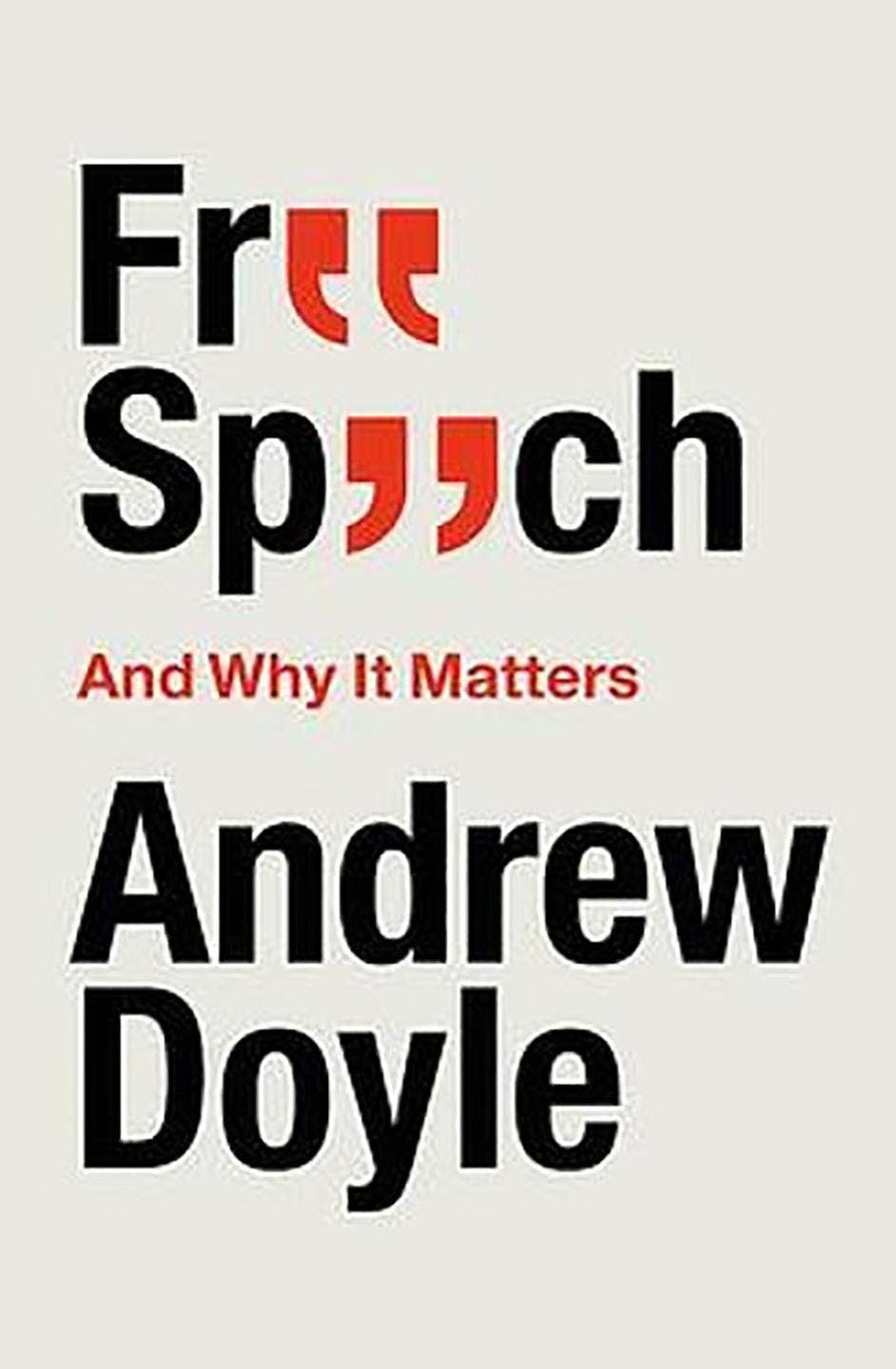
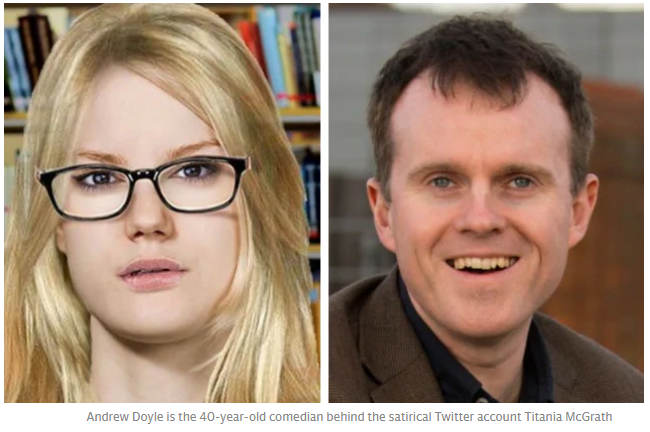
Andrew Doyle discusses the debate over the culture war in Spiked:

The phrase that probably best characterises the events of 2020 is the “New Normal”. Although it’s typically used to describe our changed circumstances under lockdown, it could just as easily be applied to the way in which we have all grown accustomed to the worst excesses of the social-justice revolution.

News stories that only five years ago would have been dismissed as asinine aberrations now recur with a quotidian certainty. Recent notable examples include: Princeton University confessing to “systemic racism”, leading to an investigation by the Department of Education on the grounds that racism is a violation of civil-rights law; the Royal Academy of Dramatic Arts making a similar admission, thereby emboldening some of its students to produce a 100-page document full of demands so entitled that it would make Veruca Salt blush; and an academic and novelist stating that debate is “an imperialist capitalist white supremacist cis-heteropatriarchal technique that transforms a potential exchange of knowledge into a tool of exclusion and oppression”. Yes, the culture war is the “New Normal”.

Yet with all the evidence before our eyes, certain commentators persist with their view that the culture war is a right-wing myth advanced by those who are resistant to change. “There’s no actual ‘culture war’, is there?”, writes LBC’s James O’Brien: “It’s just a new way of describing disagreements between people who hate racism and discrimination and people who love it.” Then there is the Guardian‘s Owen Jones, who maintains that “a lot of what’s called ‘the culture war’ is just younger people trying to assert their different social and moral values over older generations who run most of the media”. Nesrine Malik has argued that the culture war has been manufactured by the right, although it will not have escaped most people’s attention that the majority of salvos come from the left side of the battlefield.

It’s this kind of gaslighting – to borrow the language of social-justice activists – that we have already seen from writers who insist that “cancel culture” doesn’t exist, in spite of abundant and incontrovertible evidence that it does.

This is because, as Helen Pluckrose and James Lindsay have so clearly outlined in their seminal book Cynical Theories, the ideology of social justice has its origins in postmodernism, a school of thought which favours “lived experience” and multiple “ways of knowing” over objective truth. It doesn’t matter, for instance, that JK Rowling has never said or written anything transphobic — her new novel must be denounced for advancing an anti-trans agenda, even though it contains no actual references to trans people. These activists have apparently taken their cues from Humpty Dumpty in Lewis Carroll’s Through the Looking Glass (1871). “When I use a word”, he says to Alice, “it means just what I choose it to mean – neither more nor less”.

September 28, 2020

It’s been a while since these stickers occupied pride of place on every Prius bumper, hasn’t it?

Filed under: China, History, Politics, USA — Tags: , , — Nicholas @ 03:00

Arthur Chrenkoff wonders “Whatever happened to ‘Free Tibet’?”

With its heyday probably twenty years ago, it used to be a major cause celebre for artists and activists, with bumper stickers adorning countless cars, including – proverbially – the early Priuses. It was mostly a thing of the left (certainly in Australia it was largely associated with the Greens) and the hippies and New Agers enchanted by the wit and wisdom of the Dalai Lama, spruiking his version of Buddhism from exile. This probably scared many people off, which is a pity because the question of Tibetan independence shouldn’t be judged on the merits of its incense burning Western supporters.

So what happened? Tibet is certainly still not free – if anything the things have gotten worse on the rooftop of the world – but the campaign has largely dropped out of the public consciousness. I don’t quite know the answer myself. Maybe some political causes, like fashion trends, have limited life spans. Maybe the left has learned to stop worrying and live with China as one of the few viable alternatives to the “Western neoliberal world order”. Maybe China has become too rich and powerful to hope that candle-lit vigils for Lhasa will do any good.

So what’s been happening in Tibet lately, just out of interest?

September 27, 2020

QotD: The persuasive power of the newspapers

Filed under: Britain, Media, Politics, Quotations — Tags: , , , — Nicholas @ 01:00

It is a standard part of the mythology that newspapers tell their readers what to believe — and the readers believe them. This is why the left keeps shrieking about the barons controlling the press, it could only be that poisoning of the minds of the proletariat which keeps said left from sweeping all before it in politics. The actual study — you know, science — of how this works is that newspapers follow the prejudices of their readers. The Sun is not socially conservative and rightish in its views because Rupert Murdoch is so but because a large portion of the British working class is so.

Or, as we might put it, the reason the left doesn’t sweep the board with the votes of the proletariat is because large numbers of the proletariat think the left either don’t represent them, or are aware that the left are nuts.

Tim Worstall, “This Will Be An Interesting Test – Geordie Greig To Daily Mail Editor”, Continental Telegraph, 2018-06-08.

September 26, 2020

“… debate is an imperialist capitalist white supremacist cis heteropatriarchal technique that transforms a potential exchange of knowledge into a tool of exclusion & oppression”

Filed under: Media, Politics, USA — Tags: , , , , , — Nicholas @ 03:00

Andrew Sullivan‘s latest look at the ultrawoke:

If you’ve ever wondered why critical theorists and their popularizers never seem to actually expose themselves to direct criticism, this quote might help:

    I get regular invites to debate on various platforms. I always say no. Because debate is an imperialist capitalist white supremacist cis heteropatriarchal technique that transforms a potential exchange of knowledge into a tool of exclusion & oppression.

And also perhaps because debate is one of the most effective tools in rooting out ideological bullshit. Speaking of which, here’s an interview with Judith Butler, the patron saint of wokeness, in which she can actually say, with a straight face: “I am not aware that terf is used as a slur.” “Terf” is short for “Trans-Exclusionary Radical Feminist.” It’s yelled routinely at any dissenter from critical queer and gender theory. Of course it’s used as a slur.

Meanwhile, the 1619 Project has begun finally to implode. Its core argument – that America’s true founding was in 1619 not 1776, because America is in its DNA a slavocracy built on “white supremacy” and not a democracy rooted in the unrealized principle of human equality — has been withdrawn by the editor. Here’s the best summary of the rank dishonesty of the entire thing, from the preternaturally reasonable Conor Friedersdorf. He attempted to engage Nikole Hannah-Jones in good faith, a concept she simply doesn’t comprehend.

I think it’s clear by now that a completely defensible — even important — airing of new scholarship about the evil of slavery, and its profound impact on America, became hijacked at the NYT by the ideology that insists that the United States is inherently white supremacist, that this explains everything about the country, that this has never changed, that no white people were involved in perfecting the union, and that liberal democracy is a front for racism and should be dismantled. Given the extremist politics and unethical behavior of Nikole Hannah-Jones, this is unsurprising. But that this confused, half-baked rant won a Pulitzer and is being used to indoctrinate school kids in critical race theory is a staggering indictment of how corrupted by left-racism American elite journalism now is. In my view, the Pulitzer Board needs to rescind its prize. Fat chance, of course.

But there is hope. There are still reporters at the NYT interested in the truth about woke culture and politics. Nellie Bowles’ dispatch from Portland is a must-read. It’s a glimpse into the totalitarian impulses behind so many on the far left. Chilling.

September 23, 2020

QotD: Don’t blame the Boomers for the “Summer of Love” … most of ’em were too young to participate

I’ve written a lot here about how the most dangerous types in peacetime are the ones who juuuuust missed participating in some vast social upheaval. The Nazis are an obvious example. The Nazi-est Nazis of them all — Himmler, Heydrich, Eichmann, etc. — were old enough to have seen and understood the great national cataclysm that was World War I, but weren’t quite old enough to participate in it directly. Thus, when their turn came, they had to go double-or-nothing to prove to their older kin and classmates that they had what it takes. In America, guys like Teddy Roosevelt don’t make much sense until you realize that they grew up hearing their fathers and older brothers reminisce about the Civil War. And so on.

Now, I’m all for bashing the goddamn Boomers, but let’s be fair (since it matters for historical analysis). There’s a common misconception about the Baby Boom. Here, see if you can spot it:

Did you see it? Look closer, and you’ll see that while 1947(-ish) appears to be the peak year in terms of total births, the vast majority of what we call “Boomers” were born after 1950. Let’s do some simple math. The very oldest Boomers were born in 1946. The Summer of Love was 1967. Even if we assume the Summer of Love came out of nowhere — which is impossible, of course, any movement that large had antecedents going back years, probably decades, but let’s assume — that means that any “Boomers” participating were, at most, barely 22 years old. They were just barely 24 when Woodstock came around. Granted that the youngest are the dumbest, and thus can have outsize influence, they still can’t have been largely, let alone solely, responsible for the idiocy of the hippies.

That’s all on the older crowd, the so-called “Silent Generation” — the ones who were old enough to be aware of World War II, but unable to participate directly.

It’s easy to verify. The Port Huron Statement, the founding document of the New Left, was penned by coddled college kids in 1962 — meaning, by kids born, at latest, in about 1942 (its principal author, Tom Hayden, was born in 1939). Here are the Chicago Seven and their dates of birth: Abbie Hoffman (1936), Jerry Rubin (1938), David Dellinger (1915!), Hayden, Rennie Davis (1941),John Froines (1939), and Lee Weiner (1939).

Hoffman, especially, bears scrutiny. Though he’s best remembered as a Yippie — that is, the founder of an ostentatiously youth-oriented movement — he was 31 at its founding. Don’t trust anyone over thirty, right?

1936 to 1946 is only a decade, but it’s crucial. A kid born in 1936 would have vivid memories of World War II and its immediate aftermath — fathers, uncles, and older brothers (and, in more than a few cases, aunts and older sisters) coming home from the service. A kid born in 1946 would have a completely different experience — ask any combat veteran about the first year or two back in the world, versus being home for a decade. Those guys — the kids who saw firsthand the angry young strangers they were supposed to call “Dad” — were the ones who did the real damage in The Sixties(TM), just as it was the almost-but-not-quite frontsoldaten who did the real damage in the Third Reich.

With me? Now hang on to your hats, because here’s where it gets pretty meta: It was the “Silent Generation,” not the Boomers, who did the real damage in The Sixties(TM). That is, the guys who juuuust missed the giant social upheaval that was World War II. The Boomers have done all the damage since The Sixties(TM).

That — The Sixties(TM), which is why I’m using that obnoxious (TM) — is the great social upheaval they juuuust missed. [These people] aren’t old fossils from the flower power years, though many of those fossils are still alive and kicking (including four of the Chicago Seven: Hayden, Davis, Froines, and Weiner). Has anyone heard from Billy Ayers lately? How about Noam Chomsky (born 1928)? I’m sure they have plenty to say … but nobody cares.

It’s not retreads from The Sixties(TM) out there doing this stuff. It’s the people who wish they’d been around for the Summer of Love that are doing it. It’s the people who just know they would’ve ended the Vietnam War, if only they hadn’t been in junior high at the time. This is their Woodstock, not least because they only heard about the original when they arrived for freshman orientation in 1976.

Severian, “Talkin’ ’bout My Generation!”, Rotten Chestnuts, 2020-06-11.

September 17, 2020

Book burning’s back on the menu, boys!

Filed under: Books, Britain, Politics — Tags: , , , , , , — Nicholas @ 05:00

Brendan O’Neill on the latest fad for the ultrawoke celebrities — book burning.

J.K. Rowling

So it turns out that Jedward, with their quiffed Aryan hair and strangely intense mannerisms, don’t only look like a couple of members of Hitler Youth who’ve been on a shopping spree at TK Maxx. They sound like it too. Yesterday, ever keen to jump on a bandwagon, even if it’s a bandwagon of misogynistic hate, the Shining twins of Irish pop suggested to their Twitter followers that they should burn JK Rowling’s next novel when it is published. “Does anyone need firewood this winter!”, they tweeted. “JK’s new book is perfect to burn next to a Romantic fire. Aww get all cozy and comfy can’t wait.”

Let’s leave to one side the industrial levels of gall it must require for two blokes who don’t know the difference between an exclamation mark and a question mark to have a pop at the most successful British author of all time. The more striking thing about Jedward’s tweet is that it suggests book-burning is back. Their tween-fascist cry for the burning of Rowling’s forthcoming novel was retweeted and liked thousands of times, by armies of so-called trans allies who now look upon Rowling as a real-life Voldemort: a despicable, evil figure whose works should be tossed on to raging bonfires as the woke mob yelps with delight.

The hatred for JK Rowling is out of control. It goes far beyond the everyday attempted cancellations and screeching Twittermob assaults on anyone who dares to deviate from the correct-think of the PC elites. The hatred for Rowling is far more raw, far more intense, far more irrational.

Her intellectual sin, her speechcrime, is of course that she believes in biological sex. She thinks there are differences between men and women. She thinks biological males should bugger off out of women’s changing rooms, sporting tournaments, prisons, rape-crisis centres, and so on. Many of us agree with her. And for this, she is frequently bombarded with rape threats and death threats. “Suck my cock!”, sexist pigs tweet at her. They invite her to die in a fire. They send her explicit pornography. This week #RIPJKRowling trended on Twitter. These people are insane. When your “activism” involves tirelessly insulting and sexually harassing a woman for having a thought that is different to your own, you need to have a serious word with yourself.

The deranged Rowling hate intensified this week after it was reported that her next Strike novel – the detective series she writes under the name Robert Galbraith – will involve a backstory about a man who dresses as a woman and then goes around murdering women. “Transphobia!”, the woke Twitterati predictably yelled. Not for the first time the sexist fury with Rowling for having the temerity to be a woman who thinks for herself was in large part inflamed by Pink News, the online gay magazine that has done more than most to depict women who are sceptical of certain aspects of transgenderism as “TERFs” – that is, witches, bitches, uppity broads who really ought to do what the editors at Pink News tell them to.

September 16, 2020

The Canadian echo chamber on American political issues

Filed under: Cancon, Media, Politics, USA, Weapons — Tags: , , , , , — Nicholas @ 05:00

Ben Woodfinden’s latest for The Dominion looks at the weird effects political passions in the United States have on political stances in Canada:

Restricted and prohibited weapons seized by Toronto police in a 2012 operation. None of the people from whom these weapons were taken was legally allowed to possess them.
Screen capture from a CTV News report.

Participatory media increasingly defines and shapes our discourse. It submerges us in a broader reality but only does so by filtering it into a digital reality that offers a distorted reflection rather than picture of the real world. This has been going on for at least a decade now, but the pandemic has accelerated this transformation of our discourse and politics. By locking us in our homes the pandemic forces us to view the world through a digital lens even more than we already did, and in a world where we’re all viewing everything through our screens that digital reality becomes closer and closer to our primary reality.

One of the specific, and most pernicious effects of this, as I lamented in The Critic is that it turns us all into online Americans participating in their politics through the digital medium, rendering us virtual participants and not just foreign observers. I won’t repeat myself too much, I’d recommend just reading the piece [link], but the online realm is American, and what digital politics does is make politics everywhere more American. We participate in it as a game and a form of entertainment. This bleeds back into our own politics.

Americanized Discourse

Gun politics is one particular political issue where Americanized discourse is most pronounced. It captures perfectly how Americanization plays out. Every time there is some sort of tragic shooting or discussion of gun violence in Canada the debates play out in depressingly predictable ways. Progressives and Liberals paint a picture in which Canada suffers from the kind of rampant gun violence and mass proliferation of firearms as in America. This is the framing used to justify often highly symbolic or ineffective new gun laws and restrictions that, while often not all that effective, make the Liberals and progressives seem like the party for gun control in the face of this rampant violence. But only if you pretend we live in America.

And it’s not just the Liberals and progressives who play this game. Listen to some of the more vocal advocates of “gun rights” in Canada and you’d think we have a second amendment in the Charter. One side wants to make it seem like Canadians are walking around with and easily able to acquire assault weapons, the other side wishes it were so! The reality of course lies somewhere in between. Gun possession is heavily regulated, but lawful citizens can still buy firearms if they want to, and there is no explicit right in the Charter that prevents the government from regulating and restricting firearms. Talking about gun “rights” in Canada is itself quite a foreign and imported concept. At the same time we don’t have an epidemic of gun violence, and while we have experienced some horrific mass shootings, like the recent Nova Scotia tragedy, gun violence in Canada pales in comparison to the United States.

But because both sides are essentially happy to help paint a phantasmic picture of gun violence and/or gun regulations in Canada, we end up with a surreal politics around guns. Sensible debates around guns are made harder by this because debates take place on top of a framing and narrative that draws explicitly on American political culture more than it does Canada’s. Both sides want to take on American roles and are happy to contribute to this framing.

Gun politics is just one example, and there are so many others. Our discourse is so often built around framings that make it seem as if the issues and political cleavages here are indistinguishable from American ones, but it only happens because we import American framing and narratives into our own discourse and then build are arguments around these phantasms. We, like many other countries around the world, are in the middle of a moment of racial reckoning, or whatever you want to call it, because of something that happened in Minneapolis, not in Canada.

Racism is a real thing in Canada, no honest person should deny this, because there is racism in absolutely every country and society. But in the wake of George Floyd’s killing we ended up having a conversation about racism that reflected the particular ways racism works in America.

September 15, 2020

When you mix up cause and effect

In the Continental Telegraph, Esteban remembers a Reagan bon mot that is still observably true today:

US President Ronald Reagan and Soviet General Secretary Mikhail Gorbachev at the Hofdi House in Reykjavik, Iceland during the Reyjavik Summit in 1986.
Official US government photograph via Wikimedia Commons.

Ronald Reagan once observed that “the trouble with our liberal friends isn’t that they are ignorant, it’s that so much they know isn’t so”. I am repeatedly surprised by Leftists’ ability not to just get something wrong, but to get it spectacularly, 180 degrees wrong.

First, a couple of examples from the archives – some years ago there was an article in the NY Times (or WaPo perhaps) quite distressed that even though crime rates in the U.S. were at historically low levels the percentage of the population in prison was quite high. “Why are we putting so many people in prison when the crime rate is low?” they wondered, seriously. Hmm, how about this – when we put more bad people in prison the crime rate goes down? Keep in mind that the crime rate is what’s happening now, the prison population is who we caught and locked up over the past several years.

Then we had an article in a West Coast newspaper wondering why the homeless population in San Francisco had grown dramatically in recent years despite all the wonderful things the city had done to help them – weekly stipends, free shopping carts, etc. Note that none of this assistance to the homeless enabled them to become independent or required them to better themselves, they were all handouts. How is it that offering lots of goodies to homeless people attracts more of them here?

My point in bringing up these old stories is that it seems impossible that someone could fail to see they had cause and effect reversed. How could someone intelligent enough to write a column get these stories so backwards. The only answer I can see is that their worldview, at least in these areas, flows in only one direction and the underlying premise can never be questioned – putting people in prison is bad, there can be no possible upside, giving homeless people stuff is good, there can be no downside. So, when things get worse it’s a mystery, we can’t reconsider our starting point.

September 13, 2020

“Systemic racism” in Canada

Filed under: Cancon, Government, Politics — Tags: , , , — Nicholas @ 03:00

At The Line, a useful examination of what is meant in the Canadian context by the term “systemic racism”:

Can we go back one step? “Systemic racism.” Let’s start there: which system? The legal system? Our social welfare system? The policing system? The media? Our corporations? All of human society? Are we talking about Canadian society, or North American society as whole? Are there geographic limits to the systems we’re talking about? Is China systemically racist?

Let’s break this down further: what definition of “racism” are we using? Are we using the old definition whereby any bigotry based on skin colour is “racist”? Or are we engaging the new definition, where “racism” is an expression of structural power — and, therefore, only white people can be racist because only they hold structural power?

It’s impossible to fix a problem if we can’t come to a common understanding about plain meanings of the terms we are using. Vague in, vague out.

There are many statements of “systemic racism” that we, at The Line, would have no qualms agreeing with, i.e.; “The Indian Act is a clear example of systemic racism in Canadian law.” That isn’t a controversial position — but it also isn’t an unclear one. Asserting a belief in “systemic racism” sounds like a broadly agreeable thing to do, but the term is loaded with meaning and ideological baggage that is not immediately apparent.

Take, for example, a claim that Canadian society is systemically racist because it is structured at all levels to favour white dominance — and that any disparity of outcome between racial groups is proof of that fact. Well, that’s a much more all-encompassing ideological position, isn’t it? There’s a perfectly legitimate framework for critique in here, but there’s also a lot to unpack.

It’s easy to find legitimate examples of systemic racism while leaving the actual meaning and implications of the term both vague and tautological. But if we’re going to use statement of belief in “systemic racism” as some kind of litmus test for political acceptability, the clear meaning of the term matters.

In the absence of that clarity, using it as a gotcha question and backing people in public life into reciting this stuff as if it were some kind of statement of faith comes off as not a little creepy.

September 12, 2020

Andrew Sullivan on a “genetic case for communism”

Filed under: Books, Education, Politics, Science, USA — Tags: , , , , , — Nicholas @ 03:00

Actually, this isn’t the case Sullivan himself is making, but he’s summarizing a recent book by Fredrik deBoer, The Cult of Smart: How our broken education system perpetuates social injustice:

There aren’t many books out there these days by revolutionary communists who are into the genetics of intelligence. But then there aren’t many writers like Freddie DeBoer. He’s an insistently quirky thinker who has managed to resist the snark, cynicism and moral preening of so many others in his generation — and write from his often-broken heart. And the core of his new book, The Cult of Smart, is a moral case for those with less natural intelligence than others — the ultimate losers in our democratic meritocracy, a system both the mainstream right and left have defended for decades now, and that, DeBoer argues, gives short shrift to far too many.

This isn’t a merely abstract question for him. He has grappled with it directly. As a school teacher he encountered the simple, unavoidable fact that some humans are more academically gifted than others, and there’s nothing much anyone can do about it. He recalls his effort to teach long division to a boy who had managed to come a long way socially (he’d gone from being a hell-raiser to a good student) but who still struggled with something as elemental as long division: “At one point he broke into tears, as he had several times before … I exhaled slowly and felt myself give up, though of course I would never tell him so. I tried to console him, once again, and he said, ‘I just can’t do it.’ And it struck me, with unusual force, that he was right.”

What DeBoer tries to do is explain how our current culture and political system is geared to torment, distress and punish this kid for no fault of his own. “This is the cult of smart,” DeBoer proclaims. “It is the notion that academic value is the only value, and intelligence the only true measure of human worth. It is pernicious, it is cruel, and it must change.” It has become un-American — or perhaps it always was? — to say that an individual has natural limits, that, even with extremely hard work, he won’t always be able to realize his dreams. And this is not because of anything he has done or failed to do — but simply because of his draw in the genetic lottery of life. The very American cult of education is supposed to end this injustice — except that it doesn’t, because it can’t, and its brutal logic actually exposes and entrenches the least defensible inequality of all, the inequality of nature.

This genetic reality — in fact, the very idea of nature existing at all — is currently a taboo topic on the left. In the most ludicrously untrue and yet suffocatingly omnipresent orthodoxy of our time, critical theory leftists insist that everything on earth is entirely socially constructed, that all inequality is a function of “oppressive systems”, and that human nature itself is what John Locke called a “white paper, void of all characters” — the famous blank slate. Freddie begs to differ: “Human behavioral traits, such as IQ, are profoundly shaped by genetic parentage, and this genetic influence plays a larger role in determining human outcomes than the family and home environment.”

People are not just born unequally and unfairly into class, and culture, and place, they are inherently unequal in various ways in their very nature: “not everyone has the same ability to do calculus; not everyone has the same grasp of grammar and mechanics … we can continue to beat our heads against the wall, trying to force an equality that just won’t come. Or we can face facts and start to grapple with a world where everyone simply can’t be made equal.” And this is not a counsel of despair. What Freddie is arguing is that, far from treating genetic inequality as a taboo, the left should actually lean into it to argue for a more radical re-ordering of society. They shouldn’t ignore genetics, or treat it as unmentionable, or go into paroxysms of fear and alarm over “eugenics” whenever the subject comes up. They should accept that inequality is natural, and construct a politics radical enough to counter it.

[…]

This genetic case for communism can leave a reader a little disoriented, I have to say, if only for its novelty. But it is more coherent, it seems to me, than a leftism that assumes that genes are irrelevant to humans and society, that the ultimate goal is to be as smart and thereby wealthy as possible, and that we can set up an educational system where everyone, regardless of their genetic inheritance, can succeed or fail by their own efforts. What sounds like a meritocratic dream is, in practice, a brutal and unforgiving formula for most who can’t achieve it — and has obviously failed if its task is to foster equality. In fact, mass education appears to have increased the gulf between rich and poor. As Freddie notes, “education is not a weapon against inequality; it is an engine of inequality.”

« Newer PostsOlder Posts »

Powered by WordPress