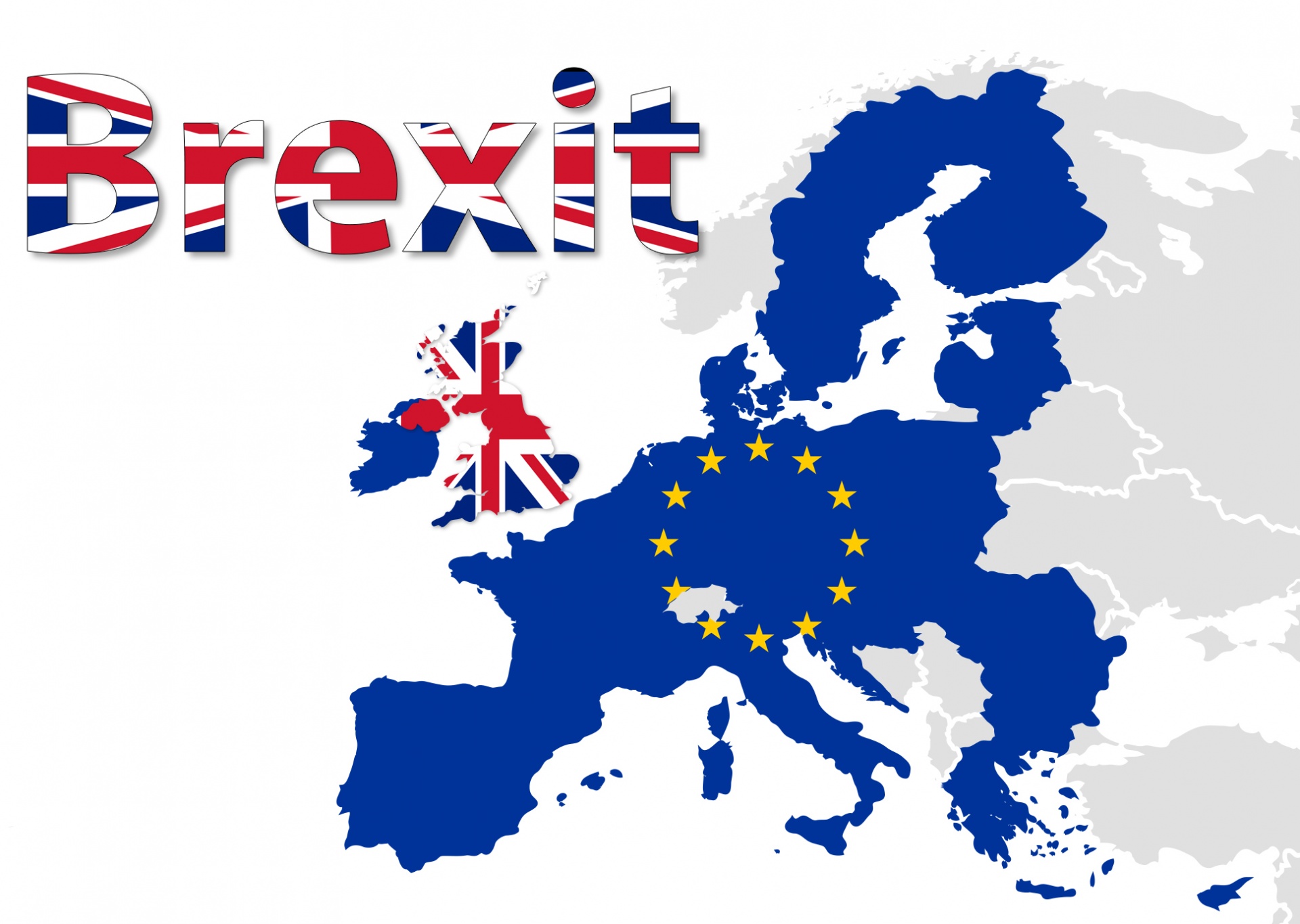
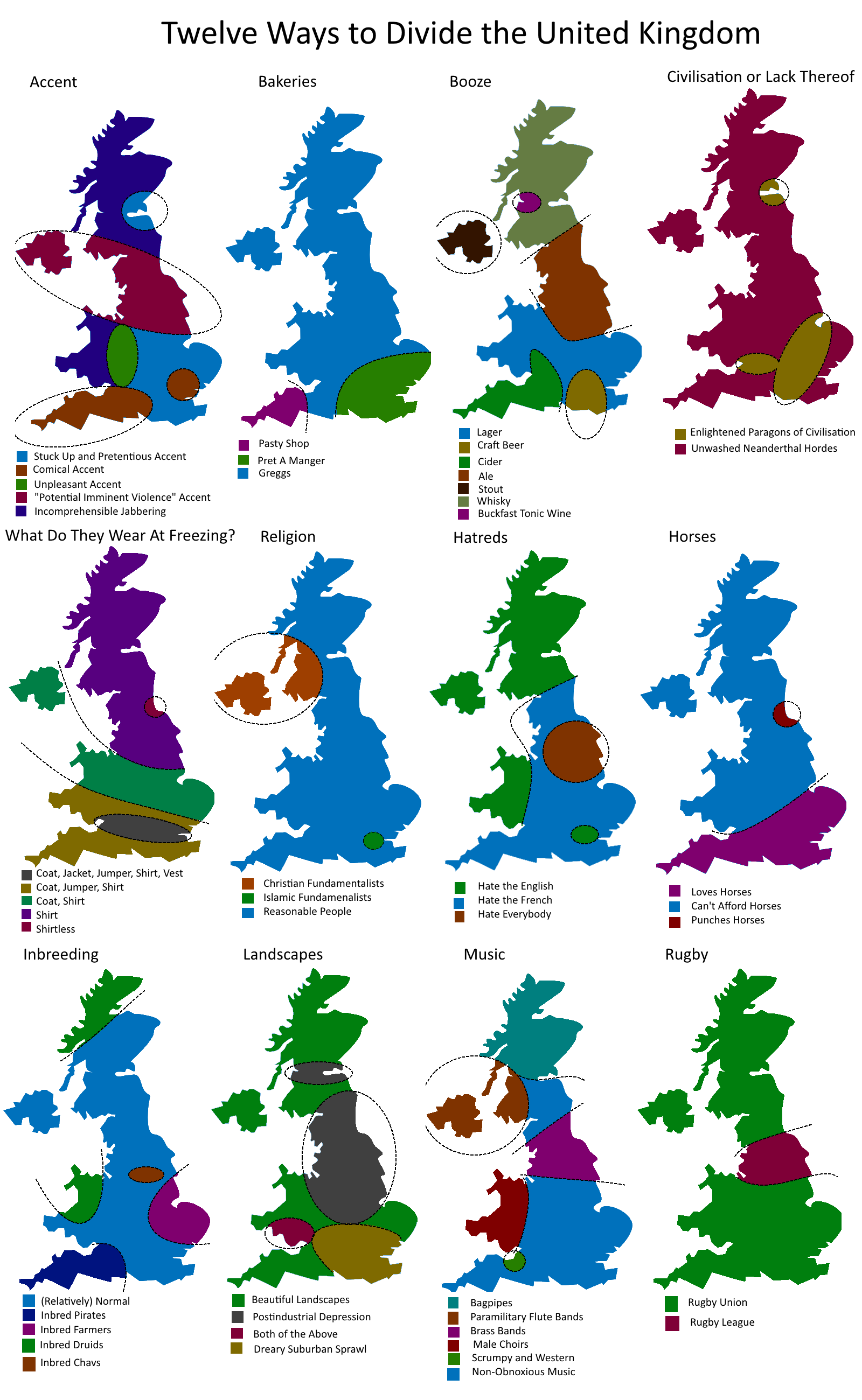
Back when I first set up the blog, it was clear that certain countries would be mentioned frequently enough to merit having their own categories … Canada, obviously, the United States, our gigantic neighbour, and Britain. As I was born in England nearly 65 years ago, events in the old country still have a resonance for me, but I preferred to call the union “Britain” rather than its formal name of “United Kingdom” — and I try to use the proper names of “England”, “Scotland”, “Wales” and “Ireland” as tags when historically appropriate. I don’t regret that decision at all:
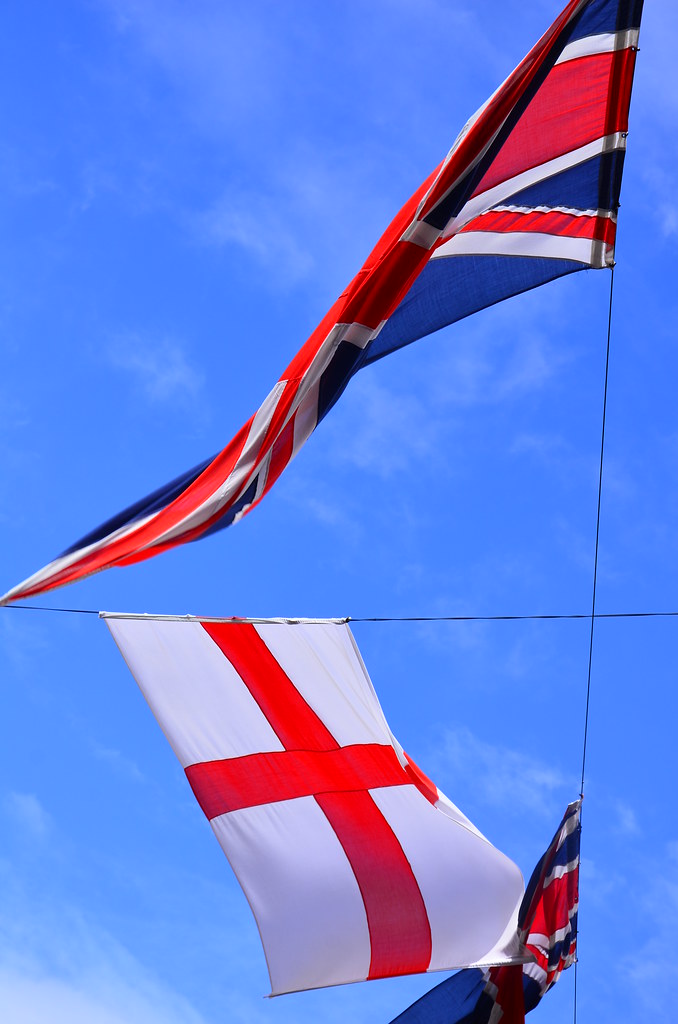
“Union Jacks and crosses of St George” by Ben Sutherland is licensed under CC BY 2.0 
 .
.
The current national flag-waving by the English is hugely gratifying for those of us who feel that our beloved country has been sidelined for too long.
Along with that visible symbol of English patriotism, may I make another plea – for I don’t want to live in an abbreviated country!
That country used to be called Britain, now usually described as “the UK” – and we see “Great Britain” even less.
Britain, the very name of which resonates with history, and of which I am very proud, has been reduced to a two-letter abbreviation – ugly-looking when written, and something akin to a cheerleader’s chant when spoken: “Yoo-Kay”, and bearing a sad resemblance to “Yukky”.
Almost every country in the world has a “real” name that helps its residents feel a sense of identity. But “I live in the UK”? It has a horribly soulless feel about it, like something a faceless quango has drawn up on the spur of the moment – certainly not a name rich in tradition that has been carried down the millennia.
It was not always so. This reduction of the title of our glorious islands has happened insidiously over the past two or three decades without most folk noticing it. One has only to glance through old newspapers and magazines, or listen to old broadcasts on radio and TV, to notice that 30 years ago the term ‘UK’ was rarely used.
It is ironic that our national broadcaster, the BBC, has ‘British’ enshrined in its very name, yet that organisation is among the worst offenders, almost always preferring ‘UK’ over ‘Britain’ or ‘British’!
How has this happened? There are perhaps many reasons; but the most obvious has been the use of .uk as the terminator in website addresses. If .gb had been the standard, as originally proposed, things may now be quite different.
One of the odd things about all this is that foreigners mostly still use the term ‘Britain’ rather than ‘the UK’ – putting us to shame.
Some may ask: ‘Why does this matter?’
It matters greatly, for the very word ‘Britain’ conveys the feeling of being connected to ancient history. It’s a name with centuries of glorious tradition behind it, a history which we should never be ashamed of proclaiming.
And what about England? Perhaps even worse than the reduction of our islands to an abbreviation is the widespread lack of recognition for my homeland, England.
Update, 2 September: Welcome, Instapundit readers! Please do have a look around at some of my other posts you may find of interest. I send out a daily summary of posts here through my Substack – https://substack.com/@nicholasrusson that you can subscribe to if you’d like to be informed of new posts in the future.