
In 1906, Upton Sinclair came out with his book The Jungle, and it shocked the nation by documenting the horror of the meat-packing industry. People were being boiled in vats and sent to larders. Rat waste was mixed with meat. And so on.
As a result, the Federal Meat Inspection Act passed Congress, and consumers were saved from ghastly diseases. The lesson is that government is essential to stop enterprise from poisoning us with its food.
To some extent, this mythology accounts for the wide support for government’s involvement in stopping disease spread today, including Covid and the catastrophic response.
Not only that, but the story is also the basis for the US Department of Agriculture’s food inspection efforts, the Food and Drug Administration’s regulation of medical drugs, the central plan that governs food production, the Centers for Disease Control and Prevention, and the legions of bureaucrats who inspect and badger us every step of the way. It is the founding template for why government is involved in our food and health at all.
It’s all premised on the implausible idea that people who make and sell us food have no concern as to whether it makes us sick. It only takes a quick second, though, to realize that this idea just isn’t true. So long as there is a functioning, consumer-driven marketplace, customer focus, which presumably includes not killing you, is the best regulator. Producer reputation has been a huge feature of profitability, too. And hygiene was a huge feature of reputation — long before Yelp.
Sinclair’s book was not intended as a factual account. It was a fantasy rendered as an ideological screed. It did drum up support for regulation, but the real reason for the act’s passage was that the large Chicago meat packers realized that regulation would hurt their smaller competitors more than themselves. Meat inspections imposed costs that cartelized the industry.
That’s why the largest players were the law’s biggest promoters. Such laws almost have more to do with benefiting elites than protecting the public. It was not really about safety, the best scholarship shows, but exclusionary regulation to raise competitors’ costs of doing business.
Jeffrey A. Tucker, “Poke and Sniff: A Lesson from 1906”, Brownstone Institute, 2022-06-29.
October 21, 2022
QotD: The real reason for Upton Sinclair writing The Jungle
August 9, 2022
When asking a simple, factual question is treated as a direct personal attack
Chris Bray explains why just asking for [certain] facts is enough to trigger people who think you’re somehow saying that they’re not “good people”:
Come back to the cultural sewer with me, just for a moment, because here’s the last time I’ll lay a quote on you from Klaus Schwab’s COVID-19: The Great Reset, from a discussion about public health measures to contain the pandemic:
This is ultimately a moral choice about whether to prioritize the qualities of individualism or those that favour the destiny of the community. It is an individual as well as a collective choice (that can be expressed through elections), but the example of the pandemic shows that highly individualistic societies are not very good at expressing solidarity.
Now: Pharmaceutical products sometimes fail, and sometimes cause serious harm, and it frequently takes a while for reality to get out of the dugout and take the field, so keep taking your FDA-approved Vioxx. It’s safe and effective! I rarely give up on books, but I gave up on Ben Goldacre’s 2012 book Bad Pharma about halfway through — for the same reason you’d stop eating a skillfully prepared shit sandwich. I felt like, yes, I get the point: Sometimes a drug is ineffective, sometimes a drug is outright harmful, and the manipulation of science and of regulatory agencies is more common than you would ever have wanted to know.
But it’s different this time, even while “this time” fits a very long pattern. As much as Big Pharma course corrections are always hard, this one will be infinitely harder. We’re not currently debating the efficacy of a pharmaceutical product, or of a class of pharmaceutical products; instead, we’re debating self-conception, social status, and cultural position. The claim “I don’t think these mRNA injections are as safe as they’ve been made out to be” is a character attack that threatens to take people out at the core like dynamite under a bridge: Are you saying I’m not a good person?
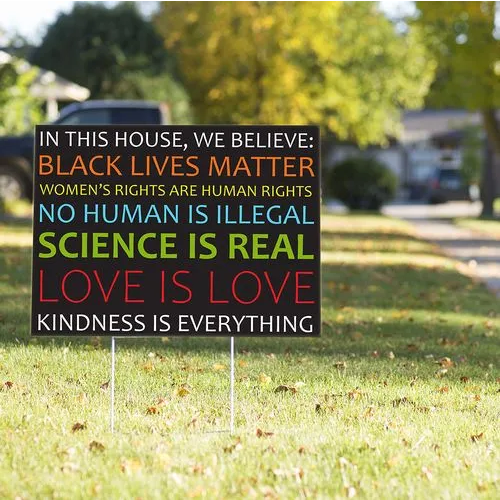
Bad Cattitude has been on fire lately on the topic of elite self-hypnosis and the descent into an “entirely hallucinatory landscape”. Consistent with this shrewd feline analysis, look again at what Klaus Schwab said about lockdowns and the suppression of economic activity in the name of public health: He said that shutting down our open societies was a “moral choice” about “expressing solidarity”. (My mask is for you, your mask is for me!) The discussion isn’t about what works, and has never been about what works. It has never been a discussion about the efficacy of anything; it’s a posture about social character, and always has been. Are you a bad, selfish person, or are you a good person who believes in kindness? The subtext about social class strikes me as too obvious to explicate, because mean people belong in their trailer parks in flyover country, and kind people are high-status. Review the lawn signs if you doubt this.
So when you question the little vial of fluid that goes into a syringe to be injected into your body, you’re not asking questions about the way a medical product works — or at least, you’re not asking questions that are perceived, by advocates of the injections (or the lockdowns, or the masks), as a discussion about safety and efficacy. You say, “Does it work? Is it safe?” — but they process it as an attack on their moral choice to express solidarity:
Are you saying we should have stood up for selfishness? Which means, if we bring the subtext to the surface, Are you saying we should have engaged in low-status behavior?
July 25, 2022
Political memes: threat or menace?
In Quillette, Christopher J. Ferguson considers the social dangers of sharing political memes:
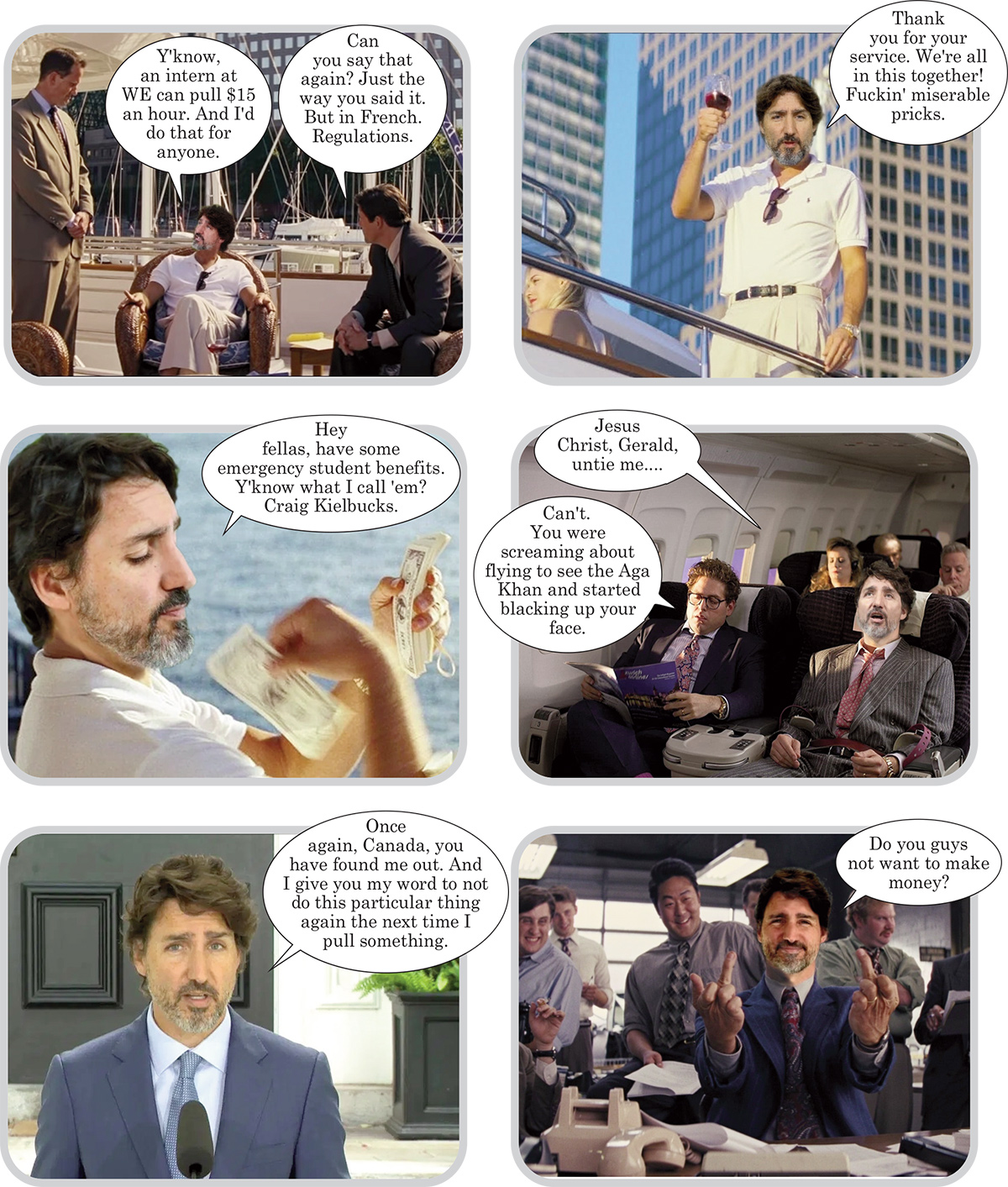
Modern politics has always been replete with issues about which people feel passionate, sometimes aggressively so. But the culture wars currently raging in the US, Canada, and across much of the industrialized West seem to be particularly fraught. In my 50-plus years, I have never seen so much anger and hostility among citizens of otherwise stable countries. Some of these people will participate in protests or engage in civil disobedience, but many more will employ the political meme to express their discontent. Given how widespread the phenomenon has become, it’s worth asking whether political memes actually advance advocacy goals and our knowledge of important issues, or if they simply feed an unconstructive cycle of anger, misinformation, and polarization.
The term “meme” was coined by Richard Dawkins, who used it to describe units of culture, socially transmitted and imitated across generations in ways synonymous with genes — adaptive ideas survive, while maladaptive ideas perish. But in the social media age, the word usually refers to “an image, video, piece of text, etc., that is copied and spread rapidly by Internet users often with slight variations”. The subset of memes that focus on politics are generally designed to boil complex issues down to a digestible combination of emotive image and sloganeering text that flatters those who agree with its message and provokes those who do not.
Most academics who study memes agree that they are poisonous to healthy public discourse (“toxic” is a word that crops up a lot, even in the scholarly literature). One scholar bluntly called them “one of the main vehicles for misinformation”, and they tend to distort reality in several ways. By their very nature, they leave no room for nuance or complexity, and so they are frequently misleading; they tend to lean heavily on scornful condescension and moral sanctimony (usually, the intended takeaway is that anyone who agrees with the point of view being — inaccurately — mocked is an imbecile); they make copious use of ad hominem attacks, straw man fallacies, and motte-and-bailey arguments; they intentionally catastrophize, generalize, personalize, and encourage dichotomous thinking; and they are aggressive and sometimes dehumanizing. They are, in other words, methods of Internet communication that display all the symptoms of a borderline personality type of mental disorder. Of course, it’s possible to construct a meme that is short yet still thoughtful and sophisticated, but these are few and far between.
The best evidence we have today is incomplete and limited, but it suggests that political memes have a net negative effect on society. If the idea is to persuade or advance practical advocacy goals, then there is little evidence that they work. To the contrary, they may be counterproductive — the evidence we do have suggests that they contribute to political polarization, distort issues in the name of political expediency, and provoke indignation, hatred, and intolerance (on both sides of the political spectrum). Yes, the available evidence is fragmentary and would certainly benefit from better and more open science designs. However, it accords with larger observations about social media and political polarization. Perhaps new and better research will reveal that alarm about the negative effects of memes is simply another moral panic comparable to those that arose around video games or smoking in movies. But since memes add almost nothing to public discourse that would offset the risks, it’s probably worth hesitating before sharing them.
I save the odd meme that wanders through my various social media sites that I find amusing or (occasionally) effective, and memes as described in this article certainly do seem to be far more common than they were even a few years ago. A few selections below the fold, just because:
July 24, 2022
Still no actual evidence of unmarked graves for Residential School children
In Quillette, Jonathan Kay updates the year-old sensational stories about First Nations children being buried in unmarked (in more unhinged reporting it might have been “mass”) graves on the grounds of former Residential Schools in Canada:
Canada’s unmarked-graves story broke on May 27th, 2021, when the Tk’emlúps te Secwépemc First Nation reported the existence of ground-penetrating radar (GPR) data that indicated regularly spaced subterranean soil disturbances on the grounds of a former Indigenous Residential School that had operated in Kamloops, BC between 1893 and 1978. In addition, the First Nation’s leaders asserted their belief that these soil disturbances corresponded to unmarked graves of Indigenous children who’d died while attending the school.
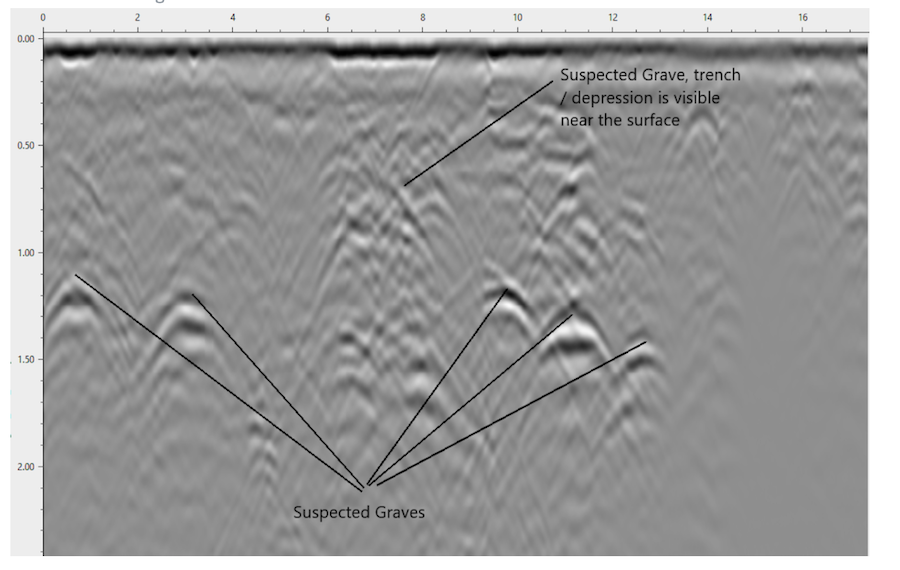
The story became an immediate sensation in the Canadian media; and remained so for months, even after the GPR expert on whom the First Nation relied, Sarah Beaulieu, carefully noted that the radar survey results didn’t necessarily indicate the presence of graves — let alone graves that had been unmarked, graves of Indigenous people, or graves of children. Contrary to what many Canadians came to believe during that heady period, GPR survey data doesn’t yield X-ray-style images that show bodies or coffins. What it typically shows are disruptions in soil and sediment. Investigators then need to dig up the ground to determine what actually lies underneath.
An explanatory image posted by GeoScan, a Canadian Ground-Penetrating-Radar service provider, showing how mapped GPR data can indicate the possible presence of graves.
Image via Quillette.But those details were swept aside during what, in retrospect, appears to have been a true nation-wide social panic. As other Indigenous groups announced that they’d be conducting their own GPR surveys, media figures confidently asserted that the original Canadian Residential-School student death-toll estimate of 3,201 would soon double or even triple. One op-ed writer went so far as to declare that “the discovery of the graves of the children in Kamloops may be Canada’s Holocaust moment.” Dramatic, tear-drenched acts of public atonement unfolded everywhere, with many July 1st Canada Day celebrations being either cancelled or transformed into opportunities for morose self-laceration.
I was one of many Canadians who initially got swept up with all of this — in large part because it seemed as if everyone in the media was speaking with one voice, including journalists I’d known and respected for many years. Looking back on the coverage, I note that headline writers mostly skipped over the technical bits about soil dislocations and such, and went straight to “bodies” and “graves”. And the stories often were interspersed with credulous recitations of dubious tales featuring live babies being thrown into furnaces or buried alive.
The whole mission of Canada’s church-run Residential School system was to assimilate Indigenous people into white Canadian society, usually against their will, while forcing children to leave their families and communities for months or even years at a time. No one disputes that many students were subject to cruel (and sometimes even predatory) treatment and substandard medical care. Certainly, the death rate for Indigenous children attending these schools was much higher than that for children in the general population. No, I never bought into the idea that there was any kind of mass-murder plot going on at these schools. But it hardly seemed far-fetched that some victims of mistreatment and neglect had been buried in unmarked graves — “off the books”, so to speak—by malevolent white teachers, school administrators, and priests seeking to evade responsibility for their actions.
The other important aspect to mention is that — like most other Canadians, I’m guessing — I believed we were only a few days or weeks from seeing real physical evidence plucked from the earth. So it didn’t much matter to me that early commentators were temporarily playing fast and loose with the distinction between GPR data and actual corpses.
Canadians were being told that the old orchard in Kamloops where the GPR data had been collected was a crime scene — a site of mass murder, and the final resting place of 215 child homicide victims. As I’ve reasoned elsewhere: If you told Canadians that, say, 215 murdered white children were buried somewhere in Toronto, or Ottawa, or Vancouver, there’d be investigators and police crawling all over the place, looking for remains that could be tested and identified. And so I naturally assumed the same thing soon would be happening in Kamloops.
But … no. Not at all, in fact.
As I wrote over a year ago, the way the story swept the media was as if the whole Residential School history was somehow new and previously unknown:
Despite being Canadian, my interest in Canadian history centres mostly on economic, naval, and military aspects, but I was certainly aware that the residential school system was a black mark on Canada’s historical dealings with First Nations and that the general outline of events — if not the gruesome details — had been known for many years. The first time I found out about it was in middle school, through what we’d now call a “Young Adult” novel about a young First Nations boy escaping from the residential school he’d been sent to and his attempts to travel hundreds of miles to get home. I read it in the early 70s and it may have been published up to a decade before then (I no longer remember the author’s name or the title of the book, unfortunately).
If I, as a schoolchild, knew something of this fifty years ago, why have people younger than me been shocked and appalled to be hearing about this widespread tragedy for the first time now?
July 1, 2022
Trying to reconcile the highly mediagenic “Residential School mass graves” stories with facts-on-the-ground
Prime Minister Justin Trudeau — never one to miss opportunities to preen before the camera and shed a performative tear or two — quickly ordered Canadian flags to half-staff when the stories about unmarked graves on the grounds of former residential schools spread across the world. Claims and accusations flew, based on ground-penetrating radar scans that didn’t actually prove that the surveyed land contained lost graves. Once the narrative was established, it provided many opportunities for First Nations organizations, activists, and Canadian and foreign politicians to moralize, condemn, and demand investigations, restitution, and apologies from the Catholic church (which ran over 40% of the residential schools), and the provincial and federal governments.
So, more than a year later … what has been investigated? Not much, it turns out:
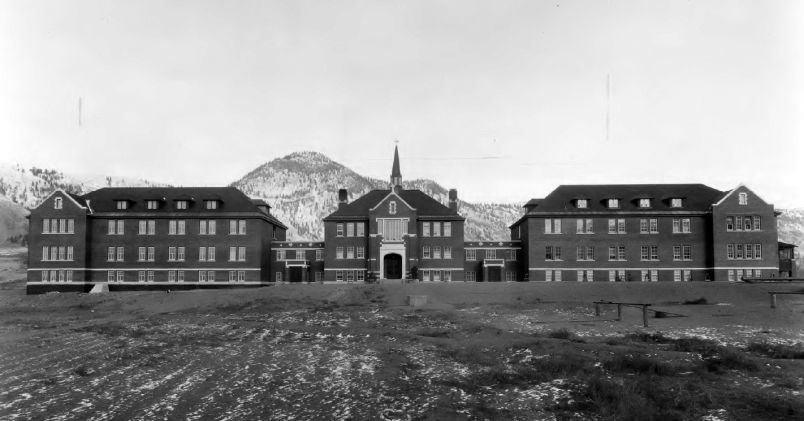
Kamloops Indian Residential School, 1930.
Photo from Archives Deschâtelets-NDC, Richelieu via Wikimedia Commons.
Sixty-eight Christian churches, mostly Roman Catholic, were vandalised or even burned to the ground. Many of these were historical church buildings still used and revered by native people. The pretext for arson and vandalism was that the Kamloops Indian Residential School had been run by a Catholic religious order, as had 43% of all residential schools. Imagine the outrage if 68 synagogues or mosques had been vandalised and burned. Yet the attacks on 68 Catholic churches passed with only mild criticism.
An article in the New York Times was typical of media commentary about the unmarked graves. It was first published under the headline “Horrible History: Mass Grave of Indigenous Children Reported in Canada” on 28 May and updated on 5 October under the same title. It asserted that: “For decades, most Indigenous children in Canada were taken from their families and forced into boarding schools. A large number never returned home, their families given only vague explanations, or none at all.”
Because the corporate press take their cue from the New York Times, its perspective echoed widely. The discovery of the so-called unmarked graves was chosen by Canadian newspaper editors as the “news story of the year”. And the World Press Photo of the Year award went to “a haunting image of red dresses hung on crosses along a roadside, with a rainbow in the background, commemorating children who died at a residential school created to assimilate Indigenous children in Canada”.
But the award this news report should have won is for fake news of the year. All the major elements of the story are either false or highly exaggerated.
First, no unmarked graves have been discovered at Kamloops or elsewhere. GPR has located hundreds of soil disturbances, but none of these has been excavated, so it is not known whether they are burial sites, let alone children’s graves. At her original press conference, the Chief of the Kamloops Indian Band called these findings unmarked graves, and the media, politicians, and even Pope Francis ran with the story without waiting for proof.
Similar claims from the chiefs of other Indian reserves ran into grave difficulty (no pun intended) because the GPR research was conducted in whole or in part on community cemeteries located near the sites of residential schools. It would hardly be surprising to find burial sites in a cemetery! But again, since no excavations have been conducted, it is not known whether these unmarked graves contain the bodies of children.
North American Indians did not conduct burials; they usually exposed the bodies of the dead to be worn away by predators and the elements. Christian missionaries introduced the practice of burial. But Indian graves were usually marked by simple wooden crosses that could not long withstand the rigours of Canadian weather. Thus Indian reserves today contain probably tens of thousands of forgotten unmarked graves of both adults and children. To “discover” these with ground-penetrating radar proves nothing without excavation.
Second, there are no “missing children”. This concept was invented by the Truth and Reconciliation Commission (TRC), whose members spoke at various times of 2,800 or 4,200 Indian children who were sent to residential schools but never returned to their parents. Indeed, some children died at residential schools of diseases such as tuberculosis, just as they did in their home communities. But the legend of missing students arose from a failure of TRC researchers to cross-reference the vast number of historical documents about residential schools and the children who attended them.
June 2, 2022
“Like many problems in American history, recycling began as a moral panic”
Jon Miltimore recounts the seminal event that kicked off the recycling pseudo-religion in North America:

The frenzy began in the spring of 1987 when a massive barge carrying more than 3,000 tons of garbage — the Mobro 4000 — was turned away from a North Carolina port because rumor had it the barge was carrying toxic waste. (It wasn’t.)
“Thus began one of the biggest garbage sagas in modern history,” Vice News reported in a feature published a quarter-century later, “a picaresque journey of a small boat overflowing with stuff no one wanted, a flotilla of waste, a trashier version of the Flying Dutchman, that ghost ship doomed to never make port.”
The Mobro was simply seeking a landfill to dump the garbage, but everywhere the barge went it was turned away. After North Carolina, the captain tried Louisiana. Nope. Then the Mobro tried Belize, then Mexico, then the Bahamas. No dice.
“The Mobro ended up spending six months at sea trying to find a place that would take its trash,” Kite & Key Media notes.
America became obsessed with the story. In 1987 there was no Netflix, smartphones, or Twitter, so apparently everyone just decided to watch this barge carrying tons of trash for entertainment. The Mobro became, in the words of Vice, “the most watched load of garbage in the memory of man.”
The Mobro also became perhaps the most consequential load of garbage in history.
“The Mobro had two big and related effects,” Kite & Key Media explains. “First, the media reporting around it convinced Americans that we were running out of landfill space to dispose of our trash. Second, it convinced them the solution was recycling.”
Neither claim, however, was true.
The idea that the US was running out of landfill space is a myth. The urban legend likely stems from the consolidation of landfills in the 1980s, which saw many waste depots retired because they were small and inefficient, not because of a national shortage. In fact, researchers estimate that if you take just the land the US uses for grazing in the Great Plains region, and use one-tenth of one percent of it, you’d have enough space for America’s garbage for the next thousand years. (This is not to say that regional problems do not exist, Slate points out.
The widespread imposition of recycling mandates across North America was probably an inevitable reaction to the voyage of the Mobro. For many people, this was the end of the story, as things that were previously just buried in landfill sites would now be safely and efficiently put back into the economy as re-used, re-purposed, or actual recycled products. Win-win, right?
Sadly, the economic case for recycling many items is weak to non-existant. The demand for recycled materials was lower than predicted and often only maintained through subsidies and hidden incentives that couldn’t last forever. Once the incentives went away, so did much of the created demand. Worse, the way a lot of the stream of recyclable materials was handled was by shipping it off to China or certain developing nations — in effect, paying them to take the problem off the hands of western governments. This resulted in even more problems:
Americans who’ve spent the last few decades recycling might think their hands are clean. Alas, they are not. As the Sierra Club noted in 2019, for decades Americans’ recycling bins have held “a dirty secret”.
“Half the plastic and much of the paper you put into it did not go to your local recycling center. Instead, it was stuffed onto giant container ships and sold to China,” journalist Edward Humes wrote. “There, the dirty bales of mixed paper and plastic were processed under the laxest of environmental controls. Much of it was simply dumped, washing down rivers to feed the crisis of ocean plastic pollution.”
It’s almost too hard to believe. We paid China to take our recycled trash. China used some and dumped the rest. All that washing, rinsing, and packaging of recyclables Americans were doing for decades — and much of it was simply being thrown into the water instead of into the ground.
The gig was up in 2017 when China announced they were done taking the world’s garbage through its oddly-named program, Operation National Sword. This made recycling much more expensive, which is why hundreds of cities began to scrap and scale back operations.
May 12, 2022
Too many cannabis retailers? “… a scrappy band of politicians is coming together to save main street from the excesses of the free market”
Steve Lafleur points out that the temporary surplus of cannabis stores will inevitably self-correct, as most retail situations tend to do on their own without needing the “helpful” hand of government to intervene:
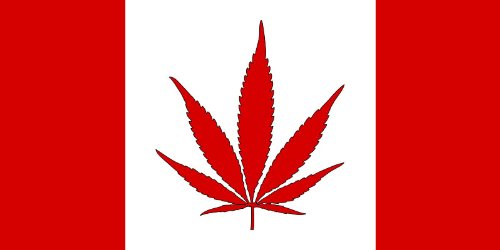
Lately there has been a moral panic brewing in Toronto about the number of marijuana stores in Toronto. Take this New York Times article, for example, which captures the mood with the quotes from various Torontonians. Or this BlogTO piece. And here is a link to a story about two city councilors (including my own) pushing for a moratorium on new pot shops.
At least on its face, the panic hasn’t been about the availability of cannabis products or any kind of (unsupported) claims about pot shops attracting crime. Rather, the concern is that there is simply an unsustainable number of shops that may be cannibalizing other retail opportunities. So a scrappy band of politicians is coming together to save main street from the excesses of the free market.
What could possibly go wrong?
The boom in pot shops is real. Legal marijuana retailing is a new phenomenon, and there has been a gold rush in the sector. This was first evident in financial markets during the 2018-19 weed stock boom (which went bust) as investors sought to capitalize on the rollout of legal marijuana sales in Canada. There are now nearly 2,000 pot shops in Ontario, and it’s not hard to find two on the same block. People aren’t wrong to point out that there has been a rapid buildout of marijuana retailers. Hence the push by City Council and now the Ontario Liberal Party, to restrict clustering of pot shops.
To be sure, new trends can push out old trends. And this can be frustrating. For instance, one insidious trend recently replaced two of my two favourite hole-in-the-wall restaurants: poke bowls. The trendy Hawaiian rice bowls have taken cities by storm. Businesses, understandably, want to capitalize on the trend. If people want it, businesses will sell it.
Trends can create dislocations. No one knows in advance how many poke restaurants — or pot shops — the market will bear, where they should locate, or what their operating hours should be. But through a process of trial and error, retailers and consumers will figure this out. And if it is just a flash in the pan trend, many will fail.
But that’s okay. That’s just the creative destruction of the market at work. It’s not always pretty, but it’s how we get new products and services. It’s a process. Sometimes the market rewards annoying things. But trying any effort to plan these things in a way that avoids over-saturation of short-lived trendy businesses would be rife with unintended consequences.
October 19, 2021
The Wertham effect “… produces evidence-free moral panics and demands for government crackdowns”
In City Journal, John Tierney evaluates the evidence for the claims of psychological damage inflicted on young women through social media (specifically Instagram):

Contrary to what you’ve heard from the press and Congress, the internal documents leaked by former Facebook product manager Frances Haugen do not prove that that the company’s Instagram platform is psychologically scarring teenagers. But the current furor does clearly demonstrate another psychological phenomenon: the Fredric Wertham effect, named for a New York psychiatrist who, like Haugen, starred at a nationally televised Senate hearing about a toxic new media menace to America’s youth.
Wertham testified in 1954 about his book, Seduction of the Innocent, which he described as the result of “painstaking, laborious clinical study.” After reciting his scientific credentials, Wertham declared: “It is my opinion, without any reasonable doubt and without any reservation, that comic books are an important contributing factor in many cases of juvenile delinquency.”
The hearing made the front page of the New York Times, one of many publications (including The New Yorker) to give Wertham’s book a glowing review. Others featured his warnings under headlines like “Depravity for Children” and “Horror in the Nursery”. During the great comic book scare, as the historian David Hajdu calls it, churches and the American Legion organized events across the country where schoolchildren tossed comics into bonfires. Wertham’s recommendation “to legislate these books off the newsstands and out of the candy stores” inspired dozens of state and municipal laws banning or regulating comic books, and many people in the industry lost their jobs.
There was never any good evidence that comic books hurt children. Wertham’s work was a jumble of anecdotes about troubled youths and unsupported conjectures about comic books inspiring violent crimes. He fretted, as today’s Instagram critics do, that the unrealistic images of curvaceous bodies were psychologically damaging girls and claimed that superheroes were promoting everything from homosexuality (Batman and Robin, Wonder Woman) to fascism (Superman). Contemporaries like the sociologist Frederic Thrasher lambasted Wertham’s work as “prejudiced and worthless”, and it was later exposed as fraudulent.
As we’ve learned repeatedly, scientific rigor doesn’t matter to journalists and politicians eager to blame children’s problems on any new trend in media or entertainment, whether it’s television, rock and roll, Dungeons and Dragons, heavy metal music, cell phones, rap lyrics, or video games. That’s the Fredric Wertham effect, which produces evidence-free moral panics and demands for government crackdowns.
The villain du jour is Facebook, which is being compared with Big Tobacco because its own confidential research supposedly proves how dangerous its product is. The research was revealed in a Wall Street Journal article, “Facebook Knows Instagram Is Toxic for Many Teen Girls, Company Documents Show,” which cited a survey finding that 32 percent of teenage girls who were experiencing body-image issues said that Instagram made them feel worse about their problem. But most of the girls surveyed said that Instagram either had no effect (46 percent) or made them feel better (22 percent). And the issue of body image was the subject of just one of the survey’s 12 questions. On the other 11 (covering problems like loneliness, anxiety, sadness, and social comparison), the girls who said Instagram made them feel better outnumbered those who said it made them feel worse. The teenage boys in the survey skewed heavily positive on all the questions.
July 23, 2021
Panic is infectious, and the dying media are a primary vector
In City Journal, John Tierney looks at the two lethal waves of contagion the world has suffered since 2019, the Wuhan Coronavirus itself and the media-driven panic that almost certainly resulted in far more deaths than the disease that triggered it:

Wuhan Institute of Virology.
Wikimedia Commons.
Instead of keeping calm and carrying on, the American elite flouted the norms of governance, journalism, academic freedom — and, worst of all, science. They misled the public about the origins of the virus and the true risk that it posed. Ignoring their own carefully prepared plans for a pandemic, they claimed unprecedented powers to impose untested strategies, with terrible collateral damage. As evidence of their mistakes mounted, they stifled debate by vilifying dissenters, censoring criticism, and suppressing scientific research.
If, as seems increasingly plausible, the coronavirus that causes Covid-19 leaked out of a laboratory in Wuhan, it is the costliest blunder ever committed by scientists. Whatever the pandemic’s origin, the response to it is the worst mistake in the history of the public-health profession. We still have no convincing evidence that the lockdowns saved lives, but lots of evidence that they have already cost lives and will prove deadlier in the long run than the virus itself.
One in three people worldwide lost a job or a business during the lockdowns, and half saw their earnings drop, according to a Gallup poll. Children, never at risk from the virus, in many places essentially lost a year of school. The economic and health consequences were felt most acutely among the less affluent in America and in the rest of the world, where the World Bank estimates that more than 100 million have been pushed into extreme poverty.
The leaders responsible for these disasters continue to pretend that their policies worked and assume that they can keep fooling the public. They’ve promised to deploy these strategies again in the future, and they might even succeed in doing so — unless we begin to understand what went wrong.
The panic was started, as usual, by journalists. As the virus spread early last year, they highlighted the most alarming statistics and the scariest images: the estimates of a fatality rate ten to 50 times higher than the flu, the chaotic scenes at hospitals in Italy and New York City, the predictions that national health-care systems were about to collapse. The full-scale panic was set off by the release in March 2020 of a computer model at the Imperial College in London, which projected that — unless drastic measures were taken — intensive-care units would have 30 Covid patients for every available bed and that America would see 2.2 million deaths by the end of the summer. The British researchers announced that the “only viable strategy” was to impose draconian restrictions on businesses, schools, and social gatherings until a vaccine arrived.
This extraordinary project was swiftly declared the “consensus” among public-health officials, politicians, journalists, and academics. Anthony Fauci, director of the National Institute of Allergy and Infectious Diseases, endorsed it and became the unassailable authority for those purporting to “follow the science”. What had originally been a limited lockdown — “15 days to slow the spread” — became long-term policy across much of the United States and the world. A few scientists and public-health experts objected, noting that an extended lockdown was a novel strategy of unknown effectiveness that had been rejected in previous plans for a pandemic. It was a dangerous experiment being conducted without knowing the answer to the most basic question: Just how lethal is this virus?
The most prominent early critic was John Ioannidis, an epidemiologist at Stanford, who published an essay for STAT headlined “A Fiasco in the Making? As the Coronavirus Pandemic Takes Hold, We Are Making Decisions Without Reliable Data.” While a short-term lockdown made sense, he argued, an extended lockdown could prove worse than the disease, and scientists needed to do more intensive testing to determine the risk. The article offered common-sense advice from one of the world’s most frequently cited authorities on the credibility of medical research, but it provoked a furious backlash on Twitter from scientists and journalists.
August 31, 2020
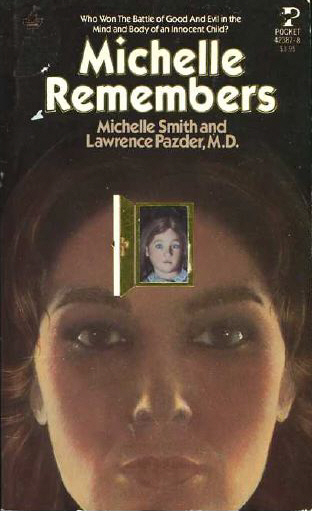
Michelle Remembers, the seminal Satanic Panic book
Jen Gerson discusses the first modern Satanic Panic and the book about the “recovered” childhood memories of a British Columbia woman in the 1970s:
QAnon may sound like something that could only have birthed in the darker corners of the internet. But QAnon predates president Donald Trump and even the internet itself; It’s just the latest iteration of a moral panic that swept the highest levels of Western society only a generation ago. One of the most polarizing and divisive social movements in modern history; it destroyed families, turned communities against one another, and sent numerous innocent men and women to prison.
And it all started in Victoria, BC.
It was known as the Satanic Panic; a conspiracy theory that convinced millions of well meaning and rational people that a secret cabal of Satanists had infiltrated the highest echelons of society in order to sexually molest children. The Satanists were accused of sacrificing animals and using women as “breeders” to create an endless supply of dead babies for use in their gory, bloody-fuelled rituals and orgies.
It destroyed lives and ripped apart families. Reports of ritualistic child abuse were reported across the English speaking-world. Almost all of them were eventually found to have been partially, or wholly fabricated, but not before dozens of innocent people were falsely accused, and sentenced to years and even decades in prison.
Born of a genuine historical injustice — society’s neglect of childhood sexual abuse — this was a panic that saw some of the world’s smartest minds taken in by accusations, that, at their root, were as preposterous as any raised during medieval European witch hunts. It was legitimized by a professional class, captivated law enforcement and proved itself a lucrative grift for fraudsters and attention seekers. Worse, as the conspiracy grew under its own weight and influence, the hysteria inspired real and horrific crimes — usually by disturbed teenagers who claimed they were sacrificing humans to Satan.
This is a case study of how badly off the rails we can go when we allow our best intentions and passions to overwhelm us.
The story begins in 1980, with the publication of a book called Michelle Remembers. It detailed the fantastic claims of Michelle Proby, who recounted several months of gory and sadistic ritualistic abuse at the hands of a cabal of Satanists when she was a child in 1950s Victoria. The memories, she alleged, were repressed for decades, until she sought help from psychiatrist Lawrence Pazder. Under a state of hypnosis, Proby began to uncover a horrifying tale of murder, torture, abduction, and molestation. She claimed to have been taken from her willing family and groomed to take part in a ritual to call the devil — one in which she witnessed the murder of children, was forced to eat human remains, covered in dead baby parts, and locked in a cage with snakes.
An explosive bestseller. Michelle Remembers would become the folkloric template for countless other claims of Satanic Ritual Abuse ostensibly uncovered during therapy during the 80s and 90s.
November 18, 2019
QotD: H.L. Mencken on “moral crusades”
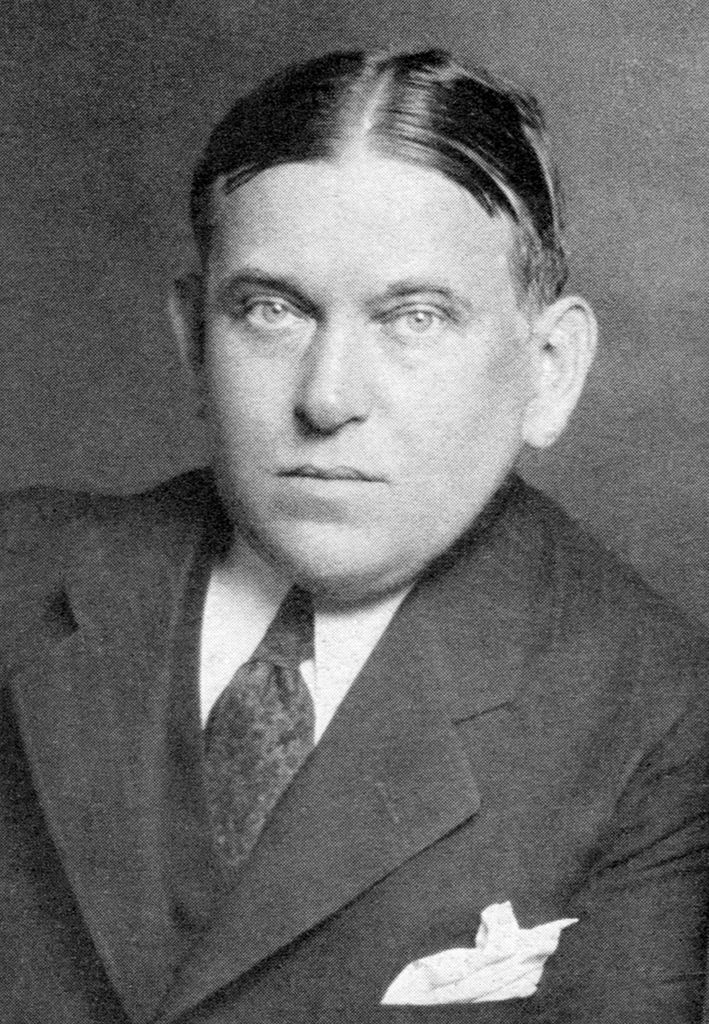
H.L. Mencken in 1928.
Photo by Ben Pinchot for Theatre Magazine, August 1928.
The loud, preposterous moral crusades that so endlessly rock the republic – against the rum demon, against Sunday baseball, against Sunday moving-pictures, against dancing, against fornication, against the cigarette, against all things sinful and charming – these astounding Methodist jehads offer fat clinical material to the student of mobocracy. In the long run, nearly all of them must succeed, for the mob is eternally virtuous, and the only thing necessary to get it in favor of some new and super-oppressive law is to convince it that that law will be distasteful to the minority that it envies and hates.H.L. Mencken, “Moral Indignation”, Damn! A book of calumny, 1918.
July 14, 2019
The Epstein scandal is another example of the importance of accurate names
ESR has some concerns about the Epstein case, specifically on the correct terminology to use:
The sage Confucius was once asked what he would do if he was a governor. He said he would “rectify the names” to make words correspond to reality. He understood what General Semantics teaches; if your linguistic map is sufficiently confused, you will misunderstand the territory. And be readily outmaneuvered by those who are less confused.
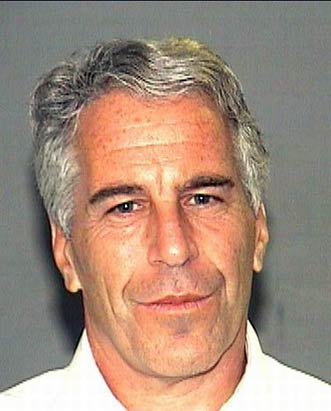
Mug shot of Jeffrey Epstein made available by the Palm Beach County Sheriff’s Department, taken following his indictment for soliciting a prostitute in 2006.
Image via Wikimedia Commons.And that brings us to the Jeffrey Epstein scandal. In particular, the widespread tagging of Epstein as a pedophile.
No, Richard Epstein is not a pedophile. This is important. If conservatives keep misidentifying him as one, I fear some unfortunate consequences.
Pedophiles desire pre-pubertal children. This is not Epstein’s kink; he quite obviously likes his girls to be as young as possible but fully nubile. The correct term for this is “ephebophile”, and being clear about the distinction matters. I’ll explain why.
The Left has a long history of triggering conservatives into self-discrediting moral panics (“Rock and roll is the devil’s music”). It also has a strong internal contingent that would like to normalize pedophilia. I mean the real thing, not Epstein’s creepy ephebophilia.
Homosexual pedophiles have been biding their time in order to get adult-on-adult homosexuality fully normalized as battlespace prep, but you see a few trial balloons go up occasionally in places like Salon. The last round of this was interrupted by the need to take down Milo Yiannopolous, but the internal logic of left-wing sexual liberationism always demands new ways to freak out the normals, and the pedophiles are more than willing to be next up in satisfying that perpetual demand.
Liberals have proven themselves utterly useless at resisting the liberationist ratchet, so I’m not even bothering to address them. Conservatives, if you want to prevent the next turn, don’t give the pedophilia-normalizers maneuvering room. Rectify the names; make the distinctions that matter.
Epstein’s behavior is repulsive because we judge young postpubertal humans to be too psychologically immature to give adult consent, but it’s nowhere near the evil that is the sexual abuse of prepubertal children.
October 11, 2018
It’s all in the spin – “Another ‘human trafficking operation’ that wasn’t”
Elizabeth Nolan Brown on how to pitch a “human trafficking” police sweep that doesn’t actually uncover any human trafficking at all:
One hundred and twenty-three missing Michigan minors were found during a one-day “sex trafficking operation,” the New York Post reported yesterday. Similar statements showed up in other news headlines across national and international news. What the associated articles fail to mention for multiple paragraphs is that only three of the minors are even suspected of having been involved in prostitution.
Officials said the operation — a joint effort of the U.S. Marshals Service, the FBI, Michigan State Police, and multiple local Michigan police departments — identified three “possible sex-trafficking cases” among the 123 minors that were located on September 26, according to a press release.
What’s more, all but four of the “missing children” were not actually missing. In the remaining cases, minors were listed in a police database as missing but had since been found or returned home on their own. “Many were (homeschooled),” Lt. Michael Shaw told The Detroit News. “Some were runaways as well.”
The one-day “rescue” sweep was a long-time in the making, with police beforehand “investigating their whereabouts by visiting last known addresses, friend’s homes and schools.”
Nothing in the U.S. Marshals report on the operation makes mention of any arrested kidnappers, “traffickers,” or other adults involved in endangering or exploiting any of the missing minors that were identified. Which makes sense — very few missing children are actually abducted. And when runaway teens do engage in sex for money, the vast majority do not have “pimps.”
September 30, 2018
Moral panic à la mode: Witch hunt, 2018
Barrett Wilson compares a moral panic that convulsed the Wilson family (Satanic lyrics and overt sexual messages in contemporary movies and rock music) with today’s moral panic:
When my very Christian parents tried to throw away my 14-year-old sister’s heavy metal records, she ran away to her friend’s house. I cried for days. It felt like the end of everything. My sister would be gone forever. I would now live in what was referred to at the time as a “broken home.” I imagined that I’d be reunited with my sister in a few years—on the mean city streets after I’d been forced into a life of crime.
Both my parents and sister seemed to make good arguments. My mother and father tried to trash the records because they loved my sister, while my sister ran away because of her love for Dee Snyder. My parents wanted my sister to be safe. My sister wanted to express her individuality through music. My parents claimed that heavy metal was the cause of my sister’s rebellious behavior. My sister said that Judas Priest rocked, and elevated Ozzy Osbourne to secular sainthood. My parents thought my sister had fallen victim to satanic messages encoded in vinyl, while my sister believed my parents were enslaved to religious dogma printed in the Bible.I remember the Bible studies and prayer groups well. There was a uniformity of belief and cause that united my parents and their pious peers. There was a collective smugness and sense of superiority that led members of the church to purge the culture (or what parts of the culture they could control) of dangerous and unholy influences. They wanted culture to be safer. Their targets: violence and overt sexuality in movies, music and video games.
So that was then, back in the benighted dark ages before the cell phone and broadband internet and all-consuming social media — they knew so little back then. We, as a culture, have grown so wise and mature that we’d never fall back into that kind of moral panic … oh, damn.
The right-left pro-censorship alliance that Gore formed three decades ago has its modern equivalent in the Twitter era. Right-wing men’s rights advocates and hyper-progressives found common cause in an online shaming campaign targeting Canadian feminist Meghan Murphy, for instance, after she dared suggest that women born into their female bodies might have reason to see themselves differently from those born with penises. And the recent de-platforming of second-wave feminist icon Germaine Greer on the basis of perceived transphobia would be met with gleeful applause by stridently conservative Australians as much as by stridently progressive gender-studies post-docs. The tactics used by right-wing Twitter trolls such as Mike Cernovich to get James Gunn fired from Disney are identical to those used by the left to get Twitter troll Godfrey Elfwick de-platformed. Their crime was the same: tweeting controversial jokes.
But while all forms of social panic tend to resemble one another, there are some stark differences between now and then. For one thing, young people today seem more naturally censorious and culturally conservative than their parents. Peace, love, freedom, and experimentation have been replaced by an obsession with emotional safety. Today’s young men and young women seem scared to death of each other. The LGBT community has fractured into its alphabetic constituent parts. And racial tensions are fed by a steady diet of online microaggressions. Everyone feels at risk, despite the fact the free world has never been safer.
Of course, moral panics are not based on facts but fears. In Stanley Cohen’s 2002 introduction to Folk Devils and Moral Panics, he writes that in moral panics, “the prohibitionist model of the ‘slippery slope’ is common … [and] crusades in favor of censorship are more likely to be driven by organized groups with ongoing agendas.” They are driven by organized groups, yes, but they are facilitated by well-meaning, ill-informed actors such as activists, therapists, and law enforcement officers. From the censorship of comic books, to video games, to music, we’ve known about the agendas of these special interests for a very long time. So why do we keep falling for it?
Moreover, there seems to be more hypocrisy at play in 2018 than there was during the moral panics of the 1980s. Many Christians who embraced Tipper Gore’s campaign truly were sincere anti-sex and anti-violence crusaders. But the world that people inhabit in 2018 is at once hyper-explicit and puritanical. In one browser tab, we’re typing about how words are violence, while in the other tab, we’re engaging in malicious gossip that could ruin someone’s career.
A feverish approach that seeks to sanitize culture is harmful but is also futile. Forbidding people from consuming content can often serve to make that content more desirable to consumers, something similar to the Streisand Effect. This phenomenon is named after Barbra Streisand’s futile attempt to keep photos of her Malibu mansion off of the internet. The harder she tried to stop people from posting photos, the more photos appeared. Paternalistically making music and art “forbidden content” makes it sexier, and elevates its status. The PMRC’s Filthy Fifteen is chockfull of rock and roll classics that went on to make millions. My parents’ disdain for heavy metal certainly did not make my sister pop Perry Como into her Walkman – she just rocked harder. Fans and free speech advocates rally around Tyler, the Creator today now more than ever.
Update:
Signs that you're in the midst of a moral panic: there are calls to scrap due process and to believe each and every accusation, inflated statistics about the apparent problem proliferate, and memory is considered reliable information https://t.co/9tmrgi8Szk
— Claire Lehmann (@clairlemon) September 29, 2018
March 21, 2018
Free speech at risk on campus
Sean Stevens and Jonathan Haidt on the claims and counter-claims about the threat to freedom of speech in today’s universities:
Over the past two weeks, Jeffrey Sachs (a political scientist at Acadia U; not the economist at Columbia) has made the argument that There Is No Campus Free Speech Crisis, as he put it in a long twitter thread on March 9. Matt Yglesias then expanded on Sachs’ argument in a post titled Everything we think about the political correctness debate is wrong, and Sachs expanded his case in a Washington Post Monkey Cage essay with a similar title: The ‘campus free speech crisis’ is a myth. Here are the facts. Sachs and Yglesias both draw heavily on analyses of the speech questions in the General Social Survey, which were plotted and analyzed well by Justin Murphy on Feb. 16. In this blog post we will show a reliance on older datasets and the failure to formulate the question properly have led Sachs and Yglesias to a premature conclusion. Something is changing on campus, but only in the last few years.
Sachs and Yglesias claim that the current wave of concern about speech on campus that began around 2014 (with media reports about safe spaces and trigger warnings), and that intensified in 2015 (after the Yale Halloween controversy, and the earlier publication of The Coddling of the American Mind, by Lukianoff & Haidt) is a classic moral panic. They believe it is merely a media frenzy in response to a few high profile incidents. In a typical moral panic, people on one side of the political spectrum get riled up because stories about outrageous incidents appeal to their desire to believe the worst about a group on the other side. Sachs and Yglesias claim that conservatives and conservative media have gleefully exploited a handful of campus stories to fuel hatred of left-leaning students, or “social justice warriors,” when in in fact nothing has changed on campus.
Given how frequent moral panics are, especially as political polarization and cross-party hatred increases, and as social media makes it easy to whip up a panic, it is vital to have skeptics. It is important for people with different biases and prior beliefs to dig into survey data that bears on the question. It is also crucial to formulate the question properly. What exactly is it that has changed, or not changed, on campus in recent years?
Here are the three major positions in the current debate, along with our proposal for how each should be operationalized.
H/T to Claire Lehmann for the link.


