Epimetheus
Published 30 Nov 2018Who were the Hittites? (The Hittite Empire explained in 10 minutes) Animated history
Support new videos from Epimetheus on Patreon! 😀
https://www.patreon.com/Epimetheus1776
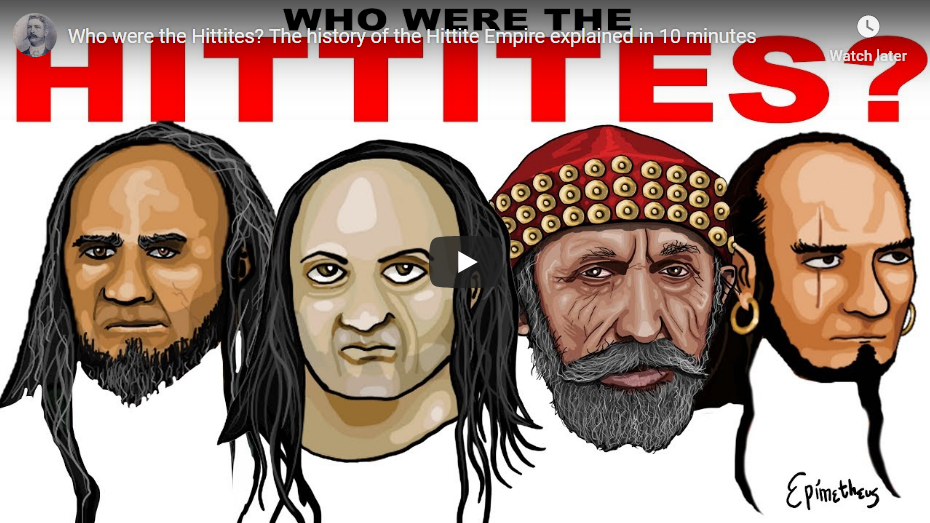

Epimetheus
Published 30 Nov 2018Who were the Hittites? (The Hittite Empire explained in 10 minutes) Animated history
Support new videos from Epimetheus on Patreon! 😀
https://www.patreon.com/Epimetheus1776
Timeline – World History Documentaries
Published 29 May 2020The Roman Empire remains one of the most enduring and prolific civilisations of written history. Yet it, like all great civilisations, would eventually come to an end. Join Dan Snow as he speaks to historian Tom Holland about the many contributing factors that would bring this seismic and seemingly invincible empire to its knees.
#StayHome #WithMe #FallOfRome

The Great War
Published 29 May 2020Sign up for Curiosity Stream and get Nebula bundled in: https://curiositystream.com/thegreatwar
It was far deadlier than even the global war that had preceded it: The Influenza pandemic or Spanish Flu that hit the world between 1918 and 1920 in multiple waves.
» SUPPORT THE CHANNEL
Patreon: https://www.patreon.com/thegreatwar
Merchandise: https://shop.spreadshirt.de/thegreatwar/» SOURCES
Barry, John M. The Great Influenza: The Story of the Deadliest Pandemic in History, (New York : Penguin Books, 2018)
Byerly, Carol R. ‘The U.S. Military and the Influenza Pandemic of 1918–1919’ Public Health Reports; 125 Supplement 3 (Apr. 2010)
Crosby, Alfred W, America’s forgotten pandemic : the influenza of 1918, (Cambridge : Cambridge University Press, 2003)
Hoover, Irwin Hood, Forty-two years in the White House, (New York : Houghton Mifflin Co., 1934)
Killingray, David & Phillips, Howard, (eds.) The Spanish Influenza Pandemic of 1918-19: New Perspectives, (London : Routledge, 2011)
Johnson, NP & Mueller J, ‘Updating the accounts: global mortality of the 1918-1920 “Spanish” influenza pandemic’ Bulletin of the History of Medicine. 76(1) (Spring 2002)
Dock, Lavinia et al., History of American Red Cross Nursing (1922)
Macdonald L. The Roses of No Man’s Land. (London : Penguin Books, 1993)
Robertson, John Dill, ‘Spanish Influenza — The Flu’ The Public Health Journal Vol. 9, No. 10 (Oct 1918)
Rosner, David, ‘”Spanish flu, or whatever it is…”: The paradox of public health in a time of crisis’ Public Health Reports, 125 Supplement 3, (Apr. 2010)
Stanford University, ‘The Influenza Pandemic of 1918’ https://virus.stanford.edu/uda/
“Surgeon General’s Advice to Avoid Influenza”: Washington Evening Star, (Sept. 22, 1918)
Wever, Peter C & van Bergen, Leo, ‘Death from 1918 pandemic influenza during the First World War: a perspective from personal and anecdotal evidence’ Influenza Other Respiratory Viruses, 8(5), (Sept 2014)
https://www.lefigaro.fr/livres/2008/1…» SOCIAL MEDIA
Instagram: https://instagram.com/the_great_war
Twitter: https://twitter.com/WW1_Series
Reddit: https://reddit.com/r/TheGreatWarChannel»CREDITS
Presented by: Jesse Alexander
Written by: Jesse Alexander
Director: Toni Steller & Florian Wittig
Director of Photography: Toni Steller
Sound: Toni Steller
Editing: Toni Steller
Mixing, Mastering & Sound Design: http://above-zero.com
Maps: Daniel Kogosov (https://www.patreon.com/Zalezsky)
Research by: Jesse Alexander
Fact checking: Florian WittigChannel Design: Alexander Clark
Original Logo: David van StepholdA Mediakraft Networks Original Channel
Contains licensed material by getty images
All rights reserved – Real Time History GmbH 2020
I haven’t lived in Toronto for many years now, but as David Warren highlights in his Essays in Idleness posts, things haven’t changed much in all that time:
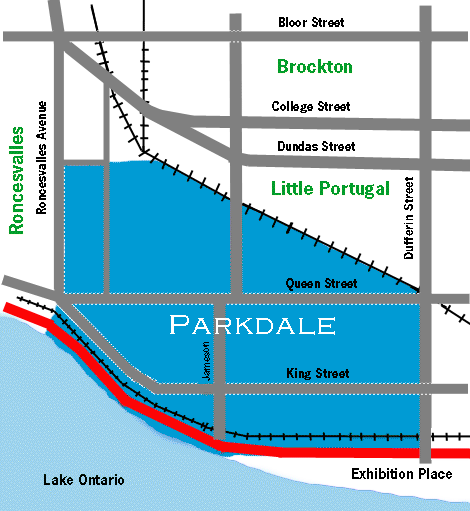
The Parkdale neighbourhood of Toronto.
Map by Alaney2k via Wikimedia Commons.
We continue to be well-as-can-be-expected, up here in the High Doganate, though stir-crazy, and over-informed about the Batflu (also known as the Kung Flu, or Peking Pox). The housefinches on our balconata persist in their social distancing, and at street level, the dogs continue to walk their masters. The brave, without a dog, may go out, without a mask, if they can stand up to the Virtue Signallers (or as I prefer to call them, the Smugly Foocklings). But that is in the respectable parts of town, at least three miles away, where designer masks are now de rigueur. There are plenty of trolleys, but they travel mostly empty. This is because the transit authorities are “committed to keeping customers and staff safe.” Knowing that most of the public health measures are fraudulent, and/or counter-productive, is not helpful to one’s peace of mind.
These measures would include the vast public doles which our guvmints have been generating, electronically. It could be taken as pay, for those who’d otherwise riot. Eventually, the guvmints hope to electronically rake it back, both from those who were paid and those who were not, in the form of much extended taxes. To understand the Batflu response, is to understand the welcome it gave to bureaucrats and their patrons, wherever the Left won the last election. They do not surrender such powers lightly.
Most of the people I hang out with are their particular targets — from freelance giguers to flea marketeers to those with religious vocations. Such people naturally resist the Kafkaesque arrangements our progressives relish and demand. The Batflu “crisis” put as many as possible of these statistically inconvenient people out of work. (Many are compulsive tax-evaders, after all!) These “little people,” especially those trying to support uncool, old-fashioned, frankly heterosexual families, are the ones for whom I most pray, as they and their children face the “green” future, which will exclude them in the name of “diversity.”
But also I think of the vast slave armies, in the “service economy,” with their idiotizing jobs, from flipping hamburgers to humping boxes in the Amazon warehouse — pinned to their minimum wages until their functions can be mechanized. (When they unionize, this happens faster.)
The “professional classes,” who can work from home, because they do nothing of value, needn’t go months without revenue, while their debts are piling up. They sneer at those who oppose a lockdown, that is perfectly comfortable for the professional classes, who at worst save money by dining in, or must order what they want through Amazon.
In the Hector Drummond Magazine, Dan C. discusses what he calls the “comfort of fear”:
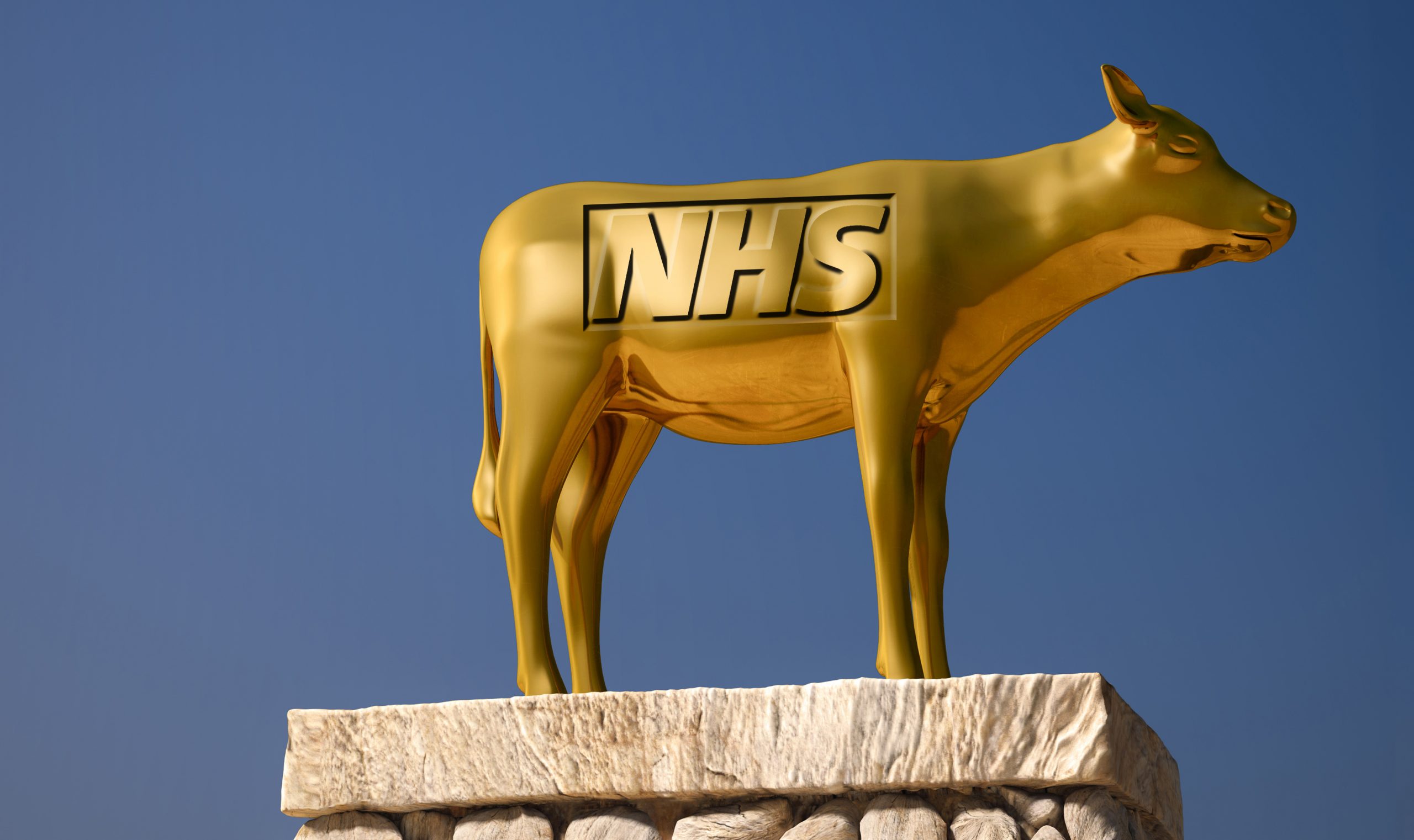
Not actually the official symbol of Britain’s National Health Services … probably.
This is the sort of glib response (akin to “so you WANT people to die then?”) that has essentially hijacked all conversation and debate since the start of the Coronavirus outbreak. I didn’t respond, partly because I didn’t have the energy for an argument with a friend (at least Twitter rows tend to be anonymous) and quite frankly, what does one say to this? That we shouldn’t send out children back to school ever again in case one child happens to pass away from any illness or disease? That we should continue in lockdown until we cure death itself?
My concern is that this bizarre way of thinking is commonplace right now for many parents. Locked inside their houses for weeks on end, soaking up an endless stream of Netflix programs, mawkish Instagram feeds and daily Government briefings, convinced that Black Death Mk II has landed outside their front door, paid by the state to stop working and lapping up every rainbow-based hashtag that emerges from “our NHS”, all sense of balance and perspective has vanished. With such an unprecedented paradigm shift, this new state of heightened safety has led many to consider their view on illness and risk for the very first time in their lives and unfortunately the concept of critical thinking has been found lacking. Real life, which has been slowly eroded for many decades, has suddenly been switched off completely overnight and the worst of it is that most people don’t seem to care.
The scary part of all of this is that if the adults in the room have suddenly lost their desire to engage in the outside world, to have meaningful human interaction, to take risks (don’t get me started on the definition of “risk”) and to live their lives in the fullest possible way then what chance do children stand? After all, you can’t miss what you’ve never had.
Historians will look back in bewilderment at this period, noting that it took no more than a month during the spring of 2020 for fearlessness to completely evaporate in society. In its place is a comfortable sense of fear.
As Chris Selley illustrates, this was a clear failure for the various levels of government:

When Ontarians look back on the COVID-19 pandemic as the moment when their government finally ponied up the big bucks and fixed the province’s long-term care system, they will likely also wonder what the hell took so long. As appalled as everyone quite rightly is by the Canadian Forces’ report into the state of five long-term care homes that were in dire enough shape to require military intervention, we really shouldn’t be shocked. As the Ottawa Citizen in particular has reported in recent years, the system’s staffing levels were designed for a much less old, much less sick and much less Alzheimer’s-afflicted population than lives in them today — and it led to some terrible outcomes in normal times.
Perhaps it was easy to blame such incidents on individual villains: Ottawa support worker Jie Xiao, who was caught on video punching 89-year-old Georges Karam 11 times in the face; or Elizabeth Wettlaufer, one of Canada’s most prolific and yet somehow least-famous serial killers, who murdered at least eight senior citizens in long-term care homes during her red flag-festooned nursing career. Perhaps tales of society’s most vulnerable being forced to wallow in their own filth, or even just left alone in confusion and misery, are too much for the human mind to contemplate at length.
In any event, it only stood to reason that a virus as potent as the one that causes COVID-19 would exploit weak points in a long-term care system. Between wandering patients, fans circulating air throughout facilities and a lack of basic sterilization control, you would almost think these five facilities wanted the virus to spread. It’s a wretched understatement to say we can do better.
We shouldn’t fool ourselves, though: Long-term care homes will always be uniquely vulnerable. And as the economy reopens, it’s essential we keep focusing on them. It’s essential that we focus, period.
There is a tendency among media in Central Canada to treat “Canada’s COVID-19” outbreak as a single thing affecting all of society. It clearly isn’t. The numbers are all over the map. Quebec has reported by far the most cases and deaths: 5,655 and 480 per million population, respectively. Ontario is at roughly one-third of that: 1,778 cases per million and 144 deaths per million. At 1,569 cases per million, Alberta has a comparable number of cases to Ontario — but far fewer deaths, at just 31 per million. British Columbia has the same death rate as Alberta, but with only one-third as many cases. Saskatchewan, Manitoba, Newfoundland and New Brunswick have reported just 18 deaths between them. Quebec has nearly 30,000 active cases; Ontario has just over 6,000; Manitoba has 16.
Chris Selley understands why the internet shaming community is dunking on the apparently large number of people who crowded into Toronto’s Trinity-Bellwoods park over the weekend but doesn’t feel the need to join them:
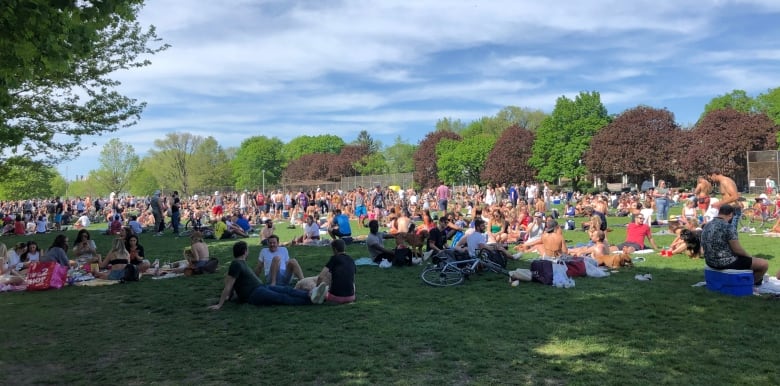
Screencap from a CBC report on unorganized social distancing civil disobedience at Toronto’s Trinity-Bellwoods Park on Saturday.
Human beings need to get outside and socialize. They have breaking points, and many are very understandably at them. (An aside: I can’t help noticing how many people venting fury on social media have also treated their followers to images of their back-patio office setups, or updates on their new vegetable gardens.) There is also no surplus of parkland in downtown Toronto. Photographic evidence suggests other neighbourhood greenspaces were very busy as well, though not to the same extent.
In other words, this was always going to happen. So the time is long past when politicians like Ontario Premier Doug Ford or Toronto Mayor John Tory should be able to cluck their tongues or stamp their feet at such people and expect their constituents to nod along in solidarity.
Jurisdictions facing significant COVID-19 outbreaks had one finite period of time in which to try to knock this bastard virus down. After that period of time, the socioeconomic costs of the shutdown would become unsustainable and the economy would have to reopen. We’re seeing that happen all over the world right now: in essence, countries are rolling the dice. If they did well in the allotted time, fewer people will have to die in the name of getting back to normal.
The federal, Ontario and Toronto governments have not done well — certainly not to any extent that justifies their leaders’ soaring approval ratings.
The feds have been abysmal since even before Day One, with Chief Public Health Officer Theresa Tam actively downplaying the threat. We shipped 16 tonnes of personal protective equipment to China with no viable plan to replace it. Whatever you think of travel bans as an anti-pandemic measure, the government undermined its own credibility by insisting they don’t work, then changing course 180 degrees over the course of a weekend. Most astonishingly, the feds at first utterly failed to communicate the most basic advice to returning travellers — advice such as “don’t stop for groceries or at the pharmacy on your way home.”
And Tam’s initial ludicrous “masks don’t work” narrative has grudgingly evolved to support the use of non-medical masks “where social distancing is not possible.” But the federal government’s official advice on “safe shopping” — indeed the entire web page titled “COVID-19 and food safety” — still doesn’t mention masks, even as the berth shoppers give each other seems to narrow by the day. This anti-mask stance seems to be ideological, bred in the bone.
In the latest edition of the Libertarian Enterprise, Sean Gabb considers the demands from the British government to quickly re-open the schools over the concerns of the educational unions and administrations:
The latest turn in an increasingly dull coverage of the Coronavirus panic is a proposed reopening of the schools. The Government wants them open as soon as possible for at least some of their students. The teaching unions are bleating that no one should go back until their members can be sure of not catching anything. The headmasters are worried about compliance with the social distancing rules. As a conservative of sorts, I think I am supposed to side with the Government and the pro-Conservative journalists — denouncing the teachers as a pack of idlers where not cowards, and insisting that those factories of essential skills must be set back in full production before the summer holidays. Of course, my settled view as a libertarian is that the teaching unions deserve all the support I have never so far given them. The schools must remain closed until no one is in any danger of so much as an attack of hay fever. The schools have been largely closed since the end of March. The longer they stay largely closed, the better. Best of all if they never reopen — or never reopen as they have been since attendance was made compulsory at the end of the nineteenth century.
I quote John Stuart Mill on compulsory schooling:
A general State education is a mere contrivance for moulding people to be exactly like one another: and as the mould in which it casts them is that which pleases the predominant power in the government, whether this be a monarch, a priesthood, an aristocracy, or the majority of the existing generation; in proportion as it is efficient and successful, it establishes a despotism over the mind, leading by natural tendency to one over the body.
(On Liberty, 1859, Chapter 5, “Applications.”)This has always been the case in some degree. The spread of state schooling in England after 1870, and particularly after it was made compulsory in 1880, and then extended in 1902, is probably inseparable from the nationalist hysteria that drove our participation in the Great War. It also may explain the perverse belief, general until the 1970s, in the unique goodness and honesty of our ruling class. This being said, reasonable patriotism is to be encouraged; and, compared with others, our ruling class was not until recently so bad. A further point is that compulsory state schooling used to be reasonably effective at giving the mass of people a basic education. By 1960, most people were literate and numerate. They could spell and write grammatical prose. They had some exposure to the English classics, and the means of exploring these to greater depth if they wished. They had some understanding of history and the sciences. You can tell much about the quality of a people by examining what is read and watched. Looking at the popular arts in England during much of the twentieth century explains why this passage in On Liberty was less often discussed than his arguments for freedom of speech. Mill was right in the abstract. He could be shown to be right in certain particulars. But the evils of compulsory state schooling were mostly potential.
All this, however, is in the past. Since about 1980, schooling of all kinds has been made into a concerted means of indoctrination. The cultural leftists have captured both the classrooms and the curriculum. I will not elaborate on this claim. Some will argue over terminology, some over the merits of the capture, but hardly anyone denies the broad fact. One of the main functions of modern schooling is to bring about and to protect a radical departure from the old intellectual culture of this country.
Much of this departure has been achieved by preaching in the classroom. But it is supplemented by a growing bureaucracy of surveillance. The teachers themselves are watched, and they can be punished for dissenting from the established discourse. There is, for example, the Government’s Prevent strategy, which applies to the whole state machinery. Its purpose is to identify and root out anyone defined as a “political extremist.” Anyone identified as such is effectively banned from working with children and young people, and probably in the state sector as a whole.
In an article discussing civil disobedience in the face of unreasonable government action, Lawrence W. Reed recalls the opinions of noted civil disobedience supporter Henry David Thoreau:
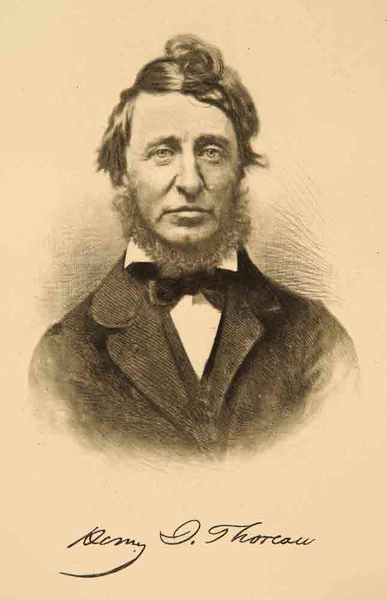
Daguerreotype of Thoreau in 1856 by B. D. Maxham.
Image via Wikimedia Commons.
History is full of stories of people who practiced peaceful resistance in defense of sound principles in the face of official stupidity and oppression. Sometimes it has been the best way, if not the only one, to get bad policies changed.
One hundred and seventy years ago, a famous American figure wrote,
Must the citizen ever for a moment, or in the least degree, resign his conscience to the legislator? Why has every man a conscience then? I think that we should be men first, and subjects afterward.
That figure was Henry David Thoreau. Born in Concord, Massachusetts in 1817, he was an eminent philosopher, poet and essayist. His best-known works are his book Walden: Life in the Woods and his essay, “Civil Disobedience”. The latter proved influential far beyond his time and place, shaping the thoughts and actions of eminent dissidents the world over. As we ponder the civil disobedience rising in reaction to coronavirus policies, now is a perfect time to give Thoreau’s essay another look. Toward that end, I offer some excerpts below.
One last thing before I do that: I want readers to know that, speaking strictly for myself, I endorse the re-opening of houses of worship (and many other things, for that matter), whether the government officially allows it or not. If that perspective makes life a little uncomfortable for the power-hungry at this time, so be it. The additional articles listed below reflect my reasoning.
Now, to Henry David Thoreau:
- “Under a government which imprisons any unjustly, the true place for a just man is also a prison…, the only house in a slave state in which a free man can abide with honor.”
- “If the injustice is part of the necessary friction of the machine of government, let it go, let it go; perchance it will wear smooth — certainly the machine will wear out. If the injustice has a spring, or a pulley, or a rope, or a crank, exclusively for itself, then perhaps you may consider whether the remedy will not be worse than the evil; but if it is of such a nature that it requires you to be the agent of injustice to another, then I say, break the law. Let your life be a counter-friction to stop the machine. What I have to do is to see, at any rate, that I do not lend myself to the wrong which I condemn.”
- “I am as desirous of being a good neighbor as I am of being a bad subject.”
- “If a thousand [citizens] were not to pay their tax-bills this year, that would not be a violent and bloody measure, as it would be to pay them, and enable the State to commit violence and shed innocent blood. This is, in fact, the definition of a peaceable revolution, if any such is possible.”
- “The only obligation which I have a right to assume is to do at any time what I think right.”
- “I saw that the State was half-witted, that it was timid as a lone woman with her silver spoons, and that it did not know its friends from its foes, and I lost all my remaining respect for it, and pitied it.”
Thanks for listening. See you in church
At FEE, Jon Miltimore explains what the league’s officials are thinking based on the announcement earlier this week:
Football fans around the world have been anxiously waiting for signs as to whether the NFL season will kick off in September despite concerns about the COVID-19 pandemic.
This week, they got the “burning bush” of signs.
The NFL on Tuesday had a soft opening of sorts, opening a number of facilities around the country to personnel, owners, and players rehabilitating from injuries. But it was in a post-meeting conference call with media that NFL officials delivered a bombshell of sorts.
According to multiple reports, NFL executive vice president Jeff Miller and Allen Sills, the NFL’s chief medical officer, told reporters the NFL fully expects to have COVID-19 cases during the NFL season, and are planning accordingly.
“We have a task force working very diligently on that,” Sills told reporters. “We fully well expect that we will have positive cases that arise because we think that this disease will remain endemic in society. And so it shouldn’t be a surprise if new positive cases arise. Our challenge is to identify them as quickly as possible and to prevent spread to any other participants. So we’re working very diligently on that, and we’ll have some detailed plans to share about that at a later time.”
It did not take long for reporters to process and interpret what the NFL was saying.
“You didn’t even have to read deeply between the lines,” said Charles Robinson, Yahoo’s senior NFL reporter. “What I just heard from the NFL was, ‘Hey, guess what? We are going to open. There is going to be a season. And we are going to have some people test positive for coronavirus once that season begins. And we’re working on a plan to not stop anything. We’re going to work through it.'”
Terez Paylor, a senior writer who also covers the NFL for Yahoo, concurred.
“He’s saying they’re going to play,” Paylor said in a podcast with Robinson. “Basically [they’re saying], ‘People are gonna get it. We’ll try to deal with it the best we can.'”
To be clear, the NFL has made no official decision yet. That being said, it looks like they are heading in that direction.
While some will say it would be reckless to hold the NFL season during a pandemic, it appears the NFL is making its decision based on some of the same assumptions Sweden used in its unique approach to COVID-19.
Anders Tegnell, Sweden’s top infectious disease expert and the architect of its “soft-approach” strategy, said one of the reasons he rejected sweeping lockdowns is because the measures simply are not sustainable, considering COVID-19 is going to be with us for years.
Sean Gabb has some thoughts on the post-lockdown return so … well, not normal, but as the economy reaches toward a new working equilibrium:
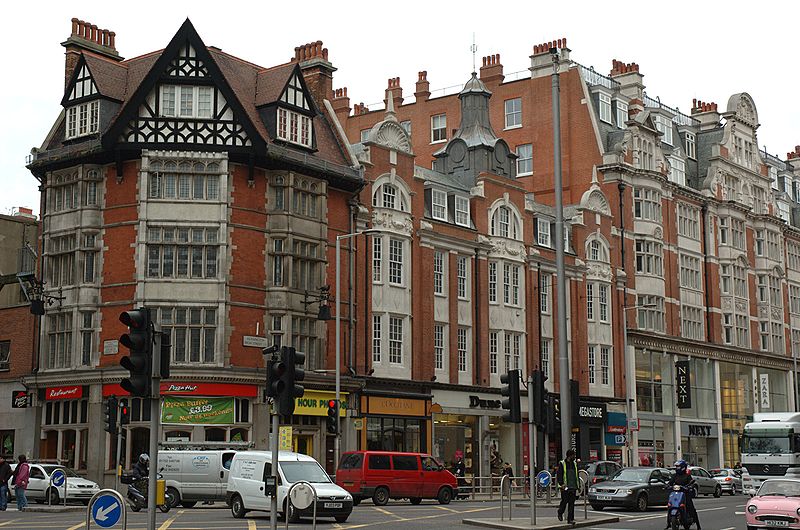
Kensington High Street at the intersection with Kensington Church Street. Kensington, London, England.
Photo by Ghouston via Wikimedia Commons.
The Coronavirus and its aftermath of lingering paranoia are the perfect excuse. Decentralisation and homeworking must be done. They must be done for the duration. They must be continued after that to maintain social distancing. No one will think ill of Barclays and WPP for taking the leap. No one will blame them for taking the leap in a way that involves a few deviations from course and a less than elegant landing. A year from now, these organisations will be making measurably larger profits than they would be otherwise. The mistakes will have been ignored.
And other organisations will follow. Whether the present crash will bring on a depression shaped like a V or an L, there is no doubt that, even if slowly at first, the wheels of commerce will continue turning. But they will be turning on different rails. As with any change of course, there will be winners and losers. I have already discussed how I can expect to be among the winners. I will leave that as said for the other winners — these being anyone who can find a market for doing from home what was previously required by custom and lack of imagination to be done somewhere else. I will instead mention the losers.
Most obvious among these will be anyone involved in commercial property. Landlords will find themselves with many more square feet to fill than prospective tenants want to fill. Rental and freehold values will crumble. Bearing in mind how much debt is carried by commercial landlords, there will be some interesting business failures in the next few years. Then there are the ancillary sectors — property management companies, commercial estate agents, maintenance companies. These employ swarms of architects and surveyors and lawyers and negotiators, of builders, plumbers, electricians, of drivers and cleaners. If the humbler workers will eventually find other markets, many with degrees and professional qualifications can look to a future of straitened circumstances.
The lush residential estates in and about Central London will follow. I think particularly of the aristocratic residential holdings in Kensington. Houses here go for tens of thousands a week to senior bank workers from abroad. If the City and Canary Wharf are emptied out, who needs to live in a place like Kensington? It has poor Underground connections. It is close by places like Grenfell Tower. Its residents keep predators at bay only by heavy investment of their own in security and by suspecting every knock on the door and every sound in the night. Many of the shops and eateries that make its High Street an enjoyable place to be will not reopen. Those that do reopen will be hobbled by continuing formal and informal rules on social distancing.
As a result, restaurants and pubs and coffee bars will begin to disappear. All but a few of these were barely making normal profit before they were closed last month. So few are in liquidation as yet only because so few petitions have been lodged in the courts. Most of them will now be surplus to requirement. The same can be said of hotels. Speaking for myself, I used to visit Cambridge twice a year on examinations business. I was always put up there for a couple of nights. I shall now do from home all that I did in Cambridge. I doubt I am alone. Zoom will destroy business travel. In the same way, bigger televisions plus continued social distancing will finish off the theatres and cinemas — also in decline before last month.
L. Neil Smith on our current self-inflicted plight:
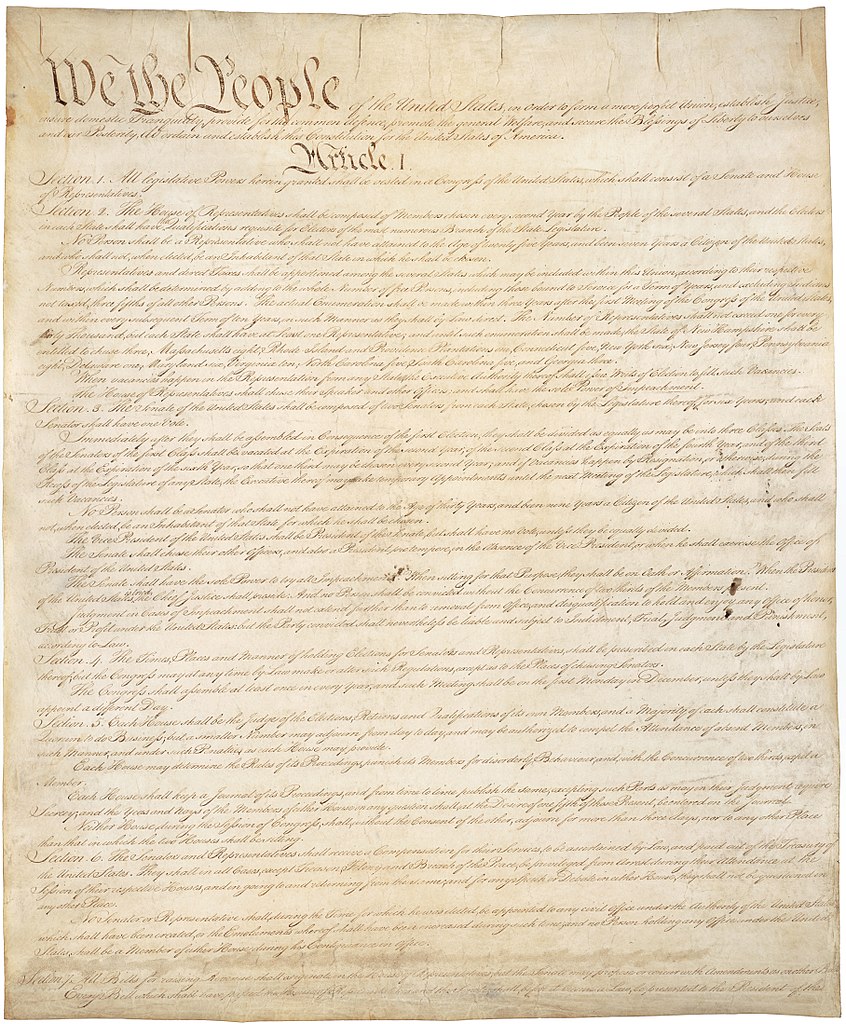
We find ourselves here, in this particular time and this particular place in the history of our republic, because of a 239-year-old oversight made by the Founding Fathers, in that the first ten amendments to the United States Constitution, commonly known as the Bill of Rights (the name itself is a mistake), contain no penalty clause for those — politicians, bureaucrats, policemen — who violate them. I’m not entirely sure it was accidental, but, as a result, they are violated daily, hourly, as a matter of course, and this Corona Virus farce — many others come to mind — is simply the most recent and most preposterous example.
(The name itself is an error because this document is not a mere list of privileges that the government generously lets the people exercise. Quite the opposite, it is a list of things that the government is absolutely forbidden to do It should have been called the “Bill of Limits”. And if the Founders, who had just fought and won a desperate, bloody war against the world’s most brutal and rapacious super-power, hadn’t meant them to be absolute, then why — for all you “living document” idiots out there — would they have even bothered to write them down?)
All over this bruised and battered country, a flock of mean, moronic, petty tyrants have issued illegal orders to those they clearly regard as the peasantry: stay home, avoid your fellow human beings, and above all, shut down the Machinery of Freedom which we know as capitalism. If it’s ever allowed to start up again, it must strictly be on terms that are essentially Marxist in character. No mere individual can ever again scratch his ass without written government approval and permission. In effect, the left has the revolution — as usual, achieved by somebody else — it has wanted for 180 years, since the days of Pierre-Joseph Proudhon.
What’s more, many otherwise decent and intelligent folks are out there begging for their rulers to let them be free again. I find that repulsive and unAmerican. And to those boobies (including Sean Hannity and Joy Behar) blubbering about patriots bring their weapons to demonstrations, listen up: the Founders meant the government to be intimidated by the people, you hapless buffoons.
My bottom line, here, is that, in the short run, we must free ourselves — now — from what we have to call Faucism. Scientific pleaders like the dictatorial doctor must be made painfully aware that when their pronouncements have clear political and economic consequences, their protests of innocence sound a bit too much like “I was just following orders”.

Safetyism is a disposition that has been gaining strength for decades and is having a triumphal moment just now because of the virus. Public health, one of many institutions that speak on behalf of safety, has claimed authority to sweep aside whole domains of human activity as reckless, and therefore illegitimate.
I suspect the ease with which we have lately accepted the authority of health experts to reshape the contours of our common life is due to the fact that safetyism has largely displaced other moral sensibilities that might offer some resistance. At the level of sentiment, there appears to be a feedback loop wherein the safer we become, the more intolerable any remaining risk appears. At the level of bureaucratic grasping, we can note that emergency powers are seldom relinquished once the emergency has passed. Together, these dynamics make up a kind of ratchet mechanism that moves in only one direction, tightening against the human spirit.
Acquiescence in this appears to be most prevalent among the meritocrats who staff the managerial layer of society. Deferring to expert authority is a habit inculcated in the “knowledge economy”, naturally enough; the basic currency of this economy is epistemic prestige.
Among those who work in the economy of things, on the other hand, you see greater skepticism toward experts (whether they make their claim on epistemic or moral grounds) and less readiness to accept the adjustment of social norms by fiat – whether that means using new pronouns or wearing surgical masks. I am regularly in welding supply stores, auto parts stores and other light-industry venues. Nobody is wearing masks in these places. They are very small businesses: an environment largely free of the moral fashions and corresponding knowledge claims that set the tone in large organisations. There is no HR in a welding shop.
A pandemic is a deadly serious business. But we would do well to remember that bureaucracies have their own interests, quite apart from the public interest that is their official brief and warrant. They are very much in the business of tending and feeding the narratives that justify their existence. Further, given the way bureaucracies must compete for funding from the legislature, each must make a maximal case for the urgency of its mission, hence the necessity of its expansion, like a shark that must keep moving or die. It is clearer now than it was a few months ago that this imperative of expansion puts government authority in symbiosis with the morality of safetyism, which similarly admits no limit to its expanding imperium. The result is a moral-epistemic apparatus in which experts are to rule over citizens conceived as fragile incompetents.
But what if this apparatus were revealed to be not very serious about safety, the very ideal that underwrites its authority? What then?
Arthur Chrenkoff on the ways other countries regard China after the epidemic spread beyond their borders and the Chinese Communist Party’s antics on the world stage:
Welcome to the political chaos theory – or, should we say, fact: a bat flapping its wings in China produces a hurricane… pretty much everywhere around the world. It seems likely that three decades’ worth of good PR painstakingly build up by the Chinese authorities after the downer of the Tiananmien Massacre have all been undone in a few short months of domestic and international missteps, from initially covering up the truth about COVID, through gifting or selling faulty personal safety and medical goods around the world, to now retaliating against countries like Australia which are asking some uncomfortable questions about the origins of the virus.
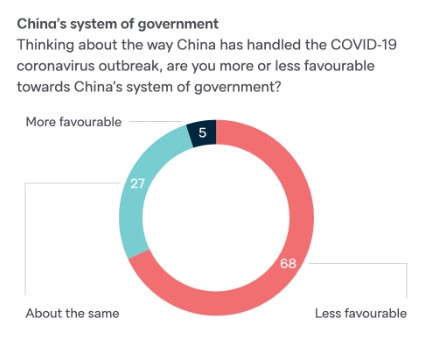
Earlier today, Australia’s Lowy Institute has released the results of its COVID poll on public attitudes about the Corona pandemic. Of particular interest, the perception of China’s rulers:
At the same time, 37 per cent of Australians think that China will emerge more powerful after the dust (or the viral load) settles, while 36 per cent believe in no change, and only 27 per cent think China will be weaker in the aftermath. By contrast, a majority of 53 per cent and a plurality of 48 per cent believe that the United States and Europe respectively will be less powerful in the post-pandemic future. Reading the two sets of figures together it seems that the prospect of China’s rebound to international power is viewed more with apprehension rather than enthusiasm.
As Lowy’s Natasha Kassam observed, the public trust in China has been already declining, falling dramatically from 52 to 32 per cent in just one year between 2018 and 2019. It will be interesting to see the figure for this year. It’s unlikely that the behaviour of the communist government so far in 2020 would have improved the perception.
Such findings mirror similar public opinion research elsewhere. Pew Research Center’s polling last month showed that the negative view of China in the United States has risen from 47 per cent in 2017 to 66 per cent this year. Seventy-one per cent have no confidence in China’s President for Life Xi and 61 per cent view China’s power and influence as a major threat.
ReasonTV
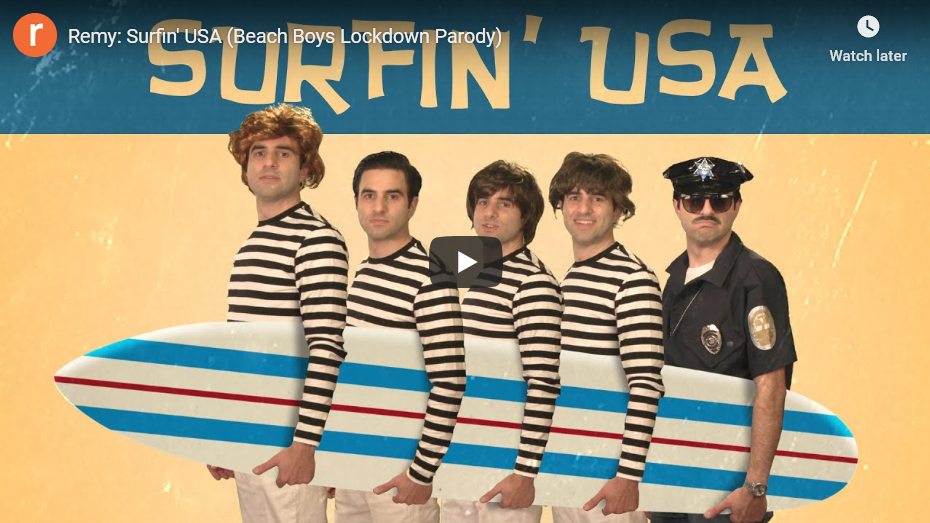
Published 15 May 2020Remy discovers the dangers of exercising alone.
Written and performed by Remy. Music tracks, mastering, and background vocals by Ben Karlstrom. Video produced by Meredith and Austin Bragg.
LYRICS:
If you go out on the ocean
Across the USA
And you’re wearing a swim shirt
‘Cuz of your scrawny weight (it’s for the sun, I swear)Well, uh, you just might notice
The police in your wake
Cuz it’s illegal to be surfing
In the USAThey’re catching them out paddle boarding
Letting their children play
While they’re releasing this guy
A logical checkmateYou’re out in nature alone now
No one in six-foot range?
Well it’s illegal to be surfing
In the USAIf only you had flashed some children
It’d be your release date!
But you’re going to jail for surfing
In the USAYou’ve been distancing for months now
To keep the spread rate down
The only places you’ve been going
Are where there are no crowdsYou’re making sacrifices
For your community
Now put your hands on your head because you are surfing
In the USAHe’s helping the flattening the curve now
He’s exercising alone
Rocking a super baggy swim shirt
To hide his muscle tone (I said it’s for the sun)If only you had flashed some children
It’d be your release date!
But you’re going to jail for surfing
In the USA



Powered by WordPress