
Critical Drinker After Hours
Published 30 Jul 2026In the mood for an Amazon show that’s actually good, unlike Rings of Power? Then Clarkson’s Farm, arguably the best reality show on TV right now, has got you covered. Join me for a quick review of this absolute gem.
July 31, 2026
Drinker’s Extra Shots – Clarkson’s Farm
Comments Off on Drinker’s Extra Shots – Clarkson’s Farm
July 27, 2026
The shambolic Fifth Crusade, or “Waiting for Fredot”
In The Critic, Anatoly Grablevsky reviews a new book on one of the less well-known attempts to wrest control of the Holy Land from the Islamic conquerors:
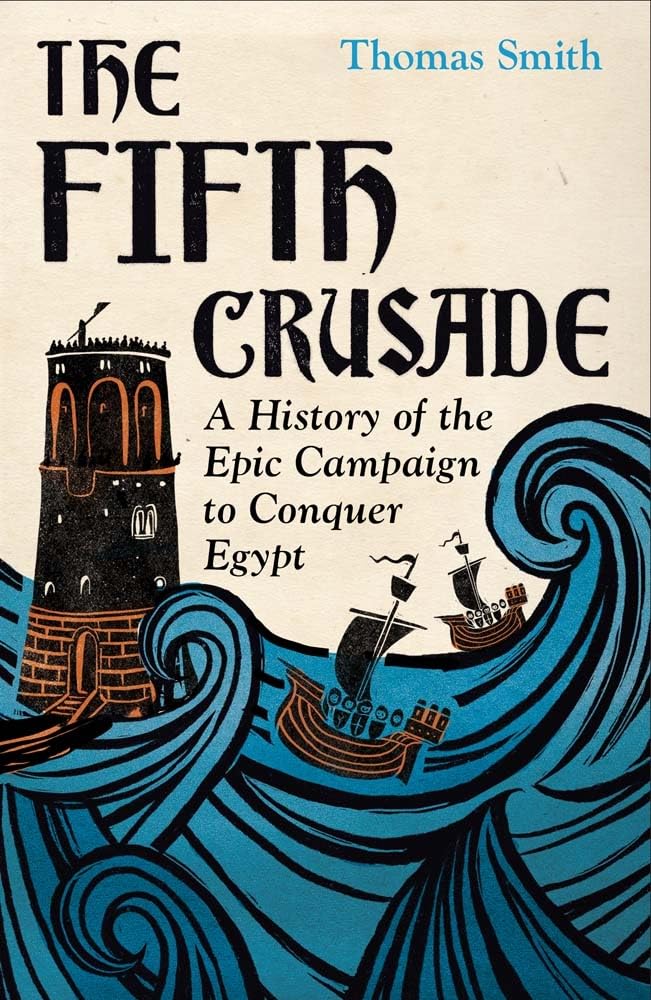
By the early 13th century, the military and geopolitical situation of the Crusader Kingdom of Jerusalem was dire. After the Third Crusade (1189-92) had failed to retake Jerusalem, the Frankish realm in the Holy Land was reduced to a thin coastal strip centred on the heavily fortified city of Acre. The rest of the Near East was in the hands of the Ayyubids, the successors of Saladin.
In response to Ayyubid encroachment, in 1213 Pope Innocent III called for a new holy war to reinforce the Kingdom of Jerusalem and reclaim the Holy City for Christendom. The bulk of the expedition was recruited in the Holy Roman Empire, whose young emperor, Frederick II, the wonder of the world himself, ostentatiously took up the cross. He was, however, in no hurry to join his countrymen in the east.
Learning from their bitter past experiences, this time around the Crusaders adopted a novel strategy. Instead of focusing their efforts on the Holy Land, the Christians targeted Egypt, the political and economic heartland of the Ayyubids.
The Crusader army’s first port of call was the coastal city of Damietta, which, after a lengthy siege, fell in 1219. This was a major victory for Christendom: Crusaders had not captured a city of Damietta’s size, wealth and strategic importance since the fall of Jerusalem in 1099.
The Ayyubid Sultan Al-Kamil, under pressure from Mongol attacks at the rear, now offered attractive peace terms that included the return of Jerusalem to the Christians. The Crusaders, overconfident and under orders from the absentee emperor, rebuffed Al-Kamil and instead decided to march on the Ayyubid capital of Cairo.
Here, the crusade took a shambolic turn. The Christians wasted precious months awaiting the arrival of Frederick II, but the emperor never bothered to show up (Smith might have called his book “Waiting for Fredot”). By the time the Crusaders finally began the march south, Al-Kamil had gathered his strength, and the Franks were quickly outmanoeuvred by the Sultan, who used his superior knowledge of the Nile’s flooding patterns to trap them against the river.
The Crusaders reacted by launching an all-out assault on their substantial wine provisions so that, when the Muslims attacked, the Christian army disintegrated in a drunken rout.
In the ensuing peace deal, Al-Kamil regained Damietta, in return for giving safe passage back to Europe to the Christian survivors.
Comments Off on The shambolic Fifth Crusade, or “Waiting for Fredot”
July 24, 2026
QotD: The first rule of strategic analysis
Do you know the first rule of good strategic analysis? When a war begins: shut up.
Wars are theatres of chaos, noise, confusion and premature certainty. The temptation to declare victory, defeat or historical turning point within the first few hours or days is not analysis. It is posturing. Yet the modern media cycle, with its appetite for endless commentary and instant verdicts, cannot tolerate silence. The result is a steady stream of confident assertions, most of which will age badly.
The current conflict between the alliance of the United States and Israel and Iran has followed this pattern almost perfectly. Within days, it was announced that America was winning; America was losing; Iran is winning; Iran had been neutralised; Iran remained undeterred; Trump doesn’t have clear plan; he does have a clear plan; this was the start of a forever war; it wasn’t a forever war; the war is a catastrophe for the US; the war is a triumph for the US.; that the war would soon be over; the war is over.
Obviously, these claims cannot be true simultaneously. Most of them will turn out not to be true at all.
Resisting the customary rush to instant judgement and adopting a more analytical frame of mind, what can we, discerning sceptics that we are, sensibly say six weeks into the war? Which claims survive contact with reality, and which are, for now, better treated as conjecture?
Michael Rainsborough, “A Sceptical Stocktake of the Iran War So Far”, The Daily Sceptic, 2026-04-21.
Update, 27 July: Welcome, Instapundit readers! Have a look around at some of my other posts you may find of interest. I send out a daily summary of posts here through my Substack – https://substack.com/@nicholasrusson that you can subscribe to if you’d like to be informed of new posts in the future.
July 22, 2026
Andy Burnham’s “Manchesterism” at the national level
In The Critic, Shimeon Lee looks at Andy Burnham’s time as Mayor of Greater Manchester and what his record there says about how he will try to run Britain from No. 10:
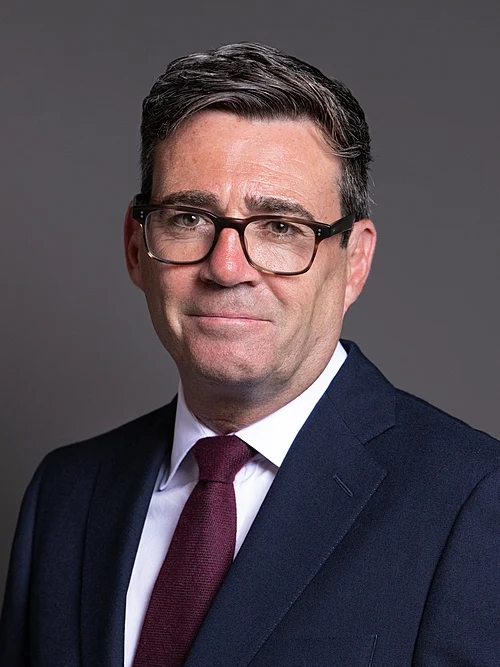
Prime Minister Andy Burnham’s official MP portrait, July 2026.
© House of Commons via Wikimedia Commons.
Andy Burnham is now Prime Minister, and the country soon to discover what “Manchesterism” means when applied to the British state. Burnham’s nine years as mayor, alongside his earlier national record, offer a clear guide to the instincts he is likely to bring to No.10: a willingness to raise taxes, expand the state and prioritise policies that sound good but ultimately deliver poor value for money.
It is revealing that after being elected mayor in 2017, one of Burnham’s first acts was to impose a new charge on households in Greater Manchester. The new mayoral precept was initially set at £8 for the average band D property, funding the mayoral operation, including Burnham’s £110,000 salary. As so often happens with new charges, it did not remain modest for long. The charge more than doubled the following year, rising again in 2020-21, 2022-23, 2025-26 and 2026-27. By the time Burnham resigned to contest the Makerfield by-election, it had risen to £61.75, nearly eight times the original amount in less than a decade.
As residents paid more, the mayor built an increasingly elaborate network of advisers, commissioners and panels funded by taxpayers. These included a young person’s advisor paid £500 per day, a transport commissioner and an active travel commissioner each paid £650 per day, and an LGBTQ+ advisor paid £177 per day. He also established seven equality panels facilitated by “culturally appropriate organisations” which cost £392,435 a year. Taxpayers can only speculate how much larger that ecosystem could become when he takes control of Whitehall.
The mayoral precept was not the only tax rise implemented by Burnham. As mayor, he raised every tax under his control. The band D police precept rose from £162.30 when he entered office to £285.30 by the time he left, a 76 per cent increase. At the same time, the fire precept increased from £59.95 to £92.20, a 54 per cent increase. Both increases substantially outstripped cumulative inflation of 37.5 per cent during that period.
Even that understates his tax-raising ambition, as it only includes the charges he managed to implement. In 2019, Burnham proposed a clean air zone for Greater Manchester which would impose a daily charge on commercial vehicles that did not comply with environmental standards: £7.50 per day for taxis, £10 per day on vans and £60 per day on buses, coaches and heavy goods vehicles. These would have added thousands of pounds a year to local businesses’ costs.
Comments Off on Andy Burnham’s “Manchesterism” at the national level
July 21, 2026
Frederick the Great’s 1741 book, The Anti-Machiavel
At SteynOnline, Tal Bachman continues his look at all things Machiavelli, including Prussian king Frederick the Great’s polemic against the author of The Prince:
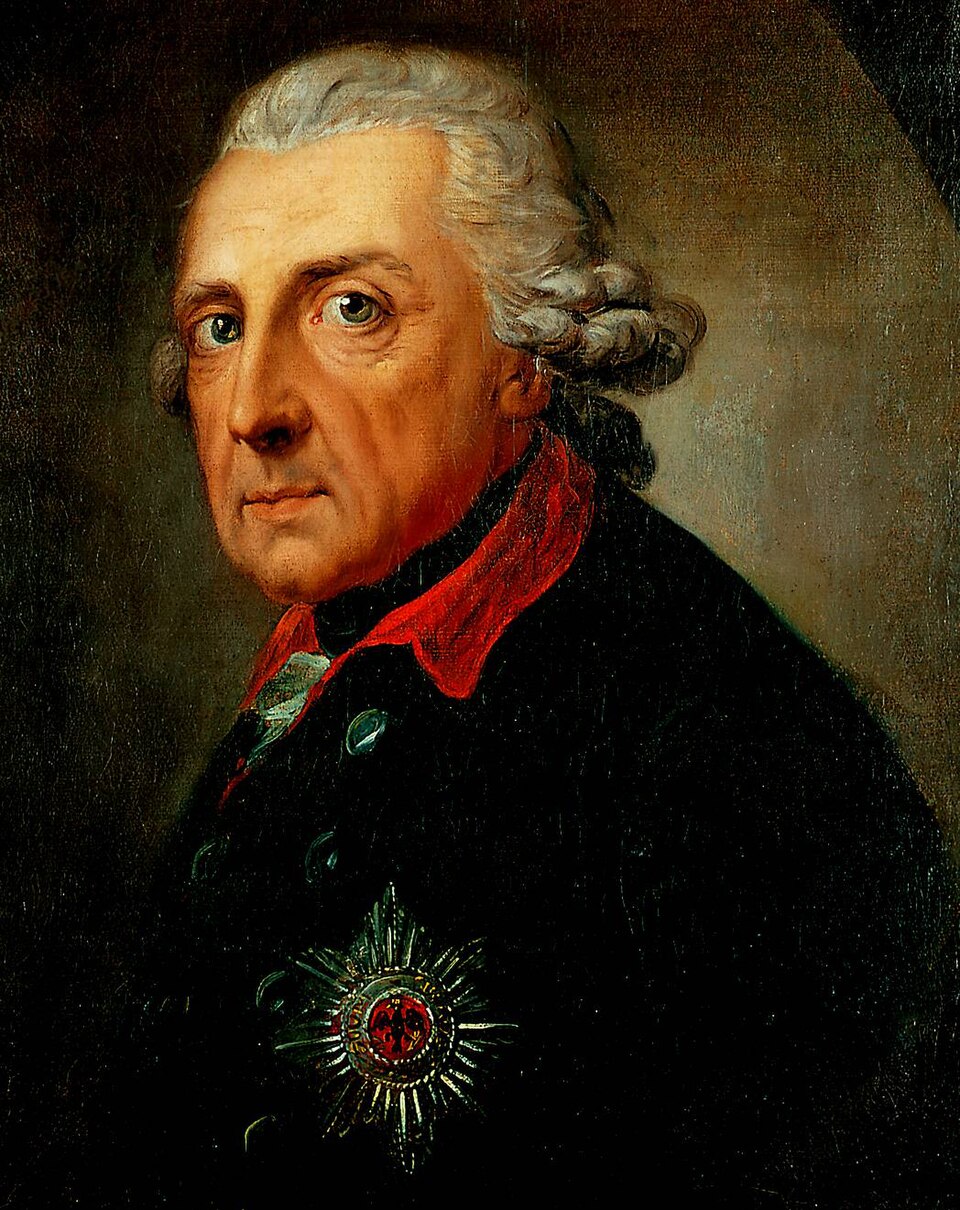
Frederick the Great, 1781
Oil portrait by Anton Graff (1736-1813) in the Sanssouci Palace collection via Wikimedia Commons.
Maybe Machiavelli’s teachings have no relevance in any remotely civilized political system. Maybe they’re far worse than irrelevant: maybe they’re all entirely evil (as they appear), and in addition, would prove the ruin of both the people and their ruler.
This was, as it happens, the view espoused by one important ruler: the Prussian king Frederick the Great. In his 1741 book, The Anti-Machiavel, he claims Machiavelli’s book is “one of the most dangerous that ever appeared in the world”, in that the political crimes it encourages would impose “a lasting misery upon whole nations”. Truly great rulers, says Frederick, aren’t the avaricious, amoral, self-serving, shape-shifting demons that Machiavelli describes. Rather, they are those “whose business it is to administer justice, and to set examples of justice to their subjects; and who, by their magnanimity, mercy, and goodness, ought to be the living images of Deity”. Thus, Frederick sees his rebuttal as “a defense of humanity against a monster who would destroy it”; it is “an antidote to poison”.
Frederick ruled Prussia for nearly 50 years. Most historians rate him a success. On the face of things, he seems like the kind of critic who knows what he’s talking about.
But Machiavelli would say, not so fast. What did Frederick do almost immediately after assuming power? Without any provocation, he launched a war to seize the large, prosperous, populous province of Silesia (now in southwestern Poland) from the Habsburg Monarchy. And he did so on a convoluted, centuries-old dynastic claim which sounded as unconvincing to his contemporaries as it does to us now. In the three Silesian wars which followed (the third turning into the Seven Years War), well over a million soldiers died fighting. Millions more wound up maimed, psychologically scarred, or otherwise ruined. Of course, millions of non-combatants also suffered: wives lost husbands, mothers and fathers lost sons, children lost fathers and uncles and brothers. Those non-combatants also suffered displacement, terror, deprivation, and injury. Over two decades, Frederick’s wars — particularly the Seven Years War — convulsed Europe. Frederick gained 30% more territory and 50% more citizens, but the cost was losing 10% of the Prussian population to combat or disease (the modern equivalent of 35 million Americans, 6 million English, or 3 million Australians). The point is: if his actions are anything to go by, Frederick didn’t oppose Machiavellian power moves as much as he professed, if at all. Machiavelli might even argue that in taking pains to proclaim his opposition to Machiavelli even as his wars of acquisition injured and killed millions, he was doing exactly what Machiavelli had advised: seeming to be good even as he was doing whatever the hell he wanted, for his own purposes. Most people will buy the act anyway, says Machiavelli, so why not?
This brings me back to Machiavelli’s claims about how rulers do in fact act, and how they must act to avoid ruin. And that in turn brings me back to the original wording of The Prince, and what real-world credibility Machiavelli might have as a political commentator.
As it happens, Machiavelli was no armchair quarterback. Even if he hadn’t spent nearly fifteen years at the highest levels of Florentine government (which he did), he might well have qualified as a political expert just by virtue of growing up in the tumultuous time and place he did. Between the jockeying Italian states, the myriad (and ever-changing) foreign alliances and enemies and designs, the political influence of the papacy, and Florence’s own internal politics, Machiavelli’s home city furnished more than enough lessons in how the political world could, and often did, operate.
Comments Off on Frederick the Great’s 1741 book, The Anti-Machiavel
July 13, 2026
A Fair Reading of The Camp of the Saints
Feral Historian
Published 10 Jul 2026Jean Raspail’s 1973 novel The Camp of the Saints has gone from obscurity to infamy in recent years, drawing condemnation for its highly … unflattering depiction of third-worlders. Much of this condemnation comes from people who haven’t read it, or gave it only a shallow and cursory read. But if we let the book speak for itself it can be quite insightful at times, and the true target of its scorn becomes brutally evident.
Rather than use politically-charged b-roll, it’s all hiking shots this time. Mostly to cover some edits. This is a great one for those who listen to these on the commute. Or the commode as the case may be.
00:00 Intro
01:03 The Story
14:22 Escalation Curve
17:38 Hamadura and “Whiteness”
22:05 Culture and Ethnicity
26:33 Why so Serious?
30:09 The End of a World
34:14 Your Virtual Right-Wing Uncle
35:48 A “Martian” Perspective🔹 Patreon | patreon.com/FeralHistorian
🔹 Ko-Fi | ko-fi.com/feralhistorian
🔹 and Merch! | feral-shop.fourthwall.com
🔹 Oh, and book 2 of Stellar Drift is out. https://www.amazon.com/dp/B0GTVXK4CN
July 8, 2026
Initial reactions to The Odyssey trailer
As always, I’m not closely following whatever movies Hollywood chooses to extrude, but I do see the occasional high and low lights from the reactions of others. The latest attempt to portray Homer on screen isn’t finding it easy to get potential viewers excited:
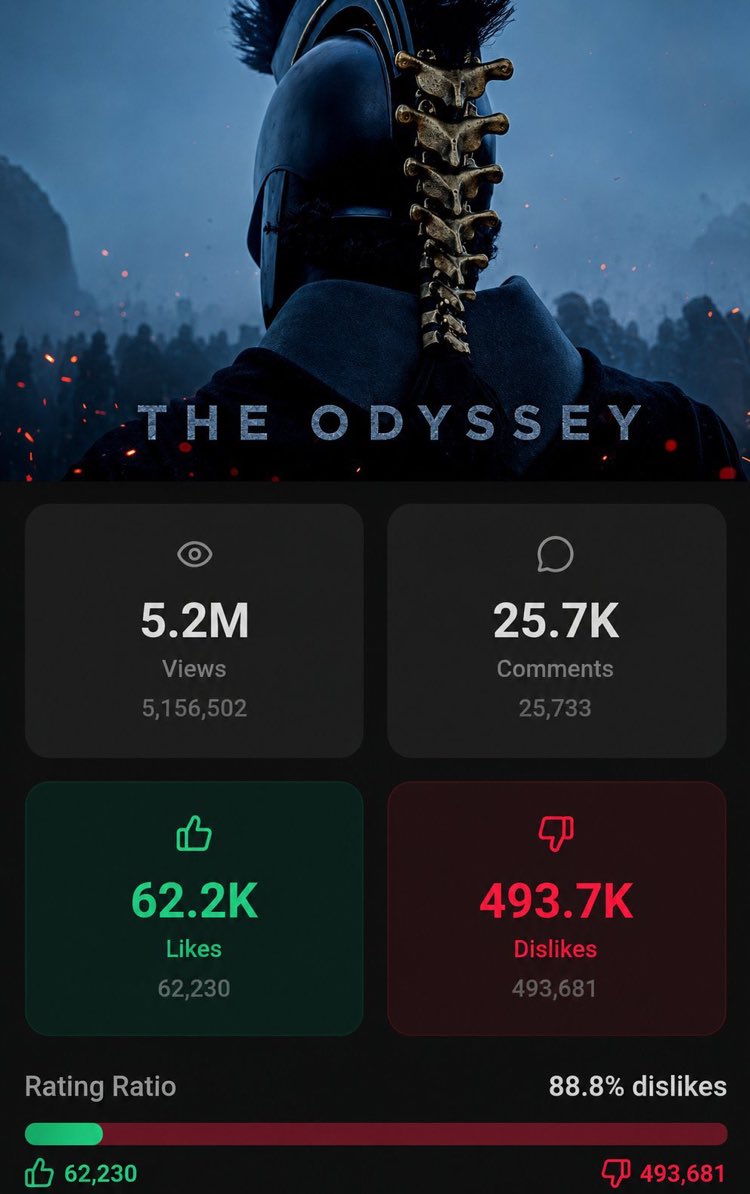
The public reaction to the Odyssey trailer is a strong indication that Nolan’s reputation won’t be enough to prevent this turd from leaving a smoking crater in the studio’s budget.
People are sick of blackwashing. They’re sick of girlboss reimagining. They’re sick of every movie turning into a sermon.
Does this mean that a Tipping Point will be reached, that Hollyweird will finally sit up and pay attention to the dashboard full of red warning lights and sirens screaming for its attention?
Lol. Lmao.
The cultural revolution means that everyone in a position to do something has been replaced with religious fanatics who don’t care about nonsense like “money”.
Just like every other institution they suborned.
They are crashing the plane with no survivors, and as it goes down in flames they will take the opportunity for a final smug lecture about how the failure of the audience to appreciate them demonstrates that the audience are nothing but white supremacists.
I’ve seen speculation that the current crop of “big” movies were all in early production just at the peak of a few trends that have since receded in popular culture — girlbosses and general wokeness — and it might just be a matter of timing … or it could be that Hollywood’s movers and shakers are still determined to press on with the undiluted progressive message even if it means losing hundreds of millions of dollars with every new release.
On the topic of The Odyssey, Ted Gioia talks about his own discovery of Homer as a youngster and says “youngsters were Homer’s target audience — you can feel that at every turn in his story”:
The first work of classical literature that thrilled me to the depths of my soul was the Odyssey. It made such a big impact that, decades later, I insisted on reading it aloud to my own children, hoping they would feel that same magic.
I was little more than a child back when I discovered Homer — 12 or 13 years old, I’d guess. Back then I knew more about comic books than serious literature. But I was outgrowing Spiderman and Superman, and decided to take a chance on Odysseus.
I approached this book with fear and trembling — worried it might be too difficult. But I soon discovered that Homer was the Stan Lee of antiquity. He told adventure stories not much different from the ones peddled by Marvel or DC.
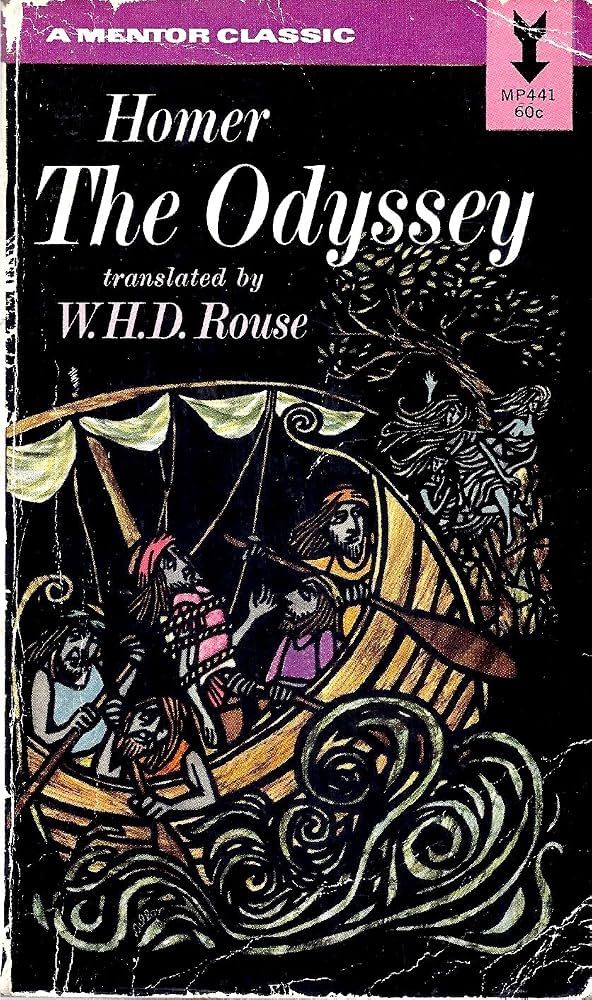
I’d somehow gotten my hands on a tattered used paperback copy of the Odyssey, in a 1937 prose translation by W.H.D. Rouse — published by Mentor Classics (cover price when new = 60 cents). This is not a respected translation — they will never assign Rouse’s version of Homer at any Ivy League college. [NR: I think this is the way I first encountered The Odyssey … possibly this version in Grade 5 as it was a prose translation.]
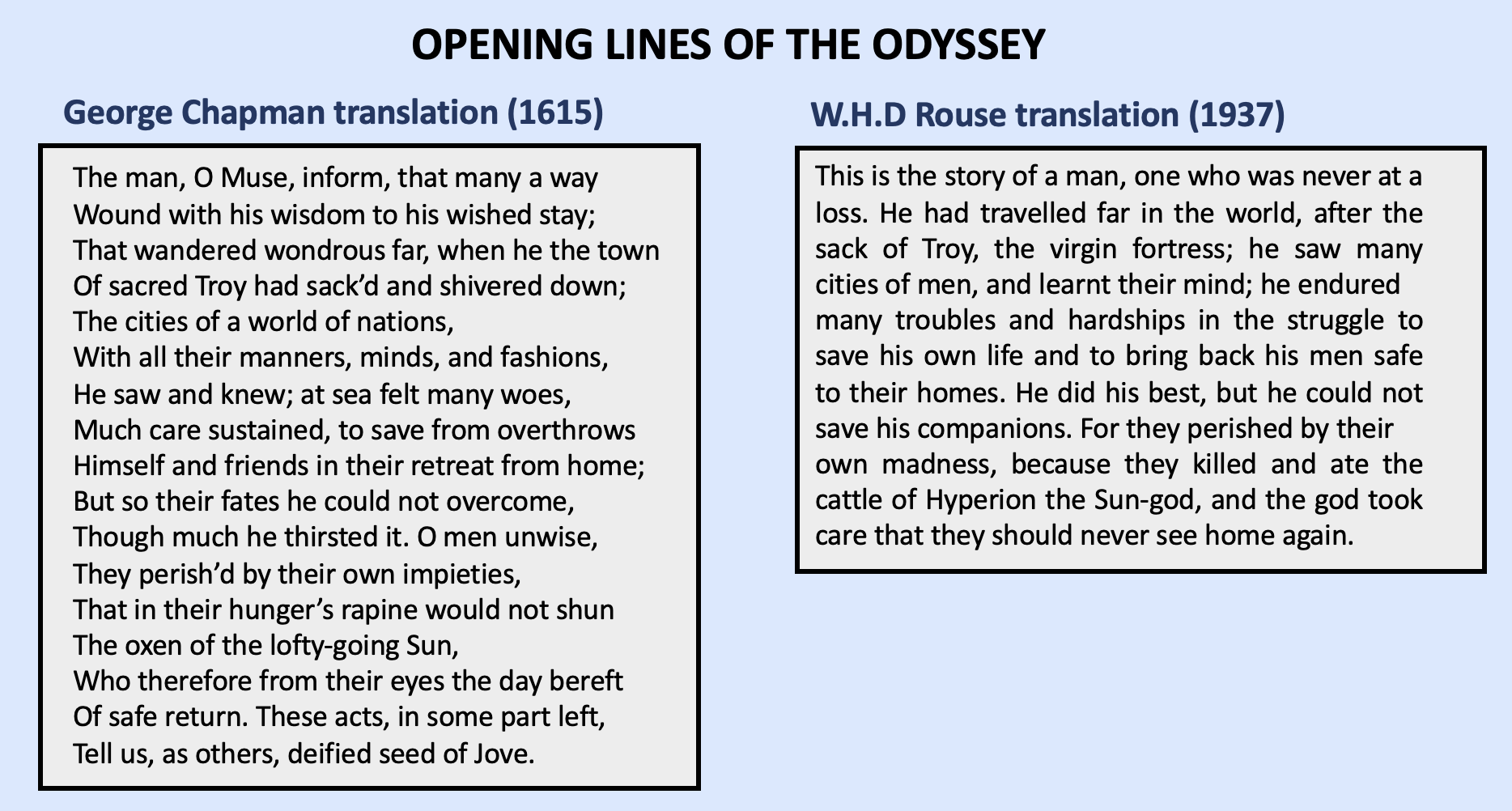
That’s because the legit translators try to convey this epic as poetry. Rouse made no attempt at that. He just turned Homer into everyday language, just like it was a pulp fiction story for the mass market.
That was the right choice, he believed, because (as he wrote in his introduction): “The Odyssey is the best story ever written … It has been a favorite for three thousand years”. Other translations of this book are, he claimed, “filled with affectations and attempts at a poetic language Homer himself is free from. Homer speaks naturally and we must do the same.”
You can see the difference by comparing Rouse’s rendering of the opening lines with the esteemed Chapman translation from Shakespeare’s era.
Is this the best version of Homer? I won’t go that far — years later I became very fond of Robert Fitzgerald’s translation. But I will insist that Rouse is the superior version for a youngster. And, in many ways, youngsters were Homer’s target audience — you can feel that at every turn in his story.
So this is the first thing about the Odyssey you won’t learn at Harvard — namely that this tale was not intended for Harvard elites. It’s a story for everybody. So it’s an obvious choice for a big-budget Hollywood movie. There was no pretension or elitism in Homer’s approach. In today’s parlance, you would say that he was appealing to a mass audience.
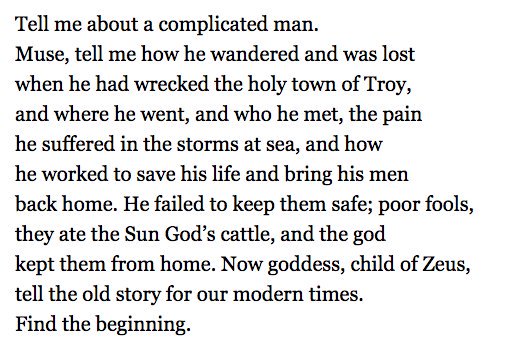
Director Christopher Nolan — whose screen version of the Odyssey makes its debut in London today — relied on the more recent Emily Wilson translation of the Odyssey into iambic pentameter. In her version, our hero is described, like Shaft, as a complicated man who won’t cop out (when there’s danger all about). Okay, she doesn’t use those exact words, but comes close …
Emily Wilson’s translation of the opening lines of the Odyssey
I like this rendering, and can almost hear that Isaac Hayes synth vamp in the background. Wilson is just as straightforward as Rouse — living up to her aspiration to “tell the old story for modern times”.
Comments Off on Initial reactions to The Odyssey trailer
June 27, 2026
Larry Correia is “not a real writer”
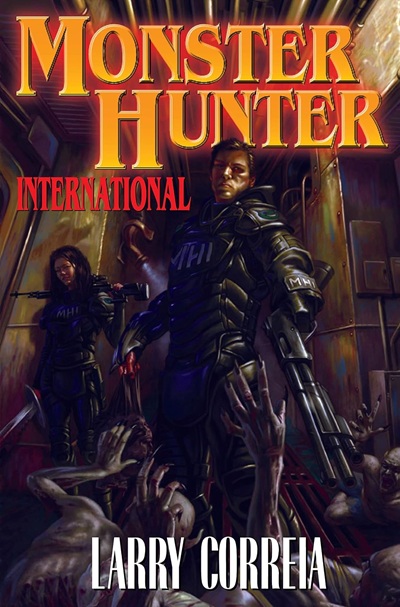
While I haven’t read everything Larry Correia has published, I’ve enjoyed reading a lot of his work, but I’m clearly having fun wrong because “he’s not a real writer“:
T-Lex @T_Saurus_Lex
“Not a real writer” is an inside joke, from the Sad Puppy era. Something some cunning quarter-wit accused him of because Larry wasn’t prone to bend the knee to the SJW mafia. I think the details are on his blog somewhere.Yeah, for my newer readers saying I’m not a *real* writer has been a running joke forever.
When you are a writer who annoys the liberal publishing establishment they always make up some reason to disqualify you, so they can dismiss you, and never take anything you say seriously. These are not honest people.
(If you are a proper good thinking liberal writer, don’t worry, you achieve real writer hood by loudly existing and they’ll stick you on panels if you’ve published one short story that was read by six whole people)
So at first I wasn’t a real writer because I only wrote monster adventure pulp. So then I was multi genre (and now I’m successful in more genres than most authors ever attempt). No. Those are the wrong genres.
Then I didn’t count because I wasn’t a bestseller. Until I was.
Then to be a real writer I needed to win some awards. (The big one I got nominated for at the beginning didn’t count because reasons). So then I won some awards. No. Not those! Those don’t count!
Real writers tackle serious topics and impress serious academic critics, until I wrote Son of the Black Sword, which impressed even my snootiest haters … so they promptly dropped that path to real writer hood.
This got super silly at times, and how the title really stuck, one time on book tour one of my haters saw me arrive early to a book signing outside Portland. It didn’t start for an hour so there was only three people there who had driven a long way. So I was just hanging out talking to them.
My hater immediately got on Twitter and told everybody “I saw Larry Correia on his alleged book tour and he only had three people show up. WHAT A FAILURE. WHAT A LOSER!”
The actual signing had 40, which is pretty decent. I was still there when somebody showed me this tweet. We all laughed and responded with a group photo saying learn to count, dork.
But Social Justice Warriors (ah, the good old days) can never admit a mistake. So he doubled down and tweeted I still wasn’t a REAL WRITER because that same store ROUTINELY had book signings for TWO HUNDRED customers.
Problem was, the book store wasn’t that big. To fit 200 they would have to remove all the shelves. And at this point I was still there signing their inventory so I asked the manager. She said out of hundreds of signings they had only hit 200 twice the entire time they’d been in business. Brandon Sanderson post WoT and GRRM at the absolute height of the HBO show, and those had lines out into the parking lot.
So only the top bestsellers on Earth at that moment count as Real Writers. Seems unfair. But okay.
So me and my fans leaned into this super hard to mock the absurd and ever moving goal posts of the terminally online haters. And the rest of my book tour was called THE STILL NOT A REAL WRITER WORLD TOUR. And I got a big group photo at every event for the next week.
And yes, I have hit 200 since, but I’m sure the minute I did the new Real Writer threshold moved to 400. 😀
This has been a running gag ever since, the same way my fans refer to me as the ILOH, though that is a story for another day.
Comments Off on Larry Correia is “not a real writer”
June 22, 2026
Authenticity … if you can fake that, you’ve got it made
Apologies to Ted Gioia for the flippant heading on this item. While I may be going for a cheap laugh, he certainly isn’t doing that in this essay on how to discover authenticity in music in an age of AI slop:
“Authenticity required: password?” by liako is licensed under CC BY-SA 2.0 

 .
.
In my case, I learned about authenticity at home, and from the best possible teacher. Even now, so many years after his death, I’m still learning from Dad’s example. And if I could somehow manage to pass it down on to my children, it would be worth a whole lot more than a gold watch.
I say this in full awareness of the contentiousness and backlash arising from almost any assertion of authenticity, especially in the arts — but in other spheres of life as well. There’s been so much debunking of authenticity in recent years that it’s remarkable that anyone is still willing to use it as a term of praise. Sometimes words in the critic’s lexicon become tainted, defeating the very purpose for which they are applied. The situation is so dire that I might even claim that we are facing an “authenticity crisis” in the arts — especially now with the rapid rise of AI. But even making that statement would spur a meta-backlash against the implicit assumption that there’s any legitimate concern over such a debased concept. After all, why defend authenticity if it doesn’t really exist?
In this regard, authenticity is coming to resemble its kindred word “sincerity”, which now implies the exact opposite of its dictionary definition. As Lionel Trilling points out, in his magisterial Harvard lectures published as Sincerity and Authenticity, the term “has an effect that negates its literal intention — ‘I sincerely believe’ has less weight than ‘I believe’; in the subscription of a letter, ‘Yours sincerely’ means virtually the opposite of ‘Yours’.” [Lionel Trilling, Sincerity and Authenticity, (London: Oxford University Press, 1972, p. 6.]
There’s an humorous quote, well known among actors, circulated in many variants and attributed over the years to everyone from Jean Giraudoux to Groucho Marx: “The secret to success is sincerity. Once you can fake that, you’ve got it made.” That pretty sums up the prevailing elite view of sincerity and authenticity in the creative world—where they are dismissed as poses played out in public as part of the show, without deeper significance.
When Trilling dissected these various terms for his Harvard audience, he saw authenticity as operating at a higher level than sincerity, as demanding a more strenuous allegiance to the dictates of the inner life. You act sincerely, but authenticity must be more than an act. By the same token, the loss of authenticity represents a much deeper malaise than insincerity.
So we ought to be concerned if we have learned to live without the concept of authenticity. If authenticity has truly been debunked, what takes it place? And if there’s nothing to replace it, how do we deal with the empty hole where it was supposed to exist, as a kind of guarantee or validation of our external actions? That poses a problem, and not just for aesthetics and music-making.
Comments Off on Authenticity … if you can fake that, you’ve got it made
June 21, 2026
Jean Rapail’s The Camp of the Saints, translated by Robert Laffont
Copernican reviews Jean Raspail’s The Camp of the Saints which was reprinted in an English translation by Robert Laffont earlier this year:
It is time that I throw my own hat into the ring regarding this particular piece of polemic fiction. It’s particularly topical given the recent events in the UK and the Western World. A look at toxic progressive empathy taken its natural conclusion.
Written by Jean Raspail and published in 1973, Camp of the Saints is a book infamous among those the media describes as “Far Right” and virtually unknown outside of that. Were history set upon an even keel, Camp of the Saints would sit on the bookshelf of every high school right next to the classic works of the same genre: notably 1984, Brave New World, and Fahrenheit 451.
This book was so dangerous that for decades, now, the English translation has been out of print, available only as an expensive antique, or through the Internet Archive, [as] a single shoddy .pdf. The corporate owners of the English translation rights have, despite considerable interest, refused to republish it. That was until September of 2025, when a new translation was created and distributed.1
As of now, what was once an antique book is now cheap and in-print. What’s more, it’s been converted to an audiobook available on Audible.2 It took the destruction of Western Culture for us to see published the one work of dystopian fiction that warned us of it.
Given its relevance, it makes sense that over ten percent of the run-time consists of various forwards from the author, translator, and the publisher, that describe the political and cultural push against its own publication. It’s worth it to read (or listen) through the numerous forwards to better understand the context and the author.
An Introduction to the Text
Among the dangerous books written in the late 20th century, Camp of the Saints takes the self-destructive anti-nativism of the neoliberal world order and draws it forward to its own natural conclusion. Like other works of fiction, it takes popular ideas and asks the question: “What if these beliefs are taken to their ultimate logical end?”
The book is written from the perspective of an omniscient historian who witnessed the events of the text; he knows that his work will be censored, silenced, or redacted. In the context of the book, the accurate recollection of the events described is inherently destructive to the (now) dominant anti-racist political regime. The force of political progressivism will destroy any such history on the basis that it may “incite racial hatred” or “create division”.
A fascinating bit of forethought in that those are the exact reasons why Camp of the Saints was itself banished from public view for the last half-century: Liberal cultural diversity transitioned smoothly to violent censure and virulent “anti-White” or “anti-Western” genocidal hatred.
The book is a dramatization of the Fall of the West. Not in pitched battle, but as it has lost its spiritual core to rampant idealism. The “other” is always to be given deference over our own people. The sympathy that is demanded for the “other” is also silenced and denied for our own. At what point do a people become so spiritually deracinated that they lose all legitimacy to exist? At what point do they become so deluded as to lack totally a theory-of-mind of the “other”, and at what point does sympathy for the foreigner overwhelm survival?
Camp of the Saints answers these questions in sometimes graphic detail. Some of the horrors written on those pages hadn’t happened to innocent Western children yet … but now, fifty years on, and they have happened. Many times over, in many places and nations, across the West.3 In comparison to the reality of the West in the 21st Century, Camp of the Saints is a tame warning.
The book begins with a great migrant fleet setting off from Calcutta, India. The poor, the starving, the diseased, and the malformed set out for the West- A land where milk and honey flow freely and where the rivers are rich with Fish. The people of India want a better life for themselves, even if they have to walk, unarmed, onto foreign lands to get it. They, like many peoples, believe that their land is simply poor and that Western nations are simply rich. Failing to understand that it is not some “magic dirt” that made France, England, Australia, and the United States rich, but rather it was the French, English, Australians, and Americans. The West doesn’t horde “magic dirt” but “magic people”, so to speak. Were the West to be flooded with Indians, it would become just like India, not magically make the invading Indians wealthy and intelligent.4
I doubt that it’s possible to explain that fact to third-world migrant retards.
To conclude a spoiler-free version of the review: You should read it. It should have been taught in high schools for the last 50 years. You should probably buy a copy before the beast of Progressivism finds a new way to censor it. If you buy the Audible copy, use a tool to convert it to an .mp3 file so that it can’t be deleted from your personal library after the fact.5 There’s a reason it’s been censored for the last 30 years or so. It’s dangerous, subversive, and intelligent in a way that modern dystopian authors wish they could be.
- Here is a direct link [https://www.amazon.com/Camp-Saints-Jean-Raspail/dp/B0FG4MJS8K] to where you can purchase the book on Amazon. A shoutout to Vauban Books for doing the work that every other publisher has been unable, or too scared, to do.
- I kind of enjoy audiobooks. Though Camp of the Saints can be particularly tricky to listen to over reading directly due to its complex cast and jumping around in the timeline.
- The Rape Gang Inquiry Report by Rupert Lowe is particularly poignant and well-timed here.
- A fact that is in stark relief as of 2026, with over 10% of their population (official sources say it’s close to 7%, but I don’t believe them) now being Skaven imports from India … and the wealth, safety, culture, and prosperity of Canada now vanishing at an alarming rate.
- The “Open Audible” tool is works for this, but it isn’t free.
June 16, 2026
Piketty’s bid for another fifteen minutes
I’m not an economist, so my personal opinion on Thomas Piketty’s work is based purely on the reports of others … you could say I’m not a fan. In the National Post, J.D. Tuccille discusses Piketty’s latest push to impoverish the rich nations for the noble cause of “global justice”:
Piketty’s 2021 paean to socialism and central panning.
Celebrity economist Thomas Piketty won fame with a claim that, in market economies, capital accumulates in the hands of the already wealthy, leading to increased inequality. The message found a receptive audience among people eager to believe economic success isn’t earned. Canada’s Prime Minister Mark Carney cited Piketty in his own 2021 book-length argument that economic activity should be managed by people like Carney.
And now Piketty is back seeking new fans with a scheme for top-down central planning of the world’s economy. He is the co-director of the new Global Justice Report from the World Inequality Lab.
Introducing the project, Piketty posted on X, “The world today is characterized by large-scale inequalities. And a climate crisis is looming over us. We urgently need a new vision for global progress in the 21st Century. One that grounds human development and equality in planetary habitability.”
Piketty shoehorns an impressive number of buzz phrases into a few lines. He includes concerns about equality and inequality, climate change and progress that should send thrills through college campuses. But Piketty has a talent for tapping into the moment. In this case, at a time when Freedom House’s annual report finds that “Global freedom declined for the 20th consecutive year in 2025,” the economist and his colleagues propose authoritarian policies for shaping the entire planet to their liking.
In his post, Piketty asks, “What would it take to achieve high prosperity and equality while remaining within planetary boundaries?” He answers that “energy transition” (meaning moving away from power sources that produce carbon) is necessary, as well as “labour hour reductions, growth caps in rich countries, less material consumption, and changes in food habits.”
The report itself asserts, “The compression of global inequality is not only compatible with deep decarbonization; it is a necessary condition for shared prosperity on a finite planet.”
To fight climate change and battle inequality, Piketty and company want “full income convergence across countries by 2100.” This requires, in part, limiting growth to “around 0-0.5% in today’s richest regions (North America/Oceania, Europe).” They argue that near-zero growth in rich countries “does not mean that their living standards stagnate” because people will benefit from flattened incomes.
On his Substack, Tim Worstall says that the latest Piketty emission disproves the “we need a global wealth tax” case of fellow French economist Gabriel Zucman:
So Tommy Piketty has released his big report self-pleasuring over how a few Frogs are going to run the global economy forever. The Guardian, of course, thinks there’s merit in it:
One of the report’s key aims is to bring every country to today’s rich-country level of €5,000 per person per month in purchasing-power terms. The figure for sub-Saharan Africa is €290. The report proposes a new global fiscal and monetary architecture: taxes on the very rich would build the public realm, while a Keynesian “clearing union” and new international currency would ease the external constraints that limit poorer countries’ state spending.
Super, eh?
But the plan doesn’t just try to get the poor up to our standard of living — an excellent goal in and of itself, obviously. It also insists that we don’t increase our standard of living. For a century. Which is, you know, going to be a little more difficult.
So, how is this to be achieved? Well, this is Piketty — Frogs, eh? — so it’s going to be truly swingeing taxation of anyone who puts their head up above the parapet. The global 1% in fact.
And, well, this isn’t wholly true but it’s a useful rule of thumb, the top 1% globally is about the top 10% of the UK. -Ish, you know? Somewhere just above £50k a year for an individual in the UK. £150k for a two adult w/children household perhaps. That’s the level at which the 90% income tax swinges into action.
Oh, and, lovely wealth taxes on top too.
The effect of this is to kill economic growth. That’s what it’s designed to do too. You’ve enough, you rich bourgeois bastard, you, so that’s all you’re going to get and we’re going to use punitive taxation to make sure that’s true.
Well, OK, it’s a plan, right?
June 1, 2026
Social media echo chambers
One of the phenomena noted about most social media platforms was the ease of creating political echo chambers that allowed (mostly) progressive views to be aired but not challenged, which convinced a lot of people that these views were far more widely held than they were. When Elon Musk bought Twitter and reduced the automatic echo chamber mechanism, many formerly happy Twitter users discovered the unpleasantness of dissenting voices (triggering a rush to Bluesky, which allowed the re-creation of those comfortable bubbles for those most distressed). Twitter, now X, has been a much better site since then:
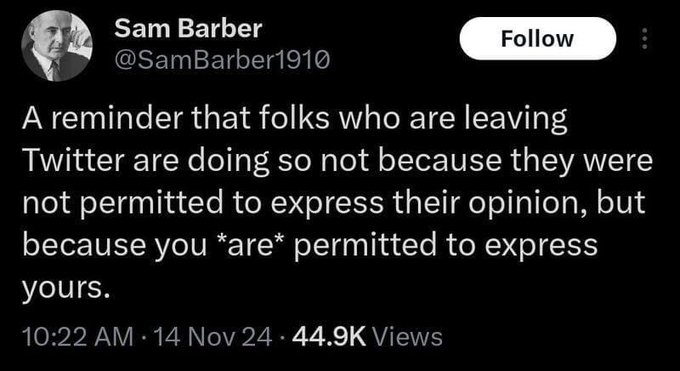
One of the reasons X terrifies soft ideologues is that it has become one of the last places where ideas are forced to compete in the open.
I don’t block people and certainly don’t deliberately curate an echo chamber. My replies are full of people who disagree with me.
And yet every day I watch the same thing happen.
The people who spent years convinced they represented the silent majority get ratioed into the earth by ordinary Americans.
Not because of brigading, coordination, or because some shadowy force is helping.
Because their ideas suck.
That realization should horrify them. But it doesn’t, because they’re dented.
For years they mistook institutional power for public support. They confused HR departments, media outlets, universities, and bureaucracies with actual consensus.
Now the walls are gone and the ideas have to stand on their own. And many of them just can’t.
What’s happening on this platform is not the triumph of a movement. It’s the collapse of an illusion.
The worst part isn’t that they’re losing. It’s that they’re finding out how few people ever agreed with them in the first place.
May 31, 2026
Canada slips into recession: state media rally to attack official opposition
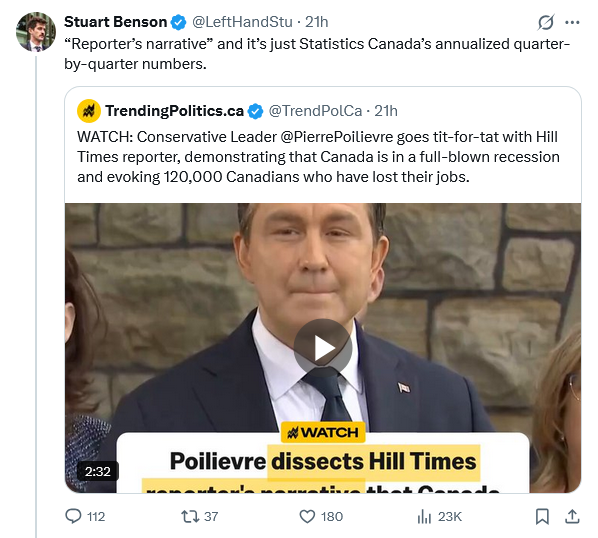
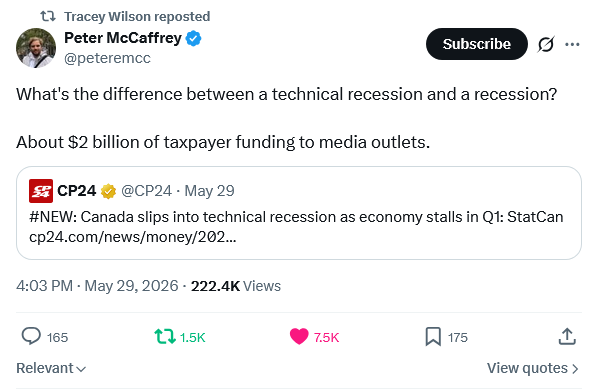
Even before they became explicitly subsidized presstitutes for the Liberal Party, the Canadian mainstream media have always been far more critical of conservatives, so this pivot to defend the government after official statistics show the country is in a technical recession is very much on brand:
Stuart, this is exactly the problem.
You’re acting like annualized quarter-by-quarter numbers are some exotic partisan invention. They aren’t. That is one of the standard ways GDP is reported and understood.
And the “reporter’s narrative” point is weak. The reporter framed the question as if calling it a recession was irresponsible, even though the numbers show real weakness: contraction, stalled growth, falling investment, weak productivity, and Canadians losing ground.
Pierre did what more politicians should do: he challenged the frame.
Because the frame matters.
When Conservatives warn about decline, it’s “doom”.
When Liberals preside over decline, it’s “complex global headwinds”.
When Canadians get poorer, it’s “resilience”.
When GDP shrinks, it’s “not quite the word we’d prefer today”.
Give me a break.
Canadians do not live inside a Statistics Canada footnote. They live inside rent, mortgage renewals, grocery bills, job insecurity, and taxes. Pierre is speaking to that reality.
The press gallery can massage the vocabulary all it wants. The country is weaker, poorer, less productive, and more expensive.
That is not a narrative.
That is the room.
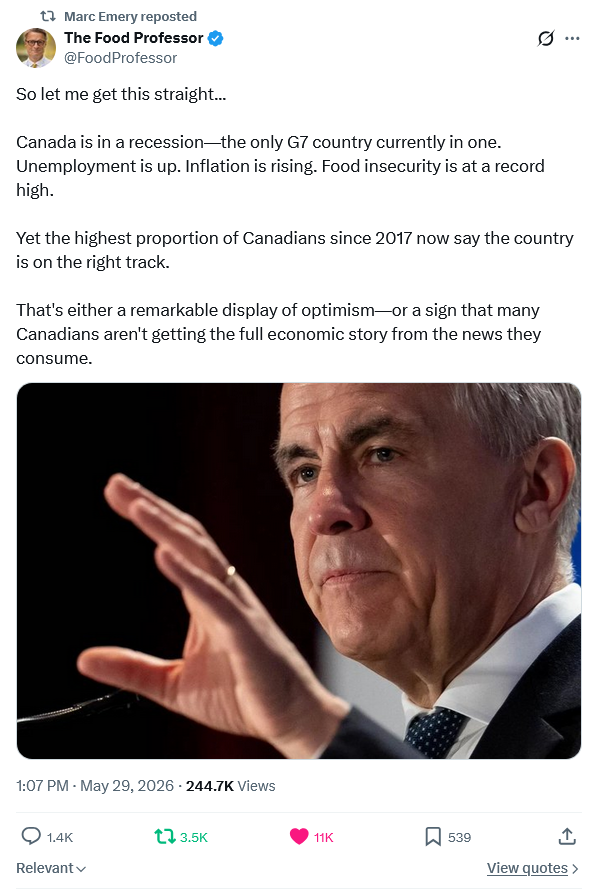
The Liberals are getting great value for their money — well, our money — as even though the economy is tottering, media-massaged messaging is reflected in polls (feel free to doubt the accuracy of polls like this if you like):
Comments Off on Canada slips into recession: state media rally to attack official opposition
May 19, 2026
The War People by Lucian Staiano-Daniels
At Dead Carl and You, Kiran Pfitzner reviews The War People: A Social History of Common Soldiers during the Era of the Thirty Years War and finds it has value in bringing to life some of the ordinary people involved in that bloody, interconnected series of wars that we group together as the Thirty Years’ War:
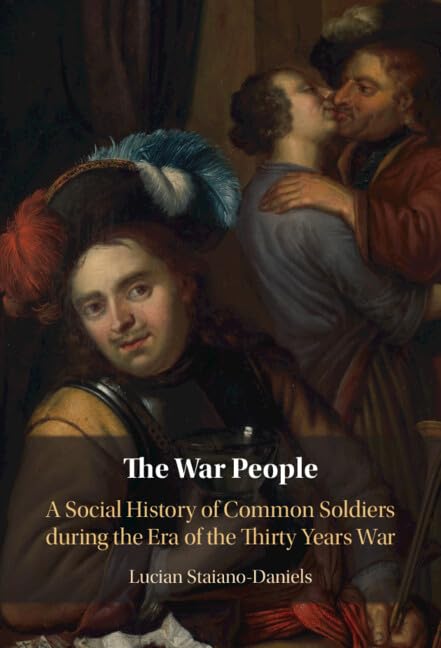
“Their word for themselves was People. Early seventeenth-century common soldiers were Die Leute, Das Volk, les gens, or la gente. They were Das Kriegsvolk, Die Kriegsleute, les gens de guerre, the War People.” So begins Lucian Staiano-Daniels’s aptly titled The War People: A Social History of Common Soldiers during the Era of the Thirty Years War. Using the technique of micro-history, Staiano-Daniels follows the Mansfeld regiment from its raising in 1625 to its unhappy dissolution in 1627. This unexceptional regiment is notable because of the primary source documentation that survives, specifically its original internal legal records — investigations, debts, trials, and last testaments. Through this unusually immediate resource, we gain glimpses of the reality of the 17th century common soldier and so a clearer view of the social conditions he lived within.
One way Staiano-Daniels situates this investigation is in terms of the relationship between military organization and state-building. Describing the existing historiography, he writes: “In this argument, early-modern states increased their control over their civilian populations in part to raise tax money for larger armies that were inhabited by soldiers who were themselves increasingly well-disciplined”. He instead finds, “neither an intensification of military discipline nor unadulterated thuggishness. The military community was made up of systems of relationships that were subtle, intricate, and disorganized.” (7). These findings are well evidenced, and significant, as earlier literature (drawing on more normative sources like manuals and regulations) asserted the intensification of discipline as part of the emergence of the modern state. Instead, we see states forced to engage in the paradoxically complexly and loosely organized world of the mercenary, unable in this time of crisis and state-emergence to fully subordinate the armed forces they employed.
The 17th century and the Thirty Years’ War serve as an important benchmark in understanding the development of war. In witnessing the lives of the kind of men with which wars of the 17th century were fought, we gain a greater understanding of the society that they moved in. In so doing, we can more easily conceptualize the forces that both constrained and enabled war in the 17th century, producing its particular form. This conception provides the opportunity to more easily understand war in other places and times and what conditions reduced or intensified its violence.
Reading this work as a Clausewitz scholar, I could also not help but see a connection between the culture of the war people and Clausewitz’s support for a national militia or Landwehr as a step towards more inclusive governance. There is, of course, a great distance between the unruly mercenaries of the Thirty Years’ War and the “nation in arms” envisioned by Clausewitz and the other Prussian reformers, but at its core we find a common phenomenon: the connection between military service and rights, personal and political.
This book demonstrates well the value of microhistory; in looking closely at the practices and prevalent attitudes of these soldiers of the 17th century, we gain a more concrete view of the prevailing social conditions. This is not just of interest for its own sake (as social history), but because social conditions greatly shape the practice of war, as Clausewitz tells us. This is so because social conditions both reflect and affect the political conditions that create war, as well as the political purpose that exercises a continuous influence upon it.
Comments Off on The War People by Lucian Staiano-Daniels
May 14, 2026
“Trust is the most scarce thing in the media landscape right now”
As with a lot of cultural upheavals, I’m a bit behind the curve on this one, so let Ted Gioia give you the state of play in “Rick Beato Versus the NY Times“:

Fifteen days ago, the New York Times published its list of the 30 greatest living American songwriters. Since then, all hell has broken loose in the music world. And in the last 48 hours, that Hades just got a lot hotter.
I’d been one of the 250 “music insiders” surveyed by the Times for the article — so the day after the list was published I shared my ballot here.
I was unhappy with the results, as were many other music fans. But that might have been the end of the story. Surveys are always a bit dodgy — but what can you do about it?
Then I took time to learn about the Times methodology and was even more dismayed. In fact, I was miffed.
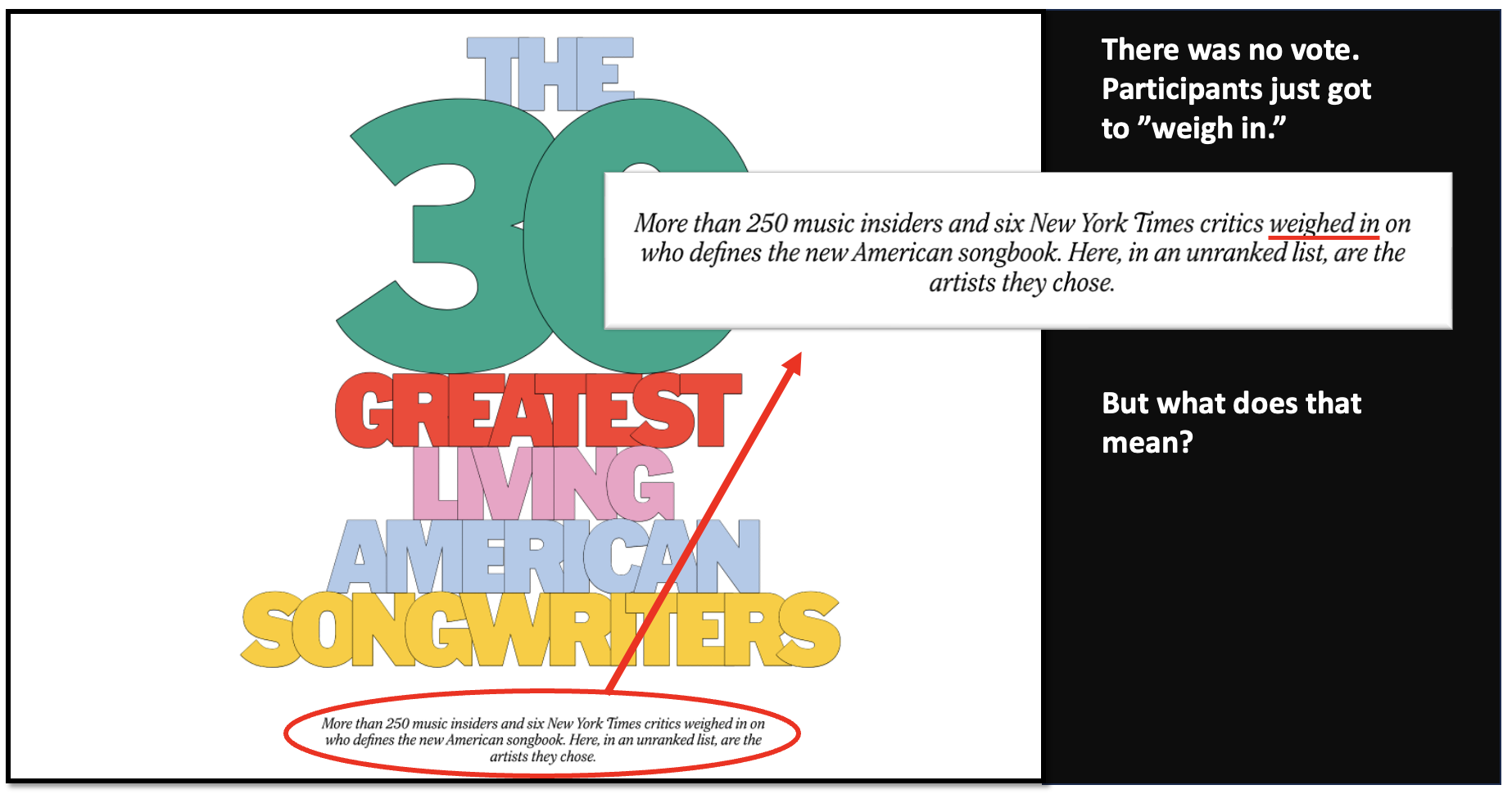
I assumed that I was voting for the songwriters who would be included in the list. But I now see that the experts consulted by the Times only got to make nominations. The final 30 names were chosen by six New York Times music critics.
There never was a real vote. The Times got the results it wanted internally — the insiders made the final call. But the way they explained it to their readers was intentionally vague.
In small print, readers were told that industry experts “weighed in” — whatever that means.
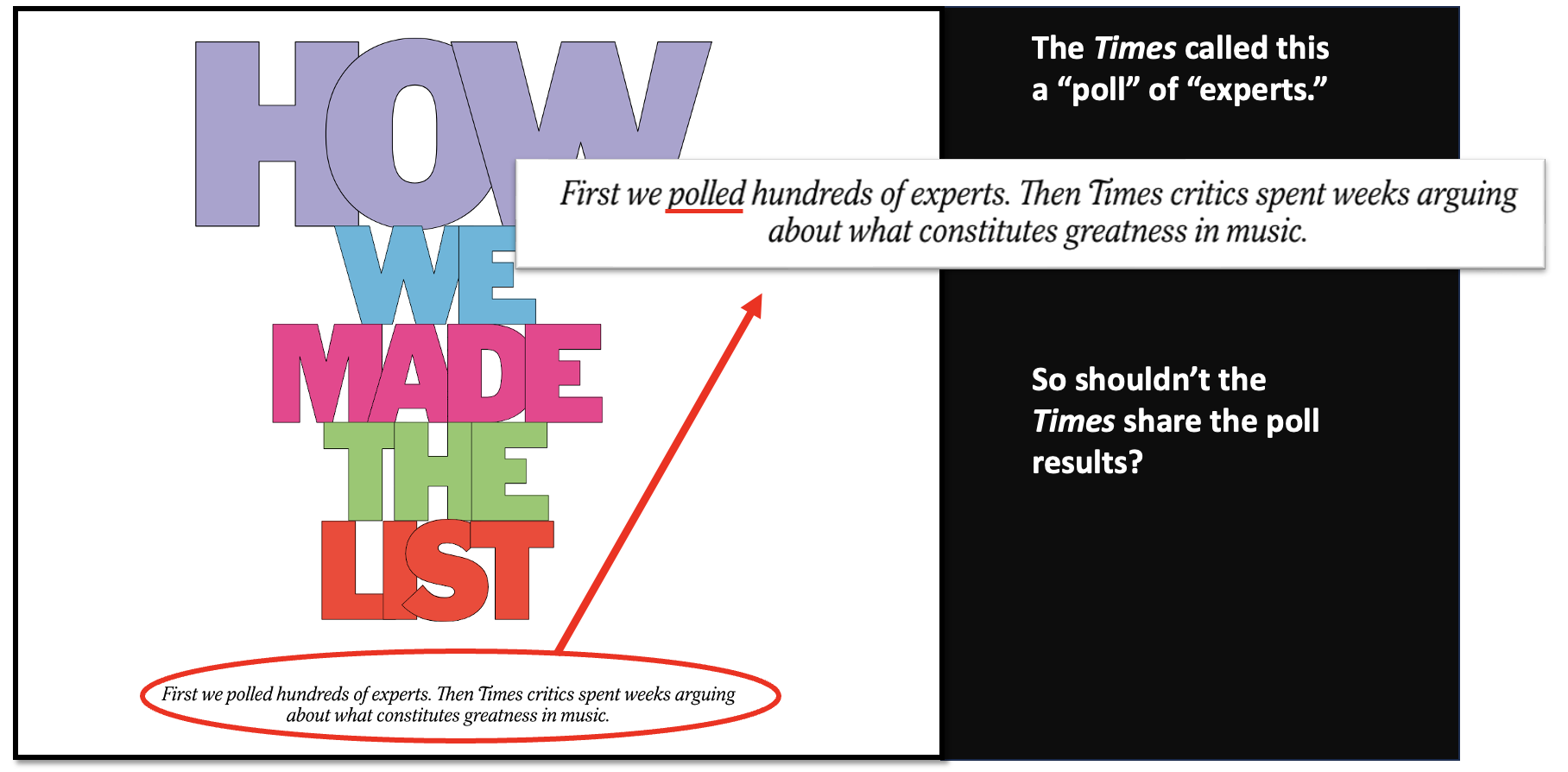
Readers were invited to click on a link to learn “how we made the list”. But even here, the Times served up fuzzy language.
If you kept on reading, you eventually learned the truth. The Times took the verdict of the “experts” and then “ran it through a filter”. The survey was just a “starting point”. The actual top thirty was decided via a “conversation” among its internal team.
Huh?
The Times did share a few ballots, and even this small sample made clear how different the final list was from the survey of experts. That would be embarrassing for the Times under the best of circumstances, but especially so in the current environment — when that same newspaper has repeatedly expressed outrage about voter suppression and attempts to subvert democracy.
If the Times really believes in the importance of voting and standing by results, why doesn’t it just share the actual ballot count?
Even so, this all might have been forgotten. But last Friday, the Times made the mistake of releasing a video entitled “In Defense of the NYT ‘Greatest Songwriters’ List“.
Here members of the inside team came across as smug, maybe even contemptuous, in responding to music fans who reached out to them. At one juncture, a Times critic laughs at a comment from a reader — simply for saying that he went to the Berklee College of Music. Then he continues to chuckle and smirk as he reads the rest of the reader’s comment, before finally throwing it on the floor.
This music lover had made the mistake of defending Billy Joel. For a serious critic at the Times, that is apparently very funny.
Comments Off on “Trust is the most scarce thing in the media landscape right now”


