ReasonTV
Published on 19 Nov 2018Remy recalls a time when experts were claiming “Hitler was a beginner compared to the comic-book industry,” and how Stan Lee took a stand.
Written and Performed by Remy
Video Produced by Meredith and Austin Bragg
Music tracks and background vocals by Ben Karlstrom
November 20, 2018
Remy: The Legend of Stan Lee
October 30, 2018
October 21, 2018
October 14, 2018
Brendan O’Neill: The Tyrannical Idea of “HATE SPEECH”
PhilosophyInsights
Published on 27 Aug 2017Brendan O’Neill is the editor of Spiked Online and a columnist for The Australian and The Big Issue. This is part of a discussion of hate speech at spiked‘s campus-censorship conference, The New Intolerance on Campus.
You can check out the platform of spiked here: http://www.spiked-online.com/
—
This channel aims at extracting central points of presentations into short clips. The topics cover the problems of leftist ideology and the consequences for society. The aim is to move free speech advocates forward and fight against the culture of SJWs.If you like the content, subscribe to the channel!
September 11, 2018
September 6, 2018
QotD: Freedom of speech
A metaphor: we have freedom of speech not because all speech is good, but because the temptation to ban speech is so great that, unless given a blanket prohibition, it would slide into universal censorship of any unpopular opinion.
Scott Alexander, “You Are Still Crying Wolf”, Slate Star Codex, 2016-11-16.
July 26, 2018
QotD: Protecting the truth
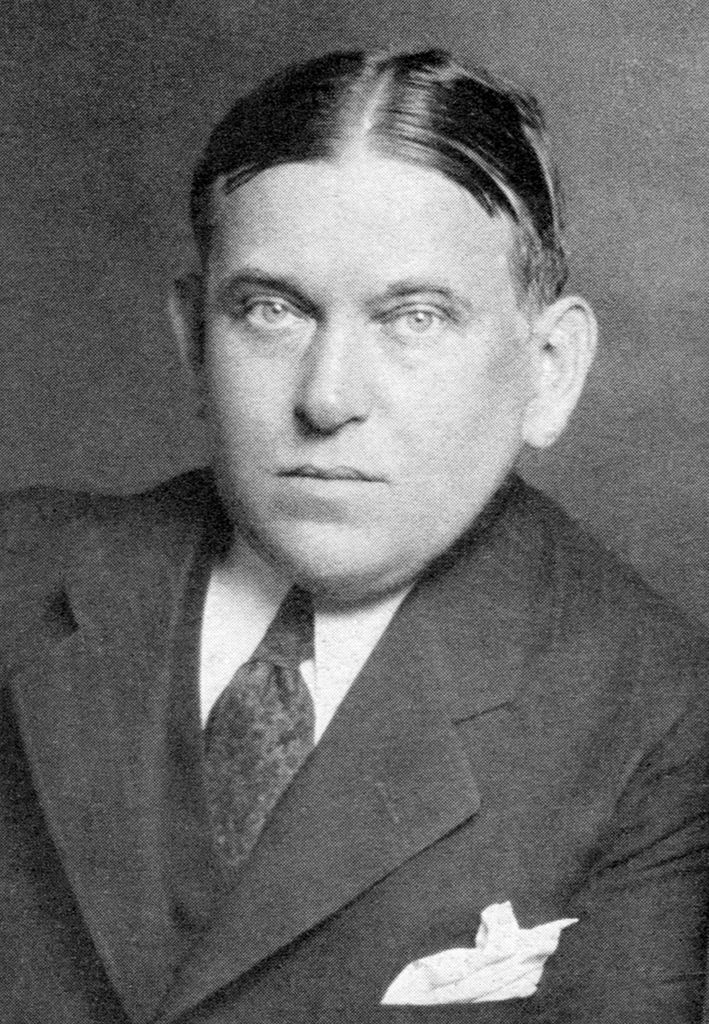
No one ever heard of the truth being enforced by law. Whenever the secular arm is called in to sustain an idea, whether new or old, it is always a bad idea, and not infrequently it is downright idiotic.
H.L. Mencken, Minority Report, 1956.
July 24, 2018
Ayn Rand and the Hollywood blacklist
In the August/September issue of Reason, Jesse Walker discusses the role Ayn Rand played in the House Committee on Un-American Activities’ anti-Communist hearings on Tinseltown’s great and good:
Ayn Rand was a blacklist truther. The novelist and screenwriter had been a friendly witness during the House Committee on Un-American Activities’ 1947 hearings on Hollywood subversion — the probe that prompted the studios to announce that they would not hire Communists. But when she was asked about her testimony two decades later, she claimed that the blacklist was a myth.
“I do not know of any red blacklisted in Hollywood,” Rand told a Boston audience in 1967.
“I do know, if the newspaper stories can be trusted, that many of those ‘blacklisted’ people … were working in Hollywood thereafter under assumed names.” The real victims, she insisted, were the hearings’ friendly witnesses. “You talk about the blacklisting of reds. I don’t know of one leftist who has suffered for his views, and conversely, I don’t know of one pro-capitalist who in one form or another did not have to suffer for his views.”
This was misleading, to put it mildly. The blacklist really did exist. It was an organized effort to remove people from the movie industry for their political opinions, and the federal government played a major role in launching it. Anyone who cares about free expression should object to that sort of censorship by proxy, both as it manifested itself in the early days of the Cold War and as it threatens to re-emerge in social media today.
Yes, some of the more talented blacklisted writers continued to find work under assumed names or behind fronts. Dalton Trumbo knew how to write a movie that audiences would pay to see, and so Trumbo’s screenplays remained in demand. But others didn’t do studio work for a long time or left the industry altogether. (Blacklistee Alvah Bessie wound up taking a job as stage manager in a San Francisco nightclub and writing novels on the side.) And even folks like Trumbo found themselves getting paid a lot less. The blacklist eventually dissolved, but that took years. It is simply untrue that no Communists, real or alleged, lost work because of it.
On the other hand, it is true that some of the friendly witnesses of ’47 fared pretty badly. Rand mentioned a few examples at that Boston speech, among them Morrie Ryskind, who worked for those other Marxes when he scripted three Marx Brothers movies. “In Hollywood, he was getting $3,000 a week, which at the time was top money for writers,” she said. But “he has not worked as a writer one day since appearing as a friendly witness.” In Show Trial (Columbia University Press), his engrossing new book about those hearings, the Brandeis historian Thomas Doherty lists several examples of his own, from Jack Moffitt, who stopped getting hired to write motion pictures and fell back on reviewing movies for The Hollywood Reporter, to Fred Niblo Jr., who wound up leaving Hollywood to write religious films for television and documentaries for the State Department. In risk-averse Hollywood, anyone who stuck his head out might lose work for his trouble, especially if he came from the low end of the industry’s totem pole.
But this should not be equated, Doherty writes, “with the state-coerced, institutionally enforced blacklist of Communists, fellow travelers, and stubborn liberals.” That was a more fearsome and intrusive beast.
July 15, 2018
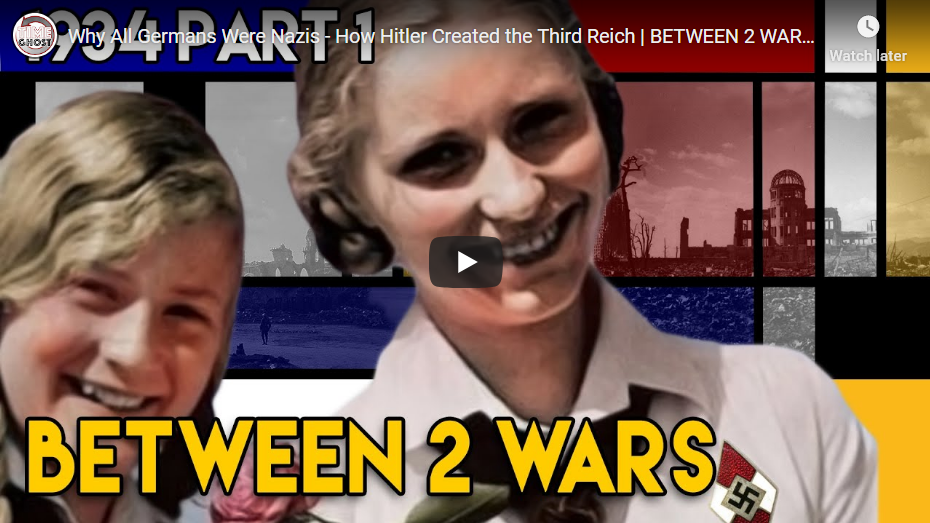
1918 Flu Pandemic – Trench Fever – Extra History – #2
Extra Credits
Published on 14 Jul 2018The flu arrived in France. It found a pleasant home in the crowded wartime trenches, much to the dismay of the Allies who tried to keep the flu a secret. When it made its way to Madrid, not subject to wartime censorship, it picked up the nickname “Spanish flu.”
June 2, 2018
YouTube Won’t Host Our Homemade Gun Video. So We Posted It on PornHub Instead.
ReasonTV
Published on 31 May 2018Reason has a new video out today explaining how to put together a homemade handgun using some very simple tools and parts you can buy online. But you won’t find it on our YouTube channel.
_____After the March for Our Lives rally, YouTube announced that it would no longer allow users to post videos that contain “instructions on manufacturing a firearm.”
Our video and its accompanying article are part of a package of stories in Reason‘s “Burn After Reading” issue. It includes a bunch of how-to’s, including how to bake pot brownies, how to use bitcoin anonymously, how to pick the lock on handcuffs, and how to hire an escort.
The whole issue is a celebration of free speech and our way of documenting how utterly futile of all kinds of prohibitions can be.
We made a video showing how easy it is to DIY a Glock because we wanted to show how the First Amendment reinforces the Second Amendment. If a bunch of journalists can build a handgun in their kitchen, we can assume it’ll be pretty hard to keep guns out of the hands of motivated criminals.
If YouTube prevents us from uploading the video, have they violated our First Amendment rights?
“YouTube of old days was this amazing thing that has become the digital library of Alexandria on the Internet,” says Karl Kasarda, the co-host of InRangeTV, a weekly YouTube show about guns. The show used to survive on ad revenue, until YouTube started de-monetizing certain forms of content. Once YouTube made it impossible for Kasarda to make money on its platform, he started posting his content to other places, including PornHub.
Last October Prager University, a conservative video production shop, sued YouTube, saying it had restricted the audience for content and alleging that the company was “unlawfully censoring its educational videos and discriminating against its right to freedom of speech.”
But here’s the thing: YouTube is a private platform. There is nothing in the First Amendment (or the Second) that requires them to host our gun video. Reason can turn down articles for any cause that we choose. We can do it because we don’t like the color of the author’s hair, or because we don’t like the font she used in her pitch email. We wouldn’t be violating a single constitutional right by doing so.
We wish YouTube would run our video. It’s awesome. But equally awesome is YouTube’s right — our right — not to run content we don’t like.
Karl Kasarda is correct that YouTube is the closest thing we have to the Library of Alexandria. It still doesn’t mean they have to carry our video.
YouTube is hardly the first to test this principle. In 1972, a teachers union president who was running for state legislature sued The Miami Herald, insisting it run an editorial he had written after he was attacked in its pages. The Supreme Court correctly ruled that ordering a newspaper to print an editorial violates the First Amendment. After all, a newspaper is “more than a passive receptacle.”
Prager University argued that YouTube isn’t entitled to the same editorial discretion as The Miami Herald because it advertises itself as a “platform for free expression” that’s “committed to fostering a community where everyone’s voice can be heard.” A federal judge, thankfully, dismissed the Prager lawsuit, rejecting the company’s argument that YouTube is comparable to a “government entity” and thus must be open-access. A slew of other judges have arrived at the same conclusion.
YouTube deserves the same editorial latitude those judges gave to The Miami Herald in the 1970s and that Reason enjoys today.
And that’s one of the things our new gun video is celebrating. If YouTube doesn’t want to post it to their site, its loss. We’ll just post it to another platform. That’s what the free and open internet is all about. So if you want to see our video, you can watch it here at Reason.com — or head over to PornHub and see how to make your very own unregistered firearm.
Links:
https://reason.com/archives/2018/05/31/how-to-legally-make-your-own-o
https://www.pornhub.com/view_video.php?viewkey=ph5b0460dc60380Edited by Todd Krainin. Narrated by Katherine Mangu-Ward. Written by Jim Epstein and Katherine Mangu-Ward. Cameras by Meredith Bragg.
May 27, 2018
May 23, 2018
April 5, 2018
Mark Steyn on the YouTube shooting in San Bruno
The shooting at the YouTube offices in San Bruno, California may not be in the headlines for long, as the story is so off-beat compared to other recent events that it doesn’t easily fit the model the media prefers for reporting gun crime (or high tech stories). Mark Steyn calls it the “grand convergence”:
The San Bruno attack also underlines a point I’ve been making for over a decade, ever since my troubles with Canada’s “human rights” commissions: “Hate speech” doesn’t lead to violence so much as restraints on so-called “hate speech” do – because, when you tell someone you can’t say that, there’s nothing left for him to do but open fire or plant his bomb. Restricting speech – or even being perceived to be restricting speech – incentivizes violence as the only alternative. As you’ll notice in YouTube comments, I’m often derided as a pansy fag loser by the likes of ShitlordWarrior473 for sitting around talking about immigration policy as opposed to getting out in the street and taking direct action. In a culture ever more inimical to freedom of expression, there’ll be more of that: The less you’re permitted to say, the more violence there will be.
Google/YouTube and Facebook do not, of course, make laws, but their algorithms have more real-world impact than most legislation – and, having started out as more or less even-handed free-for-alls, they somehow thought it was a great idea to give the impression that they’re increasingly happy to assist the likes of Angela Merkel and Theresa May as arbiters of approved public discourse. Facebook, for example, recently adjusted its algorithm, and by that mere tweak deprived Breitbart of 90 per cent of its ad revenue. That’s their right, but it may not have been a prudent idea to reveal how easily they can do that to you.
What happened yesterday is a remarkable convergence of the spirits of the age: mass shootings, immigration, the Big Tech thought-police, the long reach of the Iranian Revolution, animal rights, vegan music videos… But in a more basic sense the horror in San Bruno was a sudden meeting of two worlds hitherto assumed to be hermetically sealed from each other: the cool, dispassionate, dehumanized, algorithmic hum of High Tech – and the raw, primal, murderous rage breaking through from those on the receiving end.
March 31, 2018
If anybody could be described as Machiavellian, it’d surely be Machiavelli, right?
At the Foundation for Economic Education, Paul Meany tries to rescue the reputation of Niccolò Machiavelli:
If you have ever studied Shakespeare, you might have heard your teacher use the word “Machiavellian” to describe amoral characters such as Iago from Othello or Edmund from King Lear. “Machiavellian” denotes a person or action that disregards morality and is wholly self-serving. The origin of the word derives from the famous Florentine politician and writer Niccoló Machiavelli.
[…]
Published posthumously, The Prince left Machiavelli with an infamous reputation as an amoral, atheistic, and cynical writer. In 1559, the Catholic Church put Machiavelli’s works on the Index of Prohibited Books. In the play The Jew of Malta by Christopher Marlowe, written in 1589, Machiavelli appears in the prologue, boldly exclaiming, “I count religion but a childish toy, and hold there is no sin but ignorance.”
Machiavelli came to be associated with an Elizabethan term, “Old Nick,” used to denote the devil. There is a subject of modern psychology, known as the “dark triad,” which focuses on three malevolent personality traits: narcissism, psychopathy, and Machiavellianism.
However, this deeply negative image of Machiavelli did not always exist. In the 17th and 18th centuries, a more positive view of Machiavelli emerged, with authors such as the Republican James Harrington referring to Machiavelli as “the prince of politicians.” During the Italian Renaissance, humanist Giovanni Battista Busini fondly described Machiavelli as “a most extraordinary lover of liberty.”
This praise might seem confusing; after all, the word “Machiavellian” denotes someone who is cunning and unscrupulous. How could a man so devious and pragmatic be called a lover of liberty? The answer lies with Machiavelli’s other book, known as Discourses on Livy, which presents a very different image of his political beliefs.
[…]
The stark differences between Machiavelli’s Discourses on Livy and The Prince come from the nature of the aims of each book. The Prince aims to refine the conduct of a single prince, while Discourses on Livy offers guidance for the entire citizen body. The Prince was written to address a unique political opportunity that quickly evaporated, whereas Discourses on Livy was written to articulate the principles required by republics that sought longevity, liberty, and prosperity.
To this day, there still remains a huge debate over the intricacies and contradictions that characterize Machiavelli’s writings. Machiavelli was an extremely nuanced and original thinker whose reputation should not exclusively be that of an evil schemer. He argued for a republic whose liberty is safeguarded by the common person, in which free, unhindered debate provides the best course of action, and where compromises between opposing groups create harmony. Discourses on Livy reveals another side of Machiavelli, a man committed to the ideals of freedom through the means of representative government.