Quotulatiousness

April 21, 2022

The fight for freedom of speech must continue

Chris Bray on the foundation of the US Republican Party (aka the “GOP”) and the fight for freedom of speech then and now:

In 1854, Whig Party members disgusted by their party’s weak opposition to the westward expansion of slavery founded the Republican Party. Two years later, the new party ran its first presidential candidate, John C. Fremont, behind the slogan that appears at the bottom of these campaign rally-song lyrics:

Free Speech, Free Press, Free Soil, Free Men, Fremont!

The reason free speech and a free press were in there as political premises in 1856, as contested values a new political party was fighting for …

Okay, hold on a minute. In 2022, we’re a little baffled that we’re fighting for free speech. An army of sniveling shitweasels insists that we need guardrails around our discourse to prevent extremism, and Twitter employees gasp and sob as some horrible monster threatens to use their platform to let people just say stuff.

Stop trying to let people speak freely, you Nazis!

The whole thing is so baffling because we feel like the other side is trying to win the game as we amble out of the locker room and get on the team bus to head back to the hotel, like, game’s over, folks, we won an hour ago. Aren’t these long-settled questions? How is it that people are trying to drive us back against the powerful course of the American free speech tradition?

And one argument I’d like to offer, if Robert Reich will allow me to make it HITLER HITLER HITLER this content should me moderated out of existence to protect democracy, is that the argument we’re hearing right now is very much one of the American traditions regarding political speech. We buried it for a long time, but it’s real, it has been quite powerful, and it’s back.

Max Fucking Boot, my God.

April 6, 2022

Proposed new Canadian censorship rules will ███████ the ████████ unless we ████ ██

In The Line, Josh Dehaas waves off accusations against Trudeau while also highlighting just how censorious his governments proposed internet bill can be to freedom of expression online:

Comparisons of our prime minister to a dictator are self-evidently ridiculous. But the Russian example is still a case study in the harms of governments having too much power over the flow of information and ideas in a society. Trudeau is no dictator but he does helm a government in which overreach is becoming a frequent and habitual complaint. And one such area in which this government’s more illiberal tendencies are beginning to show is in the realm of media regulation. Despite pushback from groups like the Canadian Constitution Foundation and the Canadian Civil Liberties Association, the Trudeau government seems determined to press ahead with laws to control what you read, write, watch and hear online.

The Liberals have long promised three bills aimed at countering three ostensible problems with online speech. The first bill aims to correct the problem of too few people choosing CanCon, by manipulating what you watch and listen to on platforms like Netflix and Spotify. The second bill would address the problem of advertisers ditching legacy newspapers for Facebook and Google. (Apparently the $600 million bailout was not enough.) The third bill, aimed at so-called “online harms”, would try to prevent people from saying hateful things to each other on social media.

This “online harms” bill is the scariest. Recently rebranded as the “online safety” bill, it’s apparently getting an overhaul from an expert panel and will be re-tabled in a few months. Let’s hope it never comes back. A version tabled last year, Bill C-36, would have created a tribunal wherein people found guilty of “online hate speech” could have been forced to pay up to $20,000 to their accusers, plus up to $50,000 in fines. In some cases, the accusers would be allowed to remain anonymous. Unlike the rarely used hate speech provisions in the Criminal Code, the tribunal would have only needed to find that the speech was hateful on a balance of probabilities, as opposed to the higher standard of beyond a reasonable doubt.

Even more ominously, C-36 would have allowed judges presented with “reasonable grounds” that a person might commit “an offence motivated by bias, prejudice or hate” in the future to threaten the would-be hater with up to 12 months in prison.

I don’t deny that hate speech can lead to harm. But do we really want government and judges deciding what crosses the line? One person’s hateful tweet is another person’s harsh but valuable contribution. Think J.K. Rowling. Think Dave Chapelle. Or think of the University of Toronto student who wrote recently that it was hateful for a professor to show an unflattering cartoon about Iranian Supreme Leader Ali Khamenei, a man whose theocracy executes people for being gay.

Proponents of the bill will tell you that it only applies to the most extreme forms of vilification, but at the end of the day it means government-appointees deciding who gets to say what in an environment that financially incentivizes the aggrieved. People will self-censor even more than they already do.

April 1, 2022

Underbusing Hunter Biden?

Filed under: Government, Media, Politics, USA — Tags: , , , , , , , — Nicholas @ 05:00

Long after the story was initially reported, and the New York Post was hammered for publicizing it at the time, the rest of the legacy media is showing interest in Hunter Biden’s laptop contents:

… If someone disappears for a while, it could mean nothing more than he is having a blood transfusion at one of Google’s secret rejuvenation centers. On the other hand, disparaging information about an oligarch in regime media could simply mean that one mob family is unhappy with another mob family and this is how they are communicating it. Using the media promotes the interests of the gangster class and delivers the message.

That is probably how to interpret the sudden interest by regime media in the famous Hunter Biden laptop from two years ago. For those not interested, this was the laptop that President Biden’s drug-addled son abandoned at a Delaware computer shop, which contained a trove of embarrassing information about the family. In addition to thousands of naked selfies and pics of Hunter smoking crack and meth with prostitutes, it had details of the Biden family criminal dealings.

Regime media dutifully covered this up by declaring it Russian propaganda and going as far as to imply it was a Trump campaign dirty trick. The New York Post, which was the first to report the laptop story, came under withering assault from the Silicon Valley crime families until they dropped the story. Facebook started banning people from their site for mentioning the story. Like the people air brushed from official photos in the Soviet Union, this story was erased from public view.

This is nothing new. The power of regime media is in what they can make the public ignore and this was a typical example. They do this by framing the issue as good guys versus bad guys, which is catnip for the American moralizer. Then they declare the thing to be ignored as the black hat and let the moralizers do the rest. Anyone mentioning the laptop on-line or even in private conversation was declared a crazy QAnon conspiracy theorist by others in their circle.

For no reason at all, the laptop story is back. First the intel community told the New York Times to admit they lied two years ago about it being fake. They did not mention that it was the intel community that lied, of course. Then the Washington Post was told to write about the Biden family’s criminal dealings that were on the laptop. The Post is the official organ of the intelligence community. You will recall that the Post was instrumental in the Russian collusion hoax in 2016.

March 26, 2022

Hollywood: Government Propaganda? – WW2 Special

Filed under: History, Media, Military, USA, WW2 — Tags: , , , , , — Nicholas @ 04:00

World War Two
Published 24 Mar 2022

Along with its arsenal of carriers, bombers, and tanks, America has perhaps the most powerful weapon of all: Hollywood. Hollywood is pumping out American and Allied propaganda as quickly as it can. But was this always the case?
(more…)

March 23, 2022

The New York Times and the “world’s dullest editorial”

Filed under: Liberty, Media, USA — Tags: , , , — Nicholas @ 03:00

Matt Taibbi explains why a milquetoast New York Times editorial got such immense blowback from other legacy media outlets:

The New York Times ran a tepid house editorial in favor of free speech last week. A sober reaction:

One might think running botched WMD reports that got us into the Iraq war or getting a Pulitzer for lauding Stalin’s liquidation of five million kulaks might have constituted worse days — who knew? Pundits, academics, and politicians across the cultural mainstream seemed to agree with Watson, plunging into a days-long freakout over a meh editorial that shows little sign of abating.

“Appalling,” barked J-school professor Jeff Jarvis. “By the time the Times finally realizes what side it’s on, it may be too late,” screeched Philadelphia Inquirer columnist Will Bunch. “The board should retract and resign,” said journalist and former Planet Money of NPR fame founder Adam Davidson. “Toxic, brain-deadening bothsidesism,” railed Dan Froomkin of Press Watch, who went on to demand a retraction and a “mass resignation”. The aforementioned Watson agreed, saying “the NYT should retract this insanity, and replace the entire editorial board.” Not terribly relevant, but amusing still, was the reaction of actor George Takei, who said, “It’s like Bill Maher is now on the New York Times Editorial board.”

The main objection of most of the pilers-on involved the lede of the Times piece, which really was a maladroit piece of writing:

    For all the tolerance and enlightenment that modern society claims, Americans are losing hold of a fundamental right as citizens of a free country: the right to speak their minds and voice their opinions in public without fear of being shamed or shunned.

There’s obviously no legal right in America to voice an opinion without being criticized, so this line is indeed an error and an embarrassing one, for a labored-over first line of a major New York Times editorial. On the other hand, a lot of great liberal thinkers decried shaming tactics as utterly opposite to the spirit of free speech, with John Stuart Mill’s warning of a “social tyranny more formidable than many kinds of political oppression” being just one example. So, while the Times technically screwed up, cheering shaming and shunning as normal and healthy elements of life in free societies is a pretty weird gotcha. In any case, this bollocksed lede introduced a piece that had been in the works for a while, and came complete with a poll the paper commissioned in conjunction with Siena College.

[…]

This Times editorial is watered down almost the level of a public service announcement written for the Cartoon Network, or maybe a fortune cookie (“Free speech is a process, not a destination. Winning numbers 4, 9, 11, 32, 46 …”). It made the Harper’s letter read like a bin Laden fatwa, but it’s somehow arousing a bigger panic. Its critics view the mention of Republican legislative bans in conjunction with canceling as a monstrous affront, a felony case of both-sidesism. Obviously any implication that there’s any moral comparison between Republicans banning speech by law and Democrats doing it by way of informal backroom deals with unaccountable tech monopolies is unacceptable. Beyond that now, much of the commentariat seems to believe the op-ed page has outlived its usefulness unless it’s engaged in fulsome denunciations of correct targets

March 5, 2022

Duelling narratives on the fighting in Ukraine

Filed under: Europe, Media, Military, Russia — Tags: , , , , , , — Nicholas @ 03:00

In Spiked, Mary Dejevsky thinks that Vladimir Putin is very worried about losing control of the narrative:

Two quite contradictory messages are emerging about the success, or otherwise, of the Kremlin’s efforts to control what Russians learn about the war in Ukraine. On the one hand, there is still, it appears, widespread ignorance about Russia’s actions, and disbelief about reports coming out of Ukraine. In other words, the official narrative prevails. But on the other hand, the imposition of an increasing number of media curbs, including on two independent domestic broadcasters and a slew of international news websites, suggests the authorities are running scared.

One of the most dispiriting but salutary accounts of Russian awareness came from the anonymous writer of a St Petersburg diary. He or she observed that most people, in what is Russia’s cosmopolitan second city, were simply not aware that a war was going on, let alone of its extent or that Russia had, in fact, invaded Ukraine.

Their ignorance, the writer said, was dictated by the largely monotone state media, which referred only to a “special military operation” that had been launched with the limited aims of “de-militarising” and “de-Nazifying” parts of Ukraine. Something similar emerged from a BBC report about Oleksandra, who lives in Kharkiv, Ukraine’s second-largest city, trying to explain to her disbelieving mother in Moscow that Kharkiv was under attack; and also from Mikhaylo in Kyiv who discovered that his father in Nizhny Novgorod was convinced that Russia was saving Ukrainians from Nazis.

The swingeing nature of media curbs being introduced in Russia over recent days, however, suggests at very least apprehension in the Kremlin that another version of the war is seeping through. Today a special session of the Russian Duma – Russia’s parliament – passed a new law designed to “prevent the discrediting of the armed forces of the Russian Federation during their operations to protect the interests of the Russian Federation and its citizens”. Offenders can be punished by up to 10 years in prison, and up to 15 years for distributing “false news” about the Russian army that leads to “severe consequences”.

Russia also started to block or severely restrict access to most international news sources, including the websites of the BBC and Germany’s Deutsche Welle.

Many, many pundits have ended up with egg on their faces for staunchly proclaiming that Vladimir Putin is too cautious and calculating to actually launch a full-on invasion of Ukraine, despite the drip-drip-drip of evidence beforehand that a military build-up was happening. Some have taken the hit and admitted the error while others ignore what they’d been saying only a couple of weeks ago. In The Critic, Phillips O’Brien points out that Putin’s long-standing admiration for leaders like Stalin has clearly become more than an inspiration for him and has become a model to emulate:

The “Big Three” meet at Tehran, 28 November-1 December, 1943.
Photo attributed to US Army photographer, via Wikimedia Commons.

Vladimir Putin fancies himself a great student of Russian history. He couched his justification for the invasion of Ukraine in a vision of Russia and the Soviet Union’s history that was paranoid, grandiose and incoherent, all at the same time. Ukraine needed to be subjugated by Russia because it was acting as a stalking horse for NATO and the West. At the same time, the West was declining and Russia had the strength to, in Putin’s mind, reincorporate Ukraine into its natural place within a Russian empire. Clearly, Putin has decided that this was the right moment to establish himself as one of the greatest Russian leaders of all time — an equal to Peter the Great, or Joseph Stalin.

As an obsessive student of Russian history, Putin has had an evolving view of Joseph Stalin over the years. Early in his authoritarian rule Putin kept Stalin somewhat at arm’s length, both praising and criticising Stalin’s record. More recently, as Putin has transitioned from autocrat to dictator, he has moved further and faster to identify himself with the greatest despot in Russian history. Stalin statues are now appearing in different places around the country, and respect for Stalin as a historical figure has risen strongly across Russia.

In the last few weeks, Putin has put this trend into overdrive and started behaving in a manner that apes Stalin almost perfectly. As Stalin in 1939 decided to invade the Soviet Union’s neighbour Finland, so has Putin today invaded his neighbour Ukraine. In both cases the decision for war was made by the dictator talking to a very small group of cronies, and in both cases the mass of the Russian people seemed indifferent or even hostile. Also, both invasions were disasters that revealed massive shortcomings in the Russian armed forces. In Stalin’s case, however, he was allowed time to rectify the problems, and his regime survived. It’s not clear that this will be the case for Putin.

The public meeting where Putin both embarrassed the other leaders in the Russian state security hierarchy, and forced them to publicly associate themselves with his decision to invade, was pure Stalin — if Stalin were alive today and could do it on television. As his rule became more bloody and despotic, Stalin increasingly forced his inner circle to endorse in writing his worst depredations, from signing the execution warrants of those slated for destruction, to publicly speaking in favour of policies that would force millions to starve. It both served his interest to humiliate his inner circle by reinforcing that they had to do his bidding no matter how onerous, and at the same time gave the impression to the outside world that his policies were strongly supported by the ruling circle. Putin is evidently doing the same, which is why he was so withering to the head of Russian intelligence, Sergey Naryshkin, when the latter seemed to waffle on the policy of recognizing the Russia puppet regimes in Donetsk and Luhansk.

A few days back, Theodore Dalrymple showed that there isn’t a Goldwater Rule when talking about Russian leaders:

When I watched Vladimir Putin, with what the Russians so graphically call his “tin eyes”, justify his invasion of Ukraine, I thought, as did many others, that he looked a little deranged. Denazification, indeed! Had he failed to appreciate that Ukraine, not noted throughout its history for its philo-Semitism, had elected a Jewish president, and that by a large majority, thereby suggesting a major cultural shift in the country?

It then occurred to me that Putin looked rather puffy in the face, and I wondered whether he could be taking steroids. These drugs are noted for their numerous side effects, not the least being psychological changes such as paranoia and elevation and depression of mood. Then there was the question, of course, as to why Putin would be taking them. Cancer, perhaps — a lymphoma? This brought to mind Evelyn Waugh’s somewhat uncharitable remark when Randolph Churchill underwent surgery for cancer: that it was characteristic of modern medicine to have removed the only part of him that was not malignant.

If Putin were taking steroids, his extreme and seemingly bizarre anxiety about contracting Covid-19 would be explained. Both the underlying condition of cancer itself and the drugs would have made him vulnerable to such anxiety, and the man who once liked to present himself as the Russian Crocodile Dundee, bare-chestedly wrestling bears and the like, has undergone a gestalt switch: invulnerability has been replaced by its opposite, unseen danger with every breath.

It is hazardous, however, to ascribe actions that we do not like to madness. This is for two reasons: first, the diagnosis may be wrong — the apparently mad may in fact be sane — and second, madness can have its own rationality. Indeed, the mad of strong character can often take others along with them: they can persuade others that their paranoid view of the world is correct. This is especially so when they possess levers of power over people of lesser character than themselves.

And finally, Ralph Berry offers a tiny bit of perspective on the almost universal condemnation heaped on the Russians for their use of artillery to attack Ukrainian targets with civilians nearby:

Of the real news, I select the serial bombing of Ukrainian targets by the Russians. Many civilians have been killed. This is presented as a war crime which must be pursued to the Hague. But the British have done it before. At the Normandy landings on D-Day, the plan was to take Caen on the first day. The landings on Juno beach were successful, but the following advance stalled and German resistance as so often made good the defences. As Anthony Beevor drily remarked, after noting that artillery was the arm on which the Allied commanders relied, “the French civilians, not surprisingly, felt that they did so to excess.” Caen did not fall, and Montomery changed the attack to bombing. This was merciless, and the French population suffered greatly. Not for six weeks were Caen and its environs controlled by the British and Canadians, by which time Caen was reduced to rubble. Some 3000 French civilians died during the bombing campaign. This fact should give pause to the widespread condemnation of what for the Russians is a regular practice of their system of warfare.

February 25, 2022

QotD: The lure of the forbidden knowledge

When we as academics avoid those uncomfortable questions, we unwittingly invite others to answer them for us. When activists try to suppress rather than debate speech they find loathsome, they should know they are adding to its mystique.

Forbidden ideas have an appeal that orthodoxy never does — just ask Martin Luther. In fact, the parallels between the rise of the alt-right and the Reformation are interesting. In Luther’s world the printing press had recently created new and difficult to control ways for people to share subversive ideas. Early forms of capitalism led to the rise of new social classes and fueled resentment against traditional elites and traditional forms of authority. There were even early forms of the meme. Long before Pepe the Frog was co-opted by the alt-right, drawing donkey ears on images of priests was a way of provoking the powerful.

It’s surely the case that some of the speech that activists and university administrators seek to suppress poses a much more direct threat to real people than does a debate about supply side economics or evolution, but it’s worth remembering that to the Church, the Lutheran heresy was a real threat too. It posed a mortal danger to the eternal souls of people who were deceived by its falsehoods and rejected orthodoxy. I doubt that the Inquisitors felt any more qualms about deplatforming Lutheran heretics than did the activists at Middlebury.

As the Church learned, simply suppressing heresy cannot guarantee that it will go away. If anything, meeting heretical speech with violence or disruption just adds to its allure, confirming in the minds of the already convinced that they are right and leading the fence sitters to take another, perhaps more sympathetic, look. Dismissing heretical speech because it falls into a category that is rejected by the orthodox is not that much more effective a strategy.

We can do a lot to keep things from getting to the sort of highly contentious encounters like the ones at Middlebury and Berkeley, just by addressing uncomfortable issues with evidence rather than just categorization in our courses. Next time you are tempted to sidestep contentious issues in your class or to dismiss a student’s question because it falls into a forbidden category, don’t.

In the long run we can’t win an argument by avoiding it.

Erik Gilbert, “Liberal Orthodoxy and the New Heresy”, Quillette, 2019-02-04.

February 13, 2022

In full: Rowan Atkinson on free speech

Defend Free Speech
Published 15 Aug 2018

The forerunner of the Defend Free Speech campaign was called “Reform Section 5”. This speech by Rowan Atkinson at the launch event in Parliament in 2012 should be heard by every politician, journalist and campaigner before they start calling for laws to silence those they regard as “extremists”.

February 8, 2022

“… across the developed world the elite rise up against the masses: it’s like an anti-1848, prefiguring the post-democratic era that the 2020s will usher in”

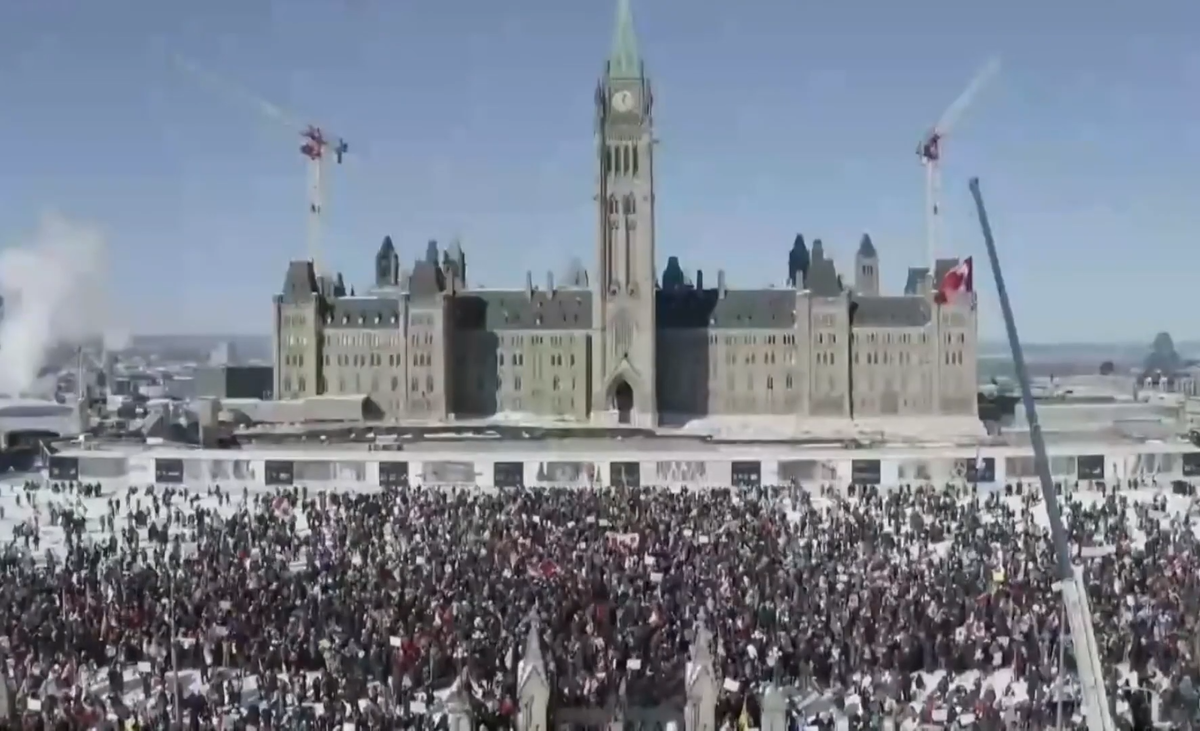
A round-up at SteynOnline of various “elites” in Canada and elsewhere rising up against the sexist, hate-speechin’, Islamophobic, transphobic, Putin-controlled white supremacists who are demanding an end to rule-by-decree:

In Ottawa, attempts by agents provocateurs to provoke violence at the Freedom Rally have gone nowhere. So last night, “anti-hate” buffoon Bernie Farber, friend to censors everywhere, was reduced to hate-hoaxing for Justin by circulating “anti-semitic flyers” sent to him by a “friend” “in Ottawa”. Inevitably, within moments, they were revealed to be from something entirely different in Florida some weeks ago. So Bernie explained that his imaginary friend in Ottawa had seen actual hate flyers in Ottawa but had accidentally emailed him a similar flyer from America or something … These days Farber disgraces even himself.

Meanwhile, the Ottawa police have begun arresting citizens trying to deliver food to the truckers. There is no basis in Canadian law for the actions these goon coppers are taking, but the attitude of their dreadful police chief is: hey, the law is whatever I say it is. So he has ordered the arrest of citizens for “mischief”. By mischief, he means bringing sustenance or heat to protesters passing the night in temperatures of twenty below.

~Many parts of the western world are in a very dark place right now, but none more so than Canada. Its unseen prime minister, who came into office promising “sunny ways”, can no longer appear in public and sweepingly, tweetingly declares that he doesn’t need to because the sort of chaps you run into out there are rubes who don’t even know they’re Islamophobes, transphobes, thisaphobes, thataphobes, too dumb even to be aware they’re working for Putin.

As Tucker and I used to joke five years back, across the developed world the elite rise up against the masses: it’s like an anti-1848, prefiguring the post-democratic era that the 2020s will usher in. The present showdown between the Bollywood Bridesmaid and the truckers who deliver his quinoa has made it about as explicit as you can get. The good humour in the face of elite contempt is impressive. Here are a couple of typical “angry” “hate-filled” “white supremacists”:

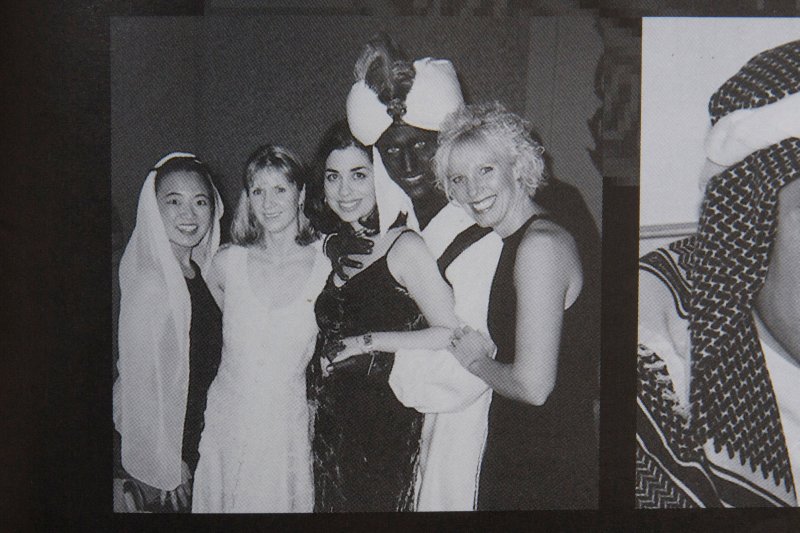
Who are the real “Sunny Ways” guys? A serial blackface fetishist is calling the masses racist and the court eunuchs of Canada’s state-funded media dutifully tag along.

~The truckers are rallying against “vaccine mandates”, which have no justification in science: The Prime Minister, who is as vaxxed, jabbed and boostered as any mammy singer on the planet, is supposedly hors de combat because he’s down with a second dose of the Covid.

Oh, but don’t worry! To be sure, the common understanding of the word “vaccine” is that you won’t catch what you’re being vaccinated against. But what we really mean is that, if you do get it, it won’t be serious, you won’t be in the ICU, and you certainly won’t die of it.

And by “certainly” we mean, well, probably. Israel, en route to be the world’s first entirely fourth-jabbed nation, currently has a daily death toll higher than before it started giving anyone the first jab. There is no public-health justification for making liberty conditional on compliance with the developed world’s failed strategy of coerced vaccines and constant testing.

At SDA, Francisco provided some quick notes on the situation on the streets in Ottawa over the last couple of days:

Looks like the cops got a couple of slip tanks and some jerry cans. A couple of pickup trucks got towed for having slip tanks on them. Nothing major. The new rule is if you have the paperwork to prove you’re a trucker you can transport fuel to your own vehicle but not to someone else’s. A campaign has started to get everyone on the hill to carry an empty jerry can with them at all times. Let the cops figure out which ones have fuel.

There was a show of force by police. Estimate was up to 100 officers in one group. They got their photo-op for the corporate press. Looks great on TV but it had no real impact. Everyone is still there.

Word on the street is that the goal for the police is to get everyone out of there today, clean things up tomorrow and have parliament resume on Wednesday. To which I say good luck.

Morale amongst the protesters is high.

Again take everything I just wrote here with a grain of salt. It’s a fluid situation and good intel is hard to come by in the heat of the moment.

I am not a lawyer, but I’m deeply puzzled at what part of the Criminal Code the Ottawa police are depending on for these imposed restrictions on fuel, food, and other supplies being provided to the truckers by ordinary Canadians. I don’t recall any provision in the law allowing police to confiscate the legal goods of ordinary people on a whim.

Brendan O’Neill on the shitshow that was the original fundraising campaign to help the truckers on their way to Ottawa:

We need to talk about GoFundMe’s withholding of millions of dollars from the Canadian truckers protesting against vaccine mandates. This is union-busting 21st-century style. This is a multimillion-dollar company using its corporate clout to starve working-class activists of funds. This is a signal from Silicon Valley, clear and loud, that it will wield its power to crush any form of political agitation from “the lower orders” that pushes too hard against the political consensus. Anyone who thinks this clash between a profit-making fundraising website and drivers pissed off at being pushed around by Covid authoritarians is just another weird online spat needs to think again. This is far more than that. It is a scoping out of the battlelines over freedom and power that are likely to define the internet era.

GoFundMe’s deprivation of funds to the truckers protesting against Canada’s vaccine rules is, to my mind, one of the most egregious and anti-democratic acts yet carried out by the California-based elites who oversee the World Wide Web. These truckers, such essential workers, are revolting against Canadian PM Justin Trudeau’s introduction of a new rule earlier this month stipulating that truckers who cross the Canada-US border will need to be vaccinated or else go into quarantine after every trip. This is a mad demand. It would severely undermine some truckers’ ability to earn a living. So truckers have risen up. They drove their vast rigs across Canada in what came to be known as the Freedom Convoy before stopping in the capital Ottawa where they have been blocking roads and causing fainting fits among middle-class liberals who cannot understand why these oiks won’t just carry on dropping off sacks of kale to the local Whole Foods and stop going on about their pesky rights.

There has been an outpouring of support for the truckers. Canadians and Americans tired of corona-authoritarianism are cheering the truckers for honking a huge collective horn at the elite consensus on Covid. Despite the best efforts of woke politicians and columnists to depict the truckers as QAnon on wheels, as a motorised version of Mussolini’s March on Rome, many people know that in truth they are decent working people who simply object to the state making their lives that bit harder. People also know that the woke set’s attempts to delegitimise the Freedom Convoy by flagging up “far-right” comments made by a tiny handful of the truckers is a tactic as old as capitalism itself. Elite opponents of working-class organisation have always used smear and innuendo to try to nullify the throng. Seeing this smear campaign for what it is, lots of folk decided to give the truckers a few bucks. But GoFundMe had other ideas.

GoFundMe says the 10million Canadian dollars raised via its website, on a page titled “Freedom Convoy 2022”, will not be given to the truckers after all. It cited police reports about “violence” in the convoy. What violence? Where? Thousands and thousands of people have joined the truckers’ protest and yet there have only been three arrests. One person was arrested for being in possession of a weapon, one for causing “mischief”, and one for making a threatening comment on social media. As far as mass protests go, this is a staggeringly low level of allegedly criminal behaviour. I once visited the Occupy camp at St Paul’s in London and witnessed at least three misdemeanours in the one hour I was there (public urination, threatening speech, and a disturbing of the peace by a man on smack who kept shouting “GET TAE FUCK”). For a mass, angry, revolting movement, Freedom Convoy is uncommonly peaceful. GoFundMe’s “violence” blather is clearly a jumped-up pretext for its political decision to punish the truckers.

On Friday, GoFundMe issued a statement saying that Freedom Convoy was a peaceful movement when it first started but it has since “become an occupation”. And so, “no further funds will be directly distributed to the Freedom Convoy organisers”. Instead, the $9million that remains in GoFundMe’s coffers will be distributed to “credible” charities or refunded to the people who donated if they fill in a form. As if to make it super clear that this is all very political, Facebook has now removed a page promoting a Freedom Convoy in Washington, DC and deleted the personal account of the trucker who set it up. “It’s censorship at its finest”, he said, and he’s not wrong. This looks like a cut-and-dried case of the new capitalist oligarchies siding with the political establishment – in this case, Justin Trudeau – to shrink and silence the consensus-threatening cries of ordinary people.

I didn’t donate to the original crowdfunding campaign for the truckers on GoFundMe, but after that company attempted to quite literally steal $10 million away from the truckers and donate the money instead to causes they approved of, I scraped up a few bucks to add to the replacement fundraising efforts with GiveSendGo and I will actively avoid ever sending GoFraudMe a penny.

Matt Gurney has driven in from Toronto to see for himself what the protest looks like:

Depending on which person you’re using as your explainer of the local vibe, you could reasonably walk away convinced that most of what was happening in Ottawa was a pretty big party, or a hostile invasion by thugs and harassers. I wanted to find out which one it was, so on Sunday, I drove in from Toronto, arriving early Monday morning. I spent hours wandering the city, particularly the area immediately around Parliament Hill, trying to answer that question. Is this a huge group of friendly people? Is this a mob of unruly, dangerous types?

The answer is yes.

The following is my view of the situation in Ottawa, and should be seen entirely in that light. I should also note that I’m a tall, unsmiling white dude with a buzzed head who wandered the area in a gigantic and delightfully warm NFL hoodie, and it’s very possible that my experience was skewed by the fact that I blended in. There are other protest sites at other parts of the city, as well, and I’ll be heading out to some of them later. The observations below are what I saw around Parliament, and within perhaps a 10-minute walk of it.

The first thing you should know is that the protest is, in the main, friendly, at least to someone like me. The photos you’d have seen do it justice. Large transport trucks and smaller personal vehicles are packed tightly together along major streets around Parliament, and the road space and surrounding sidewalks have been colonized by the occupants. Booths and folding tables are everywhere, some selling trinkets, others for supplies or flyers and leaflets. I suspect this will anger locals tired of the protest, but I have to call it as I see it: the overall vibe was quite friendly. I spent about two hours wandering the largest sites, and was struck by the amount of direct eye contact. There’s none of the usual practiced disinterest in those around you that you internalize when you live in a big city (Ottawa is big enough, in that respect). The protesters are eager to make eye contact and to chat, about everything — the weather (warmer!), the Superbowl, and, oh, how Trudeau has to go and the pandemic is a lie. And how about those Maple Leafs?!

[…]

For all the friendly chatter, there is another element in the group. I haven’t owned any bars, but I’ve spent some very pleasant evenings in them, plus an entire career observing people, and I have passable danger-spotting skills. (My success rate at avoiding getting suddenly sucker-punched at dive watering holes hovers at very near 100 per cent!) There is a harder, nastier edge to this group, what my bar-owning friend would have called “the hard men.” It’s not large, at least not in the area immediately around Parliament during daylight — there are other areas I’ll be checking out later today, and the vibe may well change. The group around Parliament is overwhelmingly quite pleasant and, as noted, unusually friendly and eager to chat. But anyone who denies there’s another element there, though, is blind to it, wilfully or otherwise.

Again, I’m a big white guy, and I blend in by default, but more than once I felt myself being calmly but directly observed by exactly the type my bar-owning friend spoke of. There are hard people there, often in small groups, talking quietly by themselves, or standing silently, watching the comers and goers. If you know what to look for, and not all of us do, they’re easy to spot. The more friendly, chatty types give them a wide berth. I spent a few interesting moments standing by a folding table stacked high with hygiene supplies, observing three stone-faced men participating in a kind of staredown with one of the roving police units. The police simply stopped and stood in place. No one said a thing. After maybe a minute, the hard men left. The police marched off. A woman behind the table with the toilet paper and tooth paste tubes looked at me with relief.

February 4, 2022

“In particular, he noted that as you stretch out the models across time ‘the errors increase radically'”

Filed under: Cancon, Environment, Media — Tags: , , , — Nicholas @ 03:00

At the Daily Sceptic, Chris Morrison notes that Canadians have become omnipresent on Joe Rogan’s podcast recently:

It’s been all Canada on Joe Rogan’s popular Spotify podcast of late. First, crinkly rockers Neil and Joni threw their guitars out of the pram when Rogan dared to broadcast a number of different opinions on Covid and vaccines. Then fellow Canadian Dr. Jordan Peterson said climate models compounded their errors, just like interest. Green activists and zealots (often known in the climate change business as “scientists”) clutched their responsibly sourced pearls and whined, “Lawks a-mercy, it’s outrageous!” and “Banning’s too good for them!”. The septuagenarian songsters briefly found themselves out of the headlines as the mainstream media rushed to quell a growing sceptical climate debate and rubbish a troublesome competitor.

Dr. Peterson suggested that the climate was too complex to be modelled. Such notions were said to be a “word salad of nonsense”, reported a distraught Guardian. Dr. Sarah Perkins-Kirkpatrick of the University of Canberra added Peterson had “no frickin’ idea”. Professor Michal Mann of Penn State University said Peterson’s comments – and Rogan’s “facilitation” of them – was an “almost comedic type of nihilism” that would be funny if it wasn’t so dangerous.

This of course is the same Michael Mann who produced the infamous temperature hockey stick that was at the centre of the 2010 Climategate scandal. The graph was used for a time in IPCC reports and showed a 1,000 year straight temperature line followed by a recent dramatic rise. This startling image was helped by the mysterious disappearance of the medieval warming period and subsequent little ice age. Discussion about the graph led to Mann pursuing a U.S. libel suit against the broadcaster and journalist Mark Steyn. In court filings, Mann argued that it was one thing to engage in discussion about debatable topics, but it was quite another to “attempt to discredit consistently validated scientific research through the professional and personal defamation of a Nobel Prize recipient”. He is not himself a Nobel Prize recipient, but perhaps he was referring to someone else.

Independent minded communicators like Joe Rogan and take-no-prisoner intellectuals such as Dr. Peterson command a worldwide audience and they are difficult to cancel. The battle between Neil Young and Joni Mitchell and Joe Rogan, sitting on a $100m Spotify contract, had only one free speech winner – at least for the moment. Meanwhile, the Guardian‘s default position when faced with something unsettling like the “settled” science of anthropogenic climate change is to declare it will not “lend” its credibility to its critics by engaging in debate. That was obviously not possible with Peterson’s remarks being plastered all over social media, although it could be argued that the Guardian reporting the vulgar abuse users posted in response is not much of a substitute for the usual lofty disdain.

Dr. Peterson attacked climate models on a number of fronts. In particular, he noted that as you stretch out the models across time “the errors increase radically”. In its way, this refers to the biggest problem that lies at the heart of the 40-year track record of climate model failures. To make a prediction, climate models are fed a guess of the increase in the global mean surface temperature that follows a doubling of atmospheric CO2. Nobody actually knows what this figure is – the science for this crucial piece of the jigsaw is missing, unsettled you may say. The estimates run from 1°C to as high as 6°C and of course the higher the estimate, the hotter the forecasts run.

As they don’t say in the climate and Covid modelling business – Garbage In, Garbage Out.

February 2, 2022

Neil Young revives the PMRC

Filed under: Business, Government, Media, USA — Tags: , , , , , , — Nicholas @ 03:00

Jim Treacher invites you on a trip down memory lane to a time when musicians like Neil Young were [gasp!] against censorship:

If you’re Generation X or older, you might be getting flashbacks over this whole “Neil Young vs. Joe Rogan & Spotify” contretemps. On one side, we’ve got a popular public figure who’s expressing his thoughts and opinions, just as America’s Founding Fathers told us we get to do. On the other side, we’ve got a bunch of miserable old fuddy-duddies who want to shut down free speech because they believe it hurts people.

In other words, Neil Young just revived the PMRC.

If you don’t know what the PMRC was and you’re too lazy to google it, here’s the short version:

Back in the ’80s, a senator’s wife named Tipper Gore got sick of her kids listening to music she didn’t like, so she started an organization called the Parents Music Resource Center. The PMRC compiled a list of songs they found unacceptable, including “Darling Nikki” by Prince, “We’re Not Gonna Take It” by Twisted Sister, and “She Bop” by Cyndi Lauper. Then Tipper used her political connections to convince the Senate to hold hearings about this supposedly dangerous music.

A lot of Americans decided they liked what popular entertainers were saying, and a handful of busybodies tried to put a stop to it. “If we don’t want to listen to it, nobody should get to listen to it. We need to protect the helpless unwashed masses from themselves!”

Sound familiar?

But then this happened:

If you’ve got a half-hour to spare, you can watch Dee Snider’s entire Senate testimony here. By the time he was done, the PMRC had been exposed for the meddling, hypocritical clowns they were. Their brief moment of relevance was over, at the hands of a guy who looked like Bette Midler transitioning into a Wookie.

The PMRC did get a consolation prize, though: the “PARENTAL ADVISORY” sticker you can find on a lot of cassettes and CDs from the era. Y’know, the sticker that made kids want to listen to what was inside because their parents wouldn’t like it.

Over the next couple of decades, the PMRC ended up helping a lot of artists sell a lot of records. Like this one:

I remember seeing that CD cover for the first time and thinking, “Damn … this must be awesome.” And it was! If not for Tipper Gore, NWA might not have become superstars and Dr. Dre probably wouldn’t be a near-billionaire now.

January 30, 2022

Fighting progressive illiberalism with populist illiberalism

Filed under: Education, Media, Politics, USA — Tags: , , , , , , — Nicholas @ 05:00

In the free-to-non-paying-subscribers segment of this week’s Weekly Dish, Andrew Sullivan laments the ratcheting illiberal tactics of both the opponents and supporters of Critical Race Theory in American schools:

I’ve spent a lot of time these past few years concerned with left illiberalism, especially the replacement of liberalism with critical theory as the guiding principle of our republic. But at the same time, of course, right illiberalism has gone into overdrive, in a polarizing vortex. Being a conservative liberal, or a liberal conservative, is becoming close to impossible. And this week, as I pored over a mass of bills to ban the praxis, pedagogy and content of critical theory in public high schools, I felt as if I were being tossed between the blue devil to my left and the deep red sea to my right.

One core point: the illiberalism is real on both sides. Not always in equal measure, now or in the past, but definitely on both, feeding off each other. And in public education, once again a battleground in the culture war, it seems quite obvious to me that the left bears the burden of responsibility for the conflict.

Critical theory’s long march through the institutions reached its peak some time ago in higher education — and has gone on to capture media, corporate America, medicine, the federal government, tech, science, and every cultural institution. Over $14 billion have been spent on philanthropic “equity” initiatives since the summer of 2020 alone. Of course children’s education would be affected. What hasn’t been? And of course critical theorists aim directly at children. The woke, like the Jesuits, understand the value of instilling certain concepts at a very young age. How else to transform the world?

That’s why Ibram Kendi has bequeathed the world not just one but two books on how to rear “antiracist babies”. The publisher says the new one, Goodnight Racism, “gives children the language to dream of a better world and is the perfect book to add to their social justice toolkit.” My italics. Another recent book, Woke Baby, instructs toddlers to be “a good revolutionary”, and another one explains how “activism begins in the cradle”.

You truly think that in school districts where teachers are saturated in equity training, whose unions invite Kendi to be their keynote speaker, that this is all being made up? Just peruse through all the “equity” conferences, courses, syllabi, lesson plans and curricula that now dominate public ed. Many parents found out only because they overheard what their kids were being taught online during the pandemic. Or you can just surf the web as the woke dismantle schools for the gifted, abolish SATs, describe merit as racist, and lay waste to excellent schools merely because too many Asian-American kids are succeeding in them.

What we’re seeing now is the reaction to this left-wing power grab. And — guess what? — it’s a right-wing power grab. If the left has stealthily changed public education from above, the right has now used the only power they have to fight back — political clout in state legislatures. 122 separate bills have been introduced since January 2021, 71 in the last three weeks alone. They all regulate speech by teachers in public schools, but many are now also reaching into higher education — a much more fraught area — and outright book banning. The bills are rushed; some appear well-intentioned; others are nuts; many are very vague, inviting lawsuits to clarify what they can mean in practice. In most cases, if passed, they will surely chill debate of race and sex and history — and increasingly of gender, sex and homosexuality — in high schools. And that’s a bad thing for liberal education.

January 29, 2022

Viewing with alarm — Substack is a place where “misinformation is allowed to flourish”

Filed under: Business, Liberty, Media, Technology — Tags: , , , , — Nicholas @ 03:00

Matt Taibbi posts, appropriately, on Substack about demands by others to force Substack to censor writers and their content:

Substack is home to tens of thousands of writers and over a million paying subscribers, quadruple last year’s total of 250,000. The sites range from newsletters for comics enthusiasts to crypto news to recipe ideas. Like the Internet as a whole, it’s basically a catalogue of everything.

Still, panic campaigns in legacy press consistently focus on handfuls of sites, and with impressive dishonesty describe them as representative. I was particularly struck by a recent Mashable article that talked about a supposed “backlash” against Substack’s “growing collection of anti-trans writers”, which seemed to refer to Jesse Singal (who is no such thing) and Graham Linehan and — that’s it. Substack is actually home to more trans writers than any other outlet, but to the Scolding Class, that’s not the point. The company’s real crime is that it refuses to submit to pressure campaigns and strike off Wrongthinkers.

Substack is designed to be difficult to censor. Because content is sent by email, it’s not easy to pressure platforms to zap offending material. It doesn’t depend on advertisers, so you can’t lean on them, either. The only real pressure points are company executives like Hamish McKenzie and Chris Best, who are now regular targets of these ham-fisted campaigns demanding they discipline writers.

The latest presents Substack as a place where, as Mashable put it, “COVID misinformation is allowed to flourish”. The objections mainly center around Joseph Mercola, Alex Berenson, and Robert Malone. There are issues with the specific critiques of each, but those aren’t the point. Every one of these campaigns revolves around the same larger problem: would-be censors misunderstanding the basic calculus of the freedom of speech.

Even in a society with fairly robust protections, as ours once was, the most dangerous misinformation is always, without exception, official.

As the old joke from the Cold War had it, never believe any rumour until it’s been officially denied.

Censors have a fantasy that if they get rid of all the Berensons and Mercolas and Malones, and rein in people like Joe Rogan, that all the holdouts will suddenly rush to get vaccinated. The opposite is true. If you wipe out critics, people will immediately default to higher levels of suspicion. They will now be sure there’s something wrong with the vaccine. If you want to convince audiences, you have to allow everyone to talk, even the ones you disagree with. You have to make a better case. The Substack people, thank God, still get this, but the censor’s disease of thinking there are shortcuts to trust is spreading.

January 3, 2022

“… the ill-conceived concept of hate crime is tempting police officers away from law enforcement towards making moral judgements”

Filed under: Britain, Government, Law, Liberty — Tags: , , , — Nicholas @ 03:00

In The Critic, Josephine Bartosch outlines some of the problems with Britain’s approach to “hate crime” policing:

Photo from The Critic

When campaigner Harry Miller was questioned about comments he’d made online, the dutiful copper on the other end of the phone clearly thought he was just doing his job. Apparently unaware of the raging debate around the reform of the Gender Recognition Act, the officer explained that he knew he was right because he’d been on a training course. This small exchange, which was referenced in the recent case won by Miller at the Court of Appeal, underscores a wider problem: the ill-conceived concept of hate crime is tempting police officers away from law enforcement towards making moral judgements.

Hate crime does not exist in itself as an indictable offence; it is comprised of “non-crime hate incidents” (NCHI) and considered as an aggravating factor during sentencing. Developed as a response to the institutional racism exposed in the Macpherson report, hate crime is an attempt to give a voice to those too easily side-lined by a majority white, straight and male police force. The College of Policing (CoP) identify five specific “strands” which designate people at risk from hate: disability, race, religion, sexual orientation or transgender identity.

A new form of prejudice is baked into this touchy-feely approach: provided complainants tick the requisite boxes to show social disadvantage, they are not credited with the wit to be vexatious. Consequently, the police have found themselves unwitting foot soldiers in a culture war which has seeped from social media into real life. The good intentions of officers have been weaponised by unscrupulous whingers who claim offence to muzzle their ideological opponents. Miller was far from the only person targeted by police for exercising his freedom of speech — numerous others have been questioned, arrested and in some cases dragged through the courts for doing nothing more than sharing their opinions online.

Miller’s well-publicised victory against the CoP will force a rethink. It is estimated 124,091 NCHI have been logged since 2014. Many of those with NCHIs recorded against their names have no idea about it.

Looking outside at the cheerless drizzle, it’s easy to understand why police officers might prefer to sit inside cosy offices logging tweets rather than pounding the streets or breaking-up bar room brawls. At a time when much of the left-leaning press has tarred the law enforcement officials as “baddies”, notching-up hate crimes serves as a reminder that law enforcement is on the side of the righteous.

December 15, 2021

QotD: Suppressing intellectual heresy

Filed under: Books, Education, Liberty, Politics, Quotations, USA — Tags: , , , , — Nicholas @ 01:00

Middlebury students acted to prevent Charles Murray from speaking on the relatively benign subject of the travails of the white working class because he had previously written work that some have categorized as racist. That label meant that they need not grapple with the substance of his earlier book, but it also meant that as a known heretic his subsequent work was likewise tainted.

The young people at Middlebury who shouted down Charles Murray and assaulted a faculty member who had tried to engage him in civil debate were, in effect, suppressing the ideas of a heretic. After all, a heretic’s ideas are too dangerous to be heard.

Dangerous ideas are, of course, interesting ideas, especially to young people. When we fail to address dangerous ideas in our courses, we add to their mystique. When activists shout down or assault heretical speakers they send two messages. The first and intended message is a display of righteous disapproval. The other, unintended message, is that there is something so menacing about the idea being expressed that it cannot simply be laughed off or even argued with, rather it cannot be allowed to be spoken.

Consider how that looks to someone who is starting to question the premises of the liberal orthodoxy on race, gender, diversity and so on. Why, our alt-right curious person might wonder, are there some ideas that are so laughably false that one need not even mount a counter argument (a flat earth or the financial benefits of college athletics), some ideas that are considered contentious but still open to debate (supply-side economics), and some ideas that are so outré that they can only be met with back turning, shouting, or by punches to the face?

Might it be, our waverer must wonder, that these people don’t want me to hear this idea because they don’t have a good answer to it?

Erik Gilbert, “Liberal Orthodoxy and the New Heresy”, Quillette, 2019-02-04.

« Newer PostsOlder Posts »

Powered by WordPress