
IT’S HISTORY
Published on 23 Sep 2015The Trojan War is one of the most epic and passionate legends set in Greek Mythology. Legend has it, that Prince Paris fell in love with the beautiful Helena, wife of King Menelaos of Sparta. He took her to Troy, which sent all of the rest of Greece, including the famous warrior Achilles after the city. We’ll explain which incidents on the battles are actually proven and how sex, powerplay and love is interpreted to have led to blood shed more than once during Antiquity. Join Indy for our new episode of BATTLEFIELDS!
October 7, 2017
The Trojan War – A tale of Passion and Bloodshed! l HISTORY OF SEX
Comments Off on The Trojan War – A tale of Passion and Bloodshed! l HISTORY OF SEX
October 3, 2017
Viking warrior women?
ESR posted a link to this article by Julia Dent on the much ballyhoo’d “discovery” of the grave of a Viking woman warrior:
You may have heard of L’Anse aux Meadows, the discovered Viking site in Canada (because I repeat, Vikings actually settled in North America, even if it didn’t last long), but did you know that they uncovered another Viking site only last year? If you listen to Dan Snow’s History Hit podcast (which I highly recommend), you may have heard about it, but I only saw a couple of articles about the discovery. This finding is further proof that Leif Eriksson and his fellow Vikings actually settled in North America years before Christopher Columbus was even born, so it isn’t insignificant in the least.
But Leif Eriksson was overshadowed once again—this time by an unknown woman’s grave. However, there’s more to the story than meets the eye. I’ve written about the danger of people leaping to conclusions before, and it appears that it’s happened again. While there may have been female Viking warriors, there isn’t strong evidence that this Viking woman was actually a “high-ranking officer” or even a warrior. University of Nottingham professor of Viking studies Judith Jesch burst everyone’s bubbles with an article going through the “evidence” from the grave site and contesting it all. I highly encourage you to read her analysis in full, but here’s a quick summary of some of her points about the authors who published the “evidence” that the grave site was for a female Viking military officer:
The authors listed on the article don’t include a language specialist, even though it starts with referencing “’narratives about fierce female Vikings fighting alongside men’, and concludes with a quotation from an Eddic poem in translation.” The authors even referenced one of Jesch’s books but not the book where she actually writes about women. The authors also make a lot of references to “historical records” without specifying which ones they’re talking about.
The authors pretty much decide that this Viking woman is a high-ranking officer based on what she was buried with. The grave contained “’a full set of gaming pieces’ which apparently ‘indicates knowledge of tactics and strategy’” and “’the exclusive grave goods and two horses are worthy of an individual with responsibilities concerning strategy and battle tactics.’” There isn’t even any conclusive evidence that men buried with those items were military leaders.
This gravesite was actually excavated over a century ago and things weren’t labeled well, so the female Viking bones may not have even been buried with all those items. Someone even commented on Jesch’s article that there was a third femur found with this woman’s bones, but the authors just ignored it. There were also no signs of harm to the bones, which means she was either one heck of a warrior who never got injured, or that she wasn’t a warrior at all.
So the authors assumed this female Viking was a military leader without any actual evidence and they ignored evidence that didn’t go along with their theory. Like many people today, they leapt to conclusions, and everyone was eager to agree that this woman was definitely a military leader because that suited a contemporary narrative, not a historical fact. This doesn’t mean that people in the future won’t find hard evidence that female Vikings could be military leaders, but you can’t “confirm” that this Viking was a military leader quite yet. Even if there weren’t female Viking warriors, women in Viking times were actually well-respected and enjoyed many rights and freedoms; they could divorce their husbands, own land, and could even have government representation. Women like Freydis and Gudrun had a significant impact on their societies, even if they didn’t lead troops into battle.
ESR also commented on the more direct physiological arguments against the “warrior woman” theory:
Accessible treatment of why to be skeptical of the recent media buzz about female Viking warriors.
My wife Cathy and I are subject-matter experts on this. We’ve trained to use period weapons and have studied both the archeological and saga evidence. And we can tell there’s a lot of PC horse exhaust being emitted on this topic.
On average, men are so much faster and stronger than women that what would happen to women using using lethal contact weapons on a pre-modern battlefield is highly predictable. They’d die. They’d die quickly.
The mean difference in physical ability (especially at burst exertion and upper-body strength) is so great that it takes a woman way over in the right tail of the Gaussian to stand against an average male. My wife is one of those exceptions, but we don’t fool ourselves that this is the typical case.
See also the U.S. Olympic women’s soccer team being defeated by a squad of 15-year-old boys. That is what’s normal for humans.
Comments Off on Viking warrior women?
Primitive Technology: Mud Bricks
Primitive Technology
Published on 22 Sep 2017(Turn on captions [CC] in the lower right corner for more information while viewing.)
I made a brick mold that makes bricks 25 x 12.5 x 7.5 cm from wood. A log was split and mortise and tenon joints were carved using a stone chisel and sharp rocks. The mold was lashed together with cane to prevent it from coming apart when used.Next, I made a mixture of mud and palm fiber to make the bricks. This was then placed into the mold to be shaped and taken to a drying area. 140 bricks were made.
When dry, the bricks were then assembled into a kiln. 32 roof tiles were then made of mud and fired in the kiln. It only took 3 hours to fire the tiles sufficiently. The mud bricks and tiles were a bit weaker than objects made from my regular clay source because of the silt, sand and gravel content of the soil. Because of this, I will look at refining mud into clay in future projects instead of just using mud.
Interestingly, the kiln got hot enough so that iron oxide containing stones began to melt out of the tiles. This is not metallic iron, but only slag (iron oxide and silica) and the temperature was probably not very high, but only enough to slowly melt or soften the stones when heated for 3 hours.
The kiln performed as well as the monolithic ones I’ve built in the past and has a good volume. It can also be taken down and transported to other areas. But the bricks are very brittle and next time I’d use better clay devoid of sand/silt, and use grog instead of temper made of plant fiber which burns out in firing. The mold works satisfactorily. I aim to make better quality bricks for use in furnaces and buildings in future.
WordPress: https://primitivetechnology.wordpress.com
Patreon page: https://www.patreon.com/user?u=2945881
I have no face book page, instagram, twitter etc. Beware of fake pages.
Comments Off on Primitive Technology: Mud Bricks
September 25, 2017
The Truth About Stonehenge – Anglophenia Ep 6
Published on 26 Jun 2014
Siobhan Thompson follows up ‘One Woman, 17 British Accents’ with a video dispelling a commonly believed myth about Stonehenge.
And by the way, Stonehenge isn’t the only stone structure worth visiting in Britain: http://www.bbcamerica.com/anglophenia/2014/06/impressive-british-stone-structures-arent-stonehenge/
Photos via AP Images.
Comments Off on The Truth About Stonehenge – Anglophenia Ep 6
August 26, 2017
When is an archaeological artifact merely “recyclable”?
In Sweden, apparently, it’s actually becoming a common practice to discard “excess” metal artifacts for literal recycling:
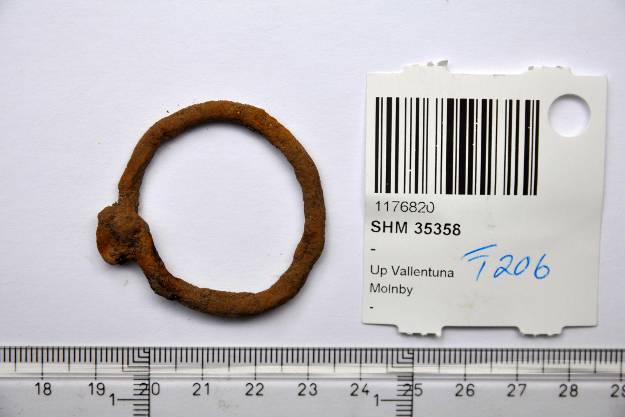
One of the amulet rings from the Iron Age that archaeologists are recycling. Previously, this type of object was saved, says archaeologist Johan Runer.
(Photo from Svenska Dagbladet, caption from Never Yet Melted)
Rough translation from Swedish language article in Svenska Dagbladet:
While the debate about burning books is raging in the media, Swedish archaeologists throw away amulet rings and other ancient discoveries. It feels wrong and sad to destroy thousands of years of ritual arts and crafts, and I’m not alone in feeling so.
“What you do is destroy our history! Says Johan Runer, archaeologist at Stockholm County Museum.
Amulet rings from the Iron Age, like Viking weights and coins, belong to a category of objects that, as far as Runer knows, were previously always saved.
He tried to raise the alarm in an article in the journal Popular Archeology (No. 4/2016), describing how arbitrary thinning occurs. Especially in archeological studies before construction and road projects, the focus is on quickly and cheaply removing the heritage so that the machine tools can proceed.
He works himself in these kinds of excavations. Nobody working in field archeology wants to get a reputation as an uncooperative “find-fanatic” but now he cannot be quiet any longer.
“It’s quite crazy, but this field operates in the marketplace. We are doing business,” says Runer.
Often, especially in the case of minor excavations, there is a standing order from the county administrative boards that as few discoveries as possible should be taken.
If you think it seems unlikely, I recommend reading the National Archives Office’s open archive, such as report 2016: 38. An archaeological preamble of settlement of bronze and iron age before reconstruction by Flädie on the E6 outside Lund.
In the finds catalog, coins, knives, a tin ornament, a ring and a weight from the Viking Age or early Middle Ages have been placed in the column “Weeded Out”.
Comments Off on When is an archaeological artifact merely “recyclable”?
August 25, 2017
The End of the Bronze Age
Published on 28 Sep 2015
Around 1200 BC, the countries of the Eastern Mediterranean went into major cultural decline: The Late Bronze Age came to a sudden end.
Kingdoms that had wielded immense power completely disappeared. For several centuries after this, agriculture was people’s only means of subsistence. These were pivotal changes in history. Explaining them remains one of the big challenges in Mediterranean archaeology.
In this video, the foundation Luwian Studies presents a comprehensive and plausible scenario of what might have happened.
Comments Off on The End of the Bronze Age
August 22, 2017
The Bronze Age Collapse – Lies – Extra History
Published on 12 Aug 2017
How did the Bronze Age Collapse affect civilizations other than the four discussed in our series? When trade fell apart, why didn’t those who relied on bronze switch to forging with other metals? James and Soraya look back on these questions on Lies!
Comments Off on The Bronze Age Collapse – Lies – Extra History
August 5, 2017
History of Writing – The Alphabet – Extra History
Published on Jul 29, 2017
Where did the alphabet come from? How did it develop, and why? The writing systems first developed in Sumer provided a basis for the written word, but their system of characters also inspired a shift to single phoneme systems where each letter represents a distinct sound.
Comments Off on History of Writing – The Alphabet – Extra History
July 29, 2017
Matchlock Musket Demonstration with Armor (Live Rounds)
Published on 15 Apr 2014
Live rounds were fired from this matchlock with the musketeer first using no armor, then wearing standard armor, and finally equipped with a modified armor breastplate that had an attached piece for the musket butt to rest. Accuracy did not seem to be a factor, as all three tests yielded similar results. However, the modified breastplate was much more comfortable and easier to use than the standard breastplate. In 1611 at Jamestown, a law was enacted which stipulated that musketeers had to start wearing armor. In response they adapted by changing some of the existing armor to suit their needs, and this is evidenced with an adaptive breastplate found in a James Fort period well. A special thanks to Fred Scholpp from the Jamestown-Yorktown Foundation for coming out to the island to conduct experimental archaeology with the matchlock and armor breastplate reproductions.
If you are interested in donating to this non-profit research project, please click the following link. https://donatenow.networkforgood.org/jamestownrediscovery
Comments Off on Matchlock Musket Demonstration with Armor (Live Rounds)
July 28, 2017
1177 BC: The Year Civilization Collapsed (Eric Cline, PhD)
Published on 11 Oct 2016
From about 1500 BC to 1200 BC, the Mediterranean region played host to a complex cosmopolitan and globalized world-system. It may have been this very internationalism that contributed to the apocalyptic disaster that ended the Bronze Age. When the end came, the civilized and international world of the Mediterranean regions came to a dramatic halt in a vast area stretching from Greece and Italy in the west to Egypt, Canaan, and Mesopotamia in the east. Large empires and small kingdoms collapsed rapidly. With their end came the world’s first recorded Dark Ages. It was not until centuries later that a new cultural renaissance emerged in Greece and the other affected areas, setting the stage for the evolution of Western society as we know it today. Professor Eric H. Cline of The George Washington University will explore why the Bronze Age came to an end and whether the collapse of those ancient civilizations might hold some warnings for our current society.
Considered for a Pulitzer Prize for his recent book 1177 BC, Dr. Eric H. Cline is Professor of Classics and Anthropology and the current Director of the Capitol Archaeological Institute at The George Washington University. He is a National Geographic Explorer, a Fulbright scholar, an NEH Public Scholar, and an award-winning teacher and author. He has degrees in archaeology and ancient history from Dartmouth, Yale, and the University of Pennsylvania; in May 2015, he was awarded an honorary doctoral degree (honoris causa) from Muhlenberg College. Dr. Cline is an active field archaeologist with 30 seasons of excavation and survey experience.
The views expressed in this video are those of the speaker and do not necessarily reflect the views of the National Capital Area Skeptics.
Comments Off on 1177 BC: The Year Civilization Collapsed (Eric Cline, PhD)
July 26, 2017
July 17, 2017
The Bronze Age Collapse – IV: Systems Collapse – Extra History
Published on 15 Jul 2017
It started with famine… and ended with four great civilizations’ utter destruction. The Bronze Age Collapse is still a matter of scholarly debate, but our favorite theory rests on an understanding of Systems Collapse and how societies build themselves to survive disaster.
Comments Off on The Bronze Age Collapse – IV: Systems Collapse – Extra History
July 15, 2017
QotD: Ancient beliefs and modern ones
It is, I suppose, very attractive to the modern mind, with its idea that every Jack and Jill (but mostly Jill) needs a role model that matches his or her external or cultural characteristics that they assume worship of any sort of fertility goddess would mean a great respect for women.
Do I need to tell you this is poppycock?
I shouldn’t need to. We know almost every ancient religion worshiped at least one (often more) female deities, and we know that compared to us in the present so called “patriarchy” women were not only not respected, but were often used in strictly utilitarian ways as in “Mother, caretaker, etc.”
I see absolutely no reason to imagine that primitive humans were better than that, particularly since we do have archaeological evidence (scant, so non-conclusive) to back up the sort of hard scrabble/winner take all existence the great apes bands have, where the word “family” and “harem” are basically equivalent and the alpha male takes all.
In fact the evidence from modern day primitives, whether or not the worship of a female goddess is present, often leads one to conclude that the presence of a female goddess implies stronger patriarchy.
Sarah A. Hoyt, “Inventing the Past — The Great Divorce”, According to Hoyt, 2015-09-23.
Comments Off on QotD: Ancient beliefs and modern ones
July 14, 2017
The Bronze Age Collapse – III: Fire and Sword – Extra History
Published on Jul 8, 2017
At last, we have the Sea People: marauders who swept into Bronze Age cities and ground them into dust. But while they’re often blamed for the Bronze Age Collapse, were they really its cause? What else must have been going on to cause such illustrious civilizations to crumble?
Comments Off on The Bronze Age Collapse – III: Fire and Sword – Extra History
July 12, 2017
The Bronze Age Collapse – II: The Wheel and the Rod – Extra History
Published on Jul 1, 2017
Bronze Age societies built intricate networks of trade, advanced military infrastructure, and hugely organized central governments. But when crucial parts of those systems began to disappear, the societies built on them began to crumble.
Comments Off on The Bronze Age Collapse – II: The Wheel and the Rod – Extra History


