
The Great War
Published 20 Jan 2023The Battle of Cambrai in 1917 didn’t have a clear winner, but the conclusions that Germany and Britain drew from it, particularly about the use of the tank (in combination with other arms), would have far reaching consequences in 1918.
(more…)
January 22, 2023
Where The British Army Figured Out Tanks: Cambrai 1917
Comments Off on Where The British Army Figured Out Tanks: Cambrai 1917
January 19, 2023
Tanks Chats #164 | M-50 Sherman | The Tank Museum
The Tank Museum
Published 23 Sep 2022In this episode of Tank Chats, David Willey discusses the history of the M-50 version of the Sherman.
(more…)
Comments Off on Tanks Chats #164 | M-50 Sherman | The Tank Museum
January 18, 2023
Ask Ian: Why No German WW2 50-Cal Machine Guns? (feat. Nick Moran)
Forgotten Weapons
Published 20 Sep 2022From Nathaniel on Patreon:
“Why didn’t Germany or Axis powers have a machine gun similar to the American M2?”Basically, because everyone faced the choice of a .50 caliber machine gun or 20mm (or larger) cannons for anti-aircraft use, and most people chose the cannons — including Germany. There were some .50 caliber machine guns adopted by Axis powers, most notably the Hotchkiss 1930, a magazine-fed 13.2mm gun that was used by both Italy and Japan (among others). However, the use of the .50 caliber M2 by the US was really a logistical holdover form the interwar period. The M2 remained in production because it was adopted by US Coastal Artillery as a water-cooled anti-aircraft gun, and commercial sales by Colt were slim but sufficient to keep the gun in development through the 20s and 30s. It was used as a main armament in early American armor, but obsolete in this role when the war broke out.
However, with the gun in production and no obvious domestic 20mm design, the US chose to simply make an astounding number of M2s and just dump them everywhere, from Jeeps to trucks to halftracks to tanks to self-propelled guns. And that’s not considering the 75% of production that went to coaxial and aircraft versions …
Anyway, back to the question. The German choice for antiaircraft use was the 20mm and 37mm Flak systems, and not a .50 MG on every tank turret. And so, there was really no motive to develop such a gun. The Soviets did choose to go the US route, though, and developed the DShK-38 for the same role as the US M2 — although it was made in only a tiny fraction of the quantity of the M2.
(more…)
Comments Off on Ask Ian: Why No German WW2 50-Cal Machine Guns? (feat. Nick Moran)
QotD: Tanks for Ukraine?
Lately we’ve been tap dancing up to even heavier gear [for Ukraine]. The US has announced we’ll be sending some M2 Bradley IFVs, and France chipped in some AMX-10 RC heavy armored cars. While referred to as a char, or tank, in French service and apparently some obscure EU regulation classifies anything above a certain weight and with a big enough gun as a tank … and the AMX-10 clears those hurdles … war nerds will insist that unless it comes from the tank region of France it’s just a sparkling armored fighting vehicle.
It looks like the inhibition on sending tanks is finally cracking, though. While Germany is still dithering over letting Poland send some of its Leopard 2’s, Britain has announced it’s sending 14 Challenger 2 main battle tanks.
I found that particular number interesting. Late Cold War and post-Cold War Russian armored units use three-tank platoons and three platoons plus a commander’s tank make a ten tank company.
The British Army, from whose stores the Challengers will be pulled, uses some archaic TO&E, possibly left over from the Wars of the Roses or Cromwell’s New Model Army, wherein four tanks equal a Bonnet*, and four Bonnets plus two more tanks in a headquarters Bonnet equal an eighteen-tank Spanner†.
Fourteen tanks, however, is enough for three four-tank platoons plus two tanks for an HQ platoon, equalling a fourteen tank US-style armored company. Apparently the Ukies are using a US/(most of)NATO TO&E for their armored units. So the Ukrainians will have at least one company of Western MBTs.
* Bonnet = Troop
† Spanner = SquadronTamara Keel, “Clank Clank Goes the Tank”, View From The Porch, 2023-01-15.
Comments Off on QotD: Tanks for Ukraine?
January 12, 2023
Tank Chats #163 | Scorpion & Sabre | The Tank Museum
The Tank Museum
Published 9 Sep 2022In this episode of Tank Chats, David Fletcher details Scorpion and Sabre from the CVRT collection.
(more…)
Comments Off on Tank Chats #163 | Scorpion & Sabre | The Tank Museum
January 5, 2023
Tank Chats #162 | Springer | The Tank Museum
The Tank Museum
Published 2 Sep 2022Join Curator David Willey in his latest Tank Chat as he delves into the Springer, a German demolition vehicle.
(more…)
Comments Off on Tank Chats #162 | Springer | The Tank Museum
December 29, 2022
Anti-Tank Chats #5 | PIAT | The Tank Museum
The Tank Museum
Published 26 Aug 2022Bring up the PIAT! Join Stuart Wheeler as he takes a look at the iconic WW2 British anti-tank weapon — the PIAT. With thanks to @The Armourer’s Bench and @History in Firearms
(more…)
Comments Off on Anti-Tank Chats #5 | PIAT | The Tank Museum
December 26, 2022
The Battle of Ortona with Jayson Geroux
OTD Canadian Military History
Published 21 Dec 2022Join me as I welcome Jayson Geroux to the OTD channel to discuss the Battle of Ortona. We will be discussing the urban combat that took place in Ortona in December 1943. [The discussion of the actual battle begins around the 6 minute mark.]
(more…)
Comments Off on The Battle of Ortona with Jayson Geroux
December 16, 2022
Tank Chat #161 Samaritan and Sultan | The Tank Museum
The Tank Museum
Published 19 Aug 2022Do you know why the Museum’s Samaritan has a red cross painted on it? Join Historian David Fletcher and discover this and more for the latest Tank Chat on Samaritan and Sultan.
(more…)
Comments Off on Tank Chat #161 Samaritan and Sultan | The Tank Museum
December 6, 2022
Tank Chat #160 | M18 Hellcat | The Tank Museum
The Tank Museum
Published 5 Aug 2022Hello Tank Nuts! M18 Hellcat perfectly fit the American Army’s Tank Destroyer doctrine during WW2. This particular M18 saw service during WW2 and conflict in former Yugoslavia. It is part of the Phelps private collection and recently took part in the celebrations for the 75th Anniversary of the liberation of the city of Mons, Belgium. Discover more on Hellcat and watch the latest Tank Chat with David Willey.
(more…)
Comments Off on Tank Chat #160 | M18 Hellcat | The Tank Museum
November 29, 2022
Tank Chat #159 | Warrior | The Tank Museum
The Tank Museum
Published 29 Jul 2022Join David Willey for a new Tank Chat on Warrior.
(more…)
Comments Off on Tank Chat #159 | Warrior | The Tank Museum
November 23, 2022
“What we’re witnessing is, in short, the least expensive generational kneecapping of a geopolitical rival in world history”
Stephen Green on the still ongoing Russo-Ukraine war:
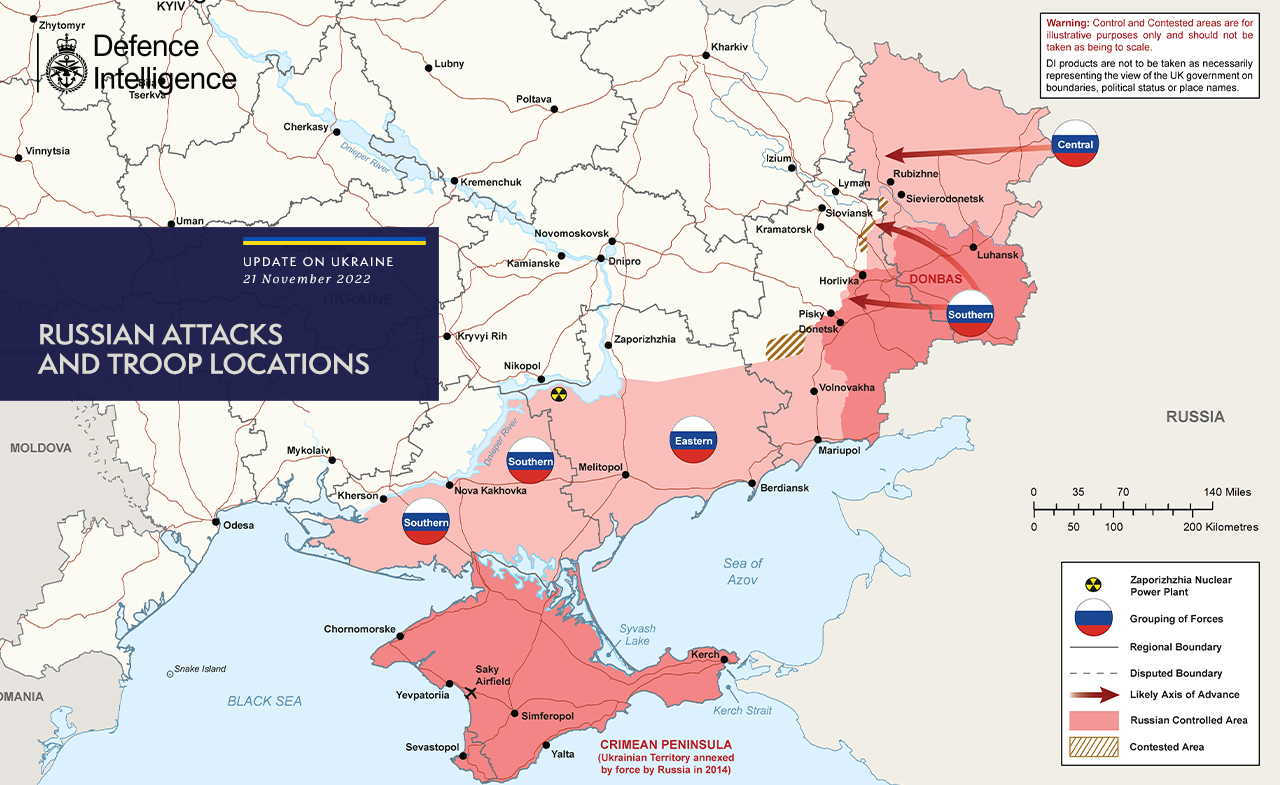
Here’s a hard truth our friends in Kyiv need to remember: Lying isn’t helpful. There are limits to our tolerance.
Here’s another: You’re going to have to make some compromises to end this war because your total victory isn’t in America’s interest here; punishing aggression is. When we decide that Russia has suffered enough, you might find yourselves on your own. Come to the table and negotiate accordingly.
Here is a hard truth for conservative Americans — there are fewer of them than you’d assume from reading Twitter or internet comments sections — opposed to us aiding Ukraine for domestic reasons.
There is no doubt in my mind that much of Ukraine remains what it was: A financial playground for America’s rich elites, and that they have done nothing but increase their ill-gotten gains thanks to our part in keeping Ukraine in the fight. But that’s just one of the many prices we pay for letting our civic structures become so rotten.
The hard truth is, enriching a few corruptocrats is still cheap compared to a continent-wide war in Europe — which is exactly what we risked had we let the Russians march right through.
Here’s a hard truth for my Russian friends and their supporters: The point where Putin & Co. had hoped to aggrandize their country or themselves has long passed. It’s time to ask for a ceasefire and come to the negotiating table.
They know this already, of course, except for the most deluded of true believers. The trick is constructing Sun Tzu’s golden bridge for them to retreat across.
The hard truth I must always keep in mind is that Western leadership, particularly our own, is not up to Sun Tzu’s task.
There is another hard truth that Moscow must come to grips with: Putin threw the dice on an expansionary war but shrank his country’s standing instead.
Russia spent more than a decade modernizing its military. It is becoming increasingly de-modernized with every day of fighting in Ukraine. Destroyed T-80 and T-90 tanks — the most modern in Moscow’s inventory — are being replaced by T-62s that were obsolete 50 years ago. Soldiers in their 20s, casualties of war, are being replaced by ill-trained “mobiks” in their 30s, 40s, and even 50s.
It will take far longer than a decade to replace what Putin has wasted.
The way this war has squandered Russian resources, finances, and demographics has serious geopolitical implications. For a few tens of billions of dollars — admittedly, some of them squandered — our Number Two geopolitical rival has had the heart cut out of its conventional military forces, all without spilling the blood of a single American soldier.
Comments Off on “What we’re witnessing is, in short, the least expensive generational kneecapping of a geopolitical rival in world history”
November 20, 2022
Tank Chat #158 Spartan and Stormer | The Tank Museum
The Tank Museum
Published 22 Jul 2022David Fletcher is back with the next Tank Chat instalment! This week he chats about not one but two vehicles, Spartan and Stormer.
(more…)
Comments Off on Tank Chat #158 Spartan and Stormer | The Tank Museum
November 18, 2022
The Model SS41 – A Czech Bullpup Anti-Tank Rifle for the SS
Forgotten Weapons
Published 23 Jun 2017The SS41 was a bullpup, bolt-action antitank rifle manufactured in small numbers by CZ for the SS. Contrary to common assumption, the SS were not a part of the standard German military arms procurement system, and were forced to scrounge for their weapons from other sources. Czech factories were one of the more popular sources, as smaller production lines could escape being integrated into Wehrmacht oversight and were able to contract privately with groups like the SS (the ZK383 as used by the SS is another example of this).
The Model 41 had been in development by the Czech military when the Germans occupied, and it was adapted to the German Patrone 318 cartridge for this production run. That cartridge was also used in the PzB-39, and fired a 220 grain tungsten-cored bullet at 4000 fps — although even this extremely high velocity only allowed it to defeat 30mm of vertical armor at 100m. As with the other antitank rifles of WW2, it would obsolete almost as soon as it was introduced, although it did remain useful for attacking emplaced positions and light armored vehicles (much like the Soviet PTRD and PTRS rifles).
Only a few thousand of the SS41 were manufactured, and they served primarily on the Eastern Front. As a result very few exist in American collections, and this is a particularly excellent example. Thanks to the Institute of Military Technology for allowing me to have access to this very cool AT rifle and bring it to you! Check them out at:
Comments Off on The Model SS41 – A Czech Bullpup Anti-Tank Rifle for the SS
November 4, 2022
Tank Chats #157 | Ferret MKII & V | The Tank Museum
The Tank Museum
Published 1 Jul 2022Join David Fletcher for a new Tank Chat on the Ferret.
(more…)
Comments Off on Tank Chats #157 | Ferret MKII & V | The Tank Museum


