Sabaton History
Published on 27 Jun 2019The Sabaton Song “Gott Mit Uns” is about the Battle of Breitenfeld, fought between the Swedish under command of King Gustavus Adolphus and the Holy Roman Empire under Count Tilly. This battle was hugely influential in the Thirty Years War and the religious wars that were plaguing Europe in the 17th century.
Support Sabaton History on Patreon: https://www.patreon.com/sabatonhistory
Listen to Carolus Rex (where “Gott Mit Uns” is featured):
CD: http://bit.ly/CarolusRexStore
Spotify: http://bit.ly/CarolusRexSpotify
Apple Music: http://bit.ly/CarolusRexAppleMusic
iTunes: http://bit.ly/CarolusRexiTunes
Amazon: http://bit.ly/CarolusRexAmz
Google Play: http://bit.ly/CarolusRexGooglePlayCheck out the trailer for Sabaton’s new album The Great War right here: https://www.youtube.com/watch?v=HCZP1…
Hosted by: Indy Neidell
Written by: Markus Linke and Indy Neidell
Directed by: Astrid Deinhard and Wieke Kapteijns
Produced by: Pär Sundström, Astrid Deinhard and Spartacus Olsson
Creative Producer: Joram Appel
Executive Producers: Pär Sundström, Joakim Broden, Tomas Sunmo, Indy Neidell, Astrid Deinhard, and Spartacus Olsson
Maps by: Eastory
Edited by: Iryna Dulka
Sound Editing by: Marek KaminskiEastory YouTube Channel: https://www.youtube.com/channel/UCEly…
Archive by: Reuters/Screenocean https://www.screenocean.com
Music by Sabaton.Sources:
– National museum
– National Portrait GalleryAn OnLion Entertainment GmbH and Raging Beaver Publishing AB co-Production.
© Raging Beaver Publishing AB, 2019 – all rights reserved.
June 28, 2019
“Gott Mit Uns” – The Thirty Years War – Sabaton History 021 [Official]
Lesser-known details of the France 1940 Campaign
The_Chieftain
Premiered on 22 Jun 2019Your friendly history lesson, with a little bit of Op-Ed thrown in, some parts of the 1940 campaign in France of which many folks weren’t aware.
Why was Guderian relieved of command?
Why might condoms have changed the course of the war?
What’s a Niwi?
Was the French failure one of doctrine, or execution?
You get the idea.Patreon link here:
https://www.patreon.com/The_ChieftainWorld War Two channel, if you haven’t already found it… : https://www.youtube.com/channel/UCP1A…
What does £1 trillion buy you?
Not much, apparently:
Tory MPs have been told by CCHQ to share this graphic boasting about their new commitment to make the UK carbon-neutral by 2050. No other major country has committed to the pledge although Theresa May is planning a desperate attempt at the G20 to talk other leaders into it. The fact that developed countries going ‘net zero’ simply means they’ll outsource all their emissions to the developing world instead seems to be completely lost on her…
The pledge will cost the UK at least £1 trillion, much of which will be borne by individuals and businesses rather than the exchequer, we don’t know the true cost as May hasn’t even done a proper Treasury analysis. Eco-fanatics love to talk about the burden this generation is placing on children and grandchildren. For a fleeting PR stunt Tory MPs are being told to boast about piling on mountains of economic harm for future generations by a leader who won’t be in office to deal with the consequences…
This is exactly the sort of virtue signalling that Justin Trudeau indulges in … I imagine he’s quite miffed that Theresa May got there first.
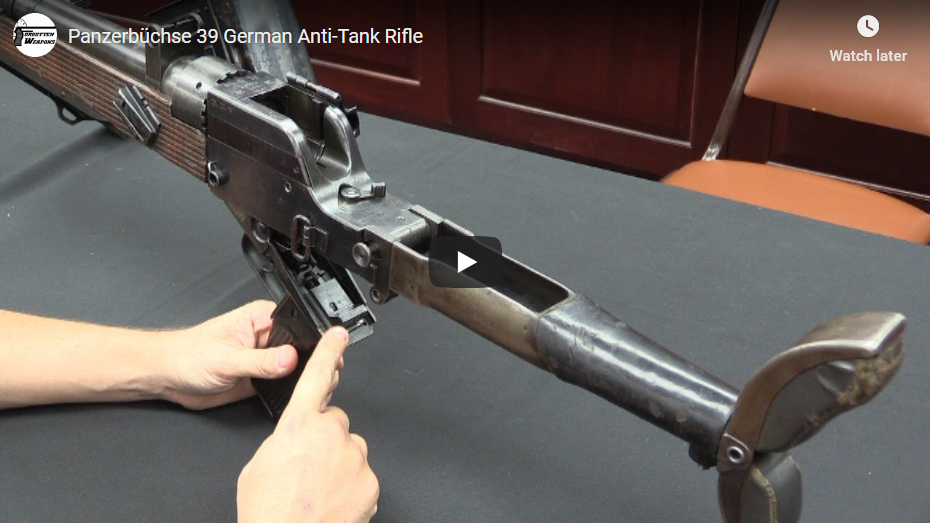
Panzerbüchse 39 German Anti-Tank Rifle
Forgotten Weapons
Published on 7 Apr 2015Sold for $37,375.
Most countries still had anti-tank rifles in their military inventory at the beginning of WWII – the Solothurn S18-100, the Lahti L39, the Boys AT Rifle, the PTRD and PTRS, and so on. For Germany, this role was fulfilled by the Panzerbüchse 39, a single-shot falling block rifle firing a high velocity 8mm AP cartridge. It was nominally effective in the opening campaigns of the war, but was quickly rendered obsolete as Allied armor improved. German planners has a huge number (25,000) of these on hand for the invasion of Russia, where they expected Russian armor to be vulnerable to them – which was not the case. Most were subsequently converted into Granatbüchse 39 AT grenade launchers, which were then used until the end of the war.
Cool Forgotten Weapons Merch! http://shop.bbtv.com/collections/forg…
QotD: “Intelligence” is just a noun
Howard Gardner has also convinced us that the word intelligence carries with it undue affect and political baggage. It is still a useful word, but we shall subsequently employ the more neutral term cognitive ability as often as possible to refer to the concept that we have hitherto called intelligence, just as we will use IQ as a generic synonym for intelligence test score. Since cognitive ability is an uneuphonious phrase, we lapse often so as to make the text readable. But at least we hope that it will help you think of intelligence as just a noun, not an accolade.
We have said that we will be drawing most heavily on data from the classical tradition. That implies that we also accept certain conclusions undergirding that tradition. To draw the strands of our perspective together and to set the stage for the rest of the book, let us set them down explicitly. Here are six conclusions regarding tests of cognitive ability, drawn from the classical tradition, that are by now beyond significant technical dispute:
- There is such a thing as a general factor of cognitive ability on which human beings differ.
- All standardized tests of academic aptitude or achievement measure this general factor to some degree, but IQ tests expressly designed for that purpose measure it most accurately.
- IQ scores match, to a first degree, whatever it is that people mean when they use the word intelligent or smart in ordinary language.
- IQ scores are stable, although not perfectly so, over much of a person’s life.
- Properly administered IQ tests are not demonstrably biased against social, economic, ethnic, or racial groups.
- Cognitive ability is substantially heritable, apparently no less than 40 percent and no more than 80 percent.
Charles Murray, “The Bell Curve Explained”, American Enterprise Institute, 2017-05-20.
June 27, 2019
You don’t need a block-plane (believe it or not!)
Rex Krueger
Premiered 2 hours agoMore video and exclusive content: http://www.patreon.com/rexkrueger
(more…)
“Raise our taxes!” cried the hypocritical virtue signallers
We’ve been over this ground before. Some very rich people are getting fawning media coverage for their “selfless”, “virtuous” demand that the government raise their taxes. Except they’re far from selfless: they’re demanding that other people be forced to pay more tax, but they’re very much not putting their own money where their bleating mouths are. Most governments are happy to accept more money from you than your formal tax liabilities:
- The Canadian federal government
- The British government
- The US federal government
- The province of Ontario
- The City of Toronto
… are all very eager to accept your contributions. But most people don’t take advantage of this mechanism, especially the ones garnering headlines for their “altruism”. Because they’re virtue signalling, and almost certainly don’t actually want to be taxed more. Don’t believe what people merely say they want, watch what they actually do (economists call this “revealed preference“). Hypocrites, the lot of them.
Router Plane Q&A | Paul Sellers
Paul Sellers
Published on 26 Jun 2019The router plane remains one of the most essential tools for hand tool woodworkers. It is used to refine cuts which are either made by chisels, saws or machines, Paul often even uses a router plane as an improvised marking gauge. In this Q&A Paul answers some of your questions regarding this remarkable tool.
Questions:
0:59 What wood do you recommend for making an extension plate for the base of the router plane? How thick should it be?
2:55 Recently the floor of some elements I have chopped have been deeper than my Stanley router reaches. Is there a way to extend the depth reach?
4:14 Having just bought my first router plane I was wondering what basic maintenance should I do to restore it to a good working tool?
5:17 What is the best way to set the height to make sure you don’t plane too deeply?
7:11 Do you recommend attaching a wooden support screwed to the base of the plane?
7:54 My Veritas router plane changes depth during the cut (the shank of the iron slips in the collar). Is there a trick that will prevent this slippage and help ensure an equal depth across the entire surface?
10:11 How does one prevent tear out when routing?
12:11 One thing I’ve noticed by watching your videos is that you only use the router plane to put the finishing touches on tenon cheeks, dados and the like. Was the router plane designed for more than this or is this where the router shines?
15:04 Grain issues? Cutting out a channel/tenon, I often ‘dig in’ (no, not taking big cuts), likely due to grain? You’ve mentioned ‘feeling’ for grain with No4 plane, how do you address this with the router plane?
18:05 The main issue I have when using a router is that the shavings end up between the sole of the plane and my workpiece. These shavings scar the wood of my workpiece. How to prevent this? Or is this to do with the router plane itself?
21:40 Is the router plane effective for making a groove with the width of the iron or a rebate, as you do with the plough plane?
23:55 Is it important to get a router plane with the micro adjustment height wheel for that extra precision, or will a model without the adjustment wheel do the job just fine?
26:02 Are there specific times when you would reach for a router plane over a plough plane (and vice versa) when either could seemingly be used?
27:49 Diamond point vs square blade
28:46 How to prepare the wood for the sole?The featured Paul Sellers book is available to order from anywhere in the world. Click the link to find out more: https://paulsellers.com/paul-sellers-…
Want to learn more about woodworking? See https://woodworkingmasterclasses.com or https://commonwoodworking.com for step-by-step videos, guides and tutorials. You can also follow Paul’s latest ventures on his woodworking blog at https://paulsellers.com/
$26B, $56B, $70B, and pretty soon you’re talking real money
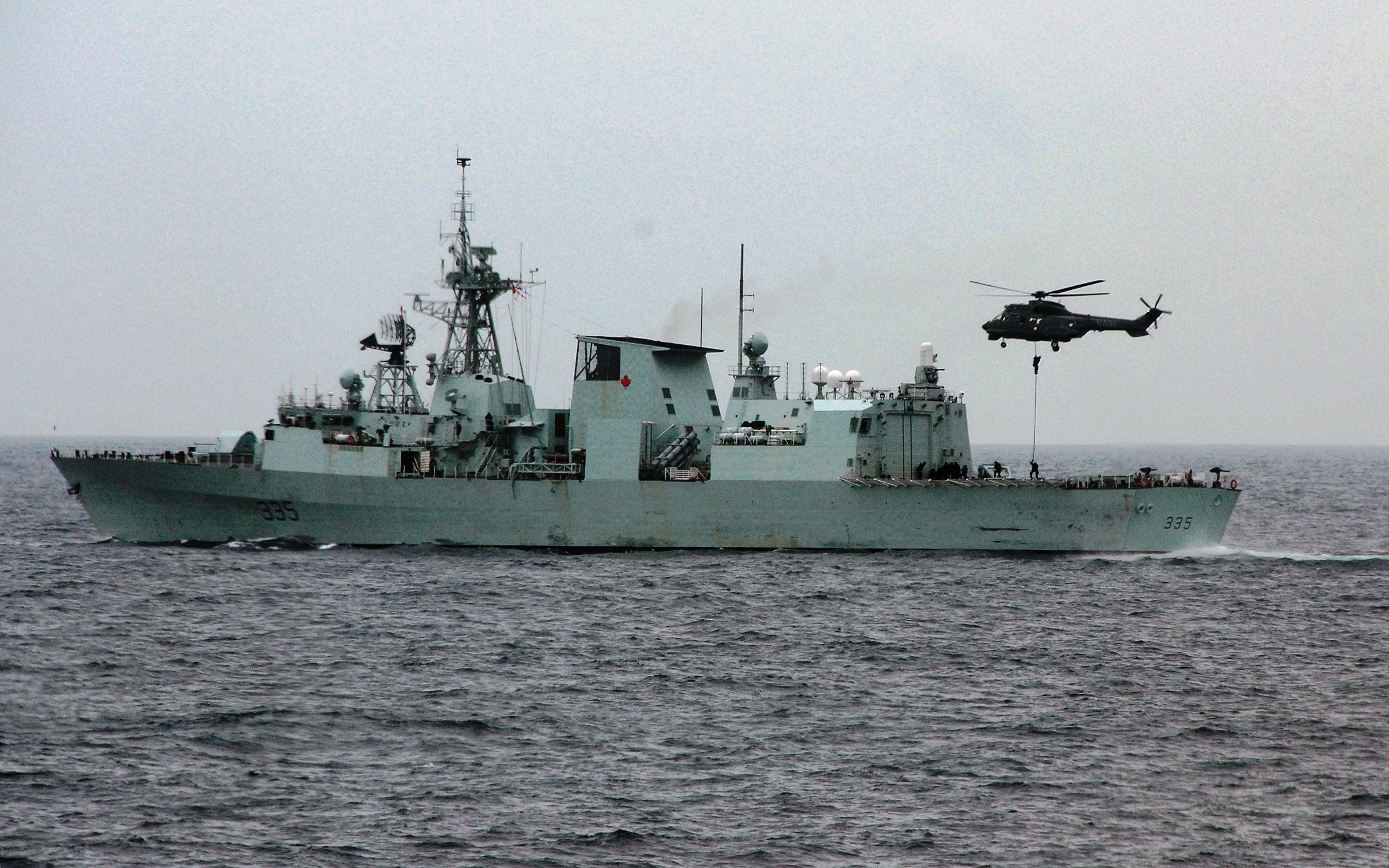
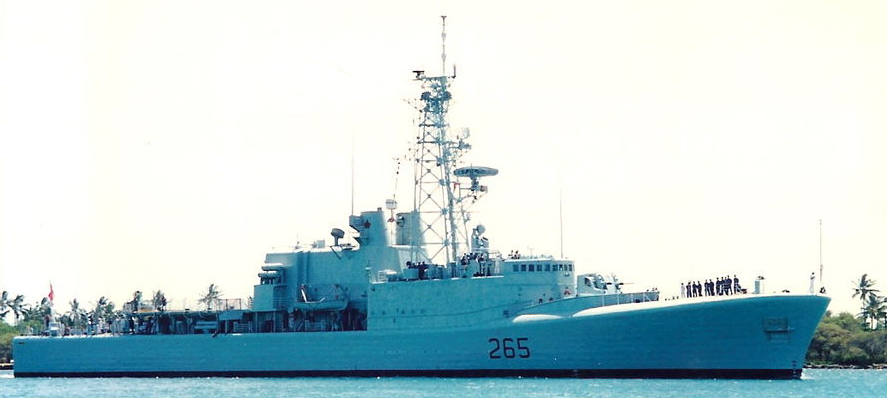
The headline refers to the constant upward movement of various estimates on how much the Canadian government will be required to spend on the Canadian Surface Combatant program. In shorthand, that’s the money required to replace the Royal Canadian Navy’s current fleet of 12 frigates and the Iroquois-class destroyers that have already been retired from service. The Halifax-class frigates began entering service in the early 1990s and were designed to operate for about thirty years, meaning the RCN needs replacements to start coming into the fleet in the mid-2020s. The government initially budgeted around $26B for fifteen ships in 2008, but as with so many military equipment programs, no actual steel has been cut to begin building the new ships … in fact the design was only formally agreed in October 2018 and not signed (due to a lawsuit from one of the losing bidders) until February of this year. We’re still probably 2-3 years away from construction of the first ship in the class beginning, which will mean the Halifax class will have to remain on duty for longer (and older ships require more frequent and more expensive maintenance).
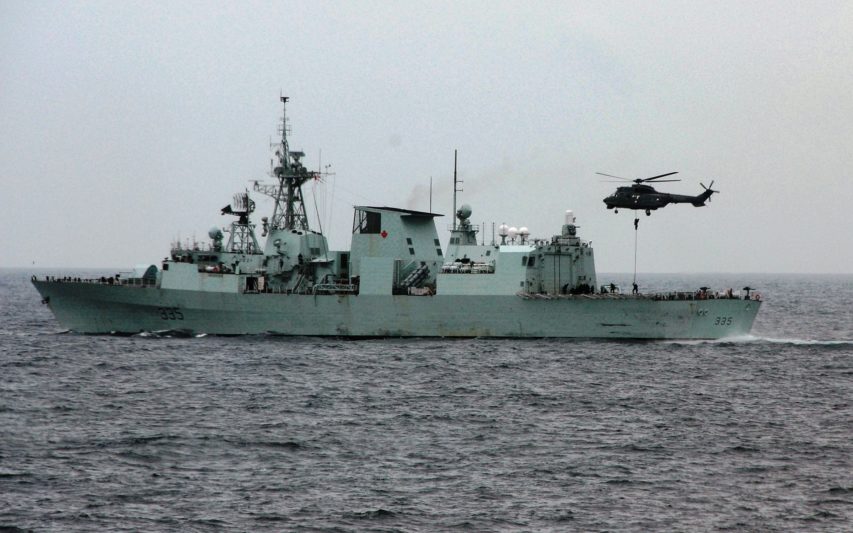
A Chilean navy boarding team fast-ropes onto the flight deck of RCN Halifax-class frigate HMCS Calgary (FFH 335) during multinational training exercise Fuerzas Aliadas PANAMAX 2009.
US Navy photo via Wikimedia.
The Department of National Defence most recently estimated up to a $60B final bill, but the Parliamentary Budget Office estimate was $70B (an increase of $8B over a two-year span), and there’s no reason to assume that things will magically get cheaper between now and whenever Irving Shipbuilding starts construction of the first new ship. David Pugliese reports:
… it could be years before the real cost to taxpayers for the mega-project is actually known as the project is just getting started.
The PBO report warned that any delays in building the first ship will be costly. A delay of one year, for instance, could increase costs by almost $2.2 billion, it added.
The federal government hopes to begin building the ships starting in the early 2020s.
Pat Finn, the head of procurement at DND, said the PBO estimates largely align with what the department figures as the cost of the program. He noted that unlike the PBO, the department does not consider tax in its cost figures. That is because those fees ultimately go back to the federal treasury.
But he also agreed with the PBO on the concern about added cost if the project is delayed. “That is a key one for us. It’s something we’re watching carefully,” said Finn, assistant deputy minister for materiel.
The CSC program is currently in the development phase. The government projects the acquisition phase to begin in the early 2020s with deliveries to begin in the mid-2020s. The delivery of the 15th ship, slated for the late 2040s, will mark the end of that project.
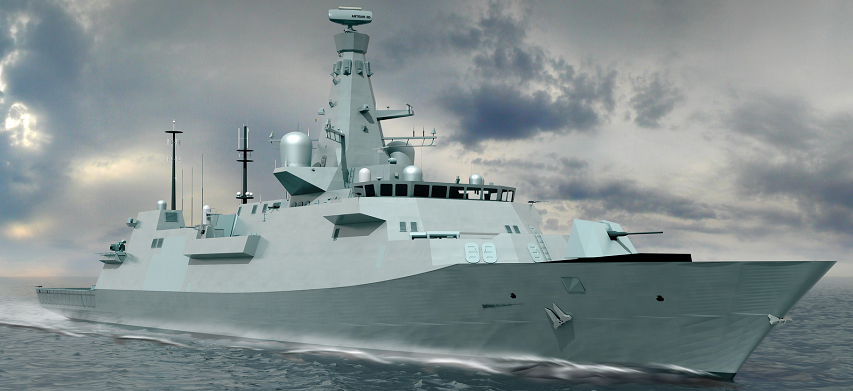
The Liberal government announced in February that it had entered into a contract with Irving Shipbuilding to acquire new warships based on the Type 26 design being built in the United Kingdom. With Canada ordering 15 of the warships, the Royal Canadian Navy will be the number one user of the Type 26 in the world.
The United Kingdom had planned to buy 13 of the ships but cut that down to eight. Australia plans to buy nine of the vessels designed by BAE of the United Kingdom.
The entry of the BAE Type 26 warship in the Canadian competition was controversial from the start and sparked complaints the procurement process was skewed to favour that vessel. Previously the Liberal government had said only mature existing designs or designs of ships already in service with other navies would be accepted, on the grounds they could be built faster and would be less risky. Unproven designs can face challenges as problems are found once the vessel is in the water and operating.
But the requirement for a mature design was changed and the government and Irving accepted the BAE design, though at the time it existed only on the drawing board. Construction began on the first Type 26 frigate in the summer of 2017 for Britain’s Royal Navy, but it has not yet been completed. Company claims about what the Type 26 ship can do, including how fast it can go, are based on simulations or projections.
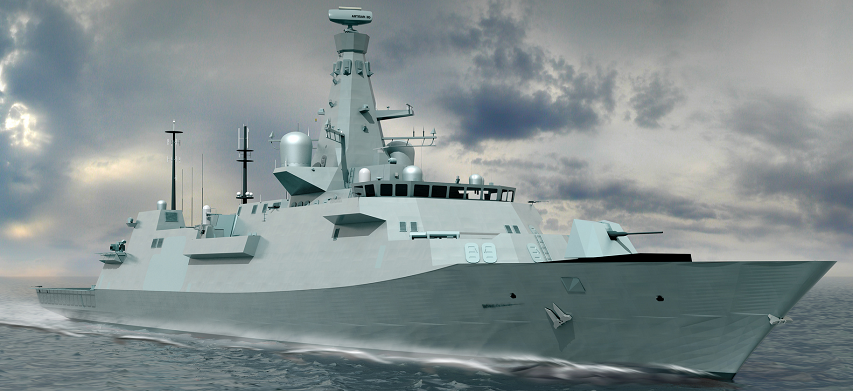
BAE Systems released this artist’s rendition of the Type 26 Global Combat Ship in 2017, which is the design selected by the Canadian government for the Canadian Surface Combatant program.
(BAE Systems, via Flickr)
Ted Campbell commented on the report:
I’m not sure the new ($70 Billion) figure is a terribly useful number for taxpayers like you or me or for policymakers, either. I’m not convinced that DND, itself, much less the whole of government, including the PBO, has a common, coherent understanding of “life-cycle costs,” and I’m damned sure neither the media nor 99.99% of Canadians has one. I’m glad to see that the government includes “the cost of project development, production of the ships, two years of spare parts and ammunition, training, government program management, upgrades to existing facilities, and applicable taxes” but that’s just the tip of the iceberg. These ships are going to be in service for 35± years and they are going to cost money to own and operate every hour of every day and I hope someone is programming ongoing costs (running costs, routine maintenance, upgrades and refits and life extension projects and even disposal) into the long term defence budget guesstimates.
Good management says that the DND budget should be pretty well fixed for the next year or two, fairly firm (even allowing for a change in government) for four or five years beyond the end of the next fiscal year it should be and a reliable planning guide for the next decade or even two. In other words, DND should have a pretty good idea about what it will cost to operate itself, pretty much as it is now, for a generation. I expect (hope, anyway) that defence planners have a “Christmas wish list” of capabilities they want to add or improve/increase (with costs attached) should a defence friendly government ever materialize in Canada or, sadly but more likely when, not if, the need arises.
He also points out the hidden truism about huge government purchases:
… from 1950 to 1958 the several hundred Canadair F-86 Sabre jets that Canada bought for the RCAF was, probably, “the largest single expenditure in Canadian government history,” then from the early 1950s until 1964 the production of 20 destroyers (DDE and DDH) of the St Laurent, Restigouche, Mackenzie and Annapolis classes (all based on one, baseline, design) was, almost certainly, “the largest single expenditure in Canadian government history,” and I know for a fact that the purchase decision (in 1980) of 138 CF-18 Hornets made it “the largest single expenditure in Canadian government history.” The simple fact is that the costs of high-tech aircraft, howitzers, tanks, radios and, especially, ships, keep climbing far faster than inflation and if, as we must, we want our armed forces to be adequately equipped then we need to accept higher costs … especially if we want to build ships in Canadian yards, employing Canadian workers.
Tank Chats #50 Ha-Go | The Tank Museum
The Tank Museum
Published on 18 May 2018The Type 95 Ha-Go tank was produced by the Imperial Japanese Army in 1935 and used throughout the Second World War.
The Tank Museum’s Type 95 was captured in Malaya and was examined in Calcutta before being sent to Britain. Surviving Japanese tanks from the Second World War are extremely rare.
Support the work of The Tank Museum on Patreon: ► https://www.patreon.com/tankmuseum
Or donate http://tankmuseum.org/support-us/donateVisit The Tank Museum SHOP: ►https://tankmuseumshop.org/
Twitter: ► https://twitter.com/TankMuseum
Tiger Tank Blog: ► http://blog.tiger-tank.com/
Tank 100 First World War Centenary Blog: ► http://tank100.com/ #tankmuseum #tanks
June 26, 2019
“… what’s happening now is even better than Apollo”
At Popular Mechanics, Joe Pappalardo reminds us that the 50th anniversary of the Apollo 11 lunar landing is coming up next month, but that current developments in space are worth celebrating too:

Astronaut Buzz Aldrin, lunar module pilot, stands on the surface of the moon near the leg of the lunar module, Eagle, during the Apollo 11 moonwalk. Astronaut Neil Armstrong, mission commander, took this photograph with a 70mm lunar surface camera. While Armstrong and Aldrin descended in the lunar module to explore the Sea of Tranquility, astronaut Michael Collins, command module pilot, remained in lunar orbit with the Command and Service Module, Columbia.
Apollo was born of Cold War desperation: a political exercise that paid enormous scientific and technological dividends. After the launch of Sputnik in 1957, it became vital to beat the Soviet Union to the Moon, a geopolitical urge that created an enormous budgetary effort.
The problem with politically motivated — well, anything — is that the faucet of support can be closed just as quickly as it opened. It happened to Apollo, as follow on missions were cancelled and the focus shifted to a reusable craft to service low-earth orbit. This pattern of shifting space priorities and strategies whipsawed NASA, most noticeably when the Obama administration’s cancellation of the Bush-era Constellation moon program in 2010.
But multiple private companies pursuing their niches in space have an obvious redundancy. While companies may rise and fall, the very nature of a commercial effort isn’t as dependent on government funding. If it’s worth doing, especially if it makes money, space industry will endure political shifts. The objectives of a well-run company do not change that much every four years.
That leaves today’s NASA with a choice: Do it themselves and control everything (the traditional way), or fund private companies to develop the tech the agency needs and then allow them to sell their services to any nation, company, or individual (the new way). With those services on the open market, NASA would be one of many customers for a new U.S.-based space economy.
This debate is boiling over right now. The ongoing effort to return to the moon, called Artemis (after Apollo’s sister), is becoming a lesson in the advantages of the commercial model.
[…]
If only investment guaranteed results. For those who miss bloated, government-run spaceflight, there is already a NASA spacecraft mired in the old ways of thinking. The feds have sunk a lot of money into the Space Launch System, a mega-rocket built to NASA specs for deep space missions. It was supposed to fly in 2017, but we’ll be lucky to see a first flight in 2020 — and it busted the $9.7 billion estimated budget, now costing about $12 billion.
But something happened during these SLS delays: the commercial space industry started delivering on its promises. Most visibly, private firms have been delivering supplies to the International Space Station for years and (hopefully soon) will ferry astronauts as well. Blue Origin and SpaceX has started development of crewed spacecraft able to reach to the moon and Mars. Elon Musk even sold a moon trip to a Japanese billionaire.
Summer Stupidity: LONDON (City Review!)
Overly Sarcastic Productions
Published on 25 Jun 2019For more summer fun, we’re heading to London! Let us know what other fun side-content you’d like to see. We’ll see you with more long-form content on Friday!
PATREON: https://www.Patreon.com/OSP
OUR WEBSITE: https://www.OverlySarcasticProduction…
Find us on Twitter https://www.Twitter.com/OSPYouTube
Find us on Reddit https://www.Reddit.com/r/OSP/